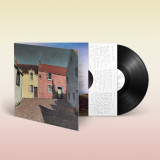
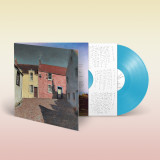
MONO’s beloved debut album finally available again on vinyl, note the new price. Remastered for vinyl by Bob Weston at Chicago Mastering Service. Features all-new cover art // One of the most distinctive bands of the 21st century.” – Pitchfork // “Essential, really” – Exclaim! // “MONO have now well and truly sealed their place in the pantheon of rock history.” – Rock Sound // Under The Pipal Tree is the debut album by now-legendary Japanese experimental rock band, MONO. Released in 2001 on avant-garde icon John Zorn's Tzadik label, Under The Pipal Tree showcased a young Japanese quartet whose wide range of influences - most notably Sonic Youth, Mogwai, The Velvet Underground, and Neil Young's Crazy Horse - were on ferocious and ambitious display. Though MONO would eventually become known for their expert marriage of metal and classical genres, Under The Pipal Tree highlights the band's psychedelic roots. Long stretches of hypnotic, melodic washes give way to scorching guitar freakouts that evaporate into haunting silence. It's remarkable not just for its earnest exploration, but for its startling execution. Fifteen years and eight albums later, Under The Pipal Tree stands as one of the great debut albums by a seminal underground band. Finally released on vinyl for the first time ever, Under The Pipal Tree has been remastered for vinyl by longt ime friend and tour mate, Bob Weston at Chicago Mastering Service. The double album is packaged in all new artwork, and is pressed onto audiophile-quality 100% virgin vinyl. This stunning album has never looked, sounded, or felt better
Cerca:not was
- A1: Hot With Fleas
- A2: Nation
- A3: Unleash Your Sword
- A4: Jetlag
- A5: Contempt
- B1: Bad Mood Guy
- B2: Dressed In Air
- B3: Rabbi Nardoo Flagoon
- B4: Heaven Is What Heaven Eats
- B5: Mad Dad Mangles A Strad
- C1: Bad Mood Guy (Day 1)
- C2: Unleash Your Sword (Day 1)
- C3: Canine (Day 1)
- C4: Nature 10 (Terse)
- C5: Contempt (Day 1)
- C6: I've Always Hated Severed Heads (Live)
- D1: Hot With Fleas (12" Remix)
- D2: Nation (Nyc Mix)
- D3: Canine (12" Remix)
Futurismo present a deluxe vinyl package of the never before reissued 1987 avant industrial album: Bad Mood Guy by Severed Heads.
With an oeuvre of electronic experimentation that dates back to 1979, Australia’s Severed Heads rawly garnered everything from the sources around them: the sounds of the city, tape loops, old machines, distortion.
Although essentially one man, chief noisemaker Tom Ellard, he was joined here by film maker/homebrew video synthesizer operator Stephen Jones, and effects producer Robert Racic: who had worked with New Order. The result is a punishing view of pop, all crunching rhythms and electronic juxtapose. By incorporating popular tropes such as consistent rhythms, melodic vocal lines and drum machines this was perhaps as near to alittle “boogie-oogie-oogie” as Severed Heads were likely to get, but the outcome is a striking hybrid of the avant-garde, EBM and Synth-pop, an industrial vortex in which the sounds of the 20th century are sucked in and spat out around a monstrous dance beat.
Never pandering to expectations, Ellard saw dance music as a benchmark area where exploration was still possible. Big ideas and big sounds, notto mention big headaches when the original CBS mixes were left in a taxi cab. Whilst many of their contemporaries persisted without dignity, Bad Mood Guy’s cool melancholy assured a fanbase in America and dance floor loyalty with ‘Hot With Fleas’, which dares to sit alongside classics like ‘Dead Eyes Opened’. The unique inventiveness inherent in Severed Heads work makes this release essential for fans of Throbbing Gristle, Kraftwerk, Skinny Puppy and Cabaret Voltaire.
This remastered version of the original CD contains lost original versions and remixes and comes with a fold-out artzine booklet with liners by Ellard.
This is the second 7” single of the Turma da Bênção project by Conjunto Angola 70 & Paulo Flores. Botto was the guitar player for Os Bongos and played with Os Kiezos, Carlos Burity, Paulo Flores, Semba Tropical etc. He is called the living soul of Angolan guitar.
To explore the musical connections of Angola & Brazil, we asked Tahira to spice up the session. Tahira says he listened to “Memoria De Gui” for hours when we sent him the album to choose a track. ‘I love the way Botto plays the guitar, so beautiful. It made me think of the Ciranda rhythms, a style of music from the northeast of Brazil. It is usually more raw and bass driven. Not much instruments and melody. We added the great Botto touch to this traditional rhythm from Brazil.’
Almost two years on from his last EP offering, Veerus returns for another double shot of groove-inflected techno power.
The Italian artist has been a stellar contributor to Drumcode since his debut in 2019 with the outstanding ‘Hypnosis’ EP. From the ‘System’, to ‘Recovery’ and his most recent EP offering ‘Yard’ in early 2022, we’ve been given a sense of his deft touch for crafting dramatic techno, that’s equal parts exquisite and dynamic.
His latest work ‘Cycle’ reinforces the passion he imbues each production with. “These two tracks perfectly express my vision of techno nowadays,” he shares. “Not fast, groovy, with researched sounds and a crazy impact on the dancefloor.”
The title track balances tension and release on a knife’s edge, as it builds deliciously via a menacing array of synths, before dropping down into an all-out laser-focused march. A powerful cut that’s been a go-to for Adam Beyer at Awakenings, Loveland and Resistance Ultra in Croatia, among others.
‘It’s Funky’ was two months in the making and bring bags of energy and atmosphere as it explores funky terrain, not in the bottom end, but rather Veerus’ colourful approach to writing melodies. A great track for building excitement throughout a set.
- A1: I Really Love You (Full Length Studio Version) 4 38
- A2: Your Love Is Smokin' (Previously Unissued) 4 40
- A3: What's That Sound (Full Length Studio Version) 4 48
- A4: Free To Be Me (Previously Unissued) 5 28
- B1: You Changed Me (Part 1 & 2) (Full Length Studio Version) 7 10
- B2: Nice Beat (Easy To Dance To) (Previously Unissued) 5 28
- B3: Get The Funk Off My Back 3 20
- B4: Get It From The Bottom (Previously Unissued) 4 02
Impulse’ was a band of Milwaukee, Wisconsin musicians whose members included Michael Reese (Rhodes Piano and background vocals), Cedrick Rupert (Lead and Rhythm guitar), Jeffrey Williamson (Drums and background vocals) and Robin Gregory (Bass and background vocals). They would become a group in their own right with the eventual addition of another local artist John Gee, who joined them as their lead singer. The Impulse musicians formed the backing/touring band for another Milwaukee outfit, a vocal quartet, The Quadraphonics who recorded the solitary 45 single “Betcha If You Check It Out/Prove My Love To You” for the Carl Davis/E. Rodney Jones owned ‘Innovation II’ Record label during 1974. This release would later be nationally distributed by the major Warner Brothers label. With import copies of “Innovation II” single finding their way into the UK the record became popular with the devotees of Blackpool Mecca’s Highland Room.
During 1976 the members of Impulse migrated to Oakland California, they had hoped that, The ‘Quadraphonics’ would join them but instead The Quadraphonics chose to remain in Milwaukee and eventually broke up. It was fellow Brewtown producer/recording artist Harvey Scales who was responsible for inviting ‘Impulse’ to the west coast. Under the auspice of Scales, Impulse recorded their self-titled debut album project at Wally Heider’s Studio in San Francisco. The album was initially offered to Casablanca Records but no firm interest was to materialise, a subsequent approach to Jerry “The Ice Man” Butlers newly formed Chicago label, Fountain Records again failed to secure a release of the album, sadly leaving the project unreleased in the can. In the ensuing years, the former group members have continued with their respective careers, the late John Gee embarked on a solo career, recording the 1980 release “Not Enough Love Makin’/ you Are That Man (Why Don’t You Be That Man)” for Leroy Smith’s Oakland C.A, Pashlo label followed by his 1985 modern favourite “So Good To Me/Just Get On” recorded under the artist name of Jon Pierre Gee on his own newly formed Kandi Inc, Record label. Later Kandi projects included the 1995 Jon Pierre Gee & Touch album and the 2005 Ah’VantSoul cd album project, which featured Jon’s business and real-life partner, Kathryn Hannemann (a.k.a the performing artist Kat Webb).Throughout all the aforementioned projects Jon continued to use and enjoy performing with his former fellow ‘Impulse’ musicians of which the two surviving members Robin Gregory and Michael Reese can still be found jamming to this day in the renowned Milwaukee Restaurant/Coffee House by the name of ‘Coffee Makes You Black’. Sadly, drummer Jeffrey Williamson passed away during 2015 with Coley Jackson coming in to pick up the sticks! Lead and Rhythm guitarist Cedrick Rupert left the group in the 1970’s moving to Lake Charles, LA, sadly, he too passed away in 2020.
The Impulse album project having lain dormant since the 1970’s was resurrected during 2018 when Jon Pierre Gee in conjunction with Stephen Chin of Nice Choice Records (USA) and Soul Junction Records (UK) breathed new life into the project. Beginning with the release of the first of two ‘Impulse’ 45 singles on Jon’s Kandi imprint. Firstly “What’s that Sound/You Changed Me” followed in 2020 by a second 45 “I Really Love You/Get The Funk Off my Back” with all four soul and funk tracks receiving worldwide acclaim. Initial plans for the release of the whole album project had been set in place but we’re unfortunately brought to an unexpected halt with the passing of Jon Pierre in November 2020.
Undetered Soul Junction have finally been able to bring this amazing ‘Impulse’ project to life as a limited vinyl press I’m sure once heard, the old adage of “Good Things Come To Those Who Wait” will certainly ring true, enjoy.
Croatian Amor returns with “A Part of You in Everything” a companion piece to last year’s “Remember Rainbow Bridge”.
“My younger brother died at birth and I never had a chance to meet him. Growing up he was my ghost friend, someone told me he lived in the stars which I accepted. I had not paid attention to him for many years but when I was making "Remember Rainbow Bridge” and waiting for my son to come into the world he suddenly appeared again. I partly dedicated Remember Rainbow Bridge to him, but I knew that it wasn’t his record, so I thought I should make one just for him and here it is; “A Part of You in Everything”, 8 songs about being human on Earth. I think it’s music which is best listened to at night out under the stars. Thank you to all my friends who helped making it!”
Upon what instrument are we two spanned?
And what musician holds us in his hand?
- Rilke
This album was originally only released for the Japanese market and is now
available worldwide for the first time.
In the early 1990s, Makoto Kimata repeatedly asked Eugen to record the lullaby
"Berceuse" by the French composer Benjamin Godard (1849-1895) for his
grandson. This is how the 'Lullabies' project started. Since it was not possible to
record in Japan, Eugen Cicero rented the radio studio of the former SWF in Mainz,
Germany.
Here, he recorded twelve lullabies within three days together with Ringo Hirth on
drums and Decebal Badila on bass. It was to become the last studio recording of
his career. However, the 'Lullabies' were only produced for the Japanese market.
Eugen Cicero enjoyed cult status in Japan. The Japanese love jazz and classical
music equally, and do not tend to differentiate, as is the case in Europe, especially
in Germany.
When one speaks of lullabies, jazz enthusiasts immediately think of "Lullaby Of
Birdland" by George Shearing. The classically educated music lover, however, will
have the songs of Brahms, Mozart and Schubert in mind. Well, you may find both
genres combined on this album.
While many people do find their nightly rest with sleeping pills, head phones or
iPhone in hand these days, this music gives you an attractive alternative.
An autumnal treasure, East Village’s Drop Out has spent the past thirty years finding new ears to bewitch and new hearts to melt. The only album from this British four-piece, recorded and released in the early nineties, it’s long been considered one of the hidden jewels of its time, and is talked of with hushed reverence by people who know. Bob Stanley of Saint Etienne once called it “an elegy for a particular brand of eighties guitar music, sweet minor chords and Dylanesque lyrics”, which captures what makes it so special; in summarising its era, though, it also effortlessly transcends it.
Like all great guitar gangs, East Village fell together as a four-piece; having relocated from High Wycombe to London in mid ‘80s, brothers Martin and Paul Kelly on bass and guitar, set on forming a group together, were joined by John Wood (guitar) and Spencer Smith (drums). Wood and the Kellys shared writing and vocal duties; it was an ideal combination, and one of the many charms of East Village is their various song writing voices, a tip of the hat, seemingly, to the 60s folk-rock groups who influenced them.
Originally influenced by garage-rock and freakbeat, the band eventually came through via the same scene as groups like Felt, The Go-Betweens, The Weather Prophets, and Primal Scream. They’d formed as Episode Four, releasing an EP, Strike Up Matches, in 1986, which has gone on to become one of most sought after releases of the C86 era. Their first two singles as East Village, ‘Cubans In The Bluefields’ (1987) and ‘Back Between Places’ (1988), were released on Jeff Barrett’s Sub Aqua label.
When it came time to record Drop Out, East Village found a supporter in Bob Stanley, who bankrolled the album sessions until Barrett re-signed the band to his new imprint Heavenly Recordings in 1990. The album that took shape is dusky, heartfelt, lamplit, full of chiming minor chords, close harmonies, rattling organs, all buoyed by a rhythm section that moves as one, steady and elegant. There’s melancholy here, certainly, on songs like ‘What Kind Of Friend Is This’, but also pleasure and freedom, on ‘When I Wake Tomorrow’ and ‘Silver Train’. The group were obsessed with Dylan’s Eat The Document at the time, and the album’s rich with references to the film; Drop Out’s character is also somehow close to the thin wild mercury sound of Blonde On Blonde, and the lambent light of the Byrds’ Notorious Byrd Brothers.
In one of life’s gentler surprises, ‘Silver Train’ became an unexpected radio hit in Australia when released there as a single in 1993. The story of East Village seems marked by such unexpected turns and surprising events. None was more surprising for their fans at the time, though, than their onstage split in 1991, leaving an unreleased album in the can. Encouraged by Jeff Barrett the band revisited the tapes two years on and while mixing the album for its posthumous release in 1993 invited Debsey Wykes (Dolly Mixture, Coming Up Roses, Saint Etienne, Birdie) to sing the quietly devastating album closer, “Everybody Knows”, a perfect, sad-eyed sign-off.
Listening now to Drop Out, its timelessness is clear. It could have been recorded by young folk-pop hopefuls in the late sixties, taking their shot at the big time; but it could just as easily have been recorded yesterday, by a group that’s both reverent to music’s past, but forward looking in spirit and temperament. It’s that kind of album. Drop Out’s pop poetry is fully formed, with a singular charm that takes in wistfulness, romance, and good times, and a clutch of deeply moving songs that are overflowing with melody and gracefulness. It’s pretty much everything you’d want from a guitar pop record.
It's also an album that’s slowly accrued its own legend. From its stunning cover art, photographed by Juergen Teller originally for a Katherine Hammett campaign, to the ten perfectly formed songs within, Drop Out’s significance in the scheme of things is such that, a decade ago, it was given a rare 10/10 rating in Uncut magazine, who called the album “the lost classic of its era”. Drop Out comes round every decade or so, each edition introducing new fans to its understated beauty, and this latest reissue is its most elegant and deluxe yet.
The 30th anniversary edition of Drop Out lands in two formats: an LP with tip-on style jacket and four-page insert, designed to partner with the 2019 vinyl reissue of their singles and rarities compilation, Hot Rod Hotel; and a double CD, featuring an extra disc compiling the group’s early singles and alternative versions. This CD edition previously has only been available in Japan, though it now features a new, superior mix of their second single, ‘Back Between Places’. Both feature new, typically eloquent liner notes from writer Jon Savage.
The members of East Village have all gone on to do inspired things: Martin Kelly joined Jeff Barrett at Heavenly and has managed label mainstays Saint Etienne since 1993; Paul Kelly formed Birdie with Debsey Wykes, and is now a renowned film director and graphic designer; both Paul and Spencer Smith played in Saint Etienne’s live band; John Wood moved to China to teach, and released a lovely, understated folk album, Quiet Storm, in Japan in 2006. But with the hazy perfection of Drop Out, they’ve all already etched their names in the firmament.
The first bunch of remixes for Kito Jempere's Green Monster. The album itself was a versatile journey thought all music styles and patterns you can imagine, remixes are keeping the same direction.
EP opens with a remix from multi-talented and prolific studio genius Ewan Pearson, the man behind hundreds of remixes, production and studio engineering duties for artists like Tracey Thorn, Pet Shop Boys, Depeche Mode, The Chemical Brothers and many many more. And Mr Pearson is taking Kabwato on a journey! Originally recorded as two and half minutes as some say mid-album filler, this boat (kabwato in chewa language) is going deep down the tropical river and through breezy morning rainforest valleys. A perfect trip for your midday staying home alone errands or for your early morning ray of light at the bar with a beautiful panorama.
Same track is getting treatment from the mighty Cable Toy! Unmistakable peak time euphoria manifest - going back to my roots-esque piano meets 90s cable tv dance show house party!
On the flip is the remix by The Dawless. The Dawless are Ramil' Goddeem from LAUD and Sergey Gol'd, producer and owner of GoldxFish Music studio. They recently released their debut album "Broken Aux" on System 108, got remixed by DMX Crew and became residents of LOUD BOYZ label. The project has simple ethics: computers not allowed, only real gear and vibes. The duo has created a true rage rave anthem for Kito Jempere now. Having already been played in a lot of DJ-sets blasting through packed warehouses, now it became available to everyone.
EP closing opus is by Kito's frequent collaborator - UK born and Japan based producer Max Essa. Every Kito's album was accompanied by Max's remixes and this time he's delivering pure beauty again. Creating some Golden-era "8 1/2 weeks" vibes, Max transforms the track into a post-summer voyage anthem.
- A1: I Know That It's Like This (Baby) 04:32
- A2: A Bad Wind Blows In My Heart Pt. 3 03:57
- A3: If Tomorrow Starts Without Me 03:06
- A4: We Don't Need Them 04:55
- A5: I Hold Something In My Hand 03:04
- A6: This Can't Go On 04:30
- B1: …And The Sea… 02:10
- B2: Nothing To Be Done 04:02
- B3: It's Today Again 03:33
- B4: Christinha 04:04
- B5: How Beautiful I Am 04:18
- B6: Thankfully For Anthony 04:54
- B7: Nos Da 01:37
Blue Vinyl[24,58 €]
Bill Ryder-Jones veröffentlicht sein 5. Studioalbum "Iechy Da" am 12. Januar 2024!
Iechyd Da ist das fünfte Studioalbum von Bill Ryder Jones. Es wurde über die letzten Jahren in Bills West Kirby Yawn Studio aufgenommen. Bill setzt sich auf Iechyd Da mit verlorener Liebe, Trauer und seinen persönlichen Dämonen auseinander. Die 13 Tracks reichen von dem zarten Gal Costa-Sampling "I Know That It's Like This (Baby)" über die ausgedehnte Downbeat-Soundlandschaft von "...And The Sea..." bis hin zu der gewaltigen orchestralen Explosion von "This Can't Go On". Umhüllt von Streicherarrangements und überschwänglichen Gesangseinlagen des Chors der Bidston Avenue Primary School ist dies ein Album, das ein überwältigendes Gefühl der Hoffnung ausstrahlt, aber auch die Entschlossenheit, dass die Dinge besser werden können und werden.
Durch seine Liebe zur walisischen Musik (u.a. Gorky's Zygotic Mynci & Super Furry Animals) und die Nähe der Halbinsel The Wirral zur walisischen Grenze war Bill bereits ein Cambrophile (A lover of Wales or Welsh culture). Doch seine Leidenschaft für Cymru vertiefte sich, als er die verlorenen walisischen Wurzeln seiner Familie entdeckte, was ihn dazu veranlasste, Walisischunterricht zu nehmen und schließlich auch zum Albumtitel führte. Wörtlich übersetzt bedeutet "iechyd da" so viel wie "gute Gesundheit" und ist der walisische Ausdruck, mit dem man auf etwas anstößt.
- A1: I Know That It's Like This (Baby) 04:32
- A2: A Bad Wind Blows In My Heart Pt. 3 03:57
- A3: If Tomorrow Starts Without Me 03:06
- A4: We Don't Need Them 04:55
- A5: I Hold Something In My Hand 03:04
- A6: This Can't Go On 04:30
- B1: …And The Sea… 02:10
- B2: Nothing To Be Done 04:02
- B3: It's Today Again 03:33
- B4: Christinha 04:04
- B5: How Beautiful I Am 04:18
- B6: Thankfully For Anthony 04:54
- B7: Nos Da 01:37
Black Vinyl[23,74 €]
Bill Ryder-Jones veröffentlicht sein 5. Studioalbum "Iechy Da" am 12. Januar 2024!
Iechyd Da ist das fünfte Studioalbum von Bill Ryder Jones. Es wurde über die letzten Jahren in Bills West Kirby Yawn Studio aufgenommen. Bill setzt sich auf Iechyd Da mit verlorener Liebe, Trauer und seinen persönlichen Dämonen auseinander. Die 13 Tracks reichen von dem zarten Gal Costa-Sampling "I Know That It's Like This (Baby)" über die ausgedehnte Downbeat-Soundlandschaft von "...And The Sea..." bis hin zu der gewaltigen orchestralen Explosion von "This Can't Go On". Umhüllt von Streicherarrangements und überschwänglichen Gesangseinlagen des Chors der Bidston Avenue Primary School ist dies ein Album, das ein überwältigendes Gefühl der Hoffnung ausstrahlt, aber auch die Entschlossenheit, dass die Dinge besser werden können und werden.
Durch seine Liebe zur walisischen Musik (u.a. Gorky's Zygotic Mynci & Super Furry Animals) und die Nähe der Halbinsel The Wirral zur walisischen Grenze war Bill bereits ein Cambrophile (A lover of Wales or Welsh culture). Doch seine Leidenschaft für Cymru vertiefte sich, als er die verlorenen walisischen Wurzeln seiner Familie entdeckte, was ihn dazu veranlasste, Walisischunterricht zu nehmen und schließlich auch zum Albumtitel führte. Wörtlich übersetzt bedeutet "iechyd da" so viel wie "gute Gesundheit" und ist der walisische Ausdruck, mit dem man auf etwas anstößt.
Transparent yellow vinyl. Als Casey 2019 ihre Auflösung bekannt gaben, fühlte es sich wie ein verfrühtes Ende an. Mit ihren beiden Alben "Love Is Not Enough" (2016) und "Where I Go When I Am Sleeping" (2018) hatte sich der walisische Fünfer in nur wenigen Jahren als eine der aufregendsten Bands der britischen Alternative-Szene etabliert. Etwa vier Jahre später kehrt die Band nun zurück; nicht nur vor ausverkauftem Haus bei ihrem ersten Auftritt, sondern auch mit neuer Musik in der Hand. Hört man sich die neuen Songs an, wird klar, dass sich die Band weder um die Integrität ihrer neuen kreativen Vision noch um ihre emotionale Beteiligung daran sorgen muss. Die neue Musik ist der Inbegriff von Casey, offene Herzen, die von derselben Art von Schmerz und Trauma triefen, die die Band von Anfang an auszeichneten. Denn Casey-Songs geben nicht nur die Gefühle wieder, die sie inspirieren - sie verkörpern sie. Daran hat sich nichts geändert. Jetzt - frisch von ihrer äußerst erfolgreichen ersten US-Headline-Tour zurück und ihrer neuesten Single 'Puncture Wounds to Heaven' im Gepäck - hat die Band Tourdaten in Großbritannien, den USA und Europa für Anfang '24 angekündigt, zusammen mit der lang erwarteten Nachricht über ihr mit Spannung erwartetes viertes Album. How To Disappear" erscheint am 12. Januar 2024 via Hassle Records.
On January 23, 2020, North Carolina-based Watchhouse —Emily Frantz (fiddle/vocals) and Andrew Marlin (mandolin/vocals)— known at the time as Mandolin Orange, took the stage at one of Austin’s most prominent venues, Austin City Limits Live at The Moody Theater, in support of their sixth album, Tides of a Teardrop.
Formed in Chapel Hill, NC, in 2009, Watchhouse has released six albums of original American roots music. Signing with Yep Roc Records in 2013, they released four critically acclaimed albums—This Side of Jordan, Such Jubliee, Blindfaller, and Tides of a Teardrop. In the last several years, they have toured the United States and Europe, performing at Austin City Limits, Telluride Bluegrass Festival, Newport Folk Festival, Pickathon, Hardly Strictly Bluegrass, and Merlefest, among others.
In 2021, the duo changed their name from Mandolin Orange to Watchhouse, of which Marlin noted, “Mandolin Orange was born out of my 21-year-old mind. The name isn’t what I strive for when I write” and that Watchhouse is a name that reflects their true intentions as a band.
Austin City Limits Live At The Moody Theater by Watchhouse, released 12 January 2024.
This version of Austin City Limits Live At The Moody Theater comes as a 2xLP in a(n) Gatefold Sleeve packaging.
The vinyl is pressed as a transparent, smoke disc. Another vinyl is pressed as a transparent, smoke disc.
- 1: Sceptre - Ancestors Calling 03:24
- 2: Truths & Rights - New Language 04:47
- 3: Black Symbol - Travelling 02:56
- 4: Gerald Love - Jah Children 05:59
- 5: Zephaniah - Music Business 0:1
- 6: Truths & Rights - Saddest Moment 04:43
- 7: Black Symbol - Spiritual Reggae 03:0
- 8: Gerald Love - Scandal Man 06:20
- 9: Sceptre - Living On Strong 03:43
- 10: Zephaniah - Free Man 05:05
Back in stock - limited numbers. Note new price. As with the second volume, the original of this release suffered from limited distribution and despite the valiant efforts of band members to promote the album, literally travelling around the UK's record shops with boxes of LPs, the original release sold in very limited numbers. It has justifiably become one of the most sought after and expensive British reggae LPs and one where the music more than lives up to expectations. Black Symbol provided other local Handsworth based bands with the opportunity to record their songs properly in the well equipped Outlaw Studio and then gave them the platform of this album with each band getting two tracks to showcase their talent. This album lifts the lid on a scene that was overflowing with talent and yet rarely documented
Who said industrial was dead?
One of the freshest acts to come to light over the last few years.
Praised by Manu Le Malin, supported by many since.
The French prodigy RaBBeAT got to be on our radar ever since Manu told Tripped to check him out back in 2021.
The ultimate result is A 4 track, kick drum heavy EP sounding straight from hell.
Doomy soundscapes, lots of distortion and reverb, including a Tripped remix.
What's not to like?
Happy to be the first ones to press Julien and his signature sound on a 12" record, and he's just getting started.
Four essential cuts from Ghana & Cape Verde, compiled by Arp Frique...
Music is a great connector, bringing people together in many ways. On his journey in music so far, Arp Frique has been fortunate to meet many beautiful artists. The songs on this first edition of "Radio Familia" are deeply connected to the musicians he performs with. Join the music family on a trip through exciting sounds from Ghana and Cape Verde and listen to their story in both words and music.
Arp Frique never played a show without including Americo Brito’s epic song “C’est Dudu”. The song originally appeared on his album “Fidjo Di Mizeria” from 1989 but he had been performing his anthem for years and it came in many shapes and forms. After spending a lot of time in Paris, he (like many others in those days) got inspired by new records from Guadeloupe and Martinique, especially “kadans”. Incorporating latin piano motifs borrowed from salsa and merengue and a bold choice to sing in French, the song and album became an instant success for Americo in and outside the clubscene (note: DJs were not the primary source of dance music in those days, bands played all night to keep the dancers moving). The addition of C’est Dudu to this compilation became especially relevant since Americo recently passed away. Fortunately, his anthem just like all his other music will remain with us for decades to come.
While going through the archives with Americo Brito for the Radio Verde compilation, he introduced Arp Frique to a band called Imilux Star, of course again well connected with Americo. This Cape Verdean band residing in Luxemburg (where there is a substantial Cape Verdean community) definitely added a different flavor to the musical pallet the islands are famous for: heavy syncopated rhythms coming from the drum computer. They released two albums which both became very popular in their scene and the track “Yolanda” from their 1988 album “Jota Dê” got to Arp Frique’s attention too late to add to the Radio Verde comp. The band is still performing to this day in the Luxemburg-Cape Verdean live circuit.
While Arp Frique was on the road with his lead singer Mariseya, they talked much and deep about Ghanaian music (especially highlife) and he learned a lot about the community from Ghana in the Netherlands, mostly in Amsterdam and The Hague. Mariseya’s dad, Nana Adomako Nyamekye, came to see their liveshow while in the UK which was very special to them considering he is one of the highlife artists Arp Frique has grown to be very fond of. His deeply funky and bubbly bass driven song “Obra Twa Owuo” is about life and death, telling us we should all love each other as we still have life to live. Originally released on “Ano Plan” from 1982, the album is filled with philosophical advice. In his own words: “A message to all humans that something awaits us all at the end of life. Let’s live together with love.
Bnnyhunna, from the Ghanaian community in the Netherlands, joined Arp Frique’s live experience several times playing keyboards and synthesizers. His dad Elvis Kwasi Ankomah, just like him, developed a high level of musicianship while performing regularly in church. The song “Fa Wokoma Mame” (give me your heart) from his only studioalbum “Mfa Menko” released in 1995 is about showing his love to a lady but only if she puts her trust in him completely. The album talks about love, pain, relationships and life. Having worked with artists like Daddy Lumba, Nana Ampadu, Amakye Dede and many other hiplife and highlife legends, he still plays in church every week and has been doing so ever since he was 15 years young.
James 'Bursnki' Burnham aka Constant Sound label boss and garage head Instinct is showing no signs of running out of ideas despite having put out such a high amount of high-class club weaponry in the last few years.
He goes big once more with this latest 12" which subtly features the iconic vocal cries from Moby's 'Go' but repackaged in a shuffling and banging garage groove with dark synths and wonky bass. On the flip is pure grade bassline track, 'Bassline Track.'
It'll take you back to the days when this northern take on garage was all the rage, and why not?
In 1994 the South London collective Archive was formed by Darius Keeler and Danny Griffiths together with female singer Roya Arab and young rapper Rosko John. Unfortunately, a few months later, they broke up, however Darius and Danny regrouped and continued releasing more Archive albums. Their 1996 debut album Londinium features a very strong mix of trip-hop, electronica, string arrangements, and female vocals from Roya Arab. Rosko John’s tough-spoken words are very similar to Tricky, Future Sound Of London and Massive Attack. The original 1996 issue only came out as a limited edition advance release, and has steadily built in reputation as a rare and expensive record to get a hold of. Fun fact: the song “Londinium” was featured on the Playstation
1 demo-disc and the music video was directed by Matt Cook.
This 25th Anniversary Edition of Londinium by Archive features the singles “So Few Words”, “Londinium” and more. It is packed in a gatefold sleeve, and includes a 4-page booklet with song lyrics and credits.
Midnight Creeper was the third in a series of stellar soul jazz outings saxophonist Lou Donaldson made for Blue Note in the late-1960s with key players including Hammond B3 organ virtuoso Lonnie Smith, young guitar star George Benson, funky drummer Idris Muhammad, and the bluesy trumpeter Blue Mitchell. This stereo Tone Poet Vinyl Edition was produced by Joe Harley, mastered by Kevin Gray from the original analog master tapes, pressed on 180g vinyl at RTI, and packaged in a deluxe tip-on jacket.
Why is it that thousands of clubbing tourists land at Berlin Schönefeld airport every weekend? Why have clubs like Berghain become the stuff of legend the world over? Why have some of the best-known producers and techno DJs like Richie Hawtin and DJ Hell moved with their labels to this city? These are the kind of questions explored in Lost and Sound by Tobias Rapp, a German music journalist who has been living, working and partying in Berlin since the beginning of the nineties. He has spoken with DJs, clubbers, label bosses, hostel managers and urban planners; he has looked and listened carefully; and most important of all, he has been part of the dance floor himself. Every day of the week – from Wednesday night (in Watergate) right through to Wednesday night (back in Watergate).
Lost and Sound is not one of those books that try to grasp techno from a desk-bound position. Rapp zooms in to relate intimate moments in front of the DJ booth and at the bar, and then cuts to historical tangents and theoretical reflections. Detailed research is interspersed with accounts from a first-person perspective. An excellent portrait of Ricardo Villalobos, the biggest star of the Berlin minimal techno and after-party scene, stands alongside a precise sociological portrayal of the queue for Berghain. Through this interplay of music, architecture, infrastructure and drug-induced explorations of personal limits, Rapp is able to capture what makes Berlin such a unique place for electronic music and how this music is experienced.
Following its publication in Germany in February 2009, Lost and Sound made an impact not
seen from a book about popular music for a long time. This was undoubtedly due in part to the
term coined for its subtitle: the ‘Easyjet set’ is a new group of music fans who – thanks to the
deregulation of the European air travel market – now regard the aeroplane as a taxi service for
parties, effectively making Barcelona, London and Paris suburbs of Berlin.