There's iconic. Then there's *iconic*.
A MASSIVE speaker-smashing release, decades overdue. It's been bootlegged - shamefully so, many times over the years - but finally we present the first ever officially licensed reissue of this truly special Afro-disco-not-disco LP from 1979. A favourite of Harvey, Antal, Young Marco and, er, every great DJ to ever play deep records ever, basically. It's not hard to see - or, indeed, *feel* why.
Gem after gem of relentless, irresistibly funky gold, it's an incredibly revelatory album with endlessly complex drum patterns and basslines to dive into, throughout. Truly, this is uniquely FIRE music, unlike anything else you've ever heard, based on Gwo ka music from the gorgeous islands of Guadeloupe and Martinique. A thrilling synthesis of primal, hypnotic drums - the most tribal of percussive elements high in the mix throughout - with the loping synth pyrotechnics of, amongst a whole host of other greats, Wally Badarou and bass power of disco funk don Sauveur Mallia (Arpadys, Spatial & Co.)
Originally released on the seminal French label Barclay, you'd be hard pressed to even find an original copy in nice condition anywhere, let alone for a reasonable price, so it's high time an officially licensed, remastered reissue came around. It's just the latest in a long line of Be With reissues where the music sounds like the - drop-dead dazzling - cover. This here is a true drum attack. BUY ON SIGHT!
Tumblack was a short-lived project, produced and arranged by electronic wizard Yves Hayat and it can certainly be regarded as one of the first examples of Zouk, mixing powerful disco-funk arrangements with Gwo ka, traditional music from Guadeloupe. Gwo ka is an Antillean Creole term for "big drum". You can say that again! It refers to both a family of hand drums and the music played with them, which is a major part of Guadeloupean folk music.Whilst the first side is credited to the exceptional Tumblack band, the flip is given over to "Tumblack & Friends". These weren't just any old friends. Oh no, they were the absolute cream of the French scene (think Arpadys, Voyage, Le Club, Giant, CCPP, Synthesis, Swing Family) such as Sauveur Mallia, Wally Badarou, Marc Chantereau on percussion, Slim Pezin on guitar and Jean-Paul Batailley and Pierre Alain-Dahan handling drum duties.
The urgent, frantic "Fracas" gets things moving straight away with a cavalcade of drums and percussive funk before giving way to the stratospheric "Invocation", one of the album's many, many highlights. It's effectively one long heavenly drum break, a really hard, raw, tribal drum workout without a whole lot else going on - and all the better for it! One to make you sweat, no question. Up next, "Jubilé" is announced with a bellowing accapella voice, chanting the titular name before the heaviest of kicks smashes out your system and lulls you into an absolute state of bliss for nearly 6 minutes. Whoooooosh! Rounding out the sensational A-Side, "Vaudou" is a scratchy, funky patterned drum workout which - yep, yet again - absolutely slays your neck muscles, making them snap and contract in extraordinary fashion. TURN IT UP!
Ushering in the B-Side, the brief, fidgety, African chant-funk of "Parlement" segues seamlessly, beautifully into "Waka", an overwhelmingly rich gem of percussive funk. You do not want this to end, once it hits its stride. For maximum heavenly drum pleasure, you'd need to go a long way than the moment "Waka" feels like it's fading out before it kick-drum-blend into the mighty "Caraïba (Intro)". It's just staggeringly good. It's a minute-long layered drum prelude to the gigantic track which follows. Indeed, "Caraïba" is arguably the best loved and most well-known cut off the LP. And with good reason...featuring that Mallia bass, warm Rhodes and clavs, synth magic, memorably alto sax lines and, of course, tribal chanting.
Another mighty super-ahead-of-its-time classic, the bouncing bass heavy synth funk of "Chunga Funk" deploys Mallia and Wally Badarou (on Mini Moog) exceptionally well. I mean, come on, that bassline is just ridiculous. Try not to move to this one. This extraordinary record closes out with the more traditional Gwo ka sounds of "Bateau La Passé", the tribal chorus making the hairs on the back of your neck stand up.
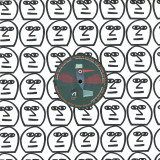
Tumblack really is a gorgeous late-70s disco-not-disco essential. It's an absolute MONSTER that will completely blow you away; and, yes, it's as compelling and trance-inducing as the cover. The audio for Tumblack has been carefully remastered by Be With regular Simon Francis, ensuring it sounds better than ever. Cicely Balston's expert skills have made sure nothing is lost in the cut whilst the records have been pressed to the highest possible standard at Record Industry in Holland. The cover of Tumblack is so iconic and we sought special permission from original artist Hélène Majera to recreate this at Be With HQ. It absolutely zings off the print and serves as the perfect finishing touch to this long overdue re-issue.

Buscar:not was
Reissue of the 3rd album of Patrick Jean-Marie recorded in 1985, Produced by Mambo Chick for Symbole Records.
Introducing “Women” by Kat-Tet, a unique musical gem straight from Guadeloupe, 1985. This rare album, the only studio-recorded masterpiece by the brilliant pianist Patrick Jean-Marie, transports us to a soundscape where every note is a journey.
It was a true opportunity for Patrick Jean-Marie and his band to showcase their talents, recorded under professional conditions, resulting in a sound of exceptional quality. The meticulous attention to orchestration is evident throughout, revealing a solidly crafted masterpiece.
Following the bold experiments with Atika and a solo album in 1983, “Women” marks a new chapter in Patrick Jean-Marie’s career. The album showcases a more structured approach that allows Kat-Tet to create a magical space for organized solos and climax. The dialogue between Patrick Jean-Marie’s piano and Luther François’s alto saxophone is constantly surprising and some powerful bridges by Patrick Jean-Marie are unforgettable.
A true classic in its genre, “Women” by Kat-Tet LP was an “hard-to-find” treasure in the vinyl world.
Today, Symbole is thrilled to bring this exceptional album back into the spotlight, sharing the beautiful and timeless music from Guadeloupe, 1985, with a high taste of Jazz !
- Also available on black vinyl - First ever official reissue - Produced in full cooperation with Hiroshi Yoshimura's estate - Liner notes by contemporary music writer and professor Junichi Konuma - Remastered from original sources by John Baldwin - First time on vinyl, cassette, and streaming - 2xLP vinyl housed in gatefold jacket - Discs cut at 45 rpm for optimal sound quality // Following their 2024 reissue of Hiroshi Yoshimura's classic album, Surround, Temporal Drift proudly presents the first-ever reissue of FLORA, Yoshimura's underappreciated ambient classic. FLORA was originally recorded and completed in 1987, and remained unreleased until 2006, nearly three years after Yoshimura's passing in 2003. The album is chronologically and stylistically a follow-up to his acclaimed 1986 works GREEN and SURROUND, wherein Yoshimura continues to play with the ambience of sound and the sound of ambience, underscoring his mastery in the field of environmental music. Yoshimura's other recorded works include Music For Nine Post Cards (1982), originally produced to be played back inside a museum space, and Pier & Loft (1983), commissioned as accompaniment to a contemporary fashion show.
- A1: Intro
- A2: Schizophrenia
- A3: Tom Violence
- A4: White Kross
- A5: Kotton Krown
- B1: Stereo Sanctity
- B2: Brother James
- B3: Pipeline_Kill Time
- B4: (I Got A) Catholic Block
- C1: Tuff Gnarl
- C2: Death Valley '69
- C3: Beauty Lies In The Eye
- C4: Expressway To Yr Skull
- D1: Pacific Coast Highway
- D2: Loudmouth
- D3: I Don’t Wanna Walk Around With You
- D4: Today Your Love, Tomorrow The World
- D5: Beat On The Brat
In October 1987, four months after the release of their critically acclaimed Sister LP, Sonic Youth showcased their latest work in a blistering set at Cabaret Metro, Chicago. The concert was introduced by Big Black's Steve Albini (who at the time was banned from the venue) and subsequently released as a semi-official bootleg under the title Hold That Tiger on writer/provocateur Byron Coley's impishly Geffen-baiting label Goofin' (years later the band would use this nom de guerre for their own imprint).
Hold That Tiger's sterling reputation among the Sonic Youth faithful is well deserved. In fact, it isn't a stretch to suggest that the album is to the first handful of SY releases what It's Alive is to the first three Ramones LPs – a feral and liberatory public snapshot of a band's blossoming imperial phase. Indeed, HTT is the sound of a group at the peak of their powers, presenting new songs alongside a handful of older ones with the kind of wild, cathartic enthusiasm common to rock 'n' roll's most revered live albums.
Taking nothing away from Sister – inarguably one of indie rock's first true masterpieces – it is reasonable that many fans prefer the live versions heard on Hold That Tiger to their studio counterparts. On HTT, Sonic Youth is a spiky, pummeling and confident force, alternately mammoth and meditative. Sister and its predecessor EVOL notably added an airy, dreamlike reverie to the band's turbulent doom-lurch, a stylistic evolution that seems to crystallize on HTT. Throughout, Kim Gordon's sinewy, sumptuous bass and Steve Shelley's propulsive, tom-heavy percussion provide the bedrock groove for Thurston Moore and Lee Ranaldo's ferocious barrages of noise-guitar crunch.
By 1987, the band was confidently articulating their dual lexicon of punk-noir dissonance and supernal, psychedelic sonic calligraphy – bending their jagged, streetwise gnarl into balloon animals of dazzling and beautiful songs. This collision of splendor and chaos would become a hallmark of the group's singular alchemy as well as provide a blueprint for the post-SST American underground they would help invent and ultimately nurture.
Hold That Tiger's encore – four songs by the band's beloved Ramones, which Thurston would later astutely compare to "the perfect pudding after a hearty meal" – serves as a reminder that, like any true punks, Sonic Youth never could resist a good, rousing anthem to send the kids home with their ears ringing, their hearts hot-wired.
This first-time reissue with speed-corrected master comes in a gatefold tip-on jacket. Mastered by Bob Weston from the original tapes. Recorded by Aadam Jacobs. Audio repair/editing by Aaron Mullan.
- A1: Freddie Mcgregor - Beat Down Babylon
- A2: Cornel Campbell - No Man's Land
- A3: Judah Eskender Tafari - Danger In Your Eyes
- A4: Tony & Howie - Fun It Up
- B1: Liberation Group - Namibia
- B2: Winston Francis - Love Me Today, Not Tomorrow
- B3: Roland Alphonso - Jah Shakey
- B4: Joe Higgs - Dinah
- B5: Brown Eagle - Natural Living
- C1: Freddie Mckay - So Long, Farewell
- C2: Jackie Mittoo - Mixing
- C3: The Heptones - How Can I Leave You
- C4: The Skatalites - Sudden Destruction
- C5: Lone Ranger - Dance A Fe Cork
- D1: Horace Andy - Mamie Blue
- D2: Johnny Osbourne - Run Up Your Mouth
- D3: Bob Marley And The Wailers - One Love
- D4: The Cables - What Am I To Do
Soul Jazz Records" Studio One Showcase 45 features a roll call of classic Studio One reggae legends including Horace Andy, Cornell Campbell, Bob Marley and The Wailers, Jackie Mittoo, The Heptones, The Skatalites and more - seminal reggae artists who all launched their careers at the legendary Studio One label. The album was previously only ever released as a long-deleted limited-edition seven-inch box set for Record Store Day. This album has now been expanded into a super double-vinyl album edition as well as first time on CD, with both featuring a massive eight bonus tracks of wicked Studio One classics and rarities.
2 tracks by Zinc and Bizzy B made in '93 or '94. Limited vinyl. Bigup Bizzy B forever!! the B side 'Gettin Down' was also released as a bizzy track years ago, but it was called 'Break of Dawn' - Zincwas in a contract at the time, so it couldn't have his name on it - but its the same tune. Note: btw - theres a kind of beat jump at the end of one of the tracks - its not a glitch, it's where the Amiga we were using couldn't cope with the edits! I had the same problem in the middle of 6 million ways, a few DJs used to complain to me about it loads - Zinc
Because of their mix of hellified gangster shit and progressive compositions, I once jokingly called Clipping "Deathrow Tull." Well, it's not a joke anymore. While Clipping's last few projects have been record-long concepts like classic prog rock, their cyberpunk-infused new album Dead Channel Sky is mixtape-like, a carefully curated collection in which every track is a love letter to a possible present. It sounds crisp and classic at the same time. When something strikes us as retrospective and futuristic at the same time, it's a reminder of how slipshod our present moment truly is. Juxtaposing high-tech, corporate command-and-control systems (the "cyber") with the lo-fi, D.I.Y. underground (the "punk"), cyberpunk proper starts in 1982 and ends in 1999, from Blade Runner to The Matrix. Concurrently, hip-hop matured, went through its Golden Era, then melted into further forms: it went from from Fab 5 Freddy to Public Enemy to Missy Elliott. While other genres flirted with it, hip-hop was fickle and fey. Rap and rock birthed mutant offspring maligned by most, and hip-hop's relations with electronica rarely fared any better. What if someone explicitly merged hip-hop and cyberpunk - those twin suns of the '80s and '90s - into one set and sound? After all, both movements are the result of hacking the haunted leftovers of a war-torn culture that's long since moved on. On Dead Channel Sky, Clipping texture-map the twin histories of hip-hop and cyberpunk onto an alternate present where Rammellzee and Bambaataa are the superheroes of old; where Cybotron and Mantronix are the reigning legends; where Egyptian Lover and Freestyle are debated endlessly, and Ultramag and Public Enemy are the undeniable forefathers; where the lost movements of 1980s and the 1990s are still happening: rave, trip-hop, hip-house, acid house, drum & bass, big beat-the detritus of a different timeline, the survivors of armed audio warfare. Clipping are no strangers to sci-fi: two of their records were nominated for Hugo Awards (one of science fiction's top literary prizes), and a novella spun-off from their music was nominated for a third. On Dead Channel Sky, Clipping's co-conspirators include everyone from the guitarist Nels Cline, to their labelmates Cartel Madras, rapper/actor Tia Nomore, and wordsmith Aesop Rock. Diggs is known for intricate lyrics and rapid-fire rapping, and the tracks that Snipes and Hutson build in the background are no less complex. All of the above serves to give us a glimpse of an adjacent possible present, where hip-hop and cyberpunk are one culture. Binary stars are often perceived as one object when viewed with the naked eye. Like those twin sun systems, it'll take some special equipment and some discerning attention to pull the stars apart on this record. As Diggs barks on the fire-starting "Change the Channel": Everything is very important!
‘Nothing Iz Sacred’ is a statement, a collection of tracks that resist the pull of the fleeting, throwaway nature of today’s music scene. In an age where everything is often stripped down, consumed, and discarded, this 8-track LP stands as both a nudge and a reminder—a poke at the culture that surrounds it - it isn’t here to blend quietly into the background, nor to satisfy the urge for quick hits and shallow thrills.
Each track on the LP is woven with the sounds and textures Workforce has become known for, yet there’s a rawness here—a willingness to push boundaries, to blur the edges of genre and style. The LP is a blend of the familiar and the experimental, where thoughtful moments meet jagged beats, and where soulful undertones collide with darker layers. It’s a space that resists easy categorization, daring listeners to explore without expectation, to find meaning in the spaces between the sounds. This isn’t a record designed for the disposable playlists of tomorrow; it’s for those who know that music can mean more, and who understand that it is meant to live with us, to grow, and to shape the communities around it. This record isn’t about the chase for the next hit or the endless scroll; it’s for the ones who value artistry, who find culture in the smallest details, who want something real to hold onto.
‘Nothing Iz Sacred’ is brought to life with the voices and musicality of some incredible collaborators. Tyler Daley’s unmistakable warmth, Bobbie Johnson’s sharp lyricism, Tamara Blessa’s haunting soul, Leroy Horns’ textured brass, and Ed Zuccollo’s nuanced piano work all carve their own paths through the record. Together, they amplify the album's heartbeat, adding layers of richness and depth.
- A1: Boylan, U.s.f, D.o.k - Prime Directives
- A2: Boylan, Slimzee - Mash Up
- B1: Boylan, Slimzee - Box
- B2: Boylan, Trends - Septic Peg
- B3: Boylan, Trends, Slimzee - Thunder Ridge
- C1: Boylan, Youngsta - How Dare You
- C2: Boylan - Podracer
- D1: Boylan, D.o.k - Depth Charge
- D2: Boylan, Slimzee - Mitzi
- D3: Boylan, D.o.k, Youngsta - Just Breathing
The Shard: A colossal feat in engineering, savagely piercing the London skyline with zero f**ks.
Shard View: An uncompromising moment in Boylan’s bass engineering, piercing the London soundscape with even fewer f**ks.
It’s 2025. We’ve officially moved a second closer to extinction and Boylan’s wasting no time. After years of releasing noxious missives on the most influential likes of FWD>>, Artikal, Deep Dark & Dangerous, Sentry and Mean Streets, he finally launches his own label - Shard View.
A brand new vehicle for the potent strain of ice cold apocalyptic breakbeat he and his closest allies are currently making, Shard View is inspired by the vista he and the likes of Slimzee, Trends, D.O.K, U.S.F and Youngsta see every time they’re cooking up a darkness in his Peckham studio.
Coated in visual armor from Simon Oil Gang, Shard View is London, Detroit and Berlin wrapped up in one. It’s bass, it’s techno, it’s tribal, it’s No U-Turn, it’s Virus, it’s Horsepower, it’s warehouse raves. It’s timeless. And it starts with ‘Tunnel’, an extensive 10 track trip into instrumental, full physical, heavily percussive unapologetic breakbeat music. Boylan is the main consistency throughout but all the above-mentioned names are involved and always will be. Like the great collectives of past bass epochs, the energy here is molten as the friends inspire each other with this fresh take on a classic sound.
Two more EPs should follow later this year. And as the world continues to ramp up the turbulence, so will Shard View. This is not a drill.
Any questions about any of these products feel free to get in touch and we'll help you out!
albert.preston@sequence.cc
360 mcn white-white light cardboard paper / one side only hand plasticization / 2 separated parts prints / hand gluing / PVC outers / original artwork / gatefold sleeve / Bandcamp limited edition 30x60 cm insert with extended liner notes by Tony Higgins and Interview with Babs Robert and Sébastien Gorlé with exclusive pictures and self-portrait by Babs Robert himself printed on GF Smith "Takeo Tant Select" Canvas Paper tip-on left jacket panel / Exclusive never released Memorabilia from Babs Robert's vault.
Personnel:
Babs Robert - alt sax, tenor-sax, electric tenor-sax, Bin Recorder, Acme siren, Chinese-bell, sleigh-bells, maracas, tambourine,hand-rattle,claves)
John Van Rymenant - baritone-sax, fluegelhorn, Bala, tambourine, sleight-bells, cowbell, triangle, claves
Johnny Peret - vibes, bongo's, cowbell, maracas, castanets, rattle-snakes, tambourine, drums, woodclock, trinagle
Johnny Brouwers - piano, prepared-piano, triangle, cowbell, sleigh-bells, maracas, caves,hand-rattle, guiro, woodblock, tambourine
Paul Dubois - bass, triangle, cowbell, claves, rattlesnakes, hand-rattle, woodblock, tambourine
Michel Gobbe - bass,Chinese-bell, claves
Robert Pernet - drum, tambourine, seven-notes M'Bichi, guiro, alarm-siren, home-made metal xylophone, African telephone-drum, triangle, sleigh-bells, Siku
Notes:
Despite its modest role on the world stage, Belgium has produced a number of internationally renowned musicians and composers. There is the iconic gypsy jazz guitar maestro Django Reinhardt, whose position remains unassailable, and guitarist/harmonica player Toots Thielemans, who became an internationally renowned artist performing and recording with Bill Evans, Oscar Peterson, Ella Fitzgerald, Peggy Lee, Shirley Horn and Quincy Jones. The other key Belgian figure is composer/arranger Francy Boland, co-leader with US bebop drumming legend Kenny Clarke of Europe's leading big band of the 60s, the Clarke-Boland Big Band.
The Love Planet performed in the main clubs of Brussels, such as Blue Note, Pol's Jazz Place, and Smog as well as in major musical events throughout Belgium including to big festivals in 1969 - the Avant-Garde Festival in Ghent and the First International Jazz Event in Liege – where the Love Planet shared the bill with Miles Davis - and the Bilzen Jazz Festival in 1970. The contrast between the musical architecture of the themes and sonic freedom in the improvised playing perfectly illustrated the polymorphism – an order within disorder – which the Love Planet aimed for.
The initial original quartet line-up was Babs Robert (sax), Paul Dubois (bass), Johnny Brouwers (piano), and Johnny Peret / Robert Pernet (dru- ms). On the album session, the quartet was augmented with the addition of John Van Rjimenant (saxes) and Michel Gobbe (bass). As well as their main instruments, the band members also played an array of unusual instruments, principally percussion. This is the first official re-release
of the 'Babs Robert and the Love Planet'. Original copies of the album fetch many hundreds of Euros on the collecting circuit and it remains a curious and fascinating window into a moment in time that still resona- tes some fifty years later. Come with us to the Love Planet. (Tony Higgins)
We are excited to announce the first reissue of Tony Scott's iconic “Manteca” album originally released in 1973. This 180-gram vinyl audiophile edition captures the essence of a true master of contaminated jazz, allowing listeners to experience Tony Scott's vibrant artistry like never before.
Originally described in the album’s liner notes by Sam Charters, "Manteca" embodies the spirit of the jazz musician’s journey—a testament to durability, warmth, and exuberance. Charters notes, “You have to be durable these days to be a jazz man... a musician like Tony Scott has the kind of personality that it takes to be a jazz man today” — a sentiment that perfectly encapsulates the artist's incredible career.
From the bustling club scene of New York in the 1950s to captivating audiences in Japan, Scott's journey brought him to Sweden in the summer of 1973, where he collaborated with exceptional local musicians. The result was a collection of vibrant, uptempo jazz tracks combined with reflective ballads, showcasing the remarkable versatility and inventiveness of Scott's clarinet, baritone, and even his distinctive scat vocals.
The album opens with the titular track "Manteca," setting an exhilarating tone that endures until the final, almost sinister note of "One For Topsy." Complemented by an all-star lineup, including bassist Sture Nordin, drummer Ed Thigpen and legendary percussionist Sabu Martinez, this session embodies the international spirit of jazz—a genre that transcends boundaries and unites souls.
This audiophile edition has been meticulously remastered to provide an unparalleled listening experience, preserving the authenticity of the original while ensuring superior sound quality. With only a limited amount produced, this vinyl reissue is a must-have for collectors and jazz aficionados alike.
Join us in celebrating the reemergence of Tony Scott's "Manteca," a true landmark in jazz history, and immerse yourself in the dynamic sounds that have inspired generations.
First official vinyl reissue
180g virgin vinyl pressing from Pallas / Germany
350g. cover
Original artwork and liner notes
Recorded in Stockholm in 1973
- A1: Small Metal Gods
- A2: Died In The Wool
- A3: I Should Not Dare (For No)
- A4: Random Acts Of Senseless Violence
- B1: A Certain Slant Of Light (For Mk)
- B2: Anomaly At Taw Head
- B3: Snow White In Appalachia
- B4: Emily Dickinson
- C1: The Greatest Living Englishman (Coda)
- C2: Anomaly At Taw Head (A Haunting)
- C3: Manafon
- C4: The Last Days Of December
- D1: When We Return You Won't Recognise Us
"First time on vinyl for ‘Died In The Wool’, the 12 song remix companion to David’s 2009 album, ‘Manafon’, plus the non-album track “When We Return You Won’t Recognise Us”
Features remixes by David Sylvian, Dai Fujikura, Jan Bang & Erik Honoré.
“When We Return You Won’t Recognise Us” was specially commissioned by the 2nd Canary Islands Biennial of Architecture, Art and Landscape 2008-2009."
Love Raid is first in a series of cassette-only mixtapes with the cult WFMU show and blog Bodega Pop collecting assorted digs from across New York's bodegas and cell-phone stores. This first edition is focused on leftfield, novelty, and protest 45s from across the Arabic world recorded between 1960 & 1974.
"A series of random discoveries in the mid-1990s led me to abandon American and British pop and focus on non-English-language music, predominantly Arabic, for the next two decades.
Feeding my ears required biking down to Bay Ridge, Brooklyn, or hopping on the subway to Steinway Street in Queens, where I would pop into a handful of the local bodegas and immigrant-run cell-phone stores, some of which offered music from North Africa and the Middle East on cassettes and compact discs.
When CDs spiralled into obsolescence in the mid-2010s, I reluctantly made the switch to vinyl, concentrating on 45s and intentionally filling holes not well represented in the digital era – more artists than not hadn't made the transition from analog in the 1980s. This meant focusing on singles by a lot of artists I'd not heard of, and it quickly became evident just how much of the era – from approximately 1960 to 1974, when 7" records were all but abandoned in Egypt and Lebanon – had been forgotten.
What also became evident was the breadth of popular music issued by even hegemonic titan Sono Cairo. The consensus is that state radio and music publishing ignored traditional folk, shaabi, and other lowbrow pop in favor of the exalted art song we associate with Oum Kalthoum, Abdel Halim Hafez, and Farid al-Atrash.
While this active neglect of the broadest Arabic pop spectrum is mostly true, I accumulated a not inconsequential number of what I can only describe as "novelty" records by mostly one- and two-hit wonders. From catchy gimmicks like the "doktor, ya habibi" of Maha's "Doktor" and the "boom boom boom" of twins Thunai Badr's "Love Raid," to the Monty Python-level silliness of Sayed Mandoline's fake Italian crooning and maniacal laughter in "I Present to You the Mandolin," these were sounds I was genuinely surprised to hear.
Even more remarkable were the songs recorded in English: Karim Shukry's celebratory "Ramadan" and Motyaba & Nada's civil-rights plea "No Black No White" are two of my favorites, and thus included in the present collection.
The tracks compiled here are often as beautiful as they are beguiling, but while the intention was to absolutely put together a solid listen, it was also my hope to slightly expand our understanding of Arabic music of this period beyond not just the usual suspects, but also subjects – and treatment of same."
--Gary Sullivan.
Archeo Recordings serve a special delight with two extended and alternate reworks from the all star cast behind the recent AR025 Aqua Cheta remix 12”. Dipping into the cool waters of Infradisco’s original LP once again, Hear & Now and Manu Archeo look to the horizon and channel the horizontal with a couple of ambient suites, new age dreamscapes and day trippers, each awash with positive vibrations and healing frequencies.
Perugia's peerless Hear & Now open the 12", cultivating pulsing chords, hazy reverb and elegiac fretwork for a White Isle romance steeped in the sunset lineage of the Café Del Mar. Heart-swelling piano and restrained bass throbs conspire to see the rest of the world melt away, with occasional percussion the only reminder that time is still passing. Though radically different from their dance-floor driven revision on the 12", this is no less impactful, swapping the club sonics for the sensation of sheer beauty.
Not content with making a spectacular production debut via his dubbed out diversion of "Dulcis" last time out, Manu Archeo makes further waves with a meditative masterpiece - spaced out and sprawling through a sultry thirteen minutes. An echo drenched meditation script gradually sinks into the immersive ripple of balmy horn, delicate hand percussion and watery pads, making room for a succession of stunning lead-lines and glistening sequences. If you thought the new age of New Age was over, it's time to open your mind.
Kim Rapatti, aka Mono Junk, is a key figure in Finnish techno, known for his deep, hardware-driven sound. A firm believer in analogue synthesis, he has been shaping raw and hypnotic club tracks since the early '90s, drawing inspiration from Detroit pioneers like Derrick May and Juan Atkins. His releases have appeared on his own imprint, DUM Records, as well as Skudge, Forbidden Planet, and most recently, Cold Blow—earning him a dedicated following among DJs and collectors.
Recorded in Turku in 2002 using the Korg Minikorg 700s, Loving Your Mind showcases Mono Junk's signature stripped-down grooves and live hardware improvisation—an essential pick for anyone seeking an authentic slice of early-2000s machine funk. Alongside the title track is Gamma, a previously unheard production that was commissioned as an exclusive for a highly regarded mix series, further cementing Mono Junk's status as a trusted name in underground techno. Built around a percussive groove, a deep electro-funk bassline, and a four-to-the-floor pulse, the track unfolds in an atmospheric haze, balancing dancefloor functionality with hypnotic depth.
The B-side features remixes from Katerina and Sansibar, two of Finland's most notable international breakthroughs in recent years, known for their modern yet timeless club productions that nod to classic techno and house.
Katerina, a versatile DJ and producer with releases on Rekids, Running Back, and Cómeme, transforms Loving Your Mind into a high-energy techno duet, layering her own vocals over the original vocal track, with her infectious synth lead as the icing on the cake.
Sansibar, one of the fastest-rising names in the underground with releases on Kalahari Oyster Cult, WARNING, and Émotsiya, delivers a darker, four-to-the-floor rework—bringing a sinister edge while maintaining the raw energy of classic machine funk.
Soulful hip hop instrumentals from Italy on Best Record-affiliated Quattro Bambole! "The "Moderna Sonorizzazioni" series by Quattro Bambole Music continues its investigation of the infinite expressive possibilities of instrumental hip-hop, recognizing it as the most contemporary form of library music. After the first two chapters - signed by Biga and JayBee Vibes - the third volume of the series, "Sport & Calcio", features the Roman producer Delphi for whom there was a lot of anticipation on the part of both Italian and scattered beatmakers everywhere in Europe and the United States. With the subtitle which is already a declaration of intent ''Tales of a boy from Rome....'' etc. etc., "Sport & Calcio" is an instrumental fresco in which football and sport become narrative pretexts to evoke images, memories and suggestions. The twelve tracks that make up the album are real cinematic sketches, in which Delphi (born Valerio Del Prete) combines raw beats, nostalgic loops, sample-delia and a narrative that evokes family Sundays, spent on the street as well as stadium, and the heat of the crowded stands. Therefore a work that is musically declined based on moments and emotions.. ''Sport & Calcio'' is therefore a deliberately introspective and not very ''danceable'' work. Sound photographs, short descriptions, themes, small fragments associated with television reports on sport... with which the artist touches chords that allow him to express a different compositional depth, a conceptual work, more descriptive and functional to the line of "Moderna Sonorizzazioni" series."
- A1: E Nun Ce Voio Sta
- A2: Squadra Antifurto (Suspense)
- A3: Squadra Antifurto (Azione E Mistero)
- A4: Squadra Antifurto (Azione)
- A5: Squadra Antifurto (Nico A New York)
- A6: E Nun Ce Voio Sta (Versione Fisarmonica E Chitarra)
- B1: Squadra Antifurto (Nico A New York #2)
- B2: Squadra Antifurto (Azione #2)
- B3: Squadra Antifurto (Suspense #2)
- B4: Squadra Antifurto (Azione #3)
- B5: E Nun Ce Voio Sta (Versione Chitarra)
- B6: Squadra Antifurto (Azione E Mistero #2)
- B7: Squadra Antifurto (Azione E Mistero #3)
- B8: E Nun Ce Voio Sta (Titoli Di Coda)
Transparent Amber[31,51 €]
Here at Four Flies, we kind of feel we need a bigger word than 'proud', this time, to present, in collaboration with Beat Records, the first-ever release of the original soundtrack written in 1976 by Guido & Maurizio De Angelis for the legendary Squadra Antifurto, the second chapter of the comedy-infused crime saga directed by Bruno Corbucci and starring Tomas Milian as the iconic Italian Police Marshal Nico Giraldi.
The excitement in this case is nothing short of gigantic, difficult to rein in for those who, like ourselves, grew up adoring the character played by Milian as one of our cult heroes, and dreaming that the soundtracks of the first three films in the saga – the only ones composed by the De Angelis brothers – would one day be released.
Since the launch of our label, Squadra Antifurto has been at the top of the list of film scores we most wanted to release. Until a few months ago, this dream of ours seemed destined to remain just that, so strong was the conviction in all of us that the master tapes were definitively lost, that they had forever vanished into thin air. That's why their recovery, made possible by Maurizio De Angelis himself and the persistence of our friends at Beat Records, is an extraordinary feat.
Nearly 50 years after it was first heard in cinemas, the soundtrack penned by the De Angelis brothers is resurrected in its entirety and can finally shine its incredible power all over us.
Beautifully seeping through this score – like many others composed by the golden duo in the 1970s – are elements from the Italian, and especially Roman, folk tradition, for instance in the warm, heartfelt ballad sung by Alberto Griso, "E nun ce voio sta," which first plays in the opening credit sequence and is then reprised in various forms throughout the film, culminating with the soul-stirring orchestral version that closes the album's tracklist.
But as in any Italian crime film worthy of that name, a different soundscapetakes centre stage: it's the music that accompanies the countless scenes of tension, action, and pursuit that punctuate the film, and which has made us fall madly in love with this score.
The main theme is a prog-funk joyride, drawing inspiration from the traditional tarantella but elevated to irresistible energy thanks to a rock orchestration featuring psychedelic flutes, wild percussion, distorted electric guitars, piano chords, and various feedback and delay effects.
The resulting groove is just mind-blowing, and we almost can't believe it's finally available on a record, completely remastered for vinyl.
We really couldn't be prouder, and dedicate this release to all passionate fans of Italian crime films, the De Angelis brothers, and Tomas Milian aka Nico Giraldi.
Available starting April 12th on standard black vinyl and limited coloured vinyl (transparent amber, limited to 300 copies).
Here comes a true South American LATIN JAZZFUNK treasure from Argentina!!!
Sound Essence is more than proud to present these lost recordings from 1974 to music lovers again in all their glory.
CARLOS FRANZETTI, who has once again been in the spotlight in recent years thanks to the re-release of his strong late 70s JazzFusion record "Graffiti", was also in charge of this record called DEDOS. The story behind:
In 1974, after CARLOS FRANZETTI was living in Mexico and worked as the musical director of FERMATA International, he returned to Argentina. In Buenos Aires his friend MOCHIN MARAFIOTTI was recently appointed A&R at the local recording label MUSIC HALL . Marafiotti asked Carlos if he wanted to record some of his music and he answered that he had in mind a group playing LATIN JAZZ . After a couple of meetings they came out with the idea of covering the RUBEN RADA tune DEDOS recently recorded in the US by AIRTO MOREIRA along with the OPA TRIO. Carlos contributed his own composition "Doce y Diez" . He selected the group consisting of his friend and member of the uruguayan Band TOTEM, Ruben Rada on percussion, Ricardo Lew on guitar , Emilio Valle on bass and Osvaldo Lopez on drums covering keyboards and vocals himself . This formation recorded tracks and vocals in a three hour session and the next day the track was mixed. Music Hall released "Dedos" and "Doce y Diez" on a single record and after months of discrete airplay and not so good sales the project for an album was draped.
"It is a rewarding experience to see a re-release of this two songs a half century after the original release.
It was hot and it looks and sounds even hotter now. I love it!" (Carlos Franzetti, New Jersey, December 2024).
NEW LP PRESSING on Opaque Yellow Wax
Released in September 1978, a mere two months before YMO’s debut, Cochin Moon is a clear precursor to the groundbreaking synth and sequencer-dominated sounds that would come to define the iconic trio. Huge tip!
Credited to Hosono and Pop Art legend Tadanori Yokoo (who created the cover art), Cochin Moon is a fictional soundtrack to a journey into unknown worlds, inspired by Hosono and Yokoo’s trip to India.
The unbelievably prolific Haruomi Hosono is one of the major architects of modern Japanese pop music. With his encyclopedic knowledge of music and boundless curiosity for new sounds, Hosono is the auteur of his own idiosyncratic musical world, putting his unmistakable stamp on hundreds of recordings as an artist, session player, songwriter and producer. Born and raised in central Tokyo, his adolescent obsession with American pop culture informed his early forays into country music, which he would revisit later in his career. Hosono made his professional debut in 1969 as a member of Apryl Fool, whose heavy psychedelia was somewhat at odds with his influences, which leaned towards the rootsy sounds of Moby Grape and Buffalo Springfield. The latter was one of the main inspirations for his next group, Happy End, whose unique blend of West Coast sounds with Japanese lyrics proved to be highly influential over the course of three albums. After the band’s amicable break up in 1973, Hosono began his solo career with Hosono House, an intimate slice of Japanese Americana recorded inside a rented house with recording gear squeezed into its tiny bedroom. Hosono’s solo career would take many twists and turns from this point forward, with forays into exotica, electronic, ambient, and techno, culminating in the massive success of techno pop group Yellow Magic Orchestra (YMO).
Released in September 1978, a mere two months before YMO’s debut, Cochin Moon is a clear precursor to the groundbreaking synth and sequencer-dominated sounds that would come to define the iconic trio. Credited to Hosono and Pop Art legend Tadanori Yokoo (who created the cover art), Cochin Moon is a fictional soundtrack to a journey into unknown worlds, inspired by Hosono and Yokoo’s trip to India. Initially the album was to be a kind of ethnographic musical document, using found sounds and field recordings made by Hosono himself. Instead, after Yokoo introduced Hosono to the sounds of Kraftwerk and krautrock during the trip, Cochin Moon became something much stranger. Created almost entirely on synthesizers and sequencers with the help of future YMO collaborators Ryuichi Sakamoto and Hideki Matsutake, the music on the album is the perfect encapsulation of Hosono’s concept of “sightseeing music,” transporting the listener to an exotic place that may or may not exist. This highly sought-after album sees its first-ever official release outside of Japan.
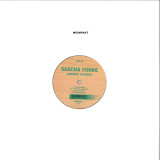
ascha Funke is creating a long overdue monument to an almost forgotten cultural artefact of the GDR: the ‘Germina Speeder’ was the only skateboard made in East Germany before reunification and was launched in 1986. It was produced by VEB Schokoladen-Verarbeitungsmaschinen (a state-owned chocolate processing machine factory) in Wernigerode and was therefore affectionately known as the ‘chocolate board’. However, it was hardly suitable for actual skateboarding due to technical inadequacies. It is not known whether Sascha himself owned such a board, but the tracks on the ‘Germina Speeder’ EP definitely roll better than the original. The opener ‘Blaupunkt’ breathes the euphoric spirit of the legendary Berlin club ‘E-Werk’, while the title track would have been more at home at the ‘Dubmission’ parties in the Turbine. Sascha leaves the 90s behind with radiant positivism; ‘Bo Knows’ sounds more like a 2000s open air at Café Schönbrunn. The EP closes with ‘Mastermind’, a high-octane psy-proghouse banger that, like all four tracks, quotes the past but still has both feet on today’s dance floors. Or rather, is dancing. 4:1 for love!
Sascha Funke setzt einem nahezu vergessenen Kulturgut der DDR ein längst überfälliges Denkmal: Der “Germina Speeder” war vor der Wende das einzige in Ostdeutschland hergestellte Skateboard und kam im Jahre 1986 auf den Markt. Es war ein Erzeugnis des VEB Schokoladen-Verarbeitungsmaschinen aus Wernigerode und wurde daher liebevoll auch als “Schoko-Board” bezeichnet. Zum eigentlichen Skateboardfahren war es allerdings aufgrund von technischen Unzulänglichkeiten kaum zu gebrauchen. Ob Sascha selbst ein solches Board besaß ist nicht überliefert, aber die Tracks auf der “Germina Speeder” EP rollen allemal besser als das Original. Der Opener “Blaupunkt” atmet den euphorischen Geist des legendären Berliner Clubs “E-Werk”, während der Titeltrack eher bei den “Dubmission” Parties in der Turbine gelaufen wäre. Mit strahlendem Positivismus verlässt Sascha die 90er; “Bo Knows” klingt eher nach einem 2000er Open Air am Café Schönbrunn im Volkspark Friedrichshain. Die EP schließt mit “Mastermind”, einem hochoktanigen Psy-Proghouse Knaller, der wie alle vier Tracks zwar das Vergangene zitiert, aber dennoch mit beiden Füßen auf den Tanzflächen von heute steht. Beziehungsweise tanzt. 4:1 für die Liebe!