Saxophonist, producer and composer Brian Allen Simon explores darker hues, transposing waking and altered states under his studio veil Anenon. On the deeply evocative new album 'Dream Temperature', he shifts electronic processing to the foreground, introducing digitized wind instruments and unworldly atmospherics, not heard since his innovating mid-late 2010s output.
A longtime Los Angeles resident, born and raised, Brian Allen Simon has expressively operated under the moniker Anenon, releasing the highly revered 'Petrol' (2016), 'Tongue' (2018) and the viscerally beautiful 'Moons Melt Milk Light' (2023), in a line of unwavering musical dialogues. While the penultimate album was a deliberate, reductive, entirely acoustic detour that was born out of a want to unplug, 'Dream Temperature' sees Brian primed with a newly discovered wind synthesizer as his central compositional tool, alongside acoustic piano and tenor saxophone. The entirety of the album's electronics are triggered by Brian's lungs, generating otherworldly synths modulated by expressive breath control, channelled through the laptop as the core processing chamber for added textural components and field recordings.
A free floating and heavy emotional resonance marks 'Dream Temperature' from beginning to end, invoking the feeling of waking up, still heavy from a night of half-remembered dreams, and continuing one's day in this state. Simon maps out the album's spatial voice early on the statement title track, a deep, yet compact cut, generated from digital saxophone rasps that whistle by in close proximity, along with haze filled textures and sub bass. There is a sonic oscillation of urban grit and pastoral drift throughout as tracks pass by like introspective thoughts, fueling both a tense and ethereal quality that underpins the album. Interluding solo and part-solo piano improvisations 'Last Sun 1' and '2' are positioned adjacent to the buffering digital soundscapes. Their softer, still processed timbres pierce the melancholic exterior, offering a contrasting tenderness that could echo the grace of Ry?ichi Sakamoto, the spiritualist rigor of ECM's Keith Jarrett and a touch akin to Aphex Twin's piano miniatures. 'Nulle Part 1+2' signals the first appearance of an acoustic wind instrument, as tenor saxophone flourishes are juxtaposed against noisy drones, all shouting at the void, with notes resurfacing like lost digital data.
The album was recorded at home during either sunset or nocturnal hours between September of 2024 and October of 2025, a period in which Brian found himself craving more lengthy and intimate studio time as he searched for more pronounced textural qualities amidst his new sonic ambitions. 'When The Light Appears, Boy' shows further evidence of this deeper universe, revealing a grittier edge as the album's essential blueprint is sonically inked. A sprawling expanse of wind synths rhythmically encircle the listener before a dreamy, ghostly ambience blankets 'Toyama'. The sound is evocative of the productions of post dubstep era luminaries such as Burial or the productions of HTRK's Nigel Yang. More isolating and enveloping than the previous all acoustic record, this is music both disorienting and yet warmly inviting all at once. A sonic diarist at heart, personal field recordings were also taken from Sardinia, Japan, Big Sur and LA which intersect at unexpected moments throughout the album's 31-minute play time.
'Dream Temperature' is a vital coalescence of both Simon's electronic and acoustic practices with repositioned electronics akin to earlier works, both haunting and elegant, yet still profoundly personal. Simon continuously resonates as an experimental outlier treading an enthralling, non-linear musical path. This music resolutely glows with an unknowing aura, like an untapped energy source waiting to be discharged.
quête:not was
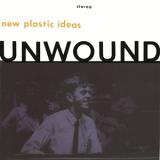
An album Maximum Rock 'N' Roll deemed not punk enough to review, Unwound's 1994 sophomore effort was a lethal depth charge aimed at major label grunge and independent hardcore alike. From the off-kilter, vertiginous rhythm of "Entirely Different Matters" to the neck-snapping velocity of "What Was Wound" to the relentless pounding at the end of "All Souls Day," New Plastic Ideas is the Sonic Youth-loving older sister to Fake Train's postpunk- obsessed little brother.
For the last few years Acid Jazz has been the proud custodian of the Albarika Store legacy. Hailing from the small but culturally-significant state of Benin, the label was operational from the late-‘60s until the early ‘80s, and was home to some of the finest, deepest, rawest West African cuts ever. A font of local and regional music, infused with contemporary Western influences, the beating heart of the Albarika sound was the mighty T.P. Orchestre Poly-Rythmo, who in various guises released dozens of recordings for the label, under the leadership of Mêlomé Clément. The intoxicating originality of their sound stems from their combination of folkloric and sacred rhythms of the region, with the modernist sound of soukous, afrobeat, soul and funk. Recorded at EMI Studios in Lagos, these recordings have a unique high fidelity and have been a target for grail-hunting record collectors for decades. For this incredible 2LP collection, Dean Rudland and David Hill compile the Poly-Rythmo 45 releases; 7” single and EP sides lost to the seeds of time. Until now. Brought together for the first time, presented in a beautiful wide spine layout, the 2 LPs present a snapshot of some of the group’s finest work from the ‘70s, their distinctive beat already honed. The printed inner sleeves include images of the rare and collectable original labels and sleeves, along with sleeve notes by Francis Gooding
'Matsuli Music is proud to announce the first vinyl reissue of Philip Tabane’s Sangoma ("Spiritual Healer") since its 1978 release. Remastered from the original tapes with lacquers cut by Frank Merrit and pressed on 180g heavyweight vinyl at Pallas in Germany, this definitive edition re-asserts the power of one of South Africa’s landmark recordings. Featuring new liner notes by cultural critic Kwanele Sosibo and artwork restoration by Siemon Allen, Sangoma returns in full force through an extended Malombo line-up, fronted by Tabane's spellbinding guitar - ancestral, timeless, and unbound.
'Philip Tabane (1934–2018), the mercurial guitar genius of South African music, forged a sound that was as rooted in the spirit world as it was in daily life. With the Malombo Jazzmen of the 1960s, Tabane disrupted Western notions of “jazz,” bringing the resonant rhythm of cowhide malombo drums into the foreground. While outsiders and the uninitiated often reached for labels like “primitive yet sophisticated,” Tabane and his collaborators named it more truthfully: “music of the spirit.”
'By the time of Sangoma, Tabane stood at a crossroads. Fresh from a period of three years’ touring in the United States where he graced the Newport Jazz Festival, and played alongside Miles Davis, Herbie Hancock, Pharoah Sanders and others, he brushed off comparisons with characteristic self-assurance: “No, I don’t play like Miles. Miles plays like me.” Back home in South Africa, and with a newly signed international distribution deal with WEA Records, he harnessed this momentum into a larger band setting, capturing a rare intensity.
'The result was Sangoma—an album that bridges contradictions: expansive yet intimate, celebratory yet haunted by exile and return. Tracks such as “Sangoma,” “Hi Congo,” and “Keya Bereka” are not simply performances but living testaments, songs that would remain in his repertoire for decades. Unlike the moody, immersive character of much of his work, here Tabane is on the move—urgent, restless, uncontainable. As he announces on the second track, “Maskanta wa tsamaya” (“something that kicks ass”).
More than four decades on, Sangoma is both an historical document and a timeless invocation. From his home in Mamelodi to the world and back again, Tabane’s spiritual healing endures—raw, electric, and unbowed.'
Artist and multi-instrumentalist Flaer looks to the landscape to explore pastoral melancholy on debut release, Preludes. It is released in a second edition black vinyl, with an alternate cover artwork.
Ensconced in his family home in rural Leicestershire in the early months of 2020, painter and musician Realf Heygate (b. 1994) picked up his childhood cello for the first time in several years and began to play. Setting himself parameters to only record onto 4-track tape with acoustic instruments – cello, piano and acoustic guitar – he assembled a suite of instrumental compositions that form the basis of Preludes, his debut album as Flaer and the inaugural release on Odda Recordings.
Channelling the tension and unease between the pastoral idyll of the English countryside and the darkness which lurks beneath the surface, the mini-album draws inspiration from the analogue aesthetic of 1970s folk horror films, weaving field recordings of birdsong, church bells and the natural environment into chimerical melodies that reflect on Heygate’s childhood experiences of rural England.
“It was really important not to isolate the sound from its environment,” he explains, describing the compositional and recording process as “site-specific”. Developed over a series of intuitive musical enquiries, the mini-album’s uncanny quality emerges from combining raw demo takes with overdubs of almost orchestral grandeur.
Heygate points to the final track as indicative of the work as a whole: “‘Follow’ really is the mantra for the release and embodies the practical approach I was taking to music making: not to force the music but see where it takes you.”
As a painter, Heygate’s practice takes artefacts through sequences of reproduction that embrace the fluctuating materiality of the copy. Since obtaining a degree in Fine Art from Central Saint Martins in 2017, he has exhibited solo at Peter von Kant and Springseason galleries in London, and has participated in group shows at Saatchi Gallery, Cob Gallery and Senesi Contemporanea.
Describing his artistic practice as one of self-erasure, music instead provides Heygate with a more personal and autobiographical outlet. Where the two worlds combine is on Preludes’ striking artwork, which features paintings of 13th century stone carvings from the font of the church in the town where he grew up.
Speaking to a time where people were connected to the land in a more profound way, each symbol is assigned to a track on the album, which Heygate likens to giving them a title.
“To add that one juxtaposition might open a whole new interpretation or language that might be hard to find otherwise,” he explains.“Over time it might reveal itself to you, which is why I'm excited about it being released. To throw them out there and see what comes of it.”
- Blow Mix
- Fluxstrata
- Phract Lament
- Hark Mix
- First Reflex
- Mu
- Drift Lens
- Tangent Bile
- Allegria
- Dull Echo
- Crabwalk
Late Bush presents “Hoarses” on the label Vlek Records, an original repertoire in which he blends electronic music - power ambient, IDM, avant-pop - and early music, which share the same affective intensity, a taste for ornamentation and a form of sonic excess.
At the heart of this material, AI-cloned voices, both human and spectral, extend the idea that any baroque interpretation is a reconstruction of the unknown. They contrast with organic strings recorded with Echo Collective, in a temporal and radical hybridization, creating a fluid and unstable material, between memory and simulation.
One of the conceptual starting points is essential: we have no sonic trace of baroque music as it was played. Only scores remain, and sometimes contradictory indications, a sensitive archaeology, even an imaginary projection.
Everything that is played today is therefore, in fact, a reconstruction, an interpretation of a vanished material. According to this logic and to pursue this reflection, the cloned voices, transformed by AI, are not a rupture but propose a natural continuation of this chain of reinvention, of this relationship to the invisible, to the indefinite. They do not aim to replace a human voice, but rather to embody the fact that any baroque restitution is already a fiction.
The project does not seek to imitate the real, but to play with the thresholds of the plausible, of the spectral. The music then becomes a fluid material, manipulable, alterable, and the performers, musicians or machines, are its vehicles.
The strings, carried by the sensitive and expressive interpretation of Echo Collective, breathe into the project a vibrant authenticity. Their presence brings an organic and tactile dimension that contrasts with the fluid and intangible aspect of the voices and the electronics.
After a savage summer of performing over 35 festival shows, COLLIGNON continue their journey with the release of Bicicleta.
Bicicleta was written and recorded right in the midst of the band's summer tour. Gino, Yves and Jori seized the moment, the album captures exactly where they currently stand as a band: thriving on the energy of their live performances, with the desire to dive deeper into their music.
The result is Bicicleta—a diverse and authentic album that stays true to COLLIGNON’s distinctive blend of wildly grooving beats, psychedelic guitars, and sharp keyboard riffs. The music transports listeners across many borders, all while maintaining their signature COLLIGNON sound.
This album was made with vinyl in mind, designed to be experienced as a complete journey. From the first Maloya rhythms of "Fonkér la Mér" (Kreol for 'fond du cœur de la mer', meaning ‘from the bottom of the heart of the sea’) to the Brazilian groove and cosmic crescendo of "Vai Vai Vai (Into the Stars)", Bicicleta is a trip that flows from track to track.
The album, recorded while Jori left his Portuguese studio for a year-long stay in the Netherlands, pays homage to what -without engine, exhaust or pollution- might be considered the finest emblem of Dutch culture: the bicycle.
The words of adventurer Nellie Bly, written in 1896, still ring true today: ‘In a frenetic era of expanding possibilities, cycling offers a journey into a landscape of dreams. The bicycle has always signified independence and freedom in steering one’s daily course and the byways of its occasional adventures.’
To truly experience this album, nothing compares to holding the vinyl sleeve in your hands and spinning the record on your turntable.
2026 Repress
johnny's disk record is an independent jazz label run by the owner of jazz cafe kaiunbashi no johnny located in rikuzentakata city in iwate prefecture, japan.
the legendary label released a string of albums of high quality but down-to-earth music, spanning from modern jazz, avant-garde jazz to left-field pop. albums such as 'farewell my johnny / left alone' and 'aya's samba' has reached cult status among fans as some of the best works to come out of the japanese jazz scene.
another japanese jazz classic, aya's samba was a debut effort by bassist eiji nakayama, who played as part of elvin jones' jazz machine and toured with don friedman.
this album is an important release in the johnny's disk catalogue, not only because it is the first ever release, but also because the owner hearing the band play was the reason why the label came to be.
'aya's samba' is a mellow jazz samba in minor key that's considered a japanese jazz classic. slow ballad 'yellow living' is drenched in melancholy with emotive keys and sax notes, while the dreamy 'sea sea town' impresses with a captivating, expressive sax solo. the 4 tracker ends with 'far-away road,' an uptempo tune with rhythmic keys.
Jazzbois is a jazz-hiphop fusion trio from Budapest, Hungary. Their studio albums and live shows are all equally heavily rooted in improvisation and momentary self expression, each performance is absolutely unique and daring.
In the past 3 years Jazzbois has played SOLD OUT headline shows in: Melkweg Amsterdam NL, Jazz Café London UK, Village Underground London UK, Duc des Lombards Paris FR, La Hasard Ludique Paris FR, Gretchen Berlin DE, Knust Hamburg DE, Ekko Utrecht NL, Simplon Groningen NL x 2, Jassmine Warsaw PL x 2, AKvarium Budapest x 3
Played on festivals like: Montreal Jazz Festival CAN, Montreux Jazz Festival CH, SZIGET HU, X the Tracks London UK, Brick Lane Jazz festival UK, Jazz á Vienne FR, Istanbul Jazz Festival TR, Jazz Open Stuttgart DE, Blue Summer Festival PL, Jazz Around PL, Jazz in the Park RO, JAZZx RO…
In June 2025 Jazzbois performed at the Montreal Jazz Festival in Canada. The boys were approached by Rémi Hermoso to record a live session video in front of a small audience in Studio Fast Forward. The session was planned for 4 hours to have time to record with a small live audience, but Jazzbois went in and played 5 songs in only one take without any pause and were done with the material. They handled this recording session like all of them, do one take and be done with it. This way they can get the essence of the moment and not have to worry about making a mistake and starting over. All of these are part of the song, it's honest and raw as it was born right in the moment.
“We did all this for the passion of it, for the music and for the culture, thank you to old and new friends who took part in this intimate gettogether” - said Viktor Sági ‘Vanis’ bass player of Jazzbois.
- 1: Bella Più Bella
- 2: Ghiaccio
- 3: Sempre Migliore
- 4: Un Giorno Da Regalare
- 5: Uovo
- 6: Primitiva
- 7: Primo
- 8: Una Notte Che Arriva
- 9: Che Giornata
YELLOW VINYL[29,20 €]
"Nitrito" is the new album by renowned Italian singer-songwriter Nada. The Italian word Nitrito refers both to the chemical compound and to the sound horses make to communicate, the album was released last June just in Italy and is now set to be released in other European countries such as Germany, Austria, Switzerland, France and in the UK. The album was recorded in Bristol in 2024, with Nada once again entrusting its production to John Parish (PJ Harvey, Eels, Aldous Harding, Tracy Chapman, Giant Sand, Sparklehorse), who also plays most of the instruments on the record. This continues the collaboration that began with "Tutto l"amore che mi manca" (All the Love I Miss) (2004), recently remastered and released for the first time on vinyl and in a new CD edition, and continued with "E un momento difficile tesoro" (It"s a Difficult Time, Darling) (2019) and "La paura va via da sé se i pensieri brillano" (Fear Goes Away on Its Own If Thoughts Shine) (2022). "Nitrito" received an excellent four star review from the influential British magazine Mojo.
Onna Last Live 1983 includes the final performance by the original line-up of Onna, the psych-rock project of revered Japanese manga artist, Keizo Miyanishi. Onna’s legend has largely rested, until now, on one self-released and self-titled seven-inch from 1983. Reissued by Holy Mountain in 2009, its rediscovery, along with several archival live and studio sets that leaked out across the 2000s, signalled to a wider audience the power of Miyanishi’s strikingly hypnotic songwriting. With Onna Last Live 1983, though, we hear the group’s perfect line-up performing at its peak.
While Miyanishi was the core member and conceptualist of Onna, the other members of the group would also go on to make significant contributions to the Japanese underground. Guitarist Michio Kurihara would eventually be known for his membership of YBO2, Ghost and White Heaven, and collaborations with the likes of Boris and Damon & Naomi. Drummer Ken Matsutani formed Marble Sheep & The Run-Down Sun’s Children and The Mickey Guitar Band, while also running the Captain Trip label. Joined by the late bass player Yasui Yutaka, to whom the album is dedicated, this quartet only performed live in 1983; the live set here was recorded at Silver Elephant.
It’s a different line-up to the Onna duo that’s documented on their single. After Miyanishi and fellow manga artist Mafuyu Hiroki recorded that material, Miyanishi decided he wanted to start playing gigs; Hiroki left, and Kurihara, Matsutani and Yutaka joined soon after. This line-up allowed Miyanishi to significantly expand Onna’s powers, leading to a sound that Kurihara once described to Ptolemaic Terrascope magazine as “repetitive and heavy, yet quite orthodox.”
The songs here are simple yet deeply effective in their repetitive power, generally revolving around two or three simply strummed chords for guitar. Bass and drums repeatedly lock into mantra-like grooves as Kurihara’s guitar scales the walls, with Miyanishi’s consumptive moans and sighs sent torquing through FX. The cumulative effect of the seven songs here is very heavy indeed; if the prologue “Always…” drifts beautifully through five minutes of placid, beseeching melancholy, the epilogue, “Never Seen A Light Like This”, spirals out into sixteen minutes of glazed-over psych-rock, completely monomaniacal and thrilling in its slow-motion tumult.
Throughout, you can hear Miyanishi and co. reaching for something ineffable, something beyond and between the notes. It’s a phenomenal performance; it’s also no surprise that the group disintegrated after this show, given its intensity. Matsutani and Yutaka left after the Silver Elephant show, with Miyanishi and Kurihara continuing through the first half of 1984 firstly as a duo, and then a trio with new drummer Yoshiki Ueonyama. Kurihara left soon after. But Onna Last Live 1983 is proof plenty of the powers of the original Onna quartet, sending their Rallizes/Velvets dream-mantras off into darkened, stormy skies.
'At the beginning of the 1960s, at the Berklee College of Music, Byard Lancaster met some feisty friends: Sonny Sharrock, Dave Burrell and Ted Daniel. It is easy to see why he rapidly became involved in free jazz. Once he was settled in New York, he appeared on Sunny Murray Quintet, recorded under the leadership of the drum crazy colleague of Albert Ayler.
'In 1968, the saxophonist and flutist recorded his first album under his own name: It’s Not Up To Us. The following year he came to Paris in the wake of… Sunny Murray. He would come back to France in 1971 (again with Murray) and in 1973 (without Murray for a change). This is when he met Jef Gilson, the pianist and producer who encouraged him to record under his own name again. On Palm Records (Gilson’s label), he would release four albums: Us, Mother Africa, Exactement and Funny Funky Rib Crib.
'Us, the first of the four records was recorded on November 24th, 1973 with Sylvin Marc on electric bass (a Fender… Lancaster?) and the evergreen Steve McCall on drums.
'On the album, the trio works from the John Coltrane model; free jazz shook up by the timely contributions of the bassist, followed by a mesmerizing atmospheric music. Then, Lancaster delivers a sinuous solo path, which is a reminder of his unique tone. On the album’s companion single, the trio launches into great black music of a different genre which would lead the clairvoyant François Tusques to claim that Byard Lancaster is an “authentic representative of soul/free jazz”, to sum up this is Great Black Music!'
Season 2 formed in late 2024, bringing together seasoned Melbourne musicians with previous and current projects including Parsnip, The Stroppies and Phil and the Tiles. The five piece, comprising Carolyn Hawkins, Claudia Serfaty, Charlotte Zarb, Freya McLeod and Matt Powell, quickly set to work writing winsome, DIY, shimmer-pop hits that careen through your mind in a gratifying dizzy rush.
With a clear collective vision and little time to waste, Season 2 spent 2025 writing and recording, appearing live only a handful of times. Finally, this April, the band are primed for their debut release, a full-length album entitled 'Power of Now'. ‘Power of Now ‘is a cerebral explosion of melody, hooks, drones and rhythm. In the vein of The Feelies, The Vaselines and The Clean, Season 2 have whipped up a sonic whirlwind. It's a giddy thrill of snappy slap, catchy gang vocals and crystalline guitar refrains.
'Abundance of Power' is a bittersweet bop of ponderous bass, crisp chord flashes and grounded vocals that dwell on slighted futures and bored realities. 'Becomes a Dream' is a delirious race of scrappy strumming and flying phrases that unsettle as much as they pinball endorphins - "pour the ink into the sand, watch the dog it bites the hand". "Tell me something, elbows on the table, I'll tell you nothing, leave you tugging at the cable" they sing on the peppy future single 'Tugging at the Cable', capturing a certain innocent, wide-eyed expressiveness. Season 2 do sparky well, their songs are instant rewards, tunnelling into your subconscious and testing the dance floor. They keep everything moving, the beat and the conversation. Season 2 sound barely controlled and all the better for it, you have no choice but to be swept up.
'Power of Now' was recorded by Alex Macfarlane (The Green Child, Chateau) and mastered by Mikey Young. It will be released digitally and on LP (black vinyl) on April 24th, internationally via Upset The Rhythm and locally in Australia by Spoilsport Records.
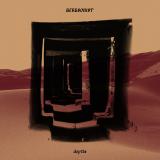
Bergsonist emerges on Dark Entries with Depths, a genre-bending 12-track LP of atmospheric and rhythmic excursions. For more than a decade, Moroccan-born Selwa Abd has been using the Bergsonist moniker to examine postcolonial identity and speculative temporalities across disparate media, including sound, image, video, and installation. She is also a key figure in New York underground music, fostering mutual aid and community support through her platforms Pick up the Flow (PUTF) and BizaarBazaar. On the 2025 album ASL أصل ⴰⵙⵍ, Bergsonist explored her Amazigh heritage using field recordings captured in Morocco. With Depths, her sixth LP, she continues the project of ancestral reconnection through sound. Abd notes: “I really use making music as therapy, not as a precious act, more as an energy release that makes me feel alive.” Depths overflows with this excess of vitality.
Tracks like “Trust the Current”, “Depths”, and “Underwater World Pursuit” showcase her singular take on diasporic techno-futurism, where James Stinson-esque atmospherics meet Moroccan rhythms. Elsewhere, “Again” and “Higher” push into coldwave territory, with icy arpeggios and electroid beats dancing beneath Abd’s ethereal vocals. But the dancefloor is not to be neglected: “Breakthrough” and “Ode to Life” spring forth with the kind of skewed peak-hour energy that only Bergsonist can bring. Artwork for Depths was designed by Eloise Leigh, and incorporates photographs by Abd and Greg Zifcak taken in Morocco. Also included is a protection poster that features an Amazigh symbol used for warding off the evil eye. Depths is an album that achieves a rare balance of elegance and DIY ethics - it is truly an ode to life.
- A1: Tourist Mind
- A2: Mind Disaster
- A3: Won’t Count On You
- A4: It Feels Like
- B1: Where Is My Head
- B2: Stranger
- B3: You Will Change
- B4: Overflow
- B5: Waste Me
For their second full-length album, Under My Umbrella, Miss Grit has lifted the lid on their internal world, lasering in on the anxieties and heartbreak of the past two years, following their acclaimed debut Follow the Cyborg.
On this album, Margaret Sohn – aka Miss Grit (they/she) – channels the noirish atmosphere of classic trip-hop bands, while adding a hefty dose of maximalism and a dream-pop sensibility. The title is a nod to the iconic Rihanna song and embraces Sohn “…letting people in more on this record and trying not to shy away from that. I’m leaving the cyborg behind, I’m letting it all out.”
This record started to take shape when Sohn returned from an intense touring schedule where they’d driven themself around North America totally alone. When they returned home, Sohn found themselves yearning to capture that specific, less restrained energy of playing live.
Under My Umbrella not only presents Sohn’s gift for complex production, but also the boldness of finding your voice, and ultimately is about coming to terms with yourself, your imperfections, and your complex interior world.
The A Side of course is just one of the biggest tunes from the grunge era and is given a Jazzy Funky Groovy version by Blue Mode of Nirvana's Biggest Hit. It turns out that they were influenced by everything from the Gap Band to Louie Louie and a fair smattering of 80's indie and this producytion by by Chip Wickham mixes together a Swinging '60's Blue Note Vibe with the Acid Jazz sound and brings it bang up to date with the Nu-Jazz Experience. First time on 45 and is already a DJ favourite after being included in the Paul Murphy set "Jazz Room" on BBE Records. Side 2 is a Boogaloo Latin Jazz version (produced by Paul Murphy Live in the studio in Budapest when he was living there) of the Lonnie Smith track "Hola Muneca" beloved of the Acid Jazz era DJ's and previously released on a now impossible to find 7 inch single that goes for crazy prices....
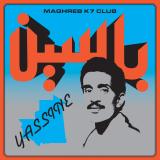
After Maghreb K7 Club – Synth Raï, Chaoui & Staïfi (1985-1997) and Maghreb K7 Club Disco Singles Volume 1, 2, and 3, Sofa Records and Les Disques Bongo Joe team up again for a new project exploring funky, synth-driven tape music from the Maghreb.
This compilation brings together eight songs —delivering a Saharan pop sound melted with reggae, dub, new-wave and funk — by Yassine (Ahl) Nana, the iconic figure of Mauritanian pop music in the 1980s and 1990s. Yassine and his band recorded songs between Nouakchott, Paris, and Rabat, resulting in only a pair of rare cassette tapes. This music was definitively part of the vibrant wave of African sounds sweeping across the continent at the time, from Abidjan to Oran and Kinshasa.
This compilation features previously unreleased recordings, along with liner notes, interviews, and exclusive iconography.
After their recent LP Mirages (Kraak Records, 2025) with French turntablist Guilhem’All, the group continues to explore collaborations with artists and instruments from diverse musical traditions. Building on decades of uncompromising acoustic exploration, Razen delves deeper into their practice with five improvisational pieces that unfold slowly in time and space. The duo’s radical core - Brecht Ameel and Kim Delcour - finds in Van der Harst a longtime kindred spirit, united by the impact of sound, intonation, and the sheer joy of playing.
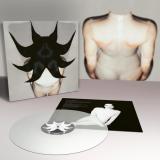
To be released on April 24 via VIERNULVIER Records, the artwork for Stained Glass Starling was created by American visual artist Robert Beatty (Oneohtrix Point Never, Christina Vantzou, The Weeknd, Tame Impala). The physical release comes with a 16-page booklet including artwork and an interview.
A long-standing artistic kinship lies at the heart of this project, with first encounters dating back to the early 2000s in Belgian musical improv theatre. Van der Harst’s lifelong experience in improvised music and music theatre, spanning back to the 1980s, combined with a vast arsenal of rare and historical instruments, opens new tonal territories within the Razen universe.
These explorations are not incidental: his family roots in the former Dutch East Indies — through his great-grandfather — provide a quiet backdrop to his enduring affinity for Asian musical traditions. Instruments such as erhu, Javanese kacapi, and others introduce timbres
that bring the music its most pronounced Asian inflections to date.
Yet despite this shift in colour, the underlying ethos remains unmistakably Razen. Working from sound rather than form, the ensemble approaches music as painters approach a canvas: adding layers, contrasts and shades with care. There is no soloist’s ego here; all voices are equal, echoing principles found in gamelan traditions.
Over the decades, Razen and Dick Van der Harst have crossed paths repeatedly, notably through cult theatre productions by Belgian theatre maker Eric De Volder, including Zwarte vogels in de bomen (2002) and Huis der Verborgen Muziekjes I–II (2000–2006). Recording an albumtogether had long been a shared aspiration — a wish that crystallised after a 2024 concert at Concertzaal Miry in Ghent, part of the Ruiskamer series by VIERNULVIER Art Centre.
Backwoodz Studioz is excited to announce the release of Crayola Circles, a collaboration between rapper Fatboi Sharif and producer Child Actor. While both artists have long standing connections to Backwoodz, this album marks their first collaboration of any kind and breaks new artistic ground for all parties.
Sharif’s previous album, Decay, released on Backwoodz in 2023, was a haunting experimental rap masterpiece, an acid trip in a mental hospital. On Crayola Circles Sharif trades menacing psychedelia for a simmering stew of blacklight expressionism, his verses slipping effortlessly through the swells and tides of Child Actor’s masterful production. No matter how uneasy the waves grow, Sharif is at ease, a truth teller whispering anti-riddles in your ear. This album feels like a new chamber for Child Actor, as well. The producer has been on an impressive run since dropping CINE- a collaboration with rapper Cavalier- on Backwoodz in late 2024. Child Actor has shown up in the liner notes of everyone from Navy Blue (The Sword & The Soaring) to Earl Sweatshirt (Live, Laugh, Love) to ELUCID (Revelator) to Open Mike Eagle (Neighborhood Gods Unlimited), to Ghais Guevara (A Quest to Self-Mythologize), amongst others. On Crayola Circles Child Actor’s production is dynamic, shifting and sliding into new phases and movements in an instant. The beats are full and knotty, leaning into jazz and folk, while remaining tethered to the tender minimalism that is his signature. It’s a difficult balance for any producer, and here it is executed perfectly, placing us in a world of wood and brass, cowhide and undersea piano. On any other record, this soundscape would steal the show — and it very nearly does — but Sharif’s command never wavers, ever in control; a lucid dreamer in an induced coma.
There are no guests, no skits, and no interludes. There might not even be songs, instead Crayola Circles seems akin to a great river; singular, traversing forest and jungle, mountain and valley, running from mouth to endless sea.