Buscar:not was

Estilos
Todo
MUDDY WATERS - SCREAMIN' AND CRYIN'(EARLY MUDDY WATERS)
  • 1: Gypsy Woman
  • 2: Little Anna Mae
  • 3: I Can't Be Satisfied
  • 4: I Feel Like Going Home
  • 5: Train Fare Home
  • 6: Sittin' Here And Drinkin
  • 7: You're Gonna Miss Me (When I'm Dead And Gone)
  • 8: Mean Red Spider
  • 9: Streamline Woman
  • 10: Muddy Jumps One
  • 11: Little Geneva
  • 12: Canary Bird
  • 13: Screamin' And Cryin
  • 14: Where's My Woman Been
  • 15: Rollin' And Tumblin' Part 1
  • 16: Rollin' And Tumblin' Part 2

The Definitive Origins of the Chicago Electric Blues. Witness the birth of a legend. This essential collection captures Muddy Waters at the most pivotal moment of his career: the transition from a Mississippi Delta traveler to the "King of Chicago Blues." Muddy Waters was an ambitious young man who saw little future in Mississippi. In 1943, he headed for the bright lights, big city of Chicago, where he soon connected with blues giant Big Bill Broonzy, who began featuring Muddy as an opening act at his club dates. Within a year, Muddy had switched to electric guitar and formed his first blues combo, quickly becoming an established figure on Chicago's club scene. In 1947, Muddy came to the attention of the fledgling Aristocrat Records, just as Leonard Chess-then running a nightclub called the Macomba Lounge-invested in the company. Working frequently with pianist Sunnyland Slim, Muddy recorded a split session with him for Aristocrat in December 1947. This collection begins there: eight Aristocrat 78 rpm releases (sixteen sides), recorded between 1948 and 1950 and presented here in chronological order of release. Just three years later, Leonard and his brother Phil Chess would buy out Aristocrat's remaining partners and rename the label Chess Records-ushering in a new era of Chicago blues that would reverberate around the world. Includes extensive liner notes by Muddy Waters expert Fred Rothwell.

Reservar17.04.2026

debe ser publicado en 17.04.2026

27,31
LOS RETROS - EARLY DAYS 2016-2019
  • 1: Deep Sleep
  • 2: Room Gloom
  • 3: Someone To Spend Time With
  • 4: Without You
  • 5: Old Times
  • 6: To My Friends
  • 7: Wave The Blue
  • 8: Roundabout
  • 9: American Spirits
  • 10: Diabla
  • 1: To A Lover
  • 12: Within This Love

Early Days (2016-2019) is a new collection of previously unreleased songs from Mauri Tapia a.k.a Los Retros. From a young age, Tapia has been a prolific songwriter, spending his teenage years writing and recording song after song. Influenced by soft rock and left-field South American pop, Early Days (2016-2019) captures the sound of this formative era Streaming everywhere today, Early Days consisting of 15 tracks, recorded from Mauri's parents' living room using nothing more than an old four-track recorder, that only existed in low quality online, now mastered, sequenced, and physically released for the first time. It was during these sessions that Los Retros created the song "Someone to Spend Time With", now certified Gold. Early Days comes with a companion visual for "Without You", edited by close friend and collaborator Ross Harris from found footage of early Los Retros tour stops. Check out Los Retros proper debut "Odisea" released simultaneously too. FFO soul, bedroom pop, indie, modern jazz, downtempo, soft rock, Mac DeMarco, Thee Sacred Souls, Skinshape, Men I Trust, Too Slow To Disco

Reservar17.04.2026

debe ser publicado en 17.04.2026

28,36
The Brian Jonestown Massacre - Give It Back!
  • A1: Super Sonic
  • A2: This Is Why You Love Me
  • A3: Satellite
  • A4: Malela
  • A5: Salaam
  • B1: Whoever You Are
  • B2: Sue
  • C1: (You Better Love Me) Before I Am Gone
  • C2: Not If You Were The Last Dandy On Earth
  • C3: # 1 Hit Jam
  • D1: Servo
  • D2: The Devil May Care (Mom & Dad Don’t)
  • D3: Their Satanic Majesties Second Request

REPRESS!

Give It Back! was the sixth studio album by American psychedelic rock band The Brian Jonestown Massacre, originally released in 1997 by record label Bomp!. First time on 180g audiophile vinyl. Notably, this is the only album that features Peter Hayes, who later founded the Black Rebel Motorcycle Club. The sessions for the record were filmed for the documentary Dig!. Though only a couple of minutes of these sessions appear in the film.

Reservar17.04.2026

debe ser publicado en 17.04.2026

26,68
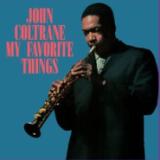
John Coltrane - My Favorite Things LP
  • My Favorite Things
  • Everytime We Say Goodbye
  • Summertime
  • But Not For Me
  • Like Sonny

My Favorite Things is one of J ohn Coltrane 's all time bestselling LPs. Recorded in 1960 for Atlantic Records during three marathon sessions that also produced enough music for four subsequent albums: Coltrane Plays the Blues , Coltrane's Sound , and Coltrane Legacy. The LP's title tune belongs to the Rodgers & Hammerstein musical The Sound of Music, which at the time, might have seemed an odd choice by critics and fans. However, in Coltrane's hand the tune is spun out with an Eastern sound, a waltz reminiscent of a dervish dance, hypnotic and totally engaging. An edited version of the track was issued as a single and gained popularity across US radio stations, resulting in the LP becoming a major commercial success. My Favorite Things features John Coltrane 's first recorded performance on soprano saxophone - an instrument gifted to him by Miles Davis.

Reservar17.04.2026

debe ser publicado en 17.04.2026

22,65
INFESTA - ABISSO BLU

INFESTA

ABISSO BLU

12inchOE027
OSÀRE! EDITIONS
17.04.2026

In a most original impetus this album traverses forty years of Italian new wave and singer-songwriter tradition. As in the desert where Infesta’s urge is to walk, we are ambushed by the most intense thermal and sonic difference.

It is from here that this important journey we mustn’t miss begins. It leads us eight thousand meters deep in the blue abyss. Not quite enough to come out the other side and, as a kite, bestow all the heights that I will reach. These depths are nevertheless necessary to adjust our eyes to the darkness that lives within us, as a machine to burst our hearts to which we can’t and won't be accomplices.

Machine against machine. The increasing pressure of the lashes of an incessant current, at times sweet and at times sour, on which all the courage is sung and yet is everywhere dispersed like thoughts on water and melodies to be lost at sea. Darkness persists: you said the world can be lived where all was taken. And it’s a crazy and estranging babbling that, stripped by a current, answers: never never never never, in no direction.

My companions, come back, the breaking point has been found, we sing together. Leaf after leaf the time has come: it is possible to destroy the Machine in a mad blinding light.

No en stock

Haga su pedido ahora y le encargaremos el artículo en nuestro proveedor.

20,59

Ültimo hace: 56 Días
BCUC - The road is never easy

BCUC – Bantu Continua Uhuru Consciousness – have been channeling the spirit of Soweto for over twenty years. Indigenous funk, hip-hop consciousness, and punk rock energy fused into something utterly original and deeply rooted. Their mantra: Music for the people, by the people, with the people. From humble beginnings rehearsing in a shipping container, a stone's throw from the church where Desmond Tutu organized the escape of the most wanted anti-Apartheid activists, they kept believing in their dream of self-empowerment. Today they command festival stages worldwide: Glastonbury West Holts, Roskilde, Afropunk Brooklyn, WOMAD, Fusion, Sziget, FMM Sines, Beaches Brew, Boomtown, Colours of Ostrava, Couleur Café – to name just a few. In 2023, BCUC were honoured with the prestigious WOMEX Artist Award, an accolade usually reserved for more established artists, in recognition of their fearless work and transcendent live performances.

THE ROAD IS NEVER EASY

The Road Is Never Easy is BCUC's fifth album and their debut on Outhere Records. On this new offering, BCUC take listeners on another Afro-psychedelic journey into the soul of Soweto. It feels like a gospel sermon colliding with a punk concert, "guaranteed to touch untapped corners of your soul" (OkayAfrica). BCUC's music is deeply rooted in history and echoes the voices of the ones who came before. The road was never easy for the people of Soweto who originally came to work in the mines of Egoli, the City of Gold, Johannesburg. When apartheid finally ended after a long struggle, it was hoped that life would improve. But more than 30 years later, many of those initial hopes and dreams are still waiting to be fulfilled. This album is about that struggle. The album contains 10 brand new songs – a record for BCUC, whose previous albums featured an average of 3 songs. It represents the culmination of more than two decades of performing together and building a reputation as a powerful live act. These ten songs encapsulate that same live energy, each one building gradually and drawing you into BCUC's Afro-psychedelic stream of consciousness. It's a seismic tour de force through life in Soweto today. Songs like Amakhandela (Breaking All the Chains) connect history to daily life: "How is this precious metal inflicting so much pain in us," sing BCUC, "this government has been telling us we are free, but we don't benefit from being free." The album also talks about all the hopes and dreams that remain: "I have too many wishes and dreams in my head," BCUC sing in Um duma khanda, "I think I am losing my mind". The album ends with the soothing Matla a rona ke Bophelo, "our strength is life", praising the spirits and thanking the elders for protection. The Road Is Never Easy is about the harsh reality of life in Soweto, where "people always carry heavy loads". BCUC are street poets trying to deal with that burden: sometimes revolutionary, sometimes soothing, but always hopeful and compassionate. "When you are from Soweto you can't retreat nor surrender." (Sebenzela)

RECORDING

The album was largely recorded in Munich, Germany during tour breaks over two sessions, each three days long. It took place in a small studio located in a German WW II bunker converted into rehearsal spaces. The songs were recorded in one take altogether in one room, with only a few overdubs added, mainly backing vocals, by BCUC at Fourways studio in Johannesburg. BCUC have created their own distinctive way of writing, or rather, finding and creating their songs. The recording process is like an improvised live performance. They bring their ideas into a zone where the music, the rhythm and the spirits take over until the song starts to form. In this Afro-psychedelic zone BCUC create their unique poetry that feeds on the dreams still dreamt, the hopes, the fears and the temptations lingering everywhere. BCUC's songs need to breathe and time to build. The right take was the one when the song took over, and just like their live performances, no one knew beforehand where the song would take them. During the recording, BCUC just let it all flow out: inner turmoil, cries of rebellion, but also resilience and a search for healing, love, unity and compassion. You don't have to be from Soweto to feel the deep meaning and impact of this music. In these times of so much hate and division, BCUC are like a campfire for people to gather around.

PRODUCTION & ARTWORK

"BCUC have a unique magic," says Outhere's Jay Rutledge, who produced the album. "It blew our minds. It's like punk and pure gospel at the same time. Their music can make you dance and it can make you cry, all at the same time. And when the song is over, you feel you're not alone in this world anymore. We felt compelled to do this." The album cover is based on a matchbox design, matches being a common household item in South Africa even today. "These were the matches people used to burn government buildings and cars," explain BCUC. Little messages, addresses, or phone numbers used to be scribbled on the back of these boxes; each one a reminder of the strength, resilience, and resistance that once drove the struggle for freedom in Soweto. BCUC keep this flame burning. The Road Is Never Easy is a heavy spiritual road trip, a deep dive into the subconscious of Soweto and a quest for truth, justice and sanity in this crazy world. BCUC tackle the harsh realities of the voiceless, guided by the spirit world of their ancestors. Rather than reinforcing stereotypes of poverty, BCUC's portrayal of Africa is one rich in tradition, rituals and beliefs. "We bring fun and Afro-psychedelic fire from the hood," says vocalist Kgomotso Mokone.

No en stock

Haga su pedido ahora y le encargaremos el artículo en nuestro proveedor.

19,75

Ültimo hace: 44 Días
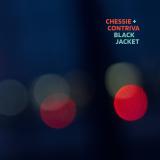
Chessie + Contriva - Black Jacket LP 2x12"

Chessie + Contriva

Black Jacket LP 2x12"

2x12inchWAT09LP
Watusi
16.04.2026

“Black Jacket” is a love letter between two bands separated by continents but united by mutual admiration. Contriva, of Berlin, and Chessie of Washington, DC, first came together in 2001 when sharing a stage, sparking a deep connection over their respective takes on textural, emotive, and mostly instrumental music that merges post-rock, ambient, and experimental elements into unique visions. Fast forward two decades and many trips to their respective studios and we now have “Black Jacket”, a double LP of musical alchemy that builds upon the expressionistic, idiosyncratic sounds of these two groups. A new classic that proves far greater than the sum of its parts.

Begun in the mid 1990's, Washington DC's Chessie is Stephen Gardner (also of noisy shoegaze pioneers, Lorelei) and Ben Bailes, whose various LP's for Slumberland's Dropbeat imprint and Plug Research pair abstract electronics and melancholy post-rock in search of the sounds and feelings of railways and train travel.

Berlin's Contriva, (Monika Enterprises, Lok Musik, and Morr Music) features Masha Qrella (known for her solo works for Morr Music), Max Punktezahl (also of Munich indie legends the Notwist and Berlin's Jersey and Saroos), Hannes Lehmann and Rike Schuberty. For over a decade beginning in the mid-1990's, Contriva crafted compelling instrumentals, grafting experimental textures onto beautiful and complex indie songs.

Together, the six of them have created “Black Jacket.”

No en stock

Haga su pedido ahora y le encargaremos el artículo en nuestro proveedor.

28,53

Ültimo hace: 57 Días
Flipper - Generic Flipper

Generic Flipper, the debut album by Flipper, remains the most absorbing full-length LP to emerge from the early San Francisco punk scene. A constant source of imitation for so-called "noise rock" bands, it has yet to be surpassed in its nihilistic glee.

Recorded between October 1980 and August 1981 and released in 1982 on the indispensable Subterranean Records, this album functions as a chaotic, sticky mass of individual personalities: the magma-like bass eruptions and dual vocals of Will Shatter and Bruce Loose, Ted Falconi's icy guitar scraping and the relentless beat of drummer Steve DePace. At times playful and taciturn, paranoid and absurd, Generic charts a deliberate path that willfully chances destruction.

In early '80s punk, when the hardening default was "faster-shorter-louder," Generic subverts the nascent hardcore scene with a strictly applied regimen of turgid-slower-heavier. The lyrics are bleak, yet unnervingly beautiful. "Ever" sets the tone with trademark restraint – "Ever wish the human race didn't exist? And then realize you're one too?" – while closer "Sex Bomb" is a churning, 8-minute epic with looping bass, saxophone accompaniment and electronic effects of dropping bombs.

Tons of indie bands have attempted to recreate Flipper's mix of acidic guitar, metallic bass sludge and sardonically brilliant lyricism, using the seemingly effortless template they pioneered; however, the effect usually drives listeners right back to Generic. While most of their contemporaries wilt under direct comparison, No Trend, the Butthole Surfers, feedtime and Church Police are a few who can stand the frigid heat.

No en stock

Haga su pedido ahora y le encargaremos el artículo en nuestro proveedor.

26,47

Ültimo hace: 44 Días
Men With - Secrets Sand Clock

Men With

Secrets Sand Clock

12inchCITI034
CITITRAX
16.04.2026

Cititrax release Sand Clock, the new full-length album by Men With Secrets, the Italian trio of Donato Dozzy, Lino Monaco, and Nicola Buono (Retina.it). Originally emerging from a shared background in experimental techno under the name Le Officine Di Efesto, the three musicians turned toward classic post-punk, minimal wave, and synth-driven pop with the formation of Men With Secrets. Their debut album Psycho Romance (2020), released on Bunker Records, introduced a meticulously produced body of work that felt like a rediscovered European darkwave recording from the early 1980s—yet was entirely contemporary in its construction.

With Sand Clock, the trio deepen this language. The album leans more directly into the melodic clarity and romantic tension of late-80s and early-90s darkwave and synthpop while maintaining the stark restraint that defines the project. Icy synthesizers, shuddering basslines, and precise drum machine programming frame baritone vocals that are intimate, emotionally exposed, and quietly apocalyptic.

Balancing pop structure with gothic atmosphere, Sand Clock moves between shadowed dance floor momentum and solitary headphone introspection. It is not an exercise in revivalism, but a continuation—an acknowledgment that the emotional architecture of that era remains unresolved and still relevant. Written and produced by Donato Dozzy, Lino Monaco, and Nicola Buono and recorded in Rome and Pompeii.

The vinyl edition is pressed on clear 160-gram vinyl, limited to 500 copies worldwide. Each record is housed in a heavy printed jacket with a printed inner sleeve.

No en stock

Haga su pedido ahora y le encargaremos el artículo en nuestro proveedor.

27,52

Ültimo hace: 57 Días
Jackie Gritness - Natural High / Fuc U Talmbout

There’s this feeling that House Music is sometimes diluted into a pleasant, non-offensive and conformist formula. Well, Jackie Gritness - you may have heard of her big bro Gary - is bringin’ all the sweat, the attitude and the filth down - take it or leave it.

Jackie introduces herself from both sides on this well-strapped debut 12” - the slick swingin’ & sangin’
on the bass-heavy A side, and the raw clave trax and cunty snarls of the acid-laced B side.

No trace of over-production or tired sampling here: this is just Jackie, her mic and her lil’ groovebox -
gettin’ raw in the studio just like she does onstage. Only thing added is some wall-shaking mastering by New York OG Dietrich Schoenemann.

This is the kinda House that’s supposed to make regular folks wanna turn it off. This ain’t rated E for Everyone, it’s rated F for Freaks.

It’s music from the underground, for the underground - as it was first revealed on the runway of Glastonbury’s infamous NYC Downlow last summer.

And if that’s more than you can take - it’s alright. It’s not like Jackie will hold it against you.

Jackie Gritness
“Gary’s little sister.” His studio session resume reads like a House music who’s who - from David Morales to Fred P. He’s also been rockin’ clubs with the Playin’ 4 The City and MLIU crews - but she’s also been seen on Gideon’s fierce Homo-Centric Records. See, this bitch’s true feelings about House are stripped-down, bare-bones, and unapologetically sexual. With a radical ‘live’ attitude, she’s serving the realness with an irresistibly acidic zing.

No en stock

Haga su pedido ahora y le encargaremos el artículo en nuestro proveedor.

22,06

Ültimo hace: 57 Días
Lofi Ghibli 3 - Grey October Sound

The album Lo-Fi Ghibli, featuring covers of Studio Ghibli songs in a lo-fi hip-hop style, became a worldwide hit and made Grey October Sound known not only in Japan, but overseas too. The series was even discussed on Japanese television, and it has become commonplace to see tourists visiting Japan carrying the 'Lo-Fi Ghibli' LP from record stores to the till. P-VINE is thrilled to announce the release of the highly anticipated sequel, Lo-Fi Ghibli 3. For this new release, Grey October Sound's producers have arranged Ghibli songs that are completely new, even if songs included in the previous volume. The visual imagery, including the album cover, continues to be created by illustrator Rika Nagatani. Playing this record will instantly provide you with a relaxing time of nostalgia for the Ghibli films.

Reservar15.04.2026

debe ser publicado en 15.04.2026

33,57
SUNN O))) - SUNN O))) LP 2x12"

SUNN O)))

SUNN O))) LP 2x12"

2x12inchSPLPX1685
Sub Pop
15.04.2026

Seit fast 30 Jahren erweitern SUNN O))) - Stephen O'Malley und Greg Anderson - die Grenzen der Heavy-Musik und verbinden die Welten der Avantgarde und des Rock, um einen Stil zu schaffen, der sofort als ihr eigener erkennbar ist. Jetzt melden sich SUNN O))) mit ihrem ersten Album mit neuem Material seit dem gefeierten Pyroclasts aus dem Jahr 2019 zurück. Ihr zehntes Album - ihr Debüt bei Sub Pop - zeigt, wie gut das Duo mit Zeit und Raum, Licht und Dunkelheit umgehen kann und dass sie bereit sind, ihren unverwechselbaren Sound zu neuen, mutigen Formen weiterzuentwickeln. Das gleichnamige Album ,SUNN O)))" wurde in den Bear Creek Studios in Woodinville, Washington, mit Brad Wood (HuM, Tar, Sunny Day Real Estate, Liz Phair) aufgenommen. Dieser Ort erwies sich als entscheidend für den Aufnahmeprozess. ,Der riesige Aufnahmeraum hatte große Fenster mit Blick auf Bäume", sagt O'Malley. ,Wir konnten wandern gehen und draußen im Wald sein, Zeit im Freien verbringen. Das war ein wichtiger Teil davon." SUNN O))) haben schon lange Mitwirkende in ihre eigenständige Welt aufgenommen: In früheren Werken waren Attila Csihar (Mayhem), die Komponistin Hildur Gudnadóttir, der Multi-Instrumentalist Steve Moore, der Universalgelehrte Mark Deutrom, Tim Midyett von Silkworm und der legendäre Singer-Songwriter Scott Walker zu hören. Auf diesem Album haben O'Malley und Anderson jedoch neue Möglichkeiten im ursprünglichen Format des Duos entdeckt und alle Instrumente selbst gespielt. ,Was in den letzten Jahren mit unseren Auftritten zu zweit und ohne weitere Mitwirkende passiert ist, war wirklich neu und aufregend", sagt Anderson. Die Kompositionen auf SUNN O))) sind weitläufig und panoramisch, aber dennoch detailreich und spiegeln die baumreiche Umgebung wider, in der sie aufgenommen wurden. Inmitten von heulendem Feedback und eisigem Knirschen findet man überraschend zarte Momente: eine Feldaufnahme von plätscherndem Wasser im Hintergrund, Klavierzwischenspiele, die eine gedämpfte, feierliche Stimmung erzeugen. Dabei erreicht das Duo neue Höhen telepathischer Intensität, während es Musik formt, die die belebende, erdige Luft des pazifischen Nordwestens atmet. Visuell wird das Album von zwei Gemälden des verstorbenen amerikanischen Künstlers Mark Rothko eingerahmt. Die Liner Notes stammen vom preisgekrönten britischen Schriftsteller Robert Macfarlane, der für seine Werke über Landschaft und die Beziehung zwischen Mensch und Natur bekannt ist. Durch die Arbeit der Band, Macfarlane und Rothko verbinden sich Klang, Wort und Bild zu einem umfassenden Erlebnis, das unbestreitbar ganz und gar SUNN O))) ist.

No en stock

Haga su pedido ahora y le encargaremos el artículo en nuestro proveedor.

29,83

Ültimo hace: 58 Días
Millie Jackson - Feelin’ Bitchy LP
  • A1: All The Way Lover
  • A2: Lovin' Your Good Thing Away
  • A3: Angel In Your Arms
  • B1: A Little Taste Of Outside Love
  • B2: You Created A Monster
  • B3: Cheatin' Is
  • B4: If You're Not Back In Love By Monday
  • B5: Feelin' Like A Woman

In the spring of 1977, Millie Jackson was in Muscle Shoals, Alabama, laying down tracks for what became “Feelin’ Bitchy” with co-producer Brad Shapiro. Released in August 1977, the album reached #4 and #34 in America’s Billboard’s R&B and Hot 100, going gold with over 500,000 copies sold. Jackson’s cover of ‘If You’re Not Back In Love By Monday’ – already a hit for Merle Haggard in March 1977 – also reached #5 R&B and #43 in the Hot 100 in August. Although the album did not chart in the UK, “Feelin’ Bitchy” sold strongly to a dedicated fanbase who had voted her the #1 female singer in the Blues & Soul magazine annual poll. Jackson also performed much of the material on her sold-out UK dates in early 1978.

“Feelin’ Bitchy” was not only a commercial success, cementing Jackson’s no-nonsense reputation, but is now considered an all-time classic. Her rap on Benny Latimore’s ‘All The Way Lover’ stretched the original out like chewing gum to 10 minutes. “’Back In Love By Monday’ is a great song an’ that,” she told Black Echoes, “but it didn’t sell the album. ‘All The Way Lover’ sold the album.” Indeed it did, but other tracks like ‘A Little Taste Of Outside Love’ ‘Lovin’ Your Good Thing Away’, ‘Cheatin’ Is’ and ‘Feelin’ Like A Woman’ show that while Jackson’s tongue – front and centre on the LP cover – was always ready to hand out a lashing, it also helped her sing beautifully.

Ace are delighted to reissue “Feelin’ Bitchy’ on vinyl and Millie Jackson spoke to Ian Shirley about the recording of the album. This interview runs on an inner sleeve along with classic photographs of Jackson from this period.

No en stock

Haga su pedido ahora y le encargaremos el artículo en nuestro proveedor.

23,49

Ültimo hace: 59 Días
DAGMAR ZUNIGA - IN FILTH YOUR MYSTERY IS KINGDOM / FAR SMILE PEASANT IN YELLOW MUSIC (TAPE)

Nicaraguan-American artist Dagmar Zuniga makes music that feels both intimate and expansive: songs drift like disrupted signals, carried by harmony, tape hiss, and a strong sense of touch. Her debut solo album in filth your mystery is kingdom / far smile peasant in yellow music — written and recorded in New York, Norway, and Athens, Georgia over a period of five years on her longtime companion, the Tascam 424 — was uploaded to Bandcamp and YouTube in January 2025, quickly garnering over two hundred thousand views and the attention of artists such as Mount Eerie, who invited her to tour with them that summer. This year, what was once a jewel of tapped-in algorithms and message boards will meet the world at large, with in filth arriving digitally on March 4, and physically on April 10, via AD 93.

in filth is an atmospheric, devotional collage where one voice multiplies into a chorus of selves, sometimes delicate, sometimes severe; an effect created by Zuniga’s masterful layering of texture and complex harmonies. Synths glitter out like spears of sunlight from beneath clouds of moody, time-distorted guitars, and songs spin about themselves like tightly-wound music boxes, making use of a kind of hypnotic repetition, before melting apart into their components or slipping into the following track.

Zuniga began recording to tape as a teenager, drawn to the physicality of the medium — how a tape recording is fragile, mutable, and alive. Though her ethereal sound may draw easy comparisons to other female pioneers of psychedelic folk, she is influenced just as much by the darker sounds of Syd Barrett and The Fall. Like Barrett, Zuniga is a painter, and she is interested not only in recording music but in creating a full, self-contained artistic universe: she creates her own artwork, merchandise, music videos, and bootleg tapes of new and unfinished music that she exclusively sells at live shows (“If something is not material, it does not exist,” she insists). Her world has not gone unvisited, garnering her a monthly show on NTS Radio ‘World of Pain’, as well as a forthcoming appearance at Rewire Festival in April 2026.

Though Zuniga’s work explores themes of solitude and suffering, the suffering in her songs is not borrowed or displayed; it is held, then opened outward through empathy — an exacting practice of attention that insists on shared ground. Solitude, in her work, is not withdrawal but a starting point for connection. Likewise, over time, her recording process has become increasingly communal, with in filth featuring musicians Hayes Hoey, Austyn Wohlers (Tomato Flower), and Zach Phillips (Fievel Is Glauque). Newer recordings widen the circle even more. For Zuniga, collaboration is a way to “find a place between worlds,” echoing Badiou’s idea of love as a vision refracted through the prism of difference. Meaning emerges there — in the space between voices, between artist and listener. “I hope my music helps people work through difficult experiences,” she says. “The same way it helps me.”

Reservar11.04.2026

debe ser publicado en 11.04.2026

16,77
Guilty Razors - Complete Recordings 1977 - 1978

UILTY RAZORS, BONA FIDE PUNKS.


Writings on the topic that go off in all directions, mind-numbing lectures given by academics, and testimonies, most of them heavily doctored, from those who “lived through that era”: so many people today fantasize about the early days of punk in our country… This blessed moment when no one had yet thought of flaunting a ridiculous green mohawk, taking Sid Vicious as a hero, or – even worse – making the so-called alternative scene both festive and boorish. There was no such thing in 1976 or 1977, when it wasn’t easy to get hold of the first 45s by the Pistols or the Clash. Few people were aware of what was happening on the fringes of the fringes at the time. Malcolm McLaren was virtually unknown, and having short hair made you seem strange. Who knew then that rock music, which had taken a very bad turn since the early 1970s, would once again become an essential element of liberation? That, thanks to short and fast songs, it would once again rediscover that primitive, social side that was so hated by older generations? Who knew that, besides a few loners who read the music press (it was even better if they read it in English) and frequented the right record stores? Many of these formed bands, because it was impossible to do otherwise. We quickly went from listening to the Velvet Underground to trying to play the Stooges’ intros. It’s a somewhat collective story, even though there weren’t many people to start it.
The Guilty Razors were among those who took part in this initial upheaval in Paris. They were far from being the worst. They had something special and even released a single that was well above the national average. They also had enough songs to fill an album, the one you’re holding. In everyone’s opinion, they were definitely not among the punk impostors that followed in their wake. They were, at least, genuine and credible.

Guilty Razors, Parisian punk band (1975-1978). To understand something about their somewhat linear but very energetic sound, we might need to talk about the context in which it was born and, more broadly, recall the boredom (a theme that would become capital in punk songs) coupled with the desire to blow everything off, which were the basis for the formation of bands playing a rejuvenated rock music ; about the passion for a few records by the Kinks or the early Who, by the Stooges, by the Velvet mostly, which set you apart from the crowd.
And of course, we should remember this new wave, which was promoted by a few articles in the specialized press and some cutting-edge record stores, coming from New York or London, whose small but powerful influence could be felt in Paris and in a handful of isolated places in the provinces, lulled to sleep by so many appalling things, from Tangerine Dream to President Giscard d’Estaing...
In 1975-76, French music was, as almost always, in a sorry state ; it was still dominated by Johnny Hallyday and Sylvie Vartan. Local rock music was also rather bleak, apart from Bijou and Little Bob who tried to revive this small scene with poorly sound-engineered gigs played to almost no one.
In the working class suburbs at the time, it was mainly hard rock music played to 11 that helped people forget about their gruelling shifts at the factory. Here and there, on the outskirts of major cities, you still could find a few rockers with sideburns wearing black armbands since the death of Gene Vincent, but it wasn’t a proper mass movement, just a source of real danger to anyone they came across who wasn't like them. In August 1976, a festival unlike any other took place in Mont-de-Marsan – the First European Punk Festival as the poster said – with almost as many people on stage as in the audience. Yet, on that day, a quasi historical event happened, when, under the blazing afternoon sun, a band of unknowns called The Damned made an unprecedented noise in the arena, reminiscent of the chaotic Stooges in their early adolescence. They were the first genuine punk band to perform in our country: from then on, anything was possible, almost anything seemed permissible.

It makes sense that the four+1 members of Guilty Razors, who initially amplified acoustic guitars with crappy tape recorder microphones, would adopt punk music (pronounced paink in French) naturally and instinctively, since it combines liberating noise with speed of execution and – crucially – a very healthy sense of rebellion (the protesters of May 1968 proclaimed, and it was even a slogan, that they weren’t against old people, but against what had made them grow old. In the mid-1970s, it seemed normal and obvious that old people should now ALSO be targeted!!!).
At the time, the desire to fight back, and break down authority and apathy, was either red or black, often taking the form of leafleting, tumultuous general assemblies in the schoolyard, and massive or shabby demonstrations, most of the time overflowing with an exciting vitality that sometimes turned into fights with the riot police. Indeed, soon after the end of the Vietnam War and following Pinochet’s coup in Chile, all over France, Trotskyist and anarcho-libertarian fervour was firmly entrenched among parts of the educated youth population, who were equally rebellious and troublemakers whenever they had the chance. It should also be noted that when the single "Anarchy in the UK" was first heard, even though not many of us had access to it, both the title and its explosive sound immediately resonated with some of those troublemakers crying out for ANARCHY!!! Meanwhile, the left-wing majority still equated punks with reckless young neo-Nazis. Of course, the widely circulated photos in the mainstream press of Siouxsie Sioux with her swastikas didn’t necessarily help to win over the theorists of the Great Revolution. It took Joe Strummer to introduce The Clash as an anti-racist, anti-fascist and anti-ignorance band for the rejection of old-school revolutionaries to fade a little.

The Lycée Jean-Baptiste Say at Porte d’Auteuil, despite being located in the very posh and very exclusive 16th arrondissement of Paris, didn’t escape these "committed" upheavals, which doubled as the perfect outlet for the less timid members of this generation.
“Back then, politics were fun,” says Tristam Nada, who studied there and went on to become Guilty Razors’ frontman. “Jean-Baptiste was the leftist high-school in the neighbourhood. When the far right guys from the GUD came down there, the Communist League guys from elsewhere helped us fight them off.”
Anything that could challenge authority was fair game and of course, strikes for just about any reason would lead to increasingly frequent truancy (with a definitive farewell to education that would soon follow). Tristam Nada spent his 10th and 11th unfinished grades with José Perez, who had come from Spain, where his father, a janitor, had been sentenced to death by Franco. “José steered my tastes towards solid acts such as The Who. Like most teenagers, I had previously absorbed just about everything that came my way, from Yes to Led Zeppelin to Genesis. I was exploring… And then one day, he told me that he and his brother Carlos wanted to start a rock band.” The Perez brothers already played guitar. “Of course, they were Spanish!”, jokes their singer. “Then, somewhat reluctantly, José took up the bass and we were soon joined by Jano – who called himself Jano Homicid – who took up the rhythm guitar.” Several drummers would later join this core of not easily intimidated young guys who didn’t let adversity get the better of them.

The first rehearsals of the newly named Guilty Razors took place in the bedroom of a Perez aunt. There, the three rookies tried to cover a few standards, songs that often were an integral part of their lives. During a first, short gig, in front of a bewildered audience of tough old-school rockers, they launched into a clunky version of the Velvet Underground's “Heroin”. Challenge or recklessness? A bit of both, probably… And then, step by step, their limited repertoire expanded as they decided to write their own songs, sung in a not always very accurate or academic English, but who cared about proper grammar or the right vocabulary, since what truly mattered was to make the words sound as good as possible while playing very, very fast music? And spitting out those words in a language that left no doubt as to what it conveyed mattered as well.
Trying their hand a the kind of rock music disliked by most of the neighbourhood, making noise, being fiercely provocative: they still belonged to a tiny clique who, at this very moment, had chosen to impose this difference. And there were very few places in France or elsewhere, where one could witness the first stirrings of something that wasn’t a trend yet, let alone a movement.

In the provinces, in late 1976 or early 1977, there couldn’t be more than thirty record stores that were a bit more discerning than average, where you could hear this new kind of short-haired rock music called “punk”. The old clientele, who previously had no problem coming in to buy the latest McCartney or Aerosmith LP, now felt a little less comfortable there…
In Paris, these enlightened places were quite rare and often located nex to what would become the Forum des Halles, a big shopping mall. Between three aging sex workers, a couple of second-hand clothes shops, sellers of hippie paraphernalia and small fashion designers, the good word was loudly spread in two pioneering places – propagators of what was still only a new underground movement. Historically, the first one was the Open Market, a kind of poorly, but tastefully stocked cave. Speakers blasted out the sound of sixties garage bands from the Nuggets compilation (a crucial reference for José Perez) or the badly dressed English kids of Eddie and the Hot Rods. This black-painted den was opened a few years earlier by Marc Zermati, a character who wasn’t always in a sunny disposition, but always quite radical in his (good) choices and his opinions. He founded the independent label Skydog and was one of the promoters of the Mont-de-Marsan punk festivals. Not far from there was Harry Cover, another store more in tune with the new New York scene, which was amply covered in the house fanzine, Rock News (even though it was in it that the photos of the Sex Pistols were first published in France).
It was a favorite hang-out of the Perez brothers and Tristam Nada, as the latter explained. “It’s at Harry Cover’s that we first heard the Pistols and Clash’s 45s, and after that, we decided to start writing our first songs. If they could do it, so could we!”
The sonic shocks that were “Anarchy in the UK”, “White Riot” or the Buzzcocks’s EP, “Spiral Scratch” – which Guilty Razors' sound is reminiscent of – were soon to be amplified by an unparalleled visual shock. In April 1977, right after the release of their first LP, The Clash performed at the Palais des Glaces in Paris, during a punk night organised by Marc Zermati. For many who were there, it was the gig of a lifetime…
Of course, Guilty Razors and Tristam were in the audience: “That concert was fabulous… We Parisian punks were almost all dressed in black and white, with white shirts, skinny leather ties, bikers jackets or light jackets, etc. The Clash, on the other hand, wore colourful clothes. Well, the next day, at the Gibus, you’d spot everyone who had been at this concert, but they weren’t wearing anything black, they were all wearing colours.”

It makes sense to mention the Gibus club, as Guilty Razors often played there (sometimes in front of a hostile audience). It was also the only place in Paris that regularly scheduled new Parisian or Anglo-Saxon acts, such as Generation X, Siouxsie and the Banshees, the Slits, and Johnny Thunders who would become a kind of messed-up mascot for the venue. A little later, in 1978, the Rose Bonbon – formerly the Nashville – also attracted nightly owls in search of electric thrills… In 1977, the iconic but not necessarily excellent Asphalt Jungle often played at the Gibus, sometimes sharing the bill with Metal Urbain, the only band whose aura would later transcend the French borders (“I saw them as the French Sex Pistols,” said Geoff Travis, head of their British label Rough Trade). Already established in this small scene, Metal Urbain helped the young and restless Guilty Razors who had just arrived. Guitarist for Metal Urbain Hermann Schwartz remembers it: “They were younger than us, we were a bit like their mentors even if it’s too strong a word… At least they were credible. We thought they were good, and they had good songs which reminded of the Buzzcocks that I liked a lot. But at some point, they started hanging out with the Hells Angels. That’s when we stopped following them.”

The break-up was mutual, since, Guilty Razors, for their part, were shocked when they saw a fringe element of the audience at Metal Urbain concerts who repeatedly shouted “Sieg Heil” and gave Nazi salutes. These provocations, even still minor (the bulk of the skinhead crowd would later make their presence felt during concerts), weren’t really to the liking of the Perez brothers, whose anti-fascist convictions were firmly rooted. Some things are non-negotiable.
A few months earlier (in July 1978), Guilty Razors had nevertheless opened very successfully for Metal Urbain at the Bus Palladium, a more traditonally old-school rock night-club. But, as was sometimes the case back then, the night turned into a mass brawl when suburban rockers came to “beat up punks”.

Back then, Parisian nights weren’t always sweet and serene.

So, after opening as best as they could for The Jam (their sound having been ruined by the PA system), our local heroes were – once again – met outside by a horde of greasers out to get them. “Thankfully,” says Tristam, “we were with our roadies, motorless bikers who acted as a protective barrier. We were chased in the neighbouring streets and the whole thing ended in front of a bar, with the owner coming out with a rifle…”
Although Tristam and the Perez brothers narrowly escaped various, potentially bloody, incidents, they weren’t completely innocent of wrongdoing either. They still find amusing their mugging of two strangers in the street for example (“We were broke and we simply wanted to buy tickets for the Heartbreakers concert that night,” says Tristam). It so happened that their victims were two key figures in the rock business at the time: radio presenter Alain Manneval and music publisher Philippe Constantin. They filed a complaint and sought monetary compensation, but somehow the band’s manager, the skilful but very controversial Alexis, managed to get the complaint withdrawn and Guilty Razors ended up signing with Constantin with a substantial advance.

They also signed with Polydor and the label released in 1978 their only three-track 45, featuring “I Don't Wanna be A Rich”, “Hurts and Noises” and “Provocate” (songs that exuded perpetual rebellion and an unquenchable desire for “class” confrontation). It was a very good record, but due to a lack of promotion (radio stations didn’t play French artists singing in English), it didn’t sell very well. Only 800 copies were allegedly sold and the rest of the stock was pulped… Initially, the three tracks were to be included on a LP that never came to be, since they were dropped by Polydor (“Let’s say we sometimes caused a ruckus in their offices!” laughs Tristam.) In order to perfect the long-awaited LP, the band recorded demos of other tracks. There was a cover of Pink Floyd's “Lucifer Sam” from the Syd Barrett era – proof of an enduring love for the sixties’ greats –, “Wake Up” a hangover tale and “Bad Heart” about the Baader-Meinhof gang, whose actions had a profound impact on the era and on a generation seeking extreme dissent... On the album you’re now discovering, you can also hear five previously unreleased tracks recorded a bit later during an extended and freezing stay in Madrid, in a makeshift studio with the invaluable help of a drummer also acting as sound engineer. He was both an enthusiastic old hippie and a proper whizz at sound engineering. Here too, certain influences from the fifties and sixties (Link Wray, the Troggs) are more than obvious in the band’s music.

Shortly after a final stormy and rather barbaric (on the audience’s side) “Punk night” at the Olympia in June 1978, Tristam left the band ; his bandmates continued without him for a short while.

But like most pioneering punk bands of the era, Guilty Razors eventually split up for good after three years (besides once in Spain, they’d only played in Paris). The reason for ceasing business activities were more or less the same for everyone: there were no venues outside one’s small circuit to play this kind of rock music, which was still frightening, unknown, or of little interest to most people. The chances of recording an LP were virtually null, since major labels were only signing unoriginal but reassuring sub-Téléphone clones, and the smaller ones were only interested in progressive rock or French chanson for youth clubs. And what about self-production? No one in our small safety-pinned world had thought about it yet. There wasn’t enough money to embark on that sort of venture anyway.

So yes, the early days of punk in France were truly No Future!

No en stock

Haga su pedido ahora y le encargaremos el artículo en nuestro proveedor.

21,43

Ültimo hace: 63 Días
Sugar Horse - Not A Sound In Heaven LP
  • 1-: Fire Graphics
  • 2: Secret Speech
  • 3: Ex-Human Shield
  • 4: History's Biggest T-Shirts
  • 5: Not A Sound In Heaven
  • 6: Company Town
  • 7: You Can't Say Dallas Doesn't Love You

Bristol experimental band SUGAR HORSE are delighted to announce that their third album, Not A Sound In Heaven, will be released on 10th April 2026 via Fat Dracula Records.

To celebrate the news, the band are sharing the bruising lead single ‘Secret Speech’, available to stream on all good digital service providers from 12th February 2026.

Also announced today are a run of April 2026 UK album headline tour dates and an appearance at StrangeForms Festival 2026, with tickets on sale now (see below for full listings).

“We are fortunate enough to live in what is generally known as ‘The West’,” says front man Ash Tubb of the lyrical themes behind the new track. “I say fortunate with gritted teeth, because I know—as I’m sure the reader knows—that living in the West isn’t always rosy. The vast majority of people struggle everyday to feed, clothe and house themselves. Let alone receive adequate healthcare, schooling and workers’ rights.”

“We are, however, where all the world’s wealth is hoarded. We are at the centre of Empire. The people outside of this empire—those of the Global South—have had their resources extracted and their populations exploited by our own governments, with very little given back in return. This won’t go on forever. It will inevitably end, as all great empires do.”

“We in The West have a choice to make in the meantime; either help create a new, fairer world, or let the greed of our ruling classes become the undoing of all of us.”

The first glimpse of new material from the quartet, ‘Secret Speech’ starts as Not A Sound In Heaven means to go on—a politically-charged wrecking ball of a song that smashes its way through the often unbelievable chaos and brutality of the 21st century with vitriolic malice.

How do you capture the machinations of the geo-political industrial war machine—and all the horrors that go with it—in the studio, without seeming trite or crass? That’s the question that Sugar Horse have posed themselves on their forthcoming third album Not A Sound In Heaven, and they must surely be one of the only bands in existence capable of delivering on just that premise with both musical substance and cutting philosophical insight.

“Ever since I was born I can remember visions of war, famine, and death being beamed directly into my living room via the magic of television,” says Tubb of the record. “These visions were accompanied by newsreader narratives designed to either humanise or dehumanise the people involved. We humanise our government’s allies and dehumanise their enemies. This is taken as common sense, or even wisdom to some degree. People watch the news and accept it as fact, simple and true.”

“As a person gets older they move in one of three different directions with this acceptance of reality; They embrace what they’re being told, they fall into a kind of trust free nihilism or they learn that there are deeper narratives at play.”

“Not A Sound In Heaven is an aged acceptance of the latter. An acceptance of sitting at the centre of a global empire of both military and economic dimensions. An acceptance that the stories we’re told as a nation, or what’s generally in the zeitgeist, isn’t necessarily reality itself.”

“How does a person cope with the weight—and, frankly, the guilt—of a society that perpetuates such distinct inequalities? A society that thinks a bit of killing abroad is fine, as long as it improves the lives of people at home. You can see why so many choose to embrace it. Hell, nihilism seems pretty sensible. Once a person decides upon pursuing a degree of truth however, things get a bit depressing. Beyond depressing...maddening.”

“This album explores this kind of breezy, frivolous subject matter in a manner that will no doubt be uplifting to the listener and massively financially rewarding for the artist.”

The new album follows on from their standalone AA single ‘What’s Your ETA? Let’s Have A Tear Up’/‘Would You Like Me To Be The Cat?’ which was released late last year as a surprise double drop.

Reservar10.04.2026

debe ser publicado en 10.04.2026

24,79
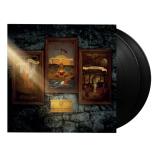
Opeth - Pale Communion (2x12")

Opeth

Pale Communion (2x12")

2x12inchMOVLP3955
Music On Vinyl
10.04.2026

Pale Communion is the eleventh studio album by Swedish progressive metal band Opeth. The album was released in 2014 on Roadrunner Records, and was produced by Mikael Åkerfeldt and mixed by Steven Wilson.

Mikael Åkerfeldt said of the album, "I wanted to do something more melodic with this album, so there's stronger vocal melodies and more melodies overall for this album." Greg Kennelty of Metal Injection said the album does not contain "growls or death metal vocals" and he described the album as "the missing link between Damnation and Ghost Reveries or if Heritage was written directly after Ghost Reveries without Watershed having ever existed".

Reservar10.04.2026

debe ser publicado en 10.04.2026

38,87
AL MANFREDI - Blue Gold LP
  • A1: Of The Sea
  • A2: I Don't Live Today
  • A3: Five Six
  • A4: Blue Gold
  • A5: Foggy Night
  • A6: Empty Of Your Possession
  • B1: What A Way To Be Laughing
  • B2: Let It Alone
  • B3: Never With You (Acoustic Version)
  • B4: To Catch The Sun
  • B5: Don't Move Girl

Born into a musical family Al Manfredi started writing songs when he was child. As a teenager in 1965, he formed the Nuts & Bolts in the small beach town of San Clemente, California. Inspired by the Kinks, the Beatles and the Byrds, the group separated themselves from the pack by also performing original material written by Manfredi and band mate Mike Ingram. In late 1966 they changed their name to the Lost & Found and relocated to Phoenix, Arizona, where they cut a rare single, “Don’t Move Girl” b/w “To Catch the Sun,” which now commands high coin from ‘60s garage collectors. When they returned to San Clemente in early 1967 their music had taken a more psychedelic direction. The Lost & Found were riding high that year, until tragedy struck. Ingram was found hanged under suspicious circumstances and soon after Lost & Found drummer Mike Ryer died of cancer at the age of 19. Heartbroken, Manfredi gave up on the band scene completely and moved to Garden Grove to teach at his family’s music store. But alone, behind closed doors, he kept writing songs and working on his music, recording hours of tapes, often tracking all the instruments himself. In 1973 he chose six of his best songs, some of them written back in the Lost & Found days, and had them custom-pressed as an LP. Only a handful of copies were pressed, and most of these were sent out to various record companies in the hope of landing a deal. Despite the outstanding quality of the music, there were no takers. But decades later, collectors discovered the Al Manfredi album and hailed it a West Coast rock masterpiece. In his Acid Archives book, Patrick Lundborg called its discovery a deus ex machina and compared it to David Crosby’s first solo album and Hawaii-era Merrell Fankhauser, “not just the acutely captured mellowness, but the self-confidence and the talent.”This little-known West Coast rock masterpiece was rediscovered and celebrated by Acid Archives founder Patrick Lundborg and others around the time that Manfredi died in 1995. This version of the album, overseen by Manfredi’s son Exile, and with Manfredi’s story told by Ugly Things’ founder Mike Stax, presents the complete package of an incredible lost and found artist. Contains the album, as originally issued, on side A with unreleased music on side B.

Reservar10.04.2026

debe ser publicado en 10.04.2026

28,99
LES IMPRIMES - FADING FORWARD

Big Crown Records freut sich, das zweite Album von Les Imprimes, ,Fading Forward", zu präsentieren. Unter der Leitung des autodidaktischen Multi-Instrumentalisten und Produzenten Morten Martens beschäftigt sich dieses Album mit Sterblichkeit, Realitätsflucht und einer Vielzahl von Erfahrungen, die mit Liebe verbunden sind. Martens hinterließ mit seinem hochgelobten Debütalbum ,Rêverie" aus dem Jahr 2023 einen bleibenden Eindruck Rêverie einen enormen Eindruck und hat sich seitdem eine treue Fangemeinde aufgebaut, deren Demografie ebenso vielfältig ist wie die Einflüsse, die seine Musik prägen. Er mischt Klänge aus dem Soul der 60er und 70er Jahre mit Anspielungen auf Doo-Wop-Platten, übernimmt die Energie der Hip-Hop-Drums und überzieht das Ganze mit Gesangsstilen aus den 90ern und 2000ern . Aber es sind Martens' Texte, Emotionen und Darbietung, die wirklich alles zusammenbringen und ihm helfen, sich von seinen Kollegen abzuheben. Seine Texte sind ansteckend und poppig und werden mit höchster Klasse und Geschmack umgesetzt, was Les Imprimés die seltene Eigenschaft verleiht, sofort anzusprechen und mit jedem Hören noch besser zu werden. Der aus Kristiansand, Norwegen, stammende Martens spielt fast alle Instrumente auf Fading Forward, produziert und arrangiert das Album und singt natürlich auch. ,Es ist Soulmusik, aber ich habe nicht gerade eine Soulstimme", erklärt Morten bescheiden. ,Aber ich mache es auf meine eigene Art und Weise, auf eine Art, die mir eigen ist." Der Album-Opener ,You & I" ist Mortens Hommage an seine Partnerin, die ,durch das Chaos und die Fehler" mit ihm durchhält. Kraftvolle Drums und kaskadenartige Klaviere machen diesen Song zu einem richtigen Two-Stepper und einer Hymne für diejenigen, die das Glück haben, jemanden zu finden, der sie versteht und ihnen in den Bereichen des Lebens hilft, in denen sie es brauchen. ,Again & Again" verlangsamt das Tempo und beschäftigt sich mit der schwereren Seite der Liebe und des Lebens, während Martens seine Widerstandsfähigkeit angesichts der Missgeschicke, des Herzschmerzes und der Enttäuschungen gescheiterter Liebesbeziehungen bekundet. ,Untainted Love" rückt die süße Seite der neuen Liebe in den Mittelpunkt, mit einer Melodie, die auf den Titel des Klassikers von Gloria Jones anspielt. ,Get Lost" neigt zum Metaphysischen mit der Einladung, die Realität hinter sich zu lassen und Zeit mit Les Imprimés zu verbringen, wo es Raum zum Träumen gibt. ,Only Love" baut auf einem kraftvollen Drum-Break auf, mit einem Refrain, der einfach, aber tiefgründig ist, und das Arrangement verleiht ihm die Energie eines Mantras. Sie wenden sich dem Tanz ,Only Love" baut auf einem kraftvollen Drum-Break auf, mit einem Refrain, der einfach, aber tiefgründig ist, und das Arrangement verleiht ihm die Energie eines Mantras. Sie wenden sich dem Tanz zu in ,With You", einem schnellen, beschwingten Song über eine zufällige Begegnung, die Lust auf mehr macht. Martens sehnt sich nach ihr, aber freudig, als ob allein die Erinnerung daran, dass eine solche Verbindung möglich ist, genau das ist, was er wirklich braucht. ,Fading Forward" endet mit einer völlig düsteren Note mit ,Miss The Days", einer langsam brennenden Ballade, die an einfachere Zeiten erinnert, als die Liebe noch besser war. Martens wird von der Gastsängerin Ama Li in ,Miss The Days" begleitet, einer langsam brennenden Ballade , die an einfachere Zeiten erinnert, als die Liebe noch an einem besseren Ort war. Fading Forward endet mit einer ganz und gar düsteren Note mit ,Paradise", einem Lied, das einem verstorbenen Freund Freiheit und Frieden wünscht. In der kleinen Stadt Kristanland in Norwegen lebt ein großes Talent, das den größten Teil seines Lebens damit verbracht hat, sich zurückzuhalten und im Hintergrund zu bleiben. Der Vertrag mit dem New Yorker Label Big Crown Records inspirierte Morten Martens dazu, seine eigene Musik zu veröffentlichen. Die Reaktionen auf sein Debütalbum ,Rêverie" veranlassten ihn, das Studio zu verlassen und auf die Bühne zu gehen, und all dies diente ihm als Inspiration, um seine Kunstfertigkeit auf ein neues Niveau zu heben. Neue Höhen, die auf Fading Forward voll zur Geltung kommen.

Reservar10.04.2026

debe ser publicado en 10.04.2026

22,27
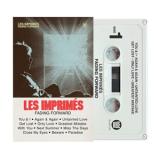
LES IMPRIMES - FADING FORWARD (TAPE)

Big Crown Records freut sich, das zweite Album von Les Imprimes, ,Fading Forward", zu präsentieren. Unter der Leitung des autodidaktischen Multi-Instrumentalisten und Produzenten Morten Martens beschäftigt sich dieses Album mit Sterblichkeit, Realitätsflucht und einer Vielzahl von Erfahrungen, die mit Liebe verbunden sind. Martens hinterließ mit seinem hochgelobten Debütalbum ,Rêverie" aus dem Jahr 2023 einen bleibenden Eindruck Rêverie einen enormen Eindruck und hat sich seitdem eine treue Fangemeinde aufgebaut, deren Demografie ebenso vielfältig ist wie die Einflüsse, die seine Musik prägen. Er mischt Klänge aus dem Soul der 60er und 70er Jahre mit Anspielungen auf Doo-Wop-Platten, übernimmt die Energie der Hip-Hop-Drums und überzieht das Ganze mit Gesangsstilen aus den 90ern und 2000ern . Aber es sind Martens' Texte, Emotionen und Darbietung, die wirklich alles zusammenbringen und ihm helfen, sich von seinen Kollegen abzuheben. Seine Texte sind ansteckend und poppig und werden mit höchster Klasse und Geschmack umgesetzt, was Les Imprimés die seltene Eigenschaft verleiht, sofort anzusprechen und mit jedem Hören noch besser zu werden. Der aus Kristiansand, Norwegen, stammende Martens spielt fast alle Instrumente auf Fading Forward, produziert und arrangiert das Album und singt natürlich auch. ,Es ist Soulmusik, aber ich habe nicht gerade eine Soulstimme", erklärt Morten bescheiden. ,Aber ich mache es auf meine eigene Art und Weise, auf eine Art, die mir eigen ist." Der Album-Opener ,You & I" ist Mortens Hommage an seine Partnerin, die ,durch das Chaos und die Fehler" mit ihm durchhält. Kraftvolle Drums und kaskadenartige Klaviere machen diesen Song zu einem richtigen Two-Stepper und einer Hymne für diejenigen, die das Glück haben, jemanden zu finden, der sie versteht und ihnen in den Bereichen des Lebens hilft, in denen sie es brauchen. ,Again & Again" verlangsamt das Tempo und beschäftigt sich mit der schwereren Seite der Liebe und des Lebens, während Martens seine Widerstandsfähigkeit angesichts der Missgeschicke, des Herzschmerzes und der Enttäuschungen gescheiterter Liebesbeziehungen bekundet. ,Untainted Love" rückt die süße Seite der neuen Liebe in den Mittelpunkt, mit einer Melodie, die auf den Titel des Klassikers von Gloria Jones anspielt. ,Get Lost" neigt zum Metaphysischen mit der Einladung, die Realität hinter sich zu lassen und Zeit mit Les Imprimés zu verbringen, wo es Raum zum Träumen gibt. ,Only Love" baut auf einem kraftvollen Drum-Break auf, mit einem Refrain, der einfach, aber tiefgründig ist, und das Arrangement verleiht ihm die Energie eines Mantras. Sie wenden sich dem Tanz ,Only Love" baut auf einem kraftvollen Drum-Break auf, mit einem Refrain, der einfach, aber tiefgründig ist, und das Arrangement verleiht ihm die Energie eines Mantras. Sie wenden sich dem Tanz zu in ,With You", einem schnellen, beschwingten Song über eine zufällige Begegnung, die Lust auf mehr macht. Martens sehnt sich nach ihr, aber freudig, als ob allein die Erinnerung daran, dass eine solche Verbindung möglich ist, genau das ist, was er wirklich braucht. ,Fading Forward" endet mit einer völlig düsteren Note mit ,Miss The Days", einer langsam brennenden Ballade, die an einfachere Zeiten erinnert, als die Liebe noch besser war. Martens wird von der Gastsängerin Ama Li in ,Miss The Days" begleitet, einer langsam brennenden Ballade , die an einfachere Zeiten erinnert, als die Liebe noch an einem besseren Ort war. Fading Forward endet mit einer ganz und gar düsteren Note mit ,Paradise", einem Lied, das einem verstorbenen Freund Freiheit und Frieden wünscht. In der kleinen Stadt Kristanland in Norwegen lebt ein großes Talent, das den größten Teil seines Lebens damit verbracht hat, sich zurückzuhalten und im Hintergrund zu bleiben. Der Vertrag mit dem New Yorker Label Big Crown Records inspirierte Morten Martens dazu, seine eigene Musik zu veröffentlichen. Die Reaktionen auf sein Debütalbum ,Rêverie" veranlassten ihn, das Studio zu verlassen und auf die Bühne zu gehen, und all dies diente ihm als Inspiration, um seine Kunstfertigkeit auf ein neues Niveau zu heben. Neue Höhen, die auf Fading Forward voll zur Geltung kommen.

Reservar10.04.2026

debe ser publicado en 10.04.2026

10,71
Artículos por página
N/ABPM
Vinyl