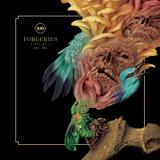
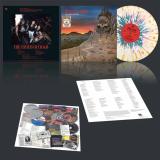
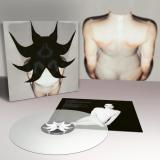
There comes a point in every bands life when originality stops being a virtue and honesty takes the wheel. On their 11th long-playing record: Forgeries (72-84)-(16)- return to the impulse that first dragged them into loud rooms and bad ideas: the urge to steal what we love and make it semi-unrecognizable through devotion. We have partnered with Heavy Psych Sounds Records to release a collection of covers that function less as homage and more as a possession to be given away. The artworkrendered by the ever-amazing Maraldcompletes the ritualiconicunsettlingand unafraid. Weve always believed that a great cover is not mimicry but revelation. Its finding a song that's already lived inside you since youth and letting it crawl outbruised and changed. From the early 90s onward-(16)- have treated covers as translations rather than as replicasacts of tribute and emulationfiltered through distortionfatigueand lived experience. These are songs that taught us how to standhow to falland how to keep going. In our collective headthis album exists because these songs demanded it. Because they screamed copy meand we listened. In the endForgeries (72-84) stands as both a thank you note and a thefta reminder that all music worth a damn is borrowedbrokenand passed on between friends. The selections on Forgeries 72-84 span eras and attitudesunified not by genre but by necessity. Each track is a document of obsessionof influence absorbed and re-expressed without permission.
Wasteland is a record that is unafraid to plunge into the darkness of the modern world and embrace the weirder, edgier and more unnerving moments that come from doing so. It is an album that captures all the enormity of life from the micro to the macro, zooming in on the personal as well reflecting on broader societal issues.
“Wasteland is about the idea of a place once known or familiar that is now broken down and unrecognisable,” says Ghedi. “It’s about exploring the process of watching someone’s surroundings and environment collapse.” And within that you have a lot going on. “It also explores death, personal loss, grief, mental health and how the natural world provides solace and meaning for that loss and how these worlds blur into one another.”
Ghedi has always been an artist that in many ways perfectly encompasses folk music in its purest form but he is also someone that frequently pushes the boundaries of that label and no more so is that apparent than on this record. As like previous albums, such as 2018’s A Hymn for Ancient Land and 2021’s In the Furrows of Common Place, Ghedi uses traditional folk songs as a means to explore contemporary issues via modern and experimentally-leaning music. “With the traditional material on this album I wanted to find songs with content that resonated with me,” says Ghedi. “But also that were based roughly around the north of England.” This is a central underlying theme to the album for Ghedi. The feelings of loss, erosion, and degradation are often most pronounced in working class communities and this was something he wanted to weave in. “It was important to voice and choose material that represented or expressed issues that correlated with things going on around me.”
However, as remarkable as some of the traditional material is, some of the most arresting work on the album is Ghedi’s entirely original compositions. Lead single ‘Wasteland’ is a stunning piece of work that while rooted in an environment being corrupted and broken – “there’s violence on these hills” Ghedi sorrowfully sings, before claiming this is no longer somewhere that can be called home – it is also a stirringly beautiful composition that soars and glides as it opens up, as sweeping strings swoop and in and out of Ghedi’s twangy electric guitar.
The decision to incorporate more fuller sounds, such as electric guitar and huge drums, results in a notable shift and evolution in tone for Ghedi. “The lyrical content needed something more band-driven and loud to deliver them,” he explains. “Incorporating the electric guitar in my songwriting was also a big part of opening the sound up, using drop tunings pushed me to use my voice in a wider range, which forced me to use falsetto a lot which I haven’t previously done before. That then opened the sound up and gave me creative ideas for bigger arrangements and to sonically really push things.”
What Ghedi has done in creating his masterpiece is construct a remarkable space where deeply intimate and personal feelings coexist with reflections on environment, place and society, while also interweaving historical context via traditional songs. Wasteland is as much of a world to explore and exist in as much as it is an album, with Ghedi carving out his distinctly unique sonic language and voice to explore that singular environment.
VERY LIMITED BLACK VINYL WITH DOUBLE-SIDED INSERT (NON-RETURNABLE)
California composer Phil Geraldi’s vinyl debut both refines and refracts his signature muse of interstitial Americana across 11
melted glass mosaics of processed guitar, decayed radio glow, and Harmonia synth horizons: Rural Deceased Undiscovered. He
describes his vision for the pieces as “multilinear,” rearranging classic radio songbook elements like hooks, choruses, and
emotional cues into unfamiliar topographies of “alien country.”
Shards of acoustic guitar and pedal steel flicker in long shadows of amplifier hum and airwave static, like the scrambled
broadcast of some heartland station along a desert highway. It’s music both rustic and placeless, warped by weather and
technology, shimmering like northern lights over the badlands.
Iconic Atlanta quintet SEVENDUST is back with its 15th studio album, ONE, set for release on May 1, 2026 via Napalm Records. The upcoming full-length LP forges ten simultaneously lean and gut-punching tracks out of gargantuan riffs, seismic grooves, and signature soul-stirring hooks, once again produced by Michael “Elvis” Baskette (Alter Bridge, Falling In Reverse, Mammoth). The group, comprised of Lajon Witherspoon (vocals), Clint Lowery (lead guitar, backing vocals), John Connolly (lead guitar, backing vocals), Vince Hornsby (bass), and Morgan Rose (drums), busts down the door with the first single “Is This The Real You”. Its swaggering fretwork alternately wallops and gallops in lockstep with a pummeling rhythm anchored by thunderous drums. The riff rolls and seethes, and the vocals swing from guttural growls into the embrace of a jazz-y chantable chorus.
A hummable lead ties the bridge together. Echoes of a tensely picked single-note set the tone for “Threshold.” Lajon’s delicate delivery gives way to a contentious distortion-boosted refrain. Then, there’s “Unbreakable,” which has all the makings of a clarion call for the collective and a future live staple. Strains of soft piano slip into the undertow of a towering hook punctuated by a promise, “We were meant to be unbreakable… even when we’re at our lowest lows. And if it gets too cold, I’ll never let you go.” The title track succinctly sums up the record as a whole. Bellowing out of a maelstrom of roaring distortion, Lajon’s voice reaches heavenly heights. For over three decades, SEVENDUST have made countless fans feel a part of something special. The group’s community isn’t passive. Members of the “7D Army” make a very active commitment to being part of this family – as evinced by sold-out shows worldwide and innumerable tattoos of the band’s logo and lyrics. Since 1994, the band has quietly built a legacy without parallel, encompassing sales of nearly eight million albums, a GRAMMY® Award nomination for “Best Metal Performance,” three Top 15 entries on the Billboard 200, hundreds of millions of streams, and the fierce loyalty of millions of listeners in every corner of the globe.
Another Country is the fifth full-length album by Cindy, the San Francisco-based group built around the songwriting of Karina Gill. Recorded, like all of its predecessors, in their hometown and with a consistent line-up held over from their previous record (the Swan Lake EP from 2024), it is replete with the poetry of private vistas, eavesdropped dramas and confusing winds. These are classic Cindy concerns, and yet, as always, contain new mystery and charm to somehow feel like quiet revelations each time. Another Country is both opaque in its intentions and specific in its presentation, and as such presents the kind of truth that keeps the listener on the search for answers just out of reach.
"The title of this record, Another Country, refers to the James Baldwin novel of that name. The book has a kind of drama that makes sense to me. When I look around, the obvious explanations are not enough. The miasma of feelings and ideas that is supposed to account for it all, doesn't. Baldwin washes past that to longings that begin to explain. Cindy songs come out of the x-rays my particular brain makes out of what I see and experience. What you hear on this record is the result of collaboration with the members of Cindy that transforms that shadowy thing into full color, fully fleshed. Each of them, in music, is sure-footed and unblinking, and making this record together felt like, yes, yes, you see what I mean."
Cindy is Karina, Staizsh, Will & Oli. Another Country will be released on 1st May 2026 via Tough Love.
Celebrated producer and musician Danger Mouse and prodigiously talented New York rapper Jemini are gearing up to release their long delayed collaborative album, Born Again Remarkably this soul and funk infused hip-hop tour de force arrives two decades after its creation and the duo's debut LP, Ghetto Pop Life which celebrates its 20th anniversary this year. Enthused by the response to Ghetto Pop Life, soon after Danger Mouse and Jemini began to tour and to write and record Born Again. Finally, having been recorded two decades ago and indefinitely shelved until now, Born Again will finally be released to coincide with the twentieth anniversary of Ghetto Pop Life. The previously unheard record retains many of the elements of Danger Mouse and Jemini's debut; the fun- loving, shit- talking innocence, but also adopts a noticeably more introspective and confessional tone. This time, in addition to lighthearted topics such as being an incredible artist (Knuckle Sandwich II, Brooklyn Basquiat), living large and being a magnet for attention (Me), Jemini also delivers highly- personal and occasionally devastating lyrics about missed opportunities and redemption (All I, Born Again), his time in prison (Locked Up) and complicated relationship with his father (Dear Poppa). His effortless free flowing cadence and indelible sing-song delivery elevate each track with a melodic infectiousness whilst Danger Mouse exhibits an affinity for resonant instrumentals built from sampled organ, vibraphone, or guitar loops and infused with his trademark minor key magic. The result is a classic, timeless hiphop record.
Celebrated producer and musician Danger Mouse and prodigiously talented New York rapper Jemini are gearing up to release their long delayed collaborative album, Born Again Remarkably this soul and funk infused hip-hop tour de force arrives two decades after its creation and the duo's debut LP, Ghetto Pop Life which celebrates its 20th anniversary this year. Enthused by the response to Ghetto Pop Life, soon after Danger Mouse and Jemini began to tour and to write and record Born Again. Finally, having been recorded two decades ago and indefinitely shelved until now, Born Again will finally be released to coincide with the twentieth anniversary of Ghetto Pop Life. The previously unheard record retains many of the elements of Danger Mouse and Jemini's debut; the fun- loving, shit- talking innocence, but also adopts a noticeably more introspective and confessional tone. This time, in addition to lighthearted topics such as being an incredible artist (Knuckle Sandwich II, Brooklyn Basquiat), living large and being a magnet for attention (Me), Jemini also delivers highly- personal and occasionally devastating lyrics about missed opportunities and redemption (All I, Born Again), his time in prison (Locked Up) and complicated relationship with his father (Dear Poppa). His effortless free flowing cadence and indelible sing-song delivery elevate each track with a melodic infectiousness whilst Danger Mouse exhibits an affinity for resonant instrumentals built from sampled organ, vibraphone, or guitar loops and infused with his trademark minor key magic. The result is a classic, timeless hiphop record.
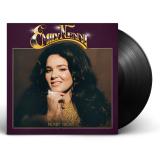
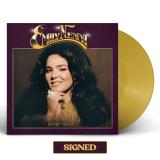
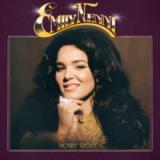
Whenever Emily Nenni is onstage, she welcomes everybody to the dancefloor. The California-born, Nashville-based singer-songwriter wants the honkytonk to be a place of escape, where fans can shed their troubles for a few hours and feel safe and free. “I’m always watching the dancefloor and making sure everybody’s being respectful.” Or, as she sings on the supremely funky title track to her new album Movin’ Shoes, “Here’s where you dress for you and dance the way that you want to.”
Movin’ Shoes is an album about how we treat each other and how we treat ourselves. Confident in its touchstones and compassionate in its insights, Movin’ Shoes eloquently and wryly blends southern soul from Memphis and Muscle Shoals with southern rock from Macon and outlaw country from Austin. Making Movin’ Shoes was a process of discovery for Nenni. Musically she found all new ways to combine the disparate artists she loves so much, and lyrically she found all new ways to relate to herself and to others. “We should at all times acknowledge and accept the fact that we’re imperfect people,” she explains. “We all make mistakes and we should all rethink the way we go about things. I am flawed. Everyone around me is flawed. But that’s not a bad thing. It just means we’re all human. This album is about making mistakes and learning from them. I’m always trying to put that into my songs.”
This album was released in 2017 as free download packs with the band encouraging fans to create their own physical copies with provided templates.
From the band's post accompanying links to different digital packs:
"This album is FREE. Free as in, free. Free to download and if you wish, free to make copies. Make tapes, make CD’s, make records. ... Ever wanted to start your own record label? GO for it! Employ your mates, press wax, pack boxes. We do not own this record. You do. Go forth, share, enjoy."
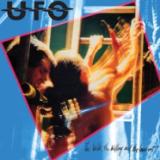
Newly remastered from the original tape transfers, the album now sounds more dynamic and detailed than ever, reaffirming its place as one of UFO's most accomplished works. This deluxe edition also includes a brand-new mix of the previously unreleased Live at the Hammersmith Odeon, recorded on 29th January 1981, by Brian Kehew, offering an electrifying snapshot of UFO's energy on stage. Original 7" edits of the two singles released with this album are included as well as an alternative mix of album standout "It's Killing Me". The set is rounded out with newly written liner notes by Michael Hann, featuring fresh interviews with Phil Mogg and Andy Parker, alongside a collection of previously unseen photographs from the era -- making it an essential addition for fans and collectors alike.
Formed in February 2025, but with a live show which outshines that of groups five times their age and experience, the north are the latest and greatest export of Leeds’ longstanding, fervent indie scene. Fronted by singer/guitarist Billy Memphis, the group have spent the past 12 months building up a reputation as one of the country’s most exciting new acts - though they’re not too fussed about the hype train. “Fuck trying to be cool or mysterious, we wanna be real,” says Billy, “If it’s to ten people or ten million.” After convincing his mum to move the family home from Scarborough to Leeds in search of culture at the age of 16, Billy spent the past three years traversing the city’s music scene, eventually forming the north (completed by drummer Sian Keates, guitarist Kobi Griggs and bassist Mecca Boylan) after cherry-picking the finest young talent in the city.
Missing Link was produced by longtime ally Niek Van Den Driesschen and recorded at Far Out Sound Studios in Rotterdam - the Dutch city where the band's bassist Marrit Meinema and drummer Leon Harms reside as singer Jeroen and guitarist Peter continue to live further north in Groningen, where the band started out. It was mastered by Melbourne-based Mikey Young, who works mostly with garage, psych and punk (Amyl and the Sniffers, Preoccupations, The Chats)
Fresh from the success of his debut solo LP ‘How To Kill A Butterfly’ out last year on High Focus Records, Farma G returns with the anticipated full-length follow up ’Nearly Nothing’s Enough’.
An album anchored in his notorious musical adventures as 1/2 of Task Force, Bury Crew and Mud Family, but very much informed by the state of 2026 Britain and beyond, Farma’s new body of work is fuelled by equal parts venom and deep introspection across 12-tracks courtesy of Brighton based producer Relense.
With one eye on following ‘How To Kill A Butterfly’ with something of equal standing, Farma revisited the fundamentals in the hope of better understanding what he really wants to say with the music he makes. By channelling feelings of familiarity and seeking out emotional connections to his past he created a record that feels both concise and expansive.
With the help of Relense’s gritty analog instrumentals, Farma found himself journeying across subjects and bandwidths; from exploring the mind of a conspiracy theorist on ‘X-Files’, to being a zen master with a mountain on his back on ‘Sun Wukong’, before returning to earth for a typical day in the life on ‘Mr Moany’, ‘Nearly Nothing’s Enough’ is an album that took Farma home and he is delighted to welcome you on the journey.
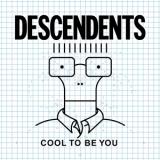
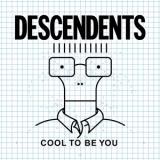
In eine Szene, die häufig von Schein und Dunkelheit dominiert ist, schickten die DESCENDENTS ab Mitte der 80er eine Portion dreckigen Humor, Songs über die junge Liebe und das junge Leben, unverschämt eingängigen Hooks, eine koffein-befeuerte Rhythmusgruppe und natürlich dem legendären Milo am Gesang. Es gab wieder Spaß im Punk. Das erstmals 2004 veröffentlichte Album ,Cool to Be You" zeigte, dass man erwachsen werden und einen ,richtigen" Job machen kann und trotzdem schneller und lauter spielt, als die nachgerückten Kids, die halb so alt sind wie man selbst. Es festigte ihr Vermächtnis als die Band, die den Pop" in den Punk brachte, ohne dabei die Punk-Kante zu verlieren. "Luckily, the only thing that has changed about the band is their switching of record labels from Epitaph to Fat Wreck Chords. Milo Aukerman, Bill Stevenson, Karl Alvarez, and Stephen Egerton continue to spit out hook-laden pop-punk with the energy and humor they have been known for since the early '80s. Like the Ramones before them, the Descendents' overall sound tends to be interchangeable, in the best possible way, with previous efforts. Why mess with a good thing? For instance, among these 14 tracks, "Nothing With You" can be compared to "Clean Sheets," while "Cool to Be You" and "Mass Nerder" are anthems à la "I'm Not a Loser" and "I Don't Want to Grow Up." - Zurück auf schwarzem und limitiertem farbigem Vinyl! Das entscheidenen Verkaufsargument: Jeder liebt die DESCENDENTS! Richtige Annahme, oder?
In eine Szene, die häufig von Schein und Dunkelheit dominiert ist, schickten die DESCENDENTS ab Mitte der 80er eine Portion dreckigen Humor, Songs über die junge Liebe und das junge Leben, unverschämt eingängigen Hooks, eine koffein-befeuerte Rhythmusgruppe und natürlich dem legendären Milo am Gesang. Es gab wieder Spaß im Punk. Das erstmals 2004 veröffentlichte Album ,Cool to Be You" zeigte, dass man erwachsen werden und einen ,richtigen" Job machen kann und trotzdem schneller und lauter spielt, als die nachgerückten Kids, die halb so alt sind wie man selbst. Es festigte ihr Vermächtnis als die Band, die den Pop" in den Punk brachte, ohne dabei die Punk-Kante zu verlieren. "Luckily, the only thing that has changed about the band is their switching of record labels from Epitaph to Fat Wreck Chords. Milo Aukerman, Bill Stevenson, Karl Alvarez, and Stephen Egerton continue to spit out hook-laden pop-punk with the energy and humor they have been known for since the early '80s. Like the Ramones before them, the Descendents' overall sound tends to be interchangeable, in the best possible way, with previous efforts. Why mess with a good thing? For instance, among these 14 tracks, "Nothing With You" can be compared to "Clean Sheets," while "Cool to Be You" and "Mass Nerder" are anthems à la "I'm Not a Loser" and "I Don't Want to Grow Up." - Zurück auf schwarzem und limitiertem farbigem Vinyl! Das entscheidenen Verkaufsargument: Jeder liebt die DESCENDENTS! Richtige Annahme, oder?
RIPIT is back with a new LP after 3 years spent mostly on the mesmerizing collaboration between THE ÅNGSTRÖMERS- his duo with FRÉDÉRIC ALSTADT -and the Haitian voodoo ensemble CHOUK BWA.
While Ripit is better known for his radical noisy breakbeat work, "A Church or a Factory" explores a more industrial, power electronic and noise ambient side of his synthesizer lust. The instruments abused on this record are: Serge modular, Knifonium and various eurorack modular. The A-side comes with 5 powerful synthetic industrial songs which feature each one a different guest vocalist. The B-side is a long ambient noise piece that will plunge the listener in an anxious meditation.
Ripit is the project of the French NICOLAS ESTERLE for almost 25 years. He explores electronic instruments thru distortion , ranging from industrial hardcore to breakcore, from doom hiphop to dusty dub. Beside his solo project, he's involved in various bands like SOLAR SKELETONS (with TZII), FUJAKO (with HHY) and more recently The Ångströmers.
On the guest side, there's a wild bunch of Nicolas' friends:
- PAUL-TERGEIST is the galactic moniker of PAUL BEAUCHAMP in his band SPACE ALIENS FROM OUTER SPACE;
- ANDREA EV is the lead member of 1997EV;
- ROBERT IMHUMAN and DIVTECH are members of the REALICIDE COLLECTIVE;
- TZII is a long-time road comrade of Nicolas and a touring freak spreading his music all over the world;
- ANDRÉ COELHO is known as METADEVICE and is the founder of the now-defunct SEKTOR 304.
The title "A Church or A Factory" refers to the Belgian countryside, wherever you are, you are at least surrounded by a church or a factory. As he just left the urban life of Brussels to escape to the French countryside, he is now lost enough not to have neither a factory nor a church in sight.
Sergeant ventures deeper into the chaos, occasionally emerging with something dangerously close to catchiness.
Symbols further explores the technique the band calls “dj-shadow-in-reverse”. Instead of digging for samples, they dig through themselves. Things are cut apart and glued back together: kraut drums, plunderphonics fragments, dance floor killers and dub chambers. This time, the wreckage has rhythm and the rhythm has an opinion. Ferre sings through the songs like he’s looking for an exit and having a great time not finding it. Somewhere in there, a flute appears: it sounds slightly worried about the bassline. But the band is more in charge of its plot than ever before. Sergeant finds bliss in losing it over and over again.
‘Their ability to harmonize together is stunning, their reedy voices coming together and pulling apart amid delicate fingerstyle guitar and concertina deployed in just intonation, which imparts a deeply resonant, almost glowing harmonic presence. It’s all quite subtle, and if you only listen to the way the voices of Cater and Rasten blend you might even miss it—but the full sonic spectrum is what distinguishes and, in certain ways, connects it to traditional practice… Although the album is pure balladry, unfolding with exquisite patience, each song contains nifty little flourishes or instrumental elements that set them apart, such as the slide guitar and wheezy bass harmonica on For the Ear That is No More, or the slow peal of trumpet on Death and the Lady, courtesy of Rasten’s partner in Pip and Oker, Torstein Lavik Larsen. (Peter Margasak, Nowhere Street).
‘All done with such grace and elegance, without a note wasted or any required. Wonderful… faultless and deeply considered’ (Glenn Kimpton, KLOF).
Three high English and Scottish ballads, and three original settings of European folk tales.
Matt gatefold cover; gloss spot varnish.
Check it out!
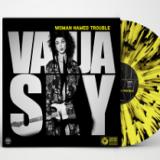
Enough pop princesses! Vanja Sky is the real deal—a blues-rock gunslinger with a fiery voice and a striking new album full of modern classics. The Croatian-born guitarist first made waves during the Blues Caravan 2018 with her acclaimed debut album Bad Penny, praised by critics as a powerful entry that revitalized the scene. Inspired by legends like Rory Gallagher, Albert King, and Stevie Ray Vaughan, Sky left her hometown of Buzet and her job as a pastry chef to immerse herself in the music scene of Zagreb. Despite the challenges of coming from a region rarely noticed by the music industry, her talent quickly gained attention. Supported by Thomas Ruf of Ruf Records, she broke through with Bad Penny and impressed audiences alongside Mike Zito and Bernard Allison on the Blues Caravan tour.
The Romantic, the new album from Bruno Mars. The fourth studio album from the global superstar and 16 time GRAMMY® Award-winning artist marks Mars' first solo album release since 2017's 24k Magic and follows chart topping collaborations with Anderson .Paak as Silk Sonic, as well as smash hits with Lady Gaga and ROSÉ.
Available for pre-order on the 9th January at 5AM GMT and set for release on the 27th February 2026.
Sixteen-time GRAMMY® Award winner and thirty-three-time GRAMMY® Award nominee Bruno Mars is a celebrated singer, songwriter, producer, and musician who is one of the best-selling artists of all time and now continuously the number-one most listened-to artist on Spotify. With recent hits like “APT.” with ROSÉ and “Die With A Smile” with Lady Gaga—the latter earning him two nominations for “Song Of The Year” and “Best Pop Duo/Group Performance” at the 67th Annual GRAMMY® Awards—Mars has celebrated another extraordinary year in music. Among his robust list of accolades, some of which include “Album of the Year” for 24K Magic at the 60th Annual GRAMMY® Awards and “Record of The Year” for Silk Sonic’s “Leave The Door Open” at the 64th Annual GRAMMY® Awards, Mars has held the number one global song for more weeks than any artist in 2024 with both “APT.” and “Die With A Smile.”
out of Stock
Last delivered 5 months ago available to reorder, subject to availability
LP with printed Innersleeve with Linernotes by Eddie Piller (Acid Jazz) The compilation series “DJ's Choice” was launched in 2008 and has already enjoyed the participation of several high-profile curators, such as Keb Darge, Marc Hype, and DJ Suspect. A few years before the death of Unique Label founder Henry Storch in 2018, a DJ's Choice edition was created with his long-time friend and fellow DJ Eddie Piller. Unfortunately, it never came to fruition—as is so often the case, life had other plans, and sadly not all of them were pleasant. However, the idea was never completely forgotten, and with the help of Eddie and Henry's DJ partner in crime Sandra (Frollein Taube), a list of tracks that were on Henry's quick-select list for his sets was finally compiled.
out of Stock
Last delivered 5 months ago available to reorder, subject to availability
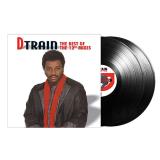
D Train delivered a run of early-’80s hits, earning multiple chart successes and becoming a staple in iconic clubs like New York’s Paradise Garage. Their influence has endured far beyond the original fanbase—from being sampled by The Notorious B.I.G. in 1997 to appearing in Grand Theft Auto V in 2013. The Best Of The 12" Mixes, which compiles extended 12-inch versions and remixes by legendary producers Paul Hardcastle and François K, was first released on CD in 1992. Now, for the first time and exclusively for Record Store Day, Unidisc presents the collection as a double LP pressed on 180-gram heavyweight vinyl.
out of Stock
Last delivered 6 days ago available to reorder, subject to availability
NOW That’s What I Call 70s Soul brings together 50 era-defining tracks from one of the most powerful decades in soul music, featuring classics from Motown legends, Philly Soul pioneers, smooth balladeers and funk innovators – all pressed across 3LPs on beautiful blue vinyl… Out April 24th!
LP1 opens with one of the decade’s most recognisable love songs: Al Green’s ‘Let’s Stay Together’, a US #1 and UK Top 10 hit that became his signature recording. It’s followed by Marvin Gaye’s ‘What’s Going On’, the socially conscious masterpiece and title track from his landmark 1971 album, and Diana Ross’ Ain’t No Mountain High Enough’, which topped the US chart and became her first solo #1. Stevie Wonder’s ‘Signed, Sealed, Delivered (I’m Yours)’ remains one of Motown’s most joyful recordings and comes before Commodores’ ‘Easy’ introducing Lionel Richie’s smooth ballad vocals. The side also includes Bill Withers’ timeless ‘Ain’t No Sunshine’, a Grammy-winning classic, and The Stylistics’ lush ballad ‘You Make Me Feel Brand New’, a UK Top 3 smash, before closing with Rose Royce’s beautiful ‘Wishing On A Star’, one of the most loved soul ballads of the era.
Flip the LP over and The Jackson 5’s ‘I Want You Back’ – the group’s explosive debut single opens the side. Smokey Robinson & The Miracles’ ‘The Tears Of A Clown’ became a UK #1 and is followed by The Supremes’ Nathan Jones’ showcasing the group’s evolving psychedelic-soul sound. Northern Soul classics from Frankie Valli & The Four Seasons with ‘The Night’, Chairmen Of The Board’s Top 3 smash ‘Give Me Just A Little More Time’ and The Trammps’ ‘Hold Back The Night’. The O’Jays’ joyous ‘Love Train’ leads to The Blackbyrds’ Walking In Rhythm’, before the side closes with the romantic classic ‘Always And Forever’ from Heatwave.
LP2 opens with The Temptations’ epic ‘Papa Was A Rollin’ Stone’, a Grammy-winning US #1 remains one of the most stunning recordings from the Motown catalogue, is followed by Isaac Hayes’ ‘Theme From “Shaft”’, an Academy Award-winner and a US #1 smash. More funk follows from Ike & Tina Turner, James Brown with one of his key tracks ‘Get Up (I Feel Like Being A) Sex Machine’, Edwin Starr’s powerful anti-Vietnam protest song ‘War’, and Sly & The Family Stone’s hugely influential ‘Family Affair’. The Delfonics’ sublime ‘Didn’t I (Blow Your Mind This Time)’ comes ahead of Billy Paul’s timeless ‘Me And Mrs. Jones’ which closes the side…the other side begins with the 1977 #1 from The Floaters with ‘Float On’, before the breathtaking vocals of Minnie Riperton on ‘Lovin’ You’. The Isley Brothers’ Summer Breeze’ and William DeVaughn’s ‘Be Thankful For What You Got’ have become enduring classics and are followed by a run of ‘80s pop-chart crossover hits completing LP2 from Detroit Emeralds, The Moments Raydio and The Tymes’ #1 ‘Ms. Grace’.
LP3 opens with the unmistakable voice of Barry White and his US #1 hit ‘Can’t Get Enough Of Your Love, Babe’, before Aretha Franklin’s ‘Until You Come Back To Me (That’s What I’m Gonna Do)’, delivers one of her smoothest performances. Al Green’s ‘Tired Of Being Alone’ and Gladys Knight & The Pips’ ‘Midnight Train To Georgia’ are followed by minimalist soul classic ‘Why Can’t We Live Together’ from Timmy Thomas, and the side closes with a trio of defining ballads:- George Benson’s ‘The Greatest Love Of All’ Diana Ross’ ‘Theme From Mahogany (Do You Know Where You’re Going To)’ and The Jackson 5’s ‘I’ll Be There’, their biggest hit…while over on the final side…Freda Payne’s #1 ‘Band Of Gold’, opens alongside Ann Peebles’ influential and much covered ‘I Can’t Stand The Rain’.Marvin Gaye’s sensual ‘Let’s Get It On’ became another US #1, while Harold Melvin & The Blue Notes featuring Teddy Pendergrass deliver the contemporary standard ‘If You Don’t Know Me By Now’. Three massive UK #1s are next…The Stylistics with ‘Can’t Give You Anything (But My Love)’, The Three Degrees’ peerless ‘When Will I See You Again’ and Deniece Williams’ ‘Free’. This amazing collection closes with two timeless ballads: Earth, Wind & Fire’s ‘After The Love Has Gone’, a Grammy-winning classic, along with ‘Three Times A Lady’, a huge worldwide #1 for the Commodores.
NOW That’s What I Call 70s Soul, 50 defining tracks from one of music’s greatest decades. Out April 24th.
out of Stock
Last delivered 5 months ago available to reorder, subject to availability
On their powerful new album When A Flower Doesn’t Grow, Softcult (Mercedes and Phoenix Arn-Horn) deliver their most unflinching and transformative work to date. Written during a period of personal upheaval and self-discovery, the record charts a journey through trauma, disillusionment, empowerment and eventual liberation. Musically, Softcult continue to expand their world of grunge, shoegaze and alt-rock textures, pairing fuzz-laden riffs and dreamy soundscapes with raw, confessional lyricism. The result is both intimate and universal: a record for anyone who has ever felt trapped or diminished by their surroundings and a rallying cry to nurture ourselves and each other in the pursuit of freedom and authenticity.
out of Stock
Last delivered 3 months ago available to reorder, subject to availability
Rave At Your Fictional Borders is not beyond borders. The band simply denies any notion thereof. Driven by a sense of community, it defines human existence as one bio-organism with planet Earth. Now comprising members Dave De Rose, Marius Mathiszik, and Salim Akki, this incarnation of Rave At Your Fictional Borders first released the 'Entanglement' and 'Utopia' tracks in March 2025. Analogue Nomadism is the project's first album release. Recorded in Morocco and then co-produced and mixed by Dan Nicholls, it is an album of dizzying, trance-inducing scope. Rave music stripped of all external signifiers. Repetition, noise, krautrock, avant-garde sensibilities. This is a search for a groove that both connects and interlocks. The soul of improvisation and exploration runs through all seven pieces on Analogue Nomadism. Genres are referenced and transcended. The open-ended is perpetually embraced.
It is neither night nor day, but there is a half-light all the time. What used to be disconcerting is now not alien anymore. The sky boasts a faint light. Certain shapes are laid out, but get changed through communal ritual. Analogue Nomadism is the music of a feeling of community. It builds and breaks down. It is accepting of the psychedelic standards of the groove. Transportative and vertiginous. Endless.
Manilla Road's »The Courts Of Chaos« album was originally released in 1990. It was the band's last release for Black Dragon and also the last release before the band temporarily split up (if we do not take 1992's »Circus Maximus« into account, which was actually supposed to be a solo album). All in all it was a very tough time for Manilla Road. When he was still alive, Mark Shelton commented in an exclusive interview: "Yes, you are correct with all of that. Our releases were not selling as well as they had years before and it seemed like metal in general was having a hard time surviving the times that followed the conversion to CD technology. Right after Manilla Road broke up, I started putting together a solo project that accidentally turned into a band. So we named it Circus Maximus and signed a deal with Black Dragon but they decided to release it as a Manilla Road album because they thought it would sell better. »The Courts Of Chaos« was the last album that was a real Manilla Road project on Black Dragon." “»The Courts Of Chaos« was a tough album to get done because the atmosphere within the band was tense, to say the least”, continued The Shark. ”We all knew it was going to be the end of an era and that this line-up would most likely never do another album.” Although »The Courts Of Chaos« might not be the strongest Manilla Road effort, Mark did not consider it a “throwaway album” whatsoever: “It does not seem to get mentioned as much as many other albums of The Road. But when it does come up, it seems like that person is really sold on the project being one of our better ones. It does, in my opinion, have some really killer songs on it. 'Dig Me No Grave' is still in our show. It's always a challenge to play but I love doing that one live and it still seems to appeal to our audience. “ Another highlight on »The Courts Of Chaos« is "DOA", a cover of a Bloodrock number. Manilla Road were not known for playing too many covers. Mark Shelton explained: "I grew up in that era and yes, I love that old stuff and could be called a collector of sorts, I guess. This was the only cover song that Manilla Road has ever put on an album. We chose this song because it was the only one that all three of us could agree upon. I wanted to do some obscure hit from the old days and turn it into a Manilla Road style song. I'm still fairly fond of the version and still like to listen to it every once in a while."
Cathartic avant-rock, literate DIY folk & experimental composition exploring displacement, love, climate change, belonging & the places we call home - RIYL Jim O’Rourke, Richard Youngs, This Heat, Richard Dawson, Flying Nun. ‘Real Home’ is the new album by the Manchester-born, London-based artist Kiran Leonard. His sixth album proper (not including innumerable tour-only CD-Rs and short-run cassettes), since his precocious debut in 2013, ‘Real Home’ finds Leonard invigorated by inspiration and experience, making passionate, literate, and mercurial music that explores displacement, love, memory, climate change, connections to home and more. Encompassing songs recorded after moving to South London, ‘Real Home’ reflects on ideas of belonging and domesticity through folkloric, stream-of-consciousness songwriting. Across nine tracks, Leonard traces lived impressions of the household and the city, expressing sentiments of dislocation, alienation and stasis, but contentment too. Infusing the avant-rock effervescence, terraced dynamics and visionary lyricism of his music with what he defines as a greater sense of openness, Leonard is as versatile, fervent and imaginative as ever on ‘Real Home’, yet his music is somehow more intimate, affecting, and acutely expressive. Shaped by dual considerations of simplicity and formalism, ‘Real Home’ is by turns beautiful, allusive, and ruminative, an album on which Leonard considers what his songs have resembled in the past and what they mean now. In recent years, Leonard has crafted eloquent chamber music inspired by the likes of James Joyce and Clarice Lispector (‘Derevaun Seraun’), responded to contemporary politics and communication breakdown in the digital age (‘Western Culture’), and compiled solo works and ensemble recordings for a longform ode to Jonas Mekas and to one of Leonard’s enduring themes; home (‘Trespass On Foot’). On ‘Real Home’, Leonard reiterates this abiding thematic focus yet ascends to new, different heights, in music of cathartic delicacy and dissonance where all the myriad dimensions of his work to date seem to crystallize. There are sinuous songs about struggle and defying the pace of city life through drift and diversion (‘Pass Between Houses’), stirring songs of intense feeling and crescendo, described as a form of speculative detective fiction (‘Theatre for Change’). There are touching solo piano ballads (the title track), symbolic contentions with carbon capture and climate change (‘Utopia of Bog’), modes of experimental minimalism (‘Void Attentive’), and other profuse feats of compositional range, embroidered with wild tendrils of narrative and lyrical depth. A record to pore over, and get lost in. Exemplifying the vast aesthetic scope of Leonard’s music, lead single ‘My Love, Let’s Take The Stage Tonight’ is inspired by country lodestar Hank Williams, Russian poetry and a late period love poem by William Carlos Williams. Yet for Leonard, the song signals a sense of accessible materiality, and is the product of a more linear approach to writing songs: “My imitation of the great Hank Williams, in spirit if not in substance…This is one of the best efforts on Real Home at a song-as-object. Looking at it now I realise I was trying to write a song that made itself known as a song to the listener, and I wonder whether that’s crucial if you want a song to transcend its context. And that this is either accomplished through a total openness – by being inviting, by laying the tricks of the song out plain to see, as Williams and his many ghostwriters did so well – or by adopting a knowing aloofness, positioning oneself against the listener but letting it be known that that’s what it’s doing. In this song I try both, but mostly the former: as in, I wanted to write a song where every line follows on from the next.” Imbuing the endlessly elaborate and inventive qualities of his music with a newfound streak of candid, clear-cut melodicism, Leonard has reached a special place in his artistry, on a record that feels familial, and expresses closeness. Assembled with affiliates including Lauren Auder, Otto Willberg, Jasper Llewellyn (caroline), Tom Hardwick-Allan (Shovel Dance Collective), Magda McLean (caroline, The Umlauts), Alex Mckenzie (caroline, Shovel Dance Collective), Isabelle Thorn (Dear Laika) & more, the recording process had a significant influence on the subject matter of ‘Real Home’, in sessions defined by close-knit camaraderie and artistic eccentricity: “The theme of the home obviously recurs throughout the record; the album was mostly recorded in domestic spaces with friends, and the name of the album is Real Home. I like the qualifier ‘real’, like you’re getting past the cloak of the word and towards the thing-itself…also nearly all the percussion in this record was recorded on items from my dad’s shed (jam jars, sandpaper, blocks of wood, etc). Real home record!” ‘Real Home’, like anything by Kiran Leonard, is a record of dazzling multiplicity. Yet it’s a companionable prospect with a central premise; a collection of songs where listeners old and new can find a home. An album led by a scene; of Leonard standing at the threshold, ready to welcome you inside. “Exceptional songs that linger” - The Guardian // “An autodidact of amazing talent & energy” – Pitchfork // “A ridiculous amount of talent…confrontational, celebratory, provocative or perverse – he manages all of these emotions & more” - The Quietus /
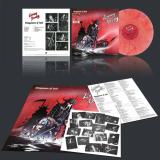
When asked about the founding fathers of German thrash metal, band names such as Kreator, Sodom, and Destruction come to mind. Perhaps even Tankard. The name Living Death is usually not among them. There is a simple reason for this. Similar to the Swiss band Hellhammer, Living Death from Velbert were simply a tad too extreme for most fans and the press. Thorsten “Toto” Bergmann's truly shrill vocals and the poor production of the first two (legendary) albums did not make it easy for the public to adequately assess the band's musical significance. Living Death was founded in 1981 by the two Kelch brothers, Reiner on guitar and Dieter on bass. In the early days, guest drummer Eric sat behind the drums. The line-up was completed by Frank Fricke on second guitar and the aforementioned singer Thorsten “Toto” Bergmann. Living Death recorded their first demo with three tracks in 1981, which earned them a deal with the Belgian label Mausoleum Records. A year later, their debut album “Vengeance of Hell” was released, which actually suffered from its very thin (and treble-heavy) production (in 1985, the record was re-released as a remix – with slightly improved results). However, the below-average production should not obscure the fact that “Vengeance of Hell” offers a few timeless thrash metal classics with “My Victim,” “Heavy Metal Hurricane,” “Hellpike,” and the title track “Vengeance of Hell.” The raw, unpolished sound of Living Death sounds more contemporary than ever today, 30 years after its initial release. This only proves that it took the music world three decades to catch up with Living Death.
A century-old grand piano, a secluded house surrounded by the greenery of Brittany, no internet connection, and a reel-to-reel recorder.L'Écho de Bretagne, the new EP by Niklas Paschburg, set for release from fall 2025 via Nettwerk Music Group, is a solo piano record as essential as it is intense. An album made of silences, space, slowness. A music that doesn't chase impact, but truth.
the album release is march 26th - 2026.
If his previous work, Mexican Alps (2025), marked the first time the German composer and producer created an ambient-electronic album without his instrument of choice, the piano, L'Écho de Bretagne emerges as a direct response to that absence. "It was exactly the lack of piano that brought about the need for this new record, which instead puts that instrument, so vital to me, at the very center, stripping everything else away," Niklas explains.
Born in 1994, Paschburg has shaped over the years a musical path deeply connected to travel, nature, and introspection. From his debutTuur Mang Welten(2016) toOceanic(2018),Svalbard(2020),Panta Rhei(2023), and the aforementionedMexican Alps— alongside soundtracks, remixes, and collaborations with artists like RY X, Hania Rani, Ásgeir, and Bryan Senti — his sound bridges neoclassical, electronic, ambient, and pop-driven composition.
WithL'Écho de Bretagne, the Hamburg-born, Berlin-based musician continues his exploration by seeking solitude in nature, much like he did onSvalbard, but this time with an even more radical choice: disconnecting completely from the internet, and switching off both computer and smartphone for a while, in order to fully immerse himself in his new music. "I rented an old cottage in Paimpol, Brittany, where I knew there was a grand piano," he recounts. "When I got there, I discovered that not only was the piano more than a hundred years old, but it was also of an unknown brand, never restored, and quite difficult to play. But that gave it a unique character, and I didn't give up. Sure, it was an instrument left to its own fate, I couldn't play anything too fast. But how fascinating was that? I'm convinced that setting limits, instead of giving yourself total freedom when composing, can become an extraordinary source of inspiration."
As for the decision to temporarily detach from a life that demands we stay constantly connected, Niklas describes it as both a creative and human experiment. "I had my laptop and phone with me, just in case, but I kept them turned off. That choice made me wantL'Écho de Bretagneto be a fully analog work, even in how it was recorded." A way of clearing the mind. "I don't think I've ever been as calm as I was during those days in Paimpol. Even though I was working on a very specific project and didn't have much time, that period was more relaxing than any vacation."
Not that it was free of hiccups. "I'd borrowed a reel-to-reel recorder small enough to travel with me, but after recording a session on the piano, I realized it wasn't working properly, the sound was distorted, full of crackles. I got worried, because I wasn't near any big city where I could find a technician. Luckily, I figured out the problem was the old tape reels I had brought along. That was the only time I had to go online, to order new ones. But it was just for a moment. I shut everything off again right after." At that point, Niklas was waiting for the new tapes to arrive. He found out, completely by chance, from a local UPS courier that they had been delivered to a nearby village. "Since my phone was off, I couldn't track the shipment. So one day I asked this delivery guy, who didn't know anything about it. But from that point on, we'd see each other daily and talk… That's what being disconnected also means: reconnecting with people around you, even strangers. It was thanks to that courier that I found out where the tapes had ended up. And he even helped me get them back, writing directions for me on a scrap of paper."
But there's another element that makes this new EP unique.L'Écho de Bretagnewas recorded entirely live; its tracks are all improvised, complete with their imperfections. This approach leads to a sound that is pure, profoundly organic, and deeply authentic, intentionally preserved to give the listener the feeling of a live performance happening in their own living room. The touch of fingers on the keys, the breath of the wood, the tension of the vibrating string, all become part of the music. There is no construction, only expression. "Even now, when I listen back to it, I feel that moment I gave myself to step away from everything: from reality, from words, from noise." The result is a collection of suspended melodies and atmospheres, reflecting a state of the soul. A refuge from the rush of time. A pause from the world.
Artist and multi-instrumentalist Flaer looks to the landscape to explore pastoral melancholy on debut release, Preludes. It is released in a second edition black vinyl, with an alternate cover artwork.
Ensconced in his family home in rural Leicestershire in the early months of 2020, painter and musician Realf Heygate (b. 1994) picked up his childhood cello for the first time in several years and began to play. Setting himself parameters to only record onto 4-track tape with acoustic instruments – cello, piano and acoustic guitar – he assembled a suite of instrumental compositions that form the basis of Preludes, his debut album as Flaer and the inaugural release on Odda Recordings.
Channelling the tension and unease between the pastoral idyll of the English countryside and the darkness which lurks beneath the surface, the mini-album draws inspiration from the analogue aesthetic of 1970s folk horror films, weaving field recordings of birdsong, church bells and the natural environment into chimerical melodies that reflect on Heygate’s childhood experiences of rural England.
“It was really important not to isolate the sound from its environment,” he explains, describing the compositional and recording process as “site-specific”. Developed over a series of intuitive musical enquiries, the mini-album’s uncanny quality emerges from combining raw demo takes with overdubs of almost orchestral grandeur.
Heygate points to the final track as indicative of the work as a whole: “‘Follow’ really is the mantra for the release and embodies the practical approach I was taking to music making: not to force the music but see where it takes you.”
As a painter, Heygate’s practice takes artefacts through sequences of reproduction that embrace the fluctuating materiality of the copy. Since obtaining a degree in Fine Art from Central Saint Martins in 2017, he has exhibited solo at Peter von Kant and Springseason galleries in London, and has participated in group shows at Saatchi Gallery, Cob Gallery and Senesi Contemporanea.
Describing his artistic practice as one of self-erasure, music instead provides Heygate with a more personal and autobiographical outlet. Where the two worlds combine is on Preludes’ striking artwork, which features paintings of 13th century stone carvings from the font of the church in the town where he grew up.
Speaking to a time where people were connected to the land in a more profound way, each symbol is assigned to a track on the album, which Heygate likens to giving them a title.
“To add that one juxtaposition might open a whole new interpretation or language that might be hard to find otherwise,” he explains.“Over time it might reveal itself to you, which is why I'm excited about it being released. To throw them out there and see what comes of it.”
Following the success of the first vinyl release from the Moroccan label Sotor Records, featuring Zadig, Perc & Oscar Mulero, Sotor writes a new chapter in its discography with its second vinyl release. Meaning "lines" in Arabic, Sotor reflects its commitment to championing the diversity of the techno genre.
The label's ninth release, "Processing Range," is a musical ode to the lines of space-time. With four original tracks from the Portuguese producer, Sotor invites you on a techno journey between mental tension and physical release.
The album opens with DJ Dextro's "Controle," which delivers a massive, sharp rhythm, dystopian synths, and a true immersion into a techno black hole.
The journey continues with the second track on side A. This time, DJ Dextro unleashes an uncompromising version of "Blue Dot," achieving a precarious balance while showcasing his signature percussive style. The Portuguese artist delivers the perfect track to unleash a crowd.
On the B-side, DJ Dextro offers us the eponymous track, "Processing Range." We're quickly drawn into an allegory of this decadent modern world where humanity is rushing towards its own destruction. Expect dusty techno rhythms and that sumptuous synth that sounds like the end of times. Probably a future classic!
And you'll finish on a gentler but no less dynamic note from DJ Dextro. He concludes the EP with "31 Atlas," which will leave you weightless with its galloping bassline and abyssal synth.
out of Stock
Last delivered 4 months ago available to reorder, subject to availability
Los Angeles alt-punks Death Lens return with What"s Left Now?, an album that feels like a jolt of clarity after a year that never seemed to slow down. Fresh off touring with Militarie Gun, they dove into the studio with producer mixer Zach Tuch (Knocked Loose, Touché Amoré) to craft their first new music since 2024"s Cold World. The result is a set of songs that coil hooky guitar lines around lyrics about taking stock of what you have, what"s been taken from you, and confronting what remains without any sugar coating. Death Lens have always played with contrast: ferocity disguised by swagger, volatility wrapped in melody. Onstage, they transform that tension into something communal-cathartic enough to leave rooms wrecked, connective enough to leave people changed. Once a crew of partydriven garage punks, they"ve sharpened their voice into something broader and more urgent, speaking on life in heavily policed neighborhoods, immigration reform, and the responsibility to lift up the communities that raised them. What"s Left Now? pushes that vision forward, framing resilience not as a slogan but as a lived philosophy: one world, one community, one band refusing to stand still. Death Lens is comprised of Bryan Torres (vocals), Jhon Reyes (guitar, backing vocals), Tony Rangel (drums), and Ernie Gutierrez (guitar).
For their second full-length album, Under My Umbrella, Miss Grit has lifted the lid on their internal world, lasering in on the anxieties and heartbreak of the past two years, following their acclaimed debut Follow the Cyborg.
On this album, Margaret Sohn – aka Miss Grit (they/she) – channels the noirish atmosphere of classic trip-hop bands, while adding a hefty dose of maximalism and a dream-pop sensibility. The title is a nod to the iconic Rihanna song and embraces Sohn “…letting people in more on this record and trying not to shy away from that. I’m leaving the cyborg behind, I’m letting it all out.”
This record started to take shape when Sohn returned from an intense touring schedule where they’d driven themself around North America totally alone. When they returned home, Sohn found themselves yearning to capture that specific, less restrained energy of playing live.
Under My Umbrella not only presents Sohn’s gift for complex production, but also the boldness of finding your voice, and ultimately is about coming to terms with yourself, your imperfections, and your complex interior world.
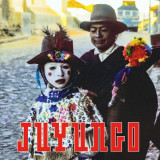
‘Since the 16th century, the Ecuadorian province of Esmeraldas has been home to a unique Afro-Indigenous culture originating in the integration of the Indigenous Chachi and Nigua peoples with African Maroon communities. Juyungo documents significant Esmeraldan artists and bands playing the Afro-Ecuadorian folklore of the province, as well as including some older field recordings. Based mostly on the marimba, whose origins lie partly in the African balafon, partly in Indigenous percussion instruments, the music is laced with call and response chants, ambient insect and bird noise, the filigree finger-styles of the Andean guitar tradition and the panpipes of the mountains. This is resonant insider roots music at its headiest — the mystic revelation of Esmeraldas, gully deep and lustral.’
- Francis Gooding, The Wire.
The fifth in our series of LPs compiling classic music from Ecuador. Customary Honest Jons runnings: a beautiful gatefold sleeve; superior pressing, with vivid, intimate sound; full-size, sixteen-page booklet, in colour throughout, with detailed, fascinating, bi-lingual notes, and stunning photographs.
The music is transfixing, magical; not like anything else. From start to finish, this album is continuously, profoundly immersive; a kind of journeying, trippy meditation about slavery and cultural resistance, identity and mix, places and spaces, futures and pasts. It’s inscrutable to net-surfing, algorithms, Shuffle. But for a taste try the insurgent marimba roller Agua Largo, jet-propelled by Rosa Huila’s rapturous blend of African spiritualist and Christian chant. ‘Healing music,’ Zakia called it on Gilles Peterson’s BBC show recently. And the ravishing pasillo Kasilla Shungulla — ‘calm your heart’ in the Quichua language — a duet between the Peruvian master-guitarist Raúl García Zárate and viola da gamba by Juan Luis Restrepo from Medellin, recorded in a baroque church in Buzbanza, Colombia.
out of Stock
Last delivered 5 months ago available to reorder, subject to availability