It all begins here.
Alba Gitana, Gipsy dawn, is a commencement, a turning point of particular importance in the career of a guitarist labelled as “manouche”. Because despite the universality within that word, (“manu” meaning “man” in Sanskrit), it is often reduced to the almost mystical musical legacy of the genius Django Reinhardt. Steeve Laffont’s dawn sees his artistry break away from the confines of this tradition.
In his original compositions we find the ingredients for an unexpected recipe. There is a manouche feel to it, but the fragrance of flamenco mixes with Indian spices, the bossa nova breaks and klezmer rhythms are coloured by Spain ; Steeve finds comfort in both the journey and it’s unexpected turns. Such is the very essence of Tzigane culture. This album tells the story of an emancipation and the joy of no longer being held to respect a legacy, a tradition, of finally having so many more roots to grow with.
Freedom is key to this project which never compromises on the essential : sharing the pleasure of playing together. In the company of such virtuosos as Costel Nitescu on violin, Dominique Di Piazza on bass and of course the ever-faithful Rudy Rabuffetti on rhythm guitar, the compositions are never shows of strength, rather finely crafted magic tricks.
With such vivid, liquid playing Alba Gitana is an invitation to let go, to submit to a harmonic wandering as deep as it is wide. A high-wire walk between structures and freedom, here is the spirit of jazz at its most elegant and universal.
Search:nova
One of the masterworks of 20th century electronic music, "The Electric Lucifer" by Bruce Haack. Originally recorded in 1968 and 1969 (and released in 1970) it is an album both unique in conception and superb in realization. Your your gateway to the profound yet playful universe of Bruce Haack, a "far-out" place where flower-power and inner-space electronics collide!
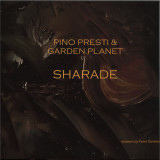
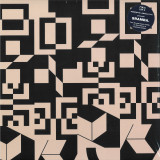
Beautiful release coming from Italy drawing inspiration from the intense colors of the works of the painter Tania Cantone on this work of love; "Sharade" by Pino Presti & Garden Planet. Mediterranean and Balearic lushness from the talented Pino Presti, and the eclectic keyboardist Claudio Calzolari, his son Andrea Calzolari, bass player Andrea Verardi and the organist Guido Mazzella. All together they created that magic, that long-forgotten, set aside, almost hidden atmosphere, which covers various genres such as lounge, future jazz, bossa-nova, ambient, which obviously includes chillout and downtempo vibes from the hot summer nights in the Mediterranean. So much vibes on this one release coming from the Italian friends of BEST Record! Recommened!
Brazilian soul, psych, bossa and jazz, reimagined from Berlin, via the Dead Sea, on Moriah Plaza’s dreamy first album for Batov Records.
Moriah Plaza co-founders Tamir Chen and Moosh Lahav first encountered and fell in love with the beautiful and hypnotic sounds of Brazilian bossa nova and samba as children in Tel Aviv in the nineties, via the many local bands and tribute groups that had sprung up since the first wave of bossa had hit swept across the world. Likewise
they developed a fascination with elevator muzak, film soundtracks, and even the hotel pianist performing day-by-day in the lobby of the Sheraton Moriah where Tamir’s mother worked, overlooking the Dead Sea.
Relocating years later to the vastly different environment of Berlin, capital of a country that enjoyed its own Brazilian moment, Tamir and Moosh’s shared passion for Brazilian music would encourage them to create their own songs inspired by the warm pulse of Brazil, albeit a world apart, through a vastly different lens.
Whilst the initial inspiration for Moriah Plaza can be traced back to Tel Aviv and the Dead Sea, the band itself was conceived by Tamir and Moosh in Solarium Studio, Berlin, from the broken fragments of their former shoegaze band, Soda Fabric, who had the honour of backing outsider legend Daniel Johnston. They would go on to write and record their debut album in close collaboration with two Brazilians and fellow Berlin residents,, poet and singer Cecília Erisman, and singer, songwriter, synth operator and Tropical Disco Club founder Flavia Annechini.
The album opens with “Desendereçada”. Dirty drum machine beats thud away under flutes and extraneous noises and a spoken word commentary. The oddness and allure of the intro is a perfect introduction to the world of Moriah Plaza.
The pace picks up on “Mais Amor”. A beautiful Brazilian soul jazz number with a sublime vocal from Flavia Annechini that will surely appeal to the global dancefloor jazz scene. “Te Peço” daws us in deeper with sweetest jazz vocal over an irresistible bassline and bossa drums that transforms halfway through into a modern soul rhythm crowned by flute and horns. A flute solo from Moosh Lahav leads us into the final uplifting refrain.
The Pharoah Sanders meets Ravi Shankar in Rio grooves of “Estelar”
have that fresh feeling that will certainly appeal to fans of modern favourites Rebecca Vasment and Ruby Rushton. Next up, the mysterious “Lagoon de Merim” is practically two songs in one, the first half an atmospheric string-topped number somewhere between Arthur Verocai and Cinematic Orchestra, before snappy drums beats and playful organ chords introduce a slow brassy samba that fills the whole sonic room.
“Teu Porto” is a must for all DJs, mixing calypso, highlife and house, lilting guitars and smooth vocals by Cecilia Erismann.. The deep samba house grooves of “Samba Moosh” close us out. The rich blend of sweet vocals, soaring flute and gritty synths carry us off into the sunset.
Moriah Plaza’s self-titled debut album is a major addition to the global soul and jazz scene. providing the perfect summer soundtrack for music lovers around the world.
Nach über 40 Millionen Streams war Oceans Ate Alaska bereit, ihr neues Album Disparity zu veröffentlichen.
Inspiriert durch die gemeinsame Vorliebe für Bonobo und Alina Baraz, veredelte Kollaborateur Clem Cherry die Produktion mit luftigem Beat-Handwerk und eindringlichen Klangakzenten. ”Für uns geht es darum,
die Hörer zu erheben”, sagt Harrison. ”Wir wollen, dass sie sich ermächtigt fühlen und erkennen, dass sie die Veränderung sein können, die sie wollen. Das ist es, was wir immer noch tun. Es ist schon lange her, dass wir ein Album herausgebracht haben, aber wir sind noch da.
"As long as you come to my garden", the sixth release in the cherished Die Schachtel’s series “Decay Music” as well as the debut of the duo Damāvand (Gianluca Ceccarini and Alessandro CIccarelli) on the prestigious Italian label, is a tribute to the Armenian troubadour Sayat Nova, through his lyrics and freely inspired by the cult movie about his life The Color of the Pomegranates (Nřan guynə, 1968, USSR) directed by Sergei Parajanov. The feature film tells the life of the poet, who lived in the 17th Century, from childhood in the royal court, to retirement until his death in the monastery of Haghpat, through a series of episodes, static like paintings that do not tell but show, evoke, they suggest through metaphors, analogies, surrealist flair, dreamlike landscapes, liturgical pauses.
The six tracks are inspired by the dreamlike imagery contained in the movie, weaving sound textures ranging from ambient to noise, to references to the musical tradition of the Middle East.
Gianluca Ceccarini and Alessandro Ciccarelli alternate, without fixed roles, with analog synths, drones, amplified common objects, generative music, audio samples from the film and acoustic instruments such as the tar - a stringed instrument of Persian origin, the trombone and the cornet. In addition, two of the songs on the album contain Sayat Nova’s poems recited in Persian by Nahid Rezashateri.
The sound materials are revealed gradually like episodes, evoking the visual suggestions staged by Parajanov in the movie. As long as you come to my garden is intended as an imaginative journey to distant spaces and indefinite archaic times.
DAMĀVAND is a musical project by Gianluca Ceccarini (electronics, electroacoustic objects, tar) and Alessandro Ciccarelli (electronics, electroacoustic objects, trombone, cornet)
Gianluca Ceccarini, guitarist, electroacoustic experimenter, luthier specialized in the restoration and construction of plucked musical instruments for early music. In 2021 his first album Starving Night was released for the netlabel Laverna and in 2022 the Sarab Label published a CD version. He also works in photographic research, video-art, graphics and independent publishing with the Sarab collective.
Alessandro Ciccarelli is an author who ranges between different languages: photography, video, sound. He is involved in several collective research projects in the musical and theatrical fields. His solo records are released under the nom de plume Elnath Project. The latest work, after six years of silence, from Italian berlin-based composer, performer and publisher (Black Letter Press) Claudio Rocchetti, and a welcomed return on the Die Schachtel imprint after the brilliant Another Piece of teenage wildlife (2008), Labirinto verticale (Vertical Maze) takes its origin from the four years long collaboration of Rocchetti with the Parma-based Fondazione Lenz, a contemporary theatre research collective/organization.
Miles in the Sky reflects the intriguing curiosities and rainbow possibilities suggested by the album cover. Miles Davis' fifth and final album with his classic second quintet is kaleidoscopic in sound, forward-looking in structure, and contextually grounded in approach. As the legendary leader's first venture into what would become fusion, it's historical for containing the premier appearances of electric piano, bass, and guitar on a Davis effort.
The album's wide-open soundscapes soar. As do the fluid contributions of Davis' mates. Tony Williams' percussion, central to every composition here, transpires before your eyes. Herbie Hancock's piano hovers and fades with sublime purity. And George Benson, who sits on "Paraphernalia," blows the equivalent of smoke rings with his bluesy guitar, which here takes on brilliant tonality and definition. The acoustic material that occupies the second half of the record is equally transparent and full-bodied.
Granted enhanced production and a greater field of audible information, Miles in the Sky can finally be perceived as belonging to the same upper echelon as Davis' ubiquitously acclaimed Nefertiti and Filles de Kilimanjaro – the albums that precede and follow, respectively, this watershed title. Commonly branded a "transitional" work, Miles in the Sky showcases Davis already at ease with electric instruments and eager to venture into uncharted territories. Doubling as organized jams and bridges between jazz and rock, both the rhythmically challenging "Stuff" and frisky "Paraphernalia" glancing toward the future while keeping solid footing in the past.
Similarly, so do "Country Son" and "Black Comedy." In his original review for jazz authority Down-Beat, Larry Kart observes: "Davis takes material from his earlier days and darkens its emotional tone. His opening phrase on 'Country Son' recalls a fragment from his 'Summertime' solo on the Porgy and Bess album, but here it is delivered with a vehemence that rejects the poignancy of the earlier performance. Even on 'Black Comedy,' his most straight-ahead solo here, the orderly pattern of the past is displaced and fragmented."
Flavoured with humuor, bossa nova, country, and even ballroom phrases, the compositions on Miles in the Sky explode with creativity, purpose, and color.
VERVE ACOUSTIC SOUNDS SERIE: Stereo, komplett analog von Ryan K. Smith bei Sterling Sound von den Originalbändern gemastert, QPR-Pressung (180 g), stabiles Tip-On-Gatefold (Stoughton Printing),
wattierte Innenhülle.
Als Gitarrist Charlie Byrd 1961 durch Südamerika tourte, boomte dort gerade die Bossa Nova - ein neuer Stil, der brasilianische Samba-Rhythmen mit den harmonischen Strukturen und dem coolen Sound des West Coast Jazz verschmolz. Kaum wieder zu Hause, spielte Byrd dem Tenorsaxophonisten Stan Getz die Platten vor, die er aus Brasilien mitgebracht hatte. Schon bald danach machten sie die ersten gemeinsamen Sessions, aus denen 1962 der Albumklassiker “Jazz Samba” hervorgehen sollte - das erste Album mit von
Jazzkünstlern gespielten Bossa Novas. Und es sollte die gewaltige Bossa-Nova-Welle auslösen, die schnell um die ganze Welt schwappte.
Manchester's Avant-Jazzy-Funk outfit Swamp Children were enviably eclectic and Taste What's Rhythm is their mini masterpiece. Flitting gracefully through a feast of genres with consummate ease, the band were almost indefinable and, accordingly, nigh-on impossible to market. So whilst this cult EP, originally out in 1982 on Factory Benelux, remains in demand for those in the know, it has also glided under the radar of many otherwise clued-up heads for over 40 years. If you don't know, get to know...
The Taste Whats Rhythm EP was originally released in 1982 on Factory Benelux (an informal partnership between the legendary Manchester-based Factory Records and Belgium-based Les Disques du Crépuscule). With it's kaleidoscopic brightness, silky panache and superb execution, it remains one of the most startling documents of a remarkable time and place.
The EP opens with the oh-so-Balearic title track. "Taste Whats Rhythm" gently unfolds with a Spanish guitar, hazy, drifting vocals and sun-bleached Latin percussion. After this most sumptuous of intros, the tempo is raised, the rhythms grow in complexity as horns jostle amidst the restrained chaos quite wonderfully. And then it winds down again. Proper fluctuating rhythms and tempos throughout. I guess that was the point - taste the variety!
“You’ve Got Me Beat” is a *perfect* piece of post-punk pop-jazz. A mysterious, after dark jazz-dancer, the aching vocals serve as a touching, tender resignation to love. A guitar hook which seems to elegantly reference The Blackbyrds' "Rock Creek Park" and a flowing pulse from New York's No Wave scene. It still sounds so fresh all the years later.
Closing out this most perfect of EPs, the twisted synths and nimble rhythms of bass-heavy roller "Softly Saying Goodbye" combine to create a super-slinky gem; Brit-Funk of the highest order.
Swamp Children formed in Manchester in 1980, around core members Ann Quigley (vocals), Tony Quigley (bass, metalaphone, percussion), John Kirkham (electric & acoustic guitars, metalaphone, percussion), Ceri Evans (keyboards, bass, percussion, background vocals), Cliff Saffer (saxaphone, clarine) and Martin Moscrop (drums, percussion, trumpet). They initially practised at a rehearsal space shared with fellow post-punk funkers A Certain Ratio and Joy Division/New Order. Young and relatively inexperienced upon getting together, the ages of Swamp Children's members ranged from just 16 to 19. Talk about the brilliance of youth.
From the outset, Swamp Children shared DNA with A Certain Ratio. Martin Moscrop was a founder member of Ratio, while Ann provided artwork for them. Although the close association with ACR led some to assume that Swamp Children were simply a splinter group, the new band pursued a more overt latin and jazz tinged direction, at the same time adopting a post-punk attitude towards making music, influenced by the records they were listening to at the time: Miles Davis, Brazilian jazz fusion and heavy funk dancefloor sides.
The band made their live debut at Manchester's infamous Beach Club in May 1980. Thanks to a double-booking blunder another support band turned up and were turned away, having travelled all the way from Dublin for a string of British dates. The name of the unlucky band was U2...
With arrangements that emphasised Tony Quigley’s darkly-coloured basslines (and Ann Quigley’s impressionistic vocals as another instrument in the mix) Swamp Children possessed an easygoing grace and a bubbling energy which indicated that the band's true strength was as an ensemble. The band’s musical sophistication (a fusion of funk, jazz, and bossa nova) would prove to be a strong influence on later UK acts like Sade. Indeed, Swamp Children themselves later mutated into the more known and acclaimed latin jazz outfit Kalima.
Working directly with James Nice, custodian of Factory Benelux, means that the audio for this re-issue of the classic EP comes from the original tapes. Cut at 45 RPM and released in the house Be With disco sleeve, we’ve made sure this record is well up to the job of having a permanent place in every DJ’s bag. As far as we’re concerned, this is essential stuff.
After releasing their debut project “Voyage” in 2022, Tapioca, the Brussels-Kigali-based, Brazil-inspired duo return with LP “Samba em Kigali.” Building on their sound and influence, “Samba em Kigali” is a definitive step up and clear sonic growth for the twosome, whose debut, RA wrote, is "if Anderson Paak. & Marco Valle made a Brazilian pop-funk record.” Arriving via Berlin’s Jakarta Records May 19th.
Tapioca (32k Monthly Listeners on Spotify), the Belgian duo made of rapper / lyricist Alessandro “Le Tagarel” Vlerick and producer & composer Simon “SiKa” Carlier, tapped into a unique and infectious groove with their debut LP “Voyage,” released in 2022 via Jakarta Records’ “Dubplates” series. Positive reviews came flooding in, including coverage from, among others, BBC Radio 6, KCRW, Resident Advisor, JAZZIZ as well as performances and features on Worldwide FM and Bandcamp Daily. Their debut also landed on global editorial playlists such as Spotify’s “Global Groove,” (600k) “Tulum Vibes” (110k) and Deezer’s “Chilling Pool” (31k). “Voyage,” as the name indicates, was an ode to freedom, escape and the discovery of alternative cultural horizons that brought together various spoken-word testimonies from Portuguese friends around the world. Tapioca’s upcoming LP, “Samba em Kigali,” picks up the thread where “Voyage” left off, acting as an ode to traveling and, more broadly, of the inherent beauty of the African continent. Le Tagarel has worked as a teacher in Kigali, Ruanda, for the past years and his time there is reflected in the album’s buttery lyricism, putting forth the proposition that Africa and Brazil are in fact not so far apart - Africa is, and will always be, present in Brazilian culture. Featuring the Dillaesque sound infused with inspiration from rap, jazz, MPB and funk of the 70/80’s to the stunningly fleshed out lyricism - the LP sways like a ship on the smoothest of seas, a pure ray of aural sunshine to welcome the warm weather. Artwork was stunningly put together by Simone Cihlar (Anderson Paak. Tom Misch, Ivan Ave) and visualizers done by the stalwart crew at Die Ottos (Flofilz, K Le Maestro, Suff Daddy, S.Fidelity, Gianni Brezzo). Jakarta is ecstatic to share such a high-water mark of an album, out everywhere physically / digitally May 19th.
Kicking off “Samba em Kigali” is the impeccably smooth 1st single, “Lagoas de Ruanda” out March 22nd along with LP pre-order announcement. Instantly catchy, the crisp guitar, funky bass and buoyant underlying percussion are the perfect vitamin of joy that gives rise to Le Tagarel’s vocals. The track is a perfect sonic voyage that encapsulates the continued growth of Tapioca’s sound and gives a sonic peek into the LP. Infectious and groovy, the song skirts a line along samba, R&B and jazz with an almost hip-hop bounce.
2nd single, “Sabor Swahili,” out April 12th, is a nostalgic groovy splash that melds soft keys, bass and a percussive edge that slides you into an aural pocket. The song moves in a joyous melancholy that is almost impossible to move to, the under-water synth stabs keep your shoulders loose while the rhythm keeps you bouncing along. Even if you don’t know Portuguese, you’ll be singing along by the tracks end. The joyous 3rd single “Terra Preta” is out April 26th and will lift you up high to keep you in a serene mood anytime, anywhere. Focus track is the headnodding grooves of “Cara de Arabe.” Building from “Voyage,” Tapioca provides a fresh, rare vibe, adding a slight dose of disco to the R&B-driven progressions. “Samba em Kigali” is a unique album that is soaked and marinated in a sonic and visual aesthetic that brings with it feelings of joy, movement, and a global home, and sonic moods ranging from Bruno Berle and Marcos Valle inspired arrangements to bouncing progressions with a swingin’ percussive edge. Besides online promotion from the label and artist profiles, the album will further be promoted by external agencies within the US and UK.
180 Gram Vinyl Following the success of the 2021 reissue of Ambient Warrior’s cult classic Dub Journey's (1995), Isle of Jura is pleased to present their unreleased second album, II. Born from the same oceanside fusion of instrumental dub, reggae, bossa nova and tango music that made Dub Journey's so distinctive and memorable, II is an equally sublime collection of eleven unheard tracks from the brilliant minds of Ronnie Lion and Andrea Terrano.
Evoking the delights of white sands, palm trees and sunsets, all set against clear waters and endless blue skies, Dub Journey’s and II document the golden moment when Ambient Warrior came together during the mid-90s to create some of the most Balearic Dub ever made. “Music is the greatest traveler, isn’t it?” says Ronnie. “It gets to places the actual artists can’t even get to really.”
The son of an orphaned Jamaican jazz trumpet player and professional boxer who enlisted in the military after stowing away on a boat to London, Ronnie grew up between Germany, Singapore and the UK before becoming a working musician in his mid-teens. A bass player by trade, he honed his skills playing in a series of soul, jazz-funk, blues, rock and reggae bands that performed throughout the UK.
By the time Ambient Warrior released Dub Journey’s, Ronnie and his business partner Ras Joseph were running the Lion Inc. recording studio and record label in Brixton, London. Having set up distribution arrangements with Roots Records (UK) and Semaphore (DEU/NL), they recorded and released a series of singles, compilations and solo albums from a who’s who of roots reggae artists, including Twinkle Brothers, Delroy Washington, Michael Prophet, Alton Ellis, Little Roy, and Ronnie’s own band The Amharic. “Lion was a regular port of call for visiting Jamaican artists,” reflects Ronnie. “When you were in London, it was on the route.”
An accomplished guitarist, producer and recording engineer from Trieste, Italy, Andrea grew up listening to Russian folk, Klezmer and the Italian harmony tradition in a Sicilian-Ukrainian family. After completing compulsory Italian military service, he moved to London to continue studying music. One night, he turned up at Lion Inc. and approached them about running audio engineering classes from the studio.
In Andrea, Ronnie found a collaborator who shared his desire to create borderless music that reflected the diversity of their backgrounds. “I wanted to do something that had no boundaries,” Ronnie explains. “If you’re working on a roots album, it has to sound a certain way, but with Ambient, especially in the nineties, it was just a license to let off. You could do whatever you wanted to do.” “It was a melting pot of influences like London itself,” adds Andrea.
Although they wrote most of II at the same time as they were recording Dub Journey’s, it took them several years to finish off the album. “Things never got done quickly,” Ronnie remembers. By the time it was complete, Roots Records had gone out of business, leaving Lion Inc. without UK distribution. Not long after, their Brixton studio flooded, bringing the label to a close.
These days, Andrea continues to work as a session guitarist, recording engineer and producer in London. Over the last two decades, he has collaborated regularly with Basement Jaxx and released several solo albums. Ronnie, on the other hand, lives on a boat equipped with an onboard studio, where he has recorded a series of oceanic dub albums off the British coast. Twenty-eight years after the release of Dub Journey’s, he recently started working on demos for a third Ambient Warrior album he hopes to record with Andrea in the not-so-distant future.
Artwork By Bradley Pinkerton.
- A1: Good Thing (Feat Brenda Nicole Moorer)
- A2: Show Me The Way (Feat Cleveland Jones)
- A3: Sweet Power Your Embrace (Feat Lizz Wright)
- A4: North Node
- A5: Heaven's Design (Feat Lindsey Webster)
- B1: Hard Times (Feat Cleveland Jones)
- B2: I Believe
- B3: Capricorn City
- B4: Warm Heart (Mantra 4) (Mantra 4)
- B5: More To Do (Japanese Bonus Track)
Atlanta bass player Khari Cabral has joined up with Jiva for a first new album in some 13 years. The pair has a great musical chemistry as evidenced by this welcome return as they harness their creativity and draw on the acid jazz roots of the 90s to cook up something fresh. Jiva's reputation for a soul-boss nova funk sound also adds to the mix as these smooth, vibrant and lush sounds pair with real emotional weight from the vocal performances to make for an album of real delight for fans both old and new.
COLORED VINYL
What were they up to? They couldn't explain it. But not explaining it was part of the point. The Danish duo Bremer/McCoy - with Jonathan Bremer on acoustic bass and Morten McCoy on keys and tape delay - recorded straight to tape so that they had as little time as possible to think about it. They just laid it down. The duo has been making music that defies categorization since 2012. They started as a dub group, bringing their own sound system to shows. Now their sound lilts between jazz, ambient, and neoclassical, with contemplative, propulsive melodies that capture the Nordic woods they walk in. Their last full-length release, 2019's clear-eyed Utopia, gained them a cult following in the U.S. and a roster of notable fans, including Nils Frahm and Gilles Peterson. The duo's latest release Natten, which means "The Night" in Danish, strives for even more transcendence, more freedom, more of everything in whatever sound they're making. It's still hard to explain. It's not meant to be explained. These 11 tracks are tinged with the sublime: watching the setting sun, feeling the planet tilt on its axis. If you listen closely, you can hear the constellations. Let Bremer/McCoy bring the night mood to you, whatever you're up to.
Die weltberühmten Prager Philharmoniker spielen die besten Scores aus der 'Twilight'-Filmsaga. Aus den Episoden 'Twilight: Biss zum Morgengrauen' (2008), 'New Moon: Biss zur Mittagsstunde' (2009), 'Breaking Dawn: Biss zum Ende der Nacht Teil 1' (2011).
Recital presents »As Above, So Below, a new album from French multi-instrumentalist Delphine Dora. Over the past decade, from poetry reading, chansons, organ performances, tape compositions and so on, each album in Dora’s lush discography feels like a feather from a different bird. A keen ability to defy any singular “sound,” always diving to different depths.
»As Above, So Below« centers around mystic piano and voice recordings. In a distinct gothic landscape, each of the nine tracks float into one another. From verdant piano works that revolve like beautifully stretched out miniatures, expanding and bending like shadows across the floor, to foggy vocal arrangements hovering above beds of rural field recordings. Quiet synthesizers crawl in the backdrops, never disturbing the spirit of the piano motions.
On the track »Cantique spirituel,« Dora, from a cloud of her phantasmal caroling, recites a poem by German author Novalis (1772-1801). »Blindly we strayed in night’s confusion…« This poetic essence is found throughout the album… »gladness and grief alike consume.«
»As Above, So Below« was produced and mixed by the brilliant British musician Andrew Chalk, whose presence tints the air throughout Dora’s album. Chalk ornaments the pieces with additional instrumentation, along with Jean Noël Rebilly playing clarinet.
Tom Zé and Faust collide in Domenico Lancellotti's "machine samba"
Domenico Lancellotti's SRAMBA reaches back to the roots of samba whilst completely revamping its blueprint, indoctrinating guitar and percussion-led rhythms with analogue synthesisers, courtesy of album producer Ricardo Dias Gomes.
The majority of SRAMBA was recorded over two months in The Cave - Domenico's home studio in Lisbon, the city both Brazilian ex-pats reside in, where the arrival of a couple of Russian-designed synths purchased by Ricardo influenced the direction of their initial experimentation: "Ricardo had these instruments, modular machines" remembers Domenico, "and I had my guitar, some percussion instruments. On the first day we started making sounds and recording them, and songs started to appear, sambas started to appear."
The son of a renowned samba songwriter, at home Domenico would watch his father play and compose. At parties, the adults would hand his father a tamborim (a small tambourine) and ask him to play along. "I grew up inside samba, it's my roots", he says. "For me, everything is samba, I bring it into whatever style of music I am making".
Domenico and Ricardo instantly saw how the synthesisers were not at odds with the sambas they were playing, instead they had a similar sound to its typical percussion instruments (ganza, repinique, surdo, tarol). What's more, they saw a connection with roots samba, the samba that existed before bossa nova and samba jazz came along. This was rhythmic samba, with grooves that could go on ad infinitum. "It's samba de clave, geometrically structured" says Domenico. "It's ostinato samba", adds Ricardo.
"Diga" is a great example of what their proposal is capable of, as what begins as a glitchy machine whirring into action soon turns into a glorious samba in which the gurgles and scratchy beats coming from the analogue equipment only add to the arrangement. Likewise, on "Tá Brabo" it's an aching melody from one of the synths that gives the guitar rhythm its needed counterpoint, and shows how the duo's greatest accomplishment is not in invention alone, but in creating a great samba album. It's an album that can go from the opening track "Ere" with its reverberant bass thud, mantra-like vocals and staccato rhythms to the string-accompanied "Nada Sera de Outra Maneira", a swooning samba that pays tribute to the Brazilian ensemble Tamba Trio, who along with Tom Zé's Estudando O Samba, Domenico names as the biggest influence on their treatment of samba.
Other important reference points are made clear on "Um Abraço No Faust". One of three instrumentals on the album its title riffs off a JoãoGilberto song, "Um Abraço no Bonfá", but whereas JoãoGilberto was giving a hug (um abraço) to bossa nova guitarist Luiz Bonfá, Domenico and Ricardo are giving theirs to the German avant-gardists Faust. "Quem Samba", with its horn section and dramatic melody give a whiff of Domenico's Italian ancestry, while "Descomunal" is devoid of rhythm whatsoever, guest vocalist Tori singing over a bed of electronic drums, cello and swirling synths, that highlights the duo's unwillingness to stick to a particular formula.
Both Domenico Lancellotti and Ricardo Dias Gomes are revered names within Brazilian music over the past 20 years. As a member of the +2's, with Moreno Veloso and Kassin, Domenico released a trio of albums on Luaka Bop in the early 00s that pioneered a new Rio samba sound with elements of funk and psychedelia. With Veloso and Kassin he would later form Orquestra Imperial, a big band intent on reviving ballroom (gafieira) samba, and that has worked with guest vocalists such as Seu Jorge, Elza Soares and Ed Motta. SRAMBA is his fourth solo album. Multi-instrumentalist Ricardo Dias Gomes first came to notice as a member of Caetano Veloso's band Cê which helped reinvigorate Caetano's career with a sound influenced by British new wave. As well as collaborations with Lucas Santtana, Negro Leo and Thiago Nassif, and work with his own group Do Amor, he has released a series of acclaimed solo albums that reveal a restless music-maker.
SRAMBA is a glorious showcase of the duo's style, uniting Domenico's playful lyrics and rhythmic, samba-rooted songs with with Ricardo's assured accompaniment of unorthodox textures and instrumentations. It may be a new language for samba, machine samba (samba de máquina), but as Domenico says, "samba da máquina is samba".
Heralding 2023 from way out west, Monde UFO land on Quindi with a distinctive album of dream pop vignettes and outer rim punk exotica.
Hailing from the same Californian heat haze as recent Quindi signings Bondo, Monde UFO have manifested in the past four years through a series of DIY releases including their 2021 album 7171 and last year's set of Fugazi covers, 4 Songs. The loose fit project centres around the singing, playing and songwriting of Ray Monde and Kris Chau and features Kern Haug on drums. The resulting sound arrives as a resourceful analog of plush 60s pop captured through the modest means of a truly independent musical endeavour.
The sound rendered on Vandalized Statue touches on dubby atmospherics, the lilting breeze of bossa nova and the introverted muse of US indie rock, but the end result is a natural, cohesive whole centered around the songwriting. Imagine the girl from Ipanema sat toking in a comfortable spot in the corner of the dive bar while someone weaves her a tall tale or two, and you might be somewhere in the right direction. The stories in the lyrics unfurl as meandering narratives taking you through everyday exchanges and far-fetched, cosmic scenarios alike. At every turn the cosy musicality gives everything a relatable, homespun charm, even as the mixing desk becomes a mess and the lo-fi FX crash into each other.
The album will be fronted by three singles which reflect the wide reach of Monde UFO's sound. 'Visions of Fatima' is one of the more melancholic pieces on the album, fronted by laconic organ and centring on cracked vocals with an off key charm that indirectly evokes Jeffrey Lee Pierce. 'Government Employee' is a sun-kissed trip of low-key lounge surrealism, bizarro storytelling and shuffling exotica splendour which broadly defines the woozy mood of Vandalized Statue. 'Garden Of Agony' is a more delicate but no less dreamy piece matching electric tremolo with acoustic fingerpicking balladry which hides its considerable depths behind a seemingly simple arrangement.
At once intimate and projected into the cosmos, Monde UFO add to the particular path Quindi is taking through hidden corners of independent music with a romantic, restless spirit.
Crown the Empire haben sich in den letzten zehn Jahren kontinuierlich als eine Naturgewalt in der Rockwelt etabliert. Sie haben die Bühne mit Slipknot, A Day To Remember, Dance Gavin Dance, Black Veil Brides, Falling in Reverse, Underoath und vielen anderen geteilt.
Bis heute hat die Band vier Studioalben veröffentlicht und wurde von Alternative Press, Billboard, Kerrang!, Nylon, Rock Sound und anderen gelobt. Der beeindruckende Katalog hat ihnen 825M Streams weltweit eingebracht.
DOGMA, produziert und gemischt von Zach Jones (Fever 333, Poorstacy, Scene Queen, Nova Twins), ist ihr bisher vielfältigstes Album, das von Angst, existenzieller Identität, Isolation und Entschlossenheit geprägt ist und Features von Courtney LaPlante (Spiritbox) und Remington Leith (Palaye Royale) enthält. Um die Veröffentlichung zu feiern, wird Crown The Empire in diesem Frühjahr mit der texanischen Hard-Rock-Band Nothing More auf Tour gehen.
As bassist for dance-punk outfit The Rapture, Mattie Safer cut his teeth in the music scene alongside a wave of now-legendary early 2000s NYC acts like the Yeah Yeah Yeahs, LCD Soundsystem and more (a time period recently immortalized in the documentary film ‘Meet Me In The Bathroom.’) Fast-forward nearly 2 decades and Mattie has found the sweeter side of dance music as the current lead vocalist for slo-mo kings Poolside, and now he presents his solo lovetempo project on Razor-N-Tape.
A chilled-out singer/songwriterly affair, the lovetempo EP moves between organic laidback disco, modern bossa nova treatments, and Sade-esque grown-n-sexy jazz grooves. Hitting notes of both melancholy and positivity, Mattie’s plaintiff vocals wind through all 4 of the original songs, delivering catchy and singable hooks. RNT regular Yuksek does what he does best, and takes the most uplifting tune of the pack into positively joyous hands-in-the-air territory with a stunning remix.
- A1: Ana Frango Elétrico – Saudade
- A2: Pedro Fonte – Clichê
- A3: Bala Desejo - Lua Comanche
- A4: Ava Rocha - Boca Do Céu
- A5: Exército De Bebês - Avós Da Experiência
- A6: Thiago Nassif - Soar Estranho (Feat. Arto Lindsay, Vinicius Cantuária & Gabriela Riley)
- B1: Negro Leo – Mulato
- B2: Mari Romano – Amélie
- B3: Rosabege - Sigo Num Site / Mármore
- B4: Dora Morelenbaum - Vento De Beirada
- B5: Cadu Tenório & Juçara Marçal - Candombe - La Cacundê Iauê
- B6: Jonas Sa – Gigol?
- C1: Troá – Bandeide
- C2: Marcelo Callado - Simbora (Feat. Silvia Machete)
- C3: Ovo Ou Bicho – Moços
- C4: Lê Almeida - Apreço Antigo
- C5: Vovô Bebê - Briga De Família (Feat. Ana Frango)
- D1: Joana Queiroz - Dois Litorais
- D2: Raquel Dimantas - Flecha Azul
- D3: António Neves & Thiaguinho Silva - Das Neves
- D4: Letrux - Dorme Com Essa
- D5: Os Ritmistas - Sambolero
The popularity of Brazilian music from the 60s, 70s and 80s has experienced quite the renaissance; artists such as Gal Costa, Gilberto Gil, Arthur Verocai, Joyce et al, have become household names to an international audience passionate about global sounds. However, even for die-hard fans and collectors of Brazilian music of the past, discovering contemporary Brazilian artists is not always easy, nor accessible. But, if you know where to look, you will see that there is a resurgence well underway that can be epitomised by an exciting new wave of Brazilian artists beginning to break through and gather momentum overseas. It’s with thanks to Sound and Colours, a website devoted to promoting Latin American music and culture, that we can help shine a light on one particular collective, bursting with creativity and camaraderie.
‘Hidden Waters: Strange and Sublime Sounds of Rio de Janeiro’ is compiled by Joe Osborne (founder of specialist Brazilian music platform Brazilian Wax) and Russ Slater (editor at large of Sounds and Colours). Focusing solely on the 'Rio Scene', rather than taking on the mammoth task of tackling Brazil as a whole, this collection presents 20-plus ground-breaking artists selected from Rio’s resurgent music scene. By presenting a snapshot into the pulse of the city and the vibrant musicians that live in it, ‘Hidden Waters’ collates tracks from a wide spectrum of musical genres from the avant-garde edge to bossa nova, samba, Candomblé, lo-fi rock, jazz and funk.
‘Hidden Waters’ showcases musicians such as iconic Rio mainstays Negro Leo & Ava Rocha, Brazilian jazz upstart Antônio Neves, critically lauded Avant-pop trailblazer Thiago Nassif, breakthrough artists Ana Frango Elétrico and Letrux, lo-fi psych rocker Lê Almeida, plus the Latin Grammy-winning Bala Desejo who are set to explode onto the world stage. The music featured on ‘Hidden Waters’ is unequivocally Brazilian, swelling with samba, bossa nova, funk, and jazz. But it’s within the album's blend; from sunny psychedelia to dusky synth-pop via experimental electronics, that marks the compilation as the sound of modern, multicultural Rio.
This comprehensive compilation comes with album artwork designed by Rio music’s leading album artwork designer, Caio Paiva. It features essays by professor and music critic Bernardo Oliveira and music journalist Leonardo Lichote, plus extensive notes on each track by the artists themselves.
- A1: The Beat Goes On
- A2: Little Boat = O Barquinho
- A3: Lou-Ise
- A4: What Is This Thing Called Love?
- B1: Space
- B2: Stronger Than Us
- B3: Mizrab
- B4: Comin' Back
VERVE ACOUSTIC SOUNDS SERIE: Stereo, komplett analog von Ryan K. Smith bei Sterling Sound von den Originalbändern gemastert, QPR-Pressung (180 g), stabiles Tip-On-Gatefold (Stoughton Printing),
wattierte Innenhülle.
Den Hungaro-Amerikaner Gábor Szabó konnte man mit Fug und Recht als einen wahren “Scorcerer”, also Zauberer oder Hexenmeister bezeichnen. Nicht nur wegen seiner Virtuosität an der Gitarre und seiner fantasievollen Improvisationen, sondern auch, weil er es verstand, Popsongs in echte Jazzschmuckstücke zu verwandeln.
Das zeigte er besonders eindrucksvoll 1967 auf “The Sorcerer”, live im Bostoner Jazz Workshop eingespielt. Das Repertoire reflektierte, was damals hip war: eine Bossa Nova von Roberto Menescal, ein
Top-10-Hit von Sonny & Cher und ein Stück des französischen Filmkomponisten Francis Lai.
Gábor Szabós ”The Sorcerer” erscheint am 14. April zeitgleich mit der verschobenen LP: Ahmad Jamal - The Awakening (Verve By Request).
Following in the footsteps of "Mind Palace" and "Lost Spirits", respectively issued in 2018 and 2021, Hidden Empire return to Stil vor Talent with their eagerly anticipated third studio full-length, "Momentum". Going the same route that came to define their sound throughout the years, Branko Novakovic and Niklas Schäfers cook a savvy mix of deep electroid flavours and prog techno magnitude which flourishes in the long-playing format. Orbiting the frontier between proper no-nonsense, floor-focussed effectiveness and a trademark exploratory take on electronics, Hidden Empire here delivers one of their most accomplished slices to date, which not only spans the largest span of their many-faceted influences, from tribal anchorage to hypermodern escapology, but breathes a truly epic wind into it.
Draped in luscious, silken envelopes and easternmost ambiences, "Dawn" gets the ball rolling on a mystique-imbued note, halfway meditation-friendly material and square-shouldered club busting wares. Moving into Afro-infused house grounds, "Modesty" finds Branko and Niklas heading for the deeper end of the spectrum, as they pull out a clinically precise blender of rattling percussions, opaque incantations, lush synth swashes and verbed-out machine talk, tailored for nightly boogie rituals in the forest. "Avalanche" opts for a more brooding, deadlier approach. Cutting its path away from prying eyes, this one finds Hidden Empire pulling the stealth weaponry to absolute hypnotic effect - perfect for serious in-between peak time business with its thick, thriller-like tension, mist-shrouded atmosphere and surgical focus. Featuring Felix Raphael on vocals, "Who We Are", is a pop-influenced chugger that perhaps best defines Hidden Empire's ambivalent style, both hi-NRG and innervated with a melancholy that infuses down to the bass and most functional elements. Geared up for big-room traction with its seesawing synths and clinical drumwork, Raphael's moving timbre does more than offer a sensible counterpoint to the track's overall sturdy backbone, it takes it to a whole other dimension completely.
"Repeat The Good" ft. Wolfson balances out a fast-ticking groove with those subtle melodic lines Hidden Empire champion to astounding vibrancy, offering a particularly satisfying glimpse into their vortical imaginarium, whereas "Last Call" has us journeying to straight out Moroder-esque territories, flush with the aptly configured palette of fuzzy space disco bass, fast-paced Italo churn and vocodized talk for good measure. All in breaks and chopped-up euphoria, "Vivid" runs the hoodoo down in muscular fashion and with impressive levels of energy throughout, all set at cranking up the heat one notch further, while "Rebel" provides us with the kind of rough-around-the-edges EBM horsepower and neon-clad synth engineering that'll get the basement in a state of alert. Encompassing all of the pair's idiosyncratic merger of styles - from pop-laced Italo to spaced-out techno wares, through jagged motorik and heavily mecched-out jacking house, "Alright" shows off Hidden Empire's wide arsenal of pyrotechnics under the most compelling of lights. A more openly jagged and quirky weapon that hatches into a full-fledged solar number around the half, "Momentum" roars up the club's highway at full throttle, proving a formidable asset when it comes to plunging dancers into a state of weird, left-of-centre euphoria.
A stroboscopic eclipse is predicted as "Dark Sun" enters the room, deploying its obscure wingspan over the ravers, not quite a bad omen as it lets more light in with every bar, its brittle piano lines and heart-wrenching vocals cutting a path into the crowd's pulsating hearts. Graceful as Hidden Empire's music can be, a moment of utter exhilarating beauty. "Savasana" wraps up the voyage with a pure slab of cyphered 4x4 seduction, as an ASMR-like voice guides us across the soul-questioning haze that blankets our pathway onto a luminous finale. A piece of elusive nature, clearly designed for the club and yet telling a tale of off-piste initiation through twelve fascinating movements, "Momentum" will undoubtedly etch on the listeners' mind as one of the German pair's most strikingly powerful emanations.
Download:
1. Hidden Empire - Dawn Interlude
2. Hidden Empire - Modesty
3. Hidden Empire - Avalanche
4. Hidden Empire & Felix Raphael - Who We Are
5. Hidden Empire & Wolfson - Repeat the Good
6. Hidden Empire - Last Call
7. Hidden Empire - Vivid
8. Hidden Empire - Rebel
9. Hidden Empire - Alright
10. Hidden Empire - Momentum
11. Hidden Empire - Dark Sun
12. Hidden Empire - Savasana
13. Hidden Empire & Felix Raphael - Who We Are (Instrumental)
Heels & Souls Recordings’ fifth reissue sees them reach across the Atlantic to Vancouver, pressing up Pilgrims Of The Mind’s 'What’s Your Shrine?' for the first time ever on vinyl, 25 years since its CD-only release on Map Music. A departure from the label’s previous releases, the LP is a beautiful smorgasbord of styles - progressive house, downtempo, ambient, tech house and trance all nestle together, a wiggling journey of sonic delight from the mind of Stéphane Novak.
Turn the dial back to ‘97 and Vancouver's underground had a distinctive buzz to its rumblings, an amalgamation of scenes and styles gave rise to a cohort of producers that were unconstrained by genre, offering up a heady mix of sounds to expand the mind. ‘Welcome To Lotus Land’ the key 1996 compilation on Robert Shea’s seminal Map Music, championed much of this output including two cuts from POTM. Stéphane then released his first and only full-length album, ‘What’s Your Shrine?’ on the same label the following year.
Picking out choice moments from an album as considered and complete as this is tough. Those horizontally inclined will be drawn to the ambient dwellings of ‘Sandcastle’ & ‘Following the Sofuto Kuriimo’, tracks like ‘Nothing Can Pull Us Apart’ and ‘L’Amour? Encore?!’ are perfectly suited to warming up limbs on the dancefloor, ‘My Baby Likes Rum’ and ‘Loosejaw’ prime for one in full swing. Yet to pick individual tracks misses the stunning sum of its parts that this 70+ minute cruise is, surely one of the finest albums from the American West Coast during its halcyon days of the ‘90s.
Digging deep in his vaults, Stéphane managed to uncover the original unmastered DATs that have been given a fresh mastering by Justin Drake at the Bakehouse Studios. This beautiful, double-disc gatefold comes complete with liner notes from Ciel, words from Stéphane himself, plus never-before-seen photography - the complete package this music always deserved.
white marbled vinyl
Jacidorex is back with another album, 'UNFACED01'. This record sees the Belgian DJ/producer pushing the boundaries of the genre even further with his signature brand of dynamic hypnotic acid patterns.
'UNFACED01' begins with a cinematic introduction before opening into a hip-hop track, which then swiftly transitions into electro techno, industrial techno, acid trance tech
White Vinyl
300 copies, red cardboard folder, foil embossed, incl. 6 prints & 17-minute digital bonus track
arbitrary presents »Delirious Cartographies« by composer, improviser and synthesist Richard Scott. Part of the Danish imprint’s Framework editions, this release includes three pieces on 12” vinyl and 6 printed drawings – as well as a text by Scott – published as a limited edition portfolio folder.
"These compositions capture aspects of my personal sonic experience of specific times and places. Extending beyond my usual work with analogue synthesizer, these pieces open the doors and windows to the outside world, incorporating field and live recordings made in various locations and situations. Rather than intending any clear sense of narrative, these are molecular dialogues between elements and geographies which do not necessarily share organic points of connection, other than my own incomplete experience and memory of them."
The final piece »6 Graphic Etudes« (included as digital prints) is intended as a set of visual / sonic sketches, each of which describes a discrete kind of movement or texture. These may have a variety of uses; as musical exercises, as scores, combined as parts of scores, or simply as stand-alone visual propositions / artworks.
The pieces were composed between 2017 and 2021 at Sound Anatomy, Berlin, Spektrum Berlin, EMS Stockholm, NOVARS, University of Manchester University, Boliqueime, Portugal and the Electronic Music Studios University of Huddersfield.
As well as various microphones, hydrophones and recorders, the instruments used on this recording are mostly analogue and modular synthesisers: Hordijk Modular, Serge Modular, EMS Synthi A, various Eurorack modules, Buchla Thunder midi controller, Oberheim Xpander, Clavia Nord Micro Modular, CataRT and maxMSP, Rob Hordijk Blippoo box. On “Thunder, actually bicycles...” Axel Dörner plays a Holton Firebird trumpet with additional live-sampling via maxMSP and a controller interface developed by Sukandar Kartadinata.
Written & produced by Richard Scott. Drawings by Richard Scott. Graphic design by Mads Emil Nielsen. Mastered & cut by Kassian Troyer at D&M, Berlin.
Thanks to Axel Dörner, Rob Hordijk, Beatriz Ferreyra, Ricardo Climent, David Berezan, Joseph Hyde, Richard Whalley, Pierre Alexandre Tremblay, Tim Scott, Andy Adkins, Electric Spring Festival, Sines & Squares Festival, Basic Electricity and Sound Anatomy.
Mongolian producer BODIKHUU returns with a sonic journey through Japan in the form of 13 instrumental hiphop vignettes. “I wanted to portray the 80s Japanese atmosphere through my style,” Bodikhuu writes from his home in Ulaanbaatar, the coldest capital city on earth. “Even though I have never been there, this is my way of saying that I have seen the place.” Unable to travel to Japan, Bodikhuu instead conjures an imagined city through sound. “Tokyo” evokes the neon, sweat, traffic, exhaust, gloaming towers and “monotonous lonely lives” of the sprawling megalopolis through its music. The album is a rich collage of cast-off sounds and razor sharp interpolations of city pop, obscure Japanese jazz, and 80s J-pop, all expertly chopped up on one of the few MPC-1000s in Ulaanbaatar. Faded voices over thundering drums give tracks like “Office Melancholia” and “Subway” a sense of place and emotional weight uncommon in beat tapes. In our new reality, where we all yearn for places we can’t reach, Bodikhuu’s lonesome aural sojourns hit especially hard. “Tokyo” builds on the international success of 2019’s “Rio/Bodianova” (the first Mongolian hip-hop record on vinyl), which found Bodi traveling through Rio on a lush bed of 1970s bossa nova and tropicalia. On this album, we’re jet-propelled into the 80s - all smooth surfaces, shimmering synths, and twinkling lights. Collaged cut-up artwork by Digital Sting (FeelFree Hi-Fi), warm analog master from Dave Vettraino (International Anthem) and loud-cut 160gm vinyl from Smashed Plastic in Chicago complement Bodikhuu’s considered beats.
A studio album recorded by Gilberto with arrangements by for Verve in 1967, Astrud Eumir Deodato and Don Sebesky, Beach
Samba successfully showcases the singer’s soft, soothing, playful, ethereal voice. The program consists of laid-back beach bossa nova tunes. The opening track, “Stay”, is a true highlight, while
“Beach Samba” is a wordless delight and “Canoeiro” rolls the Portuguese lyrics into a snaking rhythm. A real standout is “You Didn’t Have to Be So Nice,” a duet with her then-six-yearold son. Gilberto’s vocals are backed by a sumptuous Brazil pop-cum-U.S.
orchestration feel (Ron Carter and Toots Thielemans are among the sidemen, as well as Brazilian stars Marcos Valle and Claudio Slon). Some of the more pop choices are also remarkable, particularly
Tim Hardin’s gorgeous “Misty Roses.” Beach Samba was included in the book 1001 Albums You Must Hear Before You Die.
- 01: Morose Vandal The White-Out Memorial
- 02: Saint Advantage
- 03: A Cast Of Gray On The Arm Lights The Stovetop Pilot
- 04: Loose Jaw
- 05: Ash Wednesday, The Triage
- 06: Sky Blue Above The Gang Violent Motion
- 07: Anxiety Interlude (Feat. Andre Altrez)
- 08: Feral Pet The Ankh The Ticker Wears
- 09: Tomorrow On The Installment Plan, A Debt Unpayable
Emotion Hospice is the debut LP by New York-based sound artist and writer Chaperone on Bedouin Records. Combining layers of doom electronics, dystopian ambient, and manipulated tape loops, Emotion Hospice reflects both the artist's suffering and recovery from addiction, as well as Philadelphia's history of socio-economic decay and misanthropy.
Emotion Hospice was recorded from 2016 to 2019, when Chaperone's David Coccagna lived and worked in his hometown of Philadelphia, a city notoriously known for its poverty, redlined city divisions, and fascist policing tactics. While exploring the sound of the city and the effects of its political and social climate, Coccagna also struggled with and managed to overcome a severe addiction to alcohol, tying further the misaligned nature of the self to the maladjusted world he grew up in that is reflected in the record itself.
Sonic thrills and their destruction is present throughout the record, as Coccagna experiments with the brutal manipulation of bossa nova, varying styles of jazz, hip hop, and rap, using 4-Track tape loops, shortwave radio frequencies, various apps on his iPad, and open source audio editing software. With Emotion Hospice, Chaperone liberates the inherent darkness of the cheerful and poppy music that he samples and transforms it into an extensive, doomy sound of a future that is dystopian, maladroit, suffering, but hopeful about human beings. The album was written and recorded entirely by Coccagna aside from the track featuring New York rapper and producer Andre Altrez, whose establishment of Girard Hall in Philadelphia was a beacon of DIY ethos that became legendary in the city in its own right.
Chaperone's Emotion Hospice is his first release on Bedouin Records. His cassette release Dead Pitbulls Slung On Tired Shoulders was his first outing for Bedouin's now defunct sub-label Bastakiya Tapes in 2017. This initial tape was the catalyst to a working relationship between Coccagna and label operator Salem Rashid as collaborators and colleagues.
- A1: Maggie's Theme 1
- A2: Juke Box Source
- A3: Evelyn Story
- A4: Beetle Search*
- A5: Rosehaven Motel
- A6: Trip To La
- A7: Maggie's Theme 2
- A8: Stressed Out/Choked Up
- A9: Janet's Mazurka
- A10: Maggie Retraced
- A11: Factory Vibe
- A12: A Wet Nothing
- A13: Suspense*/Wills' Trance Pt. 1
- A14: Bell Signals
- A15: Taken Away
- A16: Radio Source
- B1: Fm Groove
- B2: Forest Finale
- B3: Penultima Trance
- B4: Parking Lot Shuffle
- B5: Dialatone
- B6: Wills’ Trance Pt. 2/Wills’ Trance Pt. 3
- B8: Gratitude
- B9: Empty Torch/Mailman/Phone Voice
- B10: On The Move
- B11: Wills' Last Trance
- B12: End Credits
- B13: Radio Source Rhythm
- B14: Juke Box Source
By the time Lalo Schifrin composed the soundtrack for Frank Perry's psychological thriller in 1974, starring Cliff Robertson and Joel Gray (who'd just won an Oscar for his role in Bob Fosse's Cabaret) he was Hollywood royalty having worked on such iconic films as Bullitt and Dirty Harry. Perry on his side, had caused a stir with The Swimmer in 1968 starring Burt Lancaster (although he would dismiss the film after being fired from the production) and followed up with a string of great cult movies including ‘Last Summer’ (1969), Diary of a Mad Housewife (1970) starring Carrie Snodgress - whom Neil Young famously fell in love with upon seeing the film and "Play It as It lays" in 1972, adapted from Joan Didion's eponymous novel.
Breaking from the social dramas from of his previous films, Perry decided to shoot a thriller based on journalist William Arthur Clark's book "The Girl on The Volkswagen Floor." The film follows a police officer investigating a murder with the help of a strange ambiguous clairvoyant played by Gray. For the score Perry went to Lalo Schifrin who'd just come out of a bad experience on The Exorcist working with William Friedkin who'd rejected his music in favour of Tubular Bells by Mike Oldfield! The score was recorded in LA with the Wrecking Crew and, although the full line up is not known, it included Emil Richards, Howard Roberts, Bud Shank and of course Schifrin on piano.
'Man on a Swing' is pure undiluted Schifrin from the early 70s. The score plays like a long suite alternating Bossa Nova ("Juke Box Source"), Lounge Jazz ("Trip to LA") and groove ("FM Groove") with superb "suspense” soundscapes like "Rosehaven Hotel". The label has gone back to the Paramount 3-track tape transfers and come up with an updated tracklist (a CD version briefly appeared in the 2010s) - re-sequenced and augmented with a handful of bonus tracks and alternate takes. A highlight is certainly "Radio Source Rhythm" which, losing the guitar and organ, reveal a jaw dropping funk breakbeat that is in the league of Dirty Harry and Enter the Dragon. This and the whole soundtrack, will ravish all the funk diggers and Lalo Schifrin fans around the world.
- 1: Novaks Kapelle - Garbage Man
- 2: Charles Ryders Corporation - White Flames
- 3: Expiration - It Wasn't Right
- 4: Maybe Hair - War
- 5: The Seals - Stop This War
- 6: The Cop Stigh - War History
- 7: Albatross - I Am Dead
- 8: Rocky F. Holicke - Ready For Take Off
- 9: Beatniks - Fernost...komm Wieder
- 10: Jack Grunsky - Sally Mc Gregor
- 11: Les Sabres - Yes I See
- 12: V-Rangers - Make Love
- 13: Les Marquis - Silence On The Shore
- 14: The Hush - Giny
- 15: Generation 2000 - All Right
- 16: Wallflowers - Blumen Im Haar
The Schnitzelbeat goes on ..... und wir finden uns am Übergang zweier Jahrzehnte wieder. Woodstock hat gerade das offizielle Ende des Summer Of Love besiegelt, die Beatles befinden sich im Stadium des Zerfalls und The Stooges läuten mit unbarmherzigem Lärm ein neues Zeitalter ein. Zurück in Österreich ... die Stadt Wien dämmert weiterhin selig im bornierten Mief der Nachkriegszeit. Gelegentlich weht der Wind den Klang einer Ziehharmonika und eines Jodlers vom Land in Richtung Stephansdom. Die eingeweihten Hörer der Schnitzelbeat-Serie ahnen es allerdings bereits: da war noch etwas Anderes, etwas Wildes, Ungutes, ein dröhnender Faustschlag in die hornbebrillten Gesichter der Spießbürger. Doch wer hätte gedacht, dass die gelungenste Annäherung an den Proto-Punk der Blue Cheer oder MC5 ausgerechnet auf dem Volksmusiklabel Alpenton erscheint? (Albatross, "I am dead"). Da fährt schon ein Aufschrei des Entsetzens aus der Lederhose. Und ein Lächeln puren Glücks in die Gesichter aufgeklärter Fans obskurer Rockmusik. Auch The Seals erweisen sich 1969 als würdige Kämpfer im Krieg der Generationen: "You know nothing about the new generation / because you live in the U-Bahn-Station" stellen die Psychedelic-Punks aus Wien interessanterweise in ihrer Nummer "Stop this War" fest. Und auch sonst ist der Krieg ein geläufiges Thema: der 2. Weltkrieg (The Cop Stigh, "War History"); der Vietnamkrieg (Maybe Hair, "War"); der Krieg der Geschlechter (Young Society, "It's War"). Doch was wäre die Zeit der Hippies und Kommunarden ohne freie Liebe, Blumenarrangements und von allerlei Substanzen unterstützte Ausnahmezustände? "Nicht auf die Blumen in dem Haar, auf euer Herz kommt es an / denn Liebe nur allein alles ändern kann" singt die Casting-Boyband The Wallflowers, aufs trefflichste begleitet von einem Kinderchor, der leider nicht immer ganz textsicher ist. Die Aussage an sich würden aber sicher auch The V-Rangers unterschreiben ("Make Love"). Oder Hannes, Erich, Peter und Arno von der Salzburger Beatband Les Marquis, die einen Westcoast-Liebestraum an den Stränden des Salzkammerguts lebendig werden lassen ("Sand on the Shore"). Zur Halbzeit von Schnitzelbeat Vol. 3 wird ein unvergesslicher Höhepunkt gereicht. 1973 veröffentlicht Rocky F. Holicke die ultimative psychedelische Hymne aus heimischer Produktion: "Ready for Take Off" ist ein unbeschreibliches Monument eines Songs, eine wahrhaft überirdische Erfahrung musikalischer Transzendenz. Wenn es schon über die Wolken geht, dann bitte so, Herr Reinhard Mey. Und natürlich auf Holickes eigenem Label, Aero-Sound. Wo sonst? Während Hide & Seek auf den Spuren von Cream wandeln und ebenfalls von jeder Flugangst befreit durch den Orbit segeln ("I can fly"), blasen aus den Triebwerken von Karl Ratzers Gitarre längst sengend heiße "White Flames". Der legendäre Musiker und Frontmann der Charles Ryders Corporation ist nicht nur einer der besten Jazzgitarristen die Österreich je hatte - er nimmt es auch mit James Marshall Hendrix auf, wenn alle Effektpedale bis zum Bühnenboden durchgedrückt sind. Etwa zur selben Zeit findet sich eine oberösterreichische Ministrantenband - heimlich, nächtens - am Wochenende im Musikzimmer einer Mühlviertler Volksschule ein. Und nimmt dort eine brandgefährliche Granate hochexplosiven, psychedelischen Garagenpunks auf. Mit mehr Fuzz, Wah-Wah, Echo und Farfisa-Orgel als selbst der Leibhaftige persönlich erlaubt hat (The Hush, "Giny"). Und dies ist nicht die einzige weithin unbekannte Super-Rarität, die der Archivar, Subkulturforscher und Rare-Track-DJ Al Bird Sputnik und sein Team von den Trash Rock Archives zusammengetragen haben: die verschollene erste Single von Novaks Kapelle erscheint hier erstmals in einer komplett restaurierten Version, ohne Nadelhüpfen und mit relativ wenigen lästigen Nebengeräuschen ("Garbage Man"). Von den lediglich 10 angefertigten Exemplaren der einzigen Platte der Austrian Brothers ("Brother") konnte die einzige Kopie ohne Pressfehler aufgetrieben werden. Und um endlich der 7" von The Cop Stigh habhaft zu werden, musste sogar jemand sein letztes Hemd verkaufen und die Hose bis zu den Knöcheln runterlassen. Aber "All right", um es mit den Worten der steirischen Acid-Rocker Generation 2000 zu sagen: es hat sich ausgezahlt. Schnitzelbeat Vol. 3 fügt der vergessenen Frühgeschichte der österreichischen Rockmusik wieder zahlreiche faszinierende Kapitel hinzu. Begeben Sie sich mit Al Bird Sputnik und den Labels Konkord und Digatone auf eine weitere Reise in die Tiefen wohlsortierter Plattenkisten und pilgern Sie vor einem Himmel voller Schwedenbomben und Mannerschnitten über Gebirge verzerrter Gitarren in die entlegensten Regionen der österreichischen Popkultur. NOVAK
- A1: Willkommen
- A2: Empire Of Light
- A3: Illuminate (Schiller & Ro Nova X Tricia Mcteague)
- A4: Exotica
- B1: Stardust
- B2: El Color De La Luz (Schiller & Guenter Haas)
- B3: Paradigm Of Peace (Schiller & Tricia Mcteague)
- C1: Quiet Love (Schiller & Tricia Mcteague)
- C2: Endlos Iii
- C3: Der Himmel Über Der Wüste
- C4: Lykke (Schiller & Typewriter)
- D1: Midsommar (Schiller & Thorsten Quaeschning)
Seit 25 Jahren gilt SCHILLER als wegweisend und stilbildend in der elektronischen Musik. Was 1998 mit dem Clubhit "Das Glockenspiel" begann, hat sich über ein Vierteljahrhundert zu einem facettenreichen Klangkosmos entwickelt. Zehn Top-10-Alben, darunter acht Nummer-1-Platzierungen und zahllose Gold- und Platinauszeichnungen sowie weltweite Tourneen sind für Christopher von Deylen aka SCHILLER kein Grund, sich zurückzulehnen. Sein Blick ist stets auf Neues gerichtet.Mit ILLUMINATE erscheint im März nun das neue, hochkarätig besetzte Album des Soundvisionärs Christopher von Deylen. Es besticht durch seine reichhaltige Klangfülle und seine opulent ausgestatteten Editionen.Neben der limitierten PREMIUM DELUXE mit 3 CDs und 1 Blu-Ray erscheint das Album als limitierte SUPER DELUXE (2 CDs⁄1 Blu-Ray), als DELUXE (2CD), als Doppel-Longplay in blauem Vinyl und als Download mit über 160 Minuten neuer Musik von SCHILLER.Ähnlich gilt dies für das Marketing: Neben der bundesweiten Plakatkampagne in 13 Großstädten, gibt es eine TV-Kampagne, sowie ein außerordentlich große Online- & Social Media-Kampagne, viele TV-Auftritte des Künstlers sowie im Mai die bundesweite Tour durch Deutschlands größte Arenen!WILLKOMMEN in der neuen Welt von SCHILLER
- 1: Rita Lee & Tutti Frutti - Agora E Moda
- 1: 2 Jorge Ben & Toquinho - Carolina Carol Bela
- 1: 3 Rosa Maria - Deixa Nao Deixa
- 1: 4 Trio Mocoto - Swinga Sambaby
- 1: 5 Sandra De Sa - Trem Da Central
- 1: 6 Os Brazoes - Volks-Volkswagen Blue
- 1: 7 Myriam Makeba - Xica Da Silva
- 1: 8 Lalo Schifrin - Bossa Nova Em Nova York
- 1: 9 Tenorio Jr - Nebulosa
- 1: 0 Grant Green - Brazil
- 1: Tom Zé - Jimmy, Renda Zedisc
- 2: 1 Noriel Vilela - 16 Toneladas (16 Tons)
- 2: Marisa Rossi - Deixa Eu Te Amar
- 2: 3 Sandra De Sa - Vale Tudo
- 2: 4 Lemos E Debétio - Morro Do Barraco Sem Agua
- 2: 5 Marcos Valle - Naturalmente
- 2: 6 Antônio Carlos Jobim & Roberto Paiva - Eu E O Meu Amor
- 2: 7 Salinas - Tenha Fé, Pois Amanha Um Lindo Dia Vai Nascer
- 2: 8 Osmar Milito - Morre O Burro, Fica O Homem
- 2: 9 Nico Gomez And His Afro Percussion Inc. - Lupita
- 2: 10 Ze Roberto - Lotus 7D
- 2: 11 Rosa Maria - Avenida Atlantica
- 2: 1 Super Som Ta - Agora Chega
Rare Groove Collection Explore the fusion of world music with soul, funk and disco through the Rare Groove Collection. With this new volume, discover unique groove tracks straight from Jamaica! Fully remastered original versions Brazilian RARE GROOVE Discover the wonders of Brazilian music from 60s, 70s & 80s. A wave of modernity invades the country and Soul, Funk & Disco influences merge with traditional genres such as Bossa Nova, Samba or Batucada. This union led to a colorful and cheerful groove symbolizing the transformation of Brazil.
Silver Vinyl[34,66 €]
After Belgian electro-samba wunderkinds Antena
split at the end of 1985, singer Isabelle Antena
immediately shed her cold wave crown for a
sophisticated pop princess tiara.
On 1986’s Martin Hayles-produced ‘En Cavale’,
echos of Madonna and city pop abound, with a
lipstick stain of L80s Euro dance and spilled
cosmopolitan’s worth of bossa nova stirred in for
good measure.
This elegant second chapter of a French pop diva
has been expanded to include Antena’s shelved
Island Records demo, adjacent B-sides and
rarities, plus an expansive essay and previously
unpublished photographs.
Coloured vinyl format pressed on Seaside Silver
vinyl
Black Vinyl[32,98 €]
After Belgian electro-samba wunderkinds Antena
split at the end of 1985, singer Isabelle Antena
immediately shed her cold wave crown for a
sophisticated pop princess tiara.
On 1986’s Martin Hayles-produced ‘En Cavale’,
echos of Madonna and city pop abound, with a
lipstick stain of L80s Euro dance and spilled
cosmopolitan’s worth of bossa nova stirred in for
good measure.
This elegant second chapter of a French pop diva
has been expanded to include Antena’s shelved
Island Records demo, adjacent B-sides and
rarities, plus an expansive essay and previously
unpublished photographs.
Coloured vinyl format pressed on Seaside Silver
vinyl
Fingier Records were established in 2020 as a
group label of Acid Jazz Records to showcase the
Latin American productions of Argentine producer,
Kevin Fingier.
The label has produced a series of sell-out and
collectable 7” singles, with some going for
hundreds of pounds on collector sites.
This compilation brings these singles together onto
one album, with graphics and photography to
match the sound and style of Fingier Records.
Features the vocals of Diane Ward, Jo-Ann
Hamilton and Gerri Granger, Brazilian singer Jose
Dias and Senegalese vocalist / percussionist
Abdoulaye Badiane, backed by the all-star Kevin
Fingier Collective.
Radio - BBC Radio 6 Music Craig Charles Funk & Soul
Show.
- 1: Play Back
- 1: 2 Easy Street
- 1: 3 Seaside Weekend
- 1: 4 Ten Minutes
- 1: 5 How Can They Tell
- 1: 6 Be Pop
- 1: 7 Magic Words
- 1: 8 Booby Trap
- 1: 9 Life Is Too Short
- 2: 1 Mummy's Not At Home Tonight
- 2: Don't Think About It
- 2: 3 Time To Work
- 2: 4 Blow The World Away
- 2: 5 Behind The Door
- 2: 6 Be Pop (1" Mix)
- 2: 7 Life Is Too Short (New Dance 1")
- 2: 8 Mummy's Not At Home Tonight (1983 Island Demo)
- 2: 9 Achilles (1983 Island Demo)
- 2: 10 Be Pop (1983 Island Demo)
SEASIDE SILVER VINYL[34,41 €]
After Belgian electro-samba wunderkinds Antena split at the end of 1985, singer Isabelle Antena immediately shed her cold wave crown for a sophisticated pop princess tiara. On 1986's Martin Hayles-produced En Cavale, echos of Madonna and city pop abound, with a lipstick stain of L80s Euro dance and spilled cosmopolitan's worth of bossa nova stirred in for good measure. This elegant second chapter of a French pop diva has been expanded to include Antena's shelved Island Records demo, adjacent B-sides and rarities, plus an expansive essay and previously unpublished photographs.
- 1: Play Back
- 1: 2 Easy Street
- 1: 3 Seaside Weekend
- 1: 4 Ten Minutes
- 1: 5 How Can They Tell
- 1: 6 Be Pop
- 1: 7 Magic Words
- 1: 8 Booby Trap
- 1: 9 Life Is Too Short
- 2: 1 Mummy's Not At Home Tonight
- 2: Don't Think About It
- 2: 3 Time To Work
- 2: 4 Blow The World Away
- 2: 5 Behind The Door
- 2: 6 Be Pop (1" Mix)
- 2: 7 Life Is Too Short (New Dance 1")
- 2: 8 Mummy's Not At Home Tonight (1983 Island Demo)
- 2: 9 Achilles (1983 Island Demo)
- 2: 10 Be Pop (1983 Island Demo)
Black Vinyl[31,89 €]
SEASIDE SILVER VINYL
After Belgian electro-samba wunderkinds Antena split at the end of 1985, singer Isabelle Antena immediately shed her cold wave crown for a sophisticated pop princess tiara. On 1986's Martin Hayles-produced En Cavale, echos of Madonna and city pop abound, with a lipstick stain of L80s Euro dance and spilled cosmopolitan's worth of bossa nova stirred in for good measure. This elegant second chapter of a French pop diva has been expanded to include Antena's shelved Island Records demo, adjacent B-sides and rarities, plus an expansive essay and previously unpublished photographs.
First time vinyl reissue. Originally released in 1976.
"The human voice is more than just a musical instrument; it is ally to the thought. Vocal art is one of the most beautiful forms of musical expression and an endless resource. It's a shame that so few devote themselves to it in our popular music. I would therefore like to congratulate Aquarius and Continental for the release of this LP and may it be received by all with the same affection and attention than those who dedicated themselves to making it" --Paulinho Tapajos.
These notes, originally printed on the back cover of this 1976 beauty, are a perfect introduction to the vocal harmonies and arrangements and excellent guitar work that are masterfully combined creating a joyful journey that features the undisputed talent of Raymundo Bittencourt, Octávio Burnier, and Paulo Moura. An amazing bit of Brazilian samba funk that also touches on MPB, bossa nova, jazz... This sought-after gem opens with the beautiful version of Burnier & Cartier's "Só Tem Lugar Prá Você" (one of the two B&C versions included on this album, with a pitched-down "Europanema" sparkling on the B-side), building up a mellow, airy vibe that stays throughout the entire album.