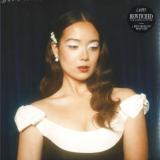
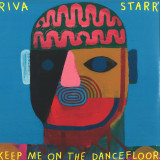
'Jamz' is a vibrant offshoot of the album Keep Me On The Dancefloor, born from spontaneous jam sessions with the talented musicians who helped bring Riva’s vision to life. These free-flowing studio moments, crafted with the dancefloor at heart, radiate playful energy and infectious groove. Featuring standout collaborators like Australia’s Close Counters and Naples’ Dario Bassolino, Jamz delivers a sun-soaked collection full of musical warmth and feel-good vibes. Already championed by Gilles Peterson on his radio show, this release is primed to move both hearts and feet.
Поиск:nova
Все
LTD 300 - Printed Sleeve
------------------------
Barranquilla born multi-instrumentalist Pernett is undoubtedly a true pioneer in fusing Colombian folklore with electronic elements. Back in 2003, when he released his first album “Música Para Pick Up”, Humberto was immediately seen as genius by some, crazy and outrageous by others. How dare he incorporate synthesizers into traditional music? What would be called this avant-garde genre where gaitas, traditional drums and keyboards come together? To this date, Pernett has released 6 albums, worked with an impressive number of prestigious artists such as Phil Manzanera, Calle 13, Novalima, or Quantic, and is still influencing whole generations of forward-thinking musicians.
Originally released from is latest album, “Vamos A Hacer” and El Pajarito have been edited for the occasion, by talented recording engineer Benjamin Calais AKA Ben Matik,
A-side “Vamos A Hacer - Ben Matik Instrumental Edit” is a joint collaboration between Pernett and renown British producer Will Holland aka Quantic. A heavy blend of funky breaks and cumbia. A 7-minutes version, exclusive to this 10″, has been especially taken out from the masters vault, and edited by Ben Matik: the original short version takes a unexpected turn to a completely freaked-out “Puya” rhythm, where gaitas and synths perfectly merge together.
B-side “El Pajarito - Ben Matik Instrumental Edit” is a deep downtempo anthem, a perfect fusion of powerful electronic beats, 808 bass, analog synths and gaitas. special attention should be paid to the enchanting voice of Diana Pereira on this one.
Artwork by Mateo Rivano.
- A1: Anticipation
- A2: Legend In Your Own Time
- B1: Our First Day Together
- B2: The Girl You Think You See
- B3: Summer’s Coming Around Again
- C1: Share The End
- C2: The Garden
- D1: Three Days
- D2: Julie Through The Glass
- D3: I’ve Got To Have You
Carly Simon’s quietly intense sophomore album comes across like an assertive notice nailed to a telephone pole for all to see. Bold, personal, and autobiographical, Anticipation announces the arrival of an artist who won’t back down. While Simon stands her ground on her eponymous debut, she elevates her passion and persona to heightened levels throughout this gold-certified record, dealing in private matters related to love, relationships, and desire. At times, Simon is nothing short of primal. She reflects on the difficulties of retaining your own identity while also giving yourself to a partner. Simon’s connection to her folk roots would never be stronger.
Sourced from the original master tapes, strictly limited to 3,000 numbered copies, pressed at Fidelity Record Pressing in California, and housed in a Stoughton gatefold jacket, Mobile Fidelity’s 180g 45RPM 2LP set of Anticipation lays bare the rich tapestries afforded by the spare blend of soft guitars, mellow orchestration, and dreamy melodies. Audiophiles and record collectors, take note: This is the first time Anticipation has been available on 45RPM. The wider grooves and dead-quiet surfaces prove extremely rewarding.
The rhythmic framework anchored by session pro Andy Newmark’s drumming sounds dynamic and balanced, with songs benefiting from a focused midrange and taut low-end. Simon’s attachment to and investment in each lyric is made evident by way of the intimate, hushed atmospherics and expansive responsiveness. And just as Simon’s vocals feel more transparent and direct, so, too, do the supporting choral arrangements.
Released before the singer-songwriter movement reached full bloom, Anticipation remains remarkable for the high-quality songwriting and Simon’s gutsy stance. The album cover — depicting the vocalist holding the gates at Queen Mary’s Garden in Regent’s Park and seemingly defying anyone to take her on — serves as a metaphor for the content within.
Known for having relationships with high-profile partners, Simon was heavily involved with Cat Stevens leading up to the recording of Anticipation. She draws from her experiences to craft tunes that resonate because of their honesty, realism, and strength. Few of those moments are better known than the Top 20 title track, which Simon composed in just 15 minutes as she waited for Stevens to pick her up for a date. Imbued with the nervousness, tension, and excitement that accompany the moments when a romance could go either way, the Grammy-nominated song presages the feminist-minded vulnerability and burning longing that informs a majority of the record.
On the soulful “Legend in Your Own Time,” also inspired by Stevens, Simon harnesses yearning as a conduit to feel-good paradise. Deemed by Rolling Stone an “absolute clincher, an awesome description of the psychic ravages of gone-nuts, know-nothing love,” her cover of Kris Kristofferson’s “I’ve Got to Have You” moans with no-holds-barred desire and breathtaking sensuality.
For all the wanting Simon pursues on Anticipation, her way of staying in control — vocally and personally — make the record a courageous statement of contemporary femininity. For further evidence, look to the bossa nova of “Summer’s Coming Around Again,” somber “Share the End,” soothing “Three Days,” and sincere “Julie Through the Glass,” a tribute to her young niece.
Simon would achieve international fame with her next album, No Secrets. Yet as this definitive reissue shows, Anticipation suggests the rest of the world was just a little late catching up to her.
Evighet proudly unveils its fifth release, EVIGHET005, featuring the Sky City EP by Dave N.A., the prolific producer from Yerevan known for his refined sound design and emotionally resonant compositions. With a catalog that spans labels such as Typeless Records and Uppers & Downers, his work continues to bridge precision and sensitivity, exploring the borders between rhythmic architecture and ambient introspection. On Sky City EP, Dave N.A. constructs an intricate sonic landscape where lush atmospheres coexist with fractured breaks and IDM-inspired rhythms. Rooted in the traditions of Jungle and Breakbeat yet unbound by genre, each piece reveals a narrative built from texture, movement and space. His music invites reflection while maintaining a dynamic forward energy, evoking the sense of motion through memory and dreamlike transitions. A central moment in the release is “Bloom”, which features a collaboration with Hayk Karoyi on flute. His performance adds an organic depth and melodic fluidity, weaving through electronic layers with warmth and clarity. The result is a delicate interplay between human breath and machine pulse, blurring the boundary between the natural and the synthetic. Sky City EP marks a new chapter for Evighet, reaffirming the label’s dedication to sound as a medium of exploration and storytelling. Through this release, Dave N.A. captures both emotional immediacy and compositional detail, expanding the label’s evolving narrative with a vision that feels deeply personal yet universally resonant.
Following the success of his ‘Love Dub So’ EP, Nick Barber’s Doof project returns to Mysticisms, delving back to his earliest recordings of his ground-breaking Trance project, presenting tracks from his previously cassette only release ‘The Love Mixes’.
A youth that had captured the psychedelia of Pink Floyd, Gong, Hawkwind and on to Psychic TV, as a self-taught guitarist, his first trip to India and Thailand in 1989 and witnessing the early electronic dance music at the Full Moon parties, had seemed rudimentary in nature compared to musicality of psychedelic rock.
Returning to England, the electronic / rock crossover of The Shamen’s ‘Progeny’ parties – featuring DJs like Paul Oakenfold and Mixmaster Morris with the live acts of Orbital and Ramjac Corporation – offered something new that turned his head, before finally finding his crew in the legendary squat / underground Pagan parties. There, residents Lol and Yaz first played the new electronic Trance sound, introducing Barber to the music of Eye-Q, Dance To Trance and the hugely influential Pete Namlook.
Recorded between 1990 – 1991, while living in Cambridge to study Philosophy, these are the first versions of tracks that formed the basis of his debut EP on Novamute, in 1993. Working with minimal equipment – an Akai sampler, Roland monosynth, Yamaha delay pedal, all sequenced on an Atari black and white PC and single MIDI output and then recorded straight to an 8-track Tascam cassette multitrack – the exuberance and rawness of the music are full of the excitement and naivety of youth.
Never intended for public release or initially even as a demo, Barber would play the music off the Tascam multitrack for friends at after parties. Dubbing a handful of cassettes himself and personally drawing the covers, around a dozen cassettes were handed out to mates. Eventually one copy found its way to Mute Records, who were looking to launch their dance offshoot, Novamute. Re-edited mixes of Gift Of The Gods and The Nagual appeared on his debut EP and history was made, before Doof went on to release for luminaries like TIP Records and Dragonfly and a career touring the globe was launched.
Remastered from the original tapes, this EP offers a snapshot of that time, the energy and joy of these early recordings is clear and overwhelming. Where Ambient, House and Techno met the birth of electronic Trance that truly stand up some 30 years later as originals then and now.
Trance The Mystery.
Marcos Valle is one of the few artists you cannot miss if you have the slightest interest in Brazilian music. Whether your taste is focused on bossa jazz, samba, psych folk or soul, Valle has surely recorded a great album for you. “Garra” was originally released in 1971 and brought us Valle’s classics such as ‘Com Mais De 30’, ‘O Cafona’, ‘Vinte E Seis Anos De Vida Normal’ and the rare groove classic ‘Wanda Vidal.’ Remastered from the original tapes and pressed on 180g vinyl. This release is part of our new reissue series that comprises many other outstanding Brazilian classics by the likes of Evinha, Cassiano, Gerson King Combo, Hyldon... By the late 60s he had already put out enough quality records to secure a place within the top Brazilian songwriters of all time, but his career luckily did not stop there and he continued releasing amazing music over the following decades until this day. By the dawn of the 1970s, the multi-talented Valle was entering a new era, ready to test the government censors (Brazil was under strict military rule since a coup d’état in 1964) and express a socially aware stance and a playful hodge-podge of musical styles including samba, bossa nova, baião (a rhythmic beat from the rural northeast of Brazil), black American music, and rock. “Garra” was originally released in 1971 and maintains the same socially conscious content as in his previous album while also combining diverse musical styles and influences. Recorded amongst sessions for a steady stream of popular TV soap opera soundtracks, it brought us Valle’s classics such as ‘Com Mais De 30’, ‘O Cafona’, ‘Vinte E Seis Anos De Vida Normal’ and the rare groove classic ‘Wanda Vidal.’
Marcos Valle is one of the few artists you cannot miss if you have the slightest interest in Brazilian music. Whether your taste is focused on bossa jazz, samba, psych folk or soul, Valle has surely recorded a great album for you. His much sought-after and stunning self-titled album from 1970 includes ‘Ele E Ela’, as sampled on Jay-Z’s ‘Thank You’, as well as some of his most popular songs like ‘Freio Aerodinamico’ and ‘Os Grilos’, swinging between sophistication and groove… Remastered from the original tapes and pressed on 180g vinyl. This release is part of our new reissue series that comprises many other outstanding Brazilian classics by the likes of Evinha, Cassiano, Gerson King Combo, Hyldon... Marcos Valle is one of the few artists you cannot miss if you have the slightest interest in Brazilian music. Whether your taste is focused on bossa jazz, samba, psych folk or soul, Valle has surely recorded a great album for you. By the late 60s he had already put out enough quality records to secure a place within the top Brazilian songwriters of all time, but his career luckily did not stop there and he continued releasing amazing music over the following decades until this day. By the dawn of the 1970s, the multi-talented Valle was entering a new era, ready to test the government censors (Brazil was under strict military rule since a coup d’état in 1964) and express a socially aware stance and a playful hodge-podge of musical styles including samba, bossa nova, baião (a rhythmic beat from the rural northeast of Brazil), black American music, and rock. “Marcos Valle” was originally released in 1970 and features a dynamic musical backing from some of Brazil’s most gifted players. Hip-hop fans may even recognize the opening horn blasts of ‘Ele E Ela,’ sampled to great effect on Jay-Z’s “Thank You.” It includes some of his most popular songs like ‘Freio Aerodinamico’ and ‘Os Grilos’, swinging between sophistication and groove…
Hitting release number three, Slush Records remaster and reissue Spacer IV aka James Zeiter’s sought-after 1997 EP on Pleasure Records. The man behind a slew of lauded records under a variety of different aliases, his sound is one that is cherished for orbiting the spheres of progressive trance and atmospheric dub techno. This four-track EP, however, saw James venture into unchartered territory, exploring a more melodic, house-tinted spectrum, before flipping back into the progressive techno-trance underbelly.
Having started life in 1995, Spacer IV had already gone from the leagues of limited white labels, to being the name stamped on one of Pleasure’s biggest-selling records by the time this EP came out. With only 195 white labels of his first record ARC 1/ARC 2 pressed, a copy was passed to Pete Robinson at Robs Records. ‘ARC 2’ was plucked from that release, supplemented with a new cut ‘ARC 3’ and given a proper pressing on Robs Records offshoot label Pleasure to notable success.
Fast forward to 1997 and James chose to depart the trance-infused techno sound of those first releases. Absorbing elements by osmosis, this EP sees James dipping his toes into fresh waters. Using what limited hardware he had available, including an Akai S950 sampler, Ensoniq ESQ-1 and Novation Bass Station 1, James laid down four distinctive and versatile club cuts.
‘Sirocco’ opens the EP, a tingling hit of endorphins that only the most timeless of tracks can elicit. Echoing pads feed acid murmurings, that sit atop dusty breakbeats and rattling sub-bass. An aural exploration, that is equal parts ethereal and empowering, taking cues from breaks, ambient, chill out and house. It’s one of those rare tracks that has the power to float you away or fuel your buzz, giving a healthy tug on the heartstrings in the process.
‘Mono’ follows, merging heads-down dancefloors with the embrace of warmer climates. It’s deep and Detroit-infused yet bolstered by a dream house bassline straight out of the Italian riviera. A dose of eyes-closed euphoria that hits just right.
The flipside sees James in more familiar territory with ‘Jetson’ and ‘Dust’. The former is a hit of space-age progressive house. Trippy, hypnotising, driving goodness, showcasing James’ ability to lock your body into a groove, yet send your mind to another world. The latter rounds out the EP, serving up an acid-swirling club stomper, forever building in intensity before dropping you into the vacuum of deep space.
- A1: The Legend Of Zelda (Ocarina Of Time)
- A2: Outset Island (The Wind Waker)
- A3: Mabe Village (Link's Awakening)
- A4: Sword Search (Link's Awakening)
- B1: Song Of Healing (Majora's Mask)
- B2: Inside A House (Series)
- B3: Astral Observatory (Majora's Mask)
- B4: Ballad Of The Wind Fish (Link's Awakening)
- C1: The Great Sea (The Wind Waker)
- C2: King Of Red Lions (The Wind Waker)
- C3: Dragon Roost Island (The Wind Waker)
- C4: Fi's Farewell Song (Skyward Sword)
- D1: Enter The Twilight Realm (Twilight Princess)
- D2: Full Steam Ahead (Spirit Tracks)
- D3: Serenade Of Water (Ocarina Of Time)
- D4: The Legendary Hero (The Wind Waker)
- D5: The Wind Waker (The Wind Waker)
The Deku Trio's cozy Legend of Zelda coffeehouse jazz album
Jazz band The Deku Trio is back for an encore in Zelda & Jazz II, an 18-track smooth jazz Legend of Zelda tribute album. Featuring intimate piano, upright bass, and mellow drums, The Deku Trio reimagines the music of The Legend of Zelda with influences ranging from lounging bossa nova to coffeehouse jazz. Zelda & Jazz II features music from across The Legend of Zelda series. Highlights include Nintendo 64 classics Majora's Mask and Ocarina of Time, GameCube releases Twilight Princess and The Wind Waker, hand-held titles Link's Awakening and Spirit Tracks, Skyward Sword for the Wii, and the Super Nintendo's A Link to the Past. This wide-ranging tribute is topped off with artwork and character designs by comic and environmental artist Christian Benavides (League of Legends). The brainchild of Rob Araujo (Chillhop) and Chris Davidson (GameChops), The Deku Trio features rich reharmonizations on piano, gentle drums, and lush upright basslines, with mixes by Curran Sinha in Los Angeles.
The Deku Trio crafts an intimate smooth jazz tribute to the timeless Legend of Zelda series.
Back in stock due to popular demand, the 41st release in our signature Brazil 45’s series. Turning the spotlight to two monster funk/bossa nova cuts from Rosa Maria, we reissued a double header of firm favourites here at Mr Bongo HQ. Originally released on 7” in 1972 via Tapecar, copies of the OG are extremely difficult to get your hands on.
The A side houses ‘Deixa Nao Deixa’, with its distinct afro-Latin feel courtesy of the guitar, horns and percussion. Add in the catchy lead vocal, strong harmonies, funk/bossa drum grooves, shuffling percussion and the continuous build to the end, and you have one of the greatest Brazilian funk records ever pressed.
‘Avenida Atlantica’ takes the B side. Funk and bossa drum grooves alternate underneath the layers of vocals, horns, piano and percussion for a fiery, energetic dancefloor heater.
- A1: Dj G2G - *Ussy (Ft. Jahanam)
- A1: Boys Noize - Bvrning (Vinyl Only)
- A3: Locked Club - Ring My Bells
- A4: Adame Dj - Beat Maquinario
- B1: Safety Trance & Umru - Sidewinder
- B2: Kfr - There Is Something I Can't Find Ft. Mayah Alkhateri
- B3: Slim Soledad - Vai Toma Na Rave
- B4: Manni Dee - Break Me Ft. Bodur
- C1: Schacke - Control Freak
- C2: Øtta - Mão Na Parede
- C3: Anna Lann - Silver Plug
- D1: Tinkerhell - Cross Ways
- D2: David Löhlein - El Baile
- D3: Isaiah - Lone Soldier
- E1: Dj Babatr - Kick The Floor
- E2: Ilya Gadaev - Pleasuredom
- E3: Marceldune - Run And Dream, Kiss And Bye
- E4: Scntst - Feedback
- F1: Baseck - Let It Go
- F2: Dj Wifi - Like 2 Ride
- F3: Æro Nova - B1Te
- F4: Boys Noize - Sireneh
Boys Noize presents ONES and ZEROS OAZ, a new experimental record label with the mission of breaking open the space of possibilities for techno and beyond. Reflecting new modes of subcultural circulation and integrating music,
objects, and a pluralistic network of artists, OAZ debuts with the 22-track Bo compilation, including two Boys Noize solo tracks, one of them “Bvrning” (Vinyl Only), as well as tracks by Locked Club, Safety Trance & umru, DJ Babatr, Slim Soledad, Schacke, KFR, TINKERHELL, David Löhlein, MarcelDune, and more.
This EP contains 4 tracks inspired by the dance music boom in Europe from the late 80s to early 90s. Luis composed all the tracks using a Novation BassStation, an Akai MPC 2000XL for the drums and sampling, and a Korg M1 for the pads and melodies, using the occasional VST where appropriate.
A1 “Miedo aqui estoy” (Fear, here I am) combines a fast bassline with a hypnotic melody, New Wave influences and shades of electro unite to create an immersive atmosphere. The message ‘no to fear’ being transmitted through optimistic and euphoric pads.
A2 “Neminem Laedere”, inspired by New Wave sounds and rhythm, this track uses bright synths to create audio textures that invite introspection. The hypnotic melodies repeat throughout, enforcing the title's message ‘do no harm’.
B1 “Noches y Amaneceres” Taking the heavy and dark rhythms of new beat and entwining the contagious melodies of Italo provided by bright synths, this fusion gives the track a unique bouncy atmosphere.
B2 “Violines en el barrio”, A track that revolves around a focus on sampling. The breakbeat influence accompanying synths with an 80s flavour and pads providing a deeper texture.
Limited Edition White Vinyl
At the forefront of a rising wave of Brazilian artists captivating international audiences, Nyron Higor brings a quiet yet potent sense of wonder to his new self-titled album. Born in Maceió, Higor’s latest work is rooted in the traditions of Northeastern Brazilian music and golden-era MPB. Within the peaceful surroundings of his home, Higor weaves these roots together with global influences and contemporary production techniques, for a uniquely dreamlike vision of hope.
Following the success of his self-released debut Fio de Lâmina—an instrumental record of delicately balanced rhythmic and harmonic patterns, which earned support from tastemakers like Mr. Scruff, Gilles Peterson, and John Gomez—Higor’s new album is a move towards a more expansive, lyrical exploration of transcendence and triumph. As Higor explains, “This album is a test of resistance and a big event in my life as a young Black man from the Northeast and coming from a humble background, financially speaking, its context is political.”
Taking his demos and unfinished tracks to São Paulo, Higor worked alongside friends and collaborators from Brazil’s vibrant contemporary music scene—including fellow Maceioense artists Bruno Berle, Batata Boy, and New York-based Brazilian vocalist Alici Sol—assembling a rich musical landscape and a cutting edge development on the musical world from which he emerges.
For Higor, the process of recording and producing in close collaboration with Berle and Batata Boy allowed him to fully cultivate the emotive power of his compositions. Album opener "Ciranda" sets the tone with a slow frevo rhythm, as wistful trombone melodies and melancholic acoustic guitar harmonies create an atmosphere both intimate and grand. Lead single "São Só Palavras," featuring Alici Sol and Bruno Berle, captures both the lightness and depth of young love in an all too fleeting minute-and-a-half moment of soaring brilliance.
Building upon the instrumental sound of his debut, “Louro Cantador” with its playful organ, birdlike whistles and elegant acoustic guitar, emanates a kind of rare natural beauty, as each sound dances amidst the gentle pulse of Higor's bass—his main instrument.
Through ten carefully crafted tracks, Higor’s acuity for sound and silence draws listeners into a place that feels both deeply personal and universally resonant. “Above all, I value making music that brings me genuine satisfaction. I’m always looking for depth in the things I create.”
This album is a testament to the timeless themes that define Higor’s artistry, as well as his creative drive to overcome the obstacles he faces. Conveying his feelings of jubilance for his work, Higor notes, “This work is liberating, contemplative and victorious!” Each track invites the listener to experience the raw intimacy, the joy and longing, and the otherworldly ingenuity of Brazilian music, which seems to endlessly keep us coming back for more.
CREDITS
Ciranda (Nyron Higor)
Tico Lima: Trombone, Nyron Higor: Drums, Bass, Synthesizers, Electric Piano, Guitar, Molho de Jatobá, Ganzá, Caxixi, and Indigenous Whistle
Louro Cantador (Nyron Higor)
Nyron Higor: Drums, Bass, Keyboards, Guitar, Percussion, and Direct Sound
Demo Love (Nyron Higor)
Nyron Higor: Drums, Bass Synth, Keyboards, and Synthesizers
São Só Palavras feat. Alici, Bruno Berle (Nyron Higor, Batata Boy, Alici Sol, and Bruno Berle)
Alici Sol: Vocals, Bruno Berle: Vocals and Bass, Nyron Higor: Drums, Guitar, Keyboards, Synthesizers, and Whistles
Estou Pensando Em Você feat. Johanna (João Menezes, Rubens Adati)
Nyron Higor: Vocals, Johanna: Vocals. Bruno Berle: Vocals, Rubens Adati: Piano, Guitar, Programming, Stefan Costilhes: Bass, Batata Boy: Programming
Maravilhamento feat. Nathalia Grilo (Nyron Higor, Nathalia Grilo)
Nathalia Grilo: Vocals, Nyron Higor: Drums, Bass, Guitar, Keyboards, and Synthesizers
Som 24 (Nyron Higor)
Nyron Higor: Sampler, Keyboard, Bass Synth, Vocoder, and Steel Guitar
Pizzicato (Nyron Higor)
Nyron Higor: Double Bass and Keyboards
Eu Te Amo (João Menezes)
Nyron Higor: Vocals and Bass, João Menezes: Guitar, Batata Boy: Rhodes Piano, Bruno Berle: Xylophone
Me Vestir De Você feat. Johanna (Paulo Novaes and João Menezes)
Nyron Higor: Vocals, Johanna: Vocals, Bianca Godoi: Drums, Bruno Berle: Bass, Guitar, Percussion, and Rhodes Piano, Batata Boy: Rhodes Piano and Guitar
===================
Tracks 1, 2, 3, 4, 6, 7, and 8 were recorded by Nyron Higor in Maceió
Track 4: Bass and Synthesizers recorded by Ico dos Anjos. Vocals recorded by Batata Boy at Estúdio Rural
Track 5: Guitars, Bass, Programming, and Pianos recorded at Inhame Estúdio. Coproduced by Rubens Adati
Tracks 9 and 10 Recorded and Co produced by Ico dos Anjos
Mixed by Batata Boy, Ico dos Anjos, Bruno Berle, and Nyron Higor
Mastered by Batata Boy
Produced by Batata Boy, Bruno Berle, and Nyron Higor
Lacquer Cut by Caspar Sutton Jones @ Gearbox Records
Cover photo by Claudio Virginio
Vinyl centre label artwork by Tadáskía
Sleeve design by Alessandro Renaldin
Repress!
5 Years Anniversary Release - Red Marbled Vinyl
La Matta Records proudly presents the first official reissue of Io Sono Io (Eu Sou Mais Eu), the rare Italo-Brazilian track by multi-instrumentalist and composer Ana Mazzotti.
Originally recorded between the legendary Estúdio Haway in Rio de Janeiro (1973-1977) and Rede Tupi’s studios (1978), where the Italian version first appeared released by GTA – Gravações Tupi Associadas S/A, this reissue captures a pivotal moment in Ana’s career and also includes collaboration with the Azymuth band. With its characteristic blend of jazz, bossa nova, and funk, Ana’s voice stands out in the groove with unique precision and emotion. Renowned for her experimental approach and praised by figures such as Hermeto Pascoal—who referred to her as a “super-musician”—this fully remastered gem is now available for collectors and enthusiasts on vinyl and all digital platforms. It also includes a killer extended mix and the 1977 version with horns.
Panavision was born from the shared passion for music of Akaj, Pierro, and Brassac. After years of playing as DJs, they came together in 2023 to create a space that goes beyond dance music — a platform where producers and artists can explore creativity, freedom, and in novation.
Rooted in a diverse range of genres, we are committed to discovering and nurturing talent, both from the past and present. Our mission with this label is to bring stories to life through music that is authentic and dedicated. For our first releas e, we are thrilled to present a mini - album from S evered Heads titledOp5.
This record marks the official launch of our label, which operates between Brussels and Ljubljana — two cities that embody our ambition to explore diverse creative landscapes and push the boundaries of contemporary music. This first release is a t ribute to one of the pioneering forces in electronic music. The OP Series is one of many innovative projects S evered Heads h as produced since the late1970s.
For this special release, we’ve carefu lly selected six original tracks out of fifty from the Op Series releases of the early 2000s and curated them into a thoughtful sequence to form this mini - album
Matching breezy, Bossa nova-tinged sophistication with softly spiralling psychedelia, Testbild! arrive in the Quindi lounge as though they've always been there. On their 12th album, Bed Stilt, the Swedish collective cast their attention back to the earlier days of their 25-year trip through sweetly mysterious pop-not-pop rendered in warm tones and shot through with surrealism. It's tricky to get a precise fix on the story and structure of Testbild! The project was spearheaded by Petter Herbertsson in his hometown of Malmö in the late 90s, although the story on their website credits the inspiration and source material to a chance meeting and unpublished manuscript from a retiring scientist. The collective's evolution since then is a tangled web of facts and fiction spun by a revolving cast of collaborators including Siri af Burén, Katja Ekman, Rikard Heberling, Douglas Holmquist, Mattias Nihlén and Petter Samuelsson. Along the way, their music has touched on chamber pop, post-punk and modern jazz with the elaborate harmonies and catchy songwriting charm of the Canterbury scene. The tracks which make up Bed Stilt were in fact track recorded in Malmö back in the mid- 00s, lying in wait for the right opportunity to be brought to light with some delicate overdubs and finishing flourishes in the here and now. The core musicians working on the record were Herbertsson and Douglas Holmquist on a similarly expansive list of vocals, guitars, bass, synths and keys, Siri af Burén on lead vocals and Mattias Nihlén on synths and additional mixing. Meanwhile Tomas Bodén - better known as Civilistjavel - lent some additional synth work as well as mastering the record. Musically, Testbild! stay true to their idiosyncratic approach on Bed Stilt with six immaculately rendered sojourns through lilting harmonies and brushed rhythms, feeling nostalgic but beguiling in equal measure. Theirs is a luxurious sound, not least on the opening strains of 'The First New Years Eve,' which purrs to life draped in silky Rhodes and chiming vibes. Behind this comfortable veneer the enigmatic lyrical themes unfurl through Herbertsson, Holmquist and af Burén's vocal harmonies like fractalized puzzles waiting to be solved. The finger-picking delicacy and languid harmonica of 'Streams' strike a pastoral mood neatly countered by the elegant slide into dislocated ambience for the track's final stretch. By contrast, 'And Her Eyes Are Red' surges with a big beat urgency which plays beautifully with the mellow jazziness of the chord sequences, boldly toying with song structure to dart down curious tangents without losing the immediate impulse of a great pop record. Somewhere in this tension between clarity and chaos we can understand the addictive charm of Testbild! - a band steeped in the considerable craft of making accomplished and unconventional music so very easy to sink into. If that doesn't make for a perfect addition to the Quindi catalogue, we don't know what does.
Following on from his previous debut album Tape 1/Tape 2 on Soundway, Felbm delivers Tape 3/Tape 4 : an intimate, emotional, lilting and melodic solo project. These 14 lo-fi, instrumental, jazz-infused sketches were written on guitar, with cascading keyboards, vibraphone and drum machine. Possessing a restorative and soothing quality, it goes some way to balancing out a chaotic year for the world
at large.
With echoes of the dreamier end of 1980s English indie-pop, minimal ambient music and Brazilian bossa-nova, Topper’s musical storybook includes touches of The Durutti Column, hints of Antônio Carlos Jobim and Baden Powell, whilst all set firmly in the summer fields of Germany and the Netherlands. The recording method used for the creation and recording of Tape 3 and Tape 4 follows the same as his previous release: all sketches were initially recorded onto cassette on a 4-track tape machine. Most notably a vibraphone finds its way onto
almost every track fitting Topper’s sound-palette perfectly: warm yet distinctive, a percussive as well as sustaining sound that evokes some melancholy and a certain timeless nostalgia. Features that most certainly also apply to the other ‘new’ instrument on the tapes: mellotron flutes.
Tape 3/Tape 4 navigates the space between quiet, open, meditative tunes and more solid instrumental works, reflecting his constant search for an optimal balance between stillness and movement.
- A1: S–O S–O Paulo 3 29
- A2: Curso Intensivo De Boas Maneiras 2 58
- A3: Glória 3 20
- A4: Namorinho De Port–O 2 35
- A5: Catecismo, Creme Dental E Eu 2 44
- A6: Camelô 2 15
- B1: N–O Buzine Que Eu Estou Paquerando
- B2: Profiss–O De Ladr–O 2 35
- B3: Sem Entrada E Sem Mais Nada 2 40
- B4: Parque Industrial 3 16
- B5: Quero Sambar Meu Bem 3 50
- B6: Sabor De Burrice
In 1968 Tom Zé; moved from Salvador Bahia to Sao Paulo where he hung out and wrote with his friends Gilberto Gil and Caetano Veloso. Although initially part of theTropicalia movement, Zé was so independent he was determined to forge his own musical path. He started by recording Grande Liquidacao, a hyperactive pop album backed up by two incredible psychedelic rockbands: Os Brazoes and Os Versateis. Tom Zé's material on this album includes traditional Brazilian Tropicalia laced with crazy vocal melodies and samples a multitude of genres from funk to psychedelic rock and bossa nova creating in the process a sort of unheard pop exotica. This is especially apparent on the track šGloria› with its changing tempos, bubbling instrumentation and off-the-wall harmonies. The pace of the album, considering it was the 60™s, is brutal so Zé takes a break between songs to address the listener before resuming his zigzag trajectory. The album also includes the fantastic šParque Industrial› which was later recorded by Gal Costa, Gilberto Gil and Caetano Veloso on the Tropicalia: Panis et Circenses album. Tom Zé was also arguably the creator of the first sampler. In the mid 1980's David Byrne pulled one of his albums out of the samba section of a Rio de Janeiro record store which led him to bringing Zé to worldwide attention by releasing numerous albums on the Luaka Bop label.
As a true Brazilian music aficionado, Skinshape was naturally captivated by Pedro Mizutani's charm. So, when Pedro visited Europe in the summer of 2023, Skinshape invited him to its London studio. Together, magic effortlessly unfolded.
Pedro sets the rhythm, while Skinshape sets the grain. With Skinshape weaving in basslines and other arrangements around Mizutani's mesmerizing guitar playing, the collaboration was a breeze. The two musicians understood each other in the blink of an eye.
Together, they crafted a true homage to bossa nova. Without overshadowing Mizutani's style, Skinshape brought out his full musicality. It was a seamless symbiosis. The duo created a one-of-a-kind work. In the spirit of the Afrobeats movement, one could even describe it as "bossa-pop," maintaining the essence of the genre while incorporating British aesthetic elements under Skinshape's discerning ear. A sprinkling of shimmering bells here, kicks dipped in reverb there, and jazzy basslines for that extra touch of groove. As for Pedro Mizutani, he excelled in delicacy as always and did not lose altitude, soaring to even greater heights.
Break 3000 present this special vinyl re-issue of some much sought after Electro Clash classics from the period 1998-2003.
Available now on limited Red Marbled Vinyl for the first time again since almost 25 Years ago!
After the fast selling “Emolotion EP” on Italy’s “Mondo Phase” imprint and the “The Rise of Poseidon 1” on the Argentinian label “Calypso’s Dream” released last year we present you the final chapter of the early 00’s Electro and Electro Clash gems produced by Break 3000 while living in Maastricht and Cologne.
The first track is a remix made for the legendary “Pocketgame” label from Germany in 2003 that was run by Maru & Comix, released on the “We Are He-Man EP” by “STR & Tim Tycoon” that also featured a stellar “Legowelt” remix. This one is an absolute belter of a track and to this day is one of Break 3000’s favorite tunes he ever produced. Followed by the cool, dark and Cold-Wave’esque Electro cut “The Wait” that was released on a massive Compilation on “Pocketgame” that same year called “Bonuslevel One – North and South” with such amazing artists on it like “Steril”, “Ladytron”, “Mutron”, “Nitsch and Gleinser”, “Hong Kong Counterfeit” and of course the label heads “Maru & Comix”.
The B-side looks back in time even further. “Electric Blue” and “Spacemachinenreise” were released on “Meuse Muzique” from Maastricht and were on the “Maastricht-Liege EP” and the “Electric Kingdom EP” from 2002 and 2003. Lastly “Lectrolite #2” was released on a one-off vinyl release on Break 3000’s own “Casa Nova” imprint in 1999. And especially this tune marked the start of his Electro endeavors the following years.
So get your hands on these fine tunes once more with this special packaged and limited re-release. All tracks have been carefully re-mastered from the original tapes and sound better than ever! Play it LOUD!
All tracks are re-mastered by Salz Mastering in Cologne. Music, Photography & Art by Break 3000.
Warehouse Find!
Following the sold out Theo Parrish remix of Marcos Valle's '1985', here's the second in Far Out's Brazilika 12" with three scorching remixes from UK dance veteran Ashley Beedle. Three peak time excursions into percussive, soulful house on a stylish, cosmic Brazilian party tip.
Following the sold out Theo Parrish remix of Marcos Valle's '1985' back in April, the second release in Far Out's Brazilika 12' series features a highlight from Sabrina Malheiros' 2011 album 'Dreaming': the blissed-out, sun soaked samba classic 'Opara', which gets three scorching remixes from UK dance veteran Ashley Beedle.
Currently celebrating a decade since the release of her critically acclaimed debut album 'Equilibria', Sabrina Malheiros has remained at the forefront of modern, soul-infused Brazilian music. Growing up in Rio, the daughter of Alex Malheiros, bassist of Jazz-funk pioneers Azymuth, Sabrina has taken the legacy of samba and bossa nova and forged her own forward-thinking path, taking with her all the style and substance of the early days.
Produced under his Afrikanz On Marz moniker, Beedle's remix brings all the right elements of the original to the fore. The result is three peak time excursions into percussive, soulful house on a stylish, cosmic Brazilian party tip, infused with rich, warm rhodes, synth and flute throughout.
The vocal mix on the A side provides a spacious backdrop of twinkling keys and buoyant percussion to Malheiros' gently floating strains. The other mixes offer similarly floor-focused variations: the aptly titled 'Galactic Flute Remix' on the flip pairs the titular wind instrument with a deeper groove that retains the loose-limbed appeal of the original, plus a bonus instrumental to boot. A sure fire heat bringer and certainly one of the most colourful dance 12's we've heard this year.
The Brazilika 12' series is the new vinyl home to the previously unreleased dance exclusives taken from the Spiritual South mix on CD2 of Far Out's 20th anniversary double compilation, released in May 2015.
Brownswood Recordings releases the 7th edition of their Future Bubblers Compilation. An expansion of Gilles Peterson's network supported by Arts Council England, the ongoing talent discovery and artist development scheme focuses on developing unsigned talent and building audiences for new left-field music. With support from PRS Foundation as Talent Development Partners, the professional recording, manufacturing and physical release of Future Bubblers 7.0 is made possible. Unlike any other initiatives within music, the compilation acts as a springboard for the musician's careers, with the cooperative model providing direct revenue to the artists by a share of the profits, resulting in a sustainable income to work from. Previous Future Bubblers include artists such as Yazmin Lacey, KinKai, MC Snowy, Forest Law, Victoria Jane, NeOne The Wonderer and Kayla Painter, to name a few.
The 8-track compilation is a musically diverse collection of tracks, fusing genres across Alt-R&B, Dance, Electronic, Jazz, Rap and Trip-Hop. Opening the project, ROMY NOVA flaunts her hypnotic harmonies on a tender offering, 'The Way', whilst Sheffield-born Jackie Moonbather delivers a Funk performance on 'Separate Ways'. Up next, Ney Liqa's 'Blomster' captures a blend of Trip-Hop and Swedish-Pop, fusing her earliest musical influences before Birmingham's very own Landel's cloud-Rap excellence on '2 Many'. Maintaining the ethereal sonic, Petrelli Purple's 'Brisk' is reflective of his ability to curate a "miscellaneous north" sound, followed by MARYSIA OSU's 'Stryder' that highlights her self-coined "harps, beats, and dreams" ethos. Michael Diamond showcases his ability to float between jazz and electronic landscapes on 'Aether' before COEX rounds off the project nicely with 'Reflections'.
- A1: Three (Intro)
- A2: Noisia & Camo & Krooked - Nova
- A3: The Upbeats & Noisia - Shibuya Pet Store
- B1: Noisia & Imanu - Shift
- B2: Noisia & Skrillex - Horizon
- B3: Noisia & Former - Cleansing
- C1: Mefjus & Noisia - Foundations
- C2: Scrapped
- C3: Shutters
- D1: Noisia & The Upbeats - Halcyon
- D2: Noisia & Halogenix - Wordless
- D3: Told You
- E1: Noisia & Two Fingers - Dzjengis
- E2: Noisia & Former - Pleasure Model
- F1: Noisia & Phace - Deep Down
- F2: Noisia & Posij - Simplon
- G1: Noisia & Black Sun Empire - Caps Lock
- G2: Skrillex & Noisia & Josh Pan & Dylan Brady - Supersonic (Vip)
- H1: The Hole Pt 1
- H2: Closer
"After Outer Edges we were trying to find a new direction for Noisia. This resulted in an extensive journey that took us through a lot of new ideas and music.
Although we eventually decided to stop, we are proud of the things we made along the way, and these tunes were always meant to be part of a larger whole. So before we finally close the book on Noisia, we wanted to share them with you, on one last album. Previously released or newly finished, they all represent directions we enjoyed exploring.
In the end, we didn't manage to figure things out. But we did get closer." - Nik, Thijs, Martijn (Noisia)
Recorded by Anthony Linell & Jonas Rönnberg in Muskö, Sweden 2021 Mastered by Giuseppe Tillieci at EnissLab, Rome
northernelectronics.se
“The collaborative project of Northern Electronics' founders, Anthony Linell and Jonas Rönnberg, has never ceased to confront with their coupling of industrious delirium and pensive austerity. By now we know that only adrenaline can make sense of the toxic ensemble of purposes at the heart of Ulwhednar. Meditating on higher flights of thrill and disorder than their previous record, and with an acknowledgement of their Stockholm roots, 'Area 08' induces fever and anticipation with every gesture.
The opening tracks make a raucous yet resolute introduction to proceedings, eventually issuing one of the album's most exquisite moments of reprieve with 'Akalla/Broken Swords'. However, it is the second half of 'Area 08' that formally admits their latest work has crossed a threshold yet unexplored by the pair. A suite of villainously propulsive tracks spit embers of caustic balms as they careen out of reach with the engorged march of 'Commuter Madness'. Cunning in as many ways as it is earnest and audacious, 'Area 08' is a welcome alarm from the nucleus of the mission.”
'Rats' von 2012 war das zweite Album der belgischen Indie-Band Balthazar. Das selbst-produzierte Album enthält die Essenz von Balthazar: Herzzerreißende Melodien und Gesangsharmonien, melancholischer Bossa Nova und euphorische Walzer treffen auf Geschichten von Liebe, Verlangen und anderen Dummheiten. Zur Feier des 40-jährigen Jubiläums von PIAS erscheint nun die limitierte Re-Issue auf transparent-orangen Vinyl.
Talla 2XLC is always at the top of beatport sales trance charts with his inventive originals and mouthwatering reworks. His next release Welcome To The Future on That’s Trance is an excellent update of the Schiller’s side project Nova released in 1999. Get ready for a magnificent uplifting euphoric trancer with infectious main melody to blow your mind and uplift your senses. Welcome To The Future employs psy trance sharp basslines, punchy booming kicks and classic trance percussion to create its intense drive while on top piano chords, gated trancy voices and nice synthy hooks are added to create a starling infectious result.
The breakdown is a magnificent cinematic journey with warm strings, airy pads, spacey sound effects and beautiful spoken female vocals describing a better future without the ugly side of our society. The finest highlight of the track is the incredible euphoric synthy riff that has the darkness and melodramatic tones that we all adore in our trance. When the beat strikes back this unforgettable melody is supported from additional melodic layers, piano chords and energetic acid over tones to toughen the proceedings. It’s one of those tracks that will easily crawl under your skin and become part of your trance DNA recalling the great epic Frankfurt trance sound with its industrial and high tech feel to it.
Welcome To The Future is Talla’s outstanding track out now on his own imprint That’s Trance.
- A1: Posjet Iz Svemira (A Visit From Space) (1964)
- A2: Cudna Ptica (Strange Bird) (1969)
- A3: Astromati I (Astromutts I) (1963)
- A4: Astromati Ii (Astromutts Ii) (1963)
- A5: Surogat (Ersatz - The Substitute) (1961)
- A61: Klizi-Puzi (Twidle-Twidle) (1969)
- B1: Zacarani Princ (The Enchanted Prince) (1978)
- B2: Medvjedja Romansa (Grin And Bear It) (1978)
- B3: Zid (The Wall) (1965)
- B4: Dnevnik (Diary) (1974)
- B5: Gubecziana (The Serfs Uprising) (1974)
- C1: Plemeniti Soj (The Noble Strain) (1971)
- C2: Homo Augens (1972)
- C3: Idu Dani (Passing Days) (1969)
- C4: Opera Cordis (1968)
- D1: San (The Dream) (1982)
- D2: Kugina Kuca (The House Of The Plague) (1980)
- D3: Utopia (1973)
- D4: Dan Kad Sam Prestao Pusiti (The Day I Stopped Smoking) (1982)
A collection of unreleased themes and scores from 18 short animated films from the world famous Zagreb School Of Animated Film. Includes Oscar winning short cartoon Ersatz / Surogat by Dusan Vukotic (1961) and many other jazz, electronica and experimental scores by composer Tomislav Simovic. Coined by the famed film theorist Georges Sadoul at the 1959 Cannes Festival, The Zagreb School of Animated Film(s) or The Zagreb School of Animation, was defined as an artistic and philosophical world-view that set its mark on the history of animation in the 60's and 70's. The key feature of the Zagreb School (not educational facility in any kind), was commitment to stylization in contrast with the Disney-style canon of realistic animation. Among many composers that worked in Zagreb Film productions, the name of Tomislav Simovic (1931 - 2014) stands out. In his oeuvre of 300+ film scores (not counting compositions and arrangements for pop singers and jazz orchestras), many were made exclusively for Zagreb film documentaries, fiction shorts, features and animation. Simovic was particularly adept at writing music for cartoons. He skillfully synchronized movement and sound and mixed different musical genres, although, like his peers at the time, he leaned towards jazz. 'The Zagreb School of Animated Film (Original Soundtracks 1961-1982)' is compiled by Leri Ahel (Mutant Disco Radio Show) and Zeljko Luketic (Electronic Jugoton, Ex-Yu Electronica III). Master tapes were considered lost, now found and restored for this epic 2 x LP release celebrating Yugoslavia's animated art shorts. Double vinyl gatefold with extensive liner notes, photographs from the films and exclusive cover artwork by Dejan Krsic (NEP / Nova Evropa).
Die bereits mehrfach für die GRAMMYs nominierte brasilianische Sängerin Bebel Gilberto veröffentlicht ihr mittlerweile achtes Studioalbum 'João'. Das Album ist eine Sammlung von Liedern ihres Vaters João Gilberto, der weithin als Erfinder und Wegbereiter des Bossa Novas gilt und 2019 nach einer 70-jährigen Musikkarriere verstarb. Bebel begann schon als kleines Kind mit ihm zu singen und die Lieder, die sie nun in neuem Gewand präsentiert, begleiten sie schon ihr ganzes Leben - 'João' ist ihr ganz persönlicher Liebesbrief an João Gilberto und seine Musik.
Once again a work by Patrick Campbell-Lyons without Alex Spyropoulos, this time Songs Of Love And Praise showed a return to a more classic Nirvana sound. Campbell-Lyons revisited two of the most loved songs by the band, Pentecost Hotel from their debut LP and Rainbow Chaser from their second one. The album opens precisely with the amazing uptempo beat of Rainbow Chaser, which while sounding faithful to the original recording, it comes with a totally different approach on the arrangements. Campbell-Lyons states on the liners that he went for a step further in that field, and looked for a jazzy atmosphere. It sets the tone of the album: upbeat good vibrations songs that differ from the dark mood of the previous Local Anaesthetic LP and that besides these two songs revisited presents all new material.
Uplifted and positive, Songs Of Love And Praise gives what the title promises to take the classic Nirvana sound from their first three albums one step further with the collaboration of Bobby Harrison (Procol Harum, Snafu) Lesley Duncan, Maggie Bell and Sylvia Schuster (who had already played live with Nirvana at the time of their debut album).
The Belgian vibraphonist Guy Cabay has played with Toots Thielemans, Philip Caherine or Raoul Faisant. Composer, arranger, musicologist and singer, he also wrote and recorded two extraordinary albums in Liege Walloon. Tricatel is happy to make them available at last, 46 years after their publication.
"Gravity kills us. Perhaps that is the meaning of Adam's Fall. We are condemned to be Newton's apple, not the balloon carried away by the wind. But it happens nevertheless that, by the grace of music in particular, we escape gravity, that time escapes time, that another breath inflates our lungs, so much lighter than the one that usually suffocates us.
We don't take light music seriously, and that's good. Only serious music deserves to be treated so badly. Guy Cabay's music flows from a purer source and speaks to us in a more tender voice. One can obviously describe it as one labels export product. Origin: Belgium. Ingredients: jazz, bossa nova, tropicalism, song - proportions may vary. Calorific value: none.
Non-perishable product. But this would say as much about what this music really is as if, in. order to evoke what the foggy blue of a Norman sky inspires, one were to take note of the variations in the percentage of humidity in the atmosphere at Etretat and make a learned presentation on the laws of refraction.
Guy Cabay did pass through Brazil and still lives there a little, a Brazil that is not the one ofcartographers or travel agencies, a Brazil that is as real as the Far West in which Fenimore Cooper's child readers lived, as blurred and limpid as a dream. It is not the Amazon thatflows through this Brazil, but the Ourthe, a tributary of the Meuse, which makes it morefamiliar, stranger and even more poetic.
To let oneself be bathed in this melancholichappiness, to let oneself be carried by this river is sweet, as sweet as the fluid consonants of the Walloon language, this 'd' which becomes 'dj' in his mouth, as in Portuguese, by the way. To know how to create melodies that hold on a note like Jobim's samba, like a fildeferist above a waterfall of chords, is not given to everyone. It is a gift. Knowing how to lace others on dozens of points, as on Tot a-fet rote cou d'zeur cou d'zos, a poignant encounter between Randy Newman and Robert Wyatt, is another. These are not the only ones that the fairies offered to Guy Cabay and that, by an almost miracle, he offers us again today. Hearts up."
Bertrand Burgalat
The gifted Puerto Rican-American drummer and percussionist Willie Bobo was one of the architects of Latin Jazz. Following mentorship from Machito and Mongo Santamaria, Bobo played with Tito Puente, Cal Tjader, and Herbie Mann, before going solo. Bobo’s Beat is a sure-fire winner from 1962 with excellent support from trumpeter Clark Terry, saxophonist Joe Farrell and keyboardist Frank Anderson, a fully three-dimensional set with fine jazz nuances. It shows that Bobo never accepted less than the best from his counterparts, and there are some bossa nova covers mixed in with the driving Latin originals too. An essential work!
- A1: Om Mani Padme Hum
- A2: Bohemia After Dark
- A3: Companionship
- A4: Stoned Ghosts
- A5: Jay-Jay
- B1: Dijar
- B2: Con Alma
- B3: Ct & Cb
- B4: The Turk's Bolero
- B5: Talk Some Yak-Ee-Dak
- C1: Calypso Blues
- C2: Balafon
- C5: I'm A Fool To Want You
- C4: Insensatez
- C5: Invitation
- D1: Yah-Yah Blues
- D2: Serenata
- D3: Just Give Me Time
- D4: Birn To Be Blue
- D5: Sconsolato
Jazz music has more than its fair share of overshadowed figures that whilst contributing much to the music have little presence in its collective conscious. One such musician is the talented multi-reedist, Sahib Shihab. Born Edmond Gregory, as he was known before he adopted the Muslim faith in 1946, Sahib Shihab's music background shows a deep and significant evolution, influenced by Thelonious Monk, Dizzie Gillespie (his experience in Dizzie's band marked Sahib's switch to Baritone, the instrument he became most readily associated with), and above all by Charlie Parker's Bop. Had it not been for the post-war migration of many top American jazz musicians to Europe, it is quite likely that the legendary Clarke-Boland Big Band might never come into existence. Sahib, one of this musicians disillusioned with the politics and racism of the United States, accepted to join the band of Quincy Jones for an European tour in 1959. When the tour ended, Shihab he remained in Europe where he joined, in 1961, the Clarke-Boland Big Band. The collection 'Companionship', whose line up consists of seven elements which derives from this original band, spotlights the consummate musicianship and individuality of Sahib Shihab and is testimony to his special musical gifts - not only as a top-rank flautist and baritone saxophone but also as a composer. Furthermore, it provides a welcome reminder of the high quality of the Clarke-Boland Big Band's rhythm section, the lively style of vibraphonist Fats Sadi and the power and personality of two of the C-BBB's horn-playing stalwarts, Benny Bailey and Ake Persson. Here's a real rarity, surely a desert island disc. This double album has it all from frantic banging percussive workouts to modal numbers to beautiful ballads. It's a staggeringly good piece of music and worth every penny of the price tag it commands. Let's have a look to the most significant pieces. Francy Boland's "Om Mani Padme Hum", taken from a Tibetan prayer, shows Shihab in exuberant mood, playing against a vigorous percussion background and making dramatic use of his special technique of combining voice and flute. Boland contributes an incisive, effervescent solo. "Bohemia After Dark", a classic original by bassist Oscar Pettiford which he first recorded back in August 1955, finds Shihab in exultant form on baritone. "Companionship" has a Bossa Nova beat and features Bailey on flugelhorn and Shihab on flute, playing with a limpid, floating sound. Bailey's minor-key original, "Stoned Ghosts" was, he says, inspired by listening to some music written by Bela Bartok before he emigrated to the United States. The piece has an infectious back-beat pulse and showcases the superb walking technique of Jimmy Woode. In "Con Alma" Shihab's mellow flute set against a churning 12/8 beat in this stylish Boland arrangement. Woode's performance of the superb Mei Torme ballad, "Born To Be Blue", reveals his great affection for the song. "lt is the perfect combination," he says, "a beautiful melody married to a great lyric. I really love that tune." It is a song of rueful resignation, putting a brave face on the blues. "Balafon" is an up-tempo Francy Boland original written for the French mime artist, Marcel Marceau. The rhythm section really cooks on this track with Kenny Clarke's cymbal work outstanding. Boland's solo here is notable for its neat, left hand punctuations. "Calypso Blues" has been written by Nat King Cole and Don George. lt tells the wry and wistful tale of a Trinidadian in New York desperately homesick for the land where everything 5 so much cheaper (in New York "a dollar buy, a cup of coffee and a ham on rye") and the girls more natural than the artificial, painted beauties of New York. Woode's composition, "Sconsolato" is a haunting theme in A minor and it brings to a close a truly fascinating album. This is dynamic music played with vigour, verve and vitality - and it is an enormous pleasure to rediscover it. A shadowy fugitive from his home in the land of jazz, Sahib Shihab remains a true unsung figure, worthy of more attention. With his equally expert technique on Baritone, Flute, Alto and Soprano saxophones and his capacity to adapt easily to a variety of musical settings. His warm, individual, singsong sound in improvisation and his unusual and interesting compositions mark him out as a hidden treasure in the dusty corners of jazz archive.
A lost MPB gem from rural Finland! We Jazz presents the first ever reissue of this rare 1990 local release by Brazilian duo Rosanna & Zelia. 7" EP with inside out 3mm spine sleeve. RIYL: Gilberto Gil, Joyce, Musica Popular Brasileira, bossa nova, bossa jazz
Liner notes by Mikko Mattlar:
"Rosanna & Zélia were a Brazilian duo of singers and musicians Rosanna Guimarães Tavares and Zélia Nogueira da Fonseca. They moved from Minas Gerais, Brazil to Europe in 1988, released five albums in Germany between 1993–2004 and featured vocals on an Ian Pooley house track Coração Tambor before Rosanna died of cancer in 2006. Zélia still continues her career in Germany, touring actively and releasing new music.
The duo's journey from Brazil to Germany also included two brief visits to Finland. In the years 1989–1990, they spent time in the small town of Seinäjoki in Ostrobothnia. Rosanna & Zélia performed Brazilian music in Finnish clubs and festivals and recorded a 7" EP for local label Maumau Music. The record was distributed mostly in the Seinäjoki area, but the three songs are well-performed and authentic Brazilian MPB, so the largely unknown record now gets its first reissue for a wider audience on We Jazz Records.
But how did two Brazilian women find their way to a small Finnish town to record an EP? The main reason for this was music journalist and promoter Risto Vuorinen, who was on a holiday in Albufeira, Portugal, where a friend of his lived. The streets were almost empty that evening, but Vuorinen and his friend heard fine guitar playing and singing from a bar. There were Rosanna and Zélia performing on a small stage, and the two Finnish men happened to be the only customers. When the artists ended their performance, Vuorinen's friend, who spoke Portuguese, went to talk to them. Rosanna and Zélia told him they had recently come from Brazil and are trying to gain ground in Europe with their music.
Because Rosanna and Zélia didn't know where they would head next, and because Vuorinen liked their music, he thought of bringing the duo to his hometown, Seinäjoki. They immediately liked the idea, and in the autumn of 1989 they arrived in Finland. The national Finnish jazz festival was held in Seinäjoki, and Vuorinen thought Rosanna & Zélia's Brazilian music would fit right in. They performed at the festival and in November 1989, also made recordings in a local studio with backing musicians from Seinäjoki.
Music enthusiast Pertti Hakala had a record shop and label Maumau Music in Seinäjoki releasing music from local artists. He released a three-track EP from the sessions. with two tracks written by Rosanna & Zelia themselves and their cover version of Extra (Brazilian Reggae), written and originally performed by Gilberto Gil in 1983. A small pressing was made for the Finnish market, and Hakala also sent a box of records to Brazil, but for some reason it was sent back.
After their first visit to Finland, Rosanna & Zélia headed back to central Europe, but Vuorinen decided to organize more performances for them for the next summer. Maybe he also wanted to show them the beautiful Finnish summer, as Rosanna and Zélia had so far seen the country only during the darkest autumn. The duo came back to Finland for the summer of 1990 and performed at the Womad world music festival organized as a part of local Provinssirock. They also played in Nummirock and Puistoblues, both respected music festivals, and performed on TV in Helsinki.
Rosanna and Zélia lived in a small apartment in Seinäjoki and played two to three gigs per week all summer. Because there were only two of them, even small pubs could afford to book them, and in 1990 the economic situation in Finland was good. It was before a major economic depression hit the country. The duo travelled by bus or train, and because they were an acoustic duo, they could easily carry their instruments in public transport. Vuorinen got excellent feedback from organizers. Rosanna and Zélia were good performers, but also really nice people.
With the income from their summer gigs, Rosanna and Zélia could buy a PA mixer and other musical equipment. When the summer 1990 turned to autumn, they continued their journey from Seinäjoki to Germany where they settled down."
Seit gut 30 Jahren zählt Adriana Calcanhotto nun schon zu den größten und einflussreichsten Stimmen jener weiblichen Singer/Songwriter-Generation aus Brasilien, deren Vertreterinnen gleichermaßen als Komponistinnen, Instrumentalistinnen und Dichterinnen erfolgreich sind.
Vor drei Jahren hatten die pandemiebedingten Lockdown-Maßnahmen im Land sie dazu gezwungen, das 2020 veröffentlichte Album "Só" ("einsam/allein") unter ungewöhnlichen Bedingungen aufzunehmen: als virtuelle Zusammenarbeit mit anderen Musiker:innen, die (genau
wie sie selbst) in den eigenen vier Wänden festsaßen.
Kein Wunder, dass das Resultat vor allem jene Einsamkeit zum Ausdruck brachte, unter der in jenen Tagen die meisten Menschen leiden mussten.
Nun jedoch meldet sich die zweifache Latin-Grammy-Gewinnerin
(2006 & 2010) mit einem ganz anders klingenden und sehr viel extrovertierteren Longplayer zurück: "Errante" - was im Deutschen so viel wie "umherziehend" bedeutet.
Tatsächlich bewegt sich Adriana Calcanhotto auf ihrem 13. Studioalbum sehr frei und legt große Distanzen zwischen ganz unterschiedlichen Stilen und Genres zurück (alles von Bossa Nova, Samba-Canção, Xote, Maxixe und Samba-de-Roda bis hin zu Rock/Pop und Funk Carioca (Favela Funk)), wobei auch die Themenpalette ähnlich groß angelegt ist, wenn es etwa um die Liebe und deren Ende geht, ums Flirten, um Verluste, um Trauer und Selbstreflexion.
repressed !
From samba and bossa nova through to baile funk, with carioca expressions of jazz, rock and hip hop in between, the sound of Rio de Janeiro, while continually evolving, has always held an unnameable quality which reflects the magic and mystique of the city itself. Multi-instrumentalist and arranger Antonio Neves is the city’s newest trailblazer: the enfant-terrible of Rio’s music scene, leading a vital and diverse constellation of both emerging and well-known artists advancing the city’s musical legacy.
“It all started one sleepless night, after watching a Quincy Jones documentary”. Inspired by the legendary music magnate, Neves began writing a list of artists residing in Rio de Janeiro “people that I admire, that I consider geniuses of their instruments, who share with me affinities, anxieties and projects.” The list included some of Brazil’s most revered living musicians who Neves has worked with in recent years: Hamilton de Holanda, Leo Gandelman and Dorival Caymmi. Neves also called on some of Brazil's most exciting emerging talents including Alice Cayymii and Ana Frango Eletrico.
A Pegada Agora É Essa (The Sway Now) is Neves’ second album: a vibrant portrait of the current Brazilian music scene. From the regional to universal, popular to erudite, samba to rap, Latin rhythms to jazz, MPB and pop to good old rock'n'roll, Neves walks with fluency and mastery amongst all the musical genres that Brazil has to offer.
“My offer to the musicians was complete freedom to express themselves through the songs I proposed – classics like “Summertime”, “Luz Negra” and “Noite de Temporal”, and compositions of my own – creating a space of authorship for the band and the guests. A space for inventions, purges, delusions, laughter. The idea was to bring the freedom of jazz crossed by Brazilian rhythms, such as the traditionals Partido Alto (A Pegada Agora É Essa) and Jongo (Jongo no Feudo and Luz Negra); rhythms of African-Brazilian religions like Candomblé (Noite de Temporal) and Umbanda (Forte Apache); and a tribute to newest Rio de Janeiro’s contribution to Brazilian music, the Funk Carioca (Simba)”.
Coming from a musical family, Antonio’s father, Eduardo Neves, was a renowned conductor and a professor at Juilliard School of Music and the California Jazz Conservatory. In the bohemian neighbourhood of Lapa, aged 14, Antonio began his career as a drummer, before experimenting with brass. He would soon become a skilled trombonist and arranger achieving the recognition of his teachers and peers. It wasn’t long before he would be playing with some of the biggest names in Brazilian music, such as Hamilton de Holanda, Leo Gandelman, Moreno Veloso, Kassin and Elza Soares.
His debut album as a trombonist was PA7 (2017, Rock It), released at the same time he was travelling the world playing with artists like Moreno Veloso, Kassin and Leo Gandelman, and recording the albums Jobim, Orquestra e Convidados (2017, Biscoito Fino), with Mário Adnet and Paulo Jobim; and Elza Soares Canta e Chora Lupi (2017, Coqueiro Verde Records). More recently, Neves was the arranger for the acclaimed Little Electric Chicken Heart album, by Ana Frango Elétrico, which has been nominated for a Latin Grammy and voted 2019’s ‘Brazilian Music Revelation’ by The Art Critics Association of São Paulo.
- A1: Three (Intro)
- A2: Noisia & Camo & Krooked - Nova
- A3: The Upbeats & Noisia - Shibuya Pet Store
- B1: Noisia & Imanu - Shift
- B2: Noisia & Skrillex - Horizon
- B3: Noisia & Former - Cleansing
- C1: Mefjus & Noisia - Foundations
- C2: Scrapped
- C3: Shutters
- D1: Noisia & The Upbeats - Halcyon
- D2: Noisia & Halogenix - Wordless
- D3: Told You
- E1: Noisia & Two Fingers - Dzjengis
- E2: Noisia & Former - Pleasure Model
- F1: Noisia & Phace - Deep Down
- F2: Noisia & Posij - Simplon
- G1: Noisia & Black Sun Empire - Caps Lock
- G2: Skrillex & Noisia & Josh Pan & Dylan Brady - Supersonic (Vip)
- H1: The Hole Pt 1
- H2: Closer
"After Outer Edges we were trying to find a new direction for Noisia. This resulted in an extensive journey that took us through a lot of new ideas and music.
Although we eventually decided to stop, we are proud of the things we made along the way, and these tunes were always meant to be part of a larger whole. So before we finally close the book on Noisia, we wanted to share them with you, on one last album. Previously released or newly finished, they all represent directions we enjoyed exploring.
In the end, we didn't manage to figure things out. But we did get closer." - Nik, Thijs, Martijn (Noisia)
Bernard Szajner is a French composer, musical theorist, visual artist. He is credited with the invention of the laser harp, which he patented.
Between 1979 and 1983, Szajner released five albums of innovative and Avant-garde electronic music. He became renowned as a light and visual effects technician with artists such as Magma, Gong, Stomu Yamashta and The Who.
During the 1970s, he became a pioneer in the field of using laser technology as an artistic tool. As a measure of his success, he became renowned by his work with companies such as Cartier and Renault. In 1980, inspired by the novel, Nova, by Samuel R. Delany, he first created the laser harp. The laser harp became so successful that Jean-Michel Jarre ordered a version from Bernard Szajner for his tour of China. Despite all this, Szajner would only occasionally use this instrument in his own performances. He has stated that he would rather the public not know him solely for his work on the laser harp, and that it not be allowed to take precedence over his work in musical composition that it enables. This is also why he continues to develop other instruments which use other innovative methods of interaction, such as tactile or holographic.
Towards the end of the 1980s and disgusted with the music industry, he chose to abandon music entirely, and shifted his focus towards digital and visual arts, and theatre.
From Bernard Szajner : “These tracks are my preferred ones .... Ever ! ... For a long time I've been waiting for a record label to release what corresponds to what I like playing these days... Until Sleepers records decided to release this compilation which contains most of the tracks I enjoy playing live on stage ! At last my wish is fulfilled !”
Rich Aucoin is announcing his next album entitled Synthetic - The record is a rare Quadruple Album with its 4 seasons/LPs being staggered in 6 month intervals over the next 2 years
The album, which began at The National Music Centre in Calgary, Alberta in March 2020, houses one of the world's most extensive collections of rare and historic synthesizers. There, Aucoin was doing the Artist In Residence program and recorded 51 synthesizers to begin the project. The project was paused with the start of the pandemic and Aucoin shifted back into film scoring and worked
on the critically- acclaimed and short- listed New Yorker - Films of the Year documentary, No Ordinary Man, about the trans- masculine jazz musician Billy Tipton.This record is a good demonstration of Aucoin's scoring potential as well as it's a quadruple instrumental album; a huge contrast to United States, Aucoin's previous, and most vocal heavy album to date. Lyrics just take me so long to write that I just want to take a couple years to make other kinds of albums before going back to lyrical music as I can write instrumental music much faster. This first fulllength features Aucoin as the solo musician playing some 37 synthesizers including: Arp 2600s, the Supertramp owned Elka Rhapsody 610 String Machine, Formanta Polivoks, Novatron T550, Oxford Synthesizer Company Oscar, Selmer Clavioline CM 8 and the legendary TONTO which the first release off the record
was made on.
Tracks: Tonto / Hypernormalization / Algorithm / Future / Buchla / Esc / 456 /
Space Western / Return