2026 Repress
P.E.A.R.L.'s Falling Ethics imprint reaches release number 25. For this special occasion he invites personal favourite and good friend, icon of the Spanish techno scene, Oscar Mulero. After a first appearance on the label back in 2019 it was long overdue to present their follow up split EP. Both producers are known for their forward-thinking, optimized techno pressure and on 'Above Us Today' they show nothing less. Four perfectly shaped, effective techno hitters in their own iconic style. Mulero with his twisted hypno swing and P.E.A.R.L. working his impeccable high-energy grooves make this an essential techno pack.
Search:nu bal
Dub techno modernists Dialog return for another exploration of echo chamber electronics featuring more meditative mantras from vocalist Benji.
The fourth entry in their ongoing vinyl series balances the upfront, dancefloor-focused 'Chant' with the mellow, trip-hop leaning 'Silence'. Both tracks bristle with the richly detailed, high-definition sound that has made Dialog's tracks stand out since the beginning of the project. In true dub fashion, both tracks come as vocal and instrumental versions, with an additional 'Scape' ambient mix of 'Silence' that lets the nuanced synth work shine through.
An’archives presents 'sensitive', a new album, and the first solo vinyl release, by Japanese keyboardist and synth player, Mitsuhisa Sakaguchi. A deftly assembled suite of glistening electronic tonalities, 'sensitive' is the latest in a lengthy run of excellent, idiosyncratic albums by Sakaguchi. A low-key yet productive artist, Sakaguchi has released banks of solo titles via his own Bandcamp page, and is also an in-demand improvisor for electronics: see, for example, recent collaborations with Yoshiki Ichihara ('TO(R)RI INFRANTA', 'Ftarri', 2025), Tatsuhisa Yamamoto ('non equal mad', self-released, 2020), and the - trio with Yamamoto and Uchihashi Kazuhisa ('self-titled', Modern Obscure, 2023).
'sensitive' is a startling album for many reasons, not least its rich attention to detail. Sakaguchi’s ear is sensitized to the complexity of electronic sonority, something he’s developed through decades of performance and improvisation, though he’s not limited to that language. “I mainly use multiple synthesizers and process the sounds with effects,” he clarifies, detailing his approach to his music. “I also use a lot of acoustic sounds such as field recordings and percussion; sometimes I also use sounds such as prepared piano.”
Indeed, you can hear this see-sawing balance between the electronic and acoustic written across 'sensitive' – see the activated cymbals that twist and stutter through the first half of “metatoxic”, which are soon replaced by a similar stream of burbling synth-flow. The opening “sensitive rot” folds field recordings into Sakaguchi’s electronic kit to such a degree that the differing forms dissolve into each other; on “green shrine”, the field recordings are more present, yet still poetically framed, taken as they are “from the mountains of my hometown, Yawata City, Kyoto,” Sakaguchi explains.
The tender balance achieved by Sakaguchi as he moves between practices, tonalities and temporalities helps manifest the guiding conceptual force behind 'sensitive', where Sakaguchi explores a cleansing reverie. “What I wanted to portray with this album was to create an album of sounds that shattered and reassembled my current ‘sense’ and ‘toxins’,” he nods, “along with the ‘nature’ around me. Electronic sounds, our bodies, the environment around us, and nature all blend.”
From there, Sakaguchi attempts a transformation, or transmutation – an alchemical process of exchange. “I am attempting to explore whether it might be possible for the sounds to come closer to each other,” he concludes, “or perhaps even to interchange places.” On the five pieces that comprise 'sensitive', you can hear this fusing and exchange. Inhabiting similar spaces as the music of Nuno Canavarro, Asmus Tietchens, Omit, and other like-minded visionaries, 'sensitive' traverses curious, quixotic terrain between electronic composition, electro-acoustics, and improvisation.
- A1: Eldbjørg Hemsing & Norwegian String Quintet & Tim Bach Partita Variation (After Violin Partita No. 3 In E Major, Bwv 100: I. Preludio)
- A2: Eldbjørg Hemsing & Norwegian String Quintet & Tim Ertönt Uns Durch Dein Güte Variation (After Jesus Nahm Zu Sich Die Zwölfe, Bwv 22, No. 5: Ertöt Uns Durch Dein Güte)
- A3: Eldbjørg Hemsing & Norwegian String Quintet & Tim Ave Maria Variation (After The Well-Tempered Clavier I: Prelude And Fugue No. 1 In C Major, Bwv 846: I. Prelude)
- A4: Eldbjørg Hemsing & Norwegian String Quintet & Tim Minuet In G Major Variation (After Notebook For Anna Magdalena Bach, Bwv Anh.116, No. 7: Menuet In G Major)
- A5: Eldbjørg Hemsing & Norwegian String Quintet & Tim Concerto In A Minor Variation (After Violin Concerto No. 1 In A Minor, Bwv 1041: Ii. Andante)
- A6: Eldbjørg Hemsing & Martynas & Norwegian String Qui Melancholy Variation (After Concerto For Violin & Oboe In C Minor, Bwv 1060R: Iii. Allegro)
- A7: Eldbjørg Hemsing & Norwegian String Quintet & Tim Herz Und Mund Und Tat Und Leben Variation (After Herz Und Mund Und Tat Und Leben, Bwv 147: Vi. Wohl Mir, Daß Ich Jesum Habe)
- A8: Eldbjørg Hemsing & Norwegian String Quintet Air Variation (After Orchestral Suite No. 3, Bwv 1068: Ii. Air)
- A9: Eldbjørg Hemsing & Norwegian String Quintet & Tim Bach Brandenburg Concerto Revisited (After Brandenburg Concerto No.1 In F Major, Bwv 1046: I. Allegro)
- B1: Eldbjørg Hemsing & Norwegian String Quintet & Tim Ich Steh An Deiner Krippen Hier, Bwv 469 (Arr. For Violin, String Quintet & Piano By Jan-Peter Klöpfel) 2:30
- B2: Eldbjørg Hemsing & Norwegian String Quintet & Tim Aria Goldberg Variation (After Goldberg Variations, Bvw 988: Aria)
- B3: Eldbjørg Hemsing & Norwegian String Quintet & Tim Prelude In C Major Variation (After Prelude And Fugue In C Major, Bwv 553: I. Prelude)
- B4: Eldbjørg Hemsing & Norwegian String Quintet & Tim Es Ist Gewisslich An Der Zeit Variation (After Nun Freut Euch, Lieben Christen Gmein, Bwv 734)
- B5: Eldbjørg Hemsing & Norwegian String Quintet Invention In F Major Variation (After Invention In F Major, Bwv 779)
- B6: Eldbjørg Hemsing & Norwegian String Quintet Organ Sonata Variation (After Organ Sonata No. 4 In E Minor, Bwv 528: Ii. Andante)
- B7: Eldbjørg Hemsing & Norwegian String Quintet Befiehl Du Deine Wege Variation (After Matthäuspassion, Bwv 244, No. 53: Befiehl Du Deine Wege)
- B8: Eldbjørg Hemsing & Norwegian String Quintet & Tim Erbarme Dich, Mein Gott Variation (After Matthäuspassion, Bwv 244, No. 47: Erbarme Dich, Mein Gott)
- B9: Eldbjørg Hemsing & Louisa Tuck & Tim Allhoff Ich Ruf Zu Dir, Herr Jesu Christ Variation (After Ich Ruf Zu Dir, Herr Jesu Christ, Bwv 639)
- B10: Eldbjørg Hemsing & Norwegian String Quintet Concerto In D Minor Variation (After Concerto In D Minor, Bwv 974: Iii. Presto)
- B11: Eldbjørg Hemsing & Norwegian String Quintet Choral Aria Variation (After Widerstehe Doch Der Sünde, Bwv 54: I. Aria)
COLORS OF BACH: Violinistin Eldbjørg Hemsing lässt die Musik von Bach in völlig neuen Klangfarben leuchten Auf ihrem neuen Album COLORS OF BACH lässt Violinistin Eldbjørg Hemsing die ausdrucksstarke Musik von Johann Sebastian Bachs in völlig neuen Arrangements erklingen und eröffnet zeitgenössische Perspektiven auf sein Werk.Vielschichtig, fein nuanciert und mit ungezügelter Spielfreude, schöpft das Album seine Inspiration aus der strukturellen Raffinesse und der expressiven Schönheit von zwanzig ausgewählten Werken. Die renommierten Arrangeure Tim Allhoff, Jan-Peter Klöpfel und Jarkko Riihimäki rücken bekannte Meisterwerke durch buchstäblich neue "Farben", die in Bachs Musik eingeführt werden - durch Klang, Harmonie und Emotion - in neues Licht.Im Zentrum des Projekts steht eine gemeinsame künstlerische Philosophie: Bachs Musik zu erweitern, neu zu denken und zu formen - ohne sie zu verfälschen. Die Arrangeure schöpfen ihre Inspiration aus der positiven und universellen Kraft seiner Themen und Harmonien und bewahren dabei die innere Zuversicht, die Bachs Werk so einzigartig macht.Von der verspielten Brillanz der Partita Variation bis zur tief berührenden Neuinterpretation von Bachs Brandenburgischem Konzert - ikonische Melodien erhalten neue Vitalität, eröffnen emotionale Dimensionen, bewahren aber zugleich größten Respekt vor den originalen Meisterwerken. Die dichte, melodische Gestaltung des Orgelpräludiums in C-Dur geht nahtlos in eine virtuose Fassung für Solovioline und Streichorchester über und schafft ein fesselndes Hörerlebnis. Air nimmt die Eleganz eines italienischen Konzerts an, während das geliebte Erbarme Dich aus der Matthäuspassion als intime instrumentale Ballade neu erstrahlt. Gemeinsam zeigen diese kreativen Arrangements die Wandlungsfähigkeit und Zeitlosigkeit von Bachs Musik - und entfalten ein eindrucksvolles Kaleidoskop musikalischer Farben."Bach ist so ein genialer Komponist", reflektiert Eldbjørg Hemsing, "dass es unendlich viele Möglichkeiten gibt, seine Formen und Strukturen zu betrachten. Jede Melodie, die er geschrieben hat, vereint auf faszinierende Weise technische Präzision und tiefes Gefühl - und genau darin liegt die unerschöpfliche Vielfalt seiner Musik." COLORS OF BACH ist eine Hommage an diese zeitlose Musikalität - eine Einladung an die Hörerinnen und Hörer, Bachs Werke auf spielerische Weise neu zu entdecken. Im Herzen des Albums stehen Freude, Hoffnung und ein Sinn für Leichtigkeit. "Wir wollten dem Publikum die Möglichkeit geben, sich mit diesen bedeutenden Werken der Musikgeschichte neu zu verbinden", sagt Eldbjørg. "Und vielleicht dabei auch ihre ganz persönliche Interpretation zu entdecken."Eines der emotionalsten Arrangements des Albums ist Air. Das Stück, das oft mit Abschied und Trauer in Verbindung gebracht wird, hat für Eldbjørg eine tief persönliche Bedeutung: "Dieses Werk ist eines der wichtigsten, die ich je gespielt habe", erzählt sie. "Es wurde bei der Beerdigung meines Vaters aufgeführt, und ich habe es lange mit dem Schmerz des Verlustes verbunden. Aber so wollte ich ihn nicht in Erinnerung behalten. Musik hat die Kraft, unsere Emotionen zu lenken - und indem ich diesem Stück eine neue Perspektive gebe, kann ich selbst entscheiden, wie ich mich damit verbinden möchte. Genau das ist der Geist dieses Albums."COLORS OF BACH bildet eine Brücke zwischen Vergangenheit und Gegenwart. Mit seinen überraschenden Momenten, facettenreichen Klangbildern und tief empfundenen Arrangements lädt das Album sowohl neue als auch erfahrene Hörerinnen und Hörer ein, die unendlichen Farben in Bachs Musik neu zu entdecken.
[a] a1 Eldbjørg Hemsing & Norwegian String Quintet & Tim Bach Partita Variation (After Violin Partita No. 3 in E Major, BWV 100: I. Preludio) [Arr. for Violin, String Quintet & Piano by Tim Allhoff] 2:18
[b] a2 Eldbjørg Hemsing & Norwegian String Quintet & Tim Ertönt uns durch dein Güte Variation (After Jesus nahm zu sich die Zwölfe, BWV 22, No. 5: Ertöt uns durch dein Güte) [Arr. for Violin, String Quintet & Piano by Jan-Peter Klöpfel] 2:58
[c] a3 Eldbjørg Hemsing & Norwegian String Quintet & Tim Ave Maria Variation (After The Well-Tempered Clavier I: Prelude and Fugue No. 1 in C Major, BWV 846: I. Prelude) [Arr. for Violin, String Quintet and Piano by Tim Allhoff] 2:08
[d] a4 Eldbjørg Hemsing & Norwegian String Quintet & Tim Minuet in G Major Variation (After Notebook for Anna Magdalena Bach, BWV Anh.116, No. 7: Menuet in G Major) [Arr. for Violin, String Quintet & Piano by Jan-Peter Klöpfel] 2:12
[e] a5 Eldbjørg Hemsing & Norwegian String Quintet & Tim Concerto in A Minor Variation (After Violin Concerto No. 1 in A Minor, BWV 1041: II. Andante) [Arr. for Violin, String Quintet & Piano by Jan-Peter Klöpfel] 2:30
[f] a6 Eldbjørg Hemsing & Martynas & Norwegian String Qui Melancholy Variation (After Concerto for Violin & Oboe in C Minor, BWV 1060R: III. Allegro) [Arr. for Violin, Accordion, String Quintet & Piano by Jan-Peter Klöpfel] 3:11
[g] a7 Eldbjørg Hemsing & Norwegian String Quintet & Tim Herz und Mund und Tat und Leben Variation (After Herz und Mund und Tat und Leben, BWV 147: VI. Wohl mir, daß ich Jesum habe) [Arr. for Violin, String Quintet & Piano by Jan-Peter Klöpfel] 2:42
[h] a8 Eldbjørg Hemsing & Norwegian String Quintet Air Variation (After Orchestral Suite No. 3, BWV 1068: II. Air) [Arr. for Violin & String Quintet by Tim Allhoff] 2:37
[i] a9 Eldbjørg Hemsing & Norwegian String Quintet & Tim Bach Brandenburg Concerto Revisited (After Brandenburg Concerto No.1 in F Major, BWV 1046: I. Allegro) [Arr. for Violin, String Quintet & Piano by Jarkko Riihimäki] 2:11
[k] b2 Eldbjørg Hemsing & Norwegian String Quintet & Tim Aria Goldberg Variation (After Goldberg Variations, BVW 988: Aria) [Arr. for Violin, String Quintet & Piano by Tim Allhoff] 1:48
[l] b3 Eldbjørg Hemsing & Norwegian String Quintet & Tim Prelude in C Major Variation (After Prelude and Fugue in C Major, BWV 553: I. Prelude) [Arr. for Violin, String Quintet & Piano by Tim Allhoff] 1:57
[m] b4 Eldbjørg Hemsing & Norwegian String Quintet & Tim Es ist gewisslich an der Zeit Variation (After Nun freut euch, lieben Christen gmein, BWV 734) [Arr. for Violin, String Quintet & Piano by Jarkko Riihimäki] 1:27
[n] b5 Eldbjørg Hemsing & Norwegian String Quintet Invention in F Major Variation (After Invention in F Major, BWV 779) [Arr. for Violin & String Quintet by Jan-Peter Klöpfel] 1:57
[o] b6 Eldbjørg Hemsing & Norwegian String Quintet Organ Sonata Variation (After Organ Sonata No. 4 in E Minor, BWV 528: II. Andante) [Arr. for Violin & String Quintet by Tim Allhoff] 2:42
[p] b7 Eldbjørg Hemsing & Norwegian String Quintet Befiehl du deine Wege Variation (After Matthäuspassion, BWV 244, No. 53: Befiehl du deine Wege) [Arr. for Violin & String Quintet by Tim Allhoff] 1:33
[q] b8 Eldbjørg Hemsing & Norwegian String Quintet & Tim Erbarme dich, mein Gott Variation (After Matthäuspassion, BWV 244, No. 47: Erbarme dich, mein Gott) [Arr. for Violin, String Quintet & Piano by Tim Allhoff] 2:08
[r] b9 Eldbjørg Hemsing & Louisa Tuck & Tim Allhoff Ich ruf zu dir, Herr Jesu Christ Variation (After Ich ruf zu dir, Herr Jesu Christ, BWV 639) [Arr. for Violin, Cello & Piano by Tim Allhoff] 2:39
[s] b10 Eldbjørg Hemsing & Norwegian String Quintet Concerto in D Minor Variation (After Concerto in D Minor, BWV 974: III. Presto) [Arr. for Violin & String Quintet by Jan-Peter Klöpfel] 2:06
[t] b11 Eldbjørg Hemsing & Norwegian String Quintet Choral Aria Variation (After Widerstehe doch der Sünde, BWV 54: I. Aria) [Arr. for Violin & String Quintet by Tim Allhoff] 3:37
Das Album ,Scrabbling At The Lock" von 1991 war in vielerlei Hinsicht ein Wendepunkt für The Ex. Es war ihre erste Zusammenarbeit mit dem New Yorker Improvisationskünstler Tom Cora, der fast 100 Konzerte mit der Band spielte. Außerdem erweiterte es ihr Spektrum erheblich und machte sie zu einer Kraft, die ihre Balance zwischen Kreativität und Intensität auf ein neues Level hob. Das Album war nicht nur ein kreativer Meilenstein, sondern brachte ihnen auch ein neues Publikum ein, da sie als eine der ersten ,Punk"-Bands den Sprung in die Welt der improvisierten Musik schafften und regelmäßig als Gäste bei Free-Music-Festivals in ganz Europa auftraten. Das Folgealbum ,And The Weathermen Shrug Their Shoulders" setzte 1993 diese Erfolgsserie mit einer weiteren Reihe herausragender Songs fort, die glühende Energie mit grenzenlosem Eklektizismus und selbstbewusster, improvisatorischer Freude verbinden. Kunstvoller Punk, orientalische und europäische Folk-Inspirationen, einfallsreiche und leidenschaftliche Texte und ein Händchen für Echtzeit-Kreationen verschmelzen nahtlos zu einem Cocktail, der hochbrennbar und gelegentlich bedrohlich, aber auch durchweg abenteuerlich und auffallend ansteckend ist. Zu diesem Zeitpunkt waren The Ex zu einer der beständigsten, herausforderndsten und zukunftsweisendsten Bands ihrer Generation geworden. Und jetzt ist ,And The Weathermen Shrug Their Shoulders" endlich wieder auf Vinyl erhältlich!
London based experimental producer and composer "Leifur James" announces his return with news of a six date EU tour and the release ‘Wise Old Man’. The first single taken from his highly anticipated second album ‘Angel in Disguise’, which is due for release on the
24th April 2020 via "Night Time Stories" - Sister label to the coveted ‘LateNightTales’.
Driving, melancholic electronica, ‘Wise Old Man’ is a nod to what can be expected of James’ second album, Angel In Disguise, showcasing a more experimental side to his production. Traversing through musicality, progressive synths and introspection, this first single unveils the producer’s distinct sound with disorientated vocals; speaking of the interplay between reason and emotion, the lyrics repeat “Wise old man in my brain, soul bursting through my veins”, opening the gates to this captivating electronically steered opus.
This news comes after an incredible few years for the artist. In 2018 saw James release his esteemed debut album A Louder Silence on Night Time Stories and follow up remix EP that championed upcoming electronic talent including Bruce, FaltyDL and Whities producer, Coby Sey, on rework duties; projects which captured the attention of key tastemakers including Resident Advisor, Pitchfork, Mixmag, Electronic Sound and Future Music UK.
An aesthetically driven artist dedicated to marrying powerful visual backdrops with sonic explorations, James teamed up with Hungarian director, Balázs Simon; producing the critically acclaimed, ‘Wurlitzer’ project which saw widespread support from the likes of Boiler Room, CLASH, Directors’ Notes, Motionographer, the UK and Berlin Music Video Awards, the London Short Film Festival, Dublin International Film Festival and more.
Angel In Disguise promises to explore the themes of love and loss through a masterful blend of harmonic vocals from James himself, nuanced electronic soundscapes and vibrant percussion -
punctuated by bespoke visuals, directed by Balázs Simon.
This exciting project is expected to make waves and see James
step up, exhibiting his discerning ear and painstakingly honed production craft on aseminal label.
- A1: (Part I)
- B1: Prelude (Part Ii)
- B2: Maiysha
- C1: Interlude
- C2: Theme From Jack Johnson
The capstone of Miles Davis’ electric period, Agharta reigns as a funk-rock fireball — a blazing comet streaked energy and elan, a fearless organism feasting on adventure and freedom, a seven-headed Godzilla stomping its way through Osaka, Japan. Recorded on February 1, 1975 at Osaka Festival Hall at the first of a two-show stand, the double album offers an endless abundance of surprises and shifts — as well as a road-proven ensemble whose chemistry and abilities equal that of any of Davis’ celebrated bands. If the true measure of jazz is the capacity to adapt to the moment and challenge perception, Agharta is consummate.
Sourced from the original master tapes, housed in a Stoughton gatefold jacket, and pressed at Fidelity Record Pressing in California, Mobile Fidelity’s numbered-edition 180g 33RPM 2LP set of this epic live release presents it in audiophile sound on a domestic pressing for the first time. Offering greater degrees of separation, detail, and richness than the compressed CD editions and more clarity, openness, and presence than older vinyl copies, this version of the 1975 release helps bring the concert stage to your home. Just make sure your turntable and speakers are up to the challenge of Davis and Co.’s explosive performances — and producing the decibels they demand.
Teeming with vibrant colors, tones, and pace, Mobile Fidelity’s reissue captures the hear-it-to-believe-it flow, sweep, and moodiness of the music. Though the group honors looseness and freedom with religious verve, the specificity and scale rendered by this remaster allows you to detect methods behind the alleged madness that are often otherwise harder to discern. This insight extends to the understated changes in volume, harmonics, and phrasings. In many ways, you can listen as Davis himself did that early February evening as he helped coordinate the overall direction and decided on whether to blow his wah-wah-wired trumpet or take a turn on the organ.
Tellingly, Agharta would likely never have been made if not for Davis’ ventures overseas and, specifically, to the Land of the Rising Sun. Having for years faced a backlash on his native soil for his choices to experiment and blow past all known borders, Davis was welcomed with open arms in Japan. The concert documented on Agharta — as well as the day’s later show, captured on the equally exciting Pangea — stemmed from a sold-out three-week tour that would ultimately mark Davis’ final public appearances for years, as he soon settled into semi-retirement and nursed the wounds connected to an unprecedented stretch of restless and relentless output.
For all the band-fueled merit of Agharta — and there’s plenty, given the cast of saxophonist Sonny Fortune, bassist Michael Henderson, drummer Al Foster, percussionist James Mtume, and guitarists Reggie Lucas and Pete Cosey seemingly blasts off to outer space and travels distant galaxies by the time this minimally edited record runs its course — Davis’ own playing often remains overlooked. As critics Richard Cook and Brian Morton observed, it is “often fantastically subtle, creating surges and ebbs in a harmonically static line, allowing him to build huge melismatic variations on a single note.” He attacks like a man on a mission, out to prove naysayers wrong and bent on trailblazing another new path forward. Convention and skeptics be damned.
Noisy and furious, dark and discordant, abstract and off-balance, radical and intense, abrasive and atmospheric, strangely beautiful and hypnotically eccentric: Agharta evades simple description, and refuses to be pinned down in any established category — rock, jazz, punk, ambient, prog, avante-garde, or otherwise. Shot through with trench-deep grooves, screaming riffs, scalding solos, and free-improv leads, its cosmic thrust comes on as the equivalent of an animated pointillist painting comprised of millions of textured dots, dashes, and dabs that hold your attention so raptly you want to revisit the ideas again and again.
Always steps ahead of everyone else, Davis knew what he was doing even when Agharta debuted in Japan before later hitting U.S. markets. Though “Maiysha” and “Theme from Jack Johnson” are identified in the track listing, the record contains a number of uncredited references to other Davis works, including a nod to “So What.” This decision to bypass labels only adds to the art of the reveal — the rare black magic in which Agharta expertly deals.
- A1: Let The Good Times Roll
- A2: It Had To Be You
- A3: Alexander's Ragtime Band
- B1: Two Years Of Torture
- B2: When Your Lover Has Gone
- B3: Deed I Do
- C1: Just For A Thrill
- C2: You Won't Let Me Go
- C3: Tell Me You'll Wait For Me
- D1: Don't Let The Sun Catch You Cryin
- D2: Am I Blue
- D3: Come Rain Or Come Shine
Analogue Productions (Atlantic 75 Series) Celebrating the 75th Anniversary of Atlantic Records! Rolling Stone list of 500 Greatest Albums 265/500 for 2012 180-gram 45 RPM double LP Pressed at Quality Record Pressings Tip-on old style gatefold double pocket jacket by Stoughton Printing The Genius of Ray Charles, his sixth studio album, released in 1959 by Atlantic Records, eschewed the the soul sound of his 1950s recordings, which fused jazz, gospel, and blues, for swinging pop with big band arrangements.
Charles is joined bymany ringers from the Count Basie and Duke Ellington bands for the first half of this program, featuring Charles belting out six songs arranged by Quincy Jones. "Let the Good Times Roll" and "Deed I Do" are highlights, and there are solos by tenorman David "Fathead" Newman, trumpeter Marcus Belgrave, and (on "Two Years of Torture") tenor Paul Gonsalves. The remaining six numbers are ballads, with Charles backed by a string orchestra arranged by Ralph Burns (including "Come Rain or Come Shine" and "Don't Let the Sun Catch You Cryin'"). Charles' voice is heard throughout in peak form, giving soul to even the veteran standards. Pressed on 180-gram vinyl at Quality Record Pressings, and housed in a tip-on old style gatefold double pocket jacket by Stoughton Printing.
- 1: The Barbarian
- 2: Take A Pebble
- 3: Knife-Edge
- 4: The Three Fates A. Clotho B. Lachesis C. Atropos
- 5: Tank
- 6: Lucky Man
Supergroups existed before Emerson, Lake & Palmer formed in 1970. And, as we all know well, many came after. But few, if any, matched the English trio’s chemistry and its elevated combination of virtuosity, vision, and verve. Having influenced a multitude of followers, ELP’s prowess was obvious from the start. The band’s self-titled debut stands as a towering statement of creative imagination, execution, and discipline more than five decades after its original release.
Mastered at MoFi’s California studio, housed in a Stoughton jacket, and pressed at Fidelity Record Pressing, Mobile Fidelity’s numbered-edition 180g 33RPM LP of Emerson, Lake & Palmer presents the benchmark album in audiophile sound. Clear, dynamic, and balanced, this collectible edition honors the perfectionist approaches that both informed the playing and recording of the record.
Distinguished with black backgrounds, this reissue brings to light the epic scope, tonal depth, and mind-bending degrees of musicianship on display. Aspects — textures, nuances, effects, melodies, tempo changes — that go hand-in-hand with the trio’s compositions and interplay are rendered amid broad soundstages and delivered with pinpoint detail. Whether you’ve owned multiple copies of this touchstone or seeking out your first version, you’ll relish the presence, separation, imaging, and crispness that help make every song come across as if the group has set up shop in your listening space.
Opening the door to the seemingly infinite possibilities of progressive rock while steering clear of excess, Emerson, Lake & Palmer achieved a rare feat in that its complex, cerebral music didn’t prevent it from attaining mainstream success. The gold-certified effort launched the career of a band that would sell tens of millions of records. It also landed a Top 50 single in the form of the ballad “Lucky Man,” whose vocal harmonies, folksy strumming, multi-tracked instrumentation, and breakthrough Moog solo almost feel quaint in the face of the other fare on the album.
Comprised of genre-defying originals and hybrid arrangements of two classical pieces, the album Rolling Stone originally and rightly said is “best heard as a whole” matches outrageous ambition with the otherworldly skills of three musicians who remain among the finest to ever pick up their respective instruments. While Emerson soon drew the lion’s share of headlines for his ability on keys — clavinet, Moog, piano, Hammond organ, and pipe organ included — Greg Lake’s aptitude on guitar and bass, along with well as Carl Palmer’s monster talents behind the kit, created a three-headed hydra that devoured everything in front of it.
That extends to the radical reinterpretation of Bela Bartok’s “The Barbarian” that begins the LP, a performance that in less than four-and-a-half minutes runs the gamut from distorted to churchy to angular and blustery. More classical flourishes, keyboard wizardry, hard-rock heaviness, and gothic signatures emerge throughout “Knife-Edge,” which reimagines music by Leos Janacek and J.S. Bach — and ultimately invites you to explore a cathedral of sound teeming with separate bursts of keys and percussion.
And did someone say “drumming”? Check out Palmer’s monster salvo on “Tank,” a rhythmic showcase that marches out with knee-bent notes and mirror-reflected passages. Or dive into the mythological suite “The Three Fates.” Replete with three parts and Emerson playing the pipe organ at Royal Festival Hall, it shoots off sonic fireworks via sophisticated arpeggios, jazz improvisations, dancing counter-meters, sizzling chords, and a few explosions. Please don’t hold anyone at MoFi responsible if your system cannot handle it; this is heady stuff.
Indeed, everything on Emerson, Lake & Palmer is there for a purpose. Whether you aim to attempt to dissect all of the notes, shifts, and polyrhythmic bluster or just want to absorb this album as one living, breathing organism, this version invites you to do both as many times as you desire.
- Ceremonie Du Piment Piment
- Les Mains Dor Ek Bernard Lavilliers
- Demerd Azot With That Ek Maya Kamaty
- Gourmandises Amoureuses
- Melancolie Ek Rosemary Standley
- Les Promesses
- Fais Bouger Ton Boule Ek Rene Lacaille Mouss Hakim Amokrane
- Labsence Ek Rosemary Standley
- Epopee Meteque
- Afrodiziak
- Testosterone Ek Fixi Dje Baleti
- Apparu Ek Nellyla
Bonbon Vodou’s third album (Épopée métèque), created by Oriane Lacaille and JereM Boucris, follows the paths of exile with lush orchestration and lyrics in French, Creole, and Gascon.
The bonbon piment (a spicy Réunionese fritter) is deceptive. Beneath its harmless appearance lies a fiery kick that can jolt you into clarity. Bonbon Vodou operates the same way. While the duo's musical influences sway between the Indian Ocean and the Mediterranean Sea, a sharp edge cuts through the tenderness of their graceful songs, often carried by the rhythms of maloya. This contrast gives depth to their third album, Épopée métèque, which takes us on journeys of exile—both across land and sea.
Oriane Lacaille is the daughter of accordionist René Lacaille, a key figure in the revival of Réunionese music in the 1970s, who has lived in mainland France for five decades. JereM Boucris’s father, from a Tunisian Jewish family, was 14 when he arrived in France at the end of the colonial protectorate. Their lives are interwoven with these paternal exiles, which they continue to explore and unravel, alongside the broader, universal stories of migrants fleeing poverty, persecution, and war.
The duo is now joined by a vibrant trio—Piment Piment (Juliette Minvielle, Roland Seilhes, and Yann-Lou Bertrand)—bringing a rich orchestration featuring guitars, flutes, brass, roulèr, kayamb, jaw harp… all set to lyrics in French, Creole, and Gascon. Their voices are joined by numerous guests, including Mouss and Hakim, Rosemary Standley, and Bernard Lavilliers. This playful yet poignant album explores themes of life and death—radiant but aware—seemingly echoing Camus: “There is no sun without shadow, and one must know the night.”
- A1: Hit Hunter
- A2: Fantasy
- A3: Strike!
- A4: Blue Night
- B1: Moonwalk
- B2: Tokyo Searchlight
- B3: Let's Meet At Daikoku Pier
- B4: Hit Number - Evisbeats And Punch Rmx
Celebrating its 10th anniversary in 2025, Emi Okamoto's debut mini-album "Strike!" is being released on vinyl LP with a newly remastered "10th Anniversary
Edition"!
Singer-songwriter Emi Okamoto is a multifaceted artist, active not only as the lead vocalist of the band Friends, but also in dramas, writing songs, and supporting
and guesting at RIP SLYME's live shows. Her fourth album, "Ten City," commemorating the band Friends' 10th anniversary, will be released in September 2025
and is generating rave reviews. Also celebrating its 10th anniversary in 2025, her debut solo album will be released on vinyl LP with a newly remastered"
10th Anniversary Edition"! Written and composed by herself, this album showcases her unique style, spanning everything from cheesy electro-pop to
Idol-esque tracks, '90s R&B, exotic pop, and emotional rock ballads. Also included as a bonus track is the remix "Hit Number - Evisbeats and Punch Rmx"
by Evisbeats and Michel☆Punch. The single-LP release of "Strike!" sold out immediately, skyrocketing in price even on the used market and making it
difficult to find, so this vinyl release is a welcome surprise! Guest appearances include Kouki Okamoto (Gt./Okamoto's) and Keisuke Okamoto (Dr./Kuroneko
Chelsea).
E-style single jacket / Japan pressing / 33 RPM / Lyrics included
- 01: Black Power (Feat. Donna Summer)
- 02: Mao (Feat. Joe Ki Und Die P.t.s.g.)
- 03: Lesbische Nummer
- 04: Tabarin Soul Shake
- 05: I Have No Friends (Feat. Joe Quick)
- 06: The World Has Gone (Feat. Joe Quick)
- 07: Haschkeller
- 08: Jazz-Kater
- 09: Soul Food (Feat. Joe Quick)
- 10: Night Trip
- 11: Moonflower Q 70
- 12: Karthago Ist Grün (Feat. Joe Ki Und Die P.t.s.g)
- 13: Beat-Schuppen Suite (Feat. Joe Quick)
- 14: Pozzolico
- 15: Midnight Love
- 16: Otran Limited Respettivo (Ii)
- 17: Snake Dance
- 18: Foreign Music Limited Alpha 80
- 19: Sphinx
- 20: Bal-Tha-Sar
Vol.1[28,99 €]
The second installment of The Tape Masters series by German film music maestro Peter Thomas. Audiophile pressing in deluxe 2x10" vinyl set, limited to 500 copies.
While volume one of the series compiled Thomas' dopest library music cuts, this album dives deep into the soulful side of the Peter Thomas Sound Orchester, featuring the mystique house band of Afro-American Munich GI club Tabarin Bar, Donna Summer's first solo recordings, stunning cinematic funk instrumentals and a healthy amount of breaks and beats.
Out of the 20 scorching tunes on this compilation, only three were released at the time of their recording and are nearly impossible to find on the 2ndhand market, ten have never been released anywhere before, others celebrate their first outing on vinyl or in stereo.
Peter Thomas is widely acknowledged as Germany's most inventive film music composer of the 1960s and 1970s, best known for his iconic soundtracks. Today, his work is cherished not least for its incredible groove factor. The story of this compilation traces the origins of the Peter Thomas Sound Orchester's rhythm section and its soul music background, shines a light on unsung heroes like singer Joe Quick and unearthes nuggets that have been lying dormant on tape for decades.
All music was carefully transferred from Peter Thomas' private master tapes and cut in full dynamics, housed in a beautiful fold-out cover with liner notes and private pictures. The compilation is released in cooperation with Peter Thomas' son Philip who represents the Peter Thomas Sound Orchester catalogue since his father's passing in 2020.
- Pyre Of Ash And Bone
- Gate Zero
- Womb Of The Hollow Earth
- Blissful Incineration
- Fallout Obliteration
- Nuclear Winter
- Transmission Beta
- The Hollow That Devours
- Sons Of Perdition
- Into The Crypts Of Rays
Black Vinyl
"Tief gestimmter, düsterer und brutaler Texas Death Metal", lautet die kompromisslose Antwort von Terror Corpse-Schlagzeuger Dobber Beverly, wenn er gebeten wird, sein neuestes Monstrum zu beschreiben.
Terror Corpse wurde 2025 gegründet, besteht jedoch aus Veteranen der US-Underground-Szene und ist aus den Überresten von Malignant Altar hervorgegangen, wo sie dort weitermachen, wo ihre Vorgänger aufgehört haben – immer noch in Zusammenarbeit mit Dark Descent Records.
Das Album wurde vollständig vom Schlagzeuger selbst produziert und hat einen ebenso unverwechselbaren wie vernichtenden Sound. Vom ersten hämmernden Kick-Drum-Schlag an, zu dem sich bald eine markerschütternde Bassline gesellt, lässt Ash Eclipses Flesh seinen unerbittlichen Griff nie locker.
„Ich wollte im Wesentlichen einen extrem tief gestimmten Celtic-Frost-Gitarrensound mit einer modernen und großzügigen, natürlichen Drum-Aufnahme. Großer Raum, große Drum-Sounds. Dazu noch ein paar höhlenartige, tiefe Vocals im Stil von Craig Pillard und Bassgitarre, und schon hat man unseren Sound.“
Die Verehrung der Band für das Erbe von Celtic Frost zeigt sich auch im letzten Song des Albums, einem Cover von „Into the Crypts of Rays“. Dobber macht keinen Hehl aus den Einflüssen von Terror Corpse: „Disciples Of Mockery, Incantation, Morbid Angel vor den 2000er Jahren; im Wesentlichen älterer böser amerikanischer Death Metal. Celtic Frost hat uns alle massiv beeinflusst. Von ihren primitiven und gewalttätigen Anfängen bis hin zur ultra-experimentellen und dunklen Ära ihrer späteren Alben.“
Vinyl gatefold jacket includes a 12x12 insert reproduction of the original LP jacket art.Recorded in 1956 and released in 1957, Supersonic Jazz is arguably the first long-playing album by Sun Ra and His Arkestra on his Saturn label. However, it was not recorded as a debut. Rather, the album was assembled from tapes recorded during a number of sessions at two Chicago studios (RCA Victor and Balkan), and several tracks had been released as singles before their inclusion on this album. (Sunny's first fully realized commercial album was 1957's Jazz by Sun Ra, produced by Tom Wilson on his short lived/soon to be defunct Transition label.) Prior to these sessions, Sunny was still arranging for the Red Saunders Orchestra and singer Joe Williams, in addition to arranging for and coaching doo-wop ensembles. As Sunny's ambitions achieved liftoff, the Arkestra coalesced, began building a repertoire (mostly of Ra's originals), and making forays into studios. Deciding it was time for commercial releases, Sunny and business partner Alton Abraham launched Saturn (sometimes called El Saturn) as a record company in 1956. As a first offering, Supersonic Jazz is a pinnacle Sun Ra release. While reflecting many prevailing bebop, Latin, and R&B conventions of the mid-1950s, it's evident that Sun Ra's musical voice and vision were starting to propel him away from the jazz mainstream. Biographer John Szwed finds on these recordings "characteristics which seemed alien to swing, bebop, or the new, more soulful and hard-edged music which was coming to be called hard bop."
Wenn du zehn Jahre in die Vergangenheit reisen könntest, was würdest du deinem jüngeren Ich sagen wollen? Das war eine Frage, die sich Khruangbin selbst stellten, als sie sich dem zehnjährigen Jubiläum ihres Debütalbums näherten - dem einstigen Kultklassiker, der heute als genreprägend gilt: The Universe Smiles Upon You". Wenn wir zurückgehen und uns selbst sagen könnten, wie viel nach diesem Album auf uns zukommen würde, was würden wir feiern wollen?" fragte Laura Lee, Bassistin, Sängerin und Gründungsmitglied der Band. Stattdessen dachten sie: Lasst es uns noch einmal machen." The Universe Smiles Upon You ii" wurde vom 4. bis 6. Januar 2025 in derselben Familien-Scheune des Gitarristen Mark Speer aufgenommen, an denselben Tagen, an denen TUSUY vor zehn Jahren erstmals entstand. Obwohl die Bedingungen dieselben waren - Schmutzboden, brutal kalt, minimale Schalldämmung, alle Aufnahmen live - sind die Songs es nicht. Sie wurden neu angegangen, einige stärker verändert als andere, mit der eingefangenen Blitz-in-der-Flasche"-Energie des ursprünglichen Albums, während gleichzeitig entdeckt wurde, was diesmal einzigartig sein würde, in dieser Phase des Bandlebens. Das Ergebnis bewegt sich wie Wellen auf dem Wasser über zehn hypnotisierende Tracks, die Scheune erzeugt ein Gefühl von Weite, Gelassenheit und kreativer Freiheit, die nahegelegene Tierwelt ist hörbar (achtet auf die Vögel bei August Twelve ii"), ebenso das Knarren und Klappern der Scheune. Es ist ein Geflecht aus kleinen Bewegungen in nuancierten Arrangements, das langsam das neue Leben, die Geschichten und den Charakter von jemandem enthüllt, den man nach zehn Jahren wieder wie zum ersten Mal trifft.
Einer der wohl bekanntesten Songs Udo Lindenbergs ist „Cello“. Die Ballade über einen jungen Mann, der
eine Cello-Spielerein anhimmelt erschien erstmals 1973 auf dem Album „Alles klar auf der Andrea Doria“.
1997 nimmt Lindenberg „Cello“ dann erneut auf. Diesmal zusammen mit dem Filmorchester Babelsberg.
Zusammen schaffen sie das Album „Belcanto“. Jetzt kehrt ein Stück Musikgeschichte zurück. Zusammen
mit den zeitlosen, emotionalen Balladen „Bis ans Ende der Welt“, „Du und ich – und dann ganz Lage
gar nichts“ und „Die kleine Zockerin“ in orchestraler Aufmachung, gibt es die Single jetzt erstmals streng
limitiert und handnummeriert auf 10“ Vinyl mit neuem Cover in Anlehnung an das kraftvolle originale
Album „Belcanto“.
Lindenberg besingt in „Club der Millionäre“ in alter Udo-Manier den Wunsch, reich zu sein. Der Song
war die erste Single-Auskopplung von Udos Hommage-Album an seinen Vater, „Gustav“. Die Single erscheint nun zum ersten Mal als 10‘‘ Vinyl in Gold, streng limitiert und handnummeriert. Neben dem
Titelsong sind auf der Single zudem mit „Die Augen zu“, sowie die Ballade „Niemandsland“ und der HipHop Track „Wo ich meinen Hut hinhäng“ enthalten.
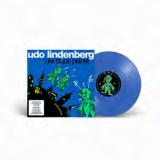
Mit echten Raritäten, kraftvollen Balladen und sozialkritischen Texten erscheint „Der blaue Planet“ von
Udo Lindenberg am 12.12.2025, das erste Mal als blaue 10‘‘ Vinyl in streng limitierter und handnummerierter Auflage. Die B Seite bilden zwei Balladen über Freundschaft und Liebe, die die Single perfekt
abrunden.
Einer der wohl bekanntesten Songs Udo Lindenbergs ist „Cello“. Die Ballade über einen jungen Mann, der
eine Cello-Spielerein anhimmelt erschien erstmals 1973 auf dem Album „Alles klar auf der Andrea Doria“.
1997 nimmt Lindenberg „Cello“ dann erneut auf. Diesmal zusammen mit dem Filmorchester Babelsberg.
Zusammen schaffen sie das Album „Belcanto“. Jetzt kehrt ein Stück Musikgeschichte zurück. Zusammen
mit den zeitlosen, emotionalen Balladen „Bis ans Ende der Welt“, „Du und ich – und dann ganz Lage
gar nichts“ und „Die kleine Zockerin“ in orchestraler Aufmachung, gibt es die Single jetzt erstmals streng
limitiert und handnummeriert auf 10“ Vinyl mit neuem Cover in Anlehnung an das kraftvolle originale
Album „Belcanto“.
Lindenberg besingt in „Club der Millionäre“ in alter Udo-Manier den Wunsch, reich zu sein. Der Song
war die erste Single-Auskopplung von Udos Hommage-Album an seinen Vater, „Gustav“. Die Single erscheint nun zum ersten Mal als 10‘‘ Vinyl in Gold, streng limitiert und handnummeriert. Neben dem
Titelsong sind auf der Single zudem mit „Die Augen zu“, sowie die Ballade „Niemandsland“ und der HipHop Track „Wo ich meinen Hut hinhäng“ enthalten.
Mit echten Raritäten, kraftvollen Balladen und sozialkritischen Texten erscheint „Der blaue Planet“ von
Udo Lindenberg am 12.12.2025, das erste Mal als blaue 10‘‘ Vinyl in streng limitierter und handnummerierter Auflage. Die B Seite bilden zwei Balladen über Freundschaft und Liebe, die die Single perfekt
abrunden.
Einer der wohl bekanntesten Songs Udo Lindenbergs ist „Cello“. Die Ballade über einen jungen Mann, der
eine Cello-Spielerein anhimmelt erschien erstmals 1973 auf dem Album „Alles klar auf der Andrea Doria“.
1997 nimmt Lindenberg „Cello“ dann erneut auf. Diesmal zusammen mit dem Filmorchester Babelsberg.
Zusammen schaffen sie das Album „Belcanto“. Jetzt kehrt ein Stück Musikgeschichte zurück. Zusammen
mit den zeitlosen, emotionalen Balladen „Bis ans Ende der Welt“, „Du und ich – und dann ganz Lage
gar nichts“ und „Die kleine Zockerin“ in orchestraler Aufmachung, gibt es die Single jetzt erstmals streng
limitiert und handnummeriert auf 10“ Vinyl mit neuem Cover in Anlehnung an das kraftvolle originale
Album „Belcanto“.
Lindenberg besingt in „Club der Millionäre“ in alter Udo-Manier den Wunsch, reich zu sein. Der Song
war die erste Single-Auskopplung von Udos Hommage-Album an seinen Vater, „Gustav“. Die Single erscheint nun zum ersten Mal als 10‘‘ Vinyl in Gold, streng limitiert und handnummeriert. Neben dem
Titelsong sind auf der Single zudem mit „Die Augen zu“, sowie die Ballade „Niemandsland“ und der HipHop Track „Wo ich meinen Hut hinhäng“ enthalten.
Mit echten Raritäten, kraftvollen Balladen und sozialkritischen Texten erscheint „Der blaue Planet“ von
Udo Lindenberg am 12.12.2025, das erste Mal als blaue 10‘‘ Vinyl in streng limitierter und handnummerierter Auflage. Die B Seite bilden zwei Balladen über Freundschaft und Liebe, die die Single perfekt
abrunden.
- A1: Cheek To Cheek
- A2: Again
- A3: Dream
- A4: Under The Paris Sky
- B1: Nearness Of You
- B2: You You You
- B3: Love Her
- B4: Stompin' At The Savoy
This album marks the beginning of Chiemi Eri's popularity, which continues to transcend generations and borders.
Seven vinyl titles focusing on jazz have been released simultaneously! Featuring jazz master Carl Jones, this is Chiemi Eri's signature jazz album.
It features a balanced mix of solo tracks by Chiemi and Carl, as well as duo numbers.
- Silk Chiffon (Feat. Phoebe Bridgers)
- What I Want
- Runner's High
- Home By Now
- Kind Of Girl
- Handle Me
- No Idea
- Solid
- Anything But Me
- Loose Garment
- Shooting Star
MUNA sind magisch. Welche andere Band hätte das verlorene Jahr 2021 mit Pailletten und Pompoms geprägt - und dich dabei ganz nebenbei zum Singen bringen können (und vielleicht sogar zu glauben), dass "Life's so fun, life's so fun" ist? All das während der vielleicht unruhigsten Phase deines Lebens? "Silk Chiffon", der Instant-Hit von MUNA mit Labelchefin Phoebe Bridgers, schlug wie ein doppelter Regenbogen in den grauen Himmel der anderthalbjährigen Pandemie ein. Pitchfork nannte es einen "Strudel von Schmetterlingen im Bauch", NPR einen "Queerwurm", der US-Rolling Stone "eine der süßesten Melodien des Jahres, die die Art von purer Pop-Seligkeit ausstrahlt, die so viele Bands anstreben, aber fast nie richtig hinbekommen." Für MUNAs Gitarristin und Produzentin Naomi McPherson war es ein "song for kids to have their first gay kiss to." Und so blühten mehrere Tausend verrückte Twitter- und TikTok-Memes auf. Seit Beginn ihrer Karriere haben MUNA den Schmerz als Fundament der Sehnsucht, als Zentrum der radikalen Wahrheit, als Teil des Erwachsenwerdens und als inhärenten Faktor der Erfahrung von Marginalität betrachtet - die Bandmitglieder gehören Queer- und Minderheitengemeinschaften an und spielen ihre Songs vor allem für diese. Gavin, McPherson und Josette Maskin - die Gitarristin von MUNA - verbindet eine bald zehnjährige Freundschaft. Sie begannen im College an der USC zusammen Musik zu machen und veröffentlichten 2017 mit der Single "I Know a Place" einen frühen Hit als eine aufgestaute Beschwörung zur LGBTQ-Zuflucht und Transzendenz. Jetzt, in ihren späten Zwanzigern, ist das Trio so etwas wie eine Familie geworden. Sie verbrachten einen Großteil der frühen Pandemie als eine Gruppe, die füreinander und für MUNA da war, selbst als sie sich über nix in Bezug auf Zukunft sicher sein konnten. Sie wurden von ihrem vorigen Label RCA gedroppt und es gab nur wenig Einkommen, kein Adrenalin, mit dem sie arbeiten konnten, keine Live-Shows mit Publikum, das sie an den Beistand erinnerte, den ihre Songs bieten können. "Muna", das selbstbetitelte dritte Album der Band, ist mehr als eine Rückkehr. Die Zeit der Unsicherheit und des offenen Hinterfragens der Band hat alles weggebrannt und ein Meisterwerk von einem Album hinterlassen - die kraftvolle, bewusste, dimensionale Leistung einer Band, die niemandem außer sich selbst etwas beweisen muss. Der Synth auf "What I Want" funkelt wie eine ROBYN-Tanzflächenhymne; "Anything But Me", das im 12/8-Takt galoppiert, erinnert an SHANIA TWAIN im Neonlicht der Achtziger; "Kind of Girl" mit seinem aufsteigenden, klagenden THE CHICKS-Refrain bittet darum, mit deinen besten Freund*innen bei maximaler Lautstärke gesungen zu werden. MUNA arbeiteten mit dem Quellcode des Pop, der das Herz berührt - das Album ist voller Sehnsucht und Offenbarung und hart erkämpfter Freiheit.