sentiment is a meditation of the poignant emotional terrains of loneliness, nostalgia, sentimentality, guilt, and sex. The album"s narrative arc is guided by delicate musical gestures and artistic vulnerability, audaciously synthesizing disparate and unexpected influences. claire rousay is a singular artist, known for challenging conventions in experimental and ambient music forms. rousay masterfully incorporates textural found sounds, sumptuous drones and candid field recordings into music that celebrates the beauty in life"s banalities. Her music is curatorial and granular in detail, deftly shaped into emotionally affecting pieces. rousay"s vocals and guitar take center stage on sentiment. Her intimate, diaristic lyrics contrast with her mechanical-inflected vocal effects, emphasizing a powerful desire for connection, a deep yearning and a lingering sense of separation. The spare guitar playing and laconic tempo both drive the songs and exude a sense of resignation. Her delicate mastery of nuance draws on her explorative musical past that she, with sincerity and admiration, seamlessly interweaves into her adventurous textures and distinctive compositions. "I want to belong to the worlds and communities I look up to. Same as someone using a Fender guitar or dressing like Kurt Cobain. Emulate your heroes," says rousay. The album balances the poetic soul of her influences with a documentarian heart, rousay capturing moments of her life while living alone in houses across the country, learning to play guitar, and reconnecting with pop music. Her innate ability to conjure pure feeling from sound derives from her delightful embrace of pop forms, the vulnerability found in field recordings, minimalistic arrangements and innovative sound choices. sentiment is blissfully, achingly melancholic, and an undeniably sensual listening experience.
Buscar:nu balance
The opening track to the Alan Parsons Project’s Eye in the Sky remains the most recognized instrumental in sports—fanfare inseparably tied with introducing NBA legend Michael Jordan and his six-time world-champion Chicago Bulls mates before games, and still used by many teams as an energy-raising prelude. Indeed, the subdued grandiosity, cosmic bluster, and lights-out wonder of “Sirius” sets the table for the band’s smash 1982 album, whose hallmark smoothness, lushness, and balance extend to the music’s exquisite song writing, dreamy emotions, and underlying orchestral scope. Credit for the record’s craft, cohesiveness, and accessibility also falls to Alan Parsons and creative partner Eric Woolfson’s knack for recruiting session pros that translate their visions with unquestioned feeling—particularly, vocalists who include former Zombie leader Colin Blunstone and soul singer Lenny Zakatek.
Mastered from the original master tapes, Mobile Fidelity’s RTI pressed 180g 45RPM 2LP version of Eye in the Sky features succulent warmth, magnificent balance, low-end heft, and see-through transparency that take you into the studio with Parsons at Abbey Road Studios. Each note seems perfectly placed, every sequence painstakingly considered. Boasting front-to- back depth, concert-hall-level separation, realistic presence, and bang-on accuracy. This release will test the capabilities of the world’s finest stereo systems. There’s more information, more texture, more nuance— more of everything to be experienced. British progressive rock would never again sound so sophisticated, suave, or steady.
Following a ten-year hiatus, multi-instrumentalists Rafael Anton Irisarri and Benoît Pioulard return with »How to Color a Thousand Mistakes«, their third LP together as Orcas. Building on the electronic minimalism of »Orcas« (2012) and the Twin Peaks-inspired haze of »Yearling« (2014), the duo have expanded their sound and vision into a full-spectrum ensemble.
In the time since their last major collaboration, Irisarri and Pioulard have done plenty on their own, while also traversing significant life changes: relocation from Seattle to New York, separation and divorce, illness, hospitalizations, and the loss of siblings, parents, and friends. Yet from these tribulations, they gleaned inspiration to reconstruct their lives, creating music with new collaborators and partners. Recorded in a variety of studios and cities including Brooklyn, Cambridge, Oxford, Seattle, and upstate New York, the resulting album, under the tutelage of UK producer James Brown (Arctic Monkeys, Kevin Shields, Nine Inch Nails), is a patiently-crafted beast, equally inspired by impressionism, British new wave, and dream pop.
With Irisarri’s guidance and Brown’s encouragement, Pioulard brings his velvety voice to its harmonized peak on songs like »Wrong Way to Fall« and the Durutti Column-indebted »Fare«. Where his most recent solo albums for Morr Music (»Sylva« and »Eidetic«) navigated foggy forests of ambient pop and stacked tape loops, here his characteristic blur shifts into focus with a unique degree of clarity and confidence. »How fare against balance do I / Navigate my errors?«, Pioulard sings in a heartbreaking tenor, echoing the album’s broader themes of introspection, grief, loss, trial and trauma.
Lead single, »Riptide«, is a summary of Pioulard’s life changes and personal upheavals in the past decade, »flitting eastward toward a yen deep in the past« and learning to glide through the tumult of ocean waves, as a metaphor for the punches one takes in pursuit of grace. Its towering, key-changing midsection arrives with the monumental drumming of Slowdive’s Simon Scott, a long-time friend and cohort who appears on most songs in the set. Scott’s quintessentially English, jazzier approach offers a balance of force and restraint as the backdrop for Irisarri’s majestic guitars, analog synth lines, and Martin Heyne’s Fender Rhodes counterpoints.
Second single, »Next Life«, began as a sketch by Scott, and reached its final form in the hands of Pioulard and Irisarri, at a point that each had endured major concurrent losses, finding a commonality in the need to gaze over the horizon while acknowledging the unavoidable bittersweetness of letting go – not only of people, but of routines, places, and expectations. It’s one of Orcas’ most nuanced pieces, with a mid-tempo, sunset glow that unfolds into a sparkling, slide-guitar finale as it disappears in the rear view.
On third-act highlight, »Bruise«, Scott is doubled on the drum kit by MONO’s Dahm Majuri Cipolla, whose Liebezeit-influenced metronomy anchors a nimble bass groove from Andrew Tasselmyer (of Hotel Neon), and some of the album's most syncopated, spaced-out interplay, courtesy of Puerto Rican guitar player Orlando Méndez (a childhood friend of Irisarri’s). Originally a droney, fingerpicked guitar demo, »Bruise« is the most storied composition here, having gone through almost a dozen versions and lyrical edits, with Brown distilling hours of improvised performances into the final arrangement.
Throughout »How to Color a Thousand Mistakes«, Irisarri uses his deep well of production experience to paint the stereo field with meticulously designed textures, exemplified on the slow burn of »Heaven’s Despite« and the heady rush of »Swells«. As a mixing and mastering engineer with Black Knoll, he has built a client list that reads as a who’s-who of modern, forward-thinking composition, including Temporary Residence, All Saints Records, and Ghostly International, among many others.
As with previous collaborations, Irisarri and Pioulard bring disparate styles and specialties to the table, but with an interpersonal dynamic that transcends friendship into brotherhood, their open-minded workflow and mutual respect are evident at every turn. »How to Color a Thousand Mistakes« brims with tight, complex art rock songwriting, masterful production, and sonic versatility, informed by a plethora of genres and tonal hues. The title might promise answers, but the gravitational center of the album is the dawning realization that, as you reckon with the infinite whims of the cosmos, there could be none.
Die psychedelischen Hardrocker WORSHIPPER haben mit ihrem dritten Album "One Way Trip" ihren grandiosen Balanceakt zwischen klassischem Hardrock und Old School Heavy Metal perfektioniert, dem die Truppe aus Boston, Massachusetts durch eine gesunde Dosis Psychedelika zu einem rauschenden Höhenflug verhilft. Sowohl Rock als auch Metal drehen sich vor allem um die Hooks und Riffs der Gitarren, die das amerikanische Quartett als echte Leckerbissen in üppigen Portionen auftischt. Textlich werfen WORSHIPPER einen kaleidoskopischen Blick auf den menschlichen Zustand durch eine psychedelische Linse. Dabei wurde die Reihenfolge der Tracks durch den psychologischen Horror Thriller "Jacob's Ladder (In der Gewalt des Jenseits)" beeinflusst, in dem ein Veteran des Krieges in Vietnam von Flashbacks und monströsen Visionen geplagt wird, durch die das Album ein loses zirkuläres Konzept erhält. Als WORSHIPPER im Jahr 2014 gegründet wurden, war es für Sänger und Gitarrist John Brookhouse, Schlagzeuger Dave Jarvis, Bassist und Backgroundsänger Bob Maloney und Gitarrist Alejandro Necochea von Anfang an klar, dass sich ihre neue Band angesichts der hohen Konzentration gleichgesinnter und talentierter lokaler Kollegen deutlich abheben musste. Mit dem Ziel, etwas aufregend Neues auf den Tisch zu bringen, setzte die immer noch intakte Originalbesetzung auf makelloses, berauschendes und wuchtiges Material, mit einem Fokus auf das Schreiben von echten Songs mit eingängigen Melodien, unheimlichen Gesangsharmonien und Doppelgitarren-Großtaten. WORSHIPPERs Talent für eingängiges, episches Songwriting blieb nicht lange unbemerkt, und schnell hatten die Amerikaner einen Plattenvertrag in der Tasche. Es dauerte nur wenig länger, bis die universell gepriesenen Alben "Shadow Hymns" (2016) und "Light in the Wire" (2019) für weltweite Bekanntheit sorgten. Mit "One Way Trip" können WORSHIPPER nicht nur die hohen Erwartungen erfüllen, die an ihr drittes Album geknüpft waren, sondern die Bostoner haben hörbar Spaß daran, genau das zu tun, was sie am besten können: Großartige Songs für ein Album schreiben, das nur Volltreffer enthält!
Decoy is a 1984 album by the famous jazz musician Miles Davis, recorded in 1983. Robert Irving III on keyboards took over the role that Miles had assumed with a true sense of harmony and only a rudimentary mastery of synthetic sounds and movements. Irving shared the responsibilities of directing with the trumpet player’s nephew Vince Wilburn, Jr., but Al Foster continued to lead the tempo. John Scofield drew the funk of bassist Darryl Jones in the direction of chromatic abstraction. The two tracks that he co-wrote with Miles are fragments of solos: “That’s What Happened” reprising the beginning of his solo on “Speak” (Star People). Decoy offered a good balance between the dominant funk that subsequently took over and the jazz tradition, reflected by Scofield’s angularities, Marsalis’ freedom of tone and the breath of Miles’ playing that had recovered its full power. Decoy is available as a 40th anniversary edition of 2000 individually numbered copies on smokey coloured vinyl, housed in a gatefold sleeve.
Das Debütalbum von VUUR & ZIJDE ("Feuer & Seide") dreht sich auf bemerkenswerte Weise um Themen wie bedingte und bedingungslose Liebe - und den Unterschied zwischen diesen, die Befreiung von Intimität und Mutterschaft. Mit "Boezem" ("Schoß", wörtlich: "Busen") lehnt es das niederländische Quintetts höflich ab, die ewigen Heavy Metal-Klischees zu bedienen. Obwohl die Niederländer im Black Metal verwurzelt sind und deren Mitglieder in so etablierten Bands wie LASTER, NUSQUAMA, SILVER KNIFE, GREY AURA, WITTE WIEVEN und TERZIJ DE HORDE gespielt haben oder weiterhin dabei sind, haben sie ihren stilistischen Kurs seit dem Split-Album mit IMPAVIDA (2020) korrigiert. Die Entwicklung von einem Trio zu einem 5-köpfigen Ensemble hatte eine größere Bandbreite an Einflüssen und Ideen zur Folge. Die subtilen Veränderungen auch der Produktion reichen aus, um einen Teil des neuen Sounds in der spannenden aktuellen Evolution des Post-Black Metal zu verorten. Die schwarze Seite der Musik drückt sich hauptsächlich in wirbelnden Schlagzeugattacken und surrenden Gitarrenriffs aus. Doch "Boezem" baut noch auf einer weiteren starken Säule auf, denn die Band nennt auch Acts wie COCTEAU TWINS und sogar DEAD CAN DANCE als wichtige Einflüsse, die beide im Post-Punk begannen und sich dann zu verträumteren, meditativen Klängen weiterentwickelten. Synthesizer-Sounds sowie die schöne, warme Stimme von Sängerin Famke tragen offensichtlich zu dieser anderen Seite von VUUR & ZIJDE bei. Die Sängerin zeichnet auch für einige Texte verantwortlich, die in Frysk (Friesisch) verfasst sind. Diese alte germanische Sprache wird noch immer in einigen niederländischen und deutschen Nordseeküstengebieten gesprochen, die sich bis zur dänischen Grenze erstrecken. Alle anderen Texte sind auf Niederländisch verfasst. Mit "Boezem" gelingt VUUR & ZIJDE ein perfekter Balanceakt zwischen ihren gegensätzlichen Polen. Die aggressive Seite mit schwarzen, zum Post-Black Metal verwandelten Elementen kontrastiert mit der lichten Seite von Shoegaze, Post-Punk und Wave. Beide Seiten kreisen in einem endlosen Tanz umeinander, der faszinierende neue Musik hervorbringt. "Boezem" erstrahlt voller Schönheit und ist doch wie eine schwarze Rose zugleich von Dornen übersät.
Joe Pernice has been writing for a long time—most of his life, in fact—and has crafted a remarkable catalog that boldly reinterprets and recasts classic American pop. Who Will You Believe may be his most moving and nuanced album yet; it’s certainly his timeliest. “These songs were all written during the same time period,” he says, “and they all seemed to tap into a mood I was in at the time. I go through spells where I’m a certain way for three or four months. I might be more reticent than usual, or more outgoing. With all of my records—and especially with this one—the songs all feel like they belong together, probably because they all arrived during the same stretch of time.”
In a single six-month stretch he was left reeling from the deaths of three close friends, including David Berman, poet and songwriter for Silver Jews and Purple Mountains, and Gary Stewart, the Rhino Records co-founder and tireless Pernice Brothers supporter since their first album in 1998. “That was such a bad patch when David and Gary both took their own lives. And my cousin Joe Harvard, who started Fort Apache Studios in Boston and was like a brother to me—he died, too. It was such a tough year. I was thinking about them a lot and watching how divided America had become. I was doing my best to try and take nothing for granted.”
Pernice has been releasing albums for over 25 years. And with age comes a greater patience and an immense appreciation for the act of creation. Who Will You Believe showcases a beautiful balance between such sadness and moments of solemnity with warm humor and camaraderie.
"When the stirring musical passions of piano virtuoso Robert Mitchell, celebrated double bassist Neil Charles, and drum wizard Mark Sanders came together as a trio in 2022, “The Flame” was born, altering sound forever.
Much like their first album, Vol. 2 is yet another sparkling contribution to the rich vibe that is British improvised music. This outstanding interplay among trio members brings together the perfect balance of adventurous improvisation, abstract rhythms, and dreamy melodies that linger oh so pleasantly in your mind. Robert Mitchell opens the album with a dedication to the woman who gave him life. He tenderly recites his beautifully written poem about the selfless sacrifice of a mother so devoted to helping others."
“This is the second half of The Flame’s debut show at Café Oto in Feb 2022,” explains Professor Robert Mitchell. “It also features my poem ‘A Son Of Windrush Reflects’ in tribute to my mother and all of the nurses who served in the UK’s National Health Service from 1948 onwards - and the ongoing Windrush Scandal (5 years and counting)."
Robert Mitchell - Piano, narration, percussion.
Neil Charles - Double bass.
Mark Sanders - Drums, percussion.
Recorded February 10, 2022 by Shaun Crook at Cafe Oto, London, UK.
Mixed and mastered by Jeremy Loucas at Sear Sound, New York City.
Illustration by Robert Mirolo.
Graphic design by Mark Smith.
- Music For Airport Zombies
- Intro The Greenzone
- Back To The Lair
- Zombie March
- Eating Vicariously
- Why Me?
- Run For It
- For A Few Days More
- Bad Brains/Zombie Wacker
- Boney Chase
- I Wanna Hold Your Hand
- Marcus Sees The Light
- Admission To Dream
- Zombie Bros
- Looking For Julie/Balcony Serenade
- Walk Through Greenzone
- Entering The Armory
- Run From Dad/Zombies United
- Run! Zombie Saves
- Marcus' Trump Stumps
- Might As Well Jump
- R Shot Alive
Marco Beltrami and Buck Sanders' score to the zom-rom-com Warm Bodies faced a tall order: their music had to balance genuinely scary moments, romantic moments, bits of comic relief, and convey the quiet despair of a post-apocalyptic world. The duo delivers on all counts: highlights include the quirky, wittily named "Music for Airports," the strangely poignant "Zombie Bros," tense cues such as "Run for It," and hopeful tracks like "I Wanna Hold Your Hand." Elsewhere, "Admission to Dream" and "Looking for Julie/Balcony Serenade" add more depth and atmosphere to the proceedings . Marco Beltrami and Buck Sanders have collaborated in creating numerous soundtracks, including that of The Hurt Locker, for which they received an Oscar nomination for the best soundtrack in 2010.
Step into the unknown with URN's latest masterpiece, 'Surprise Me.' In this kaleidoscope of sound, genres intertwine like threads in a tapestry of boundless creativity. Led by the enigmatic Jakub Volovar, each track is a journey into the depths of emotion and imagination.
From haunting melodies to pulsating rhythms, 'Surprise Me' defies classification, inviting listeners on a sonic adventure through uncharted territory. Like a meticulously crafted collage, it weaves together elements of jazz, trap, and beyond with effortless grace.
While a sense of doom lingers in the shadows, it never overwhelms; instead, it adds depth and texture to an already mesmerizing landscape. With 'Surprise Me,' URN proves once again that true art knows no boundaries.
- A1: Qu'attendez Vous De Moi ?
- A2: The Most Beautiful Sample
- A3: Betty
- A4: Life In A Bachelor Studio (Feat. Ghostown)
- B1: Behind The Jukebox
- B2: My Chevrolet Byscayne
- B3: The Stranger (Feat. Andrre & Astrid Van Peeterssen)
- B4: Psychoanalisis
- C1: Bonsoir Et Bonne Chance (Feat. Josh Martinez)
- C2: Kolkata
- C3: Hey Yo!
- C4: I've Got An Opportunity
- D1: Blues Champion
- D2: La Découverte
- D3: A Dreaded Sunny Day (Feat. Ceschi)
- D4: Une Nuit Avec Elle
As the years go by, the ranks of Degiheugi's fans continue to swell: each time a new solid-gold disc is added to their already impressive discography, the result is a unique and impressive work in the French beatmaking landscape.
Endless smile, the sixth instalment, once again proves to be a great vintage, immediately limpid, but above all long in the mouth, charged with intense melodic persistence and loops that take the ear hostage.
And what a variety of aromas in the art of sampling: languorous strings, oriental flutes, bouncy brass, exotic percussion, intimate piano, samples of antediluvian blues or forgotten French chanson. This Grand Ouest varietal finds its perfect balance in a classic, timeless hip-hop spirit that runs like a red thread throughout the album.
When other beatmakers give in too quickly to the sirens of the dancefloor, Degiheugi always transports us back to his first hip-hop loves, for the pure pleasure of the “beautiful loop”. And he knows how to surround himself with the right people: his guests, whether faithful compatriots (Ghostown, Andrre, Astrid Van Peetersen) or newcomers (Ceschi, Josh Martinez), join in the party with high-flying featurings. The album title sounds like a prophecy: smile eternally as you listen to Degiheugi.
Two versions available - limited hand numbered (100 copies) of red vinyl and normal black vinyl version.
"Balance", the artist's third album, is a return to the roots, i.e. towards club sounds - on the album you can hear several amazing guests - Dominik Płonek, YANA, Dizkret, Runforrest, Einar Indra from Iceland and DJ Eprom. A unique mix of artpop with sophisticated electronics, which Envee brought together with its amazing mixing and mastering. For dessert, Barrakuz, which took the title "Balance" from Wojtek Koziar's photo to a new dimension with its collage. Everything is perfect on this album.
LP, 2024 Repress - half speed mastering
"The 50 best IDM albums of all time"
Pitchfork
"A liquidy headbox of aural shapes, whose forms hardly change yet seem to encompass infinite viscosity within them, like rainbow pools of oil on water"
Wire
"Before IDM became a nation of Aphex and Autechre cosplayers, the genre was less defined by aesthetics than by a shared ideology. Here was a loosely connected axis of post-rave kids, united by little more than a shared willingness to subvert the tools of their techno idols and create sounds that hadn't previously been imagined. No record of the era better embodies this find-a-machine-and-freak-it ethos than Islets in Pink Polypropylene, the otherworldly debut by British producer Anthony Manning."
Pitchfork
"It’s refreshing to hear an all-electronic album that sounds so organic yet so totally alien."
Fact
"One of the UK’s first post-rave ambient records proper; sharing much more in common with Autechre’s Amber or AFX’s Selected Ambient Works Vol. II - which were both released in that same year - than anything else before or around it."
Boomkat
For fans of avant everything innovative and experimental music.
About The Album>>>>
The whole album was composed and realized on the Roland R8 drum machine. It followed the same process as the Elastic Variations pieces, with the major addition of many, many hours of editing.
Each piece was composed as a series of patterns, of varying lengths ( 5,6,7 bars long ). The stock R8 sounds were embellished with one of several ROM sound library cards ( mostly the Dance card, number 10 ).
These patterns were created by tapping out a rhythm, then, in real time, using the Pitch slider as the pattern looped, to create improvised melodies for each of the pattern's voices.
The rough version of each piece was built by stitching the patterns together as a song, listening to each addition over and over, to make sure the melodies flowed into each other in a vaguely coherent manner.
Once this initial rough structure was in place I set about fine tuning every single note.
The R8 doesn't allow you to assign a pitch to a note in the conventional sense. It's not possible to assign a pitch of Middle C to the first note of the first bar. Instead, it assigns a numerical value to a note's pitch, between -4800 and +4800 ( I think those numbers are correct - that little screen is seared into my memory ).
If you restrict all notes within a piece to a multiple of, say, 400, you therefore create the possibility of a sort of scale. For multiples of 400, you have a total number of 24 permissable notes. However, most of the percussive sounds, when pitch shifted, only sounded 'good' over a reduced range.
The first editing step was to go through the entire piece, and change every note's pitch to its nearest multiple of 400.
The second step was to draw out the entire piece on graph paper, the Y axis being pitch, X being time. This drawing gave me a visual sense of a melody's flow. It was easy to see too many notes clustering around too tight a pitch range for instance, or a single note straying way down into the lower register while all others at that point in the melody were in the upper.
Once these first 'clearing-up' edits were complete I could set about re-writing elements that didn't sound right melodically. Often this meant stripping out whole chunks of superfluous notes, to reveal a cleaner melody line, then shifting its shape slightly. If the flow of the line of dots on the graph 'looked' balanced and sweetly sinuous, then often it sounded so.
This entire process took many weeks per piece. Weeks of doing almost nothing else. Listening. Re-drawing. Re-writing. Listening. Round and round and round. When I could hear the whole thing in my head, from beginning to end, and nothing seemed to jar ( too excessively ), I knew it was done, time to move on.
I imagine it's very similar to the process of stop animation. Your days are filled with painfully tiny incremental changes that seem to be getting nowhere. Then, slowly, a shape, narrative, starts to appear. Then, all of a sudden, somehow, it's done.
When all the pieces were complete the R8 was taken into Irdial's studio where some simple effects were added, each voice recorded individually for clarity onto 8-track tape and mastered onto an ex-BBC half-inch tape deck.
Then I slept. And vowed never to do it again.
*****
And the title ?
Soon after finishing the pieces I happened to read a magazine article about Christo's "Surrounded Islands" installation with the music playing in the background.
There was something about a particular cluster of words within a random sentence that seemed pleasing and somehow appropriate.
"Islets in Pink Polypropylene" seemed to make as much sense as anything else.
A Haunted Tongue is the third album by Colossal Squid, the solo project of producer/virtuoso drummer Adam Betts (Goldie, Squarepusher, Melt Yourself Down, Jarvis Cocker). The first self-titled Colossal Squid album (2016) was intended by Betts as a way of exploring the process of creating music from purposefully limited tools (a drumkit and electronica) and finding a place where technology and live performance could happily meet. In comparison, the second album Swungert (2019) acted as a chance to see if the music written from that same process could be moulded (via collaboration and editing) into something more traditionally recognisable as a ‘song’. A Haunted Tongue moves things on one step further, letting the process and approach fade into the background, freeing Betts to balance a million inspirations (early 90s Warp, rave tapes, Nubian drumming, Indonesian gabba…) and filter them through an anything-goes punk aesthetic that results in a feeling of freedom that is both refreshing and rare. Betts has spoken of “a recurring dream of a stranger trying to get across an important message but not talking in any discernible language” that guided these recordings. This feels appropriate to the listener – the language of A Haunted Tongue isn’t straightforward or easily classified but yet the message is clearly understood and embraced by the listener at a primal level. That message is one of hope - channelling the shared euphoria of communal musical experience and searching for an uncynical and personal expression of positive energy that can move people and resonate with them. “A while back we had a chat with JR Moores, he was doing a Bandcamp piece on the label. We mentioned we wished we did more rave-related releases. Within seconds we had the Johnny Broke album in our inbox. Johnny Broke is actually Wayne Adams. Wayne messaged and told us about Adam Betts (AKA Colossal Squid). And here we are, dealing with someone who drums for Squarepusher and Goldie. Both Chris and I have the biggest love for 90s rave music. For me (Joe) I'm listening to an alternative world that I was old enough for but missed out on. I knew the music but didn't have the knowledge to drive around the M25 looking for the fields. It's a history I don't quite have but feel like I do. It's like the Beatles: known all my life but no idea why. It's cut into our DNA. It was our punk rock but we missed it. This Colossal Squid album, no matter how many times I listen to it, brings something new every time. And it makes me feel like I'm finally there” – Wrong Speed HQ
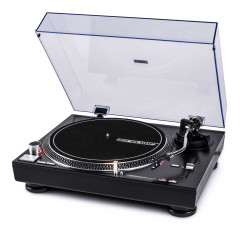
The RP-4000 MK2 is a solid DJ turntable for advanced users. The new MK2 version comes with several improvements, including a newly developed top panel and reworked metallic buttons with enhanced feel as well as a variety of functions. Precise motor control with 3 speeds: The precision-engineered die-cast platter is accelerated by a powerful motor with a high-torque direct drive of more than 1.8 kg/cm. The precise motor control with 3 speeds (33 1/3, 45 & 78 rpm) allows for the RP-4000 MK2 to play back any record. The pitch section with a selectable range of +/-8% and +/-16%, respectively, is suitable for the finest pitch adjustments. Statically balanced s-shaped tone arm: The RP-4000 MK2 features a statically balanced s-shaped tone arm with hydraulic lift and anti-skating mechanism. Via the universal connection for pick-up systems (SME) a large number of pick-up systems can be connected. Reverse function, pitch reset and extendible needle illumination: Additional features, such as reverse play and pitch reset, offer all DJs direct control of their turntable. With the push of a button the aluminium target light can be extended, so that the needle position can be seen in dark surroundings. Newly developed top panel and sturdy housing design: The new deep black metallic top panel construction is equipped with metallic buttons for start/stop, platter speed, pitch control, reverse function and tempo reset. The improved touch upon hit offers a clear haptic feedback. The sturdy construction with optimized damping features and shock-absorbing feet improve isolation from unwanted vibrations. With pick-up and headshell (made by Ortofon in Denmark): The RP-4000 MK2 comes with the high-quality OM Black pick-up, handmade by Ortofon in Denmark, pre-fitted to a headshell ready for immediate playback.
Technical data Turntable:
Type: direct drive turntable
Drive: quartz-driven high-torque direct drive
Motor: 8-pol., 3-phase, brushless DC motor
Turntable speeds: 3 speeds, manual (33 1/3, 45, 78 rpm)
Starting torque: > 1.8 kg/cm
Brake time: 50 dB (DIN-B)
Brake system: electronic brake
Platter:
Material: aluminium die-cast
Diameter: 332 mm
Tone arm:
Type: universal, statically balanced, s-shaped
Effective length: 230.5 mm
Overhang: 16 mm
Tracking angle error: < 3°
Applicable pick-up weight: 3.5 - 8.5 g (incl. headshell 13 - 18 g)
Anti-skating range: 0 - 7 g
Connections:
1x PHONO out (gold-plated), 1x GND
General:
Power supply: AC 115/230 V, 60/50 Hz (EU/US), AC 100 V, 50/60 Hz (JP)
Power consumption: 12 W
Dimensions: 450 (w) x 352 (d) x 144 (h) mm
Weight: appr. 9.8 kg
Included accessories:
Platter, OM Black pick-up system (by Ortofon), headshell, slipmat, counterweight, AC psu, instruction manual
Features
NEW in the MK2 version:
Newly developed top panel and reinforced housing construction
Reworked metallic buttons with improved feel & tactile response
Precision Pitch with selectable ranges of +/-8 % & +/-16 %
Tempo reset (Quartz Lock) feature
Superior finish in deep black metallic
Quartz-driven DJ turntable with high-torque direct drive
Designed for professional use
Powerful brushless DC motor with more than 1.8 kg/cm torque
Precise motor control with 3 speeds selectable (33 1/3, 45 & 78 rpm)
Reverse function: switch for forward/reverse playback
Precision-engineered die-cast aluminium platter with stable rotation
Statically balanced s-shaped tone arm with hydraulic lift and anti-skating mechanism
Universal connection for pick-up systems (SME)
Extendible needle illumination
Shock-absorbing feet for vibration isolation
Sturdy, heavy construction with optimized damping features
Prepared for dust cover (available as optional accessory)
Incl. slipmat, removable headshell and ready-mounted OM Black pick-up made by Ortofon
SIMON AND GARFUNKEL’S SWAN SONG: BRIDGE OVER TROUBLED WATER FEATURES METICULOUS PRODUCTION, GORGEOUS SONGWRITING, AND HEALING SPIRIT
Sourced from the Original Master Tapes and Limited to 4,000 Numbered Copies: Mobile Fidelity’s 180s SuperVinyl 33RPM LP Plays with Staggering Detail, Clarity, and Definition
1/4" / 15 IPS analogue master to DSD 256 to analogue console to lathe
Unifying, soothing, comforting: Simon and Garfunkel's Bridge over Troubled Water quickly became the album of an era upon release in 1970, the benchmark set serving as a beacon of hope and hymn of reassurance during a time marked by polarizing changes, social unrest, uncertain politics, and the dawn of a new era. These uplifting reasons — to say nothing about the gorgeous songwriting, meticulous production, and watershed performances — attest to why it is more relevant than ever in our current climate. Music, Bridge over Troubled Water simultaneously suggests and proves, heals all wounds and lifts all boats.
The seminal effort Rolling Stone named the 51st Greatest Album of All Time reaches illustrious sonic and emotional heights on Mobile Fidelity’s 180g SuperVinyl 33RPM LP. Pressed on MoFi SuperVinyl and strictly limited to 4,000 numbered copies, this ultra-hi-fi collector's edition brings you closer to music that picks up where the duo's Bookends leaves off. You'll enjoy deep-black backgrounds and pointillist details. Seemingly every note, breath, and movement is reproduced with exquisite accuracy, clarity, and balance. Each rotation benefits from SuperVinyl’s ultra-low noise floor and superb groove definition.
The best-selling record in the U.S. for several years running and winner of six Grammy Awards — including nods for Record of the Year, Album of the Year, Song of the Year, and Best Engineered Recording — Bridge over Troubled Water endures as a staple of accessible sophistication, angelic elegance, effortless singing, unhinged ambition, and therapeutic spirit. While it would turn out to be the final studio set for a duo surrounded by creative and personal disagreement, Simon and Garfunkel's collaborative ethos and soaring harmonies — combined with reflective narratives centred on the American experience, friendship, romance, and farewells — combine to turn the 11-track work into a paean to resolution, reconciliation, calm, and balance.
Home to the legendary title track graced by Garfunkel's pacifying solo lead vocals as well as the equally famous folk ballad "The Boxer," Peruvian-based "El Condor Pasa," upbeat "Cecilia," and rock ’n’ rolling "Baby Driver,” Bridge over Troubled Water remains as renowned for its musical diversity as its lyrical poignancy. Moving beyond the templates they'd perfected on four prior albums, Simon and Garfunkel embrace a then-unimaginable swath of styles. Rock, pop, gospel, country, R&B, South American, and jazz strains course throughout the songs, each sparked with bold experiments yet grounded in a well-orchestrated melange of melody, rhythm, and classicism that makes everything personal, familiar, and warm.
Not for nothing is Bridge over Troubled Water one of the finest-sounding albums ever made. Featuring instrumentation helmed by members of Los Angeles' fabled Wrecking Crew as well as multiple choral and string sections, songs took hundreds of hours to complete and involved pioneering recording techniques. Evoking both Phil Spector's live"Wall of Sound" approach as well as inventive effects, Bridge over Troubled Water is a triumph of texture, atmosphere, and architecture. Our audiophile edition brings the record's unique traits to the fore.
Whether the reverberation generated by Garfunkel's cassette recorder on "Cecilia," echoing drums captured in a corridor heard throughout "The Boxer," automobile noises peppering "Baby Driver," layer upon layer of voices dotting "The Only Boy Living in New York," or echo-chamber percussion on the title track, details comes through with stunning accuracy, clarity, and dimensionality. In every regard, Bridge over Troubled Water exudes genius.
The concept behind the entire EP revolves around the power of scents, exploring how smells evoke emotions and memories from the past. Doci's fascination with scents and molecular fragrances inspired him to create an EP centered on the emotional experiences tied to different scents. Have you ever noticed how a fragrance can transport you back in time, bringing a rush of memories before your eyes? This EP is born from that very sensation. Needless to say, Doci's infatuation with fragrances significantly contributed to the effectiveness of the project. Hedione (Intro): Begin your odyssey with "Hedione," an atmospheric IDM/Experimental track. This floral molecular scent-inspired introduction gently ushers you into the EP's sensorial realm, setting the stage for a unique auditory adventure. Iso E Super & Ambroxan: Explore the intricate layers of musky, woody, and ambery scents in "Iso E Super" and "Ambroxan." These tracks, weaving through Break/Electro/Drum n' Bass genres with subtle Techno accents, offer a sonic journey that mirrors the nuanced edges of their aromatic inspirations. Each note captures the essence, presenting a balanced dance of rough and light tones. Javanol: Experience the raw energy of "Javanol" a leftfield/break Techno exploration. Reflecting the rough and woody facets of its scent inspiration, this track unfolds with aggressive synths and sounds, immersing you in a visceral encounter. Doc's musical interpretation captures the intensity of scent, creating a distinctive and bold auditory expression. In this EP, Doci skillfully translates fragrance into sound, inviting listeners on a textured expedition through scent-inspired composition
"Palm Reader", das zweite Album der Texaner HIGH DESERT QUEEN, strotzt geradezu vor roher Kraft und dem Donnern von gefühlt 666 heißblütigen Dieselpferden. Der Langspieler steckt voll von coolen Vibes, packenden Leads und jeder Menge Desert-Feeling. Dabei liegt der Fokus der Wüstenrocker auf großartigen Songs, statt sich hinter Genre-Zäunen zu verstecken. Diese ungezähmte Attitüde fand den Zündfunken für ihre sprudelnde Energiequelle auf der letzten Tour. Als die Band nach sechs Wochen auf Europas Straßen und Bühnen mit den legendären FATSO JETSON nach Texas zurückkehrte, hatte sie sich von deren allabendlichen Improvisationen und Jamsessions inspirieren lassen und zahlreiche Ideen notiert. Trotz Jetlag konnten es HIGH DESERT QUEEN kaum erwarten, mit neuen Aufnahmen zu beginnen. Dabei konzentrierte sich die Truppe weniger darauf, wer bestimmte Parts wie einspielte, sondern sie erlaubte sich Unvollkommenheit und ließ den Click weg. Frei von künstlichen Schranken begann ihre Musik so frei zu fließen wie nie zuvor. Schon bei der ersten Studiosession nach der Tournee entstanden gleich drei neue Songs. Die Band aus Austin, Texas hat den musikalischen Jackpot geknackt, und "Palm Reader" ist der schlagende Beweis dafür. HIGH DESERT QUEEN waren schon immer etwas anders und viel mehr als nur eine weitere Desert Rock Band. Von Sänger Ryan Garney und Gitarrist Rusty Miller im Jahr 2019 in Houston, Texas gegründet, rekrutierte das Duo bald darauf Schlagzeuger Phil Hook (MONTE LUNA) und zog 2020 nach Austin um. HIGH DESERT QUEEN wurde von Anfang an das Zeug dazu nachgesagt, die dümpelnde Wüstenrockszene wieder in Schwung zu bringen. Ihre vielseitigen musikalischen Einflüsse, die von Grunge bis Funk, sowie von Old School Metal bis Doom und vielen weiteren Musikstilen reichen, boten eine ideale Grundlage für neue Ideen und die nötige Verjüngung des Genres. Ihre donnernden Verzerrer-Hymnen kommen mit einer gesunden Portion Groove und eingängigen Melodien daher, die massiven Anschub durch eine seltene emotionale musikalische Intelligenz erhalten. Der frisch geprägte Sound ist dennoch eng mit dem reichen Erbe des Wüstenrocks verbunden - was in ihrer Stilbezeichnung "Texas Desert Rock" ein Echo findet. Mit "Palm Reader" vollziehen HIGH DESERT QUEEN den nächsten Quantensprung ihrer rasanten Entwicklung. Die Texaner haben die perfekte Balance zwischen den kräftigen Wurzeln ihres Genres und dem pointiert-eigenen Ausdruck gefunden. Angetrieben von Geist und Kraft der live gespielten Musik, rockt dieses Album hart und ehrlich!
Nestled beside the sea and a cluster of palm trees, La Malvarrosa, the neighborhood in Valencia where Cooper resides, derives its name from a fusion of "Malva," meaning mauve, and "Rosa," meaning pink. Here, La Malvarrosa serves as the primary backdrop for the recordings, symbolizing two distinct colors and artistic approaches.
These hues become the emblematic colors of a fictitious flag from an imagined island located on a forgotten expanse of ocean. From this ethereal site, melodies emerge, seeking to unravel the essence of certain insular music while intertwining with Cooper's post-everything sensibilities and Kòlar's minimalist electronics. "Mauve/Pink" navigates the delicate balance between playfulness, intricacy, and simplicity, blurring boundaries between tradition and innovation, reality and imagination, change and repetition.
The album serves as a showcase for contrasting methodologies and viewpoints, acting as a sonic document of an ongoing conversation between generations, where Cooper and Kòlar's efforts illuminate a boundless creative process and timeless aesthetics.
Es gibt nur einige wenige große Bands auf unserem Planeten, die man innerhalb weniger Sekunden unfehlbar identifizieren kann. Das einzigartige
Melodieverständnis, die geschmackvolle Instrumentierung, die richtige Balance aus Tiefe und Eingängigkeit, und dann natürlich diese charismatische
Stimme: Magnum sind Magnum!
Dies gilt auch für ihr neuestes Studioalbum ‚Here Comes The Rain‘, das am 12. Januar 2024 über Steamhammer/SPV als CD+DVD, Doppel-Vinyl-LP, als
Boxset und als Digitalversion veröffentlicht wird und einmal mehr beweist: Stimmungsvoller kann klassische Rockmusik kaum klingen.
Das fantasievolle Artwork stammt wie gewohnt aus der Feder des großartigen Rodney Matthews, der bereits für zahlreiche Magnum-Scheiben das
äußere Erscheinungsbild an die atmosphärisch dichte Musik der Band perfekt angeglichen hat.
Kein Zweifel: Mit ‚Here Comes The Rain‘ ist Magnum in der Besetzung Catley, Clarkin, Keyboarder Rick Benton, Bassist Dennis Ward und Schlagzeuger
Lee Morris erneut ein farbenfrohes, abwechslungsreiches und in jeder Sekunde inspiriertes neues Studioalbum gelungen.