DJ Support: Mochakk, Joseph Capriati, Jamie Jones, Purple Disco Machine, Groove Armada, Marco Carola ,keinemusik, Adrian Roman, Bill Brewster, Rino, Ruben Mandolini, Terry Farley, Nicolas Masseyeff, Echonomist, Robosonic, Nuno Dos Santos, diskJokke, Dan Marciano Jody Wisternoff / Way Out West, Eelke Kleijn, Henry Saiz, Digitalism, Sister Bliss / Faithless, Innellea, Adriatique, Judge Jules, Sam Divine, TSHA, Simone Vitullo, Joris Voorn, Tommie Sunshine, Fahlberg, Stijn D'hont / DJ Neon
D Stone is a rising force in Amsterdam’s electronic music scene, blending live instruments with electronic production to create his unique take on house music. His sound bridges true house to proto-disco and deeper percussive elements, as showcased in his release Total Unison. A passionate DJ and producer, D Stone crafts infectious tracks by combining samples with live instruments, driving dance floors with his grooves. Born into a musical family, D Stone was immersed in sound from an early age. His father’s influence exposed him to diverse musical styles, sparking his lifelong curiosity. He began playing piano at eight, learned guitar at twelve, and by fifteen discovered electronic music, exploring house as a DJ. A year later, he ventured into production, gaining recognition and landing his first gigs. Inspired by 70s and 80s disco, funk, garage, and 90s tech house, his music blends energy, groove, and soul. With his foundation in live instruments and his forward-thinking approach to electronic music, D Stone strives to create more than tracks—he’s shaping moments that linger in the minds of his listeners.
Envision remixed by DJ & producer Julya Karma Emerging from Brooklyn’s underground and now rooted in Berlin, her practice isn’t about fitting into a lane, it’s about finding what is alive and letting it shape the moment.
Across diverse stages and platforms from Coachella and Lost Village to Berghain, Cercle, Space, The Brooklyn Mirage, DGTL, Time Warp, Audio Obscura, Tomorrowland, and within the orbit of Innervisions, Julya’s performances reflect a commitment to exploration over formula, earning recognition from artists like Laurent Garnier, Dixon, Âme, Adriatique, Rüfüs Du Sol, and Sven Väth.
Cerca:nu foundation
- 1: SHE GLITTERS THE DUST
- 2: OMENIZE
- 3: GHOST CITY RADIO
- 4: HIGH IN THE ORANGE AIR
- 5: SUPERCONTINENT
The Montréal psych-ambient synth-droners return with Sequence Three, their first album in five years and the final instalment in the group's opening trilogy of records that began with Sequence One in 2019. The spectral supergroup co-founded by Stephen Ramsay (Young Galaxy) and Jace Lasek (The Besnard Lakes), usually joined in some capacity by Lasek's Besnard bandmate Olga Goreas, deliver another dose of its trademark longform slowburn jams, forged from restored vintage synths and analogue electronic gear. Lasek and Ramsay don their seasoned producer hats to apply rockist sound design to minimalist tracks, saturated with tube compression, drenched in pink and brown noise, all queasy modulation, sparse beats, and languorous melodic lines. Evoking a humid dawn on a gas giant, these alien drone anthems meld the numinous transcendentalism of Spiritualized and Cluster with the eroded grit of William Basinski and GAS. Light Conductor has been tagged "heavyweight analogue synth nirvana" by Uncut Magazine and praised for its "fabulous, epic, shimmeringly radiant kosmische" by Electronic Sound, among other accolades. Sequence Three consolidates these strengths, while leaning into the darker disquietude that has always been an undercurrent of Light Conductor's aesthetic. Opener "She Glitters The Dust" fades up slow with intertwining detuned synth loops, a languorous lullaby beat dropping at the 3-minute mark, accompanied by insectoid shimmers and a tease of melody that's eventually given free reign over the song's second half. Aptly titled, it's as if a transmission captured within a cosmic dust cloud has provided the raw material for the band to jam on, tease out, and terrestrialize. An echo of that beat sets the tranced pulse for "Omenize", the centerpiece of Side One and the fulfilment of Light Conductor's one-vocal-track-per-album directive. With layered harmonies by Goreas and Lasek, this is the group at its ethereally anthemic best, the devotional floating-in-space bliss attenuated by another gently warped denouement. "Ghost City Radio" closes out Side One with the band's most overtly anxious tune to date, deceptively stolid in its simple bass guitar riff and filter-swept hi-hat: groove stripped to its minimum as the foundation for an extended spokenword sample of a doomsaying prepper/preacher, a sort of homage to that early hallmark of their Godspeed compatriots, done up through the lens of Light Conductor's inimitably destabilized celestial ambience. (Lasek mixed the most recent two GY!BE albums.) Side Two offers up "High In The Orange Air", a beatless, squelching, bubbling ostinato drone and the album's most orthodox ambient kosmische track. This provides the set and setting for 15-minute closer "Supercontinent", which starts off in similar territory but gradually yields to a submerged and reversed techno pulse pumping through coruscated chordal drone, gaining in woozy mesmeric psych intensity over its inexorable hypnagogic trajectory. Sequence Three rounds out a satisfying trio of full-lengths that Light Conductor has released on Constellation, featuring vibrantly minimal geometric cover art designed by label co-founder Ian Ilavsky that integrates the trilogy as a visual series as well. In keeping with the previous two albums in the set, the Deluxe 180gLP includes a 12"x24" art poster. Thanks for listening.
dovrebbe essere pubblicato su 25.09.2026
Ordina ora e ordineremo l'articolo per te presso il nostro fornitore.
Mit „That’s Just Me“ veröffentlicht Riley Green sein viertes Studioalbum. Entstanden während einer prä-
genden Zeit und seiner bislang größten Tour, zeigt sich Green darauf so persönlich und vielseitig wie nie
zuvor.
Der Song „Think As You Drunk“ würdigt die Country-Legende Toby Keith, unterstreicht Greens unverwechselbaren Sound sowie seinen bodenständigen Charme und erweitert das Album um ein weiteres Beispiel
für sein meisterhaftes, generationenübergreifendes Erzähl- und Songwriting-Talent. Geschrieben wurde der
Titel von Green, Jessi Alexander, Erik Dylan, Wyatt McCubbin sowie – posthum – von Scotty Emerick
und dem unvergessenen Toby Keith, den Schöpfern des Hits „Ain’t As Good As I Once Was“. Ein Teil der
Einnahmen aus dem Song kommt der Toby Keith Foundation zugute.
Produziert wurde das Album von Dann Huff und Riley Green selbst und bleibt dabei seinem authentischen
Storytelling und Country-Sound treu. Nach sechs Nummer-1-Hits, fünf ACM Awards und vier CMA Awards
unterstreicht „That’s Just Me“ einmal mehr seinen Status als eine der prägendsten Stimmen des modernen
Country.
dovrebbe essere pubblicato su 18.09.2026
- A1: O Velho E O Mar
- A2: Mascarados
- A3: Pearl
- A4: Quando Bate Aquela Saudade
- A5: Ben
- A6: Nuvem
- A7: Quadro Verde
green vinyl[27,10 €]
Mr Bongo proudly presents a first-time worldwide vinyl and CD issue of Rubel’s debut album Pearl. Self-released on YouTube in 2013, the album quietly became a huge hit in Brazil with the lead single and accompanying video for ‘Quando Bate Aquela Saudade’ amassing over 85 million views to date. Pearl laid the foundations for Rubel’s path to greatness - a first glimpse into the brilliance of a modern-day troubadour and ever-evolving Brazilian artist who deftly mixes classic and contemporary influences. Fusing MPB, folk, pop, and indie, it charts Rubel at his purest and most personal.
The journey of Pearl begins with Rubel in his early 20’s studying film in Austin, Texas. Immersing himself in the city’s vibrant DIY music scene and surrounded by countless musicians who he shared a large house with, he set up a home studio with an assortment of rented gear and recorded the album without any expectations. It was inspired by an environment of youth, music and experimentation Rubel found himself within. The seven songs are an attempt to record and take with him a little of what he lived and learned whilst there. He uploaded the album to YouTube, didn’t think much of it and continued to pursue a career in film in LA. Over the next few years however it became a viral hit in Brazil, with a subsequent Brazil only vinyl and CD issue, drawing him both back to Rio and a trajectory to musical stardom.
Ordina ora e ordineremo l'articolo per te presso il nostro fornitore.
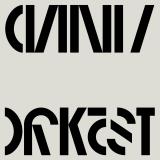
BUCHLA MEETS ORCHESTRA IN QUADRAPHONIC SPACE ON CIANI/ORKEST
Suzanne Ciani, Metropole Orkest and Simon Dobson release historic immersive performance in multiple immersive formats including quad vinyl.
Silverlake, CA \\ June 4, 2026 – Electronic music pioneer and five-time Grammy nominee Suzanne Ciani joins the internationally acclaimed Metropole Orkest, conducted by Simon Dobson, for the release of CIANI/ORKEST, a landmark live album composed entirely of new work, created specifically for this unprecedented collaboration.
Recorded at Amsterdam Dance Event (ADE) before a rapt audience, CIANI/ORKEST is not a retrospective. It is a bold, immersive meeting of the Buchla electronic instrument and 50-piece orchestral sound. The result is a sweeping sonic landscape, at once intimate and monumental.
Under the direction of the Metropole Orkest, renowned for its genre-defying collaborations with artists from jazz to contemporary classical - strings shimmer, brass swells and woodwinds echo the organic, fluid qualities that have always defined Ciani’s sound. “This project feels like a homecoming,” says Ciani. “The Buchla was always orchestral to me, an instrument capable of infinite color. Hearing those colors unfold through the Metropole Orkest has been profoundly moving.”
At the heart of CIANI/ORKEST lies Ciani’s lifelong commitment to quadraphonic sound. From her early Buchla performances in the late 1960s to her 2018 release LIVE Quadraphonic, Ciani has treated space as a primary compositional parameter. Working alongside immersive producer KamranV, Ciani continues to explore immersive sound as both artistic and human gesture. Kamran’s decades of work in spatial formats, converge here in service of a singular goal: to let sound behave as it does in the physical world. “For both of us, quad is musical,” Kamran notes. “The way Suzanne works, quadraphonic is nested in — not the technology per se — but the intent you bring to the work.”
The recording stands as a meditation on legacy, evolution, and the enduring dialogue between technology and human expression. The live album captures the electricity of performance, the immediacy of touch plates under Ciani’s hands, the collective of musicians responding in real time, and the audience’s shared immersion in quadraphonic-inspired space.
CIANI/ORKEST is released by Atmospheric/AKP Recordings/CyKiK in multiple double-disc quadraphonic 12” Record packages designed by grammy-nominated designer Rebeka Arce. Each pressing is made regionally to minimize carbon emissions and also contributes to nature via Brian Eno's EarthPercent, the music industry's climate and nature foundation.
The release is encoded using the dublab Quadraphonic Universally Accessible Resource Kit (QUARK). QUARK enables binaural listening via standard 2-channel playback or 4-speaker playback via Involve Audio hardware decoders, vintage Regular Matrix quadraphonic receivers, Dolby Pro-Logic II/Dolby Surround Upmixer (DSU) receivers, or any multi-channel audio interface equipped computer. This album is immersive via all formats: digital download, streaming (Qobuz, Spotify, SoundCloud, Bandcamp), radio broadcast, vinyl and high-resolution Dolby Atmos (Apple Music, Tidal, Amazon HD, IIA), Sony 360RA (Nugs, Amazon HD) and Eclipsa Audio (YouTube).
About Suzanne Ciani
Suzanne Ciani is a composer, pianist, sound designer, and electronic music pioneer whose work spans experimental, new age, classical, and cinematic sound. A five-time Grammy nominee and recipient of the Moog Innovation Award, she continues to perform internationally, captivating audiences with immersive modular synthesis performances.
About Metropole Orkest
Based in the Netherlands, the Metropole Orkest is one of the world’s leading genre-crossing orchestras, known for collaborations with artists including Brian Eno, Herbie Hancock, Snarky Puppy, Jacob Collier, and within contemporary classical and electronic spheres.
dovrebbe essere pubblicato su 31.08.2026
Mariá Portugal has been active in the music scenes of Brazil and Europe as a drummer, composer, singer, and music producer. After graduating in composition, she has focused her research on free improvisation and its possible intersections with popular song. This exploration resulted in her acclaimed album EROSÃO (2021) and in the formation of two groups: the EROSÃO Septet and the EROSÃO Percussion Trio, both based in Germany.
She is also a member of the group Quartabê and has toured and recorded around the world with various artists, moving between pop, free jazz, free improvisation, and Brazilian popular music. She has performed and recorded with artists such as Elza Soares, Anthony Braxton, Joe McPhee, Fred Frith, and Tomeka Reid. She is a member of Fire! Orchestra, Fire! Trio, Endless Breakfast and MONSTER.
In 2020, Portugal was the 13th Improviser in Residence at the Moers Festival. As a curator, she has participated in the Soundtrips-NRW in Duisburg and currently coordinates the concert series “TOMA CHOCOLATE!” in Berlin, besides being the guest curator for this year's unlimited Wels festival. She also composes music for dance, theater, and film, including the award-winning soundtrack for the film “1976”, which earned her the Chilean Film Academy Award in 2025. She was nominated for the 2025 and 2026 German Jazz Prize in the drums and percussion category.
Emilio Gordoa is a Mexican sound artist, percussionist, and composer whose work focuses on sound and performance as primary means of expresion. Based in Berlin since 2012, he has been an active contributor to the city’s Echtzeitmusik scene and is involved in the international avant-garde music community.
His projects include solo and ensemble performances, sound installations, and compositions for film, theater and dance. He has collaborated with a wide range of artists, including Jérôme Noetinger, Ingrid Schomliner, Yuko Kaseki, Burkhard Beins, Don Malfon, John Butcher and Sabiene Vogel. Gordoa’s approach combines experimental percussive techniques with electronic elements, leading to invitations to perform at events such as the Moers Festival, Meakusma Festival in Belgium, A’larme!, and Maerzmusik in Berlin.
He founded WildSonico, a platform for experimental music, and has been part of artist residencies at institutions like the Akademie der Künste and Kunststiftung NRW. He also worked as the Improviser in Residence for the Moers Festival. His discography includes albums such as Substantial Myths (2022), Balderi Variations (2019), and GRIFF (2021), which reflect his ongoing engagement with music. His work has been supported by organizations such as the Goethe-Institut, Musikfonds e.V., and INM - initiative neue musik berlin, and he has received recognition, including an Honorary Mention at the Prix Ars Electronica.
Burkhard Beins was born in 1964 in Lower Saxony and has been living in Berlin since 1995. He is considered a stylistically influential percussionist as a composer/performer, due to his individually developed playing techniques. Additionally, he works with analog synthesizers and live electronics, plays electric bass, and has created various sound installations.
He collaborates as a soloist, as well as with artists such as Chris Abrahams, Keith Rowe, Sven-Åke Johansson, Axel Dörner, Andrea Neumann, and many others. He is also a member of several ensembles including Sawt Out, Activity Center, Polwechsel, The Sealed Knot, Zone Null, Perlonex, Trio Sowari, Vertigo Transport, the NoWave/Krautrock band Slurge, and the Berlin Splitter Orchestra.
Since the late 1980s, he has performed concerts and participated in international festivals for experimental and contemporary music across Europe, America, Asia, and Australia. He has released more than 70 CDs and LPs in collaboration with various artists.
Burkhard Beins has been an Artist-In-Residence at the Künstlerhäuser Worpswede (2009), EMS Stockholm (2014), Muong Studios, Hoa Binh/Vietnam (2015), the Robert Rauschenberg Foundation, Captiva/Florida (2017), as well as at DAR, Drsukininkai/Lithuania (2018), and the Agosto Foundation, Prague (2019).
dovrebbe essere pubblicato su 28.08.2026
John Tchicai (1936 – 2012) was one of the most important free improvising saxophonists of the 20th Century: an artist of rare vision and aptitude whose lines soared and stood out even in the most hallowed company, and whose body of work as a leader / composer is among the most singular and distinct within the entire canon of that music. But Tchicai’s importance doesn’t end there. Born in Copenhagen, Denmark, to a Danish mother and a Congolese father, his life and career represent a crucial bridge between the European and American traditions of free jazz. Initially trained on violin as a child, Tchicai shifted his focus to the clarinet and alto saxophone during his mid-teens, and began touring Europe as a professional musician by his early 20s, which landed him at a socialist youth festival in Helsinki, Finland, where he met the trumpeter Bill Dixon and saxophonist Archie Shepp. Impressed by what they heard, Dixon and Shepp encouraged the young saxophonist to move to New York, and in so doing changed the history of jazz forever.
Tchicai’s arrival in New York marks the rare occurrence of a European player joining the intimate circle that was first wave of American free jazz. Following his landing in the city in November of 1962, in addition to regularly sitting in with Don Cherry’s group, Tchicai began playing with Bill Dixon's band alongside Archie Shepp and Roswell Rudd, forming the nucleus of the foundation of the New York Contemporary Five - one of the most important groups of the era - which counted Tchicai, Shepp, Cherry, Don Moore, and J. C. Moses as its members. From the ashes of this group, Tchicai would go on to found the legendary ensemble, New York Art Quartet, with Roswell Rudd, Milford Graves, and Lewis Worrell, as well as working within Albert Ayler's band, recording “New York Eye and Ear Control”, Shepp’s band, recording “Four for Trane”, the ensemble that recorded John Coltrane's “Ascension”, and the Jazz Composer's “Orchestra”.
By the time he decided to return to Denmark in 1966, had Tchicai chosen to record little else, his legacy within the history of music would have been ensured. Incredibly ambitious, his arrival home marked the beginning of an incredible period of activity which saw him radically expanding his creative explorations, which by the end of the decade would include becoming a founding member of Amsterdam's Instant Composers Pool and helping to record John Lennon and Yoko Ono's “Unfinished Music No.2: Life with the Lions”. This, however, was proceeded the formation of a new orchestra, Cadentia Nova Danica, led by Tchicai, dedicated to radical cross-disciplinary exploration. Remaining together between 1966 and 1971, the group and its shifting membership regularly fell into collaboration with artists and composers, notably Musica Elettronica Viva, who existed beyond the realms of jazz, as well as participating within multi-media events that incorporated the visual realms.
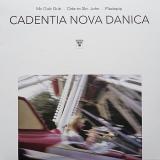
Cadentia Nova Danica’s only two LPs - “Cadentia Nova Danica” (Polydor, 1968), and “Afrodisiaca” (MPS, 1969) - are effectively Tchicai recorded efforts as a leader, and are legendary. There’s little mystery, once heard, why the later landed on Thurston Moore’s iconic “Top Ten from the Free Jazz Underground”, published by Grand Royal in 1996. Sadly, despite playing extensively during their five year run, with exception of a CD documenting a performance at Jazzhus Montmartre, in 1966, until now there has been no other publicly available recordings that allow us to capture a glimpse of this astounding band at work. Alga Marghen / Formalibera’s vinyl pressing of a never before released body of recordings, made in Copenhagen between 1969 and 1970, changes that in the most exciting of ways.
Comprising three pieces - “Mc Gub Gub, (I–VIII)”; “Ode to Skt. John”; and “Pladepip” - the material on this stunning LP comes from two specific events. The first, which encompasses the first side, “Mc Gub Gub, (I–VIII)” was recorded by Cadentia Nova Danica - in this instance, Tchicai, Sune Weimar, Theo Rahbek, Christian Kyhl, Niels Holt, Jørgen Thorup, Michael Schou, Morgens Bollerup, Allan Gregersen, Ole Matthiessen, Pierre Dørge, Willy Jaegert, Anthony Barnett, and Jon Finsen - on May 29th, 1969, at the ABC-Theatre in Copenhagen. Penned by Tchicai, the piece is a sprawling, evolutionary composition at the outer reaches of free jazz, rooted in large blocks of colliding tonality and rhythm - a sound only accessible to larger ensembles - that push territories explored by Charles Mingus to previously unimagined heights, threaded by moments of hard blown fire. Writhing like a stormy sea - skronking and devilish - “Mc Gub Gub, (I–VIII)” is a work of profound complexity that singlehandedly illuminates not only Tchicai’s singular vision as a composer, but also the power and uniqueness of Cadentia Nova Danica during the band’s most vital period.
The two pieces - “Ode to Skt. John” and “Pladepip” - taking up the flip side, were recorded on February 21st, 1970, at the Danish Broadcasting Corporation’s Radio House, and are the outcome of Cadentia Nova Danica’s extended residency there between 1969 and 1970. In many ways, these two recordings offer some of the best insights into the broad collaborative approaches that defined the band, in this case encountering them working with Danish experimental composer, Svend Erik Werner, who was among the earliest in his country to embrace stylistic pluralism and the use historical forms within a modern context. “Ode to Skt. John” - based on aspects of Gregorian music - was penned by Werner, incorporating heady improvisation by the members of Cadentia Nova Danica, this time made up by Tchicai, Sune Weimar, Hugh Steinmetz, Theo Rahbek, Christian Kyhl, Michael Schou, Morgens Bollerup, Ole Kühl, Torben Enghoff, Mauritz Tchikai, Kjeld Ipsen, Willy Jaegert, Ole Matthiessen, Ole Thilo, Pierre Dørge, Steffen Andersen, Jon Finse, and Clause Bøje. The piece is a fascinating binary of the composed and improvised, utilising the band’s large scale to introduce a remarkable sound within its slow progressions and furious, driving free moments, in this incredible meeting of worlds.
The album’s final piece, “Pladepip”, is arguably its most historically significant: an entirely singular piece, unlike anything in Tchicai’s recorded canon as his foray into musique concréte. Drawing upon two recordings of full-band improvisations by Cadentia Nova Danica, for its creation Tchicai also gouged the surfaces of 78rpm records in his collection to skip and create repeated phrases and patterns, creating a stunning sound collage of hard angles and abrupt phrase, that creates a striking counterpoint to the band’s flowing improvisations that bookend those passages. The result is an engrossing listen and easily one of the most unique and culturally important gestures in the entire history of musique concréte.
Truly incredible, Alga Marghen / Formalibera’s vinyl pressing of this never before released body of recordings, made by John Tchicai’s Cadentia Nova Danica, in Copenhagen between 1969 and 1970, offers an unprecedented window into one of the most important groups working in Europe during that period, significantly expanding their rare and slim discography to date. Accompanied by extensive exploratory liner notes by veteran jazz writer, Ed Hazell, this is easily one of the most historically important archival releases of the year and is impossible to recommend enough. Absolutely essential on every count.
dovrebbe essere pubblicato su 28.08.2026
- 01: The Happy Sailor
- 02: Blooming Youth
- 03: Weeping Pilgrim
- 04: There We Our Jesus Shall Adore
- 05: Bound for Canaan
- 06: Cuba
- 07: Firm Foundation
- 08: Florida
- 09: Desire For Piety
- 10: Ragan
- 11: Struggle On
- 12: Ninety-Fifth Psalm
- 13: Fallen by the Way
- 14: Happy Home
- 15: Coronation
- 16: The Dying Boy
- 17: The Fathers Boundless Love
- 18: The Christians Flight
- 19: Give Me Just a Little More Time
Recorded April 17 and 18, 1993, at the Union Grove Baptist Church, Ozark, Alabama.
The Wiregrass Singers' Dewey Williams began learning the shape-note tradition in his childhood. He studied under Judge Jackson, who authored the landmark 1934 hymnbook The Colored Sacred Harp. In 1971, Williams formally organized The Wiregrass Sacred Harp Singers to preserve the music full-time. This unified troupe began touring nationally and leading workshops, which ultimately launched them onto stages at the Smithsonian and Newport folk festivals up until Williams' passing in 1995 when the group disbanded. The African-American Sacred Harp tradition in the Wiregrass region has steeply declined since the start of the 21st century, due to an aging generation of singers, and today it is largely sustained through archival preservation and occasional multi-book singing meetups.
This raw recording, made at the Union Grove Baptist Church, Ozark in mid-April 1993 finds the group singing from B. F. White’s The Sacred Harp (1844), which together with his brother-in-law William Walker’s Southern Harmony (1835) formed the musical backbone of generations of Southern music and Southern musical styles.
"On almost any Sunday between the months of March and October, the season most conducive to travel and outdoor dinner-on-the- grounds, Sacred Harp devotés join with fellow songsters at the County Line Church in Slocomb, or the Mount Sinai Church in Henry County, or the Union Grove Baptist Church in Dale County, or at any one of a dozen or so churches in the southeast Alabama counties of Barbour, Coffee, Dale, Geneva, Houston and Pike, to form the square and sing fa-sol-la. Approximately fifteen African-American Sacred Harp singings occur annually in the Wiregrass region of southeast Alabama. A singing tradition characteristically associated with white culture in the Deep South, southeast Alabama has enjoyed a vibrant African-American Sacred Harp tradition for well over a century.
On a day of a typical African-American Sacred Harp Singing, the participants arrive casually in the late morning, seat themselves in the square according to voice part, and begin to sing. A dinner break occurs in the early afternoon, and the singers enjoy a covered-dish "dinner-on-the-grounds" (or in the church basement) prepared by the women. The most intense and emotional singing typically occurs after the dinner break. Each singer takes a turn leading the song of his choice. He walks to the middle of the square, calls out the song's page number and waits for the designated tuner to key the song. Singers are discouraged by the other singers from repeating a song that has already been sung, or "used." This proscription is often dispensed with, however, if the singer is particularly young, particularly old, or if the song has special significance to the individual song leader (perhaps the favorite song of a recently deceased relative).
Every singer is given an opportunity to lead a song. Often, older or more infirm singers will request younger singers to lead their songs for them. The motions of the song leaders are highly stylistic and often emotional. Young children are taught in singing school to mark time with their right arm while holding the book in their left. Typically, a singer will stand in place at the center of the square while leading the singing of the notes. When he begins to lead the lyrics portion of the song, he will often begin to "walk time," rhythmically pacing from one side of the square to the other, being careful never to turn his back on the tenor section. This "walking time" is unique to the African-American tradition. As a singer grows more confident he develops his own distinctive leading style. During fuguing songs in particular, he may gesture to each section of the square as its part joins in. Skilled song leaders often elicit applause or other emotional responses from the group. Occasionally a singer may fall into a state of spiritual ecstasy and "get happy." The episode might include a personal testimonial followed by a repeat of the last verse or refrain from the previous song. The singings break up around 5 P.M."
—Henry Willett, 1997 credits
dovrebbe essere pubblicato su 07.08.2026
Chloe Lula Announces Syntax: A Singular Vision Connecting Ambient Meditations and Hypnotic Techno San Francisco-born, Berlin-based artist Chloe Lula announces the launch of Syntax, a record label that codifies her unique position within the electronic music landscape. Arriving as the definitive home for her work as a DJ, producer and cellist, Syntax follows her established residency at Tresor and acclaimed releases on foundational labels including Mord, Blueprint and the highly esteemed experimental imprint Subtext. Her label is the culmination of a decade spent as both a participant in and a defining voice in the scene—a space where Lula’s deep and cohesive vision of electronic music finally converge. The label’s name refers to the arrangement of elements to forge new meaning, a philosophy Lula applies to her singular musical grammar. Whether through her slow-burning, exacting techno or her instrumental compositions, Lula’s work is characterized by a patience that understands nuance and counterpoint. This vision is reflected in the label's structure: releases will arrive in thematic series that bypass traditional genre markers to focus on atmosphere, immersion and hypnotica. The imprint’s debut, SYN-PLS01, marks the beginning of the Pulse series, a collection specifically engineered for the floor. For this inaugural release, Lula took recordings from Swiss electroacoustic composer Alexandra Bellon as a jumping-off point, molding Bellon's architectural sense of space into six tracks of driving techno. Future series will expand the catalog into ambient and instrumental territories, reconciling formal acoustic tradition with the raw functionality of the electronic landscape. With a career spanning editorial leadership at Resident Advisor and her work shaping the dialogue of the culture through her writing and interviews, Lula brings a deep, analytical knowledge to her craft. Syntax is the connective tissue between her work in the booth and her critical contributions to the field—a project that formalizes her distinct perspective as both a curator and a creator. SYN-PLS01 arrives on May 8. Follow @syntax.records for updates.
Ordina ora e ordineremo l'articolo per te presso il nostro fornitore.
- 1: Resurrection
- 2: Spitfire at Night
- 3: Phantom Highways
- 4: Wake Me Up
- 5: Fallen Angel
- 6: Flatline
- 7: Tear Out My Heart
- 8: Malevolent Eyes
- 9: Keep the Fire Burning
- 10: Mistress of the Sun
Sacred Leather is a traditional heavy metal band from the heart of Indianapolis, consisting of Dee Wrathchild (vocals), Lynn St. Michaels (lead guitar), Cvon Owens (rhythm guitar), Magnus Legrand (bass) and Don Diamond (drums). Following a privately manufactured live cassette, 2018’s debut album »Ultimate Force« and numerous (digital) singles, the new »Keep The Fire Burning« is the band’s most definite statement yet. Produced by the legendary Arthur Rizk (Eternal Champion, Power Trip), every track on the record is a call to arms. High-octane compositions such as “Spitfire At Night”, “Phantom Highways” or “Malevolent Eyes” show that Sacred Leather are true defenders of the faith. All songs breathe the raw power of classic 80s metal. Bassist Magnus Legrand comments: “Judas Priest has been a massive influence on us - not just aesthetically or stylistically, but in their ability to cover a wide range of sounds while always remaining unmistakably themselves. That balance is something we actively strive for: to explore every facet of heavy metal without ever losing our identity. The same can be said for KISS, Scorpions, and Queensrÿche - bands that can rock, rip, soar, go epic, or strip it down to something tender, all while keeping their signature intact. That versatility, anchored by a strong sense of self, is the standard we hold ourselves to.” According to Magnus Legrand, »Keep The Fire Burning« is a clear progression from the debut album »Ultimate Force«: “It’s sharper in its songwriting, stronger in its musicianship, and more focused in its execution. Where »Ultimate Force« laid the foundation, this record pushes further into those same territories with greater intent and refinement. It builds on what we established before, expanding the scope while tightening the strike. As a whole, »Keep The Fire Burning« is a relentless ride through the heart of traditional heavy metal - familiar in spirit, but undeniably Sacred Leather in execution.“
dovrebbe essere pubblicato su 17.07.2026
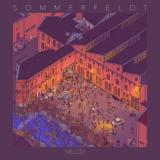
MELODI is the debut full-length album from Norwegian artist Sommerfeldt; a collection that takes listeners through the artist's mind, inspirations, experiences, and travels.
With a 20 year track record and releases on labels such as Full Pupp, Paper Recordings, and his other home Badabing Diskos, this album showcases a playful approach to genre, where a tight drum machine groove forms the foundation of a colourful record that touches on ambient, '80s, new wave, deep house, balearic, and downpitched progressive trance from the early millennium (which Sommerfeldt himself highlights as his formative years).
The album has been four years in the making. Several of the tracks were recorded around the world on hardware samplers and synths; bird sounds and ocean waves were captured, processed, and later finalised in his studio in Oslo.
Joining him is a stellar team of contributors; Embla Maria, Sigmund Floyd, Toshybot, Guro Kverndokk, Kristian Solhaug and Magnus JJ, adding outstanding vocal performances, gritty guitars, and oval percussion, the original cover artwork signed by Sommerfeldt's own favourite artist, Quentin Desveaux.
All of this is woven together into a cohesive whole that will make you want to listen again and again.
The six track musical masterpiece is set for physical release May 29th 2026 on a bold orange 12"
Ordina ora e ordineremo l'articolo per te presso il nostro fornitore.
- A1: I Wish You Love
- A2: Willow Weep For Me
- A3: Chains Of Love
- A4: Smoke Rings
- A5: All The Way
- A6: Send Me Some Lovin
- B1: Cry Me A River
- B2: Driftin' Blues
- B3: For Sentimental Reasons
- B4: Nothing Can Change This Love
- B5: Little Girl
- B6: These Foolish Things
Sam Cooke, inventor and true King of Soul, recorded Mr. Soul in 1963, the same year as Night Beat, and seems to be its more adult counterpart, with soulful ballads taking up most of the album. A laidback tempo and rich arrangements lay the foundation for Sam's somewhat melancholy voice floats, creating an uplifting spirit that can mend anyone's broken heart.
With standards such as "Willow Weep For Me", "I Wish You Love", and "For Sentimental Reasons", Cooke shows a quiet emotive side of himself without losing his keen sense of melody, using the strength of his voice without overpowering the listener. Had Sam Cooke lived longer, we might have had more music of this rare quality. As it stands, we must make do with the treasures he left behind.
Mr. Soul is available as a limited edition of 1000 individually numbered copies on orange vinyl.
dovrebbe essere pubblicato su 19.06.2026
- American Settings I. Wind in a Box
- American Settings II. The Umpteenth Thump
- American Settings III. Flores Woman
- American Settings IV. Semi-splendid
- Three Speeches and a Technique I. The Choice
- Three Speeches and a Technique II. The Future
- Three Speeches and a Technique III. The Recount
- Three Speeches and a Technique IV. The Power Fist
Composer Vasco Mendonça presents his third album “Third Places”. The album brings together a collection of landmark performances and features some of the leading names in international contemporary music, including countertenor Iestyn Davies, mezzo-soprano Barbara Kozelj, the Porto Casa da Música Symphony Orchestra, the ensemble Het Muziek, and conductors Brad Lubman and Ernest Martínez Izquierdo.
More than just a record, “Third Places” stands as a space for artistic and political reflection on the present. Inspired by Ray Oldenburg’s concept of the ‘third place’ – a space beyond home and work where community life takes place – the album’s title refers to the venues where these works came to life, Casa da Música and the Muziekgebouw aan ’t IJ in Amsterdam: spaces for encounter, dialogue and cultural resistance. For Vasco Mendonça, these spaces symbolise “the ability to elevate the way we communicate with one another and to resist our most primitive and violent impulses”.
The voice lies at the heart of this work. The compositions explore the theatrical, intimate and political dimensions of vocal expression, drawing on texts of great social and emotional weight to create a shared space for listening and questioning the current state of the world.
One of the album’s central works stems from a profound contemporary concern. Inspired by the turbulent political climate in the United States following the 2016 elections and by his discovery of the poetry of Terrance Hayes and Tracy K. Smith, Vasco Mendonça composed a cycle of songs initially conceived for voice and percussion, later transposed for orchestra. The result is described by the composer as “a kind of imaginary American folklore”, where excess, transcendence, fascination and fear coexist.
The album also includes a reworking of material from the opera “Bosch Beach”, created in 2016 to mark the 500th anniversary of the death of Hieronymus Bosch, commissioned by the Dutch foundation Stichting Bosch 500. Based on a libretto by the writer Dimitri Verhulst, the work reflected on the European migration crisis through a scathing portrait of human indifference. In “Third Places”, Mendonça revisits some of this musical material to construct an incisive reflection on contemporary political discourse, transforming the opera’s numbers into archetypes of election campaigns, populism and performative communication.
Straddling contemplation and confrontation, lyricism and political tension, “Third Places” stands as one of the most ambitious recording projects in contemporary Portuguese music, offering an experience that is both aesthetic and critical, where music and thought intersect in a visceral way.
The digital version of the album will include a bonus track, “Marathon”, which explores the analogy between music and long-distance running, creating a piece in which time is transformed through breathing, the heartbeat and the ritualised repetition of movement and the body, in a constant tension between exhaustion and survival.
dovrebbe essere pubblicato su 19.06.2026
- 1: Mother Tongue (on B)
- 2: Mountain (on Ab)
- 3: Domestisizer (on F)
- 4: Ivory Tower (on D)
- 5: Happy Song (on E)
- 6: Dawn (on Db)
- 7: Home (on Bb)
- 8: Ocean of Life (on G)
- 9: Adulthood (on A)
- 10: Brittle (on Gb)
- 11: Borrowed Time (on Eb)
- 12: Ein Kleines Schläflein (on C)
German-Turkish singer and composer Alev Lenz follows her self-released album 4 in a Cycle of Thirds (Jan 2026) with a complete, album length ambient rework by Simian Mobile Disco co-founder Jas Shaw. “The two records are very much intertwined," writes London-based German-Turkish singer and composer Alev Lenz. "I made 4 in a Cycle of Thirds with Jas in mind, inspired by a mix he created for my last album.” Lenz and Shaw have previously worked together on 2024 collaboration EP Bring Your Friends, as well as album mixes for Lenz' previous two solo records. Lenz' original album was created from a series of single-note drones, one for each note of the chromatic scale. "When I had this idea, I wanted Jas’ touch involved somehow. I asked him for drones on each note. He sent me 12 and I wrote most of the album listening to these drones. They eventually left the picture and were replaced by new drones I made, new sounds or vocals. But the memory of them lingers in the songs, like an imprint on the retina, an afterimage.
So naturally when the record was finished I sent the totality of it to Jas and said: here you go, make your versions!" 4 in a Cycle of Thirds in its original form touches on traditional folk musics, chamber music, contemporary composition, film score, and even interweaves subtle metal inflections, but now presented on double vinyl alongside Jas Shaw's versions as twin records, it has a newly foregrounded quietude, spectral and delicately nuanced. Through reduction, meticulous replacement, and sensitively applied edits, Shaw gently rebalances the light and shadow of the original pieces, coaxing new subtleties and harmonic resonance. "It occupies a space that is in-between the lines," describes Lenz. Shaw employs a "feedback system" he created for his piano, applied here to devastating effect. "Take the key bed off it and set up a resonators, mics and a mixer. Lots of gaffa tape, lots of precarious propping stuff open. You grub around on the floor and slowly the room fills with harmonics, it’s wonderful." And, on the relationship between the original record and these new versions, he explains "we could really let the songs drift into a different shape without worrying that we were missing elements that were great."
Alev Lenz is a singer, songwriter, composer, and producer born to a Turkish actor, activist, and artist mother and an Oscar-winning German engineer father. Alev’s creative foundation is as diverse as her musical output. Her solo discography includes three albums - Storytelling Piano Playing Fräulein (2009), Two-Headed Girl (2017), and 3 (2019). She has contributed vocals to scores by Oscar-winning composer Volker Bertelmann, including the US drama Conclave. She has collaborated with artists such as Anoushka Shankar, Jas Shaw (Simian Mobile Disco), Roomful of Teeth, and plenty more. Songwriter, composer, and producer Jas Shaw is best known for his work with Simian Mobile Disco, whom he co-founded in 2003. He mixed Alev Lenz' 2016 and 2019 albums Two-Headed Girl and 3, and also performs with Selling alongside Gold Panda, and Shaw & Grossfeldt with visual artist Bas Grossfeldt. Shaw and Lenz released the collaboration EP Bring Your Friends in 2024.
dovrebbe essere pubblicato su 12.06.2026
- 01: Jan Pieniążek - Portret
- 02: Patrycja Wybrańczyk - The Last One
- 03: Albert Karch - ...like wind
- 04: Szymon - ņvvķɹvvĵμņ
- 05: Jacek - squid s0ng
- 06: Piotr - Up in the sky
- 07: Piotr Gwadera - A deal with the Dill (A Tribute to Władysław Koperkiewicz)
- 08: Ola Rzepka - War lullaby 22-206-19 bpm
transparent green limited edition[34,03 €]
There are two versions of the record - classic black vinyl and transparent green limited edition (100 numbered copies) - both 180g with printed inner sleeve.
"PORTRETY" (Portraits) is a one-of-a-kind series – it focuses on artists known for their strong connection to the drums. Each person invited to the project is given freedom in their work. Ultimately, the track created for the album must be signed with the real names of our protagonists – that's our sole criterion.
This is how a kaleidoscope of sounds and eight original perspectives on music emerges.
LINER NOTES by Bartek Chaciński:"For part III of the compilation series focusing on Polish drummers, I’d like to start, as per usual, with a one liner…
There are three types of drummers: Those that can count, and those that… can’t.
Ok, but looking past the punchline, it turns out that there is, in fact, a third type: Drummers who can count, and pretty well too, but still struggle with triple rhythms. Amongst those who have ascended the heights of triple rhythm perfection you will certainly find, Piotr Gwader. One of the leaders of the movement, we could call an “Oberek Revival. He even proposed a new form: Footberk - splicing of Polish Folk dance and Chicago Footwork. He performed live with the OG of Footwork - RP Boo (Arpebu), but equally, he could successfully form a footberk duo with Jacek Prościnski, another protagonist from “Portraits 3”. Prościnski has been deeply immersed in the world of electronic dance music for years and offers us yet more proof of those interests here.
Triplets are also no stranger to Ola Rzepca (synonymous with the Drekoty Trio), in whose music there is no shortage of rhythmical complications and tempo changes. The same can be said of the improv-friendly contemporary jazz presented by Patrycja Wybrańczyk. These two Polish drummers show how versatile this discipline is on the Polish jazz scene. These qualities have already been well documented by Marcin „Groh” Grośkiewicz, but never so strongly as here.
Szymon „Pimpon” Gąsiorek is a musician who has made unconventionality the foundation of his individual style. Yet even in the piece by Jan Pieniążek (a dynamic and equally versatile drummer), we find an element of surprise in its melancholic atmosphere and construction, which introduces a triple rhythm while pushing the drum parts into the background. Portraits, on the other hand, does the complete opposite with its protagonists - it positions them in the foreground as the creators of specially commissioned original works. From this perspective, perhaps the most familiar names here may be Emade and Albert Karch, who are known as outstanding music producers and among the most interesting in Poland. “Portraits III” has presumably given them a momentary break from producing other artists, while for the music industry, it’s also a pleasant break in the rhythm and a shift of emphasis."
dovrebbe essere pubblicato su 29.05.2026
There are two versions of the record - classic black vinyl and transparent green limited edition (100 numbered copies) - both 180g with printed inner sleeve.
"PORTRETY" (Portraits) is a one-of-a-kind series – it focuses on artists known for their strong connection to the drums. Each person invited to the project is given freedom in their work. Ultimately, the track created for the album must be signed with the real names of our protagonists – that's our sole criterion.
This is how a kaleidoscope of sounds and eight original perspectives on music emerges.
LINER NOTES by Bartek Chaciński:"For part III of the compilation series focusing on Polish drummers, I’d like to start, as per usual, with a one liner…
There are three types of drummers: Those that can count, and those that… can’t.
Ok, but looking past the punchline, it turns out that there is, in fact, a third type: Drummers who can count, and pretty well too, but still struggle with triple rhythms. Amongst those who have ascended the heights of triple rhythm perfection you will certainly find, Piotr Gwader. One of the leaders of the movement, we could call an “Oberek Revival. He even proposed a new form: Footberk - splicing of Polish Folk dance and Chicago Footwork. He performed live with the OG of Footwork - RP Boo (Arpebu), but equally, he could successfully form a footberk duo with Jacek Prościnski, another protagonist from “Portraits 3”. Prościnski has been deeply immersed in the world of electronic dance music for years and offers us yet more proof of those interests here.
Triplets are also no stranger to Ola Rzepca (synonymous with the Drekoty Trio), in whose music there is no shortage of rhythmical complications and tempo changes. The same can be said of the improv-friendly contemporary jazz presented by Patrycja Wybrańczyk. These two Polish drummers show how versatile this discipline is on the Polish jazz scene. These qualities have already been well documented by Marcin „Groh” Grośkiewicz, but never so strongly as here.
Szymon „Pimpon” Gąsiorek is a musician who has made unconventionality the foundation of his individual style. Yet even in the piece by Jan Pieniążek (a dynamic and equally versatile drummer), we find an element of surprise in its melancholic atmosphere and construction, which introduces a triple rhythm while pushing the drum parts into the background. Portraits, on the other hand, does the complete opposite with its protagonists - it positions them in the foreground as the creators of specially commissioned original works. From this perspective, perhaps the most familiar names here may be Emade and Albert Karch, who are known as outstanding music producers and among the most interesting in Poland. “Portraits III” has presumably given them a momentary break from producing other artists, while for the music industry, it’s also a pleasant break in the rhythm and a shift of emphasis."
dovrebbe essere pubblicato su 29.05.2026
- 1: (I’m Afraid) The Masquerade Is Over
- 2: Let Your Conscience Be Your Guide
- 3: Hitch Hike
- 4: Pride And Joy
- 5: Can I Get A Witness
- 6: Once Upon A Time (with Mary Wells)
- 7: Stubborn Kind Of Fellow
- 8: How Sweet It Is (To Be Loved By You)
- 1: It Takes Two (with Kim Weston)
- 2: I’ll Be Doggone
- 3: Ain’t That Peculiar
- 4: Ain’t No Mountain High Enough (with Tammi Terrell)
- 5: I Heard It Through The Grapevine
- 6: Ain’t Nothing Like The Real Thing (with Tammi Terrell)
- 7: You’re All I Need To Get By (with Tammi Terrell)
- 8: Too Busy Thinking About My Baby
- 1: What’s Going On
- 2: Mercy Mercy Me (The Ecology)
- 3: Inner City Blues (Make Me Wanna Holler)
- 4: Trouble Man
- 5: Let’s Get It On
- 6: You Are Everything (with Diana Ross)
- 1: Distant Lover
- 2: I Want You
- 3: Got To Give It Up
- 4: Heavy Love Affair
- 5: Sexual Healing
- 6: Sanctified Lady
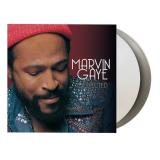
Marvin Gaye always dreamed of being a smooth crooner, “sitting on a stool, possibly behind a piano,” delivering velvety songs like Nat King Cole. But Motown had other plans. Pushed between raw R&B and polished pop, Gaye fought to find his own voice, eventually rising to become one of the greatest soul singers in history.
Motown Records released the first Marvin Gaye record in 1961 "(I'm Afraid) The Masquerade Is Over", a single intended for (radio) promotion from the singer's debut album. This was followed up by the officially released "Let Your Conscience Be Your Guide" a week later. Gaye scored his first real hit with "Stubborn Kind of Fellow" in 1962, which he had co-written himself, joking about his alleged stubbornness. He found his own unique style with the single released at the end of the year: "Hitch Hike". The foundations were now laid for an enormous series of chart successes: "Pride And Joy", "Can I Get A Witness", "How Sweet It Is (To Be Loved By You)" and "Ain't That Peculiar" are all Motown classics from 1963-1965 which are still being regularly played today after all these years. The duets he recorded with Kim Weston ("It Takes Two"), especially Tammi Terrell and Diana Ross were certainly at least as good.
He scored his biggest ever hit with "I Heard It Through The Grapevine" in 1968. "What's Going On" from the same titled album became a number 1 hit in the USA. The album was received as a masterpiece and is regarded as one of the most important records in pop history. In 1973, the artistically and commercially very successful, "Let's Get It On" album was mainly a musical ode to Marvin's love for his new muse Janis Hunter. His journey continued after a turbulent relationship, addiction and a dramatic creative rebirth in Belgium, where he crafted the global hit “Sexual Healing in 1982.
Marvin Gaye left behind timeless hits, groundbreaking albums, and a legacy that shaped the sound of modern soul. His story, from ambition to artistry, from struggle to brilliance, remains as powerful as the music he created.
Music On Vinyl proudly presents a special coloured vinyl edition of the Marvin Gaye Collected album which is available as a limited edition of 10.000 individually numbered copies on white (LP1) and silver coloured vinyl (LP2) and includes a booklet with liner notes.
dovrebbe essere pubblicato su 22.05.2026
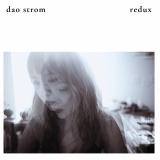
Redux, an ambient-folk album from Portland, Oregon musician, poet, and multimedia artist Dao Strom, is a collection of nine resurrected pieces. Reimagining songs she initially composed as a member of the Austin, Texas alt-country and singer-songwriter scenes of the early 2000s, Strom reworks these lost songs into ambient-folk mini-epics—part grounded and earthly, part ethereal and otherworldly. Drawing on an intimate yet spacious palette of folk, ambient, and experimental textures, woven through with a poetics of vulnerability and quiet emotion, Redux explores song as gently reverberant fields of layered vocals over finger-picked guitars with touches of electronics and sampling. Strom’s musical journey initially began in a roots and acoustic vein, simultaneously with her career as a fiction writer. In the years since, she has moved from Austin, Texas to Juneau, Alaska to Portland, Oregon; her work too has expanded across genres into more experimental formats of poetry, music, and multidisciplinary art. In returning to these earlier songs, Strom reclaims and revives them, exploring her relationships to time, voice, and the continuances of emotion and memory. The word redux means “brought back; revived”; a sense of something restored—earlier renditions of some of the Redux songs were recorded with Austin-based collaborators and producers; some songs were written in that time period but never recorded. Produced, performed, and recorded by Strom alone in her home studio, Redux is a return and reemergence of the artist to her own most personal, intuitive structures and atmospheres of voice, sound, and song. Released on cassette by Antiquated Future Records, and reissued on vinyl in 2026 by Disasters By Choice.
Dao Strom is an artist who works with three “voices”—written, sung, visual—to explore hybridity and contemplate the intersection of personal and collective histories. Her music releases move between “song-poem” cycles and ambient-folk albums. She is the author/composer of several hybrid projects that blend poetry, music, and visual art into unique multimodal experiences, including Tender Revolutions/Yellow Songs, a song-cycle with set of four chapbooks, jointly released by Beacon Sound, Antiquated Future Records, and The 3rd Thing Press (2025), and Instrument/Traveler’s Ode, a poetry-art collection and song-cycle released by Fonograf Editions and Antiquated Future Records (2020). Born in Vietnam and based in Portland, Oregon, Strom began her musical journey in the early 2000s, when she first began infusing into the context of “Americana” folk/roots music her own diasporic Vietnamese experience and stories. Her music has since moved in more experimental directions, resisting easy categorization, yet still maintaining tendrils of folk ethos. She also writes songs about the ineffable nuances of emotion, memory, and connection, as captured on the album, Redux, which gathers songs from across her songwriting years into an ambient-folk setting, self-produced and recorded by Strom, released on cassette in 2022 by Antiquated Future Records, and reissued on vinyl in 2026 by Disasters By Choice. As a multidisciplinary artist, Strom has presented performance and installations at venues such as the Time Based Art Festival (Portland Institute for Contemporary Art) and Moving Poets Novilla in Berlin, Germany, and has received awards from the Creative Capital Foundation, Spark Artist Award, and others. Strom is also a founding member of She Who Has No Master(s), a collective of Vietnamese women writers and artists making polyvocal poetry-art works as a means of reaching across borders.
dovrebbe essere pubblicato su 08.05.2026
Artist and multi-instrumentalist Flaer embraces the search for quiet miracles on first full-length LP Translations.
In 2023, Realf Heygate - who makes music as Flaer - released his debut mini-album Preludes, composed on his mother’s piano and his childhood cello.Returning to ODDA for his debut full-length album, Heygate is now looking in another direction. A record that embraces transition and movement, Translations is in many ways more internal, less rooted to a single place and reflective of the process of laying new foundations in Cornwall.
Like Preludes, Translations is coloured with found sounds and field recordings, from the starlings which can be heard singing through the open window of his studio, to the brittle recordings of his mother, who was a linguist, learning Spanish on a set of language tapes. In both cases, Heygate embraced the translations and memories inherent to the sounds.
“When I digitised my mother’s tapes, they warped and stuttered in a very similar way to the starling’s song,” he explains. “They had this uncanny rhythm and pulse that I couldn’t quite decode, but was saying something." These decayed transmissions hint at loss, resisting clarity in favour of the ineffable.
Translations is also a record of ambiguities and in-betweens, suggested by the double meaning of the album’s opening track ‘Entre’. At once intricate and expansive, threaded with birdsong and acoustic guitar motifs, this and ‘Starling Descends’ (a reference to Vaughan Williams’ ‘The Lark Ascending’) act as a bridge away from the pastoral themes of Preludes towards a more assertive sound. At times intimate in its textured instrumentation and at others more overtly grand in orchestration, reflecting awider palette of influences.
“Flaer began in many ways when I picked up my mother’s instruments, seeking a form of reconnection. Where words evaded me, they became the tools through which I found a language for grief – and above all, for love.”
Recorded between 2023 and 2025 – what Heygate calls “A gradual process of sowing and harvesting ideas rather than a single intense creative period” - each track follows a rhythm similar to the small maquettes and sculptures he has been working on in his visual practice, whereby structures and melodies form intuitively in moments that are as rare as they are fleeting.
“It's that feeling of searching that I really enjoy,” Heygate continues. “I never know what the destination of the composition is going to be, and I never really find what it is."
Translations is released on limited edition off-white vinyl LP (500 copies worldwide) with one of five signed and numbered handmade risograph prints. It's also available as standard black vinyl LP and digitally.
Ordina ora e ordineremo l'articolo per te presso il nostro fornitore.
The cycle of life and nature is a precious and wondrous thing. We are born. We learn. We live. We die. And after death, another life awaits. When the world succumbs to the cold, dark grasp of winter, the promise of a spring birthing everything anew keeps hope alive. Such is the journey we make, and such is the lifespan of “Faþir”. Heaving, pulsating, filled with contrasts: ardent hostility and fiery revenge, blossoming life and lush fertility, soul-wrenching grief and deep anguish. Such is the path we walk under the guidance of the deities – the helping hand of a father, the nurturing wisdom in times of need. But sometimes, a treacherous god leads us into death and despair, albeit always with an underlying purpose. Such is “Faþir”.
With eloquence, elegance, and emotion, L. Swärd has created another monolith of sublime art to add to Forndom’s impeccable discography. This highly awaited follow-up to 2016’s “Dauðra Dura” is nothing short of a modern masterpiece, rooted in ancient ways. Expressive vocals and strings soar atop a foundation of unyielding drums, like spirits dancing in the skies yet bound to the human pulse. Never surrendering its strong connection to our mortal world, “Faþir” carries a deeply sacred dimension – a glimpse of the divine, seen through a lens of devotion and veracity. The joining of death and life, if you will.
The thick atmospheres and vast inner landscapes Forndom creates are more prevalent than ever, and from the first trembling string introduction of “Jakten” to the last wistful beat of “Hemkomst”, one is transported to another time, another place, and another mindset – leaving behind the calamity, stress, and superficiality of the modern world, and rediscovering the lost wisdom hidden behind the veil of passing years.
dovrebbe essere pubblicato su 10.04.2026
- OSNI OPENING
- ACT I: GARDEN
- ACT I: LOON
- ACT II: DRAGON
- ACT II: PYRE
- ACT III: UMBRA
- ACT III: RITE
- ACT IV: FLOOD
- ACT IV: EVERGLOW
- OSNI CLOSING
In ,Osni the Flare", dem zweiten Teil von Tristan Allens mythischer Trilogie, zeigt der Komponist, Produzent und Puppenspieler, wie ein Sterblicher durch die Entdeckung des Feuers zu einer Gottheit wird. ,Osni the Flare" wurde über vier Jahre hinweg mit wortlosen Gesängen, Orgeln, Okarinas, einer Menge Spielzeuginstrumenten und einem ausgeklügelten Sounddesign aufgenommen und erzählt in vier akustisch und visuell beeindruckenden Akten von den Ursprüngen der Flamme und der Zeitlichkeit. Allen webt einen Schöpfungsmythos, der zwischen Schönheit, Schatten und wehmütiger Glut wechselt, und schafft so ein Portal zu einem sorgfältig gestalteten, emotional kraftvollen Klang und einer Geschichte, die durch ein fantastisches Reich hallen. Allen wurde in Saratoga Springs, New York, geboren und hat Kindheitserinnerungen an den Aufenthalt seiner Familie in Japan. Sein Weg führte ihn zu prägenden Begegnungen, darunter mit seinem Lehrer Andy Lorio, der das wachsende Interesse und Können des jungen Musikers am Klavier durch Improvisationstechniken förderte, und Amanda Palmer, die ihn mit 16 Jahren während eines Sommerprogramms am Berklee College entdeckte und seine erste Veröffentlichung durch Crowdfunding finanzierte. Nachdem er an der Berklee Klavier studiert, das Live-Elektronik-Kollektiv Nue mitbegründet, mit der Metal-Band Dent durch China getourt und zwei Solo-Klavier-EPs veröffentlicht hatte, zog Allen 2018 von Boston nach Brooklyn. Eine Anzeige auf Craigslist führte zu einer Puppenspielausbildung bei Mike Leach, der ihnen sechs Monate lang beibrachte, wie man eine Marionette richtig führt, was ihnen eine Stelle als Darsteller am renommierten Puppetworks Theater einbrachte. Diese harte Arbeit, zusammen mit dem Kontakt zu den Artefakten des Bread and Puppet Theater ihres Vaters und dem balinesischen Schattenspiel, brachte Allen zu ihrer kreativen Praxis: Komponieren für akustische Instrumente, elektronisches Arrangieren und Auftritte mit Puppenspiel. Osni the Flare erzählt einen Schöpfungsmythos, in dem die Titelfigur in einem Garten aufwacht und Äpfel von einem Baum pflückt. Von einem Loon herbeigerufen, macht sich Osni auf, den Baum vor der Kälte des Winters zu schützen. Als der Loon von einem Drachen verschlungen wird, wagt sich Osni in dessen Bauch und entdeckt dort Glut. Als er diese Glut dem Baum anbietet, entzündet sich dieser - der Ursprung des Feuers selbst. Iso, der Gott des Meeres, greift mit einer Flut ein, die Osnis Garten überschwemmt. Nach seinem Tod gelangt Osnis Seele in das Reich der Schatten, wo sie sich Tin und Iso anschließt und zur Gottheit des Feuers wird - Osni the Flare. Das Album klingt menschlicher und kindlicher als sein Vorgänger ,Tin Iso and The Dawn" und wechselt von der Perspektive der Götter als Beobachter zu der des ersten sterblichen Charakters in Allens Welt. Unterstützt durch neue Liebe, kanalisiert das Projekt Gefühle in Musik, die zu einem ganz eigenen Zauber wird. Wie Tin Iso beginnt und endet das Album mit Klavierklängen als Portal, das die Heimat repräsentiert, während Osni sich auf eine Reise durch drei Reiche begibt: das Land der Lebenden, das Zwischenreich und das Jenseits. Osni the Flare wurde fast komplett mit einem Aston-Kondensatormikrofon in Allens Wohnung in Brooklyn mit Blick auf den Cypress Hills Friedhof aufgenommen und besteht aus Spielzeugklavier und Flöten, Okarinas, Harmonium, Pumporgel, E-Bass und Kontrabass, Gadgets und einer umfangreichen Sammlung von Spieluhren und Glocken. Die Gesangsmelodie - inspiriert vom Summen seiner Partnerin Virginia Garcia Ruiz, das an Pans Labyrinth erinnert - war Allens erster Ausflug in den Gesangsbereich, wobei er eine Melodie ohne Worte verwendete, um den Zuhörern zu ermöglichen, die Protagonisten zu bleiben. Die Flöten wurden Note für Note akribisch aufgenommen, darunter balinesische Sulings, Fundstücke aus chinesischen Souvenirläden und vogelförmige Okarinas. Die Spieluhren wurden langsam aufgezogen, einzeln gesampelt und dann neu arrangiert und gestimmt, um Virginias Summen zu verdoppeln. Ein ausgedientes Casio SK-1 mit einem kaputten Lautsprecher wird mit einem Harmonium kombiniert, um Akkordtexturen zu erzeugen. Stundenlange Improvisationen, die durch Bastl Thyme und NanoVerb geleitet wurden, erzeugten lange, ausklingende Delays, wobei die besten Momente für Songs ausgewählt wurden. Feuergeräusche entstanden durch Fingernagelklicken auf Klaviertasten. Feldaufnahmen hielten das Zerlegen eines Klavieruntergestells, das Löschen von Kerzen und Geräusche aus einem Hospiz fest. Die Stimme des Drachen spricht Worte aus Allens erfundener Sprache. Die Melodie liegt oft im Bass - inspiriert von Goth und Gamelan - mit nach oben gerichteten Verzierungen. Der detailreiche Ansatz spiegelt eine Punktierung wider, die Allens Original-Artwork für das Albumcover ähnelt und durch ihre obsessive Arbeit kleine Teile zu einem großen Bild zusammenfügt - unter der Dusche, vor dem Einschlafen, mitten im Satz. Das Klavier wurde von der Toningenieurin Katie Von Schleicher bei Figure 8 Recording neu aufgenommen, gemischt wurde das Album von Paul Corley. Der technische Leiter Jim Freeman arbeitete vier Monate lang am Halsgelenk und fünf Monate lang an den Schultern der Basswood-Stabpuppe, die von Bruce Schwartz' Ballerina inspiriert ist. Freeman verbrachte Jahre damit, ein selbstgebautes LED-System zu entwickeln, um das Puppenspiel von der Bühne aus zu beleuchten, und sein unwillkürliches Pfeifen während der Arbeit wurde heimlich aufgenommen und ist im Schlussmoment zu hören. Die Herstellung der Puppen wurde von Miryam Moutillet und Lauder Weldon überwacht, die hybriden Köpfe wurden von Duygu Bayar Ekren entworfen. Seit der Veröffentlichung von Tin Iso im Jahr 2023 hat Allen in der experimentellen Puppenspiel-Community von New York City eine Heimat gefunden und wird von der Jim Henson Foundation und La MaMa unterstützt. ,Osni the Flare" steht für Tristan Allens kontinuierliche Weltgestaltung mit akribischer Kontinuität - viele bewegliche Teile, die in funkelnder Kohäsion präsentiert werden, wobei sich jede Komponente aus einer Idee entwickelt, wie eine Fantasy-Serie, die im selben Reich spielt. Das Album erreicht das, was sich Allens kindliches Ich beim Anschauen von Fantasy-Filmen vorgestellt hat: Musik, die nicht so klingt, als würden Menschen Instrumente spielen, sondern wie das Werk der fantastischen Welt selbst. Durch die Kunst des Puppenspielers, ,wahre Lügen zu erzählen", lädt Allen die Zuhörer ein, etwas Ursprüngliches und Unmittelbares zu erleben. Während Osni sich von einem Sterblichen zu einer Gottheit verwandelt, zeichnet das Album nicht nur den Ursprung des Feuers nach, sondern auch den Ursprung des Mythos selbst.
dovrebbe essere pubblicato su 27.03.2026
- A1: They Don't Know
- B1: They Don't Dub (feat The Poor Man's Friend)
PMF006 Has Landed
Poor Man's Friend Recordsproudly welcomes the legendarySylford Walkerto the label with a powerful roots debut single:"They Don't Know."
True to form, this track delivers exactly what you'd expect — and crave — from one of reggae's most iconic and unmistakable Rasta voices. Aheavily saturated drum and bass groovesets the foundation, locked tight with atough, swung Nyahbinghi section. The rhythm is sparse but deeply textured, featuring carefully placedguitars, percussion, and saxophonethat leave room for the message to breathe.
Low in tempo butloaded with low-end weight, "They Don't Know" is a roots statement that resonates. Fans of classic conscious anthems like"Babylonians," "Chant Down Babylon,"and"Africa Homeland"will find themselves right at home.
A heavyweight One Drop. A voice of experience. A message for the times.
Don't sleep on this one.
Out now via Kudos/Poor Man's Friend Records.Catalog number:PMF006.
Ordina ora e ordineremo l'articolo per te presso il nostro fornitore.
- Corcovado
- Chega de Saudade
- Samba de Uma Nota So
- Saudade da Bahia
- Insensatez
- Meditacao
- Brigas, Nunca Mais
- Se E Tarde Me Perdoa
- Trevo de Quatro Folhas
- O Pato
- Desafinado
- Outra Vez
- Coisa Mais Linda
- Voce e Eu
- Rosa Morena
- Samba da Minha Terra
- O Nosso Amor
- A Felicidade
- Bim Bom
- Morena Boca de Ouro
- Discussao
Gathering his most iconic early recordings, this collection captures the pure essence of the man who laid the foundations of Bossa Nova. From the tender intimacy of "Corcovado" and "Chega de Saudade" to the gentle swing of "Desafinado" and "Bim Bom", widely considered the very first Bossa Nova song, every track radiates Gilberto's unmatched grace and rhythmic subtlety. Pressed on high- quality vinyl, Luz de Corcovado invites you to rediscover the soft pulse and poetic warmth that changed Brazilian music forever.
dovrebbe essere pubblicato su 13.03.2026
‘Call To Arms & Angels’ is the title of the twelfth studio album from South London collective Archive.
A 17-track double CD / triple LP recorded at RAK studios in London and released on Dangervisit/PIAS.
Deluxe editions of the album also include a bonus ‘Super8’ album of new and exclusive instrumentals, as featured in the band’s ‘Super8’ documentary that will accompany the release of the album.
Produced by Archive and long-time collaborator Jérome Devoise, ‘Call To Arms & Angels’ is the band’s first studio set since 2016’s ‘The False Foundation’.
Talking about the new album, Darius Keeler says, “Writing our twelfth studio album was an extraordinary time for the band. The song writing became an unfolding narrative as the world got stranger and more disturbing every day. With people’s freedoms being pushed to the brink, the suffering Covid caused and the terrible events in the US lead by Trump and the rise of the Right, anything seemed possible.
“To reflect on these times as artists brought up a darkness and an anger, but also a strange kind of inspiration that was at times unsettling. It really made us appreciate the power of music and how lucky we are to be able to express our feelings in this way.
“It seems there is light at the end of the tunnel, but there are always shadows within that light.”
Deluxe 2CD album plus ‘Super8’ bonus CD in 40-page casebound Polaroid bookpack.
2CD album.
Deluxe vinyl box set with white coloured vinyl 3LP (exclusive to this box set), ‘Super8’ bonus LP on white vinyl (exclusive to this box set), deluxe 3CD with Polaroid booklet and 12” x 12” art print.
Triple LP on gold vinyl in triple gatefold sleeve.
Triple LP on green vinyl in triple gatefold sleeve.
Triple LP on black vinyl in triple gatefold sleeve.
Ordina ora e ordineremo l'articolo per te presso il nostro fornitore.
‘Call To Arms & Angels’ is the title of the twelfth studio album from South London collective Archive.
A 17-track double CD / triple LP recorded at RAK studios in London and released on
Dangervisit/PIAS.
Deluxe editions of the album also include a bonus ‘Super8’ album of new and
exclusive instrumentals, as featured in the band’s ‘Super8’ documentary that will
accompany the release of the album.
Produced by Archive and long-time collaborator Jérome Devoise, ‘Call To Arms &
Angels’ is the band’s first studio set since 2016’s ‘The False Foundation’.
Talking about the new album, Darius Keeler says, “Writing our twelfth studio album
was an extraordinary time for the band. The song writing became an unfolding
narrative as the world got stranger and more disturbing every day. With people’s
freedoms being pushed to the brink, the suffering Covid caused and the terrible
events in the US lead by Trump and the rise of the Right, anything seemed possible.
“To reflect on these times as artists brought up a darkness and an anger, but also a
strange kind of inspiration that was at times unsettling. It really made us appreciate
the power of music and how lucky we are to be able to express our feelings in this
way.
“It seems there is light at the end of the tunnel, but there are always shadows within
that light.”
Deluxe 2CD album plus ‘Super8’ bonus CD in 40-page casebound Polaroid
bookpack.
2CD album.
Deluxe vinyl box set with white coloured vinyl 3LP (exclusive to this box set), ‘Super8’
bonus LP on white vinyl (exclusive to this box set), deluxe 3CD with Polaroid booklet
and 12” x 12” art print.
Triple LP on gold vinyl in triple gatefold sleeve.
Triple LP on green vinyl in triple gatefold sleeve.
Triple LP on black vinyl in triple gatefold sleeve.
Ordina ora e ordineremo l'articolo per te presso il nostro fornitore.
- A1: Prologue
- A2: Shion -Kako no Kioku
- A3: Battle & Sentô Suru KOS-MOS & Sentô ShûryÃ
- A4: Fuan
- B1: Life or Death
- B2: Gnosis
- B3: Kanashimi
- B4: Kokoro o Tozashita Shôjo
- C1: Kookai Foundation
- C2: Nephilim
- C3: Nukumori
- C4: World to be Born
- C5: Albedo
- D1: Kyomu no Hamabe
- D2: Last Battle
- D3: Pain
- D4: Kokoro
Released in February 2002 on PlayStation 2, Xenosaga Episode I marked the beginning of an unforgettable video game saga created by Tetsuya Takahashi, accompanied by a majestic soundtrack composed by Yasunori Mitsuda.
The latter is still considered an essential milestone in video game music. We wanted to pay tribute to these cult classics with Across the Kosmos ~ Xenosaga Piano Collection and Jazz in Kosmos, two albums of officially licensed arrangements featuring the best tracks from the game.
This album was created in collaboration with some of the most talented figures in Japanese video game music. It includes 17 piano tracks arranged by Mariam Abounnasr, Akio Noguchi, Hiroyuki Nakayama, and Benyamin Nuss, carefully recorded on a Steinway D Grand Piano.
dovrebbe essere pubblicato su 06.03.2026
- A1: She And Me Fall Together Like Free Death
- B1: Black Is The Color Of My True Loves Hair
- B2: Chicken Concret
- B3: Gusset Typing
- C1: She And Me Fall Together Like Free Death (Phosphorous Mix)
- D1: Chicken Korma
- D2: Fine Writin
- E1: She And Me Fall Together In Free Death (Funereal Mix)
- F1: Yellowed
- F2: Seeting Red
- F3: Black
Logical Absurd is very proud to present the 20th Anniversary of the album "She And Me Fall Together In Free Death" by Nurse With Wound. "She and Me Fall Together in Free Death" is probably the most approachable, largely "musical" album that NWW has released since Rock N' Roll Station. It's also one of his strangest concepts, a marriage of trance inducing Krautrock grooves with a traditional jazz standard and some jarringly atonal musique concrete. Side A is the 20- minute title track: a slow-motion jam reminiscent of of one of Can's sidelong tracks on Tago Mago or the more avant-garde grooves of Tony Conrad and Faust's Outside the Dream Syndicate.
The propulsive Jaki Liebezeit drumbeat is the foundation for a long jam session with what sounds like a dijderidoo and layers of guitar feedback. It's a massive, heavy sound, the kind that Julian Cope would devote a whole chapter to in his "Kratrocksampler". Side B is one long piece with three distinct movements. Beginning with those familiar, World Serpent-trademark windchimes, the listener is quickly ushered into Staple- ton's singing debut (!) in a rendition of the oft-covered traditional jazz ballad "Black is the Color of My True Love's Hair" This was a favorite of the recently deceased Nina Simone, and also of the avant-jazz screamer Patty Waters. Nurse With Wound's version is backed by cello drones, repetitive guitar strums and tambourine, sounding very much like The Velvet Un- derground's "Venus in Furs".
It's such a treat to hear Steven Stapleton's multitracked vocals cover this classic song, and this eerie version rates as one of my favorites. This song and the title track prove to the naysayers that Nurse With Wound is equally adept at rock n' roll songcraft as he is at demented sound collages. The creepy jazz cover seques into "Chicken Con- cret (For Missy E)", a truly warped tape-edit job that juxtaposes chicken squawks and sythesized birdcalls with random bleeps, speaker hiccups and gongs.
dovrebbe essere pubblicato su 06.02.2026
- Hallelujah, I Love Her So
- Dream Lover
- Unchained Melody
- Lucille - featuring Jimmy Hall
- Tell It Like It Is
- I'm Walkin
- Hey Baby - featuring Delbert McClinton
- You Send Me
- Stagger Lee
- Baby Girl
- Smile
Blues, country and folk or funk, rock and soul – Broussard always gives his songs a very special touch; here he reaches his peak performance!
Acclaimed soul singer and songwriter Marc Broussard returns with his new studio album, "S.O.S. V: Songs Of The 50's," paying homage to the timeless classics of the 1950s. With his unmistakable, warm soul voice, Broussard interprets timeless songs by legends such as Ray Charles, Sam Cooke, Nat King Cole, and Fats Domino—complemented by his own original composition that fits seamlessly into the era. The album is the fifth installment in his successful S.O.S. (Save Our Soul) benefit series, with proceeds once again benefiting the non-profit organization Love Of People in his hometown of Lafayette, Louisiana. His latest charity album, "S.O.S. 4: Blues For Your Soul" (2023), a collaboration with blues icon Joe Bonamassa, benefited the Keeping The Blues Alive Foundation and the organization Guitars Over Guns – and debuted at number 1 on the Billboard Blues Albums chart.
dovrebbe essere pubblicato su 06.02.2026
Summer of 2025, the UK techno community was shocked to hear of the sudden and untimely passing of one of its leading lights, James Baker, better known as ReKaB. As his light had been glowing ever brighter in recent years, with forays across the deep end of the techno spectrum, his passing was even more tragic. He had certainly found his voice, a particularly emotive, soul-tinged strain of techno building on the foundations of the 90s bastions of the form. Though bittersweet, Distant Worlds is immensely proud to present this release showcasing his personal evolution and mastery of the sound both he and the label love so much.
‘Art 4 Me’ opens with a transcendent chord progression, gradually incorporating brain piercing synth-work and chunky percussion before opening out into a perfect intersection of melancholy and euphoria. ‘Trapped In Boxes’ opts for a more introspective take on the classic techno template incorporating a Detroit palette of sound atop punchy bassline and beats.
Flip over for UK techno royalty Nuron’s take on ‘Art 4 Me’, a characteristically apposite reimagining. Teasing layers of inverted synth and percussive elements until a beautiful breakdown finally delivers that majestic chord progression. ‘Our World’ closes out this fantastic release with pure elegance; beats skitter, Detroit strings soar and cosmic pads align in timeless fashion. These are 4 tracks of deep, electro-soul music helping cement the legacy of one of the truest practitioners of the form over the last decade.
Ordina ora e ordineremo l'articolo per te presso il nostro fornitore.
»Hug of Gravity« is the second solo album by Raphael Loher and his first for Hallow Ground. The Swiss pianist and composer uses piano preparations, tape machines, and digital means to forge an aesthetic of playful reduction and rhythmic abstraction. The source material for these four sprawling pieces was culled from recordings of the artist performing the album’s predecessor, 2022’s »Keemuun.« Loher used them in a painstaking two-part working process to create an album that is both a product of and an ode to transformation, exploring themes of alternative temporalities and spatialities. »Hug of Gravity« oscillates between experimental electronic music, ambient, and minimal music and calls to mind the work of artists like William Basinski, Linda Catlin Smith, or label mate Andrius Arutiunian.
Loher laid the foundation for »Hug of Gravity« in 2020 with ten solo performances at his studio, during which he presented the pieces from his debut album. For these intimate concerts, he prepared the piano with modelling clay in order to move beyond the well-tempered tuning that dominates most of Western music. He then used a consecutive three-month residency in the Blenio Valley to refine the recordings. »I cut up and rearranged the material, then transferred the results—around 30 pieces—to a varispeed tape machine and then back to the computer. After that was done, I cut them up and rearranged them again,« he laughs. By radically reworking the material, he created an album that eschews traditional notions of time and space.
Loher points out the influence that his surroundings had on him. »The process created the music—and the place was essential to the process.« he says. He wandered through the mountains for up to nine or ten hours a day, which gave him a sense of what he calls expanded temporality. »Time just felt longer, my experiences seemed more diverse and nuanced, and it was as if I perceived my environment more clearly,« he explains. This shift in Loher’s perception of time and space—the latter also expressed in the album’s title—influenced his work with the varispeed tape machine. It allowed him to change the pitch of different recordings while layering them to let interference patterns emerge and emphasise the emotional qualities of the unconventional tunings he had used.
In this way, Loher constructed numerous interlocking narrative arcs throughout »Hug of Gravity,« an album that is ever-changing; an exercise in calm ecstasy that provides its audience with the feeling of being removed from conventional time and space. This approach is also reflected in the artwork for »Hug of Gravity,« which is based on drawings Loher made during his residency at Blenio Valley. Their fine hand-drawn lines run in parallel and let incidental patterns emerge, an effect that is only multiplied when the six different drawings that accompany each vinyl copy of the album are overlapping, forming ever-new visual constellations.
Ordina ora e ordineremo l'articolo per te presso il nostro fornitore.
- A1: Start Again
- A2: I Saw A Ghost
- A3: Forever in Your Debt
- A4: Plant The Seed
- A5: Days Like This Will Break Your Heart
- A6: Don't Mind
- B1: Cavalcade
- B2: Fool For Your Philosophy
- B3: Grace of God
- B4: Here In The Hollow
- B5: Secrets
- B6: Know The Day Will Come
Red Translucent Vinyl[25,17 €]
Manchester’s own The Slow Readers Club are set to embark on a special anniversary tour celebrating ten years since
their seminal breakthrough album, Cavalcade. Titled ‘A Decade of Cavalcade’, the tour will see the band revisiting the
album that set them on their path to becoming one of the UK’s most revered indie acts, while also marking an exciting
new chapter in their journey.
The tour announcement follows a milestone year for the band with their latest album Out Of A Dream landing at
UK Number 11 in the Official Charts in the first week. With growing momentum on streaming platforms and an everexpanding fanbase, The Slow Readers Club continue their upward trajectory, making A Decade of Cavalcade both a
reflection on the past and a celebration of what’s still to come.
A Celebration of a Pivotal Moment
Originally released in 2015, Cavalcade was a turning point for The Slow Readers Club, capturing hearts and minds with
its brooding, atmospheric sound and emotive lyricism. Featuring fan-favorite tracks such as Plant The Seed, I Saw A
Ghost and Forever In Your Debt, the album resonated with a generation of music lovers and laid the foundation for the
band’s future success. One of those supporters were the band James who personally invited The Slow Readers Club to
support them on a huge headline tour which brought them to a whole new audience.
Now, a decade later, the band will bring Cavalcade back to life on stage, performing it in full alongside other cherished
songs from their extensive catalog. The tour promises to be an electrifying experience, blending nostalgia with the raw
energy of and ambition that continue to define The Slow Readers Club today.
dovrebbe essere pubblicato su 28.11.2025
- A1: Start Again
- A2: I Saw A Ghost
- A3: Forever in Your Debt
- A4: Plant The Seed
- A5: Days Like This Will Break Your Heart
- A6: Don't Mind
- B1: Cavalcade
- B2: Fool For Your Philosophy
- B3: Grace of God
- B4: Here In The Hollow
- B5: Secrets
- B6: Know The Day Will Com
Black Vinyl[23,49 €]
Manchester’s own The Slow Readers Club are set to embark on a special anniversary tour celebrating ten years since
their seminal breakthrough album, Cavalcade. Titled ‘A Decade of Cavalcade’, the tour will see the band revisiting the
album that set them on their path to becoming one of the UK’s most revered indie acts, while also marking an exciting
new chapter in their journey.
The tour announcement follows a milestone year for the band with their latest album Out Of A Dream landing at
UK Number 11 in the Official Charts in the first week. With growing momentum on streaming platforms and an everexpanding fanbase, The Slow Readers Club continue their upward trajectory, making A Decade of Cavalcade both a
reflection on the past and a celebration of what’s still to come.
A Celebration of a Pivotal Moment
Originally released in 2015, Cavalcade was a turning point for The Slow Readers Club, capturing hearts and minds with
its brooding, atmospheric sound and emotive lyricism. Featuring fan-favorite tracks such as Plant The Seed, I Saw A
Ghost and Forever In Your Debt, the album resonated with a generation of music lovers and laid the foundation for the
band’s future success. One of those supporters were the band James who personally invited The Slow Readers Club to
support them on a huge headline tour which brought them to a whole new audience.
Now, a decade later, the band will bring Cavalcade back to life on stage, performing it in full alongside other cherished
songs from their extensive catalog. The tour promises to be an electrifying experience, blending nostalgia with the raw
energy of and ambition that continue to define The Slow Readers Club today.
dovrebbe essere pubblicato su 28.11.2025
In between the folds of ceremony and commonality lies a perennial spring of musical expression.
A statement along the time continuum, or a testament to the resilient resourcefulness embedded in that truth, forms the philosophical approach of this album – the first outing of Dídac.
Studying an extensive archive of instruments, artifacts, and field recordings at the Musée d’ethnographie de Genève—a space steeped in folkloric gesture – Dídac encountered a cosmos of liturgical music and folk song. Anchored in reverance for tradition and transformation alike, this album navigates the old-world Mediterranean lore through a post-modern ambient lens, threading drone, gentle rhythm, electroacoustic textures and the crude tactility of archival material into one woven tapestry.
Under the guidance of Dr. Madeleine Leclair, Dídac was invited to work within one of the world’s most extensive ethno- musicological archives—L’AIMP. In the saturated basements and tape-lined backrooms of the museum, he submerged himself in the sounds of ritual and rural life: wax cylinders from the Eastern Mediterranean, tapes of liturgical hymn, the worn edges of communal song.
In a makeshift studio on the fourth floor of the museum, he sifted through the hours of material he collected, gradually discovering that the archive was no static source – It did not dictate; rather, it served as a companion—offering not answers, but questions. Not a beaten track, but a cluster of sonic clues and riddles. Samples do appear occasionally, tenderly interwoven into the dialogue of the songs. In Dídac’s self-titled debut, the past is not worn as ornament or kitsch; it is listened to and responded to. The museum, its archives, and the visit to Geneva became a foundational culisse of sorts, igniting a myriad of rough cuts and improvisational outtakes.
Dídac, or Diego Ocejo Muñoz, was born in Madrid in 1994 to a family of both Catalan and Castilian origin.
Brought up in a religious household, the influence of the Catholic Church innately shaped the social fabric, schooling and daily life. This lingering dominance led the adolescent Diego into a path of rejection of everything sacramental, promptly resorting to subversion in the shape of grafitti, skateboarding and underground music. Only later in life, after a rigorous venture as an acid and electro producer, the Church re-emerged before him in new light, invoking a deep fascination for its mysticism, iconography and choral tradition.
Spain in general and Catalonia in particular, has long served as a crossroads of the eastern–western Mediterranean continuum, with many of its cultures sharing aspects of way of life and ceremony. At the MEG, Diego found himself puzzled with this realization, resulting in a sonic amalgamation that reaches farther away from the rugged mountains of Catalonia than you might perceive at first encounter.
The deeply embedded memory of rite and public ceremony, religious hymn and landscape—sieved through the undercurrent of personal re-emergence, forms the emotional topography of this album. The record does not trace this landscape; it inhabits it. Its repetitive mysticism and ambient, wide-eyed gaze could possibly evoke (perhaps redundant) comparisons to artists such as Dimitris Petsetakis, or Popol Vuh’s late 70’s cinema scores.
The delicate lines between the sacred and the secular – between memory and re-invention – serve as a cipher to understanding this album in its entirety. Titles like Malpàs Mines or Pantocrator’s Portal Outro nudge toward a folkloric and devotional bedrock—places where labor and spirituality coexist, where names preserve both dust and veneration.
Nevertheless, this is far from mere nostalgia. It is a reclamation — singing alongside the spirits of the past, nurturing what still hums beneath the soil. It is an intimate reflection on tradition, rebellion, adolescence, ceremony and fantasy – a pastoral contemplation on what once was and what is to be.
Ordina ora e ordineremo l'articolo per te presso il nostro fornitore.
Phylipe Nunes Araújo's songs are as rich and varied as the diverse landscapes they were written in. The hills of Pernambuco, the lagoons of Alagoas, and the beaches of Bahia are all woven into his stripped-back, folk-inspired Brazilian songwriting. As part of a wider movement of musicians originating from Brazil's Northeast, Phylipe sees the process of music-making as the search for beauty itself.
Collaborating with fellow Northeastern artists Bruno Berle, Batata Boy and Nyron Higor among others, Phylipe's debut album represents the latest flowering of this exceptionally talented community's creative search.
The Northeast holds an almost sacred importance in Brazil's collective cultural imagination. The region bore witness to the brutal histories of Portuguese colonization and the African slave trade, while simultaneously amalgamating the diverse cultures, religions and traditions of those who have called it home. Countless Brazilian music greats - Gilberto Gil, Caetano Veloso, Hermeto Pascoal, Djavan and Luiz Gonzaga - have emerged from this vast cultural melting pot.
Born in Caruaru, Pernambuco state, and raised in the city of Santa Cruz do Capibaribe (famed for its textiles industry), Phylipe describes his music simply as "Brazilian music from the Agreste of Pernambuco". His masterful compositions thread together regional rhythm, folk poetry and sophisticated harmony.
Phylipe's musical foundations were laid in youth, listening to the local elders rehearsing their forrós, attending São João street parties in front of his house and watching the Junina Quadrilhas dance through his neighborhood. At street fairs he would read the Literatura de Cordel (handcrafted pamphlets of Brazilian folk literature), and watch the rhyme battles between cantadores, violeiros, and repentistas, who improvise verses on daily life, social commentary and philosophy. This tradition of Northeastern folk poetry proved particularly formative for Phylipe as a lyricist. "I always try to write things as simply as possible. I believe that beauty must be easily understood. If I can facilitate the path to the message, there's no reason not to. It's something I learned from the traditional poetry here: it's more beautiful if everyone understands."
At the age of 11, Phylipe first got access to the internet. As he explains: "Still in adolescence I was also able to discover things like The Beatles and Nick Drake - I started to get to know music from the rest of the world and later to correlate that with my local musical experiences." Rich with extended chords and artful dissonances, it's clear from his compositions that jazz and bossa nova also took hold, but he's quick to eschew stereotypes. "Inevitably, people associate a Brazilian musician playing a nylon-string guitar with bossa nova..." "But the foundation is another story," he asserts, "It's the Northeast."
On the guitar Phylipe experiments with the binary rhythms inherent in traditional Northeastern music. Coco, frevo, maracatu and baião are recontextualised, placed alongside Brazilian popular music (MPB), gentle lullabies and stunning ballads. "In these 10 songs, I am experimenting with making pop music on a nylon-string guitar with my foundation in the Northeastern songbook."
The contemporary musical community which Phylipe belongs to developed initially in Pernambuco's neighbouring state Alagoas. Phylipe lived in its capital Maceió for three years, where he built friendships and musical bonds with Bruno Berle and Batata Boy who together produced his album. Bruno also sings in unison with Phylipe on the duet "Valise", a song Phylipe wrote aged just 15.
In recent years, Phylipe, Bruno and Batata have migrated south to São Paulo, where the majority of the album was recorded. Other collaborators on the album include Alici, who provides vocals for the ebb and flow of "Temperim", Nyron Higor who plays drums on lead single "Asa" and the sweet indie moment "Ziz"", bassist Meno Del Picchia who plays on the mystical baião "Bixin" and the propulsive "Subindo a Ladeira", and Raphael Coelho who joins Bruno and Batata on percussion for "Santa Cruz", Phylipe's hypnotically powerful portrait of his hometown.
Ordina ora e ordineremo l'articolo per te presso il nostro fornitore.
Body Clinic joins us for our next 12” release with four tribal tech-house cuts, recalling the sound of early-2000s Pacha. With E-Talking on Papa Nugs’ label running the festival circuit this summer, he’s already become the talk of the scene—and this EP makes clear why.
Each track is driven by drums at the highest grade—rugged, weighty basslines locking in with sci-fi warped FX, keeping the floor in constant motion. Trippy vocal cuts thread through the grooves, getting deep into our heads and sending minds off into nearby dimensions. And that’s just the a-side.
Flip it over and Bongo Loco comes rolling in—a true cruiser. Built around a huge breakdown of layered bongos, it kicks back in with the kind of chest-rattling low end that have become Body Clinic’s signature. It’s the moment where hands shoot in the air, the rhythm carrying you further into the night. On b2, My Mate Dave shifts gears again—jumping off the old-school tech foundations and landing closer to the progressive sound we know BC for. It’s a peak-time anthem through and through.
Promo downloads have quickly come in from Chris Stussy, Josh Baker, Christopher Ledger, Roza Terenzi, and East End Dubs, marking it as one of the most anticipated releases of 2025.
Ostinato as resistance: Rafael Anton Irisarri’s landmark work reimagined. Marking the tenth anniversary of the American composer’s critically acclaimed album 'A Fragile Geography', this new edition arrives renewed, both sonically and visually.
First released in 2015 (Room40) during a period of personal upheaval and creative reinvention, it endures as a testament to resilience, transformation, and the connection we hold with the places that shape us.
Written in the aftermath of a devastating theft, A Fragile Geography was born out of loss. Just days before a cross-country move to New York, Irisarri’s entire Seattle-based studio was wiped out. Instruments. Recordings. Archives. Gone without a trace. He arrived on the East Coast to an empty room and the daunting task of starting over.
“This album wasn’t just a record; it was a lifeline,” Irisarri reflects. “It became a way to process the emotional chaos that followed: uprooting, instability, and ultimately, the slow, intuitive rebuilding of a life.”
Composed and recorded in the rural woods of the Hudson Valley, the album took shape in seclusion, surrounded by nature, and through a process guided by improvisation. Embracing limitations, Irisarri wove textural layers of field recordings with half-remembered melodies from his Seattle years, piecing them together like fragments of memory. Tracks like “Displacement,” “Hiatus,” and “Persistence” juxtaposed haunting stillness with restless momentum, mapping an inner terrain of grief, catharsis, and rebirth.
Among its defining sounds is “Empire Systems,” a monumental centerpiece built around a simple four-chord progression, organ textures, and guitar drones. Gradually, the track expands into layers of immersive loops and thick, enveloping distortion that wash over the listener like a rolling wave. Often cited as the album’s most majestic passage, it captures Irisarri at his most sonically ambitious. With a harmonically saturated structure crafted from restraint and repetition, it remains one of his most recognizable compositions: an exercise in the art of maximal minimalism.
From the outset, “Reprisal” received praise from BBC’s Mary Anne Hobbs, who championed the track on her radio show. Her support played a key role in introducing Irisarri’s work to wider audiences and solidifying his place within the lineage of electronic, drone, and experimental sound artists. A slow-burning elegy, the piece emerges from a haze of distortion and sub-bass, with dense, unrelenting drones carrying a sense of mounting tension. Just as it seems to collapse under its own weight, flickers of guitar emerge like distant light through fog. It’s a meditation on dissonance, resolve, and the elusive possibility of release.
The closing track, “Secretly Wishing for Rain,” is steeped in saudade: a longing for Seattle’s dour grey skies, lush green landscapes, and desaturated sunsets. Through it, Irisarri mourns a vanished chapter of life bound to the city, a time documented in scattered mementos and cherished collections, now permanently gone. A reflection on what could never be recovered: an era lost to time. Julia Kent’s looped cello motifs added a melancholic warmth to the track, marking the first collaboration between the two artists and sparking a musical dialogue that would keep growing in the years that followed.
More than a career highlight, A Fragile Geography has laid the foundation for Black Knoll studio, which Irisarri rebuilt from the ground up. The studio has since grown into a creative hub for countless projects, with Irisarri engineering records for iconic music figures like Terry Riley, Ryuichi Sakamoto, William Basinski, MONO, Devendra Banhart, Grouper, Emeralds, Steve Hauschildt, Julianna Barwick, and many others. Carried by its lasting influence, the album has quietly captured the ear of a younger generation, its sound and emotional arc finding new listeners in unexpected corners.
The album’s new visual language was reimagined in collaboration with Mexico City–based designer Daniel Castrejón. Irisarri captured ghostly images at Gaztelugatxeko Doniene, a historic coastal site in Bermeo, Euskal Herria. Castrejón then treated the photographs with distressed textures and spectral overlays. The final artwork channels the rugged, elemental forces that shaped both the music and Irisarri’s aesthetic, renewing his ties to ancestral ground inspired by the Basque homeland of his bloodline.
Mastered by Stephan Mathieu with exceptional attention to detail, this anniversary edition uncovers every nuance in the sound design, enhancing clarity and presence. With each listen, new elements emerge, inviting discovery and reconnection.
“I don’t experience this album as a document of grief anymore,” says Irisarri. “I hear adaptation and I'm reminded that when everything falls apart, something meaningful, maybe even beautiful, can emerge.”
Ordina ora e ordineremo l'articolo per te presso il nostro fornitore.
Ostinato as resistance: Rafael Anton Irisarri’s landmark work reimagined. Marking the tenth anniversary of the American composer’s critically acclaimed album 'A Fragile Geography', this new edition arrives renewed, both sonically and visually.
First released in 2015 (Room40) during a period of personal upheaval and creative reinvention, it endures as a testament to resilience, transformation, and the connection we hold with the places that shape us.
Written in the aftermath of a devastating theft, A Fragile Geography was born out of loss. Just days before a cross-country move to New York, Irisarri’s entire Seattle-based studio was wiped out. Instruments. Recordings. Archives. Gone without a trace. He arrived on the East Coast to an empty room and the daunting task of starting over.
“This album wasn’t just a record; it was a lifeline,” Irisarri reflects. “It became a way to process the emotional chaos that followed: uprooting, instability, and ultimately, the slow, intuitive rebuilding of a life.”
Composed and recorded in the rural woods of the Hudson Valley, the album took shape in seclusion, surrounded by nature, and through a process guided by improvisation. Embracing limitations, Irisarri wove textural layers of field recordings with half-remembered melodies from his Seattle years, piecing them together like fragments of memory. Tracks like “Displacement,” “Hiatus,” and “Persistence” juxtaposed haunting stillness with restless momentum, mapping an inner terrain of grief, catharsis, and rebirth.
Among its defining sounds is “Empire Systems,” a monumental centerpiece built around a simple four-chord progression, organ textures, and guitar drones. Gradually, the track expands into layers of immersive loops and thick, enveloping distortion that wash over the listener like a rolling wave. Often cited as the album’s most majestic passage, it captures Irisarri at his most sonically ambitious. With a harmonically saturated structure crafted from restraint and repetition, it remains one of his most recognizable compositions: an exercise in the art of maximal minimalism.
From the outset, “Reprisal” received praise from BBC’s Mary Anne Hobbs, who championed the track on her radio show. Her support played a key role in introducing Irisarri’s work to wider audiences and solidifying his place within the lineage of electronic, drone, and experimental sound artists. A slow-burning elegy, the piece emerges from a haze of distortion and sub-bass, with dense, unrelenting drones carrying a sense of mounting tension. Just as it seems to collapse under its own weight, flickers of guitar emerge like distant light through fog. It’s a meditation on dissonance, resolve, and the elusive possibility of release.
The closing track, “Secretly Wishing for Rain,” is steeped in saudade: a longing for Seattle’s dour grey skies, lush green landscapes, and desaturated sunsets. Through it, Irisarri mourns a vanished chapter of life bound to the city, a time documented in scattered mementos and cherished collections, now permanently gone. A reflection on what could never be recovered: an era lost to time. Julia Kent’s looped cello motifs added a melancholic warmth to the track, marking the first collaboration between the two artists and sparking a musical dialogue that would keep growing in the years that followed.
More than a career highlight, A Fragile Geography has laid the foundation for Black Knoll studio, which Irisarri rebuilt from the ground up. The studio has since grown into a creative hub for countless projects, with Irisarri engineering records for iconic music figures like Terry Riley, Ryuichi Sakamoto, William Basinski, MONO, Devendra Banhart, Grouper, Emeralds, Steve Hauschildt, Julianna Barwick, and many others. Carried by its lasting influence, the album has quietly captured the ear of a younger generation, its sound and emotional arc finding new listeners in unexpected corners.
The album’s new visual language was reimagined in collaboration with Mexico City–based designer Daniel Castrejón. Irisarri captured ghostly images at Gaztelugatxeko Doniene, a historic coastal site in Bermeo, Euskal Herria. Castrejón then treated the photographs with distressed textures and spectral overlays. The final artwork channels the rugged, elemental forces that shaped both the music and Irisarri’s aesthetic, renewing his ties to ancestral ground inspired by the Basque homeland of his bloodline.
Mastered by Stephan Mathieu with exceptional attention to detail, this anniversary edition uncovers every nuance in the sound design, enhancing clarity and presence. With each listen, new elements emerge, inviting discovery and reconnection.
“I don’t experience this album as a document of grief anymore,” says Irisarri. “I hear adaptation and I'm reminded that when everything falls apart, something meaningful, maybe even beautiful, can emerge.”
Ordina ora e ordineremo l'articolo per te presso il nostro fornitore.
Artist and multi-instrumentalist Flaer embraces the search for quiet miracles on first full-length LP Translations.
In 2023, Realf Heygate - who makes music as Flaer - released his debut mini-album Preludes, composed on his mother’s piano and his childhood cello.Returning to ODDA for his debut full-length album, Heygate is now looking in another direction. A record that embraces transition and movement, Translations is in many ways more internal, less rooted to a single place and reflective of the process of laying new foundations in Cornwall.
Like Preludes, Translations is coloured with found sounds and field recordings, from the starlings which can be heard singing through the open window of his studio, to the brittle recordings of his mother, who was a linguist, learning Spanish on a set of language tapes. In both cases, Heygate embraced the translations and memories inherent to the sounds.
“When I digitised my mother’s tapes, they warped and stuttered in a very similar way to the starling’s song,” he explains. “They had this uncanny rhythm and pulse that I couldn’t quite decode, but was saying something." These decayed transmissions hint at loss, resisting clarity in favour of the ineffable.
Translations is also a record of ambiguities and in-betweens, suggested by the double meaning of the album’s opening track ‘Entre’. At once intricate and expansive, threaded with birdsong and acoustic guitar motifs, this and ‘Starling Descends’ (a reference to Vaughan Williams’ ‘The Lark Ascending’) act as a bridge away from the pastoral themes of Preludes towards a more assertive sound. At times intimate in its textured instrumentation and at others more overtly grand in orchestration, reflecting awider palette of influences.
“Flaer began in many ways when I picked up my mother’s instruments, seeking a form of reconnection. Where words evaded me, they became the tools through which I found a language for grief – and above all, for love.”
Recorded between 2023 and 2025 – what Heygate calls “A gradual process of sowing and harvesting ideas rather than a single intense creative period” - each track follows a rhythm similar to the small maquettes and sculptures he has been working on in his visual practice, whereby structures and melodies form intuitively in moments that are as rare as they are fleeting.
“It's that feeling of searching that I really enjoy,” Heygate continues. “I never know what the destination of the composition is going to be, and I never really find what it is."
Translations is released on limited edition off-white vinyl LP (500 copies worldwide) with one of five signed and numbered handmade risograph prints. It's also available as standard black vinyl LP and digitally.
dovrebbe essere pubblicato su 12.09.2025
Alanis Morissette Delivers the Equivalent of a Spiritual Awakening on Supposed Former Infatuation Junkie:
Introspective Themes and Compassionate Emotions on Eastern-Tinged Album Have Grown More Relevant
1998 Smash Plays with Enhanced Detail, Rich Textures, and Sharp Focus on Mobile Fidelity’s 180g 33RPM 2LP Set:
First-Ever Audiophile Edition Strictly Limited to 3,000 Numbered Copies
1/2" / 30 IPS analogue master to DSD 256 to analogue console to lathe
Alanis Morissette refuses to adhere to convention on Supposed Former Infatuation Junkie. While most artists follow-up their breakthrough with an album that closely parallels the approaches that helped make them famous, the maverick singer-songwriter stayed true to herself and drew inspiration from travel to India before she began the recording sessions. As much as the preceding Jagged Little Pill put her on the global radar, Supposed Former Infatuation Junkie confirmed her role as a vital generational voice — and proved her blockbuster success was no fluke. Having set a mark for most sales of an LP in its debut week by a female artist, the 1998 smash remains a pop-rock staple.
Sourced from the original master tapes, strictly limited to 3,000 numbered copies, housed in a Stoughton jacket, and pressed at Fidelity Record Pressing, Mobile Fidelity’s 180g 33RPM 2LP set of Supposed Former Infatuation Junkie presents the triple-platinum LP in audiophile sound for the first time. Benefitting from defined grooves that befit the album’s nearly 72-minute length, this pressing plays with enhanced detail, refined clarity, sharper focus, and broader dynamics than prior versions.
Those traits are key given Morissette’s use of more textured and atmospheric soundscapes, not to mention her evolution into a more nuanced and controlled singer. Similarly, the scale and reach of David Campbell’s string arrangements come across as orchestrations should. Ditto the synth-based architecture shaped by producer and principal Morissette collaborator Glen Ballard. All in all, Mobile Fidelity’s collectible edition simply delivers more information via transparent means.
Notable for its balance, sophistication, and richness, Supposed Former Infatuation Junkie at heart finds Morissette pausing, taking a breath, and learning how to navigate life in a healthy manner after enduring one of the most exhausting and rocket-to-fame stretches any musician ever experienced. It’s the sonic equivalent of a spiritual awakening, a call to betterment, a brave assessment of the self and humanity as a whole. As such, the tunes on her second international (and fourth Canadian) release teem with gratitude, compassion, love, empathy — emotions that lend themselves to the largely mellow, contoured scope and Eastern-tinged melodies of the songs themselves.
“How ‘bout how good it feels to finally forgive you,” Morissette sings on the lead single “Thank U.” “How ‘bout grieving it all one at a time.” Those sentiments, and the vocalist’s embrace of concepts such as divinity and acceptance, not only provide a foundation on which Supposed Former Infatuation Junkie rests. They also reflect the personal maturation she gained from her embrace of Buddhist culture in India and a mindset bent toward notions of reconciliation, peace, and sensuality that were nearly absent in popular music in the late ‘90s.
Those themes continue on “That I Would Be Good,” a confident reflection that takes stock of one’s mental, physical, and emotional state in the face of both changing and unpleasant circumstances — and concludes with Morissette performing a flute solo, further exposing the raw intimacy of the introspective tune. She channels relatable simplicity and joy on “So Pure,” with her invocations of “dance” and “freestyle” speaking to the freedom of expression that courses throughout Supposed Former Infatuation Junkie. And perhaps no song finds Morissette showcasing her refreshed attitude toward life and opening up more than the relationship-themed “Unsent,” whose unconventional structures and lack of a chorus only add to its directness.
Akin to many albums that were ahead of their time, and despite the critical and commercial accolades afforded it upon release, Supposed Former Infatuation Junkie attracted new appreciation and perspective as it got older. Issued during an era where its ideas of serenity, absolution, tranquility, and contentment seemed largely alien, the record — akin to the ways its predecessor foreshadowed a movement — now functions as a visionary beacon that foretells of way to maintain sanity, dignity, and goodness amid a contemporary landscape filled with constant distractions, polarizing views, and incessant calls to purchase, promote, and produce without questioning the what-for purpose.
Supposed Former Infatuation Junkie dares to ask the questions and, at its best, supplies meaningful answers and alternatives that lead to longed-for enlightenment, healing, and laughter. For these reasons alone, it’s a record that never goes out of style.
dovrebbe essere pubblicato su 31.07.2025