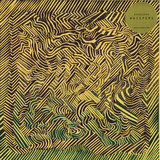
Recorded over a four-week period in early 2022, Freedom Lapse is the debut solo release of Australian multi-instrumentalist and composer Adam Halliwell. A versatile improviser and lover of performance, Halliwell has been an active contributor to numerous musical communities in recent years. The release of Freedom Lapse marks an exciting stage in Halliwell’s journey as an artist with the culmination of several important musical facets that are now becoming foundational to his practice.
As Halliwell tells us, Freedom Lapse owes its genesis to an epiphanic moment experienced whilst traversing a mountainous passage in Mexico, a place where ‘the past present and future stretch out in one place’. Entranced by this environment, its colours, the villages and local life, Halliwell listened to music that inspires him (he cites Jon Hassell here). The result: ‘complete aural, visual and spiritual completeness’, a moment of discovery, he explains. Shortly after, the material that now comprises Freedom Lapse was recorded, distilling this powerful sensorial experience into a body of music that he has now invited the world to share with him.
Throughout these recordings restrained improvised phrases and melodic ideas feature, often appearing as long refrains that soar above idiosyncratic beds of fractured percussion and junkyard bass-work. This use of contrast, which is central to the work, allows Freedom Lapse to tap the lucidity-chaos juxtapositional-style that lies at the heart of all good music in the ‘fourth-world’ idiom. Halliwell’s sensitivity to dynamics, form and narrative is potent on these recordings, which allow his winding, free-improvisations the space to unfold and extend patiently. All instruments on Freedom Lapse were written and recorded by Haliwell, with additional trumpet on Cygon Dance supplied by regular-collaborator Reuben Lewis. Freedom Lapse was mixed and produced by Halliwell and Jim Rindfleish.
Поиск:nu mark
Все
The Fall's fourth studio album Perverted by Language was released in 1983. The album was produced by the band's vocalist and songwriter Mark E. Smith and recorded at various studios in Manchester.
Perverted by Language features some of The Fall's most renowned tracks, including "Garden". The album's sound is characterized by its sharp and angular post-punk guitar riffs, driven by a heavy bass and drums rhythm section, all layered with Mark E. Smith's distinctive vocals.
Lyrically, Perverted by Language deals with themes of alienation, disorder, and the unpredictability of modern life. Smith's idiosyncratic and cryptic wordplay, including his penchant for inventing new words and phrases, adds to the album's overall sense of unease and dislocation.
Despite its challenging sound and lyrics, Perverted by Language is considered by many critics and fans to be one of The Fall's finest albums, showcasing the band at their creative and innovative peak. The album is available as a limited edition of 1500 individually numbered copies on pink coloured vinyl and includes an insert.
Remarkably marking the twenty-sixth addition to his illustrious discography, the
album blends introspective tunes with spirited tracks, all infused with Daltrey's
signature flair. It stands as a testament to his enduring adaptability and artistry,
seamlessly melding the nostalgic vibes of the 60s with contemporary nuances
and inviting listeners on a poignant voyage through time and sentiment. CD
pressing includes 3 additional tracks.
Im Jahr 2022 änderten Paramore im Stillen das Cover ihres gleichnamigen Albums auf allen DSPs von einem Bandfoto zu einem Bild von Hayley mit ihrer "Grow Up"-Jeansjacke. Das Ergebnis: Die Fans forderten, dass wir (das Label) das Album mit dem neuen Cover auf Vinyl pressen. Am 5.
Januar werden die Fans ihren Wunsch erfüllen, denn wir bringen Self-Titled wieder auf den Markt - nicht nur in schwarzem Standard-Vinyl, sondern auch mit exklusiven, von Hayley Williams ausgewählten Farben. Die Farben sind Repliken der Farben, die Hayleys Haare während des Zyklus trugen. Paramore hat die Top-Ten- und Doppel-Platin-Singles "Still Into You" und "Ain't It Fun".
Paramore steht auf den Listen der besten Alben des Jahrzehnts von Kerrang!, Billboard und AllMusic. Es bescherte der Band ihre erste Nummer eins in den US Billboard 200 und war auch die Nummer eins im Vereinigten Königreich, Irland, Australien, Neuseeland, Brasilien, Argentinien und Mexiko. Derzeit ist das Album mit Platin in den USA, Großbritannien und Kanada sowie mit Gold in Australien ausgezeichnet.
2023 markiert den Beginn einer neuen Ära für IN FLAMES mit der Veröffentlichung des vierzehnten Studioalbums Foregone - ein neues Meisterwerk einer Band, deren kreativer Output den Kurs und die Richtung des modernen Metals verändert hat.
Um den Aufwärtstrend fortzusetzen, markiert 2023 auch die Wiederveröffentlichung von vier bahnbrechenden Titeln aus dem umfangreichen Katalog der Band, nämlich A Sense of Purpose (2008) (15th Anniversary Edition inc. The Mirror's Truth EP, die noch nie auf Vinyl erhältlich war), Reroute to Remain (2002), Come Clarity (2006) (mehr als 400.000 verkaufte Exemplare weltweit + Gewinner des schwedischen Grammis-Preises für das beste Hard Rock-Album 2017) und Sounds of a Playground Fading (2011), die alle vergriffen und bei alten und neuen Jesterheads gleichermaßen sehr gefragt waren.
Die Wiederveröffentlichungen von 2023 enthalten alle Original Artworks mit einigen wenigen, sorgfältigen Retuschen. Alle Veröffentlichungen wurden von Justin Shturtz im legendären Sterling Sound Studio in Nashville, Tennessee, speziell für Vinyl neu gemastert. Alle Platten werden auf schweres 180g-Vinyl gepresst und sind mit dem unverkennbaren Jesterhead-Logo auf Seite D (z.B. A Sense of Purpose) versehen.
Repress!
For those who know, Bambooman is one of the most sought-after, probing, and distinctive voices in UK electronic music right now.
The Yorkshire-born producer's catalogue builds into an aural mosaic, comprising everything from scrunched up hip-hop to techno deviance, all delivered with an impish sense of individuality.
'Whispers' certainly resonates. It's a lengthy, bucolic work, an album of great breadth but also one of sustained mood – think those hazy summer evenings when shadows stretch out across the road, and autumn lingers around the corner.
This new album has a dusty, organic, and decidedly personal feel, much more at home with Jon Hassel's 'fourth world' aesthetic than the club.
The results are also imbued with an incredible sense of mystery, with Bambooman's productions frequently being shot through with a hallucinatory sense of the uncanny. Entirely self-composed, 'Whispers' utilises "lots of field recordings that I've collected over the last few years, while within the tracks you can find lots of the instruments, percussion, bells and whistles that have been gathered throughout my life."
In certain ways 'Whispers' is entirely autobiographical: Bambooman reaches back to his varied alter egos, to the ambient releases, art commissions, and soundtrack projects that litter his discography. The cover art was even pieced together by Oliver Pitt – of Glasgow group Golden Teacher – who was an early ally in the producer's sonic quest.
Stylistically 'Whispers' veers from avant hip-hop of Flying Lotus to the theoried composition of Terry Riley, from the future-forward percussive energy of Battles to the ever-evolving electronics of Mark Pritchard. It's a record marks by a fiercely independent spirit, but also by a close-knit cast of collaborators.
King Kashmere takes a starring turn, following the pair's collision on the recent 'SUPERGOD' EP.
Each vocal is recorded, chopped up and then spliced across the album, with Elsa Hewitt also making a number of appearances and re-appearances.
credits
The official new edition from this rare and great Afrobeat & Soukous masterpiece from Nigeria !
"Vibro Success Intercontinental Orchestra was an extraordinary group from the Central African Republic, founded by the sax player Rodolphe 'Beckers' Bekpa, also known as Master Békers, in the late 60's. The band achieved surprising domestic success after Beckers introduced the first drums to the Congolese Rumba rhythm. His innovation proved to be wildly popular so they were hired as the resident band of “ciel d’Afrique au Km5”, a night club in Bangui. The club was renowned as the temple of the Olympic Réal football team's fans and that visibility propelled them into becoming the official national orchestra.
1970 marked beginning of the band's international fame . Their fame spread beyond national borders until they became so popular that invitations began to arrive from nearby countries like Cameroon and Chad, the former of which the band would then tour that same year. The success of their performances prompted a further tour in 1972. According to Rodolphe Bépka, the audience enthusiasm Vibro encountered was bewildering. "We filled the old military stadium in Yaoundé in 1970, in 1972 the new Amadou Haïdjo stadium ... We are running with great success in the cities.” Their popularity was also growing in Chad, where they would tour several times through the early and mid 70's.
Towards the end of 1976, Vibro Success decided to take their music global and introduce Central African music to listeners worldwide. It worked. The turning point came in Nigeria. There the group achieved extraordinary success, with live performances followed by contracts with local labels like Scottie and Ben/Clover resulting in hit releases. Most of their LP's were originally released on this later label, Ben Limited, owned by Ben Okonkwo.
Ben, also known as Clover Sounds, brought a great number of the biggest bands from the country to market, bands like The Apostles, Akwassa,The Doves, Aktion, The Visitors, Mansion, Folk 77 and many others. Nearly all those groups started their recording careers in the label's studios based in the commercial heart of Aba, Abia State, one of Southeastern Nigeria’s largest cities. Aba at that time was a flourishing city, an important crossroads of people and culture with an intensive and active and cutting edge live music and nightlife.
But after that golden era the group began to lose its popularity. In the 1980's they returned to Bangui and resumed their old-time gigs in dance halls there - only to realize that their music didn't have the appeal it used to. Making matters worse, the domestic economic downturn accelerated, forcing the orchestra to slowly end its activities . Vibro Succès Intercontinental Orchestra disappeared at the end of the 80s and most of its members died in the 90s.
We discovered this LP during our first trip to Nigeria in 2016. While traveling in the east to meet up with a musician, we stopped for a night in a village. As often happens in Nigeria, information has a way of traveling fast. The news that a couple of white guys looking for records had arrived in the village the day before spread like light. When we awoke, we found a couple of elderly music lovers in the hall of our hotel with a little pile of records for sale. The nice cover of the “Drunkard” album was right on top!
At first we thought it was just another really good soukous album made by Vibro Success but after we heard “Drunkard” - we knew we had stumbled onto something very special. That was the “easy” part. Soon after, we had the idea of reissuing this LP and that was a bit harder. There were no credits on the cover and not much information about Vibro Succès. We started to ask to our friends to ask around, see if somebody knew them or the producer. That's when sadly we discovered that Ben Okonkwo had passed. So with no leads to follow and seemingly without any possibility of making progress on the matter, we "gave up" and returned to Italy.
A couple years later, in the summer of 2019, we found ourselves again in Aba. This time we had the chance to meet Nnamdi Okonkwo, the eldest son of the late Ben Okonkwo. After Nnamdi's mother and family agreed, he was glad to cooperate with us for the re-release of this special album."
SOURCED FROM THE ORIGINAL MASTER TAPES: 2LP SET PRESENTS 1991 ALBUM IN 45RPM SPEED FOR FIRST TIME.
PCM Digital Master to Analog Console to Lathe.
Dire Straits never made a big to-do about its final run. In classic understated British fashion, the band simply let its music speak for itself. And how. Originally released in September 1991, On Every Street became the group’s swan song – a lasting testament to the influence, musicianship, and integrity of an ensemble whose merit has never been tainted by cash-grab reunions or farewell treks. It remains an essential part of the Dire Straits catalog and a blueprint of the distinctive U.K. roots rock the collective played for its 15-year career.
Sourced from the original master tapes, housed in gatefold packaging, and pressed at RTI, Mobile Fidelity’s 180g 45RPM 2LP set of On Every Street presents the album like it has always been meant to be experienced: in reference-grade audiophile sound. Recorded at AIR Studios in London and produced by Dire Straits leader Mark Knopfler, it features all of the band’s sonic hallmarks – wide instrumental separation, visceral textures, seemingly limitless air, broad soundstages, atmospherics that you can almost reach out and feel. Each element is made more vibrant, physical, and lifelike on this collectible reissue, which marks the first time this 60-minute work has been available at 45RPM speed.
Afforded generous groove space and black backgrounds, the songs from On Every Street burst with nuanced details and vibrant colors. Dire Straits’ playing appears to float, their intricate performances organized amid hypnotic, fluid, three-dimensional arrangements. Mobile Fidelity’s definitive-sounding set also brings into transparent view Knopfler’s finely sculpted guitar lines, expressive tones, and laid-back vocals – as well as the balanced accompaniment from his band mates. Here’s a record on which you can hear the full blossom and decay of individual notes, and imagine the size and shape of the studio. It is in every regard a demonstration disc. And it happens to be filled with timeless fare.
Remarkably, On Every Street almost never came to light. Dire Straits initially dissolved in September 1988 after touring behind its blockbuster Brothers in Arms and suffering the departure of two members. At the time, Knopfler professed his desire to work on solo material; bassist John Illsley also explored side projects. But Knopfler’s decision in 1989 to form the country-leaning Notting Hillbillies reignited a spark to reconvene his primary band and craft a fresh batch of songs. Six years removed from Brothers in Arms, Knopfler, Illsley, keyboardist Alan Clark, and keyboardist Guy Fletcher teamed with A-list session pros – steel guitarist Paul Franklin, percussionist Danny Cummings, saxophonist Chris White, guitarist Phil Palmer included – to create what still stands as an unforgettable farewell.
The platinum record brings the band full circle in that it returns Dire Straits to a quartet formation; finds the group refreshingly out of step with the era’s prevailing trends; and sees Knopfler and Co. knocking out song after song with the deceptive ease of a punter tossing back a pint at a pub. That subtle cool, clever poise, and innate control – signature traits that no other band ever matched – dominate On Every Street. Knopfler’s clean, virtuosic six-string escapades unfurl with dizzying melodicism and economical efficiency. Led by his winding fills and focused solos, Dire Straits traverse a hybrid landscape of rock, jazz, country, boogie, blues, and pop strains with near-faultless prowess.
More than any other entry in the group’s oeuvre, On Every Street welcomes quick detours down back alleys and into the depths of human souls. What makes it more brilliant is its staunch refusal to cater to commercial expectations or take advantage of prior successes; every passage feels true, every measure echoed in the service of song. It’s evident in the humorous satire of “Heavy Fuel,” closeted desperation of the witty “Calling Elvis,” and shake-and-bake bounce of “The Bug.” It pours from the album’s darker corners, as on the high-and-lonesome melancholy of the title track and bruised emotionalism of “When It Comes to You.”
Hinting at the open-minded approaches and boundless curiosity he’d embrace as a solo artist, Knopfler doesn’t limit himself when it comes to style or subject matter. Look no further than “You and Your Friend,” a shuffle whose all-inclusive lyrics encourage an array of interpretative meanings. Another of the album’s deep cuts, “Iron Hand,” comes on as one of the band’s most memorable moments – the narrative addressing the abuses of power at the 1984 Battle of Orgreave during the U.K. miners’ strike. Given cinematic heft by the expert production, the true-fiction account puts into perspective the richness, poetry, and depth of On Every Street.
“Every victory has a taste that’s bittersweet,” sings Knopfler on the title track. At least that bittersweetness seldom sounded so damn good on record.
- A1: Jimmy James 3:14
- A2: Funky Boss 1:35
- A3: Pass The Mic 4:16
- A4: Gratitude 2:45
- A5: Lighten Up 2:41
- B1: Finger Lickin' Good 3:39
- B2: So What' Cha Want 3:37
- B3: The Biz Vs The Nuge 0:33
- B4: Time For Livin' 1:48
- B5: Something's Got To Give 3:28
- C1: The Blue Nun 0:31
- C2: Stand Together 2:47
- C3: Pow 2:13
- C4: The Maestro 2:52
- C5: Groove Holmes 2:33
- D1: Live At P. J.'s 3:18
- D2: Mark On The Bus 1:05
- D3: Professor Booty 4:11
- D4: In 3'S 2:22
- D5: Namaste 4:01
- E1: Dub The Mic (Instrumental) 4:27
- E2: Pass The Mic (Pt. 2, Skills To Pay The Bills) 4:26
- E3: Drunken Praying Mantis Style 2:37
- E4: Netty's Girl 3:27
- F3: So What' Cha Want (Butt Naked Version) 3:25
- F4: Groove Holmes (Live Vs. The Biz) 6:10
- G1: Stand Together (Live At French's Tavern, Sydney Australia) 2:29
- G2: Finger Lickin' Good (Government Cheese Remix) 4:13
- G3: Gratitude (Live At Budokan) 4:26
- G4: Honky Rink 2:11
- H1: Jimmy James (Original Original Version) 3:42
- H2: Boomin' Granny 2:20
- H3: Drinkin' Wine 4:42
- H4: So What' Cha Want (All The Way Live Freestyle Version) 3:37
- F1: The Skills To Pay The Bills (Original Version) 3:13
- F2: So What' Cha Want (Soul Assassin Remix Version) 4:05
Silver Biplanes are Tim Vass (one half of Razorcuts - the Creation-signed indie pop darlings) and Vanessa Vass (singer of Radcliffe jangle pop favourites The Melons. "A Moment In The Sun" is the debut long player by silver biplanes, a melodic indie band based in Bedfordshire, England. The band features wife-and-husband team Vanessa Vass and Tim Vass alongside drummer Rob Scott and the album is the pinnacle of a musical career which has previously seen Vanessa and Tim release songs on no fewer than 30 different labels between them! The band are lifelong fans of the highways and bi-ways of music and the album draws upon a wide range of influences. It's a heady mix of choruses, hooks and catchy tunes in which you'll hear traces of psychedelia, post-punk, krautrock and more. Tim was bassist and lyricist in cult indie band Razorcuts, co-writing all of their songs. Razorcuts releases regularly featured in the higher reaches of the independent charts throughout the late 80s, and included two top five albums recorded for the famous Creation label. Both albums were reissued in sellout deluxe vinyl editions in 2020. Razorcuts continue to appear on numerous compilations and their influence is often cited in books and internet articles. Tim has also played in Red Chair Fadeaway, Dandelion Wine and the Forever People. Vanessa was the singer in 90's indie band The Melons who are probably best remembered for their two legendary live sessions on Mark Radcliffe's Radio 1 show. The Melons released 6 singles and were regularly featured in the British music press.
repress !
Eighteen years ago, Oppenheimer Analysis made its indelible mark with the iconic track ‘The Devil’s Dancers,’ heralding the birth of the Minimal Wave label. Founded with a singular mission, the label set out to share this musical gem with the world. The inaugural release was the self-titled Oppenheimer Analysis EP, meticulously pressed onto high-quality 180-gram black vinyl, accompanied by a striking 18” x 24” poster adorned with captivating photos and lyrics. This historic release graced the world on December 6th, 2005. Remarkably, this EP has been elusive for a decade now.
In an exciting development, the fifth edition of the Oppenheimer Analysis self-titled EP is set to debut in December 2023, featuring the original remastered version of ‘The Devil’s Dancers.’ This EP is presented as a loving tribute to Martin Lloyd (1950-2013 R.I.P.), one half of Oppenheimer Analysis. The EP showcases select tracks from the 1982 Oppenheimer Analysis cassette titled “New Mexico,” along with two previously unreleased gems. The story behind Oppenheimer Analysis began when Andy Oppenheimer, a nuclear weapons consultant, and Martin Lloyd, also known for his work with the Survival Label and the project “Analysis,” crossed paths at a Science Fiction Convention in London in 1979. They shared the stage with notable bands like Hawkwind and Spizz Energi and garnered attention in the pages of Melody Maker.
This fifth edition release consists of 999 meticulously hand-numbered 180-gram black vinyl copies, each accompanied by the first edition poster insert. Notably, the spot color on the sleeve distinguishes each edition: green for the first, deep blue-green for the second, light powder blue for the third, mint green for the fourth, and a brighter aqua mint for this current fifth edition.
.- "Wishah" (meaning veil in Arabic) is a composition in five stages, written by Youmna Saba between 2021 and 2022, for voice, oud and electronics. Following her previous solo works "Njoum" (2014) and "Arb’een" (40) (2017), this album marks a significant turning point in Saba's journey. Created after leaving Beirut and settling in Paris, "Wishah" reveals a profound shift in her musical expression, informed by rigorous research in the sonic properties of sung Arabic phonemes and their role in shaping synthesised electronic sounds. The album employs a digital extension for the oud, a concept developed by Saba in her research project 'Taïma’. This device enhances the oud's sonic range, seamlessly integrating synthesised electronics. It also amplifies subtle, often overlooked sounds generated during playing, such as resonances and fingerboard friction. The composition is organized into five distinct stages, each contributing to a process of gradual revelation. As the tracks unfold, they strip away layers of constructed emotions and perceptions that have been intricately woven over time, to expose a space that no longer exists. Wishah is a farewell to home. Youmna Saba (born in Beirut, 1984) is a musician, composer and musicologist. Her current research focuses on instrument and space resonances in different sonic and musical contexts. With four albums to this date, she has collaborated with musicians of different musical expressions such as Kamilya Jubran, Floy Krouchi, Mike Cooper and the Neue Vocalsolisten ensemble, and has taken part in numerous artist residencies. She is the laureate of the first sound residency at Quai Branly Museum, Paris (2022-2023) with her research project and installation “La Réserve des Non-Dits”, now on view at the museum; and a laureate of the music residency program at the Cité Internationale des Arts, Paris (2020-2021).
Kallaikoi is the term used to refer to all the Celtic clans settled in ancient Gallaecia (northwest of the Iberian Peninsula). They were skilled in metallurgy and the production of tools and weapons, and worshiped a variety of deities, some of them related to nature
and war. Although they disappeared as an ethnic group in antiquity due to Romanization and subsequent consequences, their cultural legacy and Celtic influence in Galicia persist until today. Somehow, that ancestral legacy lingers between the grooves of this
release you have in your hands.
The double EP opens with The Transhumans: Techno, syncopated bass drums and industrial nuances appear in 'Ánima'. Ian Axide proposes robust and percussive Techno in 'Antro', while Obseth lets arpeggios fly in 'Pink Pills'. These tracks are indebted to that
Techno reminiscent of the late 90s golden years monolithic sound.
Side B opens with the local heroine and co-founder of Archaic, Proyecto Inopia, who opts for resounding rhythms and synth sequences sharp like shark teeth, seemingly paying homage to earlier decades in 'Hécate'. Mist Gasp also follows a metallic monotrax line in 'Standarte'. And the first 12” closes with Brai’s '75', where he unleashes Techno meets New and Synth Wave with a nod to the 80s.
The second EP lowers the intensity and tempo, opening with the calm and nostalgic Electro from Synth Alien in 'Pakhum'. Local artist Lefrenk raises the tempo and intensity in arpeggios in a propulsive Electro-Techno wave in 'Fenix'. And also from A Coruña, Roi controls the beats in an electro base that advances later towards obsessive and lacerating synths in 'Melusa'.
The last side of the double album is opened by David Karro with 'Ionosphere', a track with unsettling synths that doesn't need beats to shape its hypnotic and nebulous character. 27 003 delves into the sounds of classic Electro drum machines in 'Sweet', also with clear IDM and dreamy evocations. Corrosivo continues in that vein, with marked Sheffieldier echoes in 'Fast Food'. The EP is closed by Death Whistle with one of his usual opuses where darkness, beauty and epic coexist.
Gaucho — Steely Dan's Grammy-winning seventh studio album now on UHQR!
Definitive reissue Ultra High Quality Record, the pinnacle of high-quality vinyl!
45 RPM LP release limited to 20,000 numbered copies
Mastered by Bernie Grundman from a 1980 analogue tape copy originally EQ'd by Bob Ludwig
Pressed at Quality Record Pressings using 200-gram Clarity Vinyl®
Purest possible pressing and most visually stunning presentation and packaging!
Tip-on old style gatefold double pocket jackets with film lamination by Stoughton Printing
Gaucho — the iconic seventh studio album by Steely Dan, released in November 1980 — and Grammy-winner for Best Engineered Non-Classical Recording, was also Grammy-nominated for Album of the Year and Best Pop Performance by a Duo or Group with Vocals. The album represents the band's musical evolution towards a more polished and sleek sound, featuring a collection of meticulously crafted songs that blend jazz, rock, and pop music, while exploring themes of decadence, longing, and disillusionment.
Gaucho opens with the title track, a jazzy instrumental piece that sets the tone for the rest of the album. The standout tracks on the album include "Hey Nineteen," a catchy and upbeat tune that features a memorable saxophone riff and lyrics about an older man's attraction to a young woman, and "Babylon Sisters," a funky and groovy track that showcases the band's impeccable sense of rhythm and melody.
The sessions for Gaucho represented the band's typical penchant for studio perfectionism and obsessive recording technique. To record the album, the band used at least 42 different musicians, spent more than a year in the studio, and far exceeded the original monetary advance given by the record label. Still, the album features multiple layers of instrumentation, carefully crafted arrangements, and the use of top-notch session musicians to create a lush and sophisticated sound that is uniquely Steely Dan.
Despite its critical and commercial success, Gaucho was a challenging album to make. During the two-year span in which the album was recorded, the band was plagued by a number of creative, personal and professional problems. MCA, Warner Bros. and Steely Dan had a three-way legal battle over the rights to release the album. After it was released, jazz musician Keith Jarrett was given a co-writing credit on the title track after threatening legal action over plagiarism of Jarrett's song "'Long As You Know You're Living Yours."
Gaucho marked a significant stylistic change for the band, introducing a more minimal, groove- and atmosphere-based format. The harmonically complex chord changes that were a distinctive mark of earlier Steely Dan songs are less prominent on Gaucho, with the record's songs tending to revolve around a single rhythm or mood, although complex chord progressions were still present particularly in "Babylon Sisters" and "Glamour Profession." Gaucho proved to be Steely Dan's final studio album that Donald Fagen and Walter Becker would make together until the year 2000.
Gaucho reached No. 9 on the U.S. album chart and was certified platinum-selling. "Hey Nineteen" reached No. 10 on the U.S. Singles Chart and went to No. 1 in Canada. Pitchfork, in its review, describes the almost "pathologically overdetermined production" as elegant, arid and a little forbidding. "Every last tinkling chime sounds like it took 12 days to mix, because chances are, it did." The New York Times deemed Gaucho the best album of 1980, beating out Talking Heads' Remain in Light and Joy Division's Closer.
Founded by core members Walter Becker (bass) and Donald Fagen (vocals, keyboards), Steely Dan's popularity rose throughout the late 1970s on, and their seven albums throughout that period of time blended elements of jazz, rock, funk, R&B, and pop. Steely Dan created a sophisticated, distinctive sound with accessible melodic hooks, complex harmonies and time signatures, and a devotion to the recording studio. Becker and Fagen, with producer Gary Katz, gradually changed Steely Dan from a performing band to a studio project, hiring session musicians to record their compositions. The duo didn't perform live between 1974 and 1993. But their popularity nevertheless grew throughout the '70s as their albums became critical favorites and their singles became staples of Adult Oriented Radio and pop radio stations.
After a brief battle with esophageal cancer, Walter Becker died on September 3, 2017 at the age of 67. Steely Dan has sold more than 40 million albums worldwide and were inducted into the Rock and Roll Hall of Fame in March 2001. VH1 ranked Steely Dan at No. 82 on their list of the 100 Greatest Musical Artists of All Time. Rolling Stone ranked them No. 15 on its list of the 20 Greatest Duos of All Time.
This stereo UHQR reissue will be limited to 20,000 copies, with gold foil individually numbered jackets, housed in a premium slipcase with a wooden dowel spine.
Gaucho remains a testament to Steely Dan's enduring musical legacy and their ability to create timeless music that transcends genre and style.
- A1: Feelin (Feat Dj Spinn & Taso)
- A2: Show U How (Feat Dj Spinn)
- A3: Pass That Shit (Feat Dj Spinn & Taso)
- A4: She A Go (Feat Dj Spinn & Taso)
- B1: Only One (Feat Dj Spinn & Taso)
- B2: Everyday Of My Life (Feat Dj Phil)
- B3: I Don't Give A Fuck
- B4: Double Cup (Feat Dj Spinn)
- C1: Drank, Kush, Barz (Feat Dj Spinn)
- C2: Reggie
- C3: Acid Bit (Feat Addison Groove)
- D1: Leavin (Feat Dj Manny)
- D2: Let U No (Feat Dj Spinn)
- D3: I'm Too Hi (Feat Dj Earl)
DJ Rashad's 'Double Cup': Das bahnbrechende Debütalbum des Footwork-Pioniers
'Double Cup' ist das Debütstudioalbum des verstorbenen Footwork-Pioniers DJ Rashad, mit bürgerlichem Namen Rashad Harden, aus Chicago. Er verstarb kurz nach der Veröffentlichung dieses wegweisenden Albums. Als Gründer der Teklife-Crew war Rashad ein abenteuerlicher Geist und einer der furchtlosesten Innovatoren des Footwork-Genres. Er entwickelte sich von einer lokalen Größe in Chicago zu einer weltweit anerkannten Rhythmusreferenz für Produzenten.
Im Jahr 2013 über Hyperdub veröffentlicht, markierte 'Double Cup' einen Meilenstein für Footwork und wurde von Kritikern aus der Tanz- und Popmusik gleichermaßen gefeiert. Es vereint Elemente aus Jungle, Trap und House und ist gespickt mit zahlreichen Kollaborationen, da Rashad darauf bestand, dass "Footwork eine Familiensache ist".
'Double Cup' verzeichnet bis heute 14.000 Albumverkäufe in den USA und beeindruckende 6 Millionen Streams. Dieses Album ist nicht nur ein wichtiger Teil der Footwork-Geschichte, sondern auch ein beeindruckendes Werk eines Künstlers, der das Genre maßgeblich geprägt hat."
- Keiner Kann Uns Ab
- Bundeswehr
- Gen Italien
- Das Loch In Seinem Leben
- Liebe, Glück, Zufriedenheit
- Frei Von All Dem Hier
- Immer Der Gleiche Scheiß
- Irgendwie Muss Ich Was Tun
- Ordnung Muss Sein
- Nwe Hieß Mal So 'Ne Band
- 400: Mark
- Habt Ihr Angst, Dass Man Euch Versteht?
- Auf'm Bauernhof
- Leer Und Blöde Und Ohne Sinn
- Liebe, Glück, Zufriedenheit (Live, Scala Herford 1980)
- Immer Der Gleiche Scheiß (Live, Scala Herford 1980)
Brausepöter (Martin Lück: Gesang, Gitarre, Synthi und Bernd Hanhardt: Bass, Kemper: Drums, bestehen bis heute in dieser Besetzung!) gründeten sich 1978 in Ostwestfalen und hießen ursprünglich Nordwestdeutsches Eiterlager, kurz NWE. Genialer Name, aber Brausepöter ist auch nicht schlecht! Sie sind somit eine der ersten deutschen Punkbands und zwar Punk im eigentlichen Sinne oder wie es im US-Amerikanischen Fanzine Maximum Rocknroll hieß: "It"s indie punk in the purest John Peel sense" bzw. wie es Martin Lück ausdrückte "Wir wollten immer den ganzen Rock aus unserer Musik rausnehmen". 2019 veröffentlichten Brausepöter ihr letztes reguläres Album "Nerven geschädigt". Das Punk- Zine FAZ überschrieb ihre Rezension mit "Die neue Brausepöter-Platte zeigt, was Punk heute heißt". Für sie ist Brausepöter "eine deutsche Band, die leider zu gut war, um so berühmt zu werden wie Trio oder Die Toten Hosen. Auch Spiegel Online fand "Nerven geschädigt" gut: "In ihrem radikalen Desinteresse an allem, was gerade so geht und erfolgversprechend wäre, wirkt die Musik von Brausepöter heute sogar um einiges konsequenter als damals." Nun erscheint das verlorene 1979er Album "Keiner kann uns ab" Ursprünglich sollte die Platte, "79 mit einem Kassettenrecorder aufgenommen, bei ZickZack erscheinen, aber daraus wurde nichts. Ging das Tape auf dem Postweg verloren? Waren die Aufnahmen zu gut? Oder selbst für ZickZack zu radikal? Wir wissen es nicht. Wäre "Keiner kann uns ab" damals tatsächlich erschienen, wer weiß, vielleicht würde man das Album heute in einem Atemzug mit "Monarchie und Alltag", "Amok Koma" oder dem Debüt von Slime nennen. Vielleicht aber auch nicht, denn der Brausepöter-Sound ist zu eigen, zu baufällig, zu DIY - näher an den TVPs, näher an The Fall oder näher an den frühen Mekons als an den ganzen Punk Rock-Bands. Brausepöter sind eben "indie punk in the purest John Peel sense".
iPhupho L’ka Biko, the highly acclaimed Africanist experimental jazz band, is thrilled to announce the release of their debut EP, ‘Azania’ vinyl through Canadian record label, We Are Busy Bodies. Following the success of their two acclaimed singles, ‘Abaphezulu’, released through Brownswood Recordings, and ‘uThixo uKhona’, distributed by Platoon.
The band dedicated the year 2022 to recording and producing this eagerly awaited EP. Azania delves into a rich tapestry of themes that are close to the hearts of the band members, including spirituality, Pan Africanism, freedom, love, ritual, tradition, culture, and displacement. The EP showcases iPhupho L’ka Biko's unique musical fusion, blending jazz with indigenous African music of imvumane in tracks like Qamata, and infusing jazz with gospel influences in songs like Singabakho. This eclectic approach reflects the fluidity and diversity of the band’s sound, promising an immersive and captivating musical journey.
The band’s dynamic sound has been honed and perfected through their numerous live performances across the country, which have garnered them a devoted and loyal fan base. iPhupho L’ka Biko’s ability to connect with audiences through their energetic and soul-stirring performances has elevated them to become one of Johannesburg’s most revered musical collectives. “Azania the EP is an introduction of iPhupho L’ka Biko to the world, marking the beginning of a new era,” shares Nhlanhla Ngqaqu, the band's founder and composer.
Seven Steps to Heaven arrived at a crucial junction in Miles Davis' career. Recorded at two separate locations in spring 1963, it served as Davis' first release in more than a year – a layoff that was then unprecedented for the jazz visionary who had issued at least one LP a year since debuting in the early '50s. Equally notable, Seven Steps to Heaven marks the point at which the core of Davis' Second Great Quintet started to assemble. The twice Grammy-nominated effort is also Davis' final studio record to blend standards with originals. And it happens to be one of the expressive, well-played albums in the jazz canon.
Sourced from the original master tapes, pressed at RTI, and housed in a Stoughton gatefold jacket, Mobile Fidelity's 180g SuperVinyl LP of Seven Steps to Heaven adds yet another step (or more) towards the bliss suggested by the album title. Playing with standout clarity, detail, tone, and balance, this audiophile reissue pulls back the curtain on the instrumentalists. Afforded the tremendous advantages of SuperVinyl – including a nearly inaudible noise floor, dead-quiet surfaces, and superb groove definition – this numbered-edition version presents Davis and Co. amid a wide, deep soundstage whose dimensions and solidity help bring the record's historical importance and musical merit into focus. Warm, organic, and present, the SuperVinyl LP of Seven Steps to Heaven is what great-sounding hi-fi is all about.
And there's nary a passage on this 1963 landmark that isn't great. That Davis manages to make it feel so cohesive and seamless is a testament to the inspired performances and engaging compositions. Davis didn't draw it up the way it unfolded. No matter. He held trump cards that stayed up his sleeve for the next three decades: A drive to be nothing less than superb, a refusal to settle for mediocrity, and standards to which nearly no other composer or player could match. "The toughest critic I got, and the only one I worry about, is myself," Davis wrote in the liner notes. "The music has to get past me."
Davis' demanding approach partly explains why he switched up his band between the first and second sessions – and underscores how fast his mind was racing with new ideas. Seven Steps to Heaven acts as the stable bridge between the transitional period that followed the dissolution of his First Great Quintet and formation of the Second; without it, Davis perhaps doesn't invite then-23-year-old Herbie Hancock and a still-teenage Tony Williams into the fold. The trumpeter not only got his men – he preserved in amber for the only time (well, magnetic tape anyway) the chemistry and vibe he achieved with pianist Victor Feldman, drummer Frank Butler, tenor saxophonist George Coleman, and bassist Ron Carter.
That line-up gels for half of the six songs on Seven Steps to Heaven. Captured in Los Angeles April '63, the quintet stretches out on a luxurious reading of the late '20s New Orleans staple "Basin Street Blues"; lays on the romance for a candlelit stroll through the '40s standard "I Fall in Love Too Easily"; and explores the rounded contours and melodic crevices of the early blues "Baby Won't You Please Come Home." The performances are refined, elegant, emotional; the band lets the feelings linger and gives the listener time to absorb the colours and textures.
A month later, Davis returned to New York City with Coleman and Carter, and partnered them with Hancock and Williams. Tellingly, the quintet tried its collective hand at the title track and "Joshua" – Feldman-penned songs already recorded in Los Angeles – as well as the yearning "So Near, So Far." Those are the tunes that comprise the other piece of Seven Steps to Heaven, with the revised quintet's liquid pulse, articulate dynamics, and timing shifts a harbinger of things to come.
It's also worth mentioning that the interpretations of the bounding "Seven Steps to Heaven" – a showcase for Davis' trumpet – and interlocking "Joshua" netted considerable radio airplay and attracted the attention of other contemporaries who covered the songs. Keeping Carter and Williams as the rhythmic engine, and Hancock as the anchor between solo flights and structural motifs, Davis would soon soon welcome Wayne Shorter into the family and transform jazz. Again. The aptly – and, in hindsight, perhaps prophetically titled Seven Steps to Heaven – is how he got there.
Die Rap-Queen Nicki Minaj veröffentlicht ihr neues Album ‚Pink Friday 2‘! Nicki Minaj gibt seit mehr als einem Jahrzehnt den Ton in Musik, Mode und Schönheit an – sie hat Geschichte geschrieben und dabei ihre persönliche Superstar-Marke aufgebaut. Minaj war die erste Frau mit 100 Billboard Hot 100-Hits, mit erstaunlichen 114 Einträgen bis heute, zwei Nummer-1-Hits, 59 Top- 40-Hot-100-Hits und 19 Top-10-Hot-100-Hits. Sie hält auch den Rekord als Songwriterin für die „Most Billboard Hot 100 Entries Among Women in the 2010s“. Ihr wegweisendes Debüt Pink Friday, das 2020 sein 10-jähriges Bestehen feierte, verkaufte sich laut MRC Data in der ersten Woche über 375.000-mal – die größte Verkaufswoche für eine Hip-Hop-Künstlerin seit Lauryn Hill im Jahr 1998.
This music unites our common love for the essence of music, which contains harmonic structures and emotionality without borders." — Musique Infinie
Musique Infinie, the new duo consisting of Noémi Büchi and Feldermelder, is rooted in a shared desire to intertwine two composing veins, and to merge them into a new, massive core. While Büchi combined her background in classical and electro-acoustic music with a bold approach to composition on her highly acclaimed debut album 'Matter' (-OUS, 2022), multi-disciplinary musician and artist Feldermelder has been expanding his artistic practice into unexplored realms for over 20 years. Mutually, they've challenged themselves to fully engage on an artistic exploration aimed at making use of the elementary forces that unfold between them.
Their debut album, simply titled 'I', is a musical hybridization. The compositions make use of simple motives that are radically transformed by expanding them into intricate structures and fantastic layerings. The overcoming of genres with eclectic elements from classical music, jazz, film music and traditional music, combined with the vocabulary of experimental electronic music, complete the vertical plunge into this thickness. The emerging pieces lead into a paradoxical world, both disturbing and euphoric. Pieces that don't give in to calculations and expectations, but progress through ruptures and repetitions. The richness of the compositions and their analog, acoustic and orchestral character reflect the density of the world with its violence, its decadence, its fragility, but also its power, its ingenuity and its beauty.
Composer and sound artist Noémi Büchi creates electronic, symphonic maximalism. Her music is defined by a delicate synthesis of textural rhythms and electroacoustic-orchestral abstraction. She explores the potential of consonance and dissonance, contrasts rhythmic physicality with disruption and playfully emphasizes irregularities, creating an expansive listening experience marked by detail and elevation.
Feldermelder is a polymathic creative whose artistry spans composition, sound design, installation and code. He is co-founder of -OUS Records and an active member of Encor.studio, a collective specialising in creating immersive audio-visual installations. Through his work, he explores the idea of secrecy and its impact on our lives, using music and sound to create a thought-provoking and immersive experience for his audience.