Khidja continue to develop their tripped out vision with their first full EP for Hivern since 2019's 'Impossible Holiday'. In 'Something In The Water' the Romanian duo presents three new tracks that drift between genres and moods through open minded studio experimentation. "The Future Has Disappeared" and "Back To Vid" rely on contrasting sound palettes and a smart use of the stereo field to build up tension while 'Science of Ghosts' is an expansive number of galactic electro-funk. The 12" features a stripped out mystical remix by Azu Tiwaline while the digital release includes two extra oddball dancefloor cuts. Artwork by cm-dp.
Search:nu moods
With his Arjunamusic label and a growing catalog of category-defying releases, Samuel Rohrer
continues to quietly, yet confidently, make a name for himself as a genuinely unique figure within
the European electronic music realm. Over the past decade he has assembled a repertoire of
music that fills a sadly neglected gap in the modern musical landscape. That is to say, he has
made a number of “electronically”-aided works that never seem to make “electronic-ism” the main
selling point or raison d'être. Rohrer understands that we inhabit a networked media landscape
that no longer sees a novelty value in every synthetic or technological sound, and by realizing
this, he makes a music that fully engages with the present without completely disregarding the
exciting speculative sensibility that has allowed electronic music to solidify into a tradition. His
latest solo album, Hungry Ghosts, again shows the high quality of sonic design that can be
achieved by conceptualizing musical passages as living, breathing entities rather than as
signposts to some still distant reality.
Maybe more so than any of Rohrer’s solo records to date, Hungry Ghosts is the one that
most unambiguously displays the artist as a kind of inspired sound “cultivator” or landscaper
rather than just a straightforward “producer”. The emphasis here seems to be biological growth
processes rendered in musical form, and in fact some track titles namechecking the biodiversity
of the external world (“Slow Fox”, “Ctenophora”) and neurochemistry (“Serotonin”) lend some
additional credence to this interpretation.
As with previous outings, Rohrer starts with his skills as a genre-resistant percussionist
and builds from there, with dense clusters of drum hits and icy cymbal exclamations leading the
way into a wide-open atmosphere full of fragmented phrases, marked with strange reversals or
compressions of time. The percussive portions and other ambiences merge together in such a
way that the latter seems like a kind of shifting, holographic camouflage for the former; an effect
which makes for a greater than usual number of shifts in mood. Rohrer’s already established
ambiguity and mystery are the moods that permeate throughout, to be sure, but there are also
surprising moments of humorous whimsy (the flourishes of cartoon mischief and teasing silences
on the tracks “Human Regression” and “Bodylanguage”), reverence (the optimistic organ swells
and steady sequencer guiding “Ceremonism”), and meditative focus (the slow-motion spectral
waltz of “Treehouse”). Also notable here are very brief etudes, such as “Window Pain,” whose
dark, lush ebb and flow actually seem tailored to repeated or looped listening.
It’s particularly remarkable that almost all of this material is recorded solo and in a “live /
no overdubs” mode, given how much it feels like well-rehearsed ensemble playing, and given the
impeccable timing involved in continually exchanging the sounds at the very forefront of the mix.
And here we come full circle to the idea of “electronic music” mentioned at the beginning here:
instead of making us feel that we are in the presence of some fully-realized form brought back
from “the future,” Rohrer invites us instead to witness fascinating processes of transition and
mutation, and to value them for what they are now as much as for where they are headed.
Pretty Girl is in some sort of purple patch. Storming off the back of stellar releases ‘Arc’ and ‘Sun Phase’, the Naarm neophyte has officially arrived with her debut EP ‘Middle Ground’. What is now becoming somewhat of a signature, the artist lathers the debut in her very own saintly vocals. This is a four-track exposé of emotive dance music.
The A1 ‘Arc’ sets the tone. Flexing her muscles in sound design, PG pieces together a shimmering house runner. Featuring laser-like chords and delectable drum patterns, ‘Arc’ sends you skyward. Racking up giant streaming numbers and snaring features on more than 20 Spotify Editorial playlists, this one’s an underground bullseye.
'Empathy’ is the next to arrive. A call and response record that walks a lovely tightrope, perfectly balanced in both vocals and production. As the name suggests, the piece is stacked with deep motif’s that act as a window into Pretty Girl’s day-to-day. Her standout vocal production to date is met with her distinctive driving percussion and melancholic chord progressions.
'Lavender’ is a sharp percussive creation and a fitting welcome to the B-side. A one-line affair that burrows deeper and deeper. Once again, showing off her prowess in production, PG plays masterfully with sub-bass and glitchy drums resulting in a stellar display of late-night audio.
Although devoid of lyrics ‘The Only Way Is Through’, brims with feeling and is the perfect climax. Here’s a record full of hope and promise. Manipulating an array of judiciously chosen synths, PG shapes a vast interstellar space. Over the 8 minute trip, a palette of tight drum patterns come knocking, pleasantly surprising you with each visit. With time on her side, the producer gives each sonic element its moment in the spotlight. And girl do they shine! Where there is light, there is darkness and PG plays with both moods to perfection. Listen closely and you can almost hear the concentration involved in piecing this moving galaxy together.
With staggering streaming numbers across multiple platforms along with additions to some of the world’s most sought-after playlists, the time is now for Pretty Girl and the release of ‘Middle Ground’.
- A1: Primal Scream - Higher Than The Sun (Higher Than The Orb) (Higher Than The Orb)
- A2: Critical Rhythm - It Could Not Happen (Feat Jango Thriller & Vandal - Essential Trance Hall Mix)
- A3: Sheer Taft - Cascades (Hypnotone Mix)
- A4: History - Afrika (Feat Q-Tee - Love & Laughter Remix)
- B1: The Grid - Floatation
- B2: Saint Etienne - Speedwell
- B3: One Dove - Fallen (Album Version)
- C1: Transglobal Underground - Temple Head (Pacific Mix - Airwaves)
- C2: Massonix - Just A Little Bit More (Electro Instrumental Mix)
- C3: Elsi Curry - U Make Me Feel (Running Water Aka Workhouse Mix)
- C4: Family Sensation - I Don't Even Know If I Should Call You Baby (Marshall Jefferson Symphony Mix)
- D1: Bbg - Snappiness
- D2: The Aloof - Never Get Out The Boat (The Flying Mix)
- D3: Moodswings - Spiritual High (The Moodfood Megamix)
Mit ihrem Berlin-Umzug Mitte der 1970er Jahre wollten David Bowie und Iggy Pop nicht nur für einige Jahre den Lebensmittelpunkt ins Zentrum Europas verlegen, sondern auch musikalisches Neuland erkunden. Auf ihren Trips nach Paris oder Warschau ließen sie sich von neuer, europäischer Musik inspirieren die so ganz konträr zu der grassierenden Disco-Welle in den USA war. 16 dieser Tracks sind nun von St. Etienne's Bob Stanley und Jason Wood (u.a. 'English Weather') zu einer Compilation zusammengestellt worden, die einen Einblick in die europäische Elektronik- und Krautrock-Szene gibt, von der sich vor allem Bowie inspirieren ließ. Passend benannt nach einem von Bowie's Liebelings-Bars in Berlin, kommt 'Cafe' Exil' mit Tracks von Amon Düül II, Faust, Michael Rother, Brian Eno, Soft Machine, Cluster oder auch der Jan Hammer Group! Die Doppel-Vinyl kommt mit dem Edgar Froese-Bonustrack 'Epsilon In Malaysian Pale'! Natürlich mit umfangreichen, sehr informativen Liner Notes zu allen Tracks!
Born of chance meetings in Accra, the band brings together a Burundian producer and vocalist, Betina Quest; with a Ghanaian singer-songwriter, Eli A Free; and a German percussionist and multiinstrumentalist, Ma.ttic. Nyamekye Junction take their name from a bustling junction in the Ghanaian capital, where a number of major roads merge, embodying the musical approach of the band: a singular sound at the junction of their cultural heritages.
In Eli’s words, ‘Dasein’ (from the German for ‘existence’, ‘being there’), captures “the need to live in this moment here and now with a heart full of gratitude” while exploring a number of interlinked themes, including the importance of one's environment – cultural and political, as well as physical - in situating, shaping and explaining each individual’s identity.
The band adeptly channel a wide range of influences, from the Ghanaian legends Ebo Taylor and Osibisa through to US mainstays such as Nina Simone and Erykah Badu; with equal regard given to UK innovators like Benjamin Clementine and Mala. The resulting debut EP ‘Dasein’ is a stunning collage which showcases the band’s impressive range and evolving sound by traversing a diverse range of moods, rhythms and textures.
The lead single ‘GMT’ (short for ‘Ghana Man Time’) is a dancefloor-ready track that carries a deft political message. Driven by a weighty bassline alongside punching drums and percussion, for a rhythm section that would be at home in any broken-beat set, the song explores and emphasises differing conceptions of time between the West and Africa with a playful irony.
- 1: Out Cont (Out Conte) Chaplin 03:47
- 1: 2 5 A.m. トクマルシューゴ / Shugo Tokumaru 05:48
- 1: 3 July F.l.y. 03:20
- 1: 4 あきのつばめ / Aki No Tsubame わすれろ草 / Wasurerogusa 04:24
- 1: 5 人が生まれる / Hito Ga Umareru ジョナサン・コンディショナー / Jonathan Conditioner 05:39
- 1: 6 或る夕べ / An Evening Litany 中村祐子 / Yuko Nakamura 02:02
- 1: 7 Wedding Song Kama Aina 05:30
- 1: 8 Ginger Yuko Kono 03:52
- 1: 9 つけも / Tsukemo ジョンのサン / Jon No Son 0:0
- 1: 0 ゆうたいりだつ / Yūtai-Ridatsu 森山ふとし / Futoshi Moriyama 06:9
- 1: Blue Mmm 05:9
- 1: 2 夜 / Night てんしんくん / Tenshinkun 0:42
- 2: 1 Origami Daisuke Tanabe 03:1
- 2: 不夜城 / Fuyajo その他の短編ズ / Sonotanotanpenz 01:36
- 2: 3 水 / Water んミィ / Nnmie 0:5
- 2: 4 君のような目にいつかなりたい / Wanna Be Like Your Eyes Someday わびさびくらぶ / Wabisabi Club 03:19
- 2: 5 スミヨシ / Sumiyoshi かきつばた / Kakitubata 07:43
- 2: 6 野球 / Baseball Hose 0:31
- 2: 7 グッモーニン / Good Morning ブラジル / Brazil 0:59
- 2: 8 わんわんのテーマ / The Theme Of Oneone わんわん / Oneone 04:38
- 2: 9 アルペジオ / Arpeggio 王舟 / Oh Shu 01:30
- 2: 10 少年少女 / Boys & Girls 惑星のかぞえかた / How To Count Planets 03:50
- 2: 11 雪がや / Yukiga Ya コントノボ / Contonovo 0:5
- 2: 1 夢が叶った / Yumega Kanatta / My Dream Has Come True 狩生健志 / Kariu Kenji 03:15
- 2: 13 話し方 / How To Speak Fuji||||||||||Ta 04:53
- 2: 14 染め / Dye (Some) 沼田佳命子 / Kanako Numata 03:11
Following the »Minna Miteru« compilation, released in 2020, Morr Music announces a sequel, dedicated to Japanese indie music, overflowing with surprises and welcome discoveries. Like its predecessor, »Minna Miteru 2« is compiled by Saya of Tenniscoats, with the support of Markus Acher (The Notwist). It’s also another part of the Minna Miteru universe, alongside retrospective albums by The Andersens (»There Is A Sound«, 2020) and yumbo (»The Fruit Of Errata«, 2021). Taken together, these albums suggest a scene in rude health, sharing a unique vibration.
If its predecessor circled around Tenniscoats and their close friends, the second volume, though featuring a collaboration between Tenniscoats and Deerhoof as oneone, reaches far further afield, drawing from music old and new, far and wide. Consistent across »Minna Miteru 2« is a sense of wonder and a cheerful unpredictability: you never quite know what you’ll hear next. There are some gorgeous indie pop songs here, like Yuko Kono’s »Ginger« or HOSE’s »Baseball«, but there are other sounds too, like Kariu Kenji’s blue-hued electro-pop, or the wheezing pipe-organ ambient of FUJI||||||||||TA: »Minna Miteru 2« hints at new kinds of beauty.
Some of the more widely known names here contribute typically gorgeous melodies – Kama Aina’s »Wedding Song«, from 2005’s »Hawaii Hawaii« CD, is a reflective tune that combines a country-ish lilt with hints of slack-key guitar. Shugo Tokumaru’s »5 A.M.« is a delirious psychedelic pop mantra, drawn from his excellent 2005 album, »L.S.T.«. Many of the revelations, though, come from artists and groups relatively unknown outside Japan. The lovely, disorienting glitch-folk of Wasurerogusa features Aki Tsuyuko, perhaps best known for her albums on Thrill Jockey and Jim O’Rourke’s Moikai label, collaborating with psych-folk legends Eddie Marcon.
There’s also the delightful synth-pop of Jonathan Conditioner; the electronic dreamscape of Chaplin, whose opening »Out Cont« runs along several parallel paths at once; the twinkling, acoustic jangle at the heart of mmm’s luscious »Blue«; and a curious collection of miniatures, from acts like tenshinkun, Daisuke Tanabe and NNMIE, that embrace a childlike curiosity, essaying a kind of toytown pop-tronica.
The twenty-six songs on »Minna Miteru 2« repeatedly catch you unawares, upending your expectations and signaling both the breadth and depth of the Japanese indie underground. It’s a compilation of play and pleasure, but also of bold experiment smuggled into the everyday through pop music’s welcoming moods, magically creating a new world for the listener, spun out of the air and woven in between your ears.
Note price increase and cat number change from last time around. In 1968, Don Cherry had already established himself as one of the leading voices of the avant-garde. Having pioneered free jazz as a member of Ornette Coleman's classic quartet, and with a high profile collaboration with John Coltrane under his belt, the globetrotting jazz trumpeter settled in Sweden with his partner Moki and her daughter Neneh. There, he assembled a group of Swedish musicians and led a series of weekly workshops at the ABF, or Workers' Educational Association, from February to April of 1968, with lessons on extended forms of improvisation including breathing, drones, Turkish rhythms, overtones, silence, natural voices, and Indian scales. That summer, saxophonist and recording engineer Göran Freese who later recorded Don's classic Organic Music Society and Eternal Now LPs invited Don, members of his two working bands, and a Turkish drummer to his summer house in Kummelnäs, just outside of Stockholm, for a series of rehearsals and jam sessions that put the prior months' workshops into practice. Long relegated to the status of a mysterious footnote in Don's sessionography, tapes from this session, as well as one professionally mixed tape intended for release, were recently found in the vaults of the Swedish Jazz Archive, and the lost Summer House Sessions are finally available over fifty years after they were recorded. On July 20, the musicians gathered at Freese's summer house included Bernt Rosengren (tenor saxophone, flutes, clarinet), Tommy Koverhult (tenor saxophone, flutes), Leif Wennerström (drums), and Torbjörn Hultcrantz (bass) from Don's Swedish group; Jacques Thollot (drums) and Kent Carter (bass) from his newly formed international band New York Total Music Company; Bülent Ates (hand drum, drums), who was visiting from Turkey; and Don (pocket trumpet, flutes, percussion) himself. Lacking a common language, the players used music as their common means of communication. In this way, these frenetic and freewheeling sessions anticipate Don's turn to more explicitly pan-ethnic expression, preceding his epochal Eternal Rhythm dates by four months. The octet, comprising musicians from America, France, Sweden, and Turkey, was a perfect vehicle for Don's budding pursuit of "collage music," a concept inspired in part by the shortwave radio on which Don listened to sounds from around the world. Using the collage metaphor, Don eliminated solos and the introduction of tunes, transforming a wealth of melodies, sounds, and rhythms into poetic suites of different moods and changing forms. The Summer House Sessions ensemble joyously layers manifold cultural idioms, traversing the airy peaks and serene valleys of Cherry's earthly vision. In the Swedish Jazz Archive quite a few other recordings from the same day were to be found. Some of the highlights are heard as bonus material on the CD edition of this album. The octet is augmented by producer and saxophone player Gunnar Lindqvist, who led the Swedish free jazz orchestra G.L. Unit on the album Orangutang, and drummer Sune Spångberg, who recorded with Albert Ayler in 1962. The bonus CD also includes a track without Cherry featuring Jacques Thollot joined by five Swedes including Lindqvist, Tommy Koverhult, Sune Spångberg, and others. With liner notes by Magnus Nygren and album art featuring a cover painting by Moki Cherry: Untitled, ca. 1967-68. Track list: 1. Summer House Sessions 2. Summer House Sessions.
Coloured Vinyl
WRWTFWW Records is absolutely honored to announce the release of Kenji Kawai’s complete soundtrack to Mamoru Oshii's 1993 superb political thriller science-fiction mecha anime PATLABOR 2: The Movie, available on vinyl for the first time ever and housed in a beautiful heavy gatefold sleeve with obi, as well as on digipack CD. Both versions come with liner notes by the great Masaaki Hara.
A true soundtrack maestro, Kenji Kawai is behind the legendary soundscapes of cult animes and movies such as Ghost in the Shell, Avalon, Ring, Ip Man, and Seven Swords among numerous others. PATLABOR 2: The Movie (Original Soundtrack) is one of his most experimental offerings, an outstanding palette of emotion-filled ambient atmospherics and percussion mastery breathing beautifully through Kawai’s minimalism meets modern classical approach. His symphony of moods paints a delicate picture of urban isolation, a central theme in the movie, but doesn’t hide hints of hope for a joyful future.
PATLABOR 2: The Movie (Original Soundtrack) is an ideal companion to Kenji Kawai’s Ghost in the Shell soundtrack, already available on WRWTFWW Records.
UK label Dawn State continue their hot streak this summer with further eclectic moods for the dance floor and beyond. On the tools for the fifth outing on the label is KIDWHO, a blossoming talent who through the last years whilst enduring the pandemic found light by burying himself in his studio experiencing new creative flows. The “Warez House” EP varies in tastes, similar to the highs and lows of the times that just passed us by.
Diving into the deep end is the title track, “Warez House”, loopy and hypnotic, swaying between shades of low end leaned house and techno. Off kilter synths and pads maneuver their way around the driving force of the track. “It came together layer by layer, eventually turning into a dense (and at times, unruly!) groove. A final touch
of atmospherics from an old Roland ROMpler and the track was done - bar a generous helping hand in mixdown from Joel Kane (who also turned out a heads-down dub version which might make an appearance!).”
Leaning in a more hazy direction is the blissful cruiser, “Leploop Lagoon”, a deep and emotive vibe crafted especially for the early mornings. A sophisticated deep house energy from the talented producer. “‘Leploop Lagoon’ is the oldest track on the EP, a cleaned-up version of a rough jam I made around four years back. It takes its name from the Leploop, a quirky semi-modular analogue groovebox of sorts, hand-built in Italy. A very unique and unpredictable machine, it’s on bass duties here as well as providing some percussion sounds via the MPC sampler.”
On the flip side lies “Spectral Pattern”, and it packs a certain punch. The rolling arrangement converses in harmony with icy hi-hats that flash in and out teasing the energy, all of the elements having space to breathe and work their magic.“‘Spectral Pattern’ came together quickly one very productive weekend in the studio last year. It developed from the bass sequence, which comes from a Yamaha TG-33, an unassuming 80s digital synth known for its glassy mix of ROM samples and FM tones - very New Age sounding, or 90s computer game soundtracks. But when you strip it back to basics, it punches hard in the low-end.”
Slipping on to the B side is a five minute transcendental trip, offering yet another series of textures to this otherworldly EP. The final track “At Least We Hav Music” is an ethereal soundscape waiting to be explored, wandering amongst ambient realms throughout. “The label was keen to include an ambient track on the release, and I wanted to record something specially for them. At first I had in mind something droning and melancholic, but after a few experiments with cassette
loops and reverb pedals this was the one that stood out. It was recorded during one of the lockdowns, and I guess I needed to create something that sounded more hopeful than brooding. I messaged DS boss Tom Haus with a rough version, and we went on to have a grumble about the gloomy state of things, locked-down in our respective cities and missing friends, family, activities… At some point I wrote ‘at least we have music’ - and almost as soon as I had sent it I knew I had found the track’s title. I’m very lucky to have had my home studio as a refuge through the long months of lockdown, and I’m honoured to have the chance share some of my output from this period on this record.”
KIDWHO fitting the Dawn State ethos to a tee here as they set up shop for what looks to be another fantastic release. “Each of these tracks came about in quite different ways. Like many creative people, I had moments of struggle during the pandemic, where the lack of variety and day-to-day stimulation lead to periods of writer’s block, and so I used those times to focus on smaller, more manageable projects such as making synth patches, recording sounds and and throwing together short loops in my samplers for later use. A number of
these short loops eventually laid the foundations for title track ‘Warez House’. Big thanks to Dawn State, Joel Kane, El Choop and everyone else who has helped make this happen.” -
KIDWHO
Not to be confused with English commercial funk outfit, Lou Ragland's Hot Chocolate trio steamed out of the Cleveland scene in the early '70s powered by their own recipe of groove-forward R&B. Housed in a replica jacket showcasing Dick Dugan's ubiquitous cartooning, Numero is proud to present the first American repressing of this Forest City touchstone since its original release; a steaming mugful of funkier-than-thou tunes from the incomparable Ragland songbook. Hot is, after all, funk's ideal serving temperature.
LIMITED release (no repress) 300 units hand numbered, stamped copies with insert.
After the first Jam experiment back in 2019 here we have the second chapter of the Bosconi Gang Band session pressed on this limited white label hand stamped & numbered waxx.
This jam was recorded in front of an actual crowd in an event held at Manifattura tabacchi Florence on the 21st February 2020 just a couple weeks before the pandemic started and the first lockdown happened in Italy.
The concept is the same as the previous one with Fabio Della Torre on the mixer conducting the gang mysitc gulf this time with: from left to right Ennio Colaci from Minimono, Dukwa, Rufus, Andrea Giachetti & Antonio Pecori from "The Clover" and Dj Rou.
As it happened with the previous release, the actual jam follows the order of the live execution which naturally developed in a crescendo of speed and intensity.
The result is a collection of 5 of the best takes slightly mixed and revisited afterwards but very much faithful to those performed live.
This is another adventurous release that goes well off grid, plays with strange temps, original textures and moods.
Bosconi Gang Band aims to be an itinerant live improvisational project open to all artists who have released on Bosconi Records that sets the goal of always being unpredictable and special, naturally affected by the artists who perform always creating something unplanned new, and unexpected.
"A very exciting blueprint for the continued evolution of modern dance music!!"
Nightlands is the solo project of The War on Drugs’ bassist and multi-instrumentalist Dave Hartley. Amid massive global paradigm shifts Dave Hartley (aka Nightlands) became a father twice over and left his native Philadelphia for Asheville, where the pace of daily life is slower and it's easier to maintain a zoomed-out perspective on modern life. From the newfound refuge of a studio he built using the bones of a barn attached to his hundred-something-year-old house in the mountains, Hartley has tailored a collection of well-crafted pop rock, pointedly titled Moonshine. Guided by some of the harmonic sensibilities that have helped make The War on Drugs a force in modern music, Moonshine combines immaculate-yet-dense vocal stacks and billowy clouds of effected keyboards with classic songcraft, revealing previously unseen acreage in the unfurling dreamscape that is Nightlands. The surrealistic album art by Austin-based illustrator Jaime Zuverza depicts an archway opening to the stars over the surface of an idyllic sea flanked by both moon and sun. Similarly, Moonshine reveals portals within portals leading to ever deeper places in Hartley's vocal-centered labyrinth. Throughout the album, there are plenty of buoyant high moods where the pitter-patter of drum machine and humming digital organ hints at Hartley's low-key tropicalia streak, but the lyrics anchor the dreaminess in real-world sorrow and resignation. Nowhere are these sentiments more apparent than on the title track, a nearly acapella recitation of "America the Beautiful" that poignantly hovers over a mirage of soft keyboards before dovetailing into Hartley's own words about the hypocrisy of the American dream. "This was never intended to be an overtly political record" he admits. "I have so many friends who are able to process the frustration of current events gracefully or with wisdom or in a nuanced way, but I often find myself just consumed with anger about it all. I decided to just let that come out, and it manifested itself lyrically." Moonshine's wide-eyed, utopian instrumental backdrops provide sharp contrast to Hartley's lyrics, which sting even harder within the sweetness. Even in light of the album's vocal emphasis, Hartley's history as a bassist brilliantly beams through Moonshine, giving effortless and sprightly movement to songs like "Down Here," which also features an extended section of saxophone lent by his Western Vinyl labelmate, Joseph Shabason. In addition to Shabason, the album hosts a short list of remote collaborators including four of Hartley's bandmates from The War on Drugs, Robbie Bennet, Anthony Lamarca, Eliza Hardy Jones, and Charlie Hall, as well as exotica virtuoso Frank Locrasto (Cass McCombs, Fruit Bats), and producer Adam McDaniel (Avey Tare, Angel Olsen). Hartley was forced to keep the guest list small out of the necessity of pandemic isolation, coupled with his move to a smaller city, all of which challenged him to do most of the album's heavy lifting right down to the mixing duties, resulting in the most independent effort of his career. By that measure, Moonshine is also the clearest image yet of Dave Hartley as a person and creator.
Diabolical Death Metal titans BELPHEGOR unleash their twelfth studio album!
With “The Devils”, long-running Diabolical Death Metal titans BELPHEGOR unleash their twelfth studio album upon the masses, which proves to be one of the strongest and most elaborate records in the group’s career. Produced at renowned Fascination Studios with Jens Bogren (Kreator, Rotting Christ, At The Gates), “The Devils” sounds absolutely crushing and dynamic, sonically pushing the immense variety of the eight tracks to new heights. Blending German and English lyrics, lead single ‘Totentanz – Dance Macabre’ is as ferocious as it gets with its insane barrage of blast beats, spiteful lyrics, and sinister guitar melodies. ‘Glorifizierung des Teufels’ (= ‘Glorification of the Devil’) and ‘Virtus Asinaria – Prayer’ offer epic, mid-paced grandeur and chanted vocals and choirs adding new shades of black to their stylistic palette. The title-track or ‘Damnation – Höllensturz’ prove to be more complex pieces, shifting moods and tempos with ease and expanding BELPHEGOR’s blasphemous onslaught with fascinating twists and turns. Rounded off by impressive artwork created by Seth Siro Anton (Septicflesh, Nile, Paradise Lost), “The Devils” marks the band’s third collaboration with one of metal’s most prolific designers. Ultimately, “The Devils” is an album that musically builds upon BELPHEGOR’s trademark sound, in essence a combination of traditional death and black metal, deeply rooted in the 90’s, yet boasts with intricate compositions and detailed arrangements underlining their outstanding position within the international extreme metal circuit. Known as tirelessly touring band, BELPHEGOR currently presents a few of the new songs during an European tour with I Am Morbid and Hate before hitting South America in May/June 2022, and an intense festival season including Wacken Open Air, Bloodstock, Sweden Rock and many more.
Mix and mastering by Jens Bogren at Fascination Street Studios Örebro, Sweden. Drum engineering by David Castillo at Fascination Street Studios in Stockholm.
Guitars, Bass and Vocals recorded by Jakob Klingsbigl at Studio Mischmaschine Oberalm, Austria.
Artwork by Seth Siro Anton
The Girl With The Gun for the first time on Ltd 7" Vinyl
Another dream come true! The first 7" ever to contain the three grooviest and most danceable tracks from the legendary soundtrack to La ragazza con la pistola, Mario Monicelli's 1968 cult film depicting the mod subculture of 60s Swinging London and starring Monica Vitti in one of her most iconic roles. (In the mid-90s two of the tracks were compiled in the seminal compilation Easy Tempo Vol. 2.)
Starting the party is Girl With The Gun, a mod-generation classic featuring a psych-funk rhythm section and an exotic-sounding theme played by a sitar. Next on Side A we find the danceable lushness of Shake Balera, a shake number clearly influenced by the London moods portrayed a couple of years earlier by Michelangelo Antonioni in Blow Up, with Antonello Vannucchi on Hammond and Carlo Pes on guitar (the piece was later covered by Calibro35 in their first album). Last but not least, on the flip is the super intriguing Rapimento in Sicilia, which opens with a spy-movie vibe before switching to a hectic dance of sitar, electric bass and wild percussion.
All tracks were written by Peppino De Luca and performed by his trusted and recurring musicians, the legendary super-group of Italian session players I Marc 4, who bring in their signature psycho-beat sound.
Highly recommended for diggers and DJs.
- A1: The Perfect Crime
- A2: Smilers Strange Politely
- A3: Material Condition
- A4: Butchering The Punchline
- A5: Up To My Elbows
- B1: I'm In The Water
- B2: Tricks On Everything
- B3: Caveats
- B4: Figure Eights
- B5: The Bell
LTD Clear Vinyl[24,79 €]
RIYL: Guided by Voices, Pavement, The Clean, XTC, Flying Nun. The title of The Stroppies' newest LP, Levity, serves as a creative statement of intent and an acknowledgment of the dichotomy between the music they have made and the conditions in which they were produced. For a group that started over an initial idea to "create open ended music, quickly and haphazardly”, the logistical challenges of creating their second album in the midst of a pandemic, in a city that endured the longest lockdown in the world, created a need to redefine process. Levity, The Stroppies strongest creative statement to date, is the result of this new approach to creative process. Playful yet focused, but broader in scope and experimentation than previous efforts, the ten songs that comprise Levity continue the band's exploration of the pop song as both foil for experimentation and conduit for personal reflection. Whereas the group's debut LP Whoosh! demonstrated their ability to craft clean, concise jangle pop, Levity takes a different route by utilizing a darker pallet of sounds to create its impressionistic whole. Fuzz and distortion are employed to add weight to songs built on tape loops and Motorik drum patterns. Warbling synthesisers and modulated keys add new moods and dimensions to The Stroppies unique brand of pop classicism. Thematically, the band continues their exploration of the personal refracted through the lens of the absurd, though this time around the music feels a few shades darker, a somewhat inevitable consequence of the collective trauma of the past 24 months. While the narrative around the 'lockdown record' is increasingly commonplace, there are unavoidable realities involved in making creative decisions under such circumstances that can't be overlooked, especially for a band that thrives on collaboration. "The restrictions around COVID really informed the way we made the record', says Angus Lord, the band's co-founder and guitarist. "It meant that there was a lot less opportunity to meet and build ideas collaboratively, which is how we’ve worked in the past. Instead, ideas were developed in isolation, then shared digitally, developing slowly over correspondence and only bearing fruit when we were able to be in a room together. I think this had a big effect on the songwriting and execution.” This process even extended to the studio, where The Stroppies found a kindred spirit in John Lee of Phaedra Studios, who mixed the record in isolation, somehow managing to synthesise the band's pop sensibilities with their penchant for studio experimentation. Furthermore, the addition of new member Zoe Monk, known for playing in a diverse array of Melbourne acts (Eggy, Thibault, The Opals) contributed both synthesiser experimentation and rock solid rhythm guitar, a huge addition to the band's developing sound, an infectious combination of the off-kilter 90s US underground, British artpunk ala Wire and a more than generous love of classic Pop songwriting. The Stroppies have managed to craft a record of weight and substance. Through Levity the Stroppies have, at least temporarily, found their feet amongst the chaos
RIYL: Guided by Voices, Pavement, The Clean, XTC, Flying Nun. The title of The Stroppies' newest LP, Levity, serves as a creative statement of intent and an acknowledgment of the dichotomy between the music they have made and the conditions in which they were produced. Levity, The Stroppies strongest creative statement to date, is the result of this new approach to creative process. Playful yet focused, but broader in scope and experimentation than previous efforts, the ten songs that comprise Levity continue the band's exploration of the pop song as both foil for experimentation and conduit for personal reflection. Whereas the group's debut LP Whoosh! demonstrated their ability to craft clean, concise jangle pop, Levity takes a different route by utilizing a darker pallet of sounds to create its impressionistic whole. Fuzz and distortion are employed to add weight to songs built on tape loops and Motorik drum patterns. Warbling synthesisers and modulated keys add new moods and dimensions to The Stroppies unique brand of pop classicism. Thematically, the band continues their exploration of the personal refracted through the lens of the absurd, though this time around the music feels a few shades darker, a somewhat inevitable consequence of the collective trauma of the past 24 months. While the narrative around the 'lockdown record' is increasingly commonplace, there are unavoidable realities involved in making creative decisions under such circumstances that can't be overlooked, especially for a band that thrives on collaboration. "The restrictions around COVID really informed the way we made the record', says Angus Lord, the band's co-founder and guitarist. "It meant that there was a lot less opportunity to meet and build ideas collaboratively, which is how we've worked in the past. Instead, ideas were developed in isolation, then shared digitally, developing slowly over correspondence and only bearing fruit when we were able to be in a room together. I think this had a big effect on the songwriting and execution." This process even extended to the studio, where The Stroppies found a kindred spirit in John Lee of Phaedra Studios, who mixed the record in isolation, somehow managing to synthesise the band's pop sensibilities with their penchant for studio experimentation. Furthermore, the addition of new member Zoe Monk, known for playing in a diverse array of Melbourne acts (Eggy, Thibault, The Opals) contributed both synthesiser experimentation and rock solid rhythm guitar, a huge addition to the band's developing sound, an infectious combination of the off-kilter 90s US underground, British artpunk ala Wire and a more than generous love of classic Pop songwriting. The Stroppies have managed to craft a record of weight and substance. Through Levity the Stroppies have, at least temporarily, found their feet amongst the chaos.
Cologne-based, multi-instrumentalist and creative jazz powerhouse
Gianni Brezzo presents his full-length LP “Tutto Passa,” arriving via
Berlin’s Jakarta Records May 5th.
Gianni Brezzo is the jazz affiliated band / studio project headed by
Cologne-based producer & creative maestro Marvin Horsch, whose diverse musical profile is reflected both in his scene-hopping as well as his creative output. Besides producing cologne bands like Keshavara, Woman and Xul Zolar, Gianni has released a number of EP and LP’s since 2017, culminating most recently with “The Awakening” EP in 2021 on Jakarta Records. While Gianni’s works are usually instrumental only, “The Awakening” featured vocal appearances from Berlin/Tel Aviv based singer / producer J.Lamotta and soul singer Otis Junior from Louisville, Kentucky. Gianni’s tracks have consistently placed on Editorial Lists including Spotify’s “State Of Jazz” and “Café / Croissant”, and most recently was synced in an episode of Gossip Girl for HBO US.
Gianni’s new LP, “Tutto Passa” is a meditation around Marvin’s relationship to Italian culture, accompanied by research into Italian composers of the 60’s / 70’s such as Piero Umiliani, Stelvio Cipriani, Piero Piccioni and Armando Trovajoli to more recent work by Sven Wunder. Sonically rich, the album rides a sonic wave similar to some Matthew Halsall, Surprise Chef, El Michels Affair and BadBadNotGood all rolled into one beautifully luscious work. Jakarta is ecstatic to share such a career-defining work, arriving May 6th, 2022.
The albums 1st single, “Il Sole” will be released Wednesday, March 2nd with the LP pre-order announcement that Friday, March 4th to capitalize on Bandcamp Friday. The track is a perfect sonic voyage that encapsulates the growth of Gianni’s sound and gives a sonic peak into the LP. Subtle, yet lush layers of synths, horns, keys and strong, beat-driven percussion all ebb and flow together, bringing to mind the finest Library Themes of Umiliani, Sven Wunder, Janko Nilovic and others. Visualizer accompaniments for all singles provided by Robert Winter and his DIE OTTOS crew that perfectly captures the sonic mood.
The LP’s 2nd single, “Capture This,” will be released March 30th and is a splash of pure, groovy, jazz-funk. Instantly catchy, the track will have you imagining yourself in a movie that perfectly captures the musical themes: playful flutes, crisp, fluid guitar riffs, heart-pulling strings, all held together by a strong, swingin’ drum groove.
The third single is the stunning, swirling, thematic track “Rising Of My
Mind.” Careful layers of harmonized brass, flutes, percussion ebb & flow, bubbling up to the acoustic surface like sonic ripples effortlessly bursting from Gianni’s auditory palette. Only reaching the tracks full crescendo more than 2 minutes in, “Rising Of My Mind” is on that finest jazz tip, raising Gianni’s musical caliber into the skies.
Focus track is the effortlessly smooth, soulful jazz-funk piece, “Torino.” Certified fresh, the progression gives you that euphoric, elated feeling, like you’re finally arrived at that special place you never knew existed, but were always meant to find.
“Tutto Passa” is a project with a variety of moods ranging from Arthur
Verocai and David Axelrod inspired arrangements to lush, thematic jazz progressions with a swingin’ percussive edge. It’s a timeless release, one that would sit just as well in 1972 as it does in 2022, and one that, as Gianni says:
“…reflects exactly the feeling I had last year when I was in Italy with my own family. As a musician, I was looking for the challenge of a more orchestral approach on this album, which I hoped to achieve with my arsenal from the Cologne jazz scene and the support of musicians from around the world.”
Besides online promotion from the label and artist profiles, the album will further be promoted by external agencies within the US, UK & Italy
Coloured Vinyl
WRWTFWW Records is absolutely honored to announce the release of Kenji Kawai’s complete soundtrack to Mamoru Oshii's 1993 superb political thriller science-fiction mecha anime PATLABOR 2: The Movie, available on vinyl for the first time ever and housed in a beautiful heavy gatefold sleeve with obi, as well as on digipack CD. Both versions come with liner notes by the great Masaaki Hara.
A true soundtrack maestro, Kenji Kawai is behind the legendary soundscapes of cult animes and movies such as Ghost in the Shell, Avalon, Ring, Ip Man, and Seven Swords among numerous others. PATLABOR 2: The Movie (Original Soundtrack) is one of his most experimental offerings, an outstanding palette of emotion-filled ambient atmospherics and percussion mastery breathing beautifully through Kawai’s minimalism meets modern classical approach. His symphony of moods paints a delicate picture of urban isolation, a central theme in the movie, but doesn’t hide hints of hope for a joyful future.
PATLABOR 2: The Movie (Original Soundtrack) is an ideal companion to Kenji Kawai’s Ghost in the Shell soundtrack, already available on WRWTFWW Records.
Rudolf Abramov hit all Optimo Music's buttons at once. Drums, energy, songs, instrumentals, super production, Post Punk echoing, dance floor destroying, home listening friendly, and completely unique.
Who are they and what are they about? Read on...
Rudolf Abramov is a duo based in Berlin. They seem to open a door to unexpected musical encounters. It's an almost impossible task to sum up their sound in a comprehensible way, but in their own words their music is 'a response to a seemingly endless conflict about disgust, acceptance and love.' Since the duo likes to invite other musicians and fellow humans to add to their pieces, this often creates another layer to their unexpected musical encounters.
"Losing Perspective" is the result of a journey that began with a week-long recording session outside the city. Back in Berlin the skeletons of the track gradually grew in flesh, experience and emotion, describing this time in a vibrant and ever-changing city; a city where the faded colours sometimes seem more appealing than the unifying glow of the new.
In order to preserve for ourselves the conflicting colours in their fantastic disharmony, we have therefore watched the pieces change rather than moving them in a particular direction. The result is a number of tracks with different facets that derive from different moods and voices, indulging in diversity.
At the end of this process, we look back at this colourful collage and connect our own very personal history with it and both resolve in harmony. When asking the cat from our studio’s courtyard for example, she said that "Losing Perspective" was about stray tomcats who have lost their old home port to a newfangled establishment wandering randomly through the days in search of songbirds, distraction and rest. And we feel like she kinda has a point there.
Previous album released on Dead Oceans. Previous album was a collaboration with Brian Eno. Past press coverage from Pitchfork, SPIN, The Guardian, Drowned in Sound, Dusted, The Quietus, and many more. Since the release of his last album 2017’s Finding Shore, a collaboration with Brian Eno pianist and singer-songwriter Tom Rogerson’s life has undergone a number of dramatic transformations. While writing his new album Retreat to Bliss, Rogerson had a child, lost a parent, and received his own diagnosis of a rare form of blood cancer. The new decade brought him from Berlin to the Suffolk of his childhood, composing profound pieces of minimal songwriting in the church next to his parents’ home. Rogerson studied composition at the Royal Academy of Music under mentors like Harrison Birtwistle, and he made his live debut as an improvising pianist in 2002, before releasing an improvised record with Reid Anderson (Bad Plus) and Mike Lewis (Happy Apple, Bon Iver) in 2004. He formed the band Three Trapped Tigers in 2007, expertly blending elements of electronic, jazz and noise rock into a cohesive whole. The band earned a reputation for innovative live shows and went on to perform and collaborate with artists like Brian Eno, Deftones, and the Dillinger Escape Plan. It was working with Eno, another Suffolk native, that eventually led Rogerson back to his roots and back to a place where he could write Retreat to Bliss, his solo debut album. “All my life, the piano has been my constant companion, my confessor, my best friend, and my worst enemy,” Rogerson explains. “I’ve always written music on and for the piano, but it felt too personal, too private to release.” Indeed, listening to Retreat to Bliss feels almost like eavesdropping, as though you’re crouched in the belfry of a Suffolk church, bearing witness to a form of musical bloodletting. For the first time in his noteworthy career, Rogerson has combined masterful piano playing and subtle electronics with the texture of his own voice, an attempt to express deeply private emotions that were difficult to articulate using instrumental music alone. “The last few years have brought some struggle, some joy, and a lot of change. My response has been to retreat to what I trust the most: the piano, my voice, and the landscape I grew up in. That’s how the album got its title, and how I came to be ready finally to release a solo record.” The eleven tracks that make up Retreat to Bliss were recorded by Leo Abrahams (Brian Eno, David Byrne, Grace Jones) over the course of just a few days, a process that emphasized spontaneity and the artist’s own commitment to improvisation. Secular yet devotional, intensely personal yet profound, the experience of listening to Retreat to Bliss seems to evade characterization. It’s physical and emotional, a glimpse into the mind of an artist who has chosen exposure over withdrawal, who uses his command of the piano to chart an unflinching path forward, never looking back. UK press campaign by Someone Great. Press Quotes "A meeting of minds that is full of rewarding surprises, challenging and surprising one another, and their listeners, with music that feels alive and wondrous…” Pitchfork // "Both mournful and dazzlingly optimistic, a taste of the conflict found so ofen in nature and reflected so elegantly across the course of the record.” The Line of Best Fit // "Many avant-garde instrumental albums exist to craf a mood; Rogerson and Eno merge these moods, sounds and themes together efortlessly and radiantly on Finding Shore” Exclaim // Track List 01 Descent 02 Oath 03 Buried Deep 04 Toumani 05 Drone Finder part 2 06 Chant 07 Rapture 1 08 Open Out Span Wide View 09 A Clearing 10 Retreat To 11 Coda
- A1: L A. Rockz (Egyptian Lover Remix)
- A2: I Am Nuklear
- A3: Doctorz Of Crime
- A4: Marz Rover
- A5: Comming Up From Underground
- A6: 808 Plague
- A7: Git Up On Dis!!
- A8: Fuck All Ya
- B1: The Train Ride To Coconino
- B2: Mexaniko
- B3: Everlastin' Bass
- B4: Back Up Off My Tip
- B5: Compton
- B6: Whats Up With The Music?
- B7: Nuklear Prophet
- B8: Solar Winds
- B9: The Mars Goblin
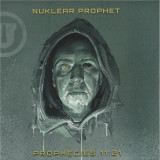
Hailing from downtown Los Angeles, Nuklear Prophet, aka Erik Villalpando, is heavily influenced by West Coast Hip Hop and Electro. Winning multiple DJ awards, including 3x World Records DJ Competition under his DJ Dope-E alias, Villalpando cites his inspiration as coming from some of the most influential Los Angeles DJs of his childhood, including Tony G, DJ Joe Cooley, Julio G, and DJ Aladdin.
With releases on Urban Connections, Abseits Recordings, Diffuse Reality and Bass Agenda Recordings as Nuklear Prophet, the LA-based DJ/producer readies his full-length album 'Prophecies 11:21' for Utrecht-based U-Trax. Formed of an eclectic and energetic collection of gems mined from his overwhelming archive, the album takes in genres such as Electro, Hip Hop, Footwork, Juke, and beyond.
Leading the release is the 808 luminary Egyptian Lover's remix of 'L.A. Rockz', featured on the recently released 'L.A. Rockz' EP, kicking off the LP with his trademark 808-infused sound. A nod to Detroit-flavoured Electro is presented via the dark and brooding tracks 'Nuklear Prophet' and 'Compton', with the lighter atmospherics of the genre covered on 'Solar Winds'. The pounding electro killer '808 Plague' sounds like it came straight from the sewers of The Hague.
'Everlastin' Bass', 'Back Up Off My Tip', and 'The Train Ride To Coconino' offer Footwork inspired bangers, with the latter previously featured on the Legowelt curated U-Trax compilation 'U R Here!' earlier this year.
Moving across a spectrum of tempos, styles, and moods across the album, exemplified on the sluggish trip-hop of 'The Mars Goblin', Nuklear Prophet expertly touches on a range of bass-driven genres, displaying his widespread influences and knack for hard-hitting production throughout.
blue Marbled Vinyl Repress
Med School Music veteran Bop launches his own label "Microfunk Music". The first release contains 4 minimalistic tunes, starting from the chill autonomic moods and the lovely nostalgic arpeggio of "Telescope" written by Bop and Synkro, moving to Nuage's fragile synths and luscious summer vocals, followed by a warm analogue bass in "Endless Green". In addition to these beautiful sounds, Microfunk Crew includes the more energetic, fit for the dance floor drum&bass with strong juke and ambient influences of "Crab Nebula". The EP is perfectly completed by Dissident with his kind and even slightly infantile soundscapes in "Design Yourself". This vinyl record is a great introduction to the label's unique sound. Each song has its own character and tells a specific story; however the wholepiece sounds very organic and will definitely appeal to the intelligent electronic music fans.
Pressed on 140g Black Vinyl Including a signed print from Eddie Piller, limited to 750.
Demon are proud to release “Eddie Piller Presents British Mod Sounds Of the 1960s”, the follow up the “The
Mod Revival”. Featuring 100 original tracks across 6LPs, its a deep dive into the Mod scene in '60s Britain.
Including a selection of classic and rare tracks, tracing the scene from its R&B rootsto a soulful finale
Curated by Acid Jazz Records and Modcast founder Eddie Piller, and featuring new sleeve notes from
respected author and broadcaster Paul 'Smiler' Anderson.
As Eddie Piller points out in the forward to the extensive sleeve notes that accompany this collection, he
chose the word 'Sounds' carefully, reflecting the variety of talent contained here, from uncool session
musicians without an ounce of style in them, acts who saw an opportunity to jump on the Mod bandwagon
and bands who whole heartedly embraced Mod way of life.
And so this new collection mixes the Mod mainstays (Small Faces, The High Numbers The Action, The Fleur
De Lys), with a generous selection of future superstars (David Bowie, Rod Stewart, Elton John, Marc Bolan,
Jeff Beck and Graham Gouldman of 10cc are all represented here), and a few artists so obscure, so rare, that
they never got to release a record in the '60s, but Eddie has tracked down the tapes nonetheless.
"Be in with the In Crowd once more."
Every great youth cult deserves a great soundtrack, and when the '60s Mods adopted classic American R&B,
with a side order of hip Jazz, they undoubtedly found the right music for their exuberant and stylish way of
life. And yet, buying expensive imports, hoping for a local release or praying for a rare visit from overseas
talent was never going to be enough to satisfy British youth with a thirst for the latest sounds. Certainly not
those on the dancefloor and definitely not those with their own musical ambitions.
It was a music scene that began with imitation, before skill and imagination lead curious minds to innovation,
a scene that evolved from average (at best) copies of releases on the Chess, Motown and Stax labels, to
become something more sophisticated,something quite unique, something very British.
All formats are stylishly packaged (of course) and include new sleeve notes by Paul 'Smiler' Anderson, author
of the best-selling and highly regarded books'Mods: The New Religion' and 'Mod Art'.
Just a few months after releasing their acclaimed second album Still Life, Los Angeles indie-pop band Massage returns with Lane Lines a six-track EP out in early 2022 on Mt. St. Mtn. (Cindy, Flowertown, Blues Lawyer) that finds the quintet expanding on their Sarah-meets-Creation Records sound with new touches of soft psychedelia, Feelies-ish frenzy and Haçienda-era escapism. The band didn’t plan to follow Still Lines so quickly. But after the pandemic further delayed that multi-year project, Alex Naidus (guitar, vocals, former Pains of Being Pure at Heart), Andrew Romano (guitar, vocals), Gabrielle Ferrer (keyboards, percussion, vocals), David Rager (bass) and Natalie de Almeida (drums) leapt at the chance to make music together again in real life and started gathering on random summer evenings in the tiny rehearsal-space studio of producer-composer Andrew Brassell (Susanna Hoffs) with no clear goal in mind. Lane Lines is the surprise product of those informal sessions — a flash of pent-up creative energy that serves as both a companion piece to Still Life and an exploration of textures and influences that didn’t quite fit the full-length but have always been deeply embedded in the band’s DNA, with new echoes of 1980s artists that sought to refract the 1960s through their own skewed prisms: Flying Nun, the Paisley Underground, The Feelies covering The Beatles, “Second Summer of Love” New Order. “The songs on Still Life and Lane Lines seem to straddle the line between indie and pop without exactly being ‘indie pop,’” Romano says. “To me they feel more like descendents of ‘college rock’ a moment that lasted from about 1986 to 1991, right before the underground and the mainstream converged, when it seemed like any scrappy indie band might stumble across a hit.” The EP begins with the new single version of Still Life standout “In Gray & Blue,” which along with previous singles “Half a Feeling” and “Made of Moods” is part of a trio of songs written during the first days of lockdown and later added to the album. But while brief lulls in the pandemic allowed Massage to record the other lockdown tracks in the studio, the LP version of “In Gray & Blue” was entirely DIY a GarageBand demo emailed around for overdubs and ultimately “mixed” by Romano himself.
The third release for Stroboscopic Artefacts in 2014, SA22 is the new cut from Italian producer Chevel. 'One Month Off' is an EP built around the abstract themes of construction, starting with demolition and ending on perspective. Opening track 'One Month Off' combines a warm thump with skittering percussion. Ragged cymbals build pressure. As the track continues to strut, through insistence as much as confidence, it gives out. 'The Wall', next up, is perhaps misleadingly a more unsettled affair. There is little linear impetus, a panoply of syncopated beats and foreign noises from the undergrowth. This is a wall of multitudinous surface, a front concealing the unsettled and unsure within. 'Cave Dwellings' is a more organic construct, building from the traditional basics of a kick drum and hi hat. Like the opening number this is a confident piece, but the Caves resonate with greater darkness and menace. The kick squelches at the bottom, the snare drips; glistening echoes bound through the chamber. 'Marker Shop' is fourth up, uniting disparate urges and glorious moods. The beat is uncomfortable, and repeatedly gives way. The record closes on 'Viewpoint', a piece of warmer perspective. It is not, however, a calm scene: in many ways this is a view of something more unsettled than what has come before. It is both jungular and industrial, an uncompromising marriage of nature and noise. Chevel lands, then, on SA, with a discussion of construction and constructs.
Scuba begins a new project with London vocalist and producer DOMiNii, who makes his debut with ‘Diivorce’.
Paul Rose (aka Scuba) has long since explored cross-genre sounds, blending disparate elements and mining nostalgia to create cool moods and moments of pure escapism. Over four critically acclaimed albums and mix CDs for DJ Kicks, fabric, and Ostgut Ton, he’s established himself as one of the industry’s most respected artists and tastemakers. He’s continued to evade musical pigeonholing over the course of his career, never hesitating to challenge himself with new creative endeavours. The fresh sonic direction expressed on ‘Diivorce’ is one he’s been developing since 2018, when he took an indefinite break from the full-time DJ circuit.
‘Diivorce’ is a collaboration with debut artist DOMiNii, a vocalist and producer who takes influence from the likes of Wang Chung, David Newman, Arthur Russell, and The Blue Nile. Although he appeared uncredited with backing vocals on Scuba’s ‘Forgive Me’, which initially came out last summer, ‘Diivorce’ marks his first official release.
Covering areas as varied as power pop, indietronica, exuberant house, and classic rock, the project seemingly touches as many points as it can think of, something Rose acknowledged in a recent interview where he stated that “we made so many tracks, with no real set direction, so with this record I just wanted to pick a limited number that kind of showed where we’d been. We are working on something now that I’d call a ‘proper album’, which I think will come out in 2022, Diivorce is something I see as a documentation of a period of time.”
The project includes illustrations by French artist Virginie Kypriotis who tells the story of ‘Diivorce’ through the eyes of DOMiNii, detailing a world of abandonment and separation against a backdrop of a faded paradise. Rose was first acquainted with Kypriotis’ work through her iconic illustration ‘A Night at Berghain’, which was later used by the club as their official flyer artwork in December 2017.
The vinyl edition of ‘Diivorce’ includes previously unreleased (and vinyl-exclusive) track ‘Tricks’, and is packaged in a limited edition, numbered, screen-printed sleeve.
WRWTFWW Records is absolutely honored to announce the release of Kenji Kawai’s complete soundtrack to Mamoru Oshii's 1993 superb political thriller science-fiction mecha anime PATLABOR 2: The Movie, available on vinyl for the first time ever and housed in a beautiful heavy gatefold sleeve with obi, as well as on digipack CD. Both versions come with liner notes by the great Masaaki Hara.
A true soundtrack maestro, Kenji Kawai is behind the legendary soundscapes of cult animes and movies such as Ghost in the Shell, Avalon, Ring, Ip Man, and Seven Swords among numerous others. PATLABOR 2: The Movie (Original Soundtrack) is one of his most experimental offerings, an outstanding palette of emotion-filled ambient atmospherics and percussion mastery breathing beautifully through Kawai’s minimalism meets modern classical approach. His symphony of moods paints a delicate picture of urban isolation, a central theme in the movie, but doesn’t hide hints of hope for a joyful future.
PATLABOR 2: The Movie (Original Soundtrack) is an ideal companion to Kenji Kawai’s Ghost in the Shell soundtrack, already available on WRWTFWW Records.
The seven-headed Aussie rock beast King Gizzard & The Lizard
Wizard return with a new vinyl edition of ‘Fishing For Fishies’,
perhaps their most perfectly-realised album to date.
The Eco Edition has been pressed on Eco-Mix vinyl and is housed
in a brown paper bag after previous pressings quickly sold out.
Released on the band’s own Flightless Records, here is a world
where the organic meets the automated; where the rustic meets
the robotic. Where the past and future collide in the beautiful
present.
‘Fishing For Fishies’ is a blues-infused blast of sonic boogie that
struts and shimmies through several moods and terrains. From the
soft shuffle Outback country of the opening title track through the
sunny easy listening of ‘The Bird Song’ (think a lysergically-soaked
Laurel Canyon circa 1973) and on through the party funk of
‘Plastic Boogie’ (which somehow summons the spirit of Stevie
Wonder’s ‘Innervisions’) the road-trucking, Doors-like highway
rock of ‘The Cruel Millennial’ and ‘Real’s Not Real’ - what
Carpenters might have sounded like had they existed entirely on
vegemite and weed - it’s a dizzying, dazzling display which
addresses a number of pertinent environmental issues along the
way.
“We tried to make a blues record,” says frontman Stu Mackenzie.
“A blues-boogie-shuffle-kinda-thing, but the songs kept fighting it -
or maybe it was us fighting them. Ultimately though we let the
songs guide us this time; we let them have their own personalities
and forge their own path. Paths of light, paths of darkness. This is
a collection of songs that went on wild journeys of transformation.”
Quiet though it was on the record front, 2018 was hardly a year of
rest for King Gizzard & The Lizard Wizard. In almost perpetual
motion, the band continued their unstoppable rise as their
juggernaut of a live show grew and grew and grew, with a mindblowing headline slot at Green Man Festival, a massive sold-out
US tour in the summer which saw them play their biggest venues
to date, a brain-frying sold out Brixton Academy show, two gigs in
Russia and Istanbul where they played in front of over 15,000
people and putting on the fourth edition of their annual Gizzfest in
Melbourne amongst the highlights.
- 1: Unidentified Members Of The Royal Drums Ensemble (Mujaguzo) - Mujaguzo
- 2: Erusana Lutwana & Budo African Music Club - Ffe Basajja Ba Kabaka
- 3: Albert Bisaso Ssempeke & Band As The Lyres, Fiddles, And Drums Ensemble (Abadongo) - Akasozi Bamunanika Keyagaza
- 4: Kopolyano Kyobe & Band As The Xylophone And Drums Ensemble (Abantamiivu) Ssematimba Ne Kikwabanga
- 5: Unidentified Members Of The Royal Flutes And Drums Ensemble (Abalere) - Akwana Omwami Tagayala
- 6: Evaristo Muyinda - Sewaswa Kazala Balongo
- 7: Maria Nanemba Muyinda - Twaliraana Mayumba Emmeeme Tezaalirana
- 8: Evaristo Muyinda - Twabonabona
- 9: Unidentified Members Of The Royal Trumpets Band (Abakondere) - Bagabye Mukwenda Owange Talina Nnaku
- 10: Kalema Hassan Katipa & Band - Byananyinimu
- 11: Unidentified Members Of The Royal Big Xylophone Ensemble (Abakadinda) - Bandaba Okulya Etoke Bampita Mulamu Dala
- 12: Temutewo Mukasa, Royal Harpist (Omulanga) - Okwagala Omulungi Kwesengereza
- 13: Unidentified Members Of The Royal Drum-Chime Ensemble (Abatenga) - Kifwe Kze Kya
- 14: Semuwemba George William - Kubikira Amadinda
- 15: Semuwemba George William & Sekindi John - Emirembe Ngalo
- 16: Albert Ssempeke - Omusango Gw’abalere
- 17: John Ssempeke & Sebuufu Steven - Osiibye Otyano
From its founding in the late 14th century, the kingdom of Buganda has been celebrated through sound and nurtured a rich musical tradition in its royal court. Coming from across the kingdom, musicians would take turns in the palace to sound drums, xylophones, flutes, lyres, and more to praise and honour the existence of the kingship. In recent years however, the tradition has been more difficult to maintain, especially since 1966 where there was a violent attack on the palace that abruptly abolished the kingdom and during which royal musicians fled or were killed. And while the kingdom was re-established in 1993 as a cultural institution, many of the remaining musicians had since chosen to sideline their skills to deal with the issues of their day to day lives, the practice of the royal tradition waning in popularity, especially with younger listeners and players. But all is not lost. Scattered across the kingdom, a motivated team of older veterans and attentive young players are still keeping the tradition alive. Offering a transversal glimpse into the past and the present, "Buganda Royal Music Revival" collects recordings made in between the late 1940s and 1966 illustrating the older generation's skills, and presents them alongside recent recordings featuring old and young musicians who still carry on this musical tradition, some even performing for the current king, Muwenda Mutebi II. The later were made during the shooting of the 2019 documentary "Buganda Royal Music Revival" that presents through a film what this album conveys through sounds: a packed dive into a century-old tradition. The music displayed here is diverse and vibrant, presenting a variety of styles and highlighting instruments that illustrate the depth and sophistication that stemmed from the royal court experience of Buganda. As a starter, the album opens with 'Mujaguzo'. Often translated as 'The Drums of the Kingship', the mujaguzo is a crucial ensemble for the cultural tradition, made from drums collected by the kingdom throughout its long history and numbering around 100 drums (historical records suggest there were at some point over 300). They are the vitality of the kingship packaged into sound. From here, we're introduced deeper to an array of instruments and textures, like the buzzing Bugandan lyre (endongo) by contemporary royal player Albert Bisaso Ssempeke, the resonant akadinda xylophone with its 21 large wooden keys, Temutewo Mukasa's restless praise sung with his harp (ennanga), the hand-made gourd trumpet (amakondere), the entenga "drum-chime" and its core set of 12 drums tuned like the amadinda xylophone, or the tightly intertwined melodies of the flutes ensemble (abalere). With the music, the hissing and swishing sounds of old tapes reminds at times the listener of the long process, from the original recording to its archival digitization, that allows the talent of past musicians to still vibrate nowadays. This rousing selection of music and moods is a unique and all too rare exploration of sounds that celebrates the common history of generations of musicians, and the question remains open as to how this rich cultural tradition will shape and be shaped by the upcoming Bugandan future, and what engagement it will trigger among audiences within, but also beyond, the kingdom of Buganda.
Lava Love is the new album by Zoe’s Shanghai. Led by singer Zoé Renié Harris, the band has
made a splash into the crowded neo-soul scene with their debut EP A Mirage (Meant To Last
Forever) released in 2019 - a deeply evocative sound and Zoe’s extraordinary voice gained them
immediately the spotlight as ones to watch (“a worthy torchbearer for heady and hearty soul music”-
Earmilk).
Following a successful string of EPs and singles, the Barcelona & Paris-based four-piece band is
now ready to share with the world their first full-length album.
Lava Love was recorded in an old stable in the French region of Auvergne - known for its mountain
ranges and dormant volcanoes, this region could not have been a more apt setting.
Lava and love portray in fact a dynamic flow of memory and meaning pouring out of Zoe’s
Shanghai’s heart. In and out of the metaphor, Lava and love can be powerful, frightening, beautiful,
dangerous and at the same time are essential elements that create fertile change and growth.
Through the 11 songs, the band evoke memories and pose questions - inner dialogues, life stories,
encounters and relationships – the album depicts a kaleidoscope of moods and feelings, prompting
the listener to open to the conversation: while each song presents a microcosm on its own, the album
manifests itself in the shared musical experience - immersive music to listen to and enjoy with your
loved ones.
Produced with Oli Barton-Wood (Nubiyan Twist, Joe Armon-Jones, Nilufer Yanya), the sound of
Lava Love brings together hypnotic melodies, groovy rhythms and thoughtful lyrics - fusing the
essence of multiple music styles and forging Zoe’s Shanghai unique contemporary soul.
The album follows the critically acclaimed EP ‘A Mirage’, which garnered the support of Gilles
Peterson & Huey Morgan (BBC 6 Music), Jamz Supernova (BBC Radio 1Xtra), Worldwide FM and
Earmilk to name a few.
Back in stock
'Island Impressions' depicts the moments and visions of Australian house producer Sonny Ism's year living on an Island in Stockholms Archipelago during the Covid 19 Pandemic. Littered with Kitchy melancholic vocal house tracks to alternative ambient electronica, Island Impressions is a journey of movement and documented moodswings in the underground house music genre.
- 1: At Last
- 2: I Just Want To Make Love To You
- 3: Spoonful
- 4: In My Diary
- 5: You Can Count On Me
- 6: I'll Dry My Tears
- 7: Plum Nuts
- 8: Fools Rush In
- 1: W-O-M-A-N
- 2: Something's Got A Hold On Me
- 3: Dream
- 4: How Big A Fool
- 5: Tough Mary
- 6: Stormy Weather
- 7: I Want To Be Loved
- 8: Trust In Me
- 1: Joshua Fit The Battle Of Jericho
- 2: Lullaby Of Birdland
- 3: Where's My Bess
- 4: This Nearly Was Mine
- 5: These Foolish Things
- 6: Let's Fall In Love
- 1: Seven Day Fool
- 2: One For My Baby (And One More For The Road)
- 3: By The Light Of The Silvery Moon
- 4: All I Could Do Was Cry
- 5: Again
- 6: Would It Make Any Difference To You
- 7: It's Too Soon To Know
- 8: Don't Get Around Much Anymore
Many great singers passed through the hands of late great soul/
R&B producer Jerry Wexler, from Aretha Franklin to Dusty
Springfield, but Etta James was a singer he willingly waited 20
long years to work with. “Etta is a church in herself,” he said in
his autobiography, adding: “Her voice is a mighty influence, her
musical personality able to express an extraordinary range of
moods.” He further described her as “A woman used but not
spent, abused but never defeated, vulnerable but though sheer
strength of will, victorious.” Her legend lives on in her music.
Press play and share her many emotions…
Underground rock festered and splintered as it spread through the U.S. in the mid-’90s, the alternative boom giving rise to microcosmic regional scenes singularly focused on feral powerviolence or screamo songs about breakfast. Boston’s Karate emerged as a force that could grip a national youth movement whose disparate tastes still commingled in the inky pages of fanzines overflowing with florid prose and on concert calendars for volunteer-run DIY spaces, community centers, and bowling alleys. In this world, Karate’s music was an enigma, one equally inviting to sneering punks and highfalutin indie-rock aficionados.Their 1996 self-titled debut, issued on Southern Records, set the standard.
Lasooing together white-knuckle posthardcore tension, sharply focused slowcore serenity, and resplendent jazz complexity, Karate eschewed settling in any one definiable style. But they certainly used the language of punk to get their point across; occasionally, guitarist Geoff Farina abandons his warm, hushed cadences for a hoarse shout that made him sound ragged, intensifying an aggression that burst out with every snaggletoothed guitar riff or drum snap that went off like canonfire.
Few followed their path—but who could keep up? Karate could make pensive moods blossom into feverish rollicking (“What Is Sleep?”), gracefully tip-toe around aggressive punk explosions without getting bent out of shape (“Bodies”), and stretch out
slowcore’s quietest reveries till their reflective notes sound ripped from an improvisational jazz session (“Caffeine or Me?”). Karate formally introduced the trio as a vital part of an independent U.S. punk scene stubbornly flowering in the face of the major labels’ ’90s harvest.
- A1: Birds Of Prdise
- A2: Pryer For Merikkk Pt. 1 & 2
- A3: Lesterlude
- A4: Twenty-Three N Me, Jupiter Redux
- A5: Reflections On Broken Se
- A6: Whles
- A7: Theme 001
- A8: Menwhile
- A9: Theme 002
- A10: Sun Tines
- A11: Leves Of Glss Pt. 1
- B1: Leves Of Glss Pt. 1
- B2: The Storm
- B3: Wltzer
- B4: Slip Tider
- B5: Simple Silver Surfer
- B6: Bird Dogs Of Prdise
- B7: Nuevo Roquero Estcreo
- B8: Love Song
- B9: Theme Nothing
LTD COLOR VINYL[26,01 €]
There is a moment near the top of jaimie branch's FLY or DIE LIVE, the new album recorded by the trumpeter's quartet at in Zurich, Switzerland on January 23rd, 2020, which feels like it bears the weight of both that specific pocket of time, and a prophecy for all that was soon to come. branch and her Fly or Die crew - cellist Lester St. Louis, bassist Jason Ajemian, and drummer Chad Taylor - had just kicked off the concert at Moods, with the opening tracks off their then-new studio album FLY or DIE II: Bird Dogs of Paradise, the second of which, "Prayer for Amerikkka" is among the best political songs written during the Tr*mp Era, and when the moment in question pops off.
Limited Coke Bottle Green vinyl, 250 copies only for the UK. Any future pressing will be on black vinyl. Massage feature Alex Naidus from Pains At Being Pure At Heart. Recorded by Lewis Pesacov (Fool’s Gold, Foreign Born, Peel’d). Massage was supposed to be low-stakes, no big deal "anti-ambition," as Andrew Romano, guitarist and vocalist, put it. The L.A.based jangle-pop group's first album, 2018's Oh Boy, was a sweet and simple weekend warrior's affair, or more specifically, an every-other-Monday one, as the band members gathered to bash out songs that offered messy but heartfelt tribute to their chosen heroes: The Feelies, the Go-Betweens, Twerps, Flying Nun. For Romano, not taking things too seriously is a dead-serious affair: “Nothing kills the kind of music we want to make faster than the sense that a band is trying too hard,” he says. The kind of music Massage makes sunny, bittersweet, tender is less a proper genre than a minor zip code nested within guitar pop. Take a little "There She Goes" by the La's, some "If You Need Someone" by the Field Mice; the honey-drizzled guitars from The Cure's "Friday I'm In Love," a Jesus & Mary Chain backbeat, and you're almost all the way there. Indie pop, jangle pop, power pop whatever you call it, pushing too hard scares the spirit right out of this sweet, diffident music, and Massage have a touch so light the songs seem to form spontaneously, like wry smiles. Still, on their sophomore effort, Still Life, they manage to take a quantum leap forward in songwriting, production, and depth, all somehow without seeming to try. These 12 deft songs are full of late-summer sunlight and deep shadows, pained grins and shared jokes, shy declarations of love and quietly nursed heartbreak. Still Life resurrects a brief, romantic moment in the late-'80s, right after post-punk and immediately before alt-rock, when it seemed like any scrappy indie band might stumble across a hit. When Andrew Romano and Alex Naidus first met in 2007, Naidus had just joined a band with his friends Kip Berman and Peggy Wang that was about to stumble into many of them. When Naidus finally left Pains for L.A. in 2013, two hit albums and a few world tours later, he started playing with Romano to recapture the no-stakes, suburban-garage joy of making music for its own sake. It was "friendship incarnate," Naidus remembers. The other members came from within the friend circle Gabrielle Ferrer (keyboard/vocals) is Romano's sister-in-law, Michael Felix (drums) is one of Naidus’ best friends, and David Rager (bass) is a childhood friend of Felix’s. When Felix moved to Mexico City in early 2020, Naidus’ wife, Natalie de Almeida, stepped in. The result is the finest batch of songs they've ever produced. From Naidus' velvet-lined JAMC tribute "Half A Feeling" to Ferrer's Let It Be-era Replacements-tinged lament "The Double" to Romano's "In Gray & Blue," these are gold-standard indie-pop gems from emerging masters of the form. Still Life glows with the sincerity and unfakeable warmth of the era they so lovingly channel. Like the best Gin Blossoms chorus you still remember, the songs on Still Life stir big, pure emotions, but beneath them, uneasy truths about adulthood linger, just below the surface. Maybe the exact mix of ringing guitars and two-part harmonies can chase those feelings away, or redeem them, for at least a minute or three. Massage won't stop trying.
**LONG OVERDUE REPRESS - CLEAR VINYL 300 COPIES ONLY** “With Ela’s music I feel emotional, engaged… I can’t help but feel she’s always looking for a sense of belonging and it
seems to inform all the music that she makes. Glasgow must have more of that belonging feeling than most
cities because she’s spent the most time here, an exotic bird in a rainy city she maybe finds a lttle bit of comfort in. It’s
a pleasure to have her here, in this awful time to be living in Britain, her illuminations feel important and hopeful. A
stubborn light; someone making great timeless music out of the humdrum of the everyday.” - Stephen Pastel
Movies For Ears is a retrospective collection of works by Polish-born, Glasgow-based artist Ela Orleans which
navigates almost two decades of songwriting in the heart of the global pop underground. This remastered collection casts
an ear over what Orleans might call the ‘pop sensibility’ within her back catalogue. Released previously on a number of
small DIY labels, Orleans’ music coincided with the explosion of auto-didactic musicians finding their voice in the age of
the blogosphere, artists emboldened by the democratisation of music-making afforded by the internet. From the outset,
Orleans’ childhood studying formal music mixed with cut-up techniques, sampling, sound-art and experimentation to
create a distinctive signature cloaked in an innate melancholy and playfulness. Fully remastered by James Plotkin,
featuring extensive sleeve-notes and rare photos from Orleans’ archive, Movies For Ears presents an appraisal of the
musician’s work, painting a portrait of an artist with an uncanny ability to evoke emotions and ghosts of memories in the
listener.
Each song pulls sunshine from its surroundings, moments of pleasure plucked from eulogies. The Season employs a
hypnotic loop with Orleans’s prophetic voice heralding the season we’re doomed to repeat. In fact the singer is often cast
as the changing protagonist in her songs: on Walkingman, a hazy ballad heavy with ennui, the narrator is laden with the
world’s weight, forever pacing a groundhog day world blank, a pissed-off actor in a Kafka-esque melodrama. On Light At
Dawn we’re in a seedy kitsch bar-room go-go scene, a ghostly rock’roll romance with shimmering percussion, poledancing
in a Lynchian half-dream. Movies For Ears’ moods straddle memory and fantasy: scratchily invoking halfremembered
exotica, the flickering shadows of europhile cinemas screens, a delicately woven world anchored in Orleans
existential meditations on longing, intimacy, solitude and the search for love. These rich textures in every song don’t
overpower some crystalised moments of emotion however: on In Spring Orleans sings simply “I have been happy two
weeks together,” summarizing that feeling of elation when emerging from a depression, a long winter. It’s a moment that
perfectly illustrates the lightness of touch and clarity in the singer’s voice.
The power of the loop and Orleans’ weaving songwriting that breaks its spell is illustrated perfectly by I Know. Over an
aching chord progression, the vocal takes flight into bittersweet loneliness, Pachelbel’s Canon played at a wedding where
only one person shows up. The repeated refrain “I know, I know” ascends to the heavens as the chords descend to the
dumps and the listener is left in the middle, happy but not knowing why, maybe a little changed, two weeks together. On
Movies For Ears, Ela Orleans lets us into a secret: the rare moments of joy to be found in the joins of the loop, the spaces
between things, the spring after the winter are the moments that last after the day has faded.
- Generation Genocide
- Let It Slide
- Good Enough
- Something So Clear
- Thorn
- Into The Drink
- Broken Hands
- Who You Drivin’ Now?
- Move Out
- Shoot The Moon
- Fuzzgun ‘91
- Pokin’ Around
- Don’t Fade Iv
- Check-Out Time
- March To Fuzz
- Ounce Of Deception
- Paperback Life (Alternate Version)
- Fuzzbuster
- Bushpusher Man
- Flowers For Industry
- Thorn (1St Attempt)
- Overblown
- March From Fuzz
- You’re Gone
- Something So Clear (24-Track Demo)
- Bushpusher Man (24-Track Demo)
- Pokin’ Around (24-Track Demo)
- Check-Out Time (24-Track Demo)
- Generation Genocide (24-Track Demo)
The classic 1991 album remastered and expanded with rare and previously
unreleased tracks. Extensive liner notes by band biographer Keith Cameron.
A landmark of the grunge era.
By going back to basics with ‘Every Good Boy Deserves Fudge’, Mudhoney
flipped conventional wisdom. Not for the first time - or the last - they would be
vindicated. A month after release in July 1991, the album entered the UK
album chart at Number 34 (five weeks later, Nirvana’s ‘Nevermind’ entered
at 36) and went on to sell 75,000 copies worldwide. A more meaningful
measure of success, however, lay in its revitalisation of the band, casting a
touchstone for the future. The record is a major chapter in Mudhoney’s
ongoing story, the moral of which has to be: when in doubt, fudge it.
The album began at Music Source Studio, a large space equipped with a 24-
track mixing board - downright futuristic, compared to the 8-track setup that
birthed the band’s catalytic 1988 debut, ‘Touch Me I’m Sick’. The Music
Source session quickly turned into a false start when the results, in guitarist
Steve Turner’s words, “sounded a little too fancy, too clean.” Lesson learned,
the band went primitive and got to work at Conrad Uno’s 8-track setup at Egg
Studio. Named after the cartons pasted on the walls in an optimistic attempt
at sound-proofing, Egg boasted a 1960s vintage 8-track Spectra Sonics
recording console, originally built for Stax in Memphis.
So it was that, in the spring of 1991, Mudhoney made ‘Every Good Boy
Deserves Fudge’. The resulting album is a whirlwind of the band’s influences
at the time: the fierce ‘60s garage rock of their Pacific Northwest
predecessors The Sonics and The Lollipop Shoppe, the gnashing posthardcore of Drunks With Guns, the heavy guitar moods of Neil Young, the
lysergic workouts of Spacemen 3 and Hawkwind, the gloomy existentialism
of Zounds and the satirical ferocity of ‘80s hardcore punk. The quartet’s
special alchemy meant these fond homages never slid into pastiche.
Ultimately, ‘Every Good Boy Deserves Fudge’ epitomised the best of
Mudhoney: here was a band reconnecting with its purest instincts and, in the
process, reinventing itself.
This 30th Anniversary edition, remastered by Bob Weston at Chicago
Mastering Service, stands as testimony to the creative surge that drove them
in this period. The album sessions yielded a clutch of material that would
subsequently appear on B-sides, compilations, and split-singles. This edition
includes all those tracks and a slew of previously unreleased songs,
including the entire five-track Music Source session.
More a family than a band, BANDA MAJE formed in a home studio in the historic district of Salerno, in Southern Italy, on the initiative of Peppe Maiellano (composer and keyboards) and Tonico Settanta (producer, rapper and DJ). The collective has an ever-changing number of members, all of whom – a bit like the lively port city they are from – exist at the crossroads between Italian melodies and imported genres like funk, soul and disco.
Released by Four Flies Records, a label specializing in vintage Italian soundtracks and brand new productions with a strong cinematic feel, Banda Maje's debut album "Ufo Bar" transports you to an imagined version of Salerno that combines local tradition and 70s pop and film culture.
Listening to the album's eight funk- and soul- infused tracks also means seeing stories unfold in the streets of this re-imagined city: from the jubilant uprising organised by the women from the Rione Fornelle neighborhood in "Fornellesse", to the cigarette smuggling story in "P' ciel, p' mar, p' terr"; from the distinctly southern Italian pucundria (bittersweet melancholy) in "Sunday Embarcadero", to the saga of provincial nightlife in "Living Disco Club".
While the LP's Side A is sunny and cheerful, its Side B is more nostalgic, almost nocturnal, with bittersweet vibes in "2010" and new wave-influenced synths in "Ago". This variety of moods reflects the emotional depth behind the music of Banda Maje: "We want to leave a trace of what we experience: the narrow little streets brimming with life; our love for Neapolitan music, for Italian soundtracks from the 70s, for B-movies and the saga of cigarette smugglers; our passion for vinyls and cassette mixtapes, not to mention second-hand love affairs and dusty afternoons spent watching third-division football."
Bachelor, the new project from Melina Duterte (Jay Som) and Ellen Kempner (Palehound), is not a band, it’s a friend-ship. After being mutual fans for years, they finally met when sharing the bill at a show in Sacramento in 2017. Keeping in touch over text and Instagram posts, Duterte and Kempner started recording together for fun in 2018, resulting with what would become "Sand Angel", the seductive slow-burner that convinced the pair to write an album together.
Reconvening in January 2020, the duo packed the entirety of Duterte’s recording equipment into two cars and headed to a rental house in Topanga, CA. In this space Kempner and Duterte hybridized their individual song-writing talents, producing a collection that slips between moods with ease and showcases their lyrical prowess. Arriving with almost no songs written and no solid plan, they
finished the 10 songs that make up Doomin’ Sun after two short weeks. That much work in so little time may sound exhausting, but it wasn’t, it was blissful and freeing.
There was a lot of pain that went into the record, especially around themes of queerness and climate change inspired by the red skies and wildfires subsuming Australia at the time. However, when the duo did shed tears during the creative process, they weren’t tears of sadness, they were tears of laughter. When Kempner and Duterte look back on those weeks, what they remember first is shortness of breath and the inability to track vocal takes without falling to the floor howling. They couldn’t remember a time they’d ever been so delirious with creativity, so overwhelmed with joy.