Seit nunmehr über zwanzig Jahren als Duo zusammen, setzen Hammock ihre bemerkenswerte Reihe klanglicher Entdeckungsreisen mit The Second Coming Was A Moonrise" fort. Der Titel fängt einen Moment der Entdeckung ein, als Byrd und ein Freund in seinen späten Teenagerjahren unter dem Einfluss von Psychedelika den Mondaufgang für die Wiederkunft Christi hielten. Byrd und Thompson, beide in erster Linie Gitarristen, haben festgestellt, dass ihre musikalische Verbundenheit immer stärker wird, während ihre gemeinsame Arbeit im Laufe der Jahre noch dramatischer und reichhaltiger wird, auf der Suche nach einem Gefühl von mitreißender, schimmernder klanglicher Ehrfurcht, das sich niemals einfach als etwas anderes als sich selbst zusammenfassen lässt. The Second Coming Was A Moonrise" setzt diese Empfindungen der Entdeckung fort und fühlt sich gleichzeitig wie eines ihrer intimsten Alben an, während es das reiche Gefühl von Erhabenheit erforscht, das sie im Gegenzug erschaffen können. Ein Großteil von The Second Coming" ist instrumental oder fügt nur wortlose Gesangssenken und Texturen hinzu, wenn auch immer mit Titeln, die bewusst gewählt wurden. Byrd greift mit Chemicals Make You Small" erneut auf seine drogenbefeuerten Fluchtversuche zurück, wobei zwei namhafte Gäste mitwirken: Wayne Coyne und Steven Drozd von The Flaming Lips, die Gesang und Keyboards beisteuern. Zu den weiteren wiederkehrenden Gastmusikern gehören der regelmäßige Mitstreiter Matt Kidd von Slow Meadow, der Streicher und Gitarre beisteuert, Matthew Doty von Deserta an Synthesizern und Gitarre, Christine Byrd von Lumenette mit engelsgleichem Gesang, Chad Howat am Keyboard und Bass sowie Jake Finch mit bemerkenswertem Schlagzeugspiel.
Erleben Sie das pulsierende Lebensgefühl der 80er Jahre mit der farbigen 2LP-Compilation „ZYX Italo Disco History 1984“. Diese exklusive Vinyl-Ausgabe entführt Sie direkt in das goldene Zeitalter der Italo Disco und vereint die größten Dancefloor-Hits eines unvergesslichen Jahres.
Freuen Sie sich auf ikonische Tracks von Künstlern wie P. Lion, Scotch und Valerie Dore – Namen, die für eingängige Melodien, treibende Beats und den unverwechselbaren Sound der Italo Disco stehen. Jeder Song dieser Sammlung spiegelt die Energie und den Glamour der internationalen Clubszene von 1984 wider. Ein besonderes Highlight ist der enthaltene 15-minütige Megamix der Italo-Disco-Legende Flemming Dalum. Mit seinem einzigartigen Gespür für Rhythmus und Atmosphäre verbindet er die größten Hits zu einem mitreißenden Mix, der nahtlos durch die Klangwelt der 80er führt. Die farbige Doppel-LP macht diese Compilation nicht nur musikalisch, sondern auch optisch zu einem echten Sammlerstück – perfekt für Vinyl-Liebhaber und Fans elektronischer Klassiker
Saxophonist, producer and composer Brian Allen Simon explores darker hues, transposing waking and altered states under his studio veil Anenon. On the deeply evocative new album 'Dream Temperature', he shifts electronic processing to the foreground, introducing digitized wind instruments and unworldly atmospherics, not heard since his innovating mid-late 2010s output.
A longtime Los Angeles resident, born and raised, Brian Allen Simon has expressively operated under the moniker Anenon, releasing the highly revered 'Petrol' (2016), 'Tongue' (2018) and the viscerally beautiful 'Moons Melt Milk Light' (2023), in a line of unwavering musical dialogues. While the penultimate album was a deliberate, reductive, entirely acoustic detour that was born out of a want to unplug, 'Dream Temperature' sees Brian primed with a newly discovered wind synthesizer as his central compositional tool, alongside acoustic piano and tenor saxophone. The entirety of the album's electronics are triggered by Brian's lungs, generating otherworldly synths modulated by expressive breath control, channelled through the laptop as the core processing chamber for added textural components and field recordings.
A free floating and heavy emotional resonance marks 'Dream Temperature' from beginning to end, invoking the feeling of waking up, still heavy from a night of half-remembered dreams, and continuing one's day in this state. Simon maps out the album's spatial voice early on the statement title track, a deep, yet compact cut, generated from digital saxophone rasps that whistle by in close proximity, along with haze filled textures and sub bass. There is a sonic oscillation of urban grit and pastoral drift throughout as tracks pass by like introspective thoughts, fueling both a tense and ethereal quality that underpins the album. Interluding solo and part-solo piano improvisations 'Last Sun 1' and '2' are positioned adjacent to the buffering digital soundscapes. Their softer, still processed timbres pierce the melancholic exterior, offering a contrasting tenderness that could echo the grace of Ry?ichi Sakamoto, the spiritualist rigor of ECM's Keith Jarrett and a touch akin to Aphex Twin's piano miniatures. 'Nulle Part 1+2' signals the first appearance of an acoustic wind instrument, as tenor saxophone flourishes are juxtaposed against noisy drones, all shouting at the void, with notes resurfacing like lost digital data.
The album was recorded at home during either sunset or nocturnal hours between September of 2024 and October of 2025, a period in which Brian found himself craving more lengthy and intimate studio time as he searched for more pronounced textural qualities amidst his new sonic ambitions. 'When The Light Appears, Boy' shows further evidence of this deeper universe, revealing a grittier edge as the album's essential blueprint is sonically inked. A sprawling expanse of wind synths rhythmically encircle the listener before a dreamy, ghostly ambience blankets 'Toyama'. The sound is evocative of the productions of post dubstep era luminaries such as Burial or the productions of HTRK's Nigel Yang. More isolating and enveloping than the previous all acoustic record, this is music both disorienting and yet warmly inviting all at once. A sonic diarist at heart, personal field recordings were also taken from Sardinia, Japan, Big Sur and LA which intersect at unexpected moments throughout the album's 31-minute play time.
'Dream Temperature' is a vital coalescence of both Simon's electronic and acoustic practices with repositioned electronics akin to earlier works, both haunting and elegant, yet still profoundly personal. Simon continuously resonates as an experimental outlier treading an enthralling, non-linear musical path. This music resolutely glows with an unknowing aura, like an untapped energy source waiting to be discharged.
Winnies Welt war nicht immer einfach. Manche sagen, er hätte berühmt werden können, aber es gab Probleme. Er hatte kurz Erfolg, aber das Leben kam ihm dazwischen. ,Manche Leute kümmern sich zu sehr. Ich glaube, das nennt man Liebe." Also lag es an Winston Hightower, die Chance zu ergreifen, sie festzuhalten und sich Gehör zu verschaffen. Ein Mann, der den Sound des amerikanischen Lofi liebt. Was befindet sich im Aschenbecher von Winston Hightowers "Day in the Life"? 14 Songs, die einem wehmütigen Herzen eine unbeschwerte Tarnung verleihen - es strahlt durch und durch. 33 RPM. Ein Pianist, der kein Klavier spielen kann und seine Melodien auf der Gitarre transponiert. Angenehme Klänge, überlagert von Gesprächen mit sich selbst. Was sieht dieser Ohio Player, wenn er in den Spiegel schaut? Nudge Squidfish? Daniel Johnson? Studio One Oldies Comps? Nach über 126 Songs auf Band sind wir immer noch dabei, das herauszufinden.
Carlos Giffoni reconnects with Thurston Moore for two sides of loose-limbed axe noise, oscillator worship and hard-phased, Spacemen 3-style feedback.
Giffoni’s been on a roll recently. Since the No Fun founder returned to the scene with »Vain¡, a genius set of synth mutations that appeared in iDEAL back in 2018, he’s been slowly ramping up the activity, dropping the celestial »Dream Walker« on Stephen O’Malley’s Ideologic Organ in 2024 and following it with »Pendulum«, a bumper compendium of collaborations, just a few weeks back. For those who remember Giffoni’s first trip round the block, he was always able to hold his own chopping it up in person, not just by mail.
Just scrub through his early catalog and you’ll see collabs with Nels Cline and Chris Corsano, Merzbow, Jim O’Rourke and Lasse Marhaug, and of course, Thurston Moore. The two rekindle their thing on »IGUANA’« picking up where 2001’s fabled »4 Guitars Live« performance left off. Here, Giffoni straddles a tabletop synth and FX while Moore attacks his signature Jazzmaster with a drumstick and a screwdriver – vibes fully intact.
Moore is on blistering form, sounding as if he’s taken a step back to refresh his approach since the early ‘00s when he could be spotted moonlighting on any number of basement-adjacent noise sides. Sawing at his strings and turning the guitar into a shrieking resonator, he leaves only faint vapours of the classic Sonic Youth sound as opiating accents on his animalistic wails and rumbles. On the opening half, his whammy – assisted shreds are balanced out by Giffoni’s off-world whirrs and airlocked vibrations, building a dense wall of noise towards an unexpectedly elegiac conclusion. At some point, Giffoni’s rasping churr transforms into a simmering shudder and Moore’s into hymnal drones – squint a bit and you could almost call it pretty.
Of course, they ramp things up on the flip, dissolving the melancholia with smokey white noise and twangy, post-Derek Bailey chimes that Giffoni accompanies with aggy oscillations. Like every great taped noise set, the recording quality is crucial - »IGUANA« was captured from the pit by Guillermo Hernandez Avendano, the dad of Lia Miranda who provides the cover photo. It’s that kinda show.
Celebrating the 30th Anniversary of Jennifer Warnes' Pop Classic on Crystal Clear Green Vinyl!
All-Tube Mastering by Chris Bellman at Bernie Grundman Mastering from the Original Master Analog Tapes on 180 Gram Vinyl!
One-Time Pressing of 3,000 Individually Numbered Copies!
New Inner Sleeve and LP Labels!
Pressed at RTI!
Impex Records is celebrating the 30th Anniversary of The Hunter with a one-time, individually-numbered pressing of 3,000 in crystal clear green vinyl! Jennifer Warnes’ acclaimed follow-up to Famous Blue Raincoat features a Grammy-nominated recording by Elliot Scheiner and all-tube mastering by Chris Bellman at Bernie Grundman Mastering using Jennifer’s personal original analogue master tapes.
‘The Hunter’ was released five years after her breakthrough with ‘Famous Blue Raincoat’. A TOP 100 LP when first released in 1992, The Hunter’s audiophile credibility is best summed up by Elliot Scheiner’s Grammy-nominated recording and mix. It contains the charting single “Rock You Gently,” a sonically dense yet expansive cover of The Waterboy’s classic “The Whole of the Moon,” a soulful Jennifer Warnes/Leonard Cohen composition “Way Down Deep,” Todd Rundgren’s “Pretending to Care” and even a Donald Fagen tune (“Big Noise, New York”). She owns every tune here, backed by a-list session players who ground the songs with solid and unobtrusive authority, letting Jennifer’s peerless interpretive skills bring the soul of every lyric to the forefront. Ms. Warnes uses her voice to serve the lyrics, allowing the song to return the favour.
“The follow-up to Warnes’ FBR offers crisp percussion cues, solid bass throughout – but especially during “Way Down Deep” – and a surprise chamber quartet on the title track” – Neil Gader, TAS Guide to Audiophile Demo Disc
Arista (now Sony/BMG) never released The Hunter on vinyl in the U.S. A regular-weight LP floated around Europe for a while but is not noted for exceptional sound or quiet vinyl.
“Remastered by Chris Bellman at Bernie Grundman Mastering, the sonics are luscious. Warnes has always had an audiophile’s ear and was hands-on with this effort–one of the last from now-defunct Cisco Records. It soars effortlessly, restoring warmth and delicacy and easily besting the earth-bound but otherwise excellent CD. It’s an example of both an artist in full charge of her powers, and analogue art its very best.” – Greg Cahill, The Absolute Sound
Scorsese Sounds - A Tribute To Martin Scorsese - The Finest Selection of Martin Scorsese"s Soundtracks Martin Scorsese ist nicht nur ein Meister des Films, sondern auch ein Virtuose der Musikauswahl. Mit "Scorsese Sounds" erleben Sie die unverwechselbare Klangwelt seiner größten Werke - von epischen Gangster-Sagas bis hin zu psychologischen Dramen und zeitlosen Klassikern. Diese exklusive Doppel-Vinyl vereint die Essenz der Soundtracks, die Scorseses Filme zu Kult gemacht haben. Jeder Track ist sorgfältig ausgewählt, um die Atmosphäre und Emotionen der legendären Szenen einzufangen - von der rauen Energie des New Yorker Untergrunds bis zur eleganten Nostalgie vergangener Zeiten. Ein Muss für Cineasten, Vinyl-Liebhaber und alle, die die Magie von Bild und Ton schätzen. Tauchen Sie ein in die musikalische DNA eines der größten Regisseure unserer Zeit.
Aufgenommen 1986, ist das die großartige, verschollene Country-LP von Fred & Toody Cole (Weeds, Lollipop Shoppe, Zipper, Torpedoes, Rats, Western Front, Desperate Edge, Dead Moon, Pierced Arrows usw.)! Alle Songs sind Eigenkompositionen - ein paar traurige, beschwingte Balladen und ein paar richtig punkige Nummern. Bei zwei Songs spielen Fred & Toddy mit ,Rollie", einer klapprigen Roland-Drum-Machine, die den Takt nicht so gut halten konnte. Die restlichen Songs wurden mit einer kleinen, knallharten Band aufgenommen.
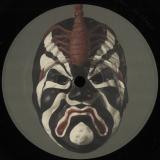
Now, the third one. Number three practiced the Scorpion style.
The style resembles the Scorpion pincer.
He came a little later. So he never met number one or number two.
out of Stock
Last delivered 6 months ago available to reorder, subject to availability
Very limited numbers, orders will need to be confirmed.
For his new album, Irreparable Parables, Andrew Wasylyk felt a strong desire to write a set of songs featuring an element hitherto rare in his work: the human voice. Equally strong was the conviction that he did not want to sing them himself.
The Scottish multi-instrumentalist and composer set about assembling a group of guest singers, sending out the songs to wherever they were in the world. The vocals were recorded remotely and then, like migrating birds, winged their way back to Scotland. The result is an album of great beauty which, perhaps preeminently in Wasylyk’s work, expresses the vulnerability and resilience of the human spirit.
Six singers appear on the record, represented by six songbirds illustrated on the sleeve by Clay Pipe Music’s Frances Castle. The cuckoo is a nod to Belle and Sebastian’s 2004 single ‘I’m A Cuckoo’, that band’s Stuart Murdoch being the first voice you hear on the new album. When the vocal for ‘Private Symphony #2’ arrived, says Wasylyk, “it was everything that I was looking for and more. But this is Stuart Murdoch. Of course he’s going to make something incredibly beautiful and thoughtful.”
The song lyrics were, for the most part, written by the singers. The music is Wasylyk’s creation. He navigates a sound world that lies somewhere beyond the borders of classical and jazz, ambient and abstract. It is difficult to describe, but easy to understand, which is to say to feel. That is the way Wasylyk’s work is experienced: as a feeling. It takes you back to childhood, perhaps, to feelings of comfort and safety, or to memories of walks at sunrise and sunset, or to the way a shadow falls on a particular field in a particular place at a particular time in your life. This is consoling music. That is why, though pretty, it is not merely pretty. These are songs to shore up the soul.
Wasylyk writes in a room, in his native Dundee, full of “half broken” instruments. He picks these up, plays a little, seeking an idea, a feeling, a door that lies ajar. The musical palette of Irreparable Parables includes brass and woodwind, a six-piece string section, guitar, bass, drums, vibraphone, Mellotron, Fender Rhodes, tape loops, synthesisers and percussion. The strings were arranged by the cellist Pete Harvey, a long-term collaborator.
Among the other guest vocalists are Gruff Rhys of the Super Furry Animals, Saya Ueno from Japan’s Tenniscoats and Peter Brewis from Field Music. Wasylyk himself takes the lead vocal on the title track, though a throat infection and touch of pitch-shifting have altered his singing in a way that even he, having fallen out of love with his own voice, finds acceptable.
The heart of the record can, arguably, be found in two tracks, ‘Love Is A Life That Lasts Forever’ and ‘Spectators In The Absence of God’, sung respectively by Molly Linen and Kathryn Joseph. The former, bright with trumpets, was inspired by the writing of Derek Jarman. “I was feeling deeply upset about the world and wanted to try and write some- thing that was obviously hopeful,” Wasylyk says.
‘Spectators …’ offers an emotional counterpoint. It is an “apocalyptic hymn” that seems to grapple with watching human suffering from afar, too distant to be at physical risk, but experiencing the psychological wounding, and feelings of helplessness, even complicity, that come with constant awareness of other people’s pain. “Kathryn’s a pal, I love her dearly, and she’s a brilliant artist who really feels what she writes,” Wasylyk says. “The cracked tenderness of her voice is spellbinding.”
The album closes with an instrumental piece, ‘Soul Enters The Ocean Sun Climbs Out Of The Sea’, all piano and strings, that offers a sense of resolution and ascension. A good moment, too, for Wasylyk to reflect upon the artistic companionship that he enjoyed while making this record – the songbirds that answered his call: “These humans are incredible at what they do. I’m deeply grateful and feel so lucky. It blows my mind.”
Don’t believe your ears - Pepper’s Ghost is the latest offering from NYC project Nuke Watch.
Whatever you think it is - it is not. By the same token it really can be whatever you want - electronica, jazz, improv, noise, new age, ambient - it’s none and all of these. Like the primitive visual illusion it’s named for - Pepper’s Ghost is a projection of a thing, it’s not the thing.
The Nuke Watch method - like that of Aaron Anderson and Chris Hontos’ other primary project Beat Detectives - leans almost entirely on live improvisation, with some advanced studio alchemy in post. Where the Beat Detectives palette draws from club music tropes, Nuke Watch blends recognizable tones (hand drums, woodwinds, keys, fretless bass) with sounds of providence unknown, the line between organic and synthesized instrumentation unintelligibly smudged. What is real and what is projection? It’s hard to say. What do our ears tell us? This is where we arrive at Pepper’s Ghost.
Warped as the sounds may be, the playing belies a crew of deeply expressive, learned improvisers who have their craft honed. Their friendship and psychic connection enhances the ritualistic rhythms, mutant modular synthesis, nimble keyboard runs, absurdist sampling and unidentified skronk. They’re wonderfully complemented across several tracks on this set by Cole Pulice’s levitational, sublime saxophone.
As unhinged as this might all appear, once the mind and music meet on the same wavelength this is profoundly moving, energizing and uplifting Alive Music that recalibrates the sense of what music can be.
Nuke Watch is Aaron Anderson and Chris Hontos, with an array of friendly guests. They’ve released records as Nuke Watch on The Trilogy Tapes, Commend and Moon Glyph. As Beat Detectives they’ve released records on Not Not Fun, 100% Silk and their own studio imprint NYPD Records.
Pepper's Ghost was written and produced by Aaron Anderson and Chris Hontos. Additional instrumentation on these recordings by Cole Police, Leonard King, Eric Timothy Carlson, Chris Farstad and William Statler. It was mixed by Chris Hontos and mastered by Jack Callahan. Painting on the cover is “The Unity Of Being” (2020), by Ry Fyan. Design and layout by Aaron Anderson.
RIYL - Musical illusions, puzzles and magic tricks, downtempo, music of the spheres, good journey, Eddie Harris, Ketron, "world building", orange sunshine, suspension of disbelief.
out of Stock
Last delivered 7 months ago available to reorder, subject to availability
All Cats Are Cute ist ein Instrumental-Funk-/Lofi-Beats-Party- und Chill-Album für alle Tierfreunde! Dieses Album feiert nicht nur Katzen, sondern auch den Geist der Vielfalt und Zusammengehörigkeit unter allen Lebewesen auf der Erde. Egal, ob man sein Zuhause mit Katzen, Hunden, Nagetieren, Vögeln, Menschen oder einfach nur mit der Liebe zu allen Lebewesen teilt, diese Platte ist der perfekte Soundtrack - eine Fahrt weg vom Trubel, auf einem bunten Katzenbus vorbei am Soul Train zur Regenbogenbrücke. Inspiriert von den Rettungskatzen Tibby und Slippy von Furnace Record Pressing, kommt diese LP Katzen zugute, die es am meisten brauchen. 100 % der Einnahmen werden an Brooklyn Animal Action gespendet, um deren Mission zu unterstützen, Tiere in Not zu retten, zu rehabilitieren und ihnen ein neues Zuhause zu geben. Dieses Projekt wurde ermöglicht durch die großzügige Unterstützung von Furnace Record Pressing, Catbeats und allen beteiligten Anbietern, die ihre Dienste gespendet haben, um sicherzustellen, dass jeder Cent direkt der Hilfe für Tiere zugute kommt. Hinter dem Namen steckt Shelby Cinca, bekannt als ehemaliger Sänger der 90er-Jahre-Hardcore-Band Frodus.
Rick James Blends Brazen Attitude, Fearless Sexuality, and Shrewd Charisma on Street Songs:
Punk-Funk Album Aims for the Hips and Head, Includes the Timeless Hit “Super Freak”
Sourced from the Original Master Tapes and Strictly Limited to 4,000 Numbered Copies:
Mobile Fidelity’s 180g 45RPM 2LP Set Presents 1981 Smash in Audiophile Sound for the First Time
1/4” / 30 IPS analogue master to DSD 256 to analogue console to lathe
“Punk funk” was a relatively unknown concept before 1981. But once Street Songs took the charts by storm that year, the world soon knew about what became Rick James’ signature style. And how. True to its name, Street Songs blends outspoken sexuality, brazen attitude, and edgy commentary amid contagious R&B-fueled arrangements that simultaneously aim for the hips, head, and various nether regions. And it’s never sounded better.
Sourced from the original master tapes, strictly limited to 4,000 numbered copies, pressed at Fidelity Record Pressing, and housed in a Stoughton gatefold jacket, Mobile Fidelity’s 180g 45RPM 2LP set presents James’ platinum-certified effort in audiophile quality for the first time. Playing with crisp dynamics, lively textures, airy headroom, and revealing clarity, this collectible edition of the record that stayed at the No. 1 spot on the R&B Album Charts for 20 weeks invites you to get closer to music that beckons you to turn your space into a private dance floor.
Then again, you’ll likely be so taken by how the taut bass lines, snappy rhythms, and four-on-the-floor beats — all rendered in stunning detail and with full-bodied architecture — come across with such accuracy and presence, you might stay pinned to your seat. On this pressing, the soundstaging, imaging, and lit-fuse energy of Street Songs reach new heights. Everything from the rubbery feel of the guitar lines to the depth of James’ temperature-raising vocals to the scale of the horn charts emerges as if James and his ace session crew set up in your room.
The Buffalo native and his ensemble waste no time getting their message across. On the album-opening “Give It to Me Baby,” James and company lay down a mix of sleek funk and pulsing disco that practically activates the bright lights of a discotheque and stimulates the libido of anyone within earshot. Having reached No. 1 on the Billboard Hot Soul charts, the song is pure sex — and just one of the carnal delights on a record that embraces the subject as fearlessly as James does his identity.
Of course, the most famous of James’ erotic excursions — the timeless “Super Freak” — hit No. 1 on Hot Dance Club Play charts, No. 16 on the Hot 100, and, later, No. 153 on Rolling Stone’s list of the Top 500 Songs of All Time. Bolstered by a quavering keyboard theme and electro riffs, the much-sampled track worms itself inside your muscles with smile-inducing subject matter, gliding vocals, nimble movements, a hot tenor-saxophone solo, and backing vocals by the Temptations.
The iconic Motown group isn’t the only celebrated guest artist on the Grammy-nominated Street Songs. James’ then-labelmate, Stevie Wonder, lends harmonica to the frank sociopolitical narrative on “Mr. Policeman,” a protest tune that also manages to stroll ’n’ strut via simmering organ, staggering brass accents, and James’ gritty vocal performance. In addition to contributing backing vocals on several cuts, Teena Marie turns in one of the album’s signature moments on “Fire and Desire,” a romantic old-school duet with James that impresses with smoothness, sensitivity, and smokiness.
High-profile colleagues aside, James remains the undisputed star, a figure whose leather-and-latex attire, braided hair, and natural swagger made him misunderstood by some in the mainstream and embraced by everyone in the know as a true original. As a testament to his magnetism and skills, his charisma and rawness seemingly seep through every note, whether on the balladic sweep of the risqué “Make Love to Me” or strident, poke-and-prod persuasion of the moonwalking “Call Me Up.”
On the closing “Below the Funk (Pass the J),” an uptempo autobiographical tale that addresses the visionary musician’s second-favorite love, the singer acknowledges his upbringing and inseparable connection with his roots — an homage to where he began and a toast to where he’s gone.
Rick James, keepin’ it real on Street Songs, still as real as it gets.
out of Stock
Last delivered 7 months ago available to reorder, subject to availability
French artist Trypheme debuts on Impatience with “Odd Balade”, a darkly-hued collection of songs drawn from human delicacy and dreamworld mythology.
“Odd Balade” is Trypheme’s most ambitious and boldest record to date - both lyrically and musically. The album’s thirteen tracks resist rigid genre boundaries and flutter from medieval folk realms, sprawling synths, gothic 80s wave, leftfield pop, haunted vocals, mutant electronica to reverbed guitars - all reflected through her own shadowy prism. Especially album closer “A Walk In The Vercors” evokes a soothing serenity that echoes the sonic balm of Julee Cruise.
Trypheme’s musical repertoire trends heavily electronic and somewhat abstracted, but on “Odd Balade”, the artist slips into the role of the modern troubadour with a shift to a more poetically and personal songwriting that is infused with symbolism and dreamlike fantasies. The connective tissue of the album is the audacity to love and the vulnerability that ensues. As intimate and introspective as the lyrics are, the themes remain universal and human to the core: the fear of losing a loved one, the melancholia of leaving places and t“the fear of losing a loved one, the melancholia of leaving places and the cycles of life. The record was largely composed in Chars, stirred by the French village’s eerie atmosphere and frequent trips to the seaside in Brittany, where Trypheme resides. Drawing inspiration from the rugged terrain of the seaside landscapes, the writings of Allen Ginsberg and Mark Fisher and the hyperrealist art of Scott Prior, Trypheme uses her songs to depict life with broad strokes of rhythm.
On “Odd Balade” Trypheme consolidates herself as a gifted, nimble songwriter, masterly producer and subtly powerful vocalist. The record combines her skill for crafting lush, alien sound worlds and efficient, alluring arrangements with stealthily devastating songs. Belin’s voice becomes a key ingredient, appearing on eleven of Odd Balade’s thirteen tracks, by turns heavily manipulated, sampled and replayed as a form of percussion, or basically bare.
“Odd Balade” is the manifestation of Trypheme’s roving artistic practice, a ceremonial-grade sacrament cast in a rich nocturnal glow. Pairing the mundane with the mythic, the album stays true to its core: odd and strangely familiar.
RIYL - Riding off into the sunset to an unknown destination, hauntology, present, tales told by the fireside, hot summer rain, adventures, to feel a warm presence when you are walking in the forest or in the mountain, coastal landscapes, sailor’s stories, slow motion, vitesse, heavy blossoms, colors, the warmth of the sun, the tenderness of the moon, getting lost in unfamiliar streets, city’s lights, motorway rest area by night, magic numbers, rendez-vous, picnic, serendipity, poetry, the smell of old records and old books.
Tiphaine Belin has been releasing music as Trypheme since 2016. Odd Balade was written and produced by Belin, and mixed by Belin and Abel Roux. It was mastered by Amir Shoat. Cover art photography is by Ariane Kiks, with art direction by Ariane Kiks in collaboration with Mathilde Chaize.
out of Stock
Last delivered 7 months ago available to reorder, subject to availability
Nach dem 2023 erschienenen „Are You Lost Here?“ betritt der junge belgische Singer-Songwriter mit diesem Album neues Terrain – ein Werk, das gleichermaßen weitläufig wie zutiefst persönlich klingt. „Salt Moon City“ verwebt die bekenntnishafte Songwriting- Intensität von Künstlern wie Sufjan Stevens und Paolo Nutini mit der majestätischen Klangfülle von Coldplay – und deutet zugleich subtil auf die harmonische Raffinesse von Bach und Debussy hin.
Dieses Album wirkt wie eine Verfilmung in Breitbildformat. Nach zwei Jahren gemeinsamen Spielens mit seiner Band hat sich Moon´s Sound geöffnet: Streicher und Bläser durchziehen die
Arrangements, verwandeln stille Selbstbeobachtung in etwas Strahlendes und Gemeinschaftliches.
Im Mittelpunkt steht Moon´s Stimme – leise, rau und ungeschützt – und sein Gespür für Songs, die Zerbrechlichkeit und Selbstbewusstsein gleichermaßen in sich tragen. Auf „Salt Moon City“ zeigt sich Moon als Produzent, Arrangeur und Multiinstrumentalist, der seinen Sound vollständig im Griff hat. Er spielt Schlagzeug, Bass, Gitarre und alle Klavierparts selbst und erschafft eine Atmosphäre, die zeitlos und lebendig zugleich wirkt – eine Stadt aus Salz und Erinnerung, irgendwo zwischen Traum und Tageslicht leuchtend.
Walk Don't Run ist ein Buddy-Comedy-Thriller, der sich über zwölf nächtliche und nostalgische Stunden erstreckt und die Auflösung einer lebenslangen Freundschaft erzählt, die durch eine manische Flucht aus einem Diner, die Entführung eines Woodie Wagon, eine Fahrt mit der Big Dipper-Achterbahn und eine Surf-Session um 3 Uhr morgens ausgelöst wird. Unterlegt mit Demos aus dem Ry-Ko-Ausschussstapel, ist Moodys instrumentale Abkürzung eine Momentaufnahme des Surf-Musik-Crashs Mitte der 1960er Jahre. Passend zum Nacht-Thema des Films tauscht Walk Don't Run die schlurfenden, verträumten Balladen der Ära ein und filmt die echoartigen Wellen des privaten Strandes lange nach Einbruch der Dunkelheit.
Walk Don't Run ist ein Buddy-Comedy-Thriller, der sich über zwölf nächtliche und nostalgische Stunden erstreckt und die Auflösung einer lebenslangen Freundschaft erzählt, die durch eine manische Flucht aus einem Diner, die Entführung eines Woodie Wagon, eine Fahrt mit der Big Dipper-Achterbahn und eine Surf-Session um 3 Uhr morgens ausgelöst wird. Unterlegt mit Demos aus dem Ry-Ko-Ausschussstapel, ist Moodys instrumentale Abkürzung eine Momentaufnahme des Surf-Musik-Crashs Mitte der 1960er Jahre. Passend zum Nacht-Thema des Films tauscht Walk Don't Run die schlurfenden, verträumten Balladen der Ära ein und filmt die echoartigen Wellen des privaten Strandes lange nach Einbruch der Dunkelheit.
Intricate structures with an intertwining of spontaneity and randomness, meeting the diverse genre influences of the band members from mediaeval music to shoegaze to noise. That is Unravel, the new album, and first in six years, from Czech band Manon Meurt.
"Unravel reflects the different stages of dissociation, a person's thoughts, observations - whether of the environment or of oneself - and admiration for the beauty and cruelty that nature mirrors," multi-instrumentalist and lyricist Kateřina Elznicová says of the album.
Produced by Eddie Stevens (Freakpower, Zero 7, Moloko, Roisin Murphy) the album was pieced together from recorded fragments, meticulously pieced together. The title Unravel refers to the development of the band, unravelling what they are to find the full potential of their music as well as uncovering the layered nature of the songs and emotions.
"Eddie Stevens’ approach to recording was a big surprise. We understood that there was no one right version of the songs. Each of our themes carries a certain energy that can manifest and blossom in many ways. Compared to previous records, the vision of each member was much more evident, while we learned not to cling to our individual ideas of a signifying break or a nu-metal bounce at the end of an ambient song. The main thing was a common concept," adds keyboardist David Tichý on creating the seven songs on the record.
Abum producer Eddie Stevens describes the collaboration, “Each album is an adventure. You do some preparation, check the route over and over, prepare for any eventuality that your packing space and imagination will allow, plan some places to stop and rest en route, places to eat, sleep, then consider the challenges - the ice wall, the summit, even just finding your way in foreign land. But despite all that planning, you can never really say for sure what’s going to happen, what unexpected path you might take, what strangers might invite you in for a cup of tea and to what ends. So it was making Unravel with Manon Meurt and engineer and studio owner Lukas Martinek at Svárov studios and of course back home in the relative safety of my studio. Musicians who quickly became friends showed me more than I showed them, people with ideas, with creativity seeping from their pores. Music making the right way: no blinkers, no walls, no preconceptions, no barriers, no rules. What a pleasure, and what a magical, technicoloured,
kaleidoscopic album we’ve made together, “
The combination of industrial material with plant motifs in the work Untitled_1 by Ukrainian artist Liza Libenko, which adorns the cover of Unravel, strongly attracted the band. After all, floral motifs have always been close to Manon Meurt's music. Libenko, a student of the Academy of Fine Arts and a finalist of the prestigious Austrian Strabag Artaward International Prize, has recently been working on overcoming the narrative boundaries of the canvas, the paintings "attack"the viewer. Sunflowers are a powerful symbol of life and the sun; in Libenko's paintings they are black and burnt, serving as an allegory for contemporary conditions. The work was photographed by photographer and artist Marcel Rozhoň, and the final processing of the Unravel album was done by graphic artist Zuzana Malá.
BBE Music’s acclaimed J Jazz Masterclass returns with its 20th release, a super rare private press from one of the more laudable female jazz figures of Japan, saxophonist and composer Sachi Hayasaka, together with her band, Stir Up! Released in 1988 on the private label Mobys, Free Fight was Hayasaka’s debut album and announced the arrival of an essential and primal force onto the Japanese jazz scene. Part free jazz, part post-bop, and part heavy groove, Free Fight is one of the most varied yet engaging albums BBE Music has reissued in the J Jazz Masterclass Series, showcasing Hayasaka’s inventive and muscular playing as well as her highly original and surprising compositional powers. Given the album’s eclectic yet cohesive sound, it’s no surprise that it originally found a home at Mobys, the label established by esteemed jazz critic and promoter Teruto Soejima. Mobys only issued a handful of albums from some of the leading free and open players including J Jazz Masterclass alumnus, pianist Aki Takase, as well as free jazz guitar icon Masayuki Takayanagi, and free jazz figureheads Itaru Oki and the great Masahiko Satoh. Born in Tokyo in 1960, Hayasaka took lessons from saxophonist and recording artist Toki Hidefumi and fully immersed herself in the jazz life, working part-time at various jazz kissas including Peter-Cat, a kissa managed by novelist Haruki Murakami. She has performed regularly across Japan at venues like the famous Pit Inn and formed a strong alliance with the classic Tokyo jazz kissa Paper Moon, which continues to this day. Heavily influenced by players such as Roland Kirk, David Murray and Ornette Coleman, Hayasaka has played with free jazz legend Yosuke Yamashita and performed around the world (as well as up Mount Fuji!). In the late 1980s she moved to New York for several years and worked with notable musicians including drummer Pheeroan akLaff and pianist Cliff Korman. She has recorded a number of albums to her name for Japanese jazz labels such as Three Blind Mice and Kitty as well as leading European imprints such as Enja.
Across an extensive suite of enchanting miniatures, Matthias Kremsreiter and Christian Schoppik present the hypnagogic vision of Taghelle Nacht. Recording under their respective Roudi Vagou and Läuten der Seele aliases, Kremsreiter and Schoppik combine their distinct but equally accomplished instrumental practices into a new collaboration that weaves swooning samples amongst instrumental passages. They lead us through 16 vignettes that revel in the cognitive dissonance and seductive magic of moonlight at midnight.
Both artists have past form within the folds of contemporary experimental electronic music in Germany. Kremsreiter's work as alibikonkret has manifested on DIY tape releases created with a methodical, technically-minded approach. Debuting his Roudi Vagou pseudonym on Taghelle Nacht, he pivots to a more playful, instinctively felt method that allows the compositions to flow with a natural cadence. Schoppik has been a key figure in the celebrated dark-ambient-folk scene, not least as part of the group Brannten Schnüre. His work as Läuten der Seele includes the acclaimed 'water trilogy' of LPs between 2022 and 2024, with a greater emphasis on instrumental, atmospheric production, and a last, stunning collaborative album with Nový Sv?t's Jota Solo.
On Taghelle Nacht the precise ingredients of each piece soften at the edges as tape loops and swathes of reverb seal the joints between spellbinding melodic refrains. Opening track and lead single 'Gleisende Lichter' sets the tone with ghostly murmurs, spine-tingling string refrains and splashes of cymbal that cut through the gloom with stark clarity. A lilting romanticism stirs at the heart of the orchestral samples that populate the likes of "Grenzu?berschreitung" - old-world beauty sometimes buried in dust, elsewhere rendered with startling clarity. 'So Süß' lets buzzing, sustained drones and dissonant sweeps of extended technique glide in and out of each other. Granular processing subtly breaks apart the mellow swell on 'Komischer Anruf', and forlorn sax calls out into heavy-hearted space on 'Glaskopf Mit Watte'. At every turn a new scene is painted, distinct from the last and yet all bound up in the pervasive, pale blue light cast over the sleeping landscape Kremsreiter and Schoppik have sculpted.
Snatches of song drift by like dreamlike fragments, and achingly tender flourishes fleetingly appear and retreat - ideas and expressions momentarily caught in the light before retreating into the shadows once more. This is the evocative world of Taghelle Nacht - an unsettling depiction of the surreal blend of memories and imagination that merge into each other once the sun goes down.
out of Stock
Last delivered 4 months ago available to reorder, subject to availability
Apollo Ghosts return with “Amethyst,” a seven-song EP overflowing with introspection, defiance, and the frustration of grappling with the world’s ills. With distortion pedals and walls of feedback - a first for Apollo Ghosts! - the songs contrast the monotony of daily life with climate anxiety, the rise of autocracies with the rise of apathy. But throughout, the album cements Apollo Ghosts' status as lifelong underground music defenders and eternal optimists with plenty of nods to 90s indie rock heroes Yo La Tengo, Dead Moon, Pavement, Guided By Voices, Eric’s Trip and Built To Spill
out of Stock
Last delivered 8 months ago available to reorder, subject to availability
Predatory Void returns with their third record, an EP titled `Atoned in Metamorphosis`, a concentrated statement of intent that compresses the band's restless energy into four precise movements. The music negotiates extremes: patient, reverb-saturated passages give way to sudden, metallic eruptions; subterranean basslines provide narrative weight beneath volatile guitar textures, vocals growl, wail and lament as drums alternate between measured architecture and volcanic release. The result is an austere, immersive sound that is both incandescent and violently sharp. Conceptually the EP takes on the ugly shadow of the unconscious and cathartically wrestles the demon onto canvas. Calling on elements from sludge, doom and black metal, as well as the unrelenting energies of hardcore and contrasting slower, haunted atmospheres, Predatory Void's signature sound is as volatile and piercing as ever. Concise, tight compositions that hook you in melody and then rage in filthy agony. The music can be confrontational, but it is never gratuitous_force is deployed to clarify rather than to overwhelm as emotional depth is at all times the compass. The production aesthetic prioritises fidelity to performance: takes are preserved for their immediacy, dynamics remain uncompromised, and the mix privileges contrast so that quiet moments carry as much dramaturgical weight as full-band climaxes. `Atoned in Metamorphosis` consolidates Predatory Void's forward motion and stakes a claim for a sound that prizes architectural heft and textural nuance in equal measure. Listeners should expect an immediate physical response in what is undeniably an ardent expression, and enjoy the reward of cumulative detail, for the EP dares you to listen closely: to feel transitions as processes, and to accept tension as a pathway to release. Predatory Void invites engagement, not escape, and demands to be met on its own terms, boldly. RIYL Hexis * CELESTE * Wallowing * LLNN * Downfall of Gaia * Witching
Predatory Void returns with their third record, an EP titled `Atoned in Metamorphosis`, a concentrated statement of intent that compresses the band's restless energy into four precise movements. The music negotiates extremes: patient, reverb-saturated passages give way to sudden, metallic eruptions; subterranean basslines provide narrative weight beneath volatile guitar textures, vocals growl, wail and lament as drums alternate between measured architecture and volcanic release. The result is an austere, immersive sound that is both incandescent and violently sharp. Conceptually the EP takes on the ugly shadow of the unconscious and cathartically wrestles the demon onto canvas. Calling on elements from sludge, doom and black metal, as well as the unrelenting energies of hardcore and contrasting slower, haunted atmospheres, Predatory Void's signature sound is as volatile and piercing as ever. Concise, tight compositions that hook you in melody and then rage in filthy agony. The music can be confrontational, but it is never gratuitous_force is deployed to clarify rather than to overwhelm as emotional depth is at all times the compass. The production aesthetic prioritises fidelity to performance: takes are preserved for their immediacy, dynamics remain uncompromised, and the mix privileges contrast so that quiet moments carry as much dramaturgical weight as full-band climaxes. `Atoned in Metamorphosis` consolidates Predatory Void's forward motion and stakes a claim for a sound that prizes architectural heft and textural nuance in equal measure. Listeners should expect an immediate physical response in what is undeniably an ardent expression, and enjoy the reward of cumulative detail, for the EP dares you to listen closely: to feel transitions as processes, and to accept tension as a pathway to release. Predatory Void invites engagement, not escape, and demands to be met on its own terms, boldly. RIYL Hexis * CELESTE * Wallowing * LLNN * Downfall of Gaia * Witching
Moanin’ in the Moonlight, Wolfs erstes Langspielalbum aus dem Jahr 1958, versammelte ein Dutzend
Singles, die er im Laufe des vorangegangenen Jahrzehnts aufgenommen hatte, darunter die Favoriten
„Smokestack Lightnin’“, „Evil“ und „How Many More Years“.
Holen Sie sich den Sound des größten Blues-Labels Amerikas in High Fidelity mit der Chess Records 75th
Anniversary Series nach Hause. Diese audiophilen Neuauflagen klassischer Alben und Compilations aus der
Chess-Diskografie wurden von den originalen Analogbändern remastert und bei Quality Record Pressings
(QRP) auf 180-Gramm-Vinyl gepresst. Jede Platte ist in einer Tip-On-Gatefold-Hülle aus hochwertigem
Karton verpackt.
"When The Wind Forgets Your Name" ist das erste neue Built to Spill -Album seit der Veröffentlichung von "Untethered Moon" aus dem Jahr 2015 und das achte Studioalbum dr langlebigen Band um Mastermind Doug Martsch. Es wurde von Martsch produziert, von Martsch, Lê Almeida, Joao Casaes und Josh Lewis gemischt und von Mell Dettmer gemastert. Das Cover Artwork wurde von dem Comiczeichner Alex Graham (Dog Biscuits; Fantagraphics Books) gestaltet, der auch den fünfzigteiligen Comicstrip für das Klappcover des Albums illustriert hat (erhältlich mit den CD-, LP- und MC-Ausgaben des Albums). Seit 1992 wollte Doug Martsch, Gründer von Built to Spill, dass seine geliebte Band ein gemeinschaftliches Projekt ist, eine sich ständig weiterentwickelnde Gruppe von unglaublichen Musikern, die gemeinsam Musik machen und live spielen. Nach mehreren Alben und EPs auf Independent-Labels stand Martsch von 1995 bis 2016 bei Warner Brothers unter Vertrag. In dieser Zeit nahmen er und seine wechselnden Mitstreiter sechs unbestreitbar großartige Alben auf - "Perfect From Now On", "Keep It Like A Secret", "Ancient Melodies Of The Future", "You In Reverse", "There Is No Enemy", "Untethered Moon". "When The Wind Forgets Your Name" setzt nun die Erweiterung des Built to Spill -Universums auf neue und aufregende Weise fort. Im Jahr 2018 brachten Martschs Glück und seine Intuition ihn mit dem brasilianischen Lo-Fi-Punk-Künstler und Produzenten Le Almeida und seinem langjährigen Mitstreiter Joao Casaes zusammen, beide von der psychedelischen Jazz-Rock-Band ORUA. Als Martsch ihre Musik entdeckte, verliebte er sich sofort in sie und bat sie bei Built to Spill mitzumachen, als er eine neue Begleitband für Auftritte in Brasilien brauchte. Die Auftritte in Brasilien liefen so gut, dass Martsch, Almeida und Casaes beschlossen, 2019 weiter zusammen zu spielen und durch die USA und Europa zu touren. Bei Soundchecks erlernten sie neue Songs, die Martsch geschrieben hatte, und als die Tournee zu Ende war, nahmen sie die Bass- und Schlagzeugspuren in seinem Proberaum in Boise auf. Nachdem sie nach Hause geflogen waren, begann Martsch selbst mit dem Overdubbing von Gitarren und Gesang. Das gemeinschaftliche Abmischen fand während der Pandemie übers Internet statt, in dem die Tracks hin und her geschickt wurden. Herausgekommen ist "When The Wind Forgets Your Name", eine komplexe und schlüssige Mischung aus den unterschiedlichen musikalischen Ideen der Künstler. Neben den poetischen Texten und Themen von Built to Spill sorgen die Experimente und die Liebe zum Detail für ein Album voller einzigartiger, lebendiger und zeitloser Klänge.
Limitierte Loser Edition, gepresst auf "Misty Kiwi Fruit Green" farbiges Vinyl. "When The Wind Forgets Your Name" ist das erste neue Built to Spill -Album seit der Veröffentlichung von "Untethered Moon" aus dem Jahr 2015 und das achte Studioalbum dr langlebigen Band um Mastermind Doug Martsch. Es wurde von Martsch produziert, von Martsch, Lê Almeida, Joao Casaes und Josh Lewis gemischt und von Mell Dettmer gemastert. Das Cover Artwork wurde von dem Comiczeichner Alex Graham (Dog Biscuits; Fantagraphics Books) gestaltet, der auch den fünfzigteiligen Comicstrip für das Klappcover des Albums illustriert hat (erhältlich mit den CD-, LP- und MC-Ausgaben des Albums). Seit 1992 wollte Doug Martsch, Gründer von Built to Spill, dass seine geliebte Band ein gemeinschaftliches Projekt ist, eine sich ständig weiterentwickelnde Gruppe von unglaublichen Musikern, die gemeinsam Musik machen und live spielen. Nach mehreren Alben und EPs auf Independent-Labels stand Martsch von 1995 bis 2016 bei Warner Brothers unter Vertrag. In dieser Zeit nahmen er und seine wechselnden Mitstreiter sechs unbestreitbar großartige Alben auf - "Perfect From Now On", "Keep It Like A Secret", "Ancient Melodies Of The Future", "You In Reverse", "There Is No Enemy", "Untethered Moon". "When The Wind Forgets Your Name" setzt nun die Erweiterung des Built to Spill -Universums auf neue und aufregende Weise fort. Im Jahr 2018 brachten Martschs Glück und seine Intuition ihn mit dem brasilianischen Lo-Fi-Punk-Künstler und Produzenten Le Almeida und seinem langjährigen Mitstreiter Joao Casaes zusammen, beide von der psychedelischen Jazz-Rock-Band ORUA. Als Martsch ihre Musik entdeckte, verliebte er sich sofort in sie und bat sie bei Built to Spill mitzumachen, als er eine neue Begleitband für Auftritte in Brasilien brauchte. Die Auftritte in Brasilien liefen so gut, dass Martsch, Almeida und Casaes beschlossen, 2019 weiter zusammen zu spielen und durch die USA und Europa zu touren. Bei Soundchecks erlernten sie neue Songs, die Martsch geschrieben hatte, und als die Tournee zu Ende war, nahmen sie die Bass- und Schlagzeugspuren in seinem Proberaum in Boise auf. Nachdem sie nach Hause geflogen waren, begann Martsch selbst mit dem Overdubbing von Gitarren und Gesang. Das gemeinschaftliche Abmischen fand während der Pandemie übers Internet statt, in dem die Tracks hin und her geschickt wurden. Herausgekommen ist "When The Wind Forgets Your Name", eine komplexe und schlüssige Mischung aus den unterschiedlichen musikalischen Ideen der Künstler. Neben den poetischen Texten und Themen von Built to Spill sorgen die Experimente und die Liebe zum Detail für ein Album voller einzigartiger, lebendiger und zeitloser Klänge.
The journey through French-speaking pop archives continues with this fifth volume, packed with fuzz, gimmicks, and dissent. Far from the charts, the selected tracks display a great creative freedom, often backed by corrosive humor. Welcome to the surprising, kaleidoscopic, and colorful world of the late sixties and early seventies, Wizzz!
Born in Montauban, Robert Pico stumbled into music by chance when he met René Vaneste, then artistic director at Pathé-Marconi. René brought him to Paris to record his first 45 RPM EP in 1964. A year later, Pierre Perret introduced him to Vogue, where he recorded his second album with Claude Nougaro’s orchestra. Sylvie Vartan then introduced him to RCA, where he recorded four singles, including the astonishing "Chien Fidèle," a track backed by a hair-rising fuzz guitar. Alongside his solo career, he also composed for other artists like Alain Delon (the song was recorded but remains unreleased), Magali Noël, Bourvil, and Georges Guétary. In the Paris of the sixties, he mingled with Mireille Darc, Elsa Martinelli, Marie Laforêt, France Gall, Françoise Hardy, Petula Clark, Régine, Dani, Serge Gainsbourg, Joe Dassin, Franck Fernandel, Charles Level, and Roland Vincent. Despite his efforts and winning a Grand Prix Sacem for his final record, Robert Pico didn’t achieve the expected success in show business and decided to leave Paris and return to the Southwest, where he devoted himself to writing. He is the author of 23 books (including Delon et Compagnie, Jean-Marc Savary Editions 2025, a memoir about his youth and his many encounters). Today, he is relieved to never have become a celebrity and devotes himself to his work with passion.
In 1969, the Franco-Italian movie Erotissimo was released, directed by Gérard Pirès (who later directed Taxi in 1998, written and produced by Luc Besson). This pop comedy features Annie Girardot, Jean Yanne, Francis Blanche, Serge Gainsbourg, Nicole Croisille, Jacques Martin, and Patrick Topaloff. The soundtrack was written by Michel Polnareff and William Sheller, with lyrics by Jean-Lou Dabadie. "La Femme Faux-cils," performed by Annie Girardot. It recounts the feelings of a rich CEO's wife who seeks to develop her sex appeal under the influence of advertisement and magazines. Groovy, sparkling and light, this track, with ITS lush arrangements humorously critiques consumer society and feminine beauty standards.
“Je suis l’Etat” (1967) is the flagship track of the first EP by singer-songwriter Spauv Georges, aka Georges Larriaga, better known as Jim Larriaga (1941-2022). Born into a family of bakers, the young man was initially planning to become a hairdresser when he discovered English-speaking music through Elvis Presley and the Beatles. After this revelation, he decided he would become a songwriter and gave himself five years to succeed. He recorded his first two EP’s independently for RCA under the pseudonym Spauv Georges; meaning “that poor George”, a nickname given to him by the mother of her friend Jean-Pierre Prévotat (future drummer of the Players, Triangle, or Johnny Hallyday). Portraying a depressed and eccentric young man, Spauv Georges created corrosive and amusing songs that didn’t reach a wide audience, despite a TV appearance with Jean-Christophe Averty.
Supported by his loyal friend and fellow songwriter Jean-Max Rivière, Georges Larriaga met the future singer Carlos in the early '70s, then Sylvie Vartan’s assistant. He wrote songs for Carlos, including the popular "La vie est belle," "Y’a des indiens partout," and "La cantine", which went onto become a huge hit in 1972. He also composed for Claude François (“Anne-Marie”, 1971), Charlotte Julian (“Fleur de province”, 1972), helped launch child singer Roméo (who sold 4 million records), and later wrote the hit "Pas besoin d’éducation sexuelle" (1975) for the young Julie Bataille. In 1971, Jim recorded an album for Disc'Az: “L’univers étrange et fou de Jim Larriaga”, which featured pop gems like “La maison de mon père”.
The story of the song "Zoé" began when Pierre Dorsay, artistic director at Vogue Records, asked Swiss singer and musician Pierre Alain to write a song for a new female singer. The inspiration came when he realized that Zoé (the artist's name) was also the name of France's first atomic battery, created in 1948, which consisted of uranium oxide immersed in heavy water! The lyrics reflect a bubbling energy that must be handled with caution, while the instrumentation echoes this atomic theme, notably with the use of a theremin.
Zoé’s career lasted only as long as a single 45 RPM, but it seems Christine Fontane was the vocalist behind this pseudonym, who is known for several EPs, a good "popcorn" album in 1964, and a handful of children’s singles in the '70s. Regardless, the photograph on the cover is of a different girl entirely.
Later, Pierre Alain continued his career, writing songs for himself, Marie Laforêt, Danièle Licari, Alice Dona, Arlette Zola (3rd place in Eurovision 1982), and achieving multiple gold and platinum records in Canada. Also an inventor with several patents, president of the Romande Academy, and head of the French Alliance in Geneva, he now composes atonal music, books, and poetry. Moreover, he is also the host of "Les Mardis de Pierre Alain" at "Le P'tit Music'Hohl" in Geneva.
Filled with oriental choruses and fuzz guitar, "Fou" is from Jacques Da Sylva's only EP released by Vogue in 1967. Despite the quality of this recording, all traces of this singer disappear after this first effort.
Valentin is a baroque pop singer born in Belgium. He is the songwriter and composer of most of the tracks on his three singles released in the late 60s in Canada. A legend says that he reincarnated himself as Jacky Valentin during the 1970s for a rock'n'roll revival career in Belgium, but his older brother sadly debunked this story. Valentin's first two singles were arranged by Claude Rogen, a Parisian session pianist who had come to Canada to promote the song “Mister A Gogo”, a cover of David Bowie’s “Laughing Gnome”, adapted by singer Delphine, his wife at the time. Far from his usual network, Claude Rogen arranged music for Polydor, including the arrangements for “Je suis un vagabond” in 1969, a jerk tune with string arrangements and a furious optimism.
Jacques Malia wrote, composed, and recorded his only 45 EP for Festival in 1966. “Histoire de gitan” is an incredible beat track with bohemian scat that tells the story of a gypsy musician who came to Paris to make it in the Music-Hall, to no avail. The hero of the song and its author probably shared a similar fate, as Jacques Malia faded into anonymity after this remarkable attempt.
Bernard Jamet recorded two EPs for Barclay in the late sixties and co-wrote several songs with Christine Pilzer, Pascal Danel, and prolific songwriters Michel Delancray and Mya Simile. The track “Raison Légale” (1968), his masterpiece, immerses the listener in a courtroom right when a murderer is being judged, with jerk rhythm and free arrangements. A unique, paranoid, judicial, and psychedelic oddity.
Jean-Pierre Lebrot-Millers started his career in show business in 1967 as a singer and songwriter for the Philips label. After three singles, he wrote several songs of a new kind with his friend Pierre Halioche, in the midst of the sexual liberation movement and the democratization of drugs. With provocative lyrics, “Les filles du hasard” and “Barbara au Chapeau Rose” were released on a Philips singles in 1968. The character of Barbara was inspired by a queen of Parisian nightlife during the psychedelic years: model Charlotte Martin, who dated Eric Clapton from 1965 to 1968, then Jimmy Page from 1970 to 1983. Jean-Claude Petit’s arrangements, with a table-filled intro, soul brass, and Hendrixian guitar, emphasize the flamboyance of a hedonistic and sexy character, whose dog is named Junkie because “Junkie est un nom exquis”! The track was recorded live in three takes with a full orchestra.
Upon its release, the record was censored by Europe 1 and RTL due to its references to drug use. Jean-Pierre Lebrot was then banned from the airwaves and later dismissed by his record label. He changed his artist name to Jean-Pierre Millers, while his companion Pierre Halioche became D. Dolby for a new dreamy composition, “Chilla”, which Jean-Pierre produced himself with arrangements by Jean Musy. Once again, the song was immediately censored everywhere. After this setback, he decided to stop singing and started taking on odd jobs to support his Swedish wife and their son until the day he met Jean-Pierre Martin, then production manager at Decca, who had worked with Manu Dibango. Martin offered Jean-Pierre Lebrot-Millers, then employed at Rank Xerox, the position of artistic director at Decca. He accepted and became, a year later, promotion director (radio, press, TV). He worked on Julio Iglesias’s first album for Decca, which became a massive hit and allowed him to meet Claude Carrère. The latter asked him to write new songs and find their performers, much like a “talent scout.” It’s through him that Jean-Pierre discovered Julie Pietri and Corinne Hermès. He composed “Ma Pompadour” for Ringo, Sheila’s husband, and took the microphone again for the syncope hit “Rendez-Vous” in 1982.
That same year, Jean-Pierre Lebrot-Millers tried to release a track for which he had heavily gone into debt: “Si la vie est un cadeau”. Having recorded it in London, he presented it to numerous professionals, all of whom refused to get involved. The same thing happened with Antenne 2 and the Sacem when he proposed the song as France’s entry for Eurovision. He then met Haïm Saban, who was producing cartoon soundtracks and had just launched the Goldorak theme song. Saban, having listened to the song, declared it had the potential to become a hit. He sent Jean-Pierre and Corinne Hermès to meet the CEO of the Luxembourg radio and television network. The latter received them, asked to hear a verse and chorus a cappella in his office, and immediately hired them to represent Luxembourg at Eurovision 1983. They reworked the arrangements and recorded a new version with Haïm Saban as co-producer. The song ended up winning Eurovision 1983, a great comeback for our hero. He continued producing and hung out with the band Nacash in Belgium when a couple came to introduce their daughter for an impromptu audition in a hotel room. The girl sang “Les démons de minuit” while dancing to a radio cassette. Impressed, he had her take singing lessons for a year and composed a song for her (for which he had the melody and title, but no lyrics). This required him to go on the hunt for a lyricist, who ended up being Guy Carlier. They recorded the song, which was initially a ballad, at Bernard Estardy’s CBE studio, and gave the singer a new name: Melody. They showed the song around their industry network without success. Later, Estardy called Jean-Pierre to suggest changing the rhythm and making it pop-rock. Orlando, Dalida’s brother, liked the result and decided to co-produce the track. “Y’a pas que les grands qui rêvent » became a classic hit. The song has since been covered by Juliette Armanet (as a ballad, like the original) and Valentina.
Born into an aristocratic Breton family, Hervé Mettais-Cartier worked as a DJ at Queen Kiss, a nightclub in Poitiers, where he formed the band Les Concentrés with Michel (an actor) and Christian (a radio technician). Together, they created a repertoire of whimsical songs (“Ma bique est morte”, “J’suis un salaud”, “Fils de dégénéré”...) that they performed on stage dressed in white (in homage to “concentrated milk”). They performed at Bliboquet and Olympia in 1968 for the 10th edition of the “Relais de la chanson Française” organized by L’Humanité-Dimanche and Nous les Garçons et les Filles, sponsored by Pepsi Cola. Winners in the author-composer category, alongside Danish singer Dorte, their visibility allowed them to record a 45, and appear on television in Jean-Christophe Averty’s show. The A-side of the disc features Bruno le ravageur, a casatchok dedicated to Bruno Caquatrix, the director of Olympia, nicknamed in the song “Coq Atroce” or “croque-actrices”. The B-side is dedicated to “Fils de dégénéré”, a quirky tribute to Hervé's aristocratic roots, mixing absurdity with sophisticated vocal harmonies.
After Les Concentrés, Hervé Mettais-Cartier formed the duo La Paire et sa Bêtise with his friend Olivier Robert. They performed in Parisian cabarets and toured with Pierre Vassiliu. In the late 1970s, Hervé began a solo career. He recorded two albums for the Motors label in 1978 and 1979, which did not achieve their anticipated success due to lack of promotion. In 1980, he met Bernadette, with whom he started a family and created a “Chansons à voir” (songs to see) show that he performed until his death at the end of 2024.
Publicité comes from the final EP by the Missiles (Ducretet Thomson, 1966), a disc that also includes “La (nouvelle) guerre de cent ans”, featured on Volume 4 of our Wizzz! series. Please refer to the booklet for the story of the band.
“He’s 1.82 meters tall, 28 years old, weighs 135 kg, is black and Belgian”: this is the description of singer Hegesippe on the back of his sole single (Decca, 1967). He appears on the album cover wearing a Greek toga, like a hippie gag – we are at the end of the year 1967. In “Le crédo d’Hegesippe”, this former bodyguard of Antoine and the Charlots plays the delightful card of the thick brute converted to Flower-Power and non-violence, with arrangements by Jean-Daniel Mercier, aka Paul Mille.
“Ethéro-disco” was released on a promotional record for clients of the Maréchal company (Liège, Belgium) for the New Year 1979. Over a funky rhythm, celebrity impersonations (Brigitte Bardot, Jacques Dutronc, Fernandel…) deliver an enigmatic text about pharmaceutical products like ether, bismuth, and aspartate. The track was composed by Dan Sarravah (responsible for Joanna's “Hold-up inusité” featured on Wizzz! Volume 3) and Tony Talado, who was also a singer (one 45 in 1967), songwriter (with over a dozen credits between 1964 and 1985 in various styles from surf music to disco), author (Devenez Végétarien, Dricot Editions, 1985), ad designer, and psychologist.
Décollez-les is on the A-side of Mamlouk's only single, a pseudonym for Marsel Hurten, who is known for his work on several EPs in the late sixties, as well as composing music for Hervé Vilard’s “Capri, c’est fini”, Claude Channes' “La Haine”, Annie Philippe’s “On m’a toujours dit”, and Nancy Holloway’s “Panne de Cœur”.
This strange song, with Afrobeat horns and absurd dialogues between a chef and his kitchen staff, is the result of a collaboration between Marsel Hurten and one of his neighbors, a photographer from Pavillon-sous-Bois (93), where the musician settled after returning from the Algerian War. A music video was shot to promote the record.
Marsel Hurten was born in Tourcoing (59) into a musical family. At a young age, he joined the brass band founded by his grandfather, playing the piston before studying trumpet at the conservatory, as well as teaching himself how to play the guitar. As an orchestra musician, he toured in France, Belgium, Germany, and England. He released a series of solo 45’s between 1965 and 1968 for the DMF and Az labels before stopping recording to focus on working for other artists (Gilles Olivier, Noëlle Cordier…).
“L’amour nu” (Vogue, 1971) is the work of the short-lived Belgian band Mozaïque. The track, written by singer Jacques Albin, closely resembles another of his compositions, “Carré Blanc”, which he recorded in 1969 for Disc’AZ.
Represented by the Lumi Son micro-label based in Marignane (Côte d'Azur), Jean-Marc Garrigues released two 45 RPMs in the late sixties, defending the French jerk sound. The song “Je dis Non” is a short, joyful ode to youth, pop music, and rebellion.
Songwriter and performer Jacques Penuel released three singles. The first one, “Astronef 328” (Fontana, 1969), features a dizzying series of chords punctuated by sound effects, a sci-fi story, and arrangements by Jean-Claude Vannier.
We would like to sincerely thank Pierre Alain, Moon Blaha, Marsel Hurten, Bastien Larriaga, Jean-Pierre Lebrot-Millers, Bernadette Mettais-Cartier, Robert Pico, Olivier Robert, Claude Rogen, Micky Segura.
out of Stock
Last delivered 8 months ago available to reorder, subject to availability
Noctourniquet And then everything went black, at least for a while, at least for The Mars Volta. In the months and years following their fifth full-length, Octahedron, Omar kept on at his usual fearsome creative pace. In fact, he ramped up his output considerably, starting up his own Rodriguez Lopez Productions label and releasing a slew of solo albums. It was a practice he’d begun shortly after De-Loused’s release, with his solo debut A Manual Dexterity: Soundtrack Volume One, but as the decade reached its close, Omar grew to rely upon his solo recordings as an outlet for his prolific creativity, these albums often exploring musical pastures far beyond even The Mars Volta’s wide-ranging parameters. Before choosing to release music under his own name, Omar would always play it to Cedric first, to see if the frontman thought it had potential to become Mars Volta music. Shortly after Octahedron’s completion, Cedric flagged one batch of tracks Omar had cut with Deantoni Parks, a brilliant drummer and composer who’d briefly occupied the Mars Volta drumstool in-between Jon Theodore and Thomas Pridgen’s tenures, and whose volcanic creativity and unique, unpredictable approach to rhythm and composition had quickly made him one of Omar’s favourite artistic foils.
As with the music that made up Octahedron, the new tracks Cedric had optioned for The Mars Volta often veered far from the riotous, Grand Guignol visions of their earlier releases. It possessed the punchy, song-based focus of Octahedron, though this was a considerably darker, more menacing strain of pop, with synthesisers figuring heavily in the productions. Cedric took the tracks in 2009 and set about writing songs to the music. But no more new Mars Volta music would be heard until 2012. The years that passed in-between were nonetheless momentous, and busy, witnessing an unexpected reunion of the members of At The Drive-In, and Cedric joining his own side-project, Anywhere. But there wasn’t any sign of life within the Mars Volta until Omar, Cedric and their bandmates took to the road for a series of live shows in the spring of 2011, billed as The Omar Rodriguez-Lopez Group, debuting the songs that would become Noctourniquet. The album followed the next year, and it remains one of The Mars Volta’s finest, its electronic textures staking out unfamiliar but fertile new ground.
An unsettling, subtly turbulent listen, Noctourniquet found Cedric sketching out a story about “some sort of device that stops the darkness from bleeding”, drawing influence variously from the nursery rhyme Solomon Grundy, the Greek myth of Hyacinthus and the song Birth, School, Work, Death by British underground rockers The Godfathers. It was an album of dystopian futurism, signalled by the paranoid cyber-rock of opener The Whip Hand and its unnerving chorus, “That’s when I disconnect from you”. But it was also an album of inspired, unexpected moves and uncanny invention, like how Dyslexicon seemed to eerily evoke Blondie’s Rapture, before rushing headlong into its bruising chorus, tempos shifting restlessly throughout like quaking earth beneath the listener’s feet, or how Aegis put a brave new spin on The Mars Volta’s trademark rewiring of salsa’s overdriven passions, or how Cedric had never sounded as scary as he did on The Malkin Jewel’s mutant burlesque shuffle. Tracks like Molochwalker were sleek and concise in a way The Mars Volta had never really attempted before – which was all part of Omar’s plan.
“It had all been guitar, guitar, guitar, overdubs, everything fighting for space in the same frequency,” he explains. “So for Noctourniquet, it was all about subtracting elements, of sticking to how I made demos.” Deantoni’s presence helped revivify the group, playing against cliché and expectation, and taking each song in unexpected directions. “I’d beatbox a rhythm for him to play, to go with my guitar part, and he’d come back with three or four alternate options. It was so great.” Similarly, Cedric had never sung better than on Noctourniquet, staking out a fearsome spectrum from the chilling Tom Waitsian growl of The Malkin Jewel to the keening, beautiful vocalisation on Vedamalady, rising to match some of Omar’s most deft, most immediately effective and melodic songs yet. Indeed, Noctourniquet is the sound of a band discovering new ways to do familiar things, renewing their commitment to their mission, finding fresh inspiration a decade in, and shaking off any complacency that might have come with ten years of acclaim and success.
Auf ihrem Debütalbum ist eine lange Liste von Elite-Musikern aus der Daptone-Familie zu hören, die alle mit ihrem Talent dazu beigetragen haben, Pazners kreative Vision zu verwirklichen. Das Album wurde mit großem Beifall aufgenommen und erlangte schnell den Ruf als eines der besten Instrumental-Soul-Alben des Jahrzehnts – mit Rezensionen von Pitchfork, American Songwriter, Brooklyn Vegan, Rolling Stone u.v.a.. Im digitalen Bereich wurde das Projekt durch ein unglaublich starkes organisches Wachstum bei den DSPs unterstützt, wobei die Streaming-Zahlen alle Erwartungen übertrafen und es zu einem Durchbruchserfolg sowohl für Daptone als auch für Pazner machten. Nach dem Erfolg seines Debütalbums verbrachte Pazner die nächsten Jahre damit, den musikalischen Kosmos zu erkunden – er schrieb Songs mit Lee Fields und begleitete ihn als Keyboarder auf Tournee. In dieser Zeit gründete er auch eine Familie. Diese Reihe von einschneidenden Lebensereignissen bereitete den Boden für das kommende Album „In Search of a Revival“ (Daptone Records).
Dieses Mal, ganze 10 Jahre nach der Veröffentlichung des selbstbetitelten Debütalbums, komponierte, arrangierte und produzierte Pazner das gesamte Album selbst. Mit einer Mischung aus Musikern, die bereits auf dem Debüt zu hören waren, sowie einer Handvoll Freunden und Mitwirkenden, die er auf seiner musikalischen Reise kennengelernt hat, bildete er ein 17-köpfiges Ensemble aus den besten Musikern der Szene. Während „The Olympians“ stark vom klassischen Soul-Stil von Curtis Mayfield und James Brown beeinflusst war, lehnt sich „In Search of a Revival“ an die goldene Ära der Wrecking Crew, die üppigen Texturen der Gold Star Studios, Vintage-Filmmusik und die eher unbekannten Ecken der cineastischen Klanglandschaften an. Von den kaskadenartigen Harfenklängen, die „Sirens of Jupiter“ eröffnen, bis hin zur treibenden Horns von „Sagittarius By Moonlight“ liefern The Olympians einen ganz eigenen neuen Sound: einen alten Traum vom fernen Griechenland, gemalt in üppigen, filmischen Arrangements über harten Rhythmen. In Search of a Revival ist auf dem besten Weg, ein weiterer Daptone-Klassiker zu werden – ein Album, das nicht nur die Traditionen des Instrumental-Soul würdigt, sondern auch einen kühnen neuen Standard für das Genre in den kommenden Jahren setzt.
Auf ihrem Debütalbum ist eine lange Liste von Elite-Musikern aus der Daptone-Familie zu hören, die alle mit ihrem Talent dazu beigetragen haben, Pazners kreative Vision zu verwirklichen. Das Album wurde mit großem Beifall aufgenommen und erlangte schnell den Ruf als eines der besten Instrumental-Soul-Alben des Jahrzehnts – mit Rezensionen von Pitchfork, American Songwriter, Brooklyn Vegan, Rolling Stone u.v.a.. Im digitalen Bereich wurde das Projekt durch ein unglaublich starkes organisches Wachstum bei den DSPs unterstützt, wobei die Streaming-Zahlen alle Erwartungen übertrafen und es zu einem Durchbruchserfolg sowohl für Daptone als auch für Pazner machten. Nach dem Erfolg seines Debütalbums verbrachte Pazner die nächsten Jahre damit, den musikalischen Kosmos zu erkunden – er schrieb Songs mit Lee Fields und begleitete ihn als Keyboarder auf Tournee. In dieser Zeit gründete er auch eine Familie. Diese Reihe von einschneidenden Lebensereignissen bereitete den Boden für das kommende Album „In Search of a Revival“ (Daptone Records).
Dieses Mal, ganze 10 Jahre nach der Veröffentlichung des selbstbetitelten Debütalbums, komponierte, arrangierte und produzierte Pazner das gesamte Album selbst. Mit einer Mischung aus Musikern, die bereits auf dem Debüt zu hören waren, sowie einer Handvoll Freunden und Mitwirkenden, die er auf seiner musikalischen Reise kennengelernt hat, bildete er ein 17-köpfiges Ensemble aus den besten Musikern der Szene. Während „The Olympians“ stark vom klassischen Soul-Stil von Curtis Mayfield und James Brown beeinflusst war, lehnt sich „In Search of a Revival“ an die goldene Ära der Wrecking Crew, die üppigen Texturen der Gold Star Studios, Vintage-Filmmusik und die eher unbekannten Ecken der cineastischen Klanglandschaften an. Von den kaskadenartigen Harfenklängen, die „Sirens of Jupiter“ eröffnen, bis hin zur treibenden Horns von „Sagittarius By Moonlight“ liefern The Olympians einen ganz eigenen neuen Sound: einen alten Traum vom fernen Griechenland, gemalt in üppigen, filmischen Arrangements über harten Rhythmen. In Search of a Revival ist auf dem besten Weg, ein weiterer Daptone-Klassiker zu werden – ein Album, das nicht nur die Traditionen des Instrumental-Soul würdigt, sondern auch einen kühnen neuen Standard für das Genre in den kommenden Jahren setzt.
UFC is proud to present its tenth release, “Music For A Dreaming Generation”, by R.I.P. Bestia, featuring remixes by Rabbit In The Moon, a mini-album produced between 2022 and 2024, where Analog Hardware and Sampling collide to form “Everything.”
'E.X.P.A.N.S.I.V.E (Ancestral Technologies Mix)' a fusion of Electro and Nu-Skool Breaks under a choral mantle of shamanic psychedelia. 'Music For A Dreaming Generation (Dub Botanical Reaction Mix)' the original version is brutalized and reactivated with the acids of the beloved TD-3, a colliding immersion of frequencies, dreamy pads, and hypnotic melodies filtered through the cherished JP-8080. 'Law 7/2023, of March 28' a humble, reivindicative sonic tribute to animal rights, compressed breaks and charming vocals are guided by a psychedelic melody up to a “Drop” where a monstrous Bassline takes the helm, steering you into an emotionally gravitational State of Dance.
About the remixes, Rabbit in the Moon delivers this legendary Techno-Trance gem 'Music For A Dreaming Generation (Nightowl Mix)' a remix we envision as “a crushing technoid mass” that lifts you up to an epic drop before bringing you back down to the earthly realm.'(Daydream Mix)' in this version, Rabbit in the Moon reimagines the original into a “2-Step Garage” interpretation, a pure Braindance journey, with graceful arrangements fused with epic vocals and mysterious Basslines.
out of Stock
Last delivered 7 months ago available to reorder, subject to availability
The complete album - limited edition pressing on 180g crystal clear vinyl
Although both Ella Fitzgerald and Louis Armstrong had met and performed and recorded a number of singles together during 1940s for Decca, they wouldn't be heard on LP together until 1956 when producer Norman Granz paired the two for this first album session, Ella & Louis, which became an immediate hit. Two further sessions under Granz, followed, Ella & Louis Again, and Porgy & Bess. All three albumswere both critically acclaimed and commercial successes - appealing to audiences in and beyond the confines of jazz per se. Ella & Louis features the incredible Oscar Peterson Trio plus legendary drummer Buddy Rich. As one of the most iconic and fascinating jazz albums ever produced, its appeal and commercial sales haven't waned during the sixty-nine years since its first release. "Ella & Louis is one of the very, very few albums to have been issued in this era of the LP flood that is sure to endure for decades." - ***** Nat Hentoff, DownBeat
Celebrating its 10th anniversary in 2025, Emi Okamoto's debut mini-album "Strike!" is being released on vinyl LP with a newly remastered "10th Anniversary
Edition"!
Singer-songwriter Emi Okamoto is a multifaceted artist, active not only as the lead vocalist of the band Friends, but also in dramas, writing songs, and supporting
and guesting at RIP SLYME's live shows. Her fourth album, "Ten City," commemorating the band Friends' 10th anniversary, will be released in September 2025
and is generating rave reviews. Also celebrating its 10th anniversary in 2025, her debut solo album will be released on vinyl LP with a newly remastered"
10th Anniversary Edition"! Written and composed by herself, this album showcases her unique style, spanning everything from cheesy electro-pop to
Idol-esque tracks, '90s R&B, exotic pop, and emotional rock ballads. Also included as a bonus track is the remix "Hit Number - Evisbeats and Punch Rmx"
by Evisbeats and Michel☆Punch. The single-LP release of "Strike!" sold out immediately, skyrocketing in price even on the used market and making it
difficult to find, so this vinyl release is a welcome surprise! Guest appearances include Kouki Okamoto (Gt./Okamoto's) and Keisuke Okamoto (Dr./Kuroneko
Chelsea).
E-style single jacket / Japan pressing / 33 RPM / Lyrics included
Jiyu wird als moderner Late-Night-Nu-Cosmic-Space-Jazz beschrieben. Mit ihrem hochgelobten zweiten Album "Totem Of Quiet Mystic" erhielt die dänische Formation internationale Anerkennung von Medien wie Jazzwise und einer Vielzahl legendärer DJs wie Patrick Forge und Chris Coco. Die tiefgründigen, instrumentalen Arrangements, vollgepackt mit analogen Synthesizern, E-Piano, Bläserthemen, Chorarrangements und einzigartigen Bass-Drum-Percussion-Grooves, verschieben mutig die Grenzen zwischen den Genres und reichen von Contemporary über Jazz-Funk und World-Crossover bis zu Spiritual und Cosmic Ambient Jazz.
A synthesiser sighs up and down the scale, a cool electro beat is wrapped in cotton wool and Fabian Drung aka JFR MOON sings about life in a bubble. "In a Bubble" is the name of this beautifully sentimental synth pop number, to which JFR Moon's new album owes its name. Although JFR MOON produces his music more professionally from album to album, the indie pop characterised by synthesizers and electro beats never seems too pleasing, remains unruly. Sometimes the pieces wander through curious psychedelic harmonies ("Silver"), sometimes they remind us of the Smiths ("Turn Around"), sometimes they stumble onto the dance floor ("Experience"). Blurred chords flit through "Stereo Tap", a yearning guitar melody wanders through "Ready", a nervous synth bass twitches through "Hun I Wish". Grooves meet echoing atmospheric sound textures. "I used to do folk where there was no rhythm at all," he says, "this time I wanted to write more uptempo songs, pay more attention to the drum machine." All tracks written and performed by JFR Moon. Mixed and produced by Thomas Zehnle (All Diese Gewalt, Levin Goes Lightly). Mastered by Enyang Urbiks. Additional vocals on ,In A Bubble" by Martha Rose. Solo guitar on ,Silver" by Dandy Deniz.
out of Stock
Last delivered 10 months ago available to reorder, subject to availability
Magnus Carlson and The Moon Ray Quintet join forces for a new album of inspired vocal jazz versions of some of their favourite music. Carlson is known as the vocalist of Weeping Willows, and The Moon Ray Quintet features members of top Swedish jazz acts Oddjob, Goran Kajfes Tropiques, La La Lars, etc. Together they form arrangements that capture the beauty of each song while bringing something fresh to the table. The Moon Ray Quintet was formed in 2009 around singer Magnus Carlson during a break from the band Weeping Willows which had been his musical habitat for over a decade. In the artistic vacuum he experienced then, he met jazz musician and producer Goran Kajfes in a bar. The two gentlemen had crossed paths musically before although this moment resulted in ideas that would lead Magnus career in a whole new direction. Also, it give birth to a brand new band consisting of a number of highly sought-after jazz musicians.
"We're in the joy business," says frontman Ketch Secor, who launched the Grammywinning band in 1998. "From the very start, a lot of the virtues of Christmas -- the revelry, the singalongs, the happiness -- have been present in our show." Nowhere is that more apparent than OCMS XMAS , the group's first holiday album. Decorated with seasonal spirit and string-band stomp, it's the rare breed of Christmas record that packs a punch all year long, shining new light on the band's chart-topping version of American roots music. Old Crow Medicine Show aren't just reinterpreting their favorite yuletide standards; they're adding new songs to the canon, too, from "Jolly Man" -- a country-blues number inspired by Mississippi John Hurt and laced with harmonica, sleigh bells, and resonator guitar -- to the Zydeco- flavored "All About A Baby." They're telling fresh stories, too. On "Corn Whiskey Christmas," a bootlegger drives his Chevrolet through the snow on Christmas Eve, bringing moonshine to those craving a cup of cheer. On the John Prine-worthy "Bethlehem, PA" -- a sly reimagining of Jesus' birth story, with lyrics that substitute Steel Country for Jerusalem -- the band heads to the Keystone State to witness the Nativity, making stops at Wawa and Motel 6 along the way.
"Grandpa's Gone" grapples with the loss of a family figure during the holiday season, while the wicked "Krampus Night" puts a minor- key spin on the Christmas catalog, paying tribute to a folkloric creature who, according to Secor, "just might leave ya coal and steal your soul." Old Crow have thrived for more than a quarter century. Like many of their heroes, they've become torchbearers of classic folk music, reshaping those sounds for the modern world. They're creators, not replicators, and OCMS XMAS finds them tackling another tradition -- the time- honored Christmas album -- with humor, hillbilly twang, and novel ideas. Supported by the band's first-ever "Holiday Hootenanny" tour, OCMS XMAS just might be the start of a new tradition itself: a celebration of the seasonal sounds, shared joy, and holiday rituals that bring us all together. Christmas just got a new soundtrack.