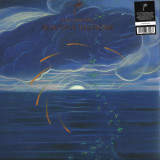
Neon is eviscerated across the wet light of pavement dreams, splashed back and absorbed by the darker shapes coalescing in the shadows. Through the broken concatenation of the night, neuron inputs are fed relentlessly by hardwire bodies. Mainlined subtle as a fetishist’s whisper, they in turn feed a punishing progression of rhythms dragged like a dream through your body. Against this digital dystopia, Sequence 87’s I Am Sequence propels the ear through a high-intensity array of blackened beats at once familiar and fresh. The grimey pulse of underground techno bridges the DNA of early industrialized electronics, a chimeric construct which heaves with the chrome breath of EBM’s heavy assembly. Shawn Rudiman, the Pittsburgh pioneer behind alias, has been crafting techgnosis solo and as part of the experimental dance duo T.H.D., and these veteran bona fides show in how deftly he parses the language of that era’s heavy synthesis into a work that easily translates into the modern languages of club movement. I Am Sequence retains that chunky ‘80s analog bounce, while injecting a wriggling sheen of HD intensity through its veins. Vocals emerge from the glistening shards, bursting against a wash of sine waves before remerging in a fusion of funked-out bass. Headlights crashing as horns blare, an autobahn nightmare funneling you down some future highway where machines crash ceaselessly across a horizon of endless red night. Lifting the psyche upon high, corroded harmonies herald the last chants to dance before the inevitable systemic collapse. An album for a foreseen Apocalypse, experienced through the language of dance floor speakers. All songs written and recorded by Shawn Rudiman Artwork by Shawn Rudiman Mastering at Dadub Studio Distributed by ReadyMade Distribution Braid Records 2023
quête:nu pulse
- A1: Third World - 1865 (96° In The Shade)
- A2: Peter Tosh - Johnny B. Goode
- A3: Althea & Donna - Uptown Ranking
- A4: Toots & The Maytals - 54-46 Was My Number
- A5: Inner Circle - Mary Mary
- A6: Wailing Souls - Feel The Spirit
- B1: Ini Kamoze - World-A-Music
- B2: John Holt - Police In Helicopter
- B3: Jimmy Cliff - The Harder They Come
- B4: Steel Pulse - Babylon Makes The Rules
- B5: Culture - The International Herb
- B6: Dennis Brown - Love Has Found Its Way
- C1: Eek-A-Mouse - Wa Do Dem
- C2: Black Uhuru - Sinsemilla
- C3: Aswad - Can’t Stand The Pressure
- C4: The Mighty Diamonds - Right Time
- C5: Pato Banton - Go Pato
- C6: Linton Kwesi Johnson - Inglan Is A Bitch
- D1: Gregory Isaacs - Night Nurse
- D2: The Abyssinians - Meditation
- D3: Max Romeo & The Upsetters - Chase The Devil
- D4: Buju Banton - Hills And Valleys
- D5: The Paragons - The Tide Is High
- D6: Yellowman - Zungguzungguguzungguzeng
Reggae Collected is compiled from the broad world of Jamaican artists, groups and its diaspora. This brand new compilation contains early reggae by Jimmy Cliff, classics from Third World, Peter Tosh, Toots & The Maytals, Steel Pulse, Black Uhuru, lovers-rock from Dennis Brown, Linton Kwesi Johnson, Gregory Isaacs, Yellowman and the #1 hit from Althea & Donna “Uptown Top Ranking” which was championed by BBC Radio 1 DJ John Peel.
The album Reggae Collected is part of the Collected compilation series, which is a collaboration between Universal Music and Music On Vinyl. The compilations bring together the biggest and best names of its genre, combined with forgotten hits and less discovered gems, giving the listener an experience of both nostalgia, and uncovering new musical grounds at the same time.
The 2LP Reggae Collected is available as a limited edition of 2000 individually numbered copies on yellow (LP1) and light green (LP2) coloured vinyl and includes an insert.
New York painter and musician exploratory industrialist Tor Lundvall initially envisioned his 14th album, Beautiful Illusions, as an entirely instrumental affair, "inspired by memories of sitting in a church or cathedral watching the shifting sunlight through stained glass." Although he ultimately chose to wreath the majority of the tracks with hushed, poetic vocals, his original muse still resonates. These are certainly songs of shadowplay and vaulted skies, the quiet grandeur of dusk deepening on the horizon. Lundvall characterizes the lyrical subject matter, too, in ways both specific and surreal, exploring "the doubts, the anxieties and even the bleak fantasies the mind spirals into during moments of isolation, separation and distance." Tricks of the eye, mind, and ear, magnified by silence and the looming long winter. Shivering pulses and muted bass lines tread the twilight while icicle synths and wiry guitar map the melody until the voice enters, narrating oblique moods of essence and absence, tenderness and truth. Glimpses of dark humor flicker in the wordplay but the greater sonic landscape is one of falling leaves and failing light, small gestures rendered as revelation, cloaked in reverb and spatial fog. Lundvall's mastery of nuance and negative space continues to heighten, whispered brushstrokes of the invisible and the unsaid, what lies beneath and what lies beyond: "Behind the shields and false fronts is usually a sadness. The heartbreaking reflections of what might have been."
- A1: Ana Frango Elétrico – Saudade
- A2: Pedro Fonte – Clichê
- A3: Bala Desejo - Lua Comanche
- A4: Ava Rocha - Boca Do Céu
- A5: Exército De Bebês - Avós Da Experiência
- A6: Thiago Nassif - Soar Estranho (Feat. Arto Lindsay, Vinicius Cantuária & Gabriela Riley)
- B1: Negro Leo – Mulato
- B2: Mari Romano – Amélie
- B3: Rosabege - Sigo Num Site / Mármore
- B4: Dora Morelenbaum - Vento De Beirada
- B5: Cadu Tenório & Juçara Marçal - Candombe - La Cacundê Iauê
- B6: Jonas Sa – Gigol?
- C1: Troá – Bandeide
- C2: Marcelo Callado - Simbora (Feat. Silvia Machete)
- C3: Ovo Ou Bicho – Moços
- C4: Lê Almeida - Apreço Antigo
- C5: Vovô Bebê - Briga De Família (Feat. Ana Frango)
- D1: Joana Queiroz - Dois Litorais
- D2: Raquel Dimantas - Flecha Azul
- D3: António Neves & Thiaguinho Silva - Das Neves
- D4: Letrux - Dorme Com Essa
- D5: Os Ritmistas - Sambolero
The popularity of Brazilian music from the 60s, 70s and 80s has experienced quite the renaissance; artists such as Gal Costa, Gilberto Gil, Arthur Verocai, Joyce et al, have become household names to an international audience passionate about global sounds. However, even for die-hard fans and collectors of Brazilian music of the past, discovering contemporary Brazilian artists is not always easy, nor accessible. But, if you know where to look, you will see that there is a resurgence well underway that can be epitomised by an exciting new wave of Brazilian artists beginning to break through and gather momentum overseas. It’s with thanks to Sound and Colours, a website devoted to promoting Latin American music and culture, that we can help shine a light on one particular collective, bursting with creativity and camaraderie.
‘Hidden Waters: Strange and Sublime Sounds of Rio de Janeiro’ is compiled by Joe Osborne (founder of specialist Brazilian music platform Brazilian Wax) and Russ Slater (editor at large of Sounds and Colours). Focusing solely on the 'Rio Scene', rather than taking on the mammoth task of tackling Brazil as a whole, this collection presents 20-plus ground-breaking artists selected from Rio’s resurgent music scene. By presenting a snapshot into the pulse of the city and the vibrant musicians that live in it, ‘Hidden Waters’ collates tracks from a wide spectrum of musical genres from the avant-garde edge to bossa nova, samba, Candomblé, lo-fi rock, jazz and funk.
‘Hidden Waters’ showcases musicians such as iconic Rio mainstays Negro Leo & Ava Rocha, Brazilian jazz upstart Antônio Neves, critically lauded Avant-pop trailblazer Thiago Nassif, breakthrough artists Ana Frango Elétrico and Letrux, lo-fi psych rocker Lê Almeida, plus the Latin Grammy-winning Bala Desejo who are set to explode onto the world stage. The music featured on ‘Hidden Waters’ is unequivocally Brazilian, swelling with samba, bossa nova, funk, and jazz. But it’s within the album's blend; from sunny psychedelia to dusky synth-pop via experimental electronics, that marks the compilation as the sound of modern, multicultural Rio.
This comprehensive compilation comes with album artwork designed by Rio music’s leading album artwork designer, Caio Paiva. It features essays by professor and music critic Bernardo Oliveira and music journalist Leonardo Lichote, plus extensive notes on each track by the artists themselves.
Italian producer duo 'Crossroads' are back 10 years after their first release.
Inspired by classic R&B, Disco and Neo-Soul they have had the knack of finding talented unsigned vocalists from all over the globe to feature on their tracks. This time around, the Italian singer Raffaella Zago covers a super soulful track originally composed in the 70's by the disco-soul duo Grey & Hanks.
'If You're In Need' is the perfect link between original 70's disco to contemporary soulful nu-disco, mixing live instruments with modern rhythms and synths. The b-side starts with a more uptempo remix by French DJ and producer Young Pulse, who is set to establish himself as one of the best remixers in the contemporary disco scene. Last but not least 'Call Me Dub' pays more attention to the instrumental parts of the track taking you on a deeper journey into the whole song.
“Shambly Television Personalities/Swell Maps style earworm indie rock.” Brooklyn Vegan
“RIPPER! Melbourne’s TERRY return to complete a hat trick of three albums in three years (TERRYilogy?) that leaves the piss streak that is the rest of indie pop in 2018 dribbling down its own leg in the dust.” 8/10 CLASH
Call me Terry! It’s been a hot minute since we last heard from Terry, what’s he been up to? Five years on from their last album, ‘I’m Terry’, the Australian post-punk quartet proudly present their new record, ‘Call Me Terry’, for release on April 14th 2023.
Terry is made up of pairs Amy Hill & Al Montfort, and Xanthe Waite & Zephyr Pavey who started playing together for the fun of it in 2016. Seven years, four albums and three EP’s later, Terry is ready to pick up the phone again. Over the past few years Terry have kept themselves busy - but not only with Terry things. On top of numerous releases with alternating side projects (Constant Mongrel, The UV Race, Primo!, Sleeper & Snake, Chateau, Rocky, the list goes on… ) members of Terry have moved interstate, undertaken studies, had children and started new fields of work.
Terry began sharing the demos for ‘Call Me Terry’ online with each other in 2020 - as we all did - before getting together in 2021 at their trusty rehearsal space to record the beds. Overdubs were completed at Terry’s homes over the following year. Lyrically, in true Terry fashion, the record wastes no time in scrutinising Australia’s corrupt, colonial history. They sing it loud and sprawl it across the jacket of this record, highlighting the greed, privilege and entitlement of white, wealthy “Australia” which they won’t stand a second for.
Musically, ‘Call Me Terry’ still has the classic Terry sound; the four vocals singing as one gang, sharp guitars and quirky, burbling synths, the rolling bass and drums, all amidst their clever, dancey pop songs. Since day dot it’s been hard to reference a band that really sounds like Terry, which is always amazing. Truly a sound of their own!
But the sugar on top here may just be some of their finest horn, string and piano performances to date - all of which never feel crowded, cluttered or over-involved. More just excellent, necessary melodies. Rest assured Al still gives his famed Fuzz Factory a workout - and throws his tremolo into the pedal chain. It goes off. Tremolo is the order of the day for Amy and Xanthe too who also embrace the wobble, whilst Zephyr keeps the pulse of their politico-pop anchored.
Terry isn’t afraid to call the shots and Terry isn’t afraid to point the finger. Listen to what Terry has to say.
Red Vinyl
“Shambly Television Personalities/Swell Maps style earworm indie rock.” Brooklyn Vegan
“RIPPER! Melbourne’s TERRY return to complete a hat trick of three albums in three years (TERRYilogy?) that leaves the piss streak that is the rest of indie pop in 2018 dribbling down its own leg in the dust.” 8/10 CLASH
Call me Terry! It’s been a hot minute since we last heard from Terry, what’s he been up to? Five years on from their last album, ‘I’m Terry’, the Australian post-punk quartet proudly present their new record, ‘Call Me Terry’, for release on April 14th 2023.
Terry is made up of pairs Amy Hill & Al Montfort, and Xanthe Waite & Zephyr Pavey who started playing together for the fun of it in 2016. Seven years, four albums and three EP’s later, Terry is ready to pick up the phone again. Over the past few years Terry have kept themselves busy - but not only with Terry things. On top of numerous releases with alternating side projects (Constant Mongrel, The UV Race, Primo!, Sleeper & Snake, Chateau, Rocky, the list goes on… ) members of Terry have moved interstate, undertaken studies, had children and started new fields of work.
Terry began sharing the demos for ‘Call Me Terry’ online with each other in 2020 - as we all did - before getting together in 2021 at their trusty rehearsal space to record the beds. Overdubs were completed at Terry’s homes over the following year. Lyrically, in true Terry fashion, the record wastes no time in scrutinising Australia’s corrupt, colonial history. They sing it loud and sprawl it across the jacket of this record, highlighting the greed, privilege and entitlement of white, wealthy “Australia” which they won’t stand a second for.
Musically, ‘Call Me Terry’ still has the classic Terry sound; the four vocals singing as one gang, sharp guitars and quirky, burbling synths, the rolling bass and drums, all amidst their clever, dancey pop songs. Since day dot it’s been hard to reference a band that really sounds like Terry, which is always amazing. Truly a sound of their own!
But the sugar on top here may just be some of their finest horn, string and piano performances to date - all of which never feel crowded, cluttered or over-involved. More just excellent, necessary melodies. Rest assured Al still gives his famed Fuzz Factory a workout - and throws his tremolo into the pedal chain. It goes off. Tremolo is the order of the day for Amy and Xanthe too who also embrace the wobble, whilst Zephyr keeps the pulse of their politico-pop anchored.
Terry isn’t afraid to call the shots and Terry isn’t afraid to point the finger. Listen to what Terry has to say.
Angel numbers: a series of recurring numerical patterns or sequences which those who believe in such things invest with cosmic significance.
Also, the name of the forthcoming album by Hamish Hawk – an apt title for an artist who bounces between scepticism and wonder, who alchemises the quotidian, who is engaged in a constant quest to outwit and outflank the ordinary. With the release of Heavy Elevator in September 2021, Edinburgh-based Hawk established himself as a writer of heartfelt, headstrong, unashamedly literate songs to stimulate both pulse and psyche. Heavy Elevator offered words to savour and tunes to relish. The songs were filmic and romantic, blending wit, wisdom, resignation and beauty with a kind of sceptical joie de vivre, delivered in a rich baritone that has drawn comparisons to everyone from Jarvis Cocker to Scott Walker. A singer of style and guile peddling accessible intelligence: what’s
not to love? Heavy Elevator established a powerful artistic imprimatur which nonetheless felt neither defining nor confining. While the album has been justly lauded, Hawk’s next steps have moved the story considerably further forward. Angel Numbers meets growing expectations head on, with panache and aplomb.
Inspired by three movies of avantgarde cinematographer Maya Deren (At Land, Ritual in Transfigured Time and A study in Choreography for Camera), Francesca Bono (vocalist, performer, founder of Ofeliadorme and member of the Donnacirco collective) and Vittoria Burattini (percussionist, multi-faceted drummer and member of influential Italian avant-rock band Massimo Volume) created a dense hypnotic transfixing collection of songs based upon the sole use of the Juno 60 synthesizer and the organic linear pulsating sound of a drum kit.
These apparent limitations set the scene for an incredibly rich and rewarding voyage that immediately establishes a strong identity that oscillates between circular dream soundscapes and psychedelic rhythmic architectures. Bono / Burattini excels in threading magical images where objects transform without warning (Your House Is A Ghost) and collapse into kosmische grooves (La Trama Del Desiderio) or when humming electronics mold into temporal dimensions (Sogno Nel Vigneto). Burattini’s astonishing use of the drum kit and her mallet driven timbre produce space and tension (Dinner Illusion) perfectly complementing Bono’s synthesized realm made of nuance and reflection (Dancing Demons). One of the album’s key elements is the sparse use of Bono’s singing, an intricate mix of measured phrasing, breathing, spiral structures and extrasensorial-like choirs that seem to reference the rich Italian tradition of cosmic jazz, library music and the unmatched work of the RAI engineers in the 70s working with Gruppo Di Improvvisazione Nuova Consonanza, Morricone, Daniela Casa. The driving Can-like pulse of Le Ossa shows force and flow while Stella’s haunting piano recreates a futuristic horror-movie OST.
Suono In Un Tempo Trasfigurato is beautifully recorded and mixed by Italian composer Stefano Pilia, a perfect match for Bono / Burattini’s sonic explorations and for a record that intersects experimental wave, alien grooves, contemporary electronics and futuristic sci-fi. Their blend of analog electronics and organic pulses place them in a time out of joint where dancing remains the one constant ritual.
'Unconscious Collective' is the first album by PS5 - the new ensemble led by Pietro Santangelo (Nu Guinea, Slivovitz, Fitness Forever) - and it will be out for Hyperjazz Records on 21th May 2021.
It's a musical experiment where layered memories and hidden feelings resonate as if they arise directly from the most recondite part of the unconscious and produce a suspension of the stream of consciousness. With the aim to create a state of trance and override the human reason, this is an imaginary round trip across the Mediterranean Sea and the Atlantic Ocean, ideally connecting Naples with North Africa and Latin America.
The arrangements wrote by Santangelo are based on great freedom of improvisation: while the melodic textures of the two saxophones didn't give any clear references, the other musicians followed the rhythmic pulse and its unpredictable ways. The music moves naturally along an imaginary line highlighting the ancestral connection between Jamaica and Ethiopia or between Nigeria and Cuba. In the background, Naples is a synthesis of all the sonic ingredients, mixed and cooked in its own mystical and spicy belly.
Besides Santangelo himself on the tenor and soprano saxophones, the collective is made up of: Paolo Bianconcini, a brilliant Neapolitan percussionist with a very deep Afro-Cuban background; Giuseppe Giroffi, young and talented alto and baritone saxophonist; the bassist Vincenzo Lamagna and the drummer Salvatore Rainone, both loyal members of the former Santangelo's trio.
Recorded live at the Auditorium Novecento in Naples, the legendary studio of Phonotype Records, 'Unconscious Collective' is mixed in analog format by Fabrizio Piccolo, and mastered by Davide Barbarulo at his 20Hz20KHz Studio.
Pietro Santangelo
Pietro was born, lives and plays in Naples. As a saxophonist and composer, he has released five albums with Slivovitz and one with his PS3 trio (Clinamen, Emme records 2017). Graduated in Digital Sound Processing at the Faculty of Physics of Federico II University, he is involved and engaged in the Italian scene of radical improvisation (Franco Ferguson, Elio Martusciello and Officina Arti Soniche, Collettivo NISE).
Multi-instrumentalist since forever, he has collaborated with Nu Guinea, Enzo Avitabile, Fitness Forever, Marzouk Mejri, Dennis Bovell and many others.
He's also author of soundtracks and electronic musician. He appreciates analog photography, loves walking outdoors. He hates biographical notes.
Die Alben ".neon", "Agape" und "Melting Sun" der Post Black Metaller LANTLÔs nun auf farbigem Vinyl!
“This music is staggeringly original and innovative, and while it’s possible to locate it in a chain of circumstance that links it to ‘Industrial’ music, P16.D4 indulged in none of the empty cliches associated with the genre, worked incredibly hard, and seem to have been aiming at a form of sound art that was much more profound, varied, subversive, and potentially dangerous. Kuhe In 1/2 Trauer’s accompanying credits indicate their radical approach to making music: lots of improvisation, lots of live electronics, extensive use of tape-loops, some conventional instrumentation, and much that isn’t – like the milk churn on ‘Paris, Morgue’ or the use of baking tray and washing machine elsewhere. Even when guitars, drums or keyboards are used, they’re played very weirdly. It’s not even made clear who was doing what; the main credit is ‘Concept,’ which I assume means that one of the three devised the framework in which the noise would operate itself, and while RLW gets the lion’s share of these credits, a lot of the cuts are evenly divided among the team and I have no doubt that the group operated in a very democratic or libertarian manner. None of this prepares you for the insane and troubling sounds that reach your ears, composed with scant regard for conventional logic and following an exciting, absurdist path, especially in the matter of tape edits and juxtapositions of recordings.” - Ed Pinsent, The Sound Projector.
“Though this German group started out as a the new wave band P.D., by the time of Kuhe in 1/2 Trauer, their first LP under the P16.D4 name from 1984, they had developed far beyond into extremely experimental music similar to other post-industrial artists working with abstract avant-garde soundscapes. There’s a bleak industrial feel to the gritty, lo-fi electronics and tape loops, while the group throws in enough curve balls to keep it interesting. On some pieces, strange, looped choirs bubble out of throbbing pulses and drones of feedback, while others have clanging and clattering, and elements of musique concrète and improvisation blur the boundaries even further. The opening track, “Default Value,” is one of those disorienting pieces with noises flying everywhere, while “Paris Morgue” takes excerpts from one of their old P.D. tracks and messes it up with additional instruments, while the ungainly titled fourth track throws in a heavy texture of percussive noises to create an edgy ambience about to teeter off the edge, and the even darker and more ambient title track takes the tension even further. Arrhythmic and amorphous and capable at moments of becoming quite noisy and abrasive, while at others far more somber and quiet, Kuhe in 1/2 Trauer is quite a fascinating release.” - Rolf Semprebon / AMG
P16.D4 was a German electronic noise music collective, active primarily from 1980 to 1988. P16.D4 embraced tape cut-ups, musique concrète, endless recycling and transformation of previously published material, and many long-distance collaborations with like-minded artists such as DDAA, Vortex Campaign, Nurse With Wound, and Merzbow. Their active participation in the international industrial tape scene yielded collaborative output such as their release Distruct, where bands such as Nurse with Wound, Nocturnal Emissions, Die Tödliche Doris, and The Haters provided the source material. The longest-term collaboration was with the installation and conceptual artist Achim Wollscheid, who used P16.D4 sounds as the basis for LPs he recorded under the name SBOTHI. Ralf Wehowsky, the only constant member of the group, later released solo material under the alias RLW.
Members of P16.D4 were also involved with Selektion, a collective of people involved with sound as well as the visual arts. Selektion published LPs, CDs, books, visual art and design.
The collective worked in a strongly improvised, spontaneous and anti-professional way, using acoustic and electronic instruments, using existing sound fragments, duplicating and alienating them, using repetition, distortion, changes in speed and playing direction. For this they used not only sounds of other artists but also their own material from earlier productions. Late works of the collective are associated with musique concrete.
After opening the dimension door via a hypnagogic contribution to recent Ruf Kutz comp 'Expansion Pack 2: Textures' and offering a sonic submersion into his 'Deep Waters Mixtape', Inner Glow takes the controls for RK18, treating the DJs and dancers to a high grade house triptych.
For the uninitiated, the man behind the music is a lifelong friend from Ruf Dug's Sydney sojourn, when the two would host mushroom squat parties with the rest of the "Bodega Clan", and who helped mastermind the seminal Paradise Lost warehouse parties. Virtuously patient, the Australian spent the years since perfecting his craft, maxing out the XP and emerging as his evolved form, Inner Glow.
On the A-side, Inner Glow comes through with the two clubbiest cuts from the 'Deep Waters' cassette, unmixed, mastered loud and exclusive to vinyl. Already a firm favourite with Bradley Zero 'Party People' pulses on the A1, its one note bassline and taut pads keeping tension at a maximum. At the top of the frequency band sparse stabs and nuanced percussion dance in tandem, while the deft use of E-Smoove and First Choice acapellas provide an underground intertext Sprinkles would be proud of.
'Call Me' coaxes us into the shadow realm with the lure of Lynchian dialogue, slowly taking shape as a dub techno phantom. It's a heads down affair as urgent subs push against the mist of static, until a rising, wriggling keyboard riff unwinds waists with a hint of UKG exuberance.
Inner Glow brings the beatific on the B-side's 'Love Has No Age', combining rippling keys and MK vocal chops over waves of hiss and haze.
The percussion combines classic house swing with the tinny hats of electro, keeping perfect time as the soulful vocals swell into the sublime.
Over the last twelve months Ruffy's rocked the spot from Pikes to Houghton with these heaters, and now he's sharing them with you.
repressed !
Firmly entrenched in techno's haziest alcoves, every new record from Denise Rabe is as punishingly hypnotic an experience as it aims to penetrate the deepest laid of your cerebral zones. Having plied her trade on Arts' sub-division Arts Collective before moving on to establish her own dedicated label, Rabe, in 2017, the Berlin-based DJ and producer steps up with her much anticipated debut platter for Stroboscopic Artefacts, as she takes the helm for the fifth sortie of the Totem series. True to her love for all things droney and psychoactive, this time Rabe has us descending into rugged, hostile sonic terrains with just a headlamp and the thick mantle of darkness for closest companions. Ahead’s a demented safari across nightmare-prone visions and thunderstruck vistas.
Hosing off the loud, churning 909 kicks and passive-aggressive machine talk straightaway, 'Manifesto' sets the tone for the warehouse-sized hammering to come. Evil-minded swashes of hyper-delayed percs and criss-crossing chimes lash out in successive waves, further subjugating the dancers as bars fly by. A more spacious and atmospheric number, B-side opener 'Clouds' heads for quieter high-altitude spheres as the dubbed-out drums beat an off-kilter, leftfield friendly pulse and ominous synth stabs and pads envelop the listener in entrancing textural folds and interplays. Back to floor-ready dynamics, the adrenaline booster 'Don't Leave' caps it off on a truly mind-bending tip. Primed for unrelenting peak time action with its angry buzzard-like drones, pacey 4/4 swing and refined palette of eerie circuit noises and click-y minimalism, this one's a high-impact steamroller, sure to get maximum response when things start getting muscular.
Angel numbers: a series of recurring numerical patterns or sequences which those who believe in such things invest with cosmic significance.
Also, the name of the forthcoming album by Hamish Hawk – an apt title for an artist who bounces between scepticism and wonder, who alchemises the quotidian, who is engaged in a constant quest to outwit and outflank the ordinary. With the release of Heavy Elevator in September 2021, Edinburgh-based Hawk established himself as a writer of heartfelt, headstrong, unashamedly literate songs to stimulate both pulse and psyche. Heavy Elevator offered words to savour and tunes to relish. The songs were filmic and romantic, blending wit, wisdom, resignation and beauty with a kind of sceptical joie de vivre, delivered in a rich baritone that has drawn comparisons to everyone from Jarvis Cocker to Scott Walker. A singer of style and guile peddling accessible intelligence: what’s
not to love? Heavy Elevator established a powerful artistic imprimatur which nonetheless felt neither defining nor confining. While the album has been justly lauded, Hawk’s next steps have moved the story considerably further forward. Angel Numbers meets growing expectations head on, with panache and aplomb.
Angel numbers: a series of recurring numerical patterns or sequences which those who believe in such things invest with cosmic significance.
Also, the name of the forthcoming album by Hamish Hawk – an apt title for an artist who bounces between scepticism and wonder, who alchemises the quotidian, who is engaged in a constant quest to outwit and outflank the ordinary. With the release of Heavy Elevator in September 2021, Edinburgh-based Hawk established himself as a writer of heartfelt, headstrong, unashamedly literate songs to stimulate both pulse and psyche. Heavy Elevator offered words to savour and tunes to relish. The songs were filmic and romantic, blending wit, wisdom, resignation and beauty with a kind of sceptical joie de vivre, delivered in a rich baritone that has drawn comparisons to everyone from Jarvis Cocker to Scott Walker. A singer of style and guile peddling accessible intelligence: what’s
not to love? Heavy Elevator established a powerful artistic imprimatur which nonetheless felt neither defining nor confining. While the album has been justly lauded, Hawk’s next steps have moved the story considerably further forward. Angel Numbers meets growing expectations head on, with panache and aplomb.
The sum to infinity of a sequence is the sum of an infinite number of terms in the sequence. It is only possible to compute this sum if the terms of a sequence converge to zero. "sum to infinity" is also the second release from gamut inc, the retro-futuristic ensemble around composers and curators Marion Wörle and Maciej Sledziecki.
This second album by gamut inc combines custom-build autonomous music-machines with haunting classical synthesizer sounds to a dense musical kaleidoscope.
The core of the album is formed by Risset rhythms - cyclic accelerations and decelerations, in which rhythmic layers are repeatedly faded in and out, setting in motion a seemingly endless process of rhythmic movement. The motifs are taken from geometric and arithmetic series that create an urgency and restlessness. The rigor of the construction is obscured by an orchestrion whose timbres are reminiscent of a retro-futuristic indigenous ensemble. gamut inc translate strategies of electronic music like pulse-width modulation to music machines such as automated accordion, automated percussion or glockenspiels and create an intense atmosphere that is idiosyncratic, original and modern at the same time.
Gamut inc. build their own music machines, play electronic music festivals internationally, curate the AGGREGATE festival for automated pipe organs, and compose for film, radio drama, and theater. Their first opera, ROSSUMS UNIVERSAL ROBOTS, premiered in 2022. Since 2011, at the intersection of electronic club culture and experimental music, they have been producing live music, music theater, film and theater scores (including for the Junge Staatstheater Berlin) with their specially developed musical robots. They composed for ensembles like the RIAS chamber choir or the robot orchestra Logos Foundation and received invitations and commissions from international festivals and venues such as Sónar, CTM, Berghain, Sonic Acts, Technosphärenklänge or Numusic (NO).
Their first release EX MACHINA was produced exclusively with music robots, and released in 2014 in cooperation with Bôłt Records.
"Percussion tracks bring to mind the music of Einstürzende Neubauten in their industrial mechanics, until finally the music warms to an expression reminiscent of Johnny Cash's late work."
Süddeutsche Zeitung
The trashed hotel room and communal living depicted on the cover of the J. Geils Band's sophomore album tell you all you need know about the music, spirit, and energy spilling from within The Morning After. Shot through with raw, lean rock n' roll sparked by juke-joint blues and loose rhythms, the 1971 set comes on like the most fun, party-still-raging hangover any group in the 70s enjoyed. And now it rolls with an abandon that takes you inside the sweaty, smoky roadhouses and wall-to-wall-packed clubs the group dominated in its heyday.
Mastered from the original master tapes, pressed at RTI, and limited to 3,000 numbered copies, Mobile Fidelity's 180g vinyl LP achieves a sonic acumen that brings you face-to-face with the sextet's white-hot instrumental prowess and magnetic personalities. It's always been difficult to single out just one member of the band given the cohesive bluster the ensemble achieves as a whole, but this collectible audiophile edition allows you to do just that if you so choose, by way of superb imaging and separation. As for the band's trademark dynamics? Here, they feel like they're on the verge of exploding.
So go ahead. Twist the volume knob to the right as much as you want. You'll lose none of the focus, detail, placement, or presence no matter how high the decibels climb. The Morning After spills forth with previously unheard tonalities, ranging from the distinctive swells of Seth Justman's slow-burn organ to the live-wire spark of Geils' own downed-power-line-jumpy guitar work to the mooring hi-hat/cymbal/snare combinations of arrangement-steadying drummer Steven Bladd. Friends, this is raw rhythm n' blues, this is how it should feel, and, man, this is how it should sound.
Not for nothing did the Massachusetts-based collective name the album The Morning After. The music within doesn't abide by rules, ignores speed limits, flips the bird at curfews, and digs deep down into America's blues roots to yield organic material at once fresh, exciting, traditional, and original. The back-porch punch provided by the combination of "Magic Dick" Salwitz's searing, melodic, snake-like harmonica and vocalist Peter Wolf's animated, barely controlled deliveries is alone enough to make anyone with a faint pulse to stomp their feet, climb atop a kitchen table, and kick their boot heels until the neighbors call the cops.
Just witness the deceptive smoothness of the snake-like "So Sharp" or Maxwell Street zest of the aptly titled Magic Dick showcase "Whammer Jammer," which will leave you gasping for breath before it even ends. J. Geils Band also knew its way around deep-cut soul. The ensemble's Top 40, howling, adrenaline-to-the-heart rendition of the Valentinos' "Looking for a Love" and swirling, romantic take on Don Covay's "The Usual Place" seamlessly balance drive and emotion. Coupled with rafter-shaking originals such as "Floyd's Hotel" and the riff-propelled "I Don't Need You No More," sent up with typical Wolf vocal flair, and the record parks the band's all-night festivities and go-for-broke attitudes right on your front lawn.
One last word of warning to the uninitiated: The Morning After is not the slick-pop J. Geils Band of "Centerfold." And that is a very good thing.