Kate Bollinger's songs tend to linger well beyond their run times, filling the negative space of ordinary days with charming melodies and smart phrasings. She writes them at home in Richmond, Virginia, letting her subconscious lead, an open-ended process she likens to dreaming. From a chord progression appears a line, maybe a syllable will start to stick, enough to pursue, but she says sometimes the words don't feel likeher own, more like shapes that form in the mind's sky. Bollinger's musical universe is relaxed, tender, and unassuming; within lives a timeless sensibility, a songwriter's knack for noticing the little things and their counterpoints. Darkness and light, pain and pleasure, reality and escape. Her new EP, Look at it in the Light, her first project on Ghostly International, is collaborative; she shoots music videos with her friends and colors each of her folk-pop songs with musicians in her community. The title Look at it in the Light is a reference to the aspects of Bollinger's life that she knows need examining. For one, there's her persistent resistance to change _ she chooses to ignore it on the title track ("I try not to notice / I deny my fate"), as wiry strums sync with crisp drums. She surrenders to comfort on "Who Am I But Someone," a light and softly psychedelic number. "Yards / Gardens" finds Bollinger in full swing, skipping verses of uncertainty above a bright and nimble bassline and kick. Guitar riffs unravel across the bridge, trailing her lines like ellipses. The string-backed "Lady in the Darkest Hour" is the set's most luxuriant statement, recorded during a session at Matthew E. White's Spacebomb Studios with in-house arranger Trey Pollard (Natalie Prass, Helado Negro). Here her lines ring bittersweet yet reassuring, uplifted by swells of golden-hued instrumentation. From the hushed abstractions of "I Found Out" to the biting suspicions of closer "Connecting Dots," Kate Bollinger uses every inch of this dazzling EP to find her footing amidst the ever-present sways of life.
Cerca:nu sky
Kate Bollinger's songs tend to linger well beyond their run times, filling the negative space of ordinary days with charming melodies and smart phrasings. She writes them at home in Richmond, Virginia, letting her subconscious lead, an open-ended process she likens to dreaming. From a chord progression appears a line, maybe a syllable will start to stick, enough to pursue, but she says sometimes the words don't feel likeher own, more like shapes that form in the mind's sky. Bollinger's musical universe is relaxed, tender, and unassuming; within lives a timeless sensibility, a songwriter's knack for noticing the little things and their counterpoints. Darkness and light, pain and pleasure, reality and escape. Her new EP, Look at it in the Light, her first project on Ghostly International, is collaborative; she shoots music videos with her friends and colors each of her folk-pop songs with musicians in her community. The title Look at it in the Light is a reference to the aspects of Bollinger's life that she knows need examining. For one, there's her persistent resistance to change _ she chooses to ignore it on the title track ("I try not to notice / I deny my fate"), as wiry strums sync with crisp drums. She surrenders to comfort on "Who Am I But Someone," a light and softly psychedelic number. "Yards / Gardens" finds Bollinger in full swing, skipping verses of uncertainty above a bright and nimble bassline and kick. Guitar riffs unravel across the bridge, trailing her lines like ellipses. The string-backed "Lady in the Darkest Hour" is the set's most luxuriant statement, recorded during a session at Matthew E. White's Spacebomb Studios with in-house arranger Trey Pollard (Natalie Prass, Helado Negro). Here her lines ring bittersweet yet reassuring, uplifted by swells of golden-hued instrumentation. From the hushed abstractions of "I Found Out" to the biting suspicions of closer "Connecting Dots," Kate Bollinger uses every inch of this dazzling EP to find her footing amidst the ever-present sways of life.
Loraine James' new ambient-minded alias, Whatever The Weather, follows her 2021 solo LP Reflection (Hyperdub). In contrast to her club music sensibilities, this mode embraces keyboard improvisations and vocal experimentation, foregoing percussive structure in favor of shaping atmosphere and tone. From this divergent headspace emerged new coordinates and climates, a new outlet: Whatever The Weather. A longtime fan of ambient-adjacent Ghostly International artists such as Telefon Tel Aviv (who she'd ask to master the album), HTRK (whose singer Jonnine Standish features on Nothing), and Lusine (whom she remixed at the start of 2021), James saw the label as the ideal home for this eponymous album of airy, transportive tracks as they began to formulate. The titling on Whatever The Weather works in degrees; simple parameters allowing James to focus on the nuances as a mood-builder. Her suspended universe fluctuates; freezing, thawing, swaying and blooming from track to track. James describes her jam-based approach for the sessions as "free-flowing, stopping when I felt like I was done," allowing her subconscious to lead. The improvisations have an intrinsic fluidity to them, akin to sudden weather events passing over a single environment - the location feels fixed while the conditions vary. The album opens at "25°C," a sunshower of soft hums and keys. As the longest piece, it serves to establish stability, the inflection point where any move above or below this temperate breeze breaks the bliss. Given James' proclivity for organized chaos in her production, this scene is fleeting, naturally. From that utopia, we plummet to the most melancholic read on the meter, "0°C," its isolated synth line traversing a hailstorm of steely beats and static. Next, the dial jumps for the propulsive standout "17°C." Like a timelapse of springtime in the city, the single accelerates across a frenzy of frames; car horns, screeching brakes, and crosswalk chatter fill the pauses between rapid jolts of multi-shaped percussion. For portions of the work, James leans neo-classical, rendering pensive vignettes of cascading piano keys and warm delay. "2°C (Intermittent Rain)" ends the A-Side on a short and stormy loop; a resulting sense of reset permeates the B-Side's opener, "10°C." The producer mingles intuitively on echoed organ, locking into and abandoning atypical rhythms that suggest her jazz-oriented interests. "4°C" and "30°C" display the range of James' vocal experiments. The former chops and pitches her voice to a rhythmic, otherworldly effect, the latter reveals James at her most straightforward (she cites Deftones' Chino Moreno and American Football's Mike Kinsella as inspirations), singing tenderly and unobstructed for nearly the duration before beats collide in the climax. Whatever The Weather closes at "36°C," while a sweltering heat by any standards the track eases along comfortably on a chorus of synth waves, acting as an apt bookend for this evocative, sky-tracing collection that started in a similar state. Cyclical, seasonal, and unpredictable, true to its namesake.
Repress
To emerge from a global pandemic with a renewed sense of situational awareness, hard won insight, and a new album is the kind of move we've come to expect from THRICE over the last twenty years. With Horizons/East, Dustin Kensrue and his bandmates address, with candor and courage, the fragile and awkward arrangements that pass for civilization, while inviting us to dwell more knowingly within our own lives. Without surrendering any of the energy and hard edge of their previous albums, they've given us a profoundly meditative work which serves as a musical summons to everyday attentiveness. Since forming THRICE with guitarist Teppei Teranishi, bassist Eddie Breckenridge, and drummer Riley Breckenridge in 1998, Kensrue has never been one to back down from a mental fight. This mood is set by the opening synth-driven number "Color of the Sky," which sounds well-suited to accompany the closing credits of the Stranger Things season finale. Think Flying Lotus giving way to Elbow and setting the listener down in a new dimension. A self-recorded effort, Horizons/East conveys a palpable sense of danger, determination, and possibility.
To emerge from a global pandemic with a renewed sense of situational awareness, hard won insight, and a new album is the kind of move we've come to expect from THRICE over the last twenty years
With Horizons/East, Dustin Kensrue and his bandmates address, with candor and courage, the fragile and awkward arrangements that pass for civilization, while inviting us to dwell more knowingly within our own lives. Without surrendering any of the energy and hard edge of their previous albums, they've given us a profoundly meditative work which serves as a musical summons to everyday attentiveness.Since forming THRICE with guitarist Teppei Teranishi, bassist Eddie Breckenridge, and drummer Riley Breckenridge in 1998, Kensrue has never been one to back down from a mental fight. This mood is set by the opening synthdriven number "Color of the Sky," which sounds well- suited to accompany the closing credits of the Stranger Things season finale. Think Flying Lotus giving way to Elbow and setting the listener down in a new dimension. A self-recorded effort, Horizons/ East conveys a palpable sense of danger, determination, and possibility.
"The follow up to Self Esteem’s acclaimed 2019 debut album Compliments Please, Prioritise Pleasure is a record that reminds us all of the importance of being our unapologetic selves, putting your insecurities out there in the hope that it can be the first step towards healing them. Honest disclosure has always been Self Esteem’s forte, and so each track on Prioritise Pleasure handles difficult themes with nuanced perspective, comforted and counter-balanced with an array of rhythmic flourishes that speak to the eclecticism of her experience and influence. Self Esteem has moved on considerably since that her acclaimed debut. With NME DIY and Source magazine front covers, 6 Music A list's andTune of the week on Radio 1 with both Annie Mac and Greg James, things are really moving now. TV appearances include Channel 4 - Sunday Brunch - live performance, interview & show guest
19.10.21: TX Sky - Never Mind The Buzzcocks – guest panellist 21.10.21: TX – BBC 1 - Match of the Day – guest and performance. The album is released on a CD Mintpack, Black LP."
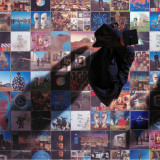
- A1: Hey You
- A2: See Emily Play
- A3: The Happiest Days Of Our Lives
- A4: Another Brick In The Wall (Part 2)
- A5: Have A Cigar
- B1: Wish You Were Here
- B2: Time/Breathe (In The Air) (In The Air)
- B3: The Great Gig In The Sky
- B4: Money
- C1: Comfortably Numb
- C2: High Hopes
- C3: Learning To Fly
- D1: The Fletcher Memorial Home
- D2: Shine On You Crazy Diamond (Part 1-5 - Edit)
- D3: Brain Damage
- D4: Eclipse
repressed !
Free your mind and float away, you’re now entering the mode of the Growing Bin. Hamburg’s centre for audio enlightenment is back with another sublime sensory experience, this time from the land of the rising sun. Keen to get another stamp on his passport, Basso reached out to Japanese duo Singu, two open minded cats who just love to jam. Marrying Kiyo’s free drumming with Keta Ra’s melodic mastery of keyboard and guitar, the two-piece fuse free jazz, post-rock, kosmische and ambient into immersive and esoteric improvisations. Free from any compositional concerns, the Hiroshima outfit trade in energy, emotion and expression. The frenetic percussion and ephemeral melodies of opener ‘Aurora Gate’ instantly transport you to the breathless churn of a Tokyo crossroads, where thousands of people rush by but you stand still in the eye of the storm. Though they may be explosive, the drums sit back in the mix, offering a soft intensity behind the shimmering wall of melody. A nimble and nuanced affair, ‘Bop’ brings rapid fire rhythm, slick syncopation and hypnotic piano refrains. Cool bass rolls along like KDJ’s ‘Rectify’, as Singu update the acid jazz template like Toshio Matsuura covering Carl Craig. Singu journey from far out to Furthur on Aside closer ‘Nagebu’, strapping in for psychedelic synth wig out which is heavy on the resonance and free on the filter. Blooming out of the darkness on the B1, Basso favourite ‘Fazaria’ soothes and moves you with its twinkling keys, nebulous wave forms and delicate guitar, leaving you wide eyed in wonder as the drum fills burst like fireworks across a star-filled sky. ‘828’ sweeps into abstraction as Kiyo and Keta Ra combine snapping glitches and aquatic electronics with fractal guitar tones and woozy bass, pushing through a portal to see what’s beyond. An a-grade wal
Flush is the latest single from Thyla's self-titled debut album. The track see's the band searching for an escape from the polarisation of opinion on social media comment sections. ARTIST QUOTE: “There’s so much polarisation online, social media acts as an echo chamber for the loudest and most extreme opinions. The situation is more nuanced than the algorithm allows for. Flush is about the state of anxiety caused by comment sections, about plotting to run away from it all.”
Never stuck for inspiration, people-powered and newly electrified singer-songwriter, Jamie Webster watched the world get weird and channelled every wicked turn into a new, 10-track album, Moments, set for release on Fri 28 January 2022. Following last month’s teasing single, Days Unknown, Webster reveals the follow up to last year’s number six-charting debut with new, rallying-cry single, Going Out.
Melding together two short stories, one of Paul and the other Annabella, Webster’s renowned people-watching prowess, setting vivid pen pictures of neighbours and strangers in his native Liverpool to music, switches to pin-sharp short fiction for Going Out. Cutting
across the strange absence of empathy for Britain’s young, Webster uses his characters to spell out the loss, frustration and rebellion of the twenty-somethings stopped in their tracks by recent circumstance and a tangle of incomprehensible rules.
Never stuck for inspiration, people-powered and newly electrified singer-songwriter, Jamie Webster watched the world get weird and channelled every wicked turn into a new, 10-track album, Moments, set for release on Fri 28 January 2022. Following last month’s teasing single, Days Unknown, Webster reveals the follow up to last year’s number six-charting debut with new, rallying-cry single, Going Out.
Melding together two short stories, one of Paul and the other Annabella, Webster’s renowned people-watching prowess, setting vivid pen pictures of neighbours and strangers in his native Liverpool to music, switches to pin-sharp short fiction for Going Out. Cutting
across the strange absence of empathy for Britain’s young, Webster uses his characters to spell out the loss, frustration and rebellion of the twenty-somethings stopped in their tracks by recent circumstance and a tangle of incomprehensible rules.
Lockdown took its toll on Clive. Not the isolation or sense of impending doom - that was normal - but specifically the worldwide marmite shortage in April. On the verge of a 'Driving to Dundee barefoot' style meltdown, Clive found solace in his 20 year obsession with Alan 'foot on a spike' Partridge.
Taking Musique Concrete to its textbook conclusion, Clive has made music only using sounds from TV series 'I'm Alan Partridge'. Over 100, mainly foley samples were repurposed into the two title tracks of the Alan EP.
Alan A is a raw yet melodic, big plate of House. Containing everything from drawer slams to air bass, cereal destruction to Black Beauty, this orchestra of found sound makes for some unique and exciting rhythmic textures. Grab a cup of beans and enjoy.
Things take a dubby turn for Alan B. Late night broken beats and sultry bass worthy of Alan's Deep Bath. Featuring Lynn on jungle time-stretched vocals.
The EP is bought to a close by off-kilter acid-tinged synthwave nugget, Linton TT. It doesn't fol-low the Partridge sampling rules but needless to say has the last laugh.
Bonus Easter egg for the vinyl heads is a "Dan!" locked groove at the end of side A. Cook a cat!
Label info:
Income Trax is Clive from Accounts' filing cabinet of curiosities. Home for his more eccentric and exotic ideas.
Artist Bio:
Regional tiddlywinks champion, stationary cupboard loiterer and all-round beige sky thinker, Clive From Accounts likes two things; pens and music. But mainly pens. Using springs, tape and old synths with fonts he admires, Clive creates the musical equivalent of warm photocopies. If it's going to be that kind of party, Clive's going to put his Filofax in the mashed potato.
It's been an interesting couple of years for Clive. After being picked up by keen-eared funk wizards Fouk, Clive's vinyl debut hit the shelves perfectly to coincide with the largest record shop and club closure in living memory. Undeterred and with a fire in his belly no amount of pepto-bismol could squash, he pressed on.
A string of releases on highly respected labels On The Corner in London (making the Guardian's best tracks of 2020) and Dirt Crew Recordings in Berlin have led him nicely into the second half of 2021 with an EP on New York disco colossus Razor n Tape and the debut release of his own label: Income Trax.
2007 2nd studio album from San Diego psychedelic instrumental rockers
On 180 grm audiophile black vinyl and is stickered to say this. This six-song, half-hour CD the band’s affecting a more rural, lonesome-sounding tone and a moodier, more deliberate pace; the more traditional feel meshes well with Anton Newcombe's twisting of country-gospel lyrical clichés into rock & roll attitude. The Brian Jonestown Massacre is a psychedelic rock band originally from San Francisco, California, led by guitarist/singer Anton Newcombe. Since 1995 The Brian Jonestown Massacre has released numerous albums, first for Bomp! Records, the label which gave them their start, and later for TVT and Tee Pee. BJM has been essential in the development of the modern U.S. garage scene, and many LA and SF musicians got their start playing with Newcombe, including Peter Hayes of The Black Rebel Motorcycle Club
- 01: *
- 02: I
- 03: Ii
- 04: Iii
- 05: Iiii
- 06: Iiiii
- 07: Iiiii I
- 08: Iiiii Ii
- 09: Iiiii Iii
- 10: Iiiii Iiii
- 11: Iiiii Iiiii
- 12: Iiiii Iiiii I
- 13: Iiiii Iiiii Ii
- 14: Iiiii Iiiii Iii
- 15: Iiiii Iiiii Iiii
- 16: Iiiii Iiiii Iiiii
- 17: Iiiii Iiiii Iiiii I
- 18: Iiiii Iiiii Iiiii Ii
- 19: Iiiii Iiiii Iiiii Iii
- 20: Iiiii Iiiii Iiiii Iiii
- 21: Iiiii Iiiii Iiiii Iiiii
- 22: Iiiii Iiiii Iiiii Iiiii I
- 23: Iiiii Iiiii Iiiii Iiiii Ii
- 24: Iiiii Iiiii Iiiii Iiiii Iii
Chìsake Algonquin: to chant; to conjure; to cast a spell; this generally involves a shake-house, or shaking tent, in which the conjurer goes into a trance; the conjurer then has an out-of-body experience, going into the future to predict coming events, or into the past; as well as going into any locality in the universe to seek out someone or something generally practiced for ancestral divination.
The unaccompanied flute pieces within this album are adaptations of Anishinaabeg shaking tent chants. The Anishinaabeg also known as Anishinaabe are a group of culturally related Indigenous peoples that reside in areas now called Canada and the United States. They include the Odawa, Saulteaux, Ojibwe (including Mississaugas), Potawatomi, Oji-Cree and Algonquin peoples. The word Anishinaabeg translates to "people from whence lowered". The Anishinaabeg origin myths describe their people originating by divine breath.
The shaking tent or conjuring lodge was the setting for a divinatory rite performed by specially trained shamans otherwise known as Chìsakewininì. During the shaking tent ceremony the Chìsakewininì would construct a special cylindrical framework typically of birch or spruce uprights planted in the ground with respective wood hoops to bind it together. This created a tensile structure of which birch bark, deer skin, or cloth was used as a covering. Rattles of caribou and deer hooves, or cups of lead shot, were tied to the frame. The floor was usually softened with freshly cut spruce boughs. The vertical axis of the shaking tent represents the realm of mediating beings, while the horizontal axis the earth or world of humans. The Chìsakewininì would enter the shaking tent at night and once inside would not be visible from onlookers. The singing of chants and drumming would summon the Chìsakewininì's spirit helpers, whose arrival was signified by animal cries and erratic tent shaking. During this transcendent state, the Chìsakewininì could dispatch these spirit helpers or Manidò to distant regions to answer questions from the onlookers about the most auspicious places to hunt, the well-being of a distant relative, and what would happen in the future.
The chants were usually sung using vocables before, during, and after the Chìsakewininì entered the shaking tent. Like many other similar divination ceremonies, singular or collective, the opening chants begin lyrically. They gradually turn to more reductive abstract structures midway and then end in lyrical chants. This symbolizes the performer and listener leaving the external literal world, entering a more abstract state of mind, and then returning. Traditionally all songs were carved on birch bark for record-keeping with mnemonic pictographs or other marks for future use. Tally mark clustering, sometimes used for song-keeping throughout the Anishinaabeg, is used for this album's track titles and numerical sequence.
The album intro begins with the shaking of a necklace of otter penis bone, fish spine, bear teeth, elk teeth and deer hide, gifted from Algonquin Elder Ajawajawesi. It is meant to focus the listener's attention before the flute pieces begin. The warble or multi-phonic oscillation prevalent in the middle tracks traditionally represented the "throat rattling" vocalization of the tonic note or sometimes known as the horizon of which the melody floats off of. Due to the repetition of multi-phonic oscillation the performer will breathe erratically creating an altered state correlating with the Chìsakewininì ceremonial actions. All songs are repeated seven times to signify the seven sacred directions: east, south, west, north, above/sky, below/earth, and center.
- A1: Main Title
- A2: Victim
- A3: The Mysterious Creature
- A4: The True Identity Of The Enormous Creature
- A5: Hayashida Research Institute
- A6: Maki And Naoko
- A7: The Soviet Nuclear Submarine’s Crisis
- A8: The Terror In The Ocean’s Depths
- A9: The Ban Is Lifted On The News
- A10: Report 1
- A11: Naoko’s Shorrow
- A12: The Search For The Enemy Begins
- A13: Godzilla Emerges At The Ihama Nuclear Power Plant
- A14: The Destruction Of The Nuclear Power Plant
- A15: Report 2
- A16: The Mt. Mihara Crater
- A17: Us-Soviet Special Envoys Arrive
- A18: To The Prime Minister’s Relief
- A19: Soviet Nuclear Satellite
- A20: Emergency Evacuation Ordered
- A21: The Self-Defense Forces Go To Mt. Mihara
- A22: Coast Lookout Preparations
- B23: Godzilla Appears
- B24: Balashevo
- B25: Godzilla Devastates Yurakucho
- B26: The Guidance Strategy Begins
- B27: Deserted Streets
- B28: The Life Of The Town
- B29: Godzilla And The Magnetic Substance
- B30: The Super-X Mobilizes
- B31: Nuclear Missile Launch
- B32: The Missile Draws Near
- B33: The Giant Beast Collapses
- B34: Super High-Rise Rescue
- B35: The Two Who Were Left Behind
- B36: The Desire To Live
- B37: Nuclear Resolution
- B38: The Red Sky
- B39: Thunder
- B40: The Awakening Of The Giant Beast 1
- B41: The Awakening Of The Giant Beast 2
- B42: The Awakening Of The Giant Beast 3
- B43: The Awakening Of The Giant Beast 4
- B44: Godzilla Vs. The Super-X
- B45: The Terror Of Godzilla
- B46: The Crimson City
- B47: Godzilla Heads To Oshima
- B48: Godzilla Arrives At Oshima
- B49: Godzilla Falls Into Mt. Mihara
- B50: “Godzilla” Ending
He's back! After nine years away from the big screen, the Big G reappeared for his 30th anniversary in THE RETURN OF GODZILLA. Produced by Godzilla's creator Tomoyuki Tanaka and directed by Koji Hashimoto, the picture returns the uber-kaiju to the ultimate antagonist he was always intended to be. Watch as he devastates Tokyo after being resurrected by an underwater volcano and thrill to the dramatic and explosive musical score by Reijiro Koroku!
Having previously worked with Studio Ghibli's Hayao Miyazaki and Isao Takahata, Koroku was the perfect choice to score the Big G's triumphant return, creating no less than three themes for everybody's favourite kaiju. Listen to the rumbling low-frequencies and powerful brass attacks as he ravages a power plant and fights the Japanese Self Defence Forces (JSDF) and swoon to the love theme for Maki and Naoko. Koroku also wrote exciting pieces for the JSDF and the Super-X, a particular machine designed to fight Godzilla. Still, it's his respect and reverence for the Big G that makes THE RETURN OF GODZILLA such a success. The score ends with vocalists The Star Sisters lamenting Godzilla's disappearance, cementing the place he has in our hearts. "Take care now, Godzilla, my old friend."
Limited edition purple double vinyl with rainbow laminate finish gatefold sleeve.
Kylie’s record-breaking fifteenth studio album ‘DISCO’ was released to widespread acclaim last year and was hailed as ‘an irresistible tonic to real life. Thank God for Kylie Minogue’ by Metro in a 5* review and ‘the ultimate rescue remedy’ by The Observer (4*). It featured lead singles ‘Say Something’, which received widespread praise - deemed ‘a galactic slice of pop music heaven’ by i-D - and ‘Magic’, which NME called ‘an exuberant, horn-fuelled romp.’
About ‘DISCO’
‘DISCO’ was released in November 2020 and entered the charts at Number 1 in the UK, making it Kylie’s eighth UK Number 1 album. It is a record-breaking release for the pop icon, making Kylie the first female solo artist to claim Number 1 albums in five consecutive decades (‘80s, ‘90s, ‘00s, ‘10s, and ‘20s). ‘DISCO’ received widespread critical acclaim, deemed ‘an irresistible tonic to real life. Thank God for Kylie Minogue’ by Metro in a 5* review, ‘the ultimate rescue remedy’ by The Observer (4*) and ‘an exquisitely produced, effervescent tribute to 70s and 80s disco music and dance as escapism’ by The i (4*).
For ‘DISCO’, Kylie worked with long-time collaborator Biff Standard plus Sky Adams (with whom she worked with on Golden), Teemu Brunila (David Guetta, Jason Derulo) and Maegan Cottone (Iggy Azalea, Demi Lovato), alongside others. The album was largely recorded in lockdown with each team member recording and working from a separate location, leading to Kylie having a vocal engineering credit on all but two of the sixteen tracks on the record.
One of the most important harmony groups in the entirety of Jamaican music, the Paragons have a long and complicated history. First formed in the ska years by Bob Andy and Tyrone Evans as the duo of Andy and Ronnie, the group soon expanded to a quartet through the addition of Howard Barrett and John Holt, the latter naturally assuming lead duties, following the subsequent departure of Andy, Holt, Evans and Barrett made the Paragons the quintessential rock steady trio. They had an incredible run of hits for Duke Reid and Coxsone during the mid-to-late '60s, and also issued some self-produced work, before Holt's solo career skyrocketed, leaving the group on the back-burner. Then, in the mid-1970s, the Paragons reformed, cutting material for New York-based labels such as Clocktower and Clintones, which led to this intriguing album, which saw material recorded in Jamaica at Harry J for Bunny Lee mixed with work cut at Bullwackie's studio in the Bronx, along with re-workings of classics such as 'Left With A Broken Heart' and 'Memories By The Score' is a whole range of new material, dealing with contemporary themes.