Leila Gamal’s ‘Abaleeh Abalingi’
At the height of Pan-Arabism, when the United Arab Republic fused Egypt and Syria in a fleeting but bold experiment, a new wave of popular music was emerging—vibrant, infectious, and universally danceable. Among its lesser-known stars was actress Leila Gamal, whose voice—delicate yet rich with longing—embodied the golden era of Egyptian cinema. Born in Alexandria to Syrian roots, Gamal’s vocals were a magnetic blend of sweetness and passion, with a timeless allure that echoed the silver-screen sweethearts of her time.
Abaleeh Abalingi pulses with the hypnotic drive of funky organ riffs, reminiscent of the blind visionary Ammar El Sheriyi, creating a sound both cinematic and undeniably catchy. The delicate lyrics by Khairi Fouad place the track firmly in the lineage of the Middle East’s most iconic pop divas, from Angham to Nawal El-Zoughbi who he subsequently wrote for. This reissue, lovingly remastered, brings this long-lost gem back to life, where it belongs—spinning on turntables, teasing dance floors, and transporting listeners to Egypt in the late sixties.
Adel Osman’s “Oriental Eyes”
Oriental Eyes captures the essence of the 60s Egyptian Franco-Arab movement, blending Western (often jazz) influences with Arabic melodies to mesh mystique with sensuality. Osman’s commanding yet delicate vocals deliver the bilingual lyrics with captivating sincerity, his voice effortlessly gliding over the swells of the arrangement. The trumpet, possibly connecting him to Zaki Osman of Salah Ragab’s legendary Cairo Jazz Band, adds a layer of flair, enriching the track’s Tarantino-esque eclecticism. Now remastered, ‘Oriental Eyes’ is not only a nostalgic gem but a timeless reminder of the boundary-defying spirit that defined the 1960s musical landscape.
Given the ongoing war efforts against Israel, this record wasn’t pressed by Sono Cairo till much later in 1975 once Egypt had recaptured the Sinai and restored national pride. Sono Cairo (Sawt el-Qahira) was the first Arab-owned and by far the largest record label in the Middle East, amassing an unmatched catalogue of music. With exclusive rights over much of Umm Kulthum’s works, Sono Cairo played a crucial role in disseminating the sounds of Arab Nationalism and projecting Egypt’s soft power across the region.
Muhammad Al-Najjar
London, April 2025
credits
Audio restoration and vinyl mastering: Colin Young
Lacquer cut: Timmion cutting lab
Sleeve and label artwork: Grotezk Studio
Under License of Sono Cairo
Search:o k jazz
Dario Bassolino is pianist, producer and composer born in Naples, where he currently resides. With an eclectic taste and an genre-defying musical ability, he has produced for and played alongside alt-R&B vocalist LNDFK, jazz-funk legend Nicola Conte, Early Sounds boss Pellegrino and has collaborated with Nu Genea, Kurtis Rosenwinkel and rapper Pink Siifu to name a few. Inspired by the Brazilian funk greats Hermeto Pascoal and Airto Moreira and their Italian counterparts such as Franco Califano, Lucio Battisti, Panella, Enzo di Domenico and Gennaro D'Auria. Bassolino’s live show has a very organic form and is inspired by jazz, funk and disco improvisation, having extensive experience playing to enthusiastic international audiences as a session musician at prestigious festivals Primavera Sound, Montreux Jazz festival, Dour Festival and We Out Here.
Bassolino's new release is located where the sea begins and the sky ends. Two tracks that carry the horizon drawing a straight line between Naples, Tunisi and Beirut. A thin but tangible line that unites the Mediterranean poles. Hence the concept of "Popoli del Mare", the multiform sound waves intertwine a composition with an incessant rhythm: the Afro contamination of Charif Megarbane finds a fit with the Italian and dreamy harmonies of Bassolino. Baid Alik is a song of love and hope. The sound, purely inspired by the research of Habibi Funk, evokes the memory of an ancestral past shared by Bassolino with the Tunisian singer Marzouk Mejri.
His voice, halfway between proto- rap and melodic, mix perfectly to the disco-cinematic instrumental.
"Hyperglyph" is the first new album in 11 years from composer/trumpeter/synthesist Rob Mazurek and composer/percussionist Chad Taylor"s long-running Chicago Underground Duo project. Mazurek and Taylor have played music together in a multitude of formations over nearly three decades, including their ongoing partnership in Mazurek"s large-format-skyward-expressionism vehicle Exploding Star Orchestra, in the expanded Chicago Underground Trio, Quartet and Orchestra (all with guitarist Jeff Parker), as well as a plethora of other assemblages. The early albums by the Duo have proven to be embryonic blueprints for the avant-jazz / electronic / indie rock hybridizing of the time, making them majorly important moments in the articulation of the "jazz" dimensionality of the then-burgeoning "post rock" sound. That sound, of course, was being transmitted far and wide due to the success of these groups as well as the Mazurek/Parker project Isotope 217, and the Chicago Underground"s frequently-intersecting collaborators in Tortoise. Just as most of the still-working projects born of that era have evolved, reconfigured, and grown, the Chicago Underground Duo has undergone a number of musical moltings, with the project always in the background of disparate individual aural investigations. The concurrent personal evolutions of Mazurek and Taylor as the Duo project drops off and picks back up makes it a true reflection of their own lives and friendship.
A double vinyl helping of dripping-in-soul house from Toronto's Demuir. It originally surfaced digitally in 2021 but has been constantly in demand ever since. Not at all surprising when you start to dip into the likes of 'Aesthetics' (dub), with its constant synth washes and subtle funk underpinning, or the loopy, bongo-teased hypnotism of 'No Corazon, No Beat'. It's a varied selection here, from late night floor crushers to the softer, jazzier 'Bichano Doce', but there are two constants remaining throughout, namely quality production and a knack for irresistible grooves built for the floor. Demuir by name, demure by nature.
Give It Up Or Turnit a Loose (Edit) by James Brown b/w Web (Edit) by Hampton Hughes / Give It Up or Turnit a Loose (Bonus Breaks) by James Brown| Galaxy Sound Company — GSC45-044, test pressing | The long-running @galaxy_sound_company imprint has been responsible for some superb re-edits over the years, most of which are pleasingly purist in tone — meaning they are pro rearrangements with no added effects but & needless new beats or cheap trickery like so many out there— making any of their releases cop-on-site. & as you can hear from the test pressing, the 44th in the stellar series delivers yet again.
Side A is a masterclass in breakbeat editing of a b-boy classic sample source. Yes, there are many killer JB edits out in the universe, but when you see that the legendary Black Cash & Theo AKA Thelonious Beats take a turn, you know you gotta cop this mutha on site. Here the edit master bravely returns to one of the main sources of the dawn of hip-hop — JB’s comp “In The Jungle Groove” which was released in 1986 to capitalize on it’s popularity in the genre at the time. The comp is named for a breakdown section that appears in “Give It Up Or Turnit a Loose” which is the workout we have here. JB quiets the band down to handclaps, footstomps & congas played by Johnny Griggs. After he raps a little, JB cues legendary drummer Clyde Stubblefield back in, followed by bassist Bootsy Collins & the rest of the band. JB wasn’t intentionally trying to create a perfect batch of hip-hop samples in the late 60s & early 70s, but he couldn’t have succeeded any better if he had been. This edit may enter well-worn territory but he uniquely delivers an edit that showcases why it inspired so many & still delivers the goods to help you get your party started off right & quickly.
Next up on the flipside we are treated to an edit of “Web” by Hampton Hughes, from his 1974 David Axelrod produced & arranged album “Northern Windows”. Heads will recall it as the core sample for “Off the Record” by Hieroglyphics, from the 1998 LP “3rd Eye Vision”. This jazz-funk burner features a stellar line-up:
Piano/keyboards = Hawes
Trumpet = Allen DeRienzo, Snooky Young
Trombone = George Bohanon
Sax/flute = Jackie Kelso, Jay Migliori, William Green
Electric Bass = Carol Kaye
Drums = Spider Webb
But wait, GSC ain’t done yet! We get some bonus beats from the A-side. Another reason why doubles are highly recommended when you need assistance in your set.
A coast-to-coast celebration of luxury, lessons, and longevity, Life Is Beautiful unites three generational talents at the height of their crafts: Larry June, 2 Chainz, and The Alchemist. Over a collection of Alchemist’s warm, soul-soaked loops and refined production, Larry and Chainz trade bars soaked in game, gratitude, and grown-man perspective. It’s a record that marries the smooth polish of West Coast cruising with the Southern charm and swagger of Atlanta, all anchored by the smoky jazz textures and dusty drums that only Alchemist can deliver.
Each track feels like a snapshot of abundance—not just in wealth, but in wisdom. Larry coasts with his usual calm confidence, finding beauty in health, hustle, and high-grade habits, while 2 Chainz brings his trademark charisma and wit, dropping gems with the precision of a seasoned vet. Together, they offer a version of success that’s intentional and introspective, as much about self-care and staying grounded as it is about stacking wins.
From introspective slow-burners to sunlit bangers, Life Is Beautiful is a rich, unhurried listen that reflects where these three icons are now: comfortable, focused, and fully in their bag. It's a toast to growth, guided by intention—and it sounds damn good on wax.
Side A’s “On The Way” is an edit of The Whatnauts’ 1981 boogie beauty “Help Is On The Way.” OG copies fetch $100+, so respect to GSC for getting this on 45. Heads will clock it instantly—it’s the sample behind De La Soul’s “Ring Ring Ring (Ha Ha Hey)” (1991), MC Lyte’s “Big Bad Sister” (1991), & Heavy D’s “Sex With You” (1994). Synthy, soulful, & ripe for the loop.
Flip to Side B & you get “Stepping,” an edit of Donald Byrd’s 1975 jazz-funk masterwork “Stepping Into Tomorrow” (produced by Larry Mizell). That LP’s a stone classic, featuring the Mizell brothers, Gary Bartz & more. Sampled by Us3 on “The Darkside” (1993) & covered by Madlib 10 yrs later on “Shades of Blue.” Deep grooves, deep lineage.
- A1: Sakura Sakura
- A2: Kariboshikiri Uta
- A3: Shika No Tone
- A4: Yagibushi
- B1: Genroku Hanami Odori
- B2: Esashi Oiwake
- B3: Rokudan
- B4: Awa Odori
An unrelenting storm of Minyo, Latin, and Jazz—fierce, thrilling, and utterly original. A groundbreaking work of classical artistry, created by two
masters: Naotero Misuna and Norio Maeda.
Naotero Misuna, known as “Maestro Misuna,” led the Tokyo Cuban Boys, a legendary big band formed in 1949—before Latin music had even taken
root in Japan. With over 300 recordings to their name, they are one of Japan’s most iconic ensembles. Throughout their long career, the band remained
rooted in Latin music while boldly incorporating other genres and contemporary styles. Among their most internationally acclaimed works are those that
focus on traditional Japanese music, such as folk songs and ancient melodies.
This album, Japanese Classical Arts, arranged by the great Norio Maeda, is a masterpiece that transforms Minyo + Latin + Jazz into a thrilling sonic
experience. Leading the charge is a powerful rendition of “Sakura Sakura,” which moves seamlessly between Afro-Cuban jazz and jazz-rock, captivating l
isteners around the world. The album also features meticulously crafted arrangements of “Kariboshikiri Uta,” “Yagibushi,” “Genroku Hanami Odori,” and
“Awa Odori.” The inclusion of Kohachiro Miyata on shakuhachi and Tadao Sawai on koto is nothing short of brilliant.
This is exhilarating Wa-Jazz at its finest—music that makes you want to shout, “This is it!
Text by Yusuke Ogawa (UNIVERSOUNDS / DEEP JAZZ REALITY)
Mwandishi is one of Herbie Hancock's first departures from his traditional jazz sounds. The album which was recorded in a single session on New Year's Eve is a much more spacier effort compared to his earlier works, created by Hancock's us of electronic effects devices. His sextet is the most progressive ensemble he played with and he took the next step in the future of jazz. The music on Mwandishi is beautifully atmospheric and the long tracks leave plenty of space for improvisations by the group. A fantastic recording with sonic layers of earth, existence and expression.
Herbie Hancock is one of the most prolific jazz pianists of the 20th century. A child prodigy, he played with the greats such as Donald Byrd and Miles Davis. As he was a bit of a geek, he enjoyed gadgets & buttons and he was one of the first to embrace and master the electric piano, but he always stayed true to the acoustic sound. In fact, he always bounced back and forth between his electronic and acoustic sound, touching upon almost every development in R&B, Funk and Jazz while retaining an original and distinctive voice.
David Bowie 6. I Can’t Give Everything Away (2002 - 2016) is the sixth in a series of box sets spanning Bowie’s career from 1969. The eighteen-piece vinyl box set is named after the closing track on ★ (BLACKSTAR), Bowie’s final studio album. The box sets include newly remastered versions (except ★ and No Plan), with input from David’s co-producer Tony Visconti.
Exclusive to each of the box sets are Montreux Jazz Festival and Re:Call 6. The former was recorded on the 18th of July 2002 at the prestigious Montreux Jazz Festival and among the 31 tracks features a full performance bar one song of one of Bowie’s most revered albums, Low.
Re:Call 6 features 41 non-album / alternative versions / b-sides and soundtrack songs, including tracks never previously available on vinyl.
An accompanying 84 page book features previously unseen notes, drawings and handwritten lyrics from Bowie and photos by Sukita (who took the set’s cover shot), Jimmy King, Frank W. Ockenfels 3, Markus Klinko, Mark ‘Blammo’ Adams and more as well as memorabilia, technical notes about the albums from co-producer Tony Visconti and design notes from Jonathan Barnbrook.
18 LP Box Set:
84-page hardback book
Heathen (Remastered) (1LP)
Montreux Jazz Festival (4LP) (Previously unreleased)*
Reality (Remastered) (1LP)
A Reality Tour (Remastered & Re-sequenced) (3LP)
The Next Day (Remastered) (2LP)
The Next Day Extra (Remastered) (1LP)
★ (Blackstar) (1LP)
No Plan (1LP)
Re:Call 6 (Non-album singles, edits, single versions, b-sides and soundtrack music) (Remastered) (4LP)*
- A1: Highway No Kage ~ Daiichi No Giwaku
- A2: Matteita Onna ~ Daiichi No Wana
- A3: Highway No Kage ~ Main Theme
- A4: Nazo No Onna ~ Wana!?
- A5: Matteita Onna ~ Main Theme
- A6: Highway No Kage ~ Wana E No Chosen
- B1: Sachiusu No Onna ~ Namiko No Tsuioku
- B2: Nazo No Onna ~ Main Theme
- B3: Highway No Kage ~ Teki Wo Motomete
- B4: Sachiusu No Onna ~ Main Theme
- B5: Matteita Onna ~ Variations
- B6: Highway No Kage ~ Kanashii Ketsumatsu
Composed, Arranged, and Conducted by: Norio Maeda
Has there ever been a soundtrack so thrilling and beautiful? This is the pinnacle of cine-jazz, crafted by the master Norio Maeda.
Released in 1971, Shadow Of The Highway is a suspense-action film produced and starring Jiro Tamiya, and directed by Jun Fukuda.
True to its tagline—“A sports car tearing vertically through Japan, from Kagoshima to Hokkaido”—the film features a Mitsubishi Galant GTO racing
across the country. Often compared to the American New Cinema classic Vanishing Point, it stands as a Japanese road movie gem.
The music was composed by the legendary Norio Maeda. His piano corners with elegance, the vibraphone dashes forward with flair, the bass charges
ahead with power, and the drums shift gears with precision. Motion and stillness, obsession and desire, joy and sorrow—thrilling performances and
beautiful melodies elevate the film to new heights.
As a soundtrack, it is exceptional. But even more, it represents an extraordinary level of quality for Japanese jazz in 1971. The performances are so
remarkable that it’s unfortunate the exact personnel remain unidentified. However, it has long been rumored that the musicians may have been associated
with Takeshi Inomata’s Sound Limited—or possibly The Third.
Text by Yusuke Ogawa (UNIVERSOUNDS / DEEP JAZZ REALITY)
- LP1: Groovin’ With The Chet Baker Quintet
- LP2: Smokin’ With The Chet Baker Quintet
- LP3: Boppin’ With The Chet Baker Quintet
- LP4: Cool Burnin’ With The Chet Baker Quintet
- LP5: Comin’ On With The Chet Baker Quintet
LP-Box mit fünf Original-Studioalben von 1965.
(AAA) Remastered und direkt von den originalen analogen Mono-Bändern von Kevin Gray geschnitten.
Fünf Original-Studioalben, aufgenommen in einer Woche im August 1965 in New York City: Boppin', Smokin', Groovin', Comin' On, Cool Burnin' sind zum ersten Mal seit über 50 Jahren wieder auf Vinyl erhältlich. Für diese Aufnahmen, die einen Wendepunkt in seiner Karriere markieren, hat Chet Baker eine Band der Superlative um sich geschart: George Coleman, Kirk Lightsey, Herman Wright und Roy Brooks spielen alle auf diesen aufregenden Sets, die ursprünglich bei Prestige Recordings erschienen sind.
New Land hatte vollen Zugang zu den originalen analogen Monobändern, und Kevin Gray hat sie neu gemastert und geschnitten (AAA), um ihnen eine frische Klangfarbe zu verleihen. Das Herzstück dieser Box ist ein Buch mit einem unglaublich detaillierten Essay von GRAMMY® Nominee James Gavin, der die wahre Geschichte hinter diesen Aufnahmen mit Interviews der Beteiligten verbindet. Illustriert mit seltenen Fotos und Ephemera ist dies der bisher tiefste Einblick in diese Aufnahmen.
Chet Bakers Prestige-Aufnahmen aus dem Jahr 1965 markieren eine Übergangsphase - seine Rückkehr in die USA nach einer Zeit in Europa und einer Auseinandersetzung mit dem Rechtssystem. Diese Sessions zeigen ihn in einem raueren, expressiveren Ton, der aber immer noch von seiner charakteristischen lyrischen Schönheit durchdrungen ist. Die Aufnahmen entstanden auf dem Höhepunkt der Hard-Bop-Renaissance von Prestige Records und zeigen Baker zusammen mit dem Saxophon-Titanen George Coleman, der gerade mit Miles Davis auf Tournee war. Das Ergebnis ist ein rauer, swingender Quintett-Sound, direkt, gefühlvoll und ungeschminkt.
Nach Jahren des Umherziehens in Europa und scheinbar endlosen persönlichen Turbulenzen kehrte Chet in die USA zurück, um diese Sessions aufzunehmen. Ohne die jugendliche Unschuld seiner frühen Tage an der Westküste spielt Baker mit einer dunkleren, introspektiven Note - sein Horn singt immer noch, aber jetzt seufzt es auch.
Zusammen mit einer starken Rhythmusgruppe aus New York verbinden diese Aufnahmen die Eleganz des Cool Jazz mit der rauen Direktheit des Hard Bop der Ostküste. Baker zeigt sich hier von seiner menschlichsten Seite - zerbrechlich, lyrisch, ungefiltert.
Dies sind nicht einfach nur Aufnahmen aus Chets Spätzeit - sie sind ein Dokument seiner Neuerfindung. Für Sammler schließen sie eine wichtige Lücke zwischen seiner ikonischen Cool Jazz Ära der 1950er Jahre und seinen düsteren europäischen Sessions der 1970er Jahre.
lim. Colored Vinyl Edition (Oxblood)
Part 2 of our series of official reworks of The Warmer Music catalogue
For this new 12 Inch we are still in the warm Michael Franks land. A full MF compilation will be coming later.
After our first 12 Inch with DoctorSoul Reworks, we now return with more smooth, high class Edits/Reworks by 3 outstanding modern producers of soulful/jazzy dance vibes.
Michale Franks is one of the most prolific musicians of the Californian Westcoast/Jazz/AOR/Yacht scene, the one and only Michael Franks, who approved personally the new version. Over the languorous course of 33 years and 16 albums, Michael Franks has mesmerized an international legion of fans with his one-of-a-kind artistry. Seamlessly weaving lyrics of stunning sensuality, wit, reflection and literary eloquence over music that tastefully utilizes top shelf shadings of jazz, soul, pop, chamber and music from around the globe. His music was covered by countless international stars, like The Carpenters, Shirley Bassey, Rin
Black Truffle is thrilled to present the first ever solo Donso n’goni recording from octogenarian Swedish multi-instrumentalist Christer Bothén. Active in the Swedish jazz and improvisation scene since the 1970s, often heard on bass clarinet, Bothén travelled to Mali in 1971, eventually making his way to the Wassoulou region in the country’s south where he encountered the Donso n’goni, the sacred harp of the hunter caste of Wassoulou society. Though playing the instrument has traditionally been restricted to those who belong to the hunters’ brotherhood, Bothén found an enthusiastic teacher in Brouema Dobia, who, after many months of intensive one-on-one lessons, gave Bothén his blessing to play the instrument both traditionally and in his own style. Returning to Sweden, he would go on to pass on what he had learned to Don Cherry and play the Donso n’goni in a wide variety of inventive settings, including the driving Afro-jazz-fusion of his Trancedance (reissued as BT118).
The seven pieces of Christer Bothén Donso n’goni offer up a stunning showcase of Bothén’s work on this remarkable instrument, heard entirely unaccompanied, except for the final piece where he is joined on a second Donso n’goni by his student and collaborator, the virtuoso bassist Kansan/Torbjorn Zetterberg, and Marianne N’Lemvo Linden on the metal Karanjang scraper. Recorded in three sessions in Stockholm between 2019 and 2023 in richly detailed high fidelity, the instrument’s buzzing, sonorous bass strings make an immediate, overwhelming sonic impression. Hyper-focused on hypnotically repeating pentatonic patterns, the seven pieces are at once relentlessly single-minded and endlessly rich in subtle variations. The concentrated listening environment turns small details, such as the deployment of the instrument’s segesege rattle on two of the pieces, into major events. Six of the seven pieces are traditional, with Bothén contributing the remaining ‘La Baraka’, but the line between tradition and the individual talent is imaginary here: as Bothén explained in a recent interview with The Wire’s Clive Bell, ‘I play traditional and untraditional, and I play the music forward and backward’. While the traditional Wassoulou pieces provide the rhythmic and harmonic elements, Bothén’s individuality as a performer is alive in every moment, felt acutely in boundless variations of attack, improvisational flourishes, and unexpected accelerations and decelerations. Captured entirely live and bristling with spontaneity, this music is undeniably the product of almost half a decade of Bothén’s devotion to the Donso n’goni and its traditional music.
Accompanied by detailed new liner notes by Bothén and stunning colour photos from his time in Mali, Christer Bothén Donso n’goni is a stunning document of a remarkable instrument, played with an almost spiritual intensity by one of contemporary music’s great explorers.
- The Garden Spot
- Witch Grass
- Chinook
- Wading The Plain
- Open Space Properties
- Telegraph Weed Waltz
- Fracking Starlite
- Field House Deer (Mice)
- Tender Of Land
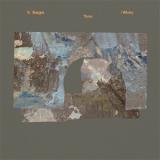
Tender / Wading zeigt Matthew Sage, alias M. Sage, in den Ausläufern und Weiden Colorados, wo er schreibt, aufnimmt und zu einem Stück seiner Heimat und Identität zurückkehrt, wobei ein Akt der Fürsorge den nächsten nach sich zieht. Das Album, das hauptsächlich auf Klavier und Klarinette aufgebaut ist und dann mit Gitarre, modularem Synthesizer, Percussion und Feldaufnahmen aus der Umgebung seines Zuhauses verziert wurde, ist eine weitreichende, ruhige Vision von Vitalität, radikaler Sanftheit und dem beruhigenden Gefühl, nach Hause zu kommen, auch wenn sich das Zuhause verändert hat. Seit den frühen 2010er Jahren hat Sage ein eigenwilliges Musikrepertoire zusammengestellt, das sich in verschiedene Klangrichtungen erstreckt, sich in Veröffentlichungen auf Geographic North, Orange Milk und Moon Glyph manifestiert und sowohl kritische Aufmerksamkeit als auch eine treue Zuhörerschaft für jede neue Wendung erlangt hat. 2023 debütierte Sage bei RVNG Intl. mit Paradise Crick, das zeitgleich mit seiner laufenden Arbeit im improvisierten Ambient-Jazz-Quartett Fuubutsushi erschien. Nun präsentiert er sein nächstes Soloalbum und seine neue Richtung. Tender / Wading folgt auf Sages Rückkehr nach Colorado nach fast einem Jahrzehnt in Chicago, wo er nun mit seiner jungen Familie dreißig Meilen außerhalb seiner Heimatstadt ein paar Hektar verwildertes Land bewirtschaftet. In einem ganzheitlichen Kontrast zu Cricks synthetischer Klangwelt schafft Sage Kunst aus dem Akt des Pflegens neuen Wachstums, hinterfragt Konstrukte des häuslichen Lebens und versteht die Spuren seines früheren Selbst durch die schmutzverschmierte, schweißvernebelte Linse der Gegenwart. Das Ergebnis ist sein bisher autobiografischstes Material, geprägt von Zeit und Veränderungen in der Wahrnehmung sowie bedeutungsvollen Details aus Sages psychischer Suche. Sage vergleicht das Gefühl, verschiedene Versionen von sich selbst zu sehen, mit der berühmten Hase-Ente-Theorie des Philosophen Ludwig Wittgenstein. ,Es ist dieselbe Zeichnung, aber je nachdem, wer man ist, wo man ist und wann man ist, sehen manche Menschen einen Hasen und manche eine Ente oder beides", erklärt Sage. Hier sind das Subjekt und der Betrachter, zurück in vertrauten Landschaften, als Partner und Elternteil, der Gestrüpp zurückschneidet, gedemütigt von invasiven Pflanzen, Schädlingsbefall und verdichtetem Lehmboden, seine Prioritäten haben sich grundlegend geändert. Und doch ist auch dieses andere Ich da: ein gewiefter Akademiker, der oft in Memes denkt und das Ziehen seines Handys in der Hosentasche spürt. ,In diesem Album geht es darum, diese Wahrnehmungsverschiebungen zu ergründen und ihnen Raum zu geben, beides zu tun: hüpfen und quaken." Es ist ein inneres Kind, das Sages intermediale Praxis in seinem Atelier leitet, einer Scheune, die nach dem großen Umzug im Jahr 2022 im Rahmen einer hausweiten DIY-Renovierung umgebaut wurde. Im Inneren werden Gedichte zu Zeichnungen, zu Skulpturen im Hinterhof und darüber hinaus, und alberne Ausflüge in den Vogelgesang oder die Freude an der Herausforderung, Klarinette zu lernen, weichen ernsthafter Musik. ,Ich glaube, ich habe entdeckt, dass es diese Linien gibt, die alles miteinander verbinden", sagt er. ,Und dieses Album ist voller hartnäckigem Optimismus und Hoffnung, aber auch der Bewusstheit, dass wir uns in einer späten Phase befinden, und dem Versuch, mit der Rhetorik dieser Phase umzugehen." Für Tender / Wading setzt Sage einen unverwechselbaren Sound ein: eine pastorale Art von Folk Kosmiche, kontemplativer elektroakustischer Barn Jazz für die Front Range, voller blasser Puddle Blues und rostigen Oil Drum Reds. Die meisten Songs entstanden auf einem 1910er Hamilton-Klavier, das kurioserweise in Chicago gebaut, von den Vorbesitzern zurückgelassen und von Mäusen bewohnt worden war. Die zufällige Begegnung mit dem Instrument fühlte sich kosmisch an, nicht nur wegen seiner Verbindung zur Windy City, sondern auch wegen Sages sich weiterentwickelnder Herangehensweise an das Songwriting nach Fuubutsushi. Er fühlt sich hinter den Tasten wohler und kehrt zurück zum Schlagzeug (seiner Jugendliebe). In einem passenden Raum für Holzblasinstrumente umarmt er das Elementare und Absichtliche und verleiht der Musik von Anfang an mehr strukturelles Gewicht und Wärme. Tender's M. Sage verbindet die Studioexperimente und Improvisationen seiner Vergangenheit mit einem geschärften Ohr für melodische Phrasierungen und Akkordwechsel und hat seine übliche Fülle an Demos auf neun finale Stücke reduziert. Seine charakteristischen Weltbilder bleiben erhalten, von Holzhauskröten, die in statischer Elektrizität schwimmen, über raschelndes Gras und Regen, der in die Dachrinnen plätschert, bis hin zu walzenden Sternbildern im Mondlicht. Während Cricks Universum aus magischem Realismus und digitaler Fantasie entstanden ist, greift Tender / Wading direkter auf menschliche Erfahrungen zurück. Er weist schnell Vorwürfe zurück, es handele sich um ein hochkonzeptionelles Album: ,Ich mache einfach die Musik, die ich selbst gerne in meinen Kopfhörern hören würde, während ich Unkraut jäte oder so." Es könnte beides sein, wie der Hase und die Ente behaupten würden: zutiefst persönlich und abstrakt, eine faszinierende und natürliche Wendung eines experimentellen Künstlers des 21. Jahrhunderts, dessen Vermächtnis sich in Echtzeit weiterentwickelt und wächst.
- A1: Destination (Dr. Yusef Lateef)
- A2: Black Family
- A3: What Shall I Tell My Children Who Are Black (Dr. Margaret Burroughs)
- A4: Impepho
- A5: We Are Starzz
- A6: London
- B1: Capetown (Feat. Asher Simiso Gamedze)
- B2: The Oracle
Angel Bat Dawid's International Anthem debut The Oracle introduced her multifaceted voice to the world. The response to its modest, initial cassette/digital release in January of 2019 was immediate, and immense. Within a month of its announcement, Dawid was being featured on magazine covers and receiving offers from international festivals; and her subsequent activity marked the beginning of an epic run of creative output (including 2020's LIVE double LP, the same year's EP Transition East, 2021's Hush Harbor Mixtape Vol. 1 Doxology, and the sprawling opus Requiem for Jazz, released in 2023) that continues through the present.
The collection of compositions on The Oracle present a deep blend of powerful and emotive songs alongside heavy and free improvisation. In true DIY fashion, Dawid recorded and mixed the album using only her cell phone.
"Angel's fieldnote approach affirms that the everyday remains a legitimate site of creative production," says South Africa based percussionist, collaborator, and IARC labelmate Asher Gamedze in his liner notes for the album's IA11 Edition. Gamedze - the only other musician to appear on The Oracle besides Dawid, who constructed most of the album's tracks by layering, overdubbing, and arranging lo-fi symphonies of her own voice, wind instruments, percussions, and keyboards - waxes extensively about Dawid's significance in his notes, calling her "a living exemplar and extension of the spacious sonic horizons opened by the likes of the AACM and their refusal of any limitations on their creative vision and the destruction of the demarcation between composer and improviser."
"...a masterpiece, rich with dense improvisation and Afrocentric themes." - Suraya Mohamed, NPR
Limited first pressing on silver vinyl. Flying Horseman returns with their first new album in five years. Experience their renewed but signature sound with a fresh line-up.
Flying Horseman is back! After a five year hiatus and with a new line-up, the band is ready to once again captivate headphone junkies and live audiences alike with Anaesthesia, their seventh album. It's an urgent and passionate work of intelligent rock'n roll, hazy psychedelia and cosmic folk. Anaesthesia is brooding, angry and dark but at the same time full of life, wonder and sophistication. It's an invigorating, fascinating, electric brew.
Flying Horseman is still centered around the intensely personal song writing, singing and guitar playing of Bert Dockx. The band's line-up has changed,with Louis Evrard (Pruillip, Ottla, Grid Ravage) and Maximilian Dobbertin (Calicos, Frankie Fame) replacing drummer Alfredo Bravo and bassist Mattias Cré. Bravo and Cré were long-standing members, beloved by fans and fellow musicians alike, and they have played an important part in establishing Flying Horseman's musical identity. Today Evrard and Dobbertin are adding a fresh and personal twist to the idiosyncratic sound of Flying Horseman: their groove, their intuition and sensibility, their soul.
Then there's Loesje and Martha Maieu, who have been part of the group for almost as long as its frontman has, and who offer essential ingredients to bring about Flying Horseman's signature flavour, their haunting vocals and atmospheric electronics contrasting beautifully with Dockx' more earthy vocal delivery and his restless, fiery plucking of the guitar strings.
The whole record is fiery, alternately smouldering and violently burning. These are musical sounds capable of setting the listener's heart and mind ablaze. Anaesthesia is very consciously, a political record born out of Dockx and his friends' bafflement at the state of the world, the new rise of fascism, the onslaught of injustice, barbarism and stupidity which we, inhabitants of planet earth, are witnessing day in day out.
How to guard one's sanity in such a crazy world? How to maintain one's dignity? How to feel useful and joyful when surrounded by confusion and hate? These are the questions Flying Horseman is struggling with, as are so many of us today. But there is joy and purpose in the asking; in the struggling; in staying critical of dominant systems of oppression; in thinking or saying: "I don't agree, this is not how it's supposed to be"; in coming together and connecting, sharing, mourning and dreaming. Joy and purpose; questions and confusion; burning hearts and tarnished dreams: it's allhere, in the transportive sound world of Flying Horseman.
Anaesthesia was recorded in Antwerp by Joris Caluwaerts (keyboardist of the inimitable avant-jazz group .STUFF) and mixed by Yves De Mey (one of Belgium's most prominent & avant-garde electronic wizards), two experienced collaborators who know a thing or two about capturing sound and transforming it into a rewarding listening experience. With their help, Flying Horseman has crafted a tight collection of eight art-rock tunes with a clear identity, a rich sound, an original vision and a joyful purpose in the face of encroaching sinister forces.
- The Mountain (Intro)
- Snow
- Heavy
- Crush
- Hark!
- Foul Play
- Let Me Down
- Moonshine
- Both Ways
- Mc (Intermission)
- Beam
- Blu
- Disappear
- Wishing
Joviale machen Musik, die sich wie eine Show anfühlt; das Drama liegt in der Spannung zwischen Pop-Impuls und etwas Zerebralem und Sinnlicherem. Die multidisziplinären Künstler aus dem Norden Londons waren als Theaterkind aufgewachsen und machen sich nun ihre prismatische kreative Ausdruckskraft medienübergreifend zunutze, indem sie Komponenten von bildender Kunst, Performance und Musikaufnahmen zu einer einzigartigen Welt zusammenfügen. "Mount Crystal", das von Joviale zusammen mit John Carroll Kirby (Steve Lacey, Frank Ocean, Solange, Kacey Musgraves), Jkarri (PinkPantheress, Nia Archives, Natanya)und Kwaku Konadu produziert wurde, ist ein aufstrebendes, konzeptionelles Album. Die Songs sind elektrisch und gefühlvoll, gespickt mit jazzigen Experimenten, rhythmischem Rock und lebhaftem Sounddesign, alles realisiert mit einer Reihe von Mitwirkenden wie Sam Wilkes, Carter Lang und Will Miller. Im Jahr 2021, nach ihrer EP "Hurricane Belle", die erste Aufmerksamkeit von Pitchfork und Crack Magazine auf sich zog, zogen sie sich still zurück, um zu lernen und sich weiterzuentwickeln. Im Jahr 2025 kommen sie hinter dem Vorhang hervor: ursprünglich als Theaterstück konzipiert, strotzt "Mount Crystal" nur so vor Leben - Gefahr, Humor und dem menschlichen Geist - und beschwört einen metaphysischen Aufstieg, der über das Audioformat hinausgeht. Mit Plänen die Vision als Live-Set und mehr zu manifestieren, stellt Joviale den Kurs vor: "Die Überlieferung von Mount Crystal ist geprägt von der Verkörperung von Sehnsucht, Gefahr und Verzweiflung. Eine gespiegelte Dimension in einer fernen Realität, in der nichts ungesagt bleibt. Diese Kapitel sehnen sich danach, die Illusion des Vergnügens zu zerstören, indem sie den unerbittlichen Schmerz, den ich in meinem Bemühen zu lieben erfahren habe, verleugnen und die süßesten Melodien mit den süßesten Freunden umarmen."