Marking sixty years of Bossa Nova, and twenty years since Marcos Valle’s first release for Far Out Recordings, what better time to bring back this era-defining classic from the Brazilian master composer?
Throughout his astounding six-decade career, infiltrating pop, bossa nova, samba, delicate psychedelia, jazz and funk, Marcos Valle has consistently shown a dogged determination to transcend the traditions and structures of bossa nova, whilst never veering away from the movement’s inherent, fundamental spirit. To some extent, his epithet ‘the original Rio beach boy’ is a handy one: it reflects the origin and character of his often sun-soaked sound, but expounding his importance in the lineage of Brazilian music, he is more discerningly known as ‘the renaissance man of Brazilian pop’. He is indeed one the very greatest and most important composers, arrangers, writers and performers in Brazil.
Up until Nova Bossa Nova, Marcos Valle hadn’t released an album for well over a decade. After 1983, he resented the way the music industry had changed with commercialisation and new demands curtailing his creative freedom. This was until 1994 when Marcos met Far Out boss Joe Davis and they recorded a track for Far Out’s first Friends From Rio album. This new collaborative partnership resulted in a new solo album, which commenced recording in 1996.
Nova Bossa Nova brought Marcos bouncing back into the 90s, slotting nicely in place alongside the acid jazz movement as well as a voracious new demand for Brazilian music on dancefloors from London to Tokyo. It was witnessing the London club scene’s growing appetite for Brazilian music, as well as a lack of new sounds coming out of Brazil at the time, that a young Joe Davis put in a proposal to record a new album with one of his musical idols. Joe wanted to facilitate an album which would combine the latest technologies and production techniques, with live to analogue tape recording: a Marcos Valle album tailor-made for London’s clubs. Always open to modern influences and possibilities, Marcos agreed to the project, and Joe and his production partner Roc Hunter flew to Rio in ‘96. The record wasn’t released until ’98, as the original ½ inch tapes were stolen from Far Out’s London studio, meaning parts of the album had to be re-recorded.
Nova Bossa Nova was unveiled at the peak of the of the Brazilian movement, the record would also prove to be something of a revolution, inspiring a new generation of artists like Bebel Gilberto, Sabrina Malheiros, Da Lata and Bossacucanova, who continued to fuse Brazilian influences with modern electronic sounds.
Поиск:o k jazz
Все
Performed by some of the most seasoned veterans, including the newest edition to the group, Cuban lyricist, singer and composer Kiko Ruiz – who has toured and recorded with Pancho Amatʼs illustrious Estrellas del Buena Vista Social Club as well as having a long standing history as a singer, composer and arranger with Orquesta Maria Alejandra y Cubanía on the Cuban and Latin jazz scenes – Orquesta Akokán brings a classic rawness to these arrangements that is sure to set off dance floors across the globe.
DimDj is a legendary figure of the Greek electronic music scene. After establishing his reputation as an excellent dj already since the 90’s, he continued to grow his personal myth with the delicate production of a wide variety of singles and EP’s. Following his many releases in various labels worldwide (Mathematics, ALLEY VERSION, June, TH Tar Hallow, Lower Parts, Anopolis Records), he now delivers a mini-LP for To Pikap Records. Chicago house blends with Detroit’s Afrofuturism and 707 grooves meet warm melodies, acid basslines and jazzy leads. Six tracks of pure dancefloor mental wellness by Thessaloniki’s 303 maestro.
Chet Baker was an American jazz trumpeter, actor and vocalist and a major innovator in cool jazz, leading him to be nicknamed “the prince of cool”. The 1989 album Cool Cat contains six tracks, split into 3 instrumentals; ""Swift Swifting "", ""'Round Midnight"", ""Caravelle"" and the 3 vocal tunes ""For All We Know"", ""Blue Moon"" and ""My Foolish Heart"". The songs are written by top jazz composers, including Thelonious Monk, Rodgers & Hart. For the recordings of Cool Cat, Chet is accompanied by pianist Harold Danko, bassist Jon Burr and drummer Ben Riley. Cool Cat is available on black vinyl.
To this day, jazz pianists are influenced by Bill Evans by his use of impressionist harmony, interpretation of traditional jazz repertoire, and his trademark rhythmically independent, “singing” melodic lines. Evans gained his first spotlight when joining Miles Davis’ sextet during the time Kind of Blue was recorded. After leaving the sextet, Evans began his career as bandleader, which he finished in his last trio with Marc Johnson on bass and Joe LaBarbera on drums. This trio recorded The Brilliant in 1980 live at the Keystone Jazzclub, San Francisco, just before Evans’ passing. The Brilliant is available on black vinyl.
Releasing as a vinyl 45, Bad Night is the lead offering from The Cromagnon Band's new album Mode. This is the band's second LP and the first of theirs to be released on BBE Music. Mode itself is an album of cinematic and psychedelic dark Funk tinged and tinted with Nordic psych/jazz, classical, boom-bap Hip-Hop breaks and riff heavy rock. Bad Night is backed with Quadrant, a stand alone track that won't be on the album, thus making the vinyl single release a unique addition to the music lover's record collection. That said, these are are two tracks which give both a genuine flavour of the forthcoming album as well as the band's own musical influences and heritage as instrumentalists and producers. The Cromagnon Band's recording technique of taking breaks, riffs and melodies from favourite tracks and then improvising from there with completely live jam sessions in the studio allows them to record in their distinct and trademark 'reverse engineering' style. The trio of Drummer Tom Watt, Bassist Lenny Walker and multi-instrumentalist Bert Page work by making music as a team, playing for hours and united by a love of Hip-Hop breaks and psychedelic Jazz/Rock/Funk and classical music. They choose to record only instrumentals which allows space for Bert to weave intricate soundscape with Fender Rhodes, Moog, Sax and Clarinet over the beats and breaks they have written from their improvised jams. Bad Night b/w Quadrant are the lead releases from The Cromagnon Band's new album Mode. They will be released as a 7" vinyl and digitally.
Heaven Born and Ever Bright is the third studio album by British rock band Cardiacs. It was produced by Tim Smith, engineered by David Murder and mixed by both Available on CD Digifile and Single Sleeve Violet coloured vinyl (pressed from the 1991 master) Cardiacs are an English rock band formed in Kingston upon Thames by Tim Smith (guitar and lead vocals) and his brother Jim (bass, backing vocals) in 1977 under the name Cardiac Arrest. One of Britain's leading cult rock bands, Cardiacs' sound folded in genres including art rock, progressive rock, art punk, post-punk, jazz, psychedelia and heavy metal (as well as elements of circus, baroque pop, medieval music, nursery rhymes and sea shanties), all of which was topped by Smith's anarchic vocals and impressionistic lyrics. Their bizarre sound and image made them unpopular with the press, but they amassed a devoted following Tim Smith was the primary lyricist, noted for his complex and innovative compositional style. He and his brother were the only constant members in the band's regularly changing lineup. The band created their own indie label, the Alphabet Business Concern, in 1984 and found mainstream exposure with the single "Is This the Life?" from their debut album A Little Man and a House and the Whole World Window (1988). Their second album, On Land and in the Sea (1989), was followed by Heaven Born and Ever Bright (1992), which displayed a harder edged, metal-leaning sound retained in the subsequent albums Sing to God (1996) and Guns (1999). Tim Smith was hospitalised with dystonia resulting from a cardiac arrest in 2008, which brought increased and belated critical recognition to Cardiacs, with several music outlets calling Sing to God a masterpiece. His death in 2020 saw a raft of tributes on social media
BLUE NOTE TONE POET EDITION: Stereo, produziert von Joe Harley, komplett analog von Kevin Gray von den Originalbändern remastert, RTI-Pressung (180g), stabiles Tip-on-Single Sleeve, wattierte Innenhülle.
Als Lee Morgan 1968 “Taru” einspielte, befand sich der Trompeter musikalisch gerade an einem Scheideweg. Reflektiert wird das in der Vielzahl von Stilen, mit denen er sich auf dem Album auseinandersetzt: das Spektrum reicht von modalem Jazz und Post-Bop bis hin zu wunderschönen Balladen und funkigen
Boogaloos. Zusätzliche Inspiration erhielt Morgan von einem progressiv ausgerichteten Sextett mit u.a. George Benson an der Gitarre. (Gatefold Sleeve)
Auf dem Album “Medina” setzte Vibraphonist Bobby Hutcherson 1969 die ungemein inspirierende Zusammenarbeit mit Tenorsaxofonist Harold Land fort, die er ein Jahr zuvor auf “Total Eclipse” begonnen hatte. Hutcherson und den exzellenten Musikern seines Quintetts gelingt es hier, die im modalen Post-Bop verwurzelten und recht anspruchsvollen Originalkompositionen erstaunlich beseelt klingen zu lassen. (Single
Sleeve)
Lee Morgan’s 1968 album Taru found the trumpeter at a crossroads exploring a variety of styles from modal jazz and post-bop to beautiful balladry and funky boogaloos. The band here is notable for the elevating presence of guitarist George Benson and the addition of tenor saxophonist Bennie Maupin. This stereo Tone Poet Vinyl Edition was produced by Joe Harley, mastered by Kevin Gray from the original analog master tapes, pressed on 180g vinyl at RTI, and packaged in a deluxe gatefold tip-on jacket.
Singer Zeshan B’s music has always been about building community. His ethos includes building ties with musicians who share his love for timeless R&B and can inform this sound with classical orchestrations and jazz improvisation. His songs detail struggles in American cities today, which he connects to a global consciousness—singing his original lyrics in English and the Urdu language of his grandparents. All of these elements blend for his stunning new album, O Say Can You See?.
music to be issued on The Avant Garde (with Don Cherry), Coltrane's Sound and the all-time classic My Favorite Things, he embarked on the making of Coltrane Plays the Blues, a thematic LP consisting of six tunes based on the blues. "Blues for Bechet", one of the two pieces on this album on which Trane plays the soprano sax, is obviously dedicated to the jazzman who brought this instrument to jazz: Sidney Bechet. Pianist McCoy Tyner sits out on "Blues to Bechet" and both takes of "Blues to You", reducing the band to a trio on these tracks.
d Blues To Elvin Alt Tk
[h] Blues To You [Alt Tk]
[d] Blues To Elvin [Alt Tk]
[Alt Tk]
“I personally feel this is a great record and recommend it to everyone. It’s positive and hot and simply
excellent.” – Gary Burton, in the liner notes.
Pat Metheny hatte sein Debüt bei ECM als Mitglied von Gary Burtons Band auf dem Album Ring im
Jahr 1974 gegeben, aber Bright Size Life, seine erste Studioaufnahme als Leader überhaupt, war das
Album, das ihn schlussendlich als neue kreative Kraft mit einem frischen Ansatz im Kontext des zeitgenössischen Jazz profilierte. Das im Dezember 1975 in Ludwigsburg aufgenommene und von Manfred Eicher
produzierte Album wurde von Methenys damaliger Stammband mit Bob Moses am Schlagzeug und dem
virtuosen, aber damals weitgehend unbekannten Jaco Pastorius am Bass eingespielt.
”Ich könnte die gesamte Musik von Bright Size Life auch jetzt noch spielen”, sagte Pat Metheny in
einem Interview für die Library of Congress im Jahr 2021. ”Es fühlt sich immer noch relevant an; die
Argumente darin erscheinen mir immer noch gültig und sie sind es wert, darüber zu reflektieren.... Damals
hatte ich das Gefühl, dass ich eine Platte machen wollte, die vielleicht die einzige sein würde, die ich je
machen würde. Ich hoffte, ein Statement zu Dingen abzugeben, die mir in Bezug auf Melodie, Harmonie,
Triospiel und sogar das Leben im Allgemeinen wichtig waren.”
Diese Luminessence Vinyl Edition des Albums erscheint in einem Tip-on Klappcover und enthält Fotos
aus dem Archiv.
- A1: Call Off The Search
- A2: Crawling Up A Hill
- A3: The Closest Thing To Crazy
- A4: My Aphrodisiac Is You
- A5: Learnin' The Blues
- A6: Blame It On The Moon
- B1: Belfast (Penguins And Cats)
- B2: I Think It's Going To Rain Today
- B3: Mockingbird Song
- B4: Tiger In The Night
- B5: Faraway Voice
- B6: Lilac Wine
- C1: Call Off The Search (Demo)
- C2: Tiger In The Night (Demo)
- C3: Faraway Voice (Demo)
- C4: I Think It's Going To Rain Today(Demo)
- C5: My Aphrodisiac Is You (Demo)
- C6: September Song (Demo)
- C7: It Seemed Like A Good Idea At The Time (Demo)
- D1: Downstairs To The Sun
- D2: Shirt Of A Ghost
- D3: Deep Purple
- D4: Turn To Tell
- D5: Jack's Room
- D6: Anniversary Song (Live)
2x12"[37,66 €]
Katie Meluas Debütalbum "Call Off The Search" machte sie sofort zu einem außergewöhnlichen neuen Talent. Das Album, welches dieses Jahr sein 20-jähriges Jubiläum feiert, zeigt ihren einzigartigen Gesangsstil, der Jazz-, Blues- und Folk-Einflüsse mit zeitgenössischer Pop-Sensibilität vermischt. Das Album wurde von Mike Batt mitgeschrieben und produziert, der eine zentrale Rolle bei der Entwicklung des prächtigen und anspruchsvollen Klangs des Albums spielte. Das zentrale Thema von "Call Off The Search" ist die Liebe und die Selbstfindung, ausgedrückt durch eine Sammlung von gefühlvollen und introspektiven Songs, darunter die Leadsingle "The Closest Thing to Crazy", die mit ihrer gefühlvollen Performance und der fesselnden Melodie das Publikum weltweit sofort in ihren Bann zog. Von Kritikern und Zuhörern wurde das Album für seinen reifen und gefühlvollen Sound gelobt, vor allem wenn man bedenkt, dass Katie Melua zum Zeitpunkt der Veröffentlichung erst 19 Jahre alt war. Call Off The Search" fand bei einem breiten Publikum Anklang, wurde ein kommerzieller Erfolg und zu einem der meistverkauften Alben des Jahres 2003.
Diese Neuauflage zum 20-jährigen Jubiläum wurde in den Metropolis Studios in London neu gemastert und enthält B-Seiten sowie sieben bisher unveröffentlichte und unverfälschte Demos, die Katie und Mike Batt 2002 aufgenommen haben. Die von Pete Paphides verfassten Liner Notes enthalten Beiträge aus einem neuen Interview mit Katie.
Stashboxxx is DJ Harrison's #1 most streamed album of all time with top performing tracks such as "Erykah's Gun", "Dilla's Eclair", "Carnaval '74", "Block Party 4 Yall" and even more hits with streaming numbers in the millions. This is the second pressing of this album, the first was in 2014. Two bonus double-single products will follow the album re-release with new artwork to promote vinyl sales and streaming of Stashboxxx. These unreleased singles bring a similar soulful, jazzy, blissful nostalgia, giving fans a fresh listen.
Repress.
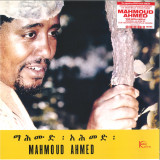
The re-release series of original Ethiopian classic vinyl continues -- the finest Ethio jazz by Mahmoud Ahmed and his band from 1975 plus two tracks from 1978.The liner notes: 'Melancholy blues, piercingly minimalist country airs, brassy, danceable urban jazz, heart-wrenching, off-key crooners: a rich and stirring patchwork of sounds, crossing Afro-beat, Latino-swing moves and Eastern arabesques (Ana�s Prosa�c).' Such were the first -- informed and enthusiastic -- opinions of the music press when the first strains of modern Ethiopian music sounded on our shores. This was in 1984-1985. Such a positive note, struck about such a country at such a time, created plenty of reverb. The country had been so thoroughly trashed by the media's feeding-frenzy, which spewed out a mix of horror and pious pity, bitter denunciation and humanitarian appeals, wallet-tickling clich�s and refusal of identity. In one brutal swoop, TV-reality transformed Ethiopia into a cursed nation, forsaken by God and by man. In contrast to these tragedies, but in the same hackneyed tones, Mahmoud Ahmed's life resembles an edifying fairy-tale where destiny, talent and achievement combine to triumph over poverty, fate and the evil eye. Biography, history and legend, with the help of God, infallibly weave the lesson of merit rewarded. But who can argue, in spite of the mockery that celebrities invariably draw, when faced with one of the greatest voices in all of Africa? Once upon a time, there was a street urchin in Addis Ababa, who started off as a shoe-shine boy and went on to become one of his country's biggest stars, opening the door to Ethiopian music to Western audiences. --Francis Falceto
180g vinyl + Deluxe hard-cardboard sleeve + OBI + resealable outer sleeve
This isn’t just a seminal album. It is an estuary. All the black rivers that would form Brazilian funk/hip-hop flow through it. Led by Paulista pianist Salvador Silva Filho – Dom Salvador – “Som, Sangue, e Raça” from 1971, one year after the explosion of Tim Maia on the scene, catalyzed the bossa nova and jazz background of its leader with the rhythm and blues of its members like saxophonist Oberdã Magalhães, nephew of samba-enredo master Silas de Oliveira and future leader of Banda Black Rio, who since the group Impacto 8 (which had, among others, Robertinho Silva on drums and Raul de Souza on trombone) had already been trying to reconcile MPB with Stevie Wonder and James Brown. Add to all this a mixture of samba, Nordestino accent, and even the black side of the Jovem Guarda represented by the authorial presence of Getúlio Cortes (older brother of Gerson King Combo, our James Brown “cover”) in ‘Hei! Você’. Alongside these elements and the presence of Rubão Sabino (bass), who still called himself ‘Rubens’, drummer Luis Carlos (another member of Black Rio), the record enlists the trumpet and flugelhorn of symphonic musician Darcy in place of the original Barrosinho (yet one more founder of Black Rio), who was traveling during the recording but would end up being a leading force of the band.
The album ‘Som, Sangue e raça’ paves the way for future generations of musicians and producers of the Carioca scene at the beginning of the 1970s. The lyrics that dealt with the question of race and the explosive fusion of samba, soul, jazz, and funk, elaborated by Dom Salvador and his troupe, Abolição, established the bases for the development of new sounds and tendencies in Brazilian music.
Comes with insert and download coupon.
Imagine a Latin remake of Back to the Future. The mad scientist is Arsenio Rodriguez (the godfather of salsa) and the young student who travels through time with him is Eblis Alvarez (Meridian Brothers). This album can only be described as the perfect soundtrack for that movie that never was.
After the massive buzz generated by his first solo album, Mentallogenic, Alex Figueira got back in the studio to work in a more collective fashion this time, carefully assembling the second album of his largest project to date, Conjunto Papa Upa; a team of 6 musicians, spanning 3 generations of some of the best talent in the Latin and avant-garde scenes.
In an era where tropical music is dominated by purely electronic and rhythmically uniform sounds, the ten songs encompassed in “Fruta Madura” (“Ripe Fruit”) wander through the most diverse tempos, rhythms, and motifs effortlessly. A real breath of fresh air that gracefully incorporates soul, funk, jazz, psychedelia, and electronics into a solid tropical, irresistibly polyrhythmic foundation, without ever succumbing to the many genre clichés.
The distinctive production and catchy songwriting of Figueira shine in a very distinctive light on this second full-length. Living up to his reputation (Miles Cleret, founder of Soundway Records, called him “one of the scene's truly authentic and eccentric producers”), he takes the opportunity to show he’s not afraid to keep walking his own path.
Taking the band for a wild ride through the traditions of Africa, America, and the Caribbean; contrasting them with a ridiculously wide plethora of vintage, contemporary, and futuristic sounds, and pivoting on the exuberant musicality displayed by his musicians; the result leaves no doubt: this album is destined to be considered a future classic of the exciting tropical psychedelic music of the 21st century.
Addressing the most diverse themes in this new collection of songs, things take on a much more mature tone, as the title clearly suggests.
The opening track “El segundo es más sabroso” (“The second one is tastier”) sets the tone in the most assertive way imaginable, with the band boldly declaring, through multiple metaphorical references (laid upon a crazy mix of Dominican merengue, Detroit techno, classic and free jazz, dub, and electro), that the bar will be set higher with this second album.
The remaining compositions touch upon the most diverse subjects, with a fair dose of humor, sarcasm, and postmodern “magic realism”. “El Algoritmo” (The Algorithm) is a parranda-cumbia hybrid (for lack of a specific term) about the omnipresence of technology in our lives. The sophisticated Latin soul of the titling track “Fruta Madura” makes a case for the beauty of the maturity process. Some key philosophical teachings of Marcus Aurelius (the role of causality, the impositions of “the logos” and the importance of self-control) get a twisted cumbia treatment on “Reos del Deseo” (Prisoners of Desire). “No le pongas Coca-Cola” (“Don’t put Coca Cola in it”) shows us the most satirical side of the band, accusing those who mix Coca Cola with Rum of committing "sacrilege", on a powerful base of Dem Bow (the grandfather of Reggaeton), intertwined with touches of soul, salsa, and Cuban comparsa.
"Háblame Claro" (“Talk to me clearly”) is a story of heartbreak that evokes in its first part the spirit of the erotic salsa of the 80s (a subgenre deeply despised by purists), and after an unexpected samba interlude, leads to the hardest salsa of the 70s (a subgenre adored by purists), to end up in the surprising form of pure Afro-Cuban ceremonial music.
“Tu mamá tenía razón” ("Your Mom Was Right") is an attempt to exalt the spirit of the Latin American soap opera in the key of “acid bachata”, to recount a real-life case, witnessed by the band on countless occasions: the partying woman who arrives at the show accompanied by her bitter husband, who obviously does not like to dance. A very cheeky song to talk about the very serious and pertinent topic of female empowerment.
“La misma vaina” (“The same thing”) with its indescribable blend of bantú, candomblé, and Mozambique rhythms with abstract synthesizers, is an ode to adventure in favor of the aversion to taking risks and seeking predictability.
“Amigas picadas” (“Salty friends”) is another humorous song recounting another real-life case witnessed by the band on countless occasions: a love encounter sabotaged by the girlfriend's friends, who all happen to fancy the same guy. A jazzy take on the ancient Dominican rhythm of pambiche (grandfather of merengue), with generous psychedelic touches, resembling the classy late 60s releases of Guadeloupe's legendary producer / label owner Henri Debs.
“Vinimos a hablar” (“We came to talk”) takes sarcasm to the highest level, to ridicule the absurdity (also experienced by the band firsthand) seen in live music venues where people pay a ticket to go and have conversations that could be carried out much better on any bar, where no band is playing. The music alternates between a delicate melody with loose, sparse percussion and a full-on, pumping Angolan semba, with a techno kick drum included; bringing things to an apotheotic grooving finale, where the peculiar swing of Venezuelan calypso from the Callao region is thrown on top of all the precedent elements; closing the album in the most uplifting, “end of the carnival parade” feel.
The artwork is a delicate and impactful oil painting by Colombian artist Kevin Simón Mancera, who has collaborated many times with the label before (“Maracas, tambourines and other hellish things” tape and the Lola’s Dice LP).
What the experts are saying:
“Alex (Figueira) dove into this work with a brutal cohesion between lyrics and synths. Timbre poetry, sound poetry (you name it). And that, superimposed on his always impeccable percussive base, confirms the title of “avant-garde visionary of our beautiful Latin music”".
EBLIS ALVAREZ (MERIDIAN BROTHERS)
“Papa Upa's infectious quirkiness is a balm against boredom. A mature album, but without an expiration date”.
GLADYS PALMERA
“Here there is a lot of strength, drum, cadence and psychedelia, lost dance rhythms, united in an intercontinental Latin/African/and Caribbean journey, a unique winning combination that we could consider the new “Ritmo Figueira”.
DISCODELIC
Conjunto Papa Upa are:
Alex Figueira - Timbales, percussion, vocals.
Gerardo Rosales - Congas, percussion, vocals.
Ramón Mendeville - Bongos, percussion, vocals.
Randy Winterdal - Bass.
Andrew Moreno - Guitar.
Nico Chientarolli - Organ, piano, synths.
All songs written by Alex Figueira.
Arranged and performed by Conjunto Papa Upa.
Recorded, produced, mixed and mastered by Alex Figueira at Heat Too Hot, Amsterdam.
Repress.
British-Trinidadian poet/musician/author Anthony Joseph’s latest album was inspired by and echoes the fertile London scene. Anthony has surrounded himself with some of the best musicians on the local scene, including Jason Yarde, Shabaka Hutchings (Sons Of Kemet, The Comet Is Coming), Crispin Robinson (founder of the iconic acid jazz band Galliano,) and Rod Youngs (Gil Scott Heron’s drummer). Operating as a dedication to poetic ancestors and a coming together of musical generations, ‘The Rich are Only Defeated When Running for their Lives’ is also an almighty jam. Recorded live in August 2020, it shows off the prowess of a team of master musicians from Paris and London. Jason Yarde, who also produced Joseph’s 2018 album ‘People of the Sun’ is credited as producer/ composer/arranger - to startling, albeit intimate, effect. Running throughout the release are inter-connected themes: memory, place, belonging and acts of homage. Anthony Joseph has released seven previous albums - six on Heavenly Sweetness - and collaborated with Archie Shepp, Keziah Jones and Meshell Ndgeocello who produced his album, ‘Time’ in 2014. He is the author of four poetry collections and three novels. His 2018 novel Kitch: A Fictional Biography of a Calypso Icon was shortlisted for the Republic of Consciousness Prize, the Royal Society of Literature’s Encore Award, and long listed for the OCM Bocas Prize for Caribbean Literature.