Drama On The Corner makes a powerful return with "ORIXA", its second EP, with a vinyl release on
Betino's Records.
Designed as both a collector’s record and a club-ready release, ORIXA draws deeply from Adrien de
Araujo’s brazilian roots, reimagining Brazilian funk, samba-funk and 70s rare groove through a bold,
modern and warm production.
With these six tracks, the duo delivers instant classics, blending candomblé rhythms, broken beat, soul
and forward-thinking house music
Search:o rem
Ronnie Davis is another mighty Jamaican singer, whose talents have been greatly overlooked. His rootsy yet soulful voice have been in demand by many of Jamaica's producers, and have graced their catalogues over the decades, yet outside of the close reggae circles he has remained a closely guarded secret.
Born Ronnie Davis, in 1950 (Savannah La Mar, Jamaica). His singing career began in the 1960's and like many aspiring young singers, the Talent contests taking part around the Island, was his first introduction to the music scene. This led to him joining the vocal group, 'The Tenors'. Who shortly after his arrival, released their debut 'The Whole World is a Stage'. This was the beginning of a run of Jamaican 7'' releases that did quite well in the domestic marketplace. But Ronnie had set his sights on a solo career,which came to fruition in the early 1970's, with two big hits for him in the guise of 'Won't You Come Home' and 'Stop Yu Loofing'. Running on through to the mid 1970's with such hits as 'Jah Jah Jehovah','Forget Me Now', 'On and On' and 'Babylon Falling'. Building up to the 1976 classic, 'It's Raining'.
Around this time Ronnie's path would cross with Keith Porter and with his childhood friend Roy Smith they would form one of Jamaica's foremost vocal groups 'The Itals'. A group who would run until the 1990's and evolve into 'Ronnie Davis and Idren'. Ronnie's releases are very sort after among the reggae aficionados and any tune carrying his vocal talents rarely
disappoint. We have compiled some rare roots dubs to many of his finest cuts. Such gems as 'Chasing You', 'What You See is What You Get', his take on the timeless cut 'Tribal War', 'Tell You' and the a fore mentioned smash 'It's Raining'. A version of Gregory Issac's 'Love Overdue' is also present. Ronnie cut an album worth of material with Mr Issac's, testimony surely to Mr Davis's standing in the Reggae community.
Let’s hope that this release spreads the gospel according to Mr R. Davis, a little wider. A wicked set by one of Jamaica's finest .....
Respect Jah Floyd.
Evergreen In Your Mind, the new and third album from Norwegian singer-songwriter Juni Habel, exists in two worlds at the same time. Songs were recorded in quiet corners of her home, on the piano in the school where she works, and it uses the physical world around her to provide percussion. It also takes place, as she herself attests, within a dream; an imagined place in which her desire for oneness with each other and the world around us is finally realised.
Evergreen In Your Mind was recorded with co-producer Stian Skaaden, it’s Habel’s first album in three-years, following the breakthrough success of 2023’s Carvings LP. Formed of eleven new recordings, the songs here remain delicate, Habel’s voice playing an elegant lead role – but there are fluctuations too.
These small shifts in Habel’s sound result in a notable stride forward. More focus went into the groove of these songs. Playfulness was embraced and, perhaps most importantly, patience played a fundamental role in shaping the album with time and care given to every element of these songs. “We always aim to capture effortlessness - but the way of getting there is anything but effortless,” Habel reveals.
This extra time that was given to the project gave Juni the space to nurture her creativity. She would read and listen to music, hike into the hills, place herself within nature and seek out stillness. Not as a deviation from her work but as a fundamental part of the process. It’s a search for connection, and it’s a recurring theme across Evergreen In Your Mind; the polarity between stillness and passion, also our resistance to these desires, and the things we want to live and experience.
The album’s title-track and fist single feels indicative of this narrative. A gorgeous, delicate folk song, it finds Habel out in the woods, hiding from real life, caught in the space between the natural world and the pull of modernity. “It’s nostalgic. It’s about looking back and realizing things will be different,” Habel says. “Its about visualizing something beautiful in your head that you keep clinging onto.”
The album cover for Evergreen In Your Mind also adds shimmer. A striking photograph of Juni among the mountains, it was taken on a day trip to Rondane, a five-hour drive each way from her home. Habel explains. “It was awe-inspiring to drive all the way up into the high mountains, with its wide plains and intense colours. For an album with music that at times likes to hide itself, I think it fitted nicely with such an epic, grand, and powerful landscape.”
"Fans of Nick Drake, Karen Dalton and Neil Young will find much to enjoy in this musical equivalent of an evening spent alone by the fireside.” The Times
An instrumental counterpart to ‘Man Kill Man’ by Lone Ark meets The 18th Parallel, ‘Kanata’ marks the debut solo release of Japanese saxophonist extraordinaire Yuko Arakawa.
A member of ZIONHILL SESSION—the collective led by Mr. Saito, who also lends his trombone to this recording—Yuko Arakawa channels a deep reverence for the legacy of Count Ossie and the pioneers of Nyahbinghi instrumental reggae. Her playing moves with a spiritual intensity, echoing the meditative roots sound of Cedric 'Im' Brooks, while igniting flashes of raw, untamed energy reminiscent of Sugar Belly. The result is a living, breathing sound—both grounded in tradition and reaching beyond it.
Roberto Sánchez delivers a deep Mutron Bi-Phase dubby mix that expands the sonic horizon of the track. True to its title, ‘Kanata’ (彼方)—a Japanese word meaning ‘far beyond’ or ‘in a distant place’—invites the listener into a meditative journey, drifting across time, space, and memory.
Those albums that never age, that never cease to surprise with their innovative freshness—listen after listen—defying the years that go by.
Released in 2016, Heimat’s debut album is one of those records you love knowing is there on the shelf or on the turntable, like a reassuring talisman.
To mark its 10th anniversary, and such an awaited repress, we decided to honor this landmark album as it deserves: with a powerful remaster by Tioma Tchoulanov (UVB76, NzeNze) featuring enhanced dynamics, and an ultra-limited edition on blue splatter vinyl.
What a beautiful object this is, celebrating—alongside Armelle and Olivier Demeaux—ten years spent exploring the outer limits of music, in France and abroad, from SMAC venues to squats and other joyful initiatives.
Their deeply sincere music loses none of its naive tension; the emphasis is there, yet it remains restrained, contained, almost nervous, without any show of. Here, then, is something to make this fantastic album, a subtle milestone in a teeming musical landscape.
A fine achievement indeed!
shubostar, originally from south korea and currently based in germany, began releasing her own works in 2018. she quickly attracted attention with releases on prins thomas’s label internasjonal.
this work, her debut release on mule musiq, presents a new disco sound that updates elements of cosmic, italo disco, and new wave for a contemporary context.
a1, “abbiamo,” is an electric disco piece reminiscent of the french disco classic magic fly by space.
a2, “gambi,” can be described as a cosmic disco track akin to a disco version of klaus schulze that might be played by dj daniel baldelli.
b1, “starlight arcade,” offers a more dub-oriented, club-friendly new wave disco sound.
b2, “tip top” appears to draw influence from artists such as jah wobble, combining uk new wave with ebm elements into a proto-house style track.
her refined production style, which stands apart from typical disco-oriented artists, may be attributed to a distinct sensibility.
this release marks the emergence of a notable new artist.
Be The Mountain (2026) is the latest release from Detroit-based musician STS. The record explores a serene and introspective world shaped by organically morphed textures and slowly evolving soundscapes.
While largely drumless, the album maintains a subtle rhythmic backbone - not through traditional percussion, but through modulated pads, shifting synths, and carefully sculpted ambience. The music moves and breathes without overt propulsion, finding tension and momentum through tone, density, and motion rather than beats.
Much of the record was written during a period of sustained physical and mental strain. A time when daily effort fought against perceived limits. Instead of responding with heavier or more aggressive material, the music became a quiet counterweight to the intensity. These tracks function as an escape from chaos. They are built from patience, repetition, and a gradual transformation.
The title reflects a central idea behind the record: confronting something that initially feels insurmountable, only to realize that the enduring force is the one within us all.
Be The Mountain is about endurance, not as struggle, but as presence.
Cassette[14,50 €]
Aspen is very proud to introduce ‘Non Sonett’ by the Christian Wallumrød Ensemble. This ensemble is a pioneering Norwegian chamber group whose work on ECM and Hubro has redefined the boundaries between jazz, contemporary composition and folk music.Across seven albums, the ensemble has developed a highly distinctive l anguage built on restraint, timbral nuance and collective interplay, placing it among the most influential European ensembles of the 21st century.
Bringing together some of the finest musicians in Norway, the ensemble draws on a rare collective sensitivity, where each player contributes to a deeply integrated and texturally rich sound world.
With Non Sonett, the Christian Wallumrød Ensemble opens a new chapter that grows directly out of recent years of work in more solitary and cross-disciplinary contexts. In this period, Wallumrød has developed material for solo performance as well as for dance, allowing ideas to take shape in more fluid and exploratory formats. Some of this material now finds its way into the ensemble, where it is met by the possibilities offered by instrumentation, collective playing, and the distinct voices of the musicians. At the same time, older pieces—originating in entirely different settings— re-emerge here in new forms, reshaped by the ensemble context.
A defining aspect of Non Sonett is the way many of the pieces function less as fully determined compositions and more as open frameworks: starting points, suggestions, or “springboards” for music. These structures invite response rather than prescribe outcome, relying on the ensemble’s inherent sensitivity and capacity to realize and transform the material in performance. The result is music that feels both precise and fluid, shaped in equal measure by composition and by the interpretative presence of the players.
Central to this album is a continued deepening of Wallumrød’s long-standing interest in ambiguity and in dissolving boundaries between different musical elements and expressive worlds. By placing contrasting materials and associations side by side—sometimes subtly, sometimes more overtly—the music opens up spaces where meanings remain fluid and interconnected. On Non Sonett, this approach is taken a step further, allowing these juxtapositions to play an even more active role in shaping the music’s character and flow.
This approach connects closely with the ensemble’s broader artistic trajectory. Over time, the Christian Wallumrød Ensemble has developed a language that is immediately recognizable—marked by reduction, clarity and a deep attention to sonic detail. While each release has its own character, the underlying aesthetic remains consistent: a focus on the inner life of sound itself. Rather than foregrounding gesture or virtuosity, the music draws the listener toward the smallest elements, where meaning emerges gradually through texture, spacing and timbre.
The listening experience becomes one of concentration and proximity, where each sound carries weight, and the accumulation of detail forms a larger whole. References may be sensed—to early polyphonic music, Norwegian folk traditions, or more recent experimental practices—but these are absorbed into a singular musical language that resists categorization.
As with the ensemble’s recent work, Non Sonett also continues the integration of electronics as a fundamental part of the sound world. Each musician engages with electronic elements alongside their acoustic instruments, creating a layered and dynamic sonic environment. At times, this leads into extended, exploratory passages reminiscent of analogue musique concrète; at others, electronics operate almost imperceptibly, subtly altering and extending the acoustic textures in real time.
vinyl[21,81 €]
Aspen is very proud to introduce ‘Non Sonett’ by the Christian Wallumrød Ensemble. This ensemble is a pioneering Norwegian chamber group whose work on ECM and Hubro has redefined the boundaries between jazz, contemporary composition and folk music.Across seven albums, the ensemble has developed a highly distinctive l anguage built on restraint, timbral nuance and collective interplay, placing it among the most influential European ensembles of the 21st century.
Bringing together some of the finest musicians in Norway, the ensemble draws on a rare collective sensitivity, where each player contributes to a deeply integrated and texturally rich sound world.
With Non Sonett, the Christian Wallumrød Ensemble opens a new chapter that grows directly out of recent years of work in more solitary and cross-disciplinary contexts. In this period, Wallumrød has developed material for solo performance as well as for dance, allowing ideas to take shape in more fluid and exploratory formats. Some of this material now finds its way into the ensemble, where it is met by the possibilities offered by instrumentation, collective playing, and the distinct voices of the musicians. At the same time, older pieces—originating in entirely different settings— re-emerge here in new forms, reshaped by the ensemble context.
A defining aspect of Non Sonett is the way many of the pieces function less as fully determined compositions and more as open frameworks: starting points, suggestions, or “springboards” for music. These structures invite response rather than prescribe outcome, relying on the ensemble’s inherent sensitivity and capacity to realize and transform the material in performance. The result is music that feels both precise and fluid, shaped in equal measure by composition and by the interpretative presence of the players.
Central to this album is a continued deepening of Wallumrød’s long-standing interest in ambiguity and in dissolving boundaries between different musical elements and expressive worlds. By placing contrasting materials and associations side by side—sometimes subtly, sometimes more overtly—the music opens up spaces where meanings remain fluid and interconnected. On Non Sonett, this approach is taken a step further, allowing these juxtapositions to play an even more active role in shaping the music’s character and flow.
This approach connects closely with the ensemble’s broader artistic trajectory. Over time, the Christian Wallumrød Ensemble has developed a language that is immediately recognizable—marked by reduction, clarity and a deep attention to sonic detail. While each release has its own character, the underlying aesthetic remains consistent: a focus on the inner life of sound itself. Rather than foregrounding gesture or virtuosity, the music draws the listener toward the smallest elements, where meaning emerges gradually through texture, spacing and timbre.
The listening experience becomes one of concentration and proximity, where each sound carries weight, and the accumulation of detail forms a larger whole. References may be sensed—to early polyphonic music, Norwegian folk traditions, or more recent experimental practices—but these are absorbed into a singular musical language that resists categorization.
As with the ensemble’s recent work, Non Sonett also continues the integration of electronics as a fundamental part of the sound world. Each musician engages with electronic elements alongside their acoustic instruments, creating a layered and dynamic sonic environment. At times, this leads into extended, exploratory passages reminiscent of analogue musique concrète; at others, electronics operate almost imperceptibly, subtly altering and extending the acoustic textures in real time.
A new EP by Extrawelt is always something special, as they continually manage to reinvent themselves while remaining unmistakably true to their sound. The a-side „Moonster“ of their latest record forms a subtle and almost magical bridge to early musical influences such as Immortal Coil, Chris & Cosey, The Cure, and Throbbing Gristle.
In doing so, they reclaim, or rather reintroduce, a powerful, mystical element into their music, one that is integrated so naturally it feels as if it has always been an essential part of Extrawelt’s sonic DNA. Beyond that, the track unfolds through numerous facets, constantly shifting and evolving. Just when you think it is settling into a familiar direction, small variations emerge, keeping the piece remarkably alive and unpredictable.
You can clearly sense how much fun Extrawelt had working on this track. It is bursting with ideas, energy, and vitality, radiating a playful confidence that makes it endlessly engaging.
The b1 track „Bettermaker“ takes a different route, dedicating itself entirely to a single mood. Through subtle pitch bending and a carefully shaped tonal palette, the track unfolds with a slightly eerie, enchanted atmosphere.
From beginning to end, „Bettermaker“ remains focused and unwavering. There are no breaks or dramatic shifts in direction, instead, the piece commits fully to its initial setting. A monolithic, almost mantra like motif forms the core, creating a distinctive ambience, mystical, shadowy and faintly oriental in character.
This atmosphere is carried and reinforced by percussive, ethno inspired drums, which add an organic, ritualistic pulse. The result is a hypnotic soundscape that draws its strength from consistency and depth rather than contrast, inviting the listener into a secluded, otherworldly space.
The final piece of the EP „Popcorn Forever“ reveals another side of Extrawelt’s thinking. The track unfolds like a curious experiment in motion. Instead of building toward a predictable climax, sounds are gradually tossed into an ever running loop fragments, textures and small rhythmic ideas appearing almost casually, as if the piece were assembling itself in real time.
At first the elements seem loosely connected, sometimes abstract, sometimes slightly mischievous in the way they twist and bend. It almost feels like an impossible construction task. But Extrawelt’s experience quietly guides the process. Bit by bit the scattered parts begin to communicate with each other.
Repetition becomes the hidden engine. With every return of the loop new details slip into the structure, and what once appeared random slowly starts forming relationships inside the listener’s mind. The track never forces a clear explanation, yet the brain begins to tie the loose ends together almost automatically.
Popcorn Forever therefore works beautifully as a kind of transit piece within the EP. It moves between ideas, linking moods rather than closing them off. In typical Extrawelt fashion, the result is playful, slightly surreal and full of subtle discoveries that reveal themselves over time.
Mannequin Records presents Electronic Corporation 1998–2006, a compilation bringing together rare and long unavailable recordings by the German electronic projects H.E.I.M. Elektronik and MAS 2008.
Active around the turn of the millennium, both projects share the involvement of producer Ive Müller while developing distinct collaborations and approaches to electronic music. H.E.I.M. Elektronik was founded in 1996 by Holger Erlenwein and Ive Müller (after the two artists split in 1999, Müller continued using the name), while MAS 2008 is the project of Ive Müller together with René Kirchner. Though separate entities, the two projects explored a similar sonic territory: stripped-down electro, minimal electronics and machine-driven body music shaped by analog hardware and a raw DIY production ethos.
The roots of Müller’s work go back to the final years of the DDR. As a teenager he worked as a licensed DJ — officially known as a “Schallplattenunterhalter” — operating a travelling disco across Saxony. With limited access to official Western releases, music circulated through cassette recordings taped from West German radio stations such as RIAS Berlin, NDR2 and Bayern3. Together with friends he travelled between youth clubs and discos around Leipzig with a “rolling discotheque”: a Russian Wolga pulling a trailer loaded with Electro-Voice sound systems sourced through the black market.
At the turn of the 2000s this background in underground electronic culture resurfaced in a series of recordings rooted in electro, EBM and minimal machine music. The tracks collected on Electronic Corporation 2000–2002 capture this moment: cold sequences, driving rhythms and stark synthetic textures produced with a direct and uncompromising approach.
Compiled and remastered by Rude 66 from the original sources, Electronic Corporation 2000–2002 documents a small but fascinating chapter of German underground electronics from the early digital era.
Gregory Porters zweites Blue-Note-Werk erschien 2016 und wurde mit dem Grammy als bestes JazzGesangsalbum ausgezeichnet. Die eingängigen Songs mixen Jazz, Soul, Gospel und Funk und gehören noch
immer zu seinen beliebtesten, die Texte verbinden Persönliches mit Politischem und sind heute genauso
relevant wie vor zehn Jahren.
Zum Jubiläum erscheint ”Take Me To The Alley” jetzt als ”10th Anniversary Edition” in Form einer
limitierten farbigen Doppel-LP. Als Bonus-Track ist der 2026 veröffentlichte Rules-Remix von “Holding
On“ dabei, mit dem der britische Produzent zusammen mit Gregory Porter einen großen Streaming-Erfolg
feierte.
- 1: A Chill In The Air
- 2: Super Rappin' No. 3
- 3: Xanadu Dat
- 4: Wizards And Masters (Feat. Fat Ray)
- 5: If You Got What It Takes
- 6: Let The Rappers Rap (Feat. Farma G)
- 7: Livest Convention
- 8: Patti Astor Will Have Her Revenge On The South Bronx (Feat. Lee Scott)
- 9: Moe Kool
- 10: Christmas Missed Us (Feat. Von Pea)
- 11: Clap-O Rap-O
- 12: Colder Still
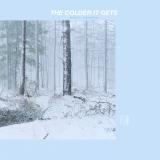
Mighty Theodore and The Custodian Of Records have crafted the quintessential soundtrack for the bleakest of snow days with their new collaborative album, "The Colder It Gets". Bookended by the sound of howling winds, the project offers a hypnotic listening experience where the temperature seems to drop with every track. While the production is immersive, the only warmth to be found radiates from the crackle of Custodian’s vinyl samples. Theodore matches this atmosphere with layered lyricism that explores deep isolation and the struggle to trust that things can improve, though a faint sense of hope remains buried beneath the metaphorical drifts.
Releasing via URBNET this winter, the album invites listeners to bundle up and embrace the chill. The project is bolstered by an impressive lineup of guest features, including Lee Scott, Fat Ray, Thirstin' Howl The 3rd, and Farma G. Additionally, the release includes a thematic bonus track titled "Christmas Missed Us" featuring Von Pea. As the winter solstice arrives, prepare to get lost in a hip-hop experience that proves the music only gets better The Colder It Gets.
Six years after their last full-length release, Satoshi & Makoto return with Mirage Café, the highly anticipated new album on 8mm Records, in collaboration with Standart Magazine.
A carefully crafted and long-awaited work, Mirage Café is more than an album — it is a fully immersive sensory experience. The Japanese duo expand their signature sound into deeper and more cinematic territory, blending refined electronica, ambient textures, subtle jazz inflections and understated groove with remarkable elegance and control.
The title evokes an imaginary café — a space of contemplation, connection and inspiration. The partnership with Standart Magazine reinforces this conceptual layer, bridging music and coffee culture into a cohesive narrative that feels both intimate and international. The result is an album that unfolds like a slow ritual: warm, enveloping and meticulously detailed.
Throughout the record, Satoshi & Makoto demonstrate a mature and confident songwriting approach. The production is rich yet restrained, atmospheric yet rhythmically engaging — balancing introspection with forward motion. Lush harmonies, delicate arrangements and immersive sound design create a listening experience that rewards both focused attention and late-night drifting.
With Mirage Café , the duo not only meet expectations after a six-year silence — they surpass them. This is a masterwork of nuance and vision, poised to become a defining chapter in their discography and a standout release in the contemporary electronic landscape.
- A1: This Is A Dreamcast Disc
- A2: Final Fantasy Vii - Prelude (Pizza Hotline Remix)
- A3: Custom Robo - Dear (Pizza Hotline Remix)
- B1: Konami
- B2: Custom Robo - Puzzle (Pizza Hotline Remix)
- C1: Golden Eye 007 Pause Music (Pizza Hotline Remix)
- C2: Kaze No Notam - Opening (Pizza Hotline Remix)
- D1: Donkey Kong Country - Aquatic Ambience (Pizza Hotline Remix)
- D2: Pokemon Jungle
WRWTFWW Records is extremely excited to announce Hot-N-Ready Remixes Delivered by Pizza Hotline In 20 Minutes or Less, the brand new remix album from Pizza Hotline, landing hot and fast on a limited edition Neon Arcade Arctic Pearl Colored Vinyl Double LP, cut at 45rpm and housed in a heavyweight sleeve with artwork by Equip Studio.
From the high-octane mind of PIZZA HOTLINE - the man behind cult classics that helped redefine liquid drum & bass through a Y2K, console-era lens - comes a full-throttle remix album that feels like a secret bonus disc unlocked after beating the game, a portal into a parallel universe of rave-powered nostalgia and pixel-perfect bliss. Warp-speed liquid DNB, atmospheric jungle, and dancefloor-crushing remixes of legendary tracks extracted from the greatest video games ever made collide in a sensory overload of pure arcade euphoria. Soaring pads, breakbeats that ricochet like laser fire, deep-space subs, and rhythms that feel like drifting through a cyber-city at 3AM with only a CRT glow to guide you.
The album plays like a late-night arcade run fueled by muscle memory and emotion: PlayStation futurism meets WipeEout velocities, Donkey Kong adventure grit, GoldenEye stealth tension, and Sega Saturn dream-logic. It's fast, melodic, immersive, and deeply cinematic - a love letter to video game soundtracks, club culture, and the spaces where the two collide.
This release marks the fifth Pizza Hotline collaboration with WRWTFWW, following the ultra-classic Level Select, its brilliant follow-up Polygon Island, the collaborative smash Anti Gravity Tournament with Mitch Murder, and the Low Poly Breaks cassette series.
Incl. Remixes by Red Axes, Roman Flügel & Abe Duque
What does it mean to exist in sound?
It does not begin with a beat, but with a choice. With the moment when someone decides not merely to inhabit the space, but to shape it – and in doing so, makes themselves visible.
Roman Flügel stands as a constant in the background. Not as an authority, but as a collective consciousness. Since the 1990s, he has moved through club music like a seeker, never content with the first answer. House, techno, experimentation – these are not genres, but states of being. His remix thinks, hesitates, opens, strikes like a surging acid wave, warping reality and demanding true presence.
New York taught him that club music is never neutral. It is body, friction, attitude. Abe Duque’s remix carries a strangely enchanting relentlessness, a resistance to smoothness – as if the dancefloor were a place where freedom is not claimed, but fought for.
Red Axes do not enter this space; they conjure it. Their sound is raw, repetitive, circular, as if deliberately refusing linearity. House, dub, and acid elements become material for a movement that is more trance than structure. Their remix does not ask where it is going; it asks why one should ever stand still.
And then there is Tim Paris. Not at the center, but as a narrator. As someone who knows that the voice is an attitude. “That Boy” is not a pose, but a mirror, ironic, direct, vulnerable. Paris moves between new wave house and club, always aware that identity is never fixed, but formed in the moment.
This remix record is not a gathering of names. It is a situation, four perspectives on the same question:
What does it mean to exist in sound?
Yet sound alone does not tell the full story: like music, the visual is a space to be shaped, felt, and deciphered. The cover of Tim Paris feat. Foremost Poets – That Boy, created by Konstantin Fürchtegott Kipfmüller, a visual artist at the Hochschule für Gestaltung in Offenbach under Heiner Blum, embodies this principle. Drawing inspiration from the urban environment, Kipfmüller transforms traces of decay, weather, and time into abstract narratives that, like the music of Tim Paris, Roman Flügel, Abe Duque and Red Axes, unfold meaning layer by layer. The result is no mere adornment, but a mirror of the sonic landscape: every line, every surface an echo of the question of what it means to exist – fully, in the moment, in sound.

- A1: Satin Jackets & Kimchii - Bring On Up Your Love (Flashbaxx Remix) Length 05 18 Min
- A2: Satin Jackets & Erobique & Thunder - You Get Me So High Length 04 19 Min
- B1: Satin Jackets Feat Nazzereene - Know Me (Johannes Albert Remix) Length 05 04 Min
- B2: Satin Jackets Feat Seint Monet - Control (Ceci Remix) Length 03 31
A concentrated four track showcase extending the warm glow of last summer’s album “Cruise Control” into the spring of 2026. Satin Jackets lines up a heavyweight cast and delivers an EP that moves effortlessly between sunlit elegance and late night force.
A1) Satin Jackets & Kimchii – “Bring On Up Our Love” (Flashbaxx Remix)
Flashbaxx transforms the Satin Jackets and Kimchii track into a driving disco house floor weapon with bright chords and classic dancefloor swagger. Guaranteed to get everyone grooving.
A2) Satin Jackets & Erobique & Thunder – “You Get Me So High”
A radiant meeting of Satin Jackets, Erobique and Thunder that sails between disco, Westcoast soul and soft focus glamour. Built around the 2025 vocal, the trio turn it into a warm and irresistibly smooth homage to timeless Yacht Rock.
B1) Satin Jackets & Nazzereene – “Know Me” (Johannes Albert Remix)
The Berlin producer dives deep into Chicago house aesthetics and delivers a crisp, rolling late night tool that lights up any club at peak time.
B2) Satin Jackets feat. Seint Monet – “Control” (Ceci Remix)
Ceci closes the EP with a dreamy, slow burning rework that wraps Seint Monet’s vocal in hazy pads and gentle after hours warmth.
Extra Mile EP is the kind of twelve inch you do not pass on. A tight, potent combination of artists who elevate each other with ease.
Flashdance / Say Hello[14,50 €]
Early support by Gerd Janson, Moxie, Tim Sweeney, James Zabiela, Prins Thomas
Berghain’s Panorama Bar resident and Love On Rocks founder, Paramida delivers her take on Deep Dish’s classic ‘Say Hello’.
For the Lisbon based, international superstar DJ and producer, it’s a full-circle moment. As a teenager living in Tehran, she listened to “Say Hello” on her daily car rides to and from an internship at an Iranian newspaper while attending a German school.
Paramida explained the remix idea came together very quickly, in a single take, with everything falling perfectly into place.
An essential remix that is sure to be played everywhere from sweaty basements to festival throughout the Summer.
- A1: Dog Stream Connects
- A2: All For Nothing
- A3: The Emperor's Lapdog Part 1 - The Sultan's Pavillion
- A4: The Emperor's Lapdog Part 2 - Venusian Vip
- A5: The Emperor's Lapdog Pt 3 - The Bold Dragoon
- A6: Nothing Is Dead
- B1: Rise In A Thicket Of Thorns
- B2: The Shriek Of Pan
- B3: We Are The Asteroid
- B4: The Creak Of Insects' Knees
- B5: Dream In A Collapsing Sun
Renowned producer, dj, artist and author Justin Robertson fresh from the success of his Five Green Moons project joins forces with composer and Stone Club co-founder Matthew Shaw on their tribute to mythical band MineralTail. An 11 track cosmic trip through krautrock, weird ambience and loose-limbed grooves that accompanies the story contained in Justin's new novel of the same name. Expect hypnotic electronics and ritualistic rhythms, swirling melodies and glorious riffs.
'Critics agree that the greatest album ever recorded is the self-titled debut by the MineralTail. Recorded after the extinction of humanity by the combination of a Megalithic stone and two dogs, the record remains peerless in its ingenuity, passion and inventiveness. An album that consistently remains at the top of all rankings and charts. Though all such accolades are meaningless, nonetheless its enduring appeal is obvious. Here, at last is the first reliable account of how that record was made. The recording techniques, the creative disputes, the true source of the sound. It is a story of sublime inspiration, skulduggery, time travel, beauty and conflict. But most importantly it is the story of music itself. Because held within the grooves of the MineralTail's breathtaking debut is the voice of God's most dazzling accident. Music.'


![Pizza Hotline - Hot-N-Ready Remixes Delivered by Pizza Hotline [In 20 Minutes or Less] (LP 2x12")](https://www.deejay.de/images/l/2/2/1215122.jpg)