OBERHEIM! is the love child of Gothenburg's alternative backyard, born from the union of scattered guerrilla groups such as URAN, Exorcist GBG, Dirty Burger, The Population, Melody Fields, Lady Banana, and Tentakel. Their self-titled debut album is a psychedelic garage rock explosion that draws its lifeblood from bands like The Stooges, Can, Kraftwerk, and The Gun Club.
Cerca:oberheim!
Sub Rosa presents in their Early Electronic series, the final chapter of music by Beglian key composer of early electronic experiments, André Stordeur (1941-2020). Side A features a previously unreleased, stark and poignant composition from 1979; while the B side is vibrant and almost playful of pieces from the 2000s.
André Stordeur His musical career started in 1973 with a tape composition for the soundtrack to a film on Gordon Matta-Clark titled Office Baroque. Later in the 1970s, he participated to avantgarde music ensemble Studio voor Experimentele Muziek, founded in Antwerp, Flanders, by Joris De Laet. Since 1980, Stordeur composes exclusively on Serge synthesizer, either a Serge series 79 and a Serge prototype 1980, which was especially built for him by Serge Tcherepnin himself. In 1981, Stordeur composed the music of Belgian film director Christian Mesnil's documentary Du Zaïre au Congo. He studied at IRCAM in 1981 with David Wessel and then flew to the US to study with Morton Subotnick. Stordeur became an influential sound synthesis teacher and, in 1997, completed his Art of Analog Modular Synthesis by Voltage Control,4 a guide to everything modular.
Oberheim While 'Oberheim' is the centerpiece of this LP, we pressed for the first time on vinyl three pieces from the session André called 'Synthesis Studies,' previously featuring on Complete Analog and Digital Electronic Music, 1978-2000. 'I was helped in my studies by a must-have book: The Techniques of Electronic Music, by Thomas Wells and Eric Vogel (University Stores, 1974). That book aside, I learned synthesis on my own. After a trip to India in 1968, I discovered Indian music and took tabla and sitar classes in New Delhi; my teachers were students of Chatur Lal and Ravi Shankar. Later, in the 2000s, while living in the US, I tried to recreate through synthesis all the Indian musical instruments I loved so much.' 'Drone' is one of his most spectacular works.
Der Aphex Twin will es wieder wissen. Nach seinem sensationellen Comebackalbum "Syro" in 2014 (inkl. Grammy-Nominierung!) und der "Computer Controlled" EP Anfang 2015, knüpft der Soundtüftler nun an seine Acid-Zeiten aus der Mitte der 00'er Jahre an, als er als AFX mit der "Analord"-Serie auf seinem eigenen Rephlex-Label den Dancefloor unterminierte. Die Zusammenstellung "Orphaned Deejay Selek" enthält komplett unveröffentlichtes Material aus den Jahren 2006-2008, auf dem das Genie seine Liebe zu weirden Acid-Grooves auslebt.
- CD in Innen- und Außenhülle (ähnlich LP-Cover in CD-Größe, gestanzt)
- schwarzes Vinyl in Innen- und Außenhülle (gestanzt) inkl. Download Card
Analog Tara’s Life of the Mother is a sonic meditation on the depth, expansiveness, complexity, and power that this phrase holds. This album is made from layers of generative processes and interactions with them. Analog Tara uses a Zillion sequencer and Xone mixer as system guides, and sounds of the ARP 2500, Jealous Heart, Access Virus, Oberheim OB-6, Jomox XBase, Moog DFAM, and more to create a compelling electronic narrative.
Composed, recorded + mixed by Tara Rodgers. Mastered by Piper Payne, assisted by Colby Gustafson, at Neato Mastering in Nashville, TN. Art by Jackie Milad, She Goes Ancient, mixed media, 2019.
Mysticisms' is delighted to reissue Nail's timeless debut release, Cassiopeia. Appearing on the DiY Collective's 'Strictly 4 Groovers' compilation album for Warp Records in 1993, the original appears as a stand alone at last and is backed with a specially created 2019 Remix.
Starting in 1989 and centered around Nottingham, the collective, also known as DiY Sound System, were a focal point for the burgeoning house scene in the midlands. Promoting an alternative take on post-acid house's creeping commercialisation, DiY kept to simple ethos of good music and a good party and were at the forefront of the new Free Party movement.
Alongside parties, the collective set up a studio and label and young Neil Tolliday was introduced by in-house engineer Damian Stanley. 'Nail' was born and during studio downtime, the 18 year old wrote Cassiopeia around the S1000 sampler, Juno 106, Oberheim Matrix 1000 and Roland SH101.
Cassiopeia became the stand out inclusion on the compilation and rightly, is still highly prized. Fitting in and outside the Deep House vibe DiY were known, it fuses elements of ambient and even trance, with a beautiful arpeggio and vocal sample atop simple, but killer bass line and claps. Tolliday's 2019 Remix is a fitting accompaniment, stretching towards dub techno before house kicks back perfectly for today's heads.
Bounce the Mystery.
Modernized disco boogie cover of Klique's 80s classic tune, with vocals by Boston's own Saucy Lady and UK's legendary talent Omar, all masterfully crafted by Yuki Kanesaka as the musical director and producer alongside Saucy Lady on the arrangement. The track not only features a full live brass section and strings with talents from Japan and Boston, it also features Curtis Williams of Kool & the Gang on alto, while David Frank of the mega duo The System on the Oberheim and Moog adding the authentic boogie spice.
Piano overdubs recorded by another production and engineering legend Carl Beatty known as the studio pioneer of all the major label R&B performers of the 70s, 80s, and 90s including Luther Vandross, Aretha, Melba Moore, Mass Production and more. All of which create the melange of groove that the funk universe desperately needs.
On the flip side, French Producer and DJ heavyweight Young Pulse brings a whole new take on the original mix with added vocal layers by Young Pulse himself he brings a more broken beat, house flavor to the classic tune which will undeniably electrify the dance floors.
The history of electronic music has been defined by a handful of key synth manufacturers. Iconic brands, like Roland, Yamaha, Sequential Circuits and others, have pushed boundaries and blazed trails. But what gives each synthesizer its own unique sound? What makes one synthesizer sound distinctly different from another? And, what would happen if you only used one synthesizer to create a track? The major players of electronics are the building blocks for this music machine homage.
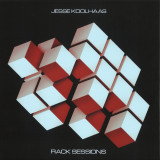
Rack Sessions takes one synth and gives it the spotlight, the instrument is the star. The style pursued corresponds to the unique sound of the chosen piece of equipment. Looming silver screen grandeur for “The D (Roland D-550)”, stargazing elegance with “Bell Hope (Yamaha TX81Z) or gentle rolling nostalgia for “MiR (Korg M1R)”, each work is the product of the tool selected. Beats take a backseat on the flip. Open highways and burgeoning dawns are conjured in “802 Nights (Yamaha TX802)” as the listener is transported to the expertly crafted tones of the 1980s. Koolhaas chooses his elements with subtlety, adding colour to his palette to create deeply evocative works. Attack ships cruise in the spatial “SOB (Oberheim Matrix-6)” before the stalker hunts the sodden streets of “MC202’s Act Like They Don’t Know (Roland MC-202)”.
The result is an album that is utterly distinctive. An immersive audio journey that guides the listener deep into the sounds of these very special synthsizers and the broad influences of this new talent.
Macedonian artist Stojche kicks off Mutual Rytm Xs 2025 schedule with his blistering new EP, Stomping Ground.
Stojche is an exciting DJ and producer from Skopje, Macedonia, who is currently based in Madrid. He heads up his Tangible Assets imprint and has been making waves in the electronic underground for over 20 years. His music takes inspiration from the classic sounds of Detroit and dub techno, and in 2024, he impressed with his Metaphor EP on F.U.S.E. Following on from his superb contribution to Mutual Rytms Federation of Rytm II compilation, here, he now serves up his first EP of the year with a first outing on X, the sister label of SHDWs Mutual Rytm, w Stomping Ground.
This EP opens up with the powerful Stomping Ground, a scintillating blend of tightly programmed kicks and reverberating percussive lines. The textured percussion shimmers over the racing beats and cannot fail to sweep dancers off their feet. Oberheim is another high-class, high-impact sound with muted melodies thinking over the twisting and turning drums and bass which never let up and ooze warm machine soul. Consequence keeps the pressure on with tight drums and raw percussive layers softened by smeared dub chords. Digital bonus The Vault shuts down with thumping kicks and rave ready synth stabs that will erupt on peak-time floors.
The word masterpiece gets bandied about a lot. Not least by us. But here is a release that truly befits such a lofty title.
In 1980, Randy Muller’s Skyy dropped the monumental “Here’s To You”, comfortably one of the greatest dance singles of all time. Released on Salsoul, “Here’s To You” is now exceptionally hard to find in its original form. On this special Be With double-header, we present the sought-after 12" mix and back it up with the strutting “You Got Me Up”, which has never been on a 12" before.
Naturally, both are cut loud and bumping for devastating dance floor power.
A sure-fire classic of the NYC club scene and a true block party rocker, “Here’s To You” beautifully combines sweeping synth-strings, loose cymbal hits and swaggering lyrics delivered with enviable style. But the real hero is *that* bassline. Oh, wait, no, actually, it’s *that* synth refrain halfway through. Harnessing the Oberheim Matrix 12 to emulate a horn section has provided goosebumps on discerning dance floors ever since.
As Muller expressed in his 2007 Red Bull Music Academy lecture, “It’s a very special record, it’s positive and has that spontaneous, life-giving spirit in the groove. Everything locks, just pure chemistry.”
Like we said, it’s a masterpiece.
If that wasn’t enough, over on the B-side is “You Got Me Up”, a real hidden gem from Skyy’s Skyway LP. Also released in 1980, the track is a wonderful showcase of the group’s airtight rhythm section and Muller’s uncanny ear for a groove and a melody.
Hiroki Tamaki (vocals, violin, mandolin, A.Piano, strings ensemble, Oberheim, vocoder) / Eiji Shimamura (drums) / Yuichi Tokashiki (drums) / Akira Okazawa (bass) /
Kenji Takamizu (bass) / Ken Watanabe (bass) / Ken Yajima (E.Guitar) / Fujimaru Yoshino (E.Guitar) / Toshiaki Fuefuki (A.Guitar) / Koichi Tani (A.Guitar) / Yonosuke Segami (percussion) /
Fumitaka Anzai (A&E.Piano, synthesizer) / Keiko Yamakawa (Harp)
A psychedelic spiritual trip led by multiple vocals and synthesizers
A musical picture scroll of ecstasy depicting a world of harmony on a celestial scale
Violinist, composer and arranger Hiroki Tamaki was inspired by the lectures of Indian religious philosopher Bakwan Shree Rajneesh to create a magnificent musical picture scroll.
Tamaki's own vocals are layered on top of each other, and the music is mysterious and harmonious, woven together by synthesizers by Fumitaka Anzai (TPO, Urusei Yatsura music director).
Includes the progressive rock approach of "Poem of Mahamudra" and "Meditation," as well as "River" and "Beautiful Song," which were selected for "Nippon Acid Folk 1970-1980"
(Time Capsule) and are being re-evaluated as hidden gems of acid folk.
Hamburg-born composer, pianist and producer Niklas Paschburg announces his latest project, 'Mexican Alps' EP due for release on July 11th. 'La Hormiga' is a rhythmic exploration of life in motion. Pulsing beats and textured synths create forward momentum, echoing the journey through the winding paths of Oaxaca's mountainous surroundings, where tradition and nature intertwine. 'Mexican Alps' combines inspirations gathered from the picturesque mountains of southern Mexico and the majestic peaks of the Swiss Alps. The EP is a mesmerizing journey through those landscapes; drawing inspiration from nature's grandeur and the vibrancy of Día de los Muertos, Niklas blends electronic textures, atmospheric samples, and innovative instrumentation to create a soundscape that is both grounding and transcendent. Without relying on his signature piano, this EP explores new creative territories, evoking deep emotional resonance and moments of introspection. -- If his first album, 'Oceanic '(2018), was conceived as an ode to the Baltic Sea, for his next release, 'Svalbard' (2020), produced with Andy Barlow of Lamb, the Hamburg-born musician, now a Berliner by adoption, sought refuge on an island in the Arctic Ocean, surrounded by snow, ice, darkness and breathtaking landscapes. This time, however, the setting is completely different. "It all started with an invitation to play at a festival in Oaxaca," Niklas says. "Since I had never been to Latin America, I began considering how to take advantage of the opportunity to stay for a while and write something there. I started looking for houses, but I quickly realized it was almost impossible to find one with a piano—it's not a common instrument in Mexican culture. I thought, why not try immersing myself in a writing process that doesn't involve one? I was so excited about the idea that I jumped in." 'Mexican Alps' is the result of a challenge in which Paschburg harnessed his collection of synths and effects to create an ambient-electronic record. On the one hand, an evolution of the work primarily carried out in 'Svalbard' and 'Panta Rhei'; on the other hand, an episode in its own right, distinct from its predecessors due to the absence of the piano and the greater role played by improvisation, by coincidence, it became his first work created without his signature instrument. "Not having the opportunity to write chords, harmonies, and everything else on the piano, I improvised more, focusing on the sound. This was the approach I used to record demos in Mexico, which I then brought with me to Switzerland, where I carried on working on the EP. In addition to my usual setup (the OB-6 by Dave Smith and Tom Oberheim and the OP-1 by Teenage Engineering, plus my ever-beloved Hohner accordion, inherited from my grandfather), I was also guided by the purchase of a new Moog Matriarch with a unique delay. All this helped me build the sound I had in mind: a spacious, abstract, 3D sound that is definitely immersive." He expands. It is an emotional landscape that translates into music. In some of the tracks, Paschburg has also included field recordings collected during the Día de los Muertos, a deeply felt Mexican holiday: "A great celebration, a colorful parade of skeletons, skulls, flowers, and decorated altars, so engaging and intoxicating that I felt compelled to use its sounds in my music." It was precisely from this blend of influences that the fourth track, "Oaxaca de Juárez", emerged—a single characterized by a catchy funk procession and enhanced by the guitar work of Tal Arditi, a rising European jazz artist and singer-songwriter based between Basel and Berlin. 'Mexican Alps' is his new calling card, featuring an enveloping sound crafted by Paschburg in collaboration with Gijs van Klooster, who mixed the EP in a studio specifically designed for Atmos music. Mastering was handled by Bo Kondren at Calyx Studio in Berlin.
Unreleased electronic / jazz / madness from two titans of jazz and experimentation: JOHN SURMAN and KARIN KROG.
I could now write a load of blown up puffery about how amazing this is, but everyone does that, and a lot of the time it’s all a load of bollocks. But basically this was sent to me by Karin / John when I asked if they had anything hanging about that had not been released. This came through and blew my tiny mind. Like something from prime Annette Peacock “Pony” period. Here is what John Surman said…
John Surman writes:
Back in 2012/13 there had been some talk about a big futuristic open air urban dance/theatre production for about 80/100 actors/dancers with lasers and all kinds of lighting effects on different stages. I was invited to get involved and, together with Ben and Karin, we eventually decided to get to work on some ideas. I think that the original plan was that in performance there would be a mixture of live music and electronica.
Not altogether surprisingly, bearing in mind the complexity of the project, it never moved forward and developed into anything more than an interesting idea. It was probably over ambitious & I guess the funding never came through.
The only information I that I can find relating to the production refers to two silent movies made in 1927/1928 by the filmmaker Eugene Deslaw, entitled `La Marche Des Machines´ and `Les Nuits Électriques.These were clearly intended to act as inspiration for the project.
After months turned into years it became obvious that the project was going nowhere, and so the recorded music laid around gathering dust until Johnny Trunk asked Karin if she had any interesting music that he might be interested in releasing. One thing led to another and so, finally, Electric Element found a home!
For anyone interested in the equipment used this will have to be an approximation since the memory might be playing tricks. Karin was probably using a Yamaha Rex50 f/x unit, a Roland VT-3 Voice Transformer and an Oberheim Ring Modulator. I was playing Bass Clarinet and Contrabass Clarinet through various f/x units together with a Yamaha WX5 wind synth. All the instruments and voice were also processed through Ben´s equipment. After writing this I asked Ben for his recollections and he came up with the following:
John, Karin and I created this music in 2 or 3 days in the winter of 2013 at their studio in Oslo, Norway. I followed up with another 2 or 3 days of mixing, editing and post-processing . We kept a collaborative, improvisational and free-form approach to the sessions. I grew up immersed in music such as Cloudline Blue, the 1979 duo album of Krog/Surman, and this felt like a similar approach. I have mixed sound for many of their live duo concerts and I would use effects and electronics as an
accompaniment and counterpoint to the performed music. The relation of organic and artificial sound sources in music has always fascinated. In this case, I used some contemporary digital signal processing to introduce my own aesthetic into the conversation, in particular using granular synthesis to recombine small 'clouds' of sound into alternate forms. Some of the software tools I used included Ableton Live, Max/MSP and Reaktor.
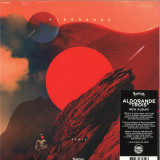
ALDORANDE is a band of five groove adventurers, led by their founder and captain Virgile Raffaëlli, who are pushing the boundaries of music with boundless passion and unparalleled instrumental mastery. After two critically acclaimed albums, the group returns with Trois, the final chapter of their cosmic trilogy, recorded on tape at a prestigious Parisian studio.
Trois is an epic album, driven by bold instrumental explorations and waves of celestial choirs. Drawing inspiration from the 70s fusion movement, it honors the genre’s masters while adding a unique, contemporary twist. The galactic textures and sophisticated arrangements transport the listener on an unforgettable astral journey.
Once again, Favorite Recordings has poured its heart and soul into this album. Every note, every arrangement has been meticulously crafted to capture the essence of that era, with a relentless drive to ensure that every step of production and recording stays as true as possible to the genre’s iconic references.
On drums, Mathieu Edouard lays down a killer groove that leaves no one indifferent. Florian Pellissier, on keyboards, unfolds an interstellar sound palette with a spectacular collection of instruments: Fender Rhodes, Yamaha CP-70B, Moog Minimoog Model D, Sequential Prophet 5, ARP Solina String Ensemble, Roland Juno 106, Roland Jupiter 8, and Oberheim OB-8. On percussion, Erwan Loeffel scatters a jungle of intoxicating rhythms. Laurent Guillet, on guitar, fires off hypnotic, irresistible riffs, while Virgile Raffaëlli, on bass, anchors the entire experience with deep, melodic bass lines that give the band a captivating and unique dimension.
Get ready to take off with ALDORANDE and their album Trois, which promises to take you beyond the stars.
- Cernes Et Maquillage
- L'aventure Des Gens Modernes
- Voyage Idéal
- Visage
- Télévision Et Idéal
- Oberheim
- Crayon Noir
2023, past and future merge into one. Stripped of temporal markers, today's artists unabashedly draw from the past while boldly gazing into the future. Amid revivals and
innovations, trends and undercurrents, the game is intricate, the nuances abundant. Orphia's music is no exception. Behind the synthesizers, the Genevan weaves a musical tapestry on a tightrope. Cold wave, synth-pop, post-punk, eurodance, Indochine, Depeche Mode, Boards of Canada, Eurythmics... it all blends in a grand synthetic ritual where the festivities happily don't stop at the first light of dawn. Charging forward, swiftly, strongly, into an uncertain future, no questions asked but with a quick glance in the rearview mirror, just to be sure.
"L'Aventure des Gens Modernes" resides in this retro-futuristic melancholy, between nostalgia and a thirst for tomorrow. Without ever falling into foolish nostalgia or soulless revival, the EP reflects an absolute urgency. Urgency to produce, first and foremost, as studio work has become a true raison d'être for Orphia. Urgency to also shout out a certain rage against a world devoid of hope, and this on stage where the artist performs alone, synths in hand and sharp beats for the dancefloor. In an era where the past enables facing the future, the 5 tracks of "L'Aventure des Gens Modernes" breathe a breath of fresh air into a scene in ruins. Cyberpunk or punk in general, Orphia wants to go fast and take everything in its path.
On a creative roll of late, Linkwoods productions have branched out in many directions, a collaboration LP with jazz Genius Greg Foat, Another with Local Edinburgh Legend Other lands and a load more yet to surface. Linkwood now comes back to solo work with a hyper focused piece of electro goodness. Lo-fi but all the better for it, Mono comprises 14 deeply distilled tracks. After producing some more complex records it was time for a pure palate cleanser so we locked Nick in the Athens of the north studio for a week with his friends Moog and Oberheim to see what might happen. Somewhere between Electro, Early 80s Synth pop and techno the album is an extremely listenable piece as a whole, unpretentious and timeless. Sprinklings ofDave Stewart pop noodles, Newbuild, Early Era Nu Groove but very much Linkwood at the same time, I cant recommend this enough.
After a year-long creative process fueled by collective composition and live jam sessions, Gin Tonic Orchestra returns with "Let The Children House" on Floors Records. The EP is a testament to their ever-evolving sound, deeply rooted in live improvisation and the spirit of club music.
Recorded in the heart of the Alps at "Maison des Artistes" in Chamonix, the band surrounded themselves with legendary analog synthesizers—ARP 2600, ARP Odyssey, Clavinet D6, Fender Rhodes MKII, Jupiter 4, Jupiter 8, JX-8P, Korg M1, Moog Subsequent 37, OB-X, Oberheim SEM, Roland MV8000, Wurlitzer—to sculpt a sound pulsating with the hypnotic grooves, euphoric synths, and raw underground spirit of '90s house music. Each track was shaped with care, influenced by the group's diverse influences and their shared vision of an immersive dancefloor experience, embracing the hypnotic trance of repetitive music that blurs the line between consciousness and surrender.
Much like children lost in play, Gin Tonic Orchestra embraced chaos, letting their creativity flow freely, drawing inspiration from their mentors, and the stories passed down through club culture. The result is an EP that not only embodies their musical identity but also carries a bold statement: "Let The Children House" is a call to let artists create without constraints, a message of artistic freedom in an industry often driven by formulas.
With a background that includes a debut EP on Mother Tongue, a standout performance at Nuits Sonores ranked in Resident Advisor's Top 5, and collaborations with UK jazz-funk legend Kaidi Tatham, deep house master Ron Trent, and the H2H project led by Chez Damier & Ben Vedren, Gin Tonic Orchestra continues to push boundaries between live music and electronic culture. Their new release is both a tribute to the past and a step into the future—a journey where house music is not just played, but lived
First release of 2025 is The Coin EP Vol.3. Marcello Cassanelli is back on Ten Lovers Music with two stunning tracks and a beautiful outro solo on his Rhodes. Starlight kicks off side A with some superb Italian Disco for 2025, following that a trip to Cuba for Tropical Breeze on which Marcello employs long time collaborators and super talented Giulia Barozzi on vocals and Antonio Rapa on drums.
Across both tracks Marcello plays the keys, bass, flute, guitar and drum programming. Rounding off side A is Dream Horizon an improvised one minute beatless outro jam on the Rhodes. On the AA side we have a new project from Caruso and Helen McCormack. First up is Have and Hold which harks back to the Manchester Street Soul scene of the late 80’s. Very simply constructed with electronic drums, bass, piano and a lead synth on top of which Helen’s vocal sits perfectly. Second on side AA is Love You More, a very atmostpheric track written by Helen with the strings arranged by Cormac Fulton. The percussion is from fellow TLM artist Takashi Nakazato (Kyoto Jazz Massive/Jazztronik).
Both tracks were produced by Steve Conry who also assisted Jose Rico on the mixes. Finally to finish on side AA is Central, a beautiful Deep House instrumental using only real analogue synths like the Solina String Ensemble, ARP Odyssey and Oberheim Xpander, mixed by Steve Conry and Matt Cox
- A1: Keep Right On
- A2: Chronic Tonic
- A3: Hot Tamale
- A4: Pocket Rocket
- B1: Near-Earth Objects
- B2: Othership
- B3: Mind's Eye
- B4: Possibilities
Stalwarts of the London music scene The Boom Yeh are at the forefront of redefining British Jazz-Funk with the release of their new album Near-Earth Objects. Featuring a host of musicians that have worked with Jamiroquai, The Brand New Heavies, Incognito, Alice Russell and Leroy Hutson.
Keep Right On
A blistering syncopated jazz-funk assault reminiscent of The Brecker Brother and Tower Of Power. Featuring solos from trombone player Tom White and sax player/horn arranger Ian Bailey, followed by a virtuosic drum solo courtesy of Alessio Barelli.
Chronic Tonic
A smooth jazz-funker with hip-hop undertones, echoing early Prince with a boogie funk outro in the vein of George Duke, propelled by bass player Matteo Grassi.
Hot Tamale
If Jimi Hendrix was stuck in a Mexican traffic jam, it would probably sound like this. An abrasive funk-rock stomper featuring a heavy duty guitar solo from band leader Jon Speedy.
Pocket Rocket
Deep pocket funk in tribute to George Clinton's Parliament-Funkadelic with be-bop infused horn riffs. Featuring solos by Paul Silver on baritone sax and guest keyboard player Carl Hudson on Oberheim synth.
Near-Earth Objects
High energy jazz-fusion exploring the universe of Herbie Hancock and The headhunters with an afrobeat inspired horn outro. Featuring guest keyboard Carl Hudson on Fender Rhodes and synth.
Othership
Bombastic big band jazz-funk with a rare groove flavoured mid section. Composed by band leader/guitarist Jon Speedy as a nod to his father Dave Speedy - a jazz trumpet player and big band leader.
Mind's Eye
Laid back Ibiza chill out mixtape vibes meets Donald Byrd and the Mizell Brothers. Featuring blissful Fender Rhodes and synth by guest keyboard player Carl Hudson.
Possibilities
A slow burner in the spirit of Roy Hargrove's RH Factor and early neo-soul with a gospel flavoured outro.
Star People is a 1983 album by the famous jazz trumpeter and composer Miles Davis. It is the first to feature electric guitarist John Scofield, who was recommended by saxophonist Bill Evans, and the last to be produced by long-standing collaborator Teo Macero. Bassist Marcus Miller plays on five of the tracks. Electric guitarist Mike Stern features on most of the pieces, and drummer Al Foster and percussionist Mino Cinelu round out the rhythm section. Davis played trumpet and Oberheim synthesizer simultaneously (without using overdubs), and on separately recorded interludes for the over-18-minute-long blues composition ""Star People"". Star People is available as limited edition of 1500 individually numbered copies on orange and white marbled vinyl.
Michael A. Muller, Multiinstrumentalist und Mitbegründer von Balmorhea, hat sich ganz ins Komponieren vertieft und veröffentlicht sein DG-Debüt Mirror Music. Reflexion ist das Thema dieses Albums. In Zusammenarbeit mit elf Künstlern sind zehn Tracks entstanden, die auf Mullers Ambient-Kompositionen basieren. Muller schrieb sie am Mellotron, einem Oberheim Two-Voice Synthesizer und einer Rhodes-Orgel und teilte sie mit den Musikern, wobei jeder für sich einen Part in einem bestimmten Stück übernahm. Mirror Music eröffnet mit der taktilen, offen gestimmten zwölfsaitigen Gitarre von Danny Paul Grody, geht über in die irisierende Pedal-Steel-Gitarre von Chuck Johnson und mündet ins vokal Atmosphärische von Vestals. Es folgen Jonathan Sielaffs Bassklarinette und Ilyas Ahmeds Gitarre, die einsamen Wüstenklänge von Douglas McCombs von Tortoise, die flirrenden Rhythmen des indonesisch-australischen Perkussionisten Rama Parwata, die modularen Synthesizer-Reflexionen von Jefre Cantu-Ledesma, der samtige Gesang von Hania Rani, die weichen Soundmodulationen von Jon Porras und schließlich das gefühlvolle Cello von Clarice Jensen. Mirror Music kommt am 1. März 2024 digital heraus und am 15. März als LP in limitierter Auflage.
Although 30 years after its birth this fundamental electronic gem called 'Reflections' has achieved cult status, it is worth remembering that it all started in 1993 in a small apartment in Waterloo, London, with the help of a mixer and a bunch of hardware synth and drum machines of hardware, with the mastodontic Oberheim OB-8 synthesizer as the main partner.
While in the UK the vast majority of kids showed a certain rejection of what came from North America in the form of electro, Kirk Degiorgio, under his alias As One, embraced it openly and incorporated it into his productions along with influences from other genres that he had already adored since he was young, such as jazz, soul or funk, thus becoming one of the true early adopters of Detroit techno in the UK.
If we look back, 'Reflections' is a challenge in itself, and even more so considering what the consumption pattern of electronic music was in the early 90s. This timeless album fits into the delicate border between being enough club to work on the dance floor, and still being musical and cerebral enough to be listened to at home. A milestone that, whether premeditated or not, Degiorgio more than achieved.
Three decades later Lapsus Records has been able to access the pre-masters extracted from the original DATs to build a special 30th anniversary edition within its Perennial series. For the occasion, this reissue not only offers the tracks included in the first edition, it also adds the songs 'The Priestess' –never released on vinyl before– and Forgotten Memory –until now unreleased and rediscovered in one of the DATs dating back to 1992 from the 'Reflexions' recording sessions. We are therefore facing the definitive edition of an album that, despite coexisting with the explosion of the rave movement, would pave the path for the UK-Detroit connection.
During the year 2021, Charlemagne entrusted us with numerous archives recently found on audio cassettes dating from the 70s and 80s. After a long process of listening and selection, Matière Mémoire is pleased to present the first volume of these archives to you.
ALL MUSIC, instruments & voices by charlemagne palestine
Except CD2 track4 by Simone Forti & Charlemagne Palestine
Track selection by Karbé dinel / Cassette digitization by Lionel Hubert
Mastering by Frederic Alstadt at Mont analogue Mastering
COVER PICTURE BY Henry Ughetto "Pour charlemagne palestine" 1998
Another blast from the past. Organic Signs' second reference comes from a white label record found in Jan Swam's collection. Positive Recreational Soundsystem is another aka for A Positive Life (Stefan Pierlejewski & Liam Farrell). Under this name, they only release one EP, back in 1996. There are 2 original tracks and a remix we added to close the generational circle.
The considered king of analogue synthesizers Oberheim Matrix 12 is the base of this PRS EP. Side A - Son of The Rising House - is a 10 mins entrancing musical journey that will transport us to the optimism and joy of a sunrise in the free parties of the mid 90's, which were still resisting to enter the capitalist rules of the clubs.
Side B1 - Encoded - features an FM oscillator from the Matrix 12, embarking us on a darker version of the rave, with modulated sounds closer to goa trance. Finally, the B2 - remix by Jan Swam - shows us a modern take on the A-side, using the original samples sent by Stefan and others from the legendary Yamaha RM1X. It is an 8 minutes rework in which he pays great respect to the original one, separating it into a first part with breakbeat rhythms and a second part with 4X4.
#A1# Eighteen months ago the first evidence of intelligent life off the Earth was discovered.
#A2# It can only be attributable to human error.
#B1# I'm not sure, what do you think? I've got a bad feeling about him.
Roland TR-909
Roland TR-808
Roland TR-707
Roland TR-606
Roland TB-303
Sequential Circuits Prophet 5
Oberheim SEM
Oberheim Matrix 12
Ensoniq DP/2
Alesis Midiverb III
Allen & Heath GL2400
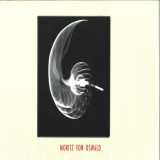
What are the differences and similarities between human and artificial sound, between oscillations generated by vocal cords and synthesizer voices, voltage amplified by speakers? On Silencio, his latest album for Tresor Records, Moritz von Oswald works with a 16-voice choir to explore this concept.
Drawing from the ensemble works of long-standing inspirations Edgard Varèse, György Ligeti and Iannis Xenakis, von Oswald and Vocalconsort Berlin delve into the space between sounds, creating a deeply textured collection that shifts between light & ethereal and
dark & dissonant.
As masterfully demonstrated in the early work of von Oswald and Mark Ernestus’ influential Basic Channel project, repetition and reduction are key elements here, much in the tradition of techno and minimalism. The vast dynamism of the human voice adds to the
profound weight of electronics while offering up a rhythmic source and sonic noise palette unexplored in von Oswald’s repertoire. In Silencio, von Oswald dredges a dank murk, pulling clouds over a distant pulse. It hangs, ready to take on new forms.
The compositions were written in von Oswald’s Berlin studio on classic synthesizers, such as the EMS VCS3 & AKS, Prophet V, Oberheim 4-Voice and the Moog Model 15. These abstract recordings were transcribed to sheet music for choir by Berlin-based Finnish composer and pianist, Jarkko Riihimäki and performed by Vocalconsort Berlin in Ölberg church in the city’s Kreuzberg district, only few metres down the road from where Dubplates & Mastering and Hard Wax opened their doors for music enthusiasts for many years so long. The recordings of the choral versions were then incorporated into the synthesized parts of the album and brought into anew electronic context; in Silencio, the focus is not on using one means to imitate the other, but to sonically discuss the tensions and harmonies between the two worlds and create a dialogue between them.
The relationship between von Oswald and Tresor Records goes back thirty years, all the way to Blake Baxter’s Dream Sequence in 1991 - which von Oswald engineered alongside Thomas Fehlmann. The collaboration with Fehlmann lived on, seeing the duo team up as 3MB with Eddie Fowlkes or Juan Atkins. More recently, the Detroit-Berlin connection continued as Juan Atkins & Moritz von Oswald present Borderland.
For von Oswald, Tresor Records and also the participating guest musicians of the choir, this release brings together audiences from other musical areas, cross-pollinating; Silencio is an album that stands for itself beyond the musical genre boundaries.
Black Vinyl[14,24 €]
We are thrilled to kick off our label endeavors with one of the rarest and simultaneously best-recorded independently released German new wave singles in history: "Jede Nacht derselbe Traum" ("The Same Dream Every Night") by Total.
Back in late 1983, Total found themselves in a pivotal rendezvous with CBS Records in a Frankfurt hotel lobby. The entire band was present, along with the esteemed NDW manager Jim Rakete, who had played a role in launching Nena to national and international stardom. Also in attendance were the A&R representatives from CBS. It was on this day that Total was presented with the opportunity to ink an album deal with CBS. However, since they had only recorded the titular song thus far, negotiations hit a snag. CBS insisted on a full album rather than a standalone single.
Ultimately, the band decided to independently issue a limited 7" run of "Jede Nacht derselbe Traum" under Günther Mannschreck's Schreckschuss label in January 1984. These vinyl copies became the band's currency for pursuing record deals and promotional prospects. However, despite the potential to achieve commercial success and garner radio airplay, the song and the "Total" project gradually waned from the music landscape. Regrettably, only a few vinyl copies have managed to endure over time. This NDW "holy grail" may have prompted a fair share of dreams for serious vinyl collectors, as to this day, not a single physical copy has been put up for sale on platforms like eBay or Discogs. Interestingly, Maisenbacher has even fielded an offer of over 400 Euros for an original copy, although he regretfully couldn't fulfill the request due to possessing just a single copy himself.
The song itself is a fusion of diverse musical styles. Crafted using the Oberheim OB8 system, complete with the DMX drum machine and a bassline woven from a Jupiter 8 keyboard, it carried a groove reminiscent of New York's electro hip-hop sound in "The Message," setting it apart from typical German new wave productions. Additionally, a Korg Polysix was integrated, and guitar effects were layered to finalize the infectious synth-pop instrumental. Newcomer to the band, Andrea Ströbel, laid down a flawless vocal layer that steered the song towards a straightforward NDW direction, giving it a resonance that surely resonated with mainstream and radio audiences. To complete a B-side for the original vinyl single, the legendary state-of-the-art L480 Lexicon reverb was used. In the more experimental "Maxi Mix," now known as the "Dub Mix," Mannschreck expertly manipulated the machine. The outcome stands as a historical example of incredible studio craftsmanship and the cutting-edge techniques of the 80s.
For the new 12" release, Mannschreck unearthed an alternative mix of the song on the original tapes, featuring a distinct introduction, break, and exciting edits. In addition, DJ Friction, who contributed to the transfer and mastering for the release, treated us to a superb edit that cleverly melds all versions of the song while incorporating a few extra bassline groove elements.
The captivating reissue cover spotlights vocalist Andrea Ströbel, who gazes with determination. A hand reaches out to grab her shirt, attempting to pull her down. Symbolizing the song's theme, it embodies the unsettling dream conveyed by the lyrics-yet she steadfastly resists.
In summary, we are elated to present a significant gem for vinyl enthusiasts: a splendid mid-tempo tune that dances on the boundary of synth-pop, new wave and electro. The new 12" single underwent meticulous mastering, and the outcome is nothing short of astounding, surpassing the sonic quality of the original pressing.
Green Vinyl[16,39 €]
We are thrilled to kick off our label endeavors with one of the rarest and simultaneously best-recorded independently released German new wave singles in history: "Jede Nacht derselbe Traum" ("The Same Dream Every Night") by Total.
Back in late 1983, Total found themselves in a pivotal rendezvous with CBS Records in a Frankfurt hotel lobby. The entire band was present, along with the esteemed NDW manager Jim Rakete, who had played a role in launching Nena to national and international stardom. Also in attendance were the A&R representatives from CBS. It was on this day that Total was presented with the opportunity to ink an album deal with CBS. However, since they had only recorded the titular song thus far, negotiations hit a snag. CBS insisted on a full album rather than a standalone single.
Ultimately, the band decided to independently issue a limited 7" run of "Jede Nacht derselbe Traum" under Günther Mannschreck's Schreckschuss label in January 1984. These vinyl copies became the band's currency for pursuing record deals and promotional prospects. However, despite the potential to achieve commercial success and garner radio airplay, the song and the "Total" project gradually waned from the music landscape. Regrettably, only a few vinyl copies have managed to endure over time. This NDW "holy grail" may have prompted a fair share of dreams for serious vinyl collectors, as to this day, not a single physical copy has been put up for sale on platforms like eBay or Discogs. Interestingly, Maisenbacher has even fielded an offer of over 400 Euros for an original copy, although he regretfully couldn't fulfill the request due to possessing just a single copy himself.
The song itself is a fusion of diverse musical styles. Crafted using the Oberheim OB8 system, complete with the DMX drum machine and a bassline woven from a Jupiter 8 keyboard, it carried a groove reminiscent of New York's electro hip-hop sound in "The Message," setting it apart from typical German new wave productions. Additionally, a Korg Polysix was integrated, and guitar effects were layered to finalize the infectious synth-pop instrumental. Newcomer to the band, Andrea Ströbel, laid down a flawless vocal layer that steered the song towards a straightforward NDW direction, giving it a resonance that surely resonated with mainstream and radio audiences. To complete a B-side for the original vinyl single, the legendary state-of-the-art L480 Lexicon reverb was used. In the more experimental "Maxi Mix," now known as the "Dub Mix," Mannschreck expertly manipulated the machine. The outcome stands as a historical example of incredible studio craftsmanship and the cutting-edge techniques of the 80s.
For the new 12" release, Mannschreck unearthed an alternative mix of the song on the original tapes, featuring a distinct introduction, break, and exciting edits. In addition, DJ Friction, who contributed to the transfer and mastering for the release, treated us to a superb edit that cleverly melds all versions of the song while incorporating a few extra bassline groove elements.
The captivating reissue cover spotlights vocalist Andrea Ströbel, who gazes with determination. A hand reaches out to grab her shirt, attempting to pull her down. Symbolizing the song's theme, it embodies the unsettling dream conveyed by the lyrics-yet she steadfastly resists.
In summary, we are elated to present a significant gem for vinyl enthusiasts: a splendid mid-tempo tune that dances on the boundary of synth-pop, new wave and electro. The new 12" single underwent meticulous mastering, and the outcome is nothing short of astounding, surpassing the sonic quality of the original pressing.
2023 Repress
One of Larry Heard's most under-rated albums finally remastered and available as full vinyl release for the first time! Known for his classic early house releases Larry Heard's productions always hinted at deepest outer space, but his 1996 Alien album was his first actual science-fiction record. It's almost as polished as the most mainstream dance production, but just as sublime as any Detroit producer. Heard's house roots often show themselves, while the chords and shimmering production make this an album almost on par with Heard's mid-'80s peak. The project was a recording & sound-development experiment that was mostly constructed around a Korg O1/W workstation keyboard that was left at Larry's studio to check out by Victor 'melodious myles' Houston along with some of the staples of his studio, including the Roland d550 and Oberheim Matrix 1000. Mr Fingers magic touch can be heard all over the album, and this showcases the incredible musical talents of the man, who's name by now cant be left out from any hall of fame when you're talking music innovators from the last century! Recommended!
Mysteries Of The World is the stunning final studio album from legendary Philly supergroup MFSB. Expertly co-written and produced with the mighty Dexter Wansel, it features the untouchable, sparkling masterpiece "Mysteries Of The World". The whole album is truly exquisite; a stylish, classy collection of pure Philly soul and orchestral jazz-funk.
MFSB, an acronym for Mother, Father, Sister, Brother, was formed by producers Gamble & Huff of Philadelphia International Records. The band's roots can be traced back to the house band at the legendary Sigma Sound Studios, where they played on numerous hit records by artists like The O'Jays, Harold Melvin & The Blue Notes and The Stylistics. Mysteries Of The World comprises slick jazz-funk grooves, mostly penned by Wansel, who produced a fair chunk of the album in a similar style to his space-funk records. MFSB's smooth sound is retained but it receives a fresh, elegant and jazzy upgrade. While this album is as mellow as the rest of the latter-period MFSB recordings, it never forgets the group's soul music underpinnings.
Swaggering, well-timed horn blasts, sweeping strings and a percolating, hard thumping slap-bassline combine to devastating effect on amazing opener "Manhattan Skyline". It's a sexy mid-tempo instrumental which sets us up nicely for what follows. Essays could be written analysing the perfection of title track. Arguably the finest jazz-funk instrumental ever made, it's absolutely magnificent. Featuring musicianship of the highest calibre, the band play with their trademark tight discipline, cooking up a syncopating rhythm with an array of exploratory keyboard riffs wrapped around a punchy bassline sent from heaven. It sounds like house music, it's that ahead of its time. The string intro is sumptuous, hypnotic and divine and that's all before the beat hits. The track fuses classical, jazz and funk into a musical journey that you never want to end. Absolutely flawless, it's a dramatic disco dancefloor killer.
Says Dexter Wansel himself: "You know, of all the songs I wrote/produced/arranged for MFSB, this is for me the most different. I think it's an experiment in rhythmic, soft sonic synth and live string and harp combinations. I composed it in an effort to blend a funky groove, along with synthesis, and orchestral sounds. There are 3 synthesizers: Oberheim 4 voice, Polymoog, and of course Arp 2600v. And, as I remember, I recorded the track with the rhythm section, string, harp and flute players first. Then I added synthesis."
The profound elegance remains in abundance on the slinky, harp-laced "Tell Me Why"; Carla Benson's beautiful voice truly shines on this sophisticated cut. The side closes out in dramatic style with the string-drenched "Metamorphosis". It's a staccato, Blaxploitation groove workout featuring wah-wah guitar, creeping basslines, rich horn solos and soulful vocals drifting in and out of the mix. The bouncy, irrepressible "Fortune Teller" opens the B side in the bass-heavy orchestral funk style before the beautiful "Old San Juan" glides in, a Balearic-adjacent track with intricate arrangements, building its mellow soul groove around an atypical flamenco guitar hook. Melancholy, guitar-led instrumental "Thank You Miss Scott" is a real highlight, with gorgeous flute, string and percussive elements whilst closer "In the Shadow" works an otherworldly synth line into its bossa nova groove.
An essential record for fans of Philly soul and groovy jazz-funk, Mysteries Of The World was mastered for vinyl by Simon Francis and cut by Cicely Ralston for Alchemy at AIR Studios. The stunning artwork, the work of renowned illustrator Robert Giusti, was restored at Be With HQ to round out this beautiful reissue.
During the year 2021, Charlemagne entrusted us with numerous archives recently found on audio cassettes dating from the 70s and 80s. After a long process of listening and selection, Matière Mémoire is pleased to present the first volume of these archives to you.
ALL MUSIC, instruments & voices by charlemagne palestine
Except CD2 track4 by Simone Forti & Charlemagne Palestine
Track selection by Karbé dinel / Cassette digitization by Lionel Hubert
Mastering by Frederic Alstadt at Mont analogue Mastering
COVER PICTURE BY Henry Ughetto "Pour charlemagne palestine" 1998
Swing Family's Music Force is dramatic mid-80s synth-funk. From the maverick mind of Sauveur Mallia, it's a thrilling and uniquely brilliant album from start to finish. It's undoubtedly known and revered for its unbelievable standout track, "Mission Africa". Those that know, know. And if you don't know, get to know. It's the reason this record has been hugely sought-after for the best part of two decades. Originally released on Tele Music in France in 1985 but now tear-inducingly rare, this is the definition of "a welcome reissue."
Swing Family is basically a supergroup of French Funk royalty. Led by French disco lord and Arpadys maestro Sauveur Mallia, they were augmented by trombonist Alex Perdigon from legendary French funk rock collective Godchild, trumpeter Kako Bessot from funky fusion group Synthesis and saxophonist Pierre Holassian, a member of Giant, Janko Nilovic's French jazz orchestra. So, about as heavyweight as it gets for funky French goodness. Mallia handles, of course, bass duties throughout, as well as utilising his arsenal of synths including his E-mu, Yamaha Dx7, Roland MSQ 700, Mini Moog and Oberheimm.
The maximalist disco fusion of "Exorcistor" is perhaps a bit too 80s French cheese for most tastes, so either linger on its singular style or head straight to the soundtracky typo-funk of "Greewich Boulevard". A deep, swaggering powerhouse, it comes on like mid-80s Chic jamming on the set of Beverly Hills Cop with Kashif. Yes, *that* good. It's followed by the vital "Music Force", a synthy, sleazy instrumental full of sax and flute and those 80s drum fills. Just the right side of acceptable.
OR! You can even choose to forget all the rest and just stick "Mission Africa" straight on. A rumbling, strutting, afro-cosmic low-profile banger. The slick drums hit hard, the synth strings warm things up, overlapping horns add swagger whilst electric guitar flourishes and a chanted refrain sit in the mix quite perfectly. A track that's almost impossible to describe and do justice to. You just need to hear it. Preferably as you saunter into your favourite after-hours club, after spotting all your friends at once, as you cut a swathe to the bubbling dance floor. A track quite like no other, it makes you sit up within its first bars and, to us at least, sound like something you'd have heard on a Print Thomas mix from the mid 00s. Basically, it's cosmo-galactic.
The B Side opens with "Musical Stars", an oh-so-80s funk-lite track which, at times, sounds like something Daft Punk may have left on the cutting room floor during their Discovery sessions. Another unimpeachable favourite of ours is the druggy brilliance of "Gentleman & Musician". You can almost hear the white powder through the speakers, as soaring, acidy synths, slick, heavy beats and the irresistible interplay of the primo horn players create a real sleazy wonder. "Film Action" follows, a galloping horn-heavy synth romp with moments of extreme bass breakdown brilliance before the drama-synths of "Episode Double" take things up another notch as it oscillates between gorgeous funky horns and urgent bleepy magic. Super tense, super funky and super stylish. Just ace. The elctro-tinged horn workout "Fatal Lady" closes things out majestically.
The audio for Music Force has been remastered by Be With regular Simon Francis, ensuring the punch of Sauveur's bass and those sick drums come through to the fullest. Pete Norman’s expert skills has made sure nothing is lost in the cut whilst the original and iconic sleeve - complete with perky Liberty Belle - has been restored here at Be With HQ as the finishing touch to this long overdue re-issue.
Eliott Litrowski and Voiski’s could have done so 15 years ago, after a first meeting in Paris on the Island of Swans, during a ‘Free Party’ event shut down by the police. But it didn’t. Each one followed his own way, and if their paths crossed many times, they only began collaborating in 2021.
Cracki Records’s 10th anniversary Compilation was the trigger: the two artists locked themselves in the studio to create what has become since their signature sound: The Friendship Spacecake, a perfect alliance, driven by their common love for analogic synthesizers, between Eliott Litrowski’s hybrid electro and Voiski’s post-trance.
Neither of them wanted to stop at this stage. One is living in Copenhagen, the other in Paris, yetcreating an album together quickly became the next obvious step.
This common desire led to the beginning of the suitably called Superski duo: a great name that encapsulates both artists’ committed live performances, their unusual musical language, between electro, trance and Italo, and their vision of an uncompromising, colorful and positive club culture.
Oberheim 6, Jupiter 8, TR808, Roland JX8P, Microwave XT and FutureRetro XS, all synthesizers are limitlessly pushed to their last breath, creating an almost retro-futuristic decor for the artiststo evolve in.
Their debut album “Mondo Moderno” will be out March 31st
White Vinyl
300 copies, red cardboard folder, foil embossed, incl. 6 prints & 17-minute digital bonus track
arbitrary presents »Delirious Cartographies« by composer, improviser and synthesist Richard Scott. Part of the Danish imprint’s Framework editions, this release includes three pieces on 12” vinyl and 6 printed drawings – as well as a text by Scott – published as a limited edition portfolio folder.
"These compositions capture aspects of my personal sonic experience of specific times and places. Extending beyond my usual work with analogue synthesizer, these pieces open the doors and windows to the outside world, incorporating field and live recordings made in various locations and situations. Rather than intending any clear sense of narrative, these are molecular dialogues between elements and geographies which do not necessarily share organic points of connection, other than my own incomplete experience and memory of them."
The final piece »6 Graphic Etudes« (included as digital prints) is intended as a set of visual / sonic sketches, each of which describes a discrete kind of movement or texture. These may have a variety of uses; as musical exercises, as scores, combined as parts of scores, or simply as stand-alone visual propositions / artworks.
The pieces were composed between 2017 and 2021 at Sound Anatomy, Berlin, Spektrum Berlin, EMS Stockholm, NOVARS, University of Manchester University, Boliqueime, Portugal and the Electronic Music Studios University of Huddersfield.
As well as various microphones, hydrophones and recorders, the instruments used on this recording are mostly analogue and modular synthesisers: Hordijk Modular, Serge Modular, EMS Synthi A, various Eurorack modules, Buchla Thunder midi controller, Oberheim Xpander, Clavia Nord Micro Modular, CataRT and maxMSP, Rob Hordijk Blippoo box. On “Thunder, actually bicycles...” Axel Dörner plays a Holton Firebird trumpet with additional live-sampling via maxMSP and a controller interface developed by Sukandar Kartadinata.
Written & produced by Richard Scott. Drawings by Richard Scott. Graphic design by Mads Emil Nielsen. Mastered & cut by Kassian Troyer at D&M, Berlin.
Thanks to Axel Dörner, Rob Hordijk, Beatriz Ferreyra, Ricardo Climent, David Berezan, Joseph Hyde, Richard Whalley, Pierre Alexandre Tremblay, Tim Scott, Andy Adkins, Electric Spring Festival, Sines & Squares Festival, Basic Electricity and Sound Anatomy.
2LP Gatefold (featuring liner notes). Limited Edition. Artwork by Meeuw.
A collection of personal recordings made on various synthesisers between 1989 and 2017, by Telesoniek Atelier. Huge Tip on this one!
Early feedback:
"Fascinating improvs. I loved 'Gruesse'. " Suzanne Ciani (Atmospheric)
"Beautiful music with real subtlety and depth” Anthony Child (Surgeon, Transcendence Orchestra)
"Lovely, pure synth music." Mark Pritchard (Warp Records)
"Chateuroux is mighty... A proper zoner. Flung on earth." John T. Gast
"This is a great release by Telesoniek Atelier - a musician unknown to me before now. I've been thoroughly enjoying playing this double vinyl release since i got it. Both discs are filled with amazing music that moves between abstract electronic experiments to melodic, DMT bent sounding, classical contemporary music and futuristic soundtracks from non-existing Sci Fi movies you'll wish you could see. It time-warps you from here to there then freezes the moment. It all sounds like its been taken straight from the ancient room .. you know, that one where the spirits of the great teachers live. This is very focused, unpretentious and highly emotive music . A wonderful and dreamy sound garden coming from what I imagine to be a beautiful mind . These discs will be camping out on my turntables for a while."
Tako Reyenga (Music From Memory)
"A deep sense of the symphonic permeates this record. While synthesizers form the basis of its sound, Hans Kulk shapes their timbre into uncanny acoustics and weaves them together like an orchestra. Just when you think you have understood what is happening, another layer reveals itself. Yet it keeps a floating sense of lightness throughout. A truly rewarding listening experience."
Hainbach
Interior sounds from Madalyn in an album that flits between eerie ambience, environment, and hermetic logic. The music’s timing and sequencing feels distant, the elegant constructions conjured and organised semi-consciously, drawing the listener deeper into the dream and towards a zone where watch hands tick forward accurately and their perception of time unspools. Here each neatly tuned conversation and clockwork assemblage harmonises, spinning tantalisingly just out of range and understanding.
“Puzzle Music is the desire to create images out of diverse pieces of sound. To collect timbral colours in a gradient procession and connect them until they create reason. Principally not knowing how the image will turn out, or what the picture even is. It is the act of placing sound shapes next to one another in the hope that clarity will gradually be revealed.
When grouping the songs together I was thinking of them as mechanisms in a timepiece. I have something of an obsession with Swiss watchmaking, although I think this stems from a desire for creative mastery and the design of an energy source independent of electronic needs. Hopefully the songs all serve a purpose towards the end goal of the album... but also, the way the Oberheim Xpander pans sounds is in a very clear circular pattern, which makes me think of gears turning.”
Disco Segreta teams up again with Miro (b. Mario Baldoni) in the re-release of his 1970s-80s productions, after the italo-disco burner Stranamore by Brina (DS M 002) and the tropifrutti balearic italo-house smasher Tobago by Pat & Pats (DS M 006), we are back introducing to italo-disco connoisseurs a truly atomic jam !
“Passion Night” was originally written by Miro in 1985. Story goes that envisioning a release by 1987, Miro teamed up with legendary south-african sound engineer Allan Goldberg, in light of their previous Vedette Records disco-infused collaboration for the “Slang“ studio project and the “Real Life Games” LP. The team featured also track co-writer Gregorio Puccio, ready to unleash the synths (Roland JD800 + D50, Yamaha DX7, Oberheim 12, Prophet 5), along with two young vocalists, Giulia Fasolino and Silver Pozzoli, later to become household names for the italo-disco heads.
As a special feature on the track, Miro brought in the studio contribution of the top italian jazz contralto saxophone virtuoso of the era, Massimo Urbani.
In September 1987 a session at Pomodoro Studio had the track recorded on a 24 tracks tape, where has been sitting unreleased for 35 years, until now !
Within its cross-genre blend of synth-pop, italo-disco and jazz, “Passion Night” is an outstanding musical time capsule, a picture-perfect vivid snapshot of year 1987, with the additional historical value as a document itself: it’s the only strictly non-jazz project in Massimo Urbani’s repertoire, in a revelatory performance shedding a light over an unusual facet of Urbani’s versatile talent, regardless of boundaries, a few years before his untimely passing.
Three years in the making for this first-ever release, so that we could bring you “Passion Night” in its original 1987 version from the actual multitrack master, with our usual respectful treatment, plus three remixes: the balearic infused “Miro Smooth Jazz Remix” and a remix by highly acclaimed musician and producer Giulio d’Agostino aka Julyo, who can claim a plethora of collaborations for artists as diverse as Aphex Twin, Goldie, and Michael Brecker.
Following the success of the label's Cassiopeia reissue, Mysticisms presents a second EP from Nail with four previously unreleased tracks of gliding deep house, dub techno and Balearic sunrise anthems, highlighting this respected talent.
Recorded between 1993 to 1999, predominately at the DiY collective's Strictly 4 Groovers studio in Nottingham, with the ever reliable Damian "Deadbeats" Stanley engineering. While edits and overdubs were completed at home, some were mixed down to DAT and cassette to became part of Nail and friends after party soundtrack, as much for pure enjoyment as appraisal.
Still a teenager for the early years of these recordings, Nail was honing his craft. Utilizing the ever faithful S1000 sampler, Juno 106, Oberheim Matrix 1000 and Roland SH101, influences from Future Sound Of London, the emerging 'West Coast Sound' rising in the US, Maurizio's dub fusion, through to the bouncing free party sounds emanating out from the Midlands to a now nationwide party scene embed in to machines.
Unreleased until now, the Cassiopeia release ignited an interest in these old cassettes and DATs, bringing them to life and offering further proof of Nail's place as one of the UK's best House producers.
Ghost the Mystery.
strumentalist Teddy Lasry's story is noteworthy not just in regards to the music he released, but in the ways approached the craft of composing and experimenting with sounds and sonics.
Always intrigued with the capabilities of instruments, their groove and their feel, it was very much his family’s influence that helped to fuel these life long affections. As a performer in a parisien cabaret, Teddy’s father Jacques would mingle with giants like Serge
Gainsbourg and Charlie Chaplin (impressed by his ability to improvise, Chaplin wanted him to become his accompanist, but the pianist politely refused). Jacques and his wife (Teddy’s mother Yvonne), would later become members of the innovative experimental group Les Structures Sonores, and surround their children’s lives with sounds. Electronic music was still in its infancy and Les Structures Sonores, with their resonators that produced long, mysterious tones, were deemed ‘cosmic’. It was the era of the launching of the first Russian Sputnik and every time a radio or television station wanted music for their science fiction programs, they turned to one of their compositions. Showing a natural ability with multi instrumentalism, Teddy was rewarded with a spot in the band, allowing him to really explore unconventional methods of composition.
Following a brief stint with Ariane Mnouchkine's avant-garde Théâtre du Soleil after graduating school, Teddy joined the pioneering prog band Magma, with whom he would record three groundbreaking records during the early 1970s (According to former member
Laurent Thibault, their album Mëkanïk Dëstruktïẁ Kömmandöh and its sound were strong influences on David Bowie during the recording
of Low and Iggy Pop’s The Idiot at Hérouville). Despite the successes with these projects, Teddy was constantly searching for new ways
of expressing himself through music, leading him into the beginnings of a solo career that would last the better part of three decades.
Teddy’s transition into his solo career came with contrasting fortunes, in that he was now becoming a music to image composer but with the unfortunate realisation that his eyesight was gradually worsening (due to being diagnosed with retinitis pigmentosa at an early age). Nonetheless, his solo career would begin in 1975, and for the rest of the decade his sound would become increasingly mired in electrified Funk-Fusion and its endless sonic possibilities. The resulting music would serve to highlight Teddy’s love affair with the possibilities found within tireless instrumentation, with the flute and particularly synthesisers becoming a mini-obession of his (he once spent a 7,000 Francs loan, which was meant to be spent on fixing his roof, on synths).
To this day Teddy continues to record and experiment with music, a passion which in many ways has never left his sid, even at the age of 75. His career was one that was fuelled by innate curiosity and an intrinsic desire to discover new methods of expressionism, be it through the realms of Jazz-Funk, ambient electronics, Swing music or indeed through the medium of instrumentation itself. On this compilation, we look to encapsulate the essence of his innovative sound, and from start to finish a sense of his ingenious approach to composing structure and mood is made abundantly clear. The funk-jazz fusion style that embodied the majority of his 70s work is on full display here, with the vibrant flute driven "Los Angeles", the Miles Davis inspired "Blue Theme", the progressive and driving
"Chamonix", and the deeply intricate "Krazy Kat", along with one of his finest 80s slow jams, "Funky Ghost". Two cuts off the ‘Back To
Amazonia’ album are also featured (Teddy’s last album including his Prophet T8, Yamaha DX7 and Oberheim drum machines). "Raising
Sun in Bali" and the title piece both emphasise an ever present passion for synthesisers. "Birds of Space", a standout track off the e=mc2 album, closes the comp, and is a fitting way to end this journey.
Pulled together in close collaboration with Teddy and his family, this collection of songs looks to introduce new listeners to his work and we are proud to present this limited and carefully remastered compilation on vinyl, including extensive liner notes.
Behind Bandhagens Musikforening we find Michel Isorinne and Martin Sander. After their debut album on Northern Electronics they are now the protagonists of the 8th physical release on the label One Instrument.
The Swedish duo recorded the beautifully crafted six tracks at Bandhagen Airport in Sweden between 2017 and 2020.
Six tracks each made with one instrument with a clear preference for vintage synthesizers.
We are brought through delicate sonic journeys made with the Roland System 100, a semi-modular synthesizer built between 1975 and 1979, the legendary first digital synthesizer Yamaha DX-7, the Roland SH-101, the Oberheim Matrix 6R and the Waldorf Microwave all four from the beloved 80's.
Bandhagens Musikforening's compositions are a radiant work of quiet minimalism and poetic deliberation. We are brought into an intergalactic hypnotic world where dreams are colored and vivid, where immersive electronics have the ability to create landscapes on your mind board.