'A product of living in an age where texture can make you dance, and popular music innovates for an audience with ears wide open' NPR
Nearly two years have passed since Niklas Paschburg presented his critically acclaimed debut album 'Oceanic' in February 2018. Niklas' musical ideas have crystalized and become cogent through a combination of extensive live performance - playing over 100 shows in the last two years - and experimentation in his Berlin Studio.
Written between 2018 - 19, his second album 'Svalbard' will be released in February 2020 via 7K!.
Niklas' use of the piano; electronics (synth and computer) and his Grandfather's piano accordion allow him to communicate via a number of musical traditions and languages. This versatility has allowed him to work on a variety of projects ranging from an inspired reinterpretation of Bach's Preludes in C Minor ("Blooming"), to well received remixes for pop artists such as RY X and Asgeir.
Поиск:oceanic
Все
Glenn Astro conquers new territories with Naturals, fusing elements of Balearic and leftfield house with tribal and acid sounds on Tartelet Records.
In an impressively short amount of time, Glenn Astro has created a musical universe that’s entirely his. With full-length releases making waves on Ninja Tune and Apollo Rec, the sister label of R&SRecordings, the Berlin-based musician assembles a perfect pastiche of influences on his forthcoming EP Naturals, coming out on Copenhagen’s Tartelet Records this September.
Exploring the outer fringes of the Balearic sonic spectrum, Naturals delves into unexpected sound territories without losing touch with planet home. Sub-heavy drums mix with private oceanic field recordings, futuristic synth, and effect pedal workouts, delivering a four-track EP that is novel but honest to the bone.
“I tried not to take any direct influence from any particular music I was listening to,” Glenn Astro says. “Instead, I tried concentrating on where the instruments and effects were taking me, experimenting with different ways of using the gear that I know so well.”
Inspired by Sicily’s natural beauty, the juxtaposition of its rough landscapes and clear blue waters, Naturals takes listeners on a journey into unfamiliar sound; a conscious diversion from his usual style and yet an instant dance floor cracker infused with the artist’s signature panache.
“I made most of the record while being in Sicily,” he says. “In retrospect, it is easy to hear that the volcanic landscapes contrasting the idyllic beaches were a major influence.”
The EP opener “Naturals (Unsweetened Mix)” is a beautiful freak – a peak-time cut – starting out with tranquil ambient melodies and water drop percussion followed by a beasty acid line and slick drum programming. Next, “Naturals (Dance Mix)” slows it down to 116 BPM, taking a completely different route with a hypnotic dance between tribal and dub – a wonderfully weird closer.
On the flip side, “Slarutan (Pristine Mix)” emerges au natural with Sicilian field recordings, layered pads, playful melodies, and crisp drum programming. Saving the best for last, “Slarutan (Water Mix)” dips its toes into the early days of dance music, shifting into futuristic, ambient dub territory with divine melodies and filtered percussion.
“This one is for the plants and the trees. Return to planet Tartelet,” Glenn Astro says.
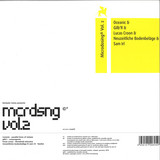
Microdosing is a series of compilation 12”s selected by Julienne Dessagne aka Fantastic Twins, and designed in collaboration with French visual artist Geff Pellet. Microdosing is a collective experiment aimed at helping you fighting back your modern obsession with happiness. You may deserve a nice day but the day does not need a nice you, nothing should be forced, everything is permitted. Microdosing will provide you with sonic healing weapons on regular basis and at irregular dosage. Those doses will favour psychedelic social techniques against self help tyranny, creation over soma, provoking over numbing, our outer-selves over our inner-selves. Microdosing refuses the fatality of the pleasure principle. Life is a struggle, time to embrace it. —— "My battery is low and it’s getting dark” We at Microdosing will make Opportunity’s famous last words fully ours. Some would see these as an epitaph on a black screen, we embrace them as a reclaimed fragility. Are we grains of sand wandering in space, hoping for a goal? No. We are the cosmos, the cosmos is us, unafraid of the end, unafraid of the void. Before the rise of the infinite silence, Microdosing brings you new guiding lights, white sun or black hole being a simple permutation of the kinetic rainbow. Oceanic’s “Parallel Lines Of Stripes” is a meandering mantra, an synthesised Moebius ring, a mission to your heart, that furthest star in the sky. Gilb’R’s “Cosmogonie” simply reminds us of the profound relation between spatial systems and the holy act of birth (cosmo, world and gon, conceive). The universe is a body, your body is your universe. Lucas Croon’s “Threshold Stimulus” is the soundtrack of a never ending voyage, the man is on a trip to the core sanctum. Imagine Space as a reverberation room cladded with bakelite. Losing yourself in delay repeats sometimes is the shortest way. Neuzeitliche Bodenbeläge & Sam Irl’s “Faeden” is another hymn to the umbilical chords joining us to the outer world, a black monolith of kraut acid, a pagan dance as portal to a destination only you can choose. Microdosing will be back soon with more enablers, helping to turn your petty struggles into a search for a meaning of life. The Quest lives on.
Comic book artist, graphic designer and free jazz improviser are only some of the many talents from Beirut born Mazen Kerbaj. After appearing as part of various ensembles on the label, Ariha Brass Quartet (CREP46) and Johnny Kafta Anti-Vegetarian Orchestra (CREP22), Kerbaj finally lands a solo outfit of his own onto the Discrepant dancefloor of insubordination.
14 years after his first (and only) solo album "Brt Vrt Zrt Krt" (Al Maslakh, 2005) Mazen returns with a series of subtle compositions of his own with not one but two(!) solo albums of prepared trumpet that further cement his international position as a serial trumpet botherer.
Whilst Vol. 2.1 showcases his (almost) (un)familiar arsenal of squawks, cackles, howls and squeals, Vol. 2.2 goes deep into the nether regions of waltzing drones and bell tweaks so deep that would make most cetaceans loose their concentration. The notion of being transported to a luring mutant underwater alien community is still present on these long(er) trips with the added meditative pieces being occasionally pierced by noise creepers, nothing is what you want or expect and that’s the way it should be.
If Vol. 2.1 is the classic follow up LP, this one is the beast from the deep, it comes surging and screeching from a deep oceanic sink hole, only to hypnotize you with perverted dance moves before diving back into the sinking, wettest and darkest cave in the world. Vol. 2.2 is a summons album; it shatters any bar there was with its intentional use of everything Vol. 2.1 was denied. It grabs you by wherever available way and it only releases you when you’re ready to listen to it again. Listen to both albums back to back, in no particular order and you’ll know that there’s nothing you can do but come back to it like a doped up seal stranded in a phantom island – appearing and disappearing as the music dictates it to.
This summer, Samuel van Dijk (also known as Mohlao and VC-118A) takes up his Multicast Dynamics alias for his fifth album on Denovali. Once again this storytelling artist sets out to remove you from reality and sink you deep into his Lost World. You arrive long after humans have left, but why? That is for you to find out. Multicast Dynamics albums are always absorbing and journeying affairs that are as immersive as a film or evocative as an audio book. Since 2015, long players like Aquatic System, Outer Envelopes and Continental Ruins have explored forgotten utopias and unexplored oceanic abysses with a documentary maker’s attention to detail and narrative, and Lost World continues in this fine tradition. This is a mysterious album that wants you to engage not only with the music, but with what it means. Where it takes you. What happened before it started and what will happen long after it ends. How did you get here? Where will you go? Listening to it is like tuning into a world that already exists, somewhere, like some distant sci-fi reality turned underwater ruin that has a million stories to tell if only you can find them. It’s an isolated world that is somehow alive with microbial life, crumbling architecture and radioactive energy that leaves you with a thousand questions as you descend ever deeper in search of some form of truth. Track titles are subtle signposts along the way, while the music is like sonic poetry: expressive and beautiful, yet open to wide interpretation and always rather mysterious. It is music that fits perfectly with our visual world in the way the artist places sounds in specific places in the sonic field. You are the central character as the action moves, pans and unfolds around you in a 360 degree spatial field rather than on a linear plane. Lost World, then, is a voyage to a distant reality that awaits your own endless exploration.
"a kind of Radiophonic Workshop Rebel Alliance…" - The Quietus
Modern music concrete quartet Langham Research Centre follow-up their debut album, Tape Works, Vol. 1 with a short EP of remixes, also on nonclassical. Remixes come from a fan of theirs – experimental veteran Jim O'Rourke – and Berlin-based industrial duo group A.
On Side A, Jim O'Rourke uses 'Quasar Melodics' as his source material, transforming fizzing grains of sound into an oceanic swirl of noise. On the flip, group A find metallic rhythms and eerie melancholy in 'Perpetual Motion'.
On 7" and digital, the EP has gained radio play on BBC's Late Junction.
The Solar Experience provides uplift. Like any deep dive into the cosmos, take off is gentle but picks up speed as more interlocking details weave like a blur of stars in your shuttle window. Expect turbulence as Anywhere jettisons the rocket and submits mercy to the acid asteroids with a broken beat jumping at every angular bump.
Elsewhere we glide deeper into the cosmos with shiny, gliding and ultimately hopeful The Sun Just Shines , we re sucked deep into hypnotic black holes on the warping bass and broken drums of Memorabilia before activating landing procedures on Match Made In Heaven . Soft chords acting as a parachute, the glistening arpeggio providing the deep oceanic landing spot, it s the ideal end to an accomplished debut celestial adventure. Who knows where Solar Phenomena will take us next
- A1: Wind Surf Ballad 2:20
- A2: La Danse Des Méduses 2:40
- A3: Une Ballade Pour Une Goélette 1:30
- A4: Les Deux Poissons 3:00
- A5: Ballet Amoureux Des Dauphins 2:20
- A6: Les Pingouins S'amusent 2:40
- B1: Destination Inconnue 3:25
- B2: Iceberg En Voyage 3:30
- B3: L'univers De La Mer 3:20
- B4: Alerte En Mer 2:50
- B5: Les Émigrants De La Mer 3:35
- B6: À La Découverte D'une Amphore 2:30
Beautiful 1 Lp Edition 140g Vinyl, Heavy 350gsm Sleeve, Sticker
- Official Reissue Of Hard-to-find Favorite L'univers De La Mer By Dominique Guiot, Considered By Some The Greatest Library Album Ever Recorded. Available On Vinyl For The First Time Since 1978 And For The First Time Ever On Vinyl And Digital.
- For Fans Of Synthesizers, Library Music, Prog-rock, Experimental, Ambient, Folk, Medieval, Movie Soundtracks, Sci-fi, Schicke Führs Fröhling (sff), Tangerine Dream, Mike Oldfield, King Crimson, Didier Bonin, Claude Perraudin, Jacques Wyrs, Oceanic Vibes And Giant Squids.
Wrwtfww Records Is Honored To Announce The Official Reissue Of Super Rare And Fabled Prog-rock/library/synth Album L'univers De La Mer By French Composer Dominique Guiot. The Full Length Release Is Sourced From Original Masters, Available On Vinyl Lp For The First Time Since 1978 And Housed In A 350g Sleeve With A Spellbinding Artwork By Surrealist Sci-fi Artist Jacques Wyrs. It It Also Available On Cd And Digital Formats For The First Time Ever.
Written, Composed And Played By Dominique Guiot With His Mellotron, Minimoog, Clavinet, Organ, And Guitar, L'univers De La Mer Draws Its Inspiration From Deep Sea Exploration, Oceanic Creatures, And Underwater Kingdoms. The 12-track Album Navigates Organically Through Diverse Mutations Of The Prog-rock And Synth Kind, From Scenic Meditation Pieces ("wind Surf Ballad"), To Medieval Electronica ("une Ballade Pour Une Goélette"), Spacey Smooth Jazz ("les Deux Poissons"), Funked Out Fantasy Folk ("l'univers De La Mer"), Or Even Incredible Sega Mega-cd Vibes ("la Danse Des Méduses") - Altogether Painting A Fascinating World Of Eerie Magic And Subaquatic Sensuality. It's Escapism At Its Best With Subtle Overtones Of Schicke Führs Fröhling, Mike Oldfield, And Claude Perraudin.
The Sound Of The Album Is Brilliantly Captured By Its Surreal Cover Art, The Work Of Legendary Artist Jacques Wyrs, Whose Memorable Record Sleeves Include Klaus Schulze's Picture Music, Eloy's Floating, Ange's Le Cimetière Des Arlequins, And The 1974 Reissue Of Larry Coryell's Spaces.
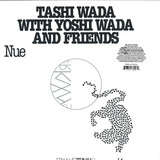
Composer Tashi Wada has performed for years with his father Yoshi Wada—artist, composer, and early member of the Fluxus movement. However, they have rarely appeared together in studio settings. Nue, the fourteenth entry in RVNG Intl.'s intergenerational FRKWYS series, finally brings Tashi and Yoshi, along with an eclectic group of close friends and extended family, together on tape.
Nue draws on aspects of Tashi's background for his widest vision to date—among them the minimalist bagpipe music of Yoshi, who co-composed three of the tracks, the psychoacoustic and perceptual explorations of his mentor, composer James Tenney, and reimagined forms of ancient and devotional music. The album, however, is not a tribute to the past or a recapitulation of familiar sounds. Instead, Nue is an intertwining of people and ideas as a means of growing, of looking inward to move outward, and of looking back to move forward.
To achieve this growth, Tashi assembled a core group of fellow travelers, including Yoshi, composer Julia Holter, producer Cole MGN, and percussionist Corey Fogel, to give life to this multifaceted suite. As an experience, Nue subtly navigates the interactions, intimacy and spaciousness of this group.
The album's title itself is a nod to Tashi's abiding interest in duality and the unknown: nue is a mythological Japanese chimera with the face of a monkey, the legs of a tiger, and a snake for a tail, a composite form, at once disturbing and otherworldly. But, as the composer points out, nue is also French for naked—stripped of complexity, bare and exposed, but also raw and essential.
From the doubling of tones—and the world of harmonic nuances such an action produces—to the rich interplay between individual musicians, all baring their own personalities and experiences through shared performance, Tashi's compositions allow space for these elements to join and grow. The multipartite creature that is an ensemble melds in the simplicity and purity of the music itself.
As explained by Tashi, each part was written with an individual in mind, not simply an instrument. And each individual performer makes their mark, from Holter's vocal performances on the cresting, oceanic 'Mutable Signs' and 'Ondine' with guest vocalists Simone Forti, Jessika Kenney and Laura Steenberge, to Fogel's resonant, precise percussion on 'Bottom of the Sky.' Producer Cole MGN, who has worked extensively with artists like Beck and Ariel Pink, helped to create a world of sound with minimal yet multi-dimensional materials. Like many of its influences, Nue uses deceivingly simple means to create complex, coherent worlds and narratives.
Tashi notes the influence of legendary Brazilian writer Clarice Lispector, whose work looked inward, investigating memory and emotion and dream, to understand the often overwhelming world outside the self. Like Lispector's classic novel Near to the Wild Heart, Nue cleaves these archetypal dualities—world/self, old/new, complex/simple—to create a work that allows them to coalesce into something singular.
As Tashi states in his liner notes: 'My desire was to create something both old and new sounding—ancient and futuristic—and ultimately something of its own world and other. Nue is a vision, an endless night of dreams, and a personal history of sorts, full of joys and demons.'
* Arikon is a solo project of Berlin-based drummer & producer, Arik Hayut - half of doom-tech duo Gainstage with Pierce Warnecke. Loyal to the sonic concepts of Gainstage, Arikon presents The Prophet's Blood Is Boiling, a solo enterprise into deepest 'drum & drone'. Hypnotizing distorted polyrhythms puncture through shards of fragmented melodies, producing potent mixtures of desperate tin can banging, a panoramic sonic scope, and the bleakest of soundsystem nightmares. Across the album, Arikon deploys an arsenal of samples plus electronic, acoustic, and self-constructed percussion instruments, constructing eight powerful productions that manage to embody both brute force and delicate decay.
* Formerly active in Tel Aviv's leftfield experimental scene during the 90's, Hayut made Berlin his permanent home for working on his own projects while composing and performing music for off-theater and contemporary dance. In 2004, a severe health crisis initially threw Hayut into crisis, slowing down his activity to a standstill. However, the precarious process of his fortunate recovery contributed to Hayut involving himself more deeply with concepts of time, death, and decay.
* Inspired by the decadent still life paintings of the Flemish Baroque, the cover artwork for The Prophet's Blood Is Boiling comprises a bowl of decomposing fruit. Like the music, its aim is to illustrate the beauty and perfection of the decay process, whilst also referring to the West's hyper-capitalistic, technology-centric culture. In recent years a new form of 'digital life' has been born, whereby all data - regardless of its worth or importance - is mummified, reproduced, and distributed with no real disintegration or loss in quality. This new digital life is resulting in a sort of 'frozen death', ending the hitherto natural cycle of life.
* The songs on themselves are inspired by the 'beasts of holiness' - mythological monsters that appear in the Hebrew bible and the Jewish apocrypha (non-canonical scriptures). There's the punching of bassy thuds out of an oceanic ambient swell throughout 'Tanin Gadol', named after the ancient water monster of Babylonian times. The dense net of fumbling scrapes and amp-busting hits of noise on 'Nahash Akalaton' similarly refer to a titular sea-snake monster, its tendrils lashing out of the speakers aggressively. These demons symbolize a force of evil equal in power, yet in direct opposition to the monotheistic deity of their time. They were therefore neither acknowledged nor canonized in much dominant scripture. Arikon invokes these demons across The Prophet's Blood Is Boiling, setting them loose across these gnarled noisy chambers of pummeling percussion and cracked sampled detritus.
Following 2017's 'Path of Ruin', DJ Richard returns to Dial with his much-anticipated sophomore LP, 'Dies Iræ Xerox'. Undoubtedly one of the most distinctive and fully-formed electronic producers in recent memory, DJ Richard imprinted the sound of a bubbling US underground with his label, White Material, founded in 2012 alongside Young Male. His first solo LP for Dial, 2015's 'Grind', found DJ Richard delicately establishing a discipline between his East Coast noise heritage and a physical, emotive tradition of house music, mastered during an extended stay in Berlin. Now firmly settled once more in his hometown of Providence, 'Dies Iræ Xerox' is a personal and uncompromising journey that finds the Rhode Island native in reflective form, journeying without compromise into both his creative influences and personal psyche. In part adapting its title from the Latin hymn 'Dies irae', otherwise known as 'Day of Wrath', 'Dies Iræ Xerox' melds the physical and psychological aspects of DJ Richard's production ethos in sharper, more widescreen vision than before; the oceanic swells of ambience yet more powerful, and the rigid basslines sharper still. With the chaos of the Berlin club scene an increasingly distant memory, the album is enriched with a contemplative, even brittle tone, as informed by film soundtracks and literature as the pulse of city living. Still, this is new material from DJ Richard, a touring DJ as distinctive as any other to be found behind the decks at some of the world's finest clubs and festivals. On 'Dies Iræ Xerox', the artist finds the space to write 'the records I really want to play', and each suggests a template for genuine dancefloor transcendence, beginning with the electrifying 'Vanguard' . The sludgy yet sophisticated crawl of 'Tunnel Stalker' sets the tone for the menacing yet somehow melancholy EBM of 'In Broad Daylight', while the record draws to a breathless close with the affecting, drum machine lethargy of 'Gate of Roses'. Drawing little distinction between his more physically rousing material and searching soundscapes, 'Dies Iræ Xerox' instead finds a passage of catharsis throughout both. 'Dissolving World', the album's breathtaking centerpiece, is a choral feature hypnotically overwhelmed by walls of electronic feedback, forging a dramatic link between old ways and new. On the bold and near-beatless 'Ancestral Helm' and 'Final Mercy', DJ Richard seems to grant both music and raw emotion the ability to simply float in the air, brilliantly, poignantly unresolved. If 'Grind,' inspired by the weathered coastlines of Rhode Island, was a record concerning "the border between civilization and the ocean," then 'Dies Iræ Xerox' is an unapologetic follow-up concerning that between macabre obsessions and fear of death. Produced during a murky, transitional period, DJ Richard found himself particularly drawn to Medieval European art and mysticism, fascinated by depictions and philosophies of the antichrist and end-times. Greatly influencing the uncompromising, apocalyptic tone of the album, these investigations have created an engaging and personal vision of the 'Day of Wrath.'
Correspondant welcome V, the once-mysterious man behind now-legendary head-turners on Cin Cin, Nautilus Rising and his own Le Temps Perdu. Since revealing himself to be Lithuanian veteran Vidmantas Cepkauskas at last year's Boiler Room Vilinius - at Club Opium, the famed Lithuanian underground haven he programs - he has continued to flourish and innovate... And he promises plenty more in store for 2018. It starts right here with 'Numeros'. A triple-headed technoid narrative of many layers; '1995' immerses us gently with a palpitating bedrock that's delicately built up with humanised textures and oceanic chords, '2001' uses the physical thrust of sprightly EBM motifs to drive us into the bleak new century while '2017' kicks with a pneumatic drive and a dizzying chain of chimes and harmonics that whisks us through the rave ages while looking firmly and defiantly into the future.... Where a fittingly rattled, dramatic and dynamic Fabrizio Mammarella remix awaits.
Seeking the overwhelming vibration of the genuine sound wave and its profound echo on the soul, Kenneth James Gibson has spent his career experimenting under a variety of aliases like as many brushstrokes to an ever polymorphic palette - successively releasing as (a)pendics.shuffle, Bell Gardens, Reverse Commuter, dubLoner, Kenneth James G., KJ Gibbs, Bal Cath, Eight Frozen Modules, and Premature Wig... the list is long. Near to two years after his first incursion on Kompakt with his third studio LP 'The Evening Falls', Gibson returns with 'In The Fields Of Nothing', his second full-length delivery for the Cologne-based imprint.
A piece of intricate scales and moods, by turn streaming with the quiet flow of a small meandering rill, then suddenly veering off into an oceanic kind of tumult, 'In The Fields Of Nothing' was conceived as a proper film soundtrack with its rhythmic ebb-and-flow and deep sense of immersion, pulling the strings to an imaginary scenario where the uncanny rubs shoulders with a minute care for the immersion and deep emotional involvement of its whole.
Like entangling multiple levels of consciousness through a millefeuille of textures, piano and strings as well as a flurry of subtly FX-soaked instrumentals, Gibson reflects on his new album - created and recorded right after 'The Evening Falls' came out - as hugely inspired by the lushly forested mountain landscapes of his home region, the bewitching Idyllwild, California. With each track being an essential petal in the narrative corolla figured by Gibson, it's a breathing forest of sounds that deploys, bearing the memories of Kenneth's early morning and late night wanderings in the wild, alone and not, with the ancient trees' vital force for main companion.
An attempt at capturing a slice of these ephemeral sensations felt when striding along across the steep ridges and stony paths of the San Jacinto mountains, staring at the star-studded dome or gazing into the quiet horizon at dawn, 'In The Fields Of Nothing' eludes the single genre encapsulation, opting for the all-embracing openness of scope as it hops from droney melodic interplays ("Her Flood") and roomy string-laden folk drifts ("Further From Home") through Ligetian webs of sound ("Thirsty Lullaby", "Fields Of Everything") and poignant threnodies ("Unblinded"), onto sorrowful pop ballads ("Far From Home") and lulling ambient scapes ("To Love A Rotting Piano", "Plastic Consequence")
A kind of intimate scrapbook of the startling collaboration between the techno maestro and this long-standing musical collective based in Bishkek, devoted to the roots music of Kyrgyzstan. Loose-leaved but balanced, lucid and intimate, it sets out from stunning a cappella and virtuosic komuz and kylak, mouth harp and traditional percussion: not field, but expert studio recordings, using marvellous vintage microphones, made over several days in Berlin. Further, a few of these are deftly treated by Moritz, using Reichian de-synced double-tracking, and discreet effects. Also two ten-minute dubs: a deadly, signature Berlin steppers, plus its version; and an echoing, mystical drum session, recorded live on stage in Bishkek. And a side-long, dream-like summation: the locomotive, oceanic, clangorous, dread Facets. Ravishing, rooted, searching music; beautifully presented.
On October, 20, 2017, ambient shoegaze duo Aris Kindt launch the new Kingdoms imprint with their second album, Swann and Odette. Picking up where their first record (2015's Floods) leaves off, Swann and Odette is an evolutionary leap forward for the duo. The sonic palette is deeper, the grooves more sparse and the melodies are given more room to seep deep within a mix so expansive it feels almost tactile. This is heady, opulent stuff. The album is immaculately produced and cunningly arranged to sidestep easy classification while not sacrificing accessibility and authentic feeling. Aris Kindt is the collaborative project of Gabe Hedrick and Francis Harris (Scissor and Thread). Harris has previously released the albums Leland (2012) and Minutes of Sleep (2014), both of which have been lauded for (their) extensive use of live instruments, a contrasting feature to his work done before' (last.fm, 2016). Building on this approach, Hedrick adds his own sonic signature in effects-laden layers of electric guitar and modular synthesizer. Collectively, the album swells and reverberates to create a seamless interplay of synths and instrumentation cast loose from their origins and awash in oceanic delay.
Solar Phenomena is a brand new label on an exciting astral crusade. The take-off pilot for our virgin mission is none other than decorated Polish producer Echoplex. One of the country s first breakthrough international techno artists, his body of work dates back almost 20 years While often taking us 20,000 light years forward. This is no exception.
The Solar Experience provides uplift. Like any deep dive into the cosmos, take off is gentle but picks up speed as more interlocking details weave like a blur of stars in your shuttle window. Expect turbulence as Anywhere jettisons the rocket and submits mercy to the acid asteroids with a broken beat jumping at every angular bump.
Hyperspeed prevails with the Detroitian-toned technoid stampede Your Place . Momentum sustained by an insistent sense of urgency as more elements hammer into the mix, it s complemented by an unforgettable remix from A Made Up Sound. His only remix of the year, it s a dense and wonderfully fuzzy weave of planet-bouncing rhythmic elements and alien textures that takes you well beyond the point of no return.
Elsewhere we glide deeper into the cosmos with shiny, gliding and ultimately hopeful The Sun Just Shines , we re sucked deep into hypnotic black holes on the warping bass and broken drums of Memorabilia before activating landing procedures on Match Made In Heaven . Soft chords acting as a parachute, the glistening arpeggio providing the deep oceanic landing spot, it s the ideal end to an accomplished debut celestial adventure. Who knows where Solar Phenomena will take us next
Originally released in 2014, Luciano's 'The Great Amael' is an enchanting and endearing trip; a lo-fi bubbling groove and dusted Hammond organs that hustle along whilst live percussion cuts through the oceanic atmospherics. Two years on, and Cadenza Music call upon a brace of remixers to provide fresh and unique interpretations of this hidden gem in Luciano's catalogue. Having recently released his first album in over 10 years, Matthew Dear AKA Audion boldly steps up to the mantle and stamps his intelligent techno sound all over 'Amael' in the first of our remixes. Cutting a sprightly pace from the off, Audion melts stuttering sine waves and bulging tones over concrete beats, tweaking in the original organ riff and fathoms deep pads whilst adding additional vocal refrains as he playfully teases the arrangement before dropping a superb riff in his 'Backward Melody' Remix, which takes a most psychedelic and unexpected twist! Two other musical heavyweights collaborate on the second of the remixes; Phil Moffa and Seth Troxler are no studio strangers, having released a joint project on the British Hypercolour label last year, and remixed for Tiga a few months back. Their LSOS LOVE/GOD Remix builds from ambient beginnings, save for a rhythm carved out of spongy electronics, a sturdy beat kicking in and setting the controls destination unknown, as the duo steer through breathy vocal cuts and propelling bass, stripping the remix back before leaping back into hyperspace with some adventurous and dubbed out vibes, before coming back down for landing with those unmistakable pads from Luciano's original.
Some records just barely nudge your consciousness, but they do so in such an intriguing manner that their tentativeness and ephemerality lure you in deeper than you expect. Such is the case with Overflow Pool by Mogador, a new project by Will Long. This prolific producer—who is best known for his profoundly meditative ambient music under the name Celer—favors the longform, beatless approach to composition, as he lets his rigorously honed tones unspool with a gentle insistence. Overflow Pool consists of three lengthy pieces full of lingering, aqueous chords that are spaced out by suspenseful lacunae. Each piece revolves around episodes of briskly struck piano chord clusters that are left to decay to near silence, for maximal contemplativeness. These are followed by a lowerkeyed retort, as if to ground the listener and to keep her from getting overly optimistic from the preceding burst of Harold Buddonuppers tones. Similarities to Brian Eno's Thursday Afternoon are also evident, as Mogador methodically doles out morsels of oceanic calm geared to align your chakras like some 21stcentury Stephen Halpern LP. It sounds ideal for flotation tanks, deeptissue massages, and general relaxation. Long observes that Mogador differs from his Celer output because it's completely unprocessed. This is a pure room recording with no extra effects, only piano and reeltoreel delay.' The Yokohama, Japanbased musician says that his primary aim with Overflow Pool was to make something that doesn't happen all the time—it's so sparse, that it blends into the room. It happens so seldom that it's easy to forget about. You just catch it here and there. That's the feeling I wanted.' It's a feeling that's all too rare in modern music—peacefulness without sentimentality.
Mutual fans Sherard Ingram and Mariska Neerman join forces to present four essential tracks spanning the breadth of contemporary electro on this second release from Bleep43 Recordings. The first side sees Ingram exploring the edges of his famously unique blend of intricate yet relentless electronics, simultaneously touching on Autechre's metallic abstractions while sounding the depths of bubbling oceanic vents. Mariska answers with two tracks of melancholy machine music that embody her talent for melody and arrangement and promise to make their presence felt on dancefloors across the spectrum.
Luciaen, AKA Lucien Nicolet, presents the second chapter in his Basaec series, with Origins. The new label from the Cadenza Records boss looks back to the roots of his production career, whilst presenting a wholefully futuristc take on electronic dance music. Origins (Wild Origins) leads release #2, a collosal twelve minute piece of neo-classical electronics. Waves of arpeggio synth dominate the beatless track, its mighty stabs and light percussion propelling the track along at great speed and urgency. The heads will no doubt hear inspirations from Detroit techno in here, but you can't put this piece in any genre box, rather it's a huge musical showcase from one of dance music's most enigmatic figures. The Great Amael finds Luciaen in more familiar territory, a lo-fi bubbling groove and dusted Hammond organs hustle along whilst the live percussions shine through. Energetic and infectious, the tone softens with the oceanic pads that provide its classic melody and threatens to envelope the listener in a wall of beautiful sound.