Comes with insert and download coupon.
Imagine a Latin remake of Back to the Future. The mad scientist is Arsenio Rodriguez (the godfather of salsa) and the young student who travels through time with him is Eblis Alvarez (Meridian Brothers). This album can only be described as the perfect soundtrack for that movie that never was.
After the massive buzz generated by his first solo album, Mentallogenic, Alex Figueira got back in the studio to work in a more collective fashion this time, carefully assembling the second album of his largest project to date, Conjunto Papa Upa; a team of 6 musicians, spanning 3 generations of some of the best talent in the Latin and avant-garde scenes.
In an era where tropical music is dominated by purely electronic and rhythmically uniform sounds, the ten songs encompassed in “Fruta Madura” (“Ripe Fruit”) wander through the most diverse tempos, rhythms, and motifs effortlessly. A real breath of fresh air that gracefully incorporates soul, funk, jazz, psychedelia, and electronics into a solid tropical, irresistibly polyrhythmic foundation, without ever succumbing to the many genre clichés.
The distinctive production and catchy songwriting of Figueira shine in a very distinctive light on this second full-length. Living up to his reputation (Miles Cleret, founder of Soundway Records, called him “one of the scene's truly authentic and eccentric producers”), he takes the opportunity to show he’s not afraid to keep walking his own path.
Taking the band for a wild ride through the traditions of Africa, America, and the Caribbean; contrasting them with a ridiculously wide plethora of vintage, contemporary, and futuristic sounds, and pivoting on the exuberant musicality displayed by his musicians; the result leaves no doubt: this album is destined to be considered a future classic of the exciting tropical psychedelic music of the 21st century.
Addressing the most diverse themes in this new collection of songs, things take on a much more mature tone, as the title clearly suggests.
The opening track “El segundo es más sabroso” (“The second one is tastier”) sets the tone in the most assertive way imaginable, with the band boldly declaring, through multiple metaphorical references (laid upon a crazy mix of Dominican merengue, Detroit techno, classic and free jazz, dub, and electro), that the bar will be set higher with this second album.
The remaining compositions touch upon the most diverse subjects, with a fair dose of humor, sarcasm, and postmodern “magic realism”. “El Algoritmo” (The Algorithm) is a parranda-cumbia hybrid (for lack of a specific term) about the omnipresence of technology in our lives. The sophisticated Latin soul of the titling track “Fruta Madura” makes a case for the beauty of the maturity process. Some key philosophical teachings of Marcus Aurelius (the role of causality, the impositions of “the logos” and the importance of self-control) get a twisted cumbia treatment on “Reos del Deseo” (Prisoners of Desire). “No le pongas Coca-Cola” (“Don’t put Coca Cola in it”) shows us the most satirical side of the band, accusing those who mix Coca Cola with Rum of committing "sacrilege", on a powerful base of Dem Bow (the grandfather of Reggaeton), intertwined with touches of soul, salsa, and Cuban comparsa.
"Háblame Claro" (“Talk to me clearly”) is a story of heartbreak that evokes in its first part the spirit of the erotic salsa of the 80s (a subgenre deeply despised by purists), and after an unexpected samba interlude, leads to the hardest salsa of the 70s (a subgenre adored by purists), to end up in the surprising form of pure Afro-Cuban ceremonial music.
“Tu mamá tenía razón” ("Your Mom Was Right") is an attempt to exalt the spirit of the Latin American soap opera in the key of “acid bachata”, to recount a real-life case, witnessed by the band on countless occasions: the partying woman who arrives at the show accompanied by her bitter husband, who obviously does not like to dance. A very cheeky song to talk about the very serious and pertinent topic of female empowerment.
“La misma vaina” (“The same thing”) with its indescribable blend of bantú, candomblé, and Mozambique rhythms with abstract synthesizers, is an ode to adventure in favor of the aversion to taking risks and seeking predictability.
“Amigas picadas” (“Salty friends”) is another humorous song recounting another real-life case witnessed by the band on countless occasions: a love encounter sabotaged by the girlfriend's friends, who all happen to fancy the same guy. A jazzy take on the ancient Dominican rhythm of pambiche (grandfather of merengue), with generous psychedelic touches, resembling the classy late 60s releases of Guadeloupe's legendary producer / label owner Henri Debs.
“Vinimos a hablar” (“We came to talk”) takes sarcasm to the highest level, to ridicule the absurdity (also experienced by the band firsthand) seen in live music venues where people pay a ticket to go and have conversations that could be carried out much better on any bar, where no band is playing. The music alternates between a delicate melody with loose, sparse percussion and a full-on, pumping Angolan semba, with a techno kick drum included; bringing things to an apotheotic grooving finale, where the peculiar swing of Venezuelan calypso from the Callao region is thrown on top of all the precedent elements; closing the album in the most uplifting, “end of the carnival parade” feel.
The artwork is a delicate and impactful oil painting by Colombian artist Kevin Simón Mancera, who has collaborated many times with the label before (“Maracas, tambourines and other hellish things” tape and the Lola’s Dice LP).
What the experts are saying:
“Alex (Figueira) dove into this work with a brutal cohesion between lyrics and synths. Timbre poetry, sound poetry (you name it). And that, superimposed on his always impeccable percussive base, confirms the title of “avant-garde visionary of our beautiful Latin music”".
EBLIS ALVAREZ (MERIDIAN BROTHERS)
“Papa Upa's infectious quirkiness is a balm against boredom. A mature album, but without an expiration date”.
GLADYS PALMERA
“Here there is a lot of strength, drum, cadence and psychedelia, lost dance rhythms, united in an intercontinental Latin/African/and Caribbean journey, a unique winning combination that we could consider the new “Ritmo Figueira”.
DISCODELIC
Conjunto Papa Upa are:
Alex Figueira - Timbales, percussion, vocals.
Gerardo Rosales - Congas, percussion, vocals.
Ramón Mendeville - Bongos, percussion, vocals.
Randy Winterdal - Bass.
Andrew Moreno - Guitar.
Nico Chientarolli - Organ, piano, synths.
All songs written by Alex Figueira.
Arranged and performed by Conjunto Papa Upa.
Recorded, produced, mixed and mastered by Alex Figueira at Heat Too Hot, Amsterdam.
Buscar:od bongo
- A1: Nataniel Melo - Girasoles
- A2: Ginger Bamboo - Stinlo
- A3: Jeannette Azzouz Belles Combo - So Close To Me
- A4: Mython - Arizona
- B1: Homar Jackson - Sea Trip
- B2: Harry Panday - Love Your Mother And Father
- B3: Errol Ince - Sabrosito As
- B4: Mameen 3 - Tropicamellow
- C1: Leoparden - Borster Kapa
- C2: Joe Tempo Caesar - Soca Mosa
- C3: Zouratie Kone The Astral Synth Transmitters Suba
- D1: Jeremy Alonzi - Friture 4000
- D2: Sexo Y Fantasia - Mangoface
- D3: Carlo Alexandre Teixeira - Teko Pora
Les Disques Bongo Joe are proud to be home of the new volume of DJ soFa's well known curation work Elsewhere series with Elsewhere CC! This ninth exploration of our beloved Bruxelles based cratedigger and producer (Mameen 3, Nyati Mayi & The astral Synth Transmitters, ...) is an ode to summer and groove!
The ninth edition in the Elsewhere series is a real digger’s paradise of tropical gems, from Trinidad to Brazil, Poland, Dominica, and beyond. The compilation is an eclecticmix of outernational, tropical-wave, Calypso, multi-rhythmic percussive beats, lo-fi disco jams, and other such styles that lie somewhere in that magical in-between zone. Compiled by Brussels-based DJ, tastemaker and producer soFa, Elsewhere Vol.9 CC is a perfect collection of Balearic, good-vibe, sunshine rarities, to soundtrack a cocktail session on a reclusive, tropical beach, featuring rare tunes and some of the artist’s own unique productions and collaborations.
Modern day selector, 7” detective, international cratedigger, and self-styled musical activist DJ soFa, aka. soFa Elsewhere, is renowned for his borderless approach to curation. Adapting his unconventional and radical approach to DJing to his acclaimed compilation series, soFa’s goal has always been to expand horizons, highlight scenes, and tell stories. And herein lies the beauty behind the latest edition in the Elsewhere series. Behind every great record, is an even bigger story, and Elsewhere CC, has plenty of them...
Double gold printed LP gathers all tracks from the acclaimed Dost 1 and Dost 2 released respectively in 2021 and 2022.
Derya Yıldırım & Grup Şimşek’s subtle and groovy Anatolian psych folk sound matches the powerful quality of the songs often led by Yıldırım’s sublime vocals and bağlama (Turkish lute). They captured a lively, unique piece of interpretation which connects to the meaning of ‘Dost’. “DOST is a friend, a comrade, a brother, a sister and even more than that. DOST is the connection to keep this life and world meaningful”. No doubt that with this project Derya Yıldırım & Grup Şimşek will bring sounds, people and emotions together.
Outernational pop group Derya Yildirim & Grup Simsek unveil the second and final part of their double album "Dost 1&2". Once again, their subtle and groovy Anatolian psych folk sound matches the powerful quality of the songs often led by Yildirim"s sublime vocals and baglama (Turkish lute). With "Dost 2", the band have broadened their songwriting horizons and refined their idiosyncratic arrangement skills. Most of "Dost 2""s material was composed by the band, with two notable tracks composed by guitarist flautist Antonin Voyant whose melodic work brings the music to an unnostalgic, yet deep and meaningful place. The lyrics were penned by Derya Yildirim in collaboration with Berlin based writer Duygu Agal, adding another string to Grup Simsek"s bow.
Double gold printed LP gathers all tracks from the acclaimed Dost 1 and Dost 2 released respectively in 2021 and 2022.
Derya Yıldırım & Grup Şimşek’s subtle and groovy Anatolian psych folk sound matches the powerful quality of the songs often led by Yıldırım’s sublime vocals and bağlama (Turkish lute). They captured a lively, unique piece of interpretation which connects to the meaning of ‘Dost’. “DOST is a friend, a comrade, a brother, a sister and even more than that. DOST is the connection to keep this life and world meaningful”. No doubt that with this project Derya Yıldırım & Grup Şimşek will bring sounds, people and emotions together.
A1 - Polaris
Going all in to open the EP with a truly stand out 2-step roller, ASC crafts a distinctly energetic vibe with Polaris, featuring an intricate old school break seldom heard in drum & bass - packed with high-end detail and a glorious raw energy. With long radiant pad work, a classic jumpy 808 bassline and a stunning, reverberating female vocal sample whooshing and panning across the mix, Polaris will instantly become a favourite in your setlist.
A2 - Things Left Unsaid
Opening with an intriguing fusion of suspenseful keys and deliciously crisp bongos that each play a key role throughout, Things Left Unsaid asks the listener questions of yesteryear in a varied odyssey filled with a myriad of echoed vocal samples, horns and effects, set to a break-laden beat pattern that hops along with kicks and snares each snatching the attention. A calmer vibe from ASC that still packs a punch.
AA1 - Temple Bell
A thumping, spirited beat pattern with rapid kicks and metallic snares provide a visceral aural onslaught as the aptly-named Temple Bell blends our imperious breaks with darkly, epic tolls radiating through a vast ornate hall of resonance -suitably reverberating alongside a backdrop of synchronic atmospherics. Heavily EQ'd vocal samples colour the mix to complete a weighty musical collage.
AA2 - Contrast
Beginning with a flurry of cow bells in a vibrant, expertly edited take on the classic Circles break, ASC serves up a delightfully laid back yet danceable piece with Contrast. Space FX, swirling pads and a mellow, memorable key melody overlay a beautiful mosaic of calm as the continued thrust of the break drives a constant energy to the track, perfectly capturing the ethos of Spatial and closing another immense EP
Words by Chris Hayes Spatial/Red Mist
- 1: Forró Violento (Instrumental)
- 2: Grão De Areia
- 3: Não Vou Reclamar De Deus
- 4: Toda Beleza
- 5: Put@Ria!
- 6: Rubelía
- 7: Posso Dizer
- 8: Vinheta As Palavras I
- 9: As Palavras
- 10: Forró Violento
- 11: Torto Arado
- 12: Lua De Garrafa
- 13: Na Mão Do Palhaço
- 14: Doutor Albieri
- 15: Samba De Amanda E Té
- 16: Amor De Mãe
- 17: Vinheta As Palavras Ii
- 18: Assum Preto
- 19: Forró No Escuro
- 20: Toda Beleza (Pelos Loirinhos)
Black Vinyl[26,68 €]
Some albums are game-changers in a genre. Take OutKast's Speakerboxxx / The Love Below or Primal Scream's Screamadelica, they observe, study, and then flip what an album can mean to a genre or moment in time.
From the very first listen of Rubel’s Latin Grammy-nominated third album As Palavras, Vol. 1 & 2, you can feel its transformative force for the MPB genre. Here we see one of Rio’s brightest stars, fusing the contemporary with the classic, soaking up the richness of Brazil’s musical heritage. The result is a marauding 20-track epic, incorporating traditional styles such as forró, MPB, pagode and samba with modern baile funk, rasteirinha and hip-hop.
The album exudes a sense of freedom and creativity, playfully and provocatively juggling the familiar with the forward-thinking. The tracks are divided across two records, navigating feelings of love, heartbreak and discovery, whilst balancing themes of violence, passion, irony and affection. Collaborating with some of the country’s most esteemed artists such as Gabriel do Borel, Liniker, Luedji Luna, Tim Bernardes and Ana Caetano, Rubel takes this fusion of styles, subjects and flavours to the global stage.
The grand, forró-blending, choral opener, ‘Forró Violento (Instrumental)’ sets the tone for the album, with references and links between tradition and modernity everywhere to be seen. From the Ana Frango Elétrico produced, funk flexing, samba-soul brilliance of ‘Não Vou Reclamar de Deus’, to the album’s title cut ‘As Palavras’, in collaboration with Tim Bernardes, that melds MPB influences with electronic elements and hip-hop touches.
Across both sides of the album, Rubel’s story-telling gift is given space to shine. ‘Torto Arado’ featuring Liniker and Luedji Luna, beautifully references the racial injustice, tragedy, hope and ambition found in one the most celebrated Brazilian novels of recent times by Itamar Vieira Júnior. Elsewhere, ‘Na Mão do Palhaço’ manifests a satirical march about a suicidal conservative middle-aged man, who is rescued by the miracle of the carnival.
At times the album is gentle and intimate with tracks like ‘Toda Beleza’ featuring Bala Desejo, or the ode to friendship ‘Lua de Garrafa’, composed with the legendary Milton Nascimento. At others, the grooves hit harder, with sounds from the favelas laced within. ‘Put@ria!’, explores the universe of baile funk, with BK’ and MC Carol trading off on the mic, as ‘Rubelía’ moves between reggaeton, funk, and hip hop. The latter is a tribute to a key influence of the album, Spanish star Rosalía and her parallel mix of current with classic.
Ultimately though the beauty of this album lies in its concept. In the midst of a country divided, ‘As Palavras Vol. 1 & 2’ sets out to bring together genres and generations, grounded in rhythms and words that have helped define Brazil through the ages.
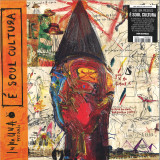
Aerials live, dials tuned, Transmission Towers broadcasting. On either side of the river Mersey, transcendental communications are traded back and forth. Two late-night revellers, one firing messages filled with music, the other returning them laced with lyrics. The result, a dopamine hit of oddball machine soul, melded with a highlife, Afrofuturist touch. Wonky and murky yet deeply emotional, Transmission One, is a debut album that also marks the first release on Luke Una’s É Soul Cultura label, encompassing expertly the off-kilter atmosphere the label sets to orbit.
A synthesised landscape with a Northern charm, Transmission Towers marry the musical worlds of two artists that last collaborated over a decade ago. 10 years have passed, lives have been led, but a gravitational pull has placed Mark Kyriacou and Eleanor Mante back in each other’s spheres on opposite sides of the city of Liverpool. Energised with a newfound desire to strip it all back to the sounds that influenced their formative years in the late ‘80s and ‘90s - astral travelling, intoxicated on Motor City techno, Black Dog IDM and mystical Sun Ra.
Mark half Irish, half Greek Cypriot, Eleanor half Nigerian, half Ghanian, the music contained within is an alchemy of those roots and the pivotal acts that buried deep into their minds. A cosmic contrast, part machine-made, part distinctly human. Take the opener ‘UP’, an ESG-channelling, sci-fi punk beatdown or the polychromatic hyperspace anthem ‘Roller Skater 23’.
Transportive throughout, you ride the solar waves, pace and emotion ebbing and flowing. Tracks like ‘Go Slow Heart’ and ‘Cosmic Trigger’ step to a slower beat but hit with a punch. The former, a slo-mo blast of celestial tenderness, the latter an otherworldly, chugged-out lunar excursion, micro-dosing on whacked-out Wah Wah and Eleanor’s ethereal vocals. Beaming love letters to space and back, ‘Sparse’ marries the organic with the artificial, pianos and percussion circling around synth pads and broadcasting bleeps.
Elsewhere, vibrations move faster. ‘Mega’ strikes, fusing sonic tribalism with psychedelic swirls, as ‘Everything’ sweeps you up in its extra-terrestrial new wave grip. Synth stabs and basslines fizzing from every angle.
Demos of Transmission Towers music surfaced on Luke Una’s radar, making him stop in his tracks. Something magical was emerging, perfectly aligned with the E Soul guardian’s tastes. Guidance followed, quickly turning into conversations about Transmission One becoming the first release on Luke’s own label.
Escapist and futurist yet grounded and relatable. Transmission One is synthesis meets sentiment with a deep, spine-tingling soul at its core.
- A1: Forro Violento (Instrumental)
- A2: Grao De Areia
- A3: Nao Vou Reclamar De Deus
- A4: Toda Beleza
- A5: Put@Ria!
- B1: Rubelia
- B2: Posso Dizer
- B3: Vinheta As Palavras
- B4: As Palavras
- B5: Forro Violento
- C1: Torto Arado
- C2: Lua De Garrafa
- C3: Na Mao Do Palhaco
- C4: Doutor Albieri
- C5: Samba De Amanda E Te
- D1: Amor De Mae
- D2: Vinheta As Palavras Ii
- D3: Assum Preto
- D4: Forro No Escuro
- D5: Toda Beleza (Pelos Loirinhos)
Pink Vinyl[29,96 €]
Some albums are game-changers in a genre. Take OutKast's Speakerboxxx / The Love Below or Primal Scream's Screamadelica, they observe, study, and then flip what an album can mean to a genre or moment in time.
From the very first listen of Rubel’s Latin Grammy-nominated third album As Palavras, Vol. 1 & 2, you can feel its transformative force for the MPB genre. Here we see one of Rio’s brightest stars, fusing the contemporary with the classic, soaking up the richness of Brazil’s musical heritage. The result is a marauding 20-track epic, incorporating traditional styles such as forró, MPB, pagode and samba with modern baile funk, rasteirinha and hip-hop.
The album exudes a sense of freedom and creativity, playfully and provocatively juggling the familiar with the forward-thinking. The tracks are divided across two records, navigating feelings of love, heartbreak and discovery, whilst balancing themes of violence, passion, irony and affection. Collaborating with some of the country’s most esteemed artists such as Gabriel do Borel, Liniker, Luedji Luna, Tim Bernardes and Ana Caetano, Rubel takes this fusion of styles, subjects and flavours to the global stage.
The grand, forró-blending, choral opener, ‘Forró Violento (Instrumental)’ sets the tone for the album, with references and links between tradition and modernity everywhere to be seen. From the Ana Frango Elétrico produced, funk flexing, samba-soul brilliance of ‘Não Vou Reclamar de Deus’, to the album’s title cut ‘As Palavras’, in collaboration with Tim Bernardes, that melds MPB influences with electronic elements and hip-hop touches.
Across both sides of the album, Rubel’s story-telling gift is given space to shine. ‘Torto Arado’ featuring Liniker and Luedji Luna, beautifully references the racial injustice, tragedy, hope and ambition found in one the most celebrated Brazilian novels of recent times by Itamar Vieira Júnior. Elsewhere, ‘Na Mão do Palhaço’ manifests a satirical march about a suicidal conservative middle-aged man, who is rescued by the miracle of the carnival.
At times the album is gentle and intimate with tracks like ‘Toda Beleza’ featuring Bala Desejo, or the ode to friendship ‘Lua de Garrafa’, composed with the legendary Milton Nascimento. At others, the grooves hit harder, with sounds from the favelas laced within. ‘Put@ria!’, explores the universe of baile funk, with BK’ and MC Carol trading off on the mic, as ‘Rubelía’ moves between reggaeton, funk, and hip hop. The latter is a tribute to a key influence of the album, Spanish star Rosalía and her parallel mix of current with classic.
Ultimately though the beauty of this album lies in its concept. In the midst of a country divided, ‘As Palavras Vol. 1 & 2’ sets out to bring together genres and generations, grounded in rhythms and words that have helped define Brazil through the ages.
Der Modern Roots Classic ist wieder als Original US-LP Vinyl erhältlich! Der Longplayer wurde 1997 von Robert "Digital B" Dixon produziert und von Barry O'Hare, Benjy Myres, Bongo Herman, Dalton Browne, Dean Frazer, 'Dish', Donald Dennis, Ernie Wilks, Jazzwad, Melbourne Miller, Paul Crossdale, Paul Henton, Robbie Shakespeare, Ronald "Nambo" Robinson, 'Saxie' und Sly Dunbar eingespielt, die Backing Vocals übernahmen Dalton Browne and Marie Gittens. Als Riddims kamen u.a. diverse Klassiker von Coxone Dodd/Studio One Label, und/oder von Black Uhuru und The Abyssinians zum Einsatz: "Stars", "Drum Song", "Queen Of The Minstrel", "Leaving To Zion", "Satta", "He Prayed".
Record label boss, producer / DJ, and revered collector Marc Davis returns to his Chi-Talo series with the much-anticipated second volume. A concept of a split EP, taking one ultra-rare Chicago gem and the other a scarce Italian disco record and re-interpreting them for the modern dancefloor aesthetic.
With the first volume, released on Marc’s own Black Pegasus label, now trading hands for considerable amounts of money, round two sees him impart another double dose of digging sorcery for this Mr Bongo 12”.
Marc began his illustrious career in the Windy City in the ‘80s and was one of the first out of Chicago to be recognised for his eclectic approach to DJing. Presenting a global sound palette that took in choice cuts from Brazil, Africa, jazz fusion, house, soul and disco, whilst mixing it together Chicago style. Decades of knowledge and experience that is now distilled down into the Chi-Talo series.
The Italo selection came via a tip from Marc's Swedish friend, Julian Wareing. Hearing the track led Marc down the rabbit hole to secure a copy of this Italo-Disco, album cut oddity by the New Sound Quartet from 1979. The original of 'Bass Construction', measures in at four and a half minutes and is already a feverish funk groover. But Marc saw an opportunity to extend and re-edit the track, keeping in the vein of the original but giving it space to breathe. Tweaking out every last ounce of goodness, Marc locks you into a hypnotic groove for maximum dancefloor deliverance.
The Chicago side is as rare, as the rarest of hens-teeth, only ever existing as a one-off acetate by the band The Saucer Planes. One of the members of the group was the sadly passed-away older brother of Marc’s DJ mentor, Jahmal Anderson. From the very first listen, Marc knew he’d been hooked up with an undiscovered boogie gem. A long-lost track that the world needed to hear. But the project has remained dormant until now, not least due to the fact that the original recording of this low-fi vocal boogie groove is housed on an ever-deteriorating solo acetate. Rescued, restored and given a brand-new lease of life, Marc has turned the track into a low-slung, psychedelic instrumental boogie bounce. Raw, rough and mesmerising, it’s a refreshed relic that is a testament to Chicago’s club sound and swagger.
Whichever side you draw for, this is guaranteed to move bodies as much as it wins over hearts.
Easy Listening Recordings is here, and to kick things off we've got a new three-track EP from Vancouver's Teen Daze.
We begin with the title track, Quiet City, and immediately conjure up images of late night drives through anonymous city streets. Brimming with emotion, and a gentle energy, this one could find itself at home in a warmup set, early in the night, or one of those aforementioned late night drives. No matter where you hear it, this is one of Teen Daze’s most beautiful tunes.
Life Style brings us out of the car, and onto the sidewalks of that once quiet city. Now there’s a bustling energy from crowds of people, steam rising from the sewers below. You’re navigating it all in stride, with Life Style in your headphones. This is City Music.
We start Side B with an ode to Vancouver, BC, aka The Glass City: Night Club. The soft, swung drums, the walking bassline, the dubbed out bongos; this one feels at home across the entire Lower Mainland. Maybe you’re taking a stroll along the Sea Wall, maybe you’re watching the sun set while sipping on something at Juice Bar, maybe you’re walking up to Paradise at 12 am. No matter how you might experience Vancouver, Night Club has got your soundtrack covered.
Finally, we wrap up this first disc for Easy Listening Recordings with a special vinyl-only track, called New Mood. Pulsating percussion lead this dream-like track through 4 ½ minutes of Balearic Bliss. A beautiful way to finish this first release.
Early support from:
Paula Tape, NIKS, Eug (Public Records), Pleasure Voyage, Masha Mar, Massimiliano Pagliara, Loz Goddard
Better get ready! Next up on Potency's ever expanding catalog of club
ready tracks, Cromby delivers three more cuts for the floor.
On the A side 'Namaste' goes straight in with an off its head bongo lead on top of an infectious groove and bass line that will get any dance floor moving.
On the flip, 'Voyager' a euphoric trance filled ode to the sounds of Frankfurt in the 90's, if you listen carefully you can almost hear your mate telling you how much he loves you over a sweaty dance floor hug! 'Mythology' wraps up the release, a trademark driving acid tool that dips and dives throughout thunderous leads and soaring pads.
- 1: Turpe Est Sine Crine Caput
- 2: Não Fale Com Parede
- 3: Espêlho
- 4: Lem - Ed - Êcalg
- 5: Ôlho Por Ôlho, Dente Por Dente
- 6: Metrô Mental
- 7: Teclados
- 8: Salve-Se Quem Puder
- 9: Animália
Módulo 1000 were not messing around when they made 'Não Fale Com Paredes’. It holds its own, not just as a raw, heavy, experimental “Brazilian” psychedelic rock album, but as a raw, heavy, experimental psychedelic rock album, full-stop!
Formed in Rio de Janeiro in 1969, Módulo 1000 honed their craft as the house band in clubs and resorts in São Paulo where they predominantly covered American artists such as Jimmy Hendrix as well as British giants, Led Zeppelin. After acquiring a taste for fame following the performance of one of their tracks at the Rio International Song Festival, the band focussed their attention on composing original material. Their manager, Marinaldo Guimarães, encouraged the band to explore their experimental and creative sides. This, in parallel with the explosion of experimental music in Brazil, resulted in the band performing alongside heavyweights such as O Têrço; there was a happening in the air.
Módulo 1000 recorded just one album. Released on Top Tape records in 1972, it featured Eduardo Leal on bass, Candido Faria on drums, Daniel Cardone on guitar, violin and vocals, and Luiz Paulo Simas on organ, piano, and vocals. 'Não Fale Com Paredes' was produced by the popular DJ, Ademir Lemos, and came housed in a fold-out cover featuring tripped-out artwork and design by Wander Borges. However, due the uncompromising nature of its wild, heavy psychedelic rock sound, the album was destined not to be played on the radio in Brazil. Rumours suggest that the label didn't understand the album, and as a result, it wasn't promoted or marketed. Thus, like many other underground cult classics, it was lost in the ether, only later to be rediscovered by a new audience at a different time.
One thing is certain, you definitely know when you've heard Módulo 1000. The sound is raw, heavy and at points quite aggressive, more Black Sabbath than Os Mutantes. It floats between psychedelic rock, prog rock, early metal, and dare we say, displays elements of proto-math-rock.
The band’s discography includes a 7" single, as well as their music being featured on several compilations for Odeon Records, additionally they released a 7" single under their alias 'Love Machine' for Top Tape Records. These compositions are included as bonus tracks on the CD version of our reissue.
Derya Yildirim and Grup Simsek are back with their third album Dost 2, the second of a two part series following 2021"s highly acclaimed Dost 1. The eight-track release sees Turkish singer, baglama player and multi- instrumentalist Derya Yildirim and her international band of brothers and sisters continue their psychedelic journey, meandering through Anatolian folk music and poetry with their electrifying grooves, while also delving into their own lives and personal experiences.
Reflecting upon their new album Different Bridges, Nutrients discovered a
time capsule from the dullest days of the pandemic
The 10 hopeful songs manage to sonically sound as optimistic as their lyrics.
Unbeknownst to the band, they were composing an ode to the way life had once
been. Lyrically, Teeple subconsciously penned love letters to everything he had
taken for granted: parties, air travel, even just meeting new people. The band's
sun-drenched guitars continue to jingle and jangle on Different Bridges, yet this
time around, other ingredients are in the spotlight. Sean McKee's basslines
ecstatically bounce around on the album's title track opener, while Iulia Ciobanu's
ghostly harmonies and tense keys soar on the jazzy, lounge pop bop Nauseous.
Ben Fukuzawa's steady cadence and vivacious fills animate tracks like the spritely
closer, Kool Kat '22. Saxophone by guest Emily Steinwall shimmers alongside the
buoyant congas, bongos, and triangle added by percussionist Juan Carlos
Medrano. Still, guitar work on songs like the wordplay-adorned I and the nostalgic
House Fire Painting sturdily underpin Taylor Teeple and Will Hunter's smooth
songwriting. Compositionally, the band has freshened up forgotten cliches from
'70s soft rock and '80s new wave and incorporated them into a signature sound
listeners first discovered on their self- titled debut. Some of the more oblique
noodling may bring to mind bands like Steely Dan, while certain funk-lite grooves
evoke British pop groups like Orange Juice or Haircut 100. Contemporarily,
Different Bridges would likely find fans in listeners of fellow Canadians TOPS,
Video Age, or even Drugdealer. That optimism was perhaps a bit….well optimistic,
the band now recognizes. But they still believe that keeping a positive mindset is
key to creating music you can be proud of, and living a fulfilling life in general.
Das neue Album von Die Sterne heißt 'Hallo Euphoria' (VÖ 16.09.22 über PIAS Recordings), und da fragt man sich natürlich gleich, ob die noch alle Tassen im Schrank haben. Denn Euphorie ist von allen Gefühlen, die man derzeit so haben kann, das unwahrscheinlichste. Dann hört man die zehn neuen Lieder, und spätestens vierzig Minuten später, wenn die Streicher vom letzten Stück – dem traurigsten Sterne-Song aller Zeiten – verklungen sind, spürt man sie, die Euphorie.
Musikalisch ist 'Hallo Euphoria' typisch Die Sterne, aber weitergedacht und freigedreht. Es gibt den Funk, die Licks und Riffs, das sexy Eckige, aber nun auch Streicherharmonien und so was Treibendes auf der Autobahn zwischen Köln und Düsseldorf – Krautpop, Baby. Die Band lässt es konzentriert verspielt und oberlässig laufen, mit Kraut und Funk und kurzen Schlenkern zur Bongo oder zum Schönklang.
'Hallo Euphoria' könnte auch als Debüt durchgehen, so frisch, leicht und relevant wie das Ding um die Ecke biegt.
- A1: Robson Jorge & Lincoln Olivetti - Eva
- A2: Chene Noir - Le Train
- A3: Metropolis - Every Time I See Him
- A4: The Brand New Heavies - Stay This Way (Feat N'dea Davenport - The Lunar Dub)
- B1: Typesun - The Pl (Extended Edit)
- B2: King Errisson - Space Queen
- B3: Yusef Lateef - Robot Man
- C1: Daniel Humair, Francois Jeanneau & Henri Texier - Le Cyclope
- C2: Airto Moreira - O Galho Da Roseira (The Branches Of The Rose Tree) (The Branches Of The Rose Tree)
- C3: Francisco - Wache
- D1: Nar'chiveol - Apocalypse Now Ho
- D2: On - Southern Freeez
- D3: Soylent Green - After All
With some of the best DJs and selectors there is a certain mysterious sound or underlying feeling which unites the music they play, regardless of genre, year or tempo Luke Una is a master of telling a story through music and this compilation is a perfect example of his musical alchemy in action. Featuring tracks from Yusef Lateef, Airto Moreira, Crooked Man, Henri Texier and many more, it is a collection of new, old, rare and under-discovered music from around the world, all united by Luke under the banner of "E-Soul Cultura".It's best described by Luke himself, who writes: "As the 5AM city sleeps and the strobe lights are slowly turned off, we gather on the wrong side of town in a transcendental journey alone together. We are the late night disenfranchised holding on in various after parties, flats, lofts, random kitchens and basements into the outer cosmos with É Soul Cultura.
Music from exotic tear jerkers, Afro- spiritual jazz, cosmic Brazilian celestial grooves, machine street soul, dark horses, lost B- sides, £1 bargain- bin bombs, hidden gems, late night Italo dubbing, deep velvet N.Y.C garage, bass buggin sonic futurism, wrong speed 33BPM pitched up +8 new beat, majestic sunset strings, sweet vocals from heaven, no half steppin jazz dancing in outer- space and odd numbers. Yes… magical moments, together, holding on in witness protection suburban cul- de- sacs and Castle Court flats. Cosmic É high, 3000ft above the city getting evangelical to murky, wonky timeless beautiful music. This thing of ours dreaming of better days. Fail we may, sail we must, the sun will come up again."
Idrissa Soumaoro, L’Eclipse De L’I.J.A.’s sought-after album ‘Le Tioko-Tioko’ was originally released in the German Democratic Republic (GDR) in 1978 and has been a long-time favourite at Mr Bongo. Two tracks from the album were featured on our 2017 compilation ‘The Original Sound Of Mali’ (MRBLP135), and we subsequently released the track ‘Nissodia’ on its own 12” (MRB12053) in 2020, complete with a blistering dancefloor re-edit by Mike D of The Beastie Boys.
‘Le Tioko-Tioko' is one of the rarest vinyl albums from the already scarce Malian vinyl discography, partly as the album was never released commercially, only independently distributed via the Malian Association for the Blind in Bamako. Though recorded at Radio Mali under the aegis of master engineer Boubacar Traoré; the album was originally released in East Germany. The tapes had been taken by some Malian students to East Berlin as part of a student exchange program. It was then manufactured and released on the East German state-owned label Eterna with only a few boxes of records being shipped back to Bamako.
A true masterpiece, this legendary LP offers some devastating songs such as ‘Djama’ (society), ‘Nissodia’ (joy of optimism), and ‘Fama Allah’ (an ode to god). Hypnotic organ riffs and breakbeats convey an unknown funk quality in Malian music, it now stands as a loving tribute to an unsung Malian golden age. Sadly, like many of the other now desired and prized vinyl rarities, at the time of release, it almost immediately disappeared without a trace due to a lack of promotion, and distribution. So, it feels fitting to share this gem of a record again, and hopefully it will reach the wider audience it deserved over 45 years ago.
Many thanks to Florent Mazzoleni for contributing sections of these notes.
Charlie Parker represents the maximum authority to be
claimed one of the most popular and influencial bebop
jazz's godfathers.
This records is an academic vademecum of what must be
done to track the path in the jazz history.
Parker runned this music adventure together with the
beloved friends:
Miles Davis (Trumpet), Tommy Potter (Bass), Max Roach
(Drums), Duke Jordan (Piano), J. J. Johnson (Trombone).
In sinthesys: the record you want to listen to when back
home.