Bob Balch from FU MANCHU here. The idea for the SLOWER project started around four years ago. I was teaching a student how to play "South Of Heaven" by SLAYER but she was a beginner so we slowed it down. I thought that sounded cool so I tuned down to B standard and tried it. I added some drums and thought "someone in the doom community should do this and name it SLOWER." A few years later I befriended Steven "Thee Slayer Hippy" Hanford, best known for his work as the drummer in the influential Oregon punk band Poison Idea. He was backstage at a FU MANCHU show. Oddly enough I was wearing a POISON IDEA shirt and he told me that my shirt sucks. I asked who he was and why he was in our backstage. He told me and I felt stupid. We started drinking whiskey and talking about music. We stayed in touch over the next year or so and during Covid I told him about my SLOWER idea. He asked me to send him tracks. I waited too long because the day I sent the tracks he passed away. Totally tragic. I'm glad I got to know him even for a few years. He was a monster musician with a giant heart. He will be greatly missed. I shelved the project for a while after that. One day Esben from MONOLORD posted about musical collaborations. I love MONOLORD so I thought what the hell. I sent him some tracks and he killed it on drums. So I sent more. Then more. Shortly after that we started reaching out other musicians to get them involved. That's how we ended up with this lineup. Everyone that contributed completely knocked it out of the park and I can't thank them enough. This project has been a long time coming and I'm beyond stoked on how it turned out. Without all of the players involved, Steven Hanford and my baritone Reverend guitar it wouldn't have happened. Thanks to everyone involved and I hope you dig it! I'm a giant SLAYER fan so it's been a treat to dig into these classic songs. Hopefully we can do another record in the near future. Look out for shows because they will happen! Esben Willems - When Bob first approached me with the idea and I heard his scratch guitars, my first thought was "This is genius". Those iconic tracks we all know by heart suddenly unveiled an unexpected dimension. I'm really proud of how this turned out. Peder Bergstrand - "This might be blasphemous considering the circumstances, but when Bob reached out and asked if I'd want to play bass on sludged-out Slayer covers, I had to admit some of these tracks were brand new to me. That made the experience even more special though, hearing and playing on the Slower version first, and then comparing to the original. Bob has really transformed these songs into something totally their own, and on a personal level I feel the rest of the band's insane performances pushed me to my most inspired playing to date. So incredibly stoked for people to hear this album."
Search:odd music 4
Neon Green Vinyl, limited to 500 copies. Bob Balch from FU MANCHU here. The idea for the SLOWER project started around four years ago. I was teaching a student how to play "South Of Heaven" by SLAYER but she was a beginner so we slowed it down. I thought that sounded cool so I tuned down to B standard and tried it. I added some drums and thought "someone in the doom community should do this and name it SLOWER." A few years later I befriended Steven "Thee Slayer Hippy" Hanford, best known for his work as the drummer in the influential Oregon punk band Poison Idea. He was backstage at a FU MANCHU show. Oddly enough I was wearing a POISON IDEA shirt and he told me that my shirt sucks. I asked who he was and why he was in our backstage. He told me and I felt stupid. We started drinking whiskey and talking about music. We stayed in touch over the next year or so and during Covid I told him about my SLOWER idea. He asked me to send him tracks. I waited too long because the day I sent the tracks he passed away. Totally tragic. I'm glad I got to know him even for a few years. He was a monster musician with a giant heart. He will be greatly missed. I shelved the project for a while after that. One day Esben from MONOLORD posted about musical collaborations. I love MONOLORD so I thought what the hell. I sent him some tracks and he killed it on drums. So I sent more. Then more. Shortly after that we started reaching out other musicians to get them involved. That's how we ended up with this lineup. Everyone that contributed completely knocked it out of the park and I can't thank them enough. This project has been a long time coming and I'm beyond stoked on how it turned out. Without all of the players involved, Steven Hanford and my baritone Reverend guitar it wouldn't have happened. Thanks to everyone involved and I hope you dig it! I'm a giant SLAYER fan so it's been a treat to dig into these classic songs. Hopefully we can do another record in the near future. Look out for shows because they will happen! Esben Willems - When Bob first approached me with the idea and I heard his scratch guitars, my first thought was "This is genius". Those iconic tracks we all know by heart suddenly unveiled an unexpected dimension. I'm really proud of how this turned out. Peder Bergstrand - "This might be blasphemous considering the circumstances, but when Bob reached out and asked if I'd want to play bass on sludged-out Slayer covers, I had to admit some of these tracks were brand new to me. That made the experience even more special though, hearing and playing on the Slower version first, and then comparing to the original. Bob has really transformed these songs into something totally their own, and on a personal level I feel the rest of the band's insane performances pushed me to my most inspired playing to date. So incredibly stoked for people to hear this album."
Repress!
Food Music welcomes A1 Bassline to the label to release his first LP - Technicality.
The album's title draws from the club night 'Technicality', a monthly Drum & Bass night at Herbal in East London, which is run by Chris Inperspective and continued the sound of early Reinforced and Metalheadz records as well as pushing new forward thinking music. The album is centred around growing up as a teenager discovering this jungle/drumfunk sound through his college friend Rahim (Lab Creation), where the likes on Fold, Ben UFO, Breakage would attend the club.
In addition to well received records on DirtyBird, Pets Recordings and his collaborative work with Leon Vynehall as Laszlo Dancehall, the album is a stamp on A1's sound and his influences from his teenage years to growing up and discovering House and Techno.
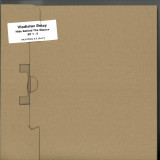
Vladislav Delay's complete "Hide Behind The Silence" series. Intuitive and raw music, momentary and reflective, released on Ripatti's own label Rajaton.
Stillness is a myth. Consider concepts such as ”still water”, or ”still air” for that matter. Go to a restaurant, ask them for a glass of still water, hold it against the light and see where we’re at. Even though the water itself has been captured and imprisoned in the glass, it never stops breathing. It’s filled with tiny particles, dancing. Everything can be explained on a molecular level, but since we’re not scientists – and even if you happen to be – it’s the natural world of perception that moves me.
Still air is very similar. A hot summer’s day with zero wind feels completely still. It’s the closest I have felt to complete stillness. Or for a more urban adaptation, imagine the same vibe inside a normal apartment. In those moments, revelations and mind- blowing experiences can be had with experiments in stillness.
Try this: Just sit down for a minute on a sunny day, making sure there’s enough natural light. Do absolutely nothing. Try not to breathe for a bit. (If you need a mental anchor, you can play Cage’s 4’33” in your head but nothing else.) Watch the tiny dots of dust dancing :..’ ̈.:; ́ ́*°.,’:,. ̈ ̈ ̈ ̈:,.’
The movement is crazy, but the feeling of stillness comes from witnessing how subtle it is. In (perceived) complete stillness, every act of microscopic mobility seems to speak volumes. Yet, it feels both reassuring and oddly threatening that the stillness is never complete. What if we would need absolute stillness? Or is it just enough that we can perceive something as such? Extremes attract, so for both water and air, extraordinary movement is equally fascinating. That is also a luxury item of sorts. For us to enjoy a very ”loud” body of water or air, we need to be safe, in enough control of the situation. So when you are, it’s worthwhile to pay attention and take it all in.
A rapid flowing free with extreme strength and just barely in control. Look at that water go! No still water on this one, only ”sparkling”. A windy day when birds seem surprised how hard it is to fly, but in the end they make it. Trees bend but don’t break. The wind shows you its movement but doesn’t hurt you. It feels friendly, like a big clumsy dog that doesn’t quite understand its size.
It’s beautiful to be a guest of the elements, but not at the mercy of them. A new kind of dialogue forms.
Q&A with Sasu Ripatti:
1) Tell us something about the EP series ”Hide Behind the Silence”, what’s the idea and what can we expect?
Exploration of inaction. Of many kinds. In arts and in personal life, or at bigger and more serious levels. Questioning myself as a human being as well as an artist. Acknowledging the growing activism all around, and the very clear need for it, and how it reflects my own inaction.
Musically speaking, after Rakka, Isoviha and Speed Demon, I finally found some relief, but more importantly lost the need to go musically ever more outward and intensive. I felt quite strongly certain periods/moods from the past and they made me revisit some musical ideas or states of mind I was exploring early on.
It’s about live moments being captured, not much premeditation or editing. More intuitive and raw, even though the end result (to me) feels and sounds quite introspective and calm. It’s not very ambitious. Momentary and reflective.
2) Your music doesn’t sound very silent. Does it come from somewhere behind the silence?
Oh, this time to me it sounds quite quiet and playing with space if not silence. I don’t know what’s actually behind silence, but I think silence is the source of everything. We just don’t understand it yet.
3) What kind of thoughts or experiences gave inspiration to this series?
Writing this in Nov ’22, it’s not a stretch to say the world has been really unwell. Sometimes, like Mika Vainio put it, the world eats you up. I feel a bit like that. And I try to hide in my studio and stay away from it all, but it’s getting harder by the day. I’ve been questioning myself and thinking if what us artists are doing is worth anything, and whether it’s just a selfish thing I’ve been doing for the past 25 years, running away from everything. I haven’t come to a conclusion yet.
4) Is it easy for you to be in silence, or around silence?
Absolutely. I not only hide behind silence but I also love silence. It’s only since I started going back to nature as a grown-up person that I sensed and was enveloped by silence, true silence. I have begun to appreciate it a lot. I think all the people should spend more time in silence.
All tracks composed and produced by Sasu Ripatti.
Artwork by Marc Hohmann, photography by Shinnosuke Yoshimori.
Mastering by Stephan Mathieu for Schwebung Mastering.
Vinyl cut by SST Brueggemann.
Publishing by WARP Music Ltd.
A Bad Diana is a project from Diana Rogerson, someone I first became aware of aged 12 when I read about Nurse With Wound and their United Dairies label in Smash Hits magazine. I was confused, mystified and intrigued in equal measure, and a couple of years later as a result I bought my first Nurse With Wound album. This led to an interest in all things NWW related. I guess Diana could be described as the matriarch of the Nurse With Wound world but she also had her own very distinguished pre-history with Fistfuck, an early-80s extreme noise outfit. She then made two mid 80s cult classic albums as Chrystal Belle Scrodd, both far out there rollercoaster rides of audio wildness, highly recommended to anyone with wide open ears. She then moved to rural Ireland and raised a family. There was the odd collaboration and then in 2007 A Bad Diana’s “The Lights Are On But No-One’s Home” was released on CD. I feel this is her meisterwerk and it has become something of a cult favourite over the years. Now for the first time, almost two decades later it is available on vinyl on Optimo Music Archiv. Produced in association with Steven Stapleton and Colin Potter from Nurse With Wound and irr. app. (ext.)’s Matt Waldron this is some seriously beautiful and strange listening. Next level sound design means this is an incredible headphone record but it is also a deeply warm and engaging home listening gem. Beautiful, magical, ultra hypno, soulful reverberations with the deep emotion of Diana’s voice tones and bio-vibrations.
Keiji Haino/Jim O'rourke/Oren Ambarchi
With pats on the head, just one too few is evil one too many...
- My “Watashi Dake?” Is Definitely Not Included In This Unequal Treaty, Is It?
- Right Brain, Left Brain; Right, Left; Right Wing, Left Wing. Just How Many Combinations Can Be Made From These?
- “Critical Consciousness?” That’s Been Abandoned In Corner Of A Shower Room In A 53-Storey Apartment Building Inhabited By Extra-Terrestrial Lifeforms…
- I Thought I Had Pulverized It Summarily But There Are Just Too Many Who Lack Reality Or Who Are Cowards So I Cannot Change A Thing
- E1: Still Divided Into Pieces? Let’s Reconnect Them Recognise That You Are A Point And The Longest Line Let It Become Light
- I Can No Longer Sense That Sacred Feeling Of Expression Just The Loitering Of Vulgar Vibrations That Can Only Be Described As A Half-Hearted Class Reunion Will You Consent To This?
- There Are Always Things I Wish To Say But I Can Only Convey Them In This Language August 6 August 9
The heavyweight trio of Keiji Haino, Jim O’Rourke and Oren Ambarchi return with their 12th and most epic release to date, the triple LP With pats on the head, just one too few is evil one too many is good that's all it is. Documenting the entirety of their final performance at the dearly departed Roppongi home of Tokyo underground institution SuperDeluxe in November 2018, the music spread across these six sides splits the difference between the guitar-bass-drums power trio moves and experiments with novel instrumentation that have defined the trio’s decade of working together. Containing some of the most delicate music the three have committed to wax since the gorgeous 12-string acoustic guitar and dulcimer tones of Only wanting to melt beautifully away is it a lack of contentment that stirs affection for those things said to be as of yet unseen (BT011), this wide-ranging release also offers up some of their most blistering free rock performances yet.
The side-long opening piece finds Haino on a single snare drum in duet with O’Rourke on unamplified electric guitar, playing in the lovely post-Bailey vein heard on his classic 90s recordings with Henry Kaiser and Mats Gustafsson. Spiky dissonance and ringing harmonics interweave with flowing melodic fragments as Haino single-mindedly explores the resonance of the snare like an untutored Han Bennink. On ‘Right brain, left brain; right, left; right wing, left wing. Just how many combinations can be made from these?’, O’Rourke moves to synth and electronics, joined by Ambarchi on drums, who at first focuses on sizzle cymbals before hypnotic cycles of gentle tom rhythms combine with electronic burbles and flutters to suggest a dream collaboration between Masahiko Togashi and Jean Schwarz. Ambarchi’s percussion is then joined by Haino on wandering, overblown flute, before the man in black switches back to the snare for a bizarre, stuttering drum duet.
For the first trio performance, Haino makes another new addition to his seemingly infinite catalogue of instruments, this time a homemade contraption he refers to as ‘Strings of Dubious Reputation’. Joined by O’Rourke on increasingly spaced-out electric guitar and Ambarchi on skittering percussion, Haino’s wonky, slack strings adds a definite ‘musique brut’ edge to this side-long performance, certainly one of the most enchantingly odd in the trio’s discography. When the group reconvene for the second set, spread out across the final three sides, they seem ready to breathe fire from the first instant. O’Rourke slashes distorted chords on the six-string bass, Ambarchi breaks into his signature irregular caveman thump, and Haino squeals and squawks on heavily delayed oboe before unleashing an overpowering electrical storm when he first picks up the guitar. For over half an hour, the trio pound out one of their most relentless performances, a constantly rearranging kaleidoscope of tortured fuzz guitar, insanely busy bass riffing and propulsive, tumbling drums. A hushed atmosphere initially reigns on the final long piece, given the mournful title ‘There are always things I wish to say but I can only convey them in this language August 6 August 9’. Haino’s clean guitar strumming calls up the shimmering tones of his PSF classic Affection, gradually building to a surging wall of sound, bass and drums lumbering through a roar of jet-engine guitar. Arriving in a deluxe trifold package with photos by Lasse Marhaug alongside inner sleeves with extensive live images, this epic release is perhaps the most remarkable document yet of this unique trio’s stamina and continuing inventiveness.
BADBADNOTGOOD is a young supremely talented trio of musicians made up of Matthew Tavares on keys, Chester Hansen on bass, and Alex Sowinski on drums. Since their inception at Humber College’s Music Performance program in 2011, the three have challenged the rule book on improvised instrumental music and taken jazz tradition into the future.
With early champions including acclaimed BBC broadcaster Gilles Peterson and Tyler The Creator who helped fuel their discovery with a series of live jams that instantly went viral and dubbed them the “Odd Trio”, the band released their first EP BBNG in June 2011 to wide praise. The marriage of jazz virtuosity and hip hop source material offered a fresh take on the traditional “standard” applied to hip hop classics by taking on choice cuts from the golden era rap cannon and writing inspired arrangements for them instead of one-dimensional covers.
The band hit a landmark by introducing original material into their composi- tions with BBNG2 in 2012. New songs like “Rotten Decay”, “Vices” or “UWM” carried on the proud heritage of musical juxtaposition by bringing together jazz, hip hop, punk, and dance music into vigorous balance. Since then, they’ve won praise from the four corners of the globe and collaborated with Frank Ocean, Earl Sweatshirt, MF Doom, Pharaoh Monch and RZA among many. Their no- torious live performances have brought fans across the whole musical spectrum together, taking the band around the world from Coachella to Glastonbury.
Now, the inseparable friends are prepping to release their biggest project to date III on prodigious young label Innovative Leisure, a highly-anticipated project ushering in the group’s newest explorations which are proving to be limitless.
So-called 'ethno-industrialists' and Paris-based outliers Vox Populi are next in the spotlight for Platform 23 Records as it continues on its mission to unearth archival treasures both known and unknown. Half Dead Ganga Music is widely thought to be one of the group's most cohesive records as it meanders through lo-fi drones, muggy ambient and voodoo ritualism. Founder Axel Kyrou and partner Mythra who provides the ghostly vocals cook up alluring yet oddball sounds with obscured bass, rich layers of tape processing and weirdly uplifting gloominess. A superb album that sounds as new and innovative now as it did when it was first released all those decades ago.
There are two versions of the vinyl - classic black and triple-color limited Indie Shop edition.
Both have special insert inside with the bands bio and photos.
Generacja JAZZ is a project showing a fragment of the new wave of Polish jazz, treading its own path, creating, touring and jamming across Europe. Borders don't exist - especially musical - the new generation is engaging with nightclubs, festivals and playlists. The time has now come to show its broader perspective. We created a project which involves a handful of groups that have already racked up debut albums and festival wins, as they set out on their musical odyssey. The groups also have other things in common, like their passion, originality and, for the needs of the project, age - all the artists during the recording of this album were under 30 years old. This is the new generation - the Jazz Generation.
For the Jazz Generation record we invited five bands who had already released debut albums: Immortal Onion, Klawo, Rejoin, Twoosty Mayonez and USO 9001. We also reserved two spots on the compilation for the winners of our open call competition, whereby on the basis of the jury's choice (jury: Monika Borzym, Paulina Przybysz, Envee, Wojtek Mazolewski i Marcin Groh Grośkiewicz) we met the winning bands: Kosmos and quietet.
The sleeve artist is Kornelia Nowak, who won our open call for young designers and graphic artists. Here once again we could rely on the opinion of a prestigious jury comprised of: Beata Śliwińska Barrakuz, Bovska, Maciej Animisiewasz Grochot, Grzegorz Forin Piwnicki i Marcin Groh Grośkiewicz.
Generacja JAZZ LP is also a start of the new imprint - U JAZZ ME, which will be focused on jazz from Poland.
And here are the bands from the album:
1. Immortal Onion - A band from the Tri-City playing a broad spectrum of instrumental music.
Band members: Wojtek Warmijak (percussion), Tomir Śpiołek (piano, synths), Ziemowit Klimek (Upright Bass, synths).
The band Immortal Onion has already established itself as one of the most interesting projects of the new wave of Polish jazz, and is consistently being labelled as such abroad. After two well received albums ("Ocelot of Salvation" (2017) and"XD Experience Design" (2020) U Know Me Records) they released their third album "Screens" in 2022, which was recorded with the well known Tri-City composer and saxophonist - Michał Jan Ciesielski.
The inspiration behind the band's formation were such artists as: Esbjörn Svensson, Hiromi Uehara, Tigran Hamasyan and Tosin Abasi.
The group's guiding principle from the very beginning was the fusion of often disparate musical styles, which bore "post instrumental aggressive gay pop". Despite the stylistic discrepancies, between which they swim, the group has forged its own identifiable language, characterised by complicated rhythmical structures, energetic riffs and trance beats with lyrical melodies.
The trio has performed its original material at many venues and festivals around Europe and Asia.
2. Klawo - seven adventurous adventurers from Gdańsk, who were brought together by their love for music, halvah and throwing Frisbee. Their self-named début album, released in 2022 on the local label Coastline Northern Cuts, is an amalgam of the inspirations of each of the team members and played backwards contains tips on how to reach the Kashubian pyramids. After a win at the international competition Jazz in the Park, held in Cluj-Napoca in Romania, the band began work on their second album. Meanwhile, they were also travelling the length and breadth of Poland on a mission to infect people with the idea of Baltic Funk.
3. Kosmos is a Łódż based jazz quintet. It was formed in 2020 by Pianist Stanisław Szmigero, Saxophonist Iwo Tylman and Trumpeter Jan Ostalski. However, it wasn't until 2022 that Kosmos found its true form when Kamil Gużniczak (Upright bass) and Kacper Kuta (Percussion) joined the line-up.
Their compositions are influenced by Polish yass bands, electronic music and hip-hop. Kosmos music is a mix of lyricism, space, intensity and elements of experiment.
The band members are all eccentric characters possessing different means of musical expression - looking at them, one could even argue they are a group of oddballs. Despite this, for reasons unbeknownst to themselves, the members of Kosmos complement each other on stage and form a unified artistic vision of the world around them.
Kosmos officially released their début single "Ja" in June 2023. They regularly play concerts across Poland and recently were selected as distinguished artists at JAZZiNSPIRACJE (JAZZiNSPIRATION) - a competition held during the 13th Lublin Jazz Festival.
4. Quietet (formed at the beginning of 2023) is the result of meetings between five talented musicians with a deep passion for musical creation. Its sound is a unique blend of Jazz and classical music with a hint of hard rock. The band is inspired by the Scandinavian approach to making music, which brings a characteristic atmosphere and melodies to their work. Their music captivates listeners with its originality, refined improvisations and flawless technique. Both classical and modern musical trends feed their inspiration when creating passionate and emotional compositions.
Their works are full of sound experimentation, which equally surprise and expose new musical horizons. Through their compositions, "Quietet" aims to share their emotions evoked during performances, creating a musical journey that affects and inspires.
5. Connecting jazz with electronic music in fresh interpretations, six young musicians make up the group Rejoin. The group re-formed in 2020 after a four-year break, playing their debut concert at Lotos Jazz Festival Bielska Zadymka Jazzowa. The musicians in Rejoin have performed alongside such artists as: Urszula Dudziak, Krystyna Prońko, Marcin Masecki, Szczyl, Kuba Więcek and Paulina Przybysz.
Most of the members of Rejoin are students from the Katowice Music Academy, where they also develop their own projects. Rejoin was a recipient of the Fabryki Norblin Music Masterclass Foundation scholarship.
6. Twoosty Mayonez is something your grandad would listen to with his younger sister. The non-standard approach to jazz alongside a pursuit of strange sounds, culminated in the conceptual album entitled "Carmin". The material was created by Bartosz Wolerta (percussion) and Dominik Kaniewski (bass guitar/synths). "Triceradiplodocus" tells the story of a mechanical dinosaur that lives on the yet undiscovered planet Carmin.
In the 1970s, Robert Cahen turned to the burgeoning field of video art, where he became a pioneering artist. He was originally trained in musique concrète, his creative background, and joined the Groupe de Recherches Musicales in 1972. The pieces on this record were composed in the GRM studios between 1971 and 1974. They testify to a lively inspiration and imagination combined with a precocious formal mastery that already carries the seeds of later developments, which the artist cleverly and inventively deployed in the field of visual arts. (François Bonnet, Paris, 2022)
--
«La nef des fous» (1974), 12’00
There are pieces of music whose title is obviously a mere label given afterwards to a finished product. And others, on the contrary, which develop in spiral around a bundle of images and impressions condensed into a few words. This is the case indeed with La nef des fous. However, this work by Robert Cahen oddly wraps itself around its title, with bends, breaks, and an impetus driven further every time to close a new circle, for such is the very essence of the spiral. This, at least, is the way I perceive the form of the work, with its theme-chorus which, in part one, both ponctuates and disrupts the emerging musical curve in various ways and at irregular intervals, as well as its broader and more open second part, which closes with a recollection of the beginning of the work. The challenge of a musical form justified by the topic it illustrates, right down to its gaps, its wanderings and its twists, and which would confer upon it the necessity of a profound logic, that of insanity, is the challenge attempted by Robert Cahen. In such a genre as tape music, so careful with respect to form, one can appreciate its audacity. La nef des fous, or Unity through heterogeneity, or Each to their own madness, but all in the same boat. This means that if we can listen to each of these sound characters, “broken chants”, which create the work for themselves, through the singularity of their delirium, we can also, from one to the other, trace the continuous chanting of a music that is inherently and spontaneously poetic, a music that carries “the unconscious under its skin” (Christiane Sacco). (Michel Chion, January 1976)
«Masques 2» (1973), 08’34
Concert version (for tape only) of an audiovisual work entitled Masques, in which the faces of old dolls and «masks», filmed during the Basel Carnival, were projected in 16mm. Masques 2 is a metaphorical version of Masques in which music is featured in its arcane musicality.
Through its concrete and suggestive music Masques 2 aims to bring to light hidden memories, buried within us, thus enabling an awakening, the resurgence of events from our own history. (R. C.)
«Plurielles» (1971), 08’35
Premiered at the Paris Biennale, 24 September 1971. Suite based on the score of a TV film directed by Sophie Talmon.
«Persona» (1971), 08’34
Premiered at the Paris Biennale, 24 September 1971.
«Passé composé» (1971), 05’29
C-thru - The Otherworld is a collection of introspective cosmic-leaning dance music that gives a healthy nod to the golden era of trance, ambient, and down- tempo from Austin, Texas based producer Jesse Edwards. Inactive for several years, these 10 tracks mark a new chapter for Jesse Edwards.
Previous works include his well received psychedelic project, Red Morning Chorus, that included Boards of Canada amongst its fans. Edwards began his musical journey in the late 90s playing shoegaze and experimental music with Jessica Bailiff (Kranky). The pair collaborated on several albums together including works with Flying Saucer Attack, His Name is Alive, & Odd Nosdam (Anticon).
Soul To Burn features highly inventive and memorable avant-rock songs by trio of celebrated musicians, Reciprocate. The germ of the notion that would flower into Soul To Burn came when Reciprocate’s vocalist/guitarist Stef Kett reflected on the idea of funk rock. It ought, he thought to himself, be the best of genres but so often in practice it ends up being the poorest. True enough. Kett decided to approach the problem from a fresh angle, multiple fresh angles, grinding angles, creating an “alt-soul” in which the soul gets to stretch and burn, applied with the power of a rock’n’roll trio but dynamism and agility, rather than cumbersome bulkiness. Reciprocate is a super-group made up of highly celebrated musicians from the UK DIY music scene – their singular, searing-hot power conjured by Stef Kett (Shield Your Eyes) in tandem with drummer Henri Grimes (Shield Your Eyes, Big Lad) and Marion Andrau (The Wharves, Underground Railroad) on bass. The result is the excellent Soul To Burn, which proceeds at a cadence all of its own, halting and blasting, ducking and weaving, zooming away from its distant cousins: Taste era Rory Gallagher or Mr Zoot Horn Rollo of Captain Beefheart’s Magic Band. That’s particularly evident on “Self Regarding Floor Sweepings”, with echoes of “When Big Joan Sets Up” from Beefheart’s Trout Mask Replica, especially with Kett’s added harmonica as the trio hit the winding dirt track, slaloming and swerving. Here is an album of full throttle soul, an avant-rock made up of ear worms so intoxicating they borrow from deep in the mind down deeper into the heart – it’s the cool, weighty groove of Tony Joe White leathering it at full throttle, fuelled by virtuosic back beats that remind of somewhere between the rolling rock of Mitch Mitchell and the fractured noisebeat of Lightning Bolt’s Brian Chippendale: immediate, innovative, virtuosic, exhilarating. Key to the impact of Soul To Burn is Grimes’ drumming, a force unto itself, which sometimes feels like it’s engaged in a creative and playful tussle with Kett’s virtuosic vibrato guitar. Take “Rhodia”, which sounds initially like a radical reworking, an anagram of Free’s “All Right Now”, on which Grimes doesn’t so much hit the groove as hammer it into the ground. Reciprocate tend to be averse to mere repetition, too full as they are of ideas, possibilities. But they know how to hit a riff, as on “Pissed Hymn”. Kett’s vocals are unconventionally impassioned - no vibrato or performative hollering. Rather they climb, up and and again up from the pit of the soul. There’s a sense throughout that this music is hard wrought, squeezed through small apertures, produced against the odds, born to trouble as the sparks fly upwards. There are quieter moments, however, such as the exquisitely beautiful “Ressypressocate”, which affirm the ultimately tender place from where this album proceeds, notes plucked like black flowers, twisted and cherished. Reciprocate demonstrate an astonishing virtuosity, nuance and musical sensitivity manifested through their deep mutual understanding and synergetic interactions. There are moments of sync and camaraderie that remind of the very late Beatles, those rare moments during the Let It Be Era when they loosened up, reassumed their old understanding. But then Kett’s lets fly with a long, looming note and suddenly we’re somewhere else again. With Soul To Burn, Reciprocate set out their stall of intoxicating, super catchy good-time, big heart music – a human album delivering a human message of love and love lost. By the album’s end, you’ll feel pushed and pulled through the mill, wiped out, blissfully exhausted, strangely serene
Big Crown Records is proud to present the debut full length offering from Les Imprimés, Rêverie. The stirring and ethereal sounds of Les Imprimés have been making fans of anyone who hears them since their first 7” single hit the speakers. Morten Martens is the man behind the band. Born, raised, and working in Kristiansand, Norway, he keeps a low profile while making his heartfelt, highly infectious, and unique music. This album is a long time coming for Martens and it is sure to make him a name to be reckoned with.
The first thing you notice listening to Les Imprimés is the high level of musicianship. Martens plays nearly every instrument on the recordings and handles the production and arranging. He has been making records for decades, winning a Spellemann Award (aka, the Norwegian Grammy) in 2006 for producing a Hip Hop album as well as getting nominations across three other genres. While awards and accolades speak to the level of his talent, this new album really shows who he is as an artist on his own terms.
Moving away from being a hired gun on the touring scene naturally led him to start doing more studio work. Slowly collecting gear and getting more experience behind the boards he built his own studio on the island of Odderøya and was making a living playing with and recording other people's music. As the story goes, after those sessions would end he would work on his own project into the wee hours of the night. From these late night sessions, Les Imprimés was born and Rêverie began to take shape.
However, "it wasn't until COVID, when things locked down, that I was really able to find the time to focus on Les Imprimés" Morten says about creating and leading his own solo project. "It was a scary time. But I knew I had to do something with it." He took the sum of his influences, combined them with his own vibe and got busy writing the music, playing the instruments, and singing the songs. "It's soul music, but I don't exactly have the soul voice," Morten explains humbly. "But I do it my own way, in a way that's mine."
It is his sound, his fingerprint, his sensibility, that makes his music hard to categorize. He has crafted an album of songs with different energies that all fit together to make one gorgeous record. The lead single “Falling Away” starts with a raw drum break and turns into a lushly arranged tune that paints the picture of love when it slips away. On “Still Here” he professes his resilience through life’s twists and turns over a thundering track that puts a new spin on the B side ballad genre. Songs like “You” and “Our Love” mix tones from 60s and 70s Soul with arrangement nods to Doo Wop records while Martens’ lyrics and delivery leave you singing the melodies long after they finish. “Love & Flowers” finds Martens in a moment of clarity with a song that fits the niche sub genre of happy break up tunes, the four on the floor track will move the dancefloor while the message will resonate with anyone who put too much effort into the wrong situation in their lives. However, it is songs like “Muse” and “Chess” that really encapsulate the uniqueness of Les Imprimés as they push the boundaries of genre, one a profession of love for music and the other a cover of an electronic record respectively. Martens’ lyrics, emotion, and delivery truly make the whole thing come together and stand out from any of his peers. There’s an infectiousness and a pop sensibility in the writing that is done with the utmost class and taste giving Les Imprimés the rare quality of immediate attraction that only deepens the more you listen.
After releasing his seventh - arguably best and most popular album - The Odd Shower, The Bitter Springs' singer / songwriter Simon Rivers reinvented himself as Poor Performer, whose own debut, Like Yer Wounds Too, followed the same winning formula, widened somewhat by the inclusion of songs with a greater fragile beauty and introspection . . . though rarely without a degree of self-effacing humour and a rather stylish wit. Decades of self-releasing compact disc-only albums from the far southwestern suburbs of London, with scant regard for promotion or the normal machinations of showbiz - touring, for instance - did little to spread the word about Rivers' unique and prestigious talents. A conversational singer with a delightfully warm and convivial stone, Rivers' sense of the absurd and willingness to portray aspects of life generally unrecognised by pop music, one supposes it's not entirely unfair to have expect Top of The Pops to come calling. Yet the relative absence of cult of Simon Rivers fans is somewhat perplexing, for his lyrics, ideas and tunes all do merit it. There's little affectation in the sense of stage persona, but heaps of personality and intriguing, occasional perverse idea. It's hard to listen to anything he's down without a degree of sheer enjoyment. It's real, without affectation. The very real bumps heads with the slightly mental, just like in life! So what does this new guise - Oldfield Youth Club - have to offer? It's partially a revival of Rivers' first 'real' band, Last Party, and it displays hallmarks of that band's youthful energy. There's a bit of teen glam in Good News I'm Afraid and (Theme From Oldfield Youth Club, even while lead track We're The OYC and When Bob Grant Ruled The World add a dollop of an energetic ruefulness to the mix. A Kind Of Loving In A Loveless Town is an immediate classic, a song one could hear dozens of times before really reaching the core of its magic and majesty. Lest this sound like the work of a solo artist, it does feel like a band - a rather clever one, in fact. Including members Kim Rivers and Neil Palmer (both from Last Party), as well as trumpeter / vocalist Alison Targett, Oldfield Youth Club is a band with an obvious musical kinship. There's a connection to the literal style of Vic Godard's Subway Sect (and members have been shared between both acts) or early Go-Betweens . . . there's an alchemical sensibility shared by all three acts wherein their words and tunes inform each other in a deceptively casual but arresting manner. It's hard not to love, a rare work that earns immediate affection and just grows better from there.
The American singer-songwriter tradition has always been tethered to a rustic austerity, the sort of front-porch authenticity that suggests an age where home electronics are still considered luxury items. But there's also the ongoing influence of Bob Dylan and The Band's Basement Tapes-that strange and beloved document of the magic that happens when private experiments with the folk template flourish into layered and lush songs-and its genesis through informal recording sessions. In our modern age, these kinds of casual DIY constructions are perhaps the more honest contribution to the Americana lineage-the true homespun artform. When Michael Nau and Whitney McGraw struck out on their own in the wake of the dissolution of their beloved indie-folk outfit Page France, they continued their songwriting practice with a new project called Cotton Jones Basket Ride. As legend has it, Nau and McGraw were working on the material for their debut full-length Paranoid Cocoon (2009) when they realized they had an entire album's worth of odds-and-ends from various recording sessions. The resultant album - The River Strumming - was released in 2008 on St. Ives in a batch of 300 unique hand-packaged LPs. As the label advertised it back in the day, the band "initially set out to make a cohesive record, and made just the opposite." Like The Basement Tapes, The River Strumming is a document of a band exploring possibilities without the weight of expectation. The band would eventually condense their name to Cotton Jones and make a name for themselves in the indie world for their fusion of dreamy folk and psychedelic baroque pop. But in the beginning, there was this weird and wonderful collection of songs made by musicians who were enjoying the private process of finding their path. Suicide Squeeze is proud to present a 15th-anniversary vinyl reissue of this long out-of-print classic with updated artwork by Kayleigh Montgomery-Morris.
A blistering advancement of the knife-sharp hooks and urgently efficient post-punk structures that they’ve spent over a decade refining since their formation in 2011, the band’s fourth album – and second on Specialist Subject - emerges from a period of flux for the band’s chief songwriting partnership of Emma Wigham (drums/vocals) and Mark Jasper (guitar/vocals). First came a move north to Yorkshire from their native London. “We had decorated a tiny, rented house in Mytholmroyd” Jasper explains. “We setup a practice room in the top of a mill nearby and tried to write music, which we did amid stress about money, and a fear of having made the wrong decision. We had left our jobs, friends and a nice but absolutely tiny flat in London behind, and moved to a small village in West Yorkshire.” Although they found the location to be beautiful, the transition from city life to rural turned out to be an odd fit – too much so, it turned out. From this relatively short stay in West Yorkshire, however, came a more permanent change as the couple welcomed their first child Ivy into the family. Although, they’re hesitant to put too much of Streams and Waterways influence on the shoulders of their young daughter – she arrived a year and a half into the album’s conception – there’s no denying that its themes of loss, birth, and being part of this eternal, momentary life were brought into sharp focus following their new arrival. “Streams and Waterways is about the struggle of looking at the clock, realising it’s actually going pretty damn fast and knowing that really you have no control over anything” Jasper confirms. Perhaps that explains the way that opener The Valley doesn’t even introduce itself before careering into a full-throttled, three-minute scuzzy rager that would approach the descriptor anthemic had it not been kicked and scuffed along the way; it’s maybe why the wiry, ferocious Choice You Make feels like a charge into a storm despite the uncertainty of what you might find. It’s perhaps why even when Witching Waves allow themselves respite on the pared down Open A Hole, there’s a churning anxiety that lies below the acoustic guitar and harmonising vocals: in many ways musically and thematically Witching Waves are relinquishing the control that’s always been a fixture of their music – with all the thrilling and nervous fallout that comes from that. Although the pair have since returned south (having relocated to Exeter), Streams and Waterways also serves as a document of their foray northwards. The surviving artefact from Jasper’s never-to-be-finished studio that he’d began to build in Yorkshire – following the ending of his London-based Sound Savers studio – the record is also the first to feature current bassist Will Fitzpatrick, who joined initially live on their support tour with Australian punks Camp Cope. Fitzpatrick – a key component of Liverpool’s DIY scene for two decades – quickly became a key part of the writing process. Recording sessions were done during periods of lockdown that allowed congregation, Jasper recalling a still unborn Ivy kicking hard during an early mix playback of It’s A Shame’s layered noise rock assault. “The song was about my past, a much harder time. But my future was egging me on” he says. It’s a neat summation of Streams and Waterways and its representation of the discomfort of life amidst the compulsion to ride on its journey regardless. It’s a record that finds Witching Waves looking into the future more than ever before, but still bristles with the rush of being in the moment – because ultimately, despite what may have happened or may yet come, the band’s strongest trait remains being able to keep you feeling in the present.
FULL OF HELL return with their highly anticipated new album, Garden Of Burning Apparitions. The new album, a genre-bending blitzkrieg of hardcore, grind and death metal, sees the band expand upon the very elements that have propelled FULL OF HELL to the forefront of extreme music over the last decade. Produced by Seth Manchester at Machines With Magnets in Pawtucket, Rhode Island, Garden of Burning Apparitions also sees FULL OF HELL adding new dimensions to their warp-speed hellscape. Guitarist Spencer Hazard and bassist Sam DiGristine's monstrous riffs now have an added noise-rock influence, while drummer Dave Bland commands the rhythm section at blazing speeds. Lyrically, Garden of Burning Apparitions sees vocalist Dylan Walker exploring (anti)religion, life's impermanence and the fear that comes with knowing death is inescapable. "Industrial Messiah Complex” grinds organized religion to a pulp in under 90 seconds, while Walker contemplates the commodification of spirituality seen in America’s vast network of garish mega-churches and how these practices are at odds with true spirituality. Meanwhile, “Reeking Tunnels” rides a strident noise rock riff down into the sewer. It’s a metaphor for the physical and mental space we become trapped in when we live in a perpetual state of fear and hate. Elsewhere, justifiable ochlophobia propels the guttural death metal blast of “Eroding Shell.” Lyrically, the song seeks to capture our fear of the violent, ignorant mob—a scene glimpsed far too often in this volatile era. In the end, FULL OF HELL’s boundary smashing has paid off again. “I think it’s good that we tried not to pigeonhole ourselves early on,” Walker reflects. “Because now, 10 years in, we have the opportunity to make whatever record we want, within reason, and people will follow along.”
"Night Swim" is the debut LP from Bellofatto & Gentile, a collaboration that was founded on the soccer fields of Austin, Texas during the spring of 2019. The duo of Giovanni Bellofatto (an alias of Jesse Edwards) ) & Dan Gentile initially started exploring the melodies and textures of Italian dream house, but those experiments soon evolved to include modular synthesizers, breakbeats, and left-field samples.
Bellofatto's work dates back to the 90's and has credits on albums by Jessica Bailiff (Kranky), Odd Nosdam (Anticon), and His Name Is Alive. In the early 00's, he pioneered acoustic / electronic territories with his psychedelic project Red Morning Chorus. His forthcoming solo LP "The Otherworld" is due for release on Vancouver's Pacific Rhythm under the moniker C Thru. With 20 years of DJing under his belt, Gentile released his first house music productions as Time Zones in 2019 on Mystery Zone Records, with subsequent singles on Bay Area Disco and Moiss Music. He now lives in San Francisco, where he works as a journalist and creates visual art using a modular video synthesizer.
The legend John Beltran provides mixing treatments on half of "Night Swim" that will be released on Prins Thomas's balearic imprint Horisontal Mambo in 2023.
Trym Søvdsnes is a relative newcomer to the scene, but he’s been putting in work in and around Bergen for years, scoring a residency at the infamous Café Opera, where he snagged the attention of local house legend Bjørn Torske. Soon, the duo were DJing, producing and performing together, eventually running the monthly radio show Pigs in Space where they would go head-to-head for six hours at a time, plumbing the depths of their immense record collections.
It’s this lust for bottom-of-the-crate oddities that guides Søvdsnes’ self-titled debut album, a concoction of dub techno, hard-swung house and percussive club music that positions itself a few paces away from any conventional modes. Basically, a perfect fit for Le Jazz Non.
‘Gølles Dans’ opens with a filtered acid bassline and bone dry kick that’s like some psychedelic, slower variant of Basic Channel’s ‘Enforcement’, slicing into the groove with gristly acoustic percussion that drags it up from the basement. The producer leans into asymmetry on ‘Døgnrytmen’, wrangling 303 squelches with booming Berghain kicks and tight snares, enhancing the psychedelic potential by layering ticking percussion into loopy spirals. If you’ve ever caught an extended Dozzy set, this is the kind of ruff-edged gear he would likely play an hour before sunrise. ‘Ordnings Mix’ is weirder still, slopping chirpy bleep/rave stabs into a jazzy hybrid that sounds like a bossa meltdown.
Søvdsnes saves his most cosmic mettle for last, on ‘Cowboy Acid (Solstikk Dub)’ he strips the kickdrum to a faint knock, before building up into a sort of screwed Metro Area mirrorball that sounds brilliantly out of time.
Piero Zuffi made this bizarre film set in the seedy underbelly of Off-Broadway productions, hippie communities, S&M bars and bike gangs.
BLACK VINYL PRESSING OF 500 COPIES WORLDWIDE.
The story follows a serial killer on the loose and an investigator looking
into an heiress’ kidnapping. With the help of editor Franco Arcalli, the
movie was reconfigured into an effective fever dream with a non-linear
structure.
Once more the music composed by maestro Piero Piccioni is better than the movie.
A wonderful kaleidoscope of psychedelic oddness favors the composer’s jazz roots and strong percussion work, but also features delightful bursts of source music as well as the self-contained brilliance of the occasional set pieces—including background scores for the experimental productions of the Off-Broadway world.
This highly addictive score, impossible to find on the original LP released by RCA in 1970 and reissued on vinyl only by South Korean label Beatball can finally benefit from a meticulous restoration from the original master tapes, thanks to the involvement of Piccioni’s family.
It’s exactly like buying a copy in 1970 without any compression and digital artifacts.