Following a ten-year hiatus, multi-instrumentalists Rafael Anton Irisarri and Benoît Pioulard return with »How to Color a Thousand Mistakes«, their third LP together as Orcas. Building on the electronic minimalism of »Orcas« (2012) and the Twin Peaks-inspired haze of »Yearling« (2014), the duo have expanded their sound and vision into a full-spectrum ensemble.
In the time since their last major collaboration, Irisarri and Pioulard have done plenty on their own, while also traversing significant life changes: relocation from Seattle to New York, separation and divorce, illness, hospitalizations, and the loss of siblings, parents, and friends. Yet from these tribulations, they gleaned inspiration to reconstruct their lives, creating music with new collaborators and partners. Recorded in a variety of studios and cities including Brooklyn, Cambridge, Oxford, Seattle, and upstate New York, the resulting album, under the tutelage of UK producer James Brown (Arctic Monkeys, Kevin Shields, Nine Inch Nails), is a patiently-crafted beast, equally inspired by impressionism, British new wave, and dream pop.
With Irisarri’s guidance and Brown’s encouragement, Pioulard brings his velvety voice to its harmonized peak on songs like »Wrong Way to Fall« and the Durutti Column-indebted »Fare«. Where his most recent solo albums for Morr Music (»Sylva« and »Eidetic«) navigated foggy forests of ambient pop and stacked tape loops, here his characteristic blur shifts into focus with a unique degree of clarity and confidence. »How fare against balance do I / Navigate my errors?«, Pioulard sings in a heartbreaking tenor, echoing the album’s broader themes of introspection, grief, loss, trial and trauma.
Lead single, »Riptide«, is a summary of Pioulard’s life changes and personal upheavals in the past decade, »flitting eastward toward a yen deep in the past« and learning to glide through the tumult of ocean waves, as a metaphor for the punches one takes in pursuit of grace. Its towering, key-changing midsection arrives with the monumental drumming of Slowdive’s Simon Scott, a long-time friend and cohort who appears on most songs in the set. Scott’s quintessentially English, jazzier approach offers a balance of force and restraint as the backdrop for Irisarri’s majestic guitars, analog synth lines, and Martin Heyne’s Fender Rhodes counterpoints.
Second single, »Next Life«, began as a sketch by Scott, and reached its final form in the hands of Pioulard and Irisarri, at a point that each had endured major concurrent losses, finding a commonality in the need to gaze over the horizon while acknowledging the unavoidable bittersweetness of letting go – not only of people, but of routines, places, and expectations. It’s one of Orcas’ most nuanced pieces, with a mid-tempo, sunset glow that unfolds into a sparkling, slide-guitar finale as it disappears in the rear view.
On third-act highlight, »Bruise«, Scott is doubled on the drum kit by MONO’s Dahm Majuri Cipolla, whose Liebezeit-influenced metronomy anchors a nimble bass groove from Andrew Tasselmyer (of Hotel Neon), and some of the album's most syncopated, spaced-out interplay, courtesy of Puerto Rican guitar player Orlando Méndez (a childhood friend of Irisarri’s). Originally a droney, fingerpicked guitar demo, »Bruise« is the most storied composition here, having gone through almost a dozen versions and lyrical edits, with Brown distilling hours of improvised performances into the final arrangement.
Throughout »How to Color a Thousand Mistakes«, Irisarri uses his deep well of production experience to paint the stereo field with meticulously designed textures, exemplified on the slow burn of »Heaven’s Despite« and the heady rush of »Swells«. As a mixing and mastering engineer with Black Knoll, he has built a client list that reads as a who’s-who of modern, forward-thinking composition, including Temporary Residence, All Saints Records, and Ghostly International, among many others.
As with previous collaborations, Irisarri and Pioulard bring disparate styles and specialties to the table, but with an interpersonal dynamic that transcends friendship into brotherhood, their open-minded workflow and mutual respect are evident at every turn. »How to Color a Thousand Mistakes« brims with tight, complex art rock songwriting, masterful production, and sonic versatility, informed by a plethora of genres and tonal hues. The title might promise answers, but the gravitational center of the album is the dawning realization that, as you reckon with the infinite whims of the cosmos, there could be none.
quête:off the record
- There Were Rebels
- Front-Load The Fun
- Yeah You, Person
- Don't Design Yourself This Way
- Furrowed Sugarloaf
- Rip The Atmosphere From The Wind
- Grow Like A Plant
- No One Displayed The Vigor Necessary To Avert Disaster's Approach
- Blame Yourself
- Instead Of Queen
- Not For Mating, Not For Pleasure, Not For Territory
- Playing Tunes Of Victory On The Instruments Of Our Defeat
It's already hard to describe what Deerhoof sounds like. So we'll skip that part and say this sounds a lot like Deerhoof with a different singer. And in keeping with 30-year Hoofian tradition, melodies soar, big hit earwigs abound, harmonies are complex, and keys change frequently and unexpectedly. Arrangements are in a constant state of impatient agitation. Emotions run high but delivery is usually a falsetto deadpan. We Sang, Therefore We Were is grief delivered in code. Greg plays everything save for a few birds who join in singing now and again. He keeps the instrumentarium severely limited, the sound shambling and anti-slick. It turns out Greg is a really good bass player and guitar player, if a bit more rudimentary and slicing compared to his Deerhoof bandmates. He does play more angry guitar solos. But don't expect another Chippendale/Saunier speed-drum freakout; the songwriting is gorgeous and sophisticated, and drums are almost an afterthought. Here, song is Queen. The singing is high and whispery, tending towards the three-part harmony. What we're saying is: We Sang, Therefore We Were sounds a bit like Deerhoof fronted by The Andrews Sisters. This is a peek inside the mind of one of indie rock's most celebrated drummers, many of whose fans may not even realize the relentlessness of his musicianship and compositional prolificacy. Mozartian chords and sounds insinuate themselves here and there on this record, finally taking over in a big climax at the end, when the drums break off unexpectedly into a laugh-or-cry orchestral outpouring that ironically may be the rawest part of a very raw album. "Satomi, Ed, John and I were chatting between shows in Austin in early December. They encouraged me to make a record on my own. With no one to please but myself, it came together way faster than usual. It was basically done by the holidays. I had been excited by the announcement that the new Rolling Stones record was going to sound 'angry.' I thought, 'Yes, I'm angry too.' But Hackney Diamonds turned out more like cotton candy than punk rock. So I went back to Nirvana. I always loved the catchy melody over massive distortion, the way their songs refused to conform to simple major or minor scales, the dark sarcasm which still resonates in this age of phony blue-check-washing of fascism." The album cover is all text, penned by Greg on the familiar topic of interspecies absurdist operatic anti-Cartesian revolution. The songs' lyrics are all drawn from this epic poem. White House spokespersons are recast as The Queen of the Night from The Magic Flute, The Queen of the Night is recast as a mockingbird singing all night in a battle for survival, and ultimately the mockingbird is recast as a campy drag artist taking pleasure in her own aggressive, tireless music-making.
Originally released in 1969, “Poe Through The Glass Prism” was one of the first ever concept-based rock albums. This Scranton, PA band (the first rock group from the Northeast to perform on national television shows and obtain a major record label deal) adapted Edgar Allan Poe poems to psychedelic rock with stunning results: swirling organ, fuzz bursts, passionate vocals… the sound quality was exceptional as the album was engineered and produced by Les Paul (the legendary inventor of the electric guitar and many studio recording devices) at his recording studio in New York. The album and its single “The Raven” hit the Billboard, Cashbox and Record World charts in 1969 and remained on for several weeks.
We’re proud to offer the first ever band sanctioned LP reissue of this cult psychedelic classic.
*Sourced from the original master tapes
*Insert with liner notes by Plastic Crimewave and rare photos
“The Glass Prism were forerunners of the Goth movement. “The Raven” was the first true expression of Goth Rock.
7A Records are proud to present our deluxe reissue of Mungo Jerry’s Electronically Tested. Released on July 19th, the album has been remastered and expanded with four bonus tracks and features extensive liner notes including Ray Dorset’s own recollections.
Electronically Tested, Mungo Jerry’s second album, was first released in March 1971. Even the title clued in listeners that this was no ordinary record. As Ray Dorset reveals, “I came up with the name of the album. Durex used to have ‘electronically tested’ written on their packets. I thought that was quite the talking point, if people in the know said, ‘That’s the same name as on the packet of condoms!’ It was taboo to mention stuff like that.” Electronically Tested offered hints of the familiar via its inclusion of the UK #1 Hits “In the Summertime” and “Baby Jump,” but elsewhere, the album was pure, eclectic Mungo Jerry. Every side of Dorset’s talents as a singer, songwriter, and musician came to the fore on Electronically Tested, with his bandmates John Godfrey, Paul King, and Colin Earl–as well as producer Murray– joining him to create a joyful noise: “It’s got a lot of tracks that could have been singles in their own right. It was good for me to be able to play all that kind of stuff”. Mungo Jerry’s singular sound has been described as rock, folk, blues, country, good-time music, jug band music, pub rock, and gypsy rock–and that’s just a partial list. One can hear all of those elements in the disparate, timeless songs that form Electronically Tested. How would Mungo himself describe it? “It’s kind of rocky stuff. It’s got social commentary. It’s got all sorts of influences in there. It’s really best to say it’s Mungo Jerry music.” Electronically Tested originally peaked at # 14 on the U.K. Albums Chart the week of April 14, 1971.
Perhaps one of the most exciting and anticipated projects in the world of heavy instrumental music is Parlor Greens, a fresh organ trio on Colerine Records! You could say that Parlor Greens are greater than the sum of their parts.. however, the individual parts are simply stellar on their own. Tim Carman (GA-20) on drums, Jimmy James (True Loves, formerly Delvon Lamar Organ Trio) on guitar, and Adam Scone (Scone Cash Players, The Sugarman 3) on organ. Parlor Greens started off as an idea before it even had a name. Carman had been chatting with Colemine label boss Terry Cole about their shared love for organ combo records of yesterday on labels like Blue Note and Prestige. Cole said he'd love to have an organ trio be the first project at the label's new studio, Portage Lounge, located in Loveland, Ohio, So when Carman tapped James and Scone for the session, the stage was set. Carman and Cole had started work a day early to dial in the drum sound, so when the rest of this murderer's row arrived they hit the ground running. It was instant chemistry, Within the first ten minutes of everyone plugging in, a song was written and recorded, "West Memphis". And over the next three days, these three maestros conducted a beautiful and soulful symphony straight to tape. As natural and fun as three old friends getting together after a long absence, only this was the first time they had written and performed together. True magic. So this is the result of that session. Eleven outs. Ten originals. Two sides. All killer, no filler. Straight to the old reliable Tascam 3BB tape machine, mixed up nice and dirty for your enjoyment. Parlor Greens are proud to present their debut long player, in Green / We Dream.
Prolific Danish drummer Emil de Waal has come to be known for his unique and personal contributions to a wide variety of musical projects in jazz, pop, rock, and electronica, including Kalaha, Baghdad Dagblad, Maluba Orchestra, and his own quartet to name a few. Well versed in the art of collaboration, his new record is his first solo undertaking, combining his jazz musicianship with his affinity for the offoff-kilter and electronically manipulated. Comprised of seven original compositions, as well as creative reinterpretations of pieces by Charlie Haden, Duke Ellington, and Hans Henrik Ley/Jannik Hastrup, the record is a collection of intimate, interactive duo performances decorated with sounds and textures from the electronic world. The record s title translates to four eyes ", a double double-entendre alluding to the album s duo approach, under four eyes so to speak, as well as to the fact that de Waal wears glasses. Making a conscious effort to collaborate with more female instrumentalists as well as musicians de Waal hadn t played with before, Fire Ojne " features a wide spectrum of organic instrumental timbres on the prepared piano, clarinet, saxo-phone, pedal steel guitar, and bass flute. From sung melodies and winding improvisations to spacious, experimental textural approaches, each piece sees de Waal engage in a private conversation with a musician he s admired. From the bluesy New Orleans feel of Ellingtons Limbo Jazz "", to the glitchy, menacing, avant avant-garde groove of Halvfirs Fems "", to the spacious, twinkling, ethereal Diskurs "", the album showcases the staggering breadth of the drummer"s influences and ideas. Programmed drum beats, vast reverbs, foley recordings of flowing water, and ricocheting delays craft an expansive, surprising and inventive context for improvised music in the 21st Century.
Tiny Habits were formed in Boston, MA by artists Maya Rae, Cinya Khan and Judah Mayowa. The three singer-songwriters met at Berklee College of Music and the band was born at the beginning of 2022.
They started out by sharing covers recorded in the stairwell of their dorm and posting them on social media. Focusing on beautifully intimate three-part harmonies the trio's enticing signature sound, offered exquisite, reimagined versions of songs from across a spectrum of styles and quickly drove them to viral success. They received recognition and early support from artists as diverse as David Crosby, Marcus Mumford, Phoebe Bridgers, and Noah Kahan. Collaborations include work with Mark Ronson, JP Saxe and Lizzy McAlpine, who they supported on NPR’s Tiny Desk
Their debut EP “Tiny Things” was released in April 2023 and established them as one of “the” bands to watch in the year ahead.
In early 2023, the band opened for Gracie Abrams “Good Riddance Tour” across North America, followed by their own sold-out US “Tiny Tour”
At the end of 2023, the trio opened for Noah Kahan on his “Stick Season Tour” across Europe, followed by a sold-out headline show in London. In January 2024, the band rejoined Gracie Abrams, opening for the Australian leg of her “Good Riddance Tour”. This was followed by a sold-out headline show in Melbourne and a performance at the Minetta Lane Theatre in New York with Kacey Musgraves. The New Yorker recently wrote a feature piece on the band, coining them “The Prodigies of Harmonies”.
For The Elektric Band’s sophomore outing, Chick Corea - the venerated 27-time Grammy winner and National Endowment for the Arts Jazz Master - entered the studio with Dave Weckl on drums, John Patitucci on bass, and two new players who would solidify the band’s classic line up, guitarist Frank Gambale and saxophonist Eric Marienthal.
More heavily produced than its predecessor, Light Years contains several sequence-driven tracks, Corea’s attempt at reaching out to a wider audience with a brand of music that was tighter, funkier and eminently more communicative than he had recorded on 1986’s The Chick Corea Elektric Band.
The crisp, irrepressibly catchy title track is a prime example of Corea’s more commercial aspirations for the album, with Patitucci laying down a fat, funky groove with some hearty slap bass lines (a distinct flavor of the time), and Marienthal’s pungent alto sax strutting over the top. Not only did this groove-oriented track catch on with listeners, it also won a Grammy for Best R&B Instrumental Performance at the 31st Annual Grammy Awards.
Originally released on GRP Records in 1987, the album also contains the dreamy contemporary jazz offerings of “Second Sight” and “The Dragon,” the sequence-driven “Time Track”, “Flamingo,” featuring Carlos Rios on guitar and, the electrifying, techno tour de force, highly complex closer, “Kaleidoscope.
Heavenly Recordings are pleased to announce they will be releasing Mildlife’s new single ‘How Long Does It Take?’.
The original version of ‘How Does It Take’ plus two remixes by Italo-disco legends Daniele Baldelli and Marco Dionigi will be released across all digital platforms on April 12th, followed by 12" vinyl on May 12th.
“’How Long Does It Take’ is an homage to the dance floors and clubbers who championed our music from Day 1,” the band say of the single. “We’ve been delighted to watch heaving crowds burn holes in the dance floor as we close our set with it so now we’re equally delighted to offer it up on record as a late night thumper.”
The B-side of the ‘How Long Does It Take’ 12" comes with remixes from Daniele Baldelli and Marco Dionigi, the originators of legendary Italo-disco club night Cosmic Disco, found on the shores of Lake Garda in the late 1970s. The band met Baldelli on tour in Sicily where they had been invited by Giles Peterson to play at his Ricci Weekender on the outskirts of Catania. They bonded over a mutual sound and Baldelli jumped at the opportunity to remix the song.
The Punishment Of Luxury was Orchestral Manoeuvres In The Dark's thirteenth studio album, but surprised everyone commercially with the first album since 1991 to reach the UK Top 10. The album continued the sound they created with 2013's English Electric. A sound strongly tied to their roots, but this time a bit more stripped down. As Andy McCluskey describes it: ""There’s a little bit more sort of crunchy industrial sound in a few things, a bit glitchty-er. But you know, the bottom line is that have a sense of melody that we just can’t throw off"". Even after almost 40 years, the band are still able to surprise their fans, making The Punishment Of Luxury a must for all synthpop fans. The Punishment of Luxury is available as a limited edition of 1000 copies on blue coloured vinyl. The record is housed in a jacket with die-cut and includes a printed innersleeve.
Jade Green Swirl vinyl. Camp Cope's new album How To Socialise & Make Friends will be released on March 2nd 2018. The follow up to their 2016 self-titled debut kicks off with the instantly remarkable bass line of "The Opener," an explosive diatribe against the sexist double standards of the music industry at large. What follows the lead single are a collection of songs that anchor on the cycles of life, loss and growth through resilience and those moments of finding and being yourself. Throughout the nine songs on How To Socialise & Make Friends it becomes clear that if their debut was the flame, this is Camp Cope rising from the ashes, stronger and more focused than ever.
Decoy is a 1984 album by the famous jazz musician Miles Davis, recorded in 1983. Robert Irving III on keyboards took over the role that Miles had assumed with a true sense of harmony and only a rudimentary mastery of synthetic sounds and movements. Irving shared the responsibilities of directing with the trumpet player’s nephew Vince Wilburn, Jr., but Al Foster continued to lead the tempo. John Scofield drew the funk of bassist Darryl Jones in the direction of chromatic abstraction. The two tracks that he co-wrote with Miles are fragments of solos: “That’s What Happened” reprising the beginning of his solo on “Speak” (Star People). Decoy offered a good balance between the dominant funk that subsequently took over and the jazz tradition, reflected by Scofield’s angularities, Marsalis’ freedom of tone and the breath of Miles’ playing that had recovered its full power. Decoy is available as a 40th anniversary edition of 2000 individually numbered copies on smokey coloured vinyl, housed in a gatefold sleeve.
Original[27,31 €]
Turnover have teamed up with a team of collaborators to release Myself in the Way: Remixes, a new vinyl release that features reimagined versions of the band’s infectious and trippy album Myself in the Way. Artists like Young Guv and Anthenagin offer drum & bass updates to singles “Myself in the Way” and “Wait Too Long,” while prior touring partner Healing Potpourri adds to the psychedelic trance of “Moun- tains Made of Clouds.” Even Turnover’s own Austin Getz contributes three remixes, turning songs like “People That We Know’ and “Stone Station” into trance-influenced elec- tronic jams. Youtube sensation Frank Watkinson closes out the album with a different interpretation of “Mountains Made of Clouds,” with only an acoustic guitar and the song’s heart- breaking lyrics to recontextualize the song as what feels like a timeless folk-ballad.
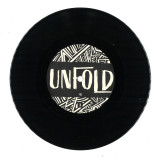
Unfold is the beginning of the next phase in Bukkha's musical journey. Its purpose is to explore different territories of sound and expose the people to a variety of tempos and styles. Kicking it off Planet I-N-I is a slow and low riddim that blends roots and future sounds carried by atmospherics and textures.
On the flip we have revered author and dub poet Roger Robinson taking us into the depths of reality. He shares with us a story that brings further awareness on profiling and police brutality. The story is accompanied by a minimal beat with echoing stabs and a pulsating sub. Enjoy the
journey in the first chapter of the Unfold series.
** warehouse find price ... nice!
The iconic digger's journal Wax Poetics returns in a beautiful, heavyweight format. Each issue features 148-pages of deep music insight, unique stories, lush photo spreads, and inspiration for your record collecting. The first issue in the relaunch features Motown stars Marvin Gaye on the front cover, and Tammi Terrell on the back cover. You'll also find articles on hip-hop ground zero Harlem World, Sergio Mendes, Herb Alpert, Cymande, Toots Hibbert, and much more within.
Also included with each purchase is three months of digital access to Wax Poetics. Expect weekly stories, music, insight, members-only offers, and more!
FULL CONTENTS
Re:Discovery: Timothy Leary & Ash Ra Tempel
Re:Discovery: Light of the World
Re:Discovery: Leon Huff
Re:Discovery: Superb DJ K-Nyce ft. Supreme Nyborn
Feature: High Art - Lee Quiñones
Feature: The Hip-Hop Shangri-La - Harlem World
Feature: Patta Cover Story - Steven Julien
Feature: See Me - Tammi Terrell
Feature: The Fire From Within - Marvin Gaye
Feature: The Maestro - Sergio Mendes
Feature: Beyond Boundaries - Herb Alpert
Feature: Native Sons - Redbone
Feature: Mighty Heavy Load - Cymande
Feature: Perpetual Glory - Toots Hibbert
Nearly a decade after their last album, Lilacs and Champagne picks up right where that record, Midnight Features Vol. 2: Made Flesh, left off. With bizarre excursions into pillowy, sentimental made-for-TV music - and children's choirs incanting the blackest dread-filled music the band has conjured to date - Fantasy World is both transcendent and traumatic. Despite sharing two founding members of Grails (multi-instrumentalists Emil Amos and Alex Hall) Fantasy World only peripherally resembles their core group. Lilacs & Champagne have exaggerated their early record's implications and accelerated their mercurial rearranging of music history by deftly incorporating live instrumentation and samples with equal amounts of deference and disregard. Previously existing primarily in a realm adjacent to instrumental hip-hop (J Dilla, Clams Casino, Madlib), Fantasy World exposes Lilacs & Champagne's deeper lineage as playful tape-collage culture jammers in the vein of legendary sound satirists, Negativland and Severed Heads. It embraces the effect of a child entering a dollar store: the immediate euphoria felt upon discovering the seemingly endless aisles piled impossibly high with novelty toys, utensils, party decorations, and toiletries eventually gives way to the overwhelming realization that they're actually just a tourist in a perilous mountain of colorful garbage. From those mountains, Lilacs & Champagne mold monuments to curiosity and confusion.
Limited Blue Vinyl[28,36 €]
After a 12-year hibernation, Beachwood Sparks emerges with 'Across The River Of Stars,' a transcendent and succinct sonic odyssey. Under the guiding hand of Chris Robinson, the band's revival showcases their growth and musical maturity. From their indie roots to this celestial return, the album bridges the past and present, offering a journey through cosmic and earthy landscapes. Within it's nine songs Across The River Of Stars invites listeners to rediscover Beachwood Sparks.
Black Vinyl[28,36 €]
After a 12-year hibernation, Beachwood Sparks emerges with 'Across The River Of Stars,' a transcendent and succinct sonic odyssey. Under the guiding hand of Chris Robinson, the band's revival showcases their growth and musical maturity. From their indie roots to this celestial return, the album bridges the past and present, offering a journey through cosmic and earthy landscapes. Within it's nine songs Across The River Of Stars invites listeners to rediscover Beachwood Sparks.
Gary Bartz, a titan of the saxophone, has left an indelible mark on the jazz landscape through collaborations with luminaries like McCoy Tyner, Art Blakey and Miles Davis. BGP's selection of 'Celestial Blues,' featuring the soulful vocals of Andy Bey, encapsulates the essence of spiritual jazz, epitomizing Bartz's musical strength. Paired with 'Gentle Smiles (Saxy),' famously sampled by A Tribe Called Quest, this release offers a glimpse into Bartz's multifaceted artistry and enduring influence on contemporary music.