Lloyd Cole & The Commotions – Cole, Blair Cowan, Lawrence Donegan, Neil Clark and Stephen Irvine – were formed in Glasgow in 1982, where Buxton-born singer-songwriter Cole was studying Philosophy and English at the University of Glasgow -Their sound swam against the tide of shiny 80s synthesisers, offering intense, melodic, guitar-based pop, topped with droll words packed with literary references.
Given just how loved debut album Rattlesnakes was, it would have been hard for whatever followed to be received as warmly – yet Easy Pieces made a good first of it. It was to sell twice as many copies in its first two weeks as Rattlesnakes had to date, giving the group a Top 5 chart placing on its release in November 1985. Recorded with 80s super-producers Clive Langer and Alan Winstanley, its first two singles, the brooding, gospel influenced Brand New Friend and the forever-jaunty Lost Weekend reached the UK Top 20.
This re-issue faithfully replicates the original 1985 Polydor Records UK release with printed inner sleeve and is pressed onto high quality 180g vinyl.
quête:off the record
With nothing more than a Gibson Les Paul slung over his shoulder, a warm amp turned all the way up, and a hot microphone on and ready, Jared James Nichols churns out the kind of rock that rips, roars and rolls without filter or apology. The Wisconsin-born and Nashville-based singer, songwriter and guitarist delivers a one-two punch of gritty vocals straight from the gut and incendiary fret fireworks. After earning widespread acclaim from the likes of American Songwriter, Guitar, Guitar World, Relix and more, tallying millions of streams, and packing houses at countless shows, he showcases every side of himself on his 2023 self-titled third full-length offering.
- In Lesser Light Pollution - Live With Metropole Orkest
- Throw Stones - Live With Metropole Orkest
- I Want To Change - Live With Metropole Orkest
- The Resolution - Live With Metropole Orkest
- Love And Death - Live At Concertgebouw With Alma Quartet And Arifa
- No Room - Live At Rotown
- Dooa - Live At Rotown
- Cardboard Castle - Live At Ekko, 2021
- National Song - Live At Ekko, 2021
Understated, yet dramatic, Nana Adjoa combines storytelling, poetry and instrumental musicality for Bloomer Records’ fourth release. Songs are flecked with alternative sound designs but always ride atop rich acoustic foundations. The A-side presents orchestral and jazz fusion interpretations whereas the B-side recordings have a more grounded edge, completed with Nana's 5-piece tour band. As a multi-instrumentalist and powerful vocalist, she gives substance to the term modern-day musician.a few driving and noticeably danceable numbers, offering glimpse of familiarity amidst emotive and inquisitive soundscapes.
Originally from Manchester now based in Lewes, Kalli co-runs the GODDEZZ parties and record label.
Sonically, Kalli can't hold back when interconnecting the dots of hoover synths, electro, gritty rave and off-kilter weirdness.
Soft Play is a primal techno beast with punk undertones and monstrous hoover rave drop.
Gems Per Capita shows Kalli in full club mode, unleashing a bass heavy electro tinged track with a killer Acid break; a peak time weapon.
The memory of trying to naively connect to an identity, along with searching for daily eccentric enjoyment in a rural, rainy post-industrial town’ Kalli.
Néo-Romance ist das klangmalerisches Debüt-Album der kanadischen Pianistin und Komponistin Alexandra Stréliski bei XXIM Records (Sony Music). Inspiriert von den Geschichten ihrer Vorfahren in Europa und einer neuen Liebe in Rotterdam, findet die Musikerin mit polnisch-jüdischen Wurzeln darin einen neuen, romantischen Zugang zum Leben und ihrer Musik. In ihrer Heimat Kanada ist Alexandra Stréliski seit ihrem Album Inscape (2018) mit dem sie offen ihren Burn-Out thematisierte, mit über 140.000 verkauften Alben und 300 Millionen Audiostreams weltweit ein gefeierter Medienstar und erhielt 2020 den renommierten JUNO Award.Néo-Romance ist inspiriert von großen persönlichen Veränderungen im Leben von Alexandra Stréliski. Es ist die Geschichte ihrer Öffnung für die Liebe und neue Erfahrungen nach dem Rückzug durch ihren Burn-Out, verstärkt durch die Pandemie. So ist Alexandra Stréliski während der weltweiten Gesundheitskrise nach Rotterdam gezogen, um dort mit ihrer Lebenspartnerin zusammen zu leben. Ihr Weg nach Europa führte sie damit zu den Wurzeln ihrer Familie. Sie besuchte die Wohnhäuser in Amsterdam, in denen ihre Vorfahren einst lebten, und entdeckte in einer Bibliothek in Paris Kompositionen von einem ihrer Vorfahren, der Lehrer und Komponist in der Zeit der Romantik war.Die Vorstellung einer kollektiven Identität und gemeinsamen Geschichte fand in Alexandra Stréliski einen tiefen Widerhall, der durch die erzwungenen Trennungen und das Gefühl der Isolation infolge der pandemischen Abriegelungen noch verstärkt wurde. Entsprechend entstammen ihre Kompositionen für Néo-Romance "einem sehr tiefen, sehr persönlichen Raum". Diese Erfahrung versucht Alexandra Stréliski auf ihrem Album mit anderen Menschen zu teilen. Sie erklärt: "Bei Néo-Romance geht es um Geschichten gegen Einsamkeit und Isolation. Wir sollten uns daran erinnern, wie universell unser emotionales Spektrum als Menschen ist, im Gegensatz zu einer Polarisierung. Wir alle machen die gleichen Traumata durch - Leben, Tod, Trennungen - wir können also hoffnungsvoll bleiben und von unserer eigenen, wunderbaren Existenz träumen. Wir können uns verlieren und in unseren Gefühlen leben - es ist alles in uns, und darin sehe ich Hoffnung. Die Prämisse und das Setting für das Album ist: Wie kann man in dieser desillusionierten, beängstigenden Zeit, in der wir leben, einen positiven, inneren Zugang im Sinne der Romantik zur Welt finden", erklärt Alexandra Stréliski.Auch musikalisch lässt sich Alexandra Stréliski von der Romantik inspirieren und versucht ihr kompositorisches Spektrum zu erweitern. Insbesondere von Frédéric Chopin lässt sie sich beflügeln, mit dessen Musik sie aufgewachsen ist. Das Label der "Neo-Klassik" möchte sie hinter sich lassen. Für die 14 Stücke des Albums arbeitet sie strikt melodieorientiert und gibt den Themen Zeit sich zu entwickeln. Die Kompositionen sind jeweils als eine in sich geschlossene Idee und entsprechend farben- und kontrastreich zeigt sich das Album: So stehen etwa den sanften und ruhigen "Rêveries" und "Border" die bewegten Stücke "The Hills" und "The Breach" gegenüber, die von schnell auf- und absteigende Klavierarpeggien geprägt sind. Für Néo-Romance arbeitete Alexandra Stréliski auch erstmals mit einem Streichtrio zusammen, das sie in Paris aufgenommen hat. Vereinzelt setzt sie auch eine Kirchenorgel als subtile Begleitung für ihre Klavierlinien ein.
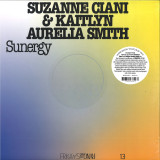
Sunergy brings together synthesists Kaitlyn Aurelia Smith and Suzanne Ciani for the thirteenth installment of FRKWYS, RVNG Intl.'s intergenerational collaboration series. For this edition, a panorama of the Pacific Coast provides the place and head space for a musical appreciation and consideration of a life-giving form vast and volatile with change. Fortuitously (as is the freaky way), Smith and Ciani were discovered to be neighbors in the small coastal community of Bolinas, California. The two had become close friends, bonding over their experience as woman musicians and, more unusually, their shared passion for the Buchla synthesizer. The music of Sunergy embraces this kinship, with Ciani and Smith respectively performing on the Buchla 200 E and the Buchla Music Easel, two modern configurations of the innovative instrument developed in the '60s by Don Buchla.
Sunergy was recorded in the Bolinas home where Ciani has lived for the last twenty-four years. Her living room overlooks the Pacific Ocean from a cliffside perch, creating an idyllic, inspired setting for music making. Setting up their synths side-by-side, Ciani and Smith took turns keeping time and freely improvising for the album sessions. As a complete piece, Sunergy is shaped by slow, pulsing forms and sinuous, melodic sequences that conjure both an oceanic world and the unlimited sound made possible by modular processing.For her part, Ciani has long been a Buchla voyager. Suzanne proselytized the potential of Don's synthesizer instruments in the '60s and '70s, performing her own compositions before introducing synthesized jingles and sound effects to household audiences. Ciani then achieved wide recognition for her debut album Seven Waves, a collection of colorful, classical song-like melodies fluidly working with harmonic textures and sounds of the ocean shore. Since its 1982 release, Seven Waves has become an important chapter of the ambient canon within which contemporary artists like Smith have developed their own synth syntax. Smith was born just a few years after the appearance of Seven Waves, growing up in Orcas Island, Washington. A place of profound natural beauty, the islands would inform Tides, her first instrumental collection from 2014. Smith composed Tides as an accompaniment for Yoga classes, ultimately freeing her from conventional songwriting into the exploratory, synth-based compositions demonstrated in ecstatic variety on 2016's Ears. Despite the serene setting where Sunergy was realized, the album does not romanticize a complete oneness with nature. Smith and Ciani use their collaborative ground to reflect on the unstable forces at play across the Bolinas horizon. Sunergy takes stock of Bolinas in the 21st century, a once-thriving artist's refuge now vulnerable to real estate pressure extending from affluent San Francisco, and more irreparably, the specter of climate change erasing its many waterfront habitats.
A diametric dynamic is present in Sunergy, a somber meditation amidst the intense cultural and solar forces transforming the landscape, and a hopeful assertion of the surviving creative culture of Bolinas. Far from rehashing the gentle grace of the artists' seminal works, Sunergy instead seeks to awaken and bear witness, employing the Buchla waveforms to mirror the infinite rhythms of the ocean and our essential relationship to it.
Kaitlyn Aurelia Smith and Suzanne Ciani's Sunergy will be released on September 16, 2016 on LP, CD, and digital formats. An accompanying documentary by Sean Hellfritsch will be offered in tandem.
Travel, the 19th studio album by Australian improvisational trio The Necks, documents their recent practice of starting each day in the studio with a 20-minute trio improvisation.
The recordings offer some of their most ecstatic and captivating music cut to tape. As bassist Lloyd Swanton puts it: "It's a really nice communal activity to bring us together in focus each day, and some lovely music has resulted from it." Although a straight "live" improvisation has never been recorded in the studio by the band, these tracks (save for some light overdubs/post-production) feel closest to what they've been doing live for more than 30 years now.
In 2017 Stephen O'Malley's Ideologic Organ label released the band's lauded Unfold, which first offered up this uncharacteristic studio work: four sub-20-minute pieces - instead of the typical 60+ minute arc for which the band is known - along with an obfuscated track list which leaves play order to the listener's hand. The album quickly sold out, and persists as a treasure in collections or as a high-priced 'Want' on Discogs. Travel marks a return to this double-LP format, offered in a beautiful gatefold package that features photography by Traianos Pakioufakis and impeccable mastering by Doug Henderson.
2023 repress
Lobster welcomes Berlin based bubbler, Shedbug, back with open arms. Co-Founder of 'Salt Mines' record label, the DJ and Producer offers up spell-binding trance, techno and weirdo whomps. ‘Timeframe’ EP drops December 13th via Lobster Theremin. Stripped back, bass-laced opener, Ambroxitil, is as hypnotic as it is dynamic, perfect for both big rooms and tiny basements. Timeframe picks up the pace - wobbly jelly, trance goodness layered with a kickin’ beat to stomp the blues away. On the flip, Strive For More is eerie and enigmatic, a driving cut for late-night trips. Techy magic on Waouu will leave you in a daze, while Voiski rounds out the EP, giving Timeframe a brain-tickling re-rub. 5 killer cuts - if you don’t hear this out, you’re in the wrong spots!
Aussie composer Cat Tyson Hughes is an experimental artist whose new album Crossing Water on Past Inside The Present marks her debut long player. It comes after she's been involved with several other projects and offers a fragile and delicate mix of subtle instrumentation and rich voice textures imbued with an array of lovely field recordings. These are superbly patient and slow-burn tracks that really have a cathartic effect as nature and natural sounds permeate each composition. The melodies take your mind away as the freely structured, minimal arrangements really make you take note.
It’s been nine years since Antoni Maiovvi released Trauma on Bordello A Parigi. Since then, and before, the Bristol born artisan has been honing and refining his audio craft with explorations into electronics, soundtracks and rock. Now, in his latest musical incarnation, Maiovvi returns with Birds of Paradise. This avian themed four tracker is beyond anything you’ve heard from this synthesizer wizard. Complex, deep and layered, the EP is testament to a talent rarely heard. From the sheer elation of “Flycatcher”, which pivots and weaves, the listener is taken away. Throbbing rhythms and astral melodies are unfurled, arpeggios rumble as key scale ever higher in the heady notes of “Widowbird”. A steady kick is the morning song of “Streamertail”, warm computer tones scudding next chords that trill with optimism. Birdsong, a feature of the EP, is ever present in this agile and textured close. Drawing on his predilection for movie scores, “Quetzal” completes this feathered foray. Pulsating, drums offer the updraft for a spread of sounds and shape to takes to the wing. A unique record from an artist soaring to ever greater heights.
Franco-Swiss composer & director of INA GRM François J. Bonnet, aka Kassel Jaeger, returns with a new solo album. Following a compositional approach stemming from the musique concrète tradition, without adopting a structuralist aesthetic, Shifted in Dreams explores a wide range of instruments and techniques, going seamlessly from instrumental improvisation to field recording, via micro-editing and the use of asynchronous loops. Mixing the electronic sounds of an ARP 2500 synthesizer with the acoustic drones of a positive organ, articulating guitar layers with the resonance of the Cristal Baschet, bringing together recordings of slamming windows and sound produced by complex modular synthesis patches, Bonnet offers a rich and generous palette of sounds, inviting a constantly renewed sonic investigation.
The incongruous, yet glorious, creative partnership between Nancy Sinatra and Lee Hazlewood was well underway when the two singular artists reunited to record 1972’s Nancy & Lee Again, a follow-up to their bestselling duet debut, Nancy & Lee. Nancy, the eldest daughter of Frank Sinatra, had been working with the Oklahoma-born songwriter since 1965, when she topped the pop charts with “These Boots Are Made For Walkin’.” Over the next five years, the two artists forged a prolific relationship in the studio, with Hazlewood writing and producing many of Nancy’s solo hits. Soon, the duo found success with a series of duets, including “Sand,” “Summer Wine,” and “Some Velvet Morning” – all of which appeared on their highly-influential 1968 debut.
Not long after the critical acclaim and chart success of Nancy & Lee died down, however, Hazlewood unexpectedly relocated to Sweden, leaving his musical partner in the proverbial dust. America, meanwhile, was in the midst of a cultural shift, as the Vietnam War waged on. By the turn of the decade, the musical landscape had changed significantly. “Trivial music and not profound music became unimportant,” recalls Nancy, speaking to Hunter Lea. “It was a tough time.” And yet, despite the circumstances, the stars somehow aligned for the duo to record some of their most magnificent music together.
Returning to Los Angeles for the project, Hazlewood – who reprised his role as producer – chose to take a new direction with the duo’s sophomore album. Nancy recalls, “It was more dramatic; it was more fun to do, more challenging to do…. It was more grandiose.” For the lush, orchestral arrangements, they collaborated with Larry Muhoberac (an original member of Elvis Presley’s TCB band, whose early ‘70s credits also included Barbra Streisand, Neil Diamond, and Lalo Schifrin) and Clark Gassman, who had worked on Hazlewood’s 1970 LP, Cowboy in Sweden. Backing vocals from brothers John and Tom Bahler, who remain two of the most recorded singers in history, added additional texture to several songs.
The big sound that Nancy describes above is exemplified in the album’s cinematic opener, “Arkansas Coal (Suite).” Clocking in at nearly six minutes long, the dynamic overture tells the tale of an ill-fated coal miner (sung by Hazlewood), while Nancy adjusts her vocals to sing as both the miner’s daughter and his wife. Hazlewood’s knack for vivid, nuanced storytelling shines throughout Nancy & Lee Again, particularly in “Paris Summer,” which details the conflict that a married woman faces, as she engages in a passionate affair. Another highlight is the country-inspired hit, “Did You Ever,” which was released as the album’s lead single. After it landed at No.2 on the U.K. pop charts, the song served as an alternate title track in several countries, including LP pressings in the U.K., Germany, and Canada.
One of the most emotionally-charged moments on Nancy & Lee Again is a cover of Dolly Parton’s “Down From Dover.” The heartbreaking tune tells the tale of a pregnant teenager, who has been abandoned by her lover and her family and ultimately gives birth to a stillborn baby. While Parton’s 1970 version was sung from the teenager’s point of view, Hazlewood and Sinatra transformed the country song into a duet. Hazlewood, who offers the man’s side of the story, sings in a notably deeper octave than his signature baritone.
Another poignant selection is “Congratulations,” which describes a soldier coming home from Vietnam. “His face has grown old and his eyes have grown cold/And they tell you of where he has been/Congratulations, you sure made a man out of him,” Hazlewood sings, pointedly. Nancy, who performs as the vet’s wife, argues that the song had a deeper meaning for her duet partner. “Lee started out a hawk, he was an army guy, so he was all for the war in the beginning. We didn’t talk about it, but at some point, he changed radically. ‘Congratulations’ was almost like an apology from him. I don’t want to put words in his mouth, but it was as though he was saying ‘I’m really sorry.’”
The song “Friendship Train” could also be interpreted as an apology of sorts – this time to Nancy. “You’ve been hurt and I’ve been hurt/Now we’re living pain,” the tune opens. When Hazlewood moved to Sweden without telling his longtime musical partner, Sinatra was understandably upset. “I felt pretty betrayed. I mean, who does that? Who just up and disappears like that? I’ll never understand it,” she reveals. But the uplifting duet – a slice of ‘70s pop perfection – offers reaffirming words of love between friends. “Lee felt things very deeply and tended to express his feelings in song instead of in real life,” explains Nancy.
The 10-track album closes with the stripped-down “Got It Together.” Backed by an acoustic guitar, the song is equal parts playful and candid, as the duo has an impromptu, spoken-word conversation about their lives. “I wish that we’d quit getting so old,” laments Nancy, who later shares her wish to have children (she would do so in the next few years). Hazlewood, meanwhile, attempts to remedy his past wrongdoings – this time asking his partner, “Can I go back to Sweden?” With that, Nancy gives her blessing.
This definitive reissue of Nancy & Lee Again also includes two bonus tracks. Both are stylistic departures for the duo – but fit right in with the psychedelic pop of the era. The first one, “Think I’m Coming Down,” is a harmony-filled reflection on a toxic relationship. “I think that was one of [Lee’s] drug things. I don’t mean that he used drugs; I mean that he was trying to be part of that culture. Trying to be hip,” explains Nancy, who delivers an emotive vocal performance on the solo track. Also included is “Machine Gun Kelly,” penned by a staple of the 70s singer-songwriter movement, Danny Kortchmar (James Taylor, Carole King, Linda Ronstadt). Recorded several months after the release of the album, the song found Nancy reuniting with Billy Strange, who arranged many of her solo albums, as well as Nancy & Lee. Sinatra and Hazlewood first performed “Machine Gun Kelly” during their residency at Las Vegas’ Riviera Hotel in February 1972 (later released as a concert documentary on Swedish television). While the recording has long remained a career favorite of Nancy’s, it would be decades before it was officially released.
Nancy & Lee Again remains a creative high point in the careers of Sinatra and Hazlewood and, upon its release, garnered rave reviews from Billboard, Record World, and Cash Box, among others. Yet, Nancy & Lee Again never received the spotlight it so utterly deserved. “We didn’t have label support at all in those days,” recalls Nancy. “Without the strength of a label, records die. We were old. We were old-fashioned. We were just not what was happening. It’s a very ageist kind of business.” Nevertheless, she adds, “I think it’s a very good album. I think it’s timeless.” Now, after years of being a sought-after rarity, this gem in the Sinatra-Hazlewood canon can finally get its due.
Five decades later, Nancy’s legacy only continues to grow, as new generations discover her impressive catalog (which boasts nearly 20 studio albums – her duets with Hazlewood among them – and dozens of charting singles, including the theme song to the 1967 James Bond film, You Only Live Twice). In 2020, Sinatra was recognized by her peers when “These Boots Are Made For Walkin’” was inducted into the GRAMMY® Hall of Fame. That same year, Sinatra partnered with Light in the Attic for Nancy Sinatra: Start Walkin’ 1965-1976, a definitive survey of her most prolific period. LITA has also reissued Sinatra’s classic debut, Boots, and her iconic, 1968 album with Lee Hazlewood, Nancy & Lee. The label looks forward to celebrating Nancy over the coming years with a variety of special releases, exclusive merchandise, and more.
The incongruous, yet glorious, creative partnership between Nancy Sinatra and Lee Hazlewood was well underway when the two singular artists reunited to record 1972’s Nancy & Lee Again, a follow-up to their bestselling duet debut, Nancy & Lee. Nancy, the eldest daughter of Frank Sinatra, had been working with the Oklahoma-born songwriter since 1965, when she topped the pop charts with “These Boots Are Made For Walkin’.” Over the next five years, the two artists forged a prolific relationship in the studio, with Hazlewood writing and producing many of Nancy’s solo hits. Soon, the duo found success with a series of duets, including “Sand,” “Summer Wine,” and “Some Velvet Morning” – all of which appeared on their highly-influential 1968 debut.
Not long after the critical acclaim and chart success of Nancy & Lee died down, however, Hazlewood unexpectedly relocated to Sweden, leaving his musical partner in the proverbial dust. America, meanwhile, was in the midst of a cultural shift, as the Vietnam War waged on. By the turn of the decade, the musical landscape had changed significantly. “Trivial music and not profound music became unimportant,” recalls Nancy, speaking to Hunter Lea. “It was a tough time.” And yet, despite the circumstances, the stars somehow aligned for the duo to record some of their most magnificent music together.
Returning to Los Angeles for the project, Hazlewood – who reprised his role as producer – chose to take a new direction with the duo’s sophomore album. Nancy recalls, “It was more dramatic; it was more fun to do, more challenging to do…. It was more grandiose.” For the lush, orchestral arrangements, they collaborated with Larry Muhoberac (an original member of Elvis Presley’s TCB band, whose early ‘70s credits also included Barbra Streisand, Neil Diamond, and Lalo Schifrin) and Clark Gassman, who had worked on Hazlewood’s 1970 LP, Cowboy in Sweden. Backing vocals from brothers John and Tom Bahler, who remain two of the most recorded singers in history, added additional texture to several songs.
The big sound that Nancy describes above is exemplified in the album’s cinematic opener, “Arkansas Coal (Suite).” Clocking in at nearly six minutes long, the dynamic overture tells the tale of an ill-fated coal miner (sung by Hazlewood), while Nancy adjusts her vocals to sing as both the miner’s daughter and his wife. Hazlewood’s knack for vivid, nuanced storytelling shines throughout Nancy & Lee Again, particularly in “Paris Summer,” which details the conflict that a married woman faces, as she engages in a passionate affair. Another highlight is the country-inspired hit, “Did You Ever,” which was released as the album’s lead single. After it landed at No.2 on the U.K. pop charts, the song served as an alternate title track in several countries, including LP pressings in the U.K., Germany, and Canada.
One of the most emotionally-charged moments on Nancy & Lee Again is a cover of Dolly Parton’s “Down From Dover.” The heartbreaking tune tells the tale of a pregnant teenager, who has been abandoned by her lover and her family and ultimately gives birth to a stillborn baby. While Parton’s 1970 version was sung from the teenager’s point of view, Hazlewood and Sinatra transformed the country song into a duet. Hazlewood, who offers the man’s side of the story, sings in a notably deeper octave than his signature baritone.
Another poignant selection is “Congratulations,” which describes a soldier coming home from Vietnam. “His face has grown old and his eyes have grown cold/And they tell you of where he has been/Congratulations, you sure made a man out of him,” Hazlewood sings, pointedly. Nancy, who performs as the vet’s wife, argues that the song had a deeper meaning for her duet partner. “Lee started out a hawk, he was an army guy, so he was all for the war in the beginning. We didn’t talk about it, but at some point, he changed radically. ‘Congratulations’ was almost like an apology from him. I don’t want to put words in his mouth, but it was as though he was saying ‘I’m really sorry.’”
The song “Friendship Train” could also be interpreted as an apology of sorts – this time to Nancy. “You’ve been hurt and I’ve been hurt/Now we’re living pain,” the tune opens. When Hazlewood moved to Sweden without telling his longtime musical partner, Sinatra was understandably upset. “I felt pretty betrayed. I mean, who does that? Who just up and disappears like that? I’ll never understand it,” she reveals. But the uplifting duet – a slice of ‘70s pop perfection – offers reaffirming words of love between friends. “Lee felt things very deeply and tended to express his feelings in song instead of in real life,” explains Nancy.
The 10-track album closes with the stripped-down “Got It Together.” Backed by an acoustic guitar, the song is equal parts playful and candid, as the duo has an impromptu, spoken-word conversation about their lives. “I wish that we’d quit getting so old,” laments Nancy, who later shares her wish to have children (she would do so in the next few years). Hazlewood, meanwhile, attempts to remedy his past wrongdoings – this time asking his partner, “Can I go back to Sweden?” With that, Nancy gives her blessing.
This definitive reissue of Nancy & Lee Again also includes two bonus tracks. Both are stylistic departures for the duo – but fit right in with the psychedelic pop of the era. The first one, “Think I’m Coming Down,” is a harmony-filled reflection on a toxic relationship. “I think that was one of Lee’s drug things. I don’t mean that he used drugs; I mean that he was trying to be part of that culture. Trying to be hip,” explains Nancy, who delivers an emotive vocal performance on the solo track. Also included is “Machine Gun Kelly,” penned by a staple of the 70s singer-songwriter movement, Danny Kortchmar (James Taylor, Carole King, Linda Ronstadt). Recorded several months after the release of the album, the song found Nancy reuniting with Billy Strange, who arranged many of her solo albums, as well as Nancy & Lee. Sinatra and Hazlewood first performed “Machine Gun Kelly” during their residency at Las Vegas’ Riviera Hotel in February 1972 (later released as a concert documentary on Swedish television). While the recording has long remained a career favorite of Nancy’s, it would be decades before it was officially released.
Nancy & Lee Again remains a creative high point in the careers of Sinatra and Hazlewood and, upon its release, garnered rave reviews from Billboard, Record World, and Cash Box, among others. Yet, Nancy & Lee Again never received the spotlight it so utterly deserved. “We didn’t have label support at all in those days,” recalls Nancy. “Without the strength of a label, records die. We were old. We were old-fashioned. We were just not what was happening. It’s a very ageist kind of business.” Nevertheless, she adds, “I think it’s a very good album. I think it’s timeless.” Now, after years of being a sought-after rarity, this gem in the Sinatra-Hazlewood canon can finally get its due.
Five decades later, Nancy’s legacy only continues to grow, as new generations discover her impressive catalog (which boasts nearly 20 studio albums – her duets with Hazlewood among them – and dozens of charting singles, including the theme song to the 1967 James Bond film, You Only Live Twice). In 2020, Sinatra was recognized by her peers when “These Boots Are Made For Walkin’” was inducted into the GRAMMY® Hall of Fame. That same year, Sinatra partnered with Light in the Attic for Nancy Sinatra: Start Walkin’ 1965-1976, a definitive survey of her most prolific period. LITA has also reissued Sinatra’s classic debut, Boots, and her iconic, 1968 album with Lee Hazlewood, Nancy & Lee. The label looks forward to celebrating Nancy over the coming years with a variety of special releases, exclusive merchandise, and more.
The rawness of The Veils' Nux Vomica can be enjoyed to a degree never heard before, with Ba Da Bing's limited edition pressing of the records with the original mixes by Nick Rainey left intact.
Originally released in 2006, The Veils sophomore album Nux Vomica was praised for its “Herculean intensity” by The Guardian, and called “a heady blast of gothic psychodrama” by The Observer, while Pitchfork praised leader Finn Andrews’ “magnetic, outsize persona.” Long out of print, the vinyl version was resuscitated by Music on Vinyl in 2017 and quickly sold out. Now, The Veils present the definitive version of their most heralded album to date, which dusts off the original mixes by legendary producer Nick Launay (Public Image Limited, The Birthday Party, INXS and Midnight Oil) and offers them to fans here for the first time. Taken from the original two-inch analog tape reels, each song was carefully remastered by Alex Wharton at Abbey Road Studios in London.
Nux Vomica was the first of many creative reinventions for Andrews, who at 22 had already released an album on Rough Trade, moved from New Zealand to London to form a band, then back to New Zealand where he once again started the band anew. The creative progression is clear in Andrews’ incisive lyricism and knack for hell-fire dramatics. From the positively mirthful “Advice for Young Mothers to Be” to the simmering ominousness of “Nux Vomica,” from the ornate spectacle of “Calliope!” to the Grand Guignol of “Jesus for the Jugular”, Nux Vomica is a remarkably accomplished album for a musician so young who was facing the pressures of British musical stardom.
All intentions to release this dark and raw set of recordings were dashed upon submission to Rough Trade for approval, who didn't like the results. They hired mixing engineer Bill Price to adjust the sound and add additional instrumentation. Launey’s mixes were shelved and forgotten about, while the album nonetheless went on to be a critical highpoint for the band and is much loved to this day.
To celebrate the release of The Veils’ massive new double album, …And Out Of The Void Came Love, Ba Da Bing is issuing a limited-to-1200-LPs simultaneous run of Nux Vomica in a form you have never heard it before. The brilliance of Andrews’ talents come through all the more clear in this version, which strips his songs to the core and allows the holes to show. Here’s where the seeds of a lifelong artistic talent really began to first take root.
Existing somewhere between the post-psychedelic period of Soft Machine and the electric funk of Herbie Hancock's Headhunters, Black And White, the 1976 album from Norway's Vanessa is without question a formidable beast of a jazz-rock record. A potent brew of sonic experimentation and pulsating off-kilter groove. Taking their name from the genus of Nymphalidae butterfly, Vanessa was founded in 1971 by saxophonist Svend Undseth and pianist Frode Holm, the founder of the Oslo record store turned imprint, Compendium Records. Unsurprisingly analogous to the music championed across the Compendium catalogue Black And White is clearly influenced by the UK Canterbury scene, highlighted by Compendium's focus on the recordings of Soft Machine alumni Hugh Hopper and Elton Dean. Vanessa's spirit also lies synonymous with the collective pedigree on the label's roster including British progressive jazz stalwart Keith Tippett and Mirage (a UK group consisting of ex-members of Centipede and The Mike Westbrook Orchestra), together with the avant-rock collective Henry Cow and the experimental synthesiser-jazz of US ex-pat Joe Gallivan (together with Charles Austin).
Often dubbed the 'Compendium house band' owing to Holm's association with the label, the Vanessa sound is inherently familiar yet undeniably original. Each of the album's four long compositions are a meld of complex angular jazz laced with swirling electronic textures - furious rhythms that surge in intoxicating intensity before easing into fluid passages of soulful post-bop. The dichotomy of these styles plants the group firmly into radical new jazz territory alongside their Canterbury contemporaries. Despite their brief existence, the band, alongside the label left an indelible mark on Norwegian jazz-rock and the headier side of European progressive music at large.
Reissue of 1976 Norwegian Jazz-Rock album.
Post-psychedelic period Soft Machine meets the electric funk of Herbie Hancock's Headhunters
Transferred and restored from the original master tape.
The 6th album from the Ohio band finds them adding a member and polishing the jagged edges off their lo-fi pop anthems ever so slightly, letting the album's twelve tracks dance and shimmer like sun glinting off the waters of the Scioto river, perfectly capturing the undeniably midwestern attitude of melancholic joy. For fans of: Sebadoh, Guided By Voices, Car Seat Headrest, The Men, Mike Krol, The Replacements, The Stevens.
Tape
The 6th album from the Ohio band finds them adding a member and polishing the jagged edges off their lo-fi pop anthems ever so slightly, letting the album's twelve tracks dance and shimmer like sun glinting off the waters of the Scioto river, perfectly capturing the undeniably midwestern attitude of melancholic joy. For fans of: Sebadoh, Guided By Voices, Car Seat Headrest, The Men, Mike Krol, The Replacements, The Stevens.
Felte Records presents `Glimpse Of Heaven' - a stunning new album by the Hawaii-born, LA-based musician, singer, producer and professional mastering engineer Jess Labrador, AKA Chasms. Labrador's deeply personal work as Chasms has always felt like an unveiling. Following 2019's `The Mirage,' which was a dark, dubby meditation on grief and loss, this new album is both familiar and different. The third full-length under the Chasms name, `Glimpse of Heaven' trades in washes of reverb for starker moments of closeness and intimacy. An exploration of the personal inventory and reckoning necessary to move forward in life, the LP considers not only how we relate to the world, but more importantly how we relate to ourselves. While always distinct, you could previously detect post-punk, shoegaze, and dub sensibilities in the music. Dreamy drift tethered by skittered beats, airy vocals, and melancholic melodies are here like previous efforts too. However, at the same time, Labrador steps into new territory with an expanse of vaporous synths and samples, adding to the project's ethereal electronic pop and dubwise pulse. Lush guitars glisten throughout the album, but this time only in sparse, disciplined embellishments. `Glimpse of Heaven' is a fully realised version of Chasms beyond its influences; to say that this is a seamless evocation of such disparate sounds as Massive Attack, Basic Chanel, Sade, Seefeel and Dif Juz is to say it is wholly unique. While she continues to unfurl her thoughts, there is a shift from opening up to the listener toward allowing the listener to witness her opening to herself. Where the last Chasms record was about various kinds of collapse, `Glimpse of Heaven' is about trying to develop as a whole person. It seems to ultimately be asking whether what we want and what we need align in ways that will get us where we want to be. Can we let go of the comfort of bad habits and steer ourselves toward a less easily obtained but maybe more enduring happiness? `Glimpse of Heaven' is a Chasms record, but really it's a Jess Labrador record. This is the first release operating on her own, and it feels like that's the only way this could have been made. It finds itself in the rare company of those few records that exist within themselves; it's a complete environment. You don't need to know anything to tune in and enjoy the world that she's created. It's a record that feels indebted to itself. It offers premonitions but not directions. It gives us honesty, but doesn't claim to know exactly where that will lead.