Inner Balance kicks off a new series of split EPs under the rubric ‘Dialogues’, featuring two adept
producers from Italy and the UK. On the A, Emanuele Barilli brings summery house grooves on
‘Roots’ and ‘Unknown Na’, drawing on the tried and tested deep house templates of Charles
Webster and catapulting them into today’s dancefloor. Transverse Recordings founder Scott
Andrews takes care of the flip with classy jazzy house in the vein of vintage Larry Heard on
‘Willerminstral’, before the refined, loopy minimal house of ‘Renegade’ closes things out. It’s yet
another well-rounded EP in the superlative Inner Balance catalogue, ready to lift dancers to a higher
plane.
Поиск:off the record
Все
As one of the foundational artists of Flipsight, it is only fitting that ColorJaxx gives the first major 2 x 12" gatefold statement on the label. The debut album 'In Between' of the Belgian producer gives a full overview of his trademark deep grooves with a re-invention of his club sound.
The first record is your invitation to the beach. The A-side kicks off with the ambient "Playamer", setting a scene of salt air and warm breeze. The shoreline waves combine with an electric piano groove to "Out The Door". This is where a slick trumpet gets the parole and cuts through the atmosphere, signalling to the dancefloor. "Never Enough" serves as a spiritual successor of his first EP on the label "Tales of never": shimmering guitar samples, a warm, everlasting groove, and that unmistakable "ColorJaxx" swing that we fell in love with initially.
The B-side is where Jordy catches the first hints of Spring with "Just Around" by blending uplifting trumpets and sax melodies with a fresh forward-moving baseline. "Higher" elevates the mood further with smooth rhodes keys and a jazzy piano lead. As the evening chill sets in, the first disc concludes with the literal end of the day: "The Beach Is Closed".
Time to grab the second wax out of your gatefold: leave the sand behind for the strobe light as this is where the maestro gets in club mode. "Back Then" serves as the bridge into "Discotheques," a heavy-hitting wink to the old-school Belgian club scene that shaped the underground of the early 2000's. This vibe created "Moving On," a sophisticated French-like house tune with Chris Farmer where the vocalist enters into a constant conversation with rhythmic elements, creating a versatile track that fits in any part of a DJ set.
The finale is reserved for heavy hitters: "This This" and "Disco Trouble" are pure, pumpy club rollers. Peak-time bangers designed for maximum impact, before the album dissolves into the hazy, cinematic outro of "Blurred Lines."
RIPIT is back with a new LP after 3 years spent mostly on the mesmerizing collaboration between THE ÅNGSTRÖMERS- his duo with FRÉDÉRIC ALSTADT -and the Haitian voodoo ensemble CHOUK BWA.
While Ripit is better known for his radical noisy breakbeat work, "A Church or a Factory" explores a more industrial, power electronic and noise ambient side of his synthesizer lust. The instruments abused on this record are: Serge modular, Knifonium and various eurorack modular. The A-side comes with 5 powerful synthetic industrial songs which feature each one a different guest vocalist. The B-side is a long ambient noise piece that will plunge the listener in an anxious meditation.
Ripit is the project of the French NICOLAS ESTERLE for almost 25 years. He explores electronic instruments thru distortion , ranging from industrial hardcore to breakcore, from doom hiphop to dusty dub. Beside his solo project, he's involved in various bands like SOLAR SKELETONS (with TZII), FUJAKO (with HHY) and more recently The Ångströmers.
On the guest side, there's a wild bunch of Nicolas' friends:
- PAUL-TERGEIST is the galactic moniker of PAUL BEAUCHAMP in his band SPACE ALIENS FROM OUTER SPACE;
- ANDREA EV is the lead member of 1997EV;
- ROBERT IMHUMAN and DIVTECH are members of the REALICIDE COLLECTIVE;
- TZII is a long-time road comrade of Nicolas and a touring freak spreading his music all over the world;
- ANDRÉ COELHO is known as METADEVICE and is the founder of the now-defunct SEKTOR 304.
The title "A Church or A Factory" refers to the Belgian countryside, wherever you are, you are at least surrounded by a church or a factory. As he just left the urban life of Brussels to escape to the French countryside, he is now lost enough not to have neither a factory nor a church in sight.
'Matsuli Music is proud to announce the first vinyl reissue of Philip Tabane’s Sangoma ("Spiritual Healer") since its 1978 release. Remastered from the original tapes with lacquers cut by Frank Merrit and pressed on 180g heavyweight vinyl at Pallas in Germany, this definitive edition re-asserts the power of one of South Africa’s landmark recordings. Featuring new liner notes by cultural critic Kwanele Sosibo and artwork restoration by Siemon Allen, Sangoma returns in full force through an extended Malombo line-up, fronted by Tabane's spellbinding guitar - ancestral, timeless, and unbound.
'Philip Tabane (1934–2018), the mercurial guitar genius of South African music, forged a sound that was as rooted in the spirit world as it was in daily life. With the Malombo Jazzmen of the 1960s, Tabane disrupted Western notions of “jazz,” bringing the resonant rhythm of cowhide malombo drums into the foreground. While outsiders and the uninitiated often reached for labels like “primitive yet sophisticated,” Tabane and his collaborators named it more truthfully: “music of the spirit.”
'By the time of Sangoma, Tabane stood at a crossroads. Fresh from a period of three years’ touring in the United States where he graced the Newport Jazz Festival, and played alongside Miles Davis, Herbie Hancock, Pharoah Sanders and others, he brushed off comparisons with characteristic self-assurance: “No, I don’t play like Miles. Miles plays like me.” Back home in South Africa, and with a newly signed international distribution deal with WEA Records, he harnessed this momentum into a larger band setting, capturing a rare intensity.
'The result was Sangoma—an album that bridges contradictions: expansive yet intimate, celebratory yet haunted by exile and return. Tracks such as “Sangoma,” “Hi Congo,” and “Keya Bereka” are not simply performances but living testaments, songs that would remain in his repertoire for decades. Unlike the moody, immersive character of much of his work, here Tabane is on the move—urgent, restless, uncontainable. As he announces on the second track, “Maskanta wa tsamaya” (“something that kicks ass”).
More than four decades on, Sangoma is both an historical document and a timeless invocation. From his home in Mamelodi to the world and back again, Tabane’s spiritual healing endures—raw, electric, and unbowed.'
Brighter Discs opens with its first release from label founders Kamma & Masalo. Born out of Brighter Days, the duo’s long running party series since 2014. A colourful get together where generations mix freely, DJ legends share space with new voices, and the dancefloor is treated as common ground. Brighter Discs carries this same spirit into recorded form, a natural continuation following the Brighter Days compilation previously released on Rush Hour.
Brighter Discs starts things off with ‘Can’t Fake The Feeling’, built around the original vocal by Renee Mohannon, taken from the 1989 release produced by house music pioneer Joe Smooth. The vocal is fully cleared and officially licensed, with everything surrounding it newly written and produced, resulting in a club track that honours the emotional core of the original vocal while giving it new space to shine.
The ‘Club Mix’ unfolds with immediate lift, a classic yet upfront house energy carried by Kamma & Masalo’s elevating instrumentation moving in lockstep with Renee Mohannon’s vocal. A pure club track celebrating dance music to the fullest.
On the flip you will find K&M’s ‘Unity Dub’, a darker, percussion driven workout that strips things back and presents the track in a different light. A twilight version that highlights the duo’s versatility and deep dancefloor understanding.
Kamma & Masalo have tested both cuts extensively while touring, from sun soaked festival stages to esoteric club spaces. Each version has been shaped in real rooms and refined on the road, ensuring the tracks are heard in their best possible form.
All produced with care and free-spirited party energy, Brighter Discs 001 marks the beginning!
Channels Of Love, the collaboration between Italian duo's Dirty Channels and Eternal Love present their first original release from Dirty Channels featuring Ethiopian-Dutch singer Minyeshu and a remix from Dionisos...
With Harmony, Dirty Channels mark the first official original release on their new imprint Channels Of Love, founded together with Italian duo Eternal Love. Born as a platform for edits and reworks, the label now evolves into a broader vision rooted in global grooves and club energy.
Featuring Ethiopian-Dutch singer Minyeshu, whose spiritual and emotive voice bridges African traditions with contemporary sounds, Harmony blends percussive drive, warm basslines and hypnotic arrangements into a powerful yet soulful peak-time record built for connection.
The release also includes a soulful remix by Dutch producer Dionisos, delivering a deeper, housy reinterpretation while preserving the essence of the original vocal.
With this debut, Channels Of Love sets the tone for its future direction: alternative club music rooted in authenticity, where edits evolve into original productions and the dancefloor becomes a space for shared energy and unity.
Following on from his debut album, Miles Spilsbury returns to New Dawn with Spirit Level. A new project in collaboration with close friend Gorse Panshawe (formerly known as Slugabed - who also produced Miles Spilsbury's first album Light Manoeuvres).
Recorded over one weekend in a weaving shed in Frome, in the English countryside. Surrounded by reels of yarn, they explored saxophones, flutes, dusty old keyboards & drum machines. The resulting record conjures the murk and moss of Forestland and grounds with grooves from the Bongo setting on a Casio keyboard. Jake Long added mallet drums from his London studio to round off the album.
Announcing Maara’s new album Ultra Villain, a deeply personal, narrative-driven record that explores desire, heartbreak, obsession, and the freedom that comes with choosing yourself.
Written from a place of hard-won self-trust, the song marks a shift toward clarity. “I realized people can only meet you where they’ve met themselves.”
Written and Produced by Maara Louisa Dunbar
Additional Production and Mixing by Francis Latreille and Patrick Holland at Jump Source Studios
Mastered by Noel Summerville
Cover Art by Dodleyz
Design by Jesse Osborne-Lanthier
Gap Mangione's monumentally influential Diana In The Autumn Wind. AKA BEWITH200LP. And, without question, Be With's White Whale.
They said it could never be done. And with good reason.
We've spent the past 12 years trying to license this legendary 1968 recording from Gap and, after much work, it's finally here. Remarkably, this is the first ever vinyl reissue of Gap Mangione's Diana In The Autumn Wind, produced with the full and extensive participation of Gap. An exceedingly rare album, it's been coveted by funk, soul, jazz and hip-hop sample fiends for decades.
It's unarguably *the* most sought after album for J Dilla / Madlib sample collectors. It has also been brilliantly sampled by A Tribe Called Quest, Large Professor, Ghostface Killah, Kendrick Lamar and Talib Kweli.
But this record is so much more than a sample-spotters curio. It's solid gold throughout. Bursting with killer funky-jazz grooves and tracks adorned with warm electric piano, the release is notable for featuring some extremely significant players at the very outset of their careers; Tony Levin, at 21, whose superb playing on both acoustic and electric bass was the harmonic mainstay of the trio and Steve Gadd, at 23, one of the greatest drummers of his generation.
With acceptable copies of this holy grail changing hands for $400, to call this reissue "much-needed" underplays just how vital it is. Gap's story is told in his words alongside rare photos across a sumptuously designed 2-page insert and, to augment this deluxe edition further, its all wrapped up in a beautiful, no-expense-spared luxury tip-on sleeve, as per the original hens-teeth release. And, while we're talking packaging, just take a look at that cover - a work of art in and of itself.
The tracks are short but complex, with that extraordinary rhythm section backing the beautiful piano, organ and electric piano work of Gap. It's like the best ever library funk breaks record you never heard - but all your favourite golden age rap producers were all over it, long ago. It's a stunning blend of the vibrant, driving music of the Gap Mangione Trio coupled with the sensitive composition and superb orchestration of Gap's legendary brother, Chuck Mangione, who helmed an amalgam of seemingly disparate elements – rock, big band jazz, solo improvisation and "classical" music - into a spectacularly cohesive whole that has aged wonderfully well. As Gap himself notes in the liners, "with this group I was able to explore and add new and exciting elements from rock, Brazilian and then-current pop music."
Opener "Boy With Toys" triumphantly swaggers out the gate, all big band horns, flutes and dextrous organ work. The synthesis of everything going on is nothing short of stunning. When one wise YouTube commentator called this tune "old school superhero music", Gap agreed. Rap luminaries did, too, amongst them Talib Kweli, who rapped over DJ Scratch's chopped up intro for "Shock Body" on his Quality album back in 2002.
You've barely recovered from that incredibly affecting opener when you get hit over the head with the exquisite title-track. And now you see how two of the greatest beats of all time emerged from one single track produced nearly 50 years earlier. Unforgettably utilised by Dilla for Slum Village's heartbreakingly good "Fall In Love" and then Madlib for his "Official" beat for Dilla to rap over, on the Jaylib record. Regardless of the records it went on to spawn, this is just a staggering tune in its own right. Be beguiled by the flutes and the flutter tonguing, the counter-melody from the trombones, the soprano sax solo. All of it. Simply beautiful.
The questing organ and horn workout "Long Hair Soulful" deserves a lot more attention, overshadowed somewhat by the opening two monsters but no less fantastic. It swings, it grooves and Gadd and Levin truly cook. Up next, Gap's wonderfully percussive, mellifluously piano-heavy cover of "Yesterday" by some fellas called The Beatles. It's a subtly arresting gem. "The XIth Commandment" is damn fine, with thick, gorgeous electric piano and snappy drum work underpinning chaotic soundtracky horns. To close out the side, "St. Thomas" showcases the "fourth" member of the Gap Mangione Trio, conga drummer Dhui Mandingo. Having performed with the Trio since 1965, Dhui‘s African-based and jazz-latin-influenced style amazed listeners and its way to hear why.
Opening the B-Side, standard "You're Nobody Till Somebody Loves You" breezes along in the late-night jazz club fashion before things get super deep with the outstanding and - up to now - un-sampled "Pond With Swans". It's simply heavenly, and how its moody, melancholic intro has yet to be pilfered is anybody's guess. It oscillates between gentle, sombre movements and bombastic grooves, equally hypnotic and joyous. The rendition of "You Are My Sunshine" is yet another showcase for Gap's virtuoso playing and Gadd's mastery of the pocket. Indeed Gadd's drumming on "Free Again" is nothing short of neck-SNAPPING! Ghostface took it for not one but two "Iron's Theme" tracks across his seminal Supreme Clientele. It's got that Galt MacDermot "Coffee Cold" feel. Suuuuuper cool. The frantic "Dream On Little Dreamer" hurtles along and must've surely had the whole room absolutely swinging from the chandeliers back in Rochester in the late 60s. The album closes with the magnificent Graduate Medley, featuring memorable renditions of "Scarborough Fair", "The Sounds of Silence" and "Mrs. Robinson". The warm electric piano lines of the former were sampled by The Ummah (Dilla again!) for Tribe's "Pad & Pen" from their reappraised final album, The Love Movement, as well as by Large Professor on his much-loved "The LP (For My People)".
Under the watchful eye - and extremely attentive ears - of Gap Mangione himself, the audio for Diana In The Autumn Wind has been carefully remastered by Be With regular Simon Francis, with a few much needed tweaks here and there, according to the artist's wishes. At the prestigious Abbey Road Studios, Cicely Balston's expert skills have made sure nothing is lost in the cut whilst the records have been pressed to the highest possible standard at the always stellar Record Industry in Holland. The artwork restoration has taken place here at Be With HQ and has that drop-dead gorgeous cover artwork popping like new. Buy on sight!
- A1: What's Goin On In Brazil
- A2: The Mysterious Man
- A3: Flying Carousel
- A4: Double Trouble Theme (Bossanova)
- A5: A Guy With It's Pretty Girls
- A6: Double Trouble Theme (Jazz)
- B1: Hear It Tonight
- B2: Double Trouble Theme (Samba)
- B3: Mississipi Dream
- B4: Quica Theme
- B5: The Mysterious Man
- B6: Flute Rhythm
- B7: Double Trouble Theme
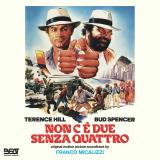
This expanded edition presents the soundtrack with previously unreleased material not included on the original vinyl release, offering a more complete overview of Micalizzi’s work. The package is further enhanced by an 8-page full-color booklet featuring original artwork, extensive liner notes on the film, direction, and score by journalist Fabio Babini, as well as a personal contribution from Franco Micalizzi himself.
Composed by Maestro Franco Micalizzi for the cult 1984 film Non C’è Due Senza Quattro, starring the iconic duo Bud Spencer & Terence Hill in a rare fourfold role, this soundtrack captures the playful spirit and global flair of the film.
Micalizzi delivers a vibrant and rhythm-driven score, infused with warm Latin influences, breezy melodies, and an unmistakable sense of lightness. The result is a richly entertaining listening experience that perfectly mirrors the film’s humor, energy, and escapist charm.
A joyful and sun-soaked addition to any collection, this release stands as both a nostalgic tribute and a testament to Micalizzi’s enduring legacy in Italian cinema soundtracks—best enjoyed, perhaps, with a well-mixed cocktail in hand.
©℗ 1984 – Beat Records Company. Reissued by Holy Basil Records under license by Beat Records.
2026 Repress
Foundations Records has landed! A brand new label from the Foundations Series camp. Last year saw their launching F-BOMBS Records, a UK Garage and Bass focused label with a mighty debut from Swankout on the Speed Garage EP. Foundations Records will be a home to Hardcore, Jungle and all things Rave inspired.
Early support from: Pete Cannon, Billy 'Daniel' Bunter, Origin8a & Propa, T-Cuts, Vali NME, Swankout, Jay Cunning, LMajor, Chinese Daughter, Arkyn, Uplift, Drumskull, Andy Foundations.
Vintage hardware junkie, 12bit Jungle Out There (aka Kris Buckle), dusts off the Amiga and the Akai to craft authentic 90s Jungle beats. The Aussie-based Brit boasts a rich musical history that began as the guitarist for Sunscreem, sharing stages with The Prodigy, and continued with a stint alongside Soulwax favorites, Soapstarter. As a session guitarist and musical director for singer-songwriter Liam Bailey, Kris honed his craft on international stages, gaining valuable experience and deepening his musical versatility while touring with drum & bass giants Chase & Status. Recently, he's been sharing his expertise in retro Jungle production through YouTube tutorials and actively contributing to Perth's Jungle/DnB community with the high-energy SUB/Stance events.
- 1: Urn Burial
- 2: The Redness In The West
- 3: The Third Migration
- 4: They Came Like Swallows
- 5: The Living Theater
- 6: The Oceans Are Crying
- 7: Insight
Black Vinyl[30,67 €]
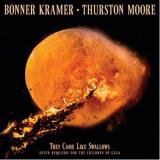
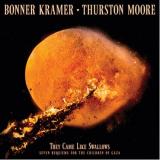
They Came Like Swallows is the first album-length collaboration between Thurston Moore and Kramer (now officially Bonner Kramer), two giants of alternative/ experimental music. The accomplishments and influence of these two artists in the world of independent music cannot be overstated and the result of their artistic union is a startlingly cohesive statement that burns through landscapes of primitive outsider rock, avant-garde composition, progressive ambient and further locales boldly and beautifully unnamable. “Kramer and I reconnected in Miami, Florida, a few years back, many many years after each of us had departed NYC on separate life adventures. It was only a matter of time before Kramer and I started making plans to record together and with his irrepressible due diligence he quickly set up a mobile recording contraption in the pad I was decamped in, the Florida sunshine flowing through the palm leaves, lithe lizards skittering across the windowsills, and we just went for it.
Kramer had the idea to cover a Joy Division tune, a left turn from the improvisations we had been tracking, though wholly in keeping with both our sensibilities of light and dark unifying in transcendent songwriting, both of us devotees of 'the song' as well as 'the freedom.’ What transpired is They Came Like Swallows, a session we immediately felt should exist as a prayer to the war-torn souls of the families of Palestine continually decimated by the brutality of genocide. We agreed beyond words to offer our music as a sonic activism and as a beneficent energy. This album is our duo exchange for human dignity, it is our soul music for any semblance of a peaceful planet.” ~ Thurston Moore “For the first time in our nearly 45 years of friendship, we had identical time windows open to make a record together,” recounts Kramer. After all this time not a moment is wasted as the duo immediately taps into the heightened core of improvisational tension across these seven offerings. Volcanic opener “Urn Burial” notches a similar historic union (John Cale and Terry Riley) to meet the circumstances of the moment, with swirling mists of organ and pounding toms over guitar that thickens the atmosphere with jagged, grimy dissonance.
Solemn strings open the second track, “The Redness In The West,” with Kramer’s cello and viola in dueling bow beneath the high tension drive and sustain of Thurston’s electric guitar, tapping out a Morse code of tension that mounts endlessly into a fog of inevitable war by the end. Moore and Kramer’s sense of experimentalism is in free and full grandeur throughout They Came Like Swallows, though the duo keep a strong and constant sideways eye on melody, composition and architecture, to the ends that any strict lines between song and improvisation are blurred beyond qualification.
As if to punctuate this point, Swallows closes with a nightwork cover of Joy Division’s “Insight,” a doleful coda that breathes out with a solemn inner grace under Thurston’s instantly stylistically recognizable guitar melodies as they weave into he and Kramer’s unison voices. As the lone vocal piece and only traditional ‘song’ form on the album, “Insight” is unique to this set and as a closing statement draws connective lines back to the kind of dynamic, electrified melodicism that wove deep, melancholy patterns into the untamed fire of Sonic Youth’s Sister and Daydream Nation. In the album’s final moments, the two voices repeat the lyric “I’m not afraid anymore” as mantra, underscoring the heavy, unsettled themes and methods that preceded it. Kramer describes the creative process of They Came Like Swallows: “I had composed and recorded a few pieces at my home studio over the course of a couple weeks. Thurston was spending the winter in South Florida, so I flew down and spent a few days recording his guitar parts in his home there. Watching him spontaneously compose his parts was pretty astonishing, to say the least. Once we'd finished working on those pieces, we began improvising and following wherever the music pointed us, and another few pieces were born. We got straight to it, without anything driving us other than the joy of finally working together.
My personal goal was to remain present and catch as many surprises as I could from Thurston's guitar work, and there were plenty during those few days. We had a fucking blast.” Thurston’s contributions here will be readily familiar to any acolytes of his other works, the through-line between his inspired playing, cradled in Kramer’s meticulous, solid arrangements. “If I had to make this record again, I'd do it all exactly the same way,” Kramer says. “It’s like jazz, you don't think about it. You just do it. It was miraculous, and you don't fuck with a miracle.”
They Came Like Swallows is the first album-length collaboration between Thurston Moore and Kramer (now officially Bonner Kramer), two giants of alternative/ experimental music. The accomplishments and influence of these two artists in the world of independent music cannot be overstated and the result of their artistic union is a startlingly cohesive statement that burns through landscapes of primitive outsider rock, avant-garde composition, progressive ambient and further locales boldly and beautifully unnamable. “Kramer and I reconnected in Miami, Florida, a few years back, many many years after each of us had departed NYC on separate life adventures. It was only a matter of time before Kramer and I started making plans to record together and with his irrepressible due diligence he quickly set up a mobile recording contraption in the pad I was decamped in, the Florida sunshine flowing through the palm leaves, lithe lizards skittering across the windowsills, and we just went for it.
Kramer had the idea to cover a Joy Division tune, a left turn from the improvisations we had been tracking, though wholly in keeping with both our sensibilities of light and dark unifying in transcendent songwriting, both of us devotees of 'the song' as well as 'the freedom.’ What transpired is They Came Like Swallows, a session we immediately felt should exist as a prayer to the war-torn souls of the families of Palestine continually decimated by the brutality of genocide. We agreed beyond words to offer our music as a sonic activism and as a beneficent energy. This album is our duo exchange for human dignity, it is our soul music for any semblance of a peaceful planet.” ~ Thurston Moore “For the first time in our nearly 45 years of friendship, we had identical time windows open to make a record together,” recounts Kramer. After all this time not a moment is wasted as the duo immediately taps into the heightened core of improvisational tension across these seven offerings. Volcanic opener “Urn Burial” notches a similar historic union (John Cale and Terry Riley) to meet the circumstances of the moment, with swirling mists of organ and pounding toms over guitar that thickens the atmosphere with jagged, grimy dissonance.
Solemn strings open the second track, “The Redness In The West,” with Kramer’s cello and viola in dueling bow beneath the high tension drive and sustain of Thurston’s electric guitar, tapping out a Morse code of tension that mounts endlessly into a fog of inevitable war by the end. Moore and Kramer’s sense of experimentalism is in free and full grandeur throughout They Came Like Swallows, though the duo keep a strong and constant sideways eye on melody, composition and architecture, to the ends that any strict lines between song and improvisation are blurred beyond qualification.
As if to punctuate this point, Swallows closes with a nightwork cover of Joy Division’s “Insight,” a doleful coda that breathes out with a solemn inner grace under Thurston’s instantly stylistically recognizable guitar melodies as they weave into he and Kramer’s unison voices. As the lone vocal piece and only traditional ‘song’ form on the album, “Insight” is unique to this set and as a closing statement draws connective lines back to the kind of dynamic, electrified melodicism that wove deep, melancholy patterns into the untamed fire of Sonic Youth’s Sister and Daydream Nation. In the album’s final moments, the two voices repeat the lyric “I’m not afraid anymore” as mantra, underscoring the heavy, unsettled themes and methods that preceded it. Kramer describes the creative process of They Came Like Swallows: “I had composed and recorded a few pieces at my home studio over the course of a couple weeks. Thurston was spending the winter in South Florida, so I flew down and spent a few days recording his guitar parts in his home there. Watching him spontaneously compose his parts was pretty astonishing, to say the least. Once we'd finished working on those pieces, we began improvising and following wherever the music pointed us, and another few pieces were born. We got straight to it, without anything driving us other than the joy of finally working together.
My personal goal was to remain present and catch as many surprises as I could from Thurston's guitar work, and there were plenty during those few days. We had a fucking blast.” Thurston’s contributions here will be readily familiar to any acolytes of his other works, the through-line between his inspired playing, cradled in Kramer’s meticulous, solid arrangements. “If I had to make this record again, I'd do it all exactly the same way,” Kramer says. “It’s like jazz, you don't think about it. You just do it. It was miraculous, and you don't fuck with a miracle.”
Double 12" release
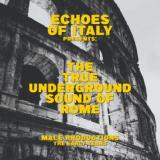
The Story — From the Streets of Rome to the Male Productions Label
In the early 1990s, Rome lived in a kind of suspended moment. The city was still tied to its historic clubs, yet in the outskirts—inside abandoned warehouses, quarries along the coastline, and the wooded parks north of the capital—something new was beginning to stir. A nocturnal, constantly shifting movement fuelled by a hunger for freedom and a sonic curiosity that reached far beyond the mainstream.
Moving through this ferment was Francesco “Chicco” Furlotti. First an organizer of unconventional parties and underground nights, he soon became one of the driving forces behind Rome’s itinerant rave scene. Furlotti sensed that a wave of change was about to sweep across the city. It wasn’t just about parties: it was the rise of a culture, a new way of thinking about music, community, and belonging.
It was within those nights—later held with official permits, properly built sound systems, and an ever-growing crowd—that Furlotti recognized the existence of a distinctly Roman sound, and the need to capture it, preserve it, and give it tangible form.
So, in 1991, he decided to take a bolder step: to found an independent record label—small, determined, and far removed from the commercial logic that dominated at the time.
That was the birth of Male Productions.
Male was not a label like any other: it was a workshop, a gathering point, a creative hub where DJs, producers, friends, and wanderers converged. Within that environment, an artistic core took shape—Stefano Di Carlo, Leo Young, and Mauro Tannino, along with other collaborators orbiting around Furlotti. From their synergy emerged a project whose very name declared its mission:
The True Underground Sound of Rome.
The collective did not simply aim to release music; it sought to tell a story of Rome through sounds that defied categorization: house, techno, ambient, electronic mysticism, psychedelic visions… a unique blend, instantly recognizable, emotional, and experimental. The sessions unfolded using essential yet razor-sharp gear: Roland drum machines, analogue synthesizers, Akai samplers, stripped-down mixers. Few tools, endless imagination.
The first result of this work was the 12” Secret Doctrine, released in 1991 in an extremely limited run—around 500 promotional copies, according to accounts. The record captured something that until then had floated only in the air of Roman raves: enveloping atmospheres, deep rhythms, melodies built to make the mind travel far beyond the dancefloor. A sound that did not imitate what was happening in Detroit, London, or Berlin, but absorbed those influences and re-sculpted them with a distinctly Roman sensibility.
Yet, precisely because it was independent and detached from commercial circuits, Male’s output remained sparse: few EPs, few copies, irregular distribution. Over time, those records became rare artifacts—almost mythical objects within the Italian electronic scene. The legacy of Male Productions seemed destined to survive only in the memories of those early years, in the stories told after raves, and in the private archives of a handful of collectors.
Many years later, thanks to the almost accidental rediscovery of a few original copies of the first two releases issued by Male Productions, it became possible to undertake a meticulous process of recovery and restoration of the audio etched into those grooves, with the aim of preserving as fully as possible the quality and character of that unrepeatable sound.
We are therefore able today to present — at last in a complete and faithful form — the first two mixes created for Male Productions, now released on a double vinyl that brings back into the present the exact moment when it all began: the nomadic nights of the raves, Furlotti’s vision, the creativity of Di Carlo, Young and Tannino, and the sonic identity of a Rome in the midst of transformation.
This is not merely a reissue.
It is a historical document.
A fragment of a culture that changed the city.
The authentic sound of the Roman underground, finally returned to the world.
- A1: Bluebell
- A2: Japan Greatly (Feat. Reek0 And S.i)
- A3: Turn Me On
- A4: Dinero (Feat. P Wavey)
- A5: Down 4 (Feat. Osquello)
- A6: Strike A Pose (Feat. Camille Munn)
- B1: Longest Road (Feat. Pk)
- B2: Komodo
- B3: Somebody Jump (Feat. Reek0)
- B4: Wonderluv
- B5: Tek Control (Feat. Liam Bailey)
- B6: Guiding Star (Feat. Reek0)
East London producer and DJ IZCO announces his debut solo studio album ‘POWERSCROFT’, set for release on 1st May via Brownswood Recordings. The album’s first single, ‘Strike a Pose’ featuring the vocals of Camille Munn offers an early glimpse into the project. To celebrate the release, he will go on a run of UK dates from March to May, culminating at London’s Jazz Cafe.
Named after the road where he grew up, ‘POWERSCROFT’ marks a defining new chapter for an artist who has spent the past decade shaping the sound of UK dance music. Drawing from jungle, broken beat, grime, garage, soul and dub, the album channels the energy of the dancefloor while remaining deeply rooted in memory, instinct and identity. It captures what it feels like to be inside IZCO’s world, where thoughts, memories and influences collide.
Hailing from East London, IZCO is a producer and DJ spearheading a new generation that is bringing soul back to the dancefloor. Shaped by the rich musical heritage of his hometown, he has developed a sound that feels familiar yet forward-looking, diverse yet distinctly his own. That sound has taken him across the globe, from New York to Tokyo, alongside standout sets at We Out Here, Outlook and Glastonbury.
IZCO began his journey making grime beats for local rappers including Capo Lee, Novelist and Reek0, before becoming a key figure in the UK’s evolving garage and dance music landscape. In 2018, he launched his long-running Rinse FM show and released his debut EP Tek 5, earning early underground acclaim. His production credits include PinkPantheress’ breakout track ‘Passion’, created alongside Jkarri, as well as collaborations and remixes for artists such as Katy B and Greentea Peng.
Beyond his solo work, IZCO is a label head, promoter and co-founder of the Brighter Days Family, a collective built on community, craft and cooperation. With ‘POWERSCROFT’, he steps fully into the spotlight, presenting his most personal and fully realised body of work to date. “This album is about channeling my true musical personality and character,” he says. “I’m marking a new chapter by paying tribute to my foundations.”
ZGMDP001 marks the first dubplate release on Zeugma Records.
Po-Sobachi. Set in place.
Four tracks engineered for structural pressure and dancefloor endurance. Reduced motion, reinforced grooves, concrete-weight frequencies designed to realign bodies under load.
Featuring Rikha, Pabloisnotkind, Eliptica (Rikha & Antonio Valente live project) and Lucretio (The Analogue Cops - Timeless) on remixing duties showing off his skills.
No gimmicks, just strenght.
Straight to the point, pure power.
Cut at Burbidub
Mastered by Riccardo Chiarucci (Rikha) in Colle di Val d'Elsa
Additional processing on B1, B2 by Andrea Pedra (Kian T)
Artwork by Luigi De Santis
“Tako” means “octopus”, “kite”, and even “bunion” in Japanese. Bald men or men with shaven heads, as well as red-faced, staggering drunks, are also referred to as “tako”. It’s a word that appears in a lot of slang and sayings. Taco is also the name of an 80s music and performance collective whose performances were like nothing before or since. The Japanese band Taco, formed at the beginning of the 80s, is a loose group/collective of varying members that belongs to the post-punk alternative music movement. The network of members were all friends and acquaintances of Harumi Yamazaki, ex-member of Gaseneta and Taco’s central member.
Taco can be described as a band of guerrillas who, over the years, continued to connect, collect, interrupt, and scatter while sending out into the world music and sounds that can best be described as transient. Taco also performed without Harumi, and so it is as though the band is an anonymous group of mercenaries. Taco’s first album was released in 1983 and had a huge impact on Japan’s underground music scene as an anomalous and collaborative album involving various participating artists (the stars of Japan’s underground music scene!) and Harumi, who provided the lyrics. Although each track represents a reverberating conglomeration of sounds created by this transient local network, common to all the tracks are Harumi’s expressive lyrics. This has the effect of transforming all the tracks into a single powerful force which, in turn, spawns an “incident” which spreads like a giant ripple. However, because of another incident in which the records were recalled due to the scandal caused by some of the lyrics, only a limited number of people actually own a copy of the album. Taco’s second album (a 12” EP), released in 1984, features a live recording of a performance that was held at the end of 1982. Taco is a band of indeterminate members which only ever played one-off performances, but this is an album that reveals a unit whose performance was unusually musically coherent. This is an album which effectively conveys the power of Taco’s astounding and legendary live performances, as well as Harumi’s inflammatory, sensational, and masochistic presence on stage. Her mutterings and screams, which practically ignore the detached beat, confront the audience like an overwhelming groundswell.
The following is a description of Taco by one of its members following one of its live performances: “Taco’s like a project where the indeterminate participants fan each other’s heightened emotions of wanting to wreak personal revenge and retribution. It’s an ecosystem of tangible and intangible mouldy slime which accumulates in order for emotions to be acted out, both indoors in the studio, or outdoors on stage. That’s why the avenger can often end up being the victim.”
Nameless, March 1985
Presenting the remarkable second album by the Chinese musician, DJ and creative chef Yu Su. An evolution from her 2021 debut LP and two track single released last year, Foundry radiates a fresh, fully-fledged and far-reaching sound.
The nucleus of Foundry began with material penned for live performance at MUTEK in 2025, alongside a move to London which brought about new shifts in perspective. Searching for a style that was true both to her roots and progression as an artist, Yu ventured in a post-orientalist direction, and came upon a language of ‘in-between music’.
Mixing the eclectic influence of her DJ sets with genre-defying collaborators and newfound taste for minimal and ambient techno, a dusky, dub-inflected character began to emerge. This broad palette reiterates Yu’s prior form in making connections across disciplines, which have not only consisted of music, but also multisensory endeavors which incorporate taste and smell.
With cover art featuring hammered metalwork by the artist Brendan Ratzlaff, for Yu the foundry represents a nexus of creation; a shared workspace where collaborators combined their materials and skills. With the input of Seefeel, Dip In The Pool, and Memotone, together their broad spectrum of aural elements underwent a chemical transformation, and were forged into something new.
Well-designed, ergonomic yet occasionally amorphous, the effect is that of meticulous freedom, both controlled and free flowing. Using immersive sound design, Yu creates inspiring spaces to revel in, which are warm yet steeped in shadow, with flashes of silvery light.
Featuring Yu in with duet Miyako Koda of cult Japanese art pop duo Dip In The Pool, the record kicks off in swirling but poised fashion with ‘A Jewel’. The dusky, reverberant underwater minimalism of ‘Sunless’ follows, which features British composer Memotone, and was influenced by Chris Marker’s 1983 film Sans Soleil.
The dubby, sunkissed affirmation on ‘Cul De Sac’ leads to the thumping acid stomp of ‘Foundry’, and onto the hazy glow of ‘One Place After Another’, featuring lauded soundheads Seefeel, where Yu’s voice is joined by Sarah Peacock’s, alongside Mark Clifford’s seductively gauzy fuzz guitar.
Venturing into more ominous territory is the liminal ambient dub of ‘Wanli’, followed by the rich textured flutter of ‘Os Cionn’, which translates from Gaelic as ‘above’. The album ends with the reflective, processional pulse of ‘Ripe Fruits’, which was inspired by Frederic Leighton’s 1892 oil painting The Garden of the Hesperides.
The LP’s visual was art directed by Lucas Dupuy, whose approach perfectly encapsulates Yu’s spatial sonics: “We both think in layers”, she comments. “Not linear layering, but horizontal layering, like weaving metallic threads, where a bigger picture of a grainy sphere will occur at the end.”
Mastered by Miles
Art by Lucas Dupuy & Brendan Ratzlaff
- 1: Shadow Pass
- 2: This Is All You Felt
- 3: Letter To The Last Generation
- 4: Tiny Drop
- 5: Little Heaven Little Blue
- 6: So It Goes
- 7: Genuine Fake
- 8: Blueprint
- 9: Harvest
- 10: Backwater Blues
- 11: Rain
- 12: Letter To The Last Generation (Demo)
Something of a lost album, 'Letter To The Last Generation' has floated around the internet for some years. Lost in the twilight period of those first few weeks of the pandemic as the world readjusted to a new era, the album received an extremely limited vinyl release, before disappearing into the ether. With the majority of its tracks written and recorded in the weeks before White made a major move from LA to NYC, 'Letter to the Last Generation' feels like a collage from an artist in a restless, transitory state. With all of its tracks remastered, rearranged with a new order, with two additional bonus tracks (originally released on the limited vinyl release), plus two acoustic track replacements; 'Letter To The Last Generation' will receive an official release on CD and digital on 1st May 2026. Reconfigured and realised in the way the artist had always intended, the 2026 release of 'Letter To The Last Generation' creates a journey that spans from the simple to the sublime to the simple again. A worthy reply, to a letter that almost got lost in the mail.
- The Age Of Innocence
- Berceuse In A-Flat Minor, Op. 45
- Keepsake
- Untitled Ii
- One Shall Sleep
- Wishful (Draft)
- Cover Me
- Atonement
"I wanted to travel / Home into somewhere,"Ana Roxanne breathes across an eerie suspended drone on "The Age of Innocence". "I wanted to try / And go very far." These are the first words we hear on Poem 1 and reintroduce an artist who's in a conspicuously different phase of her life than she was when her debut album, Because of a Flower, sprouted nearly six years ago.
Heartbroken and reflective, Roxanne surveys the transformations that followed and displays a new-found boldness. Her voice is naked, vulnerable and alive, no longer shrouded in tape noise or looped and echoed beyond recognition beneath layered electroacoustic textures.
Throughout the course of Poem 1, Roxanne displays her skill as a singer and songwriter in the classic sense, using the limited instrumentation simply to accent her exposed tones. Muted piano phrases and plucked bass notes languidly trail her anguished siren song on "Berceuse in A-flat Minor, Op. 45", making each word count.
On "Keepsake" meanwhile, she sounds as if she's alone in an abandoned bar, stroking the dust off the piano's keys as she inventories her emotional scars. There's a smell of old whisky in the air, but Poem 1 is a remarkably sober album; never wallowing in self pity, Roxanne finds catharsis in the logic of her expressions, twisting out the edges of her memories into surreal, cinematic asides. "Untitled II", the album's pronounced, uninhibited centerpiece, delivers on the Lynchian promise that's been present since her first EP, 2019's ~~~. "
And when she interprets the Robert Schumann's lied "Stille Tränen" on "One Shall Sleep", she turns Justinus Kerner's words into a whispered echo of her own grief, narrating the 19th century poem over syrupy synthesizers and strings. There's a light emerging on the horizon, though; burying her past on the choral standout '"Cover Me", Roxanne shifts the pace and the mood on 'Atonement', lifting her voice into a gentle lilt.