Latency presents Nexus, the new solo album by virtuoso Iranian percussionist Mohammad Reza Mortazavi, out October 4 on vinyl and digital. Covert art by Jordan Belson.
Mohammad Reza Mortazavi (b. 1979, Iran) is known for his groundbreaking work with the tombak and daf, traditional Persian drums that he has radically redefined through new playing techniques and extended vocabulary. Mortazavi began playing the tombak at the age of six. By nine, he had already outpaced his teacher and won Iran’s national tombak competition - a distinction he would earn six more times. By his early twenties, he was widely regarded as one of the foremost players of the instrument. Since then, his music has continued to evolve, embracing new forms and vocabularies beyond tradition.
Following his acclaimed 2019 release Ritme Jaavdanegi, Nexus marks Mortazavi’s return to Latency with a full-length album recorded entirely in Berlin. The record introduces new elements into his sound: voice, effects, and treatments never before used in his discography. These experiments serve not as departures but as further extensions of his ongoing exploration of rhythm, resonance, and transformation. The album opens with Zendegi (“Life”), a piece inspired by the chant “Woman, Life, Freedom.” Mortazavi broke down its underlying rhythm and used it to build a new compositional structure, offered as a gesture to his homeland and beyond. Nexus refers to a point of connection or intersection, a meeting place where different energies, times, and spaces converge and transform.
Suche:off the record
Regal delivers his first full EP on Backspin, marking a defining moment for the label he founded. More than just another release, the Forgotten Heroes EP captures the essence of Regal's vision: groovy, forward-moving techno that balances raw club energy with atmosphere, emotion and narrative.
The title track 'Forgotten Heroes' sets the EP in motion with a sense of controlled urgency. A rolling, slightly breaktinged groove pushes forward relentlessly, while an eerie, almost nostalgic synth melody hovers in the background, giving the track an emotional pull. 'Concentrate' shifts the focus inward_ bleeping motifs, tight claps and restless hihats circle around spoken fragments that feel like thoughts caught between the peak of the night and the quiet hours before sunrise.
On the B-side, 'Forte' accelerates into pure momentum: sharp, bleep-led sequences and forward pressure combine into a rush that feels like racing through the city at night. 'Soft Killer' deepens the mood with a darker, dominant edge, its stripped back power and razor-sharp sounds cutting clean through the mix. Closing track 'Wild Magic' offers a final release of tension, slowing the pace into a lighter, more house-leaning groove. Warm pads and a catchy, uplifting melody bring a sense of air and openness, letting the EP drift out on a hopeful, almost euphoric note.
Regal's comeback EP 'Forgotten Heroes' stands as a personal statement and a cornerstone release for Backspin. It's techno built on groove, contrast and character, made to leave a lasting impression on the dancefloor.
Freaky Chakra hails from San Francisco and is a local legend with a vast discography that has roots back in the early 90s and fetches mad prices on second-hand markets. This is a new one from him that shows off his take on tech, starting with 'Discotechno' which is a bubbly number with rubbery bass and aquatic synth globules. 'Foreign Element' is a heavy dubby stomper with a fat-ass groove and 'Space Jam' then takes off with more cosmic synth smears and delicate motifs drifting above a more muffled rhythm. 'Backflash' shuts down with a wonky back and forth and more late-night grit. A fresh sound from this venerated veteran.
- A1: Tout Est Bizarre (Feat Agnès Hélène)
- A2: Abanije (Feat Nayel Hóxò)
- A3: Soy Dos (Feat Agnès Hélène)
- A4: Viv Li (Feat Olivya)
- A5: Laissez Passer (Feat Agnès Hélène)
- B1: Ta Logbe Jongo (Feat Nayel Hóxò)
- B2: Soulshine (Feat Nayel Hóxò)
- B3: En Synchro (Feat Agnès Hélène)
- B4: Aïshododo (Feat Nayel Hóxò)
- B5: L’or & Le Sang (Feat Agnès Hélène)
Ayô Dele — which means "joy comes to me" in Yoruba — is neither a slogan nor a promised miracle. It is a breath of fresh air. That of an album born in the interstices, where the word find their way between shadow and light, between the disorder of the worldand the impulse to be .
At the heart of the project, Julien Gervaix and Damien Tesson, multi-instrumentalist beatmakers, share a groove language that is both dense and airy, where every detail breathes and finds its place.
With background in Afrobeat, Dub, Funk, Soul, Roots Reggae, and Electronic Music, they treat the studio to be their playground. Their music is a hybrid groove that speaks to the body: round or bouncing basslines, brass oscillating between melodic warmth and funk energy, textured guitars, arpeggios, enveloping Rhodes, clavinet that slides, presses, and embraces. Everything comes together with precision and flexibility, in an inventive and warm composition. The meeting of their experiences and sensibilities gives rise to open, generous music, made for dancing and vibration.
With Ayô Dele , Ireke is embarking on a new chapter: the duo is refining its style,allowing the voices to breathe. The groove remains the driving force but opens up to intimacy. This intimacy is carried by two unique female voices: Nayel Hoxo, a Beninese-Nigerian singer/rapper, and Agnès Hélène, who has already made a name for herself on Tropikadelic with "Petit a Petit". They don't sing side-by-side; they coexist, respond to each other, and sometimes intersect. But each follows her own path: Nayel, with the power of her words in Yoruba, offers songs of elevation, healing, and resistance — a light born in the cracks Agnès explores these cracks themselves: what wavers within us, what reinvents itself in bonds, glances, and gestures.
For one track, Olivya (Dowdelin) joins this dialogue in Martinican Creole. Her sunny soul sketches the contours of gentle resistance and celebrates rediscovered light.
Ayô Dele embodies a quiet yet radical determination: to smooth nothing over, to let plurality, contradictory emotions, and mixed heritage live. An album that moves forward through vibrations, that speaks of emancipation without slogans, love without clichés, anger without uproar.
Two women, two inner worlds: a sensitive complicity, a shared breath. Music that seeks not effect, but echo, weaving a living soundscape between reinvented traditions and contemporary textures. An alchemy faithful to the spirit of Underdog Records, where music unites and brings people together. Ayô Dele : "joy comes to me." A lucid joy, crossed by shadows, patiently regained. Music that welcomes, releases, gives, and in doing so, makes us feel good.
In a saturated world, Ayô Dele chooses nuance: transmission without emphasis, joy without naivety. An album that vibrates more than it demonstrates, that connects more than it imposes, and which, in its quiet clarity, resonates with a deep desire to be fully alive.
aut drum science and steely atmospheres are the order of the day as Terrain deliver a moody, stripped-back four-track EP for Livity Sound. The partnership of Forest Drive West and Voytek has so far yielded sharply-focused releases for Delsin's Mantis series and Vargmal, finding the synergy between lean, intricate drum & bass and heads-down, experimental techno.
On 'Barossa Dub', the pair pitch down to a half-time, dancehall-angled groove to propel a heavily-dubbed soundscape and system-ready bass. 'Nica' maintains the low-slung swagger while steadily ratcheting up the dread. On the flip, 'Scatter' winds the pressure back up with a punchy broken techno workout that teeters on the edge of breakbeat. 'Hive' opts for a brooding, purring techno meditation that thrives on slow release and intricately crafted sound design, capping off a diverse trip through austere club modernism.
- A1: Brainville 4’12
- A2: Call For All Demons 5’11
- A3: Transition 3’38
- A4: Possession 4’55
- A5: Street Named Hell 3’36
- B1: Lullaby For Realville 4’40
- B2: Future 2’51
- B3: New Horizons 3’03
- B4: Fall Off The Log 3’56
- B5: Sun Song 3’38
- 1: Slim Smith – Hip Hug
- 2: Ras Michael And The Sons Of Negus – Good People
- 3: Lord Tanamo – Keep On Moving
- 4: Wailing Soul – Trouble Maker
- 5: Rita Marley – Come To Me
- 6: Johnny Osbourne – All I Have Is Love
- 7: The Martinis – I Second That Emotion
- 8: Irving Brown – Run Come
- 9: The Heptones – Give Give Love
- 10: Rockie Ellis – Double Minded Man
- 11: Jackie Opel – The Lord Is With Me
- 12: Dub Specialist – Happy Feelings
- 13: Prince Lincoln – Live Up To Your Name
- 14: Ken Boothe – I Am A Fool
- 15: Rheuben Alexander – Happy Valley
- 16: Larry Marshall – There’s A Fire
- 17: Roland Alphonso – Rolando Special
- 18: Freddie Mcgregor – Homeward Bound
Studio One Sound is the classic Studio One collection from Soul Jazz Records. Described as ‘The University of Reggae’ by Chris Blackwell, Studio One, and founder Clement ‘Sir Coxsone’ Dodd are by far the most-important names in the history of reggae music. Originally released in 2012 this album has been out of print for many years, making it one of the most-collectible of Soul Jazz Records’ Studio One Series. This is the first ever colour vinyl edition of this classic album.
The album features some of the most in-demand and collectible Studio One tracks from over its fifty-year history and includes incredible legendary reggae artists such as The Heptones, Ken Boothe, The Skatalites, Johnny Osbourne and Wailing Souls. All these artists (and hundreds more) launched their careers at Studio One under the guidance of Clement 'Sir Coxsone' Dodd. The Studio One Sound collection features everything from classic ska and rocksteady to the deepest roots, heaviest dub and dancehall roots. Sleevenotes are by Rob Chapman, author of the celebrated books about Studio One Records, 'Never Grow Old' and 'Downbeat the Ruler'. The exact reproduction of the original artwork features the classic image of Dennis Brown on the cover. This album is newly fully remastered for vinyl by Jason Goz at Transition. Exclusive one-off pressing on heavyweight double transparent green vinyl.
- Profondo Rosso
- Death Dies
- Roller
- Chi? - Parte Uno
- Chi? - Parte Due
- Suspiria
- Blind Concert
- Un Ragazzo D’argento
- Opera Magnifica
- Yell
- Amo Non Amo
- Funky Top
FOLLOWING THE SUCCESS OF “THE OTHER HELL”, GOBLIN ARE BACK FOR RECORD STORE DAY 2026 WITH AN EXCLUSIVE COMPILATION OF SINGLES RELEASED BETWEEN 1975 AND 1979!
For the very first time on vinyl, this compilation gathers together all the singles released by Goblin during their golden era between 1975 and 1979, a journey that begins with the explosive, legendary debut Profondo Rosso, a true chart phenomenon of its time, and reaches the rare Amo Non Amo, passing through unforgettable milestones of Italian film music and progressive rock.
The collection opens with Profondo Rosso and Death Dies, taken from the soundtrack of Dario Argento’s masterpiece that catapulted Goblin to fame, blending dark atmospheres, virtuosity, and a unique sense of cinematic tension. It continues with Roller and Snip Snap, drawn from the instrumental album Roller (1976), a record not tied to any film, yet considered a cult cornerstone of Italian progressive music for its intricate structures and expressive power.
Chi? and Chi? - Parte Seconda follow; two tracks originally composed as the theme for a 1976 RAI television show, which saw Goblin bring their unmistakable sound to a different medium, experimenting within a shorter, punchier format.
Next comes Suspiria with its haunting counterpart Blind Concert, from the soundtrack of Argento’s 1977 horror classic. This remains one of Goblin’s most iconic and unsettling works, where music becomes an active narrative force: hypnotic, percussive, and filled with eerie vocal layers that made it a cornerstone of horror soundtracks worldwide.
From Il Fantastico Viaggio del Bagarozzo Mark (1978) come Un Ragazzo d’Argento and Opera Magnifica, two tracks that highlight the band’s more conceptual and visionary side, a move away from cinema toward a self-contained narrative and progressive experimentation.
The single Yell stands as another late-decade gem. Originally composed as the opening theme for the RAI television series “Sette storie per non dormire” (1978), it captures Goblin’s ability to merge rock energy with electronic pulse, proving their versatility far beyond the horror realm.
The compilation closes with Amo Non Amo and Funky Top, taken from the soundtrack of the 1979 film Amo Non Amo, one of the group’s lesser-known but fascinating cinematic works.
Far more than a simple anthology, The Singles Collection 1975–1979 maps the evolution of Goblin’s sound, from the worldwide success of Profondo Rosso to their most mature and experimental phase. It finally restores to vinyl a body of work that had long been scattered across rare 45 rpm releases, offering fans and collectors a complete, vivid portrait of one of Italy’s most inventive and influential musical ensembles.
"I think I have never met anybody, with the exception of Brazilian guitarists Baden Powell and Toquinho, as connected to his instrument as Agustín Pereyra Lucena" – Vinicius de Moraes
Far Out continues its exploration into the singular catalogue of Argentine guitarist and songwriter Agustin Pereyra Lucena with a special Record Store Day edition of his most celebrated album Ese Dia Va A Llegar.
Agustín Pereyra Lucena was one of South America’s outstanding guitarists. Hailing from Buenos Aires but obsessed with the music of neighbouring Brazil, Agustin abandoned his architecture studies to pursue music full-time, earning friendship and collaborations with Brazilian music's greatest figures including Vinicius de Moraes, Baden Powell, Toquinho, Dorival Caymmi, Maria Bethania and Chico Buarque.
Originally released in 1975, the album has been better known in some parts of the world as Brasiliana – a title repurposed by Agustín's European record label in the 70s to exoticize the sounds of South America for the continental market. It finds Agustin and band—which includes key collaborators Guillermo Reuter on contrabass, and Carlos Carli on drums and percussion— at their most blissfully laid back. The album features idiosyncratic renditions of classics by Antonio Carlos Jobim, Vinicius de Moraes, João Donato and Agustin’s personal hero and friend Baden Powell, alongside Agustín's own works which ooze with captivating mystical wonder.
The analog warmth of the recording is such that it feels like you’re there in mid-seventies Buenos Aires, on a balmy late night session at Estudios Audión, with a group of phenomenally impressive musicians. The heat generated is offset only by the cool temperament of everyone involved. On the handful of vocal tracks on the album, Agustin’s gentle voice is responded to by the liquid smooth vocals of Laura Hatton, Luis Maria Cosenza and Patricia Scheuer.
Agustin’s unique position in the annals of his continent’s musical history has been lovingly maintained by Agustin’s nephew Jose Luis Pereyra Lucena, who has entrusted Far Out Recordings to preserve and re-release Agustin’s works. The music has been professionally remastered at London’s Metropolis Studios, using multiple copies of well kept original vinyl.
Reissued worldwide for the first time under its original title and cover as Agustin originally intended, Ese Dia Va A Llegar will be presented in a limited edition obi-stripped gatefold replica sleeve.
- 1: Ibo Lele 3:57
- 2: Seychelles Coconut :56
- 3: Janine :0
- 4: Full Moon Dance 2:19
- 5: Mahea 3:08
- 6: Ibo Lele (Reprise - Short Version) 2:31 *
- 7: Janine (Orchestral Reprise) 1:54 *
- 8: Mahea (Version With Organ) 4:15 *
- 1: Kalù 4:46
- 2: Coconut :5
- 3: My Sweet Brown Sister 1:47
- 4: Ibo Lele At Night 2:5
- 5: Jungle Hevea 3:08
- 6: Full Moon Dance (Wild Take) 3:30 *
- 7: Kalù (String Version) 5:11 *
- * Bonus Tracks
Amore Libero – Free Love marks the first film score composed by Fabio Frizzi, written in 1974 for the movie of the same name directed by Pier Ludovico Pavoni. Set against the exotic backdrop of the Seychelles, the film tells the story of Simo, a free-spirited young woman played by Laura Gemser in her cinematic debut, blending sensuality and the spirit of liberation so typical of the 1970s.
Frizzi’s score perfectly captures the film’s atmosphere, weaving together evocative melodies, funky grooves, and progressive textures — an elegant, psychedelic soundscape that reflects both the tropical setting and the film’s themes of freedom and desire. The recording features the Goblin in their classic line-up: Fabio Pignatelli (bass), Massimo Morante (guitar), Walter Martino (drums), and Claudio Simonetti (keyboards), with Vince Tempera handling arrangements and orchestral direction.
Long regarded as a true holy grail for collectors, now, for the first time ever, it is officially reissued on vinyl, bringing back to light a fundamental chapter in Italian film music and progressive sound. An essential record that merges Frizzi’s melodic genius with the visionary energy of the Goblin, Amore Libero – Free Love stands as a timeless document of an extraordinary era in Italian cinema and its music.
A Record Store Day 2026 exclusive / Pearly light blue vinyl edition / 30x30cm insert with extensive liner notes
- A1: 70 Degrees In The Shade
- A2: Straightjack
- A3: Harem
- A4: Open
- A5: Slightly Oliver John Surman-Mike Osborne Quartet
- B1: My Pussin
- B2: The Toddy Deuce Calypso
- B3: Downstream
- B4: Don’t Stop The Carnival John Surman-Russ Henderson Calypso Jazz
These two very different sessions involving John Surman and Mike Osborne have much in common. They both share a wonderful sense of liberation, of the joy of making music together and of finding collectively new ways of making jazz happen. And even more importantly, they speak volumes about the eclecticism and openness of British jazz in those years of the mid- to late-sixties and about the creative ambitions of John Surman. In the current absence in the market of his first LP, this is an essential purchase for Surman fans. Notes by Duncan Heining with suggestions from John Surman. These sessions have never previously appeared officially in any form.
Side One 26.2.67 - Mike Osborne (as), John Surman (ss, bs), Harry Miller (b), Alan Jackson (d) - Side Two 17.7.68 - Sterling Betancourt for Alan Jackson and add Russ Henderson (p)
- A1: Portishead Suite - 1. First Generation
- A2: Second Generation
- A3: Third Generation
- B4: Charles Fox Speaks
- B1: Hail Conquering Hero
- B2: Five After Dawn
- B3: Green & Orange Night Park
Keith Tippett was just twenty-one when his group recorded the first of these sets for BBC’s Jazz Workshop on May 21st 1969, three months before the recording of his first album, You Are Here – I Am There. Featured on Side One is the three-part “Portishead Suite,” which presents three stylistically different musical portraits of three generations of the Somerset town. The first is comparatively gentle and flowing but the second portrait is more insistent, its 5/4 tempo bringing to mind themes heard on early King Crimson albums. The third portrait has something of the Caribbean in its playful rhythms. “Hail Conquering Hero” can be heard on Side Two, and is described by Tippett as ‘a jazz study of war.’ None of these compositions have ever appeared officially in any form. Also included on Side Two are two tracks from Tippett’s August 1970 session for BBC Top Gear that was advertised as by Keith Tippett & Heavy Friends.
Keith Tippett – piano; Mark Charig – cornet; Nick Evans – trombone; Elton Dean – alto; Gill Lyons – bass; Alan Jackson – drums. Sleevenotes by Duncan Heining
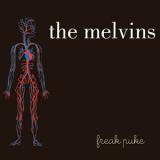
`Freak Puke' (2012) saw Melvins Lite_featuring Buzz Osborne, Dale Crover, and upright-bass virtuoso Trevor Dunn_offering a leaner, more nimble twist on the band's heavy-rock sound. The use of acoustic bass lends an elastic, jazz-tinged punch to otherwise sludgy riffs, while the songwriting remains both off-kilter and surprisingly tuneful, further proving the group's capacity for reinvention.
- 1: Bone Infection
- 2: Doorway
- 3: Angle Of Repose
- 4: Commit
- 5: Property
- 6: I Do
- 7: Idiocy
- 8: Owner
- 9: Cells
- 10: Chromium 6
- 11: Trouble Me
- 12: Crow Eyes
Carve is the second full-length by Bay Area artist Kathryn Mohr. Written over the course of five years and recorded over several weeks in a rural singlewide in the Mojave Desert, the album centers on love experienced as a form of grief, not as an aftermath of loss, but as a condition of intimacy itself.
Mohr describes Carve as an album about how memory exists outside the body, embedded in places and landscapes. It is shaped by her first return to the American Southwest since a childhood road trip at age five, and by the experience of moving through terrain that holds emotional weight long after its origins fade. The record considers how intimacy feels after years of isolation, and what it takes to carve out a life that allows for trust, presence, and feeling rather than mere survival. The project took form after a difficult tour that ended in Joshua Tree. Mohr pointed her car into the desert and drove alone, crisscrossing the Mojave on dirt roads. Months later, she returned to record the album, working alone with an acoustic guitar, a field recorder, and limited supplies. Following that period, Mohr began to allow for intimacy and connection. The time she spent recording Carve in the desert did not create isolation so much as mirror it. Working alone out of an old, western-themed jail Airbnb, the physical enclosure reflected the emotional conditions under which much of the record had been written: distance, restraint, and long stretches of stillness. In that context, love was not experienced as escape, but as something inseparable from impermanence and the awareness of loss.
This tension between connection and inevitability sits at the center of Carve. Some of the album’s songs were written earlier, during a prolonged period marked by emotional distance and apathy. Over those four years, Mohr was working through unprocessed childhood memories and their long-term effects on her ability to connect with others. The work was slow and difficult, involving a fundamental reshaping of how she related to herself and to the world. Carve was mixed by Richard Chowenhill of Flenser labelmates Agriculture. Rather than offering resolution, the album documents the act of remaining present within tension. Carve is not about escaping grief, but about accepting it as inseparable from love itself. Kathryn Mohr’s previous effort “Waiting Room” received the coveted ‘Best New Music' designation and a score of 8.4 from Pitchfork.
Carve is the second full-length by Bay Area artist Kathryn Mohr. Written over the course of five years and recorded over several weeks in a rural singlewide in the Mojave Desert, the album centers on love experienced as a form of grief, not as an aftermath of loss, but as a condition of intimacy itself.
Mohr describes Carve as an album about how memory exists outside the body, embedded in places and landscapes. It is shaped by her first return to the American Southwest since a childhood road trip at age five, and by the experience of moving through terrain that holds emotional weight long after its origins fade. The record considers how intimacy feels after years of isolation, and what it takes to carve out a life that allows for trust, presence, and feeling rather than mere survival. The project took form after a difficult tour that ended in Joshua Tree. Mohr pointed her car into the desert and drove alone, crisscrossing the Mojave on dirt roads. Months later, she returned to record the album, working alone with an acoustic guitar, a field recorder, and limited supplies. Following that period, Mohr began to allow for intimacy and connection. The time she spent recording Carve in the desert did not create isolation so much as mirror it. Working alone out of an old, western-themed jail Airbnb, the physical enclosure reflected the emotional conditions under which much of the record had been written: distance, restraint, and long stretches of stillness. In that context, love was not experienced as escape, but as something inseparable from impermanence and the awareness of loss.
This tension between connection and inevitability sits at the center of Carve. Some of the album’s songs were written earlier, during a prolonged period marked by emotional distance and apathy. Over those four years, Mohr was working through unprocessed childhood memories and their long-term effects on her ability to connect with others. The work was slow and difficult, involving a fundamental reshaping of how she related to herself and to the world. Carve was mixed by Richard Chowenhill of Flenser labelmates Agriculture. Rather than offering resolution, the album documents the act of remaining present within tension. Carve is not about escaping grief, but about accepting it as inseparable from love itself. Kathryn Mohr’s previous effort “Waiting Room” received the coveted ‘Best New Music' designation and a score of 8.4 from Pitchfork.
Carve is the second full-length by Bay Area artist Kathryn Mohr. Written over the course of five years and recorded over several weeks in a rural singlewide in the Mojave Desert, the album centers on love experienced as a form of grief, not as an aftermath of loss, but as a condition of intimacy itself.
Mohr describes Carve as an album about how memory exists outside the body, embedded in places and landscapes. It is shaped by her first return to the American Southwest since a childhood road trip at age five, and by the experience of moving through terrain that holds emotional weight long after its origins fade. The record considers how intimacy feels after years of isolation, and what it takes to carve out a life that allows for trust, presence, and feeling rather than mere survival. The project took form after a difficult tour that ended in Joshua Tree. Mohr pointed her car into the desert and drove alone, crisscrossing the Mojave on dirt roads. Months later, she returned to record the album, working alone with an acoustic guitar, a field recorder, and limited supplies. Following that period, Mohr began to allow for intimacy and connection. The time she spent recording Carve in the desert did not create isolation so much as mirror it. Working alone out of an old, western-themed jail Airbnb, the physical enclosure reflected the emotional conditions under which much of the record had been written: distance, restraint, and long stretches of stillness. In that context, love was not experienced as escape, but as something inseparable from impermanence and the awareness of loss.
This tension between connection and inevitability sits at the center of Carve. Some of the album’s songs were written earlier, during a prolonged period marked by emotional distance and apathy. Over those four years, Mohr was working through unprocessed childhood memories and their long-term effects on her ability to connect with others. The work was slow and difficult, involving a fundamental reshaping of how she related to herself and to the world. Carve was mixed by Richard Chowenhill of Flenser labelmates Agriculture. Rather than offering resolution, the album documents the act of remaining present within tension. Carve is not about escaping grief, but about accepting it as inseparable from love itself. Kathryn Mohr’s previous effort “Waiting Room” received the coveted ‘Best New Music' designation and a score of 8.4 from Pitchfork.
Faitiche welcomes a new artist: Christina Kubisch belongs to the first generation of sound artists. Her practice ranges from performances, concerts, to works with video and visual art, but she is best known for her sound installations and electro-acoustic compositions.
TUNING brings together three pieces by Christina Kubisch from different periods of her oeuvre. What they have in common is the way they transform sound phenomena originally considered “non-music” into compositions.
Jan Jelinek: Gaming in Silence (2024) is the most recent work on this compilation. It’s a collage of electromagnetic waves, voice, and abstract sound textures. How did this combination come about?
Christina Kubisch: Gaming was commissioned as a fixed-media composition for the Sound Dome at ZKM Karlsruhe. Since Resonances: The Electromagnetic Bodies Project (2005), I’ve been making recordings in the old and new server rooms at the ZKM and in their permanent collection of historical computer games. Computer games like Asteroids (Atari, 1979) and Poly-Play (VEB Polytechnik, 1986) have specially generated analogue electromagnetic waves that interest me in particular on account of their density, rhythms and textures. I originally studied painting and to me the work of composition often feels like painting an abstract picture. I alter my source material as little as possible, layering and overlapping until a distinctive sound space emerges. In recent pieces, I sometimes combine magnetic waves with field recordings or live instruments. In Gaming it’s my recording of a Chinese song about silence.
JJ: Two persons walking through a street in Madrid (2004) is a recording from your Electrical Walks series. Here we should give a brief explanation of one of your best known works: participants in an Electrical Walk move through public spaces wearing prepared headphones that allow them to receive electromagnetic waves from their surroundings – for example from security gates, ATMs or neon signs. They discover a situation that normally is inaudible to the human ear and they can actively shape it by choreographing their movements. I really admire this piece, not least because there’s no clear dividing line between participants and artist. What exactly do we hear in Two persons walking through a street in Madrid (2004)?
CK: With this early work, I wanted to understand what is heard by people participating in an Electrical Walk in the same place but moving in different ways. The Spanish composer Miguel Alvarez-Fernàndez and I set off from opposite ends of a major shopping street in Madrid, met briefly in the middle, and then continued to the end. We both recorded our walks and I then layered them over one another. You might call it a work of electromagnetic conceptualism.
JJ: Diapason (2009 version) is an installation that plays a composition based on sounds from fifteen tuning forks. This setting is audible in the recording: there’s no dramatic arc, no beginning or end – instead, it recalls a piece of aleatoric music focussing on the decay phase. How did you come to make this work and could you tell us something about your compositional method?
CK: Diapason is part of a series of three pieces that deal with “non-instruments” or instruments that no longer exist: electrical mine bells used to send signals to the workers underground; a historical glass harmonica originally used for medicinal purposes; and tuning forks that were used by doctors to test people’s hearing. All of these methods are no longer in use. The sound of the tuning forks, audible only if held close to the ear, was recorded at the electronic studio at Berlin’s Technical University in such a way that even their decay remained audible. The frequencies range between 64 and 2048 Hertz and they can be adjusted at micro-intervals using small movable weights. The sequence and the duration of the pauses are dictated by chance and were not defined in advance. The 2009 version was created for an installation in the historic Holy Cross Church (Korskirken) in Bergen. Visitors could enter and leave the space at any time, deciding for themselves where and for how long they wished to listen to the sounds played back over an array of small loudspeakers placed on the floor of the apse.
Credits:
Gaming in Silence: commission of the ZKM/Hertzlab, Karlsruhe 2023
elektronic sound processing: Tom Thiel
sound engineering and mixing: Eckehard Güther
Diapason: produced at Elektronisches Studio of TU Berlin
rearrangement: Eckehard Güther
Christina Kubisch, published by Edition Christina Kubisch / Random Musick Publishing
image front: Transitionen 2021 by C. Kubisch, sonagrams of electronic waves (courtesy: Galerie Mazzoli Berlin)
image back: Diapason Tuning Fork, property of Folkmar Hein, Photo: Archiv Christina Kubisch
design by Tim Tetzner
mastered by Giuseppe Ielasi
Thanks to Miguel Álvarez-Fernández, Folkmar Hein, Dominik Kautz and Mario Mazzoli
- A1: The Gathering
- A2: She Wants Me
- A3: Pants On Fire
- A4: War & Peace
- B1: Luva Changer
- B2: Samba
- B3: After Hours (Extended Euro Mix)
In the vibrant, post-millennial landscape of independent hip-hop, few collective names commanded as much respect as the Living Legends. A monumental alliance of some of the West Coast's most respected solo artists—including Murs, The Grouch, Eligh, Aesop, Bicasso, Luckyiam, Sunspot Jonz, and Arata—the crew's 2008 album, The Gathering, served as a powerful declaration of their unity and enduring relevance.
The Gathering was a snapshot of a legendary crew working at the peak of their collaborative power. The project masterfully weaves together the diverse styles of its eight members, moving effortlessly from the conscious storytelling of Murs to the soulful, introspective flow of The Grouch and Eligh, and the abstract lyrical dexterity of Aesop. The production, handled largely within the collective, provides a lush, sample-heavy, and distinctly West Coast soundscape that perfectly complements the lyrical fireworks. Tracks like the anthemic title track "The Gathering" and the legendary posse cut "After Hours" showcase the organic chemistry that made the Living Legends a seminal force in underground music.
For the first time ever, this pivotal album is being officially pressed on vinyl. This highly anticipated Record Store Day 2026 release finally delivers The Gathering to the format its rich, soulful production has always deserved. This limited edition pressing is presented on striking Coke Bottle Clear Vinyl, a perfect visual complement to the album's crisp, refreshing sound.
A crucial artifact of independent hip-hop history, The Gathering on vinyl is an essential addition for fans who have supported the Living Legends for decades and a must-have for vinyl collectors looking to own a tangible piece of the era's best crew collaborations. Don't miss the chance to own this definitive, first-ever vinyl pressing of a true underground classic.
- 1: The Promise
- 2: Longing
- 3: In The Wake Of Blue
- 4: Flux
- 5: Vapor
- 6: When Birds Flock
- 7: The Endless Thread
- 8: The Quiet Edge
- 9: Shadows In Bloom
April Records proudly presents the new album from Danish trombonist and composer Lis Wessberg. Her most personal album to date, In The Wake of Blue is a song-driven work exploring transience, love, and transformation. Expanding her writing while remaining rooted in her distinctive instrumental voice, Wessberg creates an intimate musical landscape where lyric, melody, and texture carry equal weight. Wessberg has established herself as a leading voice on the European jazz scene through her band Yellow Map and a series of acclaimed releases on April Records. Her previous album, Twain Walking (2024), marked her first step into English-language songwriting and earned a Danish Music Award nomination in 2025 for the track Behind the Walls. In The Wake of Blue develops this direction further. The album draws on images from nature - sea, tides, clouds, mist, and birds - used as emotional anchors rather than abstractions. These elements frame songs that move from uncertainty and loss toward openness, connection, and renewal. The title reflects this arc: "blue" as melancholy, depth, and memory, and what emerges in its wake. Vocalist Veronika Rud is central to the album"s sound, bringing vulnerability and clarity to the songs. Rather than a traditional singer-led project, the music unfolds as a dialogue between voice and trombone, with Wessberg"s warm, airy tone mirroring and extending each song"s emotional core. At times the two move in close unison; elsewhere, they diverge and reconnect. The core ensemble - Steen Rasmussen (piano and keys), Lennart Ginman (bass), and Jeppe Gram (drums) - provides a responsive, understated foundation, while string quartet Live Strings appear on two tracks, expanding the ensemble"s depth and resonce. In The Wake of Blue offers a quietly assured statement from an artist continuing to refine a voice that speaks as clearly through brass as it does through words.
- 1: Through Darkened Glass
- 2: Very Heavy Greening
- 3: Wet Skull
- 4: The Magus
- 5: Exodus
- 6: Music For Mandrax
- 7: Return To Earth
- 8: The Middle Way
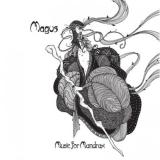
A magus is a wizard…a sorcerer. Magus, the band, is certainly interested in such things (who isn’t), but the name is especially apt due to the band’s approach to alchemy, the blending of rock, gothic, proto metal, and psychedelic styles to create a sound that is, ultimately, unique. Part of that uniqueness comes from the instrumentation. While guitar is often a dominant instrument of the rock oeuvre, the Fender Rhodes generally plays a supportive role. Not so here, where Jessica Weeks’ deft use of the keyboard dovetails with Greg Weeks’ more standard six-string approach. Not standard is the band’s sound. Doomy yet inspirational, dour yet vibrant, the duo’s tunes map sinister realms whose subjects span metaphysical creatures to enigmatic portals. You know, the typical stuff that rubs elbows with a magus.
Formed in late 2024, Magus sprung from a desire by both artists to experiment with darker, heavier sounds. Long enamored of artists like Flower Travelling Band,, Black Sabbath, and Deep Purple, the duo delved deeply into trance like riffs and euphoric solos to create the backbone of what has become their debut album, Music for Mandrax. This thirteenth Language of Stone offering features grounded, metronomic grooves, organic, lugubrious synth lines, and tandem vocals (supplied by both Weekses) that, in total, weave a heavy, trancelike spell sure to entice fans of bands as disparate as Sabbath is to Pink Floyd. Recorded at Weeks’ Hexham Head studio (to analog tape, of course), the band enlisted long-time counterparts Jesse Sparhawk (bass) and Ben McConnell (drums) to round out their sound and lock down the grooves that propel the album.
Mixed by Brian McTear and Amy Morrisey at Miner Street in Philadelphia, the band’s fully realized vision came to fruition, which left only the album art to contemplate. The band, wishing to further the gothic aesthetic of their sound, enlisted fashion designer and artist extraordinaire Hogan McLaughlin (Game of Thrones) to create the starkly beautiful line drawings of the front and back covers. The duo travelled to Salem, MA to complete the package with Courtney Brooke Hall, who shot the moody and evocative photographs that grace the gatefold release’s inner panels.