clear vinyl
Brooklyn Sway returns for its fifth release with another all-star cast of names drawn from the Brooklyn underground, as always vinyl only and with label art from NYC mural legend Cern.
Label regulars Vivian Wang and DeWinter lead off the A-side in a tough-but-dreamy style on 'What About Love', the heavily processed vocals of NYC house guru Kevin Williams giving the tune a true NYC afterhours flavor. Next up is David Paglia, also a frequent label contributor, whose 'Spellbound' toughens up the rhythm section with dub bass and a steady breakbeat backbone while liquid pads and the vocal hook hold dancers in their spell.
The flipside ups the ante for grime, leading off with label head Jay Prouty, DeWinter, and NYC OG Emma's 'What We Do', precision tooled for when the afterparty gets dicey. A hip hop acapella floats through a dense web of flutes, breaks, and a rugged house beat: smart DJs will sense main floor potential here, swaying halfway between gangster lean & proper house dancing. Charles Levine from Soul Clap needs no intro, and his 'Gimme A Break' is equally literal, a funky breakbeat belter with effortless vocal flourishes that balances perfectly between hard and smooth, just the way we like it in Brooklyn.
Buscar:off william
A new artist on the Citizen Records / Clivage Music roster, Vhinz is a musician based in Brussels. After taking his time to break onto the electronic scene, he’s now ready to share Belvédère, his debut, dreamlike album, confidently intense, sweeping between cinematic songs and soaring, epic electronic sounds.
Vincent Honca is Belgian, with Armenian roots and a love of keyboards: the mini synth he used to play as a child, the classical piano of his years of training at the Académie de Musique, the Yamaha synth of his teenage years... During the noughties of his adolescence, electronic music was omnipresent in his life as he listened to and admired Daft Punk, Moby, Vitalic, Air and The Chemical Brothers. He also went out dancing, a lot, in the nightclubs and parties of Brussels and the vicinity, and soon his love of computers, technology and synthesisers led to him producing his own music. “I wanted to create beautiful textures with synths,” he says. “I wanted to have fun and discover the possibilities. As part of the internet generation, I taught myself everything I know through reading magazines and checking the forums.”
Vincent went on to become a computer programmer and decided to make music in as much of his spare time as possible. His first productions came out in 2015, including “Drastical”, one of three deep house dancefloor-orientated tracks recorded with none other than Kris Menace. “At the time I was really searching for my musical identity,” explains Vincent, and progressively his music started to lean towards another of his passions – films and film music. “I’ve listened to soundtracks a lot since I was a teenager, and they’ve been a big influence, in particular the music for Heat by Elliot Goldenthal, Gladiator (Hans Zimmer), Saving Private Ryan (John Williams), The Last Temptation of Christ (Peter Gabriel), The Virgin Suicides (Air) and Leon (Eric Serra).” Coincidentally, Vincent has already worked on two independent Belgian films by director Christophe Karabache, UltravoKal and Vortex, both collaborations with Michel Duprez.
Now Vincent has chosen the name Vhinz, bringing together his expertise with machines and computers, his passion and enthusiasm for the electronic sounds of his adolescence and his adoration of cinema’s powerful, impactful soundtracks. Vhinz’s first track is thus called “Aether”, a track brimming with character and confidence, with sung-spoken vocals that sweeps the listener up in bewitching synthetic themes and drums like an off- kilter heartbeat. The track perfectly encapsulates the Vhinz sound, and Citizen Records – the only label he sent it to – immediately loved it and were ready to release a 12” with more. “Then Covid and the lockdown happened, and everything came to a complete halt,” remembers Vhinz. During those long two years without anything being released, the project continued its gestation and has now grown in a mini-album of eight coherent, fascinating tracks. “I really wanted a strong concept for everything, and so was born this album that I’ve called Belvédère. I imagined myself on a belvedere with a panoramic view of the world, channelling all the emotions it elicited in me into music.”
Belvédère is a dreamlike debut album, confidently intense, sweeping between cinematic songs and soaring, epic electronic sounds. It’s a place for Vhinz to showcase his dreams, talk, sing and invite others too: Margot Ferro sings on “Le Passage” and “Envole-moi”, and Michael Meers lends his vocals to “Evolution”. “My album tells a story, with the tracks in chronological order. There are both times of hope and darker periods of my life, with sadness and love,” meaning that listeners are invited to experience a suite of different emotions and be swept along by the author’s musical daydreams. Musically, the album falls somewhere between Moby, Vitalic, Air and Serge Gainsbourg, with a density and atmosphere that are completely Vhinz. “With Belvédère I was looking for beauty, but also something darker, dirtier, more organic. The album is the culmination of that.”
- A1: Ivory
- A2: Talk
- A3: No Good Reason
- A4: Invincible (Feat. Daniel Caesar)
- A5: Endlessly Interlude
- A6: Killing Me
- A7: Go Away
- A8: Waiting On You
- B1: Petrified
- B2: Personally
- B3: En El Olvido
- B4: Tamagotchi
- B5: Can't Get Over You
- B6: Evergreen (You Didn't Deserve Me At All)
- B7: Bad Life (Feat. Kali Uchis)
- B8: Mr. Neighbor
Omar Apollo veröffentlicht offiziell sein mit Spannung erwartetes Debütalbum IVORY.
IVORY bringt Omar Apollos Songwriting auf die nächste Stufe - es überwindet Genregrenzen und Sprachbarrieren, während es eine noch größere musikalische Vielfalt des aufstrebenden Superstars zeigt.
Das neue Album enthält die zuvor veröffentlichten Singles "Tamagotchi", produziert von Pharrell Williams und Chad Hugo, "Killing Me", das mit einem Fernsehauftritt in der Tonight Show mit Jimmy Fallon debütierte, und "Invincible" mit Daniel Caesar.
Darüber hinaus enthält das Album die von Teo Halm produzierte gemeinsame Single "Bad Life" mit Kali Uchis und "Go Away", das von Omar selbst zusammen mit Carter Lang und Chromeo produziert wurde.
In nur wenigen Jahren entwickelte sich der in Indiana aufgewachsene, mexikanisch-amerikanische Singer-Songwriter vom Teenager-Strummer zu einem der heißesten R&B-Künstler seiner Generation.
You Can Can is an echoed affirmation, an album which traces song forms around silence, field recordings, and degraded analog memories. This is folk music transmogrified and mutated, as if recorded and reconstructed in Pierre Schaffer’s GRM studio.
Not your typical Mariposa folk duo, the group is comprised of Toronto avant-music scene stalwarts, vocalist Felicity Williams (Bernice, Bahamas) and bricolage artist and synthesist Andrew Zukerman (Fleshtone Aura, Badge Epoch). The album feels like a somnambulant conversation, fragmented and half-remembered with Williams’ vocals traveling through a landscape of field recordings and Zukerman’s saturated concrète topographies. It is an electro-acoustic assemblage, both analog and digital, comprised of air, electricity, minerals, wood, and water. Although the album nods towards traditional forms of folk and musique concrète (if at this point it can be called a traditional form), it is outwardly and inwardly contemporary; non-linear, citational, opaque, and sui generis. In a way it feels like a sonic index of the narrative experiments found on the infamous Language school-related publisher The Figures, in the work of Lyn Hejinian, Clark Coolidge, and Lydia Davis. In the musical continuum, the album picks up where Linda Perhacs left off in the early 70’s—explored by Gastr Del Sol in the ‘90s—a convergence of rural acoustic idioms and urban avant-electronics. This is country music for the discerning cosmopolitan citizen of the 21st Century.
RIYL: Luc Ferrari, Brannten Schnüre, William Basinski, Oval, Eric Chenaux, Emmanuelle Parrenin About Everything In Time and Failure Figures, Felicity Williams says:
Everything In Time is indebted to the language of Brazilian author Clarice Lispector (as translated by Alison Entrekin). Drawing on insights from psychoanalysis, we trace the roots of melancholy to render them available to consciousness; words from the ghostly realm of the transpersonal filter through dreams and shine a beam of light onto a lone trillium in a forest at night. Other influences include the experience of not knowing, of being subject to a gestation outside of one’s control. This is an ode to the power of naming to obliterate, to set free.
Failure Figures is a meditation on the radical contingency of reality and the vicissitudes of the will. With Slavoj Zizek as my guide (think: “Hegel for dummies” - I’m the dummy in this scenario), I wander through the valley of the shadow of death, and take heart. The last verse refers to an experience I had recording at a studio in Brussels. I was singing in French, with which I have some fluency, and the producer was complaining to the artist whose song it was that my delivery was not convincing. Thinking I was out of ear shot, he said in French, “c’est comme elle n'est pas là”; I was pronouncing the words correctly, but I failed to express anything. So what or whom is responsible for conveying meaning, if not the form of the word itself? And if the connection between meaning and form is broken, how do we fix it?
Gratitude to Thom Gill (guitar) and Daniel Fortin (bass) who joined us on the recording of Failure Figures. Thanks as well to my old roommate Christopher Willes, who unwittingly left behind his hand bells deep in the hall closet. We unearthed them by accident, and the bells became an important sound element. Thanks to other past roomies Robin Dann and Claire Harvie, whose childhood piano and guitar respectively still reside with us, and were used in the recording. Field recordings were made in Toronto, Canada and Celestún, Mexico in 2020.
Feedback Moves kicks off 2023 with a new record by @xcrswx and Lolina. @xcrswx are Crystabel Riley (drum-/human-skin) and Seymour Wright (saxophone), they released ‘Call Time/Hard Out’ on Feedback Moves in 2020. Lolina is an electronic and digital musician, who has previously released music as Inga Copeland and was a member of the band Hype Williams.
Their collaborative relationship stems back to 2020. Lolina invited @xcrswx to contribute new work to a radio residency on NTS. They made 3 pieces played across 3 episodes. After these were broadcast, further ideas were exchanged which led to a collaborative audio-visual piece, streamed on Cafe Oto’s website in February 2021. They also performed as a trio live at Café OTO in 2022.
The artists now present a split 10” vinyl. @xcrswx weave the above-mentioned pieces into a 10 minute piece titled ‘FIXES’. The duo strip their sound to bare components. Beginning with the sound of fireworks, the pair then work through stuttered snare shots and warbled, interplaying saxophone.
Lolina presents ‘FM’; some of her strangest and most subtle work to date. Echoing and furthering the abstract turntablism found on previous records ‘Who Is Experimental Music?’ and ‘Fast Fashion’. We hear found sounds, close and distant, rhythmically gathered and dissolved in a swirl of dub tone and timbre.
Tracks have had early play on NTS Radio, Clydebuilt Radio and are expected to be played on BBC Radio 3’s ‘Late Junction’ and ‘Freeness’ show’s.
Your Old Droog is back with another exhilarating hip-hop opus. Fresh off a series of outstanding projects, the prolific rhyme author is now debuting the new album Yod Stewart. Featuring captivating beats by Tha God Fahim, Nicholas Craven, Conductor Williams, Lee Scott, and more, the collection illuminates YOD's world-class songwriting and highly relatable storytelling prowess. Yod Stewart is a conceptual endeavor set within an intriguing narrative context: a recording artist comes across a Rod Stewart wig, takes it home, falls asleep, and becomes the pop star of his dreams. Follow the superstar on his turbulent but ultimately rewarding journey filled with musical meditations on lucid dreaming, keys to success, lost friendships, toxic relationships, teenage heartbreaks, and more. Your Old Droog does it all, again.
Jackie Mclean&Michael Carvin/Chris Mcgregor’s Brotherhood Of Breath
Melodies Record Club 001: Four Tet selects
We’re excited to be launching a new release series: “Melodies Record Club”, a string of DJ and artist curated mini compilations in loud 12” format.
The first instalment was put together by Four Tet, selecting two big peak-time Jazz tracks he used to spin regularly at Plastic People.
On one side, we’ve got all time jazz greats Jackie McLean and Michael Carvin’s De I Comahlee Ah, taken from their seminal album Antiquity recorded in Denmark back in 1975. A year and a half ago, we visited Steeplechase, the original label in the outskirts of Copenhagen. They informed us that at the time, the track was cut short as it didn’t fit on the full LP. They were kind enough to provide us with the tape of the full original recording, allowing us to release for the first time the full extended version capturing twelve and a half minutes of studio magic. Speaking with Michael back in November, he told us that every song on that album was recorded without any overdubs. They had taken their shoes off and organised the studio in such a way that they could move from instrument to instrument during the take (!!)
On the flip, we have Chris McGregor’s Brotherhood of Breath – MRA. Back in 70s London, the Brotherhood had brought together musicians who had sought refuge from South Africa’s apartheid regime and the best of a new generation of British jazz musicians. Music journalist Richard Williams, who had originally reviewed the band in the 1970s tell us: “They made music that appealed in equal measure to the head, the heart and the feet, taking the jazz legacy of Duke Ellington and Charles Mingus and adding to it the fantastic dance rhythms and gorgeous harmonies of the townships and untethered collective improvisations of the new free music”.
Four Tet’s instalment is out early May in 12” format and digitally (stream & download), first press comes with a folded A2 insert with words from and about the artists. Graphic design by Studio ChoqueLeGoff, illustration and animation by Nevil Bernard and for the audiophiles out there, remastered and cut at half speed by Matt Colton at Metropolis Studios!
The second instalment curated by Ben UFO is scheduled shortly, which will be followed over time by a string of releases including selections from Hunee, Mafalda, Floating Points, Anya & Julia from Javybz, Daphni, Josey Rebelle, Charlie Bones, Gilles Peterson… and more, stay tuned!
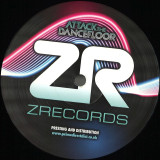
The 17th in our Attack The Dancefloor Series that is always a strictly vinyl affair. This time we’ve got some exclusive remixes to dish out in this Special Remix edition of the series.
First up we got the Freerange boss in to remix the classic Sunburst Band track ‘He Is’. The mighty Jimpster has turned in a rich and sublime mix that truly deserves to be called Deep House. Warm Rhodes licks twinkle over deep kicks dubbed out guitars and hazy echoes. The whole track is drenched in Jimpster's deft touch as a producer and we think this is one of his best remixes. A Heavenly rework you might say.
Next up is a long lost remix from Andrés of ‘I Recoginise’ by Joey Negro. Never before released this was unearthed deep within a hard drive in the ZR vaults, now seeing the light of day it deserves. Andrés does what you would expect of him delivering a bass heavy MPC driven rework, utilising the synth lines and vocoder to great effect.
Fresh off a run of hot remixes for Glitterbox is Razor n Tape’s JKriv who turns the disco arpeggios up to 11 with his soaring remix of Prospect Park’s ’The Kinda Love’ complete with live strings and percussion.
Last but not least, The Visions’s dreamy piano led remix of the classic 'My Vision' by Jakatta featuring none other than Seal on lead vocals.
Two stone cold Roy Ayers classics get the South Street Disco official reissue treatment, one side the feel-good disco-tinged, jazz funk fire ‘Running Away’ and the other the smooth groove, love letter funk bomb ‘Love Will Bring Us Back Together’. Melting hearts, melting minds, is there a better Valentines gift out there then two slices of joy from Roy?
From hip hop to house, ‘Running Away’ has been a favoured sampling treasure since it came out in 1977. Co-produced alongside Edwin Birdsong and William Allen, joyous vocal harmonies dance around grooving basslines, strutting guitar riffs and Roy’s warm soothing tones. Top it off with some trademark vibes and it’s a one-way ticket to happiness, pure sunshine smiles all round.
Flip it to find ‘Love Will Bring Us Back Together’. Straight up seductive business co-produced by Carla Vaughn. It’s silky, it’s smooth, it’s everything you want it to be and more. Clavinet wizardry, buttery Rhodes layers and fiery vocals. Loved up funk at it’s best.
After the creation of his own label and four EPs (Intuitive, Blend, Exil, Singles), here is Thylacine with a first album called Transsiberian, named after a recent trip to the other side of the world.
In the spring of 2015, William left for Russia with a video crew. The goal: to get carried away by the famous Trans-Siberian, which connects Moscow to Vladivostok, and stop at the option of fixed and impromptu meetings with local personalities. Time is divided between intense encounters and long train journeys where William locks himself in his cabin to compose. At the option of these stops which, over the days, nourish William's inspiration, he has the right to a concert offered as a welcome by the old ladies of the native village of the graffiti artist Artemiy, polyphonies in Irkutsk, a bell ringer of bells, a traditional musical trio in Kazan, surfers in Vladivostok. A shaman welcomes him in his yurt on the shores of Lake Baikal, with his two little daughters, Aikhai and Mandukhaï. All can be found on Transsiberian, a concept album that places the taste for travel and his curiosity about others at the heart of his contemplative songs. Evolving in the world of contemporary art, for which he composes regularly, William sees an album as a work where performance counts but also emotion and, above all, manner of doing things. "The process of creation matters as much as the end," he says.
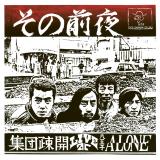
First time reissue of JP free jazz rarity, pre-Seikatsu Kōjyō Iinkai group.
The single album self-released by the quartet Shūdan Sokai in 1977 is one of the most vital documents of mid-seventies Japanese free jazz, documenting Tokyo’s free scene at the precise moment when it began to shift to a handful of tiny venues on the western fringes of the city. In Free Jazz in Japan, Teruto Soejima identifies the extant venue Aketa no Mise in Nishi-Ogikubo as the pioneer of this decamping from the centre: a cramped basement beneath a rice shop, seating just 20 people. Musician-run, operated on a shoestring, these spaces offered a vital site for community, creativity, and a small measure of financial independence — “even though it was in a basement, in spirit it was a loft.”
Among the most active of the new venues was Alone in Hachiōji, nearly an hour from Shinjuku, in a district shaped by universities, lower rents, and a thriving counterculture. Originally opened in 1973 as a jazu kissa, Alone was unusually spacious and equipped with a stage, grand piano, and drum kit. Around 1974, Junji Mori and Yasuhiro Sakakibara began working there, booking free jazz players on weekends and establishing the venue as a crucial hub. Mori recalls early appearances by figures including Kazutoki Umezu, Toshinori Kondo, and others who would define the scene.
In early 1976, Umezu and pianist Yoriyuki Harada — recently returned from New York’s loft jazz environment, where they had played with musicians such as David Murray and William Parker — formed Shūdan Sokai with Mori and drummer Takashi Kikuchi. The name, meaning “mass evacuation,” pointed to their self-chosen exile in Hachiōji. With Alone as their home base, the quartet developed a music characterized by an infectious sense of enjoyment and a willingness to integrate free jazz with elements of song structure. Harada switched between piano and bass; the group experimented with rap-like vocal pieces, jabbering nursery rhymes over bass rhythms.
They returned to Alone on December 24 to record Sono zen’ya (Eve), releasing it on their own Des Chonboo Records, partially funded by advertisements from local businesses printed on the rear cover. The closing “Ballad for Seshiru,” dedicated to Harada’s newborn son, unfolds over a delicate piano melody that moves into emphatic chords as intertwining alto lines rise and spiral.
Alone closed in September 1977, and Shūdan Sokai soon dissolved, later morphing into the expanded Seikatsu Kōjyō Iinkai Orchestra. What remains is a recording rooted in a specific place and moment: a fiercely independent scene sustained by small rooms, close listening, and collective commitment.
- Target Practice
- In The Blink Of An Eye
- Heart Of Darkness
- Love Story
- Pearls
- Opposite Teacher
- Actress
- One Night
OXBLOOD COLOURED + 10" EDIT.[25,42 €]
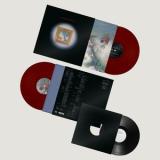
Das Debütalbum von My New Band Believe entstand unter ungewöhnlichen Umständen: Während eines Aufenthalts in einem chinesischen Hotel fühlte sich Cameron Picton plötzlich krank. In seinem delirierenden Zustand entstanden Bilder und Textfragmente, aus denen später Songs wurden - darunter auch der Ausdruck "My New Band Believe", der zum Projekt- und Albumnamen wurde. Picton empfindet den Titel zugleich als kitschig und brillant: eine bewusste Wiedervorstellung, ein Neuanfang, der zwischen Ich-Bezug und kollektivem Anspruch oszilliert. Als Bassist und zweiter Frontmann von black midi war Picton Teil einer Band, die für komplexe Strukturen und kontrolliertes Chaos stand. Nach deren Auflösung 2023 begann er ohne festen Plan mit Studioarbeiten. Aus dieser offenen Phase heraus formierte sich My New Band Believe, unterstützt von Musiker:innen wie Kiran Leonard, Caius Williams, Steve Noble, Andrew Cheetham und Mitgliedern von caroline. Das Album bewegt sich assoziativ durch unterschiedliche emotionale Ebenen. Klanglich setzt es überwiegend auf akustische Arrangements statt auf elektronische Effekte, bleibt dabei jedoch dynamisch. Einflüsse wie Bert Jansch oder Judee Sill sind spürbar. Songs wie "Actress" oder "Opposite Teacher" verbinden Zurückhaltung mit plötzlichen Ausbrüchen. "Target Practice" verwandelt Vigilantismus in eine theatralische Mitsing-Hymne, während "One Night" und "Heart of Darkness" intime, suchende Figuren zeigen. Picton gelingt es, diffuse Ängste in eindringliche, mehrdeutige Popmusik zu übersetzen.
Drei Jahre nach seinem #1-Album „Reparatur“ meldet sich Josh. mit seinem vierten Studioalbum zurück. Auf „Wer singt dann Lieder für dich“ beweist der Wiener Singer-Songwriter und fünffache Amadeus-Preisträger erneut, wie er aus persönlichen Geschichten packende Popmusik schafft – mal leicht, mal melancholisch, immer mit einem Gespür für Timing, Humor und Gefühl. Seit seiner Kindheit spielt Josh. klassische Gitarre und war in Schulbands aktiv. Später studierte er sieben Jahre lang Jazz und Popularmusik, brach das Studium jedoch aus wirtschaftlichen Gründen ab – seine Liebe zur Musik blieb davon unberührt. Heute spiegelt sich diese Erfahrung in einem Sound, der organisch, warm und zugleich überraschend facettenreich ist. Für „Wer singt dann Lieder für dich“ hat Josh. so viele Instrumente wie nie zuvor selbst eingespielt – von Gitarre über Bass bis zur Pedal-Steel – und damit jedem Song eine unmittelbare Nähe verliehen. „Es war das bisher entspannteste und lustigste, gleichzeitig aber auch das arbeitsintensivste Album“, sagt er über die Aufnahmen, die erneut in kongenialer Zusammenarbeit mit Produzent Florian Koch entstanden sind. Seit „Teilzeitromantik“ (2021) ist Koch stetiger kreativer Partner, musikalischer Direktor und Schlagzeuger der Band – eine bewährte Konstellation, die für klare Strukturen und kreative Freiheit sorgt. „Ich glaube, dass es ein Album ist, das wieder die Leichtigkeit des Nonsens gefunden hat“, so Josh., „Momente, in denen man lachen, feiern oder einfach man selbst sein kann, treffen auf nachdenkliche, melancholische Songs.“ Es ist die Momentaufnahme eines 39-Jährigen, der reflektiert – und dabei stets offen für das Absurde und Komische in den kleinen Dingen bleibt.
„Ich habe mir beim Schreiben der Songs keine Grenzen gesetzt“, sagt Josh. „Das spiegelt meine Persönlichkeit ziemlich gut wider: Ich bin jemand, der gern einen Schmäh macht, wie wir hier in Wien sagen – aber gleichzeitig auch immer wieder kämpfen muss und viel über Gefühle, Schmerz und all das nachdenkt.“ Das zeigt sich auf „Wer singt dann Lieder für dich“ in jedem Detail, sei es bei humorvollen Beobachtungen, nostalgischen Rückblicken oder in Songs über das Älterwerden und die kleinen Lebenskrisen („Was hat uns bloß so müde gemacht?“). Nach einem Livejahr 2025, das eine Tour durch Österreich und Deutschland, einen Headliner-Gig auf dem Donauinselfest vor 100.000 Fans sowie eine Support-Show für Robbie Williams umfasste, hat „Austropop-Darling“ (TZ) Josh. in diesem Jahr wieder viel vor: Im April und Mai ist er auf komplett ausverkaufter Solotour in Österreich zu erleben, im Anschluss folgen Konzerte in Deutschland und der Schweiz. Im Sommer geht es gemeinsam mit Rian auf Open-Air-Tour durch Österreich.
- Target Practice
- In The Blink Of An Eye
- Heart Of Darkness
- Love Story
- Pearls
- Opposite Teacher
- Actress
- One Night
- One Night
- One Night - Instrumental
Black Vinyl[23,32 €]
Das Debütalbum von My New Band Believe entstand unter ungewöhnlichen Umständen: Während eines Aufenthalts in einem chinesischen Hotel fühlte sich Cameron Picton plötzlich krank. In seinem delirierenden Zustand entstanden Bilder und Textfragmente, aus denen später Songs wurden - darunter auch der Ausdruck "My New Band Believe", der zum Projekt- und Albumnamen wurde. Picton empfindet den Titel zugleich als kitschig und brillant: eine bewusste Wiedervorstellung, ein Neuanfang, der zwischen Ich-Bezug und kollektivem Anspruch oszilliert. Als Bassist und zweiter Frontmann von black midi war Picton Teil einer Band, die für komplexe Strukturen und kontrolliertes Chaos stand. Nach deren Auflösung 2023 begann er ohne festen Plan mit Studioarbeiten. Aus dieser offenen Phase heraus formierte sich My New Band Believe, unterstützt von Musiker:innen wie Kiran Leonard, Caius Williams, Steve Noble, Andrew Cheetham und Mitgliedern von caroline. Das Album bewegt sich assoziativ durch unterschiedliche emotionale Ebenen. Klanglich setzt es überwiegend auf akustische Arrangements statt auf elektronische Effekte, bleibt dabei jedoch dynamisch. Einflüsse wie Bert Jansch oder Judee Sill sind spürbar. Songs wie "Actress" oder "Opposite Teacher" verbinden Zurückhaltung mit plötzlichen Ausbrüchen. "Target Practice" verwandelt Vigilantismus in eine theatralische Mitsing-Hymne, während "One Night" und "Heart of Darkness" intime, suchende Figuren zeigen. Picton gelingt es, diffuse Ängste in eindringliche, mehrdeutige Popmusik zu übersetzen.
- 1: Purgatory
- 2: In The Morning
- 3: Highway Ii
- 4: Hollywood
- 5: Country Suep
- 6: Patronised
- 7: The Rain
- 8: Big Jump
- 9 10: Days
- 10: Fornever
The track shows SUEP at their best - glistening synth pop with Marr-esque jangle, sweet but emotionally incisive. Singer Georgie Stott - also known for being the keyboardist of the recently ended Porridge Radio - is at peak performance, marrying catchy melodies with off-kilter storytelling.
Receiving acclaim across BBC 6 Music and the indie press for their ‘car boot sale’ pop music, SUEP rummage through the jumble bin of music history, selecting and reassembling its best parts into something playful, strange and deeply artful. The band are affiliates of the Gob Nation collective - including The Tubs, Sniffany & The Nits, Ex-Void, and others., described by the Guardian as uniting around “a leftfield sensibility, lacerating wit and snotty attitude.”
With a slightly darker edge than their delightful EP Shop or last year’s groovy The Rain, Highway II tells the story of hope slamming into disappointment - a Valentine’s date gone wrong. Tears, cigarette breaks, running makeup and snotty sleeves paint a picture of painful emotional dislocation. It comes with an incredible, multilayered dance-routine music video from frequent collaborator, artist Jess Power.
Singer Georgie Stott says: “The lyrics for this poured out of me on Valentine’s Day when me and my partner went out on a date in the Limehouse area, over the river from where we lived in Rotherhithe. I got drunk too quickly, he got grumpy, and tears started streaming down my face because I just wanted to have a nice romantic time. We made up in the Canary Wharf Wetherspoons at the end of the night, but I went to have a cigarette before, to get out all my sobs and wrote all the lyrics on my phone in one go. Then at a practice studio we quickly wrote it around some chords I made up in the room.”
Forever is a confident debut, a masterpiece of modern indie songcraft. Across the album SUEP dip into country, synthpop, garage rock, post punk, and pub rock, but always retain their signature penchant for melodic hooks, snappy structures and straight-to-the-heart lyrics. Artfully unpretentious, the album was recorded by friend Matt Green, best known for his work with The Tubs, and mixed by Mike O’Malley of the band caroline.
Led by Georgie Stott and Joshua Harvey, SUEP have become fixtures of south-east London’s underground through a series of shared living spaces, improvised studios and DIY venues. Now with George Nicholls (The Tubs, Joanna Gruesome, GN Band), William Deacon (PC World), and Louis Forster (The Goon Sax, Expiry) completing the line up, their debut is finally on its way.
Forever is a glimpse into one of the best bands on the scene, not fitting into any trend, but also never fading into obscurantism - SUEP are a band that wear a joie de vivre loosely but fashionably. Now is their time to shine.
- A1: – Mama Tried (2:21)
- A2: – The Whiskey Ain’t Working (2:25)
- A3: – I’m The Only Hell (Mama Ever Raised) (3:02)
- A4: – 14 Carat Mind (2:28)
- A5: – Carrie Brown (3:51)
- A6: – Good Ones And Bad Ones (3:08)
- B1: – Two Doors Down (3:04)
- B2: – Slide Off Your Satin Sheets (2:31)
- B3: – The Running Kind (3:04)
- B4: She Got The Goldmine (I Got The Shaft) (3:12)
- B5: – Old Dogs And Children And Watermelon Wine (4:15)
- B6: – It’s All In Your Head (5:15)
The Lost Highway of Hank Williams and the Highway To Hell of AC/DC are indeed the same damn road. Featuring 12 classic outlaw country songs done in their own inimitable style, the album was recorded completely live in the studio. The bad are supporting the release of the album as well as their 25th Anniversary with extensive live touring and festival throughout the UK, Ireland, and Western Europe throughout 2026. Full UK Tour starting FEB 11 Nerve Centre Londonderry. 12th Whelan's Dublin. 13th The Empire Music Hall Belfast. 14th Liquid Room Edinburgh. 15th PJ Molloys Dunfermline. 17th The Georgian Theatre Stockton-on-tees. 18th Docks Academy Grimsby. 19th Pocklington Arts Centre. 20th The Hairy Dog Derby, 21st Picturedrome Holmfirth. 22nd The Drill Lincoln. 24th 53 Degrees Preston. 25th Queens Hall Narberth, 26th HAYSEED DIXIE Cardiff. 27th Sin City Swansea. 28th Crickhowell. MAR 1st HAYSEED DIXIE Merthyr Tydfil. 3rd The Fleece Bristol, 4th Roadmender Northampton. 5th The Factory Live Worthing. 6th The Harlington Fleet. 7th MK11 Milton Keynes. 8th Hertford Corn Exchange.
The very special return of Boo Williams on Rush Hour. A trip from the Strictly Jaz Unit member that reflects on the sound that has been and where it's going.
Timeless house music from Chicago that draws heavily on Boo's styles and influences from the past, fusing it into a completely idiosyncratic style that is paying tribute to past yet simultaneously looking to the future. Delving very deep without losing form for the dancefloor. A timeless addition to the vast catalogue of heavy classics by Boo!
- A1: Cigarettes & Coffee Al 'Tnt' Braggs
- A2: You're Gonna Miss Me Shirley Raymond
- A3: Shout Bamalama Otis Redding
- A4: I've Been Wrong For So Long Bobby Bland
- A5: Backtracking Little Junior Parker
- A6: That's Cuz I Love You Louis Jones
- A7: You Don't Have To Cry Little Bob & The Lollipops
- A8: Please Think It Over Roscoe Shelton
- A9: If I Don't See You Again Ted Taylor
- B1: Too Many Tears Roy Lee Johnson
- B2: What Can I Do For You Elmore Morris
- B3: You Don't Miss Your Water William Bell
- B4: I Cried Joe Medwick
- B5: Blessed Are These Tears Joe Tex
- B6: Best Of Luck Baby Earl Gaines
- B7: My Love Belongs To You Sam & Dave
- B8: I Don't Hurt Anymore Fontella Bass
- B9: Please, Please, Please James Brown
The Golden Age of southern soul lasted from about 1962 to 1975, when disco ripped the heart out of it. And although it may seem as though the blend of country, gospel and R & B that emerged from the great studios in Memphis and Muscle Shoals in that decade was entirely fresh and new, like any other genre classic, southern soul picked up musical cues and absorbed influences from a whole variety of sources: horn lines from Louisiana's swamp pop, lyrical themes from the blues, songs from country music, and of course so, so much from the black churches. Part of the 'History of Soul' series, this LP reveals the musical antecedents that gave southern soul its inspiration. The music here will tell you the real story - and it will knock your socks off too! Notes by John Ridley.
The album has been a labour of love spanning nearly a decade with the origins of KAYTRAMINÉ trace back to 2014, when Aminé unveiled "Not At All," an unofficial remix of KAYTRANADA's 2013 track "At All." Impressed by Aminé's rendition, KAYTRANADA extended a hand to collaborate officially, leading to his production contributions on three songs from Aminé's 2015 mixtape, Calling Brio. The upcoming album showcases the pair reigniting their innate chemistry, further solidifying their musical bond.
- Sidestepping
- You Have Been Blessed
- Visiting Dust Bunnies
- Arrivederci Back Pain
- Don't Answer (When They Call)
- Tyres
- Spotless
- Chef's Hat Renaissance
Seit etwas mehr als einem Jahrzehnt hat sich EXEK ganz leise zu einer der faszinierendsten Bands der Welt entwickelt, die sich von Album zu Album verändert und weiterentwickelt und sich nach und nach geöffnet hat, ohne jemals diese seltsame, unergründliche und insgesamt essentielle Eigenschaft zu verlieren, die sie so großartig gemacht hat - so EXEK-mäßig. Nun bringt die Post-Punk-Band aus Melbourne - Sänger und Chefarchitekt Albert Wolski, Gitarrist Jai Morris-Smith, Schlagzeuger Chris Stephenson, Synthesizer-Spezialist Andrew Brocchi, Trompeterin und Sängerin Valya YL Hooi und Bassist Ben Hepworth - ihr siebtes Album und erstes für DFA raus: ,Prove The Mountains Move". Es ist, wie Wolski sagt, ,ein bisschen epischer" als alles, was er bisher aufgenommen hat, ein üppiges und unverhohlen melodisches Set surrealistischer Popmusik, das sich in Widersprüchen suhlt. ,Dieses Album ist in seiner Machart experimentell", sagt Wolski, ,aber es klingt nicht unbedingt experimentell." Dafür gibt es einen guten Grund. Die Arbeit begann an einem kalten Nachmittag im Juni 2023, als Wolski und Stephenson sich in den Pelican Refill Studios in Melbourne trafen, um die Drums aufzunehmen - das erste, was sie immer machen. Danach ging Wolski alleine nach Hause und fing an, die aufgenommenen Beats und Breaks durchzugehen, wobei er sich von den Drum-Sounds zu Melodien und Basslines leiten ließ, Loops und Layers erstellte und so die Grundlage für ,Prove The Mountains Move" schuf. ,Ich fühle mich wohl dabei, alleine wie ein verrückter Wissenschaftler herumzutüfteln", sagt er. ,Ich habe es auch genossen, ohne klare Absicht auf Aufnahme zu drücken. Meistens führte mich das in eine interessante Richtung, die mein Bewusstsein wahrscheinlich nicht gesucht hätte." Und doch gelangte Wolski irgendwie zu seinem direktesten Werk seit Beginn des Projekts, neu inspiriert von der Klarheit und Prägnanz des Mainstream-Pop, der starken und unbestreitbaren Anziehungskraft einer einfachen Gesangsmelodie. Nachdem die berühmt-berüchtigten strengen COVID-Lockdowns in Melbourne beendet waren, wollte er einfach draußen bleiben. ,Die Arbeit an neuer Musik trat gegenüber dem Feiern mit Freunden in den Hintergrund", sagt er. ,Und diese Partys waren voller großer Hits als Soundtrack - Sachen, die ich selbst nicht wirklich hörte, Sachen, denen ich seit meiner Jugend nicht mehr begegnet war. Aber in den frühen Morgenstunden des Sonntags klingt ,Alive" von Pearl Jam, als würde man mit Gott sprechen. Genauso wie ,All I Wanna Do" von Sheryl Crow und ,Feel" von Robbie Williams. Krautrock und Dub waren immer noch in meiner DNA, aber die Musik, die ich zu machen begann, war vielleicht etwas unbeschwerter und vielleicht auch etwas emotionaler." Das heißt nicht, dass man hier Spuren von Eddie Vedder in Wolskis Gesang erwarten sollte, aber die Einsätze fühlen sich auf ihre eigene Weise ähnlich an - so klingt es, wenn EXEK wirklich alles geben. Nimm zum Beispiel die schwebenden Synthesizer des Openers ,Sidestepping" oder die gewaltigen Gitarren von ,Arriverderci Back Pain", die pyrotechnischen Klavierklänge von ,Don't Answer (When They Call)" oder die Bowie-artige Melancholie von ,You Have Been Blessed". Die Arrangements wirken offener, der Sound fokussierter. Es fällt nicht schwer, Wolski zu glauben, wenn er sagt, dass er viel Zeit damit verbracht hat, seine Mixe von ,Prove The Mountains Move" mit einigen der wichtigsten Alben, die je aufgenommen wurden, darunter ,Abbey Road", zu vergleichen. Aber alles ist relativ. Und textlich bleibt Wolski weiterhin verschlüsselt. ,Jeder Song ist eine Vignette in einem abstrakten Milieu, sei es ein experimentelles Chiropraktik-Geschäft am Flughafen oder spärlich bekleidete Kreaturen aus Staub in einem Food Court. Egal wie verrückt das auch sein mag, es gibt Themen und Motive auf dem gesamten Album, sowohl textlich als auch musikalisch, die sich in verschiedenen Songs widerspiegeln und aufeinander Bezug nehmen." Diese Dissonanz zwischen direkt und indirekt, glatt und strukturiert, schattig und glühend, verrückt und ausdruckslos ist die treibende Kraft im Herzen dieser Songs, seiner bisher besten.