Mit "Cotton Crown" erweitert die Band ihre Klangpalette um eine kaleidoskopische Bandbreite an Einflüssen: Von gefühlvollem Pub-Rock über HÜSKER DÜ-Aggression bis hin zu melancholischem Sophisto-Pop ist alles dabei. Wie Pitchfork feststellte, sehen THE TUBS den Jangle als eine "riesige Welt der Stimmungen und Musen" und "Cotton Crown" zeigt, wie sie diese Welt weiter erforschen und dabei einen unverwechselbaren Tub-ular-Sound kreieren. Das liegt nicht zuletzt an der Gesangsleistung von Owen 'O' Williams, der oft mit einem jungen RICHARD THOMPSON verglichen wird, und an seinen offenen, düster-komischen Texten. In "Cotton Crown" widmet er sich weiter seinen Lieblingsthemen: Liebespsychose, unsympathisches, psychisch krankes Verhalten und die Demütigungen des Musikerdaseins in London. Dieses Mal ist jedoch ein Gefühl des Risikos in seinen Selbsteinschätzungen und Bekenntnissen spürbar. Im Mittelpunkt steht das Leben in der Zeit nach dem Selbstmord seiner Mutter (der Folksängerin Charlotte Greig), und Williams singt über die unbeholfenen, aufdringlichen und gut gemeinten sozialen Interaktionen, die darauf folgten. Das Albumcover zeigt ein Bild von Williams als Säugling, der von Greig auf einem Friedhof gestillt wird - ein Werbefoto, das um die Veröffentlichung des Debütalbums von Charlotte Greig herum aufgenommen wurde. Der wesentliche Trick von "Cotton Crown" besteht darin, die lyrische Düsternis von Williams durch fröhliche, hakengeladene Pop-Perfektion zu kompensieren. Das liegt vor allem an der Gitarrenarbeit von George Nicholls, der auf dem Album mühelos zwischen dem virtuosen Jangle von JOHNNY MARR, dem treibenden Folk-Rock von PENTANGLE und den Refrain-lastigen Hi-Fi-Grooves zeitgenössischer Bands wie TOPS oder THE 1975 hin- und herwechselt. Dazu kommt die halsbrecherische Rhythmusgruppe von Taylor Stewart (Schlagzeug) und Max Warren (Bass) - die jeden Song mit einer Power-Pop-Wut angreifen, die an GUIDED BY VOICES in ihren besten Zeiten erinnert - und schon hat man ein Rezept für großartigen Indie-Rock. Das Debütalbum der Band, "Dead Meat", wurde durch Mundpropaganda zu einer Sensation, die der Band Auszeichnungen von Pitchfork, The Guardian, MOJO, Uncut, SPIN und anderen einbrachte. Sie gewannen sogar einige prominente Fans: der unnachahmliche Mark Proksch (The Office, Better Call Saul, What We Do in the Shadows) spielte die Hauptrolle im Video zu ihrer Single "Round The Bend" und die Punk-Legende IGGY POP lobte sie in seiner BBC 6Music Radiosendung. Owen Williams, Max Warren und George Nicholls waren zuvor Mitglied von JOANNA GRUESOME - eine Band, die den Welsh Music Prize gewann, ausgiebig durch Großbritannien und die USA tourte und von Pitchfork, Rolling Stone, The New York Times, The Guardian und anderen gelobt wurde. Sängerin Lan McCardle, mit der Williams sowohl bei JOANNA GRUESOME als auch bei EX VOID zusammen musizierte, steuert bei einigen Stücken auf "Cotton Crown" Backing Vocals bei.
quête:off william
Cee ElAssaad's ENSOULED label kicks off with a head-turning first release that lays its cards on the table with a powerful title: Freedom, Innovation, Resonance Vol 1. Some of deep house music's most authentic voices contribute, starting with Trinidadian Deep who layers up spiritual synths, organic percussion and smooth beats ina typically cool fashion. The Cee ElAssaad remix brings brighter melodies, keys and jazzy overtones. Boo Williams's 'My Place' is like a busy lava lamp with gloppy keys rising and falling in a thick and velvety arrangement then Cee ElAssaad and Doug Gomez shut down with the steamy late night house of 'Jam It To The Riddim'.
Offthesky (Jason Corder) is experimental-ambient multimedia artist based in Denver, CO. He has been producing music, video art, audio software, and the occasional interactive sound sculpture, for over 20 years. He teaches private courses on generative music and occasionally lectures on various sound design topics at Denver University. He currently is the Audio Director at the Denver based videogame studio Dire Wolf. Over the years, he has worked with labels such as Home Normal, 12k's term, Facture, LAAPS, IIKKI and more. Over the years he has performed at Mutek, Decibel, Communikey and other festivals, sharing the bill with likeminded artists Pole, Matmos, William Basinski, and more.
Give It Up Or Turnit a Loose (Edit) by James Brown b/w Web (Edit) by Hampton Hughes / Give It Up or Turnit a Loose (Bonus Breaks) by James Brown| Galaxy Sound Company — GSC45-044, test pressing | The long-running @galaxy_sound_company imprint has been responsible for some superb re-edits over the years, most of which are pleasingly purist in tone — meaning they are pro rearrangements with no added effects but & needless new beats or cheap trickery like so many out there— making any of their releases cop-on-site. & as you can hear from the test pressing, the 44th in the stellar series delivers yet again.
Side A is a masterclass in breakbeat editing of a b-boy classic sample source. Yes, there are many killer JB edits out in the universe, but when you see that the legendary Black Cash & Theo AKA Thelonious Beats take a turn, you know you gotta cop this mutha on site. Here the edit master bravely returns to one of the main sources of the dawn of hip-hop — JB’s comp “In The Jungle Groove” which was released in 1986 to capitalize on it’s popularity in the genre at the time. The comp is named for a breakdown section that appears in “Give It Up Or Turnit a Loose” which is the workout we have here. JB quiets the band down to handclaps, footstomps & congas played by Johnny Griggs. After he raps a little, JB cues legendary drummer Clyde Stubblefield back in, followed by bassist Bootsy Collins & the rest of the band. JB wasn’t intentionally trying to create a perfect batch of hip-hop samples in the late 60s & early 70s, but he couldn’t have succeeded any better if he had been. This edit may enter well-worn territory but he uniquely delivers an edit that showcases why it inspired so many & still delivers the goods to help you get your party started off right & quickly.
Next up on the flipside we are treated to an edit of “Web” by Hampton Hughes, from his 1974 David Axelrod produced & arranged album “Northern Windows”. Heads will recall it as the core sample for “Off the Record” by Hieroglyphics, from the 1998 LP “3rd Eye Vision”. This jazz-funk burner features a stellar line-up:
Piano/keyboards = Hawes
Trumpet = Allen DeRienzo, Snooky Young
Trombone = George Bohanon
Sax/flute = Jackie Kelso, Jay Migliori, William Green
Electric Bass = Carol Kaye
Drums = Spider Webb
But wait, GSC ain’t done yet! We get some bonus beats from the A-side. Another reason why doubles are highly recommended when you need assistance in your set.
* 140gm vinyl in charcoal black reverse-board disco bag, with red/ hot pink/ blue/ off-white patterned wraparound sticker, and embossed play:musik icon on front sleeve.
* Kuttin Edge arrives on p:m with (115), a musically adventurous set that draws from a range of influences - West African funk, UK and US electronics, Autonomic moods, minimal techno, and Brutalism; while a focus on analogue feel, overdubbing, and textural detail processes tie it together. An interesting, experimental, yet firmly dancefloor friendly EP.
* Tracklist:
A1. Onyeabor: a unique track full of vintage-sound synths, bright melodic lines, Moog-style arpeggios, and rhythms built on a CR78, layered with live drums, tambourines, and bass guitar. Disco funk samples and fx add texture, alongside heavy overdubbing. Inspired by early William Onyeabor aesthetics.
A2. Dark Horse: Dark Horse: an atmospheric arrangement of phase-y pads reminiscent of the peak Autonomic era, filtered through the abstract lens of artists like Actress or King Britt. The pacing and negative space give the tune a weighty but airy feel, punctuated by heavy toms and documentary-style foley. Soulfully cosmic.
B1. Loop Me: polyrhythmic arpeggios, swirling delays, unstable harmonic structure, and chromatic movement form a tense, shifting progression. Built around a single bell sample, the track is reshaped through layering, modulation, subtle changes in texture, and filtered transitions. A techno stepper.
B2. Geiger Scale: experiments with playful but controlled randomness, minimal structure and off-grid sequencing. The idea centres on a toy synth with loose notes and laidback groove formed of irregular, rhythmic patterns. Geiger Scale perfects restraint as the arrangement bubbles along with sparse melodies. Smokey and potent.
Oliver Dollar presents Contemporary Part Three on Rekids The third instalment features collaborations with Ben Silver, Boogs, and Hazmat, and features Apropos and Boog Brown.
Berlin’s Oliver Dollar unveils part three of his ‘Contemporary’ series, releasing on Radio Slave’s Rekids 4th April 2025 and following up last year’s parts one and two, which featured the likes of Harvard Bass, Brillstein, ADMN, and Austin Ato, and won support from the likes of Nightmares On Wax, Anja Schneider, Laurent Garnier, Carista, Jennifer Cardini, Dam Swindle, and more.
Part three of Contemporary sees Oliver Dollar invite another cast of hotly tipped collaborators, kicking offthe EP with Melbourne DJ and producers Ben Silver and Boogs - both resident DJs at Revolver Upstairs - for ‘Cosmic Weapon’. Their track features lush, poignant chords underpinned by a rolling groove, with vocal samples warped, chopped, and sliced above for a mind-melting trip. Up next, ‘What Cha’ Gonna Do?’ sees Dollar team up with Apropos, whose inimitable voice previously featured on ‘Contemporary Part One’, and talented Detroit vocalist and Dilla’s Delights’ Boog Brown for a soulful duet. Last up is another Motor City link-up featuring Hazmat Live on production alongside Oliver Dollar for the infectious House energy of ‘Ought To Be Love’, joined by the earworm vocals of Members of the House front vocalist William Beaver, aka Billy Love, known for his work bringing Motown-style gospel vocals to Techno and House with notable Detroit artists like JeffMills, Theo Parrish, Moodymann, Kevin Saunderson, and many more.
drum work. Closing out the ‘I Feel’ EP, Tal Fussman works with fellow producer 8-AN to drop the dream-like strings of ‘Life Itself’, another deep track that is as club-ready as it is introspective.
- A1: Echoes Of Earth
- A2: Ancestral Machines
- A3: Abandoned Satellites
- A4: The Great Bell
- B1: Beneath The Dunes
- B2: The Ghosts Of The Black Drift
- B3: The Infinite
- B4: The Last Transmission
The Sorcerers' latest long player lands in perfect time for the summer, offering a further progression into their unique take on Ethio-inspired jazz. Other Worlds and Habitats is, of course, released on ATA Records and is blessed with the analogue recording and painstakingly loving production we have come to expect from this boutique studio. This, The Sorcerers eagerly anticipated fourth LP, follows on from the success of I Too Am A Stranger, a record which garnered praise from BBC Radio 2’s Jamie Cullum, “I love this, this is so good!”, Ethio-jazz legend Mulatu Astatke, “I like the grooves, and it is good to see The Sorcerers interpret Ethio jazz in their own unique way”, and Nightmares on Wax, “This sounds great! Love the way it's recorded”.
Never ones to stop moving forward, and ever vigilant to avoid the realm of pastiche, The Sorcerers see the Ethiopique sound as a building block for their natural progression as a group, but a block that sits at the base of a much larger, ever expanding, structure, The addition of keyboardist Johnny Richards, whose use of the Jen 73 piano, Mellotron and Farfisa Compact Duo, alongside the core members of the group, has opened some exciting doors for The Sorcerers, fusing the future looking optimism of the late 60s and 70s (when artists began to experiment with the new electronic technology and synthesisers becoming more readily available) and more traditional sounds. Taking inspiration from Ethiopian keyboardist Hailu Mergia and Nigerian musician William Onyeabor, Other Worlds and Habitats, as the name suggests, showcases The Sorcerers' shift to a new, and deeply exciting, musical landscape.
The Sorcerers’ Other Worlds and Habitats is a natural progression in the world they have created for themselves. Richer for shared experiences, and accepting the rise of the machines, they prove that while their journey is always going forward, there are many different paths to take.
Repress !
Oscar-Gewinner Steven Spielberg führt Regie in der Neuverfilmung von Bernsteins “West Side Story” – der klassischen Geschichte von junger Liebe vor dem Hintergrund von Gang-Rivalitäten in New York 1957. Basierend auf einem Drehbuch von Pulitzer Prize and Tony Award-Gewinner Tony Kushner imaginiert Spielberg das legendäre Musical neu und bleibt doch auch wieder nah am Original. Ein durch und durch gelungener, mitreißender Film mit einem aufregenden Soundtrack, der jetzt auch auf einer Doppel-Vinyl erhältlich ist.
Voller Hits wie ”Maria”, ”Tonight”, ”America” und ”I feel pretty”.
Die Schauspieler singen dabei selbst - ein Ereignis. Mit Ansel Elgort (Tony), Ariana DeBose (Anita), David Alvarez (Bernardo) und erstmalig Rachel Zegler, die in der Rolle der Maria brilliert. Oscarpreisträgerin Rita Moreno schließlich, die bereits im originalen Film dabei war, singt ”Somewhere” - ganz bei sich, brüchig, berührend: Gänsehaut pur!
GRAMMY-Gewinner Gustavo Dudamel ist der Dirigent dieses packenden Soundtracks und dirigiert dabei unter anderem the New York Philharmonic. Das Booklet enthält liner notes vom “West Side Story” Music Consultant, dem Oscar®-Preisträger John
Williams.
Repress !
Oscar-Gewinner Steven Spielberg führt Regie in der Neuverfilmung von Bernsteins “West Side Story” – der klassischen Geschichte von junger Liebe vor dem Hintergrund von Gang-Rivalitäten in New York 1957. Basierend auf einem Drehbuch von Pulitzer Prize and Tony Award-Gewinner Tony Kushner imaginiert Spielberg das legendäre Musical neu und bleibt doch auch wieder nah am Original. Ein durch und durch gelungener, mitreißender Film mit einem aufregenden Soundtrack, der jetzt auch auf einer Doppel-Vinyl erhältlich ist.
Voller Hits wie ”Maria”, ”Tonight”, ”America” und ”I feel pretty”.
Die Schauspieler singen dabei selbst - ein Ereignis. Mit Ansel Elgort (Tony), Ariana DeBose (Anita), David Alvarez (Bernardo) und erstmalig Rachel Zegler, die in der Rolle der Maria brilliert. Oscarpreisträgerin Rita Moreno schließlich, die bereits im originalen Film dabei war, singt ”Somewhere” - ganz bei sich, brüchig, berührend: Gänsehaut pur!
GRAMMY-Gewinner Gustavo Dudamel ist der Dirigent dieses packenden Soundtracks und dirigiert dabei unter anderem the New York Philharmonic. Das Booklet enthält liner notes vom “West Side Story” Music Consultant, dem Oscar®-Preisträger John
Williams.
“Recorded at BBC Broadcasting House and partially aired on BBC Radio 3’s Late Junction, the first studio encounter between London-based duo Exotic Sin and Swiss percussionist Julian Sartorius is now published in full on this album from Sagome.
Winding through six distinct and interconnected paths, the trio effortlessly create a shared language in this expansive improvised session.
Listening back two years later — the session was recorded on March 24, 2023 — it’s evident how they build at a relaxed pace, offering space for the listener to enter into their evolving sound. Anchored by piano, delicate wood, metal, and air instruments, a fluid system of interactions develops: repeating, deepening, but not fixating. The direction of travel is not cyclical or linear and the pace insists on forward confidently, avoiding the trap or comfort of recurring motifs.
Percussion is not a timekeeper, but a key element, introducing new textures that even on the final track Path 6, trace out a horizon that feels more like a blurred beginning than a definitive end.
In Session, Exotic Sin moves into a lighter, perhaps more playful language for improvisation than on their debut album Customer’s Copy. This could be influenced by Sartorius’ tactile approach to sonic materials or the more stripped-back nature of the improvised session, with less emphasis on synthesised and electric sounds. While the emotional imprint from their debut album—murkier and insistent—remains, it has been aired out to dry. In Session, their sound-world is broad and moves with levity.”
Andrea Zarza Canova – April 2025
Music by
Kenichi Iwasa (electric and acoustic percussion, trumpet, horns, thumb piano, effects).
Naima Nefertari (piano, Yamaha keyboard, flute, bells, percussion).
Julian Sartorius (drums, percussion).
Recorded and mixed live for Late Junction at BBC Broadcasting House, London, on the 24th of March 2023 by Joe Yon and John Boland.
Mastered by Giuseppe Ielasi.
Produced by Silvia Malnati at Reduced Listening for BBC Radio 3.
Extracts from the session were played on Late Junction on the 14th of April 2023.
Artwork by Josef William Back.
Graphic design by Nicola Tirabasso.
- A1: Pharoah Jones
- A2: Ghost Gospel
- A3: Ill Feeling
- A4: Capital Punishment
- A5: Do Not Adjust
- A6: Cool Green Trees
- A7: Chill Scratch
- A8: Poisonous Fumes
- A9: Welcome Aboard The Starship
- B1: Keep On Runnin
- B2: Sounds Impossible
- B3: Painted Faces
- B4: The Knew Style
- B5: Chicken Wing Blues Sauce
- B6: Kool Breeze
- B7: Sexx Bullets
- B8: Soul Child
- B9: Take Off Runnin
- B10: Centurian
- B11: Bozack
- B12: Church
- B13: Splash One
- B14: Hank
- B15: 73 Goatee
"Chasing the funky symphonies that filled my head and my dreams..."
December 25th, 2023 - an Instagram post. Stimulator Jones shared half a dozen FIRE tracks from his beat tape archive. We were immediately drawn to the rough hewn boom bap.
"I'd release that", Rob commented.
Hours of material was shared and the result is this: Cool Green Trees (1999-2005). A collection of beats and loops Stimulator Jones created between the ages of 14-20 at home in his basement, bedroom and computer room in Roanoke, Virginia.
You will not believe the profound soulful genius contained within these naive schoolboy melodies.
December 25th, 1998 - 25 years ago to the day and his much-coveted Yamaha SU10 sampler was finally bestowed upon young Stimmy AKA Sam Lunsford: "I immediately hooked up a CD Walkman to the input jack and looped the beginning two bars of Grover Washington Jr.'s "Mercy Mercy Me". I don't know what exactly was so thrilling about hearing two measures of music repeating over and over but it was so infectious and hypnotizing and enthralling to me. I'll never forget that ecstatic rush of making my first loop - an uncontrollable, gleeful smile plastered all over my face." When you hear the pocket breakbeat symphonies featured here on Cool Green Trees, you'll feel the same sense of frisson.
In the wake of his Stones Throw breakthrough - Exotic Worlds & Master Treasures - Stimulator Jones was pegged by many as a 90s throwback artist. However, he literally IS a 90s artist. He's been recording music most of his life and he's now 40. He created the bulk of Cool Green Trees as a teenager. Everything before 2004 was recorded when Sam was still in school. He was in 8th grade when he made the 1999 tracks - he didn't even have his learner's permit. This album is a snapshot of a young man in a simpler time. Things were still mysterious back then and he was flying blind, relying on his ears and having to figure things out for himself: "I had no road map for becoming a beatmaker. I have been collecting music since I was a kid, I am a lifelong digger and seeker of cool and interesting sounds. I was there in the golden age of Hip Hop, and while I may have been a suburban white kid in Roanoke, Virginia, I was tuned in and I bought so many classic albums when they came out. I was attracted to Hip Hop because of the musical and poetic quality. I was hypnotized by the rhythms, partially because I was a drummer. I didn't brag about collecting my breakbeat records or making beats - it was something I did in isolation. It wasn't something I generally wanted to bring attention to and it didn't really score me any cool points. I certainly wasn't flexing on social media about it."
Hell, he can do that now!
Opener "Pharoah Jones" was inspired by Yesterday's New Quintet and Madlib's ability to capture that classic 70s sound whilst playing all the instruments. Sam created this one stoned afternoon by laying down a 2 bar loop and a shaker loop on his Yamaha SU700 sampler. He hung a microphone from the ceiling and played his Yamaha Stage Custom drum kit over the top before adding ender Rhodes and playing his dad's Selmer tenor sax through an Electro Harmonix Memory Man echo pedal. Yes! Up next, "Ghost Gospel" utilises a dope loop from a gospel record and adds some soul-funk drums overtop, whilst working that filter knob. Says Sam: "The loop reminded me of something Ghostface would rap over. The sample was in 3/4 waltz time but I flipped it for a 4/4 groove, a technique I picked up from RZA. "Ill Feeling" uses sped-up pieces from a dusty old funk record and putting them over a classic NOLA drum loop; gain chopping up a slow, bluesy 3/4 time signature and bending it to a 4/4 groove. Classy shit. "Capital Punishment" features drums tapped in live, inspired by MF Doom's Special Herbs series. "Do Not Adjust" consists loops found on a compilation of 70s French music at Happy's Flea Market, a classic Roanoke digging spot.
The sublime, evocative title track, "Cool Green Trees" was created when Sam was still living at home. He dumped samples off his SU10 into the family desktop and arranged them in a demo version of Pro Tools: "This track was sort of my ode to the DJ Shadow style of sample based production. Super spacey, slow, and moody. The heavily filtered drums were inspired by Alec Empire's 'Low on Ice' album. I later added some scratches and sounds from a Spider Man storybook record." "Chill Scratch" snags the final bit of a bossanova record and pairs it with a drum loop before adding experimental scratching run through an Electro Harmonix Memory Man echo pedal. "Poisonous Fumes" was made using a sampler, mixer and a turntable; a kind of mixtape beat collage with added scratches and sounds from various records. Using dialogue from superhero records was a nod to Madlib. "Welcome Aboard The Starship" is dark, downtempo trip-hop with a spooky bent. Sam paired a slow, hard drum loop with a guitar sample grabbed off a psychedelic rock record. To finish, he added various backwards sounds and weird atmospheric effects and a little scratching. Swoon.
Side B opens with "Keep On Runnin", made on a borrowed Roland SP202 sampler. Having always loved the sound of the Lo-Fi filter on those machines, reminiscent of the Emu SP1200, Sam always imagined Del or another of the Hieroglyphics crew rapping over this beat. You can certainly hear why. "Sounds Impossible" sees Sam experimenting with layering multiple kick samples at different volumes to create patterns similar to those heard by Showbiz and Lord Finesse during their God-level 1995 period. "Painted Faces" was made by chopping up a REDACTED record which he had gotten from Happy's Flea Market and paired it with a REDACTED drum loop. By the time Sam recorded "The Knew Style", he had acquired a shitty old 1960s portable turntable off eBay. It didn't function properly when he bought it but his brother opened it up, cleaned it out and got it working: "I remember he told me that there was a bunch of sand inside of it when he opened it up, as if its previous owner had taken it to the beach. I would take that turntable on my Happy's Flea Market digs so I could preview records...that's how I found this loop."
"Chicken Wing Blues Sauce" loops up a classic blues joint and pairs it with some REDACTED drums. A bit of filtering and arranging et voilà! "Kool Breeze", from 1999, is one of Sam's oldest surviving beats, as is "Sexx Bullets". The Roots sampled the same record, leaving Sam frustrated yet vindicated. "Soul Child" was an early SU10 creation, looping a dusty old Soul Children 45 and pairing it with 70s rock drum loops to great effect. "Take Off Runnin" was another loop found digging with a portable turntable. Paired with some boom bap drums it makes for a hypnotic head-nod groove. "Centurian" was intended to be a little beat interlude a la Pete Rock. The sample is from a sun-dappled soft-psych record and it's paired with a Robin Trower drum loop that just happens to fit perfectly. Sometimes you slap things together kind of haphazardly and magic happens. "Bozack" was the first beat Sam made using Pro Tools, his first foray into using chopped sounds instead of loops, an exciting new world. "Church" is beat interlude using a Phil Upchurch loop with the "Long Red" drums - a favourite break of Dilla et al. Sam was really on a tear in late 2004, probably because he was unemployed and phoneless and able to just make beats all day. He made "Splash One" on a borrowed Yamaha SU700 and again was experimenting with tapping the drums in live with his fingers, instead of using a loop or sequenced pattern. Channeling 9th Wonder, Sam used a water splash sound effect from a Batman record as a percussive element, hence the title (also a 13th Floor Elevators reference). The main loop is a backwards portion of one of his favourite Roy Ayers songs.
"Hank" is another fun little beat interlude thing, created on a borrowed Roland SP202 sampler with the fantastic Lo-Fi effect that resembled the Emu SP1200 at a fraction of the price. "73 goatee", from 99, is another of his oldest surviving beats, created in his bedroom with his Yamaha SU10 and his brother's Vestax MR-300 4-track recorder: "This one will always feel special. I can remember having a feeling all the way back then on the night that I created it that this was a solid beat with a catchy loop. There was something in the Fender Rhodes melody that resonated with me emotionally, and I had never heard a producer sample that portion before. I felt like I had found my own unique sound, my own unique loop. It came from an Ahmad Jamal '73. I actually even recorded myself rapping and scratching over this beat way back then, I still have that version in all its imperfect sloppy glory."
Sam explains just how much these tracks mean to him: "They all have immense historical and sentimental value and I'm proud of them. These beats come from an innocent, simple time when I was just figuring out how to craft these sounds. They're something very personal to me. They are the initial part of a journey that I really was taking *alone*. There was no YouTube. I couldn't Google shit. I didn't even know any other beatmakers, producers or DJs in my town that could teach me anything. It was always just me, alone, in a room with some equipment - chasing the funky symphonies that filled my head and my dreams. What I was doing wasn't cool. Most of my peers thought I was a weirdo and couldn't care less. Creating these sounds was an anti-social endeavour. In a sense, I felt like it was me against the world, and all I had to instruct and assist me were the recordings produced by my heroes - RZA, DJ Premier, Erick Sermon, Beatminerz, Showbiz, Diamond D, Beatnuts, Prince Paul, The Bomb Squad, Pete Rock, Q-Tip, E-Swift, Mista Lawnge, DJ Shadow, Cut Chemist, Peanut Butter Wolf, El-P and so many more...I dedicate this collection to them, and to my older brother Joe who has always been a musical and technical guiding light for me.
This was a time before every kid was a self-described producer and beatmaker, before everyone had a DAW, before Kanye and "chipmunk soul", before Red Bull beat battles, before there was any social media beyond chat rooms and AOL Instant Messenger, before Soundcloud, before SP-404 mania, before lo-fi beats to study to, before Splice, before targeted ads for MIDI chord packs, etc. In 99 when I told people that I had a sampler and made beats I was mostly met with bewildered confusion and indifference. Kids and adults alike would wonder why I got this weird machine for Christmas instead of something worthwhile like a Playstation or a mountain bike or even a guitar for that matter because at least that could be used to make "real music". Back then, sampling was still not widely respected as an art form - it was seen as lazy, talentless and unoriginal at best and outright criminal theft at worst. I had gotten respect for playing drums and guitar and things of that nature but this was a step in the wrong direction in the eyes of many."
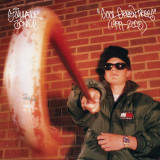
The cover photo is a picture of Sam standing on his back porch in the latter part of 1998, just before he got his first sampler. He was 13 years old, in 8th grade. His dad took the picture with his 35mm film camera: "I actually wanted to be pointing my dad's .22 pistol at the camera lens but he wouldn't let me. He gave me an old walking cane to use instead. The Tommy Hilfiger puffer jacket came from the lost and found at William Fleming High School where my mom worked as a secretary. I was thrilled when she brought it home because we never spent money on expensive name brand clothing like that - we were for the most part strictly a sale rack, bargain bin, thrift store, yard sale, flea market kind of family when it came to clothes. My watch is some cheap off-brand fake gold department store watch." Mastering for this vinyl edition was overseen by Be With regular Simon Francis and it was cut by the esteemed Cicely Balston at Abbey Road Studios to be pressed in the Netherlands by Record Industry.
Across the Tracks is a collaborative project between underground hip-hop heavyweights Boldy James and producer Williams Conductor. Comprised of ten tracks, the album stays true to their gritty, street-centered narratives, blending slow-paced, hard-hitting bars with Conductor's eerie, sample-laden beats. Boldy's laid-back delivery pairs well with the soulful, moody instrumentals. Tracks like 'St. Juliana' and 'The Ol Switcharoo' stand out, with Boldy's sharp lyricism and Conductor's production shining brightest. The guest features from Boldy's son and sister add some texture to the project as well. The album serves as a good release for fans of Boldy James' storytelling and Williams Conductor's distinct production style. Across The Tracks in bone-colored vinyl is a well-curated offering for those that want more intellectual lyrics in their street rap.
Nuke Watch stretch out and zone in on “Wait For It…”, two side-long jaunts that run their freeform M.O. to their own illogical ends. Following on from recent excursions on The Trilogy Tapes and Impatience, they revel in the long format for Patience, crafting a steady assault of haywire rhythms and swampy, off-world ambience.
On the A-side’s Supersonic Percussion Anagram, a battery of electronic and sampled drums - from window-shaking subs to melodic subcontinent percussion - shift from one bar to the next, a continuously morphing, snake-charming ruckus confirming their status as Bushwhick’s finest rhythm purveyors.
For the B-side Nuke Watch mind-meld with fellow NYC phreq Bryce Hackford for Think Peace, a disorienting lurch through the knotty depths of free associative modular synthesis, unraveling spools of intrigue that goes deep into the unknowable.
Nuke Watch is Aaron Anderson and Chris Hontos.. They’ve released records as Nuke Watch on The Trilogy Tapes, Commend, Impatience and Moon Glyph. As Beat Detectives they’ve released records on Not Not Fun, 100% Silk and their own studio imprint NYPD Records.
“Wait For It…” was written and produced by Aaron Anderson and Chris Hontos. Electronic drum pads on Supersonic Percussion Anagram by William Statler. Additional instrumentation on Think Peace by Bryce Hackford. It was mixed by Chris Hontos and Justin Randel, and mastered by Justin Randel. Art and design by Luca Schenardi..
RIYL - tabla, meandering, beat tapes, swamp jazz.
The debut recording by The Ancients, the intergenerational coalition of Isaiah Collier, William Hooker, & William Parker formed by parker to play concerts in conjunction with the milford graves mind body deal exhibition at the institute of contemporary art los angeles & now a working group. across x2LPs of side-length long-form improvised sets recorded at 2220 arts & archives in LA & the chapel in San Francisco, The Ancients bring the free jazz trio languages first explored by the Cecil Taylor Unit & Ornette Coleman’s -Golden Circle- band (expanded upon in later eras by Sam Rivers' Trio & Parker’s collective trios with Charles Gayle/Graves & Peter Brötzmann/Hamid Drake) into their own unique & scintillating realms of expression.
As we tumble further into the throes of history’s tides, people of hope & creativity rely on the works of our great artists to lift our spirits & focus our resolve. -ascension- was recorded less than a year after the passage of the civil rights act & four months after the assassination of Malcolm X. -journey in satchidananda- was recorded the month reagan was re-elected governor of California. M’boom made its debut recording weeks after the watergate scandal broke & a couple months after the wounded knee occupation ended. The music of the ancients builds on these great musical legacies. it resounds with the pride of survival & the joys of making & sharing music. It delivers to us hope & balm. something real in you, real in history, & real in the music is shared, right on time.
When Eremite records commenced operations during the 1990s free jazz resurgence, heavyweight freedom-seeking tenor saxophonists such as Fred Anderson, Peter Brötzmann, Charles Gayle, Kidd Jordan, & David S. Ware were at the height of their powers. Isaiah Collier’s tenor playing in the ancients is bracing testimony that the wellspring lives on. to hear the young chicago firebrand blowing freely with veteran improvisers in an entirely open-form group music is a revelatory study of his vast talent, personal voice, & the intensity of his expression —as well as a bold complement to his composition-based albums as a bandleader (including -the almighty-, a new york times' best albums of 2024 selection).
I've admired drummer William hooker since first encountering his music in a hartford ct city park, early ‘90s (on a double bill with Jerry González & Fort Apache Band). From the man himself right off the bandstand i bought his even-then rare 1st recording, the 1976 self-released x2LP opus -is eternal life- (reissued 2019 by superior viaduct). An imposing force on his instrument & an intrepid DIY cat, Hooker’s been exuberantly swinging in&out of free time for 50+ years. informed by the innovations of Sunny Murray & Tony Williams yet entirely himself, there is no other term for it than “pure hooker.” at age 78, with the ancients & everywhere else, THE HOOK is in peak form.
With a discography approaching 600 entries & 50+ years working across the musical maps, including in the history-defining bands of Don Cherry, Cecil Taylor, Bill Dixon, Peter Brötzmann, in his own wondrous ensembles from small group to orchestra to opera, a bastion of compassionate leadership & a poetic champion of his musical community, in tireless service to what he rather egolessly refers to as “the tone world”, multi-instrumentalist, improviser & composer william parker is a living hero of the grassroots & the black mystery musics, not to mention one of the great bassists in the history of jazz. To quote George Clinton, conquering the stumbling blocks comes easier when the conqueror is in tune with the infinite.
Live to 2-track concert recordings by Bryce Gonzales, Highland Dynamics. Mastered by Joe Lizzi, Queens, NY.
- A1: Funk Formula 1 (Intro) 0:32
- A2: The Power Of The One Featuring – George Benson, Williams Singers 4:58
- A3: Slide Eazy Featuring – Ellis Hall, Rod Castro 3:43
- A4: Creepin' Featuring – Christone "Kingfish" Ingram 4:53
- B1: Jam On Featuring – Brandon "Taz" Niederauer*, Snoop Dogg 5:02
- B2: Lips Turn Blue Featuring – Emmaline 4:10
- B3: Funkship Area-51 Featuring – Brother Nature, Christian Mcbride 3:59
- B4: Bewise Featuring – Robert "Bewise" Harding* 4:08
- C1: Soul Not 4 Sale Featuring – Hollywood Anderson 5:35
- C2: Club Funkateers Featuring – Branford Marsalis, Danielle René Withers*, Victor Wooten 3:32
- C3: Wantme2Stay Featuring – Branford Marsalis, Larry Graham, Uché 4:03
- C4: Funktropolis Featuring – Brother Nature, Johnny Davis 4:59
- D1: Wishing Well Featuring – Ellis Hall 5:35
- D2: Bootsy Off Broadway Featuring – Christian Mcbride, Emmaline, Frankie "Kash" Waddy* 3:22
- D3: Stargate Featuring – Dr. Cornel West*, Ellis Hall, Emisunshine, Victor Wooten 6:12
- D4: Stolen Dreams Featuring – Brother Nature, Henry Invisible*, Rod Castro (2) 3:52
Wairunga finds the Freddy juggernaut digging deep to debut five songs and revisit two classics captured in an outdoor performance sans audience but with wild weather elements playing an important creative role in producing this unique live album.
Recorded in Wairunga, high above Waimarama Beach in New Zealand, it is place etched into the DNA of Fat Freddy’s Drop who’ve roamed here for over 20 years; to party, relax between tours, make a song Wairunga Blues in its honour and even to get married. Farmed by the Parker family for a century, Wairunga is an oasis of green pasture and native tree filled valleys that fall away to the ocean below.
In inimitable Freddy's fashion the new tunes run a gamut of genre busting styles. Coffee Black is layered with cosmic hot buttered soul and cinematic wigged out psyche-blues while Shady continues Freddy's Afro-Acid adventures with Fitchie’s beat-making tapping into a South African township brand of techno Freddys experienced on tour.
Bush Telegraph is a reggae classic featuring MC Slave aka Mark Williams on the mic with freshly minted yum char spiced rhymes of hope. The other new tracks Leave Your Window Open and Dig Deep are loose rhythmic experiments that the band have been working on for a long time. Versions were developed, rehearsed, but then set aside – dismissed, demonised - only to be revived with new energy in some future moment of creative cohesion. The results are loose-limbed; broken and bruised beats smashing into subterranean bass and twisted up melodies.
Bones and Wairunga Blues are the two classics from Freddy's vast back catalogue. Off the Blackbird album, Bones has aged beautifully - like a fine wine - the song’s component parts matured and melded together in harmony and balance. DJ Fitchie rates this 2021 vintage superior to the 2013 original. Wairunga Blues has been a work-in-progress since it was released on Bays in 2015. Kuki dials up some appropriately off-kilter keys to match the wonky-funk laid down by Fitchie’s bass line and the horns. It’s a mighty comeback – and a fitting tribute to this magical place.
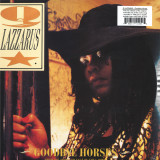
At long last, Q Lazzarus says hello to Dark Entries. Q Lazzarus is the moniker of Diane Luckey, born in New Jersey in 1960. While living in the East Village in New York City in the 1980s, Diane met songwriter Bill Garvey at a party and they recorded “Goodbye Horses” in his home studio. As the story goes, Luckey met Hollywood director Jonathan Demme when she picked him up in her taxi during a snowstorm in 1986. Demme was wowed by her demo tape, which was playing in the cab, and they ended up hanging out at a restaurant for hours talking about life and music. “He liked it so much, I gave him the tape I was listening to, he said he would call me for one of his movies, but I didn’t really take it seriously.” said Luckey. Demme would have the song “Goodbye Horses” first appear in his offbeat comedy Married to the Mob, and then again more memorably in Silence of the Lambs when Buffalo Bill changes into women’s clothing while drowning out his intended victim’s pleas with loud music. Despite the exposure, both Luckey and Garvey languished in relative obscurity. “Goodbye Horses” is the definition of a cult classic, an ethereal tearjerker driven by Garvey’s lush synth work and Luckey’s unmistakably powerful voice. Garvey says, “the song is about transcendence over those who see the world as only earthly and finite.”
Over 15 years of effort have gone into the making of this release. All five songs on this record were previously unreleased and are sourced from original master tapes. The extended version of “Goodbye Horses” was newly mixed from the original stems by Alberto Hernandez at Fantasy Studios. Instrumental and acapella versions of the song are included, which are also available for the first time. Side B opens with “Hellfire,” a brooding number about the New York BDSM nightclub of the same name, showcasing the range and force of Luckey’s voice. “Summertime” follows, with a sauntering synth-reggae spin on the 1937 George Gershwin number. Both B-side tracks are also new mixdowns and edits from the original stems. This record is released alongside Eva Aridjis Fuentes’s documentary on Q Lazzarus, Goodbye Horses: The Many Lives of Q Lazzarus, a work chronicling the life of the enigmatic Luckey. It is an opportune moment to reflect on the underrecognized artists we have lost and the undeniable brilliance of both Diane Luckey and William Garvey.
- Cabin Six
- Concern
- Star Of Hope
- Howling At The Second Moon
- A Dream, A Flood
- Anima Hotel
- Electric Lake
- Hardest Land To Harvest
- Held
Stripe Vinyl[31,05 €]
Nach wichtigen Stationen bei Silver Jews und Lambchop hat William Tyler eine Reihe von neugierigen Alben veröffentlicht, die seine ländliche Herkunft und seine Begeisterung für klassische Musik mit seiner Experimentierfreudigkeit und Feldaufnahmen verbinden. Seine produktive Enklave der Instrumentalmusik hat nicht nur neue Klänge hervorgebracht, sondern auch kritische neue Stimmen. Kein anderer amerikanischer Sologitarrist dieses Jahrhunderts hat diese fruchtbare Szene so beeinflusst wie er. Und auf dem brillanten, erfrischenden "Time Indefinite", Tylers erstem Soloalbum seit fünf Jahren, betritt er endlich den immer größer werdenden Raum, den er mit geschaffen hat. Die Gitarre ist der Ausgangspunkt für ein Album, das nicht nur Tyler, sondern auch die Möglichkeiten eines ganzen Bereichs neu überdenken lässt. Ein Strudel aus Lärm und Harmonie, Geistern und Träumen, Angst und Hoffnung - es ist nicht nur eine großartige Gitarrenplatte. Es ist ein atemberaubendes Album eines großen Gitarristen, ein Meisterwerk unserer kollektiv ängstlichen Zeit. Anfang 2020, als die Welt am Rande ungeahnter Unruhen stand, verließ Tyler LA und zog nach Nashville, wo er die meiste Zeit seines Lebens gelebt hatte. Der größte Teil seines Equipments und alle seine Platten blieben zurück, in Erwartung einer vermeintlich schnellen Rückkehr. Das war natürlich nicht der Fall. Während Tyler also mit den Depressionen, den Nerven und den Fragen dieser unendlich angespannten Zeit zu kämpfen hatte, begann er, Ideen mit seinem Telefon und einem Kassettendeck aufzunehmen, wobei er sich mit den Verzerrungen, die diese Geräte mit sich bringen, abfand. Tyler sprach mit Kieran Hebden darüber, eine gemeinsame Platte zu machen, und einige dieser Stücke fühlten sich wie Testfälle an. Als diese Zusammenarbeit in andere Richtungen ging, entdeckte Tyler andere Klänge. Er bat seinen langjährigen Freund, den Produzenten Jake Davis, ihm dabei zu helfen, die Songs zusammenzufügen, und entschied sich dafür, das Rauschen und Wackeln zu akzeptieren und ungewollt eine Platte zu machen, die diese Zeiten und die heutige Zeit widerspiegelt - unruhig, beschädigt, ehrlich. Eine Wippe aus Kampf und Überleben definiert diese Songs, eine Landkarte der Angst und des Glaubens und der Pfade, die sie verbinden. "Dies ist eine Platte über Geisteskrankheiten", wird Tyler ohne Scham sagen, so offen im Leben und in der Sprache, wie er es auf den Aufnahmen ist. "Es ist Musik darüber, den Verstand zu verlieren, aber nicht zu wollen, über den Versuch, zurückzukommen." Das braucht er nicht zu sagen; man spürt es, erkennt es vielleicht aus eigener Erfahrung. Tylers Alben sind ein Nest aus nicht-musikalischen Einflüssen, denn er pendelt zwischen Spiritualität und Philosophie und beschwört die Landschaften der amerikanischen Vorstellungskraft. "Time Indefinite" ist nicht anders, vor allem in der Art und Weise, wie es die sehr persönlichen Filme von Ross McElwee beschwört. Mitte der 80er Jahre begann er, einen Film über Shermans Marsch durch den Süden zu drehen, der sich jedoch zu einer verworrenen Geschichte über Familie, Verlust und das, was wir tun, wenn unsere besten Instinkte sich den schlimmsten Dingen ergeben, die wir uns vorstellen können, entwickelte. Das Album ist eine Anspielung auf diese Idee, auf das unerbittliche Drängen der Zeit und unseren Platz in ihr, unter ihr und neben ihr. Es ist keine große Offenbarung, dass das Leben, das wir führen, die Arbeit prägt, die wir machen, ob wir das nun beabsichtigen oder nicht. In diesen Liedern kann man Tyler hören, wie er laut mit eingehenden Dämonen ringt: Sucht, mittleres Alter, Einsamkeit, Neurosen. Alle unsere Kämpfe sind unterschiedlich, aber wir sind uns darin einig, dass wir sie haben. Dies ist der Soundtrack, den Tyler geschaffen hat.