Cerca:oh mama

Generi
Tutto
Various - Hip-Hop At Fifty (50 Jahre Hip-Hop) LP 4x12"
 
41

”Guess Who’s Back” - Hip-Hop is! Das beliebte Genre ist aus der Musiklandschaft nicht mehr wegzudenken und feiert dieses Jahr sein 50-jähriges Jubiläum! Zu diesem Anlass erscheint das brandneue Album „HipHop At Fifty (50 Jahre Hip-Hop)“ mit vielen Hits aus den Anfangsjahren des Genres sowie zahlreichen deutschen und internationalen Chartstürmern. Eins ist sicher – dieses Album kommt ”Straight Outta Compton”!
Mit Oldschool-Pionier*innen wie Dr. Dre, Eminem, Snoop Dogg, Busta Rhymes, LL COOL J, 50 Cent, DMX, Lil’ Kim, Fugees als auch mit deutschen Rap-Größen wie Die Fantastischen Vier, Luciano, Sido, Apache 207, Seeed oder Deichkind hat das Album einiges zu bieten.

Ob die groovigen Sounds von ”Super Freaky Girl”, die explosive Rap Power von ”Bamba”, der weltweite Club-Klassiker ”In Da Club” oder der funky Vibe mit harschen Lyrics des Klassikers von ”The Real Slim Shady” – diese Mischung sorgt für die volle Ladung Hip-Hop!

Erhältlich als 4LP, 3CD, eAlbum und im Streaming ab dem 29. September 2023!

non in magazzino

Ordina ora e ordineremo l'articolo per te presso il nostro fornitore.

38,03

Last In: 14 months ago
Robert Jon & The Wreck - Live At The Ancienne Belgique 2x12"

'Live At The Ancienne Belgique' ist das erste offizielle Live-Album von Robert Jon & The Wreck, aufgenommen im Juni 2022 bei einer ausverkauften Show im Brüsseler Ancienne Belgique. Die Setlist umspannt das letzte Jahrzehnt der Band, einschließlich Songs vom 2015er Debütalbum 'Glory Bound' bis zu neuen Singles aus 2022. Es war die bislang längste Tournee von Robert Jon & The Wreck mit 67 Shows in 75 Tagen in 9 Ländern. Beim 55. Gig in Brüssel funktionierte die Band wie eine gut geölte Maschine und riss das Ancienne Belgique vom Hocker. Der spektakuläre Abend wurde wunderschön auf CD & DVD sowie auf Vinyl festgehalten und ist ihre erste Veröffentlichung auf Joe Bonamassas Label Journeyman Records.

pre-ordina ora08.09.2023

dovrebbe essere pubblicato su 08.09.2023

27,31

Last In: 2026 years ago
Mokoomba - Tusona: Tracings in the Sand LP

Five years after the release of ‘Luyando’, Zimbabwe’s most celebrated music export returns with their long-awaited follow-up album ‘Tusona: Tracings in the Sand’. The six musicians from Victoria Falls are refining their unique sound: infectious Afro grooves deeply connected to Zimbabwe’s cultural DNA. ‘Tusana’ is their most danceable album to date, a DIY production recorded in Zimbabwe. It features horns by Ghanaian highlife outfit Santrofi.

Every Sunday, there is a gathering in the sweltering heat on grounds of an old local beer hall in the Chinotimba township in Mosi-o-Tunya (Victoria Falls). Entertainment is provided by various traditional groups including the Luvale Makisi masquerade. It is a day full of singing, drumming, dancing and storytelling. Mokoomba’s lead vocalist Mathias Muzaza can often be found here singing with a voice both soaring and vulnerable. In the course of the afternoon the other band members - guitarist Trustworth Samende, bass player Abundance Mutori, keyboard player Phathisani Moyo, percussionist Miti Mugande and drummer Ndaba Coster Moyo - often join in with singing. The drum driven song “Bakalubale” featured on their new album invites you to this gathering.

Mokoomba recorded ‘Tusona: Tracings in the Sand’, the follow-up album to ‘Luyando’ (2017, Outhere), in Zimbabwe during the pandemic. Instead of working with outside producers like Manou Gallo or Steve Dyer as they have in the past, this album was entirely recorded in a DIY fashion by Mokoomba. The collective from Zimbabwe put in all the experiences made over the previous years and have forged their music into a unique Zimbabwean sound. On popular demand from their fans in Zimbabwe they have even re-recorded three songs from their last more acoustic album ‘Luyando’ turning them into dancehall bangers (featured on the CD and digital versions of the album). In short, this album is more Mokoomba than any of the ones before.

On the album Mokoomba are singing about love, loss, courage in a changing society. The first single “Nzara Hapana” means “no money” in Shona. The song talks about a man who wants to ensure the future of his wife and family and is trying to protect them against the greed of his relatives. The danceable up-tempo song “Nyansola” praises the goddess of harvest and asks her for rain. “Makisi” is sung in Luvale. It celebrates the beauty of the initiation ceremony for which the whole community comes together. “Manina” is a song about losing a loved one. It was written during the pandemic and features the young singer Ulethu from Harare. Mokoomba sing in many different local languages. Their songs are in Tonga, Luvale, Shona, Nyanja and even Lingala used in “Makolo” when they team up with Congolese singer Desolo B. (The album also features horns by Nobert Wonkyi Arthur (trumpet), Bernard Gyamfi (trombone) and Emmanuel Arthur (sax) from Ghanaian highlife outfit Santrofi.)

The title of the album is a nod towards their immense respect for tradition. ‘Tusona’ refers to an ancient system of signs and symbols, drawn in the sand and used for instruction during initiation ceremonies by the Luvale in Southern Africa. Another important part of the Mukanda initiation ceremony is the incredible Makisi masquerade. Since 2008 the Makisi dances are on the UNESCO list of intangible heritage. The Makisi are masked characters, representing the spirit of deceased ancestors. During the yearly initiation ceremony the Makisi return to the living world to teach the young children to become responsible adults among the Lubale people of Southern Africa. In the last decade the interest - especially among the young people – has faded and the Makisi dances have nearly died out.

“Our inspiration comes from these gatherings”, Trustworth Samende explains, “from listening to and playing pure traditional music with everyone in the township. We then add influences from music that we listened to in our homes growing up and the sounds we experience travelling around the world.” It is the connection with the cultures around them that gives Mokoomba’s music its spiritual power. When you hear Mathias Muzaza singing and you watch closely, you will see the music carrying him away to a different sphere, a place where he is singing with the ancestors. Only a split second later though Trust Samende’s sparkling guitar riffs kick in, blending Congolese influences from neighbouring Kasai with Zamrock and Mbira inspired Chimurenga music, making you want to hit the dancefloor. It is this unique blend of local musical styles with contemporary dance music that is at the heart of Mokoomba’s music. The strong reference to tradition is also reflected in the cover illustration by young Zimbabwean visual artist Lomedy Mhako.

It has been nearly 10 years since this young energetic band from Zimbabwe has exploded onto the international music scene. Since then they have shared their music with fans all over the world: Mokoomba have performed in over 40 countries, rocking audiences in places like Roskilde festival (Denmark), WOMAD festival (UK), Sziget festival (Hungary), SXSW (USA), Apollo Theatre (New York) to name but a few.

Like anywhere in the world Africa’s musical output has become more and more producer based. Mokoomba are the living proof that Africa’s great guitar band heritage is well alive and ready to set any dancefloor on fire. Most important though is that deep below the surface of Mokoomba’s sound - flowing like the Zambezi River - you can still hear the heartbeat and the rhythm of a community connected by its music. Like ‘Tusona’, it is a source of rejuvenation, resilience and strength in these changing times. May the tracings in the sand not fade.

pre-ordina ora15.07.2023

dovrebbe essere pubblicato su 15.07.2023

19,71

Last In: 2026 years ago
BZN - Very Best Of  LP 2x12"

Bzn

Very Best Of LP 2x12"

2x12inchMOVLP3246
Music On Vinyl
21.04.2023

BZN (Band Zonder Naam, a.k.a. Band Without A Name) started out as a pop-rock band, based in Volendam in 1966. Switching from hard rock to pop, the band went through several changes in line-up and scored their first commercial success with “Mon Amour” in 1976. This first success led to a string of hits, charting in the Netherlands, Germany, Belgium, and even South Africa. After 42 years, their career came to an end in 2007 with a final concert at Ahoy Rotterdam

This double album features their biggest hits, including “Mon Amour”, “Don’t Say Goodbye”, “Yeppa”, “Pearlydumm”, “Chanson D’Amour”, “Just An Illusion”, and “Lady McCorey” amongst others. The Very Best Of BZN includes an insert.

pre-ordina ora21.04.2023

dovrebbe essere pubblicato su 21.04.2023

41,47

Last In: 2026 years ago
Various - Hip Dozer Vol. 7 (2x12")

In 2015, when we launched Hip Dozer, we were overwhelmed by the amount of talent that was still championing this old school way of making beats and the incredible creativity that was circulating in the scene.

In a period where hip hop was evolving so much and going further (sometimes for the better but also for the worse), it was obvious to us that we had to defend this rising scene of young beatmakers who were so attached to the roots of old-school beatmaking but who were always taking it to another level.

It's been 7 years since we created Hip Dozer Records with our first anniversary compilation and that's what makes this compilation so special every time. Its purpose remains the same and will always be to champion the art of beatmaking that we love and to help showcase new artists in the scene.

This year we are lucky enough to have some of our favourite talents from the scene on board with artists like Saib, Flughand, Phoniks, Cookin Soul, SoulChef and Wun Two.

We would like to say a huge thank you to all the artists who have been involved in this project and who have been as enthusiastic as we are in making it happen. It has been such a pleasure since the beginning of this adventure and this is only the beginning. Much love to all of you who listen and support wherever you are.

non in magazzino

Ordina ora e ordineremo l'articolo per te presso il nostro fornitore.

24,75

Last In: 23 months ago
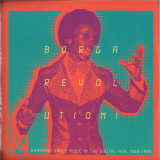
Various - BORGA REVOLUTION 2 (2x12")

Various

BORGA REVOLUTION 2 (2x12")

2x12inchKALITAL10
Kalita
10.03.2023

Kalita are proud to unveil the second volume in their "Borga Revolution!" compilation series, focussing on the phenomenon of "Burger Highlife", a crossover of West African melodies with synthesizers, disco and boogie that took over Ghanaian airwaves during the 1980"s and beyond. Featuring both highly sought-after recordings by artists including Atta Frimpong and D.J. Lawyer Okyere, as well as seminal performances by greats such as Pat Thomas, A.B. Crentsil and Alan Cosmos, Kalita once again come to the rescue of audiophiles, DJs and music-lovers alike with "Borga Revolution! - Volume 2". Spread over a double-LP housed in a gatefold sleeve. Accompanied by a 12-page booklet featuring extensive interview-based liner notes on each artist and never-before-seen archival photos.

non in magazzino

Ordina ora e ordineremo l'articolo per te presso il nostro fornitore.

23,95

Last In: 2 years ago
DIKKA - Oh yeah!

Dikka

Oh yeah!

12inch0602448664242
Universal / Island
09.12.2022

Rap für Erwachsene? Kann doch jedes Kind! Und ein ganz bestimmtes Nashorn kann das auch: DIKKA
– das rappende Rhinozeros kommt auf seinem Debütalbum „Oh Yeah!“ mit jeder Menge wilder, frecher
und lustiger Songs für starke Kinder. Groß, grau, gutgelaunt, mit dickem Bauch und ordentlich was in der
Birne stellt DIKKA sich dabei nicht auf die Seite der Eltern, sondern nimmt die kleinen Hörer an die Hand
und geht gemeinsam mit ihnen mal den wirklich wichtigen Fragen des Lebens nach
Warum werden irgendwann selbst der leckerste Oma-Kuchen, die knusprigen Pommes und der Ketchup zu
Kakka? Weshalb denken Mama und Papa eigentlich, dass sie alles besser wissen und man immer Hilfe
braucht, wenn man es doch eigentlich längst alleine kann? Wieso immer rosa für Mädchen und blau für
Jungs und nicht mal Grau als Lieblingsfarbe? Und wie sagt man jemandem wohl am besten, wie lieb man
ihn hat?
Aber DIKKA kann noch mehr: Eine Hymne auf alle Superpapas singen zum Beispiel. Das Abendbrot
schon morgens essen oder auf dem Bügelbrett surfen. In Rosinen baden und mit einem Kopfsprung im
Salat landen. Auf dem Flohmarkt ein paar Flöhe kaufen und rückwärts zum Späti an die Ecke laufen, um
dort ein extragroßes Eis zu schlecken. Mit dem Rad zu entspannten Beats durch den Kiez rollen, dass es
jeder sieht – mit schimmerndem Schutzblech, klingelnder Klingel und vor allem mit Helm, denn der schützt
schließlich die Melone. Klare Sache!
„Oh Yeah!“ beinhaltet Songs mit MusikerInnen wie LEA, Sido und Mark Forster.
Ab dem 09.12.2022 auch als LP erhältlich.
Musikrichtung: Musik (Kinder)

pre-ordina ora09.12.2022

dovrebbe essere pubblicato su 09.12.2022

28,53

Last In: 2026 years ago
Lee Tracy & Isaac Manning - Is it What You Want

As the sun sets on a quaint East Nashville house, a young man bares a piece of his soul. Facing the camera, sporting a silky suit jacket/shirt/slacks/fingerless gloves ensemble that announces "singer" before he's even opened his mouth, Lee Tracy Johnson settles onto his stage, the front yard. He sways to the dirge-like drum machine pulse of a synth-soaked slow jam, extends his arms as if gaining his balance, and croons in affecting, fragile earnest, "I need your love… oh baby…"

Dogs in the yard next door begin barking. A mysterious cardboard robot figure, beamed in from galaxies unknown and affixed to a tree, is less vocal. Lee doesn't acknowledge either's presence. He's busy feeling it, arms and hands gesticulating. His voice rises in falsetto over the now-quiet dogs, over the ambient noise from the street that seeps into the handheld camcorder's microphone, over the recording of his own voice played back from a boombox off-camera. After six minutes the single, continuous shot ends. In this intimate creative universe there are no re-takes. There are many more music videos to shoot, and as Lee later puts it, "The first time you do it is actually the best. Because you can never get that again. You expressing yourself from within."

"I Need Your Love" dates from a lost heyday. From some time in the '80s or early '90s, when Lee Tracy (as he was known in performance) and his music partner/producer/manager Isaac Manning committed hours upon hours of their sonic and visual ideas to tape. Embracing drum machines and synthesizers – electronics that made their personal futurism palpable – they recorded exclusively at home, live in a room into a simple cassette deck. Soul, funk, electro and new wave informed their songs, yet Lee and Isaac eschewed the confinement of conventional categories and genres, preferring to let experimentation guide them.

"Anytime somebody put out a new record they had the same instruments or the same sound," explains Isaac. "So I basically wanted to find something that's really gonna stand out away from all of the rest of 'em." Their ethos meant that every idea they came up with was at least worth trying: echoed out half-rapped exhortations over frantic techno-style beats, gospel synth soul, modal electro-funk, oddball pop reinterpretations, emo AOR balladry, nods to Prince and the Fat Boys, or arrangements that might collapse mid-song into a mess of arcade game-ish blips before rallying to reach the finish line. All of it conjoined by consistent tape hiss, and most vitally, Lee's chameleonic voice, which managed to wildly shape shift and still evoke something sincere – whether toggling between falsetto and tenor exalting Jesus's return, or punctuating a melismatic romantic adlib with a succinct, "We all know how it feels to be alone."

"People think we went to a studio," says Isaac derisively. "We never went to no studio. We didn't have the money to go to no studio! We did this stuff at home. I shot videos in my front yard with whatever we could to get things together." Sometimes Isaac would just put on an instrumental record, be it "Planet Rock" or "Don't Cry For Me Argentina" (from Evita), press "record," and let Lee improvise over it, yielding peculiar love songs, would-be patriotic anthems, or Elvis Presley or Marilyn Monroe tributes. Technical limitations and a lack of professional polish never dissuaded them. They believed they were onto something.

"That struggle," Isaac says, "made that sound sound good to me."

In the parlance of modern music criticism Lee and Isaac's dizzying DIY efforts would inevitably be described as "outsider." But "outsider" carries the burden of untold additional layers of meaning if you're Black and from the South, creating on a budget, and trying to get someone, anyone within the country music capital of the world to take your vision seriously. "What category should we put it in?" Isaac asks rhetorically. "I don't know. All I know is feeling. I ain't gonna name it nothing. It's music. If it grabs your soul and touch your heart that's what it basically is supposed to do."

=

Born in 1963, the baby boy of nine siblings, Lee Tracy spent his earliest years living amidst the shotgun houses on Nashville's south side. "We was poor, man!" he says, recalling the outhouse his family used for a bathroom and the blocks of ice they kept in the kitchen to chill perishables. "But I actually don't think I really realized I was in poverty until I got grown and started thinking about it." Lee's mom worked at the Holiday Inn; his dad did whatever he had to do, from selling fruit from a horse drawn cart to bootlegging. "We didn't have much," Lee continues, "but my mother and my father got us the things we needed, the clothes on our back." By the end of the decade with the city's urban renewal programs razing entire neighborhoods to accommodate construction of the Interstate, the family moved to Edgehill Projects. Lee remembers music and art as a constant source of inspiration for he and his brothers and sisters – especially after seeing the Jackson 5 perform on Ed Sullivan. "As a small child I just knew that was what I wanted to do."

His older brother Don began musically mentoring him, introducing Lee to a variety of instruments and sounds. "He would never play one particular type of music, like R&B," says Lee. "I was surrounded by jazz, hard rock and roll, easy listening, gospel, reggae, country music; I mean I was a sponge absorbing all of that." Lee taught himself to play drums by beating on cardboard boxes, gaining a rep around the way for his timekeeping, and his singing voice. Emulating his favorites, Earth Wind & Fire and Cameo, he formed groups with other kids with era-evocative band names like Concept and TNT Connection, and emerged as the leader of disciplined rehearsals. "I made them practice," says Lee. "We practiced and practiced and practiced. Because I wanted that perfection." By high school the most accomplished of these bands would take top prize in a prominent local talent show. It was a big moment for Lee, and he felt ready to take things to the next level. But his band-mates had other ideas.

"I don't know what happened," he says, still miffed at the memory. "It must have blew they mind after we won and people started showing notice, because it's like everybody quit! I was like, where the hell did everybody go?" Lee had always made a point of interrogating prospective musicians about their intentions before joining his groups: were they really serious or just looking for a way to pick up girls? Now he understood even more the importance of finding a collaborator just as committed to the music as he was.

=

Isaac Manning had spent much of his life immersed in music and the arts – singing in the church choir with his family on Nashville's north side, writing, painting, dancing, and working various gigs within the entertainment industry. After serving in the armed forces, in the early '70s he ran The Teenage Place, a music and performance venue that catered to the local youth. But he was forced out of town when word of one of his recreational routines created a stir beyond the safe haven of his bohemian circles.

"I was growing marijuana," Isaac explains. "It wasn't no business, I was smoking it myself… I would put marijuana in scrambled eggs, cornbread and stuff." His weed use originated as a form of self-medication to combat severe tooth pain. But when he began sharing it with some of the other young people he hung out with, some of who just so happened to be the kids of Nashville politicians, the cops came calling. "When I got busted," he remembers, "they were talking about how they were gonna get rid of me because they didn't want me saying nothing about they children because of the politics and stuff. So I got my family, took two raggedy cars, and left Nashville and went to Vegas."

Out in the desert, Isaac happened to meet Chubby Checker of "The Twist" fame while the singer was gigging at The Flamingo. Impressed by Isaac's zeal, Checker invited him to go on the road with him as his tour manager/roadie/valet. The experience gave Isaac a window into a part of the entertainment world he'd never encountered – a glimpse of what a true pop act's audience looked like. "Chubby Checker, none of his shows were played for Black folks," he remembers. "All his gigs were done at high-class white people areas." Returning home after a few years with Chubby, Isaac was properly motivated to make it in Music City. He began writing songs and scouting around Nashville for local talent anywhere he could find it with an expressed goal: "Find someone who can deliver your songs the way you want 'em delivered and make people feel what you want them to feel."

One day while walking through Edgehill Projects Isaac heard someone playing the drums in a way that made him stop and take notice. "The music was so tight, just the drums made me feel like, oh I'm-a find this person," he recalls. "So I circled through the projects until I found who it was.

"That's how I met him – Lee Tracy. When I found him and he started singing and stuff, I said, ohhh, this is somebody different."

=

Theirs was a true complementary partnership: young Lee possessed the raw talent, the older Isaac the belief. "He's really the only one besides my brother and my family that really seen the potential in me," says Lee. "He made me see that I could do it."

Isaac long being a night owl, his house also made for a fertile collaborative environment – a space where there always seemed to be a new piece of his visual art on display: paintings, illustrations, and dolls and figures (including an enigmatic cardboard robot). Lee and Issac would hang out together and talk, listen to music, conjure ideas, and smoke the herb Isaac had resumed growing in his yard. "It got to where I could trust him, he could trust me," Isaac says of their bond. They also worked together for hours on drawings, spreading larges rolls of paper on the walls and sketching faces with abstract patterns and imagery: alien-like beings, tri-horned horse heads, inverted Janus-like characters where one visage blurred into the other.

Soon it became apparent that they didn't need other collaborators; self-sufficiency was the natural way forward. At Isaac's behest Lee, already fed up with dealing with band musicians, began playing around with a poly-sonic Yamaha keyboard at the local music store. "It had everything on it – trumpet, bass, drums, organ," remembers Lee. "And that's when I started recording my own stuff."

The technology afforded Lee the flexibility and independence he craved, setting him on a path other bedroom musicians and producers around the world were simultaneously following through the '80s into the early '90s. Saving up money from day jobs, he eventually supplemented the Yamaha Isaac had gotten him with Roland and Casio drum machines and a Moog. Lee was living in an apartment in Hillside at that point caring for his dad, who'd been partially paralyzed since early in life. In the evenings up in his second floor room, the music put him in a zone where he could tune out everything and lose himself in his ideas.

"Oh I loved it," he recalls. "I would really experiment with the instruments and use a lot of different sound effects. I was looking for something nobody else had. I wanted something totally different. And once I found the sound I was looking for, I would just smoke me a good joint and just let it go, hit the record button." More potent a creative stimulant than even Isaac's weed was the holistic flow and spontaneity of recording. Between sessions at Isaac's place and Lee's apartment, their volume of output quickly ballooned.

"We was always recording," says Lee. "That's why we have so much music. Even when I went to Isaac's and we start creating, I get home, my mind is racing, I gotta start creating, creating, creating. I remember there were times when I took a 90-minute tape from front to back and just filled it up."

"We never practiced," says Isaac. "See, that was just so odd about the whole thing. I could relate to him, and tell him about the songs I had ideas for and everything and stuff. And then he would bring it back or whatever, and we'd get together and put it down." Once the taskmaster hell bent on rehearsing, Lee had flipped a full 180. Perfection was no longer an aspiration, but the enemy of inspiration.

"I seen where practicing and practicing got me," says Lee. "A lot of musicians you get to playing and they gotta stop, they have to analyze the music. But while you analyzing you losing a lot of the greatness of what you creating. Stop analyzing what you play, just play! And it'll all take shape."

=

"I hope you understood the beginning of the record because this was invented from a dream I had today… (You tell me, I'll tell you, we'll figure it out together)" – Lee Tracy and Isaac Manning, "Hope You Understand"

Lee lets loose a maniacal cackle when he acknowledges that the material that he and Isaac recorded was by anyone's estimation pretty out there. It's the same laugh that commences "Hope You Understand" – a chaotic transmission that encapsulates the duality at the heart of their music: a stated desire to reach people and a compulsion to go as leftfield as they saw fit.

"We just did it," says Lee. "We cut the music on and cut loose. I don't sit around and write. I do it by listening, get a feeling, play the music, and the lyrics and stuff just come out of me."

The approach proved adaptable to interpreting other artists' material. While recording a cover of Whitney Houston's pop ballad "Saving All My Love For You," Lee played Whitney's version in his headphones as he laid down his own vocals – partially following the lyrics, partially using them as a departure point. The end result is barely recognizable compared with the original, Lee and Isaac having switched up the time signature and reinvented the melody along the way towards morphing a slick mainstream radio standard into something that sounds solely their own.

"I really used that song to get me started," says Lee. "Then I said, well I need something else, something is missing. Something just came over me. That's when I came up with 'Is It What You Want.'"

The song would become the centerpiece of Lee and Isaac's repertoire. Pushed along by a percolating metronomic Rhythm King style beat somewhere between a military march and a samba, "Is It What You Want" finds Lee pleading the sincerity of his commitment to a potential love interest embellished by vocal tics and hiccups subtlely reminiscent of his childhood hero MJ. Absent chord changes, only synth riffs gliding in and out like apparitions, the song achieves a lingering lo-fi power that leaves you feeling like it's still playing, somewhere, even after the fade out.

"I don't know, it's like a real spiritual song," Lee reflects. "But it's not just spiritual. To me the more I listen to it it's like about everything that you do in your everyday life, period. Is it what you want? Do you want a car or you don't want a car? Do you want Jesus or do you want the Devil? It's basically asking you the question. Can't nobody answer the question but you yourself."

In 1989 Lee won a lawsuit stemming from injuries sustained from a fight he'd gotten into. He took part of the settlement money and with Isaac pressed up "Saving All My Love For You" b/w "Is It What You Want" as a 45 single. Isaac christened the label One Chance Records. "Because that's all we wanted," he says with a laugh, "one chance."

Isaac sent the record out to radio stations and major labels, hoping for it to make enough noise to get picked up nationally. But the response he and Lee were hoping for never materialized. According to Isaac the closest the single got to getting played on the radio is when a disk jock from a local station made a highly unusual announcement on air: "The dude said on the radio, 107.5 – 'We are not gonna play 'Is It What You Want.' We cracked up! Wow, that's deep.

"It was a whole racist thing that was going on," he reflects. "So we just looked over and kept on going. That was it. That was about the way it goes… If you were Black and you were living in Nashville and stuff, that's the way you got treated." Isaac already knew as much from all the times he'd brought he and Lee's tapes (even their cache of country music tunes) over to Music Row to try to drum up interest to no avail.

"Isaac, he really worked his ass off," says Lee. "He probably been to every record place down on Music Row." Nashville's famed recording and music business corridor wasn't but a few blocks from where Lee grew up. Close enough, he remembers, for him to ride his bike along its back alleys and stumble upon the occasional random treasure, like a discarded box of harmonicas. Getting in through the front door, however, still felt a world away.

"I just don't think at the time our music fell into a category for them," he concedes. "It was before its time."

=

Lee stopped making music some time in the latter part of the '90s, around the time his mom passed away and life became increasingly tough to manage. "When my mother died I had a nervous breakdown," he says, "So I shut down for a long time. I was in such a sadness frame of mind. That's why nobody seen me. I had just disappeared off the map." He fell out of touch with Isaac, and in an indication of just how bad things had gotten for him, lost track of all the recordings they'd made together. Music became a distant memory.

Fortunately, Isaac kept the faith. In a self-published collection of his poetry – paeans to some of his favorite entertainment and public figures entitled Friends and Dick Clark – he'd written that he believed "music has a life of its own." But his prescience and presence of mind were truly manifested in the fact that he kept an archive of he and Lee's work. As perfectly imperfect as "Is It What You Want" now sounds in a post-Personal Space world, Lee and Isaac's lone official release was in fact just a taste. The bulk of the Is It What You Want album is culled from the pair's essentially unheard home recordings – complete songs, half-realized experiments, Isaac's blue monologues and pronouncements et al – compiled, mixed and programmed in the loose and impulsive creative spirit of their regular get-togethers from decades ago. The rest of us, it seems, may have finally caught up to them.

On the prospect of at long last reaching a wider audience, Isaac says simply, "I been trying for a long time, it feels good." Ever the survivor, he adds, "The only way I know how to make it to the top is to keep climbing. If one leg break on the ladder, hey, you gotta fix it and keep on going… That's where I be at. I'll kill death to make it out there."

For Lee it all feels akin to a personal resurrection: "It's like I was in a tomb and the tomb was opened and I'm back… Man, it feels so great. I feel like I'm gonna jump out of my skin." Success at this stage of his life, he realizes, probably means something different than what it did back when he was singing and dancing in Isaac's front yard. "What I really mean by 'making it,'" he explains isn't just the music being heard but, "the story being told."

Occasionally Lee will pull up "Is It What You Want" on YouTube on his phone, put on his headphones, and listen. He remembers the first time he heard his recorded voice. How surreal it was, how he thought to himself, "Is that really me?" What would he say to that younger version of himself now?

"I would probably tell myself, hang in there, don't give up. Keep striving for the goal. And everything will work out."

Despite what's printed on the record label, sometimes you do get more than one chance.

non in magazzino

Ordina ora e ordineremo l'articolo per te presso il nostro fornitore.

11,72

Last In: 3 years ago
Lee Tracy & Isaac Manning - Is it What You Want LP

As the sun sets on a quaint East Nashville house, a young man bares a piece of his soul. Facing the camera, sporting a silky suit jacket/shirt/slacks/fingerless gloves ensemble that announces "singer" before he's even opened his mouth, Lee Tracy Johnson settles onto his stage, the front yard. He sways to the dirge-like drum machine pulse of a synth-soaked slow jam, extends his arms as if gaining his balance, and croons in affecting, fragile earnest, "I need your love… oh baby…"

Dogs in the yard next door begin barking. A mysterious cardboard robot figure, beamed in from galaxies unknown and affixed to a tree, is less vocal. Lee doesn't acknowledge either's presence. He's busy feeling it, arms and hands gesticulating. His voice rises in falsetto over the now-quiet dogs, over the ambient noise from the street that seeps into the handheld camcorder's microphone, over the recording of his own voice played back from a boombox off-camera. After six minutes the single, continuous shot ends. In this intimate creative universe there are no re-takes. There are many more music videos to shoot, and as Lee later puts it, "The first time you do it is actually the best. Because you can never get that again. You expressing yourself from within."

"I Need Your Love" dates from a lost heyday. From some time in the '80s or early '90s, when Lee Tracy (as he was known in performance) and his music partner/producer/manager Isaac Manning committed hours upon hours of their sonic and visual ideas to tape. Embracing drum machines and synthesizers – electronics that made their personal futurism palpable – they recorded exclusively at home, live in a room into a simple cassette deck. Soul, funk, electro and new wave informed their songs, yet Lee and Isaac eschewed the confinement of conventional categories and genres, preferring to let experimentation guide them.

"Anytime somebody put out a new record they had the same instruments or the same sound," explains Isaac. "So I basically wanted to find something that's really gonna stand out away from all of the rest of 'em." Their ethos meant that every idea they came up with was at least worth trying: echoed out half-rapped exhortations over frantic techno-style beats, gospel synth soul, modal electro-funk, oddball pop reinterpretations, emo AOR balladry, nods to Prince and the Fat Boys, or arrangements that might collapse mid-song into a mess of arcade game-ish blips before rallying to reach the finish line. All of it conjoined by consistent tape hiss, and most vitally, Lee's chameleonic voice, which managed to wildly shape shift and still evoke something sincere – whether toggling between falsetto and tenor exalting Jesus's return, or punctuating a melismatic romantic adlib with a succinct, "We all know how it feels to be alone."

"People think we went to a studio," says Isaac derisively. "We never went to no studio. We didn't have the money to go to no studio! We did this stuff at home. I shot videos in my front yard with whatever we could to get things together." Sometimes Isaac would just put on an instrumental record, be it "Planet Rock" or "Don't Cry For Me Argentina" (from Evita), press "record," and let Lee improvise over it, yielding peculiar love songs, would-be patriotic anthems, or Elvis Presley or Marilyn Monroe tributes. Technical limitations and a lack of professional polish never dissuaded them. They believed they were onto something.

"That struggle," Isaac says, "made that sound sound good to me."

In the parlance of modern music criticism Lee and Isaac's dizzying DIY efforts would inevitably be described as "outsider." But "outsider" carries the burden of untold additional layers of meaning if you're Black and from the South, creating on a budget, and trying to get someone, anyone within the country music capital of the world to take your vision seriously. "What category should we put it in?" Isaac asks rhetorically. "I don't know. All I know is feeling. I ain't gonna name it nothing. It's music. If it grabs your soul and touch your heart that's what it basically is supposed to do."

=

Born in 1963, the baby boy of nine siblings, Lee Tracy spent his earliest years living amidst the shotgun houses on Nashville's south side. "We was poor, man!" he says, recalling the outhouse his family used for a bathroom and the blocks of ice they kept in the kitchen to chill perishables. "But I actually don't think I really realized I was in poverty until I got grown and started thinking about it." Lee's mom worked at the Holiday Inn; his dad did whatever he had to do, from selling fruit from a horse drawn cart to bootlegging. "We didn't have much," Lee continues, "but my mother and my father got us the things we needed, the clothes on our back." By the end of the decade with the city's urban renewal programs razing entire neighborhoods to accommodate construction of the Interstate, the family moved to Edgehill Projects. Lee remembers music and art as a constant source of inspiration for he and his brothers and sisters – especially after seeing the Jackson 5 perform on Ed Sullivan. "As a small child I just knew that was what I wanted to do."

His older brother Don began musically mentoring him, introducing Lee to a variety of instruments and sounds. "He would never play one particular type of music, like R&B," says Lee. "I was surrounded by jazz, hard rock and roll, easy listening, gospel, reggae, country music; I mean I was a sponge absorbing all of that." Lee taught himself to play drums by beating on cardboard boxes, gaining a rep around the way for his timekeeping, and his singing voice. Emulating his favorites, Earth Wind & Fire and Cameo, he formed groups with other kids with era-evocative band names like Concept and TNT Connection, and emerged as the leader of disciplined rehearsals. "I made them practice," says Lee. "We practiced and practiced and practiced. Because I wanted that perfection." By high school the most accomplished of these bands would take top prize in a prominent local talent show. It was a big moment for Lee, and he felt ready to take things to the next level. But his band-mates had other ideas.

"I don't know what happened," he says, still miffed at the memory. "It must have blew they mind after we won and people started showing notice, because it's like everybody quit! I was like, where the hell did everybody go?" Lee had always made a point of interrogating prospective musicians about their intentions before joining his groups: were they really serious or just looking for a way to pick up girls? Now he understood even more the importance of finding a collaborator just as committed to the music as he was.

=

Isaac Manning had spent much of his life immersed in music and the arts – singing in the church choir with his family on Nashville's north side, writing, painting, dancing, and working various gigs within the entertainment industry. After serving in the armed forces, in the early '70s he ran The Teenage Place, a music and performance venue that catered to the local youth. But he was forced out of town when word of one of his recreational routines created a stir beyond the safe haven of his bohemian circles.

"I was growing marijuana," Isaac explains. "It wasn't no business, I was smoking it myself… I would put marijuana in scrambled eggs, cornbread and stuff." His weed use originated as a form of self-medication to combat severe tooth pain. But when he began sharing it with some of the other young people he hung out with, some of who just so happened to be the kids of Nashville politicians, the cops came calling. "When I got busted," he remembers, "they were talking about how they were gonna get rid of me because they didn't want me saying nothing about they children because of the politics and stuff. So I got my family, took two raggedy cars, and left Nashville and went to Vegas."

Out in the desert, Isaac happened to meet Chubby Checker of "The Twist" fame while the singer was gigging at The Flamingo. Impressed by Isaac's zeal, Checker invited him to go on the road with him as his tour manager/roadie/valet. The experience gave Isaac a window into a part of the entertainment world he'd never encountered – a glimpse of what a true pop act's audience looked like. "Chubby Checker, none of his shows were played for Black folks," he remembers. "All his gigs were done at high-class white people areas." Returning home after a few years with Chubby, Isaac was properly motivated to make it in Music City. He began writing songs and scouting around Nashville for local talent anywhere he could find it with an expressed goal: "Find someone who can deliver your songs the way you want 'em delivered and make people feel what you want them to feel."

One day while walking through Edgehill Projects Isaac heard someone playing the drums in a way that made him stop and take notice. "The music was so tight, just the drums made me feel like, oh I'm-a find this person," he recalls. "So I circled through the projects until I found who it was.

"That's how I met him – Lee Tracy. When I found him and he started singing and stuff, I said, ohhh, this is somebody different."

=

Theirs was a true complementary partnership: young Lee possessed the raw talent, the older Isaac the belief. "He's really the only one besides my brother and my family that really seen the potential in me," says Lee. "He made me see that I could do it."

Isaac long being a night owl, his house also made for a fertile collaborative environment – a space where there always seemed to be a new piece of his visual art on display: paintings, illustrations, and dolls and figures (including an enigmatic cardboard robot). Lee and Issac would hang out together and talk, listen to music, conjure ideas, and smoke the herb Isaac had resumed growing in his yard. "It got to where I could trust him, he could trust me," Isaac says of their bond. They also worked together for hours on drawings, spreading larges rolls of paper on the walls and sketching faces with abstract patterns and imagery: alien-like beings, tri-horned horse heads, inverted Janus-like characters where one visage blurred into the other.

Soon it became apparent that they didn't need other collaborators; self-sufficiency was the natural way forward. At Isaac's behest Lee, already fed up with dealing with band musicians, began playing around with a poly-sonic Yamaha keyboard at the local music store. "It had everything on it – trumpet, bass, drums, organ," remembers Lee. "And that's when I started recording my own stuff."

The technology afforded Lee the flexibility and independence he craved, setting him on a path other bedroom musicians and producers around the world were simultaneously following through the '80s into the early '90s. Saving up money from day jobs, he eventually supplemented the Yamaha Isaac had gotten him with Roland and Casio drum machines and a Moog. Lee was living in an apartment in Hillside at that point caring for his dad, who'd been partially paralyzed since early in life. In the evenings up in his second floor room, the music put him in a zone where he could tune out everything and lose himself in his ideas.

"Oh I loved it," he recalls. "I would really experiment with the instruments and use a lot of different sound effects. I was looking for something nobody else had. I wanted something totally different. And once I found the sound I was looking for, I would just smoke me a good joint and just let it go, hit the record button." More potent a creative stimulant than even Isaac's weed was the holistic flow and spontaneity of recording. Between sessions at Isaac's place and Lee's apartment, their volume of output quickly ballooned.

"We was always recording," says Lee. "That's why we have so much music. Even when I went to Isaac's and we start creating, I get home, my mind is racing, I gotta start creating, creating, creating. I remember there were times when I took a 90-minute tape from front to back and just filled it up."

"We never practiced," says Isaac. "See, that was just so odd about the whole thing. I could relate to him, and tell him about the songs I had ideas for and everything and stuff. And then he would bring it back or whatever, and we'd get together and put it down." Once the taskmaster hell bent on rehearsing, Lee had flipped a full 180. Perfection was no longer an aspiration, but the enemy of inspiration.

"I seen where practicing and practicing got me," says Lee. "A lot of musicians you get to playing and they gotta stop, they have to analyze the music. But while you analyzing you losing a lot of the greatness of what you creating. Stop analyzing what you play, just play! And it'll all take shape."

=

"I hope you understood the beginning of the record because this was invented from a dream I had today… (You tell me, I'll tell you, we'll figure it out together)" – Lee Tracy and Isaac Manning, "Hope You Understand"

Lee lets loose a maniacal cackle when he acknowledges that the material that he and Isaac recorded was by anyone's estimation pretty out there. It's the same laugh that commences "Hope You Understand" – a chaotic transmission that encapsulates the duality at the heart of their music: a stated desire to reach people and a compulsion to go as leftfield as they saw fit.

"We just did it," says Lee. "We cut the music on and cut loose. I don't sit around and write. I do it by listening, get a feeling, play the music, and the lyrics and stuff just come out of me."

The approach proved adaptable to interpreting other artists' material. While recording a cover of Whitney Houston's pop ballad "Saving All My Love For You," Lee played Whitney's version in his headphones as he laid down his own vocals – partially following the lyrics, partially using them as a departure point. The end result is barely recognizable compared with the original, Lee and Isaac having switched up the time signature and reinvented the melody along the way towards morphing a slick mainstream radio standard into something that sounds solely their own.

"I really used that song to get me started," says Lee. "Then I said, well I need something else, something is missing. Something just came over me. That's when I came up with 'Is It What You Want.'"

The song would become the centerpiece of Lee and Isaac's repertoire. Pushed along by a percolating metronomic Rhythm King style beat somewhere between a military march and a samba, "Is It What You Want" finds Lee pleading the sincerity of his commitment to a potential love interest embellished by vocal tics and hiccups subtlely reminiscent of his childhood hero MJ. Absent chord changes, only synth riffs gliding in and out like apparitions, the song achieves a lingering lo-fi power that leaves you feeling like it's still playing, somewhere, even after the fade out.

"I don't know, it's like a real spiritual song," Lee reflects. "But it's not just spiritual. To me the more I listen to it it's like about everything that you do in your everyday life, period. Is it what you want? Do you want a car or you don't want a car? Do you want Jesus or do you want the Devil? It's basically asking you the question. Can't nobody answer the question but you yourself."

In 1989 Lee won a lawsuit stemming from injuries sustained from a fight he'd gotten into. He took part of the settlement money and with Isaac pressed up "Saving All My Love For You" b/w "Is It What You Want" as a 45 single. Isaac christened the label One Chance Records. "Because that's all we wanted," he says with a laugh, "one chance."

Isaac sent the record out to radio stations and major labels, hoping for it to make enough noise to get picked up nationally. But the response he and Lee were hoping for never materialized. According to Isaac the closest the single got to getting played on the radio is when a disk jock from a local station made a highly unusual announcement on air: "The dude said on the radio, 107.5 – 'We are not gonna play 'Is It What You Want.' We cracked up! Wow, that's deep.

"It was a whole racist thing that was going on," he reflects. "So we just looked over and kept on going. That was it. That was about the way it goes… If you were Black and you were living in Nashville and stuff, that's the way you got treated." Isaac already knew as much from all the times he'd brought he and Lee's tapes (even their cache of country music tunes) over to Music Row to try to drum up interest to no avail.

"Isaac, he really worked his ass off," says Lee. "He probably been to every record place down on Music Row." Nashville's famed recording and music business corridor wasn't but a few blocks from where Lee grew up. Close enough, he remembers, for him to ride his bike along its back alleys and stumble upon the occasional random treasure, like a discarded box of harmonicas. Getting in through the front door, however, still felt a world away.

"I just don't think at the time our music fell into a category for them," he concedes. "It was before its time."

=

Lee stopped making music some time in the latter part of the '90s, around the time his mom passed away and life became increasingly tough to manage. "When my mother died I had a nervous breakdown," he says, "So I shut down for a long time. I was in such a sadness frame of mind. That's why nobody seen me. I had just disappeared off the map." He fell out of touch with Isaac, and in an indication of just how bad things had gotten for him, lost track of all the recordings they'd made together. Music became a distant memory.

Fortunately, Isaac kept the faith. In a self-published collection of his poetry – paeans to some of his favorite entertainment and public figures entitled Friends and Dick Clark – he'd written that he believed "music has a life of its own." But his prescience and presence of mind were truly manifested in the fact that he kept an archive of he and Lee's work. As perfectly imperfect as "Is It What You Want" now sounds in a post-Personal Space world, Lee and Isaac's lone official release was in fact just a taste. The bulk of the Is It What You Want album is culled from the pair's essentially unheard home recordings – complete songs, half-realized experiments, Isaac's blue monologues and pronouncements et al – compiled, mixed and programmed in the loose and impulsive creative spirit of their regular get-togethers from decades ago. The rest of us, it seems, may have finally caught up to them.

On the prospect of at long last reaching a wider audience, Isaac says simply, "I been trying for a long time, it feels good." Ever the survivor, he adds, "The only way I know how to make it to the top is to keep climbing. If one leg break on the ladder, hey, you gotta fix it and keep on going… That's where I be at. I'll kill death to make it out there."

For Lee it all feels akin to a personal resurrection: "It's like I was in a tomb and the tomb was opened and I'm back… Man, it feels so great. I feel like I'm gonna jump out of my skin." Success at this stage of his life, he realizes, probably means something different than what it did back when he was singing and dancing in Isaac's front yard. "What I really mean by 'making it,'" he explains isn't just the music being heard but, "the story being told."

Occasionally Lee will pull up "Is It What You Want" on YouTube on his phone, put on his headphones, and listen. He remembers the first time he heard his recorded voice. How surreal it was, how he thought to himself, "Is that really me?" What would he say to that younger version of himself now?

"I would probably tell myself, hang in there, don't give up. Keep striving for the goal. And everything will work out."

Despite what's printed on the record label, sometimes you do get more than one chance.

non in magazzino

Ordina ora e ordineremo l'articolo per te presso il nostro fornitore.

23,49

Last In: 3 years ago
Hank Williams - I’m Gonna Sing: The Mother’s Best Gospel Radio Recordings
 
40

The latest release from this iconic country catalog brings together 40 of Hank’s greatest gospel songs from the Mother’s Best recordings.

From the GRAMMY award-winning team, this collection is produced by Cheryl Pawelski with restoration by Michael Graves and new liner notes by Colin Escott.

Includes the classics “I Saw The Light”, “Farther Along”, “I’ll Have A New Life” & “When The Saints Go Marching in”

pre-ordina ora11.03.2022

dovrebbe essere pubblicato su 11.03.2022

40,80

Last In: 2026 years ago
Hurray for the Riff Raff - LIFE ON EARTH

Hurray For The Riff Raff

LIFE ON EARTH

12inch0075597912890
Nonesuch
18.02.2022

The Nonesuch debut of Hurray for the Riff Raff (aka Alynda Segarra), LIFE ON EARTH, is a departure for the Bronx-born, New Orleans-based singer/songwriter. Its eleven new “nature punk” tracks on the theme of survival are music for a world in flux – songs about thriving, not just surviving, while disaster is happening. Hurray for the Riff Raff tours North America this spring, beginning March 19 in Atlanta and continuing through April 20 in Nashville, with stops in Austin, Chicago, Los Angeles, and New York, among others. International tour dates will be announced shortly.

For her eighth full-length album, Segarra (they/she) drew inspiration from The Clash, Beverly Glenn-Copeland, Bad Bunny, and the author of Emergent Strategy, adrienne maree brown. Recorded during the pandemic, Life on Earth was produced by Brad Cook (Waxahatchee, Bon Iver, Kevin Morby).

Life on Earth’s first single, ‘RHODODENDRON’, is about “finding rebellion in plant life. Being called by the natural world and seeing the life that surrounds you in a way you never have. A mind expansion. A psychedelic trip. A spiritual breakthrough. Learning to adapt, and being open to the wisdom of your landscape. Being called to fix things in your own backyard, your own community,” says Segarra.

Of the ‘Rhododendron’ video, which was directed by New Orleans-based artist Lucia Honey, Segarra says: “It is really far out and fun. I got this bodysuit that just looks like the inside of the human body. It looks like you’re skinless. It’s in a scene where I’m playing to an audience of plants. Just really absurd, but I put that suit on and I was like man, this feels really good. It feels like, ‘This is who I am. Let’s just take the skin off.’

“It reminds me a little bit of Kids in the Hall,” they continue. “With this ‘Rhododendron’ shoot, something clicked in me where I was like, ‘All I have to do is be myself.’ I had been thinking that I had to be something bigger than myself. I felt like I was just never quite making the mark and then something clicked where I was like, ‘I just gotta be me. I could do that. I could show up and be me. And if people don’t like it, then I don’t know what to fucking tell them.’ It was like a brain shift of, ‘Oh, this can be fun. It doesn’t have to be suffering.’ With so many videos and photo shoots before, it really felt like suffering. I felt so uncomfortable being perceived. I didn’t know who I was.”

Honey adds: “We wanted to create something surreal, playful, and saturated that indulged heavily in the aesthetic of the early ‘90s. Alynda and I had many overlapping visual and philosophical references which sparked the initial collaboration. We wanted to make this video an homage to Gregg Araki’s Teenage Apocalypse trilogy but as a nature documentary crossover. I came across Araki’s work as a queer teenager, and he’s always been a big inspiration. Sex, blood, punk rock, camp, etc.

“We live in a moment where the future is bleaker and more unknown than ever, so there becomes a deep comfort in nostalgia and reliving the past. Through our talks, I realised Alynda’s new album touches on many of these same subjects, but perhaps in reverse; running from a past that is always haunting you. Shifting into a more refined self/identity through confronting one’s trauma and baggage. It was easy to reach collaborative synergy for this video project because we’re both interested in tackling similar issues.”

Alynda Segarra was born and raised in the Bronx, which they left at the age of seventeen, running away from everything and everyone they knew, hopping freight trains or hitchhiking across the country in the company of a band of street urchins. Segarra moved to New Orleans in 2007 and formed two bands: Dead Man’s Street Orchestra and Hurray for the Riff Raff. In 2015, Segarra decamped to Nashville, then to New York, to make her most recent album, 2016’s critically praised The Navigator, an ambitious and fully realized concept album that was her quest to reclaim her Puerto Rican identity. Segarra’s previous records as Hurray for the Riff Raff are Crossing the Rubicon (EP, 2007), It Don’t Mean I Don’t Love You (2008), Young Blood Blues (2010), Hurray for the Riff Raff (2011), Look Out Mama (2012), My Dearest Darkest Neighbor (2013), and Small Town Heroes (2014).

pre-ordina ora18.02.2022

dovrebbe essere pubblicato su 18.02.2022

31,72

Last In: 2026 years ago
Emma Elisabeth - Some Kind of Paradise

“Some Kind Of Paradise” is an organic record, a genuine piece of music with an actual heartbeat, recorded and produced by Emma Elisabeth herself together with some of her closest collaborators. “I just don't want to use my head too much,” she muses. “I try to be as heartfelt as possible. I love music that doesn't try to be too intelligent just for the sake of it.” Influenced by the pantheon of classic artists like Fleetwood Mac or Patti Smith, Emma Elisabeth flavors her very own take on archetypal songwriting craft with her love of vocal melodies the way The Mamas and the Papas or ABBA use. Or, as she puts it: “I try to balance out my pop melodies with darker sounds and jangling guitars.” Oh my does she.

pre-ordina ora04.02.2022

dovrebbe essere pubblicato su 04.02.2022

21,39

Last In: 2026 years ago
Tyrannosaurus Rex - Strange Orchestra
 
34

A rarities album of the first incarnation of Marc Bolan’s Tyrannosaurus Rex featuring Steve Peregrine Took. • The First LP collects all the tracks from the early first two sessions from the summer of ’67 • The second LP collects rare and unused alternate versions recorded over the following two years until the departure of Steve Took.• Presented in a deluxe gatefold sleeve with unpublished photos licenced from photographer Pete sanders ( who was responsible for 3 of the 4 Tyrannosaurus Rex LP covers + the first T. Rex LP cover ) • In depth Liner notes by Andrew J Gardner and all royalties go to The Light of Love Foundation for the Marc Bolan School of Music & Film

pre-ordina ora04.02.2022

dovrebbe essere pubblicato su 04.02.2022

27,69

Last In: 2026 years ago
Marsden & Richardson - Marsden & Richardson

Russell Marsden and Emma Richardson first started writing songs together in their teens after meeting at school in their Southampton hometown. Forming Band of Skulls 17 years ago with drummer Matt Hayward, they went on to make five acclaimed studio albums together. Now, the pair have temporarily stepped away from Band of Skulls to focus on a new musical project they’ve been dreaming about since their earliest songwriting days.

The album covers the full breadth of human emotions, mining deeply into songs about human connection, vulnerability, loss, change, love, identity and forgiveness – as well as the future and hope. It’s vast in scope, something magnified by its grandiose cinematic feel that leans towards the soaring jazz arrangements of the 40s and 50s. The album’s strings were scored and directed by Tom Edwards, who had worked with Band of Skulls previously when he’d reimagined several of their songs. “When Tom sent back the first song, ‘Outsider’, it was a jaw-dropping moment for us to see what he’d done with it,” Emma says. “We challenged him to take inspiration from the incredible composers and arrangers from the 40s and 50s jazz era

pre-ordina ora28.01.2022

dovrebbe essere pubblicato su 28.01.2022

26,85

Last In: 2026 years ago
MAKOTO KUBOTA & THE SUNSET GANG - SUNSET GANG

MAJOR REISSUE OF MAKOTO KUBOTA'S SUNSET GANG ALBUMS RECORDED IN THE 70S WITH HARUOMI HOSONO FOR THE SHOWBOAT LABEL AND FEATURING HIS BLEND OF JAPANESE FOLK, BLUES AND R&B WITH HAWAIIAN, OKINAWAN AND NEW ORLEANS INFLUENCES. THE ALBUMS ARE RELEASED IN COLLABORATION WITH MAKOTO KUBOTA AND COME WITH ORIGINAL ARTWORK, REMASTERED BY MAKOTO KUBOTA HIMSELF.

"Sunset Gang" recorded in 1973 for Showboat, was co-produced by Kinji Yoshino (Haruomi Hosono, Akiko Yano, Sachiko Kanenobu) and featuring Hosono, Minako Yoshida and Taeko Ohnuki. The album was released as Kubota had just recorded his classic first solo album, 'Machibouke'. It marks the start of the group's unique sound mixing Japanese music with R&B, Blues and New Orleans influences, a sound that would have a lasting impression on the Japanese music scene. This is the first time the album is released outside of Japan, remastered by Makoto Kubota himself and featuring original artwork with OBI and 4 page insert.

pre-ordina ora17.09.2021

dovrebbe essere pubblicato su 17.09.2021

30,21

Last In: 2026 years ago
Various - The Trojan Story 3x12"

Various

The Trojan Story 3x12"

3x12inch4050538665796
TROJAN Records
18.06.2021
 
50

One of the most significant collections in Trojan’s immense catalogue, the ‘The Trojan Story’ album dramatically changed the perception of Jamaican music among the general British public outside of the country’s Afro-Caribbean population.

Prior to its release in 1971 there had never been an attempt to present a comprehensive anthology of the island’s musical development, with vintage ska, rock steady and reggae widely regarded as obsolete and of precious little merit.

The treble disc set, which became an instant best-seller, had been the brainchild of Trojan’s label manager and Black Music fan, Rob Bell, who, assisted by Trojan stalwarts, Dandy, Webster Shrowder and Joe Sinclair, produced arguably the most significant Jamaican music retrospectives of all time.

Now, 50 years following its original release, this hugely influential album has been revisited by Bell, along with reggae musician, Rusty Zinn, who have succeeded in improving what was already an almost perfect collection.

Presented in the original eye-catching artwork, the set is further enhanced by a highly illustrated 50-page booklet in which Bell relates the stories behind the release and the 50 tracks featured on the compilation.

pre-ordina ora18.06.2021

dovrebbe essere pubblicato su 18.06.2021

63,45

Last In: 2026 years ago
Yung Morpheus - Thumbing Thru Foliage

Thumbing Thru Foliage is a blunted journey through YUNGMORPHEUS’ mind where personal lyrics intertwine with socio-political themes and tongue in cheek humour. Produced entirely by ewonee. Lead single ‘Fistfulofgreens’ grooves on a g-funk-esque plain and is an assured mission statement - “original man who got the game plan, I aint switching my hands inside these strange lands” whilst also sharing some intimate insight “I don’t ever answer questions that the feds askin, they were cuffin’ my mama, you know I had to blast them”. Second single ‘Sovereignty’ takes a more soulful turn with ceremonial strings and r&b samples ringing under braggadocious bars. Third single ‘Middle Passage’ is a more introspective cut - sombre vocal and piano loops are juxtaposed with neck snappin’ energetic drums. Describing the project in his own words, YUNGMORPHEUS says, “Peace peace, I consider this album a call to action of sorts. The world is rife with distractions and oppressive tactics but niggas move through it nonetheless ! Respect to ewonee for providing a beautiful backdrop for me to get some much needed shit off my chest. Maneuver through the foliage yall... Power to all black people ! Salute to those who listen”. ewonee adds, “Growing up like we did in this corporation Neegas deal with a lot. Usually gotta go through the mud to get to the greens. Good comes with the bad and vice versa, learning how to adjust is a must. Hope y’all get that from this. Roll up count up and mount up. PEACE”. YUNGMORPHEUS is an American rapper and record producer, originally from Miami but now based in LA. He has released music on Leaving Records and Rap Vacation as well as collaborating with Pink Siifu, Fly Anakin, Koncept Jack$on and Ohbliv. Previously supported by Okayplayer, XLR8R, Bandcamp, DJ Booth, Tiny Mix Tapes, Earmilk, BBC6 Music, Dublab, NTS and Worldwide FM. ewonee is an American Multi-instrumentalist, Producer, Beat-maker & Audio engineer from New York. Part of the Mutant Academy crew and also involved with the Beat Haus Show, ewonee has previously produced & collaborated with the likes of Your Old Droog, Fly Anakin, Reginald Chapman and Koncept Jack$on.

pre-ordina ora05.03.2021

dovrebbe essere pubblicato su 05.03.2021

23,49

Last In: 2026 years ago
Mica Paris - Gospel

Mica Paris

Gospel

12inch0190295140533
Rhino
05.02.2021

Mica Paris is back with Gospel, returning to her roots with an album inspired by legends of the genre and the experiences of her life. Featuring classic Gospel hits such as “Oh Happy Day” and “Something Inside (So Strong)”, combined with more recent songs such as Rag ‘n’ Bone Man’s “Human”, interpreted with a soulful flair, the album portrays a message of hopefulness throughout. The album also features original tracks “Mama Said” and “The Struggle” which are an emotional insight into Paris’ experiences, re-enforcing the message of hope and power in self-belief present throughout the album.

Raised in the world of Gospel by her grandparents, Mica Paris has been a powerhouse of the genre from a young age. Having been brought up surrounded by music, and after regular appearances at her local church, Paris began to establish herself as an artist, appearing as a backing vocalist on Hollywood Beyond’s 1985 album, If. At the age of 19, Paris released her debut solo album in 1988, entitled So Good, which has since gone to achieve Platinum certification. Now released on vinyl 5th February 2021

pre-ordina ora05.02.2021

dovrebbe essere pubblicato su 05.02.2021

21,81

Last In: 2026 years ago
NKUMBA SYSTEM - ¡BAILALO DURO!

Nkumba System, new project led by guitarist Guillo Cros (Romperayo) provides a vibrant fusion of catchy percussions, Afro-Colombian songs and Cameroonian guitar picking style linking Central Africa to the Caribbean! Nkumba System is about to fill the dancefloors with debut album ¡Bailalo Duro!, recorded between Bogotá and Paris.
On the imaginary highway of Guillo Cros, makossa crosses paths with cumbia, Zairean rumba combines with that of Cuba and last but not least, currulao melts into Malian desert blues. Cros' journeys led him to meet the Cameroonian singer Mama Ohandja, alongside whom he trained for several years. Thereafter, he resided in Bogotá from 2014 to 2019, collaborated with Pedro Ojeda in the band Romperayo and “Los Propios Bateros” (7” NYCT). His current project Nkumba System was born in 2018, inside Colombia's effervescent tropical music scene. The original line-up includes bassist Jhon Socha (Romperayo, la Makina del Karibe), singerpercussionist Leonel Merchan (La Phónoclórica) and Kike Narvaez on drums. Several singles were
released on local labels Tambora Records and Palenque Records, preceeding the arrival of Cameroonian guitarist Simba Daniel Evousa in the band. The drummer Pedro Ojeda, travelling companion in Romperayo, is invited on the track “Mujer hermana”, as well as the Malian singer Mamani Keita on “Paisano”. The album is mixed in
Amsterdam by sprawling musician Alex Figueira (Fumaça Preta, Conjunto Papa Upa, Music With Soul), in his studio Barracão Sound, and comes as a Limited Pressing.

non in magazzino

Ordina ora e ordineremo l'articolo per te presso il nostro fornitore.

15,92

Last In: 5 years ago
Northern Lite - Evolution

Northern Lite

Evolution

2x12inchUNALP16
UNA MUSIC
31.01.2020

Unter Evolution versteht man gemeinhin die allmähliche Veränderung der vererbbaren
Merkmale einer Population von organischen Strukturen von Generation zu Generation.
Überträgt man diesen Gedanken aus der biologischen Welt in die musikalische von Northern
Lite, so trägt jedes neue Album die signifikanten Merkmale seiner Vorgänger in sich, aber erfindet
dennoch den typischen Northern Lite Sound auf spielerische Art neu.
Evolution, das 13. Studioalbum von Northern Lite, gibt ihrem unstillbaren Drang nach Härte und
Geschwindigkeit Raum, ohne jedoch die existenzielle Notwendigkeit von Liebe zu verleugnen.
Sich ihrer eigenen Vergänglichkeit bewusst geworden, gehen Kubat, Bohn und Rödel, nun jenseits
der vierzig, schonungslos mit sich ins Gericht. Weder textlich noch musikalisch werden
Gefangene gemacht. Von zärtlich quecksilbrigen Pop Balladen, bis hin zu neuen Hymnen, die die
Kraft haben, ganze Generationen im Herzen zu verbinden, nimmt jeder Song des neuen Albums
seine Hörer mit auf eine Reise zu sich selbst.
Im Ergebnis bilden hier Inhalt und Form eine rauschhafte Koexistenz, die nur durch die
meisterhafte Präzision der musikalischen Ausführung noch Steigerung erfährt.

non in magazzino

Ordina ora e ordineremo l'articolo per te presso il nostro fornitore.

20,29

Last In: 5 years ago
Voigt & Voigt - Die Zauberhafte Welt Der Ander

Wenn VOIGT & VOIGT im Studio aufeinander treffen, fliegen die Funken innerhalb dieser einzigartigen Maschinerie namens Kompakt gefährlich tief. Das resultiert oft in der ungewöhnlichen Kombination komplett separierter Elemente, die plötzlich zu lautem Geplauder anheben. Auf ihrem Album-Debüt DIE ZAUBERAFTE WELT DER ANDEREN gehen die Voigt-Brüder einer Vielzahl von Einflüssen nach, um eine unvergleichliche Klangwelt zu formen, die zum ersten Mal das vollständig realisiert, was frühere, inzwischen klassische Tracks auf SPEICHER andeuteten. Zeitgleich produziert zum essentiellen Techno von ERDINGERTRAX, entscheidet dieses Album sich für eine psychedelische Erzählstrategie und führt so auf brilliante Weise die experimentellen Neigungen von Voigt & Voigt vor Ohren... ohne dabei das eigene Wissen um den perfekten Groove aus den Augen zu verlieren.

non in magazzino

Ordina ora e ordineremo l'articolo per te presso il nostro fornitore.

16,63

Last In: 12 years ago
Articoli per pagina:
N/ABPM
Vinyl