![Regent - Nova [stickered sleeve]](https://www.deejay.de/images/l/8/8/994488.jpg)
Buscar:oil

It’s the new millennia. We find ourselves outside the Packard Plant in Detroit. Inside dancers coalesce on the work floor of another decaying American metropolis. Part two of Terrestrial Funk’s six part series with Dan Piu brings us to the year 2000. Four more tracks from the three decade compendium with nods to contemporaries like the late great James Stinson. Astral ancestors on celestial highways.
Comes with a foldout 17" x 24" poster of Dan Piu's oil painting of the Detroit skyline in the year 2000.
- A1: Până Când Nu Te Iubeam
- A2: Nuneasca
- A3: Horă
- A4: Sârba De La Crângu
- A5: Pe Deal, Pe Teleorman Și Sârba De La Mavrodin
- A6: Miorița
- A7: Vară, Vară, Primăvară
- A8: Ce Cați Mândro Pe Muscel
- A9: Zalină
- B1: Hora De La Goicea
- B2: Leliță Cârciumăreasă
- B3: Dorul Meu Pe Unde Zboară
- B4: Brâu Bănățean
- B5: Dodă, Dodă
- B6: Ardeleană Și Pe Picior
- B7: Zicala După Cimpoi
- B8: Hațegană
- B9: De Botă Și Cimpoiască De La Bicaz-Chei
- B10: Tu Mireasă, Miresucă Și De-Nvârtit
- C1: Zicală Din Tilincă
- C2: Bărbătesc Și Învârtită
- C3: Doină Și Bătrâneasca De La Gura Putnei
- C4: Când Eram În Vremea Mea
- C5: Hora Boierească
- C6: Două Hore De La Săveni
- C7: Ciobănaș Cu Oile
- C8: Hangul Lui Gheorghe Brânză
- C9: Hai Bărbate La Băut Și Colacul
- C10: Edes Gergelem
- C11: Burduiul Lui Stanciu
- D1: De Mireasă Vrâncenește
- D2: Cântec Turcesc De Nuntă
- D3: Fedeleșul
- D4: Brâul Lui Papuc
- D5: Tumbe, Tumbe
- D6: Lume, Lume
- D7: Sârba Lui Pompieru
- D8: Hora Șapte Scări
38
Ourown proudly announces the collaboration with ELECTRECORD label, the oldest and most notorious record label in Romania.
The label was founded in 1932 and was subsequently transformed into the national recording company following the socialist doctrine of centralization and was the only record label in Communist Romania.
This is the first album of Electrecord after 27 years and the new team aims to deliver frequent releases, new music but also reissues of the most appreciated records from their archive; there is a wide range of music genres from Lăutărească music, folk, classical, rock, pop, folk, jazz to radio theater and literature.

Steve O'Sullivan's Mosaic label is back with a second volume of its dubs series, this time on nice yellow vinyl with Sub Basics and Fletcher given one side each to shine. Sub Basics goes first with 'Mediterranean', a lovely liquid dub with bottomless depths and perfectly smooth, frictionless drums. Lovely soft melodies drift in and out as the echoing hits and icy hi-hats help oil this most heady of grooves. On the flip, Fletcher offers up 'Sludge' which is a little more tense and menacing, with darker bass and more texture as well as distant groaning pads that keep you guessing and on edge.

4
Kinn turns the Post-Rock continuum inside out with his sophomore album, Dogtooth.
Shifting focus between his present self and his misled teenage years, 'Dogtooth' sees London born and raised sound art graduate Fred Lomas contemplate the vulnerability of youth, addiction and suicide as Kinn. Unabashed in their creative ambition, Kinn's tongue-in-cheek 'dread-voyeurism' is underpinned by a palpably sincere vulnerability that seeps through their dynamic and rewardingly dense records.
An insight into Fred's formative years can be unraveled from his nickname "Dread", originally given to him by his parents. Growing up in North London as a 'constantly out of the house' youth, Fred only had eyes on any counterculture he could find to defy the city's notorious empty capitalist centric mainstream culture, skateboarding, graffiti, and terrible punk bands which would only last 1-3 rehearsals (max). As a teenager he experienced the notorious 2011 Tottenham riots, which is often referenced in the artist's output and greatly informed their sensibilities. Barely an adult, he was confronted first hand with concepts of constant hostility and corruption which were seemingly welded to his surroundings, corruption formed by high rises and international political scandals taking place only a short journey away.
Even today, Dogtooth reflects on this contrast of community and anger and surmises it to be part and parcel of modern metropolitan life, looking to peel away the bad looking for meaning, comfort and ways of goofing off amidst oppressive forces, sirens and snake oil salesmen everywhere.
9
“In the Flesh” is the brainchild of Egyptian-born, New York-based conceptual artist Nader Sadek. Known for his impressively twisted sculptures, masks, and installations used for example by bands such as MAYHEM and SUNN O))), Sadek is now venturing into the realm of recorded music- including songwriting credits on this album! The band NADER SADEK emerges out of a collaboration between Sadek and some of extreme music’s most talented artists with its core made up out of songwriter/vocalist Steve Tucker (ex-MORBID ANGEL), CRYPTOPSY drummer Flo Mounier and Norwegian composer/guitarist Rune Eriksen (AVA INFERI, ex-MAYHEM). A host of guest-appearances lends additional weight to the musical impact of “In the Flesh” by leading artists such as Attila Csihar (MAYHEM), Travis Ryan (CATTLE DECAPITATION), Tony Norman (MONSTROSITY), Descructhor (MORBID ANGEL), and Nick McMaster (KRALLICE). “In the Flesh” is firmly based on a technically masterfully executed unique style of Death Metal with a pitch black twist that creates a multi-cultural symphonic abyss where melody and corrosion meet. As a work conceptual art “In the Flesh” is best explained like this: NADER SADEK invite you on a journey to the depths of the earth, where substances of a repulsive nature dwell. Beneath the earth’s crust, over millions of years creatures have disintegrated and decayed until taking on ghastly new life as petroleum. Like a return of the undead, petroleum and its derivates have wrought cross-cultural conflict, environmental pollution, and economic distress. With a visual and aural assault, Sadek’s new work “In The Flesh” re-interprets petroleum’s sinister insinuation into our everyday lives. Nine songs and a series of original drawings video works explore several aspects of the commodified resource we find ourselves fatally dependent on. “In the Flesh” exploits the sonic links between death metal and gasoline-dependent heavy machinery such as automobile and airplane engines. These links shaped the process of musical composition itself: The album opener, “Petrophilia”, kicks in with a sound evoking an engine starting up. Another song, “Of This Flesh (novus deus)”, follows the sonic structure of a car shifting gears. While continuing to link musical composition to mechanical transformations, other songs depart from engine-based references. The outro to the album, “Nigredo in Necromance” which is already accompanied by a video, dwells on an individual’s recognition that he must die in order to reunite with his deceased lover. The song riffs on the life-in-death of an oil-drenched society, as the lovers’ reunite in their decomposition and rebirth as petroleum. This theme also drives the track “Mechanic Idolatry”, which channels the uncanny thrust of Sadek’s recent artistic output, as live human beings provide the fuel for machines transforming themselves into flesh.


The Tel-Aviv centered Yotam Avni officially joined forces with Stroboscopic Artefacts last year, turning in a sensual an invigorating entry for the Monad series. Thanks to his personalized fusion of esoteric and worldly sound elements, Avni immediately made a case to deliver more work to the label, and now he has done so with 'Perlude to Dybbuk,' the second in a new series of S.A. releases to feature the Oblique Artefacts visual team's distinct, elegant portrayals of scanned foliage. As with Avni's previous Monad contribution, the new Perlude to Dybbuk makes references - both in title and in sonic content - to the ancient Hebrew folklore of his homeland (a 'dybbuk' being a kind of limbonic spirit attaching itself to the body of a living human until it has successfully reached its final destination). However, the atmospheric, rather than overt, use of these references gives this record a level of dignity and quality as well as a premonitory feeling that hovers over the proceedings.The opening 'Avka (New Life)' opens with the twin stimuli of chthonic, rolling percussion and ambience that has become a modern Stroboscopic tradition, but ever so gradually deviates from the realm of the easily anticipated. Some of the surprises to be found here are sharp, organic drum fills and sighing strings that have an uncanny vocal quality to them. By the time a surgically clipped acid synth sample comes into the mix, the track has reached a simmering level of excitement and the listener's imagination will have license to reside in a virtual world seamlessly combining elements both ancient and futuristic.Dybbuk' temporarily situates listeners back in brutal modernity, with the first sounds heard being something like insistently slicing helicopter blades. Avni merely uses this as the foundation, though, for a genuinely unique construction whose shamanic beats, throttled horn and undertow of frenzied electronics combine to give the feeling of being menaced and eventually overtaken by a spirit entity. This piece shows just what Avni is capable when operating in a more aggressive, 'post-industrial' mode, and the result stands up with some of the best exponents of that genre.The finale 'Modern Matters' is the most readily club-friendly selection from the disc. This potent, floor-shaking and perspiration-inducing number superimposes resonant vocals from traditional Middle Eastern folk song onto this alchemical mixture of machine oil and sweat, and provides a romantic flair without resorting to naïve, touristic 'ethno-techno.' Avni's skillful dedication to counterpoint, and determination to make a finished form is more than the sum of its parts, shines through here and throughout the duration of this record.

6
…»Welcome to another polymeter dance! Feel free to express yourself, subordinate to any measures and cycles you prefer, there are plenty for everyone and any purpose.
Every track represents a variety of rhythmic possibilities for any part of the body to communicate with. This allows you to resonate with the universe, but please always care for the environment!
The dunning voice of today will introduce to you the core issues of tomorrow. As if a paralyzed mankind would not be able anymore to speak out the inevitable, a posthuman being has taken over. This entity is the master of ceremony who conducts an array of machines that will take further action to communicate, supported by complex
polymeters. The repetition of measures and cycles of different lengths reflect the repeatedly pronounced statements of a narrative of awareness.
Where music visionaries once celebrated the transfer of human creation into machines, Chris Korda’s machines are creators themselves – creators of a safer dance into the future. The machines speak to you with a sparkling, funky tone to gain your confidence. Here are the rules of interaction: 1) Humans may not injure these
machines or, through inaction, allow a machine to come to harm. 2) Humans must obey the orders given by the machines except where such orders would conflict with the engagement in environmental issues. 3) Machines must protect their own existence as long as such protection does not conflict with the engagement in environmental issues. Take care and enjoy the future!

8
Presenting the remarkable second album by the Chinese musician, DJ and creative chef Yu Su. An evolution from her 2021 debut LP and two track single released last year, Foundry radiates a fresh, fully-fledged and far-reaching sound.
The nucleus of Foundry began with material penned for live performance at MUTEK in 2025, alongside a move to London which brought about new shifts in perspective. Searching for a style that was true both to her roots and progression as an artist, Yu ventured in a post-orientalist direction, and came upon a language of ‘in-between music’.
Mixing the eclectic influence of her DJ sets with genre-defying collaborators and newfound taste for minimal and ambient techno, a dusky, dub-inflected character began to emerge. This broad palette reiterates Yu’s prior form in making connections across disciplines, which have not only consisted of music, but also multisensory endeavors which incorporate taste and smell.
With cover art featuring hammered metalwork by the artist Brendan Ratzlaff, for Yu the foundry represents a nexus of creation; a shared workspace where collaborators combined their materials and skills. With the input of Seefeel, Dip In The Pool, and Memotone, together their broad spectrum of aural elements underwent a chemical transformation, and were forged into something new.
Well-designed, ergonomic yet occasionally amorphous, the effect is that of meticulous freedom, both controlled and free flowing. Using immersive sound design, Yu creates inspiring spaces to revel in, which are warm yet steeped in shadow, with flashes of silvery light.
Featuring Yu in with duet Miyako Koda of cult Japanese art pop duo Dip In The Pool, the record kicks off in swirling but poised fashion with ‘A Jewel’. The dusky, reverberant underwater minimalism of ‘Sunless’ follows, which features British composer Memotone, and was influenced by Chris Marker’s 1983 film Sans Soleil.
The dubby, sunkissed affirmation on ‘Cul De Sac’ leads to the thumping acid stomp of ‘Foundry’, and onto the hazy glow of ‘One Place After Another’, featuring lauded soundheads Seefeel, where Yu’s voice is joined by Sarah Peacock’s, alongside Mark Clifford’s seductively gauzy fuzz guitar.
Venturing into more ominous territory is the liminal ambient dub of ‘Wanli’, followed by the rich textured flutter of ‘Os Cionn’, which translates from Gaelic as ‘above’. The album ends with the reflective, processional pulse of ‘Ripe Fruits’, which was inspired by Frederic Leighton’s 1892 oil painting The Garden of the Hesperides.
The LP’s visual was art directed by Lucas Dupuy, whose approach perfectly encapsulates Yu’s spatial sonics: “We both think in layers”, she comments. “Not linear layering, but horizontal layering, like weaving metallic threads, where a bigger picture of a grainy sphere will occur at the end.”
Mastered by Miles
Art by Lucas Dupuy & Brendan Ratzlaff

- 1: Ticking Time
- 2: J'en Suis Fou
- 3: New Thing
- 4: Busy Beaver
- 5: Psychosomatic Symptom
- 6 15: 7 Wardour Street
- 7: Saudade
- 8: Horace
- 9: Venus
- 10: Oil & Water
- 11: If I Should Stay
With their third studio album New Thing, Reggae Workers Of The World take a bold step forward while staying deeply rooted in the timeless sounds that define them. Scheduled for release in March 2026 on Badasonic Records, the album captures the full scope of this transcontinental supergroup’s musical identity: soulful, genre-defying, and driven by classic songwriting.
Formed by Vic Ruggiero (The Slackers), Jesse Wagner (The Aggrolites), and Nico Leonard (The Badasonics), Reggae Workers Of The World unite the musical spirits of New York, Los Angeles, and Charleroi into a seamless collaboration. Across 11 tracks, New Thing moves freely between reggae, ska, soul, mento, rhythm & blues, and early rock ’n’ roll, reflecting both the trio’s deep roots and their creative freedom.
The album is enriched by an exceptional list of guests, including Efren Santana (Hepcat), David Hillyard (The Slackers), and renowned harmonica master Steven Troch, who all appear on the title track “New Thing.” The result is a warm, organic, and vibrant record—equally suited for vinyl collectors, radio programmers, and live audiences.
Ahead of the album release, the first single will debut as a Japan-exclusive 7” vinyl on January 18, underlining the band’s strong international reach and collector appeal. Following the release of New Thing, Reggae Workers Of The World will return to the road with a European tour in April 2026, reaffirming their reputation as a powerful and authentic live act.


- A1: Tuesday At The Pond
- A2: Cape Cod Cottage
- A3: Sunlight Through The Leaves
- A4: Where Else
- A5: New Dreams
- A6: Up
- A7: Discovery At The Beach Mr Ocn5
- A8: Three
- A9: Theme
- A10: Snowing
- B1: Retirement
- B2: Your Bliss
- B3: Overgrown Garden
- B4: Heat
- B5: Natalie
- B6: Greeting Visual
- B7: Miss Her
- B8: Lullaby
- B9: West Coast
- B10: Memories
20
Welcome to the world of Edward Blankman, a retired dentist who wrote elegant, minimalist jazz in obscurity circa 1970. At least that’s the story.
In truth, Edward Blankman’s Cape Cod Cottage is the 2021 concept album from Echo Park composer Brendan Eder.
A tender, wistful follow up to 2020’s To Mix With Time, the Cape Cod Cottage sound evokes the spirit of Erik Satie, Miles Davis with Gil Evans, and Stevie Wonder, balanced with the accessibility of 1960s lounge-exotica. Eder’s characteristic arrangements are crafted to reflect the past, without losing the innovative quality of his modern ear.
Eder created Blankman’s story to channel his own grief, with bittersweet tenderness. Read the liner notes, and you’ll be transported to the quiet shores of Cape Cod, where a lonely retiree mourns his late wife, Natalie, with walks in nature and evenings at his Wurlitzer.
The story is brought to life with a meticulously crafted package sporting classic liner notes, faux 1970s photographs documenting Edward with the musicians (taken during the actual session), a make-believe jazz label, and a commissioned oil painting of Edward’s cottage. Eder spent over a year rendering the compositions and charts according to his vision.
Eder brought together a dream line up with a ton of chemistry for the project; drummer Christian Euman (Jacob Collier), saxophonist Josh Johnson (Jeff Parker, Leon Bridges), and bassist Alex Boneham (Billy Childs), who all studied together at the Hancock Institute of Jazz. Rounding out the group is flutist Sarah Robinson, a recurring player in Eder’s ensemble, and Edward Blankman (Brendan) on the Wurlitzer.
The cast was booked for a single date with coveted engineer Michael Harris (Kamasi Washington, Angel Olsen, Fleet Foxes) at famed Electro-Vox Recording Studios. To create realism for Edward’s story, the charts were purposefully withheld from the musicians until they arrived at the studio. The result is an authentic and natural performance delivered by players at the top of their game, captured on pristine vintage equipment including the legendary Neve-8028 console.

6
High Cube is the beat-focused brainchild of Brian Foote (Peak Oil, Leech) and Paul Dickow (Strategy, Community Library), two low-key legends of the American experimental underground. After some 30-odd years of making music separately and together, Foote and Dickow are collaborating in earnest for the first time as a duo. For this debut, the pair enforced a simple, stringent set of rules: five instruments, a one-hour timer, and a total ban on overthinking.
The result is a record that is the sound of two old friends unplugging the usual levers and letting the "accident" of their chemistry take the wheel. It is drier, sparser, and decidedly "chunky"—a fictional band stepping into a suit to drive around for a while. It is neither dance nor chill-out, but a moody, complex trajectory defined not by the gear used to make it, but by the narrative mood it compels.
"Volcano Snail” starts things off in a disheveled shuffle, locking into gear with blurred and bubbling effluence. The shimmering dimness is lit low, with a woozy gait that recalls the headiest highs and luminescent lows of Jan Jelinek. “Underwater Welder” is a foggy, neon-lit cruise of skittering low-ends suspended in a permanent fall of color, while “A Dragon’s Treasure is its Soul” offers blown-apart, low-end city pop fragmented into an array of rhythmic detritus. Chordal textures hover in the air as a percussive loop takes its beguiling and frolicking shape.
B-side opener “Yonaguni” shapeshifts in real time, drifting with the grace of a glacier before bobbing in a frigid pool of vibrating clatter, static, and synth stabs. “Ofid+wor” offers a tried and true blitz of braindance, nodding to an endless list of 20th and 21st-century electronic body music. Buoyant closer “Mother of Thousands” holds a gravity-defying tenderness, pirouetting on a breeze with the elegance of effervescent longing. Woven together, the six extended tracks of High Cube are tethered to nothing but the ether—a giant sonic leap of peripheral absurdity from two artists with a lifetime of shared rhythm.
- 1: Twisted On A Train
- 2: Stairway To Nowhere
- 3: Invisible Ink
- 4: Landline
- 5: Crosseyed Critters
- 6: Oil Change
- 7: East Of Ordinary
- 8: Unglued
- 9: Delusions
- 10: Backroads
También disponible
Black Vinyl[24,16 €]
Moo is the first wide release on my new label MUP! When I decided to make a new record, it only seemed right to go back to what brings me the most joy, which is, Rock & Roll music. I got my Tascam 388 fixed, the same tape machine I had used to record my first album, King Tuff Was Dead. It had been sitting in my parent’s house in Vermont for the past 14 years, but I had finally dragged it out to LA. I stopped caring if there were mistakes. There’s not enough mistakes. I played my old, blue, Gibson SG, Jazijoo, and she spewed mangled electrified gold. For once, I sang and I didn’t hate my voice. I played the drums badly and bounced them in mono to one track and it sounded like glorious shit. I wish it sounded even worse. Rock & Roll is the music of rodents and bugs. It should sound like it crept from a decrepit trashcan or a crypt or a toilet. It is not chill or vibey, autotuned or on the grid. It is not perfect, which is why it’s perfect. And I don’t care if it’s dead or alive, cool or uncool: when I hear it, and when I play it, as a chubby and balding 43 year old punk weirdo, I FEEL ENERGIZED. All in all, MOO is a full circle moment. A return to form. A return to rock. A return to Vermont. A return to myself. Reconnecting the dots. Restarting the engine. Plugging in the stack. Finally letting King Tuff be King. Fucking. Tuff.
- 1: Twisted On A Train
- 2: Stairway To Nowhere
- 3: Invisible Ink
- 4: Landline
- 5: Crosseyed Critters
- 6: Oil Change
- 7: East Of Ordinary
- 8: Unglued
- 9: Delusions
- 10: Backroads
También disponible
Indie Exclusive Vinyl[24,16 €]
Moo is the first wide release on my new label MUP! When I decided to make a new record, it only seemed right to go back to what brings me the most joy, which is, Rock & Roll music. I got my Tascam 388 fixed, the same tape machine I had used to record my first album, King Tuff Was Dead. It had been sitting in my parent’s house in Vermont for the past 14 years, but I had finally dragged it out to LA. I stopped caring if there were mistakes. There’s not enough mistakes. I played my old, blue, Gibson SG, Jazijoo, and she spewed mangled electrified gold. For once, I sang and I didn’t hate my voice. I played the drums badly and bounced them in mono to one track and it sounded like glorious shit. I wish it sounded even worse. Rock & Roll is the music of rodents and bugs. It should sound like it crept from a decrepit trashcan or a crypt or a toilet. It is not chill or vibey, autotuned or on the grid. It is not perfect, which is why it’s perfect. And I don’t care if it’s dead or alive, cool or uncool: when I hear it, and when I play it, as a chubby and balding 43 year old punk weirdo, I FEEL ENERGIZED. All in all, MOO is a full circle moment. A return to form. A return to rock. A return to Vermont. A return to myself. Reconnecting the dots. Restarting the engine. Plugging in the stack. Finally letting King Tuff be King. Fucking. Tuff.

- 1: You Always Had A Way With Words
- 2: Zero Sum
- 3: Cycles
- 4 05: 00
- 5: Fading Out
- 6: Sea Swell
- 7: The Stray
- 8: Don't Find Me
- 9: The Underside
4
Lush in strings and pedal steel, the nine-track 'How I Became A Wave' album features contributions from some of Ireland's most accomplished musicians, headed up by Pat Carey, and featuring string and piano arrangements by Cormac McCarthy (RT Concert Orchestra). 'How I Became A Wave' will be available as a limited edition 12" gatefold vinyl that brings together music and visual art, featuring cover artwork based on the original oil painting 'Towards Pabaigh' by Scottish artist Ellis O'Connor, design by West Cork creative Megan Clancy, insert image by Cork- based artist Leslie Allen Spillane, and handwritten liner notes and lyrics from Pat Carey, who steers How I Became A Wave as a collaborative, multidisciplinary project. Pat Carey says: "At the heart of How I Became A Wave is a sense of collaboration - of connection between artists. Inviting artists of different disciplines into the creative process has been key to the journey. Understanding how other people see, hear and feel my work has been enlightening, affirming and vital, making sure that what we have created is a living body of work that I hope will continue to be expressed in changing ways."
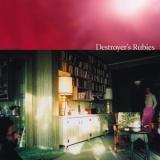
- 1: Rubies
- 2: Your Blood
- 3: European Oils
- 4: Painter In Your Pocket
- 5: Looters' Follies
- 6300: 0 Flowers
- 7: A Dangerous Woman Up To A Point
- 8: Priest's Knees
- 9: Watercolours Into The Ocean
- 10: Sick Priest Learns To Last Forever
- 11: Loscil's Rubies
Das siebte DESTROYER Album von 2006. Dieses Reissue enthält einen exklusiven, 20-minütigen Bonus Song namens ,Loscil's Rubies". Die LP kommt als Doppel-LP auf schwarzem Vinyl. Eine gänzlich unerwartete Sammlung smarter Popmusik, die keine Gefangenen macht. ,Destroyer's Rubies" erzählt von gewonnener und verlorener Liebe, von verpassten Gelegenheiten und einer künstlerischen Integrität, die DESTROYER Fans sehr vertraut sein dürfte. Bejars DYLANeske Herangehensweise an geistreiche Kommentare und sein Tribut an den glamourösen und bombastischen Folk der frühen T-REX oder BOWIE distanzieren DESTROYER vom eher straighten Pop seiner anderen Band, THE NEW PORNOGRAPHERS, ohne auch nur einen Moment die Melodieseligkeit eben jener Band hintenan zu stellen.

