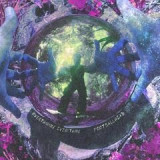
"The True North" ist das zweite Soloalbum von Peter Garrett, dem Sänger von Midnight Oil und Vorreiter des weltweiten Umweltkampfes. Es bezieht seine Inspiration und Kraft aus den lebendigen Farben der australischen Natur und Landschaften. Die Band, die an seiner Entstehung beteiligt war, besteht aus Martin Rotsey (Midnight Oil) an der Gitarre, Heather Shannon (The Jezabels) an den Keyboards, Evan Mannell am Schlagzeug und Rowan Lane am Bass. Freya Schack-Arnott am Cello und Ollie Thorpe an der Pedal Steel schlossen sich ihnen an, ebenso wie 2 von Peters Töchtern May und Grace, die bei den Key-Tracks sangen. "The True North" wurde von Tony Buchen (Smashing Pumpkins, Montaigne, G-Flip, Tim Finn) produziert
Buscar:ol ga
After the Three 6 Mafia hit album The End proved that Memphis Rap was commercially viable, DJ Paul and Juicy J released Koopsta Knicca's classic Gangsta Rap album, Da Devil’s Playground. The album featured older remixed, edited and remastered Koopsta Knicca solo material that had only been released to a small under-ground audience long before the rapper saw fame via his membership in Three 6 Mafia. It was an instant hit!!
One of the most in demand albums from the Memphis rap scene now finally sees and official vinyl release.
Ivan The Tolerable is the alter ego solo project of Middlesbrough based musical wizard Oli Heffernan. Aside from his solo work as ITT, Oli has played in numerous bands over the years including Year Of Birds, King Champion Sounds with members of the Ex, Detective Instinct, and Shrug, and has collaborated with icons like Mike Watts of the Minutemen, and J Mascis of Dinosaur Jr.
Ivan The Tolerable started by accident in 2013 when Heffernan recorded a bunch of songs for his band at the time (Year Of Birds). These were a bit too left-field for a speedy garage band, so Oli decided to put them out on tape himself, and hasn’t looked back since with releases on Up In Her Room, Stolen Body Records and Library of the Occult to name just a few.
We are delighted to bring you our next entry from the Ivan The Tolerable archive reissue series, 2019’s ‘Wild Nature!’ Originally released on CD by Ack Ack Ack Records back in 2019, the album has now been remastered and repackaged, and will be released on super ltd edition orange wax. Here’s a bit about the album in Oli’s own words.
‘Wild Nature was originally recorded sporadically during the first half of 2019. It started life in one house, then I moved and it was finished in another. I remember screenprinting the original CD artwork on the sly at my old job during my lunch breaks and hand-assembled a small run of about 50 that are all long gone. I also remember walking around Albert Park early one morning in thick fog with a field recorder to capture the sounds that were then processed to form 23 Minutes Over Albert Park (condensed to 4 mins for the reissue due to time constraints). I think this was also the last album I recorded vocals on and also the last one I recorded completely by myself - all instruments, recording, mixing, mastering and artwork done by me at home. I know the first and last tracks were recorded as a birthday present for someone but I cant remember much about the other songs i'm afraid - 4 years is a long time in my speedy world. I've been asked a bunch over the years about a vinyl edition of this one - so here it is. Enjoy - especially everything that went through the delay pedal, which is sadly no longer with us.’
John Coltrane's landmark 1961 jazz album My Favorite Things was born of the same recording sessions that yielded a majority of the albums Coltrane Plays the Blues (1962), Coltrane's Sound (1964), and Coltrane Legacy. That My Favorite Things was recorded in less than three days was in itself, remarkable. This record marked a significant turning point in Coltrane's career and showcased his distinctive playing style, which continues to inspire and influence musicians to this day. Coltrane's playing on My Favorite Things can be described as innovative, exploratory, and deeply emotive. The unforced, practically casual soloing styles of the assembled quartet — which includes Coltrane (soprano/tenor sax), McCoy Tyner (piano), Steve Davis (bass), and Elvin Jones (drums) — allow for tastefully executed passages à la the Miles Davis Quintet, a trait Coltrane no doubt honed during his tenure in that band, notes AllMusic. Coltrane was known for pushing the boundaries of jazz and expanding the possibilities of the saxophone as an instrument. Throughout the album, Coltrane's improvisations are characterized by their intensity, virtuosity, and sheer creativity. The title track is a modal rendition of the Rodgers and Hammerstein song "My Favorite Things" from The Sound of Music. Coltrane's use of modal playing made him a pioneer — modal jazz emphasizes improvisation over specific chord progressions. Coltrane's modal approach allowed him to explore a broader range of tonal colors and to create more open and expansive musical landscapes. Each track of this album is a joy to revisit. The ultimate listenability may reside in this quartet's capacity to not be overwhelmed by the soloist. As a soloist, the definitive soprano sax runs during the Cole Porter standard "Everytime We Say Goodbye" and tenor solos on "But Not for Me" easily establish Coltrane as a pioneer of both instruments. In 1998, My Favorite Things received the Grammy Hall of Fame award. The album attained gold record certified status in 2018, having sold 500,000 copies. We've given this definitive reissue of such a landmark album the presentation it deserves: Mastered directly from the original master tape by Ryan K. Smith at Sterling Sound and cut at 45 RPM. Pressed on 180-gram vinyl at Quality Record Pressings, and housed in tip-on old style gatefold double pocket jackets with film lamination by Stoughton Printing.
Miles Davis' A Tribute to Jack Johnson is the best jazz-rock record ever made. Equally inspired by the leader's desire to assemble the "greatest rock and roll band you have ever heard,” his adoration of Johnson, and Black Power politics, Davis created a hard-hitting set that surges with excitement, intensity, majesty, and power. Bridging the electric fusion he'd pursued on earlier efforts with a funkier, dirtier rhythmic approach, Davis zeroes in on concepts of spontaneity, freedom, and identity seldom achieved in the studio — and just as infrequently accepted by the mainstream.
Sourced from the original analog master tapes, pressed on MoFi SuperVinyl, and housed in a Stoughton jacket, Mobile Fidelity's 180g LP reissue brings it all to fore with startling realism. Benefitting from SuperVinyl’s nearly inaudible noise floor, superb groove definition, and clean, ultra-quiet surfaces, this 180g LP showcases everything — from the bold tonality of the headliner's white-hot trumpet solos to the decay of crashing cymbals, carry of wiry guitar notes, and echoes of the studio — in reference fashion.
Bristling with exuberance, Davis' high-register passages explode with authority and commanding presence. Around him, a barrage of urgent backbeats, knifing riffs, and supple bass lines emerge amidst black backgrounds. One of the most prominent differences long-time fans will notice is how much more aggressive, immediate, and vibrant the music sounds, with those aspects central to the composer's original desires.
Utilizing wah-wah and distortion, the go-to instrumentalist of the performances— guitarist John McLaughlin — attacks with a nasty edge, slashing style, and vicious streak that allows A Tribute to Jack Johnson< cross the until-then-impenetrable divide between rock and jazz. Davis puts both feet in the former camp and erases any gap. The stories of the record’s creation are nearly as legendary as the sounds within: Two sessions, multiple jams, different sets of musicians (several uncredited), and near-miraculous production perfectionism that made it all appear cohesive.
The least-well-known masterpiece of Davis' career, the 1971 record — seamlessly assembled and spliced together by producer Teo Macero — was a victim of limited record-label promotion. Audiences also didn’t immediately know what to make of its original cover art — faithfully replicated here. In addition, the powers that be at Columbia Records were directing the public’s attention to Miles at Fillmore, a completely different kind of album guided by two keyboardists. A Tribute to Jack Johnson practically lives in a different universe, one from the future. To many listeners who did manage to hear it — among them critic/musician Robert Quine, Stooges leader Iggy Pop, and renowned critic Robert Christgau — it surpassed everything that came before.
Indeed, Davis treated it as a personal manifesto: An opportunity to salute the Black championship boxer admired for his threatening image to the establishment and impeccable taste in clothes, cars, women and music. Davis explains in the liner notes his affinity for Johnson — a stance mirrored by the defiant music, which hits with a prize fighter's force and reflects the graceful elegance with which a pugilist navigates the ring — and closes the album with a Johnson quote read by Brock Peters.
Inspired not only by Johnson but by Jimi Hendrix and Sly Stone, Davis changed his approach and his band. He surrounds himself with a cadre of musicians in their 20s and, in the case of bassist Michael Henderson, a 19-year-old fresh from touring with Stevie Wonder. Henderson gives Davis what he requested: boogie-based grooves that don’t lose shape or direction. Soprano saxophonist Steve Grossman, drummer Billy Cobham, and organist Herbie Hancock adhere to a similar aesthetic that prizes brazenness, innovation, and energy.
In that vein, during a portion of “Yesternow,” Davis segues into a separate performance (which became known in its entirety as “Willie Nelson”) played by guitarists McLaughlin and Sonny Sharrock, bass clarinetist Bernie Maupin, keyboardist Chick Corea, bassist Dave Holland, and drummer Jack DeJohnette. Dig it!
Talking with jazz scholar Bill Milkowski — who himself noted how McLaughlin’s unrestrained style, decibel-forward volumes, and rapid-fire power chords engendered himself to the rock crowd at the same time that his harmonics and syncopation still definitely made him a jazz player — guitarist Henry Kaiser summed up part of the appeal of A Tribute to Jack Johnson as well as anyone, saying: “It’s a jazz record that way way more open than other jazz records at the time, but still not free jazz. McLaughlin’s rhythm guitar playing on ‘Right Off’ — the use of different chords in a rock shuffle than what anybody had used before — was revolutionary.”
And to think that’s just one aspect of a record that contains multitudes. “Never let them forget it.” Indeed.
An avant-garde masterpiece, a vocal-instrumental suite, a work of collective improvisation, directly addressing the racial and political issues of it’s day, We Insist! Max Roach’s Freedom Now Suite is one of the most important artistic statements of Civil Rights Movement and one of the most groundbreaking jazz albums of all time. Max Roach was already almost a decade into his career as one of the most influential jazz drummers and composers when he teamed up with lyricist Oscar Brown Jr. to collaborate on a piece they planned to perform at the centennial of the Emancipation Proclamation in 1963. Recorded just months after the February 1960 Greensboro sit-ins, the album stands as an early musical testament to the burgeoning rage, anger and passion that would take the Civil Rights Movement from its early victory in Montgomery in 1955 into a future that would dramatically alter race relations in the United States. The second release from the newly launched New York City based jazz label Candid Records, and produced by label co-founder, famed music critic and social activist, Nat Hentoff, the album is a bold statement, focused on civil injustices in black history ranging from slavery to contemporary racial prejudices, and featuring some of the finest jazz musicians ever, including Abbey Lincoln, Coleman Hawkins, Eric Dolphy, Booker Little, and Michael Babatunde Olatunji. The five movements of the work are organized as a historical progression through African-American history, a shape similar to the one in Duke Ellington’s Black, Brown and Beige. The Freedom Now Suite moves from slavery to Emancipation Day to the contemporary civil-rights struggle and African independence. The LP includes extraordinary liner notes written by Hentoff himself, giving a context and insight that adds to the experience of hearing these magnificent performances.
In 2005, an 18-year-old Raphael Gimenes left the sunny shores of Brazil behind, embarking on a journey to a distant and wintry land. "Dinamarca," the Portuguese name for Denmark, became his new home, where he has lived for almost two decades. Today, he presents his third album, a deep exploration of his life in Scandinavia. Rather than being a nationalistic tribute, "DINAMARCA" tells chapters from Gimenes" life story as a Brazilian living in the northern corners of the world. It guides us through the enchanting nordic woods, the vast fields stretching to the horizon, and the timeless sea resting beneath an endless sky. The melodies of blackbirds, the dances of red deer, and the whispers of ancient oaks form the backdrop for his musical stories. Within his songs, we experience moments of deep solitude and boundless inspiration, moments where reflection and creative passion intertwine. Gimenes skillfully turns the power of love into harmonies, dedicating songs to both his companion and his closest friends. Beyond these experiences, he leads us on journeys to Denmark"s neighboring lands, Norway and Sweden, where revelations and encounters with the mystical found their way into the lyrical fabric of his songs. The album"s orchestration includes Gimenes" vocals and the resonant chords of his classical guitar. Accompanying him throughout the album are Jan Kadereit"s multilayered percussion, and Lucas Delacroix"s bass synth, who also plays the electric guitar at times. The music further unfolds with the nuances of a string quartet, and a brass quintet, both recorded in the tropical highlands of Minas Gerais. Other guest musicians feature on individual songs, such as pianist Sebastian Macchi, flautist Flavia Huarachi, cellist Lucas Almeida, and singers Gaby Echevarria, Cecilia Pahl, and Cris Ferro. Gimenes has garnered acclaim and accolades across continents. His debut release, "Raphael Gimenes & As Montanhas de Som," delved deep into the rhythms and traditions of Brazil. It rose to prominence as the top Brazilian release in 2016 in Holland and was hailed as a "conceptual masterpiece" in Japan. His second album, "A Tongue Full of Suns," co-produced with Faroese multi-artist Teitur, ventured into the English language, blending Gimenes" inspirations from the world of prog-rock. Danish rock legend TimChristensen praised it as "top-shelf neo-folk," while Brazilian website80minutos described it as "hypnotizing." The music within "DINAMARCA" delves deep into the soul of a man who embraced a new land with open arms, while staying true to his roots. It unites elements from both of Gimenes" prior works, embarking on a journey across new musical horizons. The result is music that transcends borders, weaving itself into an intricately beautiful tapestry - a soul that has learned to harmonize with two worlds.
Funeral Folk is a collaboration between the grammy nomineed folk musician Sara Parkman and the international touring composer Maria W Horn This album was released in July 2022 by Kali Malones label XKatedral and have gained great reviews in The Wire, Lira and Boomkat. In february 2023 the music was played live at Berghain in Berlin. Funeral Folk is music in the land between black metal and folk, drone and hymns, archaic songs and experimental andscapes. Somewhere in between Pauline Oliveros, Bjork, Anna Von Hausswollf and Wardruna.
MIKE TRAMP ist wahrscheinlich der einzige Mensch, der jemals auf einem Album über Jolly Cola, die Beatles, Sauerkraut und Karate gesungen hat. So
geschehen auf "For første gang", das 2022 erschien und Mike Tramps allererstes Album in dänischer Sprache war.
Mit "Mand af en tid" tut er es wieder. Diesmal geht es in den Liedern um alles Mögliche, von Andy Warhols Fifteen Minutes of Fame bis zu Ingrid &
Lillebror, Muhammad Ali, Ole Olsen und Entenbraten. Und wieder geschieht das alles auf Dänisch. So zeigt Mike Tramp, dass es kein Spaß war, als er
zur Überraschung der meisten eine Platte in seiner Muttersprache veröffentlichte, nachdem er mehr als 45 Jahre lang auf Englisch gesungen hatte.
Die dänischen Lieder sind eine Möglichkeit, einige der Geschichten zu erzählen und die Erfahrungen zu teilen, die sich im Laufe seines Lebens
angesammelt haben.
"Viele von denen, die ich bei meinen Konzerten treffe, sind mir immer gefolgt, und wir sind fast zusammen aufgewachsen. Ich spüre, dass es für sie
etwas ganz Besonderes ist, wenn ich plötzlich auf Dänisch singe. Sie können sich in den Geschichten und Liedern wiedererkennen, weil ich über etwas
singe, das mir selbst etwas bedeutet. Ich bin ein erwachsener Mann, der von allem ein bisschen was probiert hat, aber ich bin immer noch da und
muss nicht dem neuesten Trend hinterherlaufen. Ich weiß, wer ich bin und stehe dazu. Deshalb konnte die Platte auch nicht anders heißen als "Man
of a time"".
Footballhead is a Chicago-based alternative rock band headed by singer/ songwriter Ryan Nolen - At its heart, the band is a vessel to toil forward through internal and external insecurity It also serves the unrelenting spirit of new- millennium Midwestern youth, with MTV and skatepark dreams in the core of their memories. By blending pop structures with alt and emo sounds, Footballhead channels the frantic, dramatic, and anthemic to map the pressure points of existence. It's outcast music, revitalized in search of a modern, blissful awakening. Nolen was a skate kid from the western Chicago suburbs; the one who only kicked it with older neighborhood kids. The punkish attitude of late-90s and earlyaughts alt- rock galvanized Nolen, from the infectiously fun music down to the fashion.
A teenage relocation to Palm Springs, CA coincided with Nolen inundating himself with all the music he could: Warped Tour, 411 videos, Limewire, and the like. The Footballhead ethos comes from this comfort zone of pop impulses and raucous energy, carried by a DIY spirit that grants Nolen the autonomy to facilitate honesty and reflection. Joined by Adam Siska, snow ellet, Liam Burns, and Robbie Kuntz, Footballhead crafts supercharged rock songs like brief, open secrets. However weathered one is from their struggles and mistakes, this music offers unbridled fun as a reprieve, and salves for the shaken. These are your old friends inviting you in to commiserate, elevate, and believe.
The fresh-faced folk pop band Stornoway seem promising: They play with guileless vigor, have a light-stepping chemistry as a unit, harmonize well. Their lead singer Brian Briggs has a lovely, pure high tenor, the kind of voice that effortlessly conveys simple longing. And yet, on their second album, Tales from Terra Firma, they continue to be almost crushingly dull, making well-appointed and cheerfully empty music that successfully communicates next to nothing.
Their Achilles Heel is a simple and unfortunate one, the same on Tales as it was on 2010's Beachcombers Windowsill. Stornoway are clearly in love with Celtic and British folk, and yet they can't write a memorable melody to save their lives. Try to sing along to the verse melody of "Zorbing", their most well-known tune, and pay attention to what your face muscles are doing; most likely furrowing with the effort of recall. Each of Tales' painstakingly arranged nine songs sinks underneath the weight of this insurmountable problem, which is a shame.
If you're making folk-pop, an inability to write a catchy melody is a difficult deficiency to overcome. Stornoway try valiantly with their complex arrangements, which quickly grow exhausting. “You Take Me as I Am” is cluttered with horn charts and pointlessly banging piano. “(A Belated) Invite to Eternity” builds to a full Explosions in the Sky crescendo, with glimmering tremolo guitar and a “Tonight, Tonight”-style sweeping string section, but having built zero momentum and generated zero heat until that point, their planned fireworks display fizzles.
“Farewell Appalachia” follows the same pattern, with celesta, finger-picked acoustic and electric guitar all tracing an emptily pretty circle with nothing in the center. The melody of "The Great Procrastinator" is almost cleanly written enough to be memorable-- and then the ersatz Dixieland jazz interlude crashes in. Stornoway are deft players, and the transitions are tightly managed, but this is praise on the same order as praising the brushwork in a hotel-room painting.
Briggs’ lyrics are filled with uncomplicated images of the good old British countryside, but his lyrics trample over all these dew-covered fields with wordy, awkward phrasing: "And in the gathering dew, I was lucid as a floodlight,” goes a line from “(A Belated) Invitation to Eternity”. “There's a hunger in the air/ A lemon swollen in the trees" he bleats on “Knock Me on the Head”. On “The Great Procrastinator”, he sings that he is “a scientist with far too many metaphors and far too little data to conclude in time.” They don’t read particularly well, and they don’t sound much more natural when sung.
Tales From Terra Firma is a peculiar record-- carefree music that feels leaden; tuneful-sounding songs that offer no tunes to hold onto. They seem an odd fit for 4AD, a label mostly home to singular voices. They may be a mercenary signing, an attempt to ride the coattails of Mumford and Sons' success. But Mumford and Sons, as head-smack simple and pandering as they are, have a pretty crucial ingredient in their arsenal: they write anthems. In that regard, they have Stornoway pretty thoroughly beat.
Repress!
Jurassic 5 flexed serious old-to-the-new muscles in the '90s, beginning with their independently released single Unified Rebelution' in 1994, and book-ending with their stellar debut full-length: 2000's Quality Control. They walked a tightrope between underground and mainstream hip-hop, and toured alongside rap peers as well as punk rockers on the Vans Warped Tour. With double the pleasure of your average hip-hop group - two DJs and producers (Cut Chemist and DJ Nu-Mark), and four MCs (Chali 2na, Akil, Marc 7 and Zaakir aka Soup) - they brought the late 1970s unison MC' style of pioneering groups like the Fantastic 5 and the Force MCs to a new generation. Even more surprisingly, they did so out of Los Angeles, whose hip-hop flavors generally leaned towards Gangsta, G-Funk or Electro lines. Musically inventive and lyrically forward-thinking, each song on Quality Control is a new adventure, exploring engaging territory, delivered via one of the best live hip-hop shows fans had seen in years. From singles like the strutting groove of the title track to the throwback doo-wop samples on The Influence' and the catchy, keyboard groove-driven World of Entertainment (WOE Is Me),' to deeper album tracks like the lyrical gymnastics of Jurass Finish First' and the thought-provoking Lausd,' Jurassic 5 consistently stepped to the plate and their fans responded in kind, nearly pushing the album to Gold status. Add the innovative DJ-and-sample workout which closes out the album, Swing Set,' and you have one of the 2000s' most unique and solid full-length platters.
The Mormones from Lillehammer, Norway had the reputation of being one of the best bands you could experience live, and for their debut album they went to Nashville and producer Mark Nevers (Lambchop, Calexico, Will Oldham) to transfer this energy and nerve to a record. The Mormones consists of Morten Lunde on bass/vocals and Simen Jeistad on drums/vocals, and we promise you've never heard anything like it from a duo before. This is straight-to-the-point garage punk that owes as much to Chuck Berry and The Sonics as it does to Motorhead and The Ramones.
"Guide To Good And Evil" by The Mormones includes the following tracks: "Fast Roads Fast Riffs", "GTO Society", "Roadburn ’68", "Private Affair" and more.
Standard black vinyl is limited to 500 copies. Digipack CD. It’s two years since CONNECTIVITY (2021) smashed into the top 40 and debuted at #1 in the UK download chart, propelling the fiercely independent voice of GRACE PETRIE from critics’ choice to the main stages of major festivals across The UK and Ireland, Australia and Canada. For a seasoned road dog who spent almost 15 years clocking up tours with the likes of Billy Bragg, Frank Turner and Hannah Gadsby, the COVID lockdowns were like a cage for Petrie and when restrictions lifted, she hit the road harder than ever, armed with her most searing and successful record to date, and determined to make up for lost time. Sell-out headline tours across the UK, Australia, Canada and New Zealand followed, with audiences from Melbourne to Toronto mesmerised by the ferocity of her socially urgent lyricism and the barnstorming power of her live show. But travelling the globe hasn’t diminished her laser focus on the political issues plaguing the UK, with two more Prime Ministers, endless blunders and evermore division seen since she last swapped microphone for pen and paper. Now the songwriter is back - stronger, older and a whole lot angrier than ever before. As right wing ideologues trade in suspicion and cynicism, tearing communities apart against a backdrop of crumbling public services, the ordinary folk of Britain continue to suffer the consequences of corruption and individualism. From within this maelstrom of despair comes BUILD SOMETHING BETTER - the new, uncontainable album from Grace Petrie. Recorded raw and unflinchingly with folk-punk legend Frank Turner in the producer’s seat, BUILD SOMETHING BETTER is a return to blistering protest form for Britain’s most relevant political songwriter, a decade after being hailed as “a powerful new voice”, (The Guardian) and “a millennial’s Billy Bragg” (Huffington Post). In a world that seems to make less sense than ever, these are songs made to both holler along to from the crowd barrier and to tear up with on a lonely late night train. A record for everyone whose broken heart beats for, and whose boots stomp in time with, the hope a brighter tomorrow. “An effervescent charm-bomb of a performer” - The New Yorker. Headline Tour: 21st Feb Belfast - Oh Yeah Centre 22nd Dublin - Whelan’s, 24th Manchester - Academy 2, 28th Kendal - Brewery Arts 29th Edinburgh – Summerhall 1st March Gateshead – Glasshouse 6th Birmingham - Glee Club 7th Leeds - Brudenell Social Club 8th Nottingham - Rescue Rooms 9th Liverpool – Philharmonic 13th Oxford - The Bullingdon 14th London - Islington Assembly Hall 15th Brighton - Concorde 2 16th Norwich - Norwich Arts Centre 20th Cambridge - The Junction 21st Portsmouth - Wedgewood Rooms 22nd Exeter – Phoenix 23rd Bristol - Trinity Centre
For its 2nd release, Sweet Notes is happy to welcome the Italian duo Two Opposites to its imprint! Begin the adventure with "Escape Reality", where celestial synths elevate you to the cosmos. A dash of pop flair in the playful bassline lightens the mood, making you groove from head to toe on this mind-bending escape!
The second track, "Gravitone", means business from the start. A serious vibe that compels you to exchange intense looks with your mates or strangers on the dance floor. The whirling stab? It's like an old computer crashing, but in the coolest way. Paired with an acid house beat, get ready to techno-nod with newfound seriousness!
Dive into the EP's third track, "Magic Gate", where a deep bassline takes you on a mind-soaring journey. Shimmering synths elevate the experience. Once open, the magic gate leads you into its twisted slide tunnel—a wild, memorable ride awaits, so you better buckle up!
Enter the laid-back realm of "Melocity," where multi-directional stabs guide your mind on an intense self-trip. It's mellow yet positively infectious, and those shiny stabs? They're the secret giggle-inducing agents. Let the carefree vibes roll!
- A1: The Great Hen-Yuan’ River
- A2: Summer Will Not Come
- A3: Six Coral Devils (Part Ii)
- A4: Six Coral Devils (Part Iii)
- A5: Six Coral Devils (Part Iv)
- A6: Six Coral Devils (Part V)
- A7: Six Coral Devils (Part Vii)
- A8: Definitely That Ketsal
- A9: The Waltz Windows On The Floor
- B1: Blue
- B2: Kwolyj Twist (Slow Twist)
- B3: Argolida (Part I)
- B4: Argolida (Part Ii)
- B5: Argolida (Part Iii)
- B6: Argolida (Part V)
- B7: Argolida (Part Vi)
- B8: Argolida (Part Vii)
- B9: Argolida (Part Viii)
- C1: All Secrets Of A Poem (Part Iii)
- C2: All Secrets Of A Poem (Part Iv)
- C3: All Secrets Of A Poem (Part Vi)
- C4: All Secrets Of A Poem (Part Vii)
- C5: Poliuwannia (The Hunt)
- C6: Smilywo Chodit’ Do Zymy (Walk Brave To The Winter)
- D2: Widen Spyt’ (Vienna Is Sleeping)
- D3: Wartowyj (The Stand Guard)
- D4: Procesija Mertwych (Dead Ceremony)
- D5: Na Skryni (On The Basket)
- D6: Untitled (Bonus Track)
- C7: Zradnyky (The Traitors)
- D1: Obminaj Misce (Around This Place)
The founders of Cukor Bila Smert’ (Ukrainian: Цукор– Біла Смерть, English: Sugar – White Death) band were Svitlana Okhrimenko (a.k.a. Svitlana Nianio), Oleksandr Kohanovs’kyi, and Tamila Mazur, who studied at the Reinhold Glier Kyiv Academy of Music in 1984-1988. In the summer of 1988, they got acquainted with Eugene Taran, a young guitarist and artist. He joined the band and also became the ideologist of Sugar – White Death. Moreover, Eugene coined the name for the band: the irony towards the Yellow Press. The musicians gathered at Kohanovs’kyi’s house, where they spent their free time not only playing music but also listening to and discussing new records and thinking about the conception of their new project.
For two years, the band recorded a few home-made albums, such as “Rhododendrons Coral Aspides” in 1988 (which is considered lost), where Kostyantyn Dovzhenko took part as a guitarist and sound engineer. He also replaced Taran during the recording session because Eugene was passing an exam at that time. The band also recorded another album – “Lilies and Amaralises,” in 1989, which is also considered lost. Eugene remembers that the band made a lot of recordings but did not pay so much attention to them. Sugar – White Death played live occasionally but spent more time creating their own sound, which was named by Oleksii Dekhtyar (a founder of “Ivanov Down”) as a “sugar calypso sound.” At that time, the music was mostly created by Oleksandr Kohanovs’kyi, and the lyrics were written by Svitlana Okhrimenko and Eugene Taran.
In February 1990, a quartet came to the Scientists House Studio in Kyiv, where they had one studio session only, recorded by Valerii Papchenko. Musicians played live for about one take. This session was represented on the “Mannered Music” compilation by several blocks – “Venus with Long Neck,” “The New Sissies,” and “Rhododendrons Coral Aspides,” which was shortened to “Rhododendrons” on the cassette (two songs from which – “Summer Will Not Come” and “The Great Hen-Yuan’ River,” dedicated to Grigorii Khoroshylov, the sinologist from Kyiv). The compilation cover design was created by Eugene Taran. Later, this tape got to Vlodek Nakonechnyj, the founder of Koka Records, a young Polish label, who released “Mannered Music” on cassettes and made efforts to invite Sugar – White Death to play several gigs in Poland.
In November 1990, Sugar – White Death played their last gig as a quartet in Kharkiv. They were invited by Sergii Myasoyedov, who curated the art association “Nova Scena” (The New Scene). The band played selected tracks from the albums “The New Sissies” and “The Shellfishes in Gold Wrappers” (the last one is also considered lost). Due to Sergii Myasoyedov's efforts, the performance was documented: he saved a lot of photos and fragments of soundboard recordings on reel-to-reel tape.
Later, Oleksandr Kohanovs’kyi and Tamila Mazur left Sugar – White Death: Oleksandr founded his own project Pan Kifared, and Tamila became a bass player of Shake Hi-Fi (whose co-founder was Eugene Taran). Sugar became a duo of Svitlana and Eugene. They started to focus on their next work: “Antinoy Is Leaving” in late 1990.
In 1992, they were also invited by Sergii Myasoyedov for a studio session in Kharkiv, where due to the efforts of Oleksandr Vakulenko, Sugar recorded the new album called “All Secrets Of A Poem”. Some tracks from the work (“Dead Ceremony,” “Vienna Is Sleeping,” and “Untitled”) were released on their next and last album, “Selo” (“The Village”). The rest compositions were published as a part of the compilation for the first time.
In the autumn of 1992, the musicians went to Poland, where Vlodek Nakonechnyj, who wanted Sugar to come to a “real” studio, organized their last recording session. Although the journey’s beginning was unsuccessful (Eugene’s guitar was taken away by a customs officer when crossing the border), the musicians worked fast during the session at the Arek Was studio at Marki on an 8-track reel-to-reel machine. Boleslav Blazhchyk took part as a cellist, playing the parts created by Svitlana. The album was completed in three days – the musicians spent two days recording and one-day mixing, mostly done by Eugene Taran. In 1993, this work was released as “Selo” (“The Village”) album on cassette tapes by Koka Records (remastered by Tadeusz Sudnik). Later, Sugar – White Death was disbanded.
Credits:
Cukor Bila Smert’: Svitlana Okhrimenko (lyrics, keyboards, piano, vocals), Eugene Taran (lyrics, keyboards, guitar), Oleksandr Kohanovs’kyi (piano, A1-B2), Tamila Mazur (cello, A1-B2), Boleslaw Blaszczyk (cello, C5-D6)
Cover photo by Vlad Urazovs’kiy
Photo archive courtesy: Vlad Urazovs’kiy, Vlodek Nakonechnyj (Koka Records),
Oleh Yuhrinov, Sergii Myasoyedov
Audio archive courtesy: Vlodek Nakonechnyj (Koka Records), Guido Erfen,
Sergii Myasoyedov
Liner notes: Vlad Yakovlev
Compiled by Dmytro Nikolaienko, Dmytro Prutkin and Sasha Tsapenko
© ? Shukai / Cukor Bila Smert’
2024
- A1: Simple Minds - Theme For Great Cities
- A2: Cabaret Voltaire - Silent Command
- A3: Ryuichi Sakamoto - Riot In Lagos
- A4: Grauzone - Eisbar
- B1: The Associates - White Car In Germany
- B2: Patrick Cowley - Nightcrawler
- B3: Isabelle Mayereau - On A Trouve
- B4: Chas Jankel - 3,000,000 Synths
- C1: Peter Gabriel - No Self Control
- C2: The Walker Brothers - Nite Flights
- C3: Thomas Leer - Tight As A Drum
- C4: Daryl Hall - The Farther Away I Am
- C5: Harald Grosskopf - So Weit, So Gut
- D1: Robert Fripp - Exposure
- D2: Areski Belkacem & Brigitte Fontaine - Patriarcat
- D3: Basil Kirchin - Silicon Chip
- D4: Holger Czukay - Ode To Perfume
By the turn of the 80s, the impact of David Bowie’s ground- breaking Berlin recordings – the synths, the alienation, the drily futuristic production – was being felt on music across Europe. What’s more, the records being made were reflecting back and influencing Bowie’s own work – 1979’s Lodger and 1980’s Scary Monsters owed a debt to strands of German kosmische (Holger Czukay), new electronica (Patrick Cowley, Harald Grosskopf), and the latest works from old friends and rivals like Robert Fripp, Peter Gabriel and Scott Walker, all of whom had been re-energised by the fizz of 1977.
Compiled by Saint Etienne’s Bob Stanley and the BFI’s Jason Wood, Fantastic Voyage is the companion album to their hugely successful Café Exil collection, which imagined the soundtrack to David Bowie and Iggy Pop’s trans-European train journeys in the mid-to-late seventies. “Fantastic Voyage” is what happened next.
Bowie’s influences and Bowie’s own influence were rebounding off each other as the 70s ended and the 80s began, notably in the emergent synthpop and new romantic scenes as well as through the music of enigmatic acts like the Associates and post-punk pioneers such as Cabaret Voltaire.
Like Low and Heroes, some of the tracks on Fantastic Voyage are spiked with tension (Grauzone’s ‘Eisbär’) while some share those albums’ sense of travel (Simple Minds’ ‘Theme for Great Cities’, Ryuichi Sakamoto’s ‘Riot in Lagos’) and others find common ground with “Lodger’s” dark, subtle humour (Thomas Leer’s ‘Tight as a Drum’, Fripp’s ‘Exposure’).
This is the thrilling, adventurous sound of European music before the watershed moment when Bowie would abandon art- pop for America and the emerging world of MTV with “Let’s Dance” in 1983. Fantastic Voyage soundtracks the few brief years when the echo chamber of Bowie, his inspirations, and his followers created an exciting, borderless music that was ready to challenge Anglo American influences.
- A1: Fieldia
- A2: Holes Of Time 时间之孔 Featuring Oxi Peng
- A3: Drifting Nama 漂流纳马
- B1: Blood Child 血孩子
- B2: Discrepant Microbial Mats 差异菌毯 Featuring Forrest Gander
- B3: Ediacaran Ghost 埃迪卡拉幽灵 Featuring Marina Herlop
- C1: Fractal1 分形1
- C2: Inside-Out 翻转
- C3: Fractal2 分形2
- D1: Conjuring 召唤
- D2: Predator Chorus 掠食者合唱 Featuring – Batu
- D3: Arrival 降?
Holes of Sinian’ is the fourth studio album from Shanghai based artist 33EMYBW, and features collaborations with Marina Herlop, Batu, Forrest Gander and oxi peng.
‘Time is a porous Sinian stone. The mystery of the Sinian stone lies in the "holes" rather than the "stones" - these holes constitute the beauty of the Sinian stone, forming overlapping gaps and penetrating scenes, and also constructing the existence of the Sinian stone itself. The mysteries and contingencies of life are like holes in stone, densely covered in time, leaving fractal paths and jumping clues in the evolution history of the earth.
Ghosts of the oldest Ediacaran biota wander among them - "Evolution Failed!" But instead of dying, they drift from rocky crevices into another dimension, from hole to hole, haunting them in nonlinear time, replanning another arriva
The newly reborn Danish label, tech-nology, is reintroducing its first two releases.
The second release on tech-nology back in 2003 by El Far, alsoknown as Bjorn Svin, stands as a true techno masterpiece andis now rereleased as the label has been relaunched in 2023. Bjorn Svin has taken the lead again, contributing a remix that kick-starts the label in 2023 with TN EDITS 02 Lotte kaersa:"Prov og gor li'som jeg" - played by Luca Bacchetti at Burning Man 2023.
Additionally, the track gained attention on the latest Michael Meyer podcast,
But this is all about the beginning of the label and the beginningon the dancefloor Bjorn Svin was one of the first electronic musician in Denmark spearheaded an uprising Scandinavian rave scene, developinga unique, recognizable sound inspired by Detroit techno and British early IDM pioneers: playful and melodic but simultaneously groovy and entrancing.
In 1997, April Records released Bjorn Svin's debut full-lengthalbum Mer Strom; the opening single became an unofficialanthem for the entire generation of Scandinavian ravers.
Tech-nology captured a mature Bjorn Svin in 2003 and releasedwhat is arguably his best techno track ever produced, featured on this EP that highlights his techno skills under the moniker El Far. This authentic techno experience transports you back to theorigins of electronic dance music, going back to the old abandoned warehouses where social and casual dancing defined the essence of the scene.
Yet, the record captures what it is still all about, the love to themusic, the love on the dancefloor, this is him, her and wet area.