MUSICORAMA OLYMPIA 1961 DOUBLE LP Limited edition (2000 worldwide). The first three Musicorama by Johnny Hallyday recorded at the Olympia in 1961, 1962 and 1965 in double LP openable cover edition. Through the magic of the airwaves, these concerts were the dream of all teenage fans of Johnny who, glued to the transistor, vibrated when listening to the broadcast. These moments are etched forever in their memory. Reviews and Ads in London Macadam, France in London, Ici Londres and L’Echo
Suche:olympia
MUSICORAMA OLYMPIA 1962 DOUBLE LP Limited edition (2000 worldwide). The first three Musicorama by Johnny Hallyday recorded at the Olympia in 1961, 1962 and 1965 in double LP openable cover edition. Through the magic of the airwaves, these concerts were the dream of all teenage fans of Johnny who, glued to the transistor, vibrated when listening to the broadcast. These moments are etched forever in their memory. Reviews and Ads in London Macadam, France in London, Ici Londres and L’Echo
MUSICORAMA OLYMPIA 1965 DOUBLE LP Limited edition (2000 worldwide). The first three Musicorama by Johnny Hallyday recorded at the Olympia in 1961, 1962 and 1965 in double LP openable cover edition. Through the magic of the airwaves, these concerts were the dream of all teenage fans of Johnny who, glued to the transistor, vibrated when listening to the broadcast. These moments are etched forever in their memory. Reviews and Ads in London Macadam, France in London, Ici Londres and L’Echo
Der Multi-Instrumentalist und Produzent hat sich mit fein strukturierten und enthusiastischen Kompositionen bereits einen Namen gemacht. Sein 2016 erschienenes Album „Forms“ zog mit seiner spielerischen Verwebung von Rhythmen und Samples die Aufmerk-samkeit der elektronischen Musikszene auf sich. In diesem Jahr veröffentlicht The Micronaut nun Olympia (Summer Games) – ein Album, das seinen sorgfältigen Produktionsstil weiterführt und dem Geist der Olympischen Sommerspiele gewidmet ist. Denn auch wenn diese abgesagt wurden, so sind die damit verbundenen Tugenden wie Durchhaltevermögen und Zusammenhalt zeitlos und gerade in diesen Wochen um so wichtiger. Solch grundlegende Prinzipien, die den Geist der Olympischen Spiele ausmachen, sind es auch, die The Micronaut umgetrieben haben. Und so war es kein Zufall, dass Summer Games entstanden ist: „Ich habe bisher immer Konzept-Alben veröffentlicht. Dieses Mal habe ich Olympia gewählt, weil es nicht nur Wettkampf, sondern auch eine Friedensbewegung ist, bei der es um die Menschen geht, ganz egal welcher Nation sie angehören.“ Diesen vielfältigen und stets vitalen, lebhaften Geist spiegelt das Album wider: Das verspielt-zarte Uneven Bars oder das träumerisch-sphärische Table Tennis, sie alle erzählen von den besonderen Momenten, von Siegen und Niederlagen und all den Facetten, die dem Sport innewohnen. Dadurch ist eine Reise entstanden, eine schwungvolle, aber auch turbulente Achterbahnfahrt, die den künstlerischen Anspruch The Micronauts abbildet: „Lebhaft, expressiv, dramatisch, manchmal ruhig, manchmal kraftvoll – ich versuche immer die Vibes von Wanderlust, Hoffnung und individuellen Momenten in meiner Musik einzufangen“ – erzählt der in Leipzig lebende Künstler. Und dieses Mal liegt das Spannungsfeld zwischen sportlichen Disziplinen – in dem sich The Micronaut musikalisch ausdrückt. Wobei seine Musik keinesfalls zum Sich-Messen anregt, vielmehr sind viele Tracks mit ihrem übermütigen, optimistischen Vibe für die Tanzflächen der Clubs geeignet, um sich die Anspannung der zuweilen olympischen Herausforderungen des Alltags von der Seele zu tanzen. Dazu hat The Micronaut anspruchsvolle Arrangements mit fließenden Melodien und unaufgeregtem Gesang kombiniert und den Weg für ein neues, collagenartiges musikalisches Genre geebnet. Bisweilen dreht Summer Games sogar in Richtung Elektro-Pop ab, dann wieder ist es inspiriert von old-schooligem Hip Hop and in anderen Momenten mündet und explodiert es förmlich in intelligent gesetzten musikalischen Hochsprüngen. Die Messlatte liegt hoch – doch bei allem Auf und Ab scheint immer durch, dass The Micronaut ein begeisterter Musikliebhaber ist, der Ideen und Inspirationen von überall her sammelt und sie unter Einsatz seines ganz eigenen emotionalen Prismas übersetzt.
Renate Schallplatten's eighth release comes from Michal Zietara with Olympia Europa. The four-track EP, the Polish-born, Bavaria-raised, Berlin-based Renate resident's solo debut features three originals plus a remix from Ian Pooley.
Opener "Mr. Joy" is a late-night uptempo jam with a punchy bassline and warm pads. Chopped vocal samples come to the fore around the breakdown, raising the tension for maximum euphoria upon the beats' return. Ian Pooley's flowing remix on the A2 is in the signature '90s filter house style. The vocals lead the way, adding some warmth to a rather stripped-back affair. It's another peak-time cut that makes you want to close your eyes and move to the music. The punchy beats and upbeat melodies return on "Euro Robot," this time paired with intricate drums, fluttering vocals, and high-pitched keys. Closer "Pink Seal" is more downtempo and pensive, centered around coherent vocals and smooth pads. The beats feature less prominently, even fading away after a brief midsection. It's a cerebral track; a moment of self-reflection in an otherwise upbeat, high-energy EP.
The EP is Renate Schallplatten's second of 2019, following Longhair's label debut. Earlier EPs have landed from Moscoman, Sebastian Voigt, Wareika, and more.
Broken District is a new label launched by the creative minds of Jus Jam, Momla and Antwan. The project is born with the idea of exploring alternative music styles that blend the influences of the label's creators, including Jazz, House-Music, Hip-Hop, Funk, Soul, and more experimental sounds.
In order to give a global overview of the label's territory, Broken District kicks-off with a series of VA EPs, here delivering its second volume.
Conceived, as its predecessors, as the ideal musical accompaniment to a packed dance hall, "Blue Latin" reinterprets a musical genre - jazz, of course! - which even decades ago was considered the dance music 'par excellence', and delivers it, extremely modernized, to the present day, contaminated by Afro-Cuban, Brazilian and Latin-jazz elements, all made fluid, compelling and above all..., danceable! The almost-meditative "Incanto" combines spiritual jazz influences and African atmospheres.
[C} A3 | Mulata
Sometimes in life you find yourselves at a point where you need to walk away and leave something behind if you ever want to go back to it. Other paths must be walked, other experiences learnt from to give you a fresh view of where you've come from. In that sense going back to the roots, rediscovering their past with fresh eyes, is the concept behind Richard Dorfmeister & Rupert Huber's new Tosca album, 'Going Going Going'.For over two decades and several albums Tosca has served as a vehicle for Richard and Rupert to express their personal moods and impressions, each release holding up a mirror to their inner lives. Now though after ten albums the journey has come full circle and once again they've returned to the kind of instrumental tracks, full of deep beats and dubbed out textures that made Tosca's name. The result is 'Going Going Going', an album that Tosca fans will immediately recognize and yet one that doesn't just trade on former glories. Hitting the ground running opening track 'Import Export' sounds like a Lee Scratch Perry version of a Ennio Morricone soundtrack, a motif reoccurs throughout the album, most notably on 'Dr Dings', their reinterpretation of America's classic 'Horse With No Name'.
- A1: Unfelt Loss
- A2: So Easy To Love
- A3: Teardrops (Classic Hell On Earth)
- A4: Whiplash
- A5: Morning Doctor
- B1: Cherry Blossoms In Leschi
- B2: Southward Equinox
- B3: Velvet Rope
- B4: Backward Path
- B5: Don’t Remind Me
- C1: Season Of The Wish C2. The Last Resort
- C3: Two Rivers
- C4: A Little Game
- C5: Lilies Of The Field
- D1: Lifelong Sellout
- D2: Out Of My Mind
- D3: Golden Era
- D4: Sweet Routine
For two decades, Gun Outfit has been a band defined less by genre than by continuity, patience, and a commitment to making music that reflects their lived experience.
Formed in Olympia, Washington in 2006 but long since rooted in Los Angeles, the group has evolved from a raw duo into a quietly formidable five-piece, their sound growing from scrappy post-punk beginnings into something spacious yet intimate, and always underpinned by an experimental edge.
On Process & Reality, Gun Outfit return with their most ambitious and immersive work to-date, a sprawling 80-minute double album shaped by time, environment, and philosophy. Recorded over the course of a single month in the late summer of 2020, on an 80-acre ranch in Pine Flat, California, while a massive forest fire burned less than ten miles away, the seeds of these songs were stark and strange.
Its title, Process & Reality, draws from the central work of philosopher Alfred North Whitehead, whose philosophy places intuition, experience, creativity, and relationality at the center of existence.
The band’s current lineup reflects both longevity and openness. Sharp and Keith remain the band’s primary architects, joined by longtime drummer Daniel Swire, multi-instrumentalist Henry Barnes, and bassist Kayla Cohen. Additional collaborators include Chris Cohen, Warren Lee, and Danny Sasaki all of whom add further depth, leaving subtle fingerprints across the album.
Musically, the album expands the band’s palette without abandoning its core sensibility. Dulcimer, autoharp, sitar, melodica, keyboards, homemade electronics, and a wide range of acoustic and electric textures appear throughout. The sound is mellow yet expansive, songs move between fragility and hefty atmospheric passages.
Influences surface obliquely rather than overtly. Elements of reggae and dub inform the production’s spatial sensibility. Echoes of long-form European jam bands coexist with sharp post-punk. British folk traditions, American country, and classic West Coast songwriting drift in and out of focus; the band is never afraid to lead or follow.
- A1: Insandi
- B1: And The Love Is Born In Me For A Stone
- B2: Grifff
- B3: Yama Yama
Creator of Le Châ, a chimera emerging from the margins, Lutèce Lockness builds worlds where dreamlike imagery and satire intertwine, inviting us to embrace the bizarre, the strange, and the intimate. With her debut album Le Châ, she crafts powerful, incantatory soundscapes. Her compositions blend psychedelic tones, medieval timbres, drifting drones, bouzouki improvisations, and digital textures, enriched through collaborations with Christoph Fink, Maxime Denuc, and Jean Rondeau.
Inspired by David Lynch, Jim Jarmusch, and Hayao Miyazaki, her practice shapes sonic material like exquisite corpses. Across disciplines, Lutèce Lockness explores new territories through projects such as the collective book Bande organisée (Seuil), born from the transport of a stone book across France during lockdown, and as part of the feminist punk group Forsissies. On stage, she has opened for Bonnie Banane at the Olympia and Flavien Berger at Le Lieu Unique in Nantes, and is also preparing for the opening of Kanal Pompidou in Brussels - continuing a trajectory where music, performance, and visual experimentation converge to create spaces of freedom.
- A1: Ed Temple - Emmanuelle
- A2: Simple Symmetry - Queen Of Chinatown (Feat David Lerner)
- A3: Lipelis - Safeword
- A4: System Olympia - Signal Your Love
- B1: Paresse - People Are Still Having Sex
- B2: Guy Gerber & Desire - Can't Get You Out Of My Head
- B3: Jorja Chalmers - Principles Of Lust
- B4: Gareth Anton Averill & Sobrenadar - Paris
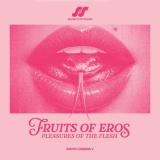
Secrets Of Sound slip into electronic erotica with this new and steamy compilation of after-hours disco and sexually charged sounds. Both originals and tasteful reinterpretations of classic tunes from Kylie Minogue, Amanda Lear, La Tour and Enigma feature on this most intimate collection. There is blissed out depth from Ed Temple, Italo melodic flair from Lipelis and sultry vocal allure on System Olympia's 'Signal Your Love.' Elsewhere, Jorja Chalmers casts you adrift on a new age Balearic life raft and Gareth Anton Averill & Sobrenadar closes with the shimmering 80s nostalgia of 'Paris.' Steamy indeed.
- 1: Call The Doctor
- 2: Hubcap
- 3: Little Mouth
- 4Anonymous 2:29
- 5: Stay Where You Are
- 6: Good Things
- 7: I Wanna Be Your Joey Ramone
- 8: Taking Me Home
- 9: Taste Test
- 10: My Stuff
- 11: I'm Not Waiting
- 12: Heart Attack
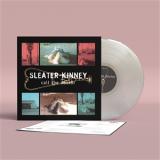
Sleater-Kinney feiern das 30-jährige Jubiläum ihres zweiten Albums ,Call the Doctor" mit einer neuen Vinyl-Ausgabe auf "Northern Light"-farbenem Vinyl. Sleater-Kinney ist eine gefeierte amerikanische Rockband, die 1994 in Olympia, Washington, gegründet wurde. Die Kernbesetzung der Band besteht aus Corin Tucker (Gesang und Gitarre), Carrie Brownstein (Gitarre und Gesang) und Janet Weiss (Schlagzeug). Sleater-Kinney waren bekannt für ihre feministische, linksgerichtete Politik und waren ein fester Bestandteil der Riot-Grrrl- und Indie-Rock-Szene im pazifischen Nordwesten. Call the Doctor ist Sleater-Kinneys zweites Studioalbum. Es wurde von John Goodmanson produziert und ursprünglich am 25. März 1996 bei Chainsaw Records veröffentlicht. Das Album wird oft als Sleater-Kinneys erstes richtiges Album angesehen, da Tucker und die Co-Sängerin und Gitarristin Carrie Brownstein zum Zeitpunkt der Aufnahmen ihre früheren Bands, Heavens to Betsy und Excuse 17, verlassen hatten. Die Besetzung bestand aus Corin Tucker (Gesang, Gitarre), Carrie Brownstein (Gitarre, Gesang) und Lora Macfarlane (Schlagzeug, Gesang). Call the Doctor landete 1996 auf Platz drei der ,Pazz & Jop"-Kritikerumfrage von The Village Voice. 2010 wurde das Album von der Redaktion des Rolling Stone auf Platz 49 der Liste der 100 besten Alben der Neunziger gewählt. ,Sleater-Kinney ist Amerikas beste Rockband" - Greil Marcus, Time (2001). ,Tauscht Sexarbeiterinnen-Rollenspiele, Puppenteile, Gender-Bending und andere gängige Female-Rock-Klischees gegen Geschichten vom alltäglichen Kampf ... Sleater-Kinney beweist, dass Punk immer noch neue Wege bietet, Nein zu sagen" - Johnny Ray Huston, SPIN
- A1: The House Of The Rising Sun (My Life As A Girl)
- A2: Opium
- A3: Ohne Dich Ist Es Nacht
- A4: Sophisti-Cat
- A5: Musikant Am Schwabylon
- A6: Zahltag
- A7: Bordkapelle
- A8: Milky Way
- B1: Der Alte - Titelmusik
- B2: Verfolgungsjagd
- B3: Tod Im Olympiadorf
- B4: Go
- B5: Der Stoff Aus Dem Die Träume Sind
- B6: Alleingang
- B7: Eine Million
- B8: Stephan & Harry
- B9: Isar-Disco
Black Vinyl[29,37 €]
Trenchcoat-beige Vinyl | Gatefold | 180g | limitiert auf 200 Stück weltweit Die legendären TV-Soundtracks zu Derrick und Der Alte erscheinen erstmals in einer exklusiven Vinyl-Edition - stilecht in "Trenchcoat-beige". Peter Thomas" ikonische Musik zwischen Suspense, Lounge und Funk prägt bis heute das Klangbild deutscher Krimikultur. Enthalten sind Originaltitel aus den frühen Folgen beider Serien, darunter zwei bisher unveröffentlichte Tracks aus dem Jahr 1974. Verpackt im hochwertigen Gatefold-Cover mit Artwork von Jörg Schöpf und Adrian Keindorf. Ein Muss für Sammler und Fans von Retro-Sound und TV-Geschichte.
- A1: Nadyne Rush - "Sad Lady" Ladies On Mars Extended Remix (7 34)
- A2: Massimo Berardi - "Dem Vibez" Extended Remix (5 59)
- A3: D Lewis - "Time" Da Lukas Remix (5 46)
- B1: Tojura - "Live Your Sex With Love" Jago Remix (5 52)
- B2: Kano - "Street Funky" (4 08)
- B3: System Olympia & P Nut - "Shy Shy" Original (3 21)
Vol.1[10,04 €]
Obrador originated from Olympia the capital state of Washington. A multifaceted group that consisted of many members over the years. They were together from 1976-2006 and was led by band leader Michael Moore. The members were, Steven Bentley ~ Drums, Connie Bunyer ~ Clarinet, Guitar, Vocals, Paul Hjelm ~ Guitar, Bass, Trap Drums, Piano, Steven Luceno ~ Bass, Guitar, Michael Moore ~ Keyboards, Michael Olson ~ Percussion, James Pribbenow ~ Saxophone, Vincent Soluna ~ Sax, Vincent Soluna ~ Sax
They recorded 5 albums over the period of 30 years. One track of which “Willow” you will find tucked on the B side of this lovely new release. We wanted you Kats to have great value for money and pack the record with two stone wall Dingwall style killer recordings.
The A side “Blink Samba” was recorded at Russian Hill Studios San Francisco in July 1983, after the group made the long journey down from Olympia and back to record a whole Lp that has lay unissued since 2023 only getting a digital release. We stumbled across the tracks whilst doing some research and was blown away. A few chats with member Michael Olson and we knew these had to be on vinyl. They are pure fire jazz with a slightly latin Esq vibe. We can almost see the sweat dripping from the Jazz dancers as they cascade to the rhythm of the percussion “Blink Samba”
Flip it over whilst the floor is still rocking to the track “Willow” Unlike “Blink Samba’s opening percussion this one kicks in straight away with a rasping baseline. You hold on to the bars like you been strapped into to a rollercoaster and get ready for the ride.
Early support from Luke Slater, Ben Sims, Sverca, Staffan Linzatti,
Voyager Recordings returns, this time with well known artist - Ecilo, and his album entitled "Interstellar Shaman". An 8 track vinyl and 10 track digital release, with additional bonus digital tracks. This one being a lot more dancefloor focused, while retaining that sci-fi, future sound.
An eclectic and innovative artist from Indonesia, he started his journey into the world of electronic music in 2008. Making his mark on the South East Asian scene. His music found influence in the rhythms of jazz, soul, and blues, as well as the atmospheric resonances of Sci-Fi soundtracks.
With releases on noteworthy labels such as AXIS, ARTS, Planet Rhythm, Olympian, and more, Ecilo has strengthened his reputation as a producer and DJ with his percussive beats resonating around the world
After four years of solo festival appearances, the duo formed by Rebeka Warrior and Vitalic is making a grand comeback!
The release of the new album is planed on january 24 and a European and French tour, including a sold out show at the Olympia (Paris) in April 2025 and at Zénith Paris - La Villette on November 5th, 2025.
Few artists have done as much as Heinrich Dressel to rekindle the genre of soundtracks. Even fewer are as capable as the Italian at writing such silver screen scores. Yet, Valerio Lombardozzi is much more than just one style. He has shown this time and time again, doing so once more with The Obscure Cities. Works of fiction, rather than film, are the fount of inspiration with tracks drawing on the likes of J.G. Ballard, Francois Schuiten, Benoit Peeters and Valerio Mattioli. The listener is transported to worlds of Dressel’s own making, landscapes of melody, textures of bass punctuated by drums. “Galatograd” opens. From understated beginnings, the track expands into a symphony of strings as columns of warmth descend. Tempos rise for “Eden Olympia”. A different tone is set. Juddering arpeggios and clean snares are elevated by bright and hopeful keys that sparkle with an enthusiasm and innocence. Deep unctuous bass gives way to gliding notes for “Remoria”. A piece where melodies and memories melt in the morning dawn. “Mylos” is the last visit of the EP. Delicate, almost fragile, notes are buttressed by drum patterns in this hazy dreamlike finale.
UILTY RAZORS, BONA FIDE PUNKS.
Writings on the topic that go off in all directions, mind-numbing lectures given by academics, and testimonies, most of them heavily doctored, from those who “lived through that era”: so many people today fantasize about the early days of punk in our country… This blessed moment when no one had yet thought of flaunting a ridiculous green mohawk, taking Sid Vicious as a hero, or – even worse – making the so-called alternative scene both festive and boorish. There was no such thing in 1976 or 1977, when it wasn’t easy to get hold of the first 45s by the Pistols or the Clash. Few people were aware of what was happening on the fringes of the fringes at the time. Malcolm McLaren was virtually unknown, and having short hair made you seem strange. Who knew then that rock music, which had taken a very bad turn since the early 1970s, would once again become an essential element of liberation? That, thanks to short and fast songs, it would once again rediscover that primitive, social side that was so hated by older generations? Who knew that, besides a few loners who read the music press (it was even better if they read it in English) and frequented the right record stores? Many of these formed bands, because it was impossible to do otherwise. We quickly went from listening to the Velvet Underground to trying to play the Stooges’ intros. It’s a somewhat collective story, even though there weren’t many people to start it.
The Guilty Razors were among those who took part in this initial upheaval in Paris. They were far from being the worst. They had something special and even released a single that was well above the national average. They also had enough songs to fill an album, the one you’re holding. In everyone’s opinion, they were definitely not among the punk impostors that followed in their wake. They were, at least, genuine and credible.
Guilty Razors, Parisian punk band (1975-1978). To understand something about their somewhat linear but very energetic sound, we might need to talk about the context in which it was born and, more broadly, recall the boredom (a theme that would become capital in punk songs) coupled with the desire to blow everything off, which were the basis for the formation of bands playing a rejuvenated rock music ; about the passion for a few records by the Kinks or the early Who, by the Stooges, by the Velvet mostly, which set you apart from the crowd.
And of course, we should remember this new wave, which was promoted by a few articles in the specialized press and some cutting-edge record stores, coming from New York or London, whose small but powerful influence could be felt in Paris and in a handful of isolated places in the provinces, lulled to sleep by so many appalling things, from Tangerine Dream to President Giscard d’Estaing...
In 1975-76, French music was, as almost always, in a sorry state ; it was still dominated by Johnny Hallyday and Sylvie Vartan. Local rock music was also rather bleak, apart from Bijou and Little Bob who tried to revive this small scene with poorly sound-engineered gigs played to almost no one.
In the working class suburbs at the time, it was mainly hard rock music played to 11 that helped people forget about their gruelling shifts at the factory. Here and there, on the outskirts of major cities, you still could find a few rockers with sideburns wearing black armbands since the death of Gene Vincent, but it wasn’t a proper mass movement, just a source of real danger to anyone they came across who wasn't like them. In August 1976, a festival unlike any other took place in Mont-de-Marsan – the First European Punk Festival as the poster said – with almost as many people on stage as in the audience. Yet, on that day, a quasi historical event happened, when, under the blazing afternoon sun, a band of unknowns called The Damned made an unprecedented noise in the arena, reminiscent of the chaotic Stooges in their early adolescence. They were the first genuine punk band to perform in our country: from then on, anything was possible, almost anything seemed permissible.
It makes sense that the four+1 members of Guilty Razors, who initially amplified acoustic guitars with crappy tape recorder microphones, would adopt punk music (pronounced paink in French) naturally and instinctively, since it combines liberating noise with speed of execution and – crucially – a very healthy sense of rebellion (the protesters of May 1968 proclaimed, and it was even a slogan, that they weren’t against old people, but against what had made them grow old. In the mid-1970s, it seemed normal and obvious that old people should now ALSO be targeted!!!).
At the time, the desire to fight back, and break down authority and apathy, was either red or black, often taking the form of leafleting, tumultuous general assemblies in the schoolyard, and massive or shabby demonstrations, most of the time overflowing with an exciting vitality that sometimes turned into fights with the riot police. Indeed, soon after the end of the Vietnam War and following Pinochet’s coup in Chile, all over France, Trotskyist and anarcho-libertarian fervour was firmly entrenched among parts of the educated youth population, who were equally rebellious and troublemakers whenever they had the chance. It should also be noted that when the single "Anarchy in the UK" was first heard, even though not many of us had access to it, both the title and its explosive sound immediately resonated with some of those troublemakers crying out for ANARCHY!!! Meanwhile, the left-wing majority still equated punks with reckless young neo-Nazis. Of course, the widely circulated photos in the mainstream press of Siouxsie Sioux with her swastikas didn’t necessarily help to win over the theorists of the Great Revolution. It took Joe Strummer to introduce The Clash as an anti-racist, anti-fascist and anti-ignorance band for the rejection of old-school revolutionaries to fade a little.
The Lycée Jean-Baptiste Say at Porte d’Auteuil, despite being located in the very posh and very exclusive 16th arrondissement of Paris, didn’t escape these "committed" upheavals, which doubled as the perfect outlet for the less timid members of this generation.
“Back then, politics were fun,” says Tristam Nada, who studied there and went on to become Guilty Razors’ frontman. “Jean-Baptiste was the leftist high-school in the neighbourhood. When the far right guys from the GUD came down there, the Communist League guys from elsewhere helped us fight them off.”
Anything that could challenge authority was fair game and of course, strikes for just about any reason would lead to increasingly frequent truancy (with a definitive farewell to education that would soon follow). Tristam Nada spent his 10th and 11th unfinished grades with José Perez, who had come from Spain, where his father, a janitor, had been sentenced to death by Franco. “José steered my tastes towards solid acts such as The Who. Like most teenagers, I had previously absorbed just about everything that came my way, from Yes to Led Zeppelin to Genesis. I was exploring… And then one day, he told me that he and his brother Carlos wanted to start a rock band.” The Perez brothers already played guitar. “Of course, they were Spanish!”, jokes their singer. “Then, somewhat reluctantly, José took up the bass and we were soon joined by Jano – who called himself Jano Homicid – who took up the rhythm guitar.” Several drummers would later join this core of not easily intimidated young guys who didn’t let adversity get the better of them.
The first rehearsals of the newly named Guilty Razors took place in the bedroom of a Perez aunt. There, the three rookies tried to cover a few standards, songs that often were an integral part of their lives. During a first, short gig, in front of a bewildered audience of tough old-school rockers, they launched into a clunky version of the Velvet Underground's “Heroin”. Challenge or recklessness? A bit of both, probably… And then, step by step, their limited repertoire expanded as they decided to write their own songs, sung in a not always very accurate or academic English, but who cared about proper grammar or the right vocabulary, since what truly mattered was to make the words sound as good as possible while playing very, very fast music? And spitting out those words in a language that left no doubt as to what it conveyed mattered as well.
Trying their hand a the kind of rock music disliked by most of the neighbourhood, making noise, being fiercely provocative: they still belonged to a tiny clique who, at this very moment, had chosen to impose this difference. And there were very few places in France or elsewhere, where one could witness the first stirrings of something that wasn’t a trend yet, let alone a movement.
In the provinces, in late 1976 or early 1977, there couldn’t be more than thirty record stores that were a bit more discerning than average, where you could hear this new kind of short-haired rock music called “punk”. The old clientele, who previously had no problem coming in to buy the latest McCartney or Aerosmith LP, now felt a little less comfortable there…
In Paris, these enlightened places were quite rare and often located nex to what would become the Forum des Halles, a big shopping mall. Between three aging sex workers, a couple of second-hand clothes shops, sellers of hippie paraphernalia and small fashion designers, the good word was loudly spread in two pioneering places – propagators of what was still only a new underground movement. Historically, the first one was the Open Market, a kind of poorly, but tastefully stocked cave. Speakers blasted out the sound of sixties garage bands from the Nuggets compilation (a crucial reference for José Perez) or the badly dressed English kids of Eddie and the Hot Rods. This black-painted den was opened a few years earlier by Marc Zermati, a character who wasn’t always in a sunny disposition, but always quite radical in his (good) choices and his opinions. He founded the independent label Skydog and was one of the promoters of the Mont-de-Marsan punk festivals. Not far from there was Harry Cover, another store more in tune with the new New York scene, which was amply covered in the house fanzine, Rock News (even though it was in it that the photos of the Sex Pistols were first published in France).
It was a favorite hang-out of the Perez brothers and Tristam Nada, as the latter explained. “It’s at Harry Cover’s that we first heard the Pistols and Clash’s 45s, and after that, we decided to start writing our first songs. If they could do it, so could we!”
The sonic shocks that were “Anarchy in the UK”, “White Riot” or the Buzzcocks’s EP, “Spiral Scratch” – which Guilty Razors' sound is reminiscent of – were soon to be amplified by an unparalleled visual shock. In April 1977, right after the release of their first LP, The Clash performed at the Palais des Glaces in Paris, during a punk night organised by Marc Zermati. For many who were there, it was the gig of a lifetime…
Of course, Guilty Razors and Tristam were in the audience: “That concert was fabulous… We Parisian punks were almost all dressed in black and white, with white shirts, skinny leather ties, bikers jackets or light jackets, etc. The Clash, on the other hand, wore colourful clothes. Well, the next day, at the Gibus, you’d spot everyone who had been at this concert, but they weren’t wearing anything black, they were all wearing colours.”
It makes sense to mention the Gibus club, as Guilty Razors often played there (sometimes in front of a hostile audience). It was also the only place in Paris that regularly scheduled new Parisian or Anglo-Saxon acts, such as Generation X, Siouxsie and the Banshees, the Slits, and Johnny Thunders who would become a kind of messed-up mascot for the venue. A little later, in 1978, the Rose Bonbon – formerly the Nashville – also attracted nightly owls in search of electric thrills… In 1977, the iconic but not necessarily excellent Asphalt Jungle often played at the Gibus, sometimes sharing the bill with Metal Urbain, the only band whose aura would later transcend the French borders (“I saw them as the French Sex Pistols,” said Geoff Travis, head of their British label Rough Trade). Already established in this small scene, Metal Urbain helped the young and restless Guilty Razors who had just arrived. Guitarist for Metal Urbain Hermann Schwartz remembers it: “They were younger than us, we were a bit like their mentors even if it’s too strong a word… At least they were credible. We thought they were good, and they had good songs which reminded of the Buzzcocks that I liked a lot. But at some point, they started hanging out with the Hells Angels. That’s when we stopped following them.”
The break-up was mutual, since, Guilty Razors, for their part, were shocked when they saw a fringe element of the audience at Metal Urbain concerts who repeatedly shouted “Sieg Heil” and gave Nazi salutes. These provocations, even still minor (the bulk of the skinhead crowd would later make their presence felt during concerts), weren’t really to the liking of the Perez brothers, whose anti-fascist convictions were firmly rooted. Some things are non-negotiable.
A few months earlier (in July 1978), Guilty Razors had nevertheless opened very successfully for Metal Urbain at the Bus Palladium, a more traditonally old-school rock night-club. But, as was sometimes the case back then, the night turned into a mass brawl when suburban rockers came to “beat up punks”.
Back then, Parisian nights weren’t always sweet and serene.
So, after opening as best as they could for The Jam (their sound having been ruined by the PA system), our local heroes were – once again – met outside by a horde of greasers out to get them. “Thankfully,” says Tristam, “we were with our roadies, motorless bikers who acted as a protective barrier. We were chased in the neighbouring streets and the whole thing ended in front of a bar, with the owner coming out with a rifle…”
Although Tristam and the Perez brothers narrowly escaped various, potentially bloody, incidents, they weren’t completely innocent of wrongdoing either. They still find amusing their mugging of two strangers in the street for example (“We were broke and we simply wanted to buy tickets for the Heartbreakers concert that night,” says Tristam). It so happened that their victims were two key figures in the rock business at the time: radio presenter Alain Manneval and music publisher Philippe Constantin. They filed a complaint and sought monetary compensation, but somehow the band’s manager, the skilful but very controversial Alexis, managed to get the complaint withdrawn and Guilty Razors ended up signing with Constantin with a substantial advance.
They also signed with Polydor and the label released in 1978 their only three-track 45, featuring “I Don't Wanna be A Rich”, “Hurts and Noises” and “Provocate” (songs that exuded perpetual rebellion and an unquenchable desire for “class” confrontation). It was a very good record, but due to a lack of promotion (radio stations didn’t play French artists singing in English), it didn’t sell very well. Only 800 copies were allegedly sold and the rest of the stock was pulped… Initially, the three tracks were to be included on a LP that never came to be, since they were dropped by Polydor (“Let’s say we sometimes caused a ruckus in their offices!” laughs Tristam.) In order to perfect the long-awaited LP, the band recorded demos of other tracks. There was a cover of Pink Floyd's “Lucifer Sam” from the Syd Barrett era – proof of an enduring love for the sixties’ greats –, “Wake Up” a hangover tale and “Bad Heart” about the Baader-Meinhof gang, whose actions had a profound impact on the era and on a generation seeking extreme dissent... On the album you’re now discovering, you can also hear five previously unreleased tracks recorded a bit later during an extended and freezing stay in Madrid, in a makeshift studio with the invaluable help of a drummer also acting as sound engineer. He was both an enthusiastic old hippie and a proper whizz at sound engineering. Here too, certain influences from the fifties and sixties (Link Wray, the Troggs) are more than obvious in the band’s music.
Shortly after a final stormy and rather barbaric (on the audience’s side) “Punk night” at the Olympia in June 1978, Tristam left the band ; his bandmates continued without him for a short while.
But like most pioneering punk bands of the era, Guilty Razors eventually split up for good after three years (besides once in Spain, they’d only played in Paris). The reason for ceasing business activities were more or less the same for everyone: there were no venues outside one’s small circuit to play this kind of rock music, which was still frightening, unknown, or of little interest to most people. The chances of recording an LP were virtually null, since major labels were only signing unoriginal but reassuring sub-Téléphone clones, and the smaller ones were only interested in progressive rock or French chanson for youth clubs. And what about self-production? No one in our small safety-pinned world had thought about it yet. There wasn’t enough money to embark on that sort of venture anyway.
So yes, the early days of punk in France were truly No Future!
- God Of War
- Memories Of Mother
- Witch Of The Woods
- Lullaby Of The Giants
- Ashes
- Peaks Pass
- A Giant's Prayer
- The Dragon
- Mimir
- Magni And Modi
- Echoes Of An Old Life
- Helheim
- The Healing
- The Reach Of Your Godhood
- Stone Mason
- Valkyries
- Deliverance
- Salvation
- The Ninth Realm
- The Summit
- Epilogue
"The multiple award-winning action-adventure game God of War was first released in 2005, but became such an instant hit, that Santa Monica Studio created seven more versions of the game. The most recent one, released in 2018 for the PlayStation 4, focusses on main character Kratos' journey in the Greek world together with his son Atreus, following a path of vengeance as a result of being tricked into killing his family by Olympian gods. God of War received universal acclaim for its story, design, graphics, combat system, characters, and music. It was awarded 'Game of the Year' by numerous media outlets and award shows. God of War (2018) performed well commercially, selling over five million copies within a month of its release. It became one of the best-selling PlayStation 4 games. The official soundtrack won a BAFTA Award and is composed by Bear McCreary. It is set up around themes he created around primary characters in the game. Inspired by Viking folk music, McCreary used exotic instrumentation and languages from various Northern European folk traditions. It resulted in a score featuring deep choirs, pounding drums, shrieking brass and features Faroese singer-songwriter Eivør (Pálsdóttir). The American composer Bear McCreary is best known for his work on TV shows like Battlestar Galactica, Outlander, The Walking Dead and won an Emmy Award for the main title of Da Vinci's Demons. God of War is available on black vinyl. This package contains a 4-page booklet with liner notes by Bear McCreary."
God Of War by Bear Mccreary, released 15 March 2024, includes the following tracks: "Witch of The Woods", "Ashes", "A Giant's Prayer", "Mimir" and more.
This version of God Of War comes as a 2xLP in a(n) Gatefold Sleeve packaging. This release comes with (a) Booklet.