
Suche:oma

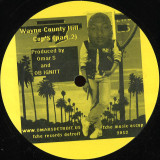
After more or less owning 2011 with a surprise album, a collaboration with urban crooner Colonel Abrams, an ahead-of-the-game reissue of Marc Kinchen and the all-conquering "Here's Your Trance Now Dance", FXHE don Omar S kicks off a new year with Wayne County Hills Cops Pt 2 (where, we ask, was Part 1?), a hook-up with the mysterious OB IGNITT. The eponymous A-Side is characterised by the kind of glistening synths last seen on "Here's Your Trance...", with a rugged analogue bass line giving the track with the requisite bump. A tired cliche it may be, but this could easily soundtrack an 80s cop movie: clearly Omar has this in mind given the 12"'s title and the fact the record's centre label features a doctored image of Eddie Murphy from Beverly Hills Cop! On the flip, Omar S provides his own remix, drowning the synths in dubby textures and showering them with shuffling hats for a more heads-down take. Another killer 12" - business as usual at FXHE, then.


- A1: Firkit Americana Show - Seeb Alby
- A2: Al Massrieen - Afifa El Hawa
- A3: Firkit Hany Shenoda - Lounga 85
- A4: Mostafa El Sakka - Rezq El Ein
- A5: Hamid El Shaeri - Ouda
- B1: Firkit El Pharana - Ya Habiby
- B2: Omar Fathy - Beteghdaby
- B3: Ammar El Sherei - Souq
- B4: Medhat Saleh - El Milionerat
- B5: Aida El Ayoubi - Asfour
- B6: Ahmed Adaweya - Little Up
11
Wewantsounds is delighted to release Ayam El Disco, a new selection of Egyptian 1980s disco and boogie cassette tracks curated by Egyptian DJ Disco Arabesquo, following his highly acclaimed Sharayet El Disco. Most tracks make their vinyl debut in this set. A journey through the funky sounds of 1980s Egypt, Ayam El Disco ("Disco Days") features Ammar El Sherei, Al Massrieen, and other underground artists from Cairo's vibrant cassette culture. The audio has been remastered for vinyl by David Hachour at Colorsound Studio in Paris, and the LP features artwork by Egyptian graphic designer Heba Tarek, along with a 2-page insert showcasing the original cassette artwork and insightful liner notes by Moataz Rageb.

Ebo Taylor, der ghanaische Gitarrist, Komponist, Bandleader und Produzent, ist eine wegweisende Figur in der Highlife-Musik. Remined freut sich, diese beiden Klassiker als 45er in Zusammenarbeit mit Mr. Bongo zu präsentieren. ,Will You Promise" und ,Maye Omama" sind beide aus Taylors 1976er Veröffentlichung ,My Love And Music" von 1976.

- Mahjong Room
- All It Home
- Having Fun
- Jeanie
- Two Step
- Shmoopie
- Red
- Hazel Street
- Undertaker
- Ohio
Mahjong Room is the second album Cameron Lew released under the artist name Ginger Root which explores his coming of age and discovery of his own signature sound; self coined as Aggressive Elevator Soul. Self Produced and Performed, this album marked the beginning of Ginger Roots' rise in popularity outside of his Huntington Beach hometown. Lew was still in film school at the time of recording and releasing Mahjong Room. His attention was equally focused on the music videos that were made for singles `Two Step', `Call it Home', `Jeanie', `Mahjong Room', and `Ohio'. Becoming a signature of Ginger Root releases, the video treatments of songs were humor-filled and directed and produced by Lew himself. Catching the attention of other touring indie acts Ginger Root spent most of the fall of 2018 on tour with artists Khrunagbin, Duran Jones & The Indications, The Marias, and Omar Apollo.

- A1: Ali Ou Hayani
- A2: Ana Sahraoui
- A3: Nihayat Hob
- A4: Angham Chaabia
- A5: Dikrayat
- A6: Alach Yayouni
- B1: Layali Fass
- B2: Lobna
- B3: Tanger L'été
- B4: Taksim Abdou
- B5: Hanan
- B6: Interlude
Abdou El Omari was born in 1945 in Tafraout, south of Agadir -- a village suspended between the pink granite peaks of the Anti-Atlas and the waves of the Atlantic. A landscape already musical in itself. He grew up in the dry mountain light, surrounded by the rhythms of nature and Berber's culture. Very little is known about the man -- a veil of mystery still surrounds his life, only deepening the fascination. In the 1970s, as Morocco was transforming, Abdou El Omari shaped a sound of his own -- a visionary blend of spiritual jazz, psychedelic funk, Moroccan traditions, and early electronic experimentation. Today, his work is resurfacing, rediscovered by a new generation of listeners in search of lost horizons. This record stands among its rarest and most precious fragments. At twenty-two, he founded his first group, Les Fugitifs, which gained him local fame. Soon after, he released records and cassettes on labels such as Cléopâtre, Hassania, Boussiphone, Hilali, and his own, Al Awtar, while performing on RTM (national radio and television). He also composed for artists like Naima Samih, Laila Ghofran, and Aicha El Waad. In 1976, through the label Gam, he released his only vinyl album, Nuits d'été -- a record that would become cult decades later, reissued in 2017 by Radio Martiko. In the 1980s, his music grew quieter, more secret. He tried to recover his old tapes from the studios he had recorded in, but gradually withdrew from the scene and returned to hairdressing. A pioneer of musical fusion, he opened paths that would remain unexplored for years. He passed away in 2010, never witnessing the rediscovery of his music by diggers, bloggers, and collectors online. One day, his close friend and poet Aziz Essamadi, rescued a cardboard box from the trash -- a box containing Abdou El Omari's personal archives. It was later entrusted to Casablanca based collector Ahmed Khalil, founder of the label Dikraphone. Inside were treasures preserved by chance: demos, rehearsals, private recordings, unseen photographs -- and a stunning, almost forgotten cassette. Here, El Omari sounds bolder than ever, exploring territories where pop, cosmic disco, electric blues, and Moroccan tradition merge without boundaries. Armed with his ARP Odyssey synthesizer, hypnotic grooves, and the celestial layers of his Farfisa, he expanded the dialogue between deep roots and electronic exploration. This album is the continuation of a vision -- a music of the Moroccan future: rooted, but reaching for the unknown. Colorful, magnetic and timeless, here is music for dancing as much as for dreaming.

- 1: Them Changes
- 2: I Still Love You, Anyway
- 3: Heart's Delight
- 4: Dreams
- 5: Down By The River
- 6: Memphis Train
- 7: Paul B. Allen, Omaha, Nebraska
- 8: Your Feeling Is Mine
"Soul, Funk, Disco, Jazz, Blues, Pop-Rock and Folk out of print titles from the vaults of classic labels such
Elemental Music, together with Universal Music Group, present the best selection of 60’s & 70’s R&B,
as Polydor, Motown, Verve, Impulse, Chess, MGM, A&M, Mercury or Capitol Records, among others.
Soul, Funk, Disco, Jazz, Blues, Pop-Rock and Folk out of print titles from the vaults of classic labels such
as Polydor, Motown, Verve, Impulse, Chess, MGM, A&M, Mercury or Capitol Records, among others."
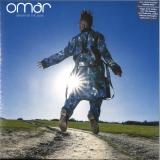
- A1: Intro (0 52)
- A2: This Thing Called Life (4 56)
- A3: Won't Let You Down (Feat K Zia & The Swag) (4 27)
- A4: I've Been Waiting (4 23)
- A5: Brighter The Days (3 45)
- B1: There's Much Love In The World (4 56)
- B2: Lovey Dovey (Feat Eric Roberson & Raheem Devaughn) (5 36)
- B3: Research (Feat Honey Larochelle) (3 52)
- B4: On My Own (Feat Paul Weller) (4 06)
- C1: Omar & Don-E - "Out Of Sight" (Interlude) (0 37)
- C2: Can We Go Out? (3 46)
- C3: It's Gonna Be Alright (Feat Scratch Professer) (3 49)
- C4: We Can Go Anywhere (Feat Giggs) (4 43)
- C5: Latin Salsa (3 55)
- D1: Holding On To Life (Feat Ledisi) (4 49)
- D2: Much 2 Much (3 23)
- D3: 1234 (Feat Jeru The Damaja) (3 46)
- D4: Love Is Like (Feat India Arie) (3 38)
18
- A1: The Mountain (Feat. Dennis Hopper, Ajay Prasanna, Anoushka Shankar, Amaan & Ayaan Ali Bangash)
- A2: The Moon Cave (Feat. Asha Puthli, Bobby Womack, Dave Jolicoeur, Jalen Ngonda And Black Thought)
- A3: The Happy Dictator (Feat. Sparks)
- B1: The Hardest Thing (Feat. Tony Allen)
- B2: Orange County (Feat. Bizarrap, Kara Jackson And Anoushka Shankar)
- B3: The God Of Lying (Feat. Idles)
- B4: The Empty Dream Machine (Feat. Black Thought, Johnny Marr And Anoushka Shankar)
- C1: The Manifesto (Feat. Trueno And Proof)
- C2: The Plastic Guru (Feat. Johnny Marr And Anoushka Shankar)
- C3: Delirium (Feat. Mark E. Smith)
- C4: Damascus (Feat. Omar Souleyman And Yasiin Bey)
- D1: The Shadowy Light (Feat. Asha Bhosle, Gruff Rhys, Ajay Prasanna, Amaan & Ayaan Ali Bangash)
- D2: Casablanca (Feat. Paul Simonon And Johnny Marr)
- D3: The Sweet Prince (Feat. Ajay Prasanna, Johnny Marr And Anoushka Shankar)
- D4: The Sad God (Feat. Black Thought, Ajay Prasanna And Anoushka Shankar)
15
auch erhältlich
Black Vinyl[27,52 €]
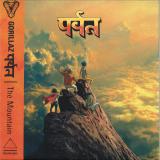
The Mountain is Gorillaz’ ninth studio album, a collection of 15 new tracks featuring a stellar list of artists and collaborators. Jamie Hewlett’s album artwork captures the four much-loved animated band members - Murdoc, Noodle, Russel and 2D – in a series of beautifully intricate, hand-drawn illustrations.
The Mountain is Gorillaz 9th studio album. The album is a collection of 15 new tracks featuring artists and collaborators including: Ajay Prasanna, Anoushka Shankar, Asha Bhosle, Asha Puthli, Bizarrap, Black Thought, Gruff Rhys, Idles, Jalen Ngonda, Johnny Marr, Kara Jackson, Omar Souleyman, Paul Simonon, Sparks, Trueno and Yasiin Bey; as well as the voices of Bobby Womack, Dave Jolicoeur, Dennis Hopper, Mark E. Smith, Proof and Tony Allen. Produced by Gorillaz, James Ford, Samuel Egglenton, Remi Kabaka Jr. and Bizarrap (Orange County), The Mountain was recorded in London, Devon, Miami, Jaipur, Mumbai, New Delhi and Rishikesh; and features artists performing in five languages: Arabic, English, Hindi, Spanish and Yoruba. The artwork for The Mountain sees Jamie Hewlett’s distinct, yet ever-evolving, style illustrate the world of Gorillaz with an ever more detailed and beautiful intricacy across a series of hand-drawn illustrations. Circumstances find Murdoc Niccals, Russel Hobbs, 2D and Noodle in India, where our heroes are immersed in the rhythms of mystical music-making as they navigate the mountainous terrain of this thing called life.


- Multiphonic I
- Gurgle
- Air Hand Whistle
- Inhale Exhale
- Birds
- Multiphonic Ii
- Mouth Synthesizer
- Multiphonic Iii
- One Pitch
- Throat
- Whistle Pitch
Un-easy listening from »anti-singer« and improviser Sofia Jernberg, a celebration of the voice in its rawest, most malleable form. Jernberg was born in Ethiopia and grew up in Vietnam and Sweden, so one can only imagine these diverse languages opened up a wealth of phonetic possibilities before she entered academia to study jazz and composition. If you dive into her catalogue you’ll clock her startling range – working as a jazz soprano and as an improviser, collaborating with everyone from Stefan Schneider to Mats Gustafsson, as well as appearances on the stage and screen, most notably in Matthew Barney, Erna Ómarsdóttir, and Valdimar Jóhannsson’s »Union of the North«.
On »Voice«, Jernberg provides a ground-level entry point to her work, meticulously running through a litany of unconventional techniques (non-verbal vocalisation, split tones, toneless singing, and distortion) without any effects, just pure batshit sonics designed to show off the voice’s scope as an experimental instrument. On »Mouth Synthesizer« she purses her lips to make ratcheting pops like some analog oscillator, hoarsely mimicking the sort of blustery, Merzbow-coded distortions you might get if you patched a RAT pedal into a broken guitar amp. It isn’t an act of caricature, it’s Jernberg’s way of demonstrating that expensive modular rigs aren’t an essential tool for experimental music, before throwing a side-eye to the field recording industrial complex on »Birds«, transforming her vocal chords into a nightmare aviary. But it’s Jernberg’s startling »multiphonic« experiments that hit hardest. The album opens on »Multiphonic I«, and it’s difficult to tell that you’re listening to a human voice at first – you could just as well be on Colin Stetson’s overblown sax airstreams. Jernberg creates a captivating spiral of crooked, phased tones and hoarse, guttural croaks that she develops over three movements. On »Multiphonic II«, her voice is turned into a storm of pained shrieks, and on the third and final segment, it almost resembles Arve Henriksen or Jon Hassell’s muted brass curlicues. Each track pulls a different musical muscle, whether it’s »One Pitch« with its unsettling yodel-like quivering drones or »Gurgle«, sounding like a close mic-ed recording of a small pot gently simmering.

- A1: Part 1
- B1: Part 2
In celebration of Arrow Films' new 4K restoration of the seminal hip hop film Wild Style, Azorean-Canadian producer and DJ Jorun Bombay steps up with a specially commissioned megamix cut across two sides of a 7”. Featuring recently discovered unreleased material, cut up with sections of the remastered soundtrack, expert turntablism, and added live instrumentation, Jorun shines a new light on this pioneering piece of hip hop history.
Having released music since the mid-‘80s on labels such as Soundweight, Diggers With Gratitude, and JBOR Records, Jorun also produces and scores music for film and television in the USA. He’s been hosting his influential DJ podcast ‘Funkbox Reload’ for over a decade, regularly showcasing his DJ and remixing skills, which have landed him several key production jobs, including for the documentary ‘Mixtape’ directed by Omar Acosta on Paramount Plus.

A rising and genre-defying figure in the French electronic scene, Goldie B continues her ascent with Who Says Night’s For Sleeping?, a five-track EP that asserts her distinctive signature: an instinctive blend of club energy, cinematic storytelling and UK rave influences. Conceived as the soundtrack to a night lived in full intensity, the record moves through the fire of the dancefloor, the collective trance, and those suspended moments where one floats between dream and wakefulness.
“I imagined this EP as the soundtrack to a night experienced in its entirety. From the first rush of adrenaline on the dancefloor to that floating walk home, still carried by the music. My influences range from Moby and Air to Floating Points and Joy Orbison, artists who know how to combine power and emotion. I love connecting the raw energy of the club with more dreamlike textures, because you can absolutely dream while dancing. Each track is an instinctive snapshot of my inner world.” Goldie B The EP’s opening act, “The Space Between” blends ethereal pads, organic strings and a steady crescendo, recalling the elegance of Air or Moby. It opens a suspended space, equally suited to inner drift or physical release. “I wanted it to feel like a threshold, a gentle hand pulling you into a trance state.”
On “U Make Me Feel So Good”, a sensual and narrative breakbeat track, a flowing bassline gradually tightens into trancier energy. Seductive female vocals weave through broken rhythms, creating a piece that is as tactile as it is hypnotic. “It’s about contrast, the softness and caress at the start, then a tension that rises and electrifies.”
Instagram | Youtube | TikTok | SoundCloudAt the heart of the project, “Rêve de Rave” channels 90’s breakbeat spirit with old-school samples, an euphoric central break and voices urging to move your feet. Urgent and liberating, it embodies the dreamlike essence of the rave. “It’s how I imagine the rave: a lucid dream where joy and collective energy feel almost unreal.”
Next comes the most incisive cut of the EP, “Purple FX”, driven by a grating central bassline that evolves relentlessly until its explosive drop. Minimalist yet implacable, it captures the sheer force of a peak-time track. “I wanted a track purely designed for the club, where the tension just keeps rising until it explodes.”
Closing in chiaroscuro, “Snake Waves” shifts from breakbeat into a half-house, half-techno 4/4 groove, carried by a sinuous, hypnotic bassline. The track plays on tension and release, with a rich harmonic break before fading like a suspended farewell, where the party recedes but the energy lingers. “It’s a farewell piece that keeps the intoxication alive, like a final vertigo before slipping back into the night.”
Goldie B is a multifaceted force on the French electronic scene. A producer, multi-instrumentalist, singer, MC, DJ, and co-founder of the label Omakase Recordings, her sets blend bass, jungle, UKG, and breakbeat, captivating audiences with their contagious energy. Based in Marseille, she has released music on renowned labels such as D.KO, Banoffee Pies, and YUKU, and has performed on some of the biggest French stages and festivals: Peacock Society, Astropolis, NDK, Marsatac, Delta, Le Bon Air, and even the Festival d’Avignon. In 2024, she was selected by Apple Music for its Women In Electronic series. Her new Who Says Night’s For Sleeping? EP confirms her status as an instinctive and distinctive artist to watch on the French electronic scene.

- D2: Herbert - I Hadn't Known
- A1: Nickodemus Featuring Cole Williams - Obeah Woman (Kiko Navarro Afroterraneo Remix) (8 22)
- A2: Art Of Tones - Elephants (5 36)
- B1: Sinm - Alley-Oop (6 18)
- B2: Motor City Drum Ensemble - Get Slapped Up (8 09)
- C1: Maestro & Vezzola - Irma (5 52)
- C2: Manabu Nagayama - Light & Shadow (Masalo Version) (8 24)
- D1: Trinidadian Deep - Be Near Me (6 47)
- E1: Webster Wraight Ensemble - Unexpected News (James Duncan Mix) (7 03)
- E2: 100Hz - Funkin' (7 59)
- F1: Anchorsong - Kajo (5 25)
- F2: Sutekh - Rhapsody On A Theme By Paganini, Variation 17 (4 44)
- F3: Flytronix - Backatcha (7 36)
13
DJ Maestro, geboren als Martijn Barkhuis in Nederland, is een gerenommeerde Nederlandse DJ, producer en componist, vooral bekend om zijn werk aan de fameuze Blue Note Trip-compilatieserie. Met een diepgewortelde passie voor jazz en een scherp oor voor eigentijdse grooves, verwierf Maestro naam door klassieke jazzopnames te combineren met moderne beats, wat resulteerde in een verfijnde fusie die zowel traditionele jazzliefhebbers als een nieuwe generatie luisteraars aanspreekt. Zijn vermogen om naadloze, atmosferische en muzikale verhalen te creëren leverde hem erkenning op van het prestigieuze Blue Note Records-label, dat hem het vertrouwen gaf om hun klassieke catalogus te gebruiken voor moderne, genre-overstijgende mixes. Met de lancering van de Blue Note Trip-serie in de vroege jaren 2000 hielp DJ Maestro de interesse in klassieke jazz nieuw leven in te blazen door tijdloze tracks te koppelen aan subtiele elektronische elementen en soulvolle interpretaties. De serie werd een vaste waarde in lounges en hi-fi luisterruimtes over de hele wereld. Elke release weerspiegelt Maestro’s respect voor muzikaal erfgoed en zijn talent om verhalen te vertellen via geluid, waarbij hij luisteraars meeneemt op een muzikale reis die zowel nostalgisch als vooruitstrevend is. In 2015 begon DJ Maestro aan een opmerkelijk project: Little Girl Blue Remixed, een eigentijdse herinterpretatie van Nina Simone's iconische debuutalbum uit 1958. Het album werd geprezen om zijn respectvolle, maar inventieve remixes. Dit project onderstreepte Maestro's vermogen om de brug te slaan tussen klassieke jazz en hedendaagse muziek, en verstevigt zijn status als visionair binnen de jazz fusion scene. Naast deze albums heeft DJ Maestro samengewerkt met een breed scala aan artiesten, bigbands en jazzmuzikanten. Hij heeft zijn repertoire ook uitgebreid naar filmmuziek, liveoptredens en remixes – allemaal met behoud van zijn kenmerkende stijl geworteld in jazz, soul en downtempo. DJ Maestro blijft een culturele brug slaan tussen tijdperken, waarbij hij de rijkdom van jazz viert en tegelijkertijd innovatie, dansmuziek en moderniteit in zijn mixen verwelkomt. Na zijn geprezen reeks genre-overstijgende compilaties keert Maestro nu terug met Deep Trip – een gloednieuwe mixcompilatie die zal verschijnen op Black Hole Recordings. Deze keer kiest hij voor een meer house-georiënteerde richting, met warmere grooves, diepere ritmes en een weelderige sfeer, maar altijd met Maestro’s onmiskenbare signatuur. Deep Trip verschijnt zowel als een mixed CD als in een triple vinyl set met alle tracks in ongemixte versie. Het is een reis door hedendaagse deep house-texturen, met soulvolle percussie en een hypnotische opbouw. De compilatie laat Maestro’s muzikale evolutie horen: trouw aan zijn jazzwortels, maar volledig omarmend wat de moderne house te bieden heeft.
h 4. I Hadn't Known I Only Heard
h 4. I Hadn't Known I Only Heard
[h] 4. I Hadn't Known [I Only Heard]
[h] D2 | Herbert - I Hadn't Known [I Only Heard] (7 15)

4

- A1: The Whip Hand
- A2: Aegis
- A3: Dyslexicon
- B1: Empty Vessels Make The Loudest Sound
- B2: The Malkin Jewel
- B3: Lapochka
- C1: In Absentia
- C2: Imago
- C3: Molochwalker
- C4: Trinkets Pale Of Moon
- D1: Vedamalady
- D2: Noctourniquet
- D3: Zed And Two Naughts
Noctourniquet And then everything went black, at least for a while, at least for The Mars Volta. In the months and years following their fifth full-length, Octahedron, Omar kept on at his usual fearsome creative pace. In fact, he ramped up his output considerably, starting up his own Rodriguez Lopez Productions label and releasing a slew of solo albums. It was a practice he’d begun shortly after De-Loused’s release, with his solo debut A Manual Dexterity: Soundtrack Volume One, but as the decade reached its close, Omar grew to rely upon his solo recordings as an outlet for his prolific creativity, these albums often exploring musical pastures far beyond even The Mars Volta’s wide-ranging parameters. Before choosing to release music under his own name, Omar would always play it to Cedric first, to see if the frontman thought it had potential to become Mars Volta music. Shortly after Octahedron’s completion, Cedric flagged one batch of tracks Omar had cut with Deantoni Parks, a brilliant drummer and composer who’d briefly occupied the Mars Volta drumstool in-between Jon Theodore and Thomas Pridgen’s tenures, and whose volcanic creativity and unique, unpredictable approach to rhythm and composition had quickly made him one of Omar’s favourite artistic foils.
As with the music that made up Octahedron, the new tracks Cedric had optioned for The Mars Volta often veered far from the riotous, Grand Guignol visions of their earlier releases. It possessed the punchy, song-based focus of Octahedron, though this was a considerably darker, more menacing strain of pop, with synthesisers figuring heavily in the productions. Cedric took the tracks in 2009 and set about writing songs to the music. But no more new Mars Volta music would be heard until 2012. The years that passed in-between were nonetheless momentous, and busy, witnessing an unexpected reunion of the members of At The Drive-In, and Cedric joining his own side-project, Anywhere. But there wasn’t any sign of life within the Mars Volta until Omar, Cedric and their bandmates took to the road for a series of live shows in the spring of 2011, billed as The Omar Rodriguez-Lopez Group, debuting the songs that would become Noctourniquet. The album followed the next year, and it remains one of The Mars Volta’s finest, its electronic textures staking out unfamiliar but fertile new ground.
An unsettling, subtly turbulent listen, Noctourniquet found Cedric sketching out a story about “some sort of device that stops the darkness from bleeding”, drawing influence variously from the nursery rhyme Solomon Grundy, the Greek myth of Hyacinthus and the song Birth, School, Work, Death by British underground rockers The Godfathers. It was an album of dystopian futurism, signalled by the paranoid cyber-rock of opener The Whip Hand and its unnerving chorus, “That’s when I disconnect from you”. But it was also an album of inspired, unexpected moves and uncanny invention, like how Dyslexicon seemed to eerily evoke Blondie’s Rapture, before rushing headlong into its bruising chorus, tempos shifting restlessly throughout like quaking earth beneath the listener’s feet, or how Aegis put a brave new spin on The Mars Volta’s trademark rewiring of salsa’s overdriven passions, or how Cedric had never sounded as scary as he did on The Malkin Jewel’s mutant burlesque shuffle. Tracks like Molochwalker were sleek and concise in a way The Mars Volta had never really attempted before – which was all part of Omar’s plan.
“It had all been guitar, guitar, guitar, overdubs, everything fighting for space in the same frequency,” he explains. “So for Noctourniquet, it was all about subtracting elements, of sticking to how I made demos.” Deantoni’s presence helped revivify the group, playing against cliché and expectation, and taking each song in unexpected directions. “I’d beatbox a rhythm for him to play, to go with my guitar part, and he’d come back with three or four alternate options. It was so great.” Similarly, Cedric had never sung better than on Noctourniquet, staking out a fearsome spectrum from the chilling Tom Waitsian growl of The Malkin Jewel to the keening, beautiful vocalisation on Vedamalady, rising to match some of Omar’s most deft, most immediately effective and melodic songs yet. Indeed, Noctourniquet is the sound of a band discovering new ways to do familiar things, renewing their commitment to their mission, finding fresh inspiration a decade in, and shaking off any complacency that might have come with ten years of acclaim and success.

L. Eugene Methe is an Omaha based singer-songwriter and musician with a discography spanning over twenty years. His last two lyrical based albums were released on Grapefruit Records. As a studio musician he has contributed violin and piano on a diverse group of albums by Simon Joyner, Refrigerator, Mountain Goats, the Renderers, Naturaliste, Expensive People and many more.
Dennis Callaci from the band Refrigerator has released collaborative records with John Davis, Heimito Kunst, Simon Joyner and others as well as a myriad of solo LPs over the last 35 years. He runs the Shrimper record label. His fourth book is out in 2025 on Bamboo Dart Press.
The Last Chance Lottery is a collaborative record featuring the music of Methe and the vocals/lyrics of Callaci. Cinematic and outre in tone, the record does not forsake melody or tunesmithery, but strips much of it bare to paint it with surprising found sounds, abstraction and a balance between what these two fellas do best. The album was mastered by Al Jones as Marginal Frequency to further tightrope those two worlds. Features cover art and liner notes by Callaci.

- 1: Sports, Not Heavy Crime
- 2: Funnybones & Lazylegs
- 3 6: Hours Starlight
- 4: Behind The Eightball
- 5: Single Stroke Ruffs
- 6: Treat Me Mean, I Need The Reputation
- 7: Relieved Beyond Repair
- 8: Tintinnamputation
- 9: More Powah To Ya
- 10: Having Smarter Babies
- 11: Far-Flung Tonic
- 12: Happy Jizz Girls
- 13: Doubletalk Gets Through To You
- 14: Comatose Luck
- 15: Pistola Hub Club
- 16: Behind The Eightball (Remix)
- 17: Shakedown Shutoff (Live In Manchester)
- 18: Omar Sharif Bonanza
- 19: Popfrontical Eclection
- 20: The Jim Pedesen Theme
Das legendäre Debütalbum der norwegischen Funkateers Xploding Plastix, "Amateur Girlfriends Go Proskirt Agents" (2001), erscheint als Deluxe-Doppelvinyl mit 6 zusätzlichen Bonustracks. Mit ihrer Mischung aus obskuren Jazz-Samples, coolen Beats, melodischem Feeling, einer unkonventionellen Herangehensweise und einer gehörigen Portion Humor schufen Xploding Plastix ihren ganz eigenen Stil. Eine Art älterer Amon Tobin trifft auf Scott Walker in einem verraucht-schmuddeligen Jazzclub. Dazu noch ein Faible für Film Noir, Balearic Beats, Lo-Fi, absolut abgefahrene Sounds – einfach genial! Der NME schrieb damals: "Währenddessen bieten die Norweger Xploding Plastix – zwei Verrückte mit vielen kleinen Boxen und einem schrecklichen Namen – auf dem Jam Festival eine ganz andere Art von Umbruch. Ihr Sound ist ein lauter, desorientierender Future-Jazz-Krach, eine Mischung aus DJ Foods verrückten Drums, Aphex Twins Taktarten und den stimmungsvollsten, cineastischen Passagen von The Herbaliser. Fantastisch!"
