Enhancer Dub EP includes 4 tracks playing carefully with elements of Afrobeat, Dub & Techno. As a rare groove connoisseur and vinyl collector, Didier dlb has been delving into essential wax for almost 3 decades, navigating the underground music scene with a disregard for genre boundaries. Forget marketing hype – this is about the scientific exploration of sound, and an existential love for rave culture.
In 1999, armed with a basic setup featuring an Atari, Akai MPC 2000, Yamaha DX, and Korg 770, he ventured into music production. No flashy equipment, just a raw passion for sonic experimentation and analog sound. As a result, releases on Sonar Kollektiv, Get Physical, Klasse Recordings & Rotary Cocktail followed.
Didier dlb's undying dedication to exploration is reflected in his collaborations, residencies, and releases. He doesn't chase the limelight, instead immersing himself in the science of sound, shaping his own sonic universe. This is the story of an artist who has been shaping the underground landscape with a commitment to the art form.
Cerca:on land
Embarking on the next Vargmal chapter with 'Bacchanalia', the new EP from Italian-born, Londonbased producer Andrea Bonalumi, better known as Big Hands. Across three original tracks and a remix by British producer Al Wootton, 'Bacchanalia' moves through hypnotic grooves exuding primal energy and forward momentum, blurring the lines between percussive techno intensity and
subterranean bass vibrations.
Opening with 'Bacchanalia I', Big Hands lays down the foundation with a rhythmic drive where each beat shifts and evolves within a dense, organic framework, capturing the raw energy of live modular electronics. The journey continues as 'Bacchanalia II' shifts focus toward heavier, low-end vibrations, where intricate layers of bass and rhythm interplay in tension-filled dialogue that builds
intensifying energy.
'Bacchanalia III' offers a moment of reflection, pulling back the energy to reveal a more sparse and atmospheric landscape. It's a fitting progression that offers a glimpse into Big Hands' more introspective side, balancing the EP's momentum. Al Wootton's closing remix of 'Bacchanalia I' amplifies the raw percussive energy while adding his signature touch of spaced-out echoes androlling rhythms bringing the release full circle.
- A1: I Hope You Die
- A2: The Inevitable Return Of The Great White Dope
- A3: Mama's Boy
- A4: Three Point One Four
- A5: Mope
- B1: Yummy Down On This
- B2: The Ballad Of Chasey Lain
- B3: Rsvp
- B4: Magna Cum Nada
- B5: The Bad Touch
- B6: That Cough Came With A Prize
- B7: Take The Long Way Home
- C1: Hell Yeah
- C2: Right Turn Clyde
- C3: This Is Stupid
- C4: A Lap Dance Is So Much Better When The Stripper Is Crying
- C5: The Ten Coolest Things About New Jersey
- C6: Along Comes Mary
- D1: The Bad Touch (The Eiffel 65 Mix)
- D2: The Ballad Of Chasey Lain (The Flirt Mix)
- D3: Hope" (The Pet Shop Boys Extended Remix)
Hooray for Boobies ist das dritte Studioalbum der Bloodhound Gang.
Zur Feier des25-jährigen Jubiläums des Albums wird es auf 180g-Vinyl in Splatter-Optik neu aufgelegt.
Das Album war ein großer kommerzieller Erfolg und hat sich weltweit über 4 Millionen Mal verkauft.
Das Album erreichte Platz 14 in den US Billboard 200 Charts und wurde in Deutschland, Australien und
Österreich zur Nummer eins.
Hooray For Boobies enthält fünf Singles: „Along Comes Mary“, ‚The Bad Touch‘, ‚The Ballad of Chasey
Lain‘, ‚Mope‘, und ‚The Inevitable Return of the Great White Dope‘. „The Bad Touch“ war ein großer
internationaler Hit, der in fünf Ländern die Nummer eins und in weiteren 10 Ländern die Top 20 erreichte.
Das Album enthält verschiedene Sketche zwischen den Songs. Der erste dieser Sketche mit dem Titel
„Mama’s Boy“ ist ein improvisiertes Telefongespräch zwischen Jimmy Pop und seiner Mutter. In „That
Cough Came With A Prize“ wird 15 Sekunden lang gehustet. „This Is Stupid“ ist ein willkürlicher Track,
der von dem Gesangsduo vorgetragen wird, das auch in ‚Right Turn Clyde‘ zu hören ist. „R.S.V.P.“ enthält
einen kurzen Monolog der erwachsenen Schauspielerin Chasey Lain. Und „The Ten Coolest Things About
New Jersey“ schließlich besteht einfach aus zehn Sekunden Stille!
Die Jubiläums-Trackliste enthält auch drei seltene Remixe: The Bad Touch (Eiffel 65 Remix), The Ballad
Of Chasey Lain (The Flirt Mix), Mope (The Pet Shop Boys Extended Remix).
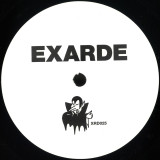
For the first time we are welcoming the Dracula himself Mr. Gastón Cabrera who is hailing to us from a coastal part of Argentina. The artist has been putting out solid string of releases recently on various labels for you to check out and now has landed a 12” vinyl with Exarde. The releases consist of 4 deep dark flavoured tracks ready for the peak times or the afterparties depends on the time and your mood of course. “Romance Electro” has brought some romance into the world which needs it more than ever, Gastón is here to stay and will continue bringing his art into it which we are all as listeners, dj’s, producers and music appreciators very much are excited to hear.
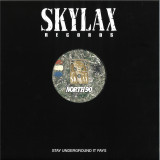
Dive Into the Pulsating Beats and Euphoric Melodies of Liverpool's Electronic Sensation, North 90, as They Unleash Their Highly & New Anticipated Ep. Hailing From the Heart of the Uk, This Band Draws Inspiration From the Iconic Sounds of Early '90s Uk House, Paying Homage to Legends Such as 808 State, a Guy Called Gerald, Lfo and Altern 8. Venture Further Into the Ep, and North 90 Reveals Their Profound Connection to the Madchester Era, Evoking the Spirit of Happy Mondays, Remixed by Paul Oakenfold, and the Psychedelic Vibes of Stone Roses, Remixed by Grooverider. the Sonic Exploration Reaches Its Zenith With the Opening Track, the Incredible and Euphoric "I'll Say Yes (Becca Mix)," a Masterpiece Reminiscent of the Cult Project Band N-Joi. as the Ep Unfolds, Each Track, From the Powerful "Baracuda" to the Ethereal "Fantasy" and the Dynamic "The Hack," Showcases North 90's Mastery in Crafting a Sonic Landscape That Transcends Time. the Collective Brilliance of the Ep Leads Us to Proclaim North 90 as a Band to Watch, With Tracks So Exceptional That They Border on the Realm of Genius. in a Musical Journey Where Each Note Reverberates With the Essence of a Bygone Era, North 90 Stands as a Testament to the Greatness of England. the Beats Are Timeless, and the Memories Are Eclipsed in a Symphony of Sound. England Is Vast, England Is Eternal, and North 90 Emerges as a Beacon, Carrying the Legacy of Uk House Into the Future. Their 12 Inch Is Not Just an Ep; It's a Sonic Testament to the Enduring Spirit of Electronic Music....
One Million Eyes, previously known as Templehof, return with a new album of balearic ambient, previously heard on two excellent releases for A Strangely Isolated Place.
This time appearing on legendary cassette label Constellation Tatsu as part of their fall combo, anyone familiar with their previous work will know what to expect. Dreamy, sun hazed analog synth lines mix with deep fourth world soundscapes that wouldn’t sound out of place on 90s labels such as Pete Namlook’s Fax or Instinct Ambient. The first half of Signal begins slowly, eyes wide shut, with 'Nickel', a slow pulsating jam of chilled out psychedelia. 'Marea' blends organic instrumentation with distant, processed voices. ‘Koala’, the deepest cut on the album, leads to a mood shift in 'Opalescent' that will sound eerily familiar to any Gaussian Curve fans. 'Polaris', 'Solstice' and highlight 'Landscape' close out the album in style.
For fans of anyone from Music From Memory, Jonathan Fitoussi & Ishq, there are few better ways to relive your memories of later summer.
While 1995's Washing Machine LP moniker was a thinly-veiled jab at the corporate aesthetic ("no, you cannot turn Sonic Youth into a household appliance brand", the band even considered changing its name to Washing Machine but settled on the album title instead), their major label relationship was indeed a curious buzzpoint of talk on the street after their intake to DGC in 1990. It wouldn't be fair to say that this state of existence propelled the band to reinforce its independent mindset by releasing a series of opaque-looking, French-language-dipping, highbrow-looking releases on their own that focused on the more abstract improv/compositional side of the band; in all truths they had been heavily steeped in self-releasing spillover material prior to that. But after a pressure pot of the early 90's indoctrination into a new operational mode for the band and its visibility, and the forces around it attempting to shape their direction, it seemed like a good time to create a strong show of radical concept.
The Anagrama EP became the first in a series of the SYR label's Perspective Musicales releases seemingly cementing Sonic Youth's connectivity to an increasing public awareness in experimental composers of the 20th century (French or otherwise). The irony was that many of those original avant composers being rediscovered by the indie audience (Partch, Neuhaus, Reich, Messaien) often found themselves on major labels anyway! So, perhaps this reverse approach was a necessary concept/comment given the music biz climate of the 90's. Regardless of how apples and oranges fell in Xenakian probability/theory, it was clear that both Sonic Youth's stature in progressive music, aided by now unlimited taperoll time thanks to a home base studio downtown established after their Lollapalooza stint, gave the band plenty of trailblazing time for their self examination of untraveled avenues.
"Anagrama" unfolds into nine minutes of delicate textures, starting with thick drone segueing into moments reminiscent of the post-crescendo flutter/comedown of "Marquee Moon's" trail-out; Thurston, Lee and Kim's guitars all circling round each other taking delicate pokes and stabs before drifting into some post-rock rhythmic moves tapered with delicate percussive guidance from Steve Shelley. "Improvisation Ajoutée" reaches further out into dissolve with whirring oscillations, guitars hissing and clanking radiator-style in a short blast format that continues into "Tremens" and a spooked-out landscape of gelatinous notes snaking up slowly. The sparseness of attack is colorful, textures emit and linger, silent spots shine, all flanked by tasteful drumming that provides the thread to all the abstraction. Shelley's approach here is interestingly sideways to any kind of usual rock action, it's tempered, mutant and metronomic simultaneously. The finale track "Mieux: De Corrosion" is a real pedal-palatte showcase. Here, Plutonian guitar wash flanges upwards to buoy a myriad of colorful eruptions of amp-spuzz, chopped up tone blasts and general confusion. Out of the blue, some metallic one-note choogle kicks in and threatens to explode into some Judas Priestly motion, before it all sputters into aural glass showers, clang, and finally a ferocious wave of more flange hiss that crashes down on a dime.
This initial foray into SY's Perspectives Musicales series continued onward with releases featuring other co-conspirators, peaking with the ambitious 2CD Goodbye 20th Century that finally connects the band into full-on interpretations of other composers' pieces (as well as displaying their own new ones). The whole series is not so much an outlet for another "side" of the band, but a run that went hand in hand building new approaches of songcraft onto their own, more overground direction which included Jim O'Rourke (who hopped on during SYR3), adding additional density to A Thousand Leaves and other LPs of his era. Fans of the '86 Spinhead Sessions as well as the recently-exhumed later jams of In/Out/In will take in the sounds of SYR1 with glee.
Born and raised in Argentina, Morita Vargas is an experimental artist and producer based in Buenos Aires. She manipulates her voice through reverbs, delays and whispers, singing in a self-invented 'language'. The sound of Morita’s voice is a portal into her thriving, dreamlike world brimming, shimmering and beating with unrefined natural sensations which stimulate something primordial yet strangely contemporary.
As far back as 2014 she began work on her first productions - early sketches which later became the basis for ‘8’. It all started off as voice memos on her phone (recorded while roaming the streets and riding the trains of Greater Buenos Aires). Later on, Morita introduced various instruments into her vision: kalimba, harmonica, keyboard, flute, tambourine, chajchas, and cajón. Composed and performed from that period until its original release in 2018, ’8’ features 10 original voice-led compositions that in scope recall evocative portraits of synthesized landscapes and rainforests, attuned to a vibrant modern pulse and enchanting vocals. Morita Vargas “8” has achieved a kind of polyphonic soundscape which evokes unfamiliar realities through voyages within and between the realms of ambient and experimental music.
In numerology the number 8 symbolizes the transition between heaven and earth, the illumination of our infinite capacity for various metamorphoses. Tackling ideas of transformation, mutation, cyclical processes, death, creation, melancholy, and joy, the album you are holding is a monumental and deeply personal statement. You are invited to walk barefoot down the mystical path and indulge in the process of spiritual expulsion and renewal that is ‘8’. The path lies along the route of infinite meanings, somewhere on the border between dream and reality.
* 180 gram audiophile vinyl
* Gatefold sleeve
This is a re-release of the famous 'red sleeve' Fleetwood Mac Greatest Hits album. This record was a stalwart of every decent album collection in the early 1970s as it represented the first greatest hits package from Fleetwood Mac, covering the period from the band's beginning in 1968 through to 1971.
Fleetwood Mac in their original incarnation were led by guitarist Peter Green and were leaders of the second British Blues boom of the late 1960s. Fleetwood Mac enjoyed several hit singles in the United Kingdom at that time and these are collated here for this album, originally issued on CBS Records only in the U.K.
"Albatross" was a huge chart hit in the UK whilst the single "Black Magic Woman" helped to break Fleetwood Mac in the U.S. via a cover version by Santana, that landed in the Top Five of the Billboard Top 40.
The album gatefold shows a full-size photo of the post-Green line up of the band with Christine McVie (nee Perfect), even though she just plays piano on a couple of tracks and wasn't a full-fledged member until after "Kiln House" was released.
Russian titan Monokle is back to once again traverse many different sound worlds with his new album Ultraflowers. It is one of a number of superb albums landing on Constellation Tatsu this summer and one defined again by its warmth. The title track is a lo-fi, scruffy and deep opener with persuasive breakbeats, while 'Glassy Eyed' is an ambient jungle trip that drips with watery melody. 'Night Objects' offers some introspection and 'Moths' is a glitchy future techno cut with smeared synth soul. '1000Work' layer sup more breaks with elegant ambient melodies and 'Predteche' casts you admit in the deepest corners of space.
In Signal, Brendon Moeller takes his expertise in techno, ambient and dub techno into deeper ambient and drone territory, crafting a richly atmospheric journey through sound for Constellation Tatsu’s thoughtful cassette label.
This album gently balances textures, merging natural and synthetic elements for a unique sonic experience. Highlights include the track 'Light', which opens with a minimal drone and subtle, pulsing sub-bass notes, setting a calm yet immersive tone. In 'Wires', Moeller skillfully intertwines organic and electronic soundscapes, bringing together the natural and technological in seamless harmony. 'Nowhere' shifts to a more aquatic feel, conjuring the sensation of being submerged in an otherworldly lagoon. The serene, electronic layering in 'Bask' adds beauty and peace through calm sequencing and warm tones. Closing with 'Beam', Moeller expertly blends real-world sounds and hints of a surreal, alien atmosphere, rounding out an album that’s both tranquil and otherworldly. Signal encapsulates Moeller's thoughtful production approach, giving listeners a deep dive into ambient landscapes that feel as expansive as they are introspective and adventurous.
Maria Callas was born to a Greek family in New York in 1923. Her vocal training took place in Athens, where her teacher was the coloratura soprano Elvira de Hidalgo, who had sung with Enrico Caruso and Feodor Chaliapin. After early performances in Greece, Callas’s international career was launched in 1947 when she performed the title role in Ponchielli’s La Gioconda at the Arena di Verona in Italy.
Her voice defied simple classification and her artistic range was extraordinary. In her early twenties she sang such heavy dramatic roles as Gioconda, Turandot, Brünnhilde and Isolde, but over the course of her career her most famous roles came to be: Bellini’s Norma and Amina (La sonnambula); Verdi’s Violetta (La traviata); Donizetti’s Lucia di Lammermoor and Anna Bolena, Cherubini’s Medea and Puccini’s Tosca. Though her timbre was not always conventionally beautiful, Callas’s musicianship and phrasing were in a class of their own. She brought characters to vivid life with her skill in colouring her tone and making insightful use of the text.
She is credited with changing the history of opera: by placing a perhaps unprecedented emphasis on musical integrity and dramatic truth, and by transforming perceptions – and reviving the fortunes – of the bel canto repertoire, particularly Bellini and Donizetti.
The 1950s marked the height of Callas’s career. Its base lay in the opera houses of Italy, and she became the prima donna assoluta of Milan’s legendary La Scala – notably in the productions
of Luchino Visconti – but her operatic appearances also encompassed London’s Royal Opera House, the New York Metropolitan Opera, Paris Opéra, the Vienna State Opera, and the opera houses of Chicago, Dallas, Houston, Lisbon, and, in the early 1950s, Mexico City, São Paolo and Rio de Janeiro.
From 1959, when she started a life-changing love affair with the Greek shipping magnate Aristotle Onassis, her performing career slowed down and her voice became more fragile. Her final stage performances came in 1965, when she was only 42.
There were many plans for a return to the stage – and for further complete recordings – but they never reached fruition, though in 1974 she gave a series of concerts in Europe, North America and Japan with the tenor Giuseppe di Stefano; he had partnered her frequently in the opera house and in the studio, not least in the 1953 La Scala Tosca under Victor de Sabata, considered a landmark in recording history. Callas died alone in her Paris apartment in September 1977.
- A1: Children (Dream Version)
- A2: Fable (Message Version) Vocals - Fiorella Quinn
- A3: Fantasya Vocals - Fiorella Quinn
- B1: Landscape
- B2: In My Dreams
- B3: Freedom Featuring Kathy Sledg
- C1: Princess Of Light
- C2: Fable (Dream Version)
- C3: In The Down
- D1: One & One (Club Version)
- D2: Children (Original Version)
- D3: Red Zone (Part 1) Vocals – Katia
- E1: 4 Us
- E2: Full Moon
- E3: A New Flower
- F1: Space
- F2: X-Plosion
- F3: Nation
Celebrate 30 years of "Children", the iconic track that redefined electronic music and captivated the world. This special edion vinyl is not just a tribute to Robert Miles’ masterpiece but a must-have collector’s item for music lovers. Pressed with exceptional audio quality and featuring an exclusive design, the vinyl includes remastered and rare versions that highlight the meless, dreamy melodies that topped charts in 18 countries and sold millions of copies worldwide.
- Belt Of Orion
- Vestiges
Belt of Orion by Stockholm-based Isak Edberg is the composer's second solo release on XKatedral, and his first to focus solely on instrumental music in the form of two pieces of extended duration for solo piano. Isak Edberg is a composer of electronic and acoustic music as exemplified by Ondulations from 2017 and Lamé written in 2010 and released in 2022, both on XKatedral. Edberg was also a member of Golden Offense Orchestra, active from 2012 to 2014. Edberg writes that his music is informed by an enchantment of being and a search for holiness, rapture and transcendence through stillness, contemplation, dreaming and an attempt to uphold the present. Edberg regards his music to be an adornment of time. The two works presented here were composed in the south of France and in Stockholm during a period spanning the years 2016-2018. The music was inspired by the cold winds, starry nights and desolate, palely bright landscape of the provençal autumn, as well as reflections during a time of escapism and isolation in the life of the composer. More concretely, this music grew out of hours of improvised playing on an old piano while living alone on the countryside, during which harmonic structures and gestures were slowly worked out by means of performing and listening, assessing and balancing sounds and silences. Stylistically, the music draws on a range of sources, such as Feldman's use of space and resonance as projected through both harmonic and temporal distance, the ritualistic gestural repetitions of Satie, as well as Messiaen's resonant harmony, together with some of the harmonic lushness of Scriabin's late work. Belt of Orion is a piece that explores the contrast of two musical textures, the one being fluid, airy and progressive, the other being static, steady and repetitive. The music sequences through a series of harmonic tensions in search of a place of peace, exposing a rift in the weave of time where everything momentarily stands still. In Vestiges repetitive and rhythmic materials form a major part of the musical structure, while sections of sparse, floating harmonies temporarily interrupt with reflective pauses of stillness. The music thus employs two different and contrasting kinds of musical hypnosis, with the aim of cradling the listener into a dark and perhaps unsettling sleep. The music on this recording was performed by the renowned Swedish pianist Mats Persson, who has for many decades been a legend in the art music scene of Stockholm. Through his languid yet distinct interpretations the delicacy and intimacy of these works are elegantly brought to the fore. The recordings heard here were made over the course of two evenings at Fylkingen in Stockholm. Isak Edberg's music moves slowly through the seemingly endless world that is harmonic sound. In his practice he uses heavily reduced and carefully controlled materials to create states of maximum clarity.
Mike Dunn is a pivotal house artist who brought his own famously raw and stripped-back style combined with infectious hip hop elements. He is behind plenty of well-known anthems, most famously 'Dance You Mutha' and 'God Made Me Phunky', and founded Dance Mutha in 1988. It released music by MD Connection, Gershon Jackson and I-ROC-T, while Dunn also co-founded seminal acid labels Warehouse Records and Muzique Records which played a key role in the development of Chicago and acid house. Dunn has continued to produce over the ensuing four decades and has landed on the likes of Defected, Nu-Groove, Classic, Trax and many more. The relaunch of the Dance Mutha label has been inspired in part by Dunn's discovery of a raft of 'lost' unreleased masters from the late '80s and early '90s. It's these tracks that provide the jumping-off point with this new release. '43:31' is the first out of the blocks and brings prickly acid texture to raw analogue drums. Slapping hits add extra bite to this most stripped-back and effective slice of pure warehouse music. Then come the snappy snares and deep bass of 'Acid Feet (Phaze 1)'. This spare, impactful cut is riddled with shapeshifting acid and caustic synth textures that bring the rugged drums to life. Last of all, the excellent Time Machine' will indeed take you all the way back to the dark, delirious and delicious days of the earliest acid house with its wonky 303s burrowing deep into the night next to coarse claps and ice-cold hits.
AYA Records presents: Humazapas' debut with 'Sara Mama', homage to the land and Kichwa tradition. The concept of "getting back to your roots" rarely has such a literal meaning, or at the same time such an ancestral meaning, as in the case of the Ecuadorian group Humazapas. Usually in the music industry this concept is used when an artist returns to a past sound, going back to that moment of newness, exploration and ingenuity, perhaps. But not Humazapas. These natives of the Kichwa communities of the Ecuadorian Andes, who have been working on this project for a decade, see "getting back to your roots" as a profound connection with their cultures, language, dance, the rituals that connect them to their deities and, of course, music.
- A1: Prequel - Nothing Better
- A2: Silentjay X Jace Xl - Just Waking Up
- B1: Dan Kye - Change
- B2: Mallard - Surface
- B3: Duke Hugh - Zoe
- C1: Ruf Dug Presents The Committee - Down 2 It (Feat Watson)
- C2: Vels Trio - The Wad
- D1: Paula Tape - Astroturismo
- D2: Nicola Cruz - Surface Tension
- D3: Special Feelings - Down Goose
- E1: Retiree - Pumice Stone (Boulderhead Remix)
- E2: Local Artist - Feelings (Joey G Ii X Klein Zage Mapped Remix)
- E3: Jerome Thomas - Secret (Saul Remix)
- F1: Mmyykk - Science (Session Victim Remix)
- F2: The Colours That Rise - Deep Space (Private Joy Funk Joint)
- F3: Cato - 1 Man (Tone Remix)
- G1: Hiatt Db - Every Daybreak (Fyi Chris Remix)
- G2: Klein Zage - Prince (Gallegos Park Street Tube Mix)
- H1: 30/70 - Misrepresented (30/70 Jungle Flip)
- H2: Wallace - Whirl (Ruf Dug Remix)
- I1: Retromigration & Monty Dj - Tornado
- I2: Bamao Yende & Low Jack - Collina 4Am
- I3: Roni - Angel
- J1: Gayance, Magi Merlin & Funkywhat - Collect$$$Save
- K1: Douniah & Dhanya - A Fever Dream
- K2: Nitai Hershkovits & Rejoicer - Oye Igal
- L1: Frank Liin - 60 Chemical (Dub)
- L2: Cousin Kula - Pixie Prog
- J2: Pinty & Tomos - Want U Too (Feat Ell Murphy)
- J3: Dj Pitch & Mle - Hit From The Right
Rhythm Section International, the impossible-to-define label founded in South East London by Bradley Zero in 2014 has reached the ripe old age of 10 years.Spanning 6 discs and 30 tracks, the compilation begins by taking us on a walk down memory lane and presenting one track from each year of the labels output
Rhythm Section International, the impossible-to-define label founded in South East London by Bradley Zero in 2014 has reached the ripe old age of 10 years. Funny thing is, it feels like it could have been almost double that. It’s hard to imagine the Landscape of the London music scene without this foundational force whose influence is felt more than ever.
With this special anniversary release, the label takes stock at this milestone to present a compilation in 3 parts: PAST, RE-IMAGINED AND FUTURE: honouring the labels tradition of always paying homage to what has come before while setting sights firmly forwards.
With 100-odd releases in their extended back catalogue covering every imaginable style and boasting influence in every inhabited continent on earth, it’s been quite a decade for the independent label, which began on a shoestring budget with funds made via the now legendary Rhythm Section pool hall parties in Peckham.
From humble beginnings to an era defining output - few would have predicted the slow and steady rise of the imprint and the impact it has had on generations of Dj’s, musicians and listeners - at home and abroad.
Spanning 6 discs and 30 tracks, the compilation begins by taking us on a walk down memory lane and presenting one track from each year of the labels output - highlighting some forgotten classics from the archives over the first 2 discs. For discs 3 & 4, the label invited it’s stable of artists to pick a track from the back catalogue to re-imagine in their own style. This process resulted in some incredibly playful contributions from the likes of Ruf Dug, Session Victim and Private Joy - whose playful reinterpretations add new depth to old material.
Finally, the last 2 discs are entirely new material for 2024, carrying the torch of the previous SHOUTS compilations - whose sole aim is to shine light on new music from emerging artists
The Swiss trio divr debuts on We Jazz on 2 February with their new album "Is This Water". divr is Philipp Eden on keys, Jonas Ruther on drums and Raphael Walser on bass, and they play largely acoustic improvisations which loops without ever quite repeating. Their music swings, but never feels like it’s doing so in response to a fixed, single pulse. The new album is mixed & post-produced by Dan Nicholls (of Y-OTIS).
“We play in multi-directional time. You could hear three different timings, but on the other hand it’s together. We land in the same place. It’s not done with maths, it’s more about entering a flow”, say the band members, based in Basel (Eden) and Zurich (Ruther, Walser), the city where they all met more than 15 years ago.
“It’s a free approach to playing time. We don’t refer to a straight metre. But play around it. We never repeat something exactly, it develops with every turn, there’s always a small difference.”
- Easy Livin
- Feel Me, Touch Me (Do Anything You Want)
- All I Need Is Your Love
- Another Day
- Heft!
- We Become One
- Give It All You Got
- Say What You Will
- You Got Me Runnin
- Give It Some Action
"Fastway's self-titled debut album, Fastway, released in 1983, is a hard-hitting blend of heavy metal and hard rock that made a significant impact in the early '80s metal scene. Formed by ""Fast"" Eddie Clarke (formerly of Motörhead) and Pete Way (formerly of UFO), the band delivered a raw, energetic sound driven by powerful guitar riffs and melodic hooks. With standout tracks like ""Say What You Will"" and ""Easy Livin',"" Fastway received praise for its straightforward rock appeal and infectious energy. Lead vocalist Dave King’s dynamic voice adds a gritty edge to the album’s heavy rhythms and bluesy influences. Fastway was a commercial success, helping the band gain a strong following and cementing their place in the hard rock and metal landscape. For fans of classic rock and early heavy metal, Fastway is a must-listen, delivering a high-energy experience from start to finish. Fastway is a limited edition of 750 individually numbered copies on white coloured vinyl."