Yes folks, it's time to take it back to the roots...GAMM style.
Our very first release was a beautiful gem from Red Astaire titled 'Follow Me' - a track that defined GAMM's identity and helped pave the way for everything we've achieved since.
Now, 23 years later, GAMM has reached its landmark 200th release.
To celebrate this anniversary and honour our dear friend Fredrik Lager (aka Red Astaire), who sadly and unexpectedly passed away three years ago, we are re-releasing 'Follow Me' alongside remixes from some of our favourite producers. The remixes will be released across three separate 7 inch EPs featuring Soul Supreme, DJ Spinna, Ukokos and Kampinos.
The second instalment of the 'Follow Me' remix / rework series comes from GAMM's finest ghost producers, Ukokus & Kampinos. It doesn't matter who is behind the names; what matters is the quality of the production. The Ukokos version transforms 'Follow Me' into a killer Bruk / UK House monster that is guaranteed to make noise in the clubs, check that mad bass-drop!
On the AA side, Kampinos throws 'Follow Me' into a blender of percussive samba and 90's drum'n'bass rhythms...and it's a beautiful marriage.
Search:on land
On the cover: The Body & Dis Fig. Inside: Farida Amadou, Steve Beresford, Pavel Richter, Dialect, petals, Erica Dawn Lyle, H-Fusion, Invisible Jukebox: Melt-Banana, The Inner Sleeve: Eve Libertine, Epiphanies: Roy Claire Potter, Global Ear: Barcelona, Unlimited Editions: YOUTH, plus in the review sections: Laurie Anderson, Belong, Seefeel, Three Quarter Skies, Dhangsha, NicoNote, Laura Cannell, Primitive Percussion Youth Orchestra, Endon, Bobby Hutcherson, Harold Land, Red Kross, David Corio’s images of Black musicians, the Gnaoua & World Music Festival, Gary Stewart, Lonnie Holley, specialist columnists, and more.
Epsie steps up on Secretsundaze’s 9FINITY imprint with ‘Any Colour You Like’, a four-track EP weaving trippy, techy, and subtly progressive elements juxtaposed with darker, electro-orientated moments for a heady dancefloor statement.
Built with a live-first mentality, his productions mirror the fluidity of his sets—intricate rhythms and elastic basslines ground the EP in pace and movement. The release oscillates from the sleek to the abrasive with punchy drums and otherworldly synths existing in tandem with deep tech house grooves. A distinctly European sensibility runs throughout: restrained yet exploratory, minimal yet richly detailed, all landing with understated psychedelia and deep functionality tailored for the heads.
- A1: 月光慰問客
- A2: Gekko Imonkyaku (Moonlight Comforter)
- A3 1: W9 Bc (Sakyū Nite: At The Sand Dunes) 3:53
- A4 2: 迷子(Maigo: Lost Child) 2:33
- A5: From 月がでたので (Tsuki Ga Detanode: Because The Moon Has Come (1986)
- A6: Popsong's Factory
- A7 3: D'ameja 452
- A8: From My Pops / D'améja (1981)
- A9: Funeral Party
- A10 4: Double Platonic Suicide 5:47
- A11 5: Dream Of Embeyo (サンド・ノイズにまける子等)
- A12: (Sando Noizu Ni Makeru Kora: Kids Defeated By The Sand Noise) 7:06
- A13: From Dream Of Embryo (1986)
- B1: Anima
- B2 1: Logical Nation 2:38
- B3 2: Not Only One 4:16
- B4: From Cities (1983)
- B5: D.r.y. Project
- B6 3: Bizarre Tastes 3:44
- B7 4: Value Another 3:11
- B8 5: A Pompful Of Horses 3:23
- B9: From Bizarre Tastes (1986)
- B10: 東京ギョギョーム
- B11: Tōkyō Gyogyōmu (Tōkyō Fish-Oom)
- B12 6: ナンタラッタ・カンタッタ(Nantaratta Kantatta) 1:36
- B13 7: サイコ・レボリューション(Psycho Revolution) 2:16
- B14 8: 人面疽 (Jinmenso: The Human-Faced Sore) 2:48
- B15: From エレキのテロリスト(Electric Terrorist) (1988)
Vol.2[22,06 €]
From the depths of the most independent and revolutionary underground, a handful of tracks from the repertoires (often limited even to a single flexi disc) of some of the heroes who rode the wave, extracting from it—more for themselves and expressive necessity than for us—its most mystical and expressionist essence. New and No Wave, minimal and minimalist electronics, Avant Wave from the land where the sun still rises for now.
Wasteland is a record that is unafraid to plunge into the darkness of the modern world and embrace the weirder, edgier and more unnerving moments that come from doing so. It is an album that captures all the enormity of life from the micro to the macro, zooming in on the personal as well reflecting on broader societal issues.
“Wasteland is about the idea of a place once known or familiar that is now broken down and unrecognisable,” says Ghedi. “It’s about exploring the process of watching someone’s surroundings and environment collapse.” And within that you have a lot going on. “It also explores death, personal loss, grief, mental health and how the natural world provides solace and meaning for that loss and how these worlds blur into one another.”
Ghedi has always been an artist that in many ways perfectly encompasses folk music in its purest form but he is also someone that frequently pushes the boundaries of that label and no more so is that apparent than on this record. As like previous albums, such as 2018’s A Hymn for Ancient Land and 2021’s In the Furrows of Common Place, Ghedi uses traditional folk songs as a means to explore contemporary issues via modern and experimentally-leaning music. “With the traditional material on this album I wanted to find songs with content that resonated with me,” says Ghedi. “But also that were based roughly around the north of England.” This is a central underlying theme to the album for Ghedi. The feelings of loss, erosion, and degradation are often most pronounced in working class communities and this was something he wanted to weave in. “It was important to voice and choose material that represented or expressed issues that correlated with things going on around me.”
However, as remarkable as some of the traditional material is, some of the most arresting work on the album is Ghedi’s entirely original compositions. Lead single ‘Wasteland’ is a stunning piece of work that while rooted in an environment being corrupted and broken – “there’s violence on these hills” Ghedi sorrowfully sings, before claiming this is no longer somewhere that can be called home – it is also a stirringly beautiful composition that soars and glides as it opens up, as sweeping strings swoop and in and out of Ghedi’s twangy electric guitar.
The decision to incorporate more fuller sounds, such as electric guitar and huge drums, results in a notable shift and evolution in tone for Ghedi. “The lyrical content needed something more band-driven and loud to deliver them,” he explains. “Incorporating the electric guitar in my songwriting was also a big part of opening the sound up, using drop tunings pushed me to use my voice in a wider range, which forced me to use falsetto a lot which I haven’t previously done before. That then opened the sound up and gave me creative ideas for bigger arrangements and to sonically really push things.”
What Ghedi has done in creating his masterpiece is construct a remarkable space where deeply intimate and personal feelings coexist with reflections on environment, place and society, while also interweaving historical context via traditional songs. Wasteland is as much of a world to explore and exist in as much as it is an album, with Ghedi carving out his distinctly unique sonic language and voice to explore that singular environment.
Wasteland is a record that is unafraid to plunge into the darkness of the modern world and embrace the weirder, edgier and more unnerving moments that come from doing so. It is an album that captures all the enormity of life from the micro to the macro, zooming in on the personal as well reflecting on broader societal issues.
“Wasteland is about the idea of a place once known or familiar that is now broken down and unrecognisable,” says Ghedi. “It’s about exploring the process of watching someone’s surroundings and environment collapse.” And within that you have a lot going on. “It also explores death, personal loss, grief, mental health and how the natural world provides solace and meaning for that loss and how these worlds blur into one another.”
Ghedi has always been an artist that in many ways perfectly encompasses folk music in its purest form but he is also someone that frequently pushes the boundaries of that label and no more so is that apparent than on this record. As like previous albums, such as 2018’s A Hymn for Ancient Land and 2021’s In the Furrows of Common Place, Ghedi uses traditional folk songs as a means to explore contemporary issues via modern and experimentally-leaning music. “With the traditional material on this album I wanted to find songs with content that resonated with me,” says Ghedi. “But also that were based roughly around the north of England.” This is a central underlying theme to the album for Ghedi. The feelings of loss, erosion, and degradation are often most pronounced in working class communities and this was something he wanted to weave in. “It was important to voice and choose material that represented or expressed issues that correlated with things going on around me.”
However, as remarkable as some of the traditional material is, some of the most arresting work on the album is Ghedi’s entirely original compositions. Lead single ‘Wasteland’ is a stunning piece of work that while rooted in an environment being corrupted and broken – “there’s violence on these hills” Ghedi sorrowfully sings, before claiming this is no longer somewhere that can be called home – it is also a stirringly beautiful composition that soars and glides as it opens up, as sweeping strings swoop and in and out of Ghedi’s twangy electric guitar.
The decision to incorporate more fuller sounds, such as electric guitar and huge drums, results in a notable shift and evolution in tone for Ghedi. “The lyrical content needed something more band-driven and loud to deliver them,” he explains. “Incorporating the electric guitar in my songwriting was also a big part of opening the sound up, using drop tunings pushed me to use my voice in a wider range, which forced me to use falsetto a lot which I haven’t previously done before. That then opened the sound up and gave me creative ideas for bigger arrangements and to sonically really push things.”
What Ghedi has done in creating his masterpiece is construct a remarkable space where deeply intimate and personal feelings coexist with reflections on environment, place and society, while also interweaving historical context via traditional songs. Wasteland is as much of a world to explore and exist in as much as it is an album, with Ghedi carving out his distinctly unique sonic language and voice to explore that singular environment.
- A1: Rigor Mortis
- A2: Drinking Sand
- A3: Neurobeat
- A4: Close Combat
- A5: Cybernetics And Pavlovian Warfare
- B1: Check It Out
- B2: Ballistic Statues
- B3: Burn Out
- B4: Bodycheck
- C1: On Command
- C2: Flesh
- C3: Colonial Discharge
- C4: Taste (The Suburban Whiplash)
- D1: Drinking Sand (Remix)
- D2: Rigor Mortis (Extended)
- D3: Flesh (Remix)
- D4: On Command (Live 89)
- D5: Burn Out (Between The Sheets)
Black Vinyl[28,53 €]
Belgian electronic body-music pioneers A Split-Second deliver an expanded reissue of their influential 1987 debut Ballistic Statues, a landmark of the New Beat and EBM movement. Blending dark electronics, cold-wave tension and precision-driven sequencing, the album helped define a pivotal moment in the late-80s European underground.
This new edition brings together all tracks from the original album and enhances them with essential recordings from the same era, including the band’s complete 1986 debut EP (A Split-Second), the cult Smell of Buddha, and additional period material.
Pressed in a limited run of 500 copies (200 on clear blue and 300 on black vinyl) housed on a gatefold sleeve with a reproduction of the original lyrics insert, an exclusive poster and one postcard.
Ballistic Statues remains a defining statement—raw, innovative and far ahead of its time. This reissue brings together the core foundations of A Split-Second in one essential collection making it ideal for both long-time followers and new listeners discovering the band.
The fifth release on L.I.T.S. (Lost In The Swirls) Records cracks open the Swirl People's archive of Raoul & Dimitri, delivering four cuts pulled from different moments in time and locked firmly on the dancefloor.
"Just A Dub Suckah" lands in its unreleased version, with the vocal pushed upfront for a rawer, more upfront hit than the 2004 Amenti release. "This Tiiime", a long-running underground favorite, finally drops officially. On the flip, "Izit Reel" makes its first-ever appearance - an unreleased weapon capturing the off-kilter swing and playful tension that define Swirl Peepz. Closing the record is "Cooper Went Down", first released in 2001 on French imprint FFWD.
Four tracks, no distractions: Party Tricks is Swirl Peepz at their most direct.
- A1: Bluebell
- A2: Japan Greatly (Feat. Reek0 And S.i)
- A3: Turn Me On
- A4: Dinero (Feat. P Wavey)
- A5: Down 4 (Feat. Osquello)
- A6: Strike A Pose (Feat. Camille Munn)
- B1: Longest Road (Feat. Pk)
- B2: Komodo
- B3: Somebody Jump (Feat. Reek0)
- B4: Wonderluv
- B5: Tek Control (Feat. Liam Bailey)
- B6: Guiding Star (Feat. Reek0)
East London producer and DJ IZCO announces his debut solo studio album ‘POWERSCROFT’, set for release on 1st May via Brownswood Recordings. The album’s first single, ‘Strike a Pose’ featuring the vocals of Camille Munn offers an early glimpse into the project. To celebrate the release, he will go on a run of UK dates from March to May, culminating at London’s Jazz Cafe.
Named after the road where he grew up, ‘POWERSCROFT’ marks a defining new chapter for an artist who has spent the past decade shaping the sound of UK dance music. Drawing from jungle, broken beat, grime, garage, soul and dub, the album channels the energy of the dancefloor while remaining deeply rooted in memory, instinct and identity. It captures what it feels like to be inside IZCO’s world, where thoughts, memories and influences collide.
Hailing from East London, IZCO is a producer and DJ spearheading a new generation that is bringing soul back to the dancefloor. Shaped by the rich musical heritage of his hometown, he has developed a sound that feels familiar yet forward-looking, diverse yet distinctly his own. That sound has taken him across the globe, from New York to Tokyo, alongside standout sets at We Out Here, Outlook and Glastonbury.
IZCO began his journey making grime beats for local rappers including Capo Lee, Novelist and Reek0, before becoming a key figure in the UK’s evolving garage and dance music landscape. In 2018, he launched his long-running Rinse FM show and released his debut EP Tek 5, earning early underground acclaim. His production credits include PinkPantheress’ breakout track ‘Passion’, created alongside Jkarri, as well as collaborations and remixes for artists such as Katy B and Greentea Peng.
Beyond his solo work, IZCO is a label head, promoter and co-founder of the Brighter Days Family, a collective built on community, craft and cooperation. With ‘POWERSCROFT’, he steps fully into the spotlight, presenting his most personal and fully realised body of work to date. “This album is about channeling my true musical personality and character,” he says. “I’m marking a new chapter by paying tribute to my foundations.”
- 1: Urn Burial
- 2: The Redness In The West
- 3: The Third Migration
- 4: They Came Like Swallows
- 5: The Living Theater
- 6: The Oceans Are Crying
- 7: Insight
Black Vinyl[30,67 €]
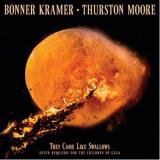
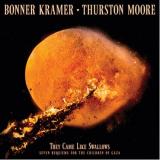
They Came Like Swallows is the first album-length collaboration between Thurston Moore and Kramer (now officially Bonner Kramer), two giants of alternative/ experimental music. The accomplishments and influence of these two artists in the world of independent music cannot be overstated and the result of their artistic union is a startlingly cohesive statement that burns through landscapes of primitive outsider rock, avant-garde composition, progressive ambient and further locales boldly and beautifully unnamable. “Kramer and I reconnected in Miami, Florida, a few years back, many many years after each of us had departed NYC on separate life adventures. It was only a matter of time before Kramer and I started making plans to record together and with his irrepressible due diligence he quickly set up a mobile recording contraption in the pad I was decamped in, the Florida sunshine flowing through the palm leaves, lithe lizards skittering across the windowsills, and we just went for it.
Kramer had the idea to cover a Joy Division tune, a left turn from the improvisations we had been tracking, though wholly in keeping with both our sensibilities of light and dark unifying in transcendent songwriting, both of us devotees of 'the song' as well as 'the freedom.’ What transpired is They Came Like Swallows, a session we immediately felt should exist as a prayer to the war-torn souls of the families of Palestine continually decimated by the brutality of genocide. We agreed beyond words to offer our music as a sonic activism and as a beneficent energy. This album is our duo exchange for human dignity, it is our soul music for any semblance of a peaceful planet.” ~ Thurston Moore “For the first time in our nearly 45 years of friendship, we had identical time windows open to make a record together,” recounts Kramer. After all this time not a moment is wasted as the duo immediately taps into the heightened core of improvisational tension across these seven offerings. Volcanic opener “Urn Burial” notches a similar historic union (John Cale and Terry Riley) to meet the circumstances of the moment, with swirling mists of organ and pounding toms over guitar that thickens the atmosphere with jagged, grimy dissonance.
Solemn strings open the second track, “The Redness In The West,” with Kramer’s cello and viola in dueling bow beneath the high tension drive and sustain of Thurston’s electric guitar, tapping out a Morse code of tension that mounts endlessly into a fog of inevitable war by the end. Moore and Kramer’s sense of experimentalism is in free and full grandeur throughout They Came Like Swallows, though the duo keep a strong and constant sideways eye on melody, composition and architecture, to the ends that any strict lines between song and improvisation are blurred beyond qualification.
As if to punctuate this point, Swallows closes with a nightwork cover of Joy Division’s “Insight,” a doleful coda that breathes out with a solemn inner grace under Thurston’s instantly stylistically recognizable guitar melodies as they weave into he and Kramer’s unison voices. As the lone vocal piece and only traditional ‘song’ form on the album, “Insight” is unique to this set and as a closing statement draws connective lines back to the kind of dynamic, electrified melodicism that wove deep, melancholy patterns into the untamed fire of Sonic Youth’s Sister and Daydream Nation. In the album’s final moments, the two voices repeat the lyric “I’m not afraid anymore” as mantra, underscoring the heavy, unsettled themes and methods that preceded it. Kramer describes the creative process of They Came Like Swallows: “I had composed and recorded a few pieces at my home studio over the course of a couple weeks. Thurston was spending the winter in South Florida, so I flew down and spent a few days recording his guitar parts in his home there. Watching him spontaneously compose his parts was pretty astonishing, to say the least. Once we'd finished working on those pieces, we began improvising and following wherever the music pointed us, and another few pieces were born. We got straight to it, without anything driving us other than the joy of finally working together.
My personal goal was to remain present and catch as many surprises as I could from Thurston's guitar work, and there were plenty during those few days. We had a fucking blast.” Thurston’s contributions here will be readily familiar to any acolytes of his other works, the through-line between his inspired playing, cradled in Kramer’s meticulous, solid arrangements. “If I had to make this record again, I'd do it all exactly the same way,” Kramer says. “It’s like jazz, you don't think about it. You just do it. It was miraculous, and you don't fuck with a miracle.”
They Came Like Swallows is the first album-length collaboration between Thurston Moore and Kramer (now officially Bonner Kramer), two giants of alternative/ experimental music. The accomplishments and influence of these two artists in the world of independent music cannot be overstated and the result of their artistic union is a startlingly cohesive statement that burns through landscapes of primitive outsider rock, avant-garde composition, progressive ambient and further locales boldly and beautifully unnamable. “Kramer and I reconnected in Miami, Florida, a few years back, many many years after each of us had departed NYC on separate life adventures. It was only a matter of time before Kramer and I started making plans to record together and with his irrepressible due diligence he quickly set up a mobile recording contraption in the pad I was decamped in, the Florida sunshine flowing through the palm leaves, lithe lizards skittering across the windowsills, and we just went for it.
Kramer had the idea to cover a Joy Division tune, a left turn from the improvisations we had been tracking, though wholly in keeping with both our sensibilities of light and dark unifying in transcendent songwriting, both of us devotees of 'the song' as well as 'the freedom.’ What transpired is They Came Like Swallows, a session we immediately felt should exist as a prayer to the war-torn souls of the families of Palestine continually decimated by the brutality of genocide. We agreed beyond words to offer our music as a sonic activism and as a beneficent energy. This album is our duo exchange for human dignity, it is our soul music for any semblance of a peaceful planet.” ~ Thurston Moore “For the first time in our nearly 45 years of friendship, we had identical time windows open to make a record together,” recounts Kramer. After all this time not a moment is wasted as the duo immediately taps into the heightened core of improvisational tension across these seven offerings. Volcanic opener “Urn Burial” notches a similar historic union (John Cale and Terry Riley) to meet the circumstances of the moment, with swirling mists of organ and pounding toms over guitar that thickens the atmosphere with jagged, grimy dissonance.
Solemn strings open the second track, “The Redness In The West,” with Kramer’s cello and viola in dueling bow beneath the high tension drive and sustain of Thurston’s electric guitar, tapping out a Morse code of tension that mounts endlessly into a fog of inevitable war by the end. Moore and Kramer’s sense of experimentalism is in free and full grandeur throughout They Came Like Swallows, though the duo keep a strong and constant sideways eye on melody, composition and architecture, to the ends that any strict lines between song and improvisation are blurred beyond qualification.
As if to punctuate this point, Swallows closes with a nightwork cover of Joy Division’s “Insight,” a doleful coda that breathes out with a solemn inner grace under Thurston’s instantly stylistically recognizable guitar melodies as they weave into he and Kramer’s unison voices. As the lone vocal piece and only traditional ‘song’ form on the album, “Insight” is unique to this set and as a closing statement draws connective lines back to the kind of dynamic, electrified melodicism that wove deep, melancholy patterns into the untamed fire of Sonic Youth’s Sister and Daydream Nation. In the album’s final moments, the two voices repeat the lyric “I’m not afraid anymore” as mantra, underscoring the heavy, unsettled themes and methods that preceded it. Kramer describes the creative process of They Came Like Swallows: “I had composed and recorded a few pieces at my home studio over the course of a couple weeks. Thurston was spending the winter in South Florida, so I flew down and spent a few days recording his guitar parts in his home there. Watching him spontaneously compose his parts was pretty astonishing, to say the least. Once we'd finished working on those pieces, we began improvising and following wherever the music pointed us, and another few pieces were born. We got straight to it, without anything driving us other than the joy of finally working together.
My personal goal was to remain present and catch as many surprises as I could from Thurston's guitar work, and there were plenty during those few days. We had a fucking blast.” Thurston’s contributions here will be readily familiar to any acolytes of his other works, the through-line between his inspired playing, cradled in Kramer’s meticulous, solid arrangements. “If I had to make this record again, I'd do it all exactly the same way,” Kramer says. “It’s like jazz, you don't think about it. You just do it. It was miraculous, and you don't fuck with a miracle.”
- A1: Rigor Mortis
- A2: Drinking Sand
- A3: Neurobeat
- A4: Close Combat
- A5: Cybernetics And Pavlovian Warfare
- B1: Check It Out
- B2: Ballistic Statues
- B3: Burn Out
- B4: Bodycheck
- C1: On Command
- C2: Flesh
- C3: Colonial Discharge
- C4: Taste (The Suburban Whiplash)
- D1: Drinking Sand (Remix)
- D2: Rigor Mortis (Extended)
- D3: Flesh (Remix)
- D4: On Command (Live 89)
- D5: Burn Out (Between The Sheets)
Clear Blue Vinyl[33,82 €]
Belgian electronic body-music pioneers A Split-Second deliver an expanded reissue of their influential 1987 debut Ballistic Statues, a landmark of the New Beat and EBM movement. Blending dark electronics, cold-wave tension and precision-driven sequencing, the album helped define a pivotal moment in the late-80s European underground.
This new edition brings together all tracks from the original album and enhances them with essential recordings from the same era, including the band’s complete 1986 debut EP (A Split-Second), the cult Smell of Buddha, and additional period material.
Pressed in a limited run of 300 copies on black vinyl, the release comes in a gatefold sleeve and includes a reproduction of the original lyrics insert along an exclusive poster and one postcard.
Ballistic Statues remains a defining statement—raw, innovative and far ahead of its time. This reissue brings together the core foundations of A Split-Second in one essential collection making it ideal for both long-time followers and new listeners discovering the band.
Active for more than a decade within the Geneva scene, DJ Laxxiste A. has established himself as one of the key figures of the local club culture. A DJ digger, musician, producer and experimenter, he moves between rave culture, dub and adventurous electronic music. As one half of Oram Modular, a project that left a mark on Geneva's house and techno landscape, and through several live projects, he has long navigated between soundsystem culture, the dancefloor and free party. This new release, composed of five original tracks and two remixes, offers a synthesis of Laxxiste's musical obsessions. Jungle, acid, breakbeat and dub collide in a dense, textured universe shaped by a distinctly dub-driven mix. The tracks were first tested in a hardware live set, where machines, FX and samples were pushed and reshaped in real time before being refined into finished pieces. The result is an organic and sometimes raw sound, combining lo-fi textures, twisted samples and deep basslines designed for adventurous dancefloors.
The record also features two collaborations. Lateena, a key voice of the Swiss dancehall scene, appears on one track, bringing a distinctive vocal presence. Another piece unfolds through a double transformation, with a remix by Bony Fly later extended into a dub version by dubmaster Androo.
- 1: Under The Influence
- 2: You Give Me Something
- 3: Wonderful World
- 4: The Pieces Don't Fit Anymore
- 5: One Last Chance
- 6: Undiscovered
- 7: The Letter
- 8: Call The Police
- 9: This Boy
- 10: If The Rain Must Fall
- 11: How Come
- 12: The Last Goodbye
- 13: Better Man
In 2006, "Undiscovered" introduced the UK to one of its most distinctive new voices. Powered by the breakout single "You Give Me Something", the album debuted at No.1 in the UK Albums Chart, and went on to become 5x Platinum in the UK, and achieved Platinum and Gold certifications across Europe, Australia and beyond. Blending soul, acoustic pop and classic British songwriting, "Undiscovered" delivered a string of enduring tracks including "Wonderful World" and "The Pieces Don"t Fit Anymore", establishing James Morrison from the outset and laying the foundation for a successful international career. To celebrate its 20th anniversary, the album returns in new formats for collectors. The vinyl has been cut by John Webber at AIR Studios to showcase the warmth and depth of the original recordings, and a deluxe CD edition features 4 bonus tracks, available exclusively on CD. A landmark British debut of the 2000s, "Undiscovered" remains a defining release of its era.
Schatterau’s third album, »Wir gingen durch leere Stunden« (We went through empty hours), sees the German duo blossoms with beauty and sophistication through a broad creative language.
This opus, presented in the form of vivid auditory tableaux vivants, explores the topography of memory as a landscape in constant motion – full of loops, feedbacks, and mirage-like distortions. Sounds climbing like vines over old walls, concealing details only to reveal new ones. Some pieces feel like fragments of a dream whose origin has vanished, others like displaced echoes of a day long gone.
Memories create paths that only become visible in retrospect – detours that somehow always lead back to oneself. Each track draws the listener into a different recollection, as if opening an old door. Inside, time behaves strangely: it jumps, stretches, and repeats.
»Wir gingen durch leere Stunden« ultimately presents Schatterau at their most experimental, complex and measured extremes, channelling ambiguous human emotional resonance ranging from melancholy to pure ecstasy.
Complimenting his singular debut LP, 2025’s ‘Light Months Will Fly Over Us’, singer-songwriter and producer Addy Weitzman sees his thoughtful artrock and new wave aesthetic expanded by The Time & Space Machine for a limited three-track 12".
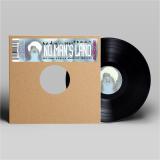
The long-running alias of British DJ, archivist and acid pioneer Richard Norris, this trio of remixes from The Time & Space Machine’s central processing unit finds Norris in a jubilant raving mode, his trademark psychedelia contributing to Slacker at its best and baggiest. The initial mix captures Weitzman’s songwriting in full, including his portentous vocal hook – “No man is a prophet in his own land” – a proverb first found in the gospels, blessed with the innovative Norris’s application of hypnotic groove, fat low-end and a ton of percussion.
The B-side sees Norris stripping things back in two directions: the Shango Dub draws focus on the higher vibrations found in the track’s beautifully intertwined percussive and synth elements, while the Riddim Mix reduces the frequencies further still, with a phased, slightly fried drum workout primed to spin heads as the night gets deeper and darker.
Following the digital release of the single “Meu Canto” in early February 2026, Gerardo Frisina and singer Luzia Dvorek return to Brazilian music with a new and compelling interpretation of a timeless classic, “A Lenda do Abaeté” by Dorival Caymmi; the release of this 45rpm single brings to a close a special project entirely dedicated to Bahia, the beating heart and symbol of Brazilian culture.
“Meu Canto” takes shape from an original composition by Gerardo Frisina, who signs both music and production, crafting a soundscape that is suspended between delicacy and depth upon which Luzia Dvorek - joined by songwriter Toco, whose refined backing vocals further enrich the song’s emotional dialogue - has drawn the melodic line and written the lyrics. A journey into roots and origins that tells the story of Luzia’s family, deeply embedded in the warm, fertile land of northeastern Brazil. “Meu Canto” sees also the participation of Alfonso Deidda on flute, whose airy timbre introduces new shades of color to the composition.
In “A Lenda do Abaeté”, the 45rpm B-side, Gerardo Frisina weaves an elegant and immersive rhythmic framework, evoking soundscapes that feel both deep-rooted and timeless. Within this setting, Luzia Dvorek’s voice unfolds with emotional intensity, balancing expressive strength and subtle delicacy as it narrates the ancient legend of the Abaeté lagoon. A place steeped in charm and mystery, suspended between myth and reality, whose stories have been passed down through generations in Salvador, in Brazil’s north-eastern region.
The project is further enriched by the acoustic guitar of Francesco Borrelli - who also took care of the tracks mixing and mastering - and Toco’s distinctive vocal contributions, which add depth and nuance to the overall sound.
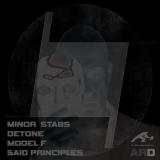
Following releases based in Amsterdam and Rotterdam, this one marks the "D" in Lost Trax's ARD trilogy. On SAID Principles, shaping their style to this landscape, the mysterious Lost Trax charts four hard-hitting techno tracks, imposing their demands on all those who can hear. It is up to you to now adapt.
Levi Bruce returns to Pacific Rhythm under his Unknown Mobile moniker for the first time since 2019 with a project entitled Field Work. The project is focused around field recordings taken during the winter and spring of 2025.
These recordings come from both his travels abroad while on tour and areas near his home in Whitehorse, Yukon Territory, located on the traditional lands of the Ta’an Kwäch’än Council and Kwanlin Dün First Nation.
Each field recording acts as the basis for a journal entry taken at the location. Raw data was used to reflect on the people, actions, and environmental elements connected to the site through additional production and manipulation.
This record contains six tracks by Freephilipp and Robin — two Bremen-based musicians who meet where the void of digital subculture and experimental electronic music opens up. Freephilipp contributes four glitch-driven pieces that move between IDM-tinged ambient, electro, atmospheric broken beats and junglish fragments. Random Chords Memory is one of the reasons this release needed to be carried out into the nexus: it stands on its own, just like the rest of the EP, yet it may be the signature track of Freephilipp’s nocturnal enthusiasm — mixing between night shifts and sharing production skills with the people around him. Robin (zckr rec / ph17) completes the EP on the flipside. Tau-37 and Omega5, named after two star systems, invite you onto a dub-soaked, drifting flight. The Basic Channel- esque impact of Tau-37 rounds out the journey in combination with Omega5, whose drone-laden soundscape slowly opens and dissolves. This music was never meant to be produced for an audience. It is a document of what it sounds like when you say goodbye to the outer world and begin building landscapes in another.