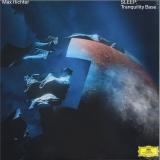
Max Richter presents SLEEP: Tranquility Base, a thirty-minute EP of new SLEEP music alongside remixes from electronic musician Kelly Lee Owens and German sound artist Alva Noto. Richter returns to his celebrated eight-hour magnum opus SLEEP with this new EP which offers a glimpse into the original material from an electronic perspective. “Tranquility Base” is the site on the Moon where, in July 1969, humans landed and walked on a celestial body other than Earth for the first time. With this in mind, the EP functions as a vessel that disconnects and travels through the body of work, allowing art to provide something which resembles peace within ourselves.
Buscar:on land
Livity Sound welcomes Joe Milli to the fold with an assured EP of crisp club workouts that land between techno's evocative depth and UK funky's offbeat, drum-focused functionality.
Over the past few years Milli has been establishing his sound across a swathe of radio shows, guest mixes and releases, and he lands on Livity with a timeless take on the label's commitment to stripped back, atmospheric soundsystem music.
There's variety across the Deep Forest EP, ranging from the balmy bassweight house of the title track to the deep-diving dub pulses and bruk drum science of 'Look Again'. 'Keep That Wire' draws nervous energy from its synth hooks and the taut, angular beat before the rolling Detroit techno pulse of 'Expressions' brings the EP home in punchy, percussion-loaded style.
In line with past releases from the likes of Bakongo, DJ Polo and Tribal Brothers, Milli's strength lies in his ability to bend the UK funky formula to different styles, all precision-tooled for the club.
Livity Sound is a label set up by Peverelist in 2011 as a vehicle for a raw and exploratory strain of UK techno, rooted in the heritage of UK dance music and sound system culture. It has since become one of the UK's foremost protagonists for cutting edge underground electronic music.
Following on from the sell-out ‘Folktronic EP’ , Crying Outcast resumes its descent through the soil with the Turf Step EP, the next chapter from Miles J Paralysis. Dialling further into the crevices between dubbed-out energy, murky house, and slow-motion ritualism, this four-tracker feels like a call from the belly of the land. Rooted in a shared sense of groove and disorientation, the four tracks move in different directions, laced with broken vocals, worn-down textures and a haze of echoes. The rhythms are thick, the atmospheres are blurred and the hand-worn quality to the music remains, luring you back into this familiar, low-lit world. Built for
- Intro
- Dark Depths And Surface Tension
- Existence Is Not A Solo Sport
- It's A Shit Business, Glad I'm Out Of It
- Ain't No Such Thing As Civilised, It's Man So In Love With Greed
- Lore Of The Land
- Qvc Hands
- Momentary Masters Of A Fraction Of A Dot
- The Enclosed The Common Land And Built A Fucking Lawn
- A Birthright Sham, A Downright Shame
- Spare Me The Pleasant Trees
- Outro
Human Leather have always been a ferocious live act, unbelievably loud for a 2 piece. Their gigs are often an overwhelming wall of sludge, howls and amphetamine-addled drums, with spectators flying joyously around the pit. Previous recordings did full justice to the impact of the live show; however, the second helping is something else. On Here Comes the Mind, There Goes the Body the sludge is still present, rising, and lapping at your ankles, but there's a new clarity showing off exactly how f*cking good those riffs are. There are ear worm riffs for days, shout along vocals that roar, shriek and reform into a Greek chorus, drums that thump you repeatedly in the chest and then the whole thing vanishes in just under 30 minutes, leaving you bruised, deafened and with Some Questions about your life. Squint your ears a bit and you'll hear the influences of bands like Karp, Torche and Big Business but they're thrown into a much crustier stew. The lyrics span a variety of political issues, not limited to the landed gentry, global warming and consumerist harbingers of doom. Importantly the songs are also not afraid to discuss class issues (unlike many political bands who you suspect have a much sturdier security net). While this could easily feel preachy, every line is delivered with the knowing wink of the underdog and good humour (I am going to smile every time I think of "clod damn" or "QVC Hands" staring up at me from the lyric sheet), and the vibes are as they've always been in difficult times - "we know we're fucked, tonight we mosh, tomorrow we march". And what is the point of a revolution you can't dance to? Speaking of dancing, the final track features an honest-to-god dance beat, acid squelches and disembodied vocal samples, pointing to an alternative universe in which Human Leather are a heavy electroclash band. Here comes the record of the year, bring what is left of your eardrums. You didn't need that body anyway
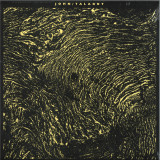
If there is one person, who has been causing a stir on the international club circuit recently, it is Barcelona's John Talabot. Already his debut “My Old School“ (which is meant literally by the way) on Permanent Vacation in 2009 and shortly after that the single “ Sunshine”, which he put out on his own Hivern Disc imprint, made him one of the most promising musicians of the Spanish electronic scene. And those two releases also already set the mark for John Talabot’s unparalleled music: raw, loopy, heavy on the kick drum, sample based, moderate on the tempo, distorted on the drums and light years away from the clean and ever revolving house sound of today. This unique style which also blends influences from afro beat, Detroit techno, Chicago house and cosmic disco, but also northern soul or the energy of Flamenco, immediately turned some heads around. James Murphy, Âme and Aeroplane started including Talabot music in their sets like it was the most natural thing. However - and this is quite rare - he not only gained legions of fans in the house and disco community, but also amongst the leftfield pop and indie rock followers. NME and Resident Advisor both had “Breakthrough“ features on John Talabot and he can be proud of a “Best New Music“ dubbing on
Pitchfork. (Being rather elusive on showing his face in magazines or the web it also came to some funny rumors that John Talabot was the alter ego of a well-known techno producer from Detroit).
At the same time he drew the attention of like-minded artists like James Holden and Luke Abott from Border Community, Blondes or Delorean, which lead to a bunch of fertile collaborations: Luke Abbott and Blondes remixed Talabot’s “Sunshine“ single , John Talabot remixed a track by Delorean and vice versa Delorean’s Ekhi contributed vocals to the track “Journeys “ on John’s album). Another example is the Young Turks Label (home of Jamie XX, Holy Fuck, El Guincho or SBTRKT ) on which he released the “Families“ EP in 2010. It was praised beyond limits. Pitchfork for
instance hailed: “… where pop and house influences sweetly buffer up against one another to provide an unyielding sense of elation“ and even brought Talabot a comparison with artists like Four Tet or Caribou.
While staying true to his sound, John Talabot has nevertheless shown a constant evolution as a producer since his first release. He has traced a solid musical path that has turned him into one of the big references of European House and has made him also a highly in demand Remixer (for the likes of The XX, Francesco Tristano’s “Aufgang” project, Shit Robot on DFA, Thaiti 80, Joakim or Teengirl Fantasy to name just a few ).
A progression that now crystallizes in “ƒin”, his first full-length album for Permanent Vacation. A record, in which the Barcelona mastermind sets aside the danceable immediacy to expand his stylistic palette more than ever. For that purpose, Talabot melts all the elements that have constructed his distinctive sound until now and makes them emerge from a new perspective, in which the construction of complex song structures, intricate rhythms and superpositions of ever-evolving melodies and atmospheres pick up the baton of the “a kick-drum and a sampler” philosophy of his initial productions. The result brings us 11 tracks (we should call them songs really!) dominated by dark ambiances, gaseous textures and bittersweet moods that, above all, reveal a kind of vivacity that’s really hard to find in contemporary electronics. “Fin” is far from being a track collection. From the majestic opener “Depak Ine“ to it’s solemn ending with
“So Will Be Now“ , one of the two tracks that features Talabot’s soul and label mate Pional, each song traces an overall dialogue with the rest, culminating a highly emotional journey through Talabot’s always compelling and unique musical vision.
- Last Chance
- Wait For Us To Be Home
- Prayers And Pollen
- Transparent Towns
- Who You Thought I Was
- Jump The Gun
- Regret Without Reason
- Door Of No Return
- Sierra Dawn
- Cardinal Direction
John Calvin Abney rises again from the Oklahoman prairies with his latest album Transparent Towns. The ten songs focus on how we remember, and ultimately accept, though he is not always certain the memories we carry adequately mark the moments that make us. "This record is wrapped around the passage of time, whether or not we can trust the memories that we swear on, how we forgive ourselves and others as seasons turn, and how we define what is important as we roll the boulder back up the hill," Abney says of Transparent Towns. "We build these routines and live our stories, we rely on our histories and our memories - spoken and recorded. Now, we're relying on copies of copies, memories of memories, all packed like sardines into our phones, and we're losing the ability to tell our own stories. I have to constantly remind myself, as well as redefine what matters at the end of a day." Transparent Towns is the seventh studio album for Abney, and his first since 2022's Tourist, which he crafted after spending the pandemic as an itinerant writer. In contrast Abney penned most of the album's 10 tracks during a period of introspection and convalescence while recovering from vocal cord surgery in 2023. The time to himself - "I didn't sing for nearly a year, and after surgery, I couldn't talk for a month, and couldn't sing for over three months," he says, left him contemplating how to trace his experiences in the silence. The album's title track is Abney's take on the inaccessible past, witnessing loss and grief through the years, damning the "days we let go left unsaid", and accepting the uncontrollable circumstances we are sometimes placed in. "The troubles and the joys exist vibrantly in your memory, but you're wondering if you remember correctly," Abney remarks. "I've sometimes had this sort of confusion between memory and dreams - you crafted this ideal in your head of how things were or might be, in order to soften the blow of a harsher reality." The places we inhabit dictate how our memories form, and for Abney, there is one place to which he is constantly drawn: Oklahoma. Although he was born in the biggest little city in America, Reno, Nevada, he grew up learning guitar and piano in Tulsa, playing bars and DIY spaces from Norman to Stillwater. His affinity for the land that raised him is evident in the production of Transparent Towns. Abney self-produced the record, tracking most of it at Cardinal Song outside of Oklahoma City, with Michael Trepagnier handling mixing and engineering. The band was comprised mostly of Sooner State musicians too, along with Lydia Loveless and John Moreland contributing harmony vocals. His signature vulnerable voice and lyrical handiwork comes through in each of the songs, along with his penchant for alternative pop melodies set against colorful chords and subtle soundscapes. Having toured for years backing up artists like Moreland, Wild Child, Ben Kweller, and S.G. Goodman, Abney embraces a lead role again, as he presses forward with the loving lament and defiant joy throughout Transparent Towns, calling us to leave behind the pressures we place on our ourselves and recognize that just because there is an ending, it doesn't mean it's the end.
To All That We Lose And All We Fight For is the debut album by Vera Logdanidi - the
culmination of nearly two decades of musical evolution. Her journey began in the world of drum & bass and jungle, gradually expanding into deep explorations of house, dub techno, and techno. Over the years, Vera has performed on leading stages across Ukraine and internationally, while also mentoring a new generation of DJs and producers, hosting radio shows, and supporting the scene through her label and community work.
This album was written during a time of deep upheaval. The outbreak of full-scale war forced Vera to leave behind a well-established life and begin again on the international stage. While the music often feels dreamy and introspective, To All That We Lose And All We Fight For is a profoundly personal record - a sonic refuge shaped by grief, uncertainty, and resilience.
The album doesn't follow formulas; it's driven by intuition, texture, and a genuine connection to sound. It's rich, emotional, and occasionally unexpected. The tracks form the core of Vera's current live set, which has resonated at major festivals such as Draaimolen or Strichka - captivating audiences with its depth and subtle, immersive energy.
The cover art, created in close collaboration with Vera's longtime visual team, is a real
photograph - not a digital effect. It captures the tension between anxiety and hope: a glance back, and a step forward into the unknown. This visual metaphor reflects the emotional landscape of the album - the fragility of what's been lost, and the courage to embrace what lies ahead.
This release also marks a new chapter for Rhythm Buro Records - one that moves towards music that is more personal, intimate, and unconstrained by expectations.
To All That We Lose And All We Fight For is released alongside another important Rhythm Buro release: RB011 - Your Curves EP by Na Nich. Ukrainian producer Oleksandr Pavlenko, formerly known as Sunchase, returns to his roots in broken beats and bass music, blending them with house and techno sensibilities. The four-track EP ranges from deep grooves to melancholic late-night moods - a compelling counterpoint to Vera's album and a testament to the label's evolving identity.
Order RB012 n
Ostinato as resistance: Rafael Anton Irisarri’s landmark work reimagined. Marking the tenth anniversary of the American composer’s critically acclaimed album 'A Fragile Geography', this new edition arrives renewed, both sonically and visually.
First released in 2015 (Room40) during a period of personal upheaval and creative reinvention, it endures as a testament to resilience, transformation, and the connection we hold with the places that shape us.
Written in the aftermath of a devastating theft, A Fragile Geography was born out of loss. Just days before a cross-country move to New York, Irisarri’s entire Seattle-based studio was wiped out. Instruments. Recordings. Archives. Gone without a trace. He arrived on the East Coast to an empty room and the daunting task of starting over.
“This album wasn’t just a record; it was a lifeline,” Irisarri reflects. “It became a way to process the emotional chaos that followed: uprooting, instability, and ultimately, the slow, intuitive rebuilding of a life.”
Composed and recorded in the rural woods of the Hudson Valley, the album took shape in seclusion, surrounded by nature, and through a process guided by improvisation. Embracing limitations, Irisarri wove textural layers of field recordings with half-remembered melodies from his Seattle years, piecing them together like fragments of memory. Tracks like “Displacement,” “Hiatus,” and “Persistence” juxtaposed haunting stillness with restless momentum, mapping an inner terrain of grief, catharsis, and rebirth.
Among its defining sounds is “Empire Systems,” a monumental centerpiece built around a simple four-chord progression, organ textures, and guitar drones. Gradually, the track expands into layers of immersive loops and thick, enveloping distortion that wash over the listener like a rolling wave. Often cited as the album’s most majestic passage, it captures Irisarri at his most sonically ambitious. With a harmonically saturated structure crafted from restraint and repetition, it remains one of his most recognizable compositions: an exercise in the art of maximal minimalism.
From the outset, “Reprisal” received praise from BBC’s Mary Anne Hobbs, who championed the track on her radio show. Her support played a key role in introducing Irisarri’s work to wider audiences and solidifying his place within the lineage of electronic, drone, and experimental sound artists. A slow-burning elegy, the piece emerges from a haze of distortion and sub-bass, with dense, unrelenting drones carrying a sense of mounting tension. Just as it seems to collapse under its own weight, flickers of guitar emerge like distant light through fog. It’s a meditation on dissonance, resolve, and the elusive possibility of release.
The closing track, “Secretly Wishing for Rain,” is steeped in saudade: a longing for Seattle’s dour grey skies, lush green landscapes, and desaturated sunsets. Through it, Irisarri mourns a vanished chapter of life bound to the city, a time documented in scattered mementos and cherished collections, now permanently gone. A reflection on what could never be recovered: an era lost to time. Julia Kent’s looped cello motifs added a melancholic warmth to the track, marking the first collaboration between the two artists and sparking a musical dialogue that would keep growing in the years that followed.
More than a career highlight, A Fragile Geography has laid the foundation for Black Knoll studio, which Irisarri rebuilt from the ground up. The studio has since grown into a creative hub for countless projects, with Irisarri engineering records for iconic music figures like Terry Riley, Ryuichi Sakamoto, William Basinski, MONO, Devendra Banhart, Grouper, Emeralds, Steve Hauschildt, Julianna Barwick, and many others. Carried by its lasting influence, the album has quietly captured the ear of a younger generation, its sound and emotional arc finding new listeners in unexpected corners.
The album’s new visual language was reimagined in collaboration with Mexico City–based designer Daniel Castrejón. Irisarri captured ghostly images at Gaztelugatxeko Doniene, a historic coastal site in Bermeo, Euskal Herria. Castrejón then treated the photographs with distressed textures and spectral overlays. The final artwork channels the rugged, elemental forces that shaped both the music and Irisarri’s aesthetic, renewing his ties to ancestral ground inspired by the Basque homeland of his bloodline.
Mastered by Stephan Mathieu with exceptional attention to detail, this anniversary edition uncovers every nuance in the sound design, enhancing clarity and presence. With each listen, new elements emerge, inviting discovery and reconnection.
“I don’t experience this album as a document of grief anymore,” says Irisarri. “I hear adaptation and I'm reminded that when everything falls apart, something meaningful, maybe even beautiful, can emerge.”
François and Sylvain Rabbath have turned six years of touring into a joint album that patiently and intensely distills a variety of musical flavors gathered from around the world.
Since the early 1960s, François Rabbath's double bass has resonated through enough landmark recordings to fill several shelves in a record collection. As an arranger, composer, and musician, his imprint on music goes far beyond his collaborations with Barbara, Paco Ibáñez, Charles Aznavour, or Édith Piaf. Aspiring double bassists owe him a groundbreaking method for learning the instrument. Born into a lush musical universe that quickly became his own, his son Sylvain first accompanied him on his travels before settling at the piano and sharing stages around the world at his side.
Those years of accumulating visas in their passports were put to good use by father and son. The continents, countries, and cities they passed through became a rich source of inspiration for composing Amall, the album by the Rabbath Electric Orchestra.
Long hours spent in the air or on the road, watching passing landscapes that never stayed the same, were transformed into compositions imbued with the atmospheres of the places they crossed or visited. Inspiration sometimes struck with force, like a green oasis appearing in a desert of stone—unexpectedly, as glowing red rocks suddenly dominated an otherwise open landscape with an endless horizon, while the mind wandered into a state between meditation and introspection.
Born from these travels, the pieces took on their final colors once brought into the studio, refined, and finally arranged to welcome the guitars of Keziah Jones and Matthieu Chedid, the piano of Laurent de Wilde, the bass of Victor Wooten, the saxophone of Raphaël Imbert, and the percussion of Minino Garay. Enhanced by the scale of the jazz-soul orchestrations, by the richness of arrangements bursting from strings, brass, rhythms, or keyboards, the epic breath of vast plains became ingrained. The urban tension of funk, echoing their movements, found its place—alongside more electric expressions or the ambience of a darkened room.
Melancholic and melodious, expressive and edgy, the bowed double bass—played in the high register where few dare to go—emerged as the musical guide. One that draws a path between Seville and Minneapolis, connects François Rabbath's native Syria to France, and bridges South America to Europe. It sets the tone to follow—the emotion that will carry the piece, and if not filled with light, will carry it there nonetheless.
Musical visions packed in luggage, transported in cargo holds, or imprinted in their minds just long enough to cover the distances to the next stop—father and son deepened their bond, beyond family and art. And their hands have never held each other more tightly.
François et Sylvain Rabbath ont fait fructifier six ans de tournées pour un album commun distillant patiemment et intensément la variété de parfums musicaux récoltés autour du monde.
Depuis le début des 60’s, la contrebasse de François Rabbath résonne dans assez de références pour combler plusieurs étagères d’une collection de disques. Arrangeur, compositeur, musicien, l'empreinte laissée dans la musique va bien au-delà de ses collaborations avec Barbara, Paco Ibanez, Charles Aznavour, ou Edith Piaf. C’est à lui que les
apprentis contrebassistes doivent une méthode novatrice pour apprendre l’instrument.
Né dans un univers musical luxuriant qui est vite devenu aussi le sien, c’est d’abord dans ses voyages que son fils Sylvain l’a accompagné, avant de s’installer au piano, et parcourir les scènes du monde à ses côtés. Ces années où les visas se sont entassés sur leurs passeports, père et fils les ont mises à profit. Continents, pays, et villes qui se sont succédés sont devenues un gisement pour composer Amall, l’album du Rabbath Electric Orchestra.
Les longs moments passés dans les airs ou sur la route à contempler un paysage qui défile sans pour autant rester le même, se sont convertis en compositions habitées par les ambiances de ces endroits traversés ou visités. Là où l’inspiration s’est imposée parfois brutalement, sous
la forme d’un oasis de verdure surgissant au milieu d’un désert de pierres. Au hasard d’imposantes roches rougeoyantes s’invitant dans un paysage jusqu’alors dégagé sur un horizon sans fin, quand l’esprit se laisse aller à un mélange de méditation et d'introspection.
Nés de ces pérégrinations, les titres ont pris leurs couleurs définitives une fois ramenés en studio, peaufinés puis, enfin, pensés pour y inviter les guitares de Keziah Jones et de Matthieu Chedid, le piano de Laurent de Wilde, la basse de Victor Wooten, le saxophone de Raphaël Imbert, les percussions de Minino Garay. Sublimé par la dimension des orchestrations jazz-soul, par la richesse des arrangements jaillissant des cordes, des cuivres, des rythmiques ou des claviers, le souffle épique des plaines immenses s’est imprimé.
La nervosité citadine du funk rythmant les déplacements a trouvé sa place, non loin d’une expression plus électrique ou d’une atmosphère de salle obscure.
Mélancolique et mélodieuse, expressive et nerveuse, la contrebasse jouée à l’archet, dans les notes hautes du manche où peu s’aventurent, s’est érigée en guide musical. Celui qui trace le chemin entre Séville et Minneapolis, relie la Syrie natale de François Rabbath à la France,
réduit la distance entre l’Amérique du Sud et l’Europe. Donne la note à suivre, l’émotion qui traversera le morceau qui, s’il n’est pas habité par la lumière, le portera néanmoins jusque là.
Visions musicales mises dans le coffre, transportées en soute ou imprimées dans l’esprit le temps de couvrir les distances qui les mèneront aux prochaines, c’est côte à côte que père et fils ont prolongé leur lien par delà des seules limites familiales et artistiques. Et leurs mains ne se sont jamais serrées aussi fort.
credits
- Montevideo Disney Samba
- Parque Rodo Cookies
- Noa Noa Blues
- Las Canteras Breakbeat Science
- Candombe Doble Gota
- La Sombra Del Limonero
- Parque Rodo Thugs
- The Sound Of Ramirez Shore
A unique sonic journey blending jazz, candombe, dub, hip-hop, and electronic music. Written, sequenced, and recorded by Ian Lampel (Uruguay), the album captures Montevideo's vibrant essence with innovative beats and deep roots. Embark on a sonic journey through the rich tapestry of Ian Lampel's multicultural heritage with his debut solo album, "The Parque Rodó Tapes." From the echoes of his grandparents' wartime exodus from Europe's tumultuous past to the rhythms of daily life in Parque Rodó, Lampel's artistic vision was shaped by a kaleidoscope of influences: Science fiction and fantasy books, graphic design annuals, comics, films, early computers and videogames as well as music; the haunting melodies of Russian and Polish classical composers hummed by his grandmother while cooking, the choir and hammond music of the synagogue, his early explorations in club music and dub or the syncopated drumming of candombe and carnaval echoing in the streets of Montevideo. The composer, producer and bass player, wrote, sequenced and recorded practically everything that is heard throughout the album. With meticulous attention to detail, he has crafted a sonic landscape that seamlessly blends elements of jazz and Uruguayan music with the innovative spirit of dub, hip-hop and electronica; from the infectious rhythms of candombe and the raw energy of murga, to breakbeats, moog's and samples. Drawing from a treasure trove of samples collected over two decades, "The Parque Rodó Tapes" weaves together a tapestry of sound that is both nostalgic and forward-thinking, from the haunting voice of Marosa Di Giorgio and the vibrant cacophony of a carnival field recording by Lauro Ayestaran, to the guest contributions from notable musicians including Lampel's wife, singer/songwriter Eco Lopez, multi-instrumentalist Luciana Giovinazzo on flute, and Ferna Nunez on repique drum. Each track is a testament to Lampel's eclectic vision. A debut album with a certain degree of melancholy that works as a soundtrack to the world in which the artist grew up, a world now gone, without cellphones or social networks, in which everything had to be proactively pursued "in the streets".
- Strange Meeting With Owls
- Skewered By The Daystar
- It Was A Flood
- Atlas On His Day Off
- Turn Signal
- And You Want To Be My Dog
- Secret Weather
- A Tavern Poem, Passed From Mouth To Mouth
- Another Bullshit Rodeo
- They Laugh That Win
- Escape Artist
- Darkness Leaning Like Water Against The Windows
- The Moon Says
- Hores & Hero
- Demon Confrontation
- Fixing The Past Is A Sucker's Game
- Sea & Swimmer
Gabriel Birnbaum, der Hauptsongwriter der Brooklyn-Band Wilder Maker, sagt, dass das neueste Album der Gruppe, The Streets Like Beds Still Warm, ,einer allgemeinen formalen Asymmetrie folgt, wie einer Traumlogik". Es ist reichhaltig strukturiert, stimmungsvoll und tiefgründig und ebenso narrativ wie experimentell. Es als Konzeptalbum zu bezeichnen, so groß dieser Begriff auch ist, würde ihm eigentlich nicht gerecht werden. Tatsächlich ist es nur der erste Teil einer Konzepttrilogie, die die Geschichte einer langen Nacht in der Stadt erzählt, von der Dämmerung bis zum Morgengrauen. Das Album folgt einem einsamen Erzähler, der durch die Straßen treibt und Bars und Krankenhauszimmer betritt und wieder verlässt. Wenn das ein bisschen noir klingt, dann liegt das daran, dass es das auch ist. ,Film noir Detektive sehen am Anfang immer makellos aus, aber am Ende des Films haben sie einen zerrissenen Kragen, ein blaues Auge, ihre Hosen sind fleckig und sie fangen an, aus Verzweiflung Leute zu schlagen", sagt Birnbaum. ,Sind sie noch die Guten? Ich finde das faszinierend und ich liebe die visuellen Hinweise, die die innere Landschaft widerspiegeln." Zwar gibt es auf The Streets Like Beds Still Warm keine visuellen Hinweise im eigentlichen Sinne, doch das Album verdankt sein großartiges Debüt der Kinematografie. Impressionistische Wirbel aus verzerrter Gitarre, Schlagzeug und Saxophon untermalen Birnbaums heiseres, weltmüdes Bariton-Crooning, das manchmal an Bill Fay erinnert. Aber manchmal, in all den düsteren Bar-Geschichten, denkt man auch an Tom Waits. Es ist ein Vergleich, der sowohl irreführend als auch verkürzend sein kann, aber es ist schwer, diese Assoziationen beim Hören von The Streets Like Beds Still Warm nicht zu sehen - vielleicht eine langsam schwingende Tiffany-Lampe direkt über dem Kopf des Erzählers, der etwas mehr als halbtrunken ist und eine brillant poetische, antiheroische Geschichte auf eine Serviette in einer Bar kritzelt. Seien Sie jedoch versichert, dass dies nicht ,The Heart of Saturday Night" und auch nicht ,In the Wee Small Hours" ist. Tatsächlich stammen die musikalischen Vorläufer von ,The Streets Like Beds Still Warm" aus ganz anderen Ecken des musikalischen Universums. Die Band lässt sich direkt von den Werken der zeitgenössischen Alt-Jazz-Musiker Anna Butterss und Jeff Parker sowie vom Ambient-Pionier Brian Eno ,The Streets Like Beds Still Warm" ist insgesamt ein Statement für nächtliches und hypnotisches Storytelling - sowohl in Bezug auf Stil als auch Inhalt. Birnbaums Engagement für die Erzählung, die letztendlich von Menschlichkeit handelt, spiegelt sich in der traumhaften Art und Weise wider, wie sich die Melodien entfalten. Es könnte gar nicht anders funktionieren. Tief empfunden und fokussiert, unbestreitbar hörenswert, aber schwer zu fassen - ,The Streets Like Beds Still Warm ist wunderschön seltsam - und es fühlt sich genau wie etwas an, das in zehn Jahren die Anerkennung erhalten wird, die es verdient.
- Kingdom Come
- Colt 44 (Ft. King Khan)
- Step Back Old King Cole
- Gunnin
- Bound For Rodeo
- Zulu Saints (Demo)
- Sx Sx Sx Men (Remix)
- Back To Kiev
- The One
- Satan
- Back With The Breeze
- Judas Pig (Demo)
- Kassandra (Alternate Mix)
- Gunnin Demo (Instrumental)
- The Illusion Pt. 1 (Dream Mix)
Exklusive Vinyl-Sammlung mit Demos, Skizzen und Outtakes vom neuen Album "Season Of The Peach" von Black Lips. Mit einem Feature von King Khan sowie alternativen Versionen und Mixen und exklusiven Songs aus den Sessions. Gleichzeitig mit ihrem richtigem neuen Album "Season Of The Peach" wird die Outtakes-Sammlung "Bebop Armageddon (Detours & Offcuts From Season Of The Peach)" veröffentlicht, ein wildes, limitiertes Kompendium: Demos, alternativen Versionen und klingende Missgeschicke der jüngsten Sessions zum neuen Album, für echte Fans auf Vinyl gebannt. Wenn "Season Of The Peach" eine farbenfrohe Halluzination ist - teils Garagenrock-Fantasie, teils verbranntes Americana-Land - dann ist "Bebop Armageddon" sein zerfetzter, magnetischer Schatten. Diese 14 Tracks nehmen einen orientierungslosen Weg durch dasselbe Terrain und bieten mutierte Skizzen, wunderschöne Trümmer und freakige Umwege, die vor rohem Charme und chaotischer Erfindungsgabe nur so strotzen. Es gibt alternative Mixe (,Kassandra"), Demoversionen (,Judas Pig", ,Zulu Saints") und schwindelerregende Neuinterpretationen wie ,The Illusion Pt. 1 (dream mix)". Das Exklusive ,Colt 44" (mit King Khan) rattert wie ein Güterzug, der zu entgleisen droht, während ,Satan" und ,Back To Kiev" gleichermaßen versengten Psych, Saloon-Gospel und gespenstische Front-Porch-Melodien bieten. Alle Tracks wurden auf Analogband im Sound At Manor Studio von Oakley Munson in den Catskills aufgenommen. Bebop Armageddon fängt den Geist der Sessions in roher, ungekünstelter Form ein. Keine sauberen Linien. Keine Wiederholungen. Kein Glanz. Das ist das Chaos unter der polierten Oberfläche des Mutteralbums - die Black Lips, die sich nicht benehmen wollten. Limitiertes klassisch schwarzes Vinyl (1000 Stück weltweit) mit DLC dabei.
- Another Fugue
- Out In The Hinterlands
- A Field Day For Psychogeographers
- Orbiting London Overground
- Unrevealed Igneous Strata
- Let The Head Of Swedenborg Rest
- Downriver (After Iain Sinclair)
»Downriver« unfolds like a dérive through obscured geographies, echoing the psychogeographic journeys of Iain Sinclair. Just as Sinclair’s writing blurs the tangible and the imagined, Sequences, the project of Antwerp-based artist Niels Geybels, drifts into spaces where memory and environment overlap. Single-take recordings stretch into slowly mutating drones, fractured textures, and ghostlike voices that seem to seep in from unseen thresholds. The atmosphere is one of decayed grandeur, evoking disused monuments, neglected warehouses, and corners of the landscape where centuries of history accumulate beneath the surface.
This is music shaped by wandering without a map: a patchwork of distortion, hidden detail, and abrupt rupture. The sense of time loosens, the everyday unravels, and new contours emerge out of drift and delay. Downriver situates itself between sound art and environmental music, drawing listeners into liminal zones where place becomes porous, haunted by what has been and what might yet be.
Written and recorded by Niels Geybels Mastered by Jacob Calland
IDO returns with the second chapter of Transcendental Movements - a series dedicated to active meditation and deep listening. Active meditation is a practice of fully inhabiting the movement of sound. Instead of seeking absolute silence, it invites you to dive into textures, to be carried by frequencies, to follow oscillations like a breath. Every vibration becomes an anchor point, every resonance a gateway inward. In a world saturated with noise and anxiety, this approach offers a space to refocus the body and calm the mind. Here, listening is not passive: it's an awakened trance where tensions shift and dissolve, leaving only a pure sense of presence. For this second volume, Valentino Mora has gathered a new ensemble of artists exploring the frontier between intimate perception and sonic landscape. The compositions - slow and organic - unfold like micro-universes, at times ethereal, at times dense, designed to guide the listener on a sensory journey that transforms anxiety into movement, and movement into inner peace. Transcendental Movements Vol. 2 is an invitation to listen differently: not to escape, but to return to yourself.
Satya welcomes one of Romania’s most respected underground talents, Mihai Pol, for a standout vinyl-only release titled "Ebb And Flow". With a sound that embodies precision, groove, and an ever-evolving sense of storytelling, Mihai has carved a unique place within the minimal tech-house landscape since his breakout moment in 2016 with Goneta on Capodopere.
His music, known for its subtle emotional depth and dancefloor functionality, continues to evolve—each release revealing a new side of his sonic palette. From the acid-laced drive of Synkop to the dreamy momentum of Tango, no two records sound alike. A regular on Telum and a fixture at iconic venues like Hoppetosse, La Java, The Block, and Sunwaves Festival, Mihai’s artistry spans both the booth and the studio.
On Ebb And Flow, Mihai delivers a refined suite of tracks created over a focused one-to-two month period, all sharing a clean, underground, club-oriented spirit. "There was no cultural reference for them," he shares. "Just me putting together sounds and playing them live." Built using an analog-heavy arsenal—MPC1000, Rytm, Digitone, Virus, Modular, Prophet6, Octatrack—and a few choice samples, the EP captures Mihai’s organic approach to groove and texture.
"I like to make people dance and feel good, but I also try to tell a story," he says. Ebb And Flow is exactly that: a dancefloor journey that hits the body and speaks to the soul.
Leila Gamal’s ‘Abaleeh Abalingi’
At the height of Pan-Arabism, when the United Arab Republic fused Egypt and Syria in a fleeting but bold experiment, a new wave of popular music was emerging—vibrant, infectious, and universally danceable. Among its lesser-known stars was actress Leila Gamal, whose voice—delicate yet rich with longing—embodied the golden era of Egyptian cinema. Born in Alexandria to Syrian roots, Gamal’s vocals were a magnetic blend of sweetness and passion, with a timeless allure that echoed the silver-screen sweethearts of her time.
Abaleeh Abalingi pulses with the hypnotic drive of funky organ riffs, reminiscent of the blind visionary Ammar El Sheriyi, creating a sound both cinematic and undeniably catchy. The delicate lyrics by Khairi Fouad place the track firmly in the lineage of the Middle East’s most iconic pop divas, from Angham to Nawal El-Zoughbi who he subsequently wrote for. This reissue, lovingly remastered, brings this long-lost gem back to life, where it belongs—spinning on turntables, teasing dance floors, and transporting listeners to Egypt in the late sixties.
Adel Osman’s “Oriental Eyes”
Oriental Eyes captures the essence of the 60s Egyptian Franco-Arab movement, blending Western (often jazz) influences with Arabic melodies to mesh mystique with sensuality. Osman’s commanding yet delicate vocals deliver the bilingual lyrics with captivating sincerity, his voice effortlessly gliding over the swells of the arrangement. The trumpet, possibly connecting him to Zaki Osman of Salah Ragab’s legendary Cairo Jazz Band, adds a layer of flair, enriching the track’s Tarantino-esque eclecticism. Now remastered, ‘Oriental Eyes’ is not only a nostalgic gem but a timeless reminder of the boundary-defying spirit that defined the 1960s musical landscape.
Given the ongoing war efforts against Israel, this record wasn’t pressed by Sono Cairo till much later in 1975 once Egypt had recaptured the Sinai and restored national pride. Sono Cairo (Sawt el-Qahira) was the first Arab-owned and by far the largest record label in the Middle East, amassing an unmatched catalogue of music. With exclusive rights over much of Umm Kulthum’s works, Sono Cairo played a crucial role in disseminating the sounds of Arab Nationalism and projecting Egypt’s soft power across the region.
Muhammad Al-Najjar
London, April 2025
credits
Audio restoration and vinyl mastering: Colin Young
Lacquer cut: Timmion cutting lab
Sleeve and label artwork: Grotezk Studio
Under License of Sono Cairo
“UFO” lives up to its namesake, landing at shops on an etched, one sided 12” and bearing little more than a logo. The music will have to speak for itself, and it does: a believer’s anthem from Venus to Versailles, the song is infused with playfulness and warmth, like the sound of old friends collaborating for the first time. It's propulsive, hypnotic, contemplative and full of yearning for someone special, whichever galaxy they may reside.
- A1: The Bird
- A2: Heart Don't Stand A Chance
- A3: The Waters Ft. Bj The Chicago Kid
- A4: The Season/Carry Me
- A5: Put Me Thru
- A6: Am I Wrong Ft. Schoolboy Q
- A7: Without You Ft. Rapsody
- A8: Parking Lot
- B1: Lite Weight Ft The Free Nationals United Fellowship Choir
- B2: Room In Here Ft. The Game & Sonyae Elise
- B3: Water Fall (Interluuube)
- B4: Your Prime
- B5: Come Down
- B6: Silicon Valley
- B7: Celebrate
- B8: The Dreamer Ft. Talib Kweli & Timan Family Choir
The two-time GRAMMY Nominated timeless album, Malibu. After dropping his debut album, Venice, in 2014, and then being featured on six tracks on Dr. Dre’s Compton album in 2015, 2016’s Malibu marked a major landmark moment in Anderson .Paak’s now storied career and paved the way for him to be the household name he is today. Known by many as one of the best live performers around, and with countless brand collaborations, sold out tours, chart topping albums, and even a joint album with the legendary Bruno Mars to his name, it’s safe to say that Anderson .Paak has reached Icon status. This classic catalog piece features appearances from Schoolboy Q, The Game, BJ The Chicago Kid, and more.
- LP1: Groovin’ With The Chet Baker Quintet
- LP2: Smokin’ With The Chet Baker Quintet
- LP3: Boppin’ With The Chet Baker Quintet
- LP4: Cool Burnin’ With The Chet Baker Quintet
- LP5: Comin’ On With The Chet Baker Quintet
LP-Box mit fünf Original-Studioalben von 1965.
(AAA) Remastered und direkt von den originalen analogen Mono-Bändern von Kevin Gray geschnitten.
Fünf Original-Studioalben, aufgenommen in einer Woche im August 1965 in New York City: Boppin', Smokin', Groovin', Comin' On, Cool Burnin' sind zum ersten Mal seit über 50 Jahren wieder auf Vinyl erhältlich. Für diese Aufnahmen, die einen Wendepunkt in seiner Karriere markieren, hat Chet Baker eine Band der Superlative um sich geschart: George Coleman, Kirk Lightsey, Herman Wright und Roy Brooks spielen alle auf diesen aufregenden Sets, die ursprünglich bei Prestige Recordings erschienen sind.
New Land hatte vollen Zugang zu den originalen analogen Monobändern, und Kevin Gray hat sie neu gemastert und geschnitten (AAA), um ihnen eine frische Klangfarbe zu verleihen. Das Herzstück dieser Box ist ein Buch mit einem unglaublich detaillierten Essay von GRAMMY® Nominee James Gavin, der die wahre Geschichte hinter diesen Aufnahmen mit Interviews der Beteiligten verbindet. Illustriert mit seltenen Fotos und Ephemera ist dies der bisher tiefste Einblick in diese Aufnahmen.
Chet Bakers Prestige-Aufnahmen aus dem Jahr 1965 markieren eine Übergangsphase - seine Rückkehr in die USA nach einer Zeit in Europa und einer Auseinandersetzung mit dem Rechtssystem. Diese Sessions zeigen ihn in einem raueren, expressiveren Ton, der aber immer noch von seiner charakteristischen lyrischen Schönheit durchdrungen ist. Die Aufnahmen entstanden auf dem Höhepunkt der Hard-Bop-Renaissance von Prestige Records und zeigen Baker zusammen mit dem Saxophon-Titanen George Coleman, der gerade mit Miles Davis auf Tournee war. Das Ergebnis ist ein rauer, swingender Quintett-Sound, direkt, gefühlvoll und ungeschminkt.
Nach Jahren des Umherziehens in Europa und scheinbar endlosen persönlichen Turbulenzen kehrte Chet in die USA zurück, um diese Sessions aufzunehmen. Ohne die jugendliche Unschuld seiner frühen Tage an der Westküste spielt Baker mit einer dunkleren, introspektiven Note - sein Horn singt immer noch, aber jetzt seufzt es auch.
Zusammen mit einer starken Rhythmusgruppe aus New York verbinden diese Aufnahmen die Eleganz des Cool Jazz mit der rauen Direktheit des Hard Bop der Ostküste. Baker zeigt sich hier von seiner menschlichsten Seite - zerbrechlich, lyrisch, ungefiltert.
Dies sind nicht einfach nur Aufnahmen aus Chets Spätzeit - sie sind ein Dokument seiner Neuerfindung. Für Sammler schließen sie eine wichtige Lücke zwischen seiner ikonischen Cool Jazz Ära der 1950er Jahre und seinen düsteren europäischen Sessions der 1970er Jahre.
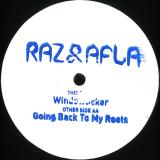
Wah Wah 45s present two very special cover versions from our beloved Afro-electronic duo, Raz & Afla, available on 12" vinyl for the very first time! Having recently released their sophomore LP, Echoes Of Resistance, to great acclaim and support ranging from Nick Grimshaw on BBC 6 Music to Tash LC on BBC Radio 1, and the follow up remix project Remixes Of Resistance, the pair offer up their unique takes on two very different slices of club culture on twelve inches of wax.
First up, the pair tackle Aphex Twin's sleazy and sinister turn-of-the-century dance floor bomb Windowlicker and take it somewhere completely unexpected, as Raz explains:
"We wanted to go to a different place from our influences for this one. When we told people we will cover this tune everyone said 'but how?!' In Raz & Afla style. We had an idea of what elements to recreate from the original and how we can reference it within our spectrum of sounds. It was so much fun to do and really kicks off at our live shows."
It's a heavily percussive reinterpretation, replete with spooky wordless vocals, funky guitars and spine tingling synths that builds into something of a future Afro-house anthem, whilst respecting the genius of the original recording.
On the flip, Going Back To My Roots has become a mainstay in Raz & Afla's live sets, and means a lot to them personally, as Raz once again explains:
"We love this song. The lyrics resonate with us, talking about the meaning of connection to a land and its people. The history of this song is also fascinating, from Hugh Masekela and Orlando Julius through Odyssey and Richie Havens. We wanted to give it our own flavour. You can't choose your heritage and where you are born. It is always a part of you and we like to celebrate that."
Written and first recorded by Lamont Dozier in 1977, Going Back To My Roots was famously covered by Richie Havens in 1980 before becoming a huge crossover hit when interpreted by disco outfit Odyssey in 1981. Raz & Afla very much give their version their own unique dance floor feeling. It's one which has received much support on BBC 6 Music.