Produced by legendary dub-master/producer Mad Professor, 'Black Attack' is Mutabaruka's first album in 14 years and will be an event in reggae circles
The 14 tracks feature Mutabaruka's incisive lyrics over hard- hitting reggae rhythms from dub versions, including a tribute to reggae legend Lee "Scratch" Perry.
"Black Attack" by Mutabaruka includes the following tracks: "No Church Today", "Dub Is Black", "Black Man Black Man", "One Of Dem Days" and more
As the BBE Music J Jazz Masterclass Series hits its 19th title, the milestone is suitably matched by a collaboration between two giants of jazz brought together to deliver an exceptional album, working with a band of the very best Japanese jazz musicians. ‘Reminicent Suite’ by American pianist Mal Waldron and Japanese trumpeter Terumasa Hino was originally released in 1973 on the famed Victor label and was one of several Japan-only albums recorded and released by Waldron over a thirty-year period, most of which have never been available outside Japan. ‘Reminicent Suite’ comprises two extended tracks, both taking up a side each. The title track on Side A is composed by Waldron, and is a dark, brooding heavy groove typical of his early 70s sound. ‘Black Forest’ on side B is written by Hino and is a vivid and energetic piece, layered and textured with dense percussion and Hino’s signature trumpet tone. Mal Waldron started out in the early 1950s working extensively on the Prestige label with notable figures such as Gene Ammons, Jackie McLean and Charles Mingus. Most famously, he worked with Billie Holiday before leaving the States in the mid-60s and relocating to Europe where he established himself as a major figure working across many countries including France, Italy, and Germany, where he made his home in Munich. In 1969, Waldron recorded the first releases for two major European jazz labels, ECM and Enja, before visiting Japan on tour for the first time in 1970. Waldron instantly fell in love with Japan and, over the next three decades, extensively toured and recorded there for numerous labels. Terumasa Hino is one of the towering figures of post-war modern jazz in Japan. Coming to prominence via the Hideto Shiraki and Sadao Watanabe bands in the mid-60s, Hino soon emerged as one of the prime movers in new jazz generation that changed the direction of jazz in Japan. He explored a more open, freer, and improvised sound, mixing psychedelic and rock elements with freeform and post-bop jazz. Hino recorded for many of the leading jazz labels of the era including Columbia, Three Blind Mice, and East Wind and would go on to relocate to the US in the mid-70s, immersing himself with the leading fusion players of the New York scene including Larry Corryell, Mtume, Al Foster, Dave Liebman and many more. In the early 80s, Hino’s jazz funk tracks were dancefloor smashes on the UK jazz dance scene. Joining Waldron and Hino on ‘Reminicient Suite’ is a band made up of the very best Japanese jazzman of their day: Takeo Uematsu on sax, Terumasa’s brother, Motohiko Hino, on drums, and the legendary bass master, Isao Suzuki. Together, they deliver one of the very best albums of the era, a richly articulated and dynamic session that exemplifies the very best that the Japanese jazz scene was doing in the early 1970s. ‘Reminicent Suite’ is pressed on 200g vinyl presented in a gatefold sleeve plus obi strip, with new photos by Tadayuki Naito; translated original sleeve notes; and a 7500-word essay including interview with Terumasa Hino from Tony Higgins, co-curator of the J Jazz Masterclass Series. This is the first time this album has been available outside of Japan
Who exactly is Sauce Walka? He is DAT BOY DEN. Often considered one of rap’s biggest enigmas for his larger than life personality yet equally sharp and grandiose pen game, the Houston based rapper aims to put a stamp on his name with his newest studio album, DAT BOY DEN. The 18 track album features appearances from popular artists such as Peezy, BIG30 & Freeway, as well as fellow Houston-based artist Money Man & The Sauce Factory labelmates Peso Peso, Sauce WoodWinnin, Sauce Gohan & 44 Mike Deezy. Previous notable collaborations include artists such as A$AP Rocky, Bun B, Chief Keef, Lil' Keke, Maxo Kream, Migos, Slim Thug, Travis Scott, Trinidad James, and XXXTentacion. pPressed on Red & White Split Vinyl, housed in a widespine jacket.
Key Marketing/Selling:
Sauce Walka is an incredibly versatile rapper and while his image may be more street leaning, he is an incredibly gifted lyricist with an unmatched pen game and can outrap some of the more lyrical rappers
Founder of the popular Houston based label, The Sauce Factory
Popularized the term “Drip”
Made headlines in 2015 for releasing a diss track aimed at Drake called, “Wack 2 Wack,” over appropriating Houston culture
Sauce Walka has over 1.3M monthly listeners on Spotify
Supporting Conway the Machine on the WON’T HE DO IT tour from September-October 2023 and recently collaborated on the standout single, “Dangerous Daringer”
Sauce Walka is an extremely viral personality and very active on social media, and willing to put in the work to support his products
Previous notable collaborations include artists such as A$AP Rocky, Bun B, Chief Keef, Lil' Keke, Maxo Kream, Migos, Slim Thug, Travis Scott, Trinidad James, and XXXTentacion
All true improvisation involves an element of chance: the coming together of a nexus of influences impulses and actions that result in spontaneous creation. Often in the world of jazz these creative sparks blaze briefly in performance, and then disappear as the sonic vibrations fade from the air, but sometimes chance intervenes again, and moments thought to be gone forever can resurface in unexpected ways. As master drummer Jeff Williams sorted through his archive of cassette tapes from his extensive international career, he had no idea that hidden within it would be a recording of a 1991 evening when he joined storied NYC legend David Liebman for a set of spontaneous performances. Reunited together fifteen years after the breakup of their seminal band Lookout Farm in 1976, the two players reaffirmed their deep musical bond with a set of free-flowing exploratory dialogues in front of a receptive audience. Believed lost for many years, these performances can now be experienced again, with all their fearless freshness and pure committed musicianship undimmed by the passage of time.
Jeff Williams has established a formidable reputation as a drummer, composer, educator and bandleader on both sides of the Atlantic. His relationship with Liebman was forged in the exciting, expansive atmosphere of the New York scene in the early 70s: the meeting of Williams, the laid back Midwesterner, and Liebman, the mercurial, quintessential New Yorker, was an inspired coming together of opposites that always made the creative sparks fly. Williams remembers the journey that led to the Bar Room 432 on that 1991 evening:
“Just as I was leaving my home town of Oberlin, Ohio to move to New York City in 1971, I was given David Liebman’s phone number by someone who told me that Dave had started an organisation for jazz musicians there. I knew of Dave, from Ten Wheel Drive and John McLaughin’s My Goals Beyond, but I couldn’t have imagined what a significant role he would play in my musical life. Shortly afterwards, Dave would leave Elvin Jones and Miles Davis to start his own band, with Richie Beirach, Frank Tusa, and myself, (later adding Badal Roy), naming it Lookout Farm. We released two albums on ECM and one on A&M to wide critical acclaim, and toured across Europe, Japan, India and the US.”
“Following the dissolution of Lookout Farm, Dave and I embarked on a short duo tour opening for Gary Burton. That would be the last time the two of us would play until the occasion of this recording, fifteen years later.”
“Fast forward to 1991 when I discovered an attractive bar located on the far West Side of 14th Street in Manhattan. Bar Room 432 would become a six night a week jazz club for a few years, providing me, and many others, with the opportunity to perform our music. Catching wind of this, Dave suggested we do a duo performance there.”
“Luckily, I recorded it.There was no preparation, no set music to be played - we simply improvised, picking up where we’d left off. David’s mastery of the soprano saxophone is in full bloom here, as well as his incredibly resourceful musical mind.”
The performances are revelatory, moving in pure improvisation from clear, songlike melody to furious density, from ambience to pulsing groove, from light into darkness and back again. Cleaned up and remastered by Alex Bonney, the sound of the tape captures the warm, wood-lined ambience of the room, allowing the full power and dynamics of William’s drums and the warmth and fullness of Liebmans’ soprano sax to sing out, engaging the contemporary listener just as it engaged the hip Manhattan crowd thirty three years ago.
Bob Balch from FU MANCHU here. The idea for the SLOWER project started around four years ago. I was teaching a student how to play "South Of Heaven" by SLAYER but she was a beginner so we slowed it down. I thought that sounded cool so I tuned down to B standard and tried it. I added some drums and thought "someone in the doom community should do this and name it SLOWER." A few years later I befriended Steven "Thee Slayer Hippy" Hanford, best known for his work as the drummer in the influential Oregon punk band Poison Idea. He was backstage at a FU MANCHU show. Oddly enough I was wearing a POISON IDEA shirt and he told me that my shirt sucks. I asked who he was and why he was in our backstage. He told me and I felt stupid. We started drinking whiskey and talking about music. We stayed in touch over the next year or so and during Covid I told him about my SLOWER idea. He asked me to send him tracks. I waited too long because the day I sent the tracks he passed away. Totally tragic. I'm glad I got to know him even for a few years. He was a monster musician with a giant heart. He will be greatly missed. I shelved the project for a while after that. One day Esben from MONOLORD posted about musical collaborations. I love MONOLORD so I thought what the hell. I sent him some tracks and he killed it on drums. So I sent more. Then more. Shortly after that we started reaching out other musicians to get them involved. That's how we ended up with this lineup. Everyone that contributed completely knocked it out of the park and I can't thank them enough. This project has been a long time coming and I'm beyond stoked on how it turned out. Without all of the players involved, Steven Hanford and my baritone Reverend guitar it wouldn't have happened. Thanks to everyone involved and I hope you dig it! I'm a giant SLAYER fan so it's been a treat to dig into these classic songs. Hopefully we can do another record in the near future. Look out for shows because they will happen! Esben Willems - When Bob first approached me with the idea and I heard his scratch guitars, my first thought was "This is genius". Those iconic tracks we all know by heart suddenly unveiled an unexpected dimension. I'm really proud of how this turned out. Peder Bergstrand - "This might be blasphemous considering the circumstances, but when Bob reached out and asked if I'd want to play bass on sludged-out Slayer covers, I had to admit some of these tracks were brand new to me. That made the experience even more special though, hearing and playing on the Slower version first, and then comparing to the original. Bob has really transformed these songs into something totally their own, and on a personal level I feel the rest of the band's insane performances pushed me to my most inspired playing to date. So incredibly stoked for people to hear this album."
Neon Green Vinyl, limited to 500 copies. Bob Balch from FU MANCHU here. The idea for the SLOWER project started around four years ago. I was teaching a student how to play "South Of Heaven" by SLAYER but she was a beginner so we slowed it down. I thought that sounded cool so I tuned down to B standard and tried it. I added some drums and thought "someone in the doom community should do this and name it SLOWER." A few years later I befriended Steven "Thee Slayer Hippy" Hanford, best known for his work as the drummer in the influential Oregon punk band Poison Idea. He was backstage at a FU MANCHU show. Oddly enough I was wearing a POISON IDEA shirt and he told me that my shirt sucks. I asked who he was and why he was in our backstage. He told me and I felt stupid. We started drinking whiskey and talking about music. We stayed in touch over the next year or so and during Covid I told him about my SLOWER idea. He asked me to send him tracks. I waited too long because the day I sent the tracks he passed away. Totally tragic. I'm glad I got to know him even for a few years. He was a monster musician with a giant heart. He will be greatly missed. I shelved the project for a while after that. One day Esben from MONOLORD posted about musical collaborations. I love MONOLORD so I thought what the hell. I sent him some tracks and he killed it on drums. So I sent more. Then more. Shortly after that we started reaching out other musicians to get them involved. That's how we ended up with this lineup. Everyone that contributed completely knocked it out of the park and I can't thank them enough. This project has been a long time coming and I'm beyond stoked on how it turned out. Without all of the players involved, Steven Hanford and my baritone Reverend guitar it wouldn't have happened. Thanks to everyone involved and I hope you dig it! I'm a giant SLAYER fan so it's been a treat to dig into these classic songs. Hopefully we can do another record in the near future. Look out for shows because they will happen! Esben Willems - When Bob first approached me with the idea and I heard his scratch guitars, my first thought was "This is genius". Those iconic tracks we all know by heart suddenly unveiled an unexpected dimension. I'm really proud of how this turned out. Peder Bergstrand - "This might be blasphemous considering the circumstances, but when Bob reached out and asked if I'd want to play bass on sludged-out Slayer covers, I had to admit some of these tracks were brand new to me. That made the experience even more special though, hearing and playing on the Slower version first, and then comparing to the original. Bob has really transformed these songs into something totally their own, and on a personal level I feel the rest of the band's insane performances pushed me to my most inspired playing to date. So incredibly stoked for people to hear this album."
FAZI are a post-punk band based in the ancient Chinese city of Xi'an. However, there is much more to their story than meets the eye_ With five immersive full-length records and a brief stint on peak-time commercial TV already establishing the four-piece at the forefront of a truly pioneering wave of alternative music in China, the Euro-pean re-release of their latest offering, `Folding Story', represents an incredible new beginning for a band who have already spent years honing their craft - transforming timeless traditions of love, life and death into a perpetual dance of fre- netic, krautrock energy and sprawling, shoegaze panoramas. Fittingly, `Folding Story' is itself a cyclic experience of rebirth, renewal and a return to origin. Album opener `Invisible Water' is a contemplative start as frontman Peng Liu's yearning vocals reach out across synthesisers reminiscent of sonar and the hypnotic lapping of water on an un- known shore. Described by Peng as an "artistic conception of amniotic fluid in the mother's body", this motif returns at the end of the album's final track, `Way to Atman', this time as a gentle tide washing away the ash of a spent funeral pyre. Just as the album and its protagonist is born at the beginning and dies at the end, by deliberately opening and closing `Folding Story' with the sounds of water, Fazi invite listeners to flow through the record on a never ending loop, to listen to a story without pause, one that rises from a whisper to a roar only to subside as quickly as it arrived. First released in 2022 on pioneering Chinese record label Space Circle, `Folding Story' is a collection of 10 tracks that serve as stories themselves as well as part of a universal narrative in constant flow. A phenomenal accomplishment, its forthcoming re-release in Europe via Pelagic Records will ensure that Fazi continue to blow as many minds and ruffle as many feathers as possible. Gatefold sleeve, silver offset ink, printed on special all-black cardboard. FFO Joy Division, Suicide, Savages, Cabaret Voltaire, Iceage, Gilla Band, Fontän
The concert at Sonic Morgue (Berlin), opened by the song Nerissimo, was part of a series of European dates, culminating in the Berlin gig. A sort of homecoming for the duo that has made the Rome/Berlin axis a membrane continuously crossed by sounds and words in Italian, German and English. The reception given everywhere to songs like Mi Scusi, despite being sung in Italian, continues to excite. A Quiet Life, originally written for the film "A Quiet Life" directed by Claudio Cupellini, has severed some of the connection it had with the film because many now associate it with the final episode of Dark, the highly successful Netflix series. For many years Teho and Blixa have been playing live with Laura Bisceglia on cello and bells, Gabriele Coen on bass clarinet and, for the Berlin concert, the Oriel Quartett string quartet with Anna Eichholz and Kundri Schafer on violin, Robin Hong, viola, Alice Dixon, cello. The album cover image is a mixed media piece by Blixa Bargeld entitled "Aldebaran". Currently, Teho Teardo is busy on a long theatrical tour with famous Italian actor Elio Germano with two live performances of words and music: "Il Sogno di una cosa", freely inspired by Pier Paolo Pasolini"s novel of the same name, and "Il Paradiso di Dante", an original performance of acting, music and multimedia installations inspired by the XXXIII canto of the "Divine Comedy".
out of Stock
Last delivered 2 years ago available to reorder, subject to availability
MRG223LP is black vinyl in a jacket + printed sleeve + printed insert for full album download. File Under: Alternative. In 2003, everything broke open for Ward with the release of Transfiguration of Vincent. Critically lauded and long beloved, Pitchfork hailed it as an album that “broadcasts timelessness and defies genre constraints,” and Slant placed it on their list of the best albums of the 2000s.
On Transfiguration of Vincent, Ward’s elegant fingerpicking, evocative croon, and heartrending lyricism came into full bloom, casting a spell so powerful that even a song as universal as David Bowie’s “Let’s Dance” felt not only new but irrevocably his.
One of the most cherished albums in the Merge catalog, Transfiguration of Vin- cent is both a great place to begin your love affair with M. Ward and a deep, stunningly realized work that listeners have returned to over and over again for 20 years. Tracklisting: SIDE A. 1 Transfiguration No. 1 2. Vincent O’Brien 3. Sad, Sad Song 4. Undertaker 5. Duet for Guitars No. 3 6. Outta My Head 7. Involuntary. SIDE B. 8. Helicopter 9. Poor Boy, Minor Key 10. Fool Says 11. Get to the Table on Time 12. A Voice at the End of the Line 13. Dead Man 14. Let’s Dance 15. Transfiguration No. 2
"Nicoles Songwriting und ihr Gesang entwickeln sich von Album zu Album stärker. Sie weiß, wie man rockt, sie kann eine gefühlvolle Ballade vortragen, die Herzen bricht, und sie kann eine Jazz-Line singen, die sie in die Nähe von Nina Simone rückt." -Living BluesDie Grammy-nominierte, 7-fache Blues Music Award-Gewinnerin Danielle Nicole zählt zu den besten Sängerinnen und Bassistinnen der heutigen Roots-Musik. Zu Beginn der Aufnahmen zu "The Love You Bleed" wusste Danielle Nicole, dass dieses neue Album anders sein würde als die bisherigen. Das von Tony Braunagel (Taj Mahal, Eric Burdon, Robert Cray) produzierte und von John Porter (B.B. King, Buddy Guy, Bryan Ferry) abgemischte Album ist voll von Liebe, Verlust, Wille, Entschlossenheit und all den anderen Dingen, die mit der Liebe zusammenhängen. Die Leadsingle "Make Love" handelt davon, den Schmerz bewusst zu überwinden und sich in den schwierigen Momenten des Lebens für Liebe, Familie und Gemeinschaft zu entscheiden. "How Did We Get to Goodbye" mit seinem rohen und ehrlichen Text dokumentiert eine gescheiterte Liebe, in der es weder einen Helden noch den Bösen gibt, und stellt die Frage, wie man in solch eine Situation gelangt, ohne es zu bemerken. Der Track "Love On My Brain" ist eine starke Mischung aus altem R&B und treibendem Blues und mit "Right By Your Side" gibt es eine klassische Soul/R&B-Ballade, in der es darum geht, nie wieder den Fehler zu machen, "the one and only" gehen zu sehen.
Svaneborg Kardyb are Nikolaj Svaneborg – Wurlitzer, Juno, piano and Jonas Kardyb – drums, percussion a multi award winning duo from Denmark, with a fast-rising international reputation and with an NPR Tiny Desk concert – number one on many artist’s wish lists - in the bag before even the release of their Gondwana Records debut album Over Tage last November.
Their beautiful, exquisite compositions draw on Danish folk music and Scandinavian jazz influences, resulting in a joyful melding of beautiful melodies, delicate minimalism, catchy grooves, subtle electronica vibes, Nordic atmospheres and organic interplay. All of this and more shines through on their NPR session, first broadcast in May 2022 on YouTube. But of course, not everyone watches YouTube and so here, remastered for vinyl and download, is a strictly limited to 1500 vinyl, four tracker - At Home (An NPR Tiny Desk Concert) featuring bespoke artwork from Gondwana Records’ Daniel Halsall.
Here is what Kara Frame had to say for NPR, “Svaneborg Kardyb's Tiny Desk (home) concert was recorded in the countryside of Djursland, Denmark. "You have to drive for a while on a gravel road, and then you come to a lovely old house surrounded by hills and a stream on one side and a very flat landscape on the other, where you can see 10 miles away," the band wrote to us, describing the location of the shoot. It's this place that inspired Svaneborg Kardyb's second album, Haven (or "garden" in English). "Haven celebrates places we like to be," the duo said.
The Danish jazz duo is composed of Nikolaj Svaneborg on the Wurlitzer, synthesizer and piano, and Jonas Kardyb on drums and percussion. Their instrumentation set-up is untraditional, with the drums and keys facing each other, a position that they play in on stage just as they do in Kardyb's kitchen and living room here. They open up their set with the title track from Haven, which begins with a quiet melody over an effervescent loop. The sound mimics the shimmy of leaves in the breeze.”
Studio One was founded by Clement "Coxsone" Dodd1 in 1954, and the first recordings were cut in 1963 on Brentford Road in Kingston.1[2] Amongst its earliest records were "Easy Snappin" by Theophilus Beckford, backed by Clue J & His Blues Blasters, and "This Man is Back" by trombonist Don Drummond. Dodd had previously issued music on a series of other labels, including World Disc, and had run Sir Coxsone the Downbeat, one of the largest and most reputable sound systems in the Kingston ghettos.
In the early 1960s, the house band providing backing for the vocalists were the Skatalites[3] (1964–65), whose members (including Roland Alphonso, Don Drummond, Tommy McCook, Jackie Mittoo, Lester Sterling and Lloyd Brevett) were recruited from the Kingston jazz scene by Dodd. The Skatalites split up in 1965 after Drummond was jailed for murder, and Dodd formed new house band the Soul Brothers (1965–66), later named the Soul Vendors (1967) and Sound Dimension (1967-). From 1965 to 1968 they played 9 a.m. to 5 p.m., 5 days a week, 12 rhythms a day (about 60 rhythms a week) with Jackie Mittoo as music director, Brian Atkinson (1965–1968) on bass, Hux Brown on guitar, Harry Haughton (guitar), Joe Isaacs on drums (1966–1968), Denzel Laing on percussion, and on horns (some initially and some throughout): Roland Alphonso, Dennis 'Ska' Campbell, Bobby Ellis, Lester Sterling, among others on horns during the era of Rock Steady. Headley Bennett, Ernest Ranglin, Vin Gordon and Leroy Sibbles were included among a fluid line-up, to record tracks directed by Jackie Mittoo at Studio One from 1966-1968.
During the night hours at Studio One from 1965-1968, singers like Bob Marley, Burning Spear, The Heptones, The Ethiopians, Ken Boothe, Rita Marley, Marcia Griffiths, Judy Mowatt, Alton Ellis, Delroy Wilson, Bunny Wailer[4] and Johnny Nash, among others, would put on headphones to sing lyrics to original tracks recorded by the Soul Brothers earlier each day. These seminal recordings included "Real Rock" (by Sound Dimension), "Heavy Rock", "Jamaica Underground", "Wakie Wakie", "Lemon Tree", "Hot Shot", "I'm Still In Love With You", "Dancing Mood", and "Creation Rebel".
Jackie Mittoo, Joe Isaacs, and Brian Atkinson left Studio One in 1968, recorded drums and bass for Desmond Dekker's and Toots' biggest hits at other Kingston studios, then moved to Canada. Hux Brown stayed in Jamaica to record on the soundtrack The Harder They Come, The Harder They Fall, and toured in Nigeria with Toots and the Maytals and Fela Kuti. The Soul Brothers (a.k.a. Sound Dimension) formed the basis of reggae music in the late 1960s, being versioned and re-versioned time after time over decades by musicians like Shaggy, Sean Paul, Snoop Lion, The Clash, String Cheese Incident, UB40, Sublime, and countless other Billboard originals and remakes trying to emulate their original Rock Steady sound at Coxsone's Studio One.
The label and studio were closed when Dodd relocated to New York City in the 1980s.
Studio One was founded by Clement "Coxsone" Dodd1 in 1954, and the first recordings were cut in 1963 on Brentford Road in Kingston.1[2] Amongst its earliest records were "Easy Snappin" by Theophilus Beckford, backed by Clue J & His Blues Blasters, and "This Man is Back" by trombonist Don Drummond. Dodd had previously issued music on a series of other labels, including World Disc, and had run Sir Coxsone the Downbeat, one of the largest and most reputable sound systems in the Kingston ghettos.
In the early 1960s, the house band providing backing for the vocalists were the Skatalites[3] (1964–65), whose members (including Roland Alphonso, Don Drummond, Tommy McCook, Jackie Mittoo, Lester Sterling and Lloyd Brevett) were recruited from the Kingston jazz scene by Dodd. The Skatalites split up in 1965 after Drummond was jailed for murder, and Dodd formed new house band the Soul Brothers (1965–66), later named the Soul Vendors (1967) and Sound Dimension (1967-). From 1965 to 1968 they played 9 a.m. to 5 p.m., 5 days a week, 12 rhythms a day (about 60 rhythms a week) with Jackie Mittoo as music director, Brian Atkinson (1965–1968) on bass, Hux Brown on guitar, Harry Haughton (guitar), Joe Isaacs on drums (1966–1968), Denzel Laing on percussion, and on horns (some initially and some throughout): Roland Alphonso, Dennis 'Ska' Campbell, Bobby Ellis, Lester Sterling, among others on horns during the era of Rock Steady. Headley Bennett, Ernest Ranglin, Vin Gordon and Leroy Sibbles were included among a fluid line-up, to record tracks directed by Jackie Mittoo at Studio One from 1966-1968.
During the night hours at Studio One from 1965-1968, singers like Bob Marley, Burning Spear, The Heptones, The Ethiopians, Ken Boothe, Rita Marley, Marcia Griffiths, Judy Mowatt, Alton Ellis, Delroy Wilson, Bunny Wailer[4] and Johnny Nash, among others, would put on headphones to sing lyrics to original tracks recorded by the Soul Brothers earlier each day. These seminal recordings included "Real Rock" (by Sound Dimension), "Heavy Rock", "Jamaica Underground", "Wakie Wakie", "Lemon Tree", "Hot Shot", "I'm Still In Love With You", "Dancing Mood", and "Creation Rebel".
Jackie Mittoo, Joe Isaacs, and Brian Atkinson left Studio One in 1968, recorded drums and bass for Desmond Dekker's and Toots' biggest hits at other Kingston studios, then moved to Canada. Hux Brown stayed in Jamaica to record on the soundtrack The Harder They Come, The Harder They Fall, and toured in Nigeria with Toots and the Maytals and Fela Kuti. The Soul Brothers (a.k.a. Sound Dimension) formed the basis of reggae music in the late 1960s, being versioned and re-versioned time after time over decades by musicians like Shaggy, Sean Paul, Snoop Lion, The Clash, String Cheese Incident, UB40, Sublime, and countless other Billboard originals and remakes trying to emulate their original Rock Steady sound at Coxsone's Studio One.
The label and studio were closed when Dodd relocated to New York City in the 1980s.
RIYL Zero 7/ Plaid / Hot Chip / Weather Report / Isolee / Baby Fox
Old friends Julian Bates and Alex Gray —working together as Mighty Truth for the first time since 1995’s From The City To The Sea — filled a car with old analogue synths, kids’ noise toys, and collected field recordings took a road trip down to hole up in an old water mill in southwest England’s bird-twittery, bee-loud Quantock hills.
Things got cinematic: unequal measures of early Weather Report, Wim Wenders, and Serge Gainsbourg kept them wonderfully lost in their imagined world. Back in London with guest singers Allonymous (Paris via Chicago) and Wayne Paul (London), they completed the album and decided to just call it Mighty Truth. With an aim to present the live show at moonlight pop-up cinema venues, Mighty Truth are here for the next chapter in their epic saga.
Back then….
Old friends Julian Bates and Alex Gray first met through their shared obsession with classic cars (both owned old SAAB 96s). At the time, Julian’s band Nightrains was signed to ACE Records in the UK whilst Alex worked first as a session keyboardist for the likes of Edwyn Collins, Billy Mackenzie, and Busta “Cherry” Jones, and later as a mixer and remixer working with S’express producer Pascal Gabriel, Malcolm McLaren, and soul DJ legend Dr Bob Jones.
Working together in the studio for the first time producing Vanessa Freeman (4 hero), Alex and Julian decided to embark on a drop-tempo jazz trip project they named Mighty Truth. Dr Bob heard that first self-released vocal track “Rebirth” and started dropping it on Kiss FM (UK). After guest DJ slots on Coldcut’s Kiss show, Alex and Julian signed to Tongue and Groove records.
The album From the City to the Sea produced a number of singles and both “Rebirth” and “Is it a Wizard or a Blizzard” were licensed to many compilations both in the UK and internationally (eg. Dope on Plastic, Mole Listening Pearls, Eight Ball).
The Sound of Sinners is a NYC boutique record label focused on vinyl and digital releases by Indie, ambient, avant-garde and electronic artists.
In 1948, Moses Asch founded Folkways Records with a self-proclaimed mandate to record the sounds of the entire world. From the Sounds of North American Frogs to Speech After the Removal of the Larynx, Folkways documented the audible nooks and crannies of existence on hundreds of LPs produced by field recordists, scientists, and experimentalists probing the margins of the human soundscape. Seventy-five years later, electronic music duo Matmos have diced, looped, stretched, and recontextualized these recordings on their new album Return to Archive, which was assembled entirely from the so-called non-musical sounds released on Folkways. On just the album’s first track, dolphins, beetles, telephones, humans stretching the limits of their vocal cords, a shortwave radio, and metal balers co-mingle in a fantasia of sound both everyday and extraordinary. Each track on Return to Archive morphs its source material into something completely unexpected, honoring and expanding on Folkways’ legacy of sonic exploration. Featuring Evicshen and Aaron Dilloway.
tapetopia 010 FO 32 extra hart arbeitendes rastermaterial für kontakt did not emerge from the usual underground milieu – their setting was the base of the 4th Flotilla of the GDR People’s Navy! The propaganda unit PrK 18 had among its recruits some who turned the logistics for agitation against the intentions of the system. Inside a barracks, but under the state radar, the paramilitary music corps FO 32 boarded an NVA studio and recorded industrial tracks and dark ambient. The experimental military band gave an illegal concert; they had previously been heard on the radio programme “Parocktikum”, a pirate gig from the ranks of the People’s Navy on GDR radio. In 1989, a first FO-32 tape was shared among just a few friends. Shortly after, an abridged mix of material was released on the illegal Trash Tape label in an edition of no more than one hundred copies. The vinyl version on tapetopia is based on the original tape. The tapetopia series, using the original layouts and track lists, publishes cassette editions from the GDR underground of the 1980s, especially from the “walled-in” scene in East Berlin. More than three decades after their initial “release”, these tapes have yet to be heard on either vinyl or CD, even though they made an audible mark in the canon of GDR subculture. Despite the tiny original editions of the time, many of the bands were considered cult in countercultural circles, which made them highly suspect in informed circles.
Gruff Rhys is pleased to announce his new album "Sadness Sets Me Free" which will be released by Rough Trade Records on 26.01.2024. This incredibly will be the 25th album he has released in his 35 year career individually, collaboratively and as a member of various bands. "Sadness Sets Me Free" is also the follow up to 2021"s "Seeking new Gods", his first solo top ten record. The album will be available in a range of formats including a unique Dinked edition on "honeycomb neo-neapolitan" vinyl, an LP sleeve with "container doors" and a bonus 7" with exclusive audio for the first 1500 copies. A gatefold soft pack CD also includes a pull out poster. Lead-off single "Celestial Candyfloss" is a telling four minute glimpse of the forthcoming album, revealing the heady wonders and classic pop sounds within. Soaring strings carry the sweet melodies along, anchored by just enough necessary melancholy to add emotional ballast. The eye-popping video was created by long-time collaborator Mark James and compliments the scope and style of the song on a galactic scale. "Celestial Candyfloss" is, Gruff says, "an attempted pocket symphony about the cosmic lengths that people will travel in the pursuit of love and acceptance. Mark James has brought the Sadness Sets Me Free album cover to life & managed to place me watching TV interference in a shipping container that"s lost in space. For what is apparently the 25th album I"ve had a hand in writing I"ve reverted to a rich seam of inspiration relating to shedding some light on sadness and the general terror of cosmic loneliness." And so it was that Gruff and his band - Osian Gwynedd (piano), Huw V Williams (double bass) and former Flaming Lips drummer turned Super Furry Animals archivist Kliph Scurlock (drums) piled into a van driven by the late, legendary tour manager "Dr" Kiko Loiacono and raced from Dunkirk, where they had just played the final show of a tour of Spain and France, to the outskirts of Paris in the early hours of a March morning in 2022. There, in La Frette Studios, a recording facility installed in a 19th-century house, Gruff and his road-hardened group tracked "Sadness Sets Me Free" in just three days. Backing vocals were added along the way by Kate Stables from This Is The Kit along with additional strings and orchestration and it was mixed between Marseille and Cardiff. What finally emerged from these intense bouts of cross-continental activity was Gruff"s most accomplished and beautiful record to date. In a career that has taken him from the slate-mining towns of north-west Wales, down to the expat communities of Patagonia, up to the Mandan tribe of the Great Plains of North America and across to the Tuareg rock groups of the Saharan Desert, Gruff Rhys, one of Britain"s most beloved and successful singer-songwriters, has always been willing to follow an opportunity, wherever it may lead him. "At this point I quite like working with serendipity," he says. "Not in a cosmic way, but I try and leave things open to chance encounters and chance geography. As I"m around 25 albums in I"m always looking for ways to make a different-sounding record".
Gruff Rhys is pleased to announce his new album "Sadness Sets Me Free" which will be released by Rough Trade Records on 26.01.2024. This incredibly will be the 25th album he has released in his 35 year career individually, collaboratively and as a member of various bands. "Sadness Sets Me Free" is also the follow up to 2021"s "Seeking new Gods", his first solo top ten record. The album will be available in a range of formats including a unique Dinked edition on "honeycomb neo-neapolitan" vinyl, an LP sleeve with "container doors" and a bonus 7" with exclusive audio for the first 1500 copies. A gatefold soft pack CD also includes a pull out poster. Lead-off single "Celestial Candyfloss" is a telling four minute glimpse of the forthcoming album, revealing the heady wonders and classic pop sounds within. Soaring strings carry the sweet melodies along, anchored by just enough necessary melancholy to add emotional ballast. The eye-popping video was created by long-time collaborator Mark James and compliments the scope and style of the song on a galactic scale. "Celestial Candyfloss" is, Gruff says, "an attempted pocket symphony about the cosmic lengths that people will travel in the pursuit of love and acceptance. Mark James has brought the Sadness Sets Me Free album cover to life & managed to place me watching TV interference in a shipping container that"s lost in space. For what is apparently the 25th album I"ve had a hand in writing I"ve reverted to a rich seam of inspiration relating to shedding some light on sadness and the general terror of cosmic loneliness." And so it was that Gruff and his band - Osian Gwynedd (piano), Huw V Williams (double bass) and former Flaming Lips drummer turned Super Furry Animals archivist Kliph Scurlock (drums) piled into a van driven by the late, legendary tour manager "Dr" Kiko Loiacono and raced from Dunkirk, where they had just played the final show of a tour of Spain and France, to the outskirts of Paris in the early hours of a March morning in 2022. There, in La Frette Studios, a recording facility installed in a 19th-century house, Gruff and his road-hardened group tracked "Sadness Sets Me Free" in just three days. Backing vocals were added along the way by Kate Stables from This Is The Kit along with additional strings and orchestration and it was mixed between Marseille and Cardiff. What finally emerged from these intense bouts of cross-continental activity was Gruff"s most accomplished and beautiful record to date. In a career that has taken him from the slate-mining towns of north-west Wales, down to the expat communities of Patagonia, up to the Mandan tribe of the Great Plains of North America and across to the Tuareg rock groups of the Saharan Desert, Gruff Rhys, one of Britain"s most beloved and successful singer-songwriters, has always been willing to follow an opportunity, wherever it may lead him. "At this point I quite like working with serendipity," he says. "Not in a cosmic way, but I try and leave things open to chance encounters and chance geography. As I"m around 25 albums in I"m always looking for ways to make a different-sounding record".
Bitchcraft was born in a move from New York City, where Bitch had lived for 15 years, to a log cabin in the woods. There was all the time in the world to make art, and it was there, in the cabin, that Bitch began to write some of the songs that would appear on Bitchcraft. 'It gave me space to think about the biggest version of myself that I could be,' she says of those early days in the cabin. The songs she wrote were a departure from anything she'd ever written before, and she began to craft huge pop tracks with the help of her trusty violin. Then, she moved to LA and Bitchcraft began to shapeshift again. In the time that followed, Bitch assembled a coven to complete it. She called on Anne Preven (Beyonce, Madonna, Demi Lovato) and God-des who helped her crystalize her vision in terms of writing and production. She called on Roma Baran (Laurie Anderson) to produce the violins on 'Polar Bear.' She called on Melissa York (Team Dresch, The Butchies) and Faith Soloway (Transparent) to co-write a couple of the songs. The resulting record is one that is full of glorious pop tracks that go in unexpected directions. Bitchcraft is like Joni Mitchell set to a click track, it's queer Cyndi Lauper. It's neon pink, in your face, ready to hex you with its brilliance. It's an unbelievably fun record that is extremely capable of breaking your heart a little bit. It also makes you think: about the state of the world, about evil politicians, about what it means to exist as a woman, and how to find joy along the way.
tapetopia 007 Corp Cruid I was the only release of the planned tap series BleiBeil. The tracks were recorded over a longer period of time in 1988 – and in changing constellations that corresponded to the lineup of the East Berlin underground band Ornament & Verbrechen. 30 copies were circulated exclusively among friends. Concerts were not part of the plan, also due to the band’s rejection of a playing permit; there was no interest in being tolerated by the cultural apparatus, which treated projects like Corp Cruid with contempt or even hostility. Even before the GDR collapsed, in November 1989, almost half of the Ornament & Verbrechen musicians had left the country. Ensembles as remote from the state as Corp Cruid sounded like a faint scratch on the Wall of Sound of a hysterical system. The tape survived on a master tape and on a few copies; today the GDR is only its background noise.
The tapetopia series, using the original layouts and track lists, publishes cassette editions from the GDR underground of the 1980s, especially from the “walled-in” scene in East Berlin. More than three decades after their initial “release”, these tapes have yet to be heard on either vinyl or CD, even though they made an audible mark in the canon of GDR subculture. Despite the tiny original editions of the time, many of the bands were considered cult in countercultural circles, which made them highly suspect in informed circles
Following Far Out’s reissue of Agustin Pereyra Lucena Quartet’s La Rana, the label continues its memorialisation of the late, great Argentinian guitarist’s music, with the first ever direct from tape, audiophile reissue of Pereyra Lucena’s self-titled debut album from 1970.
One of the outstanding South American guitarists, Agustin Pereyra Lucena commanded a unique position in Latin music history. He hailed from Buenos Aires, but was obsessed with the music of Brazil. A disciple of Antônio Carlos Jobim, Baden Powell and Vinicius De Moraes, the nature of Agustin’s Argentinian roots combined with the nurture of Brazil and its music to give Agustin a sound entirely his own.
After being scouted in a nightclub, by musician and guitar craftsman Jorge Demonte, Agustin was invited for an audition at Argenitinian label Tonodisc. Before he knew it, aged 22, he was in the studio recording his first album.
Agustin enlisted fellow Argentinian Brazilophiles Mario "Mojarra" Fernandez who played bass and drummer Enrique "Zurdo" Roizner. He had first heard the duo backing Vinicius de Moraes, Toquinho and Maria Creuza on their legendary La Fusa live album, also recorded in Buenos Aires. For vocals, Agustin brought in his old friend, a French teacher called Helena Uriburu, who at the time had (unbelievably) never sung in a studio before.
The atypical bossas and spiritual swinging sambas, composed by many of Agustin’s aforementioned heroes, were elevated to new heights by Agustin’s dazzling arrangements and phenomenal guitar playing. The almost cosmic reaches Agustin achieved with his sound are balanced against the stylish sophistication and breezy nature of the music.
Moments of calm serenity include Agustin’s own composition “Nina No Divagues”, Durval Ferreira and Pedro Camargo’s “Chuva” and the Brazilian bossa classic “Tristeza Nos Dois”, which feels like it draws equally upon exotica and early library records. Accompanied by Roizner’s shuffling samba jazz drums, opener “O Astronauta” is Agustin’s cover of the Brazilian guitar standard composed by Baden Powell. Another Baden Powell classic, “Consolacao” is an extended full-band set, which features Agustin’s crisp guitar dancing around a hypnotic rhythm section. Upright bass is swapped out for a big, round-sounding electric one, which sits loud in the mix for almost seven minutes of deep, groovy, distinctively early-seventies magic.
Agustin passed away in 2019, and it is only in recent years that he is starting to gain his plaudits as one of South America’s greats. On the liner notes of the album Vinicius De Moraes writes: “I think I never saw, with the exception of Baden Powell and Toquinho, anyone more linked to his instrument than Agustín Pereyra Lucena. It would give the impression that if the guitar were taken away from him, he would fade into music as one dies from the amputation of an arm.”
Agustin Pereyra Lucena will be released on audiophile vinyl LP, CD and digitally on the 26th January 2024 via Far Out Recordings.
A tape with the rather factual title “Rosa Beton – Demo 83” gained currency in 1983, albeit among an inner circle, or as it says in a lexical note on the band: Rosa Beton “achieved beyond-regional fame in and around Berlin”. Unlike some other bands that were merely rumoured to exist, this name was widely recognized in the East Berlin punk scene and the demo tape was received with some delight. It had been made in the suburb of Hönow, or more precisely in music enthusiast Thomas Wagner’s childhood bedroom. The band was less a classic combo than a short-lived pro- ject run, for a brief underground season, by 16-yearold Wagner and Ronald Mausolf, who was known as “Mausi” and had just come of age. An old clunker of a four-track machine served as an impor- tant nutritional supplement for the duo, allowing bass and vocals to be overdubbed separately. For a project without a professional background, especially for an illegal punk band in the East, this conventional procedure was clearly exceptional. Punk bands would usually record vocals and instruments simultaneously and on a cassette recorder. Recording gear was not readily available in the GDR, and it was disproportionately or prohibitively expensive. The adversities that had to be overcome in starting up a punk band were certainly challenging for teenagers. Rooms for rehearsals were few and far between despite wide- spread vacancies, and public space was taboo thanks to the state. Concerts, whether in flats and studios or under the protection of the Protestant church, remained rare events and, moreover, risky; starting with the party-loyal neighbour alerting the People’s Police as if there were a war on, to the ever-present “digging activity” of the Stasi. The only planned appearance by Rosa Beton never materi- alised. Whether it was the goddesses of fate who averted a show or the Stasi who prevented it can no longer be reconstructed. In any case, Rosa Beton never played live and thus joined a long list of GDR punk bands that, in the early 1980s, did not make it out of illegality into a public sphere, not even into a conspiratorial one. ausi compensated for the band’s lack of live performances by at least distributing a few copies of the demo tape. Among others, at the Kult, the Kulturpark Plänterwald, which provided an initiation field for the Berlin punk scene and a hotspot with a pull beyond it. The punks adapted the Kulturpark to their understanding of an amusement park.
They would thrash about to Schlager music and pogo to third-rate Ostrock bands, make fun of overwhelmed provincials, hang out and exchange half-baked ideas as superior knowledge. In between, the punks liked to ride the chain carousel, there was a certain liking for chains. The Kulturpark management made quite a fuss about the riot the punks put on. Initially they were banned from the chain carousel, then, when the punks switched to bumper cars, they were banned from the bumper cars, then from the roller coaster, and finally from the ghost
tapetopia 008 Der Expander des Fortschritts was founded in 1986. The “risk group” described itself as “pop musique concrète” or “abstract pop”. Der Expander des Fortschritts relied on disharmony and ruptures, which resulted in radio plays in a song format; the GDR as a realsocialist satire provided its material. Even the band’s name was a cultural appropriation of the superstructure by the substructure: “progress” was a fetishized word in the GDR, factory sports clubs would add it to their name, solidarity concerts would use it as a motto. The title “Urknall · Horde · Mensch” resulted from an Expander-typical translation of “Weltall, Erde, Mensch”, a compendium ceremoniously presented to each initiator on the occasion of their socialist youth initiation. In 1988, the band released the tape album on their own label Irrmenschkassette, a big bang in a tiny edition. The tapetopia series, using the original layouts and track lists, publishes cassette editions from the GDR underground of the 1980s, especially from the “walledin” scene in East Berlin. More than three decades after their initial “release”, most of these tapes have yet to be heard on either vinyl or CD, even though they made an audible mark in the canon of GDR subculture. Despite the tiny original editions of the time, many of the bands were considered cult in countercultural circles, which made them highly suspect in informed circles.
The MENZINGERS are an absolute institution. The Philadelphia punk legends’ multi-decade reputation as road warriors with an unbeatable catalog is cemented as hard truth—and their seventh album, Some Of It Was True , stands as their most immediate-sounding and energetic record to date. The follow-up to 2019’s sensational Hello Exile accomplishes the daunting task of capturing The MENZINGERS’ distinctive live energy in the confines of the studio, resulting in a sound that’s both rich, raw, and complementary to the group’s increasingly prismatic songwriting approach. More than 15 years in, the MENZINGERS are still holding their listeners square in the immediate present, and Some Of It Was True documents that power in thrilling fashion. “We wanted to make a fun record and write songs that we wanted to play live, and that’s exactly what we did,” co-vocalist/guitarist Greg Barnett says “We’ve always said that we want every album to sound live, but we never recorded an album live before. This was the first time we committed to that idea. We wanted to sound like how our band sounds onstage.” Making the process easier: Grammy-nominated producer Brad Cook (Bon Iver, the War on Drugs, Waxahatchee), who joined The MENZINGERS in El Paso’s legendary Sonic Ranch studios and lent his incredible ear for raw, immediate sound to help the band achieve Some Of It Was True‘s in-the-room live feel. “ T H E M E N Z I N G E R S are as real as it gets,” Cook says on his time in the studio with the band. “I had an absolute blast working with these guys and was moved to tears many times. They are truly dedicated to artistic growth, and to each other, in ways I found both refreshing and beautiful. I am now a lifer.”
The MENZINGERS are an absolute institution. The Philadelphia punk legends’ multi-decade reputation as road warriors with an unbeatable catalog is cemented as hard truth—and their seventh album, Some Of It Was True , stands as their most immediate-sounding and energetic record to date. The follow-up to 2019’s sensational Hello Exile accomplishes the daunting task of capturing The MENZINGERS’ distinctive live energy in the confines of the studio, resulting in a sound that’s both rich, raw, and complementary to the group’s increasingly prismatic songwriting approach. More than 15 years in, the MENZINGERS are still holding their listeners square in the immediate present, and Some Of It Was True documents that power in thrilling fashion. “We wanted to make a fun record and write songs that we wanted to play live, and that’s exactly what we did,” co-vocalist/guitarist Greg Barnett says “We’ve always said that we want every album to sound live, but we never recorded an album live before. This was the first time we committed to that idea. We wanted to sound like how our band sounds onstage.” Making the process easier: Grammy-nominated producer Brad Cook (Bon Iver, the War on Drugs, Waxahatchee), who joined The MENZINGERS in El Paso’s legendary Sonic Ranch studios and lent his incredible ear for raw, immediate sound to help the band achieve Some Of It Was True‘s in-the-room live feel. “ T H E M E N Z I N G E R S are as real as it gets,” Cook says on his time in the studio with the band. “I had an absolute blast working with these guys and was moved to tears many times. They are truly dedicated to artistic growth, and to each other, in ways I found both refreshing and beautiful. I am now a lifer.”
After Releasing Amazing Music on Labels Such as Skylax, Amsem, Kitsune or Hard Fist, Through an Exploration of a Wide Range of Electronic Sounds, Joe Lewandoski Delivers a New Ep Full of His Eclecticism and Sharpness. We Are Very Happy at Friendsome Records to Join Force With Him to Deliver a Beautiful 4 Tracker That Will Make You Travel ! This Ep Is the Perfect Demonstration of Joe’s Ambivalence as a Producer. That’s Why We Divided It in Two Distinct Sides, Clair & Obscur, Reflecting on Side One a Club Driven Housy and Acid Vibe to Make Dancefloors Sweat. Cosmic & Acid Nap Are Two Tracks Driven by Lewandowski’s Capacity to Get Things Straight Forward, Bangy and Dreamy, Made for a Pictime Crowd. on Side Two Where Joe Explores a More Dark and Intimate Approach to His Music, as Well as Where He Comes From, You Will Find Nick and Play the Game. They Are Much More Dark Disco and Rock Inspired, Full of Heavy Basses and Guitar Riffs, Perfect to Get to the Bottom of It !...
out of Stock
Last delivered 19 months ago available to reorder, subject to availability
With seemingly effortless precision and a sense for the imperfect, Popp merges Ambient, Third Stream and Minimal Music on his debut album "Laya". The title derives from the Sanskrit language and signifies a place of rest and mental inactivity. In the spring of 2019 Popp created these 8 tracks from hours of improvisation in his own studio. The moments thus captured were then enriched with more sounds and effects to add layers and shed the manually played percussion of all its earthliness. The result is an album of concealed complexity and unadorned beauty.
Raised on an old farm in rural Bavaria, Simon Popp started playing the drums at the age of 9. During his studies at the Academy of Music and Theatre in Munich, he extensively studied African music from countries like Togo, Ghana and Benin where rhythm is central to culture. On his quest for this world's sounds, Popp collected and recorded a wide variety of drums and other instruments, adding to the placelessness of Laya.
out of Stock
Last delivered 2 years ago available to reorder, subject to availability
Early Life Forms is a new quartet fronted by Belgian guitarist and sound wizard Vitja Pauwels, and on the 26th January, they are set to release their self-titled debut album via W.E.R.F. Records; a stunning, one-off live show recorded with American guitarist Marc Ribot (Robert Plant, Tom Waits, Wilson Pickett, Marianne Faithfull, The Black Keys, John Zorn).
Having already earned his spurs as a sideman with artists including Naïma Joris, Bombataz and Lara Rosseel, rising Belgian star Pauwels released his debut album 'Day at Half Speed' in 2019, which explored the possibilities of acoustic guitar and live electronics. This experiment became a new artistic path for Pauwels and showcased his musical versatility, with second album 'Drift By, Sink In', released to critical acclaim in 2022.
The same year, Pauwels was invited as special guest by the BRAND! Festival, Mechelen, to showcase new material and he came up with the idea of putting together his 'dream' live band which included his hero Marc Ribot, one of world's most accomplished and acclaimed guitar players. Reaching out to him via videos and early demos for this new recording project, Ribot liked what he heard and agreed to perform with Pauwels and his new project Early Life Forms in what would be the band's first ever live show.
Joined by Frederik Leroux (baritone guitar), Laurens Dierickx (Hammond organ) and Casper Van De Velde (drums), during the lead up to the festival, Pauwels wrote a number of songs he felt would work for the live show, with the only agreement being that there would be no rehearsals ahead of the performance, only a brief soundcheck beforehand with Ribot. The music was stripped down to its essentials - compelling melodies, themes, and clear forms but with the possibility to change direction at any given moment. "The music was played and heard for the first time, and it felt like a birth of something that needed to be alive. We felt connected in the right state of mind - relaxed and focused - and it all happened in a rush of shared energy. No ego's or fear, only connection and the music", states Pauwels.
Drawing on latin, jazz, cuban, and rock with a touch of exoticism and cinematic explorations, 'Early Life Forms' cites Ry Cooder, Henry Mancini, Los Lobos, Ennio Morricone and of course Ribot, as heavy influences. There is something existential, primary, something epic and at the same time youthfully uncomplicated, which is strongly associated with the music. From the mischievous and imaginative 'My Little Renaissance' to the adventurous and hypnotic 'Latin Dancer', 'Early Life Forms' is overflowing with sharp twists and turns, with Ribot's heavily rhythmic, distorted guitar amplifying the cinematic feel to the sound. The on-stage relationship between each member of the band and Ribot is childishly uncomplicated, something primary but always epic. The music is left to the moment and the magic of their first encounter with their hero Ribot. "Marc's commitment in the music was better than I could have hoped for. What he played was with 200% intention, putting the rest of us in a state of hyperfocus. Given the fact that it was a one-time thing and a recording, we took risks without 'overplaying' or overthinking it. Right before the gig, we felt an urge to play, Marc said, "Let's rock!!" and we hit the stage", says Pauwels.
Liverpool’s acclaimed sensual existentialist Brad stank today announces the release of his resolutely romantic new album In The Midst of You on January 26th via his new label Sunday Best Recordings. He launches the album alongside the quintessentially Brad ‘Natty Wine’ and its accompanying video. The new single ‘Natty Wine’ neatly encapsulates the many charms that emerge throughout the album. With Brad backed by soulful female vocal harmonies, the song’s jazzy psychedelia possesses a touch of twanging Americana, its warm and vibrant live instrumentation making for a song as relaxed as a Sunday afternoon in the sun. It’s also notable for featuring Brad’s favourite percussive instrument deep in the mix: a wooden frog. He adds, “This is a tongue-in-cheek song I wrote after being gifted a bottle of natural wine by a friend. I’m a working class boy who would much rather drink shitty lager at a party, like Stella or Holsten Pils. I’ve got no right to be writing a song about natty wine but I was feeling bougie. It’s a love song in disguise, I liked the imagery of lyrics like, ‘Your sweet loving just keeps dripping from the vine.’” In The Midst of You finds Brad in late night lothario mode, his previous seductive style now taking a more resolutely romantic and perhaps surprisingly spiritual direction. The phrase “in the midst of you” comes from the Bible, Zephaniah 3:17, “the full quote is something along the lines of “God is in the midst of you” - basically meaning that you have to look inward for peace or enlightenment, etc. the album is about that in parts and also, as always, I tried to put a romantic twist on it so that the “in the midst of you” is about being in love with somebody. It’s kind of a juxtaposition but I’ve always enjoyed taking spiritual messages and giving them a double meaning, explains Brad. “Hopefully it’s a positive message of prostrating yourself to somebody, or to spirituality or something - but giving yourself fully to something , being in the midst…”
The new album Northwind was recorded with Adrija Tokic in Nashville with some of the most well-known session musicians in town. Spencer has been a featured ROOTS artist, a Pendleton artist, has toured US and Canada with City and Colour, Daniel Romano, Jenn Grant, and more. He has had press coverage fromAmerican Songwriter, Exclaim!, and Pop Matters Support tours with City and Colour, Old Man Luedecke, Dan Romano, and more
"the north wind really saved me over the past couple of years. It brought to me a new sense of life and a new urgency for it. I had thought my songwriting days were over, but with the help of this little guitar and a strong want for expressing my gratitude towards the north, I found myself writing again. Almost every song on this coming album was written on this guitar and in the north itself. A beautiful breeze it breathes and with every breath a song. I’m thankful for these wild places. I hope they never leave us. I’ll be here until the end of my days"
Karl-Marx-Stadt (now Chemnitz) was one of the GDR’s subcultural hubs in the late 1970s and 80s. The industrial city in Saxony produced an impressively wide informal cultural programme beyond state structures. Bands such as Die Gehirne, Knut Baltz Formation, Die Arroganten Sorben, Kartoffelschälmaschine, AG Geige or the projects of cassette label klangFarBe created a complex artistic environment, in which Tropenkoller ran its spiritual exercises from 1986 to 1989. The “introverted experiment” remained distinct yet was exemplary of a KarlMarx-Stadt sound that considered dissonance a non-ideological form of harmonics. A first and only tape appeared in 1988. The extravagant packaging illustrated the edition’s exclusive nature; no more than twenty-five copies were released by Tropenkoller into the limited coterie of its open circle. tapetopia is a series of vinyl releases based on cassettes from East Germany’s 80s underground, particularly from the East Berlin "Mauerstadt" music scene, featuring original layouts and track lists. For over 30 years after their initial “release” the music on these tapes was neither available on vinyl nor CD, but they were important statements in the canon of the GDR subculture. Contrary to the small print runs of the time, many of the bands were considered cult in the underground,but suspect in the higher floors.
Soundtrack of the documentary program for Japanese art history, “Japan: Its Heart and Form” which was aired on NHK educational channel from 1987 to 1988. Akira Mitake worked on it, and after the dissolution of Ippudo, he produced music for the media and provided music to many artists, mainly pop music. It’s an electronic work that expresses the silence, space, romance reminiscent of Japanese spirit. The entire contents has a mysterious atmosphere, “Yasha” and “Keisetsu” are particularly captivating, evoking the beauty of Japan. Truly amazing piece left by the talent behind Masami Tsuchiya, who can be interpreted as ambient music.
"Come Around and Love me", the title track from Jalen's smash debut album, is a modern, mid-tempo masterpiece whose lush arrangement and laser-sharp groove provide the perfect foundation for Jalen's profoundly soulful vocals. The track exudes charm and manifests positivity in a way rarely captured on today's soul scene. On the flip is the moody, previously unreleased beat-ballad, "What is Left to Do", whose gorgeous strings, plaintive, call and response chorus and tasteful delay create the kind of subdued psychedelic that was coming out of Motown in the early 70's. But contrary to the trends of that era, both sides of this disc are presented in glorious mono.
out of Stock
Last delivered 2 years ago available to reorder, subject to availability
Few bands have burst quite so brilliantly onto the scene as Clap Your Hands Say Yeah. Fewer still can say their debut album defined a scene, a time, and marked a paradigm shift in the music industry. But the then five-piece, fronted by the enigmatic Alec Ounsworth, managed all this and more; no wonder their self-titled record is still considered one the finest, and most influential, indie releases of the 2000s.A heady blend of left-field pop and melodic, exuberant indie rock, the record repurposed a number of classic new wave references for a new generation of music fans. Fun-loving and quirky, the band achieved that rare alchemy - synthesising a dizzying array of styles and influences into something wholly their own. And that something was utterly glorious, full of buzzing synths, trebly guitars, bustling drums, and lilting, wailing vocals. The record's raw, ramshackle sound was an integral part of its appeal; time has merely magnified that charm. In `The Skin Of My Yellow Country Teeth' and `Upon This Tidal Wave Of Young Blood' Ounsworth wrote two of the most uplifting, celebratory tracks of this millennium, obvious highlights on an album of consistent excellence, and one rightly lauded for re-writing the rules of what indie bands could be.
PRESSING OF 500 COPIES WORLDWIDE. INCLUDES POSTER.
The sound of today. A very strong statement. Yet, fifty years later, it remains undisputed. Today’s sound is Piero Umiliani's manifesto, his will to demonstrate to the world that he always has his finger on the pulsating vein of the world, ready to embrace the heartbeat of the future.
In the summer of 1973, Piero Umiliani, in his futuristic recording studio in Rome, much like Miles Davis for his 'Bitches Brew,' gathered an extraordinary collective of musicians, both old and new guard to measure themselves against some of his compositions.
Besides strongly emphasizing the backbeat, what stands out the most is the timbre provided by his 'electronic instruments,' as he liked to call them. Minimoog, Arp 2600, Fender Rhodes, EMS VCS3, Clavinet, Lowrey organ, Space Echo, self-built envelope filters—machines impossible to see all together in an Italian recording studio at the time and made available to the musicians.
The line-up is stellar; under the name 'Sound Workshoppers,' the 'Wrecking Crew all'Amatriciana' is hidden an impossible mix where Marc 4, Gres and Perigeo are blended, along with a brass section of veterans and pioneers of Italian jazz, all members of the RAI Symphonic Rhythm Orchestra.
Comparing the recordings from the original scores, one can also understand the space left by Piero Umiliani for his musicians. They are free to move, to contribute solutions, to enrich the maestro's music.
The perfectly preserved original masters, once transferred at the maximum possible sampling frequency, allowed for the recovery of many lost frequencies, restoring brilliance and the remarkable low end expertly captured in recording by engineer Claudio Budassi.
Today’s sound was extremely difficult to control and fully render with the mastering technology of that time.
Paradoxically, Today's sound could not sound as I have managed to make it sound today: urgent, majestic, more alive than ever.
Previously Unreleased Album. In the Fall of 1993, between contracts with Capitol and RCA, The Smithereens ventured into Crystal Sound Studios NYC to write and record a new album for their own label. The results of those one month marathon recording sessions is this album, unheard by the outside world until now, and appropriately titled “Lost Album”. The Smithereens’ take no prisoners sound, reflecting their Garden State roots, has resonated with fans worldwide over the course of 17 albums and 2500+ live shows. They've also inspired generations of musicians, including Kurt Cobain, who counted The Smithereens as a major influence. Founded in New Jersey in 1980, The Smithereens have been creating electrifying, original rock’n’roll for 41 years. Jim Babjak (guitar) Dennis Diken (drums) and Mike Mesaros (bass) grew up together in Carteret and lead singer, the late Pat DiNizio, hailed from Scotch Plains. The Smithereens’ fame escalated, they were in heavy rotation on MTV and appeared on The Tonight Show, Conan O'Brien, and Saturday Night Live.
Comes with a biographical interview insert telling the fascinating story behind Fantasy Train and the creation of their unique 1984 album for the first time.
File together with: Donnie & Joe Emerson - Dreamin' Wild and Jr. & His Soulettes - Psychodelic Sounds albums.
"From a southern small town this after school project is hard to describe other than there's nothing else like it. Teens exploring soul, funk and rock and this album is their interpretation of all three. Catchy tunes, plenty of effects and earnest vocals. Fantasy Train is one of the freshest sounds I've heard in many years of digging." Rich Haupt (Rockadelic).
"Cool teen rock meets DIY modern soul laden with psyched guitars, weird sci-fi effects, and alternate male/female vocals. There's also cheesy synth-wave realms and dreamy late night gospel overtones." Taro Miyasugi (Vinyl Anaconda).
"Fantasy Train is a unique, genre-bending album cooked up in the sweltering Southern heat that impresses me with a special kind of style and panache. It is an amazing venture - their sound is clearly rooted in the soul of the '60s and the funk of the '70s but flourishes even further with the added electro-swagger of the '80s, and there is a certain genius to its fluidity. I don't really believe in genres anyway. The band's wild imagination and their excellent musical use of a laser pistol made clear to me that this album was one of a kind." Sam Swig (Mystery Brew).
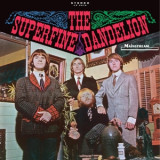
"Flower power psych pop that’ll blow you away! Exploring the jangly folk and garage sounds of the late ‘60s, the Superfine Dandelion picks a wide variety of colorful folk, country and jug band influences and puts a psychedelic tint on their all-original compositions. Our favored stereo mix, pressed on blue vinyl!
Formed in 1967, this Phoenix, AZ band would only last for a year before parting ways, leaving behind just one album – a fate many Mainstream artists ultimately faced, no matter how quality their style and sound was. The Superfine Dandelion features Mike McFadden (formerly of the garage rockin’ Mile Ends) and Rick Anderson (founding member of the Tubes) showcasing the sound of the Summer of Love – kaleidoscopic, sunny & groovy!
“While the cheeriest cuts have the sunny folk-pop/rock feel of, say, some of the L.A. folk-rock issued by the Dunhill label (‘Don't Try to Call Me’ recalls P.F. Sloan) or the Monkees, their self-titled LP had a good deal of sub-Jefferson Airplane folk-psych-rock, with plenty of minor chords, harmonies, and wistful lyrics. Then ‘Janie's Tomb’ and ‘It's Raining’ have a jokey jug band vibe, like a cross between the Charlatans and the Lovin' Spoonful.” – Richie Unterberger (AllMusic)"
To mark the 15th year of both Static Shock Records and Hygiene, we bring you the '15 Minute City' EP, which is also the 100th release of the label. Has it really been four years since their ‘Private Sector’ album on Upset the Rhythm?? In that time the band have had a small tweak in line up with the addition of Lucy from Primetime on bass. Hygiene have returned with their most urgent and essential recordings and not many bands can say that after 15 years. Lead track '15 Minute City’ is an absolute bundle of DIY greatness…it has the chaos and chorus of one the classic 70’s / early 80’s Swell Maps 7”s. ‘L.T.N’ is a robotic and stiff post punk song that doesn’t outlast it's welcome as it lasts just over a minute. Last track ‘Petrol’ is a childlike punk gem that gets stuck in your head after one play. Hygiene are one of the most underappreciated bands in London in 2023.
Escape Music is delighted to announce the release date for the long-awaited Robert Hart fourth studio album title “Circus Life” (Bad Company / Manfred Man’s Earth Band / Diesel / The Jone’s). Limited Edition Vinyl in “Green Leaves” colour (500 all numbered 001 to 500), also will include hand signed postcard by Robert Hart! Produced by Steve Overland & Steve Morris / Robert Hart – Vocals (Solo / Bad Company / Manfred Mann / Diesel) / Featuring guests: Steve Morris - Guitars (Heartland / Lonerider / Ian Gillan) / Steve Overland Official - Backing vocals (FM / Lonerider / solo) / Robert Säll - Guitars (Work of Art / WET) / Steve Mann - Keyboards (MSG / Ousey Mann / Lionheart) / Chris Childs - Bass (Thunder / Lonerider) / Harry James - Drums (Thunder / Shadowman) / Keith Atack - Guitars (Atack / Bonnie Tyler / David Cassidy) - Robert Hart is a much-loved British vocalist and has been involved with many top acts over the years such as Manfred Mann’s Earth Band, Bad Company and The Jones Gang. He is also remembered for his fine solo albums, more recently “Pure” which was released by Escape music in 2020. Robert has such a versatile vocal range and can adapt his vocals to many types of rock music, such as AOR, Hard Rock and Blues rock and he has demonstrated this admirably on many occasions since the 1980’s. This is no exception. “Circus Life” also features many musicians and songwriters such as Steve Overland and Steve Morris who wrote the songs we have on show here. The style of “Circus Life” is an extension of what Robert gave us for the “Pure” album but this new recording tops even that. We have bags of melody and some excellent musicianship, as you would expect for such a line-up. If you like Bad Company then you are not going to be disappointed with these 12 tracks.