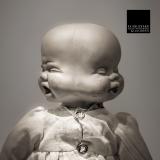
WRWTFWW Records presents an ultra limited (100 copies !) vinyl edition of Meemo Comma’s Decimation Of I album, originally released digitally in 2024 on Mike Paradinas' Planet Mu label. The collector’s pressing is housed in a heavyweight sleeve.
Decimation Of I is the fifth album by Brighton-based electronic musician Meemo Comma. It's a work based on the Strugatsky brothers‘ 1971 novel Roadside Picnic, a book that was also turned into the Russian cult classic Stalker by Andrei Tarkovsky. The inspiration came from reading the book alongside the backdrop of global climate disasters where an environment is rapidly becoming less habitable, all while powerful nations occupy and commit genocide.
The rough story of both film and novel is about a select group of characters exploring a land that has been transformed by alien visitors. We never meet the extraterrestrials, nor is it important to, we only have the artefacts left behind. The environment itself becomes the character, neither wholly Earth-like nor alien, but a surreal blend of both, inviting introspection on our insignificance amidst profound change. Within this land’s rebirth, our characters confront ego death, a necessary step towards the profound revelation, the discovery of one's true desire in the absence of ego.
The album opens with the innocent flutes of ’They, spoke,‘ and the disorienting electronica of ‘The Soldier‘ building towards the Terry Riley like undulating clarinets of ‘The Poet’, whose intertwining synth organ drones set the scene. Nods to the seventies electronica of Wendy Carlos and Eduard Artemyev can be heard with the use of Bach melodies in ‘P3Alpha Exotoxin‘ and ‘Area X,‘ however each of these songs draw the listener to primal noise undercurrents, their disintegrating melodies hinting at humanity's gradual dissolution, unveiling profound revelations beyond our comprehension.
As the album reaches its midpoint, ‘Spectral Alignment‘ paints a hazy morning prairie scene with Aaron Copland style French horn, restful woodwinds, spatial arpeggios and a warm drone culminating in an emotional pitstop as the soldiers wake in the dewy morning of this alien landscape, unaware the last of their humanity remains.
The last sentence in Roadside Picnic “HAPPINESS FOR EVERYBODY, FREE, AND MAY NO ONE BE LEFT BEHIND!” is the inspiration for ‘As It Is Written.’ We can either take from this the total annihilation of self has been filled with propaganda from their homeland, or the epiphany of their own autonomy in the war against a land and its inhabitants.
Suche:on spec
Repress!
Every once in a while, a record comes along which resonates in a special way, stands the test of time, and brings the same reaction to the dancefloor now as it did all those years ago. 'Groovejet (If This Ain’t Love)' is one of those records, a classic in every sense of the word. Originally released in 2000, Defected are, re-releasing this club essential for new and original fans alike in a special, limited edition deluxe remix reissue.
This unique two vinyl pack comes in full colour gatefold sleeve with augmented reality cover that will come to life once you scan the mask image on your phone accompanied by a four page 12” insert written by Spiller detailing the full story of ‘Groovejet’; from original production, early reactions, chart success and new 2021/22 remixes.
The releases features the original versions plus new mixes Purple Disco Machine & Lorenz Rhode, Riva Star, Breakbot & Irfane and Harvey Sutherland. Exclusive to the vinyl are Riva Starr’s Skylight Mix and the Harvey Sutherland Instrumental version.
Gap Mangione's monumentally influential Diana In The Autumn Wind. AKA BEWITH200LP. And, without question, Be With's White Whale.
They said it could never be done. And with good reason.
We've spent the past 12 years trying to license this legendary 1968 recording from Gap and, after much work, it's finally here. Remarkably, this is the first ever vinyl reissue of Gap Mangione's Diana In The Autumn Wind, produced with the full and extensive participation of Gap. An exceedingly rare album, it's been coveted by funk, soul, jazz and hip-hop sample fiends for decades.
It's unarguably *the* most sought after album for J Dilla / Madlib sample collectors. It has also been brilliantly sampled by A Tribe Called Quest, Large Professor, Ghostface Killah, Kendrick Lamar and Talib Kweli.
But this record is so much more than a sample-spotters curio. It's solid gold throughout. Bursting with killer funky-jazz grooves and tracks adorned with warm electric piano, the release is notable for featuring some extremely significant players at the very outset of their careers; Tony Levin, at 21, whose superb playing on both acoustic and electric bass was the harmonic mainstay of the trio and Steve Gadd, at 23, one of the greatest drummers of his generation.
With acceptable copies of this holy grail changing hands for $400, to call this reissue "much-needed" underplays just how vital it is. Gap's story is told in his words alongside rare photos across a sumptuously designed 2-page insert and, to augment this deluxe edition further, its all wrapped up in a beautiful, no-expense-spared luxury tip-on sleeve, as per the original hens-teeth release. And, while we're talking packaging, just take a look at that cover - a work of art in and of itself.
The tracks are short but complex, with that extraordinary rhythm section backing the beautiful piano, organ and electric piano work of Gap. It's like the best ever library funk breaks record you never heard - but all your favourite golden age rap producers were all over it, long ago. It's a stunning blend of the vibrant, driving music of the Gap Mangione Trio coupled with the sensitive composition and superb orchestration of Gap's legendary brother, Chuck Mangione, who helmed an amalgam of seemingly disparate elements – rock, big band jazz, solo improvisation and "classical" music - into a spectacularly cohesive whole that has aged wonderfully well. As Gap himself notes in the liners, "with this group I was able to explore and add new and exciting elements from rock, Brazilian and then-current pop music."
Opener "Boy With Toys" triumphantly swaggers out the gate, all big band horns, flutes and dextrous organ work. The synthesis of everything going on is nothing short of stunning. When one wise YouTube commentator called this tune "old school superhero music", Gap agreed. Rap luminaries did, too, amongst them Talib Kweli, who rapped over DJ Scratch's chopped up intro for "Shock Body" on his Quality album back in 2002.
You've barely recovered from that incredibly affecting opener when you get hit over the head with the exquisite title-track. And now you see how two of the greatest beats of all time emerged from one single track produced nearly 50 years earlier. Unforgettably utilised by Dilla for Slum Village's heartbreakingly good "Fall In Love" and then Madlib for his "Official" beat for Dilla to rap over, on the Jaylib record. Regardless of the records it went on to spawn, this is just a staggering tune in its own right. Be beguiled by the flutes and the flutter tonguing, the counter-melody from the trombones, the soprano sax solo. All of it. Simply beautiful.
The questing organ and horn workout "Long Hair Soulful" deserves a lot more attention, overshadowed somewhat by the opening two monsters but no less fantastic. It swings, it grooves and Gadd and Levin truly cook. Up next, Gap's wonderfully percussive, mellifluously piano-heavy cover of "Yesterday" by some fellas called The Beatles. It's a subtly arresting gem. "The XIth Commandment" is damn fine, with thick, gorgeous electric piano and snappy drum work underpinning chaotic soundtracky horns. To close out the side, "St. Thomas" showcases the "fourth" member of the Gap Mangione Trio, conga drummer Dhui Mandingo. Having performed with the Trio since 1965, Dhui‘s African-based and jazz-latin-influenced style amazed listeners and its way to hear why.
Opening the B-Side, standard "You're Nobody Till Somebody Loves You" breezes along in the late-night jazz club fashion before things get super deep with the outstanding and - up to now - un-sampled "Pond With Swans". It's simply heavenly, and how its moody, melancholic intro has yet to be pilfered is anybody's guess. It oscillates between gentle, sombre movements and bombastic grooves, equally hypnotic and joyous. The rendition of "You Are My Sunshine" is yet another showcase for Gap's virtuoso playing and Gadd's mastery of the pocket. Indeed Gadd's drumming on "Free Again" is nothing short of neck-SNAPPING! Ghostface took it for not one but two "Iron's Theme" tracks across his seminal Supreme Clientele. It's got that Galt MacDermot "Coffee Cold" feel. Suuuuuper cool. The frantic "Dream On Little Dreamer" hurtles along and must've surely had the whole room absolutely swinging from the chandeliers back in Rochester in the late 60s. The album closes with the magnificent Graduate Medley, featuring memorable renditions of "Scarborough Fair", "The Sounds of Silence" and "Mrs. Robinson". The warm electric piano lines of the former were sampled by The Ummah (Dilla again!) for Tribe's "Pad & Pen" from their reappraised final album, The Love Movement, as well as by Large Professor on his much-loved "The LP (For My People)".
Under the watchful eye - and extremely attentive ears - of Gap Mangione himself, the audio for Diana In The Autumn Wind has been carefully remastered by Be With regular Simon Francis, with a few much needed tweaks here and there, according to the artist's wishes. At the prestigious Abbey Road Studios, Cicely Balston's expert skills have made sure nothing is lost in the cut whilst the records have been pressed to the highest possible standard at the always stellar Record Industry in Holland. The artwork restoration has taken place here at Be With HQ and has that drop-dead gorgeous cover artwork popping like new. Buy on sight!
p:m is delighted to welcome Kumarachi to the fold - a Nottingham-based artist with a deep catalogue steadily built over the past 11+ years. For the label’s first 10” vinyl cut, Kumarachi teams up with his old friend, the wonderful Liam Bailey, for some rudeboy pressure on the a side, while flying solo for the b.
Tracklist:
A. On Sight: snappy snares, snarling bass, and shifting percussion meet the dulcet tones of Liam Bailey, who turns in a different kind of original dancehall style vocal that gets people skanking and swaying.
B. Cast No Shadow: a heavy-hitting track of pummelling breaks and beats, heavy bass, dub fx, and synth stabs, reminiscent of Star Wars’ X-wings in space.
In Kumarachi’s own words: “On Sight was just a loop when I sent it to Liam, then arranged and built around his vocals. I played it to a couple of people for feedback and to test out, it luckily found its way to DJ Flight via Sweetpea, so a big thanks to her too. Both myself and Liam felt play:musik is the perfect label for On Sight, with what Flight stands for musically and culturally, there’s a definite alignment within the lyrical content aswell. It’s a perfect fit. Cast No Shadow was written later and specifically for this release to contrast and complement the flip. It actually came together quite quickly - referencing classic combinations, whilst hopefully sounding fresh for 2026.”
- Sea Ceremony (With Karen Vogt)
- Coral And Bones (With Laryssa Kim)
- Heartsea (With Vargkvint)
- Naiade (With Mt Fog)
- Moon And Mirrors (With Elska)
- Daughter Of The Abyss (With Singer Mali)
- Serpentine (With Nightbird)
- Their Voices Rise Above The Waves (With Yellow Belly)
- For All The Sea-Girls (With Nadine Khouri)
- Ondine (With Astrid Williamson)
- Coda (With Camilla Battaglia)
Oceanine, Jolanda Moletta’s third album and her first for Beacon Sound, is a powerful and ethereal statement of artistic community. Expanding on her previous work, each track represents a collaboration with a different female vocalist, with the foundational elements being generated entirely by her own voice. By turns haunting, enchanting, and inspiring, you won’t want to come up for air once you’ve been pulled under. Representing a
musical practice that is distinctly feminist, this is an album with a longer view in mind, to an age when the altars were to goddesses and women were centered as powerful beings representing the earth’s cycles of regeneration and renewal. Oceanine then, in all its beauty, can be viewed as an album of survival. It is deeply transportive, accessing something that lies within all of us. As the late, great Lithuanian folklorist and archaeologist Marija Gimbutas noted, “We must refocus our collective memory. The necessity for this has never been greater as we discover that the path of 'progress' is extinguishing the very conditions for life on earth.”
Jolanda Moletta is a multimedia artist and one-woman electronic choir. She creates wordless compositions through extended vocal techniques, integrating wearable-controlled live processing, alongside symbolic visuals. Moletta considers her performances to be a collective ritual and creates her Sonic & Visual Spells following the cycles of nature and the moon. Jolanda's 2022 critically acclaimed album Nine Spells was released on the Ambientologist label, followed by Night Caves on Whitelabrecs in 2025. Moletta’s artistic practice is a radical and spiritual journey through sound art, ritual, and the symbolic archaeology of the feminine.
Oceanine is inspired by sirens, water nymphs, and the timeless call of the sea. At its core lies Jolanda’s deep, lifelong connection to the Mediterranean Sea and to the ancient and modern myths and folklore that have emerged from its waters. Growing up by the Mar Ligure, Jolanda was surrounded by stories carried by salt, wind, and waves: legends of sirens, echoes of ancient voices, and the sea as both origin and oracle. This intimate relationship with the Mediterranean is not merely a backdrop, but a living source that shapes Oceanine’s emotional, symbolic, and sonic world.
Each track features a different female vocalist, creating a rich tapestry of voices, styles, and perspectives. This artistic choice not only broadens the album’s sonic palette, but also deepens its narrative core: celebrating the power, beauty, and mystique of feminine energy through myth, history, and sound.
The entire album is built exclusively from the human voice, processed and layered, yet always remaining voice, and nothing else. For each piece, Jolanda invited every vocalist involved to contribute a raw stem: a short, unedited melodic fragment of just a few seconds, inspired by the album’s themes. These intimate vocal seeds became the foundation of each track: the guest artists’ voices appear as brief, melodic stems, while the entire surrounding “orchestral” fabric is created solely from Jolanda’s own layered and processed voice. In this way, Jolanda’s voice becomes the Ocean itself, embracing, absorbing, and carrying the sirens’ calls within a vast, immersive soundscape. Every song is a unique expression of the feminine experience, revealing its depth, complexity, and emotional range, echoing the call of the sea and the many faces of the siren archetype.
The figure of the siren has transformed across centuries. In myths of Ancient Greece and Rome, sirens were hybrid beings, part woman, part bird, whose irresistible songs lured sailors to their doom. During the Middle Ages, the image shifted toward the half-woman, half-fish figure, often associated with temptation and danger. Historically, the voice of women has often been feared. Sirens were considered harbingers of misfortune not simply because they seduced or destroyed, but because they were powerful liminal beings.
In Ancient Greek, sirens functioned as psychopomps: figures who existed between worlds and guided souls, especially between life and death. Their songs were believed to carry forbidden knowledge, including prophetic insight and the ability to reveal truths about fate and the future. The danger of the sirens lay in what they revealed: knowledge that humans were not meant, or ready, to hear.
Oceanine confronts this legacy head-on. The voices heard throughout the album are not merely beautiful: they are dark and luminous, wild and enchanting, magical, soothing, dreamy, and at times fractured or distorted. They whisper, lament, beckon, and enchant. Like sirens, they skim the surface of the water and sink into its depths, hovering on the edge between tenderness and danger, vulnerability and power. They rise toward the sky, dissolve into mist, and return as echoes charged with raw, elemental emotion: voices that seduce, warn, mourn, and remember. They refuse to be reduced to decoration.
Alongside the album’s release in May, Oceanine will also unfold as a visual and performative work through a short art film. The film includes a live session recorded inside a sea cave facing the Mar Ligure, the very coastline where Jolanda spent her childhood, dreaming of sirens and listening to the sea as if it were speaking directly to her. This site-specific performance reconnects the music to its place of origin, allowing the voice to resonate within stone, water, and air, and transforming the cave into both a sanctuary and a threshold between myth and reality.
What if the sirens’ songs were considered dangerous because they carried another truth, an ancient truth long forgotten?
Oceanine embraces the idea that we are still deeply woven into myth. Though we may see ourselves as rational and modern beings, our world is saturated with ancient symbols and archetypes, often distorted, simplified, or stripped of their original meaning. And if those symbols are allowed to shift, if the mirror once held by the siren becomes an invitation to look beyond appearances and into what has been obscured, then we may finally uncover a deeper truth and reclaim the voice that was always ours.
Oceanine is not just an album. It is a reclamation, a spell, and a call from the depths.
- Intro
- Can't You See
- Prom King
- I Can't Be Your Superman
- Ridiculous!
- Fall Harder
- Bounce Is Back
- Affairs
- All I Want
- Cash Wednesday
- Fiona Coyne
- Carousel
- Cry Wolf
- Why Do You Wanna Dance
- Practice
- Song For Rio
- Fall Harder (Single Mix)
- Fall Harder (Demo)
- Affairs (Demo)
When Ryan DeRobertis announced the name change of his project from Saint Pepsi to Skylar Spence, there was no indication of any stylistic departure, though the change arrived with a musical shift toward faster tempos and more pristine production. Whereas Saint Pepsi had often used decades-old boogie, disco, and new wave as grist for the sampling mill, Skylar Spence is intent on trafficking more overtly in those genre aesthetics through his own production techniques and vocal contributions. With Prom King, DeRobertis reorients his music for his new full-band live act and winds up with an album full of tight and enveloping dance tunes.
Working with Carpark Records 'gave me the confidence to 'go big' with the new material: to write pop songs with universal messages in the sonic wrapping paper that I've grown accustomed to,' DeRobertis says. 'A few songs on Prom King are about specific events in my life—a party where I got too messed up, watching a friend's life spiral out of control and trying to help—but I tried hard not to be too autobiographical because I want my music to unite, above all else. I'm much more interested in connecting with the listener than mystifying my personality.'
While DeRobertis' previous long-players have been more amorphous collections in the style of beat tapes, Prom King is compact and cohesive, with the album's varied stylistic references (new wave, UK garage, boogie) united through strong guitar melodies and Todd Edwards-ian cobblings-together of tiny vocal samples. 'I slowed some music down and called myself an artist,' DeRobertis sings on lead single 'Can't You See,' acknowledging in his lyrics what is already apparent in the music's tone—he can maintain fidelity to his vision while working in more uptempo, disco-based song structures.
'Ridiculous!' and 'Bounce Is Back' are big groovers that capitalize on jacking hi-hats and hand drumming, respectively, and both have an air of Balearic warmth and smoothness. On the title track, DeRobertis entwines a chorus of unintelligible but expressive samples with his own vocals—what feels like a synthesis of two approaches—and the result is an affecting pattern of build and release. More contemplative sophisti-pop numbers like 'Fall Harder' and 'Affairs' add a realist's breadth of scope: thoughts of past foibles bleed into present-dwelling and dancing.
Prom King is DeRobertis making sense of missed opportunities. His high school did not have a prom king; he has filled the position with an imaginative album of personal and musical revisionism.
- A1: The Bird
- A2: Heart Don't Stand A Chance
- A3: The Waters (Feat. Bj The Chicago Kid)
- A4: The Season / Carry Me
- B1: Put Me Thru
- B2: Am I Wrong (Feat. Schoolboy Q)
- B3: Without You (Feat. Rapsody)
- B4: Parking Lot
- C1: Lite Weight (Feat. The Free Nationals United Fellowship Choir)
- C2: Room In Here (Feat. The Game & Sonyae Elise)
- C3: Water Fall (Interlude)
- C4: Your Prime
- D1: Come Down
- D2: Silicon Valley
- D3: Celebrate
- D4: The Dreamer (Feat. Talib Kweli & Timan Family Choir)
Ten years ago, Anderson .Paak didn't just release an album; he staged a full-scale takeover of the soul and hip-hop landscape. Released on January 15, 2016, Malibu served as the definitive arrival of an artist who had spent years grinding in the underground before a star-making turn on Dr. Dre’s Compton. While his previous work hinted at his potential, Malibu was the moment the world met the "Cheeky Andy" persona in full—a virtuosic drummer, a raspy-voiced crooner, and a sharp-witted rapper all rolled into one. The album is a sprawling, sun-drenched journey through the Southern California coast, blending 1970s funk, church-reared gospel, and gritty boom-bap into something that feels both nostalgic and entirely futuristic. With a heavyweight production lineup including 9th Wonder, Madlib, Kaytranada, and Hi-Tek, the record maintains a warm, analog texture that was a breath of fresh air in an increasingly digital era. It’s an album that breathes, full of intentional imperfections and the kind of "in-the-pocket" groove that can only come from a seasoned live performer. Beyond the infectious, dance-floor-ready energy of tracks like "Am I Wrong" and "Come Down," the album is a deeply autobiographical masterwork. .Paak uses the 65-minute runtime to unpack his life story with startling clarity, touching on his mother’s gambling addiction, his father’s incarceration, and his own brushes with homelessness with a sense of resilience that never feels heavy-handed. He weaves these heavy themes through a lens of triumph, grounded by vintage surfing documentary samples that give the project its cinematic, coastal atmosphere. It’s a celebratory record born out of struggle, anchored by his impeccable technicality on the drums and a guest list—featuring ScHoolboy Q, Rapsody, and The Game—that feels hand-picked to complement his specific brand of West Coast swagger. A decade later, Malibu stands as a modern classic and the blueprint for the soulful revivalism that would eventually lead .Paak to global superstardom and Grammy-winning heights. It remains a testament to the idea that the most profound music often comes from the most personal places, proving ten years on that the best way to move forward is to stay rooted in the groove.
- A1: The Bird
- A2: Heart Don't Stand A Chance
- A3: The Waters (Feat. Bj The Chicago Kid)
- A4: The Season / Carry Me
- B1: Put Me Thru
- B2: Am I Wrong (Feat. Schoolboy Q)
- B3: Without You (Feat. Rapsody)
- B4: Parking Lot
- C1: Lite Weight (Feat. The Free Nationals United Fellowship Choir)
- C2: Room In Here (Feat. The Game & Sonyae Elise)
- C3: Water Fall (Interlude)
- C4: Your Prime
- D1: Come Down
- D2: Silicon Valley
- D3: Celebrate
- D4: The Dreamer (Feat. Talib Kweli & Timan Family Choir)
Ten years ago, Anderson .Paak didn't just release an album; he staged a full-scale takeover of the soul and hip-hop landscape. Released on January 15, 2016, Malibu served as the definitive arrival of an artist who had spent years grinding in the underground before a star-making turn on Dr. Dre’s Compton. While his previous work hinted at his potential, Malibu was the moment the world met the "Cheeky Andy" persona in full—a virtuosic drummer, a raspy-voiced crooner, and a sharp-witted rapper all rolled into one. The album is a sprawling, sun-drenched journey through the Southern California coast, blending 1970s funk, church-reared gospel, and gritty boom-bap into something that feels both nostalgic and entirely futuristic. With a heavyweight production lineup including 9th Wonder, Madlib, Kaytranada, and Hi-Tek, the record maintains a warm, analog texture that was a breath of fresh air in an increasingly digital era. It’s an album that breathes, full of intentional imperfections and the kind of "in-the-pocket" groove that can only come from a seasoned live performer. Beyond the infectious, dance-floor-ready energy of tracks like "Am I Wrong" and "Come Down," the album is a deeply autobiographical masterwork. .Paak uses the 65-minute runtime to unpack his life story with startling clarity, touching on his mother’s gambling addiction, his father’s incarceration, and his own brushes with homelessness with a sense of resilience that never feels heavy-handed. He weaves these heavy themes through a lens of triumph, grounded by vintage surfing documentary samples that give the project its cinematic, coastal atmosphere. It’s a celebratory record born out of struggle, anchored by his impeccable technicality on the drums and a guest list—featuring ScHoolboy Q, Rapsody, and The Game—that feels hand-picked to complement his specific brand of West Coast swagger. A decade later, Malibu stands as a modern classic and the blueprint for the soulful revivalism that would eventually lead .Paak to global superstardom and Grammy-winning heights. It remains a testament to the idea that the most profound music often comes from the most personal places, proving ten years on that the best way to move forward is to stay rooted in the groove.
- A1: The Bird
- A2: Heart Don't Stand A Chance
- A3: The Waters (Feat. Bj The Chicago Kid)
- A4: The Season / Carry Me
- B1: Put Me Thru
- B2: Am I Wrong (Feat. Schoolboy Q)
- B3: Without You (Feat. Rapsody)
- B4: Parking Lot
- C1: Lite Weight (Feat. The Free Nationals United Fellowship Choir)
- C2: Room In Here (Feat. The Game & Sonyae Elise)
- C3: Water Fall (Interlude)
- C4: Your Prime
- D1: Come Down
- D2: Silicon Valley
- D3: Celebrate
- D4: The Dreamer (Feat. Talib Kweli & Timan Family Choir)
Ten years ago, Anderson .Paak didn't just release an album; he staged a full-scale takeover of the soul and hip-hop landscape. Released on January 15, 2016, Malibu served as the definitive arrival of an artist who had spent years grinding in the underground before a star-making turn on Dr. Dre’s Compton. While his previous work hinted at his potential, Malibu was the moment the world met the "Cheeky Andy" persona in full—a virtuosic drummer, a raspy-voiced crooner, and a sharp-witted rapper all rolled into one. The album is a sprawling, sun-drenched journey through the Southern California coast, blending 1970s funk, church-reared gospel, and gritty boom-bap into something that feels both nostalgic and entirely futuristic. With a heavyweight production lineup including 9th Wonder, Madlib, Kaytranada, and Hi-Tek, the record maintains a warm, analog texture that was a breath of fresh air in an increasingly digital era. It’s an album that breathes, full of intentional imperfections and the kind of "in-the-pocket" groove that can only come from a seasoned live performer. Beyond the infectious, dance-floor-ready energy of tracks like "Am I Wrong" and "Come Down," the album is a deeply autobiographical masterwork. .Paak uses the 65-minute runtime to unpack his life story with startling clarity, touching on his mother’s gambling addiction, his father’s incarceration, and his own brushes with homelessness with a sense of resilience that never feels heavy-handed. He weaves these heavy themes through a lens of triumph, grounded by vintage surfing documentary samples that give the project its cinematic, coastal atmosphere. It’s a celebratory record born out of struggle, anchored by his impeccable technicality on the drums and a guest list—featuring ScHoolboy Q, Rapsody, and The Game—that feels hand-picked to complement his specific brand of West Coast swagger. A decade later, Malibu stands as a modern classic and the blueprint for the soulful revivalism that would eventually lead .Paak to global superstardom and Grammy-winning heights. It remains a testament to the idea that the most profound music often comes from the most personal places, proving ten years on that the best way to move forward is to stay rooted in the groove.
NEIL ARDLEY – KALEIDOSCOPE OF RAINBOWS The Definitive 2LP Reissue of a Landmark in British Jazz Fusion
Analogue October Records proudly presents the long-awaited reissue of Kaleidoscope of Rainbows, Neil Ardley’s 1976 masterpiece, originally released on Gull Records. Produced by Neil Ardley and recorded at London’s famed Morgan Studios, the sessions were engineered and mixed by Martin Levan, capturing one of the most ambitious and beloved works in British jazz. Following the acclaimed reissues of Courtney Pine’s Journey to the Urge Within (AOR-001-ST) and Neil Ardley’s Harmony of the Spheres (AOR-002-ST)—both praised by the audiophile press including The Tracking Angle—this third release confirms Analogue October as one of today’s most meticulous and exciting reissue labels.
A Suite of Sound and Colour
Commissioned for the 1975 Camden Jazz Festival, Kaleidoscope of Rainbows is structured as a seven-part suite, each movement reflecting a colour of the spectrum. Ardley’s composition weaves together jazz improvisation, progressive rock energy, and orchestral elegance in one of the most imaginative British jazz recordings of the era. Featuring Ian Carr, Barbara Thompson, Tony Coe, Trevor Tomkins, and Geoff Castle, the album is a who’s who of the UK’s vibrant 1970s jazz scene.
Cut at Abbey Road, Pressed at Record Industry
For this definitive edition, Analogue October worked directly from the original Gull master tapes. Mastering was entrusted to Miles Showell at Abbey Road Studios, using his renowned half-speed process to extract every detail and dynamic from Ardley’s score. To give the music the headroom it deserves, the reissue has been expanded to a deluxe 2LP set, pressed on the highest-quality vinyl at Record Industry in Haarlem, Netherlands. The result is a presentation that finally does justice to the scope and brilliance of Ardley’s vision.
Deluxe Package – Restored from the Source
The artwork has been meticulously restored from the original film elements, ensuring a sleeve of unmatched vibrancy and fidelity. Inside, a 12-page booklet printed on heavyweight card features an in-depth essay on Neil Ardley and the making of Kaleidoscope of Rainbows, written by Jazzwise magazine editor Mike Flynn, alongside rare photographs from the period.
Curated and Produced by Craig Crane
As with every Analogue October release, Kaleidoscope of Rainbows has been curated and produced by label founder Craig Crane with a collector’s eye for detail and a deep respect for the music’s legacy. This reissue is not only the definitive vinyl edition of one of the great British jazz fusion albums—it also continues the label’s mission to restore and celebrate the most vital recordings of the era.
Neil Ardley’s Kaleidoscope of Rainbows—vivid, expansive, and timeless—returns as the essential edition for audiophiles and jazz lovers alike.
Retail-ready product description (short form):
Produced by Neil Ardley and recorded in 1976 at London’s Morgan Studios, engineered and mixed by Martin Levan, Kaleidoscope of Rainbows is a cornerstone of British jazz fusion. This definitive 2LP reissue, mastered at Abbey Road by Miles Showell from the original Gull master tapes and pressed at Record Industry (NL), finally gives the music the dynamic headroom it deserves. The deluxe edition includes restored artwork and a 12-page booklet featuring an in-depth essay by Jazzwise editor Mike Flynn.
- 1: I (2026 Remaster) 03:45
- 2: Ii (06 Remaster) 01:44
- 3: Iii (2026 Remaster) 0:1
- 4: Iv (2026 Remaster) 03:09
- 5: V (2026 Remaster) 04:24
- 6: Vi (202 Remaster) 04:00
- 7: Vii (2026 Remaster) 08:04
- 8: Viii (2026 Remaster) 03:30
- 9: Ix (2026 Remaster) 06:48
- 10: X (2026 Remaster) 04:52
- 11: Xi (2026 Remaster) 04:31
- 12: Xii (2026 Remaster) 03:31
- 13: Xiii (2026 Remaster) 06:24
- 14: Xiv (2026 Remaster) 04:45
øjeRum is the moniker of Danish artist Paw Grabowski. Since 2007, his mostly tape-based works have unfolded like private diaries—intimate, textural, often centered around an vintage pump organ Paw found left abandoned in a dilapidated Danish home, and to which he would return, sometimes in the dead of winter, to play and record on. The works featured on this release are centered around this pivotal engagement and collect some of his earliest releases from around 2014 to 2017. These were then carefully selected and released via Vaagner's sister label in 2018 via a double cassette release, which has since become a coveted collectors item.
Throughout the album, the organ breathes, sighs—the moments of brief silence that follow are almost palpable, then like a sonorous echo, the sound rushes back into the foreground with gentle restraint, submerging the listener into an undulating current of emotional upheaval. In this ebb and flow, øjeRum shapes a space where memory seems to waver and dissolve, and where a fragile, lingering melancholy unfolds with a kind of hushed inevitability.
With the newly minted Vaagner.Archive, this album is now reissued on vinyl for the first time—carefully remastered and housed in a 2xLP gatefold sleeve printed on special cardboard, its tactile presence echoing the material sensitivity that has always defined Paw Grabowski's practice. A love letter to repetition and restraint.
Roland Leesker reimagines a House Classic with Vinyl-Only Cover of ‘What You Need’.
Definitive Recordings presents a special vinyl-only release as Roland Leesker delivers his cover version of ‘What You Need’, the seminal house anthem originally released in 1990 by Soft House Company. This release is a respectful homage to one of house music’s defining records, crafted for DJs and collectors alike.
On the Original Mix, Leesker stays close to the spirit of Soft House Company’s classic, faithfully honoring the original arrangement but properly pumping.
On the flip, Leesker presents his ‘Mysterious Eastern Force Edit’, an expansive, eleven-minute journey designed for deep dancefloor moments. While retaining the essence of the original, this version introduces a more energetic bassline before weaving in a subtle 303 acid line, bridging different eras of house music history into one hypnotic, evolving arrangement.
This vinyl-only release is a tribute to the legacy of house music — respectful, powerful, and made to be played loud on a proper sound system.
- 1: Another Country
- 2: Daytime
- 3: Soft Inheritance
- 4: Killer Kid In The Camaro
- 5: Procession
- 6: The Violins
- 7: The Thousand First
- 8: Talking To Mary
- 9: Another Country Ii
Another Country is the fifth full-length album by Cindy, the San Francisco-based group built around the songwriting of Karina Gill. Recorded, like all of its predecessors, in their hometown and with a consistent line-up held over from their previous record (the Swan Lake EP from 2024), it is replete with the poetry of private vistas, eavesdropped dramas and confusing winds. These are classic Cindy concerns, and yet, as always, contain new mystery and charm to somehow feel like quiet revelations each time. Another Country is both opaque in its intentions and specific in its presentation, and as such presents the kind of truth that keeps the listener on the search for answers just out of reach.
"The title of this record, Another Country, refers to the James Baldwin novel of that name. The book has a kind of drama that makes sense to me. When I look around, the obvious explanations are not enough. The miasma of feelings and ideas that is supposed to account for it all, doesn't. Baldwin washes past that to longings that begin to explain. Cindy songs come out of the x-rays my particular brain makes out of what I see and experience. What you hear on this record is the result of collaboration with the members of Cindy that transforms that shadowy thing into full color, fully fleshed. Each of them, in music, is sure-footed and unblinking, and making this record together felt like, yes, yes, you see what I mean."
Cindy is Karina, Staizsh, Will & Oli. Another Country will be released on 1st May 2026 via Tough Love.
- 1: Off With Their Heads
- 2: Down Down Down
- 3: Black Square
- 4: Wake The Dead In Bedlam
- 5: Questions // Answers
- 6: Four Letter Words
- 7: Hater Creator
- 8: Warpaint
With multiple bass players (at one point eight of them) and an array of rubber masks that give both children and adults sleepless nights, somehow, against all the odds, Evil Blizzard are set to release their fifth studio album of nightmare inducing noise and visuals. Titled, the new album sees Evil Blizzard pushing the boundaries further afield from their early sound of 'multiple bass psych', seeing elements of dub, krautrock and goth to provide a much more Post Punk vibe than previous work. Reference points were 'Metal Box', 'Ritual De Lo Habitual', Can and Discharge (whose singer JJ joins the band on the track 'Wake The Dead In Bedlam') as well as the omnipresent Hawkwind, Stooges and Sabbath vibes. By far the band's most stylistically varied and challenging album and yet their most cohesive body of work since their critically acclaimed second album 'Everybody Come To Church'. As well as their trademark 'multi bass onslaught', this album sees sequencing, sampling and even the use of string instruments made from bone.
Recorded between September and November 2025 at Rock Hard Studios, Blackpool, improvised sessions were edited down into more 'song' structures, then reworked into the final pieces. "Recording this was the hardest work we've done," claims Filthydirty. "Previously, we'd just turn up, turn up louder, press record and sieve through the debris and call it 'an album'. On this album we only had two, maybe three tracks that were finished when we went in, and the rest were worked out in reverse; ploughing through improvisations and jams and seeing what actually had any bones or gristle to work with. “Consequently, we had the time and focus to reappraise what we'd done in the past, highlight what we'd done right and realise where perhaps self-indulgence or lack of focus were overlooked instead of time or budget restraints, he continues. “The result is an album that reflects all our record collections. Lyrically it's been impossible to not absorb the chaos and anger transmitting on every news channel recently, and while we'd never write specifically about a certain issue or matter, the shitshow that is the 2020's definitely made its mark or our thinking.
On a class debut for Biscuit’s choice Good Morning Tapes label, Kyoto’s dub specialist G Version III runs signature fusions of digidub steppers, drill, and holographic, minor-key FM synths.
One up on her 12” for Riddim Chango last year (plus the »Scenery From Double Glazing« tape for Digital Sting in ’24), G Version III’s »Chapter II« most finely chisels her lucidly rugged definition of the late ’80s / early ’90s mystic steppers sound. The OG Caribbean spirit is heard filtered through UK dances and shored up in Japan, where G tessellates its salient points with a palette of glassy Japanese synth tones and chamber music to exquisite effect. If Wendy Carlos was a soundgyal?
Across six cuts she builds the dance around digidub x drill waltz »Livin 4« and a haunted dancehall special in the harpsichord/horn riff of »An Idyll«, impressing her prowess in the fusion of subcontinental scales with a drill-tipped skip in »Queen G Theme Chapter II«, and tucking right into an aerodynamic, flying steppers mode, shades away from Element, in »Motherearth Guidance«. At a slower, wider stride her »Higher Grade« goes eyes-down on massive subs, and »Voice of Mystique Warriyah« adapts the classic-schooled sound like TNT Roots in Tokyo.
Vinyl Only!
Tenampa kicks off 2026 with a release from one of the most respected minds in electronic music, equally renowned for his work as an audio engineer and producer. Known under several aliases including Freestyle Man or Sasse, Klas Lindblad uses the latter for this special outing on the Mexican imprint.
Under his Sasse moniker, Lindblad delivers a refined selection of dubby house cuts, infused with warm, spring/summer energy.Effortlessly groovy with a subtle, hypnotic flow, this is music designed for the dancefloor yet built to stand the test of time, showcasing the depth and sonic excellence that define his work.
This release is strictly limited to 300 copies worldwide and available exclusively on vinyl, reinforcing its status as a true collector's item.
The artwork comes once again from the always outstanding Manuel Cetina, aka El_Stitch, whose visual approach adds an extra layer of character and value to this timeless release, earning it a well-deserved place in any serious record collection.
Art-work by renowned Mexican artist: Manuel Cetina aka el_stitch's.
A deep and sophisticated addition to the catalogue of one of Germany’s oldest House labels. With Rhythm Puzzle, Bass Cab returns to Cabinet Records, one of Germany’s longest-standing and most respected House labels, continuing a legacy that has shaped underground dance music with quiet confidence and unmistakable identity for decades. Few labels have managed to preserve such a clear artistic vision over such a long period of time. Cabinet Records has always stood for depth over trends, substance over spectacle, and a deeply rooted connection to the essence of House music.
No-one could have predicted the success of The 88, the first album from Minuit
(minwee), or how warmly it would be received. Equally no-one could have predicted that the band would return to the live arena a decade after their final fling or consider pressing their debut on vinyl for the first time.
Formed in Nelson, NZ in 1997, the trio cut their teeth playing regularly around the South Island’s underground club and festival scene. After a hiatus overseas, they began recording The 88 in 2002 in Ryan’s home studio. The lyrics were influenced by their travels around Europe and Ruth's time working for the UN in Kosovo and East Timor; the beats by The Prodigy, Portishead and the UK’s trip-hop and breakbeat scenes.
Signed to indie label Tardus, their tunes were eagerly picked up by the bNet student radio network, which then ballooned into high rotates on TV station C4, helped along by Alyx Duncan’s stunning video for Except You. A busy summer playing live every weekend for three months and seemingly universal praise from the music press led to them swiftly gaining gold sales.
Now 22 years later, with live shows looming, the trio have decided to revisit their debut, completing two previously unfinished tracks from the period to add a bonus to this inaugural vinyl release.
- 1: One
- 2: Unbreakable
- 3: Is This The Real You
- 4: Threshold
- 5: We Won
- 6: Construct
- 7: Bright Side
- 8: The Drop
- 9: Blood Price
- 10: Misdirection
Iconic Atlanta quintet SEVENDUST is back with its 15th studio album, ONE, set for release on May 1, 2026 via Napalm Records. The upcoming full-length LP forges ten simultaneously lean and gut-punching tracks out of gargantuan riffs, seismic grooves, and signature soul-stirring hooks, once again produced by Michael “Elvis” Baskette (Alter Bridge, Falling In Reverse, Mammoth). The group, comprised of Lajon Witherspoon (vocals), Clint Lowery (lead guitar, backing vocals), John Connolly (lead guitar, backing vocals), Vince Hornsby (bass), and Morgan Rose (drums), busts down the door with the first single “Is This The Real You”. Its swaggering fretwork alternately wallops and gallops in lockstep with a pummeling rhythm anchored by thunderous drums. The riff rolls and seethes, and the vocals swing from guttural growls into the embrace of a jazz-y chantable chorus.
A hummable lead ties the bridge together. Echoes of a tensely picked single-note set the tone for “Threshold.” Lajon’s delicate delivery gives way to a contentious distortion-boosted refrain. Then, there’s “Unbreakable,” which has all the makings of a clarion call for the collective and a future live staple. Strains of soft piano slip into the undertow of a towering hook punctuated by a promise, “We were meant to be unbreakable… even when we’re at our lowest lows. And if it gets too cold, I’ll never let you go.” The title track succinctly sums up the record as a whole. Bellowing out of a maelstrom of roaring distortion, Lajon’s voice reaches heavenly heights. For over three decades, SEVENDUST have made countless fans feel a part of something special. The group’s community isn’t passive. Members of the “7D Army” make a very active commitment to being part of this family – as evinced by sold-out shows worldwide and innumerable tattoos of the band’s logo and lyrics. Since 1994, the band has quietly built a legacy without parallel, encompassing sales of nearly eight million albums, a GRAMMY® Award nomination for “Best Metal Performance,” three Top 15 entries on the Billboard 200, hundreds of millions of streams, and the fierce loyalty of millions of listeners in every corner of the globe.
- A1: Un Futuro Migliore
- A2: Teneri Affetti
- A3: Disgelo
- A4: Eterni Valori
- A5: Il Progresso
- A6: Progetto Di Vita
- B1: Appello
- B2: Il Generale Inverno
- B3: Anni Drammatici
- B4: Anni Drammatici (Finale)
- B5: Intolleranza
- B6: Ceti Emergenti
- B7: Anni Bui
- B8: Opposizione
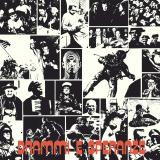
Long overlooked outside specialist circles, Drammi e Speranze is presented for the first time ever on vinyl reissue, newly remastered to highlight the depth and tonal richness of Umiliani’s arrangements.
Originally released in 1976 on Piero Umiliani’s own Sound Work Shop imprint, Drammi e Speranze—issued under the pseudonym Rovi—stands as a refined example of his late-period library work.
Performed by a compact string ensemble and subtly augmented by piano, Hammond organ, Eminent organ, and Rhodes, the album unfolds through a series of classically-informed compositions where melody takes center stage. Each piece is concise, evocative, and purpose-built—reflecting the functional yet highly expressive nature of Italian library music at its peak.
Conceptually, the record is structured in two contrasting halves: the first side explores themes of optimism and resolution, while the second delves into darker, more introspective territories, mirroring the emotional duality suggested by its title (Tragedies and Hopes).
This release celebrates 100 years since the birth of Piero Umiliani, honoring the enduring legacy of a composer whose work continues to resonate across cinematic, library, and contemporary sample-driven music.
©℗ 1976, Liuto Edizioni Musicali / Licensed to Holy Basil Records by Liuto Edizioni Musicali