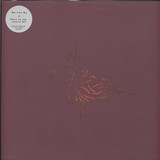
Fromtheoldtothenew was originally released in 1996 and is the second full length on Peacefrog from Steve
'Stasis' Pickton.
Growing up as a teenager in East London, break-dancing and writing graffiti with B12's Mike Golding, Steve
Pickton's musical education moved along a familiar path, from hip-hop to Electro and onto Techno. Schooling
himself in music theory and purchasing a sampler Pickton set about making his own music.
Releasing on a whose who of seminal UK electronic labels including A.R.T., Likemind, Otherworld and B12 under
various pseudinums Pickton's UK take on lush Detroit melodies fused techno, funk, hip-hop, dub, blues and jazz
into a dense concoction all of his own making.
Fromtheoldtothenew saw Pickton slip off his earlier techno shackles and head for uncharted electrconic waters.
The echo chamber dramatics of Gun and wayward lurch of Ale House Blues were a long way from Detroit, while
few tracks have demonstrated the sheer breadth of electronica more dramatically than Utopia Planetia. All in all it's
more jazz, less tech without losing the soul
Search:on the water
The optimum effect of Music of the Five Elements will be achieved if each side of this recording is played through, from beginning to end without interruption. Music of the Five Elements, when used as a meditational or body work tool, rather than entertainment, will increase in effect over time. Overplaying or improper use, however, may eventually diminish its designed effect'
.
Music is the healing force of the universe. It's an ancient idea bandied about by Pythagoras and Plato. In the last century, music as medication has been explored by musicians as diverse as Albert Ayler, Spacemen 3 and Pauline Oliveros. Nowhere did this concept gain more traction than in the so-called realm of New Age Music, an entire movement of synth droners and echoey flautists recording home-baked healing mantras on 4-track. In recent years, thanks to cassette collecting devotees and open-minded music journalists, New Age has shed its flowing robes and is being mined for the truly incredible music that swells under its pastel surface. Musician/acupressurist Sam McClellan's 1982 Music of the Five Elements is one of those revelatory discoveries, an unrivalled work of intense research and focus, simultaneously a near perfect work of art and a scientifically sound elixir for body and mind.
After studying electronic composition at Hampshire College with Randall McClellan (no relation), Sam McClellan became intrigued with the possibilities of healing through music. He explored this idea by applying the ancient Chinese philosophy of medicine to the principles of musical composition. Using the pentatonic scale (the traditional scale of Chinese music), McClellan related each of the notes to one of the five elements (Wood, Fire, Earth, Metal Water), and created five variations for each. He experimented with tempo, beat, pitch, duration, and sound quality, studying the effect on people's energy levels. Using the results of his tests he developed a comprehensive theory of sonic healing and spent the next year composing an album designed to help people achieve inner balance, reducing anxiety and energy depletion.
Music of the Five Elements is not only the acoustic massage' that McClellan set out to make, but is a fully realized and peerless piece of music. Taking cues from Minimalism, American Primitive guitar (Fahey & Basho) and even psychedelia, the album is a continuous sound voyage for voice, synthesizer, guitar, bowed bass, piano, effects and ciao (Chinese flute) all played by McClellan himself. Although divided into sections, the journey is best undertaken as a whole, without distraction.
· Bart Davenport's 7th album since his 2002 solo debut
· West Coast yacht rock meets '80s English pop
· Produced by L.A. Takedown's Aaron M. Olson
· Confirmed live dates in Los Angeles, San Francisco, Portland, Seattle, San Diego, Vida Festival (Spain)
Recorded in Boyle Heights, Los Angeles, Blue Motel is the new album by Bart & The Bedazzled, a brand new musical enterprise by Bart Davenport and his seventh album proper since his solo breakout in 2002. Alluding to Los Angeles with the lights down, it's an amalgam sound of '80s English pop and West Coast yacht rock jams, sprinkled with cinematic flourishes clearly influenced by the understated production of L.A. Takedown's Aaron M. Olson. The jangly pop aesthetic, resplendent with choppy chorus tinted guitar, snappy snares, sax and bass is underlined with life trodden stories about day jobs, dating, financial insecurities, lost innocence and most prominently, time travel.
The album lives somewhere in an imagined past (or future) that is curiously both the 1960s and 1980s conveying the groups's nostalgia for a fantasy world with a cheeky cynicism, despite a perception of a world that is, for Bart, on the downfall. To that end, Davenport's songs are, as always, delivered with a happy and sad sensibility reminiscent of the great Burt Bacharach. From the surreal yet humorous 'The House That Built Itself' to the sad surf music of 'Halloween By The Sea' or the romantic L.A. noir of the title track, Blue Motel arrives with a spoonful of tears, a nod and a wink.
The Bedazzled band lineup, united by their love of the 'Elegant '80s', includes the guitar of Wayne Faler (Dream Boys), drums, percussion and beats by Andres Renteria (Jose Gonzales) and post-punk bass lines from Jessica Espeleta (L.A. Takedown). The four friends from Los Angeles, united in their affection for the more sophisticated sounds of English '80s groups like Prefab Sprout and Style Council give the setlist a more distinctively pop flavour compared to Bart's soulful last outing on his album Physical World, also released on Lovemonk. Blue Motel features regular appearances from female vocalist Nedelle Torrisi (Domino, Asthmatic Kitty) who notably adds the lush layers of harmony on 'The Amateurs'. Saxophonist Billy McShane is also featured on three songs with improvisations that evoke the scene of whales in outer space.
Producer Olson often incorporates soundtrack and avant-garde elements in his own work. His gift for song arrangement, understanding of the synth and penchant for subtlety all shine brightly on Blue Motel.
French label Bright Sounds welcomes prolific Dutch artist Boris Bunnik for a new EP under his most celebrated alias, Conforce. The regular Delsin artist saves this project for his more dance floor driven work and that is the case across all four of the atmospheric tracks here.
'Virtue Signalling' is slick techno that mixes up sci-fi sounds with cavernous dub pads. It's cerebral and cinematic as well as being driven by the rubbery drums. 'Black Mesa' is darker, with a meaning synth line coming in spurts over punchy, broken drums. It's grand in architecture but still has plenty of rich sonic details. On the flipside, 'Compulsion' is more watery, with little life forms suspended in a backlit ocean above slippery drums, then 'Alka' is another underwater affair, with beams of light penetrating from above as a dubbed out groove undulates way down deep. Once again then here, Conforce marries form with function in exquisite ways.
- A1: Microglass Shaken
- A2: Glass Rod Vibrating
- A3: Turning Gong
- A4: Mini Mobile
- A5: Wine Glass
- A6: Water Gong
- A7: Two Ribbed Discs
- A8: Rod Across Edge Of Pane
- A9: Glass Bulb
- A10: Glissandi
- A11: Spinning Discs
- A12: Dialogue - Bottles And Jars
- B1: Vibrating Pane
- B2: Bubbling
- B3: Breathing Machine
- B4: Water Jars
- B5: Rod Roll
- B6: Micro Grass On Goblet
- B7: Micro Glass Along Pane
- B8: Cullet - Two Glass Rocks
- B9: Medium Mobile
- B10: Bottle Tree Showered With Fragments
- B11: Deep Water Gong
Ltd. edition of 500 numbered copies on clear vinyl New Zealand-born sound artist and composer Annea Lockwood received formal training at various institutions before exploring the sonorous potential of glass in a series of performances in the late 1960s. With plates of wired glass, glass discs, chunks of green cullet glass, glass tubing, sheets of micro-glass, glass jars and other incarnations of the material, Lockwood elicited a staggering array of sounds, some subtly uncanny and others as outlandish and alien as anything emitted from the era's early synthesizers. Lockwood's glass concerts yielded a text-score published in Northern California new-music journal Source: Music of the Avant-Garde and attracted the attention of South African producer Michael Steyn, who encouraged her to record the glass pieces for his label Tangent. They worked for two years in a small, resonant church in London to document a veritable catalogue of the materials' tone and timbre; Lockwood wished to present each sound as if it were a piece of music in and of itself. Glass World originally appeared on Tangent in 1970.
"I wanted to entice people into really listening intensively," Lockwood once reflected. "Into really listening. I wanted a deep immersion in the sounds of themselves, for the audience."
First-time vinyl reissue. Limited edition of 500 numbered copies on clear vinyl.
- A1: Gnossienne #1 (Cabaret Piano)
- A2: Gymnopedie #1 (Sugar Plum Piano/Water Bell Synthesizer)
- A3: Gnossienne #3 (Street Corner Mouth Accordion)
- A4: Gnossienne #3 (Organ Ripple Synthesizer)
- A5: Gymnopedie #1 (Hesitant Piano/Confident Lips)
- A6: Gnossienne #1 (French Ice Piano/Siberian Snow Synthesizer)
- B1: Gnossienne #1 (German Haiku Pianica)
- B2: Gymnopedie #3 (Family Piano/A Hint Of La-La-La)
- B3: Gnossienne #2 (Perrier Swing Synthesizer)
- B4: Gymnopedie #2 (Resonant Concert Piano/Tide Synthesizer)
- B5: Gymnopedie #1 (Festival Soft Fanfare Synthesizer)
Sacred Summits returns after a two-year hiatus with an album of interpretations of the music of Eric Satie by acclaimed composer Morgan Fisher.
Active for over 50 years Morgan's career has moved from 60's number one hit wonders Love Affair, to 70's rock'n'roll keyboardist in Mott The Hoople, before finally on to 80's ambient, improvisation and soundtracks, working with the likes of Yoko Ono, Haroumi Hosono and Dip In The Pool.
Based in Japan since the mid-80s, Fisher's long-standing admiration for Erik Satie (1866-1925) led to these Inside Satie recordings. Satie's unique work as a precursor to artistic movements such as minimalism, surrealism and repetitive music are acknowledged but for long periods he not given the accolades his music warranted.
A strange, eccentric, surreal man, he was never as acclaimed as the established masters, but influenced not only the likes of Debussy but also many of the Dada artists. On this album Morgan played his music freely after just a brief look at the scores. Recorded in just three days, it features piano, melodica, synthesisers, and Morgan's favoured tape delay system.
'INSIDE SATIE is one of the first albums I recorded in Japan shortly after moving here in 1985. In three days I improvised on several of my favourite Satie themes. Mostly I played piano as well as the rich, analog-sounding Yamaha GS-1 (precursor of the DX-7), and sometimes used long tape delays to build layers of sound. All the pieces were recorded in single takes - no overdubs (no time!)'.
Solar Phenomena keeps up a busy schedule with the third EP of 2018. This one comes from cult UK artist Duckett who's past collaborations include Tom Demac, Grimes Adhesif and Leif. Recently he has served up solo EPs for labels like Galdoors, UntilMyHeartStops and Wisdom Teeth. Mixing up elements of IDM, techno and ambient, he is a sculptor of timeless tracks that come from another world.
'Could I Pulverise A Leg' opens up the EP with trippy synths falling down the face of the track, with minimal drums and corrugated bass racing below. It's the sound of space travel in turbulent times. 'Cycling Is Crushed Inside A Moment He Forgot' is more sparse, with watery keys and curious melodies drifting about above another barely there groove. It's heavenly, celestial stuff that places you in a microbial world of neon colours and beautifully alien sounds. 'Flex' is more for the club, with broken mechanical drums and fractured vocal sounds all grinding together to make for something truly new and original sounding. 'Risks' then rounds out the EP with edgy ambience and coarse hits, swirling pads and an ominous suspense that keeps you engaged throughout. It rounds out a hugely inventive EP.
- A1: The Stand Feat Wildchild
- A2: Air Feat Doom
- A3: Machines (Part 1)
- A4: Encoded Flow Feat Kadence
- B1: That's What's Up Feat Vast Aire
- B2: Tell Dem
- B3: Nite Eats Day Feat Beans
- B4: Jorgy Feat Waajeed
- B5: Special Feat Gulty Simpson & Paradime
- C1: Bloop
- C2: Viewer Discretion Feat Invincible & Finale
- C3: Piano
- C4: Pressure Feat Ta'raach & Waajeed
- C5: Reconsider Feat Kadence
- D1: Get It Together Feat Invincible & Finale
- D2: My Life Feat Ag
- D3: In Water
- D4: Get Live Feat Big Tone
- D5: Machines (Part 2)
- D6: Game Over Feat Jay Dee & Phat Kata
Tadd Mullinix first made a name for himself as Dabrye in the early 2000s with a pair of instrumental albums combining the rhythmic finesse of Detroit hip-hop with the ingenuity of electronic music. But instrumental beats were only a temporary goal, a way for Mullinix to catch the ears of MCs. On Two/Three, his second Dabrye album for Ghostly International, Mullinix brought together a formidable crew of local and national talent to make the statement he'd always intended. Released in 2006, Two/Three o-ered a fevered vision of rap's future that remains just as intoxicating a decade on. Ahead of the long-await-ed conclusion of Dabrye's hip-hop trilogy in 2018, Ghostly is reissuing Two/Three.
Dabrye's move towards rap began in 2004 with the album's first single, 'Game Over' featuring Jay Dee and Phat Kat. An early inspiration of Dabrye's, Jay Dee invited Mullinix to his crib in 2002 for a listening session during which he picked the 'Game Over' beat to rap on. Crucially everyone involved was in accord that despite perceptions of their respective work this would be a hardcore rap song. Together with Kat, Jay delivered a one-two lyrical punch on 'Game Over' that no one saw coming. Detroit made the world go round and everyone's head spun. 'Game Over' set the tone for the album and, over the next few years, became a Detroit anthem — shortly after Jay's passing in 2006 the audience at Movement Festival sung his verse.
Moody, propulsive, and above all ambitious, Two/Three emerges from a sonic stew of Detroit and UK dance music, Jamaican sound clashes, and hip-hop sampledelia. The guests, a who's who of the mid-'00s underground rap scene, engage in a raucous rhyming session that pays as much attention to the realities of the streets as it does world events. MF Doom, Wildchild, Vast Aire, Beans, and AG represent for the various coasts while local talents — Waajeed, Ta-Raach, Invincible, Finale, Kadence, Guilty Simpson, Big Tone, Phat Kat, and Jay Dee — bring Two/Three alive with an infectious energy. In between bursts of raw rap and hard beats, Dabrye showcases detailed instrumentals that evoke bleak industrial futures, underwater meditations, and smoky late night sessions. With Two/Three Dabrye placed himself at the forefront of hip-hop's new wave, throwing a Molotov cocktail into the rap world as uncompromising as the head-twisting cover art from WK Interact. The independent press praised Mullinix's audacity. Over the following years the impact of Two/Threewas felt in slow increments as Dabrye's music became central to the sonic makeup of a new generation of producers. As this beat scene grew and moved away from rap, it showed Mullinix the influence of his work and the value of his vision for Dabrye as his own brand of Detroit hip-hop.
Dark Entries present the debut album from Bézier titled 'Parler Musique'. Bézier is Taiwanese-American musician Robert Yang who is also part of the Honey Soundsystem crew. A multi-instrumentalist, Robert grew up in Southern California then planted his roots in San Francisco in 2005. Over the years in SF he has built an impressive analog synth-based studio, which also serves as the creative hub for his riveting live performances.
Parler Musique clocks in at over 52 minutes with 8 tracks are spread across four sides for maximum loudness. The album title is a French transliteration on the phrase Parlor Music' and is evening music for a meeting of minds in a drawing room or a literary salon. To 'talk about music', the actual translation of the title, the album is a hotbed of ideas. Different genres are crisscrossed: punk, synthpop, jungle, new romantic, industrial and new wave. Airy melodies, surging arpeggios and symphonic breakdowns counterpoint cold digital drum sounds to convey beauty within inescapable and impending daily processes. The track titles for 'Parler Musique' zoom in on Romantic preoccupations with mystery, unknowns, depths--where themes combine to form an occult revelatory experience.
All songs have been mixed by Mark Pistel (Meat Beat Manifesto, Consolidated) at Room 5, San Francisco and EQed for vinyl by George Horn at Fantasy Studios. The vinyl comes housed in a jacket featuring a surreal circuit board pattern with pink bubbles flickering on an abstract horizon of water designed by Eloise Leigh. Each copy includes a postcard risograph-printed in fluorescent pink and dark blue with Dadaist text by Justin Aulis Long.
Is the drum the successor of human sacrifice or does it still sound the command to kill' Adorno, Motifs (1951)
Next to the entire All is an astonishing work by Danish experimental sound quartet We like We, consisting of Katrine Grarup Elbo (violin), Josefine Opsahl (cello), Sara Nigard Rosendal (percussion) and Katinka Fogh Vindelev (voice).
Although classically trained, all four share a desire for exploring, experimenting and shaping a sound of their own, something which is truly present on this album. Both instrumentation and composition feel glued together with an abundant sense of playfulness and vision. The record starts with the beautiful I'm not for More which sets the tone for the 10 pieces, hurling you back and forth in a whirlwind of sound and musical intuitivity.
Genre bending as the record can be, it can be seen as somewhat of a contrasting work - as much of northern folk traditions as of an avant-classical work in the spirit of György Ligeti and Meredith Monk. Forest Sketches, as an example, starts with minimal woodblocks and percussive rattling while slow building violins, cello and vocals pull themselves in through the unknown before bursting into a Pagan sounding wormhole of screams and looped cellos. The piece ends with minimal vocal sound scapes fading away into almost pure silence. It could be mirrored with a merger of both the opening and closing scene of Kubrick's classic movie 2001 - creating the sense of beginning of humanity versus the far future, with abstractation and the unknown.
Next to the entire All is both a mind bending and grounded piece of work fitting naturally next to other Sonic Pieces releases such as Hauschka & Hildur Gudnadottir's Pan Tone or Christoph Berg's Conversations, while adding a northern minimalism. A record as hard to shake off as it is to describe.
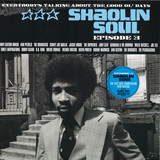
- A1: The Jimmy Castor Bunch - Creation (Epilogue)
- A2: Ann Peebles - The Handwriting Is On The Wall
- A3: The Dells Vs. The Dramatics - Tune Up
- A4: Sydney Joe Qualls - How Can You Say Goodbye
- A5: Jackie Moore - If
- B1: The Supremes - It's Time To Breakdown
- B2: Judy Clay - It Ain't Long Enough
- B3: Barbara & The Browns - In My Heart
- B4: Willie Mitchell - Mercy Mercy Mercy
- B5: Joe Tex - I'll Never Do You Wrong
- C1: The Sweet Inspirations - You Roam When You Don't Get It At Home
- C2: Bobby Bland - Ain't No Love In The Heart Of The City
- C3: B.b. King - Chains And Things
- C4: Rufus Thomas - The Breakdown Part 2
- C5: Freddie Waters - Groovin' On My Baby's Love
- D1: David Porter - Hang On Sloopy (Single Version)
- D2: Dionne Warwick - You're Gonna Need Me
- D3: Ann Sexton - I'm His Wife (You're Just His Friend)
- D4: The Rimshots - Takin' It
- D5: The Persuasions - Gypsy Woman
Quality is the key word from Copenhagen based Music For Dreams and here is another home run. Willie Graff splits his year between DJ residencies in New York and Ibiza. In this new outing with studio partner Darren Eboli, the influence is, as the title suggests, clearly NY-based. Over only four tracks, the pair manage to craft a stunningly comprehensive exploration of the essential elements of dance music.
Opening track "Love Flight" staggers into a lush string-driven groove that recalls the glory of Metro Area meets Wally Badarou vibes. Minimal yet playful, it lounges somewhere in the depths of the house tradition, calling on familiar sounds while throwing in odd details along the way (harmonicas). It takes both skill, devotion and a sense of humor to pull this track off, making for a strong opening. "Moon Tan" lingers on a metallic hook that drags you into a plethora of percussion followed by a rubbery soft baseline. Dubby key work would suggest this was a new wave band jamming at Compass Point, while the icy chill of the xylophone transports you into 80s italo territory.
"Second Sun" pulls out the bag of boogie tricks, relying on a firm but humble baseline and smattering drum machine claps. Nile Rodgers-style guitar licks guide us onwards into a well-orchestrated jam that builds up and breaks down with perfect timing while dreamy chords reach for the sky. "First Light" keeps the groove tight while dipping over towards more Balearic temperatures. Steeped in a watery atmosphere and gentle organic percussion, it focuses in on a trance-inducing arpeggio that lulls you in to the swaying Badarou-style synth swirls that intercept it.
First Word kicks off 2018 with the welcome return of Quiet Dawn, and a new EP, 'Human Being: The Short Story of The Reed'. A suitably ice-thawing six-track opus to compliment the change of seasons, dedicated to the winter blooming plant's desire to be human.
Parisian Will Galland first appeared on the label in late 2014, releasing his debut album 'The First Day' the following year. Collaborations on that album and subsequent mixes since have included offerings from Oddisee, Miles Bonny, Eric Lau, Bastien Keb, Sauce81 (Eglo), Mayaka McCraven and Sarah Williams White.
Evolving his music from a palette accumulated over the years of Hip Hop, Broken Beat and House, he has expanded his talents for arranging and composing, and now drafted in a wealth of musicians for this sublime new EP, his most ambitious yet. Strings glide effervescently atop of Quiet Dawn's assorted analogue synths, and an array of percussive organics combine to build the tale of The Reed. In-places, the set transcends into the kind of grooves that saunter somewhere between the land of Bonobo and Quantic, and the cinematic library record craft of Alan Hawkshaw et al. Deep, organic and epic.
"The reed from the earth and waters,
Human by the flesh and bones,
Bring by the love and others,
Now, you're not alone."
Each track of the EP tells a different chapter of the story. In the words of Quiet Dawn, "This record is about human behaviour, relationships, happiness, sadness, peace, anger, sex, love, birth, death... But as viewed by The Reed. The Reed is a plant that wants to be human, after observing them all around her. Over the course of the record, The Reed evolves and desires to feel feelings, gradually learning that becoming human is not so simple... ."
Also with artwork by Sophie Bass and Grégoire Marty, this glorious six-track vinyl and digital EP is released February 2018 on First Word Records.
Now presented in a shrink-wrapped 6 panel fold out card wallet on CD, on heavyweight double vinyl in a gatefold sleeve. Digitally re-mastered by John Rivers at Woodbine Studios, November 2017 August 1988, Spacemen 3 embark on one of the strangest events in the band's already strange history. Billed as "An Evening of Contemporary Sitar Music" (although consciously omitting the sitar), the group would play in the foyer of Watermans Arts Centre in Brentford, Middlesex to a largely unsuspecting and unsympathetic audience waiting to take their seats for Wim Wenders' film 'Wings of Desire'. Spacemen 3's proceeding set, forty-five minutes of repetitive drone-like guitar riffs, could be seen as the "Sweet Sister Ray" of '80s Britain. Their signature sound is at once recognizable and disorienting - pointing as much to the hypnotic minimalism of La Monte Young as to a future shoegaze constituency. On this double LP reissue, Dreamweapon is augmented by studio sessions and rehearsal tapes from 1987 that would lead up to the recording of Spacemen 3's classic 'Playing With Fire' album. 'Spacemen Jam,' featuring Sonic Boom and Jason Pierce on dual guitar, is a side-long mediation on delicate textures and psychedelic effects.
Following the recent reissues of Jose Mauro's Obnoxius, Piri's Voces Querem Mate and Victor Assis Brasil's Toca Antonio Carlos Jobim, Far Out Recordings presents a second album from Victor Assis Brasil from the treasure trove of the Quartin Records catalogue, Esperanto. Over the course of the 1960s, Roberto Quartin released more than 20 albums in Brazil on his label Forma, by artists including the likes of Eumir Deodato, Quarteto Em Cy, Baden Powell and Vinicius De Moraës. Selling the rights of Forma to Polygram in 1969, Quartin struck out for pastures new at the dawn of the 1970s with the launch of his self-titled label. Significant works and high-water marks for Brazilian music overall followed in that decade's first year. These singular gems in Brazilian music, difficult to categorise yet compellingly beautiful, have for too long gone unheard.Gifted his first saxophone by his aunt at the age of fourteen, only four years later the inherently gifted and determined young musician Victor Assis Brasil recorded his debut album, with a second to follow only a year later. The prodigious young carioca was subsequently granted a place to study at Berklee College of Music, where he played alongside the likes of Dizzy Gillespie, Clark Terry, Chick Corea and Ron Carter. It was also during this period he recorded Esperanto and Toca Antonio Carlos Jobim with Roberto Quartin, upon returning to Brazil in the summer of 1970.Recorded in the same sessions as the Toca Antonio Carlos Jobim album, Esperanto consists of five deep jazz cuts: original compositions except for a heavy-swinging latin-jazz cover of Jimmy Heath's 'Ginger Bread Boy', alongside more moments of wild frenetic jazz, like 'Quarenta Graus A Sombra', amongst more melancholic, but no less captivating compositions like 'Marilia' and 'Ao Amigo Quartin'. Esperanto's influences span both American continents, finding a meeting point for Latin jazz and North American post-bop, with Roberto Quartin's perfectionist approach to sound elevating the already incandescent music to divine new heights. The band consists of some mercurial greats of Brazilian music: Dom Salvador (bass), Edison Machado (drums), Helio Delmiro (guitar) and Edson Lobo (Bass).Victor Assis Brasil passed away aged just thirty-five, due to a rare circulatory disease, but by this point his status was already cemented as one of the most talented musicians in Brazil's history.
Vozduh (air) marks the first in a series of EPs by Nocow for Figure, showcasing his emerging signature-style of Electronica-tinged techno. Drawing inspiration from the sheer endless winters of St. Petersburg, his series builds on classic IDM tropes, imbuing them with a noticably Russian and deeply personal sensitivity. As each part of the trilogy is represented by an element, the tracks on Vozduh are vaporous by nature: from the crackling ambiance of opener Bouis to the weightless vocals on stoic Forgiven, as well as a surprisingly introspec-tive take on ghetto-house or the wafting melodies closing out the record's B-side - all forms seem to be in con-stant shift, casting a dense yet permeable body of sound. With two more releases on the way, which will be exploring the themes of voda (water) and zemlya (earth) within this artist's singular spectrum, the outlook (which also includes a full- volume edition) on this approaching season is anything but gloomy.
Voda (water) the second part of his trilogy sees Aleksei Nikitin delving deep into Baltic seas. coming up again with chilled flows of acid on Vdaleke, the bubbly yet driving thump of subaqueous Place-holder; then he goes diving even further on the flip, cruising through underwater caves filled with ten-tacles of twisted, seductive electro, gnarly acid-techno, before finally emerging in Iskatel, ears still ringing with harmonies of shredded beauty.
B. Fleischmann, the longest-tenured solo artist on Morr Music, returns with indie-spirited, electronica-enhanced moments of bliss on his new album Stop Making Fans': Recorded with a little help from friends including vocalist Gloria Amesbauer, Markus Schneider (guitars), and Valentin Duit (drums), it's a two-part reflection on artistic self-reliance vs. fame-seeking conformism, another deeply personal, utterly idiosyncratic album by the Indietronic trailblazer.Stop it and just DO,' Sol LeWitt once wrote to sculptor Eva Hesse - and listening to B. Fleischmann's new album, he indeed does both: He slams on the brakes and stops looking at what anyone else is doing, stops pleasing, stops being restrained, and at the same time he floors the accelerator and delivers the kind of high-paced work that bursts at the seams with polyphonic energy and an urgency unique to his music.Arriving with interlocked bleeps, the hustle and bustle of an invisible grand station's atrium ( Here Comes The A Train'), Fleischmann's trademark vocals serve as a gentle reminder to resist the siren calls, to not trust the latest hype. Energy levels remain high throughout the first part of the LP - whether it's the mumbling, personal stocktaking of what feels like an underwater hymn ( There Is A Head'), the robotic, immodest pop tune It's Not Enough' (feat. Gloria Amesbauer) or the return to light-speed mode on Wakey Wakey' - the first half of this album is indeed all about letting off some steam.After the collected canter of 7-minute instrumental Hand In,' the multi-instrumentalist & his studio mates kick off the slower-paced part II with the title song: a note to self, a reminder to never buckle or water down an original vision... and indeed, it's a sonic tapestry that's impossible to compare or pigeonhole when he changes the rhythm in mid-track and turns yet another corner when you thought you had discovered a fixed pattern. That said, B. Fleischmann certainly knows how to orchestrate an entire funfair full of sonic attractions. Guest singer Gloria Amesbauer returns for soothing tunes The Pros of Your Children and "Hello Hello . B. Fleischmann guides us to his almost jazz-tinged Little Toy , and leaves behind an Endless Stunner — another typically dense and shape-shifting stream of harmonies that keeps winding its way until the very end of this album It's rare that an album is great because it does not live up to its title - but here's one. Stop Making Fans,' his first full-length release in five years, is another totally unique, and thus potentially fan-base enhancing release. But then again, it's always been like that: We're usually at our best when we care the least - look at the delightful ways of toddlers or really old people. That natural ease, those invisible shrugs of shoulders: it's what does the trick. And you can hear a lot of that on Stop Making Fans'.
- A1: Amir Bresler - Please Do
- A2: Sol Monk - Third Eye (Feat. Jenny Penkin)
- A3: Nitai Hershkovits - Flyin' Bamboo Feat. (Feat. Mndsgn)
- A4: Mo Rayon - Icey 2
- A5: Sixounce - Tomato Wax
- A6: Dj Mesh - All Night (Feat. Mo Rayon)
- A7: Playdead - Less Sad, More Psycho
- B1: Sefi Zisling - Daytime Near Calm Waters
- B2: Buttering Trio - Cacti Juice
- B3: Nomok - Time To Talk (Instrumental Version)
- B4: Kali Boog - Infinite Innit (Feat. Ateller)
- B5: Yudko - So It Goes
- B6: Rejoicer - Dreaming Upper Body
The Tel Aviv based music label 'Raw Tapes Records' has been getting a lot of attention in the last few years, broasdcasted around the world (Gilles Peterson/BBC, The Gaslamp Killer, Toshio Matsuraa/Tokyo Moon FM, Dom Servini/Wah Wah 45 London, Peanut Butter Wolf/Stones Throw LA, Radio Nova/France, Wicked Jazz Sounds/Amsterdam, KCRW/LA, Andrew Jervis/Bandcamp).
With more than 70 albums released out of around 20 local artists within an 10-years work, this is no doubt the most productive independant music label in the history of Israel, and surely Tel Aviv's leading Beats/Hip Hop label and collective.
Puzzles vol.3 is the third volume in the Puzzles Compilations Series from Raw Tapes, featuring 13 of the current artists on the label, including Buttering Trio, Sol Monk & Nitai Hershkovits. The release features cooperations with MNDSGN, vocalist Jenny Penkin, Uzi Ramirez and more.
Curated by KerenDun, this album ranges from Beats & Hip Hop to Jazz and Electronics.
The album marks the 10-years-Anniversary for Raw Tapes.
Lvis Mejía's newest project, titled Anthropology of AmnesiA is an acousmatic essay addressing our utter necessity to remember in the face of existential oblivion, an innate behaviour of the human race.
Presented as a 33 minute long continuous composition, Anthropology of AmnesiA unrolls as a series of chapters, the contemplative character of the piece opening a particular frame within the listening experience, where Lvis Mejía attempts to convey the phenomenon of the collective consciousness through the cultural traces we leave behind.
Mejía's takes the idea of one species, one culture, one past' and places it at the center of the concept of the piece. Anthropology of AmnesiA examines a number of interpretations of rituals, orchestrations, chants, synthesis and field recordings - nestled within the piece are recordings of animals, fire, water and a human heart - the sum of these sonic identities incidentally reshaping their roots.
The diversity of the sonic sources highlights the comparative study element of Mejía's work yet the common thread remains the human experience, recorded stories and the viva voce.