Jack’s House Recordings kick starts 2026 with a brand new VA featuring talent from all corners of the globe, with artists coming from Portugal, to Australia, the USA and Ibiza !
First up is Alex Arnout with “Baby Let You Know” which is another solid production giving punchy and techy energy with a baseline that will wake you right up when it drops in ! It’s dark, edgy, and has a powerful signature sound that is perfect for the big dance floors as well as your underground intimate ones. Alex is no stranger to the imprint, having been the first artist signed to the label which is about to celebrate it’s 10th year as an independent record label.
Next up, we welcome back popular and talented producer Carlo Gambino with “Time Of Need” which takes you through 6 and a half minutes of a lovely gritty underground groove, and vocal snippets of the track title throughout the arrangement with his warm and unmistakable signature sound.
Then we have AMO (um) & Mills with the more minimal track of the VA, “Therapy” This is a stripped back track but instantly memorable after just one listen. Driven by a simple kick, snare, haunting fills and a riding dark baseline, the track also presents a conversation between two Women having a slightly confusing conversation in a therapy session.
Last up, it is a pleasure to introduce and welcome USA’s Jordan Bernardo & Sharktooth from the Tasteless Thieves crew to the label with their excellent collaboration on the track “So Sorry” This is the light on the VA with this massively uplifting infectious groove. The track is giving skippy swinging beats, filtered vocals which tease in and out of the arrangement, and a great energy that takes you back to the early 2000’s era.
In a nut shell, this fresh Jacks Tracks VA offers 4 unique tracks that can serve any DJ at various points of the night, from warming up, a hands up moment, 3am pushing energy, and a perfect afterparty vibe too. That is always the aim with the Jacks Track VA series, to give vinyl buyers a bit of everything while maintaining talent and the nature of the underground.
Поиск:one hand
Все
Sole Aspect returns with the second part of its Sole Discretion series and this one goes deeper into the club while expanding on the textured, late-night energy of its predecessor. Dubbyman opens with widescreen deep house on 'Always In & Out' which wraps Aki Dawson's hypnotic Chi-town vocals in slow-burning warmth. The Windy City's Specter follows with a warm, weighty beatdown rooted in the US Mid West before Boo Williams turns up the heat with rolling basslines and his signature rhythmic deftness, backed with a subtle cosmic glow. Taelue closes the set with 'Interplanetary' which is a raw, futuristic cut that drifts into spacey territory and, along with the other cuts, is a sharp reminder that Chicago house's future is in good hands.
- 1: Tell My Man
- 2: Everyone’s Favorite
- 3: Under My Bed
- 4: Flutter Away
- 5: Leaving
- 6: Bonus – Encyclopedia
- 7: Bonus – My Bell Rings
- 8: Vows
- 9: Hear Your Soul
- 10: You Don't Have One Hope
- 11: Split July/Delete Your Files
- 12: It Must Be Bad
- 13: If Someone's Gonna Love You
- 14: Bonus – Cozy
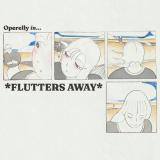
Ultra Clear Vinyl. ‘*FLUTTERS AWAY*’ follows last year's debut EP, ‘Handwriting Practice No. 1’, which established Operelly as one of the most exciting new voices in music. Thupcoming EP tells the story of a relationship breaking down
amidst miscommunication. Delicate electro-acoustic arrangements (dubbed "tiptoe music" by Operelly) intersperse
with the static sounds of radio interference, as if the interrupted communication recounted in the lyrics has punctured the songs
themselves. Operelly executive produced the entire record and mixed four of the five songs. Additional production work was provided by Hudson Pollock, Al Carlson, Stephen Willard, and Kali Flanagan. Cover art was designed by Leo Horton in collaboration with Operelly. The music video for "under my bed" was directed and shot by Sarah Elise Bauman
Still Music are proud to present the reissue of “A Message For The DJ” by one of Detroit’s finest, Delano Smith featuring the distinct vocals of Diamondancer. Featuring the now legendary remix by Jimpster, that has constantly been played since it’s initial release in 2005 by DJ’s across all scenes within the House spectrum.
Original copies of this Deep House classic are hard to come by on the second-hand market, regularly changing hands for close to £70, if you’re lucky enough to find one! Here’s your chance to get one over on those pesky Discogs sharks. Don’t delay!
- Being Left By Today Feat. Norman Blake
- Feather And A Bird Feat. Norman Blake
- Disinformation Feat. Norman Blake
- El, El, El Feat. Norman Blake
- Secret Of Dead Youth Feat. Norman Blake
- Queen Christina The Second Feat. Norman Blake
- Keep Rest In Thunder (My Dying Day) Feat. Norman Blake
- Is Anybody There? / What Am I Afraid Of? Feat. Norman Blake
- Somethin’ Funny Goin’ On Feat. Norman Blake
- Twenty & Twenty Two / Mealy Tell I Am Feat. Norman Blake
- Warehouse Feat. Norman Blake
- Right / Wrong Feat. Norman Blake
- Beautiful Dream Feat. Aby Vulliamy
- Shirley Brassy / Bushed Feat. Aby Vulliamy
- Leave Me Alone Feat. Aby Vulliamy
- Tie Your Hands Feat. Aby Vulliamy
- Who I’m Married To Feat. Aby Vulliamy
- First Time Feat. Aby Vulliamy
- California Girl Feat. Aby Vulliamy
- High Alone Feat. Aby Vulliamy
- Money Dream Feat. Aby Vulliamy
- Mackenzie’s Return Feat. Aby Vulliamy
- I Found It Feat. Aby Vulliamy
- Altogether Hollow World Feat. Aby Vulliamy
On Dreams ’24 / ’25, Scottish composer Bill Wells turns his nocturnal imagination into a sequence of delicate musical miniatures. The album brings together 24 short pieces, most of them under two minutes, unfolding in just under half an hour like a quietly drifting dream diary.
The album is split into two parts. On the Dreams 2024 side, Norman Blake lends his voice to Wells’ dream-born melodies. Blake, best known as a founding member of Teenage Fanclub, recorded the songs with Wells in a single afternoon at his home, capturing their fragile immediacy in direct and unadorned performances.
For Dreams 2025, Aby Vulliamy — one of Yorkshire’s best kept musical secrets — takes over vocal duties. In mid 2025, Wells sent her a batch of demos; Vulliamy recorded them at home and sent them back to him. The result is a second chapter that feels more introspective, intimate and gently surreal.
The songs themselves are born directly from dreams. Wells wakes from the dream, records it on his mobile and later shapes it into a brief, lyrical composition. One piece, Mackenzie’s Return, was inspired by a dream in which Elvis Costello marched through the streets of a suburban town complaining that he had run out of song ideas, a detail that perfectly captures the album’s blend of humour, strangeness and quiet melancholy.
Dreams ’24 / ’25 is not a collection of fully formed pop songs, but rather a series of fleeting emotional snapshots: soft voices, simple motifs, and melodies that appear and vanish before they can fully settle. It is an album that rewards close listening, inviting the listener into a private, half-lit space somewhere between memory and imagination.
The album is accompanied by a striking cover artwork by Annabel Wright.
Mercurial Swede Axel Boman debuts on Aus Music with four spellbinding deep house beauties
Swedish artists pbeatgirl and Joakim Åhlund & Jockum Nordström feature on one track each
Axel Boman has brought playful charm to the underground for nearly two decades. His colourful, emotive sound marries melodic whimsy with warm, cuddly grooves and is underpinned by invention and experimentation in sound design, rhythm and mood. The Studio Barnhus co-founder is an artist who can make you laugh and cry at the same time, as continually shown across more than 20 EPs and four full-length albums on a tasteful array of labels. He strides into 2026 with a first EP for Aus that embodies everything that makes him easy to love and hard to pin down.
First up is 'Night Blooming' feat pbeatgirl - a provocative figure in Sweden's post-pop underground. The sensual late-night lullaby has soft drums and even softer spoken words whispered in your ear. Add in the dreamy synths, and you have perfect house hypnosis. 'Someone Stop Me' slows the tempo but ups the texture with raw, tumbling drum loops, incidental guitar licks and sustained pads that help you zone out and gaze into the distance on a summer's afternoon.
'Svalor Radiosignal (Axel's Dub)' features Joakim Åhlund, who is currently on tour of Australia with his band Les Big Byrd, and is also a guitarist and lead singer in the Caesars band he founded, as well as being a prolific producer. World-renowned multi-disciplinary artist Jockum Nordström works across painting, sculpture and collage and also features. There's a signature Boman innocence and charming naivety to the melodies here. They leave wispy, painterly trails above the smooth, dubby groove and fill you with warmth and comfort. Closer 'Spooky' journeys later into the night with a more rickety, edgy mood, but beautiful, shape-shifting synths are like a tender hand guiding you into darkness.
This is Axel Boman at his most intimate and expressive, a quietly powerful EP for heads-down moments and after-hours warmth.
Tokyo deep house master Soshi Takeda returns with a long-awaited six-song sequel to 2021’s landmark Floating Mountains, surfing deeper into mystery, motion, and liquid dreams: Secret Communication. Recorded across 2022 and 2023 at his home studio with a unique assemblage of 80’s and 90’s hardware, the tracks cruise through a latticework of skyways on lush pads, bubbling bass, and blissed BPMs, dusted in sunrise acid and cosmic piano. His is a dance music of idyllic emotions and inner worlds, yearning for new horizons.
Dramatic events overlapped with the album’s creation: “Wars broke out. On the other hand, my child was born. There were sad and beautiful moments in my life.” Secret Communication contains vistas, valleys, glimpses of lives unled, swirling above the grey noise of the city. From the jazzy daydream of “Can Imagination Transcend Distance?” to the sleek starlight house of “Rainstorm” to the farewell ecstasy of the title track, Takeda’s music touches and transports, a portal to places beyond. Fantasy and feeling, intention and inspiration, all become one: “When I listen to beautiful deep house, I feel a mysterious atmosphere. Dreamy scenes come to mind. I aim to create that sound.”
- A1: Another World
- A2: Fleeting
- A3: I’m Bored
- A4: Easy Man
- A5: Killincs
- A6: My Sister’s Loom
- B1: Mountain Song
- B2: Belljar Convenience
- B3: Fated To Pretend
- B4: Waiting Game
- B5: A Light
A Profound Non-Event, the debut album by Sydney-based three piece Daily Toll, comprises 11 songs traversing three years of forged friendships, collaborative experimentation and a shared love of growing through words and song.
Those attuned to the ever-vibrant Australian underground may already be well familiar with Daily Toll, their consistent live presence since their inception in 2021 embroidered by a handful of (mostly) home-recorded, (mostly) digital self-releases that have steadily accumulated an appreciative following. Initially the project of self taught musician, poet & artist Kata Szász-Komlós(they/them) and Jasper Craig-Adams(he/him), and expended to a three piece with the more recent addition of friend Tom Stephens(he/him), Daily Toll represents the union of three unique creative dispositions, of relationships blooming through the push and pull of creative practice. Mapping the band’s existence through their recorded output is to bear witness to the flux of three people learning to respond to one another and gently ossify into a collective vision that at once calls to mind folk song intimacy, post-punk dynamics and the artful poeticism of an adjacent Flying Nun legacy.
If those earlier recordings reflect a band imagining themselves into being in real time, A Profound Non-Event observes a clear shift in both conviction and approach. Recorded in just three days with Alex Bennett at the purely analogue Sound Recordings studio in Castlemaine and holing up at night in the century old cottage situated beside the studio, sheltering from the late-June wind and rain within walls littered with instruments and microphones, lighting fires to stay warm. Kata describes the experience as defined by “candle light and creative camaraderie”, an idyllic account of a collection of songs that glide with an undeniably warm, easy charm, evidenced in particular in the record’s second half as the tone turns increasingly introspective, the very sound of a cold evening’s drift into night. When contrasted with the moody swirl and sing-song bounce of the opening trio of tracks, there’s clear evidence of a band not simply in the process of becoming, but committed to finding their truth in that process.
Still, if Daily Toll display a reluctance to be wholly defined, then album centerpiece ‘Killincs‘ (positioned in the middle for a reason) might just be their Rosetta Stone. A verbose rumination on unsettled feelings of isolation and longing, exploring the challenges in making peace with one's decisions amidst the uncertainty of an often harsh world and the realisation that some things remain best unresolved - “I have the keys still, but I’ve buried the path”.
ELSI celebrates the 40th anniversary of Marimba Do Mar with a special reissue of the highly sought-after record produced by Roberto Lodola, one of the pioneers of Italy’s Afro-Funk movement.
Four decades on, Marimba Do Mar remains a true Balearic anthem. This special edition includes Feeling Of The Sun, created in 2014 from rediscovered original tapes and reimagined by Lodola into a sun-soaked, electronic version of the original. The B-side delivers two vinyl debuts: Marty’s Beach, driven by elegant piano riffs and a memorable sax solo from long time collaborator Alessandro Bertozzi, and Mother Africa (Ibiza Dub Mix), a deep Afro-Funk interpretation in a modern electronic key produced during his stay on the magic island.
This limited pressing, distributed by Sound Metaphors, offers selectors a rare opportunity to celebrate a landmark chapter in Balearic history, with ELSI placing your next summer record directly into your hands.
Gatefold Sleeve
M’Bamina – African Roll (1975)
The story of an album born between Africa, Italy, and the nightclub culture of the 1970s
In the heart of 1970s Italy — a country undergoing profound social change and a music scene just beginning to open itself to distant sounds and cultures — an extraordinary, almost improbable story took shape. It is the story of a group of young African musicians who found their way to Europe, of a Turin nightclub that became a crossroads for communities and experimenters, and of an album which, released in small numbers and largely unnoticed at the time, is now considered a rare jewel of Afro-fusion.
The band called themselves M’Bamina — an ensemble of musicians from Congo, Cameroon, and Benin, who arrived in Italy in the early Seventies. Settling between northern Italy and the Pavia area, they began performing in small clubs and community events, bringing with them a vibrant rhythmic heritage: African polyrhythms, call-and-response vocals, funk-infused bass lines, and Caribbean or Afro-Latin colours absorbed along their musical journeys. Their raw, contagious energy on stage quickly drew attention.
Meanwhile, in Turin, another story was unfolding. There was a venue becoming almost legendary: Voom Voom, one of the city’s liveliest nightclubs, run by Ivo Lunardi. The club attracted an eclectic crowd — students, artists, foreigners, night owls — and Lunardi quickly understood that the dancefloor wasn’t just a place for music, but a melting pot for a new kind of cultural energy. Out of this vibrant atmosphere came his idea: to turn the club’s name into a small independent record label, Voom Voom Music, capable of capturing the spirit of those years and giving voice to unconventional projects.
When Lunardi heard M’Bamina, he immediately sensed that this was the sound he had been searching for: fresh, different from anything circulating in Italy at the time, and capable of blending African tradition with funk and European sensibility. He brought them into the studio.
Production was handled by Lunardi along with Christian Carbaza Michel, while the engineering was entrusted to Danilo Pennone, a young sound technician with a sharp, intuitive ear.
The recording sessions — held in Turin in 1975 — produced a remarkably warm and direct sound. The music feels almost live: grooves rooted in African tradition, but open to funk-rock structures and modern arrangements. It is a natural fusion, never forced. Tracks move between tribal rhythms, funk basslines, light electric guitars, congas and Afro-Latin percussion, with call-and-response vocals and melodies that echo both Congolese tradition and the lineage of Latin jazz. Not by chance, one of the album’s most striking tracks, Watchiwara, reinterprets a Latin standard through M’Bamina’s own rhythmic language.
The album was titled African Roll — a name that was already a statement of intention. It is African music that “rolls,” that moves, adapts, transforms within a new geographic and cultural setting. It is not strictly Afrobeat, nor Congolese rumba, nor Western funk: it is a spontaneous, hybrid blend, shaped more by lived experience than by any calculated aesthetic program.
When African Roll was released, the world around it barely noticed. Distribution was limited, and 1970s Italy had yet to develop a cultural framework for receiving such music. The national music press rarely paid attention to African or “world” productions. The album slipped into silence — though the band’s own story did not.
M’Bamina continued performing across Europe and Africa, even sharing a stage in Cameroon with none other than Manu Dibango. By the late Seventies, they moved to Paris, signed with Fiesta/Decca, and recorded a second LP, Experimental (1978). Meanwhile, the peculiar record they had made in Turin began to resurface quietly among vinyl collectors, Afro-funk enthusiasts, and DJs hunting for forgotten grooves.
That is when the album’s fate began to shift.
Over the decades, African Roll emerged as an almost unique document: a snapshot of an intercultural Italy before the word “intercultural” even existed, a fragment of migrant history, a spontaneous experiment in musical fusion born far from major industry circuits but rich in authenticity. Original copies began commanding high prices on the collector’s market, and the album became recognized as one of the hidden classics of European Afro-fusion from the 1970s.
Today, more than fifty years later, this reissue finally restores visibility and dignity to a project that deserves to be heard, studied, and celebrated. It is not simply an album: it is the testimony of a rare cultural encounter, born in an Italy unaware of how fertile such exchanges would one day become.
It is the story of a visionary producer, an extraordinary band, and a fleeting moment in which music, migration, and nightlife came together to create something genuinely new.
African Roll is — now more than ever — the sound of a bridge: between continents, between eras, between cultures. A record that, after rolling far and wide, has finally come home.
Somewhere long ago in a vinyl galaxy near you We Play House Recordings released an E.P. called ‘This Is Still Belgium Vol 1’. The release was called like that because the music on it could only have been made by Belgians. Vol 2 never happened…until now. Label boss Red D has always been inspired by the rich Belgian club music of the 90’s and inevitably those influences have sneaked into his own productions, but never as clear as on the three tracks you are reading about now.
And so the original WPH series has been revived with WPH 024.5, aptly called ‘This Is Still Belgium Vol 2’. The music is situated somewhere between house, progressive house and early trance music, basically club music with soul & melody at its core.
On the A-side we find Red D teaming up with his friend Mona Lee, a soul sister who has been making waves in recent years in soulful house circles and who comes up with the vocal prowess to match Red D’s emotional trip of a track and heartfelt lyrics. Can you handle the break?
The B-side opens up with ‘Tides’, a deep hypnotic builder for late night eyes-closed dance floors and closes with ‘Papillon’, a track that came to life long ago in the minds of Telepaticos (Marcos Salon & Sandro Valcke). When Red D heard a demo version of this one the melody got stuck in his head and never really left him. Many moons later he rediscovered the parts of this one on a hard drive and got to work on his interpretation that features on this E.P. Safe to say the track holds a special place in Red D’s heart and we’re sure you’ll feel it as well!
‘An Undying Love For A Burning World follows Converge’s Love Is Not Enough this year as a pivotal metal album about acknowledging the darkness for what it is and trying to accept it.’ - the QUIETUS
‘Neurosis Know You’re Hurting. Their Stunning New Album Is a Life Preserver.
An Undying Love for a Burning World, the band’s first album with new member Aaron Turner, is a reminder of how even the darkest music can be a guiding light’ - 9/10 ROLLING STONE
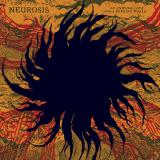
Evolution can be ugly and beautiful, painful and euphoric. An Undying Love For A Burning World is the first new release from Neurosis in a decade, and a potent statement of intent and rebirth - one that marks the first new steps of resolve and resilience.
An Undying Love For A Burning World is an epic album of colossal hypnotism - beautiful, fearsome and utterly compelling in a way that only Neurosis can be. Aaron Turner (Sumac, Isis) joins the band on vocals and guitar, a name whose legacy is intertwined with the band’s own and a true kindred spirit.
“From the moment I first heard Neurosis over 30 years ago, I felt this was the music my heart and mind had been seeking but not yet heard. Now after many years travelling along various musical paths of my own, the singular sound and spirit embodied by Neurosis continues to speak to the depths of my being. It is an honor and a true pleasure to have been welcomed so warmly into a band that not only shaped my perspective on the limitless possibilities of music - but has lived and exemplified the necessity of upholding creative integrity and camaraderie above all else.” - AARON TURNER
Neurosis have never been afraid of change, and here they embrace endless regeneration, surrendering to the emotional exorcism through heaviness and distortion that their music incites. Just as the universe tends towards balance, Neurosis’cacophony of noise, rhythm and dissonance always resolves towards moments of beauty. The addition of Turner's powerful vocals and wildly creative and unhinged approach to guitar proves to be a vital force as Neurosis find themselves again at the mercy of evolution and expression.
On every song in the band’s history, Neurosis shifts restlessly between tension and relief, invoking a feeling both feral and transcendent in listeners. The band describe their songwriting process as an inescapable impulse to create with each other - a need rather than a choice. Indeed, the band insist that their return is “not a reunion - we never broke up.”
The album was recorded by Scott Evans (Kowloon Walled City, Sumac, and Great Falls) at Studio Litho in Seattle during three weekends this winter, and mixed in three days just six weeks before release at Evan's Antisleep Audio in Oakland.
Neurosis will play their first show in seven years on the traditional lands of the Blackfeet Nation in Montana as part of Fire in the Mountains festival by special invitation of Firekeeper Alliance, a non-profit dedicated to reducing youth suicide in Indian Country.
FITM, is a unique festival known for bringing epic music to epic landscapes with the intent of reconnecting and immersing oneself with the natural world, and strengthening our ancestral roots as human beings - an aim which aligns directly with Neurosis’ deep-rooted power.
Stay tuned for further news over the coming months.
PREVIOUS PRESS:
‘In less skilful hands, this relentless sonic oppression would be gruelling, but by expressing human frailty with such visceral abandon, Neurosis have once again turned darkness into euphoria.’ - 4/5 THE GUARDIAN
‘The Oakland band has evolved from gritty metallic punk to harrowing post-hardcore prog to the majestic doom of their current phase’ - 7.9 PITCHFORK
‘It’s not often an album of such stature exceeds one’s anticipations, but Honor is too astounding to not be revered.’ - The QUIETUS
“Fires Within Fires is the summation of thirty years of experimentation in tonality and texture. Yes, NEUROSIS are firmly positioned within the extreme metal underground yet their music, with its ability to generate images of beauty akin to those many of us have experienced in our own lives – not to mention the loss that accompanies them – challenges this categorization. ‘’ - WIRE MAGAZINE - FULL PAGE REVIEW.
"Their intensity remains undimmed on Fires Within Fires...The already converted will take heart from the evidence that age is unable to wither the fury of this heaviest of bands." - KERRANG! 4K REVIEW
"Every monstrous sludge riff gnashes menacingly for the right amount of time and every delicate moment of folk-inspired drift is emotionally exacting. Neurosis continue to create art without equal, and Fires Within Fires is another worthy addition to an awe-inspiring canon containing a number of truly pioneering and timeless albums." - METAL HAMMER - 8/10 LEAD REVIEW
‘An Undying Love For A Burning World follows Converge’s Love Is Not Enough this year as a pivotal metal album about acknowledging the darkness for what it is and trying to accept it.’ - the QUIETUS
‘Neurosis Know You’re Hurting. Their Stunning New Album Is a Life Preserver.
An Undying Love for a Burning World, the band’s first album with new member Aaron Turner, is a reminder of how even the darkest music can be a guiding light’ - 9/10 ROLLING STONE
Evolution can be ugly and beautiful, painful and euphoric. An Undying Love For A Burning World is the first new release from Neurosis in a decade, and a potent statement of intent and rebirth - one that marks the first new steps of resolve and resilience.
An Undying Love For A Burning World is an epic album of colossal hypnotism - beautiful, fearsome and utterly compelling in a way that only Neurosis can be. Aaron Turner (Sumac, Isis) joins the band on vocals and guitar, a name whose legacy is intertwined with the band’s own and a true kindred spirit.
“From the moment I first heard Neurosis over 30 years ago, I felt this was the music my heart and mind had been seeking but not yet heard. Now after many years travelling along various musical paths of my own, the singular sound and spirit embodied by Neurosis continues to speak to the depths of my being. It is an honor and a true pleasure to have been welcomed so warmly into a band that not only shaped my perspective on the limitless possibilities of music - but has lived and exemplified the necessity of upholding creative integrity and camaraderie above all else.” - AARON TURNER
Neurosis have never been afraid of change, and here they embrace endless regeneration, surrendering to the emotional exorcism through heaviness and distortion that their music incites. Just as the universe tends towards balance, Neurosis’cacophony of noise, rhythm and dissonance always resolves towards moments of beauty. The addition of Turner's powerful vocals and wildly creative and unhinged approach to guitar proves to be a vital force as Neurosis find themselves again at the mercy of evolution and expression.
On every song in the band’s history, Neurosis shifts restlessly between tension and relief, invoking a feeling both feral and transcendent in listeners. The band describe their songwriting process as an inescapable impulse to create with each other - a need rather than a choice. Indeed, the band insist that their return is “not a reunion - we never broke up.”
The album was recorded by Scott Evans (Kowloon Walled City, Sumac, and Great Falls) at Studio Litho in Seattle during three weekends this winter, and mixed in three days just six weeks before release at Evan's Antisleep Audio in Oakland.
Neurosis will play their first show in seven years on the traditional lands of the Blackfeet Nation in Montana as part of Fire in the Mountains festival by special invitation of Firekeeper Alliance, a non-profit dedicated to reducing youth suicide in Indian Country.
FITM, is a unique festival known for bringing epic music to epic landscapes with the intent of reconnecting and immersing oneself with the natural world, and strengthening our ancestral roots as human beings - an aim which aligns directly with Neurosis’ deep-rooted power.
Stay tuned for further news over the coming months.
PREVIOUS PRESS:
‘In less skilful hands, this relentless sonic oppression would be gruelling, but by expressing human frailty with such visceral abandon, Neurosis have once again turned darkness into euphoria.’ - 4/5 THE GUARDIAN
‘The Oakland band has evolved from gritty metallic punk to harrowing post-hardcore prog to the majestic doom of their current phase’ - 7.9 PITCHFORK
‘It’s not often an album of such stature exceeds one’s anticipations, but Honor is too astounding to not be revered.’ - The QUIETUS
“Fires Within Fires is the summation of thirty years of experimentation in tonality and texture. Yes, NEUROSIS are firmly positioned within the extreme metal underground yet their music, with its ability to generate images of beauty akin to those many of us have experienced in our own lives – not to mention the loss that accompanies them – challenges this categorization. ‘’ - WIRE MAGAZINE - FULL PAGE REVIEW.
"Their intensity remains undimmed on Fires Within Fires...The already converted will take heart from the evidence that age is unable to wither the fury of this heaviest of bands." - KERRANG! 4K REVIEW
"Every monstrous sludge riff gnashes menacingly for the right amount of time and every delicate moment of folk-inspired drift is emotionally exacting. Neurosis continue to create art without equal, and Fires Within Fires is another worthy addition to an awe-inspiring canon containing a number of truly pioneering and timeless albums." - METAL HAMMER - 8/10 LEAD REVIEW
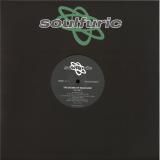
- A1: Donna Allen ‘He Is The Joy’ (B’s Special Edit)
- A2: Urban Blues Project Presents Mother Of Pearl Featuring Pearl Mae ‘Your Heaven (I Can Feel It)’ (Micky More & Andy Tee Remix)
- B1: Urban Blues Project Featuring Bobby Pruitt ‘We Are One’ (Jazz-N-Groove Hands Up Vocal)
- B2: Gabriel Rene Featuring J Soul ‘Spirit’ (Emmaculate Remix)
The Sound Of Soulfuric Vol. 2 continues the label’s reputation for vocal-led, groove-driven house music, bringing together strong vocals, solid songwriting and modern club-ready production across four DJ-focused cuts.
This is a release designed for dancefloor use. Whether it’s a vocal room, a terrace set or a packed house floor, every track is built to maintain momentum and keep the room moving.
Featuring voices from Donna Allen, Pearl Mae, Bobby Pruitt and J. Soul, this EP blends classic soulful house roots with current, punchy remixes, making it highly playable in today’s sets while still appealing to long-time Soulfuric fans.
- A1: Outro
- A2: Les Monstres
- A3: La Fenêtre
- A4: Être Une Fille
- A5: Sidequest Feat. Asfar Shamsi
- B1: Avec Ça
- B2: Bonhomme De Neige
- B3: Vivant
- B4: Les Rois
- C1: Cowgirl Feat. Tuerie
- C2: Eh Le Reuf
- C3: Kodak Blue
- C4: Vol De Nuit Feat. Jazzy Bazz
- D1: L'école Primaire Feat. Chilly Gonzales
New album by french rapper Sheldon, including featurings with Chilly Gonzales, Jazzy Bazz, Tuerie, Asfar Shamsi...
Monsters are never where we expect them to be. They take shape in silences, in vague fears, in the baggage we carry without always understanding it. Sometimes, we also encounter them along the course of a life. On this new album, Sheldon chooses to dance with them, to tame them with wit, grace, and a sense of peace.
Following a powerful return with Grünt 75, an iconic format to which the 75e Session collective brought particularly ambitious visual staging, Sheldon unveils a fourth album that unfolds across fourteen tracks like a chiaroscuro landscape, revealing the full depth of his emotional and musical range. Through intimate narratives, the record explores identity (Être une fille), family and fatherhood (La Fenêtre and Les Monstres, the title track), as well as friendship (Eh le reuf). These are themes that run through all of us, approached here with writing that is vivid, demanding, and deeply sensitive.
Driven by a strong narrative arc, the album features songs like Être une fille, which challenges and questions us. On it, Sheldon reflects on his relationship to gender, his doubts and discomfort with the codes of masculinity, and the idea that he has sometimes imagined himself elsewhere. Tracks like La Fenêtre and Avec ça illuminate the album like moments of communion, sincere, warm, and unifying, carried by a childlike lightness that makes tomorrow disappear.
True to his open minded and ever curious artistic approach, Sheldon draws from a wide range of musical genres while keeping rap as the album’s guiding thread, giving each song its own singular identity and contributing to the balance of the whole. To shape the project, Sheldon surrounded himself with a new generation of musicians and beatmakers whose influences span rap, indie rock, pop, and experimental music. Among them are Johnny Ola, who has notably composed for Zamdane, Jazzy Bazz, and Edge, Rodolphe Babignan, Carbonne’s flamenco guitarist, and Jeune Oji, an artist signed to Friends of Friends Music. Together, they bring melodic and acoustic richness, as well as a collective generosity that deepens the album’s intimacy.
This new album also opens the door to new collaborations.
On L’école primaire, Chilly Gonzales joins Sheldon for an unconventional piano and vocals piece, driven by cinematic, deeply intimate storytelling. Using his primary school as a point of reference, Sheldon retraces his path from childhood to adulthood, somewhere between nostalgia and serenity.
On Cowgirl, Tuerie joins Sheldon for a soft, melodic ballad with an 80s tint, capturing the weightlessness of a sunlit summer.
On Sidequest, Sheldon reunites with Asfar Shamsi, who had already appeared on his Grünt. Over a delicate cloud trap production, the two artists open up about everyday pain, finding in introspection a way to put things into perspective.
Finally, Vol de nuit brings Jazzy Bazz and Sheldon together for an intimate exchange over an ethereal, mysterious production, as both artists look back on their journeys with calm and clarity.
Conceived alongside Sheldon’s closest circle, the project celebrates family, friendship, and love as its founding pillars. Sheldon chooses to step away from the images, allowing his story to be embodied instead through the faces and gestures of those around him. This approach runs through all of the project’s visuals. Rejecting the excess of spectacular image making, he chose instead to hand a camera to his loved ones so they could offer their own vision of a song from the album. By opening a small window onto his intimacy, and that of the people closest to him, Sheldon finds a way to say a great deal with very little, turning deeply personal trajectories into something universal.
Like the music videos, the album cover is rooted in a deliberately simple approach, where the fantasy of childhood disrupts reality. Designed by Tenzin, the graphic designer behind Sheldon’s recent projects, Ptite Sœur, and also work for Jul, it is based on an archival photograph taken during a traditional carnival in Tenzin’s native village. With no staging involved, the image captures children in costume mid parade, caught in a spontaneous burst of movement, embodying the free innocence of childhood.
Les Monstres marks a new chapter in Sheldon’s journey. Like a rainbow after the storm, this fourth album reveals new colours in the artist’s discography, as he delivers a record that is both demanding and accessible, intimate and open, one in which music becomes a love letter to friendship and to love itself. Set for release on April 24, 2026, the album will be followed by a tour culminating at La Cigale in Paris on December 3, 2026.
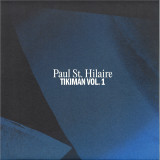
For the first time in more than a decade, Paul St. Hilaire (AKA Tikiman) presents a solo album – 100% Tiki.
Over his 30-plus year career, St. Hilaire has become one of dance music’s quietly legendary figures. Born and raised in Dominica, he moved to Berlin in 1994 and has lent both his voice and his musicianship to some of the most iconic electronic music from the German capital – and beyond. Renowned for his collaborations with Moritz von Oswald and Mark Ernestus (AKA Rhythm & Sound), he has also appeared on records with Deadbeat, Rhauder, Larry Heard aka Mr. Fingers and Stereotyp (G-Stone Recordings), amongst others.
However, few know the extent of St. Hilaire’s compositional and technical mastery. From his home studio in Kreuzberg, which includes an extensive collection of vintage hardware, self-built instruments and notebooks scribbled with endless lyrics, he has created a vast archive of material spanning ambient dub, avant-jazz, lush techno and lovers rock.
Tikiman Vol. 1 is a heady, downtempo tour de force of patois metaphors on education, displacement and personal vs. global histories, as is evident on slippy album opener “Bedroom in My Bag”: Mister, mister / Where are you going? / I’m heading for a faraway land / What are you having in the bag in your hand? / Help us to understand / He said, I’ve got my bedroom in my bag.
Overall, the album’s lyrics reflect on life between Berlin and Dominica, specifically St. Hilaire’s hometown of Grand Bay, where he has worked with various musicians famous for the island’s different genres of carnival music. St. Hilaire himself always favoured the island’s more “discrete” music, developing a sonic synergy between two different geographical strains of groove and minimalism, and combining them with foundational Caribbean mixing techniques, which provide the basis for his songwriting and distinct
baritone.
Tikiman Vol.1 offers a rare insight into St. Hilaire’s complex artistry, from the eyes-down grooves of “Little Way” and the guitar-heavy digi dancehall experiment “Keep Safe,” to the subtle hypnosis of “Ten to One” and the softly crashing synth waves of closer “Three And A Half”, evoking not only beaches but also coasts and borders. It’s a fitting expression of both the breadth of St. Hilaire’s work, as well as his history as one of the few black, Berlin-based artists who, despite remaining largely overlooked, has influenced the city’s electronic music culture since its beginnings.
Credits
Written & Produced by Paul St. Hilaire
Mastered by Stefan Betke
Artwork by Grant Gibson
Kynant Records was founded in 2015 by Richard Akingbehin, a British-Nigerian radio programmer (Refuge Worldwide), music writer and DJ. Originally specialising in deep techno and featuring artists such as Cio D’Or, Terrence Dixon and Donato Dozzy, Kynant has since launched a sub-label Kynant EX which focuses on ambient, dub and experimental electronics.
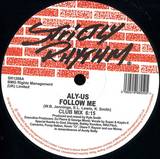
Massive vocal driven Garage House pressure here, from way way back in 1992! Yes, 'Follow Me' is one of THOSE records, one that transcended genre boundaries on it's release and continues to do so today. A true classic piece of NYC goodness from back in the day. The super production team of DJ Pierre and george Morel could only deliver the heat and that's exactly what they did - created a timeless House record with the bassline that just doesn't let up! This is the sort of track that got hammered on the US House scene, found a home in the UK Garage world and got spin at almost any and all clubs where the DJ's had half a clue and an iota of taste! Containing the original 3 mixes released in '92 now's your chance to bag a bonafide, hands down classic record! 'Follow Me' has been skilfully remastered from all original master sources and fully licensed and reissued officially for 2017.
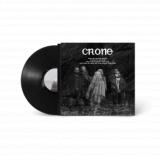
Irish drone-doom-folk act One Leg One Eye, the project of founding Lankum member Ian Lynch and veteran noise monger George Brennan, announce their new album, CRONE, out on 1 May on AD 93.
Today the group share the first track on the album, ‘Many are my Names Besides’, on which they are joined by the elemental force that is legendary actor, performer, writer and director Olwen Fouéré (Operating Theatre) contributing vocals.
Olwen Fouéré comments:
“When Ian and George first approached me to work with them, they were already creating the Crone album as a sonic invocation of the ‘sovereignty goddess’, who personifies the land and the legitimacy to rule it, in her darkest and most terrifying form. As we spoke, the triple goddess figure of the Morrigan entered my mind, reinforced by a marked presence of crows every time we met. The Morrigan is essentially a war goddess, frequently appearing as a crow in a battlefield, a death prophet, a guardian of sovereignty, and a very powerful figure in Irish Mythology.
So I invoked her energy as a starting point, using text extracts that Ian sent me from the Ulster Cycle and other sources. The voice recording was done in one day, improvising the source material while the already composed music occupied my psyche through headphones.
Listening back, at this time in our world, I can only wonder at how much blood and war the Crone/ Crow of sovereignty is preparing to unleash now. Watch out.”
CRONE is the second album from Lynch and Brennan, following on from 2022’s slowburn slab of ambient grit, …And Take The Black Worm With Me. Bewildering, psychedelic and ultimately transcendental, the four tracks of One Leg One Eye’s CRONE shapeshift and morph endlessly in a coarse miasma. Traditional song structures and vocal melody are eschewed, instead the trio directly channel energies from the rich seams of mythological significance submerged below the Irish psyche. The anger, rage and beauty of the sovereignty goddess burn a consistent and deliberate line through the album in the form of obscure incantations and dire pronouncements, the gnarled sinews that bind it all together.
Just as the subject matter of the tracks delve deeper into Irish myth and the remote past, the temporal reality of the album reaches back into the bands prehistory, with the majority of it the material being recorded by Lynch and Brennan in 2021 before One Leg One Eye was conceived of as an entity with Brennan working on the CRONE project while Lynch worked on …And Take The Black Worm With Me.
When they were there they saw a lone woman coming to the door of the Hostel, after sunset, and seeking to be let in. As long as a weaver’s beam was each of her two shins, and they were as dark as the back of a stag-beetle. A greyish, wooly mantle she wore. Her lower hair used to reach as far as her knee. Her lips were on one side of her head.
She came and put one of her shoulders against the door-post of the house, casting the evil eye on the king and the youths who surrounded him in the Hostel. He himself addressed her from within.
"Well, O woman," says Conaire, "if thou art a wizard, what seest thou for us?"
"Truly I see for thee," she answers, "that neither fell nor flesh of thine shall escape from the place into which thou hast come, save what birds will bear away in their claws."
"It was not an evil omen we foreboded, O woman," saith he: "it is not thou that always augurs for us. What is thy name, O woman?"
"Calib," she answers.
"That is not much of a name," says Conaire.
"Lo, many are my names besides."
"Which be they?" asks Conaire.
"Easy to say," quoth she. "Samon, Sinand, Seisclend, Sodb, Caill, Coll, Díchóem, Dichiúil, Díthím, Díchuimne, Dichruidne, Dairne, Dáríne, Déruaine, Egem, Agam, Ethamne, Gním, Cluiche, Cethardam, Níth, Némain, Nóennen, Badb, Blosc, Bloár, Huae, óe Aife la Sruth, Mache, Médé, Mod."
On one foot, and holding up one hand, and breathing one breath she sang all that to them from the door of the house.
- A1: Return Of The Knödler Show 2 52
- A2: The Frogs Of Miwa - Cho (1) 4 52
- A3: Waiting (I) 5 38
- A4: An Old Friend Passes By 3 46
- A5: Coco Bolo Strip (1) 5 25
- B1: Peace And Pipe Utopia 3 14
- B2: Unidentified Dancing Object 1 44
- B3: The Call (I) 2 41
- B4: Wenn Das Rohr Dommelt 4 03
- B5: Mariahilf (Live Version) 3 36
- B6: Watching The Shades (I) 2 59
- B7: Playing The Table Music (Ii) 2 43
- C1: Could Be Nice Too 5 29
- C2: Ox Of Inner Depth 4 51
- C3: Ymir Shows Up 3 58
- C4: Could Be Nice 5 24
- C5: Playing The Table Music (I) 4 23
- D1: Coco Bolo Strip (Ii) 4 52
- D2: Locusts Looking Like Men 5 55
- D3: Waiting (Ii) ︎ 3 36
- D4: No Stove 2 29
- D5: An Old Friend Passes By Again 3 00
- D6: Heimkehr Der Holzböcke 3 16
Black Truffle is thrilled to announce Dalbergia Retusa, an extensive double LP selection of the solo guitar music of Hans Reichel, compiled by Oren Ambarchi. Last heard on Black Truffle as one quarter of the joyously anarchic Bergisch-Brandenburgisches Quartett, Hans Reichel (1949-2011) is one of the great figures of experimental guitar music. Though perhaps lesser known than peers like Derek Bailey, Fred Frith and Keith Rowe, Reichel’s rethinking of the instrument was in some ways the most radical of all. Early on, he dispensed with existing guitars to build a series of his own that explored the use of additional strings and fretboards, moveable pickups, extra bridges, special capos, and other innovations documented in the extensive booklet accompanying this release.
Reichel was a long-term resident of Wuppertal, the small Western Germany city that became an unlikely centre of European free jazz in the late 1960s, also home to Peter Brötzmann and Peter Kowald. His solo debut Wichlinghauser Blues was an early entry into the FMP discography and began a relationship with the label that stretched into the 1990s; all the solo performances heard here were first released on FMP. As Reichel says in the charming archival interview with Markus Müller included here, he was ‘always a cuckoo’s egg at FMP’, a label that began as an outlet for roaring European free jazz. What strikes the listener right from the opening selection on Dalbergia Retusa—‘Return of the Knödler show’, from 1987’s The Dawn of Dachsman—is the extraordinary beauty of Reichel’s music, at once alien in the shimmering sonorities and unconventional pitch relationships made possible by his invented instruments, and deeply lyrical, even romantic in its harmonic content. Growing up in West Germany in the 1960s, Reichel’s formative influences were mainly British and American rock bands, a background that shines through in many of the pieces included here: ‘An old friend passes by’ is haunted by the ghost of Hendrix’s rhythm guitar, and the wild closer ‘Heimkehr der Holzböcke’, taken from a rare 1975 7” and the only piece to use overdubbing, layers errant hammer-on and slide tones over a Canned Heat boogie chug.
Reichel was an important source for the development of Oren Ambarchi’s own extended approach to the electric guitar. Appropriately enough, his selection opens with the very first piece by Reichel he ever heard, on a flexidisc included with a 1989 issue of Guitar Player magazine. Though Reichel collaborated with others extensively in many settings and also performed on violin and his other major contribution to instrument invention, the daxophone, his music for solo guitar remains at the core of his oeuvre. Focusing exclusively on solo pieces recorded between 1973 and 1988, the 23 pieces on Dalbergia Retusa showcase the range and consistency of Reichel’s work, allowing the listener to see how his performances developed hand-in-hand with his instrumental inventions. On a piece from his very first LP, played on an 11-string instrument (partly strung with piano strings and using a schnapps glass a slide), we hear his intensive exploration of fret-hammering to create zither-like, chiming tone, which Reichel would hone further in later years with a double fretboard guitar specifically designed to be hammered rather than fretted and picked. On a piece from 1979’s Death of the Rare Bird Ymir, Reichel uses two steel-string acoustic guitars at once, with beautiful results: ‘some even say too beautiful’, he jokes in the interview included here. Many of the pieces from the 1980s make use of varieties of the ‘pick behind the bridge guitar’, instruments of uncanny harmonic richness primarily designed to be played on the ‘wrong’ side of the bridge. At times the unexpected behaviour of attacks, resonance, and decay can almost seem electronic, conjuring up the technology-assisted work of Henry Kaiser or even Fennesz, but realised solely through Reichel’s unorthodox techniques on his invented instruments. Extensively illustrated with photos and Reichel’s own plans and drawings of his instruments, Dalbergia Retusa is an essential introduction to the unique world of Hans Reichel. Rarely has music been at once so strange and so beautiful.