First Ever Vinyl Reissue (released in collaboration with the Numero Group)
180g BLACK vinyl limited to 500 copies (w/obi strip). Non-Returnable.
Little is known about the mythical band ‘Heart-Soul & Inspiration’ and their band leader, L.A. drummer and producer Vince Howard…The crooning Howard got his start in 1957 on Herb Newman’s Era label where he released a bunch of excellent Doo Wop, Funk & Soul singles. Over the ensuing decade Howard slowly began piecing together his “Orchestra” consisting of bassist Jimmy Soul, guitarist Ron Carr, and pianist John True.
Howard’s Heart-Soul & Inspiration Orchestra cut their self-titled (and only) album in 1974 for John Spriggs’ Los Angeles-based Viscojon concern under the watchful eye of R&B godfather Johnny Otis.
The result was the birth of an astonishing piece of art filled with playful sexy moans, climaxing grooves and soulful hooks. One of the many highlights on the album (and clocking in at an epic eleven minutes), Vince Howard’s “I’m Gonna Love You More” is a tantric reimagining of Barry White’s 1973 sexually charged classic. Where White was content delivering a subtle and syrupy innuendo, Howard transformed the break-heavy track into a meandering funk workout.
Sadly, after their Barry White/Isaac Hayes facsimile LP failed to gain traction, the group released their final recordings—“Funk on Down” b/w “Fallen Angel”—for Viscojon in 1975 which became a hit among prominent DJ’s in the nightclub circuit. This ushered in the end for Howard’s Heart-Soul & Inspiration project.
Heart-Soul & Inspiration was a true example of a bright light burning out way too quickly. Thankfully we are left with the unique (and very rare) document that is their self-titled album. Almost impossible to get ahold of…a well-deserved reissue has been long overdue. This is an album that deserves a prominent place in every serious Funk & Soul enthusiast’s record collection!
quête:one mind
Santana's self-titled debut album announces the arrival of a new Guitar God. Made during the legendary bandleader's most fruitful and creative period, the classic 1969 set functions as an accessible entry point into the tangy worlds of Latin music by way of an intoxicating blend of Afro-Cuban percussion, jazzy tempos, exotic leads, bluesy riffs, and psychedelic accents.
Indeed, separation between Carlos Santana's fluid fills, spicy solos, and broiling grooves and pianist Gregg Rolie's soulful Hammond organ runs allows the music to come alive with a newfound freshness and radiance. Songs simmer, with each passage bursting forth with vibrant colour. Just like the equally essential follow-up Abraxas, Santana also lays claim to one of the biggest (and unfortunate) production gaffes in music history.
For nearly four decades, copies were produced with the left and right channels reversed, meaning that everything was placed in a backwards manner. This even extended to compilations on which individual songs from Santana were included. Rest assured that, in addition to boasting reference audiophile sonics, this 180g 45RPM 2LP set gets all the specifications exactly right. And with a record of this magnitude, you want everything to be perfect.
Bound by natural chemistry and earthy spirituality, the record's innovative synthesis of myriad styles goes beyond anything that came before – as well as nearly everything that's followed. Playing with the finest band that the iconic guitarist ever had, Santana doesn't water down any exotic roots or simply incorporate mainstream Western styles into a Latin framework. This is a true hybrid, responsible for opening up borders, transcending cultural divides, and, most importantly, exhilarating the senses.
Released just weeks after the band blew minds at Woodstock, the groundbreaking record stands alongside Miles Davis' Bitches Brew and Jeff Beck's Beck-Ola as a pillar of rock fusion. Featuring the Top Ten radio smash "Evil Ways" and jam favorite "Soul Sacrifice," it hasn't aged a day. Hear like never before why Rolling Stone says Santana is #149 on its list of the Greatest Albums of All Time.
Marc Richter aka Black To Comm released his debut record 20 years ago. In 2023 he is still busy releasing music under various disguises and is currently signed to the Thrill Jockey label. To celebrate this anniversary his own Cellule 75 label is re-releasing some classic out-of-print vinyl albums that originally came out on the defunct Type and De Stijl labels. The LP will feature a full-colour printed inner sleeve exclusive to this edition.
In 2009 the Type Recordings label run by John Twells had just released seminal records by Grouper, Jóhann Jóhannsson and Yellow Swans when they signed Richter and put out his breakthrough Alphabet 1968 album. The LP sold out within two weeks, receiving a glowing full-page review in The Wire Magazine by the late Mark Fisher (later reprinted in his book Ghosts Of My Life), was selected for Boomkat's Top 10 releases of the year (alongside debut albums by Leyland Kirby, Demdike Stare and Oneohtrix Point Never) and was greeted with universal praise in the underground blog network as well as established magazines such as The New Yorker and Pitchfork.
The music itself played with the notion of nostalgia without being nostalgic itself. It's the sound of half-remembered dreams, a surreal distorted vision of the past, an aural polaroid of long forgotten musics, a ghostly voice from a non-existent era.
From the original Type one-sheet:
"The mission statement for Alphabet 1968 was to write an album of "songs" for want of a better word. Short tracks which represented genre points, the milestones which stuck in Richter's mind when he thought back to his favorite records. What we arrive at is a breathtaking 10-track album which, over the course of 45 minutes, explores world music, techno, noise, avant-garde, ambient music and even exotica. Each track is linked with a loose thread of radio static or environmental sound, dragging you through the album, as if tuning in to a stray broadcast or a particularly adventurous mix. Richter has pieced the album together from hours of recordings made at his studio with home made gamelan, small instruments and loops gathered from a collection of ancient vinyl and 78 records. The scope of the album is admirable, but ignoring this, it is simply a shockingly arresting collection of experimental oddities, with references ranging from Moondog to Basic Channel by way of Bernard Herrmann. It's not hard to fall in love with Alphabet 1968, far harder would be to place exactly where the record should fit into your collection."
Mark Fisher in The Wire:
"But what if we were to take Richter's provocation seriously - what would a song without a singer be like? What would it be like, that is to say, if objects themselves could sing? It’s a question that connects fairy tales with cybernetics, and listening to Alphabet 1968, I’m reminded of a filmic space in which magic and mechanism meet: JF Sebastian’s apartment in Blade Runner. The tracks on the LP are crafted with the same minute attention to detail that the genetic designer and toymaker brought to his miniature automata, with their bizarre mixture of the clockwork and the computerised, the antique and the ultramodern, the playful and the sinister. Richter’s musical pieces have been built from similarly heterogeneous materials - record crackle, shortwave radio, glockenspiels, all manner of samples, mostly of acoustic instruments. ….. JF Sebastian's apartment was itself an update of older spaces in which science and sorcery co-existed: the workshops of ETA Hoffmann's inventor-magicians, or of Pinocchio's creator, Geppetto. I think, too, of Auguste Villiers de l'Isle-Adam's astonishing 1886 tale The Future Eve in which Edison, using the expertise he has recently acquired from inventing the phonograph, sets himself the task of constructing an artificial woman. But if there are songs here, they are sung by the gramophone and other recording and playback machines. Richter so successfully effaces himself as author that it is as if he has snuck into a room and recorded the objects as they played (to) themselves. Rather than simply automating his music, as in the case of Pierre Bastien and his mechanical machines, Richter makes us feel that he has merely recorded the unlife of objects. ….. Indeed, the impression of things winding down is persistent on Alphabet 1968. Entropy has not been excluded from Richter's enchanted soundworld. It feels as if the magic is always about to wear off, that the enchanted objects will slip back into the inanimate again at any moment."
Verbz & Mr Slipz have been jumping on the train (52m, 0 changes) between Croydon and Brighton to reconnect on ‘Where It Started’; a 10-track EP that does everything (and more) you have come to expect from the duo.
Shimmering with nostalgia, but with one eye firmly on the next motive, ‘Where It Started’ offers a front row seat to the trials and tribulations of Verbz & co. doing what they did (and still do) to thrive and survive on the streets of Croydon, expertly scored by the meditative swing of Slipz’ 100% sample-free production.
Think classic hip hop aesthetics, beautifully reincarnated; chunky MPC drums, deeply personal multi-syllables, tales of loss, heartache, learning the hard way but coming back stronger. 5 x vocals and 5 x Instrumentals, Where It Started’ is a 50/50 deep dive into the hearts and minds of Verbz & Mr Slipz; perfectly poised as a duo, the EP is an unmissable trip down memory lane.
- Kontrole
- En Toen Was Er Niets Meer
- Twijfels
- ??? (Aka Ik Wil Eruit)
- Pijn
- They Wanted Us Away
- Sick In Your Mind
- The Scream
- He Lives In His Dreams
- If There Is Something
- Neo I (Rise And Fall)
- Neo Ii (I Wanna Be On My Own)
- Neo Vii (Lean On Me)
- I'm Not Afraid Of You
- The Last Time
- I Lost Control Again
- My Night
- Neo Iii (Living On The Edge)
De Brassers were one of the most notorious bands in the Belgian new wave/punk history. With their no nonsense attitude they scared the shit out of the local catholic community of Hamont. De Brassers were a local mixture of the Sex Pistols (in the lowest gear) and Joy Division (they always performed a cover version of Joy Division’s Shadowplay), combining a criticism of bureaucracy and politics with experiences of psychological and existential tensions. The doomed sound they produced tells a lot about the dark atmosphere of the late seventies and early eighties: the fear of atomic bombs, cold war pessimism, police violence against squatters, the first cases of AIDS, and the grim years of Reagan & Thatcher.
This compilation takes you back to that time. All tracks from their first 7″ "En Toen Was Er Niets Meer” & their self-titled 12″, plus rare & unreleased tracks taken from various live performances & the cassette “Levend”. If you’re in for a raw slice of Belgian history let de Brassers immerse you in a cold wave of punk.
From Alehouse to Playhouse Bjarte Eike and his barnstorming Barokksolistene capture the vital spark of Restoration London’s entertainment scene with a captivating new recording for Rubicon Classics! The Playhouse Sessions will be released on 23 September 2022 to coincide with Barokksolistene’s concert double-bill at London’s Southbank Centre.
‘A smattering of Purcell, dances from Playford’s Dancing Master, shanties, reels and ballads succumb to a nine-piece ensemble drawing on Baroque, jazz and folk styles for a no holds barred hooley of riotous improvisatory give and take,’ (BBC Music Magazine review of The Alehouse Sessions, August 2019)
London’s musicians, pushed in the 1650s, to the margins of society by order of Oliver Cromwell, found room for new forms of entertainment in city-centre taverns and alehouses. They remained there long after the restoration of the monarchy, performing sets of dances, theatre songs and bawdy ballads to audiences glad to be free from Puritan constraints on pleasure.
Norwegian violinist Bjarte Eike and his Barokksolistene have restored the spirit and substance of those long-forgotten performances with their Alehouse Sessions, hailed by The Times as ‘irresistible’ and ‘fabulously unrestrained’ by The Guardian. Five years ago the Norwegian violinist and his band scored a best-selling album with The Alehouse Sessions on Rubicon Classics. They return to the label with another compelling collection of music and words of the kind on offer more than three centuries ago at Henry Purcell’s favourite Westminster watering holes. The Playhouse Sessions, set for release on Rubicon Classics on 23 September 2022, reflects the uplifting energy and engaging emotional contrasts of Barokksolistene’s Alehouse performances.
“The album contains a sort of inner narrative that runs through the recording,” says Bjarte Eike. “It has become like a play in its own right, with each track being a small tale within a larger story.” The recording’s tracklist includes Eike’s beguiling arrangements of music from Purcell’s semi-opera The Fairy Queen and his own original compositions on words from the play on which it is based, Shakespeare’s A Midsummer Night’s Dream; popular songs and ballads such as ‘The Irish Washerwoman’, ‘I often for my Jenny strove’ and ‘The Three Ravens’; tunes from Purcell’s welcome odes and stage shows, Come ye sons of art and Dido and Aeneas among them; the ‘Willow Song’ from Shakespeare’s Othello; Eike’s own voice in Puck’s monologue from Act 5 of A Midsummer Night’s Dream; and John Dowland’s sublime air ‘Can she excuse my wrongs’.
London’s theatres were closed at the start of the English Civil War in 1642 and remained shut until the Restoration. Alehouses offered redundant musicians, actors and dancers a place to scrape a precarious living and soon became their creative refuge. “Although a few surviving theatres reopened in 1660 with the return of Charles II, there was little money around to rebuild those that had been demolished,” observes Bjarte Eike. “And a generation of musicians had already found an audience in places like the Black Horse in Aldersgate Street. So popular were their alehouse sessions that Cromwell tried to abolish them! But they outlived him and became part of Restoration musical life.” The form of a Barokksolistene Alehouse, he adds, is like a creative room. “Within its framework I can frequently refurbish the show with new contents. The Playhouse project is likewise an extension of the ever-evolving Alehouse Sessions. Together they tell the story of music and theatre in London during Cromwell’s time and after the Restoration. Of course there’s an historical context to what we do. But there’s also the practical context – which is even more important to me – of connecting with a contemporary twenty-first century audience. An Alehouse / Playhouse performance is not something for the museum; it's about music made in the present moment, just as it was in the London alehouses of Purcell’s day -- with their playhouses annexed to the rear of the beer-drinking saloons. The encounter of musicians onstage and the audience in the hall is the real magic of it. We have to fuse the audience into the action of our performance!”
The Playhouse Sessions will be launched on Friday 23 September with a late-night concert at the Purcell Room and a post-concert Alehouse Session in the foyer of the Queen Elizabeth Hall. Soprano Mary Bevan is set to join Eike and his Alehouse Boys for the first half of their Southbank Centre double-bill, offering unique interpretations of songs from Purcell shows and other hits from the late seventeenth-century London stage. “The Southbank Centre is a direct descendant of concerts given in the 1650s in the alehouses of London,” notes Eike. “These alehouses after all staged some of the world’s first public concerts. Later, after the Restoration, it became common for promoters to advertise alehouse concerts in the press and offer subscription tickets. Purcell and his fellow musicians were thus just as at home performing there as they were in the chambers of the royal court or in London’s new theatres.”
Bjarte Eike launched his Alehouse Sessions in company with like-minded musicians 15 years ago. The ensemble comprises a core of regular performers, all of whom have committed to memory a huge setlist of up to four hours of music. Typically they meet a day or so before a concert tour to share a meal and make music together; then next day, re-grouping thirty minutes before the show, they discover Eike’s select-menu for the evening. “That ensures that every show is fresh,” he notes. “I make sure we never repeat the same programme twice. It’s therefore essential to work with people who share my outlook and dare to adventure. We’re into a high-risk sport, with lots of traps and places where the unexpected appears - for good or for ill. And so the audience knows we’re vulnerable. But our skill is seen in how we re-act on the hoof to the unpredictable. That’s authenticity and honesty - and above all it’s a performance that’s genuine.”
Armed with a classical training and a background in folk music and improvisation, Bjarte Eike was drawn naturally to Early Music in all its stylistic variety. “I never really felt at home with only one genre,” he recalls. “Early Music allowed me to study profound, complicated compositions, but performing it has also opened up the chance of rebellion and uproar! Early music offers wide, multi-faceted areas of musical exploration for me. You find, for instance, links to different types of music wherever you look in seventeenth-century English repertoire. And I am fascinated by all these connections. They offer a foundation for the Alehouse Sessions and for all Barokksolistene performance more generally. Every member of the group plays, sings, dances and improvises without limitation. We’re all interested in the many different fields of being a stage performer and pushing hard at the ‘normal’ boundaries of what it means to be a classical musician.”
- A1: What I'd Say (Parts 1 & 2)
- A2: The Right Time
- A3: Mary Ann
- A4: I Got A Woman
- A5: This Little Girl Of Mine
- A6: I'm Gonna Move To The Outskirts Of Town
- B1: Hit The Road Jack
- B2: Come Rain Or Come Shine
- B3: Let The Good Times Roll
- B4: Baby, Let Me Hold Your Hand
- B5: Mess Around
- B6: Swanee River Rock
- B7: I Believe To My Soul
- C1: Georgia On My Mind
- C2: Ain't That Love
- C3: You Are My Sunshine
- C4: It Had To Be You
- C5: Unchain My Heart
- C6: Drown In My Own Tears
- C7: Hard Times (No One Knows Better Than I)
- D1: Hallelujah, I Love Her So
- D2: I Can't Stop Loving You
- D3: Baby, It's Cold Outside
- D4: Take These Chains From My Heart
- D5: The Sun's Gonna Shine Again
- D6: The Genius After Hours
Glitching through pop music, cruising around the borders of the avant garde, passing by the edge of coldwave and tumbling into dance and club vibes: after her debut Bad Woman Céline Gillain is back with her second album: 'Mind is Mud'.
On Mind is Mud' Gillain let herself sink in the swamp of emotional confusion, the perpetual brain fog caused by a post Covid-world asking herself: do we have to get used to paradox as a way of life from now on?*
A musical dissection in nine songs of the mudflow, a flow which reveals its rich complexity the more Gillain dived into it: from the demanding intro 'Together' Céline opens up her highly personal and unique vision, shifting between high definition lost dimensions and emotionsthe mud slowly transfers in a crackling and sparkling stream of consciousness.
The mud is well alive in all its weirdness and unclarity. At times, it even glows in the dark.
The answer to that question is yes. The story of Mind is Mud by Céline Gillain: "Music is a place where intuiting is a work in itself. For me, it's the one place where I'm in charge, free to think and do what I want. Mind is Mud is the fruit of a collaborative practice with a DAW, a research around the palliative power of rhythm and the dancefloor, music as a space where emotions and ideas merge, storytelling, the comic potential and imaginative nature of sound. I don't really write, I copy paste and then I arrange and rearrange. Every sound I use comes from software, field recording, Instagram, movies and midi scores I collect here and there. In the hierarchy of sounds, you might call them cheap sounds. The lyrics are collages as well, made of pieces of texts from various contradictory sources. In addition to using the voice as a vehicle for ideas, I investigate its percussive and polyphonic potentialities, the possibility to have more than one voice/mouth."
In the quiet surrounding the pandemic, Madeline Kenney made sonic sketches in the basement studio she shared with her then-partner. She arranged phrases that called her—the sharp knife of a synth cutting a path along a blooming arpeggio, drums stuttering firm and tight. Working this way, she amassed a collection of songs she had no particular aims for. Some formed her 2021 EP Summer Quarter, others languished.
But in 2022, Kenney’s partner left suddenly and without warning, plunging her into the solitary act of untangling what happened. In the wake of her ensuing depression, she revisited these songs and found in them something prescient. She’d already laid the foundation for A New Reality Mind.
That her relationship’s end came without warning is only half true, though. The warnings were in the feelings and fears that inspired Kenney’s critically-acclaimed third album, Sucker’s Lunch (2020), which was co-produced by Jenn Wasner (Flock of Dimes) and centered around the idea of flinging oneself freely into the seemingly-assured destruction of new love, come what may.
If sonically Sucker’s Lunch was letting yourself be pulled into the warm bath of a good story, A New Reality Mind reflects the harsh light of truth coming to break the spell. But as sobering as morning light can be, there’s brilliance to it, too. To see in the clarity of day is a gift. A revolution. Rather than reckoning with love lost, the songs on A New Reality Mind grapple with the self that chose to fall. “I guess I only needed to look twice / Reflected in my attitude, my constant compromise,” Kenney sings on “Red Emotion,” the musical landscape screeching and gasping around her observations of how she made herself small to keep the dream of love alive.
These notions of sight and vision pervade the record as Kenney stands before the infinity mirror of selves she’s been to preserve bonds in her life. On “I Drew a Line,” Kenney contends with the stories she’s told herself to keep plodding along, and the way those stories shape her perceived reality. She invokes John Berger’s Ways of Seeing—“Everything around the image is part of its meaning,” we hear him say. “Everything around it confirms and consolidates its meaning.” Here, Kenney isn’t interested in shaming herself for being carried away by the fantasies of the heart, but rather in investigating the unavoidably human propensity to do so. “I, like everyone else, am muddling through my most ordinary disaster of a life,” she acknowledges, a sentiment which reverberates through album opener “Plain Boring Disaster.” “I don’t need to start again,” she sings at the song’s close. “But I can change when it ends.” We may all be doomed to repetitive, ordinary heartbreaks, Kenney realizes, but at least we can cultivate a capacity to witness our missteps and build new realities for ourselves.
This is Kenney’s most expansive work, while also her most solitary. Produced and recorded alone in her basement, these songs are manifestations of what it feels like to be transformed by pain. Textures collide and collude; sonic ornaments emerge and dissipate capriciously; saxophones soar untamed, as on the 80s pop elegy to self-sacrifice, “Reality Mind”. These songs beg you to dance, then pull the rug out from under you once you’ve caught the beat, leaving you dizzy like the whiplash of love’s end.
But in the propulsive power of A New Reality Mind, there’s also acceptance, self-forgiveness, and a willingness to move forward into life, with all its ways of making a sucker of you. “That way of living, I’m over it,” Kenney declares of the habits that hold her back on “Superficial Conversation”. “I do not need to be reminded of what I did,” she assures, the song opening wide and beaming, like a smile expanding to taste a new breath of air.
DTR Recordings enlist the expertise of the one and only DJ Sneak for a four track of underground house excellence. A true Chicago legend Sneak is responsible for producing a seamless string of seminal house tracks from the ‘90s through the ‘00s to the present date.
For this latest EP, Sneak serves up four brand new original productions, straight up jackin’, groove-laden house bumpers that we’ve come to expect from the mind of a master.
Bobby Harden & The Soulful Saints are proud to announce their debut album, "Bridge of Love." The album's ten original compositions are presented in sparklingly-clear stereo sound and run the soul gamut, from grits-n-bricks R&B ('Played a Fool by You') to throw-back psychedelia ('One Tribe'), svelte seventies pop ('One Night of the Week') and some seriously sophisticated ballads ('Wounded Hearts', 'Bridge of Love'). Together they document Bobby's life journey in song. Through youthful self-doubt in the opening track 'It's My Time', to confirmation on the exuberant finale 'Raise Your Mind', Bobby proves that faith and hard work can pay dividends. "Life is a joy when you free your soul."Throughout the album, Harden's voice is tailored to perfection by the almost impossibly dexterous Soulful Saints, and further dressed to the nines by an accoutrement of Latin percussion, full-on horns, high-flying backing singers and even a string quartet. This comes as no surprise as The Soulful Saints have performed live and recorded together with acts such as Sharon Jones & The Dap-Kings, Charles Bradley & His Extraordinaires, Lee Fields & The Expressions, The Budos Band, Mark Ronson, Antibalas, The Impressions, & The Wu-Tang Clan.The album is produced by Dala Records founder Billy Aukstik, and recorded at Hive Mind Recording in Brooklyn, New York. Kurtis Powers of BQE Records Co-Executive Produced the album along with Aukstik.
- 1: Home
- 2: Prana 10:9
- 3: Holy 0:58
- 4: Amok
- 5: Open
- 6: Game Over
When I first heard Natalie Rose LeBrecht's time-suspending, air-ionizing music, more than twenty years ago, I thought "this kid is on to something." She's been proving that thought right ever since. Her recordings, from the teenage 4-track tapes she made as Greenpot Bluepot to the recent albums under her own name, have been fascinating dispatches from her progressively deeper dives into her gorgeous, weird, wildly idiomatic aesthetic. Holy Prana Open Game is a jewel of intensely personal cosmic music, created through a remarkable process of openness, craftiness, addition and subtraction. It belongs to a tradition of albums that document a rich, meditative sound as it rises up to join the world outside its creators' minds: Alice Coltrane's Universal Consciousness, Harmonia's Musik von Harmonia, Philip Glass's North Star, Talk Talk's Laughing Stock.
"Meditative" is specifically the idea here: Holy Prana Open Game had its origins in the fourteen days LeBrecht spent silently meditating in her home's small music room in the summer of 2019. "I came out of that bursting with the will to create new music," she says, and she created it sound-first. LeBrecht taught herself to program an analog synthesizer's timbres from scratch, and built a new set of glacial, heady compositions out of them, eventually singing to accompany the keyboard parts she was playing.
Then she closed her eyes at her computer, "let my mind be clear and open, imagined light pouring down through me, and began auto-writing to my memory of the music playing through my mind. Most of the lyrics emerged this way, and then I used my conscious mind to refine them a bit at the end." One other song came along with LeBrecht's new pieces, a cover that seems wildly unlikely from the outside and makes total sense in its context: it's a version of Atoms for Peace's "Amok" (which had been created by improvisation and editing, too), mutated into her own idiolect.
In early March of 2020, LeBrecht recorded Holy Prana Open Game's analog synth parts with Martin Bisi at his studio in Brooklyn--and then the world shut down. As you may have gathered, LeBrecht is very much a spiritual, head-in-the-stars type. She is also extremely hardcore, and if making the art she wants to make means doing things the hard way, she cracks her knuckles and gets down to it. Within weeks, she had taught herself how to record, mix and edit with a digital audio workstation. She recorded her vocal parts (sometimes multi-tracked into a radiant choir) at home, assembled a rough mix of the album, and sent it off to her collaborators.
LeBrecht spent some years studying with and assisting La Monte Young and Marian Zazeela at their legendary sound-and-light installation, the Dream House. As with their work, her singular, precisely focused vision is shored up by its openness to artistic voices beyond her own. For Holy Prana Open Game, she worked with the Australian guitarist Mick Turner and drummer Jim White (both of Dirty Three, the Tren Brothers and innumerable other projects), as well as woodwind player David Lackner, a longtime presence on her recordings.
Turner and White have been playing together in one context or another since 1985; in the summer of 2020, they were only blocks from each other in Melbourne, Australia, whose strict lockdown meant they couldn't meet up to record together. So both of them, as well as Lackner, recorded their improvisational additions to LeBrecht's rough mixes individually, often without hearing each other's contributions. "I had asked them to play as much as they could on each track," she says, "and told them that I would edit it all down in post, so I had a lot of source material of theirs to work with."
LeBrecht arranged and edited the recordings from all four of their homes to flow together like breath across the duration of her suite. Prana, one of the album's central conceits, is in fact the Sanskrit word for breath, with the connotation of the breath of life. Like LeBrecht's music, prana flows at its own pace, and demands stillness to take in fully--but it's also subtly playful and surprising, a force that can be as light as air or as immersive as the atmosphere itself.
BABY BLUE VINYL
"Workin' all day, trying to forget about the old me." Like most of us, Martin Frawley is busy trying to work himself out. He lives alongside the long shadow of his late dad, musician and songwriter Maurice Frawley, a cultural icon of the Australian underground and collaborator of Paul Kelly, Tex Perkins and Mick Thomas. Most of Martin's 20s were spent writing and playing songs in locally beloved Melbourne band Twerps - a collection of pals who were on the forefront of the city's jangle pop renaissance. A few albums, US tours and band rotations under its belt, Twerps split up in 2018 and Martin turned his compass towards a solo project. His first album, Undone at 31 (2019), was a bit of a reckoning; a wild ride through the wreckage of both a band and longterm romantic break up. His new album The Wannabe is a personal, cheeky and, at times, self-depreiciating collection of songs unpacking the reality of finding his way as an adult without his dad around, and ultimately falling back in love with life, music and someone new. Martin and his band - friends Dan Luscombe (The Drones), Steph Hughes (Boomgates, Dick Diver), Nik Imfeld (Tyrannaman) and Dan Kelly - had heaps of fun recording The Wannabe in Melbourne. The title track is a particularly spicy take on an entertainment industry that seems to give more shits about marketing than music. The album is a bit of an emotional tour, from anger and derision, through to comedy, through to deep and honest love. It's positive with a lot of sadness. Not unlike Martin himself. As well as the guitar, Martin had some fun playing the piano on this record. The technical term is `multiinstrumentalist' but Martin's more of a musical explorer of sorts. No one is exactly sure how these things work - if Martin was born into music or if it was born into him, but it doesn't really matter. Music is what he loves. It's what he does. It's not about the industry or about success - not anymore. It's about the freedom of creating songs on his own terms, and trying to let go of the feeling he has something to prove: to his dad, to his critics, and to himself. And while he's not sure he'll ever fully shake that feeling, he's at least relaxing and having a bit of fun doing it. Like his dad, Martin has a reputation as a `musician's musician'. He hosts a pretty sporadic podcast Dive For Your Memory, where he has fast and loose chats with musicians while doing a deep dive into their musical inspirations and canon. He and his fiancé Lauren also make wine under the label El'More Wines, named after the farm and small town where his dad grew up. It's all come a bit full circle, really.
- A1: Pretending**
- A2: Running On Faith**
- A3: Breaking Point
- B1: I Shot The Sheriff (Feat Phil Collins On Drums
- B2: White Room**
- B3: Can’t Find My Way Home (Feat Nathan East On Lead Vocals
- C1: Bad Love **
- C2: Before You Accuse Me
- C3: Lay Down Sally
- D1: Knocking On Heaven’s Door (Feat Phil Collins On Drums)
- D2: Old Love
- D3: No Alibis (This Version Was Released As A B-Side Of The Single ‘Wonderful Tonight’
- E1: Tearing Us Apart
- E2: Cocaine
- E3: Wonderful Tonight**
- F1: 1. Layla
- F2: Crossroads
- F3: Sunshine Of Your Love
- G1: Key To The Highway
- G2: Worried Life Blues **
- G3: Watch Yourself **
- G4: Have You Ever Loved A Woman**
- H1: Everything’s Gonna Be Alright
- H2: Something On Your Mind
- H3: All Your Love (I Miss Loving)
- H4: Johnnie’s Boogie
- I1: Black Cat Bonei
- I2: Reconsider Baby
- I3: My Time After A While
- J1: Sweet Home Chicago
- J2: Watch Yourself (Reprise)
- Orchestral Show
- Side One
- 1: Crossroads
- 2: Bell Bottom Blues **
- 3: Lay Down Sally
- Side Two
- 1: Holy Mother
- 2: I Shot The Sheriff
- 3: Hard Times **
- 4: White Room
- Side Three
- 1: Can’t Find My Way Home (Feat. Nathan East On Lead Vocals)
- 2: Edge Of Darkness**
- 3: Old Love
- Side Four
- 1: Wonderful Tonight
- 2: Layla
- Side Five
- 1: Concerto For Electric Guitar Part
- Side Six
- 1: Concerto For Electric Guitar Part 2
In 1990, Eric Clapton performed 18 nights at one of his favorite venues - the famous Royal Albert Hall in London. During the 18 run of shows Clapton performed with three different line-ups: a rock band, a blues band, and an orchestra. Eric returned to the same venue in 1991 with the same three line -ups and played a further 24 shows. The huge undertaking of rehearsing for performances of three distinctly different genres was made even more challenging by the line-up for the rock shows varying from 4, 9 or 13 band members.
Clapton has always played with superlative musicians, and these shows were no exception. The bands included Johnnie Johnson, Jimmie Vaughan, Chuck Leavell, Nathan East, Greg Phillinganes, Steve Ferrone, Ray Cooper, and Jerry Portnoy. Additionally, legendary special guests joined Clapton on stage: Phil Collins in the rock ensemble; Robert Cray, Buddy Guy and Albert Collins for the blues shows.
The Orchestral performances were arranged and conducted by Michael Kamen the highly regarded and successful composer who had worked with Clapton previously (Lethal Weapon, Edge Of Darkness). The set list included the epic 30 minute ‘Concerto For Guitar’ that Kamen composed especially for Clapton - released now for the first time.
Many of the performances in both years were filmed and recorded. The huge volume of audio and film material from the archive has been painstakingly restored and upgraded by Clapton’s team of Simon Climie (audio production and mixing), producer Peter Worsley (Slowhand at 70 and The Lady In The Balcony), and director David Barnard (The Lady In The Balcony).
This remarkable series of shows will finally be given the release that they deserve. A full concert of each genre (Rock, Blues, Orchestral) has been assembled from the hours of material available and will be released on audio (CD, LP, digital) and with an accompanying film on Blu-ray and DVD.
The Clapton classics performed with the rock band include ‘White Room’, ‘Lay Down Sally’, ‘Wonderful Tonight’, ‘Pretending’ and ‘Layla’. The Orchestral show features a stunning version of ‘ Layla’, plus stand-out highlights of ‘Bell Bottom Blues’, ‘Edge Of Darkness’ and ‘Sunshine of Your Love’. Great covers of ‘Cocaine’, ‘I Shot the Sheriff’ and ‘Knockin’ on Heaven’s Door’ also feature. The 14-song Blues set includes standards such as ‘Sweet Home Chicago, ‘Have You Ever Loved A Woman’, and ‘Key To The Highway’.
The limited-edition ‘Definitive 24 Nights’ deluxe box sets include 47 songs and almost 6 hours of music on 6 CDs or 8 LPs and 3 Blu-ray’s.
- A1: Egoclapper
- A2: Watch The Pro
- A3: Warlords
- A4: Mind On Fire
- A5: Tranquilizer
- A6: Typhoons In Japan
- A7: Street Stigma
- B1: Incredible Hurk Rap
- B2: Ego Empire
- B3: Zombie Combat
- B4: Really Fly
- B5: Boston Garden Rap
- B6: Eso's Father Finds The Chosen Ones
- B7: Frank Miller Tank Killer
- B8: First Of A New Breed
- B9: Spidey Jail Break
Along with Wu-Tang Clan's Inspectah Deck and 7L, MC Esoteric is probably best known as 1/3rd of the acclaimed trio CZARFACE. Before creating the comic friendly hip-hop supervillain, Eso developed and unleashed another fictional anti-hero that bolstered his music, and that character was dubbed EGOCLAPPER. You could view Egoclapper as Czarface's predecessor. Esoteric's legacy as a leading vanguard of Boston's underground rap scene extends far beyond CZARFACE, AOTP, and recent collaborations with MF DOOM, it leaps across multiple decades of records both solo and in collaboration with 7L. So now, Eso's imprint Fly Casual Records is proud to present this sterling reissue of his 2007 solo debut; the twitchy, punchy, eccentric Egoclapper. Not only has this record never previously been released on vinyl, but it is now presented on exclusive transparent blue wax.
Back in 2018, two mysterious twelve-inch singles appeared in underground record sthops. Credited to Blotter Trax, a previously unknown outfit who cherished “faceless” anonymity, the pleasingly twisted and mind-altering music on show was a mutant form of electronic psychedelia. The included tracks were variously informed by analogue techno, acid, electro and minimal, but inhabited their own clandestine sonic space. These tracks were, we later discovered, lightly edited “straight to tape” jams, crafted on the fly by their creators in one of Berlin’s most admired studios.
By the time Blotter Trax delivered their follow-up on Clone offshoot Frustrated Funk a year later, the secret was out: the project was in fact a collaboration between two storied artists, techno titan Magda – a DJ/producer who should need little introduction – and serial underground aggravator (and man of many aliases) Jay Ahern, sometime Hauntologists member and acid techno royalty thanks to years spent releasing similarly shadowy EPs as T.B Arthur.
In the years that followed, and before the COVID-19 pandemic grounded them in Berlin, the pair took their incendiary, modular-driven live show to esteemed clubland institutions (Fabric included), on an acclaimed tour of Japan, and onto the stages of festivals across Europe.
Four years on from that appearance on Frustrated Funk, Blotter Trax are back in updated and expanded form. Now a trio thanks to the addition of bassist Hannes Strobl, the band is set to release their far-sighted, funk-fuelled debut album, Super Conductor – a pulsating, thrill-in-minute ride includes contributions from a swathe of notable guests (Nina Hynes, Ilhem Khodja and David Moss provided vocals, Shigeru Tanabu played guitar, Matthew Styles mixed the set and old friend John Tejada mastered it).
While rooted in electro and acid, the album is impressively low-slung, stylish and funky, with nods towards Blotter Trax’s mutual love of Arthur Russell, early ‘80s NYC downtown disco, leftfield new-wave pop and flash-fried punk-funk. Released by JD Twitch’s Optimo Music imprint, it charts the ongoing dancefloor evolution of a band whose days of mystery and mischief are now a distant memory.
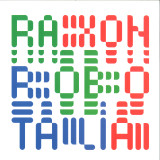
Next up is an overdue reunion with a familiar face. After his outstanding contribution to Cocoon Compilation S and his first solo EP on Cocoon Recordings, Raxon is back with a more than equally fascinating sound. The Egyptian-born and now Barcelona-based artist is back on it again, delivering two tracks that will take you on a journey through the depths of robotic soundscapes.
Intricate beats, hypnotic synthesizer melodies, deep bassline grooves, and distinctive EFX sounds create Raxon’s very special signature sound.
Straight drum programming paired with chirping percussions takes us away to embark on a travel through space and time while distinctive claps poke through a futuristic nebula of floating and shifting sequences. The twisted melody of “Robotalia” carries us to a parallel dimension of machine sound and if you listen closely, you can hear the robots’ screwing and sawing. Warping bleeps and mechanical effects complete the robotic feeling. Raxon’s understanding of structures and architectural abilities are reflected through the arrangement, slowly increasing to ecstasy.
“Kryptonite” scores with alien soundscapes. Stuttering vocals are the questions, while futuristic and dramatic chord stabs are the direct answer. A straight, radiant sound appears as an electronic trombone from outer space, offensively supporting the driving bassline. The symbiotic interplay between the euphoric synthesizer hook line and the relentless beat with pushing sharp hi-hats visualize powerful images in one's mind's eye. Suddenly the beat stagnates and results in a morphing break going head over heels developing a start-stop pitch effect that not only builds up tremendous tension but also bears an increased risk of melting your brain. We just love tape delay!
Repress!
Leeds soul and funk label ATA Records are proud to announce the new single from The Sorcerers. Available on 7" vinyl and Digital Download from Friday 30th March, this single is a driving Ethiojazz track aimed squarely at the dancefloor, backed by the Yorkshire Film & Television's original recording of "The Anderson Spectrum" (Later re-recorded and re-named by The Sorcerers as "The Viking Of 5th Avenue")
Taking influences from Ethiopiques Ethiojazz as well as the soundtracks to the European horror films of the 60s and 70s, The Sorcerers seamlessly blend these disparate elements into one cohesive package. Based in ATA Records' home of Leeds, The Sorcerers are made up of the cream of the city's jazz and world scene. Forming the backbone of the ATA Records house band they incorporate bass clarinets, flutes, and vibraphone alongside bass, guitar organ and drums, providing Ellingtonian textures on top of a solid rhythmic foundation.
Initially inspired by the work of Ethiopian composer Mulatu Astatke, The Sorcerers have developed their sound from the foundations laid out on their debut LP "The Sorcerers"."In pursuit of Shai Hulud" eschews the atmospheric textures of their previous material, replacing them with driving percussion and propulsive bass. Organ and flute tear into the melody as temple blocks beat out an insistent rhythm throughout.
The B-Side ("The Anderson Spectrum") is the original track from The Yorkshire Film & Television Orchestra that The Sorcerers re-recorded and re-named "The Viking Of 5th Avenue" when they recorded it for their debut. Tremolo-fuzz guitar and heavy brass place the track firmly in the sonic realm of 1960s British Library Music, bringing to mind the work of John Barry and Portishead rather than Mulatu Astatke.
Naarm alchemists Sleep D's revelatory new synthetic 'Electronic Arts' is ready for circulation.
Having released 4 EPs of mind-altering club tackle since 2019's 'Rebel Force', the duo overcome second album syndrome, boiling down their chaos with a more developed sense of songwriting. Never banging one drum, 'Electronic Arts' mirrors the anything goes mania of their DJ sets, tactfully shifting through different sounds and styles. Tempos intensify and decelerate, at times pushing the threshold to 150 bpm from docile canine dreamscapes to full tilt Space Invaders in AR mind games.
Largely built on road tested material from their live performances, the album is a tangible Butter Sessions gathering, busting out the gate with Martian rave initiation Planet Waves, Outdoor System's polyrhythmic beatdown and the Orb-like hero dose affirmations of Sunrise In The Crater (I Exist). While 'Electronic Arts' is otherwise a self-dependent effort, Punch Drunk is brewed ever more potent by the hypnagogic vocals and lucid trumpet cycles of former futsal team member YL Hooi. Their unified energy incidentally manifests a profound matrix of ambient techno, motorik, Don Cherry and Everything But the Girl.
Also touching on apocalyptic doof and minimal, the album is not exclusively peak time with Maryos Syawish and Corey Kikos' specialty curveballs also playing their part. From Village To Empire finds the duo rooting down in Syawish's heritage with a tapestry of purposefully deployed Iraqi and Syrian ethnographic samples and field recordings, dubbed within range of Muslimgauze and On-U Sound. As minimal techno finale Textile trails off into footsteps wandering back to base camp with a satisfied exhale, one wonders where Sleep D's existential pathfinding could possibly take us next?