Technically, Syrup are a hip-hop group with unmistakable leanings towards soul and jazz. The group consists of an MC (Turt), a pianist/singer (C.Tappin) and a beatmaker (Twit One).
Their music is rooted in the tradition of collectives like Native Tongues and Soulquarians, and they have come up with a pretty appropriate term to describe their sound, which is "cool bap". But if we put formalities aside and look at the bigger picture, Syrup are also a perfect example of how music can connect people beyond national borders, language and tradition. And furthermore, how Afro-American culture has influenced not only the musical taste but the views and opinion-making of generations of young people worldwide. The sheer existence of Syrup is also a big fat "Fuck Brexit!" which makes the group even more likeable. The story of Syrup begins in 2015 when Twit One is booked to play a dj gig in Bristol. Twit One is a producer, DJ, radio host, record friend and former bass-player from Cologne (where he also co-owns the Groove Attack Record Store). He is a member of a small group of pioneering producers, who during the 2010s laid the foundation for the European beat-scene as we know it today. Inspired by the likes of Dilla and Madlib these guys made it look cool to not be the rapper. And they recorded some pretty dope music, too, which we had the honour to release via Melting Pot Music as the "Hi-Hat Club" series (a title that Twit came up with). During that night in Bristol, Twit got acquainted with two young men by the name of Turt and C.Tappin. Two childhood friends who had moved from London to Bristol for their studies and had been avid fans of Twit's music for some time. "Back in Cologne, Twit told me about these MCs from Bristol with whom he might record some tracks" Olski remembers, "Needless to say that I never heard about them again until summer 2017 when the annual Radio Love Love boat party was about to happen and Turt and Tappin were actually coming over for the first time, to party and to rock the mic. A couple of months later we released "Hay Luv" a new Twit album that featured Turt and Tappin on two songs. On their next visit, the two were accompanied by Turt's brother Slim, a very talented beatmaker and one half of Summers Sons. We spent some quality time while mastering the 'Undertones' EP (including remixes by Twit One, FloFilz and Cap Kendricks) and shooting the album cover at the Groove Attack record store basement. Since then we released two more album by Summers Sons ("Uhuru" - a joint project with Tappin and "The Rain"), C.Tappin's debut EP "Ashes To Ashes" (with remixes by Reginald Omas Mamode IV, Hulk Hodn & Slim) and a KOOP beat tape by Slim. During the same time, Twit recorded two albums: "Dispo To Dispo" as Flatpocket (a project with Lazy Jones) and "Two", the long awaited follow up to the very first Hi-Hat Club album as Testiculo Y Uno (with Hulk Hodn)." In 2018, Turt and Tappin moved back to London (the Lightworks headquarter is now located in Streatham). They toured with Children of Zeus and shared stages with artists like Melodiesinfonie and FloFilz. But it wasn't until Brexit before the long talked about super group finally became a reality. At the final recording sessions in September 2019 we already knew that the next Eurostar ride would be a different one. Now with Covid-19 we have no clue when all three members of the group will be in the same room again – let alone rock a stage together. But fortunately, we were sitting on a big pile of great singles that we released over the summer months. The album "Rosy Lee" will follow in late September.
Suche:one of them
In these dark times of Covid we still have our music. We have the sounds to soothe us, distract and take our minds away from the chaos and uncertainty.
We can't dance like we used to but we can hear and feel. Our release must be found in another way, we must look within. We find solace and grant ourselves space and time in the music.
Sam McQueen (Indio co-producer with John Beltran, Indigo Aera, Delsin Records, Furthur Electronix) presents his debut album Dreams In Sepia for Mojuba sub label a.r.t.less and hits us with a real time soundscape of the moment, an epic-like document of these times. The rhythms are subtle, sometimes broken, the time structures often complex, this is not primarily dance floor orientated music. These sounds are way more cerebral, for the heads. They reflect perfectly the complexities of life we are experiencing in 2020.
The edges are rounded with occasional strolling bass lines and comfy chords. Slabs of keys and spaced out female vocals like a psychedelic journey that scares you at first yet comforts you soon after. Sam McQueen's mediatory sounds give an overwhelming sense of the moment. The music makes you take time out and listen. Its purposeful manner suggests there are more hours in the day, like time slowing down a pause, like the sun slithering slowly behind the horizon. These are sunset sounds for dark back-rooms.
Daytime or night, it works. This is the soundtrack for the other room, the deeper sounds not designed to make you dance. This music doesn't get in your face, it creeps up and smacks you on the ass. There are elements of early nineties UK Techno, a warmth and delicateness that pervades a distinct lack of four four dance floor in the beat structures, a softer tone throughout than the harder Detroit techno sounds of the same era but still nods and acknowledgements to the D in the layout and way the sounds present themselves. Think John Beltran, Symbols and Instruments, Black Dog or Kirk DeGiorgio, mid 90s Berlin sounds from Basic Channel / Rhythm & Sound, but in lockdown. Music for today's modern lacking landscape. The sounds often familiar, analogue, the drums, hi hats and snares, shimmer, jazz style. They accentuate and push the rest of the elements around them.
?In a bygone era this would be crudely classed as Chill Out music. In 2020 Covid era its about how it makes you feel as you relax and really listen to it. It is about emotion and empathy, a oneness, a new unknown and a deeper train of thought for the listener. Much like 2020, Sam McQueen lays the pieces round the edge of the jigsaw and lets you fill in the rest.
- A1: Gong
- A2: Satori
- A3: California
- A4: Babel
- A5: Oui
- A6: Formantor
- A7: Avant Org
- A8: Berg
- A9: Touch
- A10: Supercussion
- A11: Dx7 Angel
- A12: Cassette
- A13: Healing
- A14: Scr Op42
- B1: Git L9
- B2: Hedges A
- B3: Hedges B
- B4: Karunesh
- B5: Cow
- B6: Marienbad
- B7: Click & Schwell
- B8: Sonic Island
- B9: Bird Snap
- B10: Engelschor Lo
- B13: Liquid
- B14: Gone
- B11: Marina
- B12: Mingus
Waves 1 is the rst release of Curd Duca since the legendary Elevator series (1998-2000). Waves is an album trilogy. Waves 2 and 3 will be released on Magazine in 2021.
If we think of Curd Duca’s Waves in terms of sound, rather than in terms of form, each track on Waves is actually like the large, illuminated, richly decorated initial letter that introduces the narrative of so many medieval manuscripts. It is as if Duca was collecting extraordinary letters, opening up an alphabet of sounds, and developing a musical phonetics between adjacent terms. From gong to gone; bell to bells minus drone; dome to father.
The real beauty of Curd Duca’s cycle lies in the fact that it opens up differently from so many perspectives. That we can understand it as a collection of treasures, as a commentary on our acoustic environment, as an attempt to dissect the world and stylize its parts. Much like a printer's typesetting box, Duca proposes an inventory of everything that sounds. Some of the pieces are exaggerations. Some allusions. Others abstractions, parodies, and trans gurations. It is often not even clear whether the music is based on a recording or a synthetic sound. Is the nightjar real or is it a synthetic imitation? Did Duca really use brass and zither sounds or simulate them on the computer? The hermaphroditic nature between reality and arti ciality is a central aspect of Duca’s sound world.
There is only one thing you must not do with this music: trivialize it or underestimate it. With Waves, Duca is exploring the very essence of sound, and its possible meanings and contradictions.
- A1: Hello From The Spirit World
- A2: The Gates
- A3: Button Masher
- A4: Dog At The Door
- A5: Gauze
- B1: Pizza Alley
- B2: Crystal Sword
- B3: Boot Soup
- B4: Coveralls
- B5: Jumping Coffin
- C1: Holy Waterfall
- C2: Flies
- C3: Salt
- C4: Sleeper Car
- C5: To 10
- C6: Attaboy
- D1: Kodokushi
- D2: Fixed And Dilated
- D3: Side Quest
- D4: Marble Cake
- D5: The Four Winds
Be not afraid! Whether you’re simply sightseeing, enjoying temporary flights of fancy or considering a more permanent relocation, the all-new Spirit World Field Guide offers twenty-one insightful chapters of firsthand know-how into the terrain, wildlife, and social customs of our parallel universe. The narrator’s vast expertise of multiple global entry points and various modes of interdimensional transport informs a rich tapestry of tips, tricks and tools to unfailingly aid in your ultimate survival. If you are among the countless individuals who find themselves feeling both dead and alive at the same time, the information contained within may serve as an invaluable asset to your journey. Godspeed and good luck."
- A1: Mala Morska Vila
- A2: Witches Firewall
- A3: Pearls From The Deep
- A4: King Of The Ocean
- A5: The Pendant/The Little Mermaid (Theme)
- A6: The Song Of The Siren (Theme)
- A7: The Sixth Sister
- A8: Statue Of Salt 1
- A9: Aquatic Babicka (Theme)
- A10: In Safe Hands
- A11: Aquatic Babicka (Song)
- A12: The Black Sea
- B1: Statue Of Salt 2
- B2: Carodejnice's Castle
- B3: The Song Of The Siren (Song)
- B4: Prince Of The Southern Empire
- B5: Games/Echoes
- B6: The Kiss
- B7: Ascension To Fireworks
- B8: Bird In A Cage
- B9: The Voice
- B10: Behind The Rock
- B11: Sunken Dagger/The Little Mermaid (Song)
- B12: The Pendant
2020 PRESS
The original orchestral/electronic score from Karel Kachyna’s 1976 Czech film adaptation of Hans C. Anderson’s The Little Mermaid, composed by Zdenek Liska (The Cremator / Fruits of Paradise) featuring Lenka Korinkova. Available for the first time since being originally pressed in 2011 as part of the ongoing Finders Keepers’ 15th anniversary retrospective. Check!
Liska's legacy in the history of European cinema is huge in volume but relatively modest in it’s celebrity. Having already composed nine scores for Kachyna’s films to add to his 1976 filmography of 150 completed soundtracks.
Back in 2005, five years before Finders Keepers Records released Zdenek Liška’s soundtrack to Malá morská víla for the first time, folklore and fairy tale fanatics around the globe celebrated the 200 year anniversary of the birth of one of the world’s most celebrated children’s authors of the published era. This Danish born writer’s stories have been translated into over 150 languages and have continued to enchant and inspire children and adults, arts and crafts, film and theatre, providing a creative binding substance in modern society’s social fibre. With a life story that entwines equal measures of tragedy, mystery, intensity and majesty to that of his own written work, Hans Christian Andersen’s early years balancing contradictory roles as a weaver’s apprentice, a soprano singer, a fledgling poet and an abused grammar school pupil with speculative links to the monarchy, manifested themselves in his written world of fantasy and fiction. His running themes of mutation, metamorphosis, rebirth, prejudice and class distinction are none more prevalent than in what are perhaps his two best known tales The Ugly Duckling, first published 11th November 1843, and the bittersweet surrealist tale of The Little Mermaid, printed in the third booklet of the first volume of Eventyr, Fortalte For Børn (Tales, Told For Children) in 1837.
One of the most idiosyncratic and haunting undiscovered scores in the annals of European cinematic history, Liska’s forward thinking score has all the hallmarks of a Broadcast record, some 20 years before the band first committed sound to vinyl..
Beautifully remastered with updated liner notes including rare photos ith the full cooperation of the seminal Barrandov studios in Prague.
'Oblique is one of only two quartet sessions the great vibraphonist Bobby Hutcherson recorded for Blue Note (the classic Happenings being the other).
Both albums featured the seminal pianist Herbie Hancock and drum master Joe Chambers, with the only variable in the line-up here being bassist Albert Stinson. Hutcherson’s breezy opener “‘Til Then,” Hancock’s tremendous “Theme From Blow Up,” and Chambers’ adventurous “Oblique” are standouts of a session that, taken as a whole, is an incredible journey from hard bop grooves to exploratory sonic tone poems. Recorded in 1967, the album wasn’t first released until 1979.
- A1: Didn't You Hear?
- A2: No Smoking
- A3: Dream Sequence 1
- A4: Dream Sequence 2
- A5: Kevin's Theme
- A6: Sail! Sail!
- A7: Kevin And Paige
- B1: Bamboo City
- B2: Walk To Grange Hall
- B3: Virgil's Theme
- B4: Walk To The Other Side Of The Island
- B5: Death Talk And Jeep Approach
- B6: Jeep Ride
- B7: Dead Tree
- B8: Didn't You Hear? (End Title)
Reissue of Mort Garson’s long-out-of-print soundtrack for the 1970 experimental film Didn’t You Hear?
•One of the first-ever all-electronic film scores
•Remastered from the original master tapes
Six years before the release of his landmark Mother Earth’s Plantasia LP, composer and arranger Mort Garson met experimental film director Skip Sherwood, who was interested in an electronic score for his new movie, Didn’t You Hear? While not much is known now about the exact nature of their collaboration, we have Garson’s magnificent score as a record of those heady, early days after his lifechanging discovery of the Moog synthesizer. Notable for being one of the earliest screen appearances by a young Gary Busey, Didn’t You Hear? also boasts one of the first-ever all-electronic movie scores. Though the score was first released in 1970, it sounds as adventurous and futuristic today as it must have then. Originally available only in the lobby of the theater at screenings of the movie in Seattle, the soundtrack LP went out of print shortly after the film’s release. It has been a sought-after record for collectors of Mort Garson and early electronic music ever since. Sacred Bones is honored to reissue Didn’t You Hear? as it was meant to be heard, taken from the original master tapes and given a pristine remaster by engineer Josh Bonati.
ABOUT MORT GARSON: Morton S. “Mort” Garson was a Canadian-born composer, arranger, songwriter, and pioneer of electronic music. He is best known for his albums in the 1960s and 1970s that were among the first to feature Moog synthesizers. His best known album is Mother Earth’s Plantasia, a 1976 Moog album designed to be played “for plants and the people who love them.” Sacred Bones Records has undertaken the project of giving official, licensed reissues to key releases from Mort Garson’s catalog, with the intention of bringing these bold masterpieces to a 21st century audience.
'Visions in Black and White' is a collection of rare jazz and improvised themes by one of the greatest Russian film composers Mikael Tariverdiev (1931-1996). Transferred from the original tapes and beautifully remastered, these recordings manage to retain their original ambience and capture a master at work. Originally composed for cinema and TV movies of the 1960s and 1970s, it centres on Mikael playing at the piano and keyboard. Many of the compositions can be described as jazz, a genre whose troubled story in the Soviet Union meant they probably would not have existed outside the context of a film score. But, as Vera Tariverdieva, Mikael's wife, tells, it is probably more in accordance with his vision to hear them in the context of his life-long love of improvisation. "Astoundingly, he said more than once that he wasn't fond of jazz. This perplexed me, as he'd always been great at improvisation. Imagine my amazement then when I rummaged through one of our old closets and found a crumbling old tape. It was the score for the 1964 film 'Until Tomorrow'. I played it. And the realisation came: not only had Mikael had been fond of jazz - no, he'd been an amazing jazz musician." Vera Tariverdieva The pieces here are an introduction to Mikael's musical world. The tonality of individual tracks varies - they were transferred from original tapes of different eras and conditions that are kept in the Tariverdiev apartment in Moscow where Vera still lives and works.
- A1: Road To Earth (With Peter Thomas)
- A2: It's The Music (With Afrika Bambaataa, Charlie Funk, Hektek & Deejay Snoop)
- A3: In The Dark (With Nichola Richards)
- A4: The Spell Of Ra-Orkon
- A5: Political Power (With Afrika Bambaataa, Charlie Funk & Donald D)
- A6: Drifting Stars
- B1: Not Get Caught (With Derobert)
- B2: Locked & Loaded
- B3: Catfight
- B4: Hot Stuff (With Afrika Bambaataa, Charlie Funk & Deejay Snoop)
- B5: The Showdown
COLOUR VINYL[16,77 €]
The Mighty Mocambos' new album "Showdown" sets another cornerstone in their prolific career as a globally active instrumental funk outfit. While maintaining their organic approach of recording real musicians live on tape, the group has refined their trademark sound with a dramatic edge, a hard hitting production and ventures into less obvious musical territories. While highly enjoying themselves as the tight unit they are, The Mighty Mocambos invited an exciting list of guests to contribute to their musical "Showdown": German film composer icon Peter Thomas, hiphop godfather Afrika Bambaataa, rap legends Charlie Funk aka Afrika Islan (member of the original Rocksteady Crew) and Donald D (of Ice-T's Rhyme Syndicate), plus Nichola Richards, Shawn Lee, DeRobert from peer label GED Soul in Nashville, Zulu Nation MCs Deejay Snoop & DJ Hektek and organ genius Guillaume Metenier all joined the group for their new musical adventure. "Showdown" is released on vinyl LP by Mocambo Records and on CD and digital incarnations by Légère Recordings.
About the Mighty Mocambos:
The Mighty Mocambos and their many incarnations have released dozens of 45s and several albums on their own imprint Mocambo Records and other labels such as Kay Dee, Truth & Soul, Tramp, Légère and Favorite Recordings, to name a few. They have collaborated with musical legends such as Afrika Bambaataa, Lee Fields or Kenny Dope, put new talent like Gizelle Smith and Caroline Lacaze on the map, brought Caribbean steel drums to funk clubs with their alter ego Bacao Rhythm & Steel Band, and have toured through all civilized parts of the continent and beyond for the better part of the last years. Their unique style and trademark sound are loved by peers, fans and critics alike and distinguishes them from mere retro-copycat-acts as well as overproduced plastic soul. The Mighty Mocambos continue to deliver their brand of funk with blazing horns, soulful guitars, driving drums and basslines combined with an extra bit of quirkiness. When not producing records for one of their many incarnations and collaborations, the band is touring steadily. Whoever witnessed a concert will tell you about the musicality, passion, energy, humour and joy that the band loves to bring to the people. Background What started out years ago as a take on "deep funk" and its associated vinyl culture has completely grown into its own oeuvre d'art. With the launch of their production studio and record label in 2006, things started to gain momentum. Apart from self-releasing the group's own recordings, Mocambo Records became a household name by putting out highly collectable vinyl 45s by today's best funk outfits as well as unearthing lost library funk treasures. The Mighty Mocambos however did not restrict themselves solely to their own label. Their interpretation of the Furious Five classic "The Message", released under a pseudonym on an obscure phantasy label without proper distribution, got picked up and remixed by Grammy- nominated producer legend Kenny Dope (Masters at Work, Bucketheads). Their first single with UK funk singer Gizelle Smith, "Working Woman", became an overnight smash and a prime-time club favourite of funk & soul DJs worldwide. Initially released on the Finnish private press imprint Old Capital, it got the remix treatment by Kenny Dope and a re-release on Kay Dee Records as well. After earning their credits through vinyl 45s, the band stepped up their game with the full- length "This Is Gizelle Smith & the Mighty Mocambos" in 2009. The album received rave reviews, got lots of airplay - and sold a bunch of physical copies too. Its success led to an extensive tour throughout Europe with club dates from Marseille to Oslo, performances at massive festivals such as the Printemps de Bourges in France and live radio appearances at respected FMs such as the BBC and Radio Nova. With the following album "The Future Is Here" (2011), the band stepped further into the spotlight and explored new sounds with features by hiphop legends Afrika Bambaataa and Charlie Funk, French singer Caroline Lacaze and German rare groove queen Su Kramer, while manifesting their unique raw funk sound and refining their unmistakable instrumental style that had long gained international reputation. The album was toured extensively, including a legendary performance with Afrika Bambaataa at Hamburg's Reeperbahn Festival (covered by ARTE TV), support gigs for Lee Fields and headline shows at renowned venues such as Amsterdam's Paradiso, Islington Assembly Hall in London, Paris' Bellevilloise, Tempo Club in Madrid, or at home at Hamburg's Mojo Club. After producing the critically acclaimed debut album "En Route" (2013) of French soul singer Caroline Lacaze, where their adapted their sound to deliver a stunning mix of French Beat, Soul & Psychedelic Rock, the band went on to record a full length under their moniker Bacao Rhythm & Steel Band. Their interpretation of 50 Cent's P.IM.P. had long become a cult classic and was often mistaken for the original sample. The group's approach in stretching the boundaries of funk by adding Caribbean steel pans caught the interest of Brooklyn's finest label Truth & Soul who signed the band for the album "55", an explosive mix of funk and hip hop cover versions as well as original compositions that showcase the band's singularity in today's funk circuit. The Mighty Mocambos' recent album "Showdown" (2015) sets yet another cornerstone in their prolific career as a globally active instrumental funk outfit. While maintaining their organic approach of recording real musicians live on tape, the group has refined their trademark sound with a dramatic edge, a hard hitting production and ventures into less obvious musical territories, with a diverse list of special guests ranging from German film composer icon Peter Thomas to hiphop pioneer Afrika Bambaataa.
Metal is a collaborative endeavor between Bristol and London artists Jamie Paton and Mike Bourne of Cage & Aviary and Teeth Of The Sea, respectively. A shared love for modular synthesis brought the two together in 2018 for a series of improvised live performances and the tracks featured on this EP were born from rehearsals for those sessions. What draws ESP to this music is its paradigmatic nature. The tracks are exercises in improvisation yet there is a level of control in which the performance slowly comes alive. Jam sessions allow for artistic gratification, a freedom of form often at the expense of the listener, but when artists set forth exacting parameters, there grows an opportunity for alternate forms of fulfillment on both sides of the experience. As is typical among stylistic prototypes, a reduction of tools frees the artist to narrow their focus and explore more singular modes of performance.
Jamie and Mike chose texture as a concept, namely Metal, and following the aforementioned methods, minimized their instrumentation toward the aesthetic representation of that element. Operating in a void without the convenience and advantages of the infinite tools we’re now accustomed to, they exhausted a short list of granular details, honing their concept to a fine point. Throughout these three iterations on the theme, we hear timbres that depict metal literally, but moreover we gain a view into the duo’s visceral attachment to its materiality, abstractions of its surfaces, and an overall transgression from conventional constructs of beauty. The idea is simple, designed with discipline to romanticize both the crudeness and elegance in one of Earth’s most industrious and enigmatic elements. Metal.
Catz 'n Dogz are back with album 'Moments'. Written and recorded in the midst of this crisis. Twelve tracks form the backbone to this wide-spanning sonic journey that document the highs and lows of this time. Drawn out of their comfort zone, it's safe to say this shift in their creative paradigm resonates throughout 'Moments'. Inviting you to gaze deeper inside, the album floats in a haze of dreaminess and cottony serenity. Though seemingly simple, the track titles point at themes more complex and universal that will strike a chord with every soul.
Traversed by a vaporous jazz vibe and highlighting an obvious lean towards laid-back atmospheres, 'Moments' effortlessly alternates between. Lo slung house 'Sunrise' features James Yuill, the heavy-lidded, funky bass-heavy 'Memories' and the rolling brass anthem 'Time', in collaboration with Jaw - and more doped up trip-hop-ness. 'Life', the slo-mo chugger that will get the feels on alert, the chillax of 'Nothing' and 'Love,' and the luscious 'Moment' feat. Angelika Nowak, a sample-heavy, soul jam whose naive charm will prove hard to resist, even for the stonehearted.
Catz 'n Dogz explore inwards the heart's non-spoken spheres, where the pop-infused hip-hop 'Meditate' introduces Heather Chelan. A more personal affair 'Listen' makes for a playful interlude. 'It's OK' invites you to let go of the shame at shedding tears, a memorable cut with its joyful whistling, elated guitar riffs and rousing bass.
To close off this sonic micro-odyssey, 'Tomorrow' casts a spell of positiveness. With blazing synth lines and robotised talk, unfolds an anthem for tomorrow's world. One where music holds the crucial place it's always had. So be the kids' dreams, the person they want to be in the future. Be Batman, be a firefighter, be a rock star.
The electronic musician and Poker Flat founder's contemplative new studio album takes in minimal house music, moody techno and effervescent breaks across 11 unique tracks. His previous LP Paradise Sold alongside Langenberg was released in 2018 to critical acclaim, and described as "elegantly euphoric" by Mixmag. Never Ending Winding Roads is an entirely solo release however, with much of it produced during the months of enforced isolation due to the coronavirus pandemic. Many of the track titles reflect Steve's headspace during this time, with themes of solitude, contemplation and reflection brought to the fore perhaps more than with any of his previous work. Steve's formative musical years were spent during Germany's techno and acid-house heyday, with his love for a perfect groove as apparent now as it was back then. His DJ skills and a keen, innovative ear led him not down the typical path of the early nineties trance and harder dance scene, but instead towards a fresher, hybrid sound-merging stripped deep house, tweaked out acid and more minimal forms of techno and electronic music: a strand of music he fiercely champions to this day.
"My mindset when making Never Ending Winding Roads was completely different to any other project I have embarked on. I didn't have to tour, and instead could focus 100% on writing music without having the dancefloor as a constant influence. This allowed me creative freedom to explore a range of styles and emotions, and as a result, it is the album I feel most satisfied with to date." says Steve Bug.
With 11 brand new tracks, Never Ending Winding Roads is a meticulously produced and deeply engaging electronic album; one that explores various shades of house, techno and broken beat with Steve's celebrated attention to detail and consummate originality. Album opener Lucid Loops perfectly sets the tone, immediately ensnaring you with a hypnotic, undulating synth line and a faintly menacing undertone thanks to hushed, discordant strings and unnerving vocal stabs. This atmosphere of quiet paranoia permeates many of the tracks on Never Ending Winding Roads, most explicitly in the sinewy groove and sketchy, panic-inducing synth line of Locked Away In My Head.
This album more than perhaps any other in his career sees Steve experimenting with broken-beats, to incredible effect. Tracks like A Conscious Machine and Electro Harmonix are melodic, emotionally-rich cuts: burst of radiant optimism that juxtapose beautifully with the album's darker moments. Elsewhere tracks like Yellow Snake find Steve exploring deep, dubby territory, while album closer Upon Mountains is a cosmic, arpeggiated masterpiece: an 8bit computer game soundtrack reimagined as a poignant electro ballad.
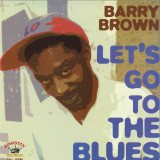
Barry Brown one of reggaes vastly overlooked talents. His militant conscious style has over time lost none of its appeal. Truly one of the sweetest roots vocalists to come out of Jamaica.
Born in 1962, Kingston, Jamaica, he cut his musical teeth working under producer Bunny Lee. Their first release was a track called ‘Girl You’re Always on my Mind’, although a minor hit, Bunny Lee saw his potential and was rewarded with his 1979 cut ‘Step it up Youthman’ which became a hit and has become a roots classic, leading to an album of the same name. The late 70’s was a great period in Barry Brown’s career and its from this period that we have culled this set of tracks. Straight from the master tapes some of his finest moments and some unreleased gems that we believe should be heard. A great set from his timeless 'Trying Youthman' a tail of struggling times in the heart of Kingston Jamaica.
His rastafarian inspired chants 'Stop Them Jah Jah','Give Thanx and Praise','Natty Rootsman' and 'Lead Us Jah’ work alongside socially charged cuts as 'Politician', 'Big Big Pollution' and 'Mr Money Man'. As with all his tales and inspired lyrics they are put across in such a tuneful way that like all the best songs that carry a message can be remembered also through the strength of the song.
As with many of his artists Bunny Lee encouraged him to go into self-production, and after a time spent with producer Linval Thompson ‘Separation’, and Sugar Minott ‘Things & Time’, he did just that and produced his first release ‘Cool Pon Your Corner’ in 1980 followed in 1981 by ‘Problems Get You Down’.
We hope this release will find a place in your collection and remind us of the talent of Mr Barry Brown. If somewhat overlooked, but certainly now not forgotten. Let’s celebrate with the man and go to the blues one more time....
- A1: Didn't You Hear?
- A2: No Smoking
- A3: Dream Sequence I
- A4: Dream Sequence Ii
- A5: Kevin's Theme
- A6: Sail! Sail!
- A7: Kevin & Paige
- B1: Bamboo City
- B2: Walk To Grange Hall
- B3: Virgil's Theme
- B4: Walk To The Other Side Of The Island
- B5: Death Talk & Jeep Approach
- B6: Jeep Ride
- B7: Dead Tree
- B8: Didn't You Hear? (End Title)
Six years before the release of his landmark Mother Earth’s Plantasia LP, composer and arranger Mort Garson met experimental film director Skip Sherwood, who was interested in an electronic score for his new movie, Didn’t You Hear?
While not much is known now about the exact nature of their collaboration, Here's Garson’s magnificent score as a record of those heady, early days after his life-changing discovery of the Moog synthesizer. Notable for being one of the earliest screen appearances by a young Gary Busey, Didn’t You Hear? also boasts one of the first-ever all-electronic movie scores. Though the score was first released in 1970, it sounds as adventurous and futuristic today as it must have then.
Recorded between 1985 and 1987, this album brings together the two founders and leading performers of candombe-beat, Ruben Rada and Eduardo Mateo. They hadn´t collaborated in a project since 1969. Both artists had reached their creative prime, with Mateo having released “Cuerpo y Alma” and Rada, “La yapla mata” (which included the classic song ‘Tengo un candombe para Gardel’). 140 gram vinyl with OBI & Insert
This initiative sprang from the artists themselves. But when it was time to create, they rarely got together in the studio, preferring to work on their own. Once finished, the album failed to make an impact, since neither of them promoted it.
This revival brings that semi-hidden treasure to light. It includes two tracks of the artists strictly performing a duet, the only recordings of Mateo and Rada working alongside each other and no one else. It also contains two additional tracks where you can relish Rada accompanied by Mateo’s guitar and Mateo backed by Rada’s percussion. It includes a track where Mateo commands the instruments (as in Mateo solo bien se lame) and another with Rada’s solo on vocals and percussion. There are instances when Rada’s band of that moment and “super-group” (with Osvaldo Nolé on keyboards, Ricardo Lew on electric guitar, Urbano on the bass and Osvaldo Fattoruso on drums), makes an appearance. Sometimes, Urbano comes forth as lead singer, completing the triad of singers of “El Kinto”. All excellent songs.
This album is exceptional and one-of-a-kind, an overflow of talent, musicality, swing, imagination, rhythm, spark, and transcendence.
Guilherme de Alencar Pinto
Das ultimative Sammel-Vinyl-Album für alle Hans Zimmer Fans! Die vier 180 gram LPs dieser audiophilen Pressung enthalten erstmals alle 29 Tracks des legendären Soundtracks "Interstellar" - der ursprünglich nur als gekürzte Version mit 16 Tracks veröffentlicht wurde. Zusätzlich ist mit "Day One Dark" eine alternative, extrem düstere Version des Soundtrack-Themas enthalten, das nicht im Film verwendet wurde. Das Gatefold enthält einen Einleger mit Liner Notes von Hans Zimmer und Regisseur Christopher Nolan. Sein erhebender, atmosphärischer Soundtrack zu Christopher Nolans Sci-Fi Abenteuer "Interstellar" brachte Hans Zimmer im Jahr 2014 eine Oscar- und Golden Globe-Nominierung ein. Zur Einordnung der Bedeutung des zum modernen Klassiker gewordenen Klangerlebnisses von "Interstellar" reicht der Blick auf Hans Zimmers eigene musikalische Biographie nicht aus. Weit mehr als eine Weiterentwicklung des Hans Zimmer Signature-Sounds, stellt die Klangverbindung einer Orgel mit elektronischen und orchestralen Elementen eine Zäsur in der Geschichte der modernen Filmmusik dar und markiert eine viel kopierte und nie erreichte nachhaltige Sound-Innovation. Soundtracknet urteilt: "Hans Zimmer has created a close to perfect musical canvas for those extremely dedicated to the audio experience" und The Telegraph ergänzt "the vast sounds of a composer set loose on his grandest ever assignment."Herausragend ist auch die Entstehungsgeschichte der Musik: Hans Zimmer komponierte die ursprüngliche Musik ohne eine Szene von dem Film gesehen zu haben einzig auf Basis eines persönlichen Textes von Nolan.
In the mid 90's, Julee Cruise and Eric Kupper were signed to the same music publisher, Warner Chappell. Patrick Conseil, who signed both, thought it would be a good idea for them to get together and collaborate. He was correct in that assumption, and this has lead to an enduring relationship, both creatively and as friends. These two tracks were originally intended as demos, but somehow got leaked onto YouTube, with positive response. Eric thought it would be a great idea to remaster the demos, keeping the raw edge, and give them a proper release, some 20 plus years later. Julee enthusiastically agreed.
Having been influenced by the likes of Roni Size, 4 Hero, Jacob’s Optical Stairway, LTJ Bukem and DJ Die (the latter of whom Eric did a collaboration with), Kupper was experimenting with drum and bass. He could often be spotted in London clubs 'The End' and 'The Globe' checking out and enjoying the music and the vibes.
'My Blue Yonder' is one of the few tracks Kupper has ever written lyrics to. They were inspired by his then toddler daughter, Zoe. One day, Eric found his 3 year old on the floor, wrapped up in a blue blanket, looking blissful. When he asked her what she was doing, she replied 'I'm in my blue yonder'. She had heard the phrase in a song from a children's video. Eric then sat down and wrote a moody yet childlike song about a utopia, based on his daughter's likes and dislikes, her joys and her fears. A compelling blend of orchestral arrangements, frenetic beats, and Julee's unique vocal approach. Julee has often commented that it is one of her favourite tracks she has ever recorded.
This collaboration also led to 'Satisfied', with lyrics and melody written by Julee. An ethereal somewhat existential track, with jazzy chords and pulsating arpeggios, it still has Eric's vibe, within a different music style. Julee's beautifully phrased vocals and lyrics bring the track to life, giving it a clear vision.
This is the first release on Kupper's new 'Hysteria misc.' label. A label for all kinds of music, electronic to acoustic, rock to experimental, and 'misc.'...
In Julee’s words, 'Thanks Eric, for doing this. I really love what we did'.
- A1: Volume (Lp1 Gyrate)
- A2: Feast On My Heart
- A3: Precaution
- A4: Weather Radio
- A5: The Human Body
- A6: Read A Book
- B1: Driving School
- B2: Gravity
- B3: Danger
- B4: Working Is No Problem
- B5: Stop It
- C1: K (Lp2 Chomp)
- C2: Yo-Yo
- C3: Beep
- C4: Italian Movie Theme
- C5: Crazy
- C6: M-Train
- D1: Buzz
- D2: No Clocks
- D3: Reptiles
- D4: Spider
- D5: Gyrate
- D6: Altitude
- E1: The Human Body (Lp3 Razz Tape)
- E4: Working Is No Problem
- E5: Precaution
- E6: Cool
- E7: Functionality
- F1: Efficiency
- F2: Information
- F3: Dub
- F4: Modern Day Fashion Woman (Version 2)
- F5: Danger
- F6: Feast On My Heart (Working Version)
- G1: Untitled (Lp4 Extra)
- G2: Cool
- G3: Dub
- G4: Recent Title
- G5: Danger!! (Danger Remix)
- H1: Crazy (Single Mix)
- H2: Reptiles (Channel One Version)
- H3: No Clocks (Channel One Version)
- H4: Spider (Alternative Mix)
- H5: 3 X 3 (Live)
- H6: Danger Iii (Live)
- E2: Modern Day Fashion Woman (Version 1)
- E3: Read A Book (Instrumental)
In the late-1970s Athens, Georgia was buzzing with a raw but sophisticated music scene. Traditional Southern rock had been the Georgia musical export for years before but the turn of the decade began producing new sounds from bands like the B-52’s, REM and Alt Rock luminaires Pylon.
Before they were a band, Pylon were art-school students at the University of Georgia: four kids invigorated by big ideas about art and creativity and society. However, Pylon were less of a band and more of an art project, which meant they had very specific goals in mind, as well as an expiration date.
While their time together as a band was short lived (1979-1983), Pylon had a lasting influence on the history of rock and roll. Throughout their brief history, they were able to create influential work that would help foster the post-punk and art-rock scene of the early 80s. Artists like R.E.M., Gang of Four, Sonic Youth, Sleater-Kinney, Interpol, Deerhunter and many more claim inspiration from the band.
Their 1979 single ‘Cool’ / ‘Dub’ reached legendary status, with Rolling Stone titling it one of the 100 Greatest Debut Singles Of All Time.
In 1980 the band released their first record, ‘Gyrate’, and began touring across the country in support of the release. The band would soon develop a following across the country and specifically in the bustling music scene in New York City. One of their earliest gigs was opening for the Gang of Four in the Big Apple.
Following the critical acclaim of their debut release, Pylon went back into the studio. They gleefully pulled their songs apart and put them back together in new shapes, revealing a band of self proclaimed nonmusicians who had transformed gradually but noticeably into real musicians. The resulting album, ‘Chomp’, was barely off the press when Pylon were booked to open a run of dates for a hot new Irish band called U2 (after previously playing two arena shows with them in the month leading to the album release). Most bands would have jumped at the opportunity but Pylon were sceptical. At a critical point in the life of Pylon, they opted to become a cult band rather than stretch their defining philosophy too far.
“We fully intended Pylon to be an almost seasonal thing that we were gonna do for a minute and then get on with our lives,” says Curtis Crowe, drummer for the band. “But it just never went away. It still doesn’t go away. There’s a new subterranean class of kids that are coming into this kind of music, and they’re just now discovering Pylon. That blows my mind. We didn’t see that coming.”
New West Records are proud to partner with Pylon to reissue ‘Chomp’ and ‘Gyrate’ back into the masses. Beautifully remastered from the original audio sources and pressed on vinyl (140g) for the first time in over 30 years.
New West Records also present ‘Pylon Box’, a comprehensive look at the band that features the remastered studio LPs ‘Gyrate’ and ‘Chomp’, the 11-song collection ‘Extra’ - which includes rarities and previously unreleased studio and live recordings - and ‘Razz Tape’, Pylon’s first ever recording: a 13-song unreleased session that pre-dates the band’s seminal ‘Cool’ / ‘Dub’ debut.
‘Pylon Box’ also includes a hardbound 200-page full colour book featuring pieces written by the members of R.E.M., Gang of Four, Steve Albini, Corin Tucker and Carrie Brownstein of Sleater-Kinney, Sonic Youth, Interpol, B-52’s, Bradford Cox of Deerhunter, Mission of Burma, Calvin Johnson of Beat Happening and K Records, Anthony DeCurtis, Chris Stamey of the dB’s, Steve Wynn of the Dream Syndicate and many more. Features an extensive essay chronicling the band’s history, with interviews with the surviving members of the band as well as members of R.E.M., B-52’s, Gang of Four, Method Actors and more. It also features never before seen images and artifacts from both the band’s personal archives as well as items now housed at the Special Collections Library at the University of Georgia and the Georgia Museum of Art, UGA.
- A1: Infinite Stress/Stress Infinito (From 'Spasmo')
- A2: First Nebula/Nebulosa Prima (From 'The Seecret/Il Segreto')
- A3: 1970 (From 'The Cat O' Nine Tails/Il Gatto A Nove Code')
- B1: Disgust/Raccapriccio (From 'What Have You Done To Solange?/Cosa Avete Fatto A Solange?')
- B2: Followed/Seguita (From 'Cold Eyes Of Fear/Gli Occhi Freddi Della Paura')
- B3: Lemon Obstinacy/Ostinazione Al Limone (From 'What Have You Done To Solange?/Cosa Avete Fatto A Solange?')
- B4: Glass Dolls/Bambole Di Vetro (From 'Short Night Of Glass Dolls/La Corta Notte Delle Bambole Di Vetro')
- B5: Foolish Suspension/Sospensione Folle (From 'Without Apparent Motive/Senza Movente')
- C1: The Serpent/Il Serpente (From 'Night Flight From Moscow/Il Serpente')
- C2: Infinite Stress/Stress Infinito (#4 - From 'Spasmo')
- C3: Solange's End/Fine Di Solange (From 'What Have You Done To Solange?/Cosa Avete Fatto A Solange?')
- C4: Evanescent/Evanescente (From 'Cold Eyes Of Fear/Gli Occhi Freddi Della Paura')
- C5: Emmetrentatre (From 'Short Night Of Glass Dolls/La Corta Notte Delle Bambole Di Vetro')
- D1: Night Walk/Passeggiata Notturna (From 'The Cat O' Nine Tails/Il Gatto A Nove Code')
- D2: In The Middle Of The Chest/In Pieno Petto (From 'Without Apparent Motive/Senza Movente')
- D3: In The Void/Nel Vuoto (From 'Forbidden Photos Of A Lady Above Suspicion/Le Foto Proibite Di Una Signora Per Bene')
Giallo is the fourth in a series of five double vinyl releases that bring together some of Ennio Morricone’s greatest soundtrack music. Each collection centres on a different movie genre, together they allow the listener to rediscover the unmatched genius of the greatest movie composer of all time. The Maestro. This collection was announced before Ennio Morricone passed away on July 6, 2020. We’ll continue to release the series to honour this great composer.
When we think of 1960’s Italian pulp cinema, the spaghetti western is the genre that comes to mind. However, Italy was responsible for another classic cinematic exploitation movement around the same time, one that is equally as compelling, but less widely recognised. Giallo…
Giallo, meaning ‘yellow’, is the Italian term for crime fiction, it was named after the bright yellow colours of early pulp fiction paperbacks. Film audiences adopted it as the name for a peculiarly Italian sub-genre of thriller cinema that had its heyday in the 1970’s - just as the Spaghetti Western movement was waning. The Giallo can be difficult to define, but essentially it is an Italian crime film that draws from a pool of common themes: stylized murders, amateur sleuths, sleazy glamour, psychological crimes, enigmatic titles and all these themes are underpinned by creepily atmospheric Ennio Morricone music scores. Starting 70 years ago as an arranger for the piece Mamma Bianca, Ennio Morricone is the emperor of scores and soundtracks. Morricone has always been a huge influence for the likes of Hans Zimmer, Danger Mouse, Muse, Metallica and many more musicians. He was one of the most successful composers of all-time, selling over 70 million records and winning dozens of awards.
Giallo is available as a limited edition of 3000 individually numbered copies on “giallo and black marbled” (clear, yellow and black mixed) vinyl. The package includes a 4-page insert with liner notes written by Claudio Fuiano. The gatefold sleeve contains a silver foil spot varnish on the outside and images of iconic movie posters on the inside.
On December 26th, 2018, Emily Cross received an excited email from a friend: Brian Eno was talking about her band on BBC radio. “At first I didn’t think it was real,” she admits. But then she heard a recording: Eno was praising ‘Black Willow’ from Loma’s self-titled debut. He said he’d had it on repeat.
At the time, a second Loma album seemed unlikely. The band began as a serendipitous collaboration between Cross, the multi-talented musician and recording engineer Dan Duszynski and Shearwater frontman Jonathan Meiburg, who wanted to play a supporting role after years at the microphone. They’d capped a gruelling tour
with a standout performance on a packed beach at Sub Pop’s SPF 30 festival, in which Cross leapt into the crowd and then into the sea, while the band carried on from the stage - an emotional peak that also felt like a natural ending. “It was the biggest audience we’d ever had,” she says. “We thought, why not stop here?” Following the tour, Cross went to rural Mexico to work on visual art and a solo record, while Meiburg began a new Shearwater effort. But after a few months apart
(and Eno’s encouraging words), the trio changed their minds and reconvened at Duszynski’s home in rural Texas, where they began to develop songs that would become ‘Don’t Shy Away’. Loma writes by consensus and, though Cross is always the singer, she, Duszynski and Meiburg often trade instruments. Meiburg compares their process to using an Ouija Board and says the songs revealed themselves slowly, over many months. “Each of us is a very strong flavor,” he says, “but in Loma, nobody wears the crown, so we have to trust each other - and we end up in places none of us would have gone on our own. I think we all wanted to experience that again.” The album that emerged is gently spectacular - a vivid work whose light touch belies
its timely themes of solitude, impermanence and finding light in deep darkness. “Stuck / beneath / a rock,” Cross begins, as if noticing her predicament for the first time. Then she adds: “I begin to see / the beauty in it.” A series of guests contributed to the absorbing soundscapes of ‘Don’t Shy Away’, including touring members Emily Lee (piano, violin) and Matt Schuessler (bass), Flock of Dimes/Wye Oak’s Jenn Wasner and a surprisingly bass-heavy horn section.
And then there’s Brian Eno. Loma invited him to participate in the mantra-like ‘Homing’, which concludes the album and sent him stems to interact with in any way he liked. He never spoke directly with the band but his completed mix arrived via email late one night, without warning and they gathered to listen in the converted bedroom Duszynski uses as a control room. “I was a little worried,” says Cross.
“What if we didn’t like it?” But it was all they’d hoped for: minimal but enveloping, friendly but enigmatic, as much Loma as Eno - a perfect ending to an album about finding a new home inside an old one. “I am somewhere that you know,” Cross sings, above a chorus of her bandmates’ blended voices. “I am right behind your eyes.”
First LP pressing on dark green vinyl.