
7

When Kronos plays a piece, they become fellow composers, true collaborators. Without them, we wouldn’t have the kind of string quartet playing that we find around us today. There are two kinds of string quartet playing: the ‘Before Kronos’ and the ‘After Kronos’.” – Philip Glass
‘Kronos Quartet has broken the boundaries of what string quartets can do.’ – New York Times
Nonesuch releases Kronos Quartet’s acclaimed album Kronos Quartet Performs Philip Glass on vinyl for the first time to coincide with Kronos Quartet: Five Decades, a year-long celebration marking the quartet’s 50th anniversary. Originally released in 1995, the album features David Harrington (violin), John Sherba, (violin), Hank Dutt (viola) and Joan Jeanrenaud (cello) performing Quartet No. 2 (Company) (1983), No. 3 (Mishima) (1985), No. 4 (Buczak) (1990), and No. 5 (1991), the first piece Glass wrote especially for Kronos. Recorded at Skywalker Sound in California, the album was produced by Judith Sherman, Kurt Munkacsi and Philip Glass. The cover art features Francesco Clemente’s painting The Four Corners (1985). At the time of the album’s release, the New York Times said, ‘It contains some of Glass's best music since Koyaanisqatsi. His ear for sumptuous string sonorities is undeniable,’ while the Washington Post called it ‘An ideal combination of composer and performers.’ It was a top 10 hit on Billboard’s Top Classical Albums, and spent 12 weeks on Billboard’s Classical chart.
In his original liner note, critic Mark Swed wrote, ‘Glass’ string quartets may contain his most intimate music. They are works through which a very public composer, perhaps the most important opera reformer of our age and a longstanding collaborator in large-scale music theater, holds up a mirror to himself and his way of composing. “In an odd way,” Glass explains, “string quartets have always functioned like that for composers. I don’t really know why, but it’s almost impossible to get away from it. It’s the way composers of the past have thought and that’s no less true for me. It’s almost as if we say we’re going to write a string quartet, we take a deep breath, and we wade in to try to write the most serious, significant piece that we can.” Glass says that as he sat down to write String Quartet No. 5, he had discovered that perhaps not taking a serious tone might be the most serious way to deal with it. “I was thinking that I had really gone beyond the need to write a serious string quartet and that I could write a quartet that is about musicality, which in a certain way is the most serious subject.”’
Glass’ first numbered quartet was written in 1966; however, he did not return to the string quartet medium until 1983, when he provided incidental music for a dramatization of Samuel Beckett’s prose poem, Company. During those 17 years, Glass had formed an ensemble and developed his style in a series of increasingly elaborate pieces for it. String Quartet No. 3 is also adapted to dramatic music, this time from his score to the 1985 Paul Schrader film, Mishima. It was with the music of Mishima that Kronos became associated with Glass, recording the string quartet sections of the soundtrack and subsequently working extensively with the composer on all five of his numbered quartets. Kronos also gave the first concert performances of Company and Mishima. String Quartet No. 4 was composed in remembrance of the artist Brian Buczak, who died of AIDS in 1988.
As Kronos’ anniversary season continues with further concerts around the world, Nonesuch will reissue Black Angels on vinyl on February 16. First released in 1990, the award-winning album includes George Crumb’s title piece, which inspired David Harrington to found the quartet. Called ‘an unusually elevated and searing Vietnam War protest’ by the New York Times, it sets a dark, powerful tone for this collection, which addresses the political/physical/spiritual consequences of war. Also featured are works by Charles Ives, István Márta, Thomas Tallis, and Dmitri Shostakovich. ‘Stylishly packaged, intelligently programmed, superbly recorded and brilliantly performed,’ proclaimed Gramophone. ‘In short, very much the sort of disc we’ve come to expect from the talented and imaginative Kronos Quartet.’ The Evening Standard included it among its ‘100 Definitive Classical Albums of the 20th Century’.
Born in Baltimore, Maryland, in 1937, Philip Glass is a graduate of the University of Chicago and the Juilliard School. By 1974, he had created a large collection of music for The Philip Glass Ensemble. The period culminated in the landmark opera, Einstein on the Beach. Since Einstein, Glass’s repertoire has grown to include music for opera, dance, theatre, orchestra, and film. His scores have received Academy Award nominations (including Kundun and The Hours, as well as Notes on a Scandal) and a Golden Globe (The Truman Show). Recent works include his memoir, Words Without Music, his first Piano Sonata, opera Circus Days and Nights, and Symphony No. 14. Glass received the Praemium Imperiale in 2012, the US National Medal of the Arts from President Barack Obama in 2016, and 41st Kennedy Center Honors in 2018.
Nonesuch’s relationship with Glass began in 1985, with the release of the score for Paul Schrader’s Mishima featuring Kronos Quartet. Over the years other Glass works on Nonesuch have included Einstein on the Beach (1993), Kronos Quartet Performs Philip Glass (1995), Music in Twelve Parts (1996), Glass Box (2008), as well as the soundtracks for Powaqqatsi (1988), Kundun (1997), Koyaanisqatsi (1998), and The Hours (2002), amongst others.
For 50 years, San Francisco’s Kronos Quartet – David Harrington (violin), John Sherba (violin), Hank Dutt (viola), and Paul Wiancko (cello) – has challenged and reimagined what a string quartet can be. Founded at a time when the form was largely centred on long-established, Western European traditions, Kronos has been at the forefront of revolutionizing the string quartet into a living art form that responds to the people and issues of our time. In the process, Kronos has become one of the most celebrated and influential groups of our era, performing thousands of concerts worldwide, releasing more than 70 recordings of extraordinary breadth and creativity, and collaborating with many of the world’s most accomplished composers and performers. Through its nonprofit organization, Kronos Performing Arts Association, Kronos has commissioned more than 1,000 works and arrangements for string quartet – including the Kronos Fifty for the Future library of free, educational repertoire. Kronos has received more than 40 awards, including three Grammy Awards and the Polar Music, Avery Fisher, and Edison Klassiek Oeuvre Prizes.
Kronos is prolific and wide-ranging on recordings. The ensemble’s expansive discography on Nonesuch includes three Grammy-winning albums: Terry Riley’s Sun Rings (2019), Landfall with Laurie Anderson (2018), and Alban Berg’s Lyric Suite featuring soprano Dawn Upshaw (2003); the 40th-anniversary boxed set Kronos Explorer Series; Nuevo (2002), a Grammy- and Latin Grammy–nominated celebration of Mexican culture; Pieces of Africa (1992), a showcase of African-born composers that simultaneously topped Billboard’s Classical and World Music charts; and Folk Songs (2017), Nonesuch’s 50th album with Kronos, which featured Sam Amidon, Olivia Chaney, Rhiannon Giddens, and Natalie Merchant singing traditional folk songs.

lim. two color Vinyl. Gatefold Cover with sticker and download code on postcard.
Welcome Back, friends, to the Yacht Soul cruise that never ends!
This theme, explored at length in the previous installment of this series, is a fertile one that just keeps on giving, and give it certainly does on the tracks we have dug up for your perusal, enlightenment, edification and enjoyment on Yacht Soul 2.
For those just joining us, the concept here concerns R&B and soul artists mining the songbooks of their white contemporaries for cover versions that serve the dual purposes of potentially garnering some crossover radio airplay as well as introducing great songs to segments of the listening public who might otherwise miss them. Some of these versions might have come about because they were personal favorites of the artist in question, others might have been strongly suggested by their labels or by the publishing company, but all of them provide an entirely new perspective on what were already fantastic songs to begin with.
So there you have it--a further dig into this nebulous concept that reveals more unexpected connections and crossed paths. Understanding the hows and whys of the way these particular covers and collaborations came to be is as fascinating as just enjoying the music itself, and there really is a lot of great music to dig into this time around! We hope you enjoy listening to it as much as we did putting it together.
VITAL SALES POINTS:
- Second volume from the YACHT SOUL series. First volume is the second best selling "Too Slow To Disco" compilation so far.…
- Extensive Global Promo by Tobias Kirsch/Germany and Special Requests UK
- Record Relase Parties planned.

Wewantsounds is delighted to reissue, in collaboration with Corbett vs. Dempsey, one of the great albums out of the BAG galaxy recorded by Luther Thomas and a cohort of musicians including Joe Bowie, Charles Bobo Shaw, Floyd LeFlore and Lester Bowie. Recorded live in 1973 at The Berea Presbyterian Church in St. Louis, the album consists of two tracks, the formidable, aptly titled "Funky Donkey" and the spiritual "Una New York." Released as a private press on Thomas" own Creative Consciousness Records, it"s reissued here for the first time since the 70s, marking the recording"s 50th anniversary, and features original artwork, remastered audio and new liner notes by Howard Mandel.
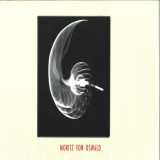
What are the differences and similarities between human and artificial sound, between oscillations generated by vocal cords and synthesizer voices, voltage amplified by speakers? On Silencio, his latest album for Tresor Records, Moritz von Oswald works with a 16-voice choir to explore this concept.
Drawing from the ensemble works of long-standing inspirations Edgard Varèse, György Ligeti and Iannis Xenakis, von Oswald and Vocalconsort Berlin delve into the space between sounds, creating a deeply textured collection that shifts between light & ethereal and
dark & dissonant.
As masterfully demonstrated in the early work of von Oswald and Mark Ernestus’ influential Basic Channel project, repetition and reduction are key elements here, much in the tradition of techno and minimalism. The vast dynamism of the human voice adds to the
profound weight of electronics while offering up a rhythmic source and sonic noise palette unexplored in von Oswald’s repertoire. In Silencio, von Oswald dredges a dank murk, pulling clouds over a distant pulse. It hangs, ready to take on new forms.
The compositions were written in von Oswald’s Berlin studio on classic synthesizers, such as the EMS VCS3 & AKS, Prophet V, Oberheim 4-Voice and the Moog Model 15. These abstract recordings were transcribed to sheet music for choir by Berlin-based Finnish composer and pianist, Jarkko Riihimäki and performed by Vocalconsort Berlin in Ölberg church in the city’s Kreuzberg district, only few metres down the road from where Dubplates & Mastering and Hard Wax opened their doors for music enthusiasts for many years so long. The recordings of the choral versions were then incorporated into the synthesized parts of the album and brought into anew electronic context; in Silencio, the focus is not on using one means to imitate the other, but to sonically discuss the tensions and harmonies between the two worlds and create a dialogue between them.
The relationship between von Oswald and Tresor Records goes back thirty years, all the way to Blake Baxter’s Dream Sequence in 1991 - which von Oswald engineered alongside Thomas Fehlmann. The collaboration with Fehlmann lived on, seeing the duo team up as 3MB with Eddie Fowlkes or Juan Atkins. More recently, the Detroit-Berlin connection continued as Juan Atkins & Moritz von Oswald present Borderland.
For von Oswald, Tresor Records and also the participating guest musicians of the choir, this release brings together audiences from other musical areas, cross-pollinating; Silencio is an album that stands for itself beyond the musical genre boundaries.

A viral phenomenon reissued. After 23 million YouTube views, multitudes of tattoos, dozens of cover versions, eight sold-out 7" pressings, comes this NINTH vinyl version.àSpread by word of mouth, click of mouse and without radio play.àThe entrancing romantic love song (murder ballad?) with guest vocalist Sparky Phillips of Demented Are Go counterpointing HME's Emanuela Hutter, hits the sweet spot for obsessive lovers“
The Hillbilly Moon Explosion continue with their gigging schedule across Europe this fall and plan a new album next year.àThe band - two Englishmen, a Frenchman and a Swiss/Italian chanteuse - reside in Switzerland and are one of the classiest exponents of rockabilly alive today, subtly mixing in swing, ska, country, Europop and more without compromising their roots.àTheir widely-sourced rock"n"roll is exciting and enduring; this song is a proven earworm and a worldwide infatuation

After glowing reviews of Dreaming Forever 001 and club plays from Ben UFO, Skatebard, Michael Mayer and many more, we are very proud to announce 002. Berlin based DJ Marie Lung is a regular performer at some of the best venues in the house and techno capital. After discovering Marie Lung’s set on HÖR and being blown away by her performances on the channel consistently, we contacted the artist to see if she had any demo tracks for us. The resulting tracks were two timeless and evocative house records that we play constantly in the Dreaming Forever offices. A spaced out remix from the inimitable Vril and a super classy rework from Matthias Reiling, one half of Session Victim, makes up the release. We are proud to release Marie’s inaugural record.

In his “Pulse Music” compositions of the mid-1970s, composer John McGuire forged a unique interpretation of European serialism. A student of Karlheinz Stockhausen, Krzysztof Penderecki and Gottfried Michael Koenig, McGuire moved to Cologne, Germany in 1970, where he become associated with the world-leading Studio for Electronic Music at Westdeutscher Rundfunk (WDR) in Cologne. Like Stockhausen, McGuire found his musical imagination both constrained and inspired by the technology that was available to him.
A conversation with sculptor Hans Karl Burgeff led McGuire to think beyond the horizon and into limitless space. For “Vanishing Points” (1985–1988), McGuire used an entirely digital set-up for the first time: a digital sequencer, eight Yamaha DX-7 synthesizers and a Studer 24-track digital tape recorder. The piece was conceived as a “sequel” to the Pulse Music series, but also a step forward from it. Whereas the Pulse Music pieces had employed steady streams of pulses, with Vanishing Points McGuire employed pulse layers that accelerate or decelerate against one another, vastly increasing the resulting rhythmic complexity.
McGuire's exploration of music technology continued in “A Cappella” (1990–1997), written for his wife, the soprano Beth Griffith, known for her recording of Morton Feldman’s “Three Voices” made in 1983. Using samples, he created a four-voice choir of voice samples and arranged them into interacting parts. The composition faced challenges due to the organic nature of the human voice compared to the precision of synthesized sounds. This process involved extensive editing and a negotiation between the "material" and the "original conception". This sort of negotiation applies as much to the composition of a single piece as it does to the work of two decades.

Yearly compilation album RADAR by KEROXEN returns with its fourth volume in the ongoing series of themed based albums showcasing the talents and misfortunes of carefully selected musical projects based or connected with the Canary Islands.
With its first volume released in 2020 aiming to promote and divulge adventurous Island based music, the Keroxen imprint now presents Vol.4 with another showcase of the various insular musical scenes made in the outermost regions – in this case, a very rare incursion outside the Canary Archipelago by way of handpicking friends and colleagues working in the further most regions we can think of. A very special showcase then, featuring the Azores Islands, Reunion Island, Canary Islands and French Guiana - a true connection of likeminded minds whom demonstrate once again that you do not need to be in an western hipster mecca to make interesting work.
The presentation format sticks to its breakable rules, with each artist offering one track per side and the full thing of course wrapped up in Pura Marquez dizzying post-tropical art.
The album opens with the Julee Cruise inspired project Akane by Tenerife’s Carolina Machado where synth arpeggios intertwine organically with her soothing voice, setting the tone for Reunion Island’s Jako Maron and his unique take on local Maloya music by way of electrifying it into a trance like looping beat. Enter French Guyana’s Daryanna Jean unique sound artistry with sampling, cutting and pasting local(?) sounds into a disorientating needle jump glitch fest. Side A eventually closes with a very Azorean take on the very English hauntological sound by borrowing those pastoral melodies and synth riffs of yesterday and transposing it to the remote Sub-Tropical fields of São Miguel island, in the Azores, courtesy of Flipping Candy.
Side B emphatically reinforces the compilation’s original concept that no matter where you are, in this post internet, post everything world, outsider music thrives and keeps raising the invisible bar, true that!

Blackfoxy is a jazz-funk group originating from Villeneuve La Garenne in the Parisian region. The group was formed in 2011 at the initiative of Kalid Bazi and Klaus Blasquiz (the singer of the legendary group Magma with Christian Vander, Jannick Top, etc.). They are notably known for the hits "Talk About Peace" (featuring Nina Attal, MB14, and Princess Erika), dedicated to the victims of the Bataclan attacks in 2015, as well as their performance on France 4 with 50 drummers on the Michael Jackson song "Don"t Stop" & "Til You Get Enough" One of their most notable features is their ability to innovate by skillfully and uniquely incorporating elements from "Blaxploitation" film music and African, Cuban, and Caribbean musical traditions into their funk, characterized by a high-quality brass section and arrangements borrowed from both 70s and 80s Funk. Blackfoxy"s music also stands out due to the complementarity of its two singers, Klaus Blasquiz (baritone and tenor, he sings over 5 octaves!) and Sista Wyndyz. Lastly, since the attacks of 2015, Blackfoxy has been involved in the movement (sponsored, among others, by Manu Katché) to promote the values of peace through music in popular neighborhoods and rural areas in France and elsewhere.

Oslo-based sludge-metal power trio SAVER are back with a vengeance. The band's new album `From Ember And Rust' channels the bare-knuckle ferocity of their 2019 full-length debut, `They Came With Sunlight', alongside a formidable command of dynamic, texture and sonic space that belies the relative youth of the project. Having erupted into the Norwegian metal scene without warning, SAVER is the result of heavy veterans Ole Ulvik Rokseth, Markus Stole and Ole Christian Helstad combining their years of experience into one three-headed beast, hellbent on pushing the boundaries of what the band is collectively capable of. Restless by nature, SAVER are constantly refining and reinventing their sound. The band's debut record was followed by two wildly creative collaborations which saw the trio marry their signature ferocity with some unlikely creative bedfellows in order to test new depths. `Emerald', 2021's full-length release, paired SAVER's calculated minimalism with the frenetic, percussive energy of Belgian post-metal collective Psychonaut whilst last year's `Split EP' saw SAVER and Norwegian folk singer/songwriter Frodekal reinterpret a song from each other's back catalogue with hauntingly spectacular results. With this revelatory experience still ringing in their ears, `From Ember And Rust' bears all of SAVER's heavy hallmarks alongside a newfound sense of dynamic anticipation and organic progression, which ties the seven tracks together as a significant body of work in the band's ascendant trajectory. As well as sharing their years of experience making the heaviest music they can, SAVER also share a passion for the unmistakable soundscapes of classic science-fiction. Already a key component of SAVER's distinctive sound; Rokseth's otherworldly, cinematic synth work is given centre stage on `From Ember And Rust' as the band boldly embark on a new journey together. As their first non-collaborative release in four years, `From Ember And Rust' could be interpreted as the band returning to the safety of their roots. However, SAVER are more determined than ever to keep pushing their sound into uncharted territory as the world they find themselves in continues to turn.

Oslo-based sludge-metal power trio SAVER are back with a vengeance. The band's new album `From Ember And Rust' channels the bare-knuckle ferocity of their 2019 full-length debut, `They Came With Sunlight', alongside a formidable command of dynamic, texture and sonic space that belies the relative youth of the project. Having erupted into the Norwegian metal scene without warning, SAVER is the result of heavy veterans Ole Ulvik Rokseth, Markus Stole and Ole Christian Helstad combining their years of experience into one three-headed beast, hellbent on pushing the boundaries of what the band is collectively capable of. Restless by nature, SAVER are constantly refining and reinventing their sound. The band's debut record was followed by two wildly creative collaborations which saw the trio marry their signature ferocity with some unlikely creative bedfellows in order to test new depths. `Emerald', 2021's full-length release, paired SAVER's calculated minimalism with the frenetic, percussive energy of Belgian post-metal collective Psychonaut whilst last year's `Split EP' saw SAVER and Norwegian folk singer/songwriter Frodekal reinterpret a song from each other's back catalogue with hauntingly spectacular results. With this revelatory experience still ringing in their ears, `From Ember And Rust' bears all of SAVER's heavy hallmarks alongside a newfound sense of dynamic anticipation and organic progression, which ties the seven tracks together as a significant body of work in the band's ascendant trajectory. As well as sharing their years of experience making the heaviest music they can, SAVER also share a passion for the unmistakable soundscapes of classic science-fiction. Already a key component of SAVER's distinctive sound; Rokseth's otherworldly, cinematic synth work is given centre stage on `From Ember And Rust' as the band boldly embark on a new journey together. As their first non-collaborative release in four years, `From Ember And Rust' could be interpreted as the band returning to the safety of their roots. However, SAVER are more determined than ever to keep pushing their sound into uncharted territory as the world they find themselves in continues to turn.

"Lost" album from Todd Snider, featuring previously unreleased songs, recordings, and versions. Sometimes an artist makes a record, then decides not to release it. Neil Young and Prince are two artists who famously did that multiple times. Todd Snider is another artist who has done it, putting three albums on the shelf in a career now spanning three decades. While Snider may not be as well known as Young or Prince, he is just as committed to his art, and his decisions to shelve those three records were artistic ones. But now Snider has decided to take one of those albums off the shelf. Sixteen years after it was recorded, Crank It, We’re Doomed will finally get its release via Aimless Records.

Jord (Swedish for “Earth”) performs Swedish Atmospheric Black Metal with ear-catching melodies. For fans of Enslaved, Vintersorg and Borknagar! Jord is an atmospheric Black Metal band with Blackgaze and post rock influences founded in 2020 as a one-man project by Jurg. Based in Sweden the inspiration came from northern nature, folk lore, mysticism, a man’s relation to this part of the earth and bands like Alcest, Enslaved, Anathema and Russian Circles. Two albums were released by Northern Silence Productions, “Sol” in 2021 and “Måne” 2022. Jord transformed into a trio in late 2022 and the new demo songs got attention from Hammerheart Records. A few months later a full studio recording of the third album ”Tundra”, in this new band setting, was done. “Tundra” tells the stories about ancient gods, dark and terrifying beings from Swedish folk lore mixed with modern day power struggles. There is a sand grain of truth to every story however old it may be. Jord uses these old mythologies to give a hint about today’s problems with authorities, mind control and delusions. But most importantly on how the elite will break and fall when they have pushed us too far.

2023 Repress
Two lovely House mixes produced by Frankie Knuckles and Brett Wilcotts (Gherkin Jerks). From the mid 80s era when dance music was shaken up between disco, boogie, Italo and the emerging house sounds from Chicago. Claudio Simonetti was a titan of the Italian groove, but his monster jam as Kasso, "One More Round", reached the stratosphere when Windy City godfather Frankie Knuckles gave the track his Midas touch. The Knuckles mix is already worth the pressing, but the flip side contains the overlooked 80s remix by supremo Brett Wilcots. The Chicago master is known for his Gherkin Records and lays his hands on "Walkman" to turn it up to a boogie frenzy of the highest order. Must have!

It is time to succumb to the sounds of the Magic Wand label once more and this eighth sonic spell is another one that will leave you happily helpless. It finds the Coyote lads step away from their fine work on Is It Balearic? to cook up two top edits. First up they offer 'Lonely' - a broody, steamy and shimmering tropical Balearic workout and then comes the organic and lazy drums of 'Western Revolution' with an iconic gravelly vocal from Gil Scott Heron. There are folk-tinged Americana sounds on 'Love Home' and laid-back disco licks on the seductive 'Luca' to make this a summer party essential.

After a three-year musical odyssey into the unknown, Renceau steps back into the limelight and unveils EXPLORE001, the first release on his new label EXPLORE.
Available in beautiful blue marbled vinyl, this EP features a handpicked selection of four tracks from Renceau’s treasure trove of unreleased material.
Side A packs a punch with two hard old school tech-housey club-killers, that harken back to the golden era of electronic music, evoking the spirit of iconic artists like The Sharp Boys, Umek and Player, while infusing a modern hardgroovey touch reminiscent of X-Coast. Guaranteed floor-fillers!
As you flip to side B, you’ll discover the intimate and introspective side of Renceau. These tracks delve into the soul, serving as a heartfelt dedication to his grandfather, who passed away a few years ago, but also as a dedication “to you”, as written in the deadwax.
This versatile 12”, full of tools, is one to keep in the bag. With EXPLORE’s promising future, anticipate a wide arrange of very diverse releases ahead. Buy on sight!

Malian and French pair Siraba unveil their much-anticipated self-titled debut LP on Damian Lazarus’ Secret Teachings label, a 10-track odyssey fusing Mali’s rich musical traditions with cutting-edge electronic music.
Malian hunter Boubacar Samake and Damien Vandesande, one half of the French electronic band dOP, have won plenty of plaudits for the early singles taken from their debut album as duo Siraba. Those singles, spanning across the summer months, have found the pair bring the traditional sound of the Wassoulou - a river valley of West Africa - to the electronic world after 20 years of friendship. The music comes with an important underlying message of love and respect and results in spellbinding tracks that move heart, body and soul, finding a perfect home on Secret Teachings - a left-of-centre alternative label to Lazarus’ celebrated and often more club- focused Crosstown Rebels. With the arrival of the full album, the pair exhibit and showcase the emotional breadth and depth of their music, with detailed explorations of organic textures and native sounds merged with future-focused ideas and concepts.
The title track opens with an atmospheric mix of spoken words and spine-tingling chords that bring rich Afro flavours, while ‘Dounoiia’ is a languid groove made from hand drums and pixelated synth leads that cast a fine spell. The slow-blooming ‘Bani’ brings rich Malian blues and melancholic horns, while ‘Komafly’ is a rich mix of acoustic strings and broken beats that transports you to a hot and dusty landscape. A vital component of the sounds of the Wassoulou, the indigenous stringed instrument the Ngoni features again on the rousing ‘Nanse’ as spiritual vocals sung in Bambara rouse the soul.
‘Djandjo’ is another rich infusion of Malian culture with simmering electronics to make for something both ancient sounding yet futuristic, and the hypnotic ‘Ngana Fôlly’ with its rich bass is a song ‘dedicated to those who fight for the well-being of their families, for unity... a song for the people who also fight a great disease, between life and death’. The sublime ‘Toro’ is a wavy groove perfect for sundown - a deep and inviting sound rich in soulful vocals and dreamy melodies, while ‘Tolonawoulile’ is driven by the intense strumming of the Ngoni with busy hand claps and hurried drums and last of all ‘Fo Te Mokobana’ sinks into a heart-warming slow groove with sweeping strings and Malian percussion all overlaid with impassioned vocals.
A rich listening experience, Siraba’s debut album is an immersive journey and absorbing dive into the minds of two artists breaking new grounds while spotlighting native traditions and musical techniques spanning hundreds of years.

A defining album of the 90s, Last Splash by The Breeders turns 30 this year. To celebrate, the band have returned to the original tapes to give it its first-ever remaster, and by doing so have also unearthed two lost tracks that will delight fans. Recorded by the "classic" Breeders line-up of Kim Deal, Kelley Deal, Josephine Wiggs and Jim Macpherson and featuring singles "Cannonball" and "Divine Hammer", Last Splash was "an alt-rock classic" (Pitchfork"s Top 100 Records of 1990s) on release; a fast seller too, quickly attaining Platinum status in the US. Despite having had the boxset treatment on its 20th birthday, the album was still left to be remastered so 10 years on, the original y" tapes were taken out of the archives and have been lovingly worked on by Kim Deal, Benjamin Mumphrey and Miles Showell (Abbey Road). Never sounding so good, the album for its 30th anniversary, it"s getting the ultimate vinyl pressing. Entitled Last Splash (the 30th Anniversary Original Analog Edition), this new version has been cut at half speed at Abbey Road by Miles Showell, now spanning two LPs and running at 45rpm. A Japanese cd edition will also be available. This edition contains an exclusive, one-sided etched 12" which features two previously unreleased tracks - "Go Man Go" and "Divine Mascis" ("Go Man Go" is a track that Kim co-wrote with Black Francis while "Divine Mascis" is a different version of "Divine Hammer" with Dinosaur Jr."s J Mascis on lead vocals). Both tracks originate from the original sessions and were left forgotten until the sessions were exhumed to create this new master. The attention to detail continues to the album"s art, which equally celebrates Vaughan Oliver"s iconic sleeve. With Vaughan sadly no longer with us, his long-time design partner Chris Bigg has gloriously reimagined the album"s sleeve for this new version.

BACK IN THE RACKS..BOMBER VINYL REPRESS Petrol Girls are a radical feminist hardcore band making waves across the European and UK punk scenes The band are constantly on tour across the UK and Europe and are gaining great press and interest along the way . Recently picked up by major booking agency ITB after one London show. Their previous two 7" singles sold out in record time For Fans Of: War On Women , Bikini Kill, Fugazi, Refused, White Lung, Pettybone, Propagandhi
