We're here with the 14th vinyl release in our catalogue. And those of you who've been following us since day one can probably tell that it's something both new and quite familiar. How so? Well, because this particular record features a brilliant track released on CD ten years ago (!), as part of our "Mystical Deep Vol. 2" compilation, but the "new" part here is the two completely fresh remixes by two amazing artists. So let's get to the names, shall we? As for the track in question, we're talking about "Leagues Deep" - a forward-thinking half-stepper by two heavyweights known as Loxy & Resound. The track has been making waves for quite a while, and has finally reached the light of day on vinyl. As mentioned before, it is accompanied by two remixes. One is by an up-and-coming talent going by the name of AM94, who turns the original version into a dual narrative, so to speak: the first half is a proper action-packed syncopated roller, the second half - a more modern, deep sub-laden half-tempo interpretation of it. The other remix is brought to you by no one else than Resound himself, who's transformed the original piece into a breakneck-paced drum-focused killer. But do watch out for the bassline too - it takes absolutely no prisoners. You've been warned.
Search:one two
Sangre Voss’ ability to intoxicate percussion, brew tight forward thinking rhythms and offer all tempo’s of a club night proceedings make his ‘Konon EP’ his most fluid to date.
Connecting the dots between the raw and the profoundly modern - this record unifies the elements of progressive dance music in a way only someone with his production ability could reach. Spun out chug, high tempo whirlwinds and powerful leading melodies make this one a catch - CHECK.
Part 1[10,88 €]
Part two of Arthur Robert’s most recent EP package showcases his atmospheric style of dubby, strong rhythms and rich, detailed sound design.
On this EP Robert explores his mastery of mesmerizing machines, looping bleepy signals into trance-inducing patterns on Abundance, Watchful and Homecoming. A welcome brief respite from the madness, delicate ambient interlude You Cannot Hurt Me twinkles soothingly, as does the warmth offered by subdued hazy chords on the almost housy Tunnelvision.
Such versatility not only further establishes Arthur Robert as one of current Techno’s most promising producers but also makes this EP package a strong contender for one of the year’s defining releases.
- A1: Titel. Sister Sledge - Got To Love Somebody (Dimitri From Paris 12” Version)
- A2: Sheila & B. Devotion - Your Love Is Good (Dimitri From Paris Remix) (2018 Remaster)
- B1: Sister Sledge - Got To Love Somebody (Dimitri From Paris Instrumental)
- B2: Sheila & B. Devotion - Your Love Is Good (Dimitri From Paris Instrumental) (2018 Remaster)
Repressed !
Rarely does an artist pay homage to the classics like Dimitri From Paris. The Grammy nominated producer, remixer, composer and DJ has made every one of his repertoire of reworks sound effortless; no mean feat when the original tracks are by the likes of Disco’s greatest musicians. In 2018 he released his “lifetime achievement” on Glitterbox, with the strictly limited pressing of the ‘Dimitri From Paris presents Le Chic Remix’ boxset. Now the 12’s have their own separate outings, bringing greater focus onto the individual productions, as each vinyl features two of the incredible Dimitri remixes, along with their respective instrumentals on the B-Side. This release showcases the euphoric highs of Dimitri’s remixing skills across Sister Sledge’s ‘Got To Love Somebody’ and Sheila & B. Devotion’s ‘Your Love Is Good’.
UK techno legend Mark Broom releases ‘100% Juice’ LP on Rekids.
Following the acclaimed ‘Funfzig LP’ on Rekids in 2021 as well as his ‘Mutated Battle Breaks’ series on the techno focussed Rekids Special Projects, Mark Broom returns to Radio Slave’s imprint for his latest full length, ‘100% Juice’, dropping this April.
Title track ‘100% Juice’ leads the charge, barreling forward with phased hats and trippy bleeps, before ‘Slush’ carries the rest of the A-side with dense synths and stereo trickery. ‘Rainbow’ bridge sees muted chords drifting in and out of focus alongside rattling drum programming before ‘Reverse’ mutates dub techno inspired elements with swathes of spacious FX and pitch-perfect processing.
Opening the second disc is the aptly titled ‘Wonky Workout’, which sees hard-hitting kicks meeting freaked out leads, followed by the fast-paced ‘I Want’, which brings crunchy, shuffling percussion and effected vocal samples together to devastating effect. The final side of vinyl is the one-two punch of ‘Boxed In’ and ‘Wiggle Me This’, with the former bringing sharp keys, rumbling low end and glistening pads, while the latter closes out the LP with warped acid lines and crisp drums.
Releasing on labels such as Rekids, M-Plant, and Blueprint, the wildly prolific Broom has consistently beenat the forefront of the techno scene for decades with his gritty, groove-based output while, away from the dancefloor, his The Fear Ratio project with James Ruskin continues to win critical acclaim.
One of Alan Vega’s greatest talents was his ability to bring the past and the future together • into a suspended place of timelessness. His groundbreaking duo Suicide was often seen as future primitivism and most of his musical output has exemplified this blending of the primordial human condition and visionary thinking. With Invasion b/w Murder One, the next release from the now infamous Vega Vault following 2021’s Mutator, we see this innate power in full effect.
The two tracks “Invasion” and “Murder One” were recorded two decades apart from one another in New York City. “Invasion” was recorded toward the end of the 2012-2015 studio sessions for the posthumous album IT and was one of his last recordings, while “Murder One” was recorded in 1997-1998, (after the Mutator sessions) and is part of a cluster of material that was recorded but never mixed prior to the sessions for his album 2007, released in 1999. Pairing these two songs together as a release illustrates the timelessness of the 30 plus years of unreleased material that he deemed the Vega Vault.
This release continues the collaboration of Mutator’s mixing and producing team, Liz Lamere and Jared Artaud. Liz provides a bridge to the past, having performed throughout the recording process of “Murder One” and “Invasion” while Jared opens a bridge to the future having been chosen by Alan himself to carry the torch and ensure the vision stays intact. Alan trusted no one more than Liz and Jared, and gave his blessing and encouragement to continue releasing material from the Vault. As Alan stated in the song “Vision” from IT, “If you destroy the vision, you will suffer the whirlwind.”
Chicago meets Detroit. Two stateside legends in the form of Greenskeepers James Curd and 3 Chairs member Marcellus Pittman, join forces for the inaugural release on Pronto, putting their house heads together for a certified transcendental trip.
‘Shafty Riptide’ opens the EP, a punchy, late-night jaunt, think big system, smoke filled basement, one red light, no-nonsense hard-hitting house grooves. On the flip, ‘Corners’ a jazz infused, acid tinged, skippy synth heater doused in emotion that grabs you from the off and leads you down the path to paradise.
This is the real deal, authentic as you like, from two greats of the game.
In an interview for The Wire magazine back in January 2012, Spencer Clark claimed that one the most important "lesson" learned while performing with The Skaters was "stay true to your imagination". Taking this life motto at heart, Clark's world today is still a place of wonder and myth, conveyed through a myriad of aliases and invocations like Vodka Soap, Fourth World Magazine or Typhonian Highlife. Always the wide-eyed mystic and searcher of the netherworld, Clark surfaces again on Discrepant sister label Pacific City Discs, straight from the Canary Islands with this not quite but somewhat reissue under his celebrated and celebratory Monopoly Child Star Searchers alias.
Combining visions from two long, long sold out and hardly traceable releases on Clark's own Pacific City label, pressed for the first time ever in wax with a new master by D&M - as it should - 'The Aqueducts Of Channel Island/Prince Of Parrot Shooters' stands as a vital piece in an ever changing and deeply personal mandala-like oeuvre. An hypnotic and appropriately lo-fi flux of bouncy hand percussion loops, nature calls and celestial synth harmonies that weave themselves into trance inducing rituals. Levitating fever-dream recordings from imaginary topographies, or perhaps a gateway to fortean alternate realities just lurking around the corner. Stay true to your imagination indeed.
Freda Payne’s two-step classic rare groove “Tell Me Please” gets it’s long overdue first release on 7” single. Since first recorded and released in 1978 it has remained only as an album track from Freda’s “Supernatural High” LP that year. This Skip Scarborough composed song also featured on Expansion’s ‘Skip Scarborough Songbook’ but a 7” edition has never appeared before. It is accompanied by a Pam Sawyer/Marilyn McLeod song
“I Get High (On Your Memory)” produced by Tony Camillo. Originals of this on Capitol Records from 1977 exchange hands for small fortunes making both these songs on one 7” single an essential purchase. Both high quality definitive luxury soul.
One of the all-time classic UK Garage releases from the minds of two masters, Grant Nelson and Simon Firmin as 24hr Experience, gets a much-deserved official reissue remastered straight from the DAT tapes via Digital Tape Recordings.
Wall-to-wall anthems that capture of everything great about the hey days of UKG. Rough, tough, swung beats, bouncing basslines, dreamy pads and chopped up vocals, at a pace that sets dancefloors alight every time. You’d be hard pressed not to have heard the likes of ‘I Need A Man’ or ‘Together’ absolutely tear up the dance before, reloads and wheels left, right and centre. Timeless business that should be a part of every collection.
Once in a while a record causes such a wave of excitement, it brings new vitality to dancefloors and generates fresh enthusiasm for the underground scene. ‘Without You’ is one such record, brought to life by the great talents of Art Department, a duo causing deep tremors due to their pioneering use of quivering bass, haunting vocals and fiery kickdrums.
The A side features the vocals of techno’s wonderchild, Seth Troxler, as well as Kenny Glasgow (one half of Art Department), his voice a major element of what makes their records so special. ‘Vampire Night Club’ layers the duo’s trademark synth sounds with an eerie and skin-pinching atmosphere. A truly mesmerizing record that gives the perfect introduction to the Art Dept sound on Crosstown Rebels, pre-empting their debut full length album on the label next year.
The double A and title track ‘Without You’ combines that unforgettable seductive bassline with a lingering vocal call. This record could have been made in the future as much as the past, its simplicity and depth the key to its appeal. Calls for its release have been heard for months and now have been answered with an extended 12” mix.
Art Department is the brainchild of Canadian duo Jonny White and Kenny Glasgow. With musical credentials dating back two decades, together they have constructed their own take on contemporary house music that has caught the attention of some of the leading figures of the current movement. With an album slated on Crosstown Rebels next year, this single is the first in a long line of raw futuristic bullets destined to cause a storm with an international audience.
Baby Buddha is David Javelosa and musical partner Charles Hornaday playing instruments and providing their own whacked-out vocals. Baby Buddha really was less of a band than a project; a side project in fact, for some members of another group, Los Microwaves. Baby Buddha would eventually record and release an album, 1981's provocatively-titled Music for Teenage Sex on Robbie Fields' L.A.-based Posh Boy label.
Happily, the project's guiding creative light, David Javelosa has recently seen to a vinyl reissue of the now-40-year-old record, mystifyingly retitled Music for Teenage Sects. Definitely among the stranger releases of the new wave era, Music for Teenage Sex/Sects could perhaps only have been created when and where it was made. But on the occasion of its 40th anniversary, the music sounds as weirdly wonderful as ever. "We Are Not" sounds like Human League stuck in a car with The Residents. And their cover of "All Shook Up" sounds like a musical kin to those inscrutable eyeball guys too; it wouldn't be out of place on Meet the Residents. "Little Things" is a house-of-mirrors, scary track, with spoken-word vocals by Los Microwaves' Meg Brazill and label head Fields.
The album cover is slightly different as well: it displays a bedroom scene like the original LP, but with the young female model absent. The new release (on Javelosa's own Hyperspace Communications label) is pressed on beautiful translucent blue vinyl and comes in a gatefold sleeve with a lively collage of photos, buttons, gig posters. Limited to 500 copies.This playfully titled release features David Javelosa (on synth and vocals) along with Meg Brazill (on bass and vocals) plus drummer Todd "Rosa" Rosencrans. Side One features five studio tracks, none of which were included on the band's 1981 Posh Boy LP, Life After Breakfast. Three of these tracks were recorded in '82; there's no information regarding the provenance of the other two songs. The records' second side collects five live recordings, capturing Los Microwaves onstage in New York City (The Peppermint Lounge) and Boston as well as at San Francisco's own I-Beam, a venue that often played host to the band. Those tracks date form roughly the same ear, 1980-83. Sonically the songs variously recall Blondie, Flying Lizards, Gang of Four and a far less dour Human League. Importantly, the band rocks, even when it's employing a spare drum kit, solid but elemental bass, and monophonic analog synthesizers. The stripped down aesthetics of the group – necessitated by its minimalist instrumental approach – are nonetheless thrilling. Even if you weren't there in 1980, this'll take you back.
Few groups arrive as fully formed as EPMD did. This dropped as the third single from the album of the same name, and further cemented their distinctive aesthetic: Slow rhyming, trading lines rather than the rappers being confined to their own verses, and backings that were ruthlessly funky and simple at the same time.
They’d go on to be labelmates with Public Enemy when Def Jam picked up their contract in 1990, and to compare and contrast the two is illuminating. While PE at that time were making waves with the Bomb Squad’s breathless, kitchen sink approach to production, EPMD were equally adored for taking the opposite approach.
Here, there’s a sprinkle of drums from Kool & The Gang’s oft-sampled ‘Jungle Boogie’, paired with a very recognisable portion of Eric Clapton’s ‘I Shot the Sheriff’. And that’s pretty much it – the two samples are linked, looped and left to their own devices. Such was Erick and Parrish’s confidence in their own rhyming ability and strong voices, no further embellishment was needed.
That confidence extends to the subject matter. While their debut album and later projects were heavy with concepts – the ‘Jane’ series – and notable guest verses, this was the third straight single of pure brag rap. Two MC’s, one beat, a whole heap of lyrics about how good they were. It’s something you can’t do unless you truly are special, and this duo most certainly were.
Paired with the classic instrumental version, which didn’t make it to the US 7” releases – it’s only on a hard-to-track-down French 7” pressing from 1989 – this this is a timely reminder of how breathtakingly perfect hip-hop can be.
Reissue of Elizio De Buzios's "Tamanquiro". Remastered and pressed on 45 RPM!
Sitting a good 90-minute drive away from Rio de Janeiro’s crowded beaches and packed tourist hot-spots, Campo Grande is not a neighbourhood that attracts travellers from around the World. Traditionally it is home to the city’s lower middle-class, whose aspirations of moving up the social ladder were played out in a suburb that has always been solidly working-class.
Campo Grande is home to Elizio De Buzios, a Brazilian musician who started playing music in the late 1970s and early 1980s. De Buzios began as a drummer, before learning to play guitar and starting to compose and sing his own music. When he turned 18, De Buzios joined a local band formed by some of his friends and other like-minded local musicians: Sol da Terra. The band mostly played samba in neighbourhood bars and small venues around Camp Grande, but De Buzios was interested in more than just samba. While he naturally admired great samba composers such as Cartola and Beth Carvalho, his musical pass went far beyond Brazil’s national music. He also loved MPB and bossa-nova and at home he listed to Joäo Bosco, Milton Nascimento, Luis Melodia, Tom Jobim, and many bossa-nova singers.
In 1980 De Buzios was noticed by a local representative of international major label Polygram, who gave him the opportunity to record two songs. He was excited, so started searching for inspiration for the songs he would eventually lay down. He found that inspiration close to home while passing a neighbourhood shop which made and sold clogs. After noticing a display of then fashionable Portuguese clogs outside the store, De Buzios popped inside to talk to the owner. It turned out that he was a tamanqueiro – as clog-makers are traditionally called in his native Portugal – and was as passionate about music as he was about the footwear he made. Thus inspired, De Buzios returned home to work more on the lyrics and music.
The next day, he headed into the studio to record the song, with Vale Ribeiro, who later went on to produce tracks for Marcos Valle, behind the desk. With Ribeiro’s assistance, De Buzios managed to record two songs in one day: ‘Tamanqueiro’ and ‘Sou Um Louco’, a ballad with English lyrics blended into the mostly Portuguese text. From the start, it was clear that ‘Tamanqueiro’ would be the single’s A-side. Incredibly catchy and funky, with some subtle disco elements, the song remained distinctively Brazilian thanks to the use of the cuíca. Listening back all these years on, De Buzios’ lyrics seem almost spontaneous, carry the track forward, and make it almost impossible not to sing along. Its infectiousness and funkiness made it an instant hit with the first few people to hear it.
When it was released, responses to the song were enthusiastic, even if it never became the Brazil-wide smash it should have been. It resonated well in the local clubs and on the radio, but unfortunately the marketing was handled by an inexperienced Polygram employee who failed to adequately promote the track. As a result, the record sank without trace and De Buzios’ dreams of stardom evaporated. Having just started a family, he realized he could not live off the uncertainty of being a musician. Instead, he got a job at city hall as a civil servant, a role he continued until his retirement a few years ago. ‘Tamanqueiro’ and ‘Sou Um Louco’ remain the only two songs he ever recorded.
In the early 2000s, with the rise of diggers’ culture, ‘Tamanqueiro’ slowly surfaced again. It became a sought after, hard to find seven-inch single, finding its way onto the airwaves once more and into the ears of a new generation of listeners. Some started appreciating the song so much that it was referred to as the “best-Jorge-Ben-song-Jorge-Ben-never-recorded”. And they are right: ‘Tamanqueiro’ does have that Jorge Ben-straight-forwardness. It’s a completely honest song that’s almost impossible not to fall in love with. Thanks to this remastered reissue on Rush Hour, De Buzios may now get the props his sole record so richly deserves.
Now for the good news: De Buzios is still singing in local bars and clubs in and around Campo Grande. He is surprised, but also incredibly proud, that the record he had almost forgotten about is appreciated so much by a group of music lovers he didn’t even know existed. But above all, he is happy that more than 40 years after the recording session, the record lives on – not only on this re-release, but also in his weekend sets in the bars of Campo Grande.
- A1: Neal Howard - Indulge (Discomedments Homage Re-Edit)
- A2: Minimalarchiv - Seduced By Theory
- B1: Nexus 21 - Silicon (Don't Need The Bleep Mix)
- B2: Discomendments - Herd Immunity
- C1: Doggy - Neurosilence (Unreleased)
- C2: Mark Archer - The Presence Of Beauty
- D1: Mg - 2 Sensual
- D2: C&M Connection - Bio Rhythms
It’s not normal to take 31 years to release a follow up album. But then Network was never a normal sort of record label, and often opted for the quirky rather than the quick buck. The logo was launched in 1990 and that year, along with a slew of startlingly good singles, created and issued two bio-rhythm compilations, each of which showcased cutting edge USA techno rubbing shoulders alongside its’ sparse UK bleep counterpart.
At the time the words quality and dance music compilations were not phrases shared that much. bio-rhythm 1 and it’s almost instant follow up bio-rhythm 2 bucked the trend with groundbreaking exclusive tracks, iconic minimal artwork and surreal sleeve notes.
Each of the albums have been hailed by many as piece de resistance primers to electronica music.
As well as capturing the zitgeist of a blurry everything of that moment experimental time, they have endured to be acclaimed as all time iconic classics. So why was there no follow up? One reason was that things were moving so bewilderingly fast at the time for Network that the emphasis was always on the next thing, not regurgitating repetitive beat ideas.
Another was that the opportunity arose to direct the acumen gained from the bio-rhythm experience at the release of two (now equally acclaimed) compilations from Frank and Karen Mendez’s cult Nu-Groove label.
The current Network reconstruction meant an opportunity to re-indulge and finally release bio-rhythm 3. Matt Anniss’s splendid sleeve notes are reproduced below and tell you all you need to know about the carefully selected (and mostly exclusive to this collection) tracks on 2 x 12 vinyl for increased sonic joy. Network. We continue.
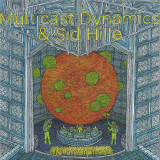
Multicast Dynamics returns to Astral Industries for AI-26, this time collaborating with Sid Hille, the German born, Finland based instrumentalist and composer. ‘Metamorphosis’ transmutes both artists’ unique styles into a synergistic blend of transportive storytelling, a delicate dance of light and dark.
Divided into two parts, ’Metamorphosis’ originates from a live performance recorded at Temppeliaukio church in Helsinki on March 2nd, 2019. The material was then edited, where Hille’s soothing keyboard work and haunting passages on the theremin, combine with processed textures and desolate sonic backdrops from Dijk. In this voyage beyond space and time, the subtle dialogue reveals new and perhaps unexpected dimensions in their creative arsenal, finding fresh new boundaries and enriching the palette of both performers. Encounters of sweet fleeting moments of lyricism emerge amidst the chilling outback, in which we're given some final consolation between the long lines of cavernous rifts and deep space tundra.
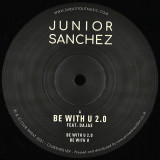
One of the world’s premier house DJs, Junior Sanchez re-imagines one of his early classics, releasing ‘Be With U 2.0 (feat. Dajae)’ via Club Sweat.
As a passionate advocate of preserving the spirit of house music Junior Sanchez mixes ingredients of the 1999 original, situating the warm buoyant bass underneath Dajae’s fervent and impassioned vocals, while implementing spirited sax tones for a soul-fulfilling affair.
An iconic anthem that has lit up dancefloors for over two decades, is served dance music justice with its rebirth. Junior Sanchez bestows the ‘Be With U’ gift upon a new generation, coupled with remixes from Yolanda Be Cool and Dance System.
Supports from: Claptone, Anna Lunoe, Tommie Sunshine, Sacha Robotti, David Penn, Riva Starr, Kryder, Shiba San, HeavyFeet, Kevin McKay, Jamie Jones, Pat Lok, Heldeep Radio - The Noise House, Vanilla Ace, Moon Boots, Norman Doray, Nick Catchdubs, severino panzetta, Don Diablo, Charles J, and Patric la Funk, TOCADISCO, Chris Lake, Paco Osuna, Dennis Cruz, Bingo Players, Mendo, Riva Starr, Don Diablo, Joachim Garraud, and Roger Sanchez
If there was ever a dance oddity it’s the bizarrely named single ‘Prisencólinensináinciúsol’, released in late 1972 by Italian entertainment icon Adriano Celentano, first appearing as a 45 on his own Clan label. A cult favourite if there ever was one, GW Edits kicks off their label with a sumptuous edit sewing the A and B side of the record into an 11-minute masterpiece named ‘Adriano Italiano’.
Renamed ‘The Language Of Love (Prisencol…)’ for the UK market, the original failed to make any impression on the UK chart instead becoming a cult DJ treasure. The fact that it was regularly reissued over the next few years illustrates its enduring appeal.
The novelty of its title and zany nonsensical lyrics may have caught the attention, but what sealed the deal was that groove! On top of that, Celentano’s vocal (as well as that of his wife Claudia Mori, who injected the short female section) that mimics the way English sounded to non-English speakers, comes across nowadays as proto-rap, receiving kudos as such in more recent times. The track is most certainly an anomaly, having no bearing whatsoever on hip-hop culture, yet somehow unconsciously envisaging it.
The flip side of the record was appropriately called ‘Disc Jockey’, also featured that infectious rolling groove complete with offbeat hat. It wasn’t as DJ friendly though, the drums not dropping for the first minute, whilst it also featured a more traditional sounding song in Celentano’s native tongue instead of the rhythmic rap gobbledygook of ‘Prisencólinensináinciúsol’.
Here the two are sewn together for a full-length ‘Adriano Italiano’, running at just over 11 minutes, with the addition of a further two-minute instrumental version. The full-length appears on vinyl for the first time and, along with the original ‘Adriano Italiano’, launches the GW Edits series, bringing this eccentric favourite to a new generation of DJs in time for its 50th anniversary next year.
Bart Skils returns to Drumcode with a trio of dancefloor weapons. The artist has been one of the most consistent label contributors over the last 18 months, with two Truesoul EPs, a cut on A-Sides Vol.10 and now ‘New Era’, his second Drumcode EP in a year.
‘All Over My Body’ features a collaboration with well-regarded US producer/DJ/vocalist Superchumbo and is a ready-made festival track, propelled by a memorable vox hook, driving groove and thrilling effects. ‘Golden Temple’ is trademark Skils and builds to a hypnotic laser-kissed climax. ‘Dub Killer’ is punchy techno at its finest, capped off by a woozy vocal drop.