- A1: Free Like A Breeze
- A2: My Opening (Feat. Ramson Badbonez)
- A3: Hymphony (Going In)
- A4: Burning It Up
- A5: Emerald Tablet
- A6: One Warning (Feat. Leaf Dog)
- B1: Shell Toes
- B2: Better Win
- B3: Tables Turning
- B4: Aurora
- B5: Dust Settles
- B6: Here I Am (Bonus Track)
Buscar:one two
As trans-Atlantic alchemists pulling from a shared dialectic that somehow encompassed both postmodern deconstructionist tendencies and a delightfully subversive sense of poptimism, it’s easy to see how David Cunningham and Peter Gordon immediately hit it off upon initially meeting each other back in the late-1970s at the height of their youthful transgressions. Having initially worked together on the second Flying Lizards’ LP fourth wall, with its ingenious fusion of dismantled rhythms and rearranged melodies juxtaposed against the slyly sultry singing of Snatch’s Patti Palladin— with Gordon adding a few sprinkles of mischievous sax in the mix— it’s no wonder the collaboration would lead to further musical adventures.
Which leads us directly to the genesis of The Yellow Box. Embarking on a collaborative exercise in the structural repurposing of music as untethered puzzle pieces in need of rearrangement with no predetermined outcomes, the duo gave birth to a project that would see them move through both time and recording studios across Europe, taking nearly two years from 1981-1983 to complete. Enlisting the great Anton Fier on drums from The Feelies/Lounge Lizards nexus and John Greaves on bass from Henry Cow/Soft Heap lore to round out their dueling creative counterparts, the album would be something of a lost treasure until its eventual release on Cunningham’s Piano imprint in 1996.
Cinematic in scope, and filled with drifting drones, beautiful counter-melodies, eery minimalism, Kraftwerkian synthesizers, looped voices, skronky interludes, and other shifting undercurrents of sound, it was an album that utilized both a diverse array of expressive languages, as well as early sampling techniques and prepared instruments, well before most people were thinking in such expansive, integrated terms at the dawn of the 80’s. But such is life at the vanguard of new music. And one of the reasons that it likely sat on the shelf for so long before finally being released well over a decade later. Like a sparser, less groove-oriented version of My Life in the Bush of Ghosts, or a more radical take on the experimental work of Can’s Holger Czukay, The Yellow Box stands at the crossroads of time and technology, fusing multiple strands of musical thought and compositional techniques into a disjointed whole that somehow still comes off as a conceptually complete record.
Now, here it is again, over 40 years later, with perhaps even more historical resonance than it had before, remade and remodeled just waiting to be rediscovered again.
Unchained is the long-standing guitar-based project of Nate Davis, originally from Providence, RI, and based in France for over a decade. In his two most recent LPs—Gabbeh (2024, A Colourful Storm) and Frontalier (2025, Stern Records)—Davis strives to describe a new path for outsider jazz instrumentalism that remains committed to harmonic and rhythmic form while placing greater emphasis on sonic texture through experimental production techniques.
Release Description:
Unchained—a name which at the project's inception or on earlier recordings spoke perhaps to the ecstatic saturation of high gain guitar—has over the past three albums (N.D. Visitor, Pic, and Gabbeh) come to represent more and more an acknowledgement of and sensitive remove from a crashing world. An excuse of oneself from trend towards a siloed artistic development.
On Frontalier, Nate Davis crosses further into this patient personal lexicon of guitar composition, presenting a new set of richly developed songs and leaps in arrangement which may very well shock Unchained fans the world over. The sympathetic geometric guitar themes of the earlier second-period Unchained style are almost entirely absent, making way for a fully realized presentation of the jazz, MPB, and fusion influence present to varying degrees on the previous three albums. Davis's keen sense of melody and songcraft have never been stronger, here landing on music which is at moments evocative of Wes Montgomery, Allan Holdsworth, Jobim, or the jazzier impulses of Lô Borges. Distinct in Davis's music, however, is what these references might belie: an innate tending towards repetition as an affective tool—one which has less to do with the aesthetics of the scene from which the project emerged than it does with devotional prayer. In this way it feels as if Unchained has always been music for living. What was once a maximalist expression of youth has matured into the sound of living with and in the world and an empathic transmuting of all the joy, disappointment, and ambivalence that comes with it. Songs that feel like the sort of thinking one does looking out the window on a long train ride, or the routinism of internal and external life and the breaking out of it. As much as it will be recognized by the fandom as a significant step forward, Frontalier serves also as a perfect gateway for new listeners to the singular music of Unchained.
Rare is the soundtrack that as time passes overshadows the film of which it was a part, but that’s what has happened in the years since the 1992 release of The Last of the Mohicans. Not that the film is any slouch; Michael Mann’s epic retelling of James Fenimore Cooper’s frontier tale is a cable TV fixture and more evidence that Daniel Day-Lewis is one of the great actors of our time. But the film’s music has emerged as easily one of the most popular scores of ‘90s cinema, with the “Main Title” in particular having become a part of our popular culture the same way as, say, the signature themes from Titanic, Star Wars, and other blockbusters. What makes it even more extraordinary is that the movie’s score emerged from postproduction turmoil as the work of two different composers, Trevor Jones and Randy Edelman. Jones’ work is more of the traditional orchestral soundtrack ilk, Edelman’s has a more contemporary feel, but somehow it all fits, with the closing credit song “I Will Find You” by Clannad an added bonus. Long a bestselling soundtrack CD, we at Real Gone Music are releasing this revered soundtrack on double LP peach vinyl, inside a gatefold festooned with production stills. Guaranteed to get your blood stirring!
- An No Es Tarde
- Viaje Alucinante Al Fondo De La Mente
- Ha Venido A Quedarse
- T T T T T
- Naves Misteriosas
- El Cine Se Queda En Silencio
- Godstar
- Giro Al Infierno
- El Da Del Juicio Final
- Ya Es Navidad
- Nubes
- El Final
Fin" is the fourth album by Spanish band Exnovios, a group that has been described as a blend of Spacemen 3 influences and the best of Spanish '60s pop. The new dozen songs that make up their fourth LP happily shifts away a bit from to the usual unbeatable formula of this Pamplona-based quartet (garage reverbcore as if sung by Spanish legends Juan y Junior) and add new and fascinating layers-at once fresh yet entirely logical in the evolution of such a unique band within the local scene. Exnovios' new collection of songs wasn't created in a rehearsal space or recorded in a single week in the studio. Rather, it was composed and rehearsed slowly in bedrooms and living rooms-songs that were later brought into the studio with the idea of finishing building them there. Over the course of nearly a year, the band approached each song one by one, in a handcrafted manner, alongside their trusted ally, producer Guillermo Mutiloa. The result is a treasure trove of songs, perhaps more psych-folk than ever, as acoustic pieces abound-full of exquisite melodies without abandoning the consciousness-expanding journeys that have made Exnovios a cult favorite: from the instant classic 'Nubes' (with its very Byrds-like harmonies and gorgeous twelve-string acoustic guitar), to the delightful Big Star-style fiction of 'El cine se queda en silencio', or even the fabulous cover of Stephin Merritt's 'Tú tú tú tú.' These are often drumless tracks, perhaps with some light percussion, always featuring detailed and exquisite arrangements of guitar, electronics, percussion, and even touches of strings. And despite the reduced presence of drums (which, along with the laid-back recording approach, makes this almost Exnovios' "White Album"), fans of the band's legendary fuzz-guitar reverbcore sound won't be disappointed: there's the psychedelic 'Viaje Alucinante', full of their classic riffs; their brutal cover of Psychic TV's 'Godstar' (drenched in echo and eccentric vocal effects); and the perfectly crafted 'Naves Misteriosas', which pulls off the impossible feat of sounding like 'Cerca de las Estrellas'-era Los Pekenikes in the verses, Phil Spector in the chorus, and the Ramones in the post-chorus. And there's much more: percussion reminiscent of the most 'baggy' Primal Scream on the brilliant 'Aún no es tarde'; love lyrics wrapped in an exquisite drum machine soaked in reverb and Suicide-style Farfisa on 'Ha venido a quedarse'; the beautiful two-chord electronic Christmas carol 'Ya es Navidad'; and that lysergic waltz that sings of the peace brought by karmic revenge, carried along by waves of fuzz and delay, titled 'El día del juicio final.' "Fin" reveals more sides and nuances of Exnovios than ever before-a festival of eclectic styles that all remain true to the musical vision that has defined them over the past decade, with their melodic powers at the peak of their talent.
Léo Dupleix return to Black Truffle with Round Sky, following the enchanting Resonant Trees (BT119). The composer here performs on analogue synthesizer, harpsichord and spinet as one member of Asterales, a group that brings together four important figures in the international community of musicians working with just intonation: Dupleix, Jon Heilbron (double bass), Rebecca Lane (quarter-tone flute) and Frederik Rasten (guitars). The quartet perform three recent pieces by Dupleix, each of which is like a different view on the same landscape of unruffled calm, where the unique harmonic events made possible by just intonation flicker across melodies and harmonies like light on the surface of water.
The first side is dedicated to ‘Poème d’air’, composed while Dupleix was immersed in the music of 14thcentury ars nova composer-poet Guillaume de Machaut. A sustained study of the ‘sonic possibilities of low-pitched sounds in just intonation’, it begins with a long, rumbling pitch from Heilbron’s bass, soon joined by the organ-like tones of the composer on synthesizer. The piece is made up of cycling sequences of chords, each of which is repeated for several minutes before the music either freezes on a single harmony or silently pauses before the next episode begins. These structures are initially dominated by the bass and synthesizer, with Lane’s pure vibrato-less flute tone and Rasten picked harmonics adding flashes of colour. As the piece develops, flute and guitar become more prominent and the bass climbs to higher registers. The development culminates in a stunning episode around fifteen minutes in where the texture thins out, casting a spotlight on a melodic figure exploiting the uncanny sound of Lane’s quarter-tone flute.
On the second side we are treated to two briefer pieces, closer to the sound of Resonant Trees as they return harpsichord and spinet to the foreground. ‘Ghosts’ centres on a harpsichord melody that slowly expands as it repeats, growing from a haunting six-note cell to a flowing succession of notes whose shape become increasingly difficult to perceive. Alongside this melodic development, an increasingly lush accompaniment grows, with long tones from bass, flute, e-bowed guitar and synthesizer holding notes picked out the harpsichord melody in a swaying harmonic cloud. Dupleix notes that the concluding ‘Round Sky’ was written in the countryside in spring, a circumstance that seems far from irrelevant to the impression the piece makes when its euphonous spinet arpeggios emerge from a gentle synthesizer drone like a flower from a bud. Performed as a duo with Rasten, with both instrumentalists also singing, this title piece exemplifies what makes Dupleix’s music so unique: grounded in a rigorous application of just intonation principles yet as open as Harold Budd or Andrew Chalk to an uncomplicated, intuitive experience of beauty.
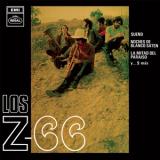
For the first time ever, the only full-length album by Spanish soul and garage legends Z-66 is being reissued. Z-66's signature blend of powerful soul, psychedelia, and pop-clearly influenced by bands like The Move, Stones, Vanilla Fudge, and Blood, Sweat & Tears delivers a bold, modern sound that remains fresh and compelling. Unlike other Spanish bands of the time, Los Z-66 enjoyed unique conditions that allowed their sound to stand out as one of the most advanced on the local scene in the late 1960s. As was the case with many other groups, their repertoire for entertaining discotheques had to include the hits of the moment and was not always open to the songs of the most daring international bands, which was the sound that most stimulated the musicians. In the case of Los Z-66, being based in Mallorca meant they had privileged access to hard to-find records, imported by foreign tourists, and to a much more modern atmosphere than in other parts of the country. Songs in Italian and French soon gave way to English hits by the Animals, the Stones, and the Beatles. But it was the offer received from Mike Jeffries, manager of Jimi Hendrix, the Animals, and others, to serve as the house band at the newly opened club Sgt. Pepper's that allowed the group to raise their live performances to a level rarely seen in these parts... They even soon incorporated the distorted sound of fuzz into their guitar when they received a fuzz face pedal as a gift from Jimi Hendrix himself, who was invited to play at the club's opening! Their excellent blend of stunning soul, psychedelia, and pop became their hallmark, not only in the band's concerts but also in the handful of singles and EPs they released on the Regal label. We are now re-releasing for the first time their only full-length album, originally published in 1969, which is actually a compilation of songs previously released in 45 rpm format, complete with two bonus tracks not included on the original LP plus a booklet with liner notes and rare photos.
Smith & Liddle are two young artists from the North of the United Kingdom who have never been to the desert and whose mere existence was a long way off the horizon in the 1970s, yet their music wouldn't be out of place on the FM waves in a Cadillac driving through the California desert at that time.
"Songs For The Desert" is Smith & Liddle's debut album, a collection of great songwriting, beautiful harmonies and wonderful musicianship that also offers an unashamedly a large dose of nostalgia harking back to some of the best eras there ever was.
These songs were created during one of their hometowns rainiest year, offering the duo an escape via their creations, dreaming of being transported to California at a time when the music scene there drifted from legendary stars of Laurel Canyon to the soft rock icons of Fleetwood Mac and The Doobie Brothers.
Elizabeth Liddle & Billy Smith grew up 25 miles away from each other in small towns but only met when Billy was on the lookout for a vocalist years later. The chemistry between the pair was instant, and over time their intertwined musical sensibilities evolved into something unique.
Following years of swapping records and building a transcendent musical connection, Smith & Liddle worked alongside producer Josh Ingledew to record 9 songs that blend Soft Rock, West Coast soul & 60s beats to produce their debut album "Songs For The Desert".
Hikmah is an astonishing solo piano work from virtuosic and far-ranging
sound scientist; deep and compassionate thinker and musical treasure: Pat
Thomas
Pat Thomas was Born in Oxford, UK to Antiguan parents on July 27, 1960.
Interestingly, just over 4 months separate his birth to that of fellow modern piano
master Matthew Shipp (Dec 7, 1960) - whose The Piano Equation was TAO Forms
inaugural release. Thomas is most certainly among the Black Mystery School Pianists
of which Shipp elucidates in the title essay of his recently published first book.
Eight thoroughly focused improvised and otherwise compositions recorded at Fish
Factory studio in London. The album's title, Hikmah, means "wisdom" in Arabic. The
title is also presented in two different forms of Arabic calligraphic script on the cover
artwork. This album brings the information. The vibrantly living jazz tradition and new
modes of expression in abundance are brought forth from a lifetime of work and a
decades long devotion to Sufism, understanding that the practice and performance of
this music is an elemental form of spiritual practice. As William Parker writes in the
liner notes, "the music becomes the prophet and the prayer all in one gesture." And,
"If you haven't yet heard the music of Pat Thomas, get hip to it quickly."
Attuned American audiences are most likely to have become familiar with Pat
Thomas through his work with the quartet [Ahmed] , whom over recent years have
amazed with their mesmeric, long-form explorations on the compositions of Ahmed
Abdul-Malik, and more recently, Thelonious Monk. Their debut US performance took
place in March 2025, and TAO Forms were lucky members of the rapt audience at
Roulette in Brooklyn that night; the group flew to Knoxville the next day to perform to
an equally rapt audience at Big Ears.
Available on 6- panel digipak CD printed on heavyweight board, with liner notes by
William Parker and LP with insert featuring liner notes by William Parker & Pat
Thomas Discography + download card. Ltd edition of 500.
Acclaimed electronic musicians, producers and sound architects Max Cooper and Rob Clouth team up for a new collaborative EP; a dark, playful four-track dive into ambient, breakbeat and techno’s subconscious flow, featuring a standout vocal performance from South London rapper FLOHIO.
Recorded over a series of spontaneous London sessions, “8 Billion Realities” channels years of creative exchange between two of the genre’s most quietly innovative artists and is a result of a decision between the longtime friends to refrain from conceptual overthinking in favour of instinct and joy.
As long-time admirers of each other’s audio/visual work, Cooper and Clouth collaborated in London together after both emerging from intense, idea-heavy album cycles. What followed was a series of exploratory sessions, half-improvised, half-built around half-formed thoughts.
The result is a club-ready EP that feels alive and human: imperfect and hypnotically rich.
“Rob Clouth has been one of my favourite electronic music producers since I first heard his work in 2011,” says Cooper. “His work is more full of ideas and structure than anyone else.” “We were both coming from extensive conceptual studio albums and both in the mood for simplifying things and having some fun with the music, so that’s what we did”.
For Clouth, no stranger to Max Coopers Mesh label having previously released an array of EP’s plus his 2020 debut album “Zero Point” this record marks a new chapter, both creatively and personally.“Something pretty new for me is collaborating,” he says. “You kind of have to when to stop, because if you develop an idea all the way to its endpoint, the other person has nowhere to jump in.”
The first “A Moment Set Aside” began as a break from another idea, a live, unplanned improvisation based around arps and ambience. “The track was written in about as long as it took to play it,” says Cooper. “It was pulled from a 1 hour recording session, more or less as you hear it… the energy and excitement grew as the unplanned moment bore some magic.”
“The lesson being that sometimes it’s helpful to set aside a moment without forcing results, and let the subconscious have something to say.” What followed was darker, heavier. “Asymptote” is detuned techno. Subversive and euphoric in its descent. “We found a sort of brain mangling, half consonant, half wandering detuned techno pulse, which we started chatting about being a sort of pit of spiralling body parts we were falling into,” says Cooper. “It was a lot of fun to work on and let loose with bigger kicks than I usually ever get to unleash.”
Then came “8 Billion Realities”, featuring a standout rap performance from FLOHIO; an emerging figure in the UK grime and rap scene. The track was inspired by conversations about algorithmic echo chambers and hyper-personalised online worlds. Frantic, direct, and South London to the core, FLOHIO brings this tension to life. Her sharp, intense flow cuts through distortion and rhythm, landing the track somewhere between chaos and control instantly making it one of the most striking moments in either artist’s catalogue. “A different reality for all 8 billion of us,” says Cooper. “We weren’t sure if it would work… but there was something about the energy of the percussive idea and the story which felt like it might fit.” “Then FLOHIO had a play with it and straight off the bat absolutely killed it, not just with the lyrics and energy, but the harmonising too, it was a beautiful process.”
The final piece on the EP “Candeleda” originated from Clouth’s solo experiments with a live rig made entirely of vocals and keys, using his self-developed “cheatbox” system. “He put forward a beautiful stumbling melodic sequence which we bounced back and forth adding harmonies and synth layers,” says Cooper. “It rounds off a collection covering some of the breadth of music that we both love.”
For the third time, they had been sent to this forsaken land. It was neither east nor west, neither north nor south. They said it had once been a kingdom, somewhere in the heart of the old continent, something they had pieced together from the ruins scattered across jagged hills sprouting here and there from the ground. Everyone else went islands, dived to the seabed, drilled at the poles, and explored waste in the east, but these two were sent here again, as if someone were trying to get rid of them, just to keep them out of the way.
What were they really supposed to find here? They wandered the land, aimless and bored, like the last bird watching from the sky. Sometimes they landed, took samples for the lab, and then caught a nap by the river bend. They avoided the hot fumes of active volcanoes. Compared to those on other planets, these were more like small, whispered fumaroles, but even so, they had to be careful.
They felt as if they had stepped into a scene from a movie they had once glimpsed. A mad and exhausted conqueror screamed and wildly flailed his arms on a ridiculous wooden raft in the middle of a raging river. It was somewhere in the south of this planet, deep in the jungle. There were many movies made on this planet, but only fragments of the reels survived, and this one quickly became iconic.
When a trumpet sounded in the distance and flooded the land with a booming murmur, when all the fumaroles hissed together, and when wind rolled in, covering the land in heavy fog, both of them knew the third expedition would not be like the previous ones.
At that moment, Kult Masek and Petr Vrba were flying over the land that was once called České středohoří.
CENTRAL's new release is already here! On the B-Side, DJ KAWASAKI has edited the extra-hit “Samurai” to make it an even hotter dance track!
Both sides of the album are perfect for the field!
CENTRAL, a salsa band that has suddenly gained attention after releasing two singles and a full-length album last year, but is actually a group of seasoned salsa veterans, has already released a new single! This time around, CENTRAL has released a cover of “Brazilian Rhyme,” one of Earth, Wind & Fire's many classic songs that still remains a dance floor favorite, with a Latin arrangement that is full of CENTRAL's signature style. The groovy bass, shimmering electric piano, percussion, and outstanding horn arrangement make you want to dance and scream, “This is CENTRAL! The B-Side features DJ KAWASAKI's edit of “Samurai,” a definitive mellow salsa track that has now become a WANT-requested item from all over the world, sublimated into an even hotter dance track!
This summer, dance hard to CENTRAL's salsa!
There is a new artist from Japan followed by the name Kakeru who is giving his Shaw Cuts debut with ãRaw CourageÒ, telling the story of an emperor besieged by an army who then entrusts his child to the Black Dragon Clan heading off to a dangerous journey.
An attempt to usurp the Ming Emperor's throne by the sinister martial artist simply known as ãold monster" and his armies results in most of the palace being massacred. ãQuagmireÒ and its vibrant percussive pattern carried by a heavy broken kick and a driving bassline help the emperorÕs infant son to escape and put in care of the Black Dragon Clan.
En route they are attacked by government forces but rescued by two knights. They prove to be a valuable addition to the party in subsequent encounters with their pursuers. ãMirror ForestÒ and its laid-back atmosphere, mysterious vocal snatches and shining pads carried by an expressive drum pattern help the travellers parrying every sneaky attack on their journey.
Trying to head to the White Dragon Clan in order to seek for help, the squad has to masquerade and take several battles, always protecting the baby in tow. The razor-sharp percussions, corrosive bass and thrashing kick of ãSwayingÒ tremendously supports the warriors in each fight.
Finally they make it to the temple of the White Dragons where they show their Black Dragon seal as a sign of solidarity. But all of a sudden the mood changes. ãBroken BubblesÒ and its menacing atmosphere built up by a monstrous sub bass, reduced but impactful drums and subtle synth elements underline the potential threat. Did they walk into a trap? Is there enough energy left for one big fight? Raw courage is vital now.
- 01: Two Former Friends (Original)
- 02: Dance Of The Silver Beetles (Original)
- 03: Miniature White Deer (Original)
- 04: All The Goodbyes (You Tried To Defer)
- 05: Regretful Polar Bear (Original)
- 06: Anxious Shadow Puppets (Original)
- 07: Failed Space Walk (Original)
- 08: Devils (Original)
- 09: A Leopard With No Spots (Original)
- 10: Abandoned Boy (Left In Charge Of The Family Business)
- 11: Metal Mosquitos (Original)
- 12: A Cat Left To His Own Devices (Original)
- 13: Well-Heeled Human Driftwood (Original)
- 14: Flamingo With Bandaged Neck (Original)
Chris Menist pares his sound right back for A book of imaginary beings, his fourth Awkward Corners outing with a project of electronic and abstracted global grooves. Experimenting with simple melodies and uncluttered arrangements, as well as taking inspiration from the Borges' short stories alluded to in the title, the project took shape in the early part of 2025, in the shorter days and dark evenings of January.
The initial challenge was to knock a basic track into shape each evening after work, then refine it later. There's a melancholy in the air in late winter, compounded by the creeping threat of national and geopolitical instability. Ulla, Natural Information Society, Jabu, Torso and Dawuna formed some of the background soundtrack as each tune took shape.
The track titles came after sitting with the sounds for a while, giving shape to images of people, creatures and their stories for a book that is yet to be written.
Two former friends sets the tone for the album perfectly as a minimal electronic piece with a slowly simmering synth bassline underpinning the groove whilst the trademark Awkward sound of the Shahi Baaja enters drenched in effects. It's the first demonstration of Chris' unique ability to create a world from apparently very little.
Dance of the silver beetles is completely unique in that we can hear chopped up Illimba samples seemingly playing backwards and forewords sometimes alone, sometimes together in duet with Chris' conga rhythms. Add to that a more conventional Illimba melody and added shaker percussion and you have one of A book of imaginary beings most curious chapters.
Anxious shadow puppets is closer to the Awkward Corners sound from previous albums as electronic pulses move around the arrangement with the urgency that the track title suggests. Chris' percussive roots move to the fore with the congas that tie down the Paradise Bangkok Molam International Band's sound. Here, the bassline is more playful and works together with one of Chris' many African Illimbas.
Fans of Chris' adventures on his Roland 808 will dig A leopard with no spots, although the minimal mood continues to flow through on this track. The lolloping, but hard-hitting rhythm track provides the grounding for strange and twisting feedback-sounding tones to work the soundscape.
Abandoned boy (left in charge of the family business) is Awkward Corners at his atmospheric best. Drift off to the sublime sounds of Chris exploring the Shahi Baaja, whilst a soft, repetitive synth line and abstracted pads give the listener that feeling of meditation and peace.
Flamingo with bandaged neck is A book of imaginary beings' perfect coda and is exclusively Shahi Baaja draped in reverbs and delays. It feels like the resolution and the closing of a book that – as of yet – remains unwritten.
Awkward Corners is Chris Menist, a musician, DJ and writer. It started life as a small project in Islamabad, where Chris was living at the time. Initial recordings were made with local musicians in Pakistan and then subsequently in Thailand. This culminated in the Sweet Decay LP that came out on Finders Keepers' Disposable Music in 2014, and in turn led to a limited tape release on Boomkat/Reel Torque of original compositions and re-edits of Thai 45s the same year. Chris released – Dislocation Songs – his second LP proper with Shapes of Rhythm in May 2020, collaborating on many of the tracks with award-winning performer Sarathy Korwar. The LP was picked up by many radio stations including NTS, Resonance FM, BBC 6 Music, Balamii and many more. It made Tom Ravenscroft's LPs of 2020. Amateur Dramatics, Chris' second LP arrived just a year later in 2021 and was a more ambitious project featuring more jazz-focussed compositions and featuring Tamar Osborn and Kitty Whitelaw. Shortly after that came another pivot with the heavier, dancefloor-friendly EP Somebody Somewhere. Somebody Somewhere is Dancing in a Field brought the House (yes House!) vibes, whilst Hector Plimmer turned in a remix of No Words in the same club mood.
As one of NTS Radio's longest-standing presenters, Chris continues to hold down the Paradise Bangkok show. Playing drums and percussion since he was a kid, Chris is the percussionist for The Paradise Bangkok Molam International Band as well as co-founding the record label of the same name. Chris has curated compilations for labels such as Finders Keepers, Soundway and Dust-To-Digital. He has been featured on the Boiler Room, Vinyl Factory Collections, played at the Four Tet curated Nuits Sonores festival, and has put together an edition of Volumes which featured unreleased Awkward Corners compositions.
[d] 04: All the Goodbyes (You Tried to Defer) [Original]
[j] 10: Abandoned Boy (Left in Charge of the Family Business) [Original]
- A1: Work Song
- A2: Gin House Blues
- A3: Come On Back, Jack
- A4: My Baby Just Cares For Me
- A5: I Put A Spell On You
- A6: Don't Let Me Be Misunderstood
- B1: Either Way I Lose
- B2: Break Down And Let It All Out
- B3: Don't You Pay Them No Mind
- B4: Do I Move You
- B5: It Be's That Way Sometime
- B6: To Love Somebody
- C1: Why? (The King Of Love Is Dead)
- C2: Do What You Gotta Do
- C3: Ain't Got No; I Got Life
- C4: Real Real
- C5: Suzanne
- C6: Revolution (Pt 1)
- D1: To Be Young, Gifted And Black
- D2: Save Me
- D3: Whatever I Am (You Made Me)
- D4: Ooh Child
- D5: Baltimore
- D6: Ain't Go No; I Got Life (Uk Single Version)
‘Icon’ is an overused word when it comes to describing singers and musicians, but when it comes to Nina Simone there are few artists that the word describes more accurately. The ‘High Priestess Of Soul’ is surely one of the most iconic singers of the 20th century, and one whose fame and acclaim stretches far beyond conventional black American music circles.
Nina Simone has featured on Ace and Kent CDs before but this is the first time she’s had one all to herself. “Let It All Out” is the first and only Nina Simone collection to draw repertoire from every label she recorded for between the late 1950s to the late 1970s.
Not a traditional ‘Best Of’ or ‘Greatest Hits’ package (although the performances included here ARE among her very best, and do include most of her Greatest Hits!) it is a singles collection that presents Nina Simone’s soul and R&B-slanted 45s in chronological order. Invariably they are the definitive versions of the songs, whether she recorded the original versions or not.
As well as almost all of her American pop and R&B chart hits from 1960 onwards, “Let It All Out” also contains all of Simone’s UK chart hits from the same period – several of which were more successful here than they were back home, including both versions of her biggest British hit ‘Ain’t Got No; I Got Life’, a UK #2 that did not chart at all in the US as was the case with the belated UK Top 5 hit ‘My Baby Just Cares For Me’ which also made no chart impression on its home turf…
Carefully curated and concisely annotated, “Let It All Out” lets the listener in to two dozen of Nina Simone’s most celebrated singles. There have been many compilations of her works since she passed away 20+ years ago, but none that gets to the heart – and soul – of her catalogue in quite so direct a manner as this one does.
- A1: Never 'Ad Nothin' (3:12)
- A2: Teenage Warning (3:27)
- A3: Solidarity (5:12)
- A4: Two Million Voices (2:48)
- A5: Last Night Another Soldier (2:36)
- A6: I Understand, I Hope You Do (5:54)
- B1: Woman In Disguise (3:54)
- B2: Kids On The Street (3:45)
- B3: England (4:27)
- B4: The Murder Of Liddle Towers (5:53)
- B5: I'm An Upstart (4:16)
- B6: White Riot (2:11)
In the late 1970s and early 1980s, South Shields, England's politically motivated punk band, The Angelic Upstarts, saw considerable chart success. Jimmy Pursey of Sham 69 produced their debut album, Teenage Warning (1979), which peaked at No. 29 on the UK Albums Chart and featured singles like "I'm An Upstart" (No. 31) and Teenage Warning (No. 29).
Their third album, 2,000,000 Voices (1981), reached No. 32, while their second, We Gotta Get Out of This Place (1980), peaked at No. 54. Angelic Upstarts Live (1981), a live album, did well as well, peaking at number 27.
Two of the Angelic Upstarts' singles made it into the Top 40, and seven of their singles made it into the UK Top 75. Their early work was marked by sociopolitical critique and unadulterated intensity.
‘Live at The Basins Nightclub’ recorded in 1987 represents a unique summary of that undertaking as well as capturing a rare snapshot of the Upstarts during one of the less well-documented periods of their history. Incl. Sleeve notes from Dick Porter.
"The Bad Seeds and Zakary Thaks were mid ‘60s Texas garage rock bands formed in the wake of the British Invasion, influenced by The Rolling Stones, Kinks, Yardbirds and others, becoming top local live attractions at a time when the 13th Floor Elevators and Moving Sidewalks were leading the way into psychedelia. In late 1966 Rod Prince on guitar and Roy Cox on bass from Bad Seeds joined up with David Fore from Zakary Thaks on drums to create a new band out of San Antonio featuring two lead guitarists. Todd Potter filled out the quartet on second guitar and they chose the name Bubble Puppy, taken from Aldous Huxley’s 1932 dystopian novel Brave New World. Huxley was an early advocate of LSD, appropriately. In 1969 Bubble Puppy scored a top 20 hit single with “Hot Smoke & Sasafrass” which led to their LP “A Gathering Of Promises”. International Artists, the legendary Texas label that previously had unleashed mind expanding classics by the Elevators, Red Crayola, Golden Dawn and others was a perfect fit. After the LP and additional 45s didn’t repeat the success of “Hot Smoke & Sasafrass” the band hooked up with Nick St. Nicholas of Steppenwolf as their new manager and moved to Los Angeles. A new band name was in order, Nick St. Nicholas chose Demian, title of the 1919 novel by Herman Hesse. His books were popular with the counterculture at the time and had provided Steppenwolf with their new name after they changed it from the Sparrow and hit it big. Demian recorded the LP live in the studio at the Record Plant in one midnight to six session. They had their arrangements fully realized, allowing them to combine live show energy and economy with to-the-point delivery suitable for repeated listening. No doubt they were aiming for pop hit success, using proto hard rock skills in a radio friendly way without compromising the heavy guitar moves. The vocals have echoes of the earlier Bubble Puppy style in spots but are more melodic with vibrant harmonies reminiscent of Moby Grape, Buffalo Springfield, James Gang… at times flashing on Steve Stills/Richie Furay westcoast without being too sweet about it. It works terrifically when the radio friendly voices top off killer hard guitar ensemble action. Early hard rock that is too bluesy flashy can get tiresome with repeat listening, especially if overdosing on guitar solos with the band relegated to the background… Demian keep it interesting with inventive song structures allowing all four players to integrate constantly into an ever changing but focused whole. This LP is a grower, despite the basic two guitars, bass and drums lineup and no frills production you reach a lot of different places during the ride. Demian is deadly hard rock, a perfectly organized vibe straddling live energy and crafted itinerary, amongst the first obscure major label killers that commanded premium $$ with collectors even way back in the late ‘70s. It gets you there every time, even half a century later!"
- A1: Riot Radio
- A2: A Different Age
- A3: Train To Nowhere
- A4: Red Light
- A5: We Get Low
- A6: Ghostfaced Killer
- B1: Loaded Gun
- B2: Control This
- B3: Soul Survivor
- B4: Nationwide
- B5: Horizontal
- B6: The Last Resort
- B7: You're Not The Law
- C1: Too Much Tv Dub
- C2: Invader Dub
- C3: D-60 Fights The Evil Force
- C4: No Control Dub
- C5: Tower Block Dub
- D1: Cns Lazer Attack D-60
- D2: Police Radio Dub
- D3: Flight Mission Dub
- D4: No Good Town Dub
- D5: Game Over
The Dead 60s seminal self-titled album gets a timely Deluxe edition reissue on Vinyl for its 20th Anniversary, on Deltasonic Records
“Back in the day, punk and dub weren’t just sharing space—they were smashing into each other headfirst. Late '70s Britain was a pressure cooker, and for kids like me, growing up between Brixton’s bass bins and the chaos of King’s Road, that collision was everything. Jamaican sound system culture met punk’s raw spirit in a haze of smoke, sweat, and feedback. It wasn’t about genre—it was about energy. Identity. Defiance. so when The Dead 60s came along, post-Britpop and post-bullshit, it felt like someone had dusted off the blueprint and run it through a battered old tape echo. These weren’t just lads with good taste—they understood the assignment. They took the DNA of two rebel cultures and mutated it into something that could stand tall in the 21st century. Dub-soaked, punk-fuelled, dripping with that Liverpool attitude. I remember first hearing them and thinking—yeah, here we go again. Not in a retro way, but in a real way. Guitars that cut like sirens in the night. Basslines fat and warm, straight out the Channel One playbook. Lyrics that painted the grey corners of Britain like CCTV poetry. It was the sound of youth under pressure. The sound of not fitting in—and not wanting to.
Their debut album dropped in 2005, and it hit like a flare in the dark. “Riot Radio” was a pirate broadcast from the concrete frontlines. “Control This” swaggered with menace and reverb. It was like someone opened a time capsule from the punky-reggae party and rewired it for a new generation.
Now, with this 20th anniversary vinyl reissue—complete with the full dub companion produced by Central Nervous System—we get to hear the bones and blood of it all. The dub versions pull the tracks apart and let the ghosts speak. Reverb, delay, space—it’s not just production, it’s meditation. Revolution slowed down to a heartbeat. It’s music that makes you move and think. What they’ve done here is more than remix a record—they’ve revealed its soul. That’s what dub does when it’s done right. And The Dead 60s, they got that. They weren’t tourists in the culture—they were students of it, shaped by it, and ultimately, contributors to the legacy. Liverpool’s long had a love affair with Jamaican music—you can hear it in the streets if you’re really listening. The Dead 60s tapped into that lineage, but they brought their own thing to the table. Punk's fire. Dub’s depth. Ska’s bounce. All filtered through a Northern lens and blasted out like protest graffiti. This 20th anniversary reissue ain’t about nostalgia. It’s a reminder. A celebration. A call to arms. Music like this doesn’t belong in a museum—it belongs on a system, shaking walls and waking minds. Crate diggers, completists, young punks, old heads—this one's for all of you.
So put it on and turn it up. Let the punk edge sharpen your thoughts, and the dub shake your bones ‘cos this isn’t just a reissue - it’s resistance on wax.....”
- A1: Jah Golden Throne Dub (3:13)
- A2: Strictly Rodigan Style (2:51)
- A3: Straight To Black Echoes Head (3:07)
- A4: Tribute To Moa Ambassa (2:53)
- A5: Danny Allen Style (3:22)
- B1: Tribute To Penny Reel (4:08)
- B2: Sir Covin Meets Sir Ansil (3:56)
- B3: Straight To Thatchers Head (2:53)
- B4: Raasclaat Dub (3:32)
- B5: Tribute To King Shaka (3:44)
Two titanic forces in reggae history — Roots Radics and The Mighty Revolutionaires — unite for a powerful dubwise journey on Outernational Riddim. This long-anticipated collaboration blends heavyweight rhythms, militant drum patterns, and deep, atmospheric dubs that channel the essence of Jamaican roots music with a forward-thinking production style.
The Roots Radics, known for backing icons like Gregory Isaacs, Barrington Levy, and Israel Vibration, bring their unmistakable heavyweight style to this session. Meanwhile, The Revolutionaires, studio legends behind countless Channel One classics, lace the tracks with their tight arrangements and classic rockers grooves.
Produced and mixed in true dubwise tradition, Outernational Riddim delivers:
Authentic Studio Vibes – Mixed on analog boards with vintage effects and tape echo for that raw, immersive sound.