Consisting Neither Of One Lone Woman, Nor Hailing From Either The Eurasian Country Or The North American State, This Georgia Is In Fact Comprised Of Two Human Males Working Out Of China Town, N.y.c., Namely Brian Close And Justin Tripp. Together They Form A Creative Partnership Responsible For Not Just A Slew Of Output Upon Such Highly Regarded Imprints As Meakusma, Palto Flats And Emotional Response, But Also For A Kaleidoscopic Variety Of Multimedia Work With A Whole Host Of Clients, From The Corporate To The Counter Cultural. With An All Embracing, Freeform And In Some Ways Contradictory Approach To Production, Their Sound Is At Turns Stimulating, Terrifying, Comforting And Confounding. Separated From Any Visual Representation, The Audio On Its Own Becomes A Soundtrack For The Listeners' Own Intense Internal Projection Screen.
With 'time', Georgia's Vision Is Especially Well Realised As Here, In Collaboration With Fellow Intuitionists Firecracker Recordings, They Release Into This World An Album Which, With Any Luck, Shall Help You Unlock Your Inner Portals - Should They Need Assistance In That Regard Anyway. Unquantisable Polyrhythms Knock Against One Another In An Uncannily Externalised, Conflicting Collage Of Half Remembered Dance Ritual Memories. Fragmented Melodies, Disembodied Vocal Snippets, A Hint Of Ethnomusicality In Places All Give Deep Nods Simultaneously To Ancient Experience And To Post Human Intelligence, Condensing Past Present And Future Into One Eternal Instant.
'time' The Album Asks Us: What Happens When One Removes Ones Expectations Of Where In Time A Piece Of Music Or Art Must Sit And What Of Time Itself As A Construct, Now That We Have Myriad Ways Of Measuring It, Even At The Atomic Level; But Still Its Passing Is Completely Relative According To The Observer, And Indeed May All Be In Our Minds Anyway Equally, You Can Always Just Put It On - Again, And Again - Empty Your Mind Of Such Thoughts Completely, And Allow All Of Your Particles To Move Around Freely To This Joyful Noise... After All, That's The Point, Isn't It We're Gonna Have To Stop Asking Questions Eventually.
Buscar:one way records
Alien Transistor and Tokyo-based label Afterhours release a vinyl-version of tenniscoats' masterpiece "music exists". It consists of 4 LPs, which will be released over the year, full of intimate, wonderful, psychedelic folk-music. With the fourth LP, there will be a strictly limited box available, either for putting in your already purchased other 3 records, or as the whole glorious 4-LP-package.
Tenniscoats have devoted followers allover the world, but their releases were always hard to find outside of Japan. Except for their album "Tokinouta", which saw a very limited run on vinyl, and the seminal "Two Sunsets", their collaboration with the Pastels (and a small handfull of 7"s ), there were never any vinyl-releases, and also the CDs were hard to get for any-one, who doesn't speak or read japanese.
So, this is the chance to dive deep into the beautiful, unique world of the tenniscoats and their opus magnum "music exists".
The Tenniscoats are a duo that have enjoyed a long career in the music scene of their home country of Japan. They have collaborated with unique artists from different backgrounds (Tape, Pastels, Pastacas and Jad Fair), while maintaining their own laid back approach and sound. Their songs are built primarily from guitar and vocals with lyrical themes focusing on everyday life. It could be their expansion on simplicity that has captivated music lovers of all ages throughout their existence.
While the aforementioned collaborations produced bold and sensitive experiences and results, it has taken Tenniscoats five years to release an entire studio album of their own. The wait has not been in vain, as four discs will be released consecutively beginning with 'Music Exists - disc 1'. Music Exists saw a previously limited release on the Tenniscoats' own majikick label.
'We started recording around January of 2013 with just the two of us in our 10 tatami-room in Tokyo we were using as a private studio. Arrangements were produced without computers by overdubbing on an analog console with mixing assistance provided by Saya. As we sent selected songs to be mastered by Yasushi Utsunomia, we were able to see the tracks grown into a full length album.'
What turned into a huge 4 disc project began in earnest three years ago. Tenniscoats wrote and recorded themselves using an analog console, a microphone, and what few instruments they had. As the project developed, they were surprised to find that they had amassed several albums' worth of material.
'We tried throwing up the ideas we had in the beginning and not put too much of our strength into playing in order to develop the ideas of each song. Utsunomia, who did the mastering was the first person to ever hear the material for this album outside of the band. We sent songs to him carefully choosing an order that we felt would not make him bored. Thanks to his distinctive way of mastering, we were inspired to go further and further into the process.'
2016 marks the Tenniscoats' 20th anniversary together. You could consider 'Music Exists' as a sort of compilation of material stemming from these years spent together. With their unique combination of melodies, unexaggerated arrangements, and detailed mastering, Alien Transistor are extremely delighted to make this recording available to the public!
Following their hotly tipped 2018 debut album 'On' - Altin Gün returns with an exhilarating second album. 'Gece' firmly establishes the band as essential interpreters of the Anatolian rock and folk legacy and as a leading voice in the emergent global psych-rock scene. Explosive, funky and transcendent.
Some words from the label:
The world is rarely what it seems. A quick glance doesn't always reveal the full truth. To find that, you need to burrow deeper. Listen to Altin Gün, for example: they sound utterly Turkish, but only one of the Netherlands based band's six members was actually born there. And while their new album, Gece, is absolutely electric, filled with funk-like grooves and explosive psychedelic textures, what they play - by their own estimation - is folk music.
'It really is,' insists band founder and bass player Jasper Verhulst. 'The songs come out of a long tradition. This is music that tries to be a voice for a lot of other people.'
While most of the material here has been a familiar part of Turkish life for many years - some of it associated with the late national icon Neset Ertas - it's definitely never been heard like this before. This music is electric Turkish history, shot through with a heady buzz of 21st century intensity.
Pumping, flowing, a new and leading voice in the emergent global psych scene.
'We do have a weak spot for the music of the late '60s and '70s,' Verhulst admits. 'With all the instruments and effects that arrived then, it was an exciting time. Everything was new, and it still feels fresh. We're not trying to copy it, but these are the sounds we like and we're trying to make them our own.'
And what they create really is theirs. Altin Gün radically reimagine an entire tradition. The electric saz (a three-string Turkish lute) and voice of Erdinç Ecevit (who has Turkish roots) is urgent and immediately distinctive, while keyboards, guitar, bass, drums, and percussion power the surging rhythms and Merve Dasdemir (born and raised in Istanbul) sings with the mesmerizing power of a young Grace Slick. This isn't music that seduces the listener: it demands attention.
Altin Gün - the name translates as 'golden day' - are focused, relentless and absolutely assured in what they do. What is remarkable is the band has only existed for two years and didn't play in public until November 2017; now they have almost 200 shows under their belt. It all grew from Verhulst's obsession with Turkish music. He'd been aware of it for some time but a trip to Istanbul while playing in another band gave him the chance to discover so much more. But Verhulst wasn't content to just listen, he had a vision for what the music could be. And Altin Gün was born.
'For me, finding out about this music is crate digging,' he admits. 'None of it is widely available in the Netherlands. Of course, since our singers are Turkish, they know many of these pieces. All this is part of the country's musical past, their heritage, like 'House of The Rising Sun' is in America.'
As Verhulst delves deeper and deeper into old Turkish music, he's constantly seeking out things that grab his ear.
'I'm listening for something we can change and make into our own. You have to understand that most of these songs have had hundreds of different interpretations over the years. We need something that will make people stop and listen, as if it's the first time they've heard it.'
It's a testament to Altin Gün's work and vision that everything on Gece sounds so cohesive. They bring together music from many different Anatolian sources (the only original is the improvised piece 'Soför Bey') so that it bristles with the power and tightness of a rock band; echoing new textures and radiating a spectrum of vibrant color (ironic, as gece means 'night' in Turkish). It's the sound of a band both committed to its sources and excitedly transforming them. It's the sound of Altin Gün. Incandescent and sweltering.
Creating the band's sound is very much a collaborative process, Verhulst explains.
'Sometimes me or the singer will come in with a demo of our ideas. Sometimes an idea will just come up and we'll work on it together at rehearsals. However we start, it's always finished by the whole band. We can feel very quickly if it's going to work, if this is really our song.'
Just how Altin Gün can collectively spark and burn is evident in the YouTube concert video they made for the legendary Seattle radio station KEXP. In just under 20 minutes they set out their irresistible manifesto for an electrified, contemporary Turkish folk rock. It's utterly compelling. And with around 800,000 views, it has helped make them known around the world.
'It certainly got us a lot of attention,' Verhulst agrees. 'I think a lot of that interest originally came from Turkey, plenty of people there shared it.'
That might be how it began, but it's not the whole tale. The waves have spread far beyond the Bosphorus. What started out as a deep passion for Turkish folk and psychedelia has taken on a resonance that now travels widely. The band has played all over Europe, has ventured to Turkey and Australia and will soon bring their music to North America for the first time.
'Not a lot of other bands are doing what we do,' he says, 'playing songs in that style and seeing folk music in the same way.'
Considering He Was A Self Taught Pianist, Brian Auger's Progress Into The Heart Of The British Modern Jazz Scene Of The Late 1950's And Early 60's Was Particularly Impressive. He Gained Invaluable Experience The Hard Way, Paying His Dues At The Cottage Club, And The Original Ronnie Scotts On Gerrard Street, Working With Renowned Saxophonists Tommy Whittle, Dick Morrisey And Jimmy Skidmore - And Sessions In Smoky East End Pubs With His Friend, Arguably Britain's Greatest Jazz Saxophonist Tubby Hayes.
The Inclusion Of Several Of His Rare, Early 60's Piano Trio Tracks On Both Volumes Of 'back To The Beginning - The Brian Auger Anthology' Brought Long Overdue Attention To Brian's Early Jazz Career, Which Many Were Simply Unaware Of Prior To Their Release. The Enthusiastic Reaction To Those Tracks That Stuck In Brian's Mind, And Later, Fate Intervened, As He Himself Explains, "a Couple Of Years Later, Ken Greene, The Music Director Of Bogie's, Called And Told Me That He Was Starting A Project, To Whit, A Week At Bogie's With A Different Jazz Piano Trio Each Night".
The Material Brian Decided To Play Features Tracks From A Selection Of His Musical Influences, Heroes And Friends Including 'chelsea Bridge' By One Of His Favourite Composers, The Great Billy Strayhorn, Freddie Hubbard's Ever Green 'little Sunflower', The Much Loved Standard 'there Is No Greater Love' Which Brian Used To Play In His Original Early 60's Piano Trio, And His Own Composition Victor's Delight He Wrote A Tribute To The Great English Jazz Musician Victor Feldman Who He First Discovered Via His Tenure With The Cannonball Adderley Quintet.
Surprisingly, This Is Brian's Very First Jazz Piano Album Of His Illustrious And Award Winning Career, And Marks A Return To The Instrument And The Music That First Entranced And Enthralled Him As A Young Boy. His Musical Journey, Which Began In Austere Post War London, And On Which He Absorbed So Many Varied Styles Of Music, And Literally Took Him Around The World, Enrapturing Audiences Worldwide, Has Indeed Come Full Circle.
Sussex Records are an iconic 70s label, and from their catalogue Soul Brother Records bring you two of their gems back to back on one 7' single for Record Store Day 2019. 'Where Did You Learn To Love Me The Way You Do' is a mid-tempo ballad in the style of an Aretha Franklin track from the period. It comes from the 1971 album 'Stay A While From Me' by Sharon Ridley, a musician and vocalist closely associated with genius producer Van McCoy.
Original copies of the track on a 7' have recently exchanged hands for £400 on Discogs ane eBay. 'Ain't No Need' is by singer/songwriter Ralph Graham from the album 'Differently' and has never previously been made available on 7' single. A sought after track it's only previous reissue was on the Soul Brother CD/LP 'Shaun Robbin' Sunday Soul Selection'. The song was later covered by Skye.
- A1: Ich Will Dir Helfen
- A2: A La Manière (With Roya Arab)
- A3: Ondine
- B1: Aspiration (With Mona Soyoc)
- B2: One Of These Days (With Hafdis Huld)
- B3: Théorème
- B4: Mortel Battement / Nocturne (With Alain Bashung)
- C1: Organique
- C2: The Watcher (With Mona Soyoc)
- C3: Qu’est-Ce Qui M’a Pris (With Philippe Poirier)
- D1: Xr 116 / Messe Rouge
- D2: Untitled
- D3: Ondine (Alt Take)
- D4: Piasong
The sensitive mountain » (la montagne sensible) is the nickname Alain Bashung came up with for Arnaud Rebotini. At the height of his fame, after the success of Fantaisie Militaire in 1998, Bashung readily agreed to create an album with Rebotini. The two men didn’t know each other; their record label had introduced them. Bashung brought in “Mortel Battement” and “Nocturne,” two poems by Jean Tardieu, which he recited in a voice simultaneously warm and flat, and Arnaud produced an impressionist soundscape that ended with an apocalypse of metal. Bashung was so proud of their collaboration that he offered to give several interviews to promote the record. Today, listening back to this moving Léo Ferré influenced "talking singing" exercise, it’s hard not to hear the template for L'Imprudence, the album that Bashung went on to record with Rebotini two years later. In a similar way, the album Organique sparked a productive partnership between Rebotini and filmmaker Robin Campillo, which resulted in their being awarded a César for Best Original Music in 2018. The director, who trusted Rebotini to create the soundtracks for his films Eastern Boys and 120 Beats per Minute, never kept his love for the 2000 record a secret.
Yet it’s an understatement to say that when it was released, Organique was not in the spirit of times. That year was all about the French touch. The funky samples of Modjo’s “Lady” and Superfunk’s “Lucky Star” ruled the sweaty dancefloors. Although Rebotini was familiar with the electronic scene, he had something else in mind when he set about creating Organique. Under his own name or under the pseudonyms Aleph, Avalanche, Black Strobe, Maison Laffitte, and of course Zend Avesta, he had already released several quite bizarre and experimental techno, house, or jungle maxi singles on pioneering labels like P.O.F., Source, and Artefact, run by his friend Jérôme Mestre’s, whom he had met back when both were working as record salesmen at Rough Trade’s ephemeral Parisian store. It was at Artefact, still financed at the time by Barclay and Universal, that he naturally proposed this record project, which was a bit "different." It was his first real album.
Arnaud Rebotini has never hidden his love-hate relationship with the electronic scene. He’s a fan of rave music, Rex, and later Pulp, but he listens mostly to metal and contemporary music, mainly American minimalists such as Terry Riley, Philip Glass, Steve Reich. He wanted to mix this genre with a more French aesthetic inspired by Debussy, whose unconventionality fascinates him. From the first suspended guitar note of Organique, you can pick up another influence, possibly poppier. In the style of Mark Hollis, the erratic leader of Talk Talk, whose only solo album’s silences and dissonances left their mark two years earlier, we hear the fingers touching the keys of the clarinet on “Ondine.” The instruments have presence, character. Nothing is smooth. Everything is organic.
Although it’s sometimes labeled as electronica because of Rebotini’s career, there’s nothing digital about Organique. No "pro tools" editing or samples, only programmed drums and some synth layering. And his guest vocalists. Playing the role of electro producer, he invited Bashung, of course, to join him on the album, but also Roya Arab, who Rebotini first spotted while she was playing in Archive, and her sister Leila, Gus Gus alum Hafdis Huld, Kat Onoma’s Philippe Poirier on the “Samuel Hall” inspired track “Qu’est ce qui m’a pris,” and former KaS Product member Mona Soyoc.
The frustration of a tour where he had "little to do on stage," the desire to sing himself, and the creation of the Black Strobe project, a haunting mix of blues and rock, stopped Zend Avesta from putting out another album. Eighteen years later, the Organique we rediscover today has lost nothing of its strangeness, nor beauty. When it came out, Bashung said, "What is interesting for a musician is to feel that you have a piece of wasteland in front of you, something to clear.” That remains true today.
We are not alone. Through the centuries we have created theories, heard stories, made films, and of course, music that is deeply inspired by the idea of the unknown, and the cosmos. We went far and deep into this cosmic void to gather 4 visionairs to help us present a new series on the label. "Visitations - Chapter 1", touches down through sonic dimensions with Damon Wild, Ben Sims, Steve Bicknell and Tadeo. These artists are amongst the few key figures who established the foundations of Techno music and continue to do so decades later.... Their influences are also undeniable to the aesthetics and sound of "Chronicle" and so we are more then honored to present each one of them on our new series. Their contribution to this compilation is of extraordinary measure, connected both in vision and purpose they provide us with extraterrestrial sounds that challenges the listener both intellectually and emotionally with each track standing strongly on its own while functioning in a cohesive way bringing the vision of Chronicle Records into focus.
Laid back and chilled out, Andrew never lets anything or anyone bother him. He has an air of mystique about him which others often envy.
(Andrea Solitario) ANDREW SOUL Andrew from his real name, Soul as the part where his inspiration come from, is a native italian producer born in 1986.
Music has been the first and everlasting love for this guy who soon came into his city's underground scene: he was 15 years old when he walked into a club for the first time. Then everything came by itself: a fusion of house and techno, the passion for the acidized sounds filled his mind and his heart.
But listening wasn't enough: the love for the music was to much for not to create something.
So Andrew started a path made by wicked grooves, dropping acid synths and emotional vibes, huge baseline, soulfoul vocals, roland tr-707 on the drums: these featuring characterize at best Andrew's sound.
The love for the analog sound push him over the years to purchase some vintage drum machine and keyboards, to make his sound as better as he can, and to add to his sound some cool old flavour.
Having DJd for years in his native Italy, Andrew turned his hand to production a few years back and promptly set about making some of the most emotive and engaging analogue house and techno around.
Vinyl collector, record lover, for him there's nothing better than watching a wax riding a turntable and listen the music that come from it.
As an eclectic artist, in his sets, Andrew likes to mix from deep to techno, through the house, but people never know what to expect from his large underground music knowledge; old, classic, brand new tunes and own productions makes his set really sophisticated and different each time.
After working on music collaborations for several years, with some friends , early 2011 was time to start sharing solo productions with his first release on Paulatine Records, wellknowed Uner's label. 4 tracks that take attention of many wellknowed djs, like X-Press2 that played the tracks at MOS and on their radioshow, Adam Port who said "Finally something different..." and many others..
Then two vinyl release: first one on the great Barcelona based Kiara Records "Too Much Love Will Kill You", Julien Chaptal on remix, and second one on the New York based imprint Stranjjur Inc, on remix Kris Wadsworth and Baldo; "Close To You" placed 29th on RA Chart.
A great tune with the close friend Frank Naht alongside a remix for Fabio Monesi on friend's label Blackrose Records, and an EP on Espai Music to follow.
End of 2012 was good: EP come out on the Defected's sub label "Tenth Circle"
November 2012 was also time for releasing on Safari Numerique with David Labeji on remix, and the track "No Way" played by Richie Hawtin.
2013 full of work and innovation, with 2 remixes on italian Moan Rec for Meeph, and U.S. based Undulate Recordings for Frank Nath, a really deep EP on his new family Popcorn Records, and jacking mode on for the new release on Safari Numerique.
2014 starts with a vinyl only release on Popcorn Records Ltd, special collaboration with Peter JD and remixes from Amir Alexander and Franco Cinelli.
The path is long and Andrew's research is still long way to end...
"Funky Reflections' is the second release of Leipzig based sound maker, DJ and vinyl collector Duktus on ThinkLoud. The Mini-LP reflects Duktus' daily vibe in his own way. It tries to move you to dance, to have respect for one another, to embrace life, and if you follow the records' instructions, the funk will be with you!
SDH (Semiotics Department of Heteronyms) is the new project of two key figures of the synth-wave/industrial scene of Barcelona. Andrea P. Latorre and Sergi Algiz, founders of the Cønjuntø Vacíø label and also in the post-punk band Wind Atlas, unveil a new act more oriented towards pop music. SDH is change, alteration, distortion, metamorphosis. Their synth-pop songs, sprinkled with EBM and techno, are mysterious, obtuse and suggestive. The project seems to revolve around the idea of fiction. What is the language of feigned personalities What is fiction An individual is one and another, is liquid. It is physical. Incarnating someone is doing it in a corporeal way: making it flesh. Conceive: everything is real: reality does not exist. How is a fiction embodied They have already supported artists such as Marie Davidson and Merchandise and performed at the Swedish festival Kalabalik På Tyrolen, one of the reference festivals of the darkwave scene.
One Of Classy Early 90's Techno Records Sees A Vinyl Re-release On In The Future. Plutobeat Is A 14 Minute Trip Which Has Not Aged One Second Throughout The Years. Back Then Live Recorded In 1 Take It Soon Became A Favourite Under The Radar Record For Djs With A Taste In More Sophisticated Techno. With The Help From Original Label Plink Plonk And Pluto Himself The Record Will Find Again Its Way To Vinyl Lovers.
We Are Mattimatti. Two Mattis Living In Different Countries - Sweden (malmö) And Germany (berlin). We Travel Around The World Playing Music While Asking Ourselves, 'who Are We'. The Answer Seems To Change Just As Our Surroundings Do. But The Music Stays With Us And So Does The Friendship. It Is Cliché That It's Hard To Put A Label On Music. And To Say It Has Almost Become A Cliche Itself. But Whole Meaning Of Music Is To Listen To It And Create Your Own World By It. To Create One's Own World One Needs Space. Space That Is Not Interrupted By Either Style Or Defining Categories. Mattimatti Is An Attempt To Step Into That Space Creating Music That Is Solely Built On Improvisation. Our Music Is An Invitation To Places Not Yet Known, Where Rhythmic, Suggestive And Meditative Soundscapes Meet The Present Moment. Music Represents Many Things For Us. First Of All, It Is In-sync With Our Friendship, When The Relationship Is Stuck So Is Our Music. Our Music Is Therapy. We Need To Be Authentic With The Music In Order To Have A Real Friendship And The Other Way Around. As Friends And Musicians We Welcome The Unexpected. This Has Lead Us To Places Where We Never Would Have Ended Up In If It Weren't For The Music. In That Way, Music And Life Walk Hand In Hand. If We Dare To Be Real About It. We Are Living In A World Full Of Confusion When It Comes To Identity. It's Easy To Loose Yourself. All Of A Sudden You Are Standing There Playing Music But Missing The Music At The Same Time, Or Hanging Out With Your Best Friend While Missing The Friendship. We Are Trying To Stay Connected. It Is A Constant Task. We Lose It But Then We Find It Again, Just Like Everybody Else. Sometimes It Ends Up In Music For The Moment. Sometimes It Ends Up In The Shape Of A Record. We Met On The Streets Of Berlin In Spring 2013 While One Of Us Was Playing On The Streets. After We Played The First Time Together, There Was No Question That We Would Travel A Musical Journey Together From That Day. Mattimatti Was Initiated. On Our Quest We Began Playing Improvised Tunes On Sitar And Hang On The Street While Travelling Through Sweden And Germany. This Lead Us To Be Invited To Numerous Festivals All Over Europe While Constantly Developing Our Music And Sound. Since Then Our Set Has Added New Instruments Such As A Drum Kit With Hang, African Harps, Sitar, Guitar, Harmonica, Clarinet, Hank Drum And Vocals On Top Of It Extending The Sound With A Space Echo. The Long, Intimate Tunes That We Are Creating Have An Original Structure And Sound. There Is A Certain Present Resting In The Music Which Is Hard To Describe But Easy To Experience If You Listen To It. Our Live Concerts Have Been Dubbed Mythical, Hypnotic, Magic And Epic. Traveling Is Our Biggest Influence On Music. Mattimatti Are Now Both Based In Berlin & Malmoe And Work Together With The Contemporary Circus, Dance And Music Group - kollektiv Knaster .
Fresh of their most busy year actively djing in Milan and across Europe, Ayce Bio, Turenne and Borbo are ready to launch a new Ep: One track each + a Remix by Bologna's finest producer and vinyl collector DJ Rou.
Mixed and mastered by Reel Mastering, distributed by Rubadub Uk.
Funclab records runs a monthly show on Rocket Radio and a club night at Apollo club, inviting al- ways different dj's and producers to share the decks with them, among others they played with San Proper, Boo Williams, Eclair Fifi and Pangea.
After the first release 'House al dente', they spent one month during the summer touring with a van around Europe to promote the vinyl, going to their favourite radios and vinyl stores to bring it personally, ending at Barrakud festival in Croatia in front of two thousand people with a dj set and set design.
The collective is the real strength behind the newborn record label, collaborating with a lot of local producers they're always working on new things, in the next few months they are going to release also a various and other two eps.
A1 AYCE BIO - COME IN TO GET HER
909 patterns and jazz funk chops with crispy bass cuts, let your children know who play funk.
A2 AYCE BIO - COME IN TO GET HER (DJ ROU REMIX)
Bass infused remix from Bolo's finest producer and collector.
B1 BORBO - STUNTMAN MIKE
Deep atmosphere, '70s hypnotic rhodes with lofi-esque drums and vocal cuts from Grindhouse.
B2 TURENNE - REALLY COOL
Funk/Soul samples with groovy drums and a really cool vocal.
- A1: Werewolves On Wheels (Main Theme)
- A2: Mount Shasta Home
- A3: Ritual
- A4: One
- A5: Ritual 2
- A6: The Devil's Advocates
- A7: The Devil's Advocates (Reprise)
- B1: One Foot In Heaven
- B2: Burning
- B3: Tarot
- B4: Tarot Trail
- B5: Dust Bowl
- B6: The Devil's Advocates 2
- B7: Ritual 3
- B8: Werewolves On Wheels (End Theme)
B-movie junkies, gather round and prepare yourselves for what could only be described as a cinematic speedball. Take a combined hit of two of the most potent strains of toxic cinema, dress it up in ritualistic robes and make it dance to the beat of a stoned, motoric, country commune soundtrack. Like an exploito double bill where both films merge into a single feature, this directorial debut by an ex-Roger Corman protege and future Russ Meyer art director (another heady cocktail) is the product of one writing duo's fleeting time in the driving seat as the moviedrome marathon approached its dwindling finish line.
Werewolves On Wheels emerged in 1971 in a climate where the B-movie genre of the previous two decades began to make way for the early glimpses of imported slasher films and video nasties. Entirely out of popular context in 1971, the soundtrack music of Don Gere would perhaps reveal him as the most versatile actor involved in the whole production. Until this point, Don Gere had been a pop folk songwriter and a country music devotee, but while riding with the werewolves, Don Gere became a disjointed psych rock stoner making ritualistic commune country with more coincidentally in common with Germany's emerging Krautrock scene or the more localised stoner psych of Skip Spence (whose radically ahead of its time LP OAR was recognised by Columbia Records as their lowest selling record in the company's history). Imagine guitarist Sandy Bull jamming with Munich's Amon Duul 1 or some Swedish prog outfits like Trad, Gras och Stenar or a sedated Kebnekaise. In comparison to the Curb/Allan scores, for films like Wild Angels, Devil's Angels, Thunder Alley, and Born Losers (often released on Curb's own Sidewalk or Tower records), the new music made by Don Gere, only three years down the line, sounds like it's from an entirely different generation...
"Pre-certified biker psych from the hillbilly Haxan. Amazing!" - SEAN CANTY (DEMDIKE STARE)
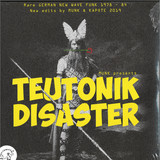
- A1: Die Heteros - Monogamie, Kannibalismus Unserer Zeit (Kapote Rework)
- A2: Camilla Motor - Gefahr Im Tivoli (Kapote Rework)
- B1: Exkurs - Fakten Sind Terror (Kapote Rework)
- B2: Carmen - Schlaraffenland (Kapote Rework)
- C1: Explorer - Yellow Power (Kapote Rework)
- C2: Bbb - Alltag (Kapote Rework)
- D1: Roter Mund - Mit Dir Allein (Kapote Rework)
- D2: Die Chefs - Frauenkörper (Kapote Rework)
There have been millions of typical disco edits in the last years. But there is so much more interesting music from the late 1970s and early 80s yet to bubble its way to the surface. One of those lesser explored fields is the crazy funky side of Germany's underground disco and new wave from that period. At the time, many German bands were trying to make their own version of English and American styles. After Kraftwerk and Can had started to use the German language in a cool, new way, many bands that followed in their steps experimented with German new wave. Most of these bands didn't reach a bigger audience. Their records never got pressed to more than 300 - 500 copies as they were a number of years ahead of the huge commercial explosion of German pop in 1984: The NDW aka 'Neue Deutsche Welle", with Nena's humongous hit 99 Red Balloons. The bands featured on the compilation released their music before the NDW hype and later broke up. Plenty of these early bands are best forgotten but if you dig deeper you'll find the gems, bursting with style and attitude. And that's just what Toy Tonics heads Mathias Munk Modica & Kapote did. They hit gold.
Chicago-based Matt Warren has been a DJ for forty years and has been a producer since 1984, when he released his debut single Rock The Nation. This inspired Matt to cofound Sunset Records in 1985, which released several house classics. However, in 1987, Matt resigned from Sunset Records and founded AKA Dance Music.
The first single that AKA Dance Music released was Bang The Box, which sold over 50,000 copies in America and nowadays, is regarded as the first hard house track. Bang The Box was the first of seven singles that AKA Dance Music released between 1987 and 1988. By then, Matt's second label was part the history of house music.
After the demise of AKA Dance Music, Matt Warren continued to travel the world DJ in some of the top clubs. Meanwhile, Matt continued to produce new music, remix tracks by some of the biggest names in music.
By the nineties, Matt was also writing, arranging, mixing, and producing a wide variety of artists and bands. He sometimes was asked to play on a number of albums. However, he still loved house music, and worked on several releases.
As the new millennia dawned, Matt continued to work in a variety of roles in the ever-changing music industry, and occasionally released some new music. Over the next few years, Matt has been working as a producer, engineer and remixer, which meant he had to put his own career on hold, until he began working with a familiar face.
In 2016, Matt was reunited with house diva Pepper Gomez, who was now running her own label Wake Up! Music. By then, Pepper Gomez had dawned the MyMy Lady G moniker and embarked upon a career as producer. She had travelled to Chicago, to record Elena Andujar's genre-meting album Flamenco In Time at Matt's Sound Studio Recording. Matt took charge of engineering, programming, mixing and production on Flamenco In Time while MyMy Lady G added backing vocals and assumed the role of executive producer on this groundbreaking project. After the completion of Flamenco In Time, MyMy Lady G asked Matt Warren if he would like to record an album
It didn't take long for Matt to answer in the affirmative, and in early 2018, he hit the comeback trail. He was accompanied by a group of talented musicians and vocalists including gospel singer and soulful diva Jan McGhee, Elena Andujar and legendary house diva Pepper Gomez who plays a starring role on the album. That album was recorded over the course of several months, and eventually became Music Is My Life which marks the comeback of Mark Warren.
Matt Warren has been away to long, now one of the pioneers of Chicago House makes a welcome return with a groundbreaking new album. This is Music Is My Life, the first ever Nu House album, which is guaranteed to transform Matt Warren's career and become part of dance music history.
It's safe to say that Detroit, a city steeped in economic, cultural and musical history, will soon weave its way into your soul should you spend any sustained time there. This rings all too true for Monty Luke. He has immersed himself in Detroit's scene since moving to the Motor City in 2008. His new eight track LP, released via Dogmatik, showcases the style of a new generation of Detroit producers carrying the beacon for a deep, Detroit sound that blends analogue weight and punchy drum programming together with masterful synth work and raw emotion.
Even at first glance the polarised artwork, an aerial map of Detroit, shows the more introspective nature of this Motor City ingrained release, with Luke purposefully steering away from writing club ready material. Introductory track 'City Lights' gives a first taste of this, combining swelling synths, dreamlike arps and crisp percussive hits. There's a real weight to the bass synth that compliments Abi B's soulful vocals all too well. 'Anton's Room' & 'Crime Wave' follow suit -the former with itslayered gritty bass, expansive stabs, glitchy bleeps and undulating arps and the latter creating a sonic swell between your ears manifested by a surging, panned arp, alongside sirens and punchy, gunshot like snares. Inspirations from Moodymann to Theo Parrish are clear to be seen in tracks like 'Move', taking a range of jazzy loops and samples and chopping them into a low slung, bouncing MPC laden jam.Progressing into the 2nd half of the album there's a transition from deep, Detroit house into harder hitting, electro territory. 'Willie Maze' with its killer drum programming, reverberating Rhodes and dynamic bass and 'Roja', combining emotive late-night chords and melancholic synth melodies, really honeinon that pensive, thought-provoking aesthetic. One of the highlights, 'Wasteland', is the best example of this transition -interlacing a commanding electro drum pattern with squelching, synth melodies and Serene Arena's introspective lyrics.
Then taking it full circle, closing track 'Block Is Hot (Black Hole Mix)' -co-produced by King Britt in Philadelphia (alongside City Lights, Crime Wave & Willie Maze), returns to the 4/4 path with a thumping party track, carrying through that raw nature emanating from the dark melodies and Monty's adlibbed vocals.
'Hard Work/ Not Hype' is a record flying the flag for those underground artists working tirelessly behind closed doors to produce material that's based on feeling, emotion and skill, rather than riding off the back of an inflated, socially constructed image. Monty Luke, as someone that follows that mantra, has been able toconstruct an album showcasing this, creating a real weight and depth to this release; it's raw, powerful and thought provoking, expertly capturing the soul of Detroit -the city that's had such a profound effect on him
DETROIT SWINDLE
Ouch that's HOT! Bring it on.
KRISTIAN RAEDLE/ INNERVISIONS
Yes please. Very nice.
AYBEE
Fanatastic Work Monty!!
ASHLEY BEEDLE
Thanks for sending over the Monty Luke album to listen too. It's a great
contemporary album with of course Detroit running through it's veins! It
really pulls you in and I think the arrangements and productions are great.
Fave tracks are City Lights, Roja, Willie Maze and Block Is Hot.
LAURENT GARNIER
Oh yes..This is so elegant and sexy. Love it Would love to play it
OSUNLADE
This one is a guilty pleasure vibe..hate that I love every song equally
Following 1 or 2 small run / mailorder lathe cuts, Polytechnic Youth follow it's hugely successful 'Popcorn Lung' label compilation LP, with it's first full length of the new year, and man... this one is just wonderful! A mighty record to kick off what promises to be another hugely productive, constantly busy year for the Crouch End based synth label.
PY often likes to quote the artist directly in it's press releases, and this one is no exception. Gabe's own words, more than adequately explaining the path leading to this killer set for 2019; 'It feels a little ridiculous to pretend that the person introducing you to Gabe Knox is some kind of bigwig press agent and not just Gabe Knox himself, so let me, Gabe Knox, tell you a little about myself in that hopes that you'll give my music a listen.
In 2014, after years of moderate success as a local musician and club DJ in Toronto, Canada, I looked at my collection of barely functioning analogue synths and drum machines and said to myself 'Instead of trying to unsuccessfully make music you think other people will like, why don't you make something that you'd actually want to listen to for once' I wanted to make music that had the drive shaft of Neu!, the punishing low end of King Tubby, the interleaved melodic lines of Vince Clarke, the melancholic, otherworldly whimsy of Raymond Scott and Delia Derbyshire, the hypnotic drone of Spacemen 3, and the analogue intimacy of Le Car. I wanted to bring the euphoria and hypnosis of dance music to the rock kids, and the energy and excitement of rock music to the dance kids.
This was going to be a tough sell in the clique-y Toronto music scene, so I figured the best way to get the music out there would be by recording when I can and self-releasing a steady stream of EPs online. They would all be a series, a snapshot of the evolution of that initial idea. ABC represents a compilation of the best songs of the first three EPs, subtly remixed and remastered to best suit vinyl. I hope you love listening to it as much as I loved making it.'
This really is a remarkable record. Displaying all the PY traits of icy cool blasts of minimal synth, motorik grooves, melodic pop via passing nods to early mute and sky records. Never before did label head Dom think he'd get the chance to namecheck 2 musical heroes from wildly differing poles -Vince Clarke and Spacemen 3- into one LP PR sheet, so he's understandably excited for this one's release!
250 copies on yellow wax in hand numbered, reverse board sleeves. Sure to go real quick....
WRWTFWW Records is immensely happy to announce the reissue of impossible-to-find cult album Lady Maid by Japanese outfit Normal Brain, available on vinyl, digipack CD (for the first time ever), cassette, and digital, with liner notes by acclaimed sound artist and mastermind behind the project, Yukio Fujimoto.
Originally released in 1981 as a limited vinyl pressing of 300 copies on Agi Yuzurus fabled experimental label Vanity Records (R.N.A. Organism, Dada, Sympathy Nervous, Tolerance), Lady Maid is a testament to the creativity of the early 80s Japanese electronic and experimental scene, encapsulating a prolific era when audio gear became affordable for musicians to explore sounds in the comfort of their home, free from studio time pressure and major label rules.
Entirely imagined and brought to life by an inspired Yukio Fujimoto, the 6-track opus was conceived with a Korg MS-20, a Korg SQ-10, a Boss Dr. Rhythm DR-55, anda Texas Instruments Speak & Spell! Its elegantly minimalist, honest and witty, very playful, cleverly pop, and downright fascinating. The a-side captures the fun side of avant-garde electronica, lo-fi wave, proto-glitch, and IDM, a joyful ride beautifully interrupted by the cinematic mood switch of the b-side - a 20 minute ambient piece flirting with sci-fi, melancholy, and hints of metallic darkness. Unclassifiable and marvelous!
Third LP of Cabaret Contemporain, French band (featuring Fabrizio Rat on keys) who use acoustic instruments (piano, guitar, bass, drums, contrabass) to produce a « hand-crafted » club music infused with techno. Inspired by Jeff Mills, Robert Hood or Drexciya, the five members already had a career on classical scene; their idea is not to replay classical techno tunes but to create a new path for the electronic music. 2 tracks featuring with the label boss, Arnaud Rebotini.
« Ballaro », which opens Cabaret Contemporain's third album, begins with light percussions, which seem to turn on themselves, while being conveyed by reverberations close to dub. After a few minutes of convolutions, the piece gets out of hand, transporting the listener into a rich form of pulsating trance, irrigated by a soaring melody and punctuated by persistent piano tones. « La selva »; more subdued, has the same energy, the track ending in an even more powerful way, a kind of paroxysm.
Finally, the strangest and most minimal « Cactus », features a singular groove, which evokes the most brutal house from Chicago, or the sometimes obsessive techno from Detroit. Just like other tracks such as « Transistor » or « TGV », fuelled by sweat and trance, Séquence Collective bears all the intensity of a techno cut for clubs' dancefloors. The only difference being that their music is not played with synths, drum machines or software, but with acoustic instruments. Dual curriculum The band is composed of five musicians and a sound engineer: Fabrizio Rat on piano, Giani Caserotto on guitar, Julien Loutelier on drums, Ronan Courty and Simon Drappier on double bass and of course Pierre Favrez on console. They are all in their thirties and met at the prestigious Paris Conservatoire in the late 2000s. However, all the musicians in the band have a double curriculum and navigate freely between the institutional realm and the underground or pop music scenes. Through classical or contemporary music, jazz and improvisation, rock and experimentation, they share a common passion for the original and futuristic techno of the 1990s, that of Jeff Mills, Robert Hood or Drexciya, which they have decided to reinvent and further in their own way. Not as a simple stylistic exercise practiced by virtuoso musicians, but rather as a new path for modern music, and for their generation. « The original idea » they say, « was to make club music by hand, like craftsmen. Like in the early days of jazz, our band managed to transform itself into a kind of dancing machine. Our music is therefore functional because it is danceable, but also mental and abstract, while offering several layers of listening. You can dance and play, have a purely physical and sensory connection to the music. But you can also immerse yourself in its listening, perceive refined harmonies or more complex rhythmic superpositions »
If the tones of Cabaret Contemporain are truly unique it is because each member of the band has developed a very personal approach through the use ''prepared'' instruments. The strings of their piano, guitar or double bass may recall strange machines with literally incredible sounds, obtained using objects such as chopsticks, clothes pegs, foil, hangers, a tiny pie mould or many other utensils from a DIY store. A collective energy
Cabaret Contemporain is first and foremost a live band that has been performing in venues and festivals since its inception in 2012 (Nuits Sonores, Siestes Electroniques, L'Aéronef, Le Trabendo, Philharmonie de Paris, Gaîté Lyrique, Rewire, Dancity, Barcelona Accio Musical...), both at traditional jazz and contemporary music venues, and more often at electro music hubs. When facing the audience, the band, which plays each of its sets in one go, without a break, shows an intense physical presence, which competes with the musical power of DJs who share the stage with them. Their performance, full of tension and repetition, which requires maximum concentration and a state close to trance from the musicians, is sometimes, according to them, « a mental journey and a mystic experience ». A dimension that brings to mind the historical techno culture and its dancers who, communicating on the dancefloor, were carried until the early hours of the morning by the power of the beat. An album inspired by the stage Since their beginnings, their compositions on record have drawn their energy directly from the practice of their concerts, whether referring to Terry Riley (2014) or Moondog (2015), an EP and an album dedicated to the repertoire of the two American artists, the original compositions of Cabaret Contemporain (2016) and Satellite EP (2017), as well as this new album. Séquence collective can be listened to as a condensed transcription of their inventions and their live experiments. The tracks, more than half of which were improvised during sessions held in the former Vogue studios near Paris, were recorded in live conditions, « like an old school rock band » they say. As usual, they invited a new musician to join them in the studio. After collaborating with Étienne Jaumet or Château-Flight, Arnaud Rebotini, César winner for best film music, added a welcome synth touch on two tracks (Pro- One, Prophet 600), which boosted the group's formidable collective energy. The album ends with « October Glide », again performed with Rebotini, a lyrical and lively track, built on a powerful and slow progression of timbres and percussions, which would ideally find its place at the core of a techno party « peak time »