Schatterau’s third album, »Wir gingen durch leere Stunden« (We went through empty hours), sees the German duo blossoms with beauty and sophistication through a broad creative language.
This opus, presented in the form of vivid auditory tableaux vivants, explores the topography of memory as a landscape in constant motion – full of loops, feedbacks, and mirage-like distortions. Sounds climbing like vines over old walls, concealing details only to reveal new ones. Some pieces feel like fragments of a dream whose origin has vanished, others like displaced echoes of a day long gone.
Memories create paths that only become visible in retrospect – detours that somehow always lead back to oneself. Each track draws the listener into a different recollection, as if opening an old door. Inside, time behaves strangely: it jumps, stretches, and repeats.
»Wir gingen durch leere Stunden« ultimately presents Schatterau at their most experimental, complex and measured extremes, channelling ambiguous human emotional resonance ranging from melancholy to pure ecstasy.
Cerca:only human
- 1: Spinning
- 2: Heaven
- 3: Backseat
- 4: Tear
- 5: Lamp
- 6: Heart Breaks
- 7: Visual
- 8: In The Sky
- 9: Dreams For Somebody Else
- 10: Thinking Of You
Preston duo White Flowers announce new album, Dreams For Somebody Else - due for release 1st May 2026 via The state51 Conspiracy.
White Flowers, the long-running collaboration between Joey Cobb and Katie Drew, exists within what they call “the realm” – a shared creative space, wherein time, rather than being a restrictive force, is fluid and boundless, and music exists as an endless conversation with their past and present selves. Adopting what the band describe as a “sketchbook” approach to writing, White Flowers is the product of a decade’s worth of recordings - snippets nestled away on hard drives, only to truly make sense years later.
On Dreams For Somebody Else, the band expand upon the dark-hued dream pop of their debut, channeling the catharsis of dance music via repetitive structures and “sad, euphoric sounds”. Working alongside LCD Soundsystem and Hot Chip’s Al Doyle on production, the album maps out a mosaic of soaring choruses that swirl around imposing arrays of synths, guitars, and percussion.
Through this new lens, the band explore themes of isolation, dissociation and identity - drawing inspiration from Annie Ernaux’s The Years. “Whilst recording the songs for ‘Dreams For Somebody Else’, we really connected with the concept of Annie Ernaux’s book, ‘The Years’ - a ‘collective autobiography’ pieced together from mismatched fragments from her past, conjuring the effect that she’s merely an observer of her own life. This concept merges into the White Flowers world, where time, rather than being restrictive, is fluid and boundless, with our music existing as an endless conversation with versions of ourselves at different stages of our lives.”
“The album has that same feeling of disassociating from your own life, because you’re just blending into everyone else”, the band explains. “There’s a sadness there, because it’s as if you’re looking back on things that happened to you, and they feel like they don’t belong to you anymore”. It’s the dull ache of nostalgia intertwined with a sense of wonder at what could lie ahead - the hopeful optimism and endless loss that defines the human experience. “It’s this idea of identity not being a fixed thing, but something that’s always changing. It’s a fluid thing, similar to time. Things aren’t really fixed, but rather in a constant state of change. It’s important to remember that we’re all going through that.”
- Sea Ceremony (With Karen Vogt)
- Coral And Bones (With Laryssa Kim)
- Heartsea (With Vargkvint)
- Naiade (With Mt Fog)
- Moon And Mirrors (With Elska)
- Daughter Of The Abyss (With Singer Mali)
- Serpentine (With Nightbird)
- Their Voices Rise Above The Waves (With Yellow Belly)
- For All The Sea-Girls (With Nadine Khouri)
- Ondine (With Astrid Williamson)
- Coda (With Camilla Battaglia)
Oceanine, Jolanda Moletta’s third album and her first for Beacon Sound, is a powerful and ethereal statement of artistic community. Expanding on her previous work, each track represents a collaboration with a different female vocalist, with the foundational elements being generated entirely by her own voice. By turns haunting, enchanting, and inspiring, you won’t want to come up for air once you’ve been pulled under. Representing a
musical practice that is distinctly feminist, this is an album with a longer view in mind, to an age when the altars were to goddesses and women were centered as powerful beings representing the earth’s cycles of regeneration and renewal. Oceanine then, in all its beauty, can be viewed as an album of survival. It is deeply transportive, accessing something that lies within all of us. As the late, great Lithuanian folklorist and archaeologist Marija Gimbutas noted, “We must refocus our collective memory. The necessity for this has never been greater as we discover that the path of 'progress' is extinguishing the very conditions for life on earth.”
Jolanda Moletta is a multimedia artist and one-woman electronic choir. She creates wordless compositions through extended vocal techniques, integrating wearable-controlled live processing, alongside symbolic visuals. Moletta considers her performances to be a collective ritual and creates her Sonic & Visual Spells following the cycles of nature and the moon. Jolanda's 2022 critically acclaimed album Nine Spells was released on the Ambientologist label, followed by Night Caves on Whitelabrecs in 2025. Moletta’s artistic practice is a radical and spiritual journey through sound art, ritual, and the symbolic archaeology of the feminine.
Oceanine is inspired by sirens, water nymphs, and the timeless call of the sea. At its core lies Jolanda’s deep, lifelong connection to the Mediterranean Sea and to the ancient and modern myths and folklore that have emerged from its waters. Growing up by the Mar Ligure, Jolanda was surrounded by stories carried by salt, wind, and waves: legends of sirens, echoes of ancient voices, and the sea as both origin and oracle. This intimate relationship with the Mediterranean is not merely a backdrop, but a living source that shapes Oceanine’s emotional, symbolic, and sonic world.
Each track features a different female vocalist, creating a rich tapestry of voices, styles, and perspectives. This artistic choice not only broadens the album’s sonic palette, but also deepens its narrative core: celebrating the power, beauty, and mystique of feminine energy through myth, history, and sound.
The entire album is built exclusively from the human voice, processed and layered, yet always remaining voice, and nothing else. For each piece, Jolanda invited every vocalist involved to contribute a raw stem: a short, unedited melodic fragment of just a few seconds, inspired by the album’s themes. These intimate vocal seeds became the foundation of each track: the guest artists’ voices appear as brief, melodic stems, while the entire surrounding “orchestral” fabric is created solely from Jolanda’s own layered and processed voice. In this way, Jolanda’s voice becomes the Ocean itself, embracing, absorbing, and carrying the sirens’ calls within a vast, immersive soundscape. Every song is a unique expression of the feminine experience, revealing its depth, complexity, and emotional range, echoing the call of the sea and the many faces of the siren archetype.
The figure of the siren has transformed across centuries. In myths of Ancient Greece and Rome, sirens were hybrid beings, part woman, part bird, whose irresistible songs lured sailors to their doom. During the Middle Ages, the image shifted toward the half-woman, half-fish figure, often associated with temptation and danger. Historically, the voice of women has often been feared. Sirens were considered harbingers of misfortune not simply because they seduced or destroyed, but because they were powerful liminal beings.
In Ancient Greek, sirens functioned as psychopomps: figures who existed between worlds and guided souls, especially between life and death. Their songs were believed to carry forbidden knowledge, including prophetic insight and the ability to reveal truths about fate and the future. The danger of the sirens lay in what they revealed: knowledge that humans were not meant, or ready, to hear.
Oceanine confronts this legacy head-on. The voices heard throughout the album are not merely beautiful: they are dark and luminous, wild and enchanting, magical, soothing, dreamy, and at times fractured or distorted. They whisper, lament, beckon, and enchant. Like sirens, they skim the surface of the water and sink into its depths, hovering on the edge between tenderness and danger, vulnerability and power. They rise toward the sky, dissolve into mist, and return as echoes charged with raw, elemental emotion: voices that seduce, warn, mourn, and remember. They refuse to be reduced to decoration.
Alongside the album’s release in May, Oceanine will also unfold as a visual and performative work through a short art film. The film includes a live session recorded inside a sea cave facing the Mar Ligure, the very coastline where Jolanda spent her childhood, dreaming of sirens and listening to the sea as if it were speaking directly to her. This site-specific performance reconnects the music to its place of origin, allowing the voice to resonate within stone, water, and air, and transforming the cave into both a sanctuary and a threshold between myth and reality.
What if the sirens’ songs were considered dangerous because they carried another truth, an ancient truth long forgotten?
Oceanine embraces the idea that we are still deeply woven into myth. Though we may see ourselves as rational and modern beings, our world is saturated with ancient symbols and archetypes, often distorted, simplified, or stripped of their original meaning. And if those symbols are allowed to shift, if the mirror once held by the siren becomes an invitation to look beyond appearances and into what has been obscured, then we may finally uncover a deeper truth and reclaim the voice that was always ours.
Oceanine is not just an album. It is a reclamation, a spell, and a call from the depths.
- A1: 月光慰問客
- A2: Gekko Imonkyaku (Moonlight Comforter)
- A3 1: W9 Bc (Sakyū Nite: At The Sand Dunes) 3:53
- A4 2: 迷子(Maigo: Lost Child) 2:33
- A5: From 月がでたので (Tsuki Ga Detanode: Because The Moon Has Come (1986)
- A6: Popsong's Factory
- A7 3: D'ameja 452
- A8: From My Pops / D'améja (1981)
- A9: Funeral Party
- A10 4: Double Platonic Suicide 5:47
- A11 5: Dream Of Embeyo (サンド・ノイズにまける子等)
- A12: (Sando Noizu Ni Makeru Kora: Kids Defeated By The Sand Noise) 7:06
- A13: From Dream Of Embryo (1986)
- B1: Anima
- B2 1: Logical Nation 2:38
- B3 2: Not Only One 4:16
- B4: From Cities (1983)
- B5: D.r.y. Project
- B6 3: Bizarre Tastes 3:44
- B7 4: Value Another 3:11
- B8 5: A Pompful Of Horses 3:23
- B9: From Bizarre Tastes (1986)
- B10: 東京ギョギョーム
- B11: Tōkyō Gyogyōmu (Tōkyō Fish-Oom)
- B12 6: ナンタラッタ・カンタッタ(Nantaratta Kantatta) 1:36
- B13 7: サイコ・レボリューション(Psycho Revolution) 2:16
- B14 8: 人面疽 (Jinmenso: The Human-Faced Sore) 2:48
- B15: From エレキのテロリスト(Electric Terrorist) (1988)
Vol.2[22,06 €]
From the depths of the most independent and revolutionary underground, a handful of tracks from the repertoires (often limited even to a single flexi disc) of some of the heroes who rode the wave, extracting from it—more for themselves and expressive necessity than for us—its most mystical and expressionist essence. New and No Wave, minimal and minimalist electronics, Avant Wave from the land where the sun still rises for now.
- 1: Amidst Things Uncontrolled (2026 Remaster) 05:00
- 2: Pigeon Hurt (06 Remaster) 03:3
- 3: Roots Growing (2026 Remaster) 04:42
- 4: From Verse To Verse (2026 Remaster) 03:9
- 5: Refrain From (2026 Remaster) 01:13
- 6: Tentative Growth (202 Remaster) 04:28
- 7: Across From Golden (Remix) (2026 Remaster) 05:08
- 8: Standing On A Hummingbird (2026 Remaster) 04:54
- 9: Pattern For A Pillow (2026 Remaster) 07:14
- 10: Difficult To Light (2026 Remaster) 05:00
Originally released on Ezekiel Honig's Anticipate label in 2007, Standing on a Hummingbird is the debut album by Canadian sound artist Mark Templeton, now appearing for the first time on vinyl, newly remastered by Giuseppe Ielasi and cut by LUPO. Working at the intersection of post-glitch, electroacoustic ambient, and textural minimalism, Templeton composes through restraint and erosion, building patient and richly tactile pieces primarily from acoustic sources - fingerpicked guitar, plaintive banjo, muted accordion tones - subjected to careful processes of granulation, filtering, and environmental masking. These gestures never overwhelm the source material; instead, they wonderfully destabilize it. Melodies appear briefly, only to dissolve into dense atmospheres of field recordings: distant streets, birds, water, air. Sounds hover, vibrate, and vanish, much like the wing beating latent in the album’s title.
Tracks such as “Pattern For a Pillow” and “Amidst Things Uncontrolled” articulate this approach with particular clarity, setting languid acoustic figures against churning granular backdrops that feel at once sheltering and unstable. Elsewhere, moments of fragile clarity - fluttering guitar lines, reedy accordion tones - briefly break the surface before being absorbed back into the field.
Heard today, the record offers a clarion, almost spartan strain of textural ambient music: intricate yet unforced, shaped by human touch rather than automated excess. Its refusal of spectacle feels especially vital in a landscape saturated with maximalist digitalia - a reminder that electronic music’s most enduring gestures often occur where sound is allowed to tremble and hold itself just long enough to be felt before disappearing once again. (Alex Cobb, 2026)
The sunshine of Andalucía has come to the Bordello. The musical magpie that is Daniel Monaco arrives with just a hint of a Spanish accent and a daring record under his arm. Known for finding the intersections of boogie, disco, italo and house, Monaco is going that bit further with Manuel Rodriguez for the Flamenca EP. Melting the percussive drive of his machines with the spirit of Southern Spain, the four tracks on offer are a journey into a sound and style that is inspiringly original. Ruffled hi-hats and smooth basslines are the foundation for the title piece. The soul of the Sierra Nevada and the warmth of Granada pour forth through Rodriguez’s unparalleled performance. The claps of Chicago are reimagined as an interplay of melody and rhythm awakens; the traditions of Flamenco married with a modern groove. Talent and technique are coupled with pure passion in the intense instrumentation of “Fantasia” before the flip shifts with “Sìnteme.” The culture of Italy and Spain combine, taut string plucks peppered in handclaps before the Only Bee’s vocals descend. Ardent, the lyrics tell of our shared humanity through the dialect of Ischitella from the southern tip of Italy. The homes of our musicians are the inspiration for the finale. Blending the decadent splendour of Napoli with the old-world romance of Granada, Rodriguez’s guitar is the focus of “Granapoli.” Bitter-sweet, blissful and sorrowful, a lone beat wandering through the winding melody that twins these great cities. From Italy and Andalucía to Amsterdam, a 12” like few others.
- Pure Comedy
- Total Entertainment Forever
- Things It Would Have Been Helpful To Know Before The Revolution
- Ballad Of The Dying Man
- Birdie
- Leaving La
- A Bigger Paper Bag
- When The God Of Love Returns There'll Be Hell To Pay
- Smoochie
- Two Wildly Different Perspectives
- The Memo
- So I'm Growing Old On Magic Mountain
- In Twenty Years Or So
Blue & White Corona Vinyl[32,35 €]
Schwarzes Vinyl! Doppel-LP im Klappcover. Ursprünglich 2017 rausgebracht und jetzt zum ersten Mal in Europa über Sub Pop erhältlich! Pure Comedy, das dritte Album von Father John Misty, ist eine komplexe, oft sarkastische und ebenso oft berührende Reflexion über die verwirrende Torheit der modernen Menschheit. Father John Misty ist das Projekt von Singer-Songwriter Josh Tillman. Wir könnten viel über Pure Comedy sagen, zum Beispiel, dass es ein mutiges, wichtiges Album in der Tradition amerikanischer Songwriting-Größen wie Harry Nilsson, Randy Newman und Leonard Cohen ist, aber wir denken, es ist am besten, wenn sein Schöpfer es selbst beschreibt. Los geht's, Mr. Tillman: Pure Comedy ist die Geschichte einer Spezies, die mit einem unvollständig entwickelten Gehirn geboren wurde. Die einzige Überlebenschance dieser Spezies, die sich auf einem grausamen, unberechenbaren Felsen wiederfindet, umgeben von anderen Spezies, die in dieser ganzen Sache viel geschickter zu sein scheinen (und für die sie eine Delikatesse sind), besteht darin, sich auf andere, etwas ältere, halb ausgebildete Gehirne zu verlassen. Diese Abhängigkeit bekommt im Laufe der Geschichte verschiedene Namen, wie ,Liebe", ,Kultur", ,Familie" usw. Mit der Zeit und da sich ihre Gehirne als bemerkenswert gut darin erweisen, Bedeutung zu erfinden, wo keine ist, wird die Spezies zum Lieferanten immer bizarrerer und raffinierterer Ironien. Diese Ironien sollen helfen, mit der abscheulichen Verletzlichkeit der Spezies fertig zu werden und zu versuchen, ihre Fantasie mit der Monotonie ihrer Existenz in Einklang zu bringen. So in etwa. Pure Comedy wurde 2016 in den legendären United Studios (Frank Sinatra, Ray Charles, Beck) in Hollywood, Kalifornien, aufgenommen. Produziert wurde es von Father John Misty und Jonathan Wilson, die Tonarbeit übernahm Mistys langjähriger Tontechniker Trevor Spencer und die Orchesterarrangements stammen vom bekannten Komponisten und Kontrabassisten Gavin Bryars (bekannt für seine umfangreichen Soloarbeiten und seine Zusammenarbeit mit Brian Eno, Tom Waits und Derek Bailey). Black Vinyl. Originally released in 2017 & now available for the first time in Europe via Sub Pop! Pure Comedy, Father John Misty's third album, is a complex, often-sardonic, and, equally often, touching meditation on the confounding folly of modern humanity. Father John Misty is the brainchild of singer-songwriter Josh Tillman. While we could say a lot about Pure Comedy including that it is a bold, important album in the tradition of American songwriting greats like Harry Nilsson, Randy Newman, and Leonard Cohen we think it's best to let its creator describe it himself. Take it away, Mr. Tillman: Pure Comedy is the story of a species born with a half-formed brain. The species' only hope for survival, nding itself on a cruel, unpredictable rock surrounded by other species who seem far more adept at this whole thing (and to whom they are delicious), is the reliance on other, slightly older, half-formed brains. This reliance takes on a few different names as their story unfolds, like "love," "culture," "family," etc. Over time, and as their brains prove to be remarkably good at inventing meaning where there is none, the species becomes the purveyor of increasingly bizarre and sophisticated ironies. These ironies are designed to help cope with the species' loathsome vulnerability and to try and reconcile how disproportionate their imagination is to the monotony of their existence. Something like that. Pure Comedy was recorded in 2016 at the legendary United Studios (Frank Sinatra, Ray Charles, Beck) in Hollywood, CA. It was produced by Father John Misty and Jonathan Wilson, with engineering by Misty's longtime sound-person Trevor Spencer and orchestral arrangements by renowned composer/double-bassist Gavin Bryars (known for extensive solo work, and work with Brian Eno, Tom Waits, Derek Bailey).
- 1: Die In Cleveland
- 2: High Resolution
- 3: Don?T Wear Me Out
- 4: Fear Of The Living
- 5: Sanctuary
- 6: Dead Alive
- 7: Public Meltdown
- 8: Depression Song
- 9: One And Only Girl
- 10: Pill
- 11: The World Doesn?T Need Your Jive
San Diego’s Mrs. Magician has always bent surf music and punk into something delightfully off-kilter — sun-soaked, hook-heavy power pop with a lyrical fixation on life’s darker undercurrents. Their 2012 debut, Strange Heaven, was a nihilistic pop statement that grew into a cult classic. The 2016 follow-up, Bermuda, sharpened the edges with punchy, nervy songwriting. Both records were produced by John Reis (Rocket From The Crypt, Hot Snakes, Drive Like Jehu), cementing the band’s place in Southern California’s underground lineage. Now, in 2026, Mrs. Magician reemerges with their long-awaited third LP, Spiritual Hangover. Recorded at Dave Grohl’s Studio 606 and Singing Serpent Studios with producer Christian Cummings, Spiritual Hangover finds songwriter Jacob Turnbloom trading youthful nihilism for something more reflective. Where earlier records wrestled with existential dread through anthemic defiance, this new collection embraces uncertainty — an admission of ignorance in the face of the human condition, paired with a genuine longing for connection and understanding. The humor remains. The hooks are sharper than ever. But the perspective has shifted.
These songs feel less like a declaration of dominance and more like a celebration of fragility — an acknowledgment that life is fleeting, confusing, and still worth enjoying. The album features Andrew Montoya (drums) and Mark Rivera (bass) of The Sess, Ian Fowles (guitar) of The Aquabats, and John Reis (guitar). Spiritual Hangover channels the bright urgency of late-’70s power pop through a distinctly Californian lens — warm, melodic, and irresistibly alive. “Super fun, well crafted, with great melodies. It gives me that late ’70s power pop energy I loved so much as a kid. Every track has something joyous to grab onto. In a world full of bleak news, Spiritual Hangover is a warming blast of California sunshine.” — Walter Schreifels (Gorilla Biscuits/Quicksand)
- A1: Tultum F - Yuan (Tascam Tape Take)
- A2: Deadly Designer Vibez - Memberz Only
- A3: Wolf Mueller - Baboehn
- A4: The Croons - Straydogs
- A5: B In Bad Weather - Runaway Brides (Excerpt)
- B1: Sanctus Libido - From Dancefloors To Astralplanes (Fdta)
- B2: Mrs Normal - International Sleep
- B3: Lylyth - Hissing
- B4: Chronic Pain - Stupid Gravel In My Eyes!
- B5: Azerim - Urgon Elsa
Two figures of quasi-human form whose contours are in the process of dissolving. Like curtains of varying opacity, realities slide close together without ever laying claim to validity. The essence is clouded, nature its imitation. What sounds like the dripping of a viscous acid from porous aluminum casings could also be a sequential noise. The rhythm is an aid, a barb in the flesh. Voices fleeting like gases that have never surrendered to the dictates of gravity. It is the year 2024 of a calendar resembling an Abrahamic apparatus. Angels carry guns.
This record comes with a download code for the digital release!
This edition is limited to 150 hand stamped and numbered records including 150 individual and unique drawings and photographs.
Belgian techno tastemaker Charlotte de Witte is back with the brand new Sanctum EP containing vocals of Marion Di Napoli. The release arrives the week after this year's Amsterdam Dance Event from October 16th - 20th and just ahead of her return to LA on November 2nd, where she will play a much anticipated all night long set at City Market.
Thanks to her truly distinct sound, de Witte sits at the frontline of the global electronic music scene. She is a DJ, producer and label head who has reshaped the underground with her blend of hard, dark and driving beats and trance tinged synths. Because of this, she is in demand on all the world's biggest stages, has picked up millions of global streams, established her label and its events art as a leading source of cutting edge sounds, and hosted her own KNTXT Turbo Club during Amsterdam Dance Event this year having already played across Europe, the US, UK all summer long.
Her own productions continue to stand out with fresh ideas and spectacular sun designs defining each one. She proves that once more with this new EP which features the alluring vocals of French singer, DJ and producer Marion Di Napoli. "I fell in love with Marion's voice years ago”, Charlotte explains. “She adds a very mystical touch to all her productions that have the power to bring you in a certain trance on the dance floor. I'm beyond excited about this release, on which every track her angelic voice is present.”
Sanctum kicks off with hard and heavy drums that will rattle warehouse walls as the searching synths add a futuristic feel next to twisted acid lines and the spell bound vocals of the angelic Marion. Fourth Dimension is a moody and driving techno roller with the vocals worked into hypnotic, soulful loops that add human warmth to the hypnotic drums and icy hi-hats. It's a warm and mystical world of sound then Fugato is an evocative ambient piece with soothing and exotic vocal coos and great cinematic tension.
This is another innovative EP from the one and only Charlotte de Witte.
2LP 2026 Repress
Written and produced in a country house surrounded only by vast, empty landscapes and an endless sky,
‘Suicide Disco’ is the fruit of a 3-year long collaboration and Years of Denial’s debut LP for Veyl.
Urged to escape from crowded cities and information overload, the duo sharpened their sound and working
process through isolation and introspection, crafting 11 songs filled to brim with enormous hooks, New
Wave nostalgia and razor-sharp production details.
Barkosina’s voice echoes and oscillates against Jerome’s snares, profound and wounded at once. Her
expressionist narrative take us to unknown yet familiar places, amplified by dub delays and otherworldly
reverbs. Each track tells a story based on the intensity of relationships, a touching and distorted invitation
into intimacy and complicity
Strong and soulful contribution to the enduring legacy of Detroit’s underground sound. With Lyfe On The Dance Floor, Detroit’s own mystical 207737 delivers a deeply authentic statement rooted in the unmistakable spirit of Detroit House. Raw, soulful and effortlessly timeless, this release reflects the kind of musical identity that can only come from a city where machine rhythm and human emotion have always moved as one.
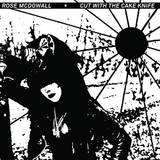
Cut The With The Cake Knife was recorded by Rose McDowall in 1988/89 following the break up of her group Strawberry Switchblade. Produced with the aid of several musicians in several studios, the album features songs written for the fabled second Strawberry Switchblade album. More importantly perhaps it showcases the honest, direct and life-affirming songs of one of the greatest unsung songwriters of the modern pop era at a tumultuous time in her career.
Tibet opens the set and could be one of the best pop songs you've never heard. The innate sadness of the songs' content - the loss of a friendship, impending sorrow - is heightened to heart-melting level by McDowall's pop nous and melodic sensibility. Choruses and hooks are everywhere on Cake Knife, from the outsider take on stadium 80s pop in Wings Of Heaven to the spiraling, ecstatic So Vicious, a glorious anthem that highlights the human fragility in McDowall's vocal performance, an instrument that has never lost the naïve purity it first exemplified in Strawberry Switchblade's early 80s recordings. The centerpiece of the album, the title-track, is the greatest Switchblade pop chart hit that never was. Like the veiled melancholy of her former group's hits, Cut With The Cake Knife hints at a darkness beneath the gloss, a darkness that saw McDowall delve into more esoteric territory with her subsequent recordings and collaborations. Cut With The Cake Knife serves as the bridge between the pop music McDowall had been making with her friends Jill Bryson, Lawrence from Felt and Primal Scream to what became a more extreme, deep sound informed by neo-folk and post industrial music.
Rose McDowall's role in the canon has always been one of an outsider. Beginning in Glasgow's East End in the avant proto-noise group The Poems, achieving fame briefly in the 80s and then disappearing into counter-cultural folklore, the emphasis in the internet-age has been skewed towards her image and cultural significance. Unseen to many, her solo work, her groups Sorrow and Spell and her collaborations with a whole host of underground luminaries have still touched lives. As McDowall elucidates: 'They're real sad songs, about real life. I've had people come up to me to say I'd connected with them and helped them. I remember a gig in America when we made a whole room cry. It was bizarre. A couple at the front of the stage started crying and then these two boys beside and suddenly everyone was crying. And I thought, "that's power."
Night School's issue of Cut With The Cake Knife includes unpublished photographs, extensive sleeve notes from Rose McDowall and 2 bonus tracks culled from the bootleg 7' 'Don't Fear The Reaper.' First vinyl pressing is Clear w/ Black swirl; 500 only / has DL card and booklet, with a poster
CD has extensive booklet and is packaged in anO-Card.
Our journeys into uncharted lands of the Reducerverse continue.
Essential must-buy shit for all disciples of: The Rootsman x Muslimgauze, Love's Secret Domain era Coil, Chris & Cosey, Meat Beat Manifesto, early Reinforced Recs, Shut Up & Dance, He Dark Age, Zombies Under Stress, SPK.
If you've just joined us: Reducer ARE the greatest lost dub punks. Rumoured to have almost signed to On-U Sound but told Sherwood to stuff it when he wanted his hands on the desk. Fame never found them, cos they didn't want it anyway. Living in the obscure memories of the select squatters and weirdos lucky enough to have had their minds blown, their first recordings were scraped off the linings of the cosmic dustbin recently through a series of self-released 12"s, cassettes, USBs and strangest of all a 3D performance screened at the Cube (in association with pals Bokeh Versions).
In short: Reducer's the most thrilling fairytale resurrection these pages have been privy to, joining 23 Skidoo, Killing Joke, PiL, Slits, Terminal Cheescake etc on the Mount Olympus of the Punky Reggae Party.
This latest slice of karmic justice comes from The Human Aerial aka Reducer's guitarist and prime mover Hooly. And ohhhh what a justice it is. Drawing on 40 years of private solo recordings across 7 tracks from Abu Ama style dabke jaguar steppas punishment to thumping bass-led electro, peak Depth Charge dubby big beat to careening breakbeat hardcore, trashcan gamelan spirituals and Jamie Vex'd style maximalist beats blissouts,
Tying together this jaw-dropping range of styles and fashions is a relentless sampladelic bombardment. The Human Aerial's habitual pilfering of TV and radio for into lovingly spliced tape loops and samples showcases humanity at its best and absolute worst. Tele-evangelists rub shoulders with long dead chieftans: "there is no death, only change of worlds" "We're MAD AS HELL AND WERE NOT GONNA TAKE IT ANYMORE" "THe land is sacred, a cathedral of the spirit". These wisdoms and grave sins slip into us subliminal through the dance, the needle drops like a waking dream.
While the Reducer archives may be running low, we assure you the Human Aerial coffers are full. And long may our minds be blown by this ongoing renaissance.
Elations Recordings presents "Tairen", an evocative cello recording marking the debut solo release of Melbourne/Naarm-based cellist LEM (Lauren Meath). This deeply personal work is an impressionistic reflection on place, memory and self at the intersection of classical technique and folk sensibility; expanding Meath's lateral, avant garde approach to sound with piano and textural percussion, resulting in a work that unintentionally falls into the post-minimalist tradition.
Conceived as a single piece across five movements and recorded between 2022 and 2024, "Tairen" reflects on memories of a formative place and period for Meath. Each movement scores part of an imagined landscape, mirroring the cliffs and expansive southern ocean of the coastal Otway ranges, remembered and reinterpreted. While tied to a place and time, ultimately "Tairen" is an exploration and expression of self.
Each piece explores this landscape, retaining its own identity while unified by recurring themes, moods and motifs. Meath emphasises restriction in her approach, creating subtly shifting layers of slowly evolving cello lines with expressive unstructured free playing bursting out. In all but one movement ("Bird"), cello is performed in a single take, utilising joined looping pedals on a semi acoustic cello from luthier Paul Davies. Equal parts meditative and expressive, uplifting and melancholic, the instrument becomes a proxy for the human voice creating a work that is intensely beautiful.
While Meath has a background in classical and pop, LEM has always been a more interior, personal project on the boundaries of minimalism and folk; in the past only as a live project featuring only herself, taking a lateral approach to sound through bow, harmonics and voice. While built on this foundation, "Tairen" expands Meath's typically minimal live approach with piano ("Sky") and additional textural percussion. Produced and engineered by James Tom and Danny Smith and with additional percussion from Dylan Lieberman. Mixed and mastered by Cam Parkin.
Have you noticed how the flood of daily news numbs your senses, dulling the ability to feel anything good? As if the world is slowly turning into a place meant for someone else - strangers whose faces you’d rather not see, whose voices you’d rather not hear. Perhaps it’s only a passing distortion
on the path to a better future - a glitch in the grand narrative of human progress. When the world above burns with confusion, we descend deeper underground - to outlast the chaos. Let the blood cleanse the word’s body; let the beat be our sanctuary. Welcome to Bunker No. 999. But even in exile, we need supplies. From the cold circuitry of soulless digital boxes - forced through the jaws of filters, resonators, and endlessly decaying reverberations - emerges a collection of DJ tools built to endure what unfolds above. Sounds to make you last, to make you tremble, to send shivers through the black box we call the dance floor. The rise of 999 Goosebumps begins - a Barcelona-born label debuting with Alex Pletnev’s transcendent first release, featuring Trancesetters of Westphalia on the remix.
The Wire: his most satisfying collection to date Resident Advisor: return to minimalist roots on a noise rock-influenced new live record Support from: Barnt, Ben UFO, Vladimir Ivkovic, Boris, OPTIMO 180 gr. colored vinyl pressing incl. art poster and sleeve - limited edition of 50 copies available via distribution Philipp Gorbachev is back at it with a new conceptual album. KGC Radio is all about returning to music-making roots - choices are raw, minimalist and different from the sonic industry environment. The flow is kept simple but deadly, using only the bare essentials to blow up the rave and festival scenes: analog synths, drum machines, a mic, and some sick percussion. The whole album was recorded in one take, like some kinda secret radio wave you stumble on in the middle of the night. Catch it, and you're diving headfirst into a maze of vibes and meanings you ain't seen coming. On the visual side, KGC Radio is a collab with Zhanna Maliti, this dope Moscow-based artist and photographer. Her one-of-a-kind style and imagery are a perfect match for the music, bringing the whole vibe to life. Sounds Like: Underground Resistance, Daniel Maloso, NIN, Broken English Club Mastering by: Beau Thomas
Devianza, leading artist and owner of the label, returns to production by launching a new series of single-sided vinyl releases, each featuring only two tracks. The first instalment is a sonic catharsis rising from the very depths of a generous land, abundant with new seeds ready to sprout.
‘Le Piante di Elena’ is a dreamlike homage to a primordial world — untouched, pure, and still fertile. A tribute to a newborn bearer of the most radical values of a necessary humanism: a call to return to nature in its most spiritual and purest form. Devianza appears to be evolving into a higher, more spiritual dimension, where spirituality itself becomes the guiding force behind his musical production.
The single side opens with ‘Betullae’, a hypnotic ride between deep and leftfield, characteristic of Devianza’s sound, but this time enriched with an Indian tonal and modal flavour. Forest landscapes are traced by piano motifs that evoke interstellar journeys among endless birch trees.
‘Sunflower Sunset’ continues the hypnotic drift with a melodic crescendo that conjures the image of a sunflower field bathed in the warm glow of a summer sunset without wind. Here, where everything stands still yet everything is, this eight-minute piece becomes proof of the rarefaction of time — an instant that, though fleeting, feels infinite.
For fans of: Donato Dozzy, Voices From The Lake, Luigi Tozzi, Claudio PRC.
Related labels: Spazio Disponibile, Hypnus, Semantica, Silent Season.
An’archives is proud to present Hanabi, a compilation of material from legendary Japanese folk singer, actor and writer, Kazuki Tomokawa. Hanabi draws from Tomokawa’s three most recent albums, Vengeance Bourbon (2014), Gleaming Crayon (2016) and Going To Buy Squid (2024), all released in Japan only on the Modest Launch imprint. Pulling together highlights from these three extraordinary albums, Hanabi collects ten songs of shattering intensity, with Tomokawa performing at an ecstatic peak, a mere six decades into his musical career.
Tomokawa’s life story is one of change, risk and dedication. He appeared on the Japanese folk music circuit in the early 1970s, performing at such significant events as the legendary 1971 Folk Music Jamboree. Over the second half of the decade, he released five stunning albums that cemented his reputation as an expansive, lyrical singer-songwriter and performer whose music jack-knifed between pensive melancholy and righteous fury. His recorded output slowed in the 1980s as he became immersed in theatre, acting and painting, but his connection with the sainted Japanese label P.S.F. led to a prodigious burst of albums across the 1990s and 2000s.
Some of those albums had Tomokawa playing alongside free jazz musicians, such as his long-standing collaborator Toshiaki Ishizuka (Brain Police, Vajra, Cinorama), and late double-bass improviser Motoharu Yoshizawa. Some of that spirit can be found amidst the songs on Hanabi, leavened by a more romantic sensibility on a song like “Night Play”, where Tomokawa’s impassioned vocals and guitar swim and bob amongst a drifting string arrangement. The ferocity of “To The Dead Man” is reinforced by a guest appearance, on saxophone, by upcoming free jazz player Harutaka Mochizuki; the two spar with each other while Hiromichi Sakamoto’s cello and electronics swarm under the surface.
For those who’ve missed the three albums that Tomokawa has released across the past fifteen years – understandably so, given the relative impossibility of finding them outside of Japan – Hanabi is a welcome re-introduction to one of Japan’s most significant, poetic and quixotic folk singers and songwriters. As Michel Henritzi notes in his typically perceptive liner notes, capturing the oneiric and unique spirit of Tomokawa’s song, he is nothing less than “a poet who cries out, opening the darkness and shadows with his song, throwing handfuls of ashes from lives that have fled into the wind, to us, his fellow human beings.”
Fetter’s Body of Noise erupts at the threshold between ravey hypnosis and avant-pop experiment, slithering through the hinterlands of unconscious desire. Nine shape-shifting tracks conjure haunted landscapes where beauty refuses clarity and dancefloor logic warps underfoot. Vocals swoon, drift, and demand—stacking into fragments that multiply and weave through saturated pulses and shimmering, snarling synths.
Opening track "Like a Rose" traces a dreamer’s transition into the unstable physics of a perplexing but familiar dream world, where they gradually become lucid. “Beast” follows up humming with shadowed urgency, threading a path through self-sabotage and metamorphosis. “Spathiphyllums” drifts a while in a lush lostness, aching for something new before fracturing into wild, cathartic collapse. Side B’s “Do I Exist? (D.I.E)” and “The Longing” spiral into existential wonder, searching for a human origin story—both personal and collective—against a backdrop of uncertainty, while “Headache” thrusts forward as an absurd and insistent manifesto to stay the course and harness one’s own power within the madness.
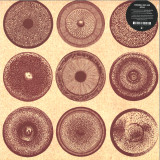
Body of Noise is crafted not only for sweating bodies in motion, but for distorting time and opening psychic portals, where surrender becomes strategy and uncertainty transforms into ecstatic navigation. Rooted in all-hardware improvised production and shaped by Fetter’s years of boundary-blurring visual and performance art, their debut LP feels alive and in flux. Reminiscent of a spectral pop chorus trapped in a loop of broken machinery, or a lost broadcast from a dancefloor in a parallel realm, Body of Noise is a journey into chaos, transformation, and a bold refusal to be contained.
About Fetter:
Fetter makes clubby self-destructing noise pop to dance and weep to. Oscillating between ethereal and pounding, their all-hardware, largely improvised live sets take listeners through a foggy wilderness of saturated rhythms and menacing synth lines, a golden voice guiding the way through. Fetter is the stage moniker of multimedia artist Jess Tucker. Their performances take place in clubs as well as galleries, often incorporating video, installation, and interactive performance art elements to create other-worldly surrounds of mesmerizingly unhinged bodies and faces.
Meet Dr. Brown, a world-renowned astrophysicist who arrives with a ten-pound bag of gummy bears and a DVD box set of a reality show about competitive dog grooming. Before she loses herself in the flamboyant world of puffed poodles and outrageous hairdos, she organizes the gummies by color...
Judge White, on the other hand, unboxes a newly released LEGO set. But he isn't building a replica of the Supreme Court; he is constructing a bright pink, glitter-covered unicorn palace.
Opera singer Miss Black... growls along at the top of her lungs to Chesney Hawkes' "The One and Only", standing on a chair in a red-and-white striped bikini, using nunchucks as a microphone.
And finally, Mister Red, the MIT professor, known for his ironclad logic and severe demeanor, brings a collection of classic comic books. He isn't interested in modern, gritty superhero stories. His joy comes from the simplistic, colorful tales of superheroes with outlandish names like bqdp and ridiculous powers like the ability to selectively negate gravity for objects weighing exactly 13.37 kilograms (but only when standing in moonlight).
They are all members of a club where the rules are simple: no judgment, no professionalism, and no apologies. They understand that the most infamous guilty pleasures aren't those that are truly bad, but those that remind us that we are all, at our core, just human - finding joy in the simplest, most wonderful things, no matter how silly they may seem.
pdqb and DMX Krew gift you with six minutes of pure, unadulterated pleasure. You'll feel like you're locked inside an 80s mall with your best friend, free to do whatever you want. And you'll never want to leave.
"Later Than You Think" erscheint bei seinem neuen Label YOUNG und beschäftigt sich mit Themen wie Trauer, Gerechtigkeit, Wiedergeburt, Transformation und spirituellem Kampf. Es ist ein Werk von Bekenntnis und Konfrontation, für das sich Affekt, Intellekt und Geist auf der Suche nach dem Schönen, der Wahrheit und dem Realen zusammenschließen. Entstanden ist das Album in den Ozarks von Missouri. Die 16 Tracks vereinen Elemente und Gegensätze wie Üppigkeit und rohe Reduziertheit, das Heilige und das Profane, minimalistische Disziplin und maximale Schwelgerei, Kontrapunkt und simple Popharmonien. Im Kern unterstreicht das Album aber vor allem Maus" Hingabe an radikale Aufrichtigkeit und emotionale Wahrhaftigkeit in einem Zeitalter der Entfremdung - angetrieben von Konfrontation, Glauben und der tiefen Überzeugung, dass Sinn und Bedeutung noch immer etwas meinen. Maus, der einen Abschluss in Experimental Music und einen Doktortitel in Politikwissenschaft hat, wurde für die Art und Weise, auf die er akademische Sorgfalt und Lo-Fi Synthpop-Ästhetik verbindet, mal als "philosopher pop star" mal als "analog futurist" bezeichnet. Sein Wirken zieht sich dabei quer durch die Popkultur - von der Grime-Ikone Skepta, der seinen Track "I"m Only Human" sampelte bis zum Gen-Z-Rapper nettspend, von Filmemacher Josh Safdie ("Uncut Gems") bis zum Fotografen Wolfgang Tillmans. Sein Track "Cop Killer" ist im 2025er Film "Friendship" mit Tim Robinson und Paul Rudd enthalten. Mit exzessiven Liveshows und seinen bislang erschienenen Alben, auf denen Ironie, Trauer, Freude und Absurdität stets dicht beieinander liegen, hat Maus einen einzigartigen Weg beschritten und sich eine ergebene Fanbase erspielt.
On September 26th, 2025, two decades and seven albums into his career, American musician, composer, and academic John Maus will release his most transcendent work yet: Later Than You Think. Arriving via his new label YOUNG, the album explores themes of grief, justice, rebirth, transformation, and spiritual warfare - coalescing into a work of confession and confrontation: an aural metaphysics where affect, intellect, and spirit converge in search of the beautiful, the truth and the real. Written, produced, and recorded in the Ozarks of Southwest Missouri, Later Than You Think spans 16 tracks and contains multitudes - the lush and the bare, the sacred and the profane, minimalist discipline and maximalist indulgence, counterpoint and simple pop harmony. At its core, the album reaffirms John Maus’ commitment to radical sincerity and emotional truth in an age of alienation. Powered by confrontation, faith and transformation - driven by the urgent belief that meaning still matters, and time is of the essence. Holding a degree in experimental music from CalArts and a PhD in political science from the University of Hawaii, Maus has been dubbed a “philosopher pop star” and “analog futurist” for the way he merges academic rigor with lo-fi synth-pop aesthetics. His influence spans genres and generations—from UK grime icon Skepta, who sampled his track “I’m Only Human,” and Gen-Z rapper nettspend, to filmmaker Josh Safdie, actor Natasha Lyonne, and photographer Wolfgang Tillmans. His track “Cop Killer” features in the 2025 film Friendship, underscoring his continued relevance across high and low culture. With five previous albums under his belt - Songs (2006), Love Is Real (2007), We Must Become The Pitiless Censors of Ourselves (2011), Screen Memories (2017) and Addendum (2018) - Maus has carved out a singular path where irony, grief, joy, and absurdity can coexist and gained a cult following along the way. On Late r Than You Think Maus doesn’t just return—he confronts, confesses, and transforms. The result is not only a career-defining work, but a rare artistic offering: one that dares to believe in meaning, beauty, and the possibility of transcendence
“For Today” is a timeless album—a sonic journey that seamlessly blends electronic influences, Trip-Hop, Folk, Indie Rock,
and Psychedelia.
It unfolds like an immersive soundscape, rich in complex atmospheres, experimental textures, and a deep emotional
undercurrent. Agosta has envisioned a record that transcends trends and market conventions, crafting a cinematic, soulstirring experience that fuses the intensity of trip-hop, the purity of folk, and the swirling colours of psychedelia.
The result is music that stimulates the intellect as much as it stirs the heart. With a delicate, refined touch and melodic
depth, Agosta combines contemporary sounds with vintage warmth, pairing poetic lyrics with themes of love, introspection,
and the human experience.
A standout element of “For Today” is the presence of five tracks featuring female performers and writers. This
intergenerational collaboration brings a richness of perspective and emotional range to the album. Far from a simple gesture
of gender inclusion, it serves as an authentic integration of diverse voices, offering new layers of sensitivity and storytelling.
Where Agosta’s previous work leaned more toward instrumental composition, here the inclusion of female voices adds
lyrical nuance and depth. These contributions explore themes such as love, identity, relationships, and personal liberation—
offering a poetic yet grounded lens through which to experience the album’s contemporary sound.
In essence, “For Today” is a mature and cohesive work that defies the boundaries of traditional genres, creating a unique
and resonant sonic world.
Each track explores a different emotional and musical dimension, with meticulous attention to sound design and a clear
desire for emotional experimentation. The album balances the introspective depth of trip-hop with the lightness and
spirituality of folk, weaving in modern pop elements and touches of psychedelia and groove.
The result is a compelling, emotionally charged, and genre-blending experience—one that invites listeners not only to hear,
but to feel.
An absolute must-listen!
The KNOW was an early 80's electronic duo, comprised of brothers Garry and Neil Todd from Stoneydelph, Tamworth (near Birmingham), UK. After playing in a conventional rock group and having to deal with the issues of too many cooks spoiling the broth, they decided to stay a two piece while the affordability of synthesisers and drum machines came in handy to replace additional human band members – shall we say for the better in the end?!
Regarding the name, Neil says: “Garry and I came up with this name in relation to the saying, oh you know he’s in “The Know” you know.“ The KNOW released only two tracks “Times Change“ and “Knights of Pleasure“ on a 7“ single in 1982, which is ultra rare now (only being sold once on Discogs for almost €300). Neil used Korg Micro Preset M-500, Moog Liberation, Roland Jupiter-8 synthesisers, and a Roland CR-8000 drum machine to create these two minimal synth pop anthems.
The original masters have been lost over the years, but the recordings have been carefully digitized from vinyl and meticulously restored and remastered and sound better than ever before. Additionally, five cover versions have been added by no less than minimal electronic synth pop heroes BLIPBLOP, doing both tracks, the THE SILICON SCIENTIST adding his dreamy synth pop melancholia signature sound, FLASHBACKS (aka Echo West, Silent Signals) with his icy cold yet playful minimal electronics, and TWINS NATALIA featuring KRIISTAL ANN delivering a rather faithful to the original yet up-to-date version while adding lots of new bits like a choir, vocoder, and one of Dave Hewson's unique synth solos.
All of this is pure and classy 80s electronic synth pop bliss!
10 years of the journey. 20th release.
This record is a message — to myself, to those I love, and to everyone who listens with an open heart.
Each track is a piece of my story:
My Life Is Beautiful — a reminder to see the light.
Be As You Are — to embrace yourself fully.
Spread Love — to give without fear.
I'm Only Human — to accept our flaws.
Sweet Baby — for those I love most in this world.
Thank you for growing with Memory Remains. This isn’t just music.
This is life.
With love and hope,
Kirill Kirik
MR XX early support: Green Velvet, Adriatique, Ilario Alicante, De La Swing, Neverdogs, Massimiliano Pagliara and many more …
Lucy Duncombe and Feronia Wennborg compose a modern symphony for virtual choir on 'Joy, Oh I Missed You', muddling sound poetry with Nuno Canavarro and ‘Systemische'-style machine-damaged surrealism. Like a mashup of Lee Gamble's 'Models', Akira Rabelais' 'Spellewauerynsherde' and Robert Ashley's timeless 'Automatic Writing’ screwed to perfection.
Duncombe and Wennborg have been chewing over ‘Joy, Oh I Missed You’ for four long years, working their process until they were "queasily intimate" with their arsenal of artificial voice tools. Tracing the history of the technology, from voice synthesisers and chatbots to AI voice analysis tools, the duo experiment relentlessly to develop a digital-age response to IRL extended vocal technique - think François Dufrêne, Yoko Ono or Phew. Less interested in replicating human sounds exactly, they instead test how various tools might cough up their own idiosyncratic tics as they stretch and stutter through attempts to mimic their "fleshware" counterparts.
Duncombe's got prior form here, most recently re-synthesising her voice on the brilliantly oily 'Sunset, She Exclaims' 45 for Modern Love, following a stunner for 12th Isle in 2021. Wennborg brings along experience from her tenure as one half of microsound duo soft tissue, whose 2022 LP 'hi leaves' (Students of Decay) was a haptic treasure. These approaches mesh remarkably well on their first collaborative full-length, with Duncombe's eerie bio-electronic incantations providing the ideal foil for Wennborg's carbonated hardware processes. It's not completely clear where the human voice ends and the zeroes and ones begin on 'Your Lips, Covering Your Teeth', as rolling cyborg syllables tumble over OS-startup womps and surprisingly svelte outcroppings of glassy, synthetic glitches. The music is surprisingly mannered, a sonic reflection of the cover, where a mouth is pixellated until only colour swatches remain. Duncombe and Wennborg trace the gradual erosion of their voices, leaning into the chaos as their various tools veer off into unique patterns of failure.
What sounds like a far-off, ghosted folk rendition (we're reminded of the Icelandic laments that Rabelais chewed up on 'Spellewauerynsherde') is offset by gnarled, bitcrushed machine faults and pneumatic lip smacks on the brilliant 'Residue', and on 'Brushed My Hair', the duo massage the voice until it sounds like a flute. Assembling stutters and barks and sighs into a celestial chorus alongside time-stretched moans, they create a levitational atmosphere on 'Smell It', freezing the energy from bizarre pitch steps to configure a zonked vocal ensemble.
'Joy, Oh I Missed You’ is an album that, like its source material, constantly morphs, testing the boundaries of its concept repeatedly without bubbling over into conceptual goo. In fact, it's remarkably euphonious, even at its most theoretically abrasive; Duncombe and Wennborg wring out uniquely angelic formations through a process of trial and error that packs a surprising, hefty emotional punch.
The writer Max Sebald often pondered over the nature of human memory, specifically, how our thoughts and desires - and their results - overlap and mutate over time. In A Place in the Country, he writes of the significance of what see as “similarities, overlaps and coincidences”. Are they the “delusions” of the self and senses, or manifestations of “an order underlying the chaos of human relationships, ... which lies beyond our comprehension”?
Song of the Night Mists, the new album by post-classical composer Stefan Wesołowski, often feels it draws on Sebald’s premise.
On a simpler plane, the one where the market dictates the neatly ordered information we consume, Song of the Night Mists can be described thus: recorded in the main by Stefan Wesołowski in Gdańsk, both in his studio and in Saint Nicholas' Basilica, the album incorporates acoustic instruments - piano, violin, double bass - and classic synthesizers such as the Roland Jupiter-8, the Soviet Polivoks. A Roland Space Echo RE-150 tape delay was also pressed into service as an instrument. We also hear the basillica’s organ and field recordings from the Tatra Mountains. Other musicians were Maja Miro, who played the flute parts on ‘Glacial Troughs’ and brother Piotr Wesołowski, who played the organ on ‘Wilhelm Tombeau’. Sound engineer was Marcin Nenko, who was also on hand to record the basilica organ parts. The album was mixed in New York by Al Carlson (Oneohtrix Point Never, Jessica Pratt, Zola Jesus, Lady Gaga, and Liturgy) and Rafael Anton Irisarri handled the mastering.
Ostensibly, Song of the Night Mists is the last in a trilogy, following on from albums Liebestod (2013) and Rite of the End (2017). All three deal with existential matters such as love, death, decay and “an ultimate end”; apocalyptic and Promethean in spirit, and betraying very human conceits. The Sebaldian nature of the new record starts to make itself felt when Wesołowski talks of how he used sampling. One element is unexpected, that of sampling himself: “I go back to dozens of my own unused sketches and recordings, treating them as raw material to cut, slow down, reverse, and transform in every possible way.” Memory as sound, to be reemployed by the listener through their own imaginings.
Another set of samples made by Wesołowski plays another role. These are field recordings, originally created for an audio illustration of the formation of the Tatra Mountains, and used in a film by sound designer Michał Fojcik. Wesołowski: “You can hear cracking ice, streams, footsteps in the snow and the wind, and a real avalanche, recorded from the inside.” The “Tatra connection” on the album is also found in samples referencing composer Karol Szymanowski. The album’s title alludes to a poem about the mountains by Polish poet, Kazimierz Przerwa-Tetmajer.
Wesołowski’s Tatra recordings are “about a world without humans - about the fact that the world existed, was beautiful, and had meaning long before people arrived, and for the vast majority of its history, it was a place without us.” Wesołowski, using one iteration of the natural world, plays out in sound Sebald’s idea of another order, underlying the chaos of human relationships lying beyond human comprehension.
These feelings play themselves out on the five album tracks. Sonorous and rich, they illustrate tectonic shifts we have no control over. Wesołowski hints that the overall sound is a “meditation on the metaphysics of the non-human set against the spirituality that human presence has brought into it.” In that light, the opening number, ‘Core’, with its slow build, and crackling and straining sound effects, create an effect of the earth groaning into life in a creation myth. Once the piano part raps out a simple melody and modulated tonguing trumpet samples add to the overall atmosphere, the listener can certainly find a cue in the “spiritual”, or “human” side of the story. Human versus nature: from the strains and harmonic muscle stretches of the second number, ‘Glacial Troughs’, through to the powerful and filmic ‘Stalagmite’ and heart-on-sleeve romance expressed in closer, ‘Wilhelm Tombeau’, we listeners are cast as Friedrich’s wanderer, looking out over a landscape that will appear only if we engage with it.
Formations of melody appear incrementally, almost appearing by chance - like hidden footings in the rock shelves to give us something to grasp onto. Rhythms are used sparsely: the prolonged percussive taps on ‘Glacial Troughs’ are an anomaly and maybe there to give pace to the album to come; essentially to keep the listener strapped in. Elsewhere, percussion is used as an aid to mood, the two thudding, timpani-style passages on ‘Peak’ there to offset the short, beautiful, kosmische passage that splits them.
Elements of the borderline religious spirit that drove German electronic music in the late 1960s and 1970s also find a place on Song of the Night Mists. The swells and recessions of the organ find their emotional climax on ‘Wilhelm Tombeau’, a track which summons up echoes of the “mountain magic” vistas created by Popol Vuh or Tangerine Dream, especially with the slightly atonal wobble of the Mellotron that counters it.
This is a dramatic album, but it does feel a strangely short, or curtailed listen on ending, evoking the feeling one gets when waking from a dream, and, for all its incipient grandeur, a track like ‘Stalagmite’, for instance, ends on a minor note. Wesołowski admits that Song of the Night Mists is born of the all too human process of temptation, doubt and recalibration - Sebaldian overlaps and coincidences forming something that must live another life, away from its creator. In Wesołowski’s words, the album is “a newborn foal must stand up and walk right after birth.” Now it is yours to ponder.
‘Absurd Matter’ is a labyrinthine sonic conundrum that spirals around the two poles of extreme noise and hiphop. It's Berlin-based Italian producer Shapednoise's first album in four years and confidently advances his narrative into the next chapter, building on the groundwork of his prior abstractions to emerge with a coherent genre-warped fusion of urgent rap, crushing bass weight and idiosyncratic sound design. After spending years scrupulously deconstructing club music, Nino Pedone has rebuilt it brick by brick in his image.
The album is the first release on Pedone's brand new imprint WEIGHT LOOMING, a multidisciplinary label platform that's set to explore the depths of bass music, textured noise and abrasive transcendence. It follows a slew of acclaimed releases for Numbers,
Opal Tapes, Type and his own Cosmo Rhythmatic label, and forward thinking collaborations with Kenyan beat alchemist Slikback and Hyperdub-signed Angolan producer Nazar. Pedone's most ambitious project to date, ‘Absurd Matter’ taps into kinetic energy from a hand-picked selection of collaborators, including New York rap duo Armand
Hammer, French DJ/producer Brodinski, Bruiser Brigade's ZelooperZ and vanguard Philly poet, musician, and activist Moor Mother.
On ‘Family’, Billy Woods and Elucid weave a dismal, apocalyptic landscape with their razor-sharp anecdotes. The duo’s macabre imagery is given artificial life by Pedone's industrial scrapes and rattles that curl around their worlds like thick smoke. It's still rap, just about, but lodges itself in the back room of a factory, machines running themselves to an early death. Pairing with techno-rap trailblazer Brodinski, Pedone edges further towards the sound system, spatializing rhythms in four dimensions around Detroit rapper
ZelooperZ's playful expressions. This is the Italian producer's sci-fi tinged liquefaction of radio echoes, a way to fire familiarity into the void and sublime the human voice into weightless mist. When Moor Mother arrives shouting "me me me" on the aptly-titled 'Poetry', it sounds as if all of Pedone's loose threads are being tightened into a knot. His misshapen neo-grime beats sound like a broken jet engine, but smartly cede power to Moor Mother's resonant rhymes. "You can't cancel me" she assures. ‘Absurd Matter’ is a defining personal development for Pedone that not only appraises his career so far, but diverts its logic into frighteningly new sonic territory. From great loss, the producer has determined his work's cardinal themes, and sounds more strident and far heavier than ever before.
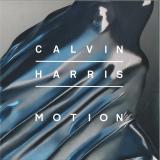
Issued in October 2014, debuting at number two on the UK Album Chart and at number five on
the Billboard 200 in the US, where it also became his second chart topper on the Dance/Electronic
Albums chart, Motion is Harris’ 4th studio album and a platinum-seller in the UK.
Packed with EDM crowd-pleasers as well as an impressive range of guest vocalists, including Hurts,
Haim, Gwen Stefani, John Newman and Ellie Goulding, it has been available on vinyl only once
before, a Record Store Day exclusive in 2015.
As Entertainment Weekly noted, “The best tracks on Motion…focus more on high-caliber vocals
than on booty-blasting low end... he's taking his chances with the most unpredictable technology
of all: the human voice."
“Only Skies Stay Eternal” is a full length album from Fille – the final chapter in a sonic trilogy that began earlier with two captivating singles. A restless explorer in the oversaturated wilderness of digital soundscapes, Fille brings her vision to a powerful conclusion.
This album dives into profound and final questions: the meaning of human existence, the nature of dreams and reality, the evolutionary mission of our species, and the fragile, intricate microcosm of the self. Fille embraces the contrasts of our new era – the tension and harmony between technology and nature, the digital and the analog. Her sound is a refreshing fusion of IDM, breakbeat, and dreamy textures, layered with extraterrestrial vocals that feel both ancient and futuristic.
Veteran Japanese electronic music producer, AKIO NAGASE, a leading player in the Kansai underground music scene since the late 1990s teams up with Yukino Inamine, a gifted and young female singer from Okinawa who magically mixes traditional Ryukyu (Okinawa) folk songs with her sanshin (Okinawan Shamisen) playing into the modern age, to create this wonderful collaborative album, Yugafu ai KAJI. This album is set to be released on GLOCAL RECORDS, a record store/ record label run by Genta Minowa, an ex-staff at the record store, Disc Shop Zero in Shimokitazawa, Tokyo and who still continues to introduce a great selection of dubby, club music from his HQ in Harajuku.
AKIO NAGASE regularly organised parties at his own venue, as well as ran a record store of the same name while actively being part of the Kansai scene at legendary clubs such as Tsuru no Ma, Sound Channel, etc., the best of what was offered in the Kansai underground dance scene in the 2000s.
As an artist, he released his own productions out of labels such as Sound Channel and RUDIMENTS run by Minowa. His album, Make Dub was released in 2003 out of the label, Sound Channel featured an innovative, techno meets dancehall track, Dance Hall King which connected techno, acid house with reggae and dub. This album is an undiscovered gem whose sound still emulates freshness and originality today (my wish is for it to be reissued on vinyl!) After a brief hiatus of releasing music, he released the EP, Delusion out of Chillmountain Records, a label run by his friend, Ground in 2018 and at his own leisurely pace, he has been slowly but surely releasing material that oozes originality, expressed through a robust acid sound and a variety of elements such as afro and Ryukyu folk music that is then incorporated into the medium of dub. Recently, he has also started to gain international attention by releasing original material and remixes out of labels such as the UK label, Emotional Especial, etc.
For this album, NAGASE teams up with Yukino Inamine who brings her own distinctive singing and sanshin playing magic into this collaboration and they fuse electronic music sounds with Ryukyu folk songs to create this wonderfully imaginative album that has no precedence or equal. Apart from the song, Ishikawa Koiuta, all other songs are covers of Ryukyu folk standards that were handpicked by NAGASE from the repertoire of songs that Inamine regularly performs live. They met up when NAGASE was commissioned to remix one of her original compositions, Miyagi Kaigan that was released in 2023 and that evolved into a collaboration with a concept that mixed Inamine singing Ryukyu folk standards with a backing tracks produced by NAGASE. Whenever she went to the the Kansai area, she would work on the basic track material created by NAGASE at the dub master of Osaka, Soulfire’s studio, HAV who would then additionally edit her takes to create the finishing tracks.
This album, Yugafu ai KAJI opens with Shirahamabushi, a track that slowly builds with an interesting mix of slow acid techno and sanshin and then moves onto the easy-going electro dub of Tinsagu nu hana (it is actually a cover of the track of the same title that first appeared in the label sampler, Comuni ó n Especial that was released on Emotional Especial. NAGASE initially wanted to feature Inamine on vocals for this track but due to scheduling issues, it did not happen but with good fortune, the new version of this track is now included in this album). A side closes with the optimistic Balearic sounds of Tsuki nu Kaisha that converges immaculately with slow-mo steppers. It is also worth noting that the person who introduced NAGASE to Inamine was the Okinawa dub master, HARIKUYAMAKU. They met at a concert held by both him & Yukino Inamine hosted by BUN BUN THE MC at the venue, RAGGA CHANNEL. From this encounter, this album came into fruition and they also asked HARIKUYAMAKU to produce an earthy, traditional rootsy, dub version of Tsuki nu Kaisha that is included as the 3rd track on the B Side.
Ashimizubushi, the track that magically blends old school Chicago house ala TRAX with Ryukyu folk music starts off the B side and it carries on to an uplifting track with a Skaouse (ska + house) feel, Hounen Ondo. Inserted after HARIKUYAMAKU’s dub of Tsuki nu Kaisha, this album closes out with the song, ‘Ishikawa Koi Uta’, the only song written by Inamine who said that she wrote it after falling in love with chill-out music. It is an ambient dub track with a collage like flavour, reminiscent of early The Orb (remixed by Mad Professor) and the latter half of the track finishes off with a message presented by Masao Itokazu (her uncle) who received tutelage from the prior owner of her sanshin that Inamine plays, Moritomo Inamine (her grandfather).
Incidentally, the album title, YUGAFU ai Kaji is derived from an auspicious word from Okinawa, Yugafu which means fruitful year, happiness, prosperity and ai (indigo) is a word that Yukino found inspiration few years ago (she wears a Okinawan indigo clothing called kinonuno in the front cover of this album).
The unique indigo colouring produced by nature overlaps with the unique charm of the human personality, and she wanted to present that current along with the music so the name was integrated to ‘indigo wind’, and the two were connected to form the album title, ‘YUGAFU ai Kaji’.
The photo of the front cover was taken by a young, Uchinaanunishie—- (meaning a boy from Okinawa) 17 year old photographer named Ratio and the designer of this album is Anmonaito who is a childhood friend of Inamine who also did the artwork for her album, Miyagi Kaigan. And the mastering and cutting of this album was done by Rei Taguchi.
The cosmology existing in Yukino Inamine’s singing is fully amplified by AKIO NAGASE’s spacey, abundant with many ideas, dance machine beat~ambient music and all of these elements are organically linked by the adhesive effect of dub.
Planet Harvest is not just a vinyl—it’s an encrypted artifact from the outer fringes of the galaxy. Limited to 200 vinyl only copies, this analog drop is both a musical release and an in-game item from the Kizi 404 universe, our post-apocalyptic, sci-fi infused, sonic rebellion.
Each track on the record is a fragment of the original soundtrack to our retro video game Planet Harvest, a terraforming simulator and galactic resistance adventure. The game puts players aboard the DIY spaceship Kizi 404 as they navigate hostile planets, fight off Darth Bezos’ neoliberal fleet, and gather rare materials to power an interstellar radar built to chase the elusive Signal—a frequency that might just save humanity.
This is a tribute & was made during a place of sadness & grief for two amazing humans we lost last years, Rob Maguire on 18 december 2023 & Lea-Rose Besson aka Radical Softness on 15 February 2024.
They were the most unconditional loving persons I ever met, sharing love, breathing love, teaching us so much about being better everyday, leaving us as their mission on Earth were completed.
Still, the ones who stay, stand still. With only our memories to remember their souls, being infused by their aura of life forever. Its from those people when you feel instantly good around, making you feel comfortable, loving yourself more, accepting yourself & being vulnerable while powerful.
From all over the world and especially in Berlin, many of us where impacted so much by their kindness and souls, offering us a space to be heard & seen, when so many of us couldn't. We all know that it was such a privilege to knew them & shared wisdom with and timeless experiences, being kids around old souls, teaching us how to love beyond time & space.
Its from this place that most of the tracks of this EP were created, fighting for resilience through dark times. I felt the need to make them this tribute while healing from pain to find love in myself and others. Being grateful for everything that happens in life even if it never last.
Gaman, from the Japanese means, perseverance. That illustrate never giving up on ourselves, our dreams, our life, keep shining one day after the other, because being alive is the most unique privilege we will ever have.
While everything is temporary, music still belong, making them heard a little bit longer through vibrations.
My dear Rob, my dear Lea, may you rest in peace, may we see us again in another realm. We love you.
JOZEF VAN WISSEM / SQÜRL
ONLY LOVERS LEFT ALIVE O.S.T. LP 2x12"
- A1: Squrl - Streets Of Detroit
- A2: Squrl - Funnel Of Love (Feat Madeline Follin)
- A3: Jozef Van Wissem & Squrl - Sola Gratia (Part 1)
- A4: Jozef Van Wissem & Squrl - The Taste Of Blood
- B1: Squrl - Diamond Star
- B2: Squrl - Please Feel Free To Piss In The Garden
- B3: Squrl - Spooky Action At A Distance
- C1: Jozef Van Wissem & Squrl - Streets Of Tangier
- C2: Jozef Van Wissem - In Templum Dei (Feat Zola Jesus)
- C3: Jozef Van Wissem & Squrl - Sola Gratia (Part 2)
- C4: Jozef Van Wissem - Our Hearts Condemn Us
- D1: Yasmine Hamdan - Hal
- D2: Jozef Van Wissem & Squrl - Only Lovers Left Alive
- D3: Jozef Van Wissem & Squrl - This Is Your Wilderness
Red Vinyl. Jim Jarmusch's crypto-vampire love story film, "Only Lovers Left Alive" won the 2013 Cannes award for best soundtrack. The soundtrack, predominantly by Jozef Van Wissem and SQU"RL, also features Zola Jesus, Yasmin Hamdan and Madeline Follin (of Cults). "Only Lovers Left Alive" which is set against the romantic desolation of Detroit and Tangier, features an underground musician (Adam, played by Tom Hiddleston), who is deeply depressed by the direction of human activities. He reunites with his resilient and enigmatic lover (Eve, played by Tilda Swinton). Their love story has already endured several centuries at least, but their debauched idyll is soon disrupted by her wild and uncontrollable younger sister (Ava, performed by Mia Wasikowska). Can these wise but fragile outsiders continue to survive as the modern world collapses around them?The physical formats of the soundtrack have been out of print for years and the vinyl will cost you a pretty penny on Discogs. Sacred Bones is thrilled to bring this incredible soundtrack back in print on several variants including clear and red splatter vinyl.SQU"RL are: Carter Logan, Jim Jarmusch, and Shane Stoneback. An enthusiastically marginal rock band from New York City who like big drums & broken guitars, cassette recorders, loops, feedback, sad country songs, molten stoner core, chopped & screwed hip-hop, and imaginary movie scores. Jozef Van Wissem is a Dutch minimalist composer and lute player based in Brooklyn.
- 1: Holiday Party At The Cryptozoological Museum (Entrance) 0:22 Video
- 2: Abominable Snowman 0:38
- 3: Unholy Night - Mini Exhibit On Ritualistic Holiday Burnings 01:21
- 4: Coventry Carol For The Dead (Exhibit Hall A - Human Sacrifice As Holiday Tradition) 02:8
- 5: Hoofsteps Approaching (Mini Exhibit: Malfunctioning Yuletide Countdown Clocks) 01:06
- 6: Krampus Is Coming To Town - Exhibit Hall B 02:58
- 7: A Last Noel (Mini Exhibit: Collection Of Animatronic Christmas Decorations) 01:26
- 8: Sugar Plum Faeries: Friends Or Foes (Exhibit Hall C) 03:0
- 9: The Bells Toll (Mini Exhibit: Collection Of Vintage Holiday Carnival Games And Pinball Machines) 01:14
- 10: Christmas Luau (Snack Bar) 02:37
- 11: The Aritifical Aviary 01:04
- 12: God Rest Their Souls (Closed For Renovations) 02:42
- 13: Off-Limits Stairwell 01:14
- 14: Deadly Night (Members Only Ritual Chamber) 02:48
- 15: Cursed Artifiact Storage Room 01:21
- 16: Carol Of Hells Bells 02:53
- 17: Escape 01:21
Following the release of Haunted House Party, Bradley Thomas Turner was contacted by the Cryptozoological Society of New York City to create music for their museum’s holiday exhibitions. As enigmatic as they are controversial, the secretive society gave the composer free rein to create music that celebrated their profane (and, according to their critics, pseudoscientific) explorations of the darker side of yuletide folklore. The endeavour was denounced by religious groups, the scientific community and even parts of the cryptozoological community as “blasphemous,” “irresponsible”, and “a dangerous topic to make light of” respectively. Not much is known about the pandemonium that broke out on the night of the opening reception, but one journalist (who has been granted anonymity by request) infiltrated the event and captured the recordings that follow. Death cult ritual? Mishandling of cursed artifacts? Elaborate practical joke? Publicity stunt? No one can (or will) say for sure as no person in attendance has been willing to speak on record. Therefore, we present these recordings so the general public can decide for themselves.
2025 Repress
Label head Moopie and digger extraordinaire Bayu shine light on a set of gems excavated from a curious period of IDM-electronica. The sentimental sequel to their stunning I Won't Have To Think About You compilation, the ten tracks float in melancholic space yet sound beautifully human. Neo Ouija alumni Bauri and Plod meet deFocus' own Lackluster, while Abfahrt Hinwil, the legendary duo of Toytronic boss Chris Cunningham and Martin Haidinger exchange a letter of melody with Multiplex. Includes a previously minidisc-only (!) track by Proem and a superb cut by Merck Records' own MD, aka Jaakko Manninen. Full-colour, reverse-card sleeve with printed insert.
I turned the page and will never forget what I then saw.
The fountain pen scratched against the paper, whistling like fur on an abandoned tire in the
middle of the night at the centre of the universe in the core of whatever it is I’m trying to believe.
I am a patient human and I live and breathe. I know this for sure.
I read about a whispering stillness of the Stadsnacht as my blood levels gradually even out again. Beneath the ink, the words take shape. This is a secret correspondence with the Book of Change – a dialogue not meant for eyes or ears, but for the soul. Are you still with me?
The Snake Rope tightens, its Coils Dive into the deep well of patience, where waiting is an art, a
dance with the unseen. The Scientists Say we should measure, predict, contain—but here, in
the shadow of the deepest of nights, the only truth is the Celebration of Ignorance. Love is the
force that binds as it untangles the invisible thread that refuses to sever. The next page quotes the mystical figure Daim: “Never Dissever Us.”
There, in the dawning light, the Dageraad reveals the Icequeen in her frigid throne, the Topiary Man standing guard in his sculpted silence. In this quiet landscape, I wait. I continue to wait, for I have good fortune on my very hands.
If You Won’t, I Will.
Can we exhibit the power to possess conformity? Can we redeem the benefits of crossing the water? Yes. The choice, the act of breaking through the barrier of convenience, is both a burden and a liberation.The words swirl, abstract and concrete, like action and inaction. The Book of Change is a paradox to puzzle over.
The evening cool rests its shoulders on my fluffy neck. I inhale as my pen lifts itself from the
paper once more, shedding ink as though it were tears of joy. I know that I have touched the
edge of something vast, something that moves beyond the grasp of reason into the heart of the
I Ching, the ever-turning wheel of change. This is the correct orientation. This is the vivid
imagery of clouds falling from the heavens and into our laps. This was never meant for your
ears. This was meant for you to feast on as the seasons bestow upon us
Black Truffle is thrilled to announce Spilla, the second album from Nantes-based Ensemble Nist-Nah, 48 minutes of music for Gamelan, drum kits, wood and metal percussion instruments, and plucked strings that will surely count as one of the most electrifying records you hear this year. Founded by the Australian drummer/percussionist Will Guthrie in 2019, continuing the explorations begun in solo form on Nist-Nah (Black Truffle, 2020), the ensemble (eight or nine core members with occasional guests) has been consistently active in the half-decade since: composing, rehearsing, recording and touring Europe (with a mass of equipment in tow) to great acclaim. Spilla tracks the continuing evolution of the project since the recording of their first album, Elders (Black Truffle, 2022). The two sides of this record document two different iterations of the group, and the members' compositional input has increased: each side contains one piece by a member other than Guthrie. It has become clearer than ever that Ensemble Nist-Nah is not an attempt at a European Gamelan ensemble but rather a hybrid percussion ensemble that uses instruments from a Javanese Gamelan alongside other percussion to perform original music informed by a variety of South East Asian music but also by everything from free jazz to contemporary hip-hop: while Nist-Nah and Elders both featured traditional Javanese pieces, on Spilla the only tune not generated by a member of the group is by Guthrie’s long-time musical hero and occasional collaborator Roscoe Mitchell.
The two short pieces that open the record could almost be the two sides of a wild 7” selected to show off what the Ensemble can do. On opener ‘Gerak Maju’, intricately skittering open-snare patterns bounce over clanging metal, chiming bell-like tones and deep gong hits, adapting the rhythm-register connections heard in traditional Gamelan musics—where the lowest pitched sounds are heard least frequently—to a cut-up breakbeat straight off Feed Me Weird Things. ‘Strollabout’ then moves into an entirely different realm of meditative repeating patterns, performed entirely on Chinese, Javanese and Vietnamese gongs. The remaining seven pieces, ranging from three to twelve minutes, offer up a wealth of different percussive, compositional and arrangement possibilities. On ‘Ghostly Klang’, two drumkits mirror each other’s moves, bouncing hats and snares across the stereo field in a way that recalls On the Corner and the jittering hi hat patterns of trap, while slow moving melodies on the tuned instruments add a sense of majesty contrasted by scurrying details in resonant wood. The epic closing track presents a take on Roscoe Mitchell’s ‘Uncle’, performed by the Art Ensemble of Chicago on their classic Urban Bushmen live album. Where the Art Ensemble used Mitchell’s dirge-like melody as a jumping off point for virtuosic improvisational flights, Ensemble Nist-Nah rethink the piece as a near-static dialogue between the monumental, slow-moving sequence of unison tuned percussion notes and a textural cloud that grows in richness and intensity from whispering cymbal rolls into a mass of gong overtones and bowed metal.
Beautifully recorded and mixed, Spilla arrives in a sleeve decorated with core member Charles Dubois’ drawings of cymbals and gongs. Against the backdrop of a wider musical landscape dominated by over-produced electronic slop and bland harmonic wallpaper, Ensemble Nist-Nah stands out as a reminder, vital and unpretentious, of the joys and possibilities of human beings playing instruments together.
- A1: Transmission
- B1: Reception
- A1: Unvulnerable Prototypes (Obtane Variation)
- B1: Unvulnerable Prototypes (Giorgio Gigli Variation)
- A1: The Different Perception Of Silence
- B1: The Different Perception Of Silence (Smear Remix)
- B2: The Different Perception Of Silence (Drone Edit)
- A1: Psychological Scene Of The Imagination
- B1: Psychological Scene Of The Imagination (Milton Bradley Remix)
- B2: Psychological Scene Of The Imagination (Psychoacoustic Edit)
- A1: Hidden In The Darkness
- B1: Memory Shadows
- B2: Elsewhere
- A1: Chemistry Of Human Life
- B1: Chemistry Of Human Life (Mike Parker Remix)
- B2: Chemistry Of Human Life (Abstract Narrative Edit)
- A1: Giorgio Gigli | Obtane - You Can’t Hide Yourself
- B1: Milton Bradley - Escaped From The Dark
- B2: Escaped From The Dark (Zooloft Remix)
- A1: Obtane | Giorgio Gigli - Social Deconstruction
- A1: Theory Of Radical Structures
- B1: Theory Of Radical Structures (Orphx Remix)
- B2: Patterns Of Behaviour
- A1: Underlying Destruction Of The Environmental Ties (Claro Intelecto Remix)
- B1: Tin Man - Ghost Of Techno
- B2: Obtane | Giorgio Gigli - Individual Submission To The System
- B1: The Revolt Of The Objects (Svreca Remix)
- B2: Complementary System (Brando Lupi Remix)
Deep techno, sometimes nostalgic and melancholic: that what Zooloft Records is. Giorgio Gigli and Francesco Baudazzi (Obtane), balancing soul and body, give birth to intense storytelling through sound, enhanced by an intimate reflection about childhood innocence.
Introspection is driven by a vein of subtle and rarefied nihilism, pervaded in each release. Project's graphics evoke the idea of abstract thoughts written on blank paper, where shadows meet memories.
Future, maybe, is the memory of a beautiful past. So, we are here, today, and proud to present you a special, collector-item vinyl boxset, limited to 100 pieces only, handsigned and remastered, containing the full Zooloft discography.