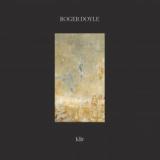
Allchival present their second look at the music of Roger Doyle and Operating Theatre (a little known proto synth-pop act and experimental theatre group that he led.)
In reverse chronological order the second disc contains music from the United Dairies release of 1979 – ‘Rapid Eye Movements’. Experimental tape work heavily influenced by the French school of music concretists and recorded at various points during the 70s in Finland, Holland and Ireland, although it is most certainly a Roger Doyle solo record the label ran by Nurses With Wounds John Fothergill decided to release it under the group name for reasons now lost to the fog of time.
After this a volte-face towards a more accessible sound, coming via his friendship with future Hollywood actress Olwen Fouéré and her connection to the theatre. It also featured the vocals of a young Spanish immigrant Elena López- bucking the 80’s trend by moving to rather than from Dublin. With Fouéré adding the theatrical element to the group (an almost essential part of any early 80s synth act) alongside pulsing synths, brass, a vocoder and the electro acoustic production talents of Doyle himself, it was the first time a Fairlight sampler was used in an Irish studio setting and gives a prescient but alternative take on the new wave sound that came to dominate the charts soon after.
Doyle’s work on the newly released Fairlight sampler had brought him to the attention of U2’s Bono who had seen a feature about his sampling experimentations and reached out to him for piano lessons. This led to a deal on the bands embryonic Mother records for what Doyle calls his first “popular song” - Queen of No Heart - which alongside “Spring is Coming” made up the backbone of the EP which was released some years later (1986) on the Mother Records label. Established by U2 in 1984 and initially intended to launch Irish bands, many of the acts – including this one – were subsequently unhappy about the label’s haphazard approach to releases and lack of promotion. The record was released as a die cut 7 inch with the two main tracks and a 12 inch EP with additional tracks – ‘Part of My Make-Up’ / ‘Atlantean’ / ‘Satanasa’. The Mother experience was for Doyle and the rest of the group a frustrating one with no promotional plan and no tour. After that Operating Theatre as a quasi pop project ‘just kind of fizzled out’ says Doyle.
Doyle, the musical maverick at the heart of the act, continues to produce to this day and has released 30 albums. A frequent collaborator we round out the record with a remix from another Irish outsider - Morgan Buckley of the Wah Wah Wino fame.
Cerca:operating theatre
- 1
- A1: Full Blood Count Analyzer
- A2: Automated Instrument Rinse System
- A3: Mri Scanner
- A4: Anaesthetic Machine
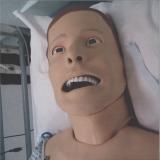
- A5: Meti Human Patient Simulator - Mannequin Breathing
- A6: Simman Essential Mannequin
- A7: Cardiac Monitor
- A8: Lee Silverman Voice Treatment
- A9: Haemoglobin A1C Analyzer
- A10: Anaesthetic Machine 2
- A11: Infusion Pump (Alaris Plus)
- A12: Heater Fan
- A13: Phacoemulsifier – Suction And Ultrasound During Cataract Surgery (Two Perspectives)
- A14: Robotic Pharmacy - Manually Restocking Supplies
- A15: Ct Scanner
- A16: Pharmacy Label Printer
- A17: Dialysis Machine
- A18: Draeger Oxylog 3000 Plus
- B1: Meti Human Patient Simulator – Powering Up Of Bellows That Control Mannequin&Apos;S Artificial Lungs
- B2: Orthopantomograph Op 2000
- B3: Helium Cooler For Mri Scanner
- B4: Coagulation Analyzer
- B5: Meti Hps Mannequin
- B6: Ophthalmology
- B7: Sysmex Sp1000I Automated Slide-Maker
- B8: Agv (Automatic Guided Vehicle)
- B9: Ultrasound Scanner
- B10: Operating Theatre
- B11: Beckman Coulter Access 2 Analyzer
- B12: Geiger Counter (Berthold L4)
- B13: Automated Mailroom (Opex Mail Matrix)
- B14: Wall Mounted Suction Unit
- B15: Dialysis Machine 2
Tape[13,66 €]
Death Is Not The End reissue Mark Vernon's sought-after 2013 collection Sounds of a Modern Hospital on vinyl & cassette formats.
Whilst every effort has been made to record the subject in as great a degree of isolation as possible, the sound recordings you will hear on this record were made in a real working hospital and not under controlled conditions. Therefore, on occasion, you may hear some unavoidable background noise, conversations and other extraneous sounds.
All recordings were made by Mark Vernon at Forth Valley Royal Hospital, Larbert, Stirling Community Hospital and Falkirk Community Hospital between 2011 and 2013.
- 01: Full Blood Count Analyzer
- 02: Automated Instrument Rinse System
- 03: Mri Scanner
- 04: Anaesthetic Machine
- 05: Meti Human Patient Simulator - Mannequin Breathing
- 06: Simman Essential Mannequin
- 07: Cardiac Monitor
- 08: Lee Silverman Voice Treatment
- 09: Haemoglobin A1C Analyzer
- 10: Anaesthetic Machine 2
- 11: Infusion Pump (Alaris Plus)
- 12: Heater Fan
- 13: Phacoemulsifier – Suction And Ultrasound During Cataract Surgery (Two Perspectives)
- 14: Robotic Pharmacy - Manually Restocking Supplies
- 15: Ct Scanner
- 16: Pharmacy Label Printer
- 17: Dialysis Machine
- 18: Draeger Oxylog 3000 Plus
- 19: Meti Human Patient Simulator – Powering Up Of Bellows That Control Mannequin&Apos;S Artificial Lungs
- 20: Orthopantomograph Op 00
- 21: Helium Cooler For Mri Scanner
- 22: Coagulation Analyzer
- 23: Meti Hps Mannequin
- 24: Ophthalmology
- 27: Ultrasound Scanner
- 28: Operating Theatre
- 29: Beckman Coulter Access 2 Analyzer
- 30: Geiger Counter (Berthold Lb124)
- 31: Automated Mailroom (Opex Mail Matrix)
- 32: Wall Mounted Suction Unit
- 33: Dialysis Machine 2
- 25: Sysmex Sp1000I Automated Slide-Maker
- 26: Agv (Automatic Guided Vehicle)
Vinyl[22,48 €]
Death Is Not The End reissue Mark Vernon's sought-after 2013 collection Sounds of a Modern Hospital on vinyl & cassette formats.
Whilst every effort has been made to record the subject in as great a degree of isolation as possible, the sound recordings you will hear on this record were made in a real working hospital and not under controlled conditions. Therefore, on occasion, you may hear some unavoidable background noise, conversations and other extraneous sounds.
All recordings were made by Mark Vernon at Forth Valley Royal Hospital, Larbert, Stirling Community Hospital and Falkirk Community Hospital between 2011 and 2013.
Matias Aguayo drops debut single on Rekids‘El Internet’ is a prelude to the Coméme founder’ upcoming album on the label. Chile’s Matias Aguayo debuts on Rekids with ‘El Internet’, the first single of his upcoming album on Radio Slave’s acclaimed label. Coméme co-founder Aguayo’s ‘El Internet’ is a dancefloor-tested, pumping and uptempo track with personal, intimate vocals phoning in.
“El Internet” tells about walking through the city in hot summer nights looking for the perfect dancefloor and about moments in life where you feel (musical) freedom and change, revolutions in music and dreams in community, about YouTube, MySpace, Fotolog and about people who dance in their houses, yards and on the streets to primitive, raw, and direct music (like the rhythm of the track itself).” - Matias Aguayo
Chilean-born musician and DJ Matias Aguayo has been active for three decades, co-founding the Cómeme label in 2009 and releasing work on the likes of Kompakt, Pschent, Hard Fist, and Permanent Vacation. Beyond music, he has organised underground parties and led social projects, including a theatre production at Le Châtelet in Paris.
Radio Slave’s Rekids was founded in 2006 and has since spawned successful offshoots with the Techno-focused Rekids Special Projects in 2017 and its newest sublabel, REK’D, in 2024. With Matt Edwards as the sole A&R, Rekids has been crucial in developing early artist careers and has become a haven for established acts operating in House and adjacent genres, having recently featured the likes of Hilit Kolet, William Kiss, Tal Fussman, Tiger Stripes, Harry Rimero, The Hacker, Sean Johnston, and many more.
Gatefold Sleeve / 180g Vinyl
Returning to the well of Roger Doyle once again, his “Babel” project spans a decade of composition work before its’ initial release in 1999 as a 5CD set. Over 100 pieces and almost 50 collaborators it marks a journey through a virtual tower of Babel with each piece corresponding to a room within an imagined giant tower city. For the 25th Anniversary vinyl edition Doyle has revisited it- remastering it and providing its first vinyl edit - 80 minutes spread across two 180gm LP’s - rounding out the package with extended liner notes and a download code to the full 6 hours.
We’ve previously explored Roger’s Operating Theatre days and the idea for this project came in the early nineteen eighties while Doyle was heavily involved with the experimental theatre group. Working with emerging technologies and across a variety of genres he realised that he would be unlikely to achieve an overarching compositional style. Instead deciding to make a virtue out of the fact that he composed so schizophrenically, he wished to create a musical alphabet out of short abstract sounds with these sounds being analogous to phonemes in speech. With Blade Runner and sci-fi embedded in the zeitgeist of the times he came to the idea of the Tower of Babel as both a futuristic skyscraper and also an embodiment of language.
In the spring of 1990 Babel was finally begun and kept growing until it reached over 6 hours of music and was released in 1999.A large-scale musical structure making use of many technologies and music languages, with each piece of music being thought of as a 'room' or place within an enormous tower city. Each track in the main section corresponds to a virtual sonic architecture. The pieces are divided into two kinds: aural representations of actual spaces like The Dressing Room, The Stairwell and Mr. Brady's Room alongside internalised dream spaces like the Room Of Rhetoric, the Spirit Levels and the Mansard childhood memory room. Listeners can navigate their way differently through this virtual building at each hearing. As a supplement to the Babel Tower KBBL - the fictitious radio station – broadcasts a number of shows. Each has its own style and atmosphere. Collaborating with DJs, actors, writers and singers, KBBL is made to sound like a real radio station with ads, traffic reports and phone-ins.
Examples of the connections within the project can be found via the architecture were the saxophonist in the off-stage dressing room is rehearsing for her solo in the concert-hall (heard in Pagoda Charm) or the room off the stairwell, where the sounds of piano lessons and apartment life can be heard and the apartment where a muffled KBBL can be overheard At a molecular level The Iron Language Alphabet is a sound alphabet containing tiny fragments of sound representing letters or characters of an alien alphabet. This sound alphabet can be heard scattered through other pieces like The Room of Rhetoric, Pagoda Charm and in KBBL in Johnny’s Body at 002. Other molecular scatterings can be found in Cantilena where two songs sung by Operating Theatre’s Elena Lopez in KBBL are exploded and re-arranged to form new entities.
Doyle’s Babel celebrates language - a slight variation on the Biblical morality tale - and musical expression in all its variety.
The electronic music producer and DJ whose catalogue of collaborations namechecks acts as diverse as Agoria, Green Velvet, Roman Flugel to Nitzer Ebb, Depeche Mode and David Holmes is set to release his 6th studio album The Strand Cinema on the 24th March on his own label PKR.
The last five years have seen an evolutionary shift for the electronic musician, undertaking more soundtrack work, including for film (Nightride on Netflix, Rough), radio (The Northern Bank Job BBC R4) and theatre (East Belfast Boy).
The Strand Cinema album is a tribute to the art deco cinema building , The Strand, where Phil’s recording studio is. A stirring and beautiful record, it seamlessly traverses the worlds of contemporary classical to beautifully elevated dance music with a recognisably cinematic influence. Managing to sound both grand and expansive, as well as minimal and introspective – it’s a record that explores the macro and the micro.
The opening track “Strand Cinema”, begins with a steady, gentle, looping pulse, almost recalling the kosmische ripples of Cluster, before sweeping and enveloping strings enter, resulting in a track that manages to sound both grandiose and tender in one fell swoop.
Lead single “Atlantic” perhaps most perfectly encapsulates the various sonic worlds that Kieran is operating in, merging a bordering on euphoric dance beat layered with infectious melodies, while remaining anchored to organic sounds, as strings and percussion collide with the driving and hypnotic groove of the track.
“Strike the Match” showcases Kieran’s talents for detail, in a track that feels almost palpably textural and rich in complexity but without feeling overly busy or superfluous; while “Elephant in Castle” utilises intense, almost gargling electronics, that drone with a foreboding and ominous tone, but also produces fractured moments of light, beauty and poignancy.
Created during Covid Kieran’s method was “To literally be like a tuning fork and ask: What's in my chest? If I were to describe what's inside me, and what's going on in the outside world, If I had to score that in a film, what would it sound like right now? I guess I sort of soundtracked my own life”
“One positive side of lockdowns was that we spent more time in natural surroundings where I’d make field recordings. I’d also record acoustic sounds: cello, violin, percussion, guitar etc and then create my own sample bank from all these single one-note sounds. So, creating your own loops and drones. The album was created from organic sounds manipulated by machines; melted, mangled and hacked with computers but machines only sound as good as the human spirit put into them.
The idea of nature and humans versus technology is the concept behind the album’s A/V show which debuts in Belfast in March before touring. Featuring works by 11 artists from across the worlds of film, animation, advertising, architecture, computer science and dance such as Scottish BAFTA nominated Simone Smith, LA based director Frederico Marzio Vitetta who is famous for skateboarding films like ‘Wet Dream’ with Spike Jonze, to futuristic CGI from BAFTA nominated Kris Kelly and a video from contemporary dancer Oona Doherty. onscreen visualisations that explores The visuals explore nature and technology along a timeline from past, present to future with cinema as a loose reference point with varying degrees of utopian versus dystopian moods.
Felicia Atkinson’s music always puts the listener somewhere in particular. There are two categories of place that are important to »Image Langage«: the house and the landscape. Inside and outside, different ways of orienting a body towards the world. They are in dialogue, insofar as in the places Atkinson made this record—Leman Lake, during a residency at La Becque in Switzerland, and at her home on the wild coast of Normandy—the landscape is what is waiting for you when you leave the house, and vice-versa. Each threatens—or is it offers, kindly, even promises? —to dissolve the other. Recognizing the normalization of home studios these days, she revisited twentieth-century women artists who variously chose, and were chosen by, their homes as a place to work: the desert retreats of Agnes Martin and Georgia O’Keefe, the life and death of Sylvia Plath. Building a record is like building a house: a structure in which one can encounter oneself, each room a song with its own function in the project of everyday life.
At times listening to »Image Langage« is immediate, something like visiting a house by the sea, sharing the same ground, being invited to witness Atkinson’s acts of seeing, hearing, and reading in a sonic double of the places they occurred. In an aching moment of clarity in »The Lake is Speaking,« a pair of voices emerge out of the primordial murk of piano and organ, accompanying the listener to the edge of a reflective pool that makes a mirror of the cosmos. "I open my feet to fresh dirt, and the wet grass. I hold your hand. You hold his hand. In the distance without any distance. The comets, the stars." At other times, listening to »Image Langage« is more like being in a theatre, the composition a tangle of flickering forms and media that illuminate as best they can the darkness from which we experience it. On »Pieces of Sylvia,« a noirish orchestra drones and clatters beneath and around a montage of vocal images, stretching the listener across time, space, subjectivities. Atkinson says that "Image Langage" is like the fake title of a fake Godard film. There is indeed something cinematic about Atkinson’s work—not cinematic in the sense that it sounds like the score for someone else’s film, but cinematic in the sense that it produces its own images and langage and narratives, a kind of deliberate, dimensional world-building in sound.
»Image Langage« is built from instruments recorded as if field recordings, sound-images of instruments conjured from a keyboard, instruments Atkinson treats like characters, what she calls “a fantasy of an orchestra that doesn’t exist.” And then, speaking of Godard, there are the monologues, operating as both experimental-cinematic device and a literary style of narration. Voice can be a writerly anchor or a wisp of a textural presence. Atkinson’s capacious and slippery speech plunges into and out of the compositional depths, shifting shapes, channelling the voices of any number of beings, subjectivities, or elements of her surroundings—not unlike her midi keyboard, able to speak as a vast array of instruments.
»Image Langage« is an environmental record, in the vastest sense of the world. It is about getting lost in places imagined and real; it registers, too, the dizzying feeling of moving between such sites. It puts forth a concept of self that is hopelessly entangled with the rest of the world, born of both the ache of distance and the warmth of proximity.
For Félicia Atkinson, human voices inhabit an ecology alongside and within many other things that don’t speak, in the conventional sense: landscapes, images, books, memories, ideas. The French electro-acoustic composer and visual artist makes music that animates these other possible voices in conversation with her own, collaging field recording, MIDI instrumentation, and snippets of essayistic langage in both French and English. Her own voice, always shifting to make space, might whisper from the corner or assume another character’s tone. Atkinson uses composing as a way to process imaginative and creative life, frequently engaging with the work of visual artists, filmmakers, and novelists. Her layered compositions tell stories that alternately stretch and fold time and place, stories in which she is the narrator but not the protagonist.
resh imprint Caldeira open their account with the first vinyl retrospective of Swiss composer Louis Crelier, whose FM sorcery and LinnDrum drama takes the listener away to an imaginary Africa.
Standing proud amid the sound waves, Caldeira emerges with a singular mission; to bring us music with hidden depth. Whether it’s a reissue or retrospective, archival or original, each release reflects the Michelin-grade tastebuds of label founder Camille Bertin AKA Plastic Bamboo.
Operating out of the shadow of Les Puces, the Saint-Ouen digger, DJ and producer has turned those in the know onto a wealth of zouk, boogie, proto-house and Balearic bombs over the past couple of years, but it seems he’s saved something truly special for this first release.
Rich with FM synthesis, infectious rhythms and evocative motifs, Rester Partir transports us to a fantasised Africa, found onstage at a Lausanne Theatre in 1985. Scoring a story about a 19th Century French missionary’s trip to Timbuktu, Swiss composer Louis Crelier created his own sonic landscape, capturing the exoticism and otherness of an imaginary Mali. Though the hypnotic rhythms and cascading mallets conjure images of the continent, the queasy keys, dubby idents and synthetic sonatas suggest something more interplanetary - picture James T. Kirk and Spock beaming down into the ochre dust of a ruined city.
Aided and abetted by a selection of ambient interludes, jazzy diversions and polyrhythmic excerpts from Crelier’s film work, as well as the exceptionally Balearic Deep In The Dale from TV series Alpine Academy, the largely unreleased compositions on Rester Partir finally break the fourth wall to find the wider audience they deserve.
Words by Patrick Ryder
Jac Berrocal, David Fenech and Vincent Epplay return with Ice Exposure, their second album for Blackest Ever Black. A sequel and companion piece of sorts to 2015's Antigravity, its title couldn't be more apt: sonically it is both colder, and more exposed - in the sense of rawer, more volatile, more vulnerable - than its predecessor, capturing the combustible energy and barely suppressed violence of the trio's celebrated live performances with aspects of noir jazz, musique concrète, no wave art-rock, sound poetry and spectral electronics all interpenetrating in unpredictable and exhilarating ways. While there are moments of great sensitivity and even a cautious romanticism, the prevailing mood is one of anxiety, paranoia, and mounting psychodrama: close your eyes and Ice Exposure feels like a dissociative Hörspiel broadcasting from the seedy backstreets of your own troubled mind. Before he picks up an instrument or opens his mouth, Berrocal's unique and compelling presence can be felt: a combination of studied, glacial cool and anarchic, in-the-moment intensity that has served him well over a long and storied career. It was honed during his time as a theatre and film actor, and in the 70s Paris improv scene, it powered his influential Catalogue group in the 1970s, numerous seminal, sui generis solo sides, and far-sighted collaborations with the likes of Nurse With Wound, Lol Coxhill, Pascal Comelade and James Chance which have seen him come to be valorised by two generations of avant-garde agitators and eccentrics. Now in his eighth decade, it comes with an added gravitas, perhaps, but no less energy or vitality. On Ice Exposure, his lyrical, instantly recognisable trumpet playing is a key feature - see especially the ghostly, dubwise take on Ornette's 'Lonely Woman', the dissolute exotica of 'Salta Girls', and the sublime echo-chamber soliloquy 'Opportunity'. But more often it's his voice that commands centre-stage, whether casually discharging surreal poetic monologues or moaning in animal despair - a vocal tour de force that transcends language and culminates in the Dionysian frenzy of 'Why', Berrocal's half-spoken, half-howled exclamations jostling with David Fenech's slashes of dissonant guitar, over Badalamenti-ish, panther-stalk drums. Fenech's origins are in the mail-art scene of the early '90s, when he led the Peu Importe collective in Grenoble, and since then, in addition to his own recordings he has worked as a software developer at IRCAM and played with Jad Fair, Rhys Chatham and many others. Together with Vincent Epplay he is responsible for Ice Exposure's inspired arrangements and vivid, vertiginous sound design. Epplay is a visual artist and composer with particular interest in aleatory composition, concrete, and the reappropriation of vintage sound and film material. He and Fenech fashion a remarkable mise-en-scene for Berrocal to inhabit, one that embraces cutting-edge electronics while also paying homage to the best traditions of outlaw jazz and libidinous rock'n'roll ('Soundcheck' invokes the brutish spirit of Berrocal's hero Vince 'Rock N Roll Station' Taylor). On 'Blanche de Blanc', Berrocal's voice is framed by a groaning, ghoulish orchestra of industrial drones, while 'Equivoque' evokes the most humid and hostile Fourth World landscapes and 'Panic In Surabaya' lives up to its name, a hectic, pulse-quickening concrète collage that leaves you gasping for air. This is a searching and singular trio operating at the absolute peak of their powers, with an interplay that transcends studio and stage and occurs at an almost telepathic level. Ice Exposure is a triumph of that group mind, an underworld dérive as life-affirming as it is unnerving and psychologically precarious.
Panic In Surabaya
Tokyo based DJ/Producer Tsuyoshi Ogawa presents "Seven Samurai" is vinyl-only label has been founded in 2018 and operating in Tokyo, Japan. It pays tribute to the Japanese legendary movie director 'Akira Kurosawa'. This 3rd EP inspired by his movie "Ran' that well known Japan/ French co-production movie. To follow the tradition, this EP featuring French producer Vida from Paris. His deep and spiritual three tracks bring us the Japanese traditional theatre forms called "Noh and Kyogen" and It feels like the main character of the movie who thrown into darkness and madness. This reconstructed Japan/French co-production EP is dedicated to Akira Kurosawa as a new spiritual soundtrack for Ran
- 1