The prolific and versatile Ian Martin arrives on Shipwrec with four tracks that make up Future Dawn. Cosmic Garden opens. A piece that blurs genre lines; soft synth-lines are coupled with ruffled rhythms that immerse the listener in gentle orchestral ebbs and flows. Sounds of isolation introduce Future Dawn, modulations reaching over an ever-widening expanse before strings descend. Drums arrive late in this atmospheric journey, one that pulses with a primal energy while conjuring vivid images. The ominously titled Dead Calm opens the flip. Soundtracks have always been an inspiration for Martin and the scores of the silver screen are at the forefront of this work. Brittle beat patterns are the bedrock on which melodies whirl - a bitter acid bass bubbling as tension builds to paranoic peaks. Darker skies loom with the marine chop of Phantom Machine finishing. A flotsam and jetsam of hi hats swirl in the liquid undulations of distorted bass and aquatic echoes, rougher rusted rhythms providing ballast to the eddies and maelstrom of Martin's machines.
quête:orchestral
Lapell's deft lyrics jostle with love song tropes, grappling with love's finitude and the irony of how codependency and longing are revered in popular music. A ghost story is woven through the album: waltzing in the dusty barroom country of "Blue Blaze," buried in the superstitious lyrical streak of "Rattlesnake" and audible in a wheezing organ as it shuts down at the end of "Footsteps."
Still, "Anniversary" emerges as an earnest celebration of commitment. Earworms like "Anniversary Song" and "Someone Like You" showcase intricately layered harmonies, while closer "Stars" affirms that there's no place the speaker would rather be than with the one she loves. Dekker and Lapell assembled a stellar cast of musicians to support Lapell's powerhouse vocals, piano, harmonica and signature fingerstyle guitar.
The core band includes Dan Fortin on bass, Jake Oelrichs on drums, and Tania Gill on the church's piano, harpsichord and organ. Rounding out the ensemble's sensitive orchestral arrangements are Rebecca Hennessy (trumpet), Rachael Cardiello (viola), Michael Davidson (marimba and vibraphone) and Joe Lapinsky (pedal steel), who also engineered and mixed the record. Abigail Lapell has garnered three Canadian Folk Music Awards, hit number one on Canadian folk radio and reached a staggering 40 million + streams across digital services. She has toured widely across Canada and the U.S, and will be touring internationally (UK, EU, AUS and more) in 2024.
Warehouse Find! Test Pressing!
Time for one of Freerange's longest standing regular producers to return to the label for his first EP in three years. The Stepping Tones EP is absolutely classic Shur-I-Kan from start to finish with two original tracks plus a remix from the very excellent Berlin newcomers Kim Brown.
The title track opens with a big, bold, bouncing bassline and driving groove but as we hear the arrangement unfold the layers of keys build and drop bringing the trademark Shur-I-Kan musicality and energy to the track. In our opinion this is one of his strongest tracks yet and we're pretty sure this will be a firm favorite this summer, set to be heard everywhere from Croatian boat parties to Dalston basements and beyond.
Up next we have Kim Brown with their remix of Stepping Tones and what a job! The Berlin duo have made a big impact the last couple of years with their incredibly deep and beautiful Spring Theory and People's Republic releases on Just Another Beat. Completely sublime downbeat deep house is the key here, owing as much to ambient and orchestral music as to the rough and raw lo-slung club beats we're hearing from labels such as Dial and Smallville. Their remix brings rugged drums, dubby keys and lush strings to the fore with the addition of a twisted, filtering vocal enhancing the warm glowing sunrise vibe which emanates from this track.
Conundrum closes the EP with another deep, jazzy and cinematic Shur-I-Kan masterpiece and once again he layers up the textures and harmonic elements slowly and expertly, introducing the little hooks over time until before you know it you're bathed in a warm shower of lushness with tingles running down your spine.
Duke Ellington's oeuvre - his compositions, his orchestral pieces, the diversity of his work and his piano playing - proved to be the ideal starting point for the duo's playing adventures.
Ellington becomes a common point of reference. Even more than the sheet music, it is about his spirit, which inspired Charles Mingus to write one of his most beautiful pieces - a piece whose title can also be read as the title of these duo recordings: "Duke Ellington's Sound of Love".
"Star Wars Stories is a collection of the most famous melodies & fan favourite tracks from the recent Star Wars Universe including The Mandalorian, Solo: A Star Wars Story and Rogue One. This compilation features main themes, epic orchestral tracks and emotional songs, paying tribute to the originals John Williams, Ludwig Göransson, John Powell, Anthony Williams & Michael Giacchino. This project is a follow-up to the 2019 release Music From The Star Wars Saga – the essential collection, a compilation of music from the Star Wars films. Included are the most famous melodies & fan favourite tracks from the hugely popular tv series, paying tribute to Ludwig Göranssons’ work. This includes musical highlights from the series ranging from the infamous main theme to epic orchestral tracks & character pieces for Boba Fett & Luke Skywalker. From Solo: A Star Wars Story, this tribute to John Williams & John Powell’s 2018 album features action-loaded orchestral musical highlights from the film and themes for the beloved characters Han Solo and Chewbacca. Star Wars Stories is available as a limited edition of 1000 individually numbered copies on ""Hyperspace"" coloured vinyl. This 2LP-set is housed in a gatefold sleeve, includes an insert, and features secret inscriptions in the run-out grooves.
"
Star Wars Stories by Various Artists, released 2 May 2024, includes the following tracks: "Luke Skywalker Hallway Theme", "End Theme", "Flying With Chewie", "The Adventures Of Han" and more.
This version of Star Wars Stories comes as a 2xLP in a(n) Gatefold Sleeve packaging. This release comes with (a) Insert(s).
The vinyl is pressed as a marble, blue & white & black disc. Another vinyl is pressed as a marble, blue & white & black disc.
- Star Wars: Main Title
- Duel Of The Fates
- Anakin S Theme
- Across The Stars (Love Theme)
- Battle Of The Heroes
- Princess Leia S Theme
- The Throne Room / End Title
- The Asteroid Field
- Yoda S Theme
- The Imperial March
- Han Solo And The Princess
- Parade Of The Ewoks
- Luke & Leia
- The Forest Battle
- Rey S Theme
- March Of The Resistance
- Ahch-To Island
- The Battle Of Crait
"Music From The Star Wars Saga – The Essential Collection is an orchestral music compilation including tracks from Star Wars: Episode I – The Phantom Menace until Star Wars: Episode VIII – The Last Jedi. On the occasion of the release of the final episode of the nine-part Star Wars saga: The Rise Of Skywalker, all songs are re-recorded by Robert Ziegler, alongside the Slovak National Symphony Orchestra and members of the Slovak Philharmonic Choir. These includes the iconic “Main Title” composition, “Duel Of The Fates”, “Yoda’s Theme” and “The Imperial March”. Music From The Star Wars Saga – The Essential Collection is available as a limited edition of 1000 individually numbered copies on red coloured vinyl. Music From The Star Wars Saga – The Essential Collection is an orchestral music compilation including tracks from Star Wars: Episode I – The Phantom Menace until Star Wars: Episode VIII – The Last Jedi. On the occasion of the release of the final episode of the nine-part Star Wars saga: The Rise Of Skywalker, all songs are re-recorded by Robert Ziegler, alongside the Slovak National Symphony Orchestra and members of the Slovak Philharmonic Choir. These includes the iconic “Main Title” composition, “Duel Of The Fates”, “Yoda’s Theme” and “The Imperial March”. Music From The Star Wars Saga – The Essential Collection is available as a limited edition of 1000 individually numbered copies on red coloured vinyl. This 2LP is housed in a gatefold sleeve and includes an insert. "
Music From The Star Wars Saga by Robert Ziegler, released 3 May 2024, includes the following tracks: "Anakin’s Theme", "Battle Of The Heroes", "The Throne Room / End Title" and more.
This version of Music From The Star Wars Saga comes as a 2xLP in a(n) Gatefold Sleeve packaging. This release comes with (a) Insert(s).
- Star Wars: Main Title
- Duel Of The Fates
- Anakin's Theme
- Across The Stars (Love Theme)
- Battle Of The Heroes
- Princess Leia's Theme
- The Throne Room / End Title
- The Asteroid Field
- Yoda's Theme
- The Imperial March
- Han Solo And The Princess
- Parade Of The Ewoks
- Luke & Leia
- The Forest Battle
- Rey's Theme
- March Of The Resistance
- Ahch-To Island
- The Battle Of Crait
"Music From The Star Wars Saga – The Essential Collection is an orchestral music compilation including tracks from Star Wars: Episode I – The Phantom Menace until Star Wars: Episode VIII – The Last Jedi. On the occasion of the release of the final episode of the nine-part Star Wars saga: The Rise Of Skywalker, all songs are re-recorded by Robert Ziegler, alongside the Slovak National Symphony Orchestra and members of the Slovak Philharmonic Choir. These includes the iconic “Main Title” composition, “Duel Of The Fates”, “Yoda’s Theme” and “The Imperial March”. Music From The Star Wars Saga – The Essential Collection is available as a limited edition of 1000 individually numbered copies on red coloured vinyl. Music From The Star Wars Saga – The Essential Collection is an orchestral music compilation including tracks from Star Wars: Episode I – The Phantom Menace until Star Wars: Episode VIII – The Last Jedi. On the occasion of the release of the final episode of the nine-part Star Wars saga: The Rise Of Skywalker, all songs are re-recorded by Robert Ziegler, alongside the Slovak National Symphony Orchestra and members of the Slovak Philharmonic Choir. These includes the iconic “Main Title” composition, “Duel Of The Fates”, “Yoda’s Theme” and “The Imperial March”. Music From The Star Wars Saga – The Essential Collection is available as a limited edition of 1000 individually numbered copies on red coloured vinyl. This 2LP is housed in a gatefold sleeve and includes an insert. "
Music From The Star Wars Saga by Robert Ziegler, released 3 May 2024, includes the following tracks: "Anakin’s Theme", "Battle Of The Heroes", "The Throne Room / End Title" and more.
This version of Music From The Star Wars Saga comes as a 2xLP in a(n) Gatefold Sleeve packaging. This release comes with (a) Insert(s).
The vinyl is pressed as a red disc. Another vinyl is pressed as a red disc.
Fünf Jahre nach Jessica Pratt's 2019 erschienenen Durchbruch-Album "Quiet Signs", taucht sie mit neuen Ambitionen und neuen Parametern für ihre Musik wieder auf. Für ihr neues, viertes Album "Here in the Pitch" arbeitete sie erneut in Gary's Electric Studio in Brooklyn und mit ihrem bewährten Team: Multi-Instrumentalist/Engineer Al Carlson und Keyboarder Matt McDermott.
Zusätzlich holte sie sich das Rhythmus-Duo Spencer Zahn und Mauro Refosco (David Byrne, Atoms for Peace) an die Seite, weitere Beiträge auf dem Album kommen von Ryley Walker, Peter Mudge (Mac Miller, Kendrick Lamar) und Alex Goldberg. Die Musik ist intim und emotional, wie es die Fans erwarten und die Texte sind ein impressionistischer Lobgesang auf die Unwägbarkeiten des Ehrgeizes. In den letzten 12 Jahren hat sich die verehrte Künstlerin aus Los Angeles zu einer der einzigartigsten Songwriterinnen ihrer Generation entwickelt. Vor allem durch die mystische, schwer fassbare Mischung aus ihrer zarten Akustikgitarre und ihrem atemberaubenden Gesang. Für "Here in the Pitch" schwebte Jessica Pratt eine größere Bandbreite an Einflüssen vor - große Panoramaklänge, die an den Ozean und Kalifornien denken lassen - und in diesen neun Songs werden Pauken, Glockenspiel, Baritonsaxophon und Flöte mit robusten Gesangsarrangements überlagert, die eine triumphale Stimmung erzeugen, selbst wenn die Texte auf Verwüstung hindeuten. Diese breitere Produktionspalette wird sofort beim eindringlichen Album-Opener und der ersten Single "Life Is" deutlich. Ein Schlagzeugwirbel erinnert an den großen, orchestralen Stil von 60er-Jahre-Pop-Hits wie "The Sun Ain't Gonna Shine Anymore" von den Walker Brothers.
Red Vinyl[26,26 €]
Deluxe edition Tan and Black Marble Vinyl[28,36 €]
Cassette[14,50 €]
It's been a decade since John Carpenter recorded the material that would become Lost Themes, his debut album of non-film music and the opening salvo in one of Hollywood's great second acts. Those vibrant, synth-driven songs, made in collaboration with his son Cody Carpenter and godson Daniel Davies, kickstarted a musical renaissance for the pioneering composer and director. In the years since, Carpenter, Carpenter, and Davies have released close to a dozen musical projects, including a growing library of studio albums and the scores for David Gordon Green's trilogy of Halloween reboots. With Lost Themes IV: Noir, they've struck gold again, this time mining the rich history of the film noir genre for inspiration. Since the first Lost Themes, John has referred to these compositions as "soundtracks for the movies in your mind." On the fourth installment in the series, those movies are noirs. Like the film genre they were influenced by, what makes these songs "noirish" is sometimes slippery and hard to define, and not merely reducible to a collection of tropes. The scores for the great American noir pictures were largely orchestral, while the Carpenters and Davies work off a sturdy synth-and-guitar backbone. The noir quality, then, is something you understand instinctively when you hear it, as in connected in an emotional way. The trio's free-flowing chemistry means Lost Themes IV: Noir runs like a well-oiled machine_the 1951 Jaguar XK120 Roadster from Kiss Me Deadly, perhaps, or the 1958 Plymouth Fury from John's own Christine. It's a chemistry that's helped power one of the most productive stretches of John's creative life, and Noir proves that it's nowhere near done yielding brilliant results.
Black Vinyl[24,79 €]
Deluxe edition Tan and Black Marble Vinyl[28,36 €]
Cassette[14,50 €]
It's been a decade since John Carpenter recorded the material that would become Lost Themes, his debut album of non-film music and the opening salvo in one of Hollywood's great second acts. Those vibrant, synth-driven songs, made in collaboration with his son Cody Carpenter and godson Daniel Davies, kickstarted a musical renaissance for the pioneering composer and director. In the years since, Carpenter, Carpenter, and Davies have released close to a dozen musical projects, including a growing library of studio albums and the scores for David Gordon Green's trilogy of Halloween reboots. With Lost Themes IV: Noir, they've struck gold again, this time mining the rich history of the film noir genre for inspiration. Since the first Lost Themes, John has referred to these compositions as "soundtracks for the movies in your mind." On the fourth installment in the series, those movies are noirs. Like the film genre they were influenced by, what makes these songs "noirish" is sometimes slippery and hard to define, and not merely reducible to a collection of tropes. The scores for the great American noir pictures were largely orchestral, while the Carpenters and Davies work off a sturdy synth-and-guitar backbone. The noir quality, then, is something you understand instinctively when you hear it, as in connected in an emotional way. The trio's free-flowing chemistry means Lost Themes IV: Noir runs like a well-oiled machine_the 1951 Jaguar XK120 Roadster from Kiss Me Deadly, perhaps, or the 1958 Plymouth Fury from John's own Christine. It's a chemistry that's helped power one of the most productive stretches of John's creative life, and Noir proves that it's nowhere near done yielding brilliant results.
This EP comes with printed sleeve, printed inners, a poster, Download Codes, stickerz...
The music is a clean speedcore flashcore sound... aethetic. Rolling and orchestral !
a A1 - Spastic Meditation Incantation Of The Subliminal Self
b A2 - Flashjazz [Epiphany Through Dissonance]
[The Path Of Conscious Death]
[a] A1 - Spastic Meditation [Incantation Of The Subliminal Self]
[b] A2 - Flashjazz [Epiphany Through Dissonance]
[The Path Of Conscious Death]
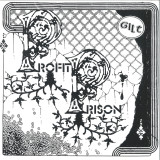
Four years and one pandemic after his latest Dreams Of A Dark Building EP, the herald of dungeon synth pop is finally back from his shallow grave.
Life has not been gentle with Seattle-based solo producer Parker Lautenschlager over the past few years, imposing its unpredictability and forcing him to channel all the feelings that come with it into Profit Prison’s music.
It’s no surprise that his first full-length album Gilt marks one futher step towards the dark corners of italo / hi-nrg body music. Typical Profit Prison’s vocals and melodies, reminiscent of OG synth masters Kraftwerk, Giorgio Moroder and Orchestral Manoeuvres in the Dark, are still here, buried in the mix and waiting to haunt the listeners and drag them down in one sulfurous dancing spiral.
Lead single Sophia juxtaposes some weirdly camouflaged vocals with one heavenly chorus that seems willing to revive your fortunes while instead it literally sings “But I lost it all”. A Matter Of Tact displays pop escapism over some throbbing minimal synth tension, Seven Words sounds like a throwback to 70’s italo filtered through the eyes of a 21st century punk rocker. Katalina has a rampant synth à la Carpenter climbing over a story of loss and Katalina, An Ascetic is a solo ramble reaching for the inner light on a carpet of cold keys.
What’s more, tracks got longer in Parker’s recent songwriting, with most of the songs being now five minute long and reaching peaks of seven minutes with the closing, almost progressive disco jam of A.R.P. (Amphetamine Research Project), nothing short of a lucid dream on the floor of Studio 54.
Last but not least, the artwork by French artist Robin Roche delivers medieval-yet-punk graphic vibes to match just perfectly the sounds on this record.
Four years and one pandemic after his latest Dreams Of A Dark Building EP, the herald of dungeon synth pop is finally back from his shallow grave.
Life has not been gentle with Seattle-based solo producer Parker Lautenschlager over the past few years, imposing its unpredictability and forcing him to channel all the feelings that come with it into Profit Prison’s music.
It’s no surprise that his first full-length album Gilt marks one futher step towards the dark corners of italo / hi-nrg body music. Typical Profit Prison’s vocals and melodies, reminiscent of OG synth masters Kraftwerk, Giorgio Moroder and Orchestral Manoeuvres in the Dark, are still here, buried in the mix and waiting to haunt the listeners and drag them down in one sulfurous dancing spiral.
Lead single Sophia juxtaposes some weirdly camouflaged vocals with one heavenly chorus that seems willing to revive your fortunes while instead it literally sings “But I lost it all”. A Matter Of Tact displays pop escapism over some throbbing minimal synth tension, Seven Words sounds like a throwback to 70’s italo filtered through the eyes of a 21st century punk rocker. Katalina has a rampant synth à la Carpenter climbing over a story of loss and Katalina, An Ascetic is a solo ramble reaching for the inner light on a carpet of cold keys.
What’s more, tracks got longer in Parker’s recent songwriting, with most of the songs being now five minute long and reaching peaks of seven minutes with the closing, almost progressive disco jam of A.R.P. (Amphetamine Research Project), nothing short of a lucid dream on the floor of Studio 54.
Last but not least, the artwork by French artist Robin Roche delivers medieval-yet-punk graphic vibes to match just perfectly the sounds on this record.
After 20 years of living on the road in different places, Six Organs of Admittance had returned home to Humboldt County - a far country, to some, but still part of the world through which creatures of all kinds are moving through and contributing to. And some of them are human. Alone together - forming connection and exchange out of thought and expression - no different from the people on the other side of the Redwood Curtain. It was there, where Six Organs had long ago emerged, in the name of everything cycling, of circles that spiral concentrically and remain unbroken, the new music was conceived. In moments, it was as if the future had somehow wrapped around 360 degrees; elsewhere, the systems and patterns inside the writing and recording only became evident later - like a recognition that cumulus and nimbus clouds which passed through the sky the day before contained familiar shapes. Informing the songs accordingly as he went, Ben picked up on modes both musical and lyrical, threading backward through the time of Six Organs of Admittance. Almost marinating in it as a way of life. Working on the music and the vocals, then spending some time with them while stepping away from them. Walking the dog and coming back to them Time is Glass is made of that kind of time. Alone time. Recorded in the visceral environs of home, Time is Glass is sharply focused, even as misty impressionist mountains float through the background. Sweet and spiny, "The Mission" sings its purpose, before turning abruptly to the orchestral rumble of "Hephaestus": rural industrial psychedelia, ecosystem goth, synths arcing to lift a helplessly earthbound community into the firmament above. Winding almost imperceptibly back into song with "Slip Away", the time of the record becomes clear, moves fluidly, relaxed but aware, from event to event. People and things coming around again. The intuit, passing through wormholes and time, sounding deep then dissolving into the universal. The acoustic sounds ringing, layered suddenly, then clear again. Explosions of a new kind of distortion. Ecstatic melodies. Communing. The space of a day. The space of a season. Time is Glass, and Six Organs of Admittance is here and will be here, again.
Mit "Under a timeless spell" hat sich Adrian Hates einen Traum erfüllt ... einmal ein Album mit einem Orchester aufnehmen! 35 Jahre nach der Gründung des Tagebuchs der Träume ist es nun also soweit: 9 Diary of Dreams Klassiker erklingen in völlig neuem akustischem Gewand, gemeinsam realisiert mit der Philharmonie Leipzig. Kein Keyboard und auch keine Gitarre hat hier Platz gefunden, dafür aber unglaublich überwältigende orchestrale Klangwelten, die Songs wie zum Beispiel "Malum" und "the Valley" eine völlig neue Tiefe und Tragweite verleihen. Überwältigt von dieser emotionalen Reise endet das Album ganz persönlich und ruhig mit einer Klavierversion von "the Secret". Nachdem dann der letzte Ton verklungen ist, fühlt man sich berührt, aufgefangen und umarmt und hofft leise auf eine Fortsetzung dieser neuen Welt.
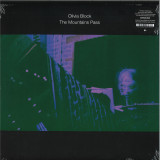
Black Truffle is pleased to announce The Mountains Pass, a major new work from Olivia Block. A key player in Chicago’s vibrant experimental music scene since the late 1990s, Block has developed an extensive body of work grounded in a personalised, at times emotive approach to the studio-based practices of the musique concrète tradition, while also encompassing improvisation, orchestral pieces, sound installations, and a sustained engagement with the piano. On The Mountains Pass, recorded by Greg Norman at Steve Albini’s Electrical Audio and meticulously edited and constructed over the course of three years, Block pushes into new terrain, introducing her singing voice and drums played by Jon Mueller into flowing assemblages that move seamlessly from ruminative organ tones and fragmented piano airs to explosions of sizzling synths and thundering percussion. Like many of Block’s past works, which include, for example, a sculptural installation using the sound of oyster beds, The Mountains Pass draws inspiration from nature and the animal world. Time spent in a particular mountain range in Northern New Mexico informs this suite of pieces, whose lyrics and titles refer particularly to animal life in the area. Beginning with bursts of white noise and delicate synthetic pops and squeaks, opener ‘Northward’ very soon reveals the special direction the album will take, as lyrical piano lines are joined by Block’s fragile voice, singing words written from the perspective of f2754, an endangered Mexican gray wolf who wandered more than five hundred miles from Arizona to New Mexico in 2022. The fragment of song quickly breaks off, leaving us with a ghostly electronic hum. ‘The Hermit’s Peak’ follows, one of two epic pieces at the album’s core. Beginning with chiming, almost harpsichord-like tones, it moves through episodes of spacious, ruminative piano, Jon Mueller’s sparkling cymbals, stuttering cut-up piano sounds, and a climax of keening organ and trumpet tones (performed by Thomas Madeja). Continuing the exploration of vintage keyboard and synth tones heard on Block’s Innocent Passage in the Territorial Sea (Room 40, 2021), the music sometimes suggests the great outer-limits works of 70s Italian prog figures like Franco Battiato or Arturo Stalteri in the languorous drift of synthesizer, organ, and piano tones and the meticulous yet organic flow of its construction. ‘Violet-Green’ opens the second side with another epic journey, its lyrical content concerning ‘a mysterious bird die-off and a forest fire’. Block’s crystalline voice and rich piano chords at times call up the restrained chamber songs of Janet Sherbourne, but fragmented and threaded through passages of woozy pitch-bent keyboards, hypnotic distant thuds, tinkling bells, and searing distorted synth tones. On ‘f2754’, the freedom of the roaming wolf surges through dense layers of rapid keyboard attacks and long organ tones over a propulsive drum performance straight out of Animal Magnetism-era Arnold Dreyblatt. This distinctive sound world is then reencountered in a darkened mirror image in the uneasy, metallic shimmer of the closing ‘Ungulates’, named in reference to a heard of elk roaming through the mountains. Like Battiato’s Clic or Gastr del Sol’s Upgrade & Afterlife, The Mountains Pass inhabits the underexplored terrain where the beauty of song coexists with a radical formal openness, illuminating the deep musicality and warmth that have been present in Block’s work all along.
Streng limitierte 'Yolk' LP Version des Kultalbums: Transparent vinyl with Orange 'Fireball'! Twilight Force wissen wirklich, wie man starke Melodien mit orchestralen Arrangements und schnellen Tempi kombiniert! Die Gruppe möchte ein intensives und erinnerungswürdiges Hörerlebnis schaffen; die Zuhörer in ein magisches Universum gefüllt mit Wundern, heldenhaften Erzählungen und bezaubernden, mystischen Welten entführen.
- Ltd. Col. LP: ('Yolk' LP/ Transparent vinyl with Orange 'Fireball')
. Legs Akimbo, the latest offering from the eclectic producer and DJ, Skwirl, released by Cold Busted, is a vibrant tapestry of sound that dances boldly across genres, much like its title suggests a stance of uninhibited exuberance. The album is a playground of audacious sounds and rhythms, each track splayed out with a creative audacity that's both refreshing and exhilarating. From the space-age funk of "Ur M8's Jetta," with its electrified beats and wisps of harp, to the orchestral cut-ups and synthetic soul of "Inside," Skwirl crafts a soundscape that is as diverse as it is cohesive. The album is an open invitation to experience the world through Skwirl's genre-agnostic squiggles, blips, and booms, where musical conventions are playfully disregarded. "We'll Be Here" encapsulates this ethos perfectly, blending a snazzy rhythm with snatches of jazz-infused flute, creating an ambiance akin to a midnight fog enveloping city streets. The music, much like the artist himself, is an amalgamation of varied influences and experiences, from teenage roots in the Atlanta suburbs to transformative encounters in Berlin's vibrant music scene. Each track on Legs Akimbo is a testament to Skwirl's unique approach to music-making, where disparate musical universes don't just meet; they dance together in perfect harmony