serenitatem, the fifteenth installment of FRKWYS, RVNG Intl.'s collaboration series pairing intergenerational artists in creative conversation, joins Visible Cloaks with Yoshio Ojima and Satsuki Shibano, two trailblazers of the Japanese avantgarde music and visual arts scenes of the 1980s and 90s.
Yoshio Ojima began his career as a composer of environmental and ambient music, with a particular interest, and optimism, in the possibilities of generative software. His compositional pursuit of human synthesis with computerized forms was realized in its fullest potential alongside Satsuki Shibano, a pianist renowned for her interpretations of Erik Satie and Claude Debussy. Together, they were among a handful of influential Japanese artists whose innovations still resonate, if not more vibrantly than ever, well beyond the tightly-knit scene's original core. In the early 90s, Ojima was among the programmers of the influential satellite radio experiment St. Giga, a constantly-evolving sonic landscape that combined field recordings and sound collage with occasional readings of Japanese poetry. Satsuki was a regular reader for the station. This musical terrarium bloomed out of sight in a small Tokyo studio, a greenhouse of sound with no set start or finish time that audiences could tune into, absorb, and immerse.
The perpetual flow state of St. Giga — recordings of which Ojima shared with Visible Cloaks — would be highly influential to serenitatem's constitution. As Visible Cloaks, the Portland, Oregon duo of Spencer Doran and Ryan Carlile have developed their own set of creative strategies that form an aesthetic fuse point between human intention, aleatoric composition, and improvisation.
These are notions most recently reflected in 2017's Reassemblage and Lex, a respective album and EP in which the duo combined generative software and virtual representations of global instruments into lacy, interlocking patterns. Long time admirers of Ojima's work on albums like 1988's Une Collection Des Chainons, Doran and Carlile discovered after an online introduction that they shared with Yoshio and Satsuki an abiding interest in pre-classical composers, the Lovely Music, Ltd. label, and the British avant-garde, as well as a mutual respect for one another's techniques and processes.
The four musicians met in Tokyo, Japan at Sounduno Studios in December 2017, at the tail end of Visible Cloaks' first Japanese tour, to commence work on serenitatem. Leading up to the studio sessions, Doran and Carlile sent Ojima processed sound sketches recorded while on a European tour, which Yoshio would add to and return. Visible Cloaks would then fold Yoshio's edits back into the original compositions, which Doran and Carlile brought to the exploratory recording session. During that week together in Tokyo, the quartet made use of a number of creative strategies — 'echoing sound together,' as Yoshio puts it. Among the strategies, MIDI randomization gave the quartet melodic lines and what Doran calls 'randomized clouds,' or 'tightly grouped notes that become smeared tonal clusters functioning more like chords in themselves.' Carlile would also feed Ojima and Satsuki's text into Wotja, a generative music software which produced a MIDI language around which the quartet expanded their compositions.
'The aim,' Doran says of serenitatem, 'was to make a work that was not specifically ambient (or environmental), but something more multi-hued, weaving these deconstructive concepts into an album that has a deeper architecture underpinning it.' Accordingly, serenitatem is a marvelously sharp record, its sutures between human and machine virtually impossible to find but suggested everywhere you turn. The collaboration among Ojima, Satsuki, and Visible Cloaks is both musically and conceptually inseparable from the technology that made it possible. Throughout the album, Shibano's playing resonates like Satie's, her rhythms cascading like drops from leaves an hour after the rain. Overtones are stretched and warped like modeling clay, then spun around and shown off from multiple angles.
A single soaring note might seem to be suddenly plunged underwater, its richness of sound made shallow and its sharp edges blunted. Pittering chimes and rapidly warping vocal samples hang in the luxuriously glossy space, water trickles from ear-toear, familiar melodies rise from nothing and dissolve before they can be traced. With the depth of its emotional charge, serenitatem burns away the easy cynicism of the day, presenting itself as the kind of delocalized work of art the internet promised us decades ago — a synthesis of artistic visions, technological sophistication, futurist ambition, and, occasionally, ancient polyphony. Listening to it can feel a bit like tuning in to a 21st Century version of St. Giga: It's a place where the future still grows.
Visible Cloaks, Yoshio Ojima, and Satsuki Shibano's serenitatem, FRKWYS Vol. 15, will be available across LP, CD, and digital formats on April 5, 2019. The quartet will perform select live shows throughout 2019.
Buscar:oregon
Portland, Oregon resident Mary Sutton's solo debut materialized in the wake of a performance she gave at a clothing-optional soaking-pool sauna: 'I had never composed for synth before but wanted to make something people sitting motionless and naked in hot bubbly water would want to hear.'
It was while in this headspace that she reconnected with Satie's entrancing cyclical motifs, particularly the way 'he subtly spins melodic fragments, and pivots harmonies and phrases so the repetitions feel new and surprising yet soothingly familiar, as if casting a spell.'
The nine intuitive instrumentals comprising The Deep End accomplish exactly that, threading complementary shades of soft-hued hypnosis, dazed modal introspection, icy amusement park reverie, and lunar lullaby into a prismatic suite of contemplative melody and synthetic communion.
Sutton's songs are active rather than ambient yet their structure is more suggestive than scripted, full of lulls, asymmetries, and daydreams. Each track was written specifically to be played live on an analog synthesizer, with no overdubs or post-production wizardry. The sound of Saloli is one of warm-blooded wiring, turned on and tapped into, emotive and electric, storied machines speaking through all too human hands.
- A1: David Stout - The Seven Rays
- A2: Phyllyp Vernacular - The Clinging
- A3: Peter Thomas - Shimmer
- A4: Peter Kardas - Other Playgrounds
- B1: Kim Carter - Energy
- B2: Nathan Griffith - Great Moves
- B3: Joel Horwitz - Finale From A Walk Down Serenity Lane
- B4: Michael Chocholak - Skomorokhi
- C1: Derryl Parsons - Floating Landscape (Including Chase Scene)
- C2: Scott Blair - Dance Pacific
- C3: Heather Perkins - Burning Through
- C4: Carl Juarez - Self-Regulation (Ii)
- C5: Talvé - The Ride
- D1: Kevin Courcey - Fallout
- D2: Suse Millemann - Patterns
- D3: Peter Nothnagle - New Snow
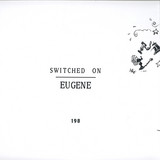
Switched-on Eugene Documents The Eugene Electronic Music Collective And Some Of The Many Synthed-out Figures In And Around Oregon's Iconic Hippie Stronghold During The 1980s. Whether Connected By Membership, Geography, Or The Tape Trading Scene, The Artists In And Around The Eemc Shared Compelling Visions Of The Future We Now Inhabit, Vividly Captured On Home-recorded Tapes And Distributed Via Zines, Classifieds, And Local Radio. Switched-on Eugene Is A Deep Dive Into A Heretofore Forgotten Sonic Microcosm Unlike Any Other.
On Respective Edges Of America — Oregon And Maine — Keith Kenniff Records Quiet Music At Night. 'when Things Are Calmer,' He Says. 'my Mind Is Less Distracted When I Know That Everything Is Dark Outside.' For Over A Decade, Such Has Been The Mode — Nocturnal, Unrushed, Using The Same Mini-cassette Recorder, "a Lovely Little Imperfect Way To Treat Sounds" — For One Of The Country's Most Understated Composers. Kenniff Has Housed Dozens Of Ambient Releases Under The Name Helios Since 2004, Alongside Post-classical Output As Goldmund, Shoegaze Pop With His Wife Hollie As Mint Julep, And Commissions For lm And Television. It Is A Reliably Transportive Body Of Work That's Earned Kenniff A Cult Following, And A Genuine Modesty That's Kept Him On The Fringes, Right Where He Prefers, In The Dark.
Kenniff Mostly Lets His Music Breathe Free Of Explanation, Open To Interpretation. As Listeners, We Follow Subtle Suggestions — The ery Sky On The Cover Of 2012's Moiety, The Countryside Daydream Of 2015's Yume — Extracting Meanings From Imagery And Inscriptions. Veriditas, The Sixth Helios Full-length, Shares Its Name With Twelfth-century Philosopher Hildegard Von Bingen's Notion Of "the Greening Power Of The Divine," The Term Derived From The Union Of Two Latin Words: Green And Truth. Bingen Saw The Abundance Of The Earth As Vitality To Be Cultivated, Interconnected With The Body And Spirit. Take The Concept In Concert With Veriditas' Vistas Of Sound, Gazing Beyond The Tree-lined Wonder On Its Artwork, And We Undoubtedly Recognize The Album's Rooting. Kenniff Elaborates, "while I'm Not A Very Spiritual Person As It Relates To A Religious Belief, I Do Feel An Overwhelming Connection Between The Aesthetics I nd Pleasing In My Experience Of Nature And My Experience Of Writing Music."
- A1: Stilted
- A2: Swingtheory
- A3: Lie
- B1: Ghost
- B2: If You Only Knew
The 2nd Release On 823, A Creative Project Founded By Ta-ku, Is Featuring The Label Debut Of Portland Wunderkind Quickly, Quickly.
823 Is Also The Numerical Representation Of The Phrase 'thinking Of You'. It Represents The Appreciation For The People/ideas/places That Inspire Us And Push Us Forward. As A Label We Are Proud To Present A Series Of Musical Releases That Showcase The Artists Musical & Visual Endeavors. The Artwork Is Shot By The Artist Themselves & Each Release Has An Accompanying Photo Zine That Acts As A Visual Story That Compliments The Music They Wrote At That Time.
There's A Maturity To The Sound Of Portland, Oregon-based Producer Quickly, Quickly That Makes It Difficult To Believe He's Just 17 Years Old. Using Elements Of Jazz, Hip Hop, And R&b, Quickly, Quickly Weaves A Tapestry Of Wispy Productions That Feel Equally Inspired By The Dusty Drums Of Early '90s Boom Bap As They Do By The Whimsical Electronics Of Head-turning Contemporaries Like Tennyson. Taking Over On Vocals, Bass, Drums, And Piano, He Offers Insight Into A Greater Understanding Of Musicality, There's Time Devoted To Each Audible Layer And It Shows.
Ta-ku:
graham First Caught My Eye With His Film Photography - It Was Only Co-incidental That He Also Made World Class Sounds & Made Me Ever So Jealous With His Musical Talent At Such A Young Age. Graham Is One Of Those Wunderkinds That Have Managed To Create Such A Strong Musical Identity For Himself And Makes It Look So Effortless. Graham Is The Reason Why I Started 823. He Is The Epitome Of Someone Who Embodies That Free Flowing Creative Energy That Needs To Be Showcased To The World!
Music Has Always Been A Part Of Quickly, Quickly's Life, As He Started Playing Piano When He Was Two Years Old. This Love Of Music Shaped His Young Life And Created A Solid Musical Foundation For Future Efforts. In 5th Grade Quickly, Quickly Found Hip-hop, Citing Common Market, J Dilla, Blue Scholars, And The Pharcyde As Early Influences. With His Love Of Hip-hop And Early Musical Background, It Seemed Only Right That Quickly Would Begin To Produce His Own Music.
Having Now Made Beats For Around Six Years, Quickly, Quickly Is Producing At The Top Of His Game. The Production On His Debut Ep over Skies' Is As Easy-going As It Is Complex, And The Fact That There Are No Samples On The Ep Makes It All The More Impressive. Inspired Heavily By The Sky And The Many Forms It Takes, This Ep Blends Genres And Crosses Musical Borders With Ease.
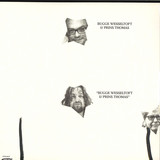
A long time ago, in a Norway far far away in time, keyboardist Bugge Wesseltoft introduced his New Conception of Jazz to the world. We're talking about the late 90s, when Bugge's cosmopolitan blend of jazz, hiphop and techno beats was pretty much the coolest music coming out of Norway at that moment. That was a golden time for Norwegian music, in fact, when the rest of the world began to sit up and take notice that something was stirring up north, and realised the music was more than just glacial tones hurtled from icy mountaintops and frozen lakes. This was the sound of urban Scandinavia.
A few years later came the electronic dance genre 'space disco'. Along with Todd Terje, Bjørn Torske and Lindstrøm, Prins Thomas was at the epicentre of this next big wave to surge out of Norway. Now, the two generations have come together in this exclusive collaboration between Bugge and Prins Thomas on the Smalltown Supersound label. Jazz and electronics combine for that energising vitamin D shot of Nordic sunshine.
The Rainbow Studio in Oslo is a familiar name to anyone who follows the ECM label - many of its classic 1970s jazz albums were recorded there under the eye of resident producer Jan Erik Kongshaug. Bugge and Thomas booked a couple of sessions at the legendary space with Kongshaug at the controls, and improvised some tunes in the style and spirit of some of their favourite ECM moments, like the fresh, open sounds of Codona, Egberto Gismonti, Oregon and Kenny Wheeler. Bugge had previously done a remix of Thomas's 'Bobletekno' in 2015 but this is the first time they have worked together as active musicians. The results - also partly taped at Thomas's home studio - fuse programmed rhythms, live synths and percussion, all captured in a sumptuously spacious acoustic.
For an even more authentic touch they called up one of their all time local heroes and one of Norway's most famous jazz drummers, Jon Christensen, who's been the go-to guy for Jan Garbarek, Terje Rypdal, Keith Jarrett and many more. At 75 years he's still pretty spry behind the kit, as you'll hear on several tracks here.
Make no mistake, though, this is not retro pastiche but contemporary music, coasting on gently insistent programmed grooves and bubbling basslines. The whole thing feels not so much like a consciously hip fusion of DJ and jazz musician, more like two great musicians totally enjoying themselves. Which is exactly what it is.
Key facts:
Bugge Wesseltoft is one of Norway's leading jazz figures. He set up Jazzland Recordings in 1996. His solo Christmas LP It's Snowing On My Piano remains Norway's best selling jazz album!
Prins Thomas's real name is Thomas Hermansen. His label, Full Pupp, means 'full breast'. He's released several albums under his own name, as well as collaborations with Bjørn Torske and Lindström. Check out his amazing Paradise Goulash mixtapes.
- A1: Heron Dance
- A2: Twilight Song
- A3: Yes—Singing
- A4: Dragonfly Song
- A5: A Homesick Song
- A6: The Willows
- A7: Lullaby—Lahel
- B1: Long Singing
- B2: The Quail Song
- B3: A Teaching Poem
- B4: A River Song
- B5: Sun Dance Poem
- B6: A Music Of The Eighth House
Music and Poetry of the Kesh is the documentation of an invented Pacific Coast peoples from a far distant time, and the soundtrack of famed science fiction author, Ursula K. Le Guin's Always Coming Home In the novel, the story of Stone Telling, a young woman of the Kesh, is woven within a larger anthropological folklore and fantasy. The ways of the Kesh were originally presented in 1985 as a five hundred plus page book accompanied with illustrations of instruments and tools, maps, a glossary of terms, recipes, poems, an alphabet (Le Guin's conlang, so she could write non-English lyrics), and with early editions, a cassette of field recordings' and indigenous song. Le Guin wanted to hear the people she'd imagined, she embarked on an elaborate process with her friend Todd Barton to invoke their spirit and tradition.
For Music and Poetry of the Kesh, the words and lyrics are attributed to Le Guin as composed by Barton, an Oregon-based musician, composer and Buchla synthesist (the two worked together previously on public radio projects). But the cassette notes credit the sounds and voices to the world of the Kesh, making origins ambiguous. For instance, The River Song' description reads, The prominent rhythm instrument is the doubure binga, a set of nine brass bowls struck with cloth-covered wooden mallets, here played by Ready.' According to writer and long-time friend of LeGuin, Moe Bowstern (who pens the liners for the Freedom To Spend edition of Kesh), Barton built and then taught himself to play several instruments of Le Guin's design, among them the seven-foot horn known to the Kesh as the Houmbúta and the Wéosai Medoud Teyahi bone flute.' Barton's crafting of original instruments lends an other-worldly texture to the recordings of the Kesh, not unlike fellow builders Bobby Brown and Lonnie Holley. Bowstern notes, Other musician / makers have crafted their own Kesh instruments after encountering the earlier cassette recordings that accompanied some editions of the book.' Both Barton and Le Guin are sensitive to the sovereignty of indigenous Californians and were careful not to trample the traditions of the Tolowa people who lived in the valley long before the Kesh. You research deeply, and then you bring your own voice to the table,' said Barton. Within the Kesh culture, the numbers four and five shape the lives, society and rituals. Barton composed loosely around these numbers, patiently listening to the land of Napa Valley for signs and audio signals from the natural elements. Todd incorporated ambient sounds of the creek by Le Guin's house and a campfire they built together. The songs of Kesh are joyful, soothing and meditative, while the instrumental works drift far past the imaginary lands. Heron Dance' is an uplifting first track, featuring a Wéosai Medoud Teyahi (made from a deer or lamb thigh bone with a cattail reed) and the great Houmbúta (used for theatre and ceremony). A Music of the Eighth House' sends gossamer waves of the faintest sounds to float on the wind.' Like the languages invented in the vocal work of Anna Homler, Meredith Monk, and Elizabeth Fraser, the Kesh songs and poems play with the shape of voice.
The Music and Poetry of the Kesh cassette was meant to accompany and enhance the experience of reading Always Coming Home. Presented in this edition as a long-playing album, where only traces of the book linger (the jacket offers some of Le Guin's illustration, and a letterpressed bookmark featuring the the narrative modes of western civilization and the Kesh valley is included), the music alone breaking the silence of what might be. It can transport—offering a landscape for imagining a future homecoming. One in which we are balanced, peaceful, and tend to the earth and its creatures. A line from the Sun Dance poem reminds us, We are nothing much without one another.' Freedom To Spend gives new life to the recordings of the Kesh people in the first ever vinyl edition of Music and Poetry of the Kesh, out on LP, and digital formats on March 23, 2018. The LP will include a deluxe spot printed jacket with illustrations from Always Coming Home, a facsimile of the original lyric sheet, liner notes by Moe Bowstern, multi-format digital download code and a limited edition bookmark letter pressed by Stumptown Printers in Portland, OR.
This past Monday, January 22, Ursula passed from this realm to another leaving a life spent building and exploring other worlds while challenging social concepts of the real word she inhabited.
Freedom To Spend had been working under Ursula's enthusiastic endorsement and with Todd Barton, her musical collaborator on Kesh, to give the music that accompanied her 1985 epoch a new life. With the Le Guin family's encouragement to move forward with our planned release, we are humbled to play this small role in sharing Ursula's work.
As Pete Swanson, one third of Freedom To Spend, stated, Ursula's legacy is her work which transformed the world, and this is another piece of the universe that her imagination birthed becoming real.' Listen to A Teaching Poem / Heron Dance' below.
There is no end to composer Peter Broderick's creative output, and so we present to you his new album titled All Together Again — available worldwide on November 17th 2017 via Erased Tapes.They say music takes you on a journey, and this collection of commissioned work by Peter quite literally does that. From a ferry boat ride in Istanbul, to walking down the aisle at a wedding, these songs were created for particular situations, yet Peter found a way to work without any sort of limitations and on his own erms. The result is an assortment of works from the past ten years, coming together as one: Peter's new album. Words from Peter, October 2017: Ever since I started releasing records in 2007 (10 years ago now!), people have contacted me periodically to ask if I'd be interested in making music to accompany their projects. Most of these projects have been things like films, dance pieces and theatre plays . . . but every so often I get the odd request for something a little different. Peter, would you write a song for my wedding My one year anniversary A ferry boat ride
In early 2015 I was asked to perform 12 minutes of music during a runway show as part of New York Fashion Week. I agreed and began composing a 12-minute piece which I could perform on my own with a few different instruments and some looping pedals. I made a recording of the piece and sent it over to my contacts at the fashion show . . . but a few days before I was to fly out to New York, they wrote back and told me they actually just wanted me to play a few older songs that they were already familiar with. Feeling slightly disappointed, I shelved the other piece, giving it the title If I Were A Runway Model.It is with great pleasure that I now present this piece in a collection of commissioned works spanning the last decade . . . it's All Together Again. This group of oddball works does indeed include a couple pieces written for weddings (Our Future In Wedlock and The Walk), and a song someone asked me to write as a gift for his wife on their first year wedding anniversary (Emily). And indeed, there's a 17-minute piece written to accompany a ferry boat ride in Istanbul (A Ride On The Bosphorus). A few of the pieces were written for films (Robbie's Song, Atlantic and Seeing Things), and one for a kind of interactive installation (Unsung Heroes).In my early days of recording, I took pride in playing all the different instruments myself and doing the recording myself as well. And then at some point I started branching out, working with other musicians and recording engineers. But this record is very dear to me in that it's a return to that original approach . . . playing all the different instruments myself, working with my limits on each one, and my own limits in recording and mixing. I've always held a broad curiosity for all different instruments and all different styles of music, and if nothing else I hope this record will portray that curiosity, and my pure love for this thing we call music. Can you dig it The cover art was made by Peter himself in his hometown of Portland, Oregon, by cutting and sticking different coloured paper fragments to depict the individuality of each track.
When I was a child, I spoke to Helen.
Helen is a pop group from Oregon. Liz Harris (vocals/lead guitar), Jed Bindeman (drums/tambourine), Scott Simmons (bass/guitar), and Helen (back up vocals).
Originally started with the intention of being a thrash band, it turned into something else entirely. The Original Faces was recorded over a period of several years in Portland by the band members, their friends Nick, Chris and, largely, Justin Higgins. Written together, some songs based on Liz and Scott's demos.